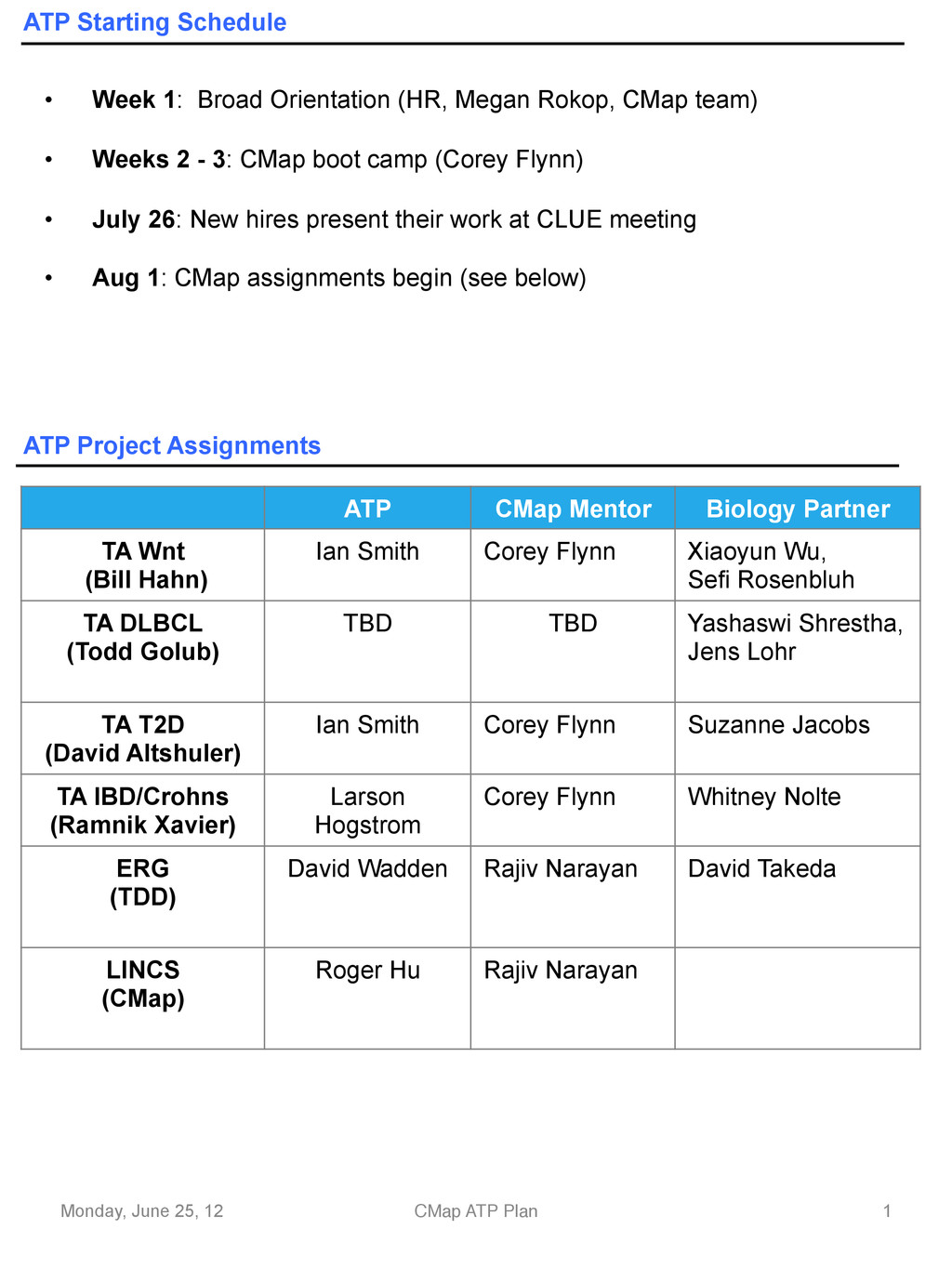
Schedule ATP CMap Mentor Biology Partner TA Wnt (Bill Hahn) Ian Smith Corey Flynn Xiaoyun Wu, Sefi Rosenbluh TA DLBCL (Todd Golub) TBD TBD Yashaswi Shrestha, Jens Lohr TA T2D (David Altshuler) Ian Smith Corey Flynn Suzanne Jacobs TA IBD/Crohns (Ramnik Xavier) Larson Hogstrom Corey Flynn Whitney Nolte ERG (TDD) David Wadden Rajiv Narayan David Takeda LINCS (CMap) Roger Hu Rajiv Narayan • Week 1: Broad Orientation (HR, Megan Rokop, CMap team) • Weeks 2 - 3: CMap boot camp (Corey Flynn) • July 26: New hires present their work at CLUE meeting • Aug 1: CMap assignments begin (see below) ATP Project Assignments
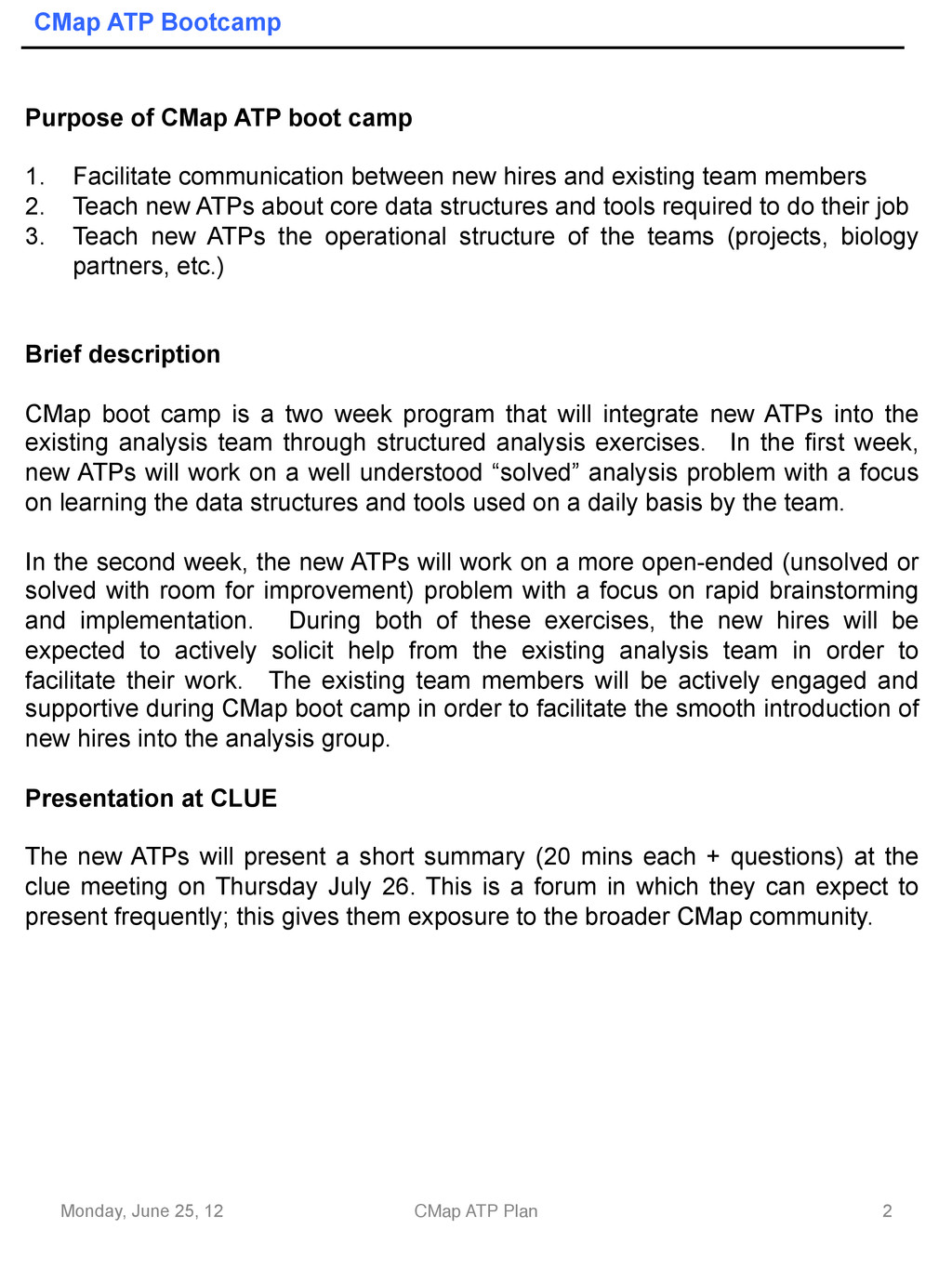
Bootcamp Purpose of CMap ATP boot camp 1. Facilitate communication between new hires and existing team members 2. Teach new ATPs about core data structures and tools required to do their job 3. Teach new ATPs the operational structure of the teams (projects, biology partners, etc.) Brief description CMap boot camp is a two week program that will integrate new ATPs into the existing analysis team through structured analysis exercises. In the first week, new ATPs will work on a well understood “solved” analysis problem with a focus on learning the data structures and tools used on a daily basis by the team. In the second week, the new ATPs will work on a more open-ended (unsolved or solved with room for improvement) problem with a focus on rapid brainstorming and implementation. During both of these exercises, the new hires will be expected to actively solicit help from the existing analysis team in order to facilitate their work. The existing team members will be actively engaged and supportive during CMap boot camp in order to facilitate the smooth introduction of new hires into the analysis group. Presentation at CLUE The new ATPs will present a short summary (20 mins each + questions) at the clue meeting on Thursday July 26. This is a forum in which they can expect to present frequently; this gives them exposure to the broader CMap community.
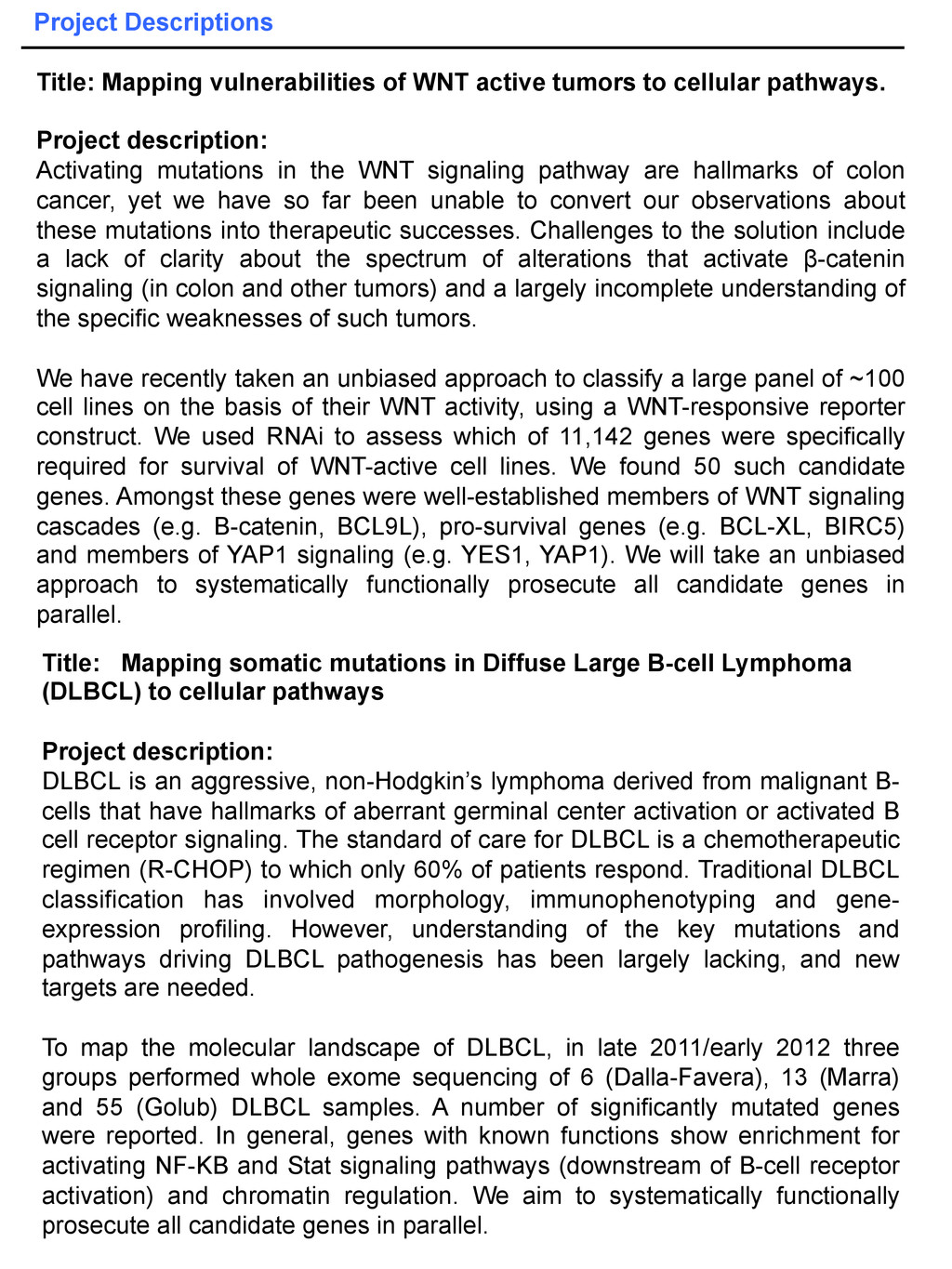
Project description: Activating mutations in the WNT signaling pathway are hallmarks of colon cancer, yet we have so far been unable to convert our observations about these mutations into therapeutic successes. Challenges to the solution include a lack of clarity about the spectrum of alterations that activate β-catenin signaling (in colon and other tumors) and a largely incomplete understanding of the specific weaknesses of such tumors. We have recently taken an unbiased approach to classify a large panel of ~100 cell lines on the basis of their WNT activity, using a WNT-responsive reporter construct. We used RNAi to assess which of 11,142 genes were specifically required for survival of WNT-active cell lines. We found 50 such candidate genes. Amongst these genes were well-established members of WNT signaling cascades (e.g. B-catenin, BCL9L), pro-survival genes (e.g. BCL-XL, BIRC5) and members of YAP1 signaling (e.g. YES1, YAP1). We will take an unbiased approach to systematically functionally prosecute all candidate genes in parallel. Title: Mapping somatic mutations in Diffuse Large B-cell Lymphoma (DLBCL) to cellular pathways Project description: DLBCL is an aggressive, non-Hodgkin’s lymphoma derived from malignant B- cells that have hallmarks of aberrant germinal center activation or activated B cell receptor signaling. The standard of care for DLBCL is a chemotherapeutic regimen (R-CHOP) to which only 60% of patients respond. Traditional DLBCL classification has involved morphology, immunophenotyping and gene- expression profiling. However, understanding of the key mutations and pathways driving DLBCL pathogenesis has been largely lacking, and new targets are needed. To map the molecular landscape of DLBCL, in late 2011/early 2012 three groups performed whole exome sequencing of 6 (Dalla-Favera), 13 (Marra) and 55 (Golub) DLBCL samples. A number of significantly mutated genes were reported. In general, genes with known functions show enrichment for activating NF-KB and Stat signaling pathways (downstream of B-cell receptor activation) and chromatin regulation. We aim to systematically functionally prosecute all candidate genes in parallel. Project Descriptions
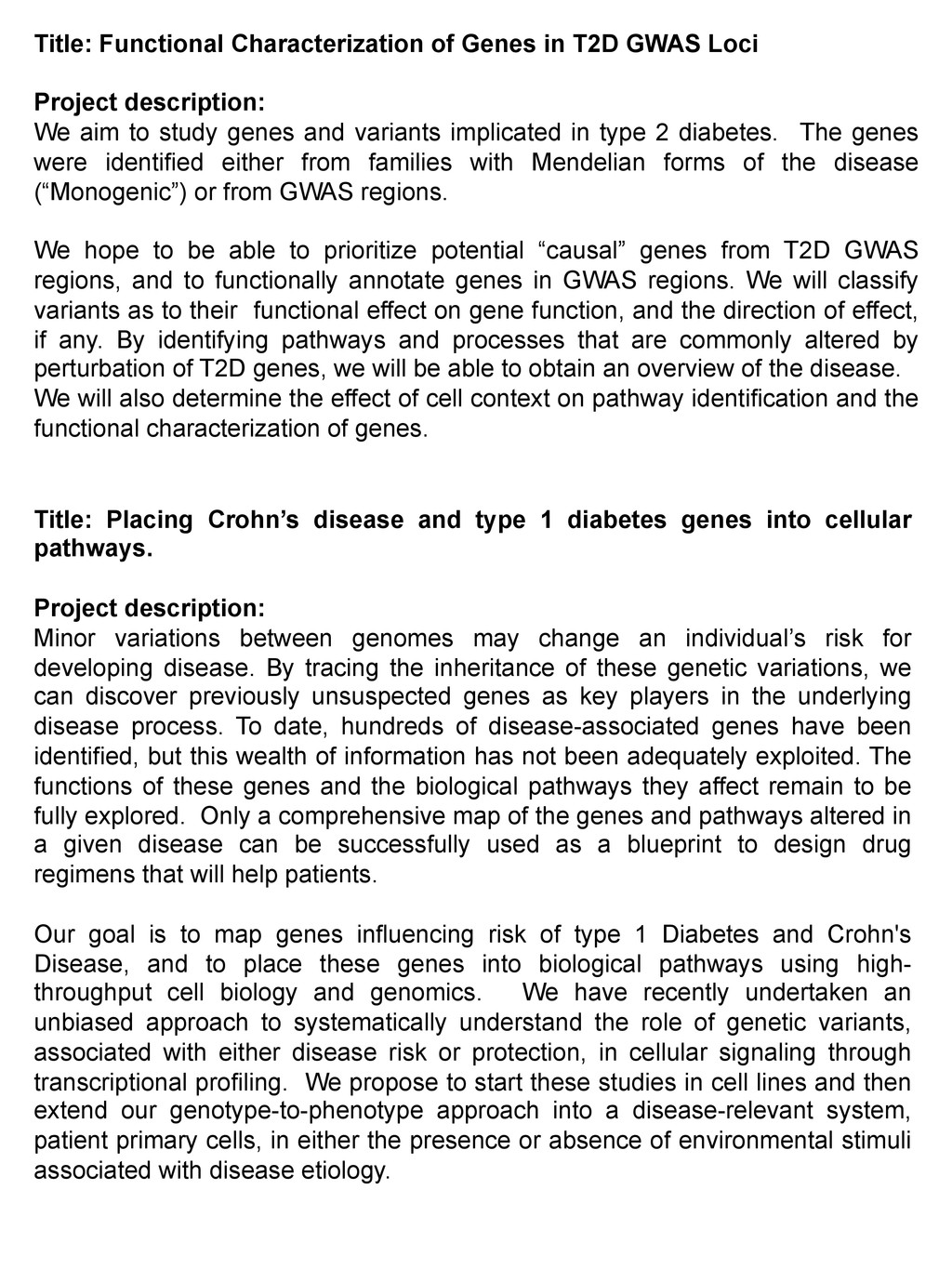
description: We aim to study genes and variants implicated in type 2 diabetes. The genes were identified either from families with Mendelian forms of the disease (“Monogenic”) or from GWAS regions. We hope to be able to prioritize potential “causal” genes from T2D GWAS regions, and to functionally annotate genes in GWAS regions. We will classify variants as to their functional effect on gene function, and the direction of effect, if any. By identifying pathways and processes that are commonly altered by perturbation of T2D genes, we will be able to obtain an overview of the disease. We will also determine the effect of cell context on pathway identification and the functional characterization of genes. Title: Placing Crohn’s disease and type 1 diabetes genes into cellular pathways. Project description: Minor variations between genomes may change an individual’s risk for developing disease. By tracing the inheritance of these genetic variations, we can discover previously unsuspected genes as key players in the underlying disease process. To date, hundreds of disease-associated genes have been identified, but this wealth of information has not been adequately exploited. The functions of these genes and the biological pathways they affect remain to be fully explored. Only a comprehensive map of the genes and pathways altered in a given disease can be successfully used as a blueprint to design drug regimens that will help patients. Our goal is to map genes influencing risk of type 1 Diabetes and Crohn's Disease, and to place these genes into biological pathways using high- throughput cell biology and genomics. We have recently undertaken an unbiased approach to systematically understand the role of genetic variants, associated with either disease risk or protection, in cellular signaling through transcriptional profiling. We propose to start these studies in cell lines and then extend our genotype-to-phenotype approach into a disease-relevant system, patient primary cells, in either the presence or absence of environmental stimuli associated with disease etiology.


 auna
 skipperchong
 rakko
 davidcarrasco
 nonsquared
 deanohume
 paigeccino
 ivargrimstad
 reverentgeek
 axbom
 samanthasiow
 samlambert