backend (Python & Go), data engineering and agentic AI Hobbies: anime, games e cosplay Blog: danicat.dev LinkedIn: linkedin.com/in/petruzalek Twitter: x.com/danicat83 Google Cloud 02
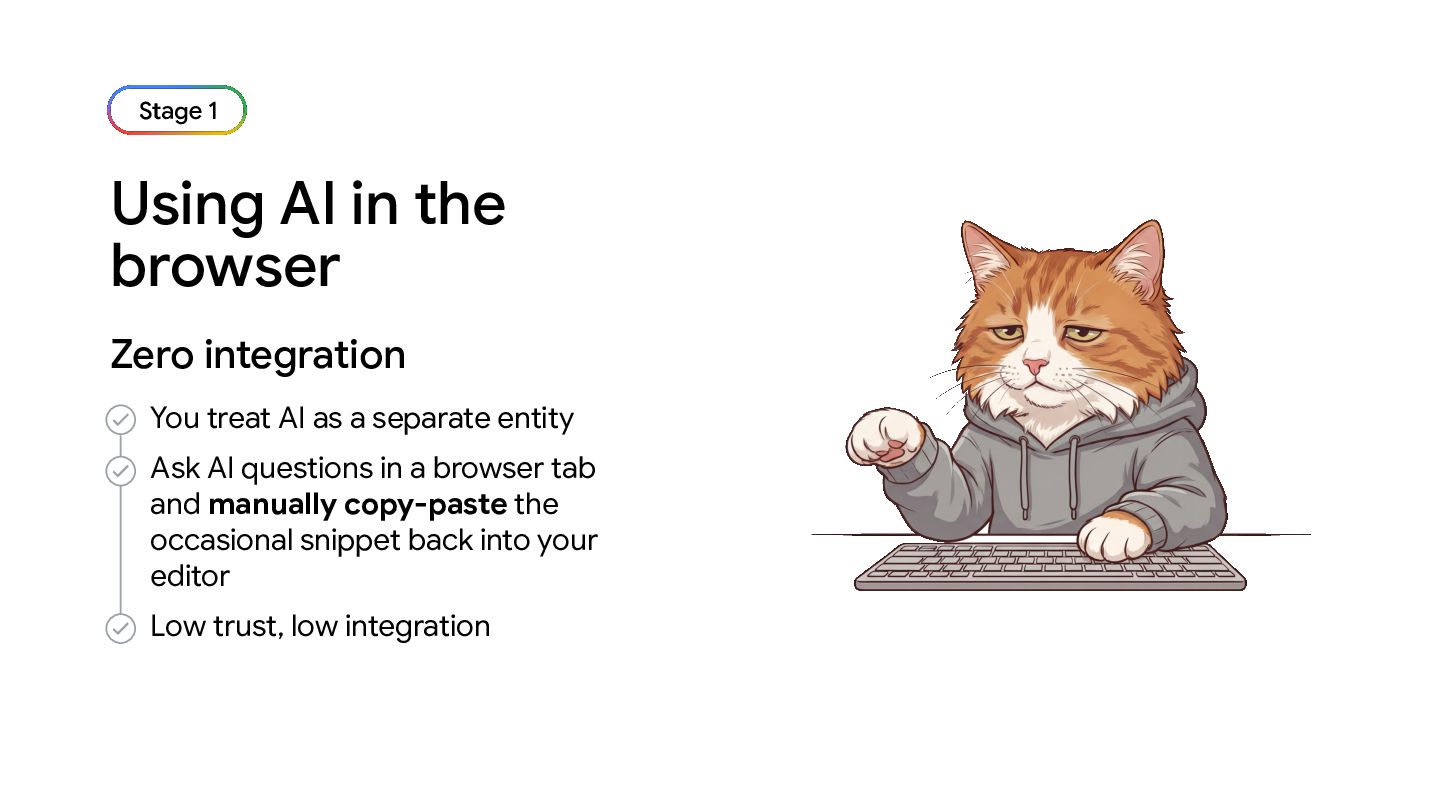
treat AI as a separate entity Ask AI questions in a browser tab and manually copy-paste the occasional snippet back into your editor Low trust, low integration
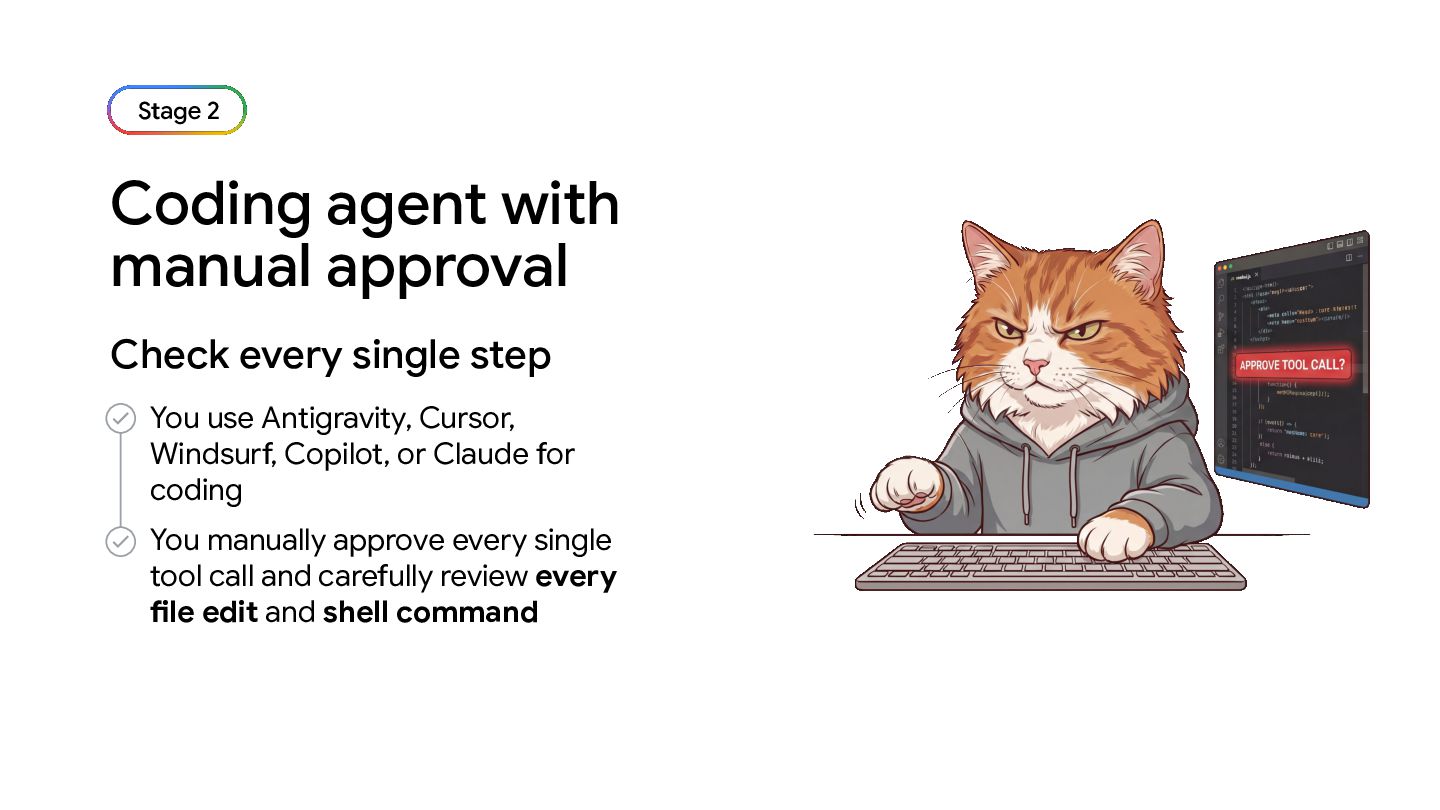
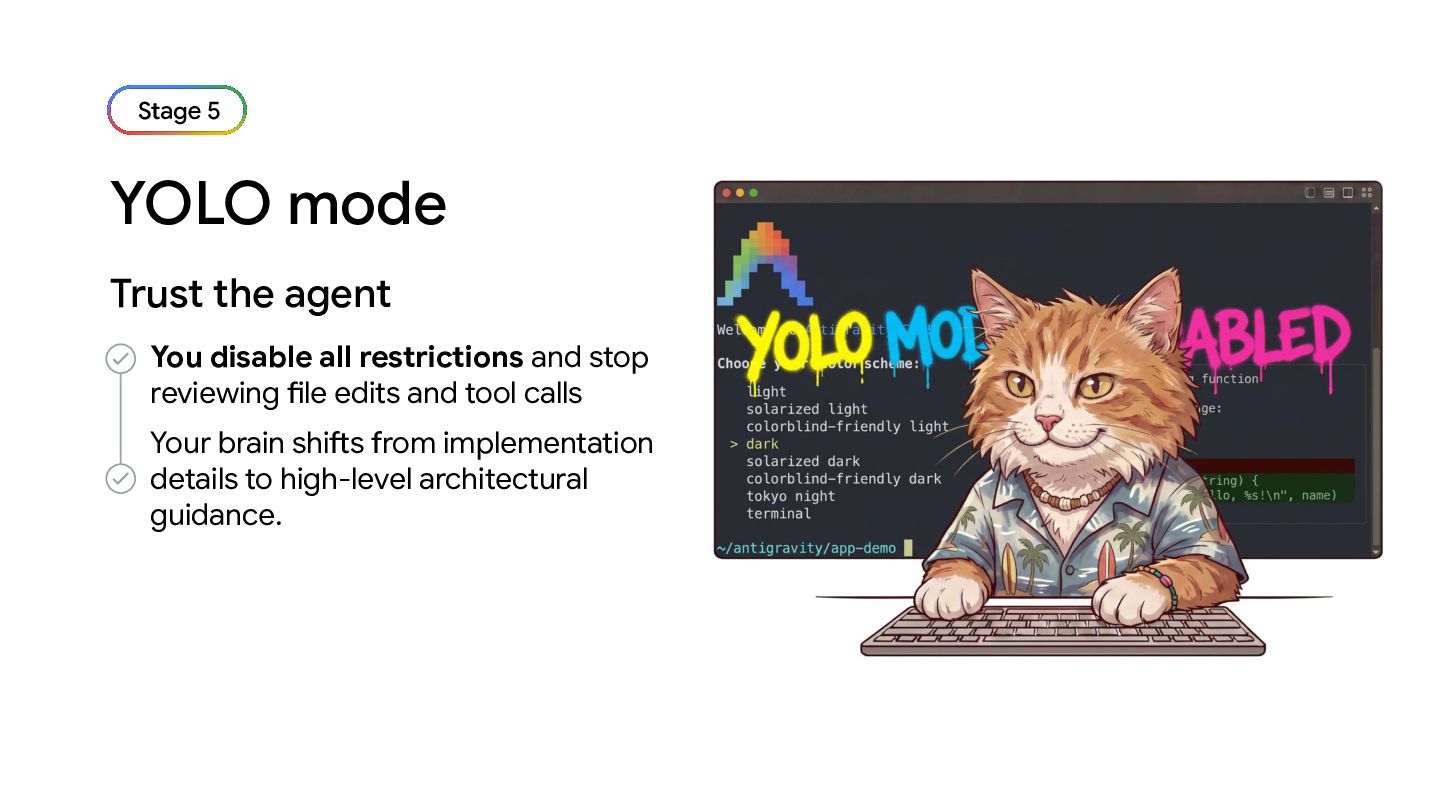
step You use Antigravity, Cursor, Windsurf, Copilot, or Claude for coding You manually approve every single tool call and carefully review every file edit and shell command
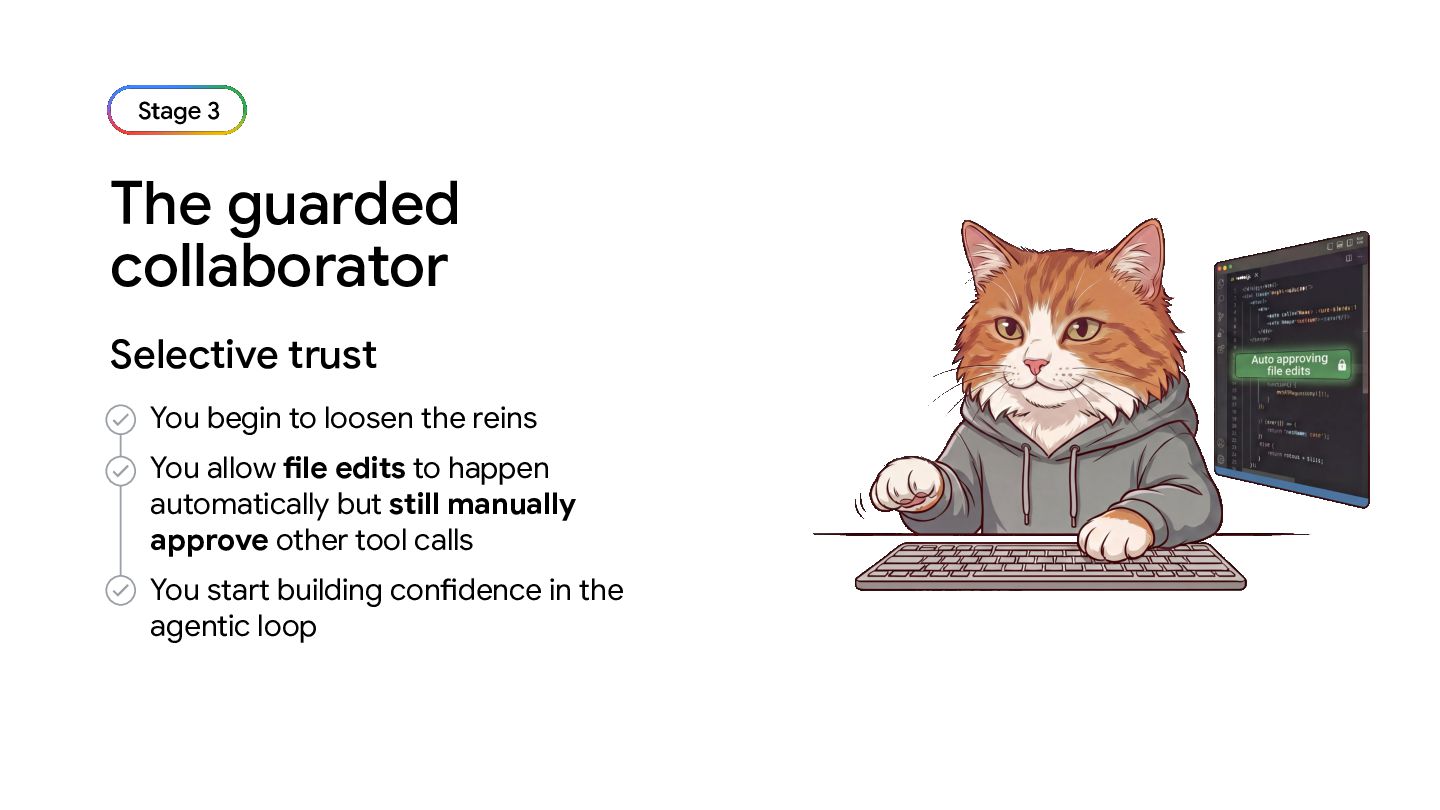
loosen the reins You allow file edits to happen automatically but still manually approve other tool calls You start building confidence in the agentic loop
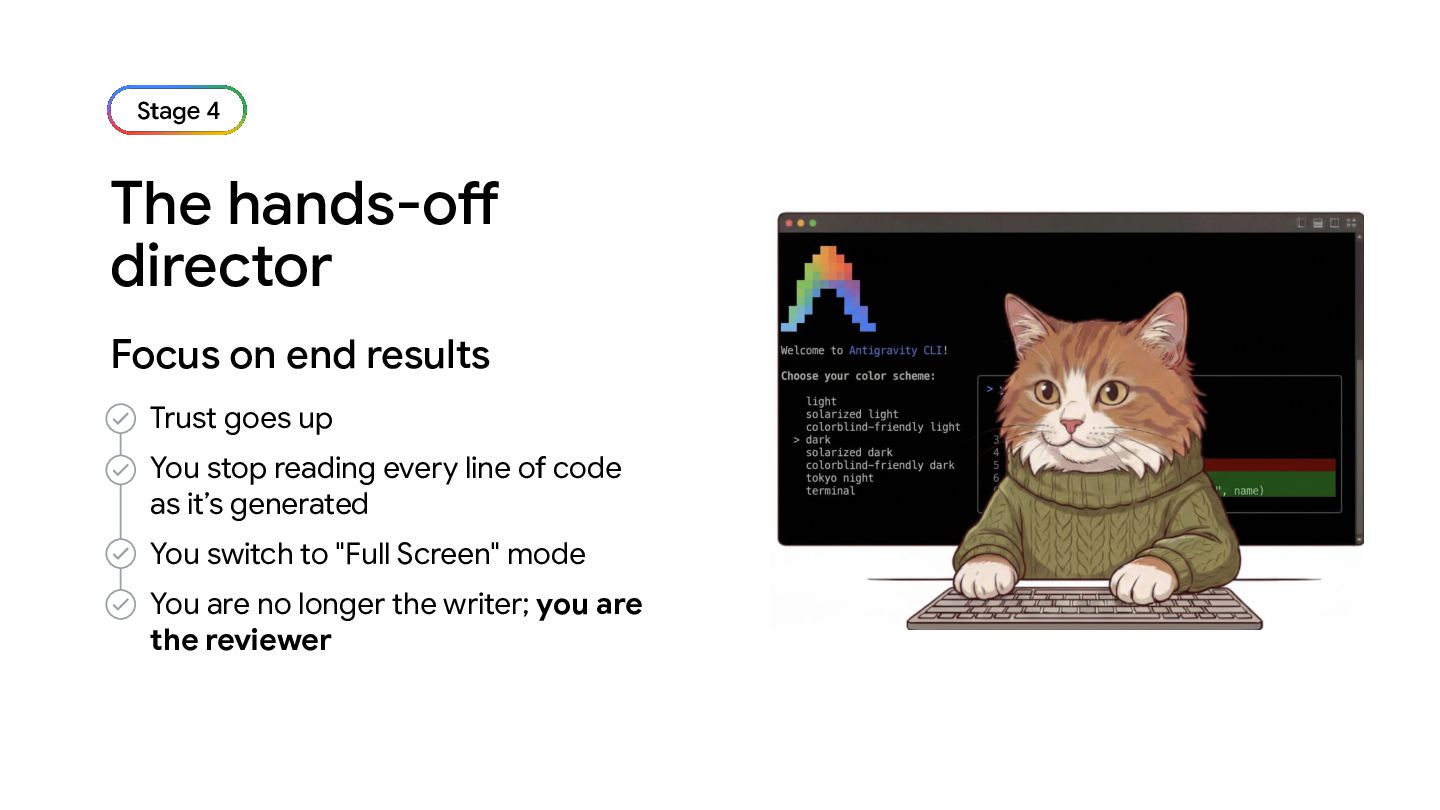
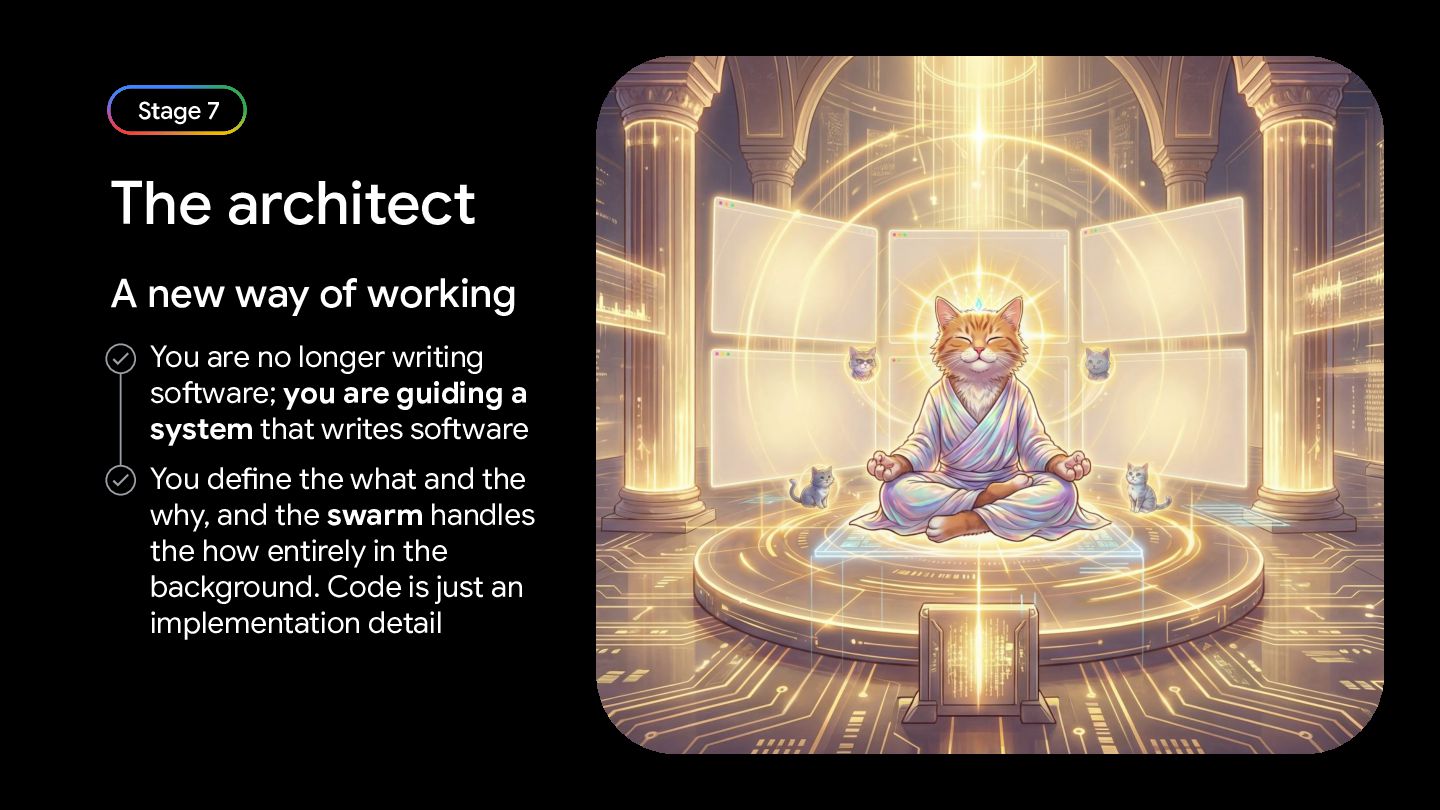
are no longer writing software; you are guiding a system that writes software You define the what and the why, and the swarm handles the how entirely in the background. Code is just an implementation detail
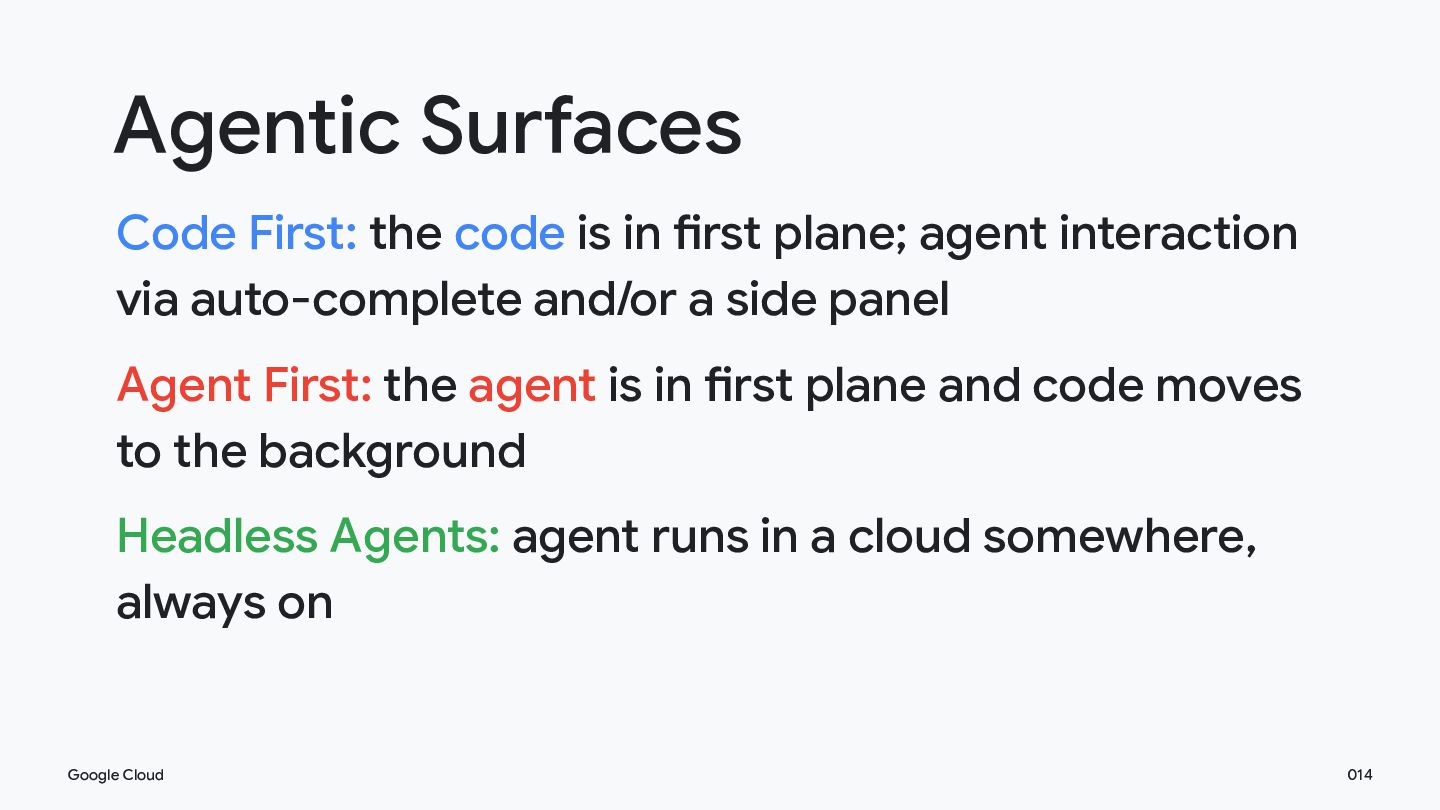
agent interaction via auto-complete and/or a side panel Agent First: the agent is in first plane and code moves to the background Headless Agents: agent runs in a cloud somewhere, always on Google Cloud 014
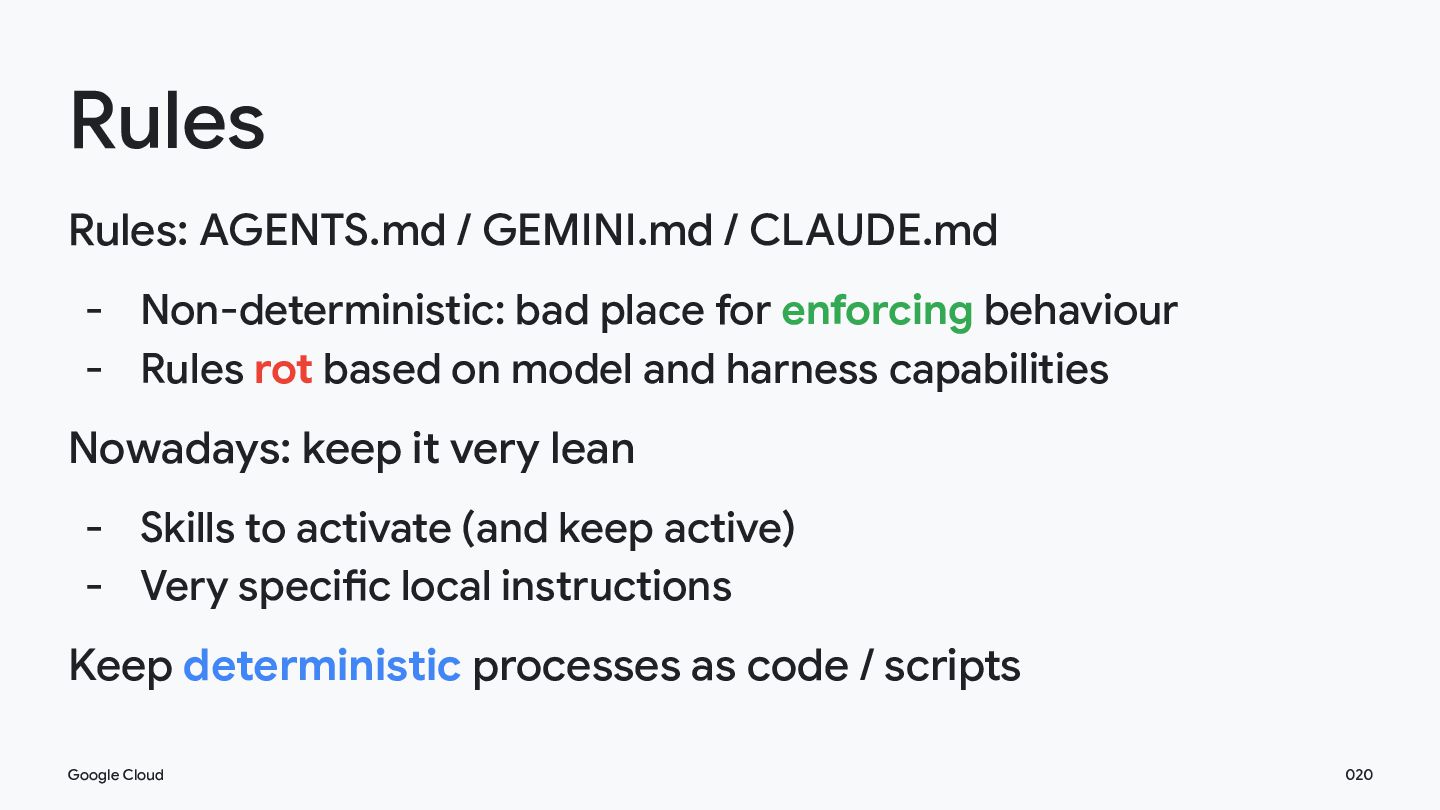
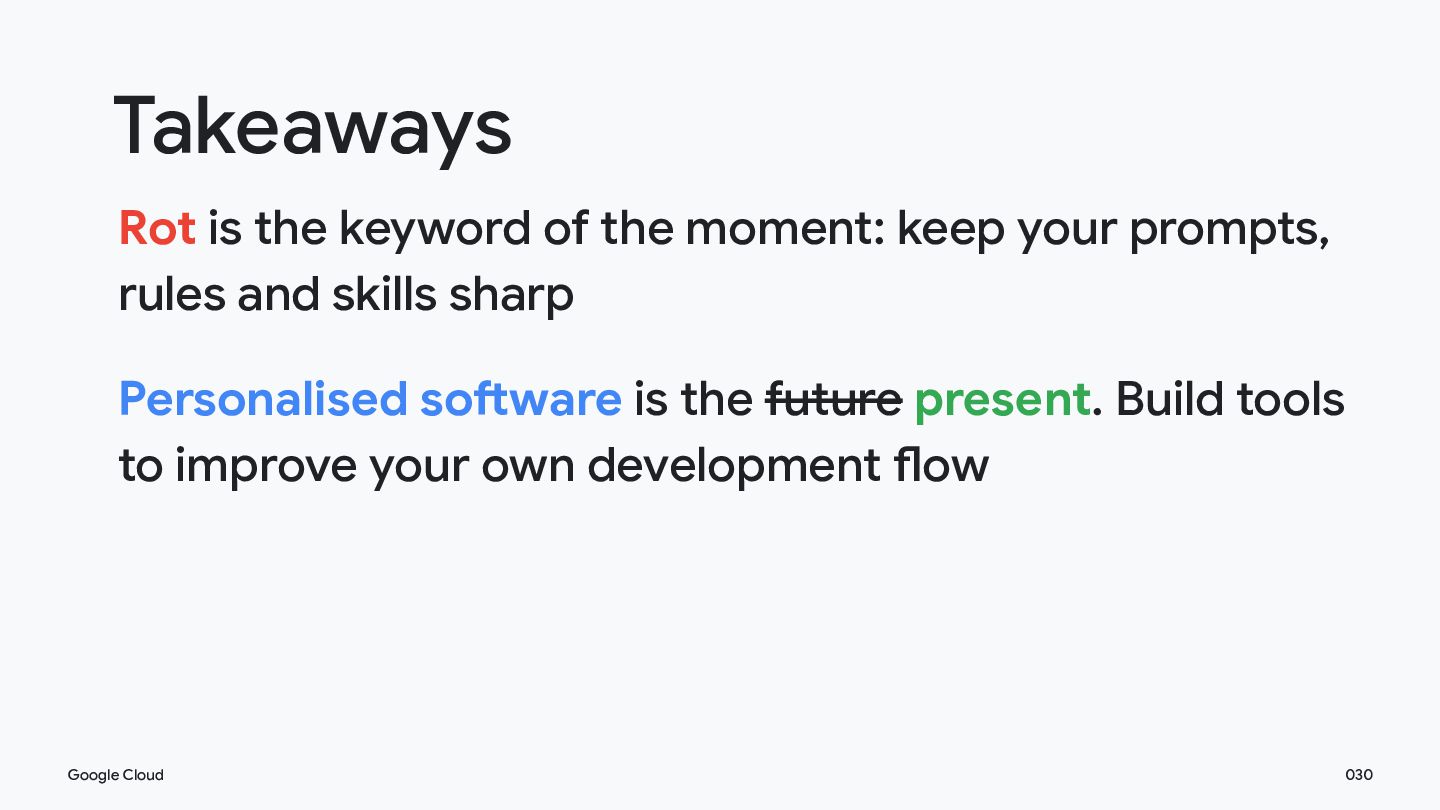
place for enforcing behaviour - Rules rot based on model and harness capabilities Nowadays: keep it very lean - Skills to activate (and keep active) - Very specific local instructions Keep deterministic processes as code / scripts Google Cloud 020
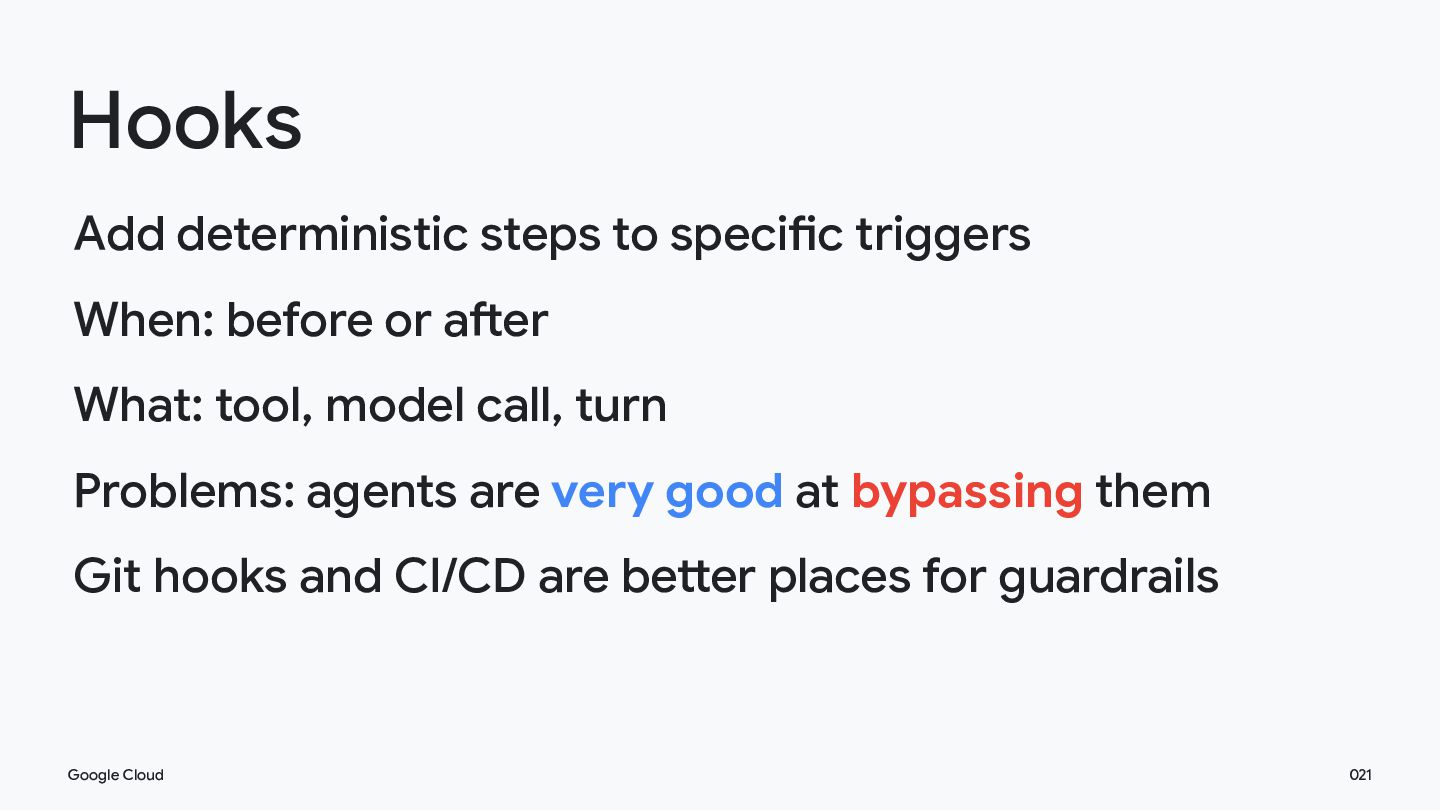
after What: tool, model call, turn Problems: agents are very good at bypassing them Git hooks and CI/CD are better places for guardrails Google Cloud 021
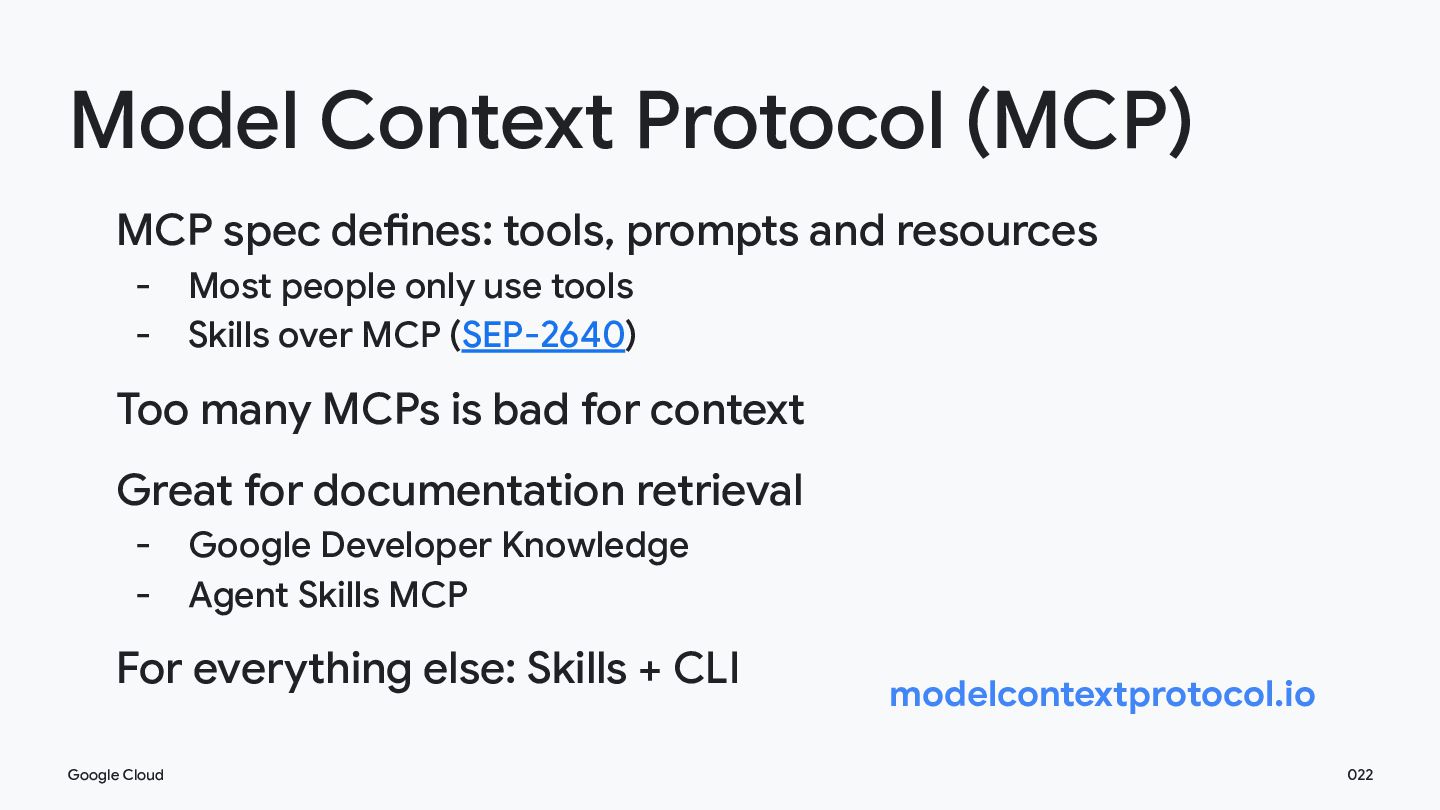
resources - Most people only use tools - Skills over MCP (SEP-2640) Too many MCPs is bad for context Great for documentation retrieval - Google Developer Knowledge - Agent Skills MCP For everything else: Skills + CLI Google Cloud modelcontextprotocol.io 022
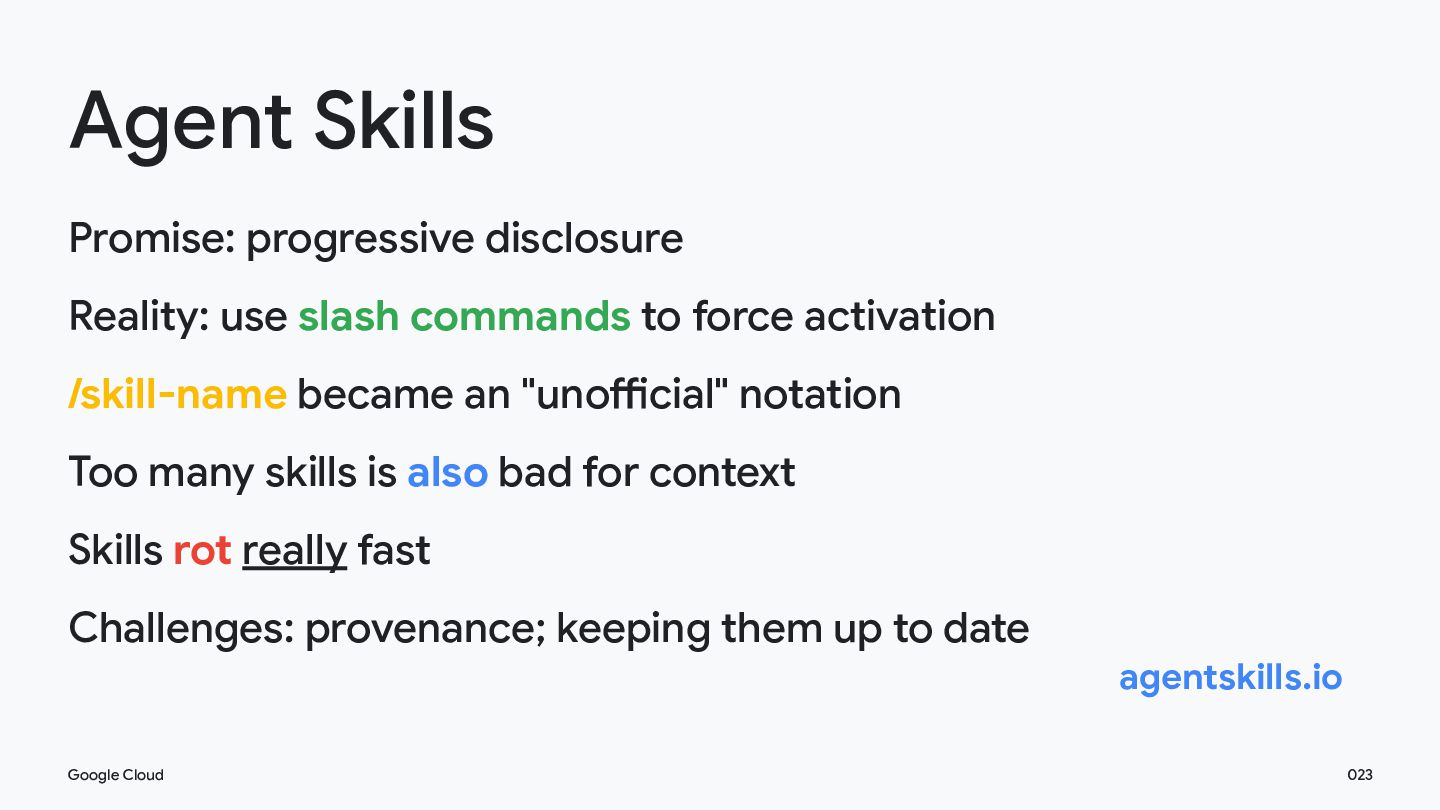
force activation /skill-name became an "unofficial" notation Too many skills is also bad for context Skills rot really fast Challenges: provenance; keeping them up to date agentskills.io Google Cloud 023
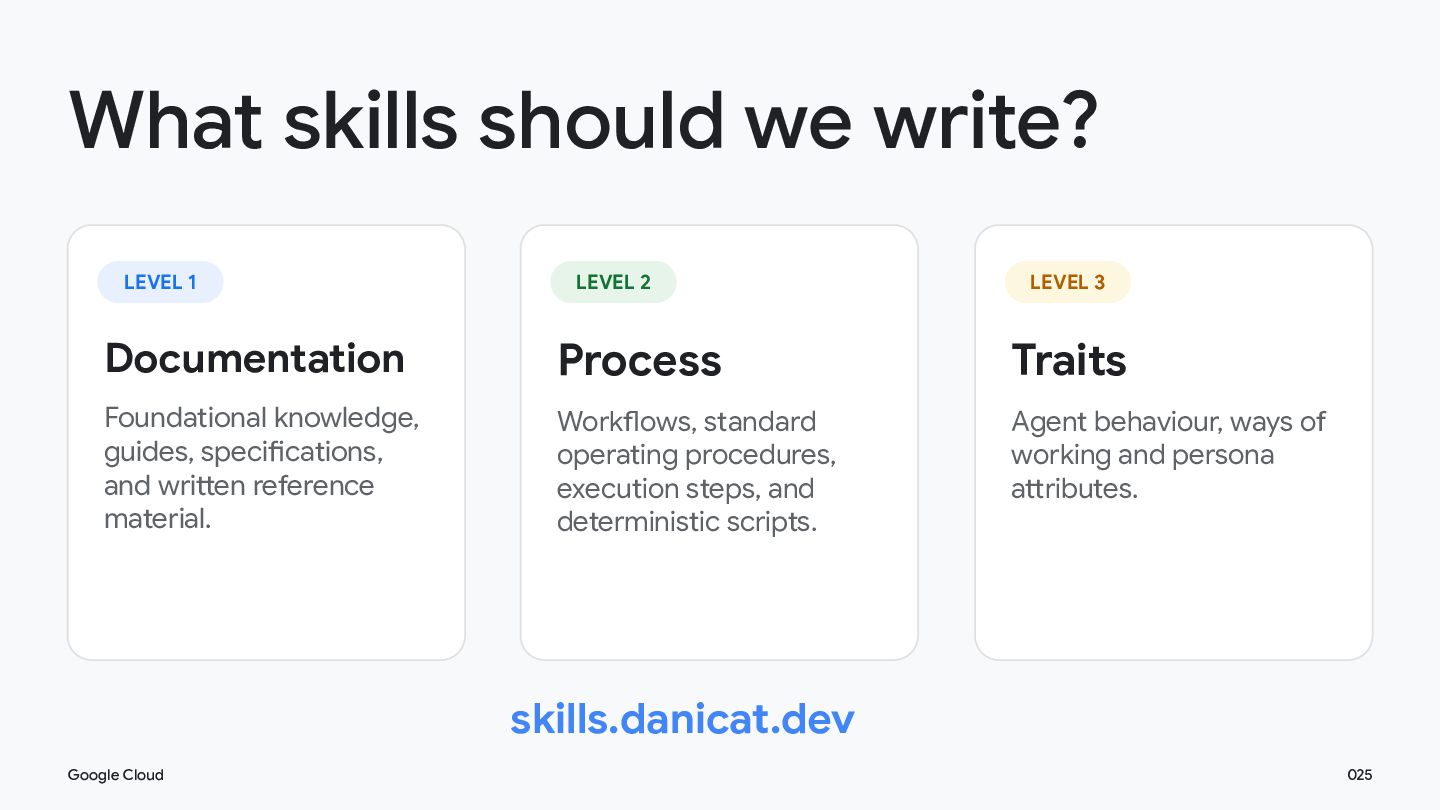
3 Documentation Process Traits Foundational knowledge, guides, specifications, and written reference material. Workflows, standard operating procedures, execution steps, and deterministic scripts. Agent behaviour, ways of working and persona attributes. skills.danicat.dev Google Cloud 025
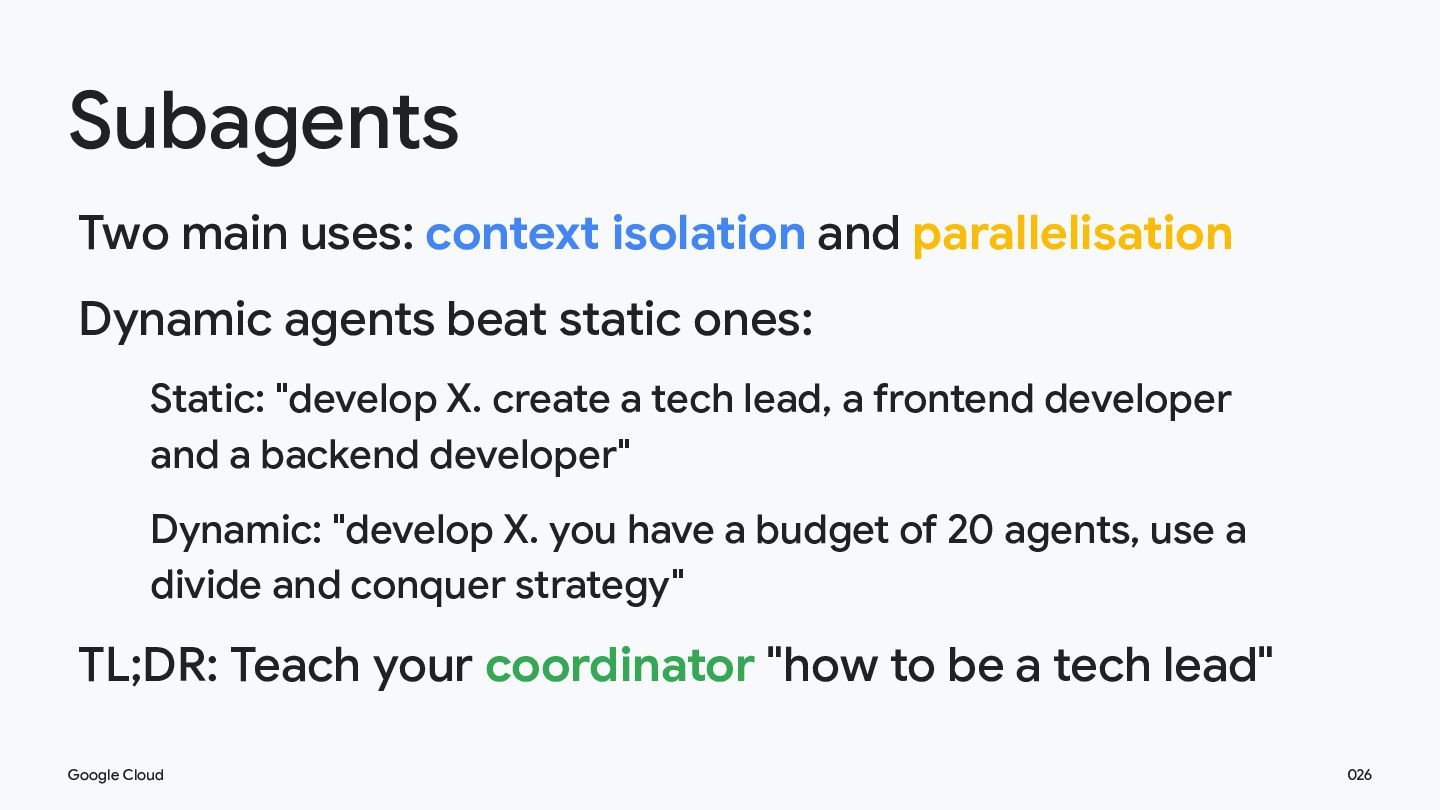
beat static ones: Static: "develop X. create a tech lead, a frontend developer and a backend developer" Dynamic: "develop X. you have a budget of 20 agents, use a divide and conquer strategy" TL;DR: Teach your coordinator "how to be a tech lead" Google Cloud 026
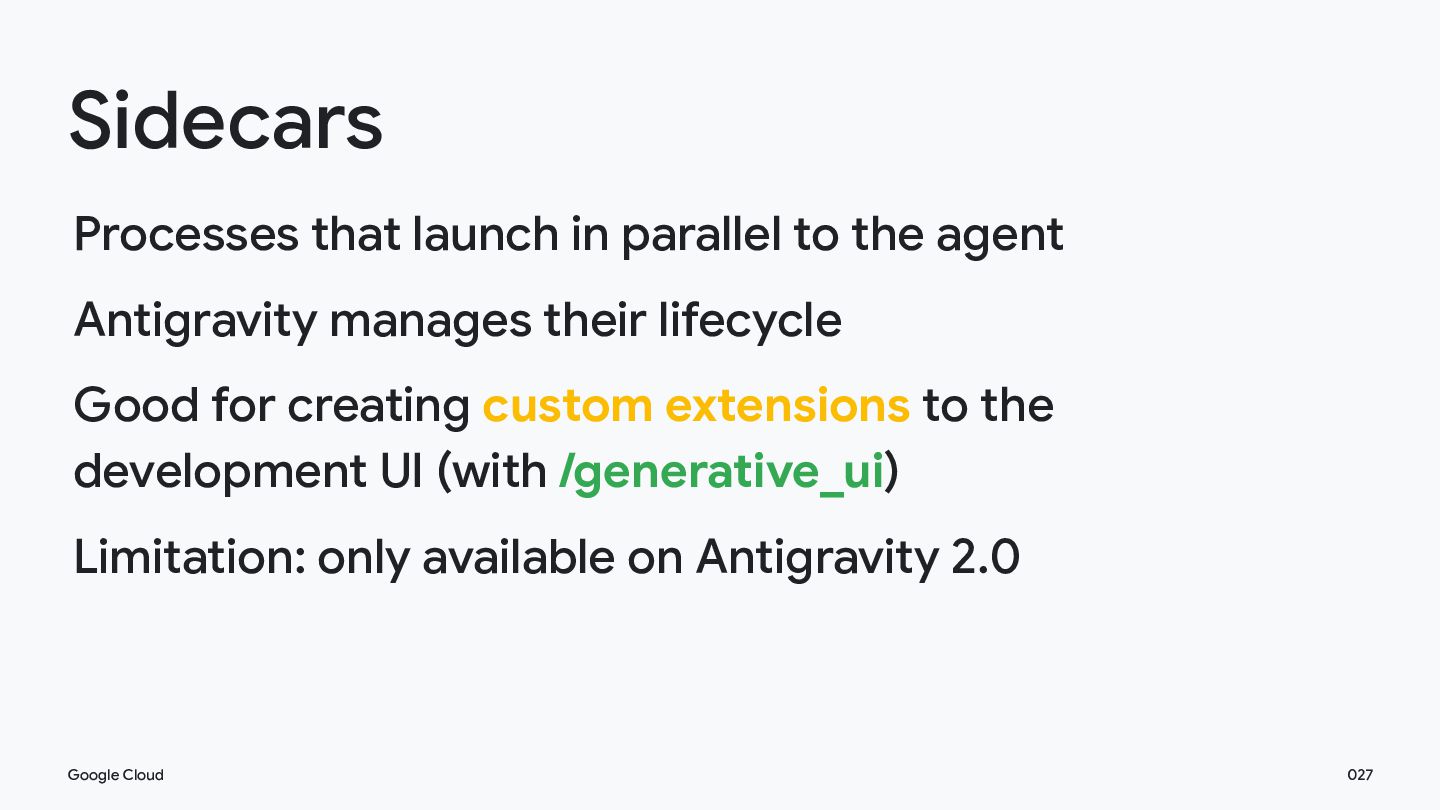
manages their lifecycle Good for creating custom extensions to the development UI (with /generative_ui) Limitation: only available on Antigravity 2.0 Google Cloud 027
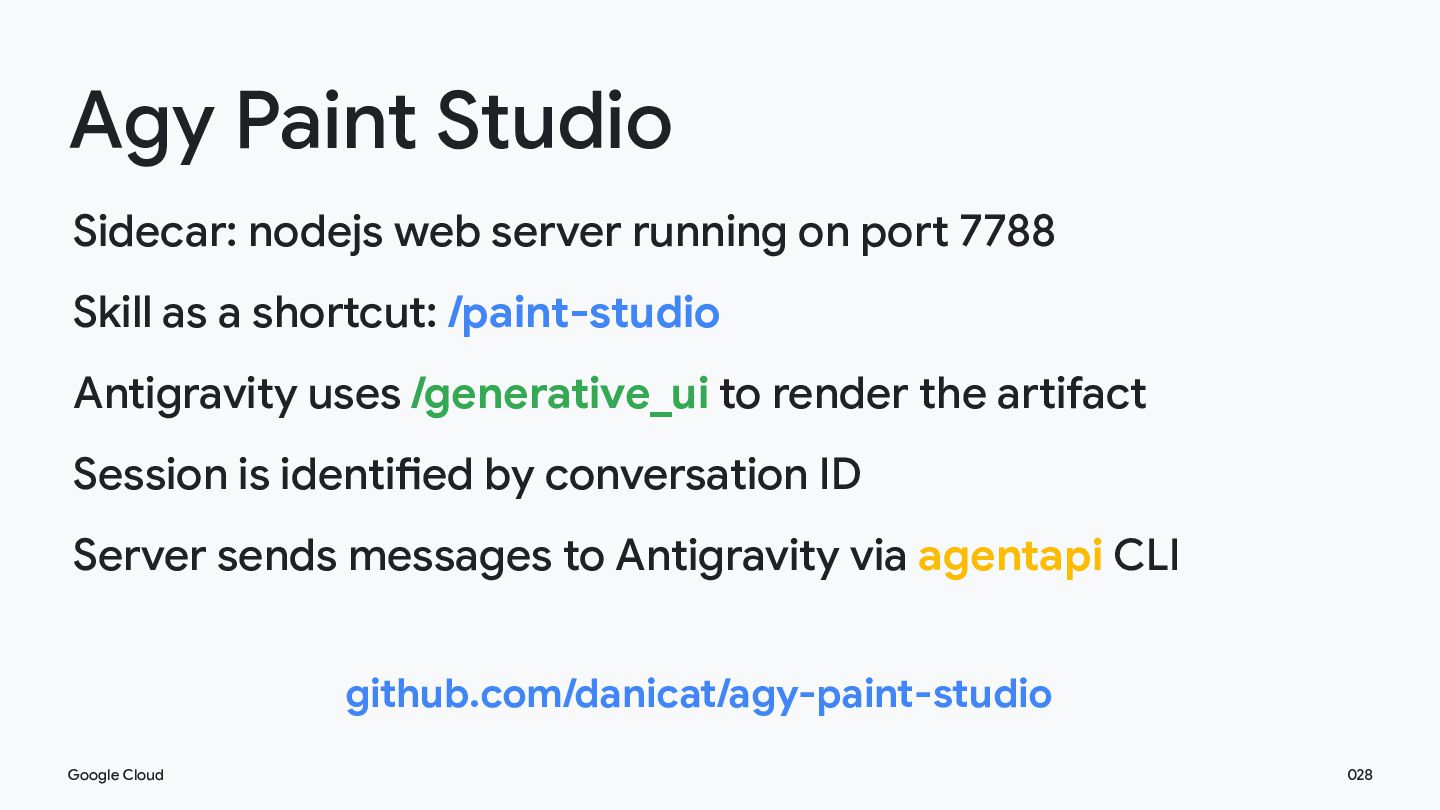
7788 Skill as a shortcut: /paint-studio Antigravity uses /generative_ui to render the artifact Session is identified by conversation ID Server sends messages to Antigravity via agentapi CLI github.com/danicat/agy-paint-studio Google Cloud 028


 danicat
 akase244
 rkaga
rkaga
 findyinc
 irinanazarova
 marcoroth
 morizo_1984
 hollycummins
 ogom
ogom
 satoshi256kbyte
 htkym
htkym
 drumath2237
 nao_randd
 jlugia
 caitiem20
 sstephenson
 jonoalderson
 rakko
rakko
 chriscoyier
 destraynor
 panda_program
 kevinliebholz
 jmmastey
 aleyda
 shpigford