Upgrade to Pro — share decks privately, control downloads, hide ads and more …

best digital marketing course in banglore

Avatar for Dharani Krishna Dharani Krishna
August 01, 2024
8

best digital marketing course in banglore

NIDM (National Institute Of Digital Marketing) Bangalore Is One Of The Leading & best Digital Marketing Institute In Bangalore, India And We Have Brand Value For The Quality Of Education Which We Provide. Our Curriculum/ Courses Are Designed with Practical knowledge are Fully For Job Orientation Bases. We have the best curriculum, trainers and unlimited practical hours on live project.

https://nidmindia.com/

Avatar for Dharani Krishna

Dharani Krishna

August 01, 2024

Transcript

  1. 1 www.nidminda.com NATIONAL INSTITUTE OF DIGITAL MARKETING Dominating Social Media

    Marketing: Essential Strategies for Creating Impactful PDF
  2. 2 www.nidminda.com INDEX SL NO. CONTENT PAGE NO. 1 Introduction

    to social media marketing 3 2 Understanding Social Media Marketing 5 3 Setting Objectives and Goals 5 4 Identifying Your Target Audience 6 5 Choosing the Right Platforms 7 6 Content Creation and Strategy 8 7 Engaging with Your Audience 9 8 Advertising on social media 10 9 Measuring Success with Analytics 11 10 Managing Social Media Presence 12 11 Influencer Marketing 13 12 Handling Customer Feedback 14 13 Staying Updated with Trends 15 14 Conclusion 16 15 Reference 17
  3. 3 www.nidminda.com 1 Introduction to social media marketing In today’s

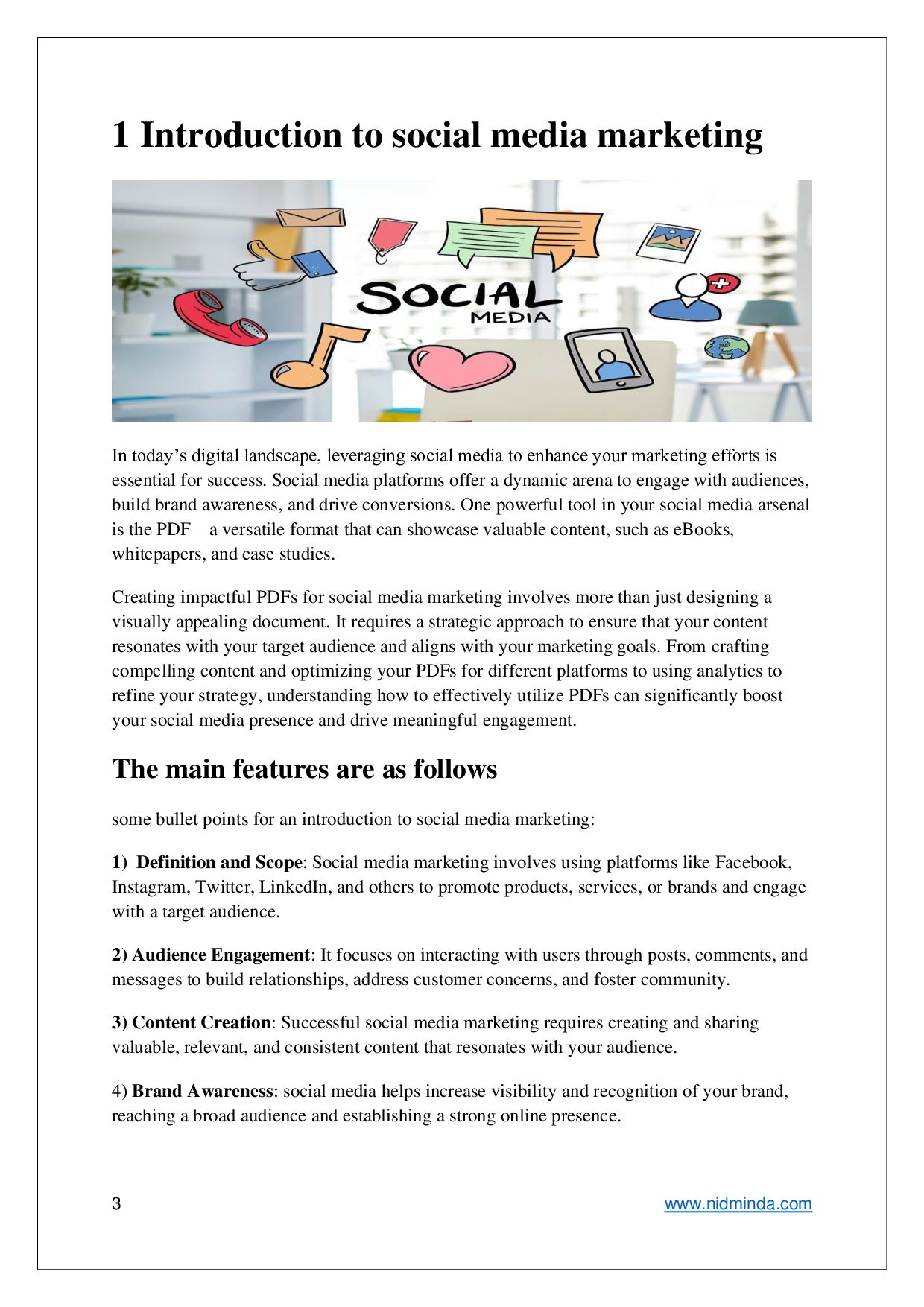
    digital landscape, leveraging social media to enhance your marketing efforts is essential for success. Social media platforms offer a dynamic arena to engage with audiences, build brand awareness, and drive conversions. One powerful tool in your social media arsenal is the PDF—a versatile format that can showcase valuable content, such as eBooks, whitepapers, and case studies. Creating impactful PDFs for social media marketing involves more than just designing a visually appealing document. It requires a strategic approach to ensure that your content resonates with your target audience and aligns with your marketing goals. From crafting compelling content and optimizing your PDFs for different platforms to using analytics to refine your strategy, understanding how to effectively utilize PDFs can significantly boost your social media presence and drive meaningful engagement. The main features are as follows some bullet points for an introduction to social media marketing: 1) Definition and Scope: Social media marketing involves using platforms like Facebook, Instagram, Twitter, LinkedIn, and others to promote products, services, or brands and engage with a target audience. 2) Audience Engagement: It focuses on interacting with users through posts, comments, and messages to build relationships, address customer concerns, and foster community. 3) Content Creation: Successful social media marketing requires creating and sharing valuable, relevant, and consistent content that resonates with your audience. 4) Brand Awareness: social media helps increase visibility and recognition of your brand, reaching a broad audience and establishing a strong online presence.
  4. 4 www.nidminda.com 5)Advertising Opportunities: Platforms offer various adv1ertising options, including

    sponsored posts and targeted ads, allowing businesses to reach specific demographics and measure campaign effectiveness. 6)Analytics and Insights: Social media tools provide data on engagement metrics, audience behavior, and campaign performance, enabling data-driven decision-making. 7) Influencer Collaborations: Partnering with influencers can amplify your reach and credibility, leveraging their follower base to promote your brand. 8)Trend Utilization: Staying current with social media trends and adapting strategies accordingly can keep your content fresh and relevant. 9)Customer Feedback: social media serves as a valuable channel for receiving and addressing customer feedback, which can enhance customer satisfaction and brand loyalty. 10)Cost-Effective Marketing: Compared to traditional advertising, social media marketing offers a cost-effective way to reach and engage with a large audience, often with lower financial investment. 2 Understanding Social Media Marketing Definition: Social media marketing involves promoting products, services, or brands via social media platforms to engage and interact with audiences. History: Brief history of social media marketing evolution from early forums and blogs to today’s multi-platform environment. Key Concepts: Introduce terms like engagement, reach, impressions, and conversion rates. Benefits: Highlight benefits such as increased brand visibility, customer engagement, and cost-effective advertising
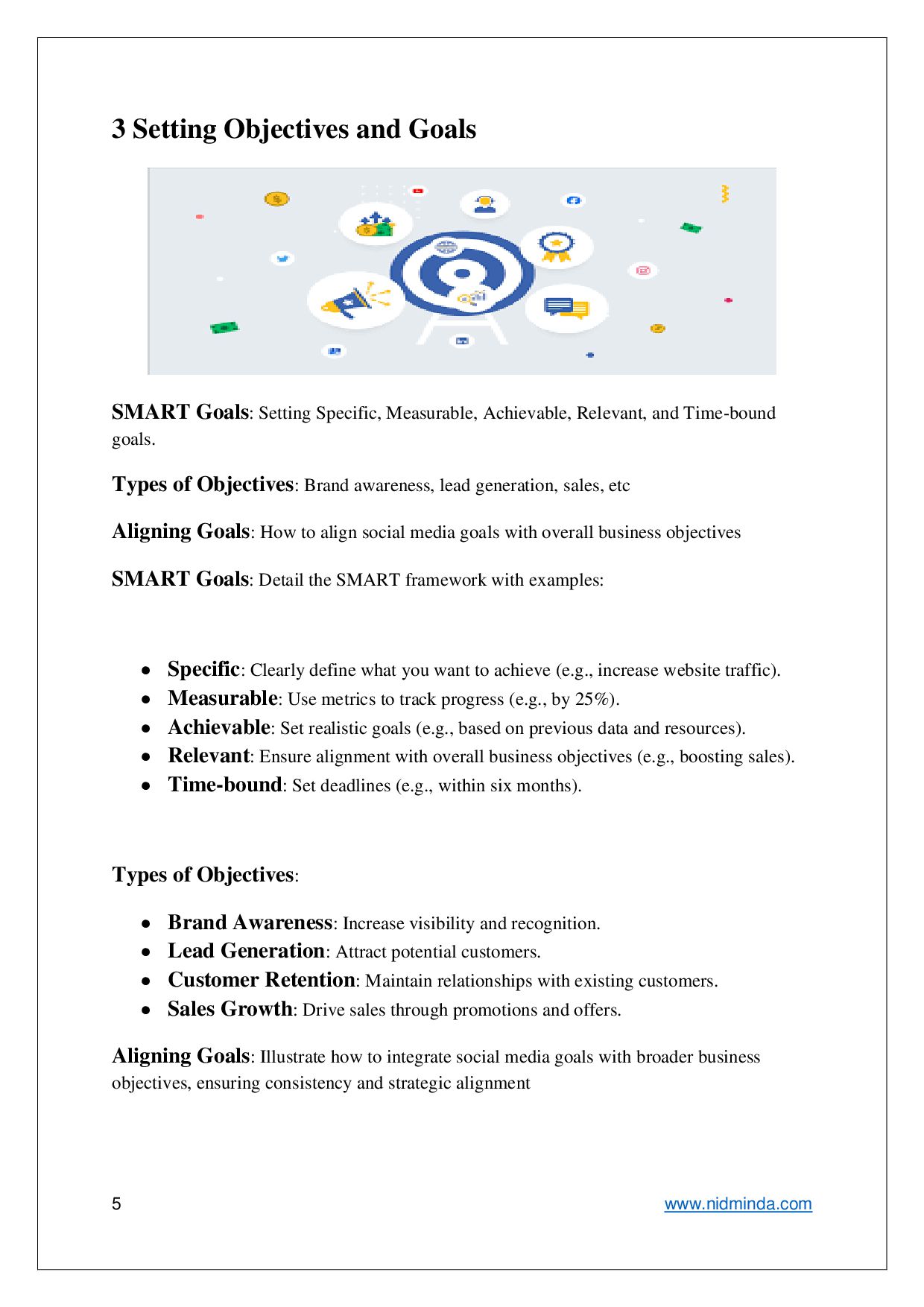
  5. 5 www.nidminda.com 3 Setting Objectives and Goals SMART Goals: Setting

    Specific, Measurable, Achievable, Relevant, and Time-bound goals. Types of Objectives: Brand awareness, lead generation, sales, etc Aligning Goals: How to align social media goals with overall business objectives SMART Goals: Detail the SMART framework with examples: • Specific: Clearly define what you want to achieve (e.g., increase website traffic). • Measurable: Use metrics to track progress (e.g., by 25%). • Achievable: Set realistic goals (e.g., based on previous data and resources). • Relevant: Ensure alignment with overall business objectives (e.g., boosting sales). • Time-bound: Set deadlines (e.g., within six months). Types of Objectives: • Brand Awareness: Increase visibility and recognition. • Lead Generation: Attract potential customers. • Customer Retention: Maintain relationships with existing customers. • Sales Growth: Drive sales through promotions and offers. Aligning Goals: Illustrate how to integrate social media goals with broader business objectives, ensuring consistency and strategic alignment
  6. 6 www.nidminda.com 4 Identifying Your Target Audience Audience Research: Demographics:

    Age, gender, location, income, etc. Psychographics: Interests, values, lifestyle, and behaviours. Behavioral Data: Purchase history, social media • Creating Personas: Develop detailed buyer personas to represent different segments of your target audience. Include: ◦ Name: Give each persona a name. ◦ Background: Job, education, family. ◦ Goals and Challenges: What are their aspirations and pain points? ◦ Preferred Channels: Which social media platforms do they use? • Understanding Needs: Identify what problems your audience needs solving and how your product or service can address those needs.
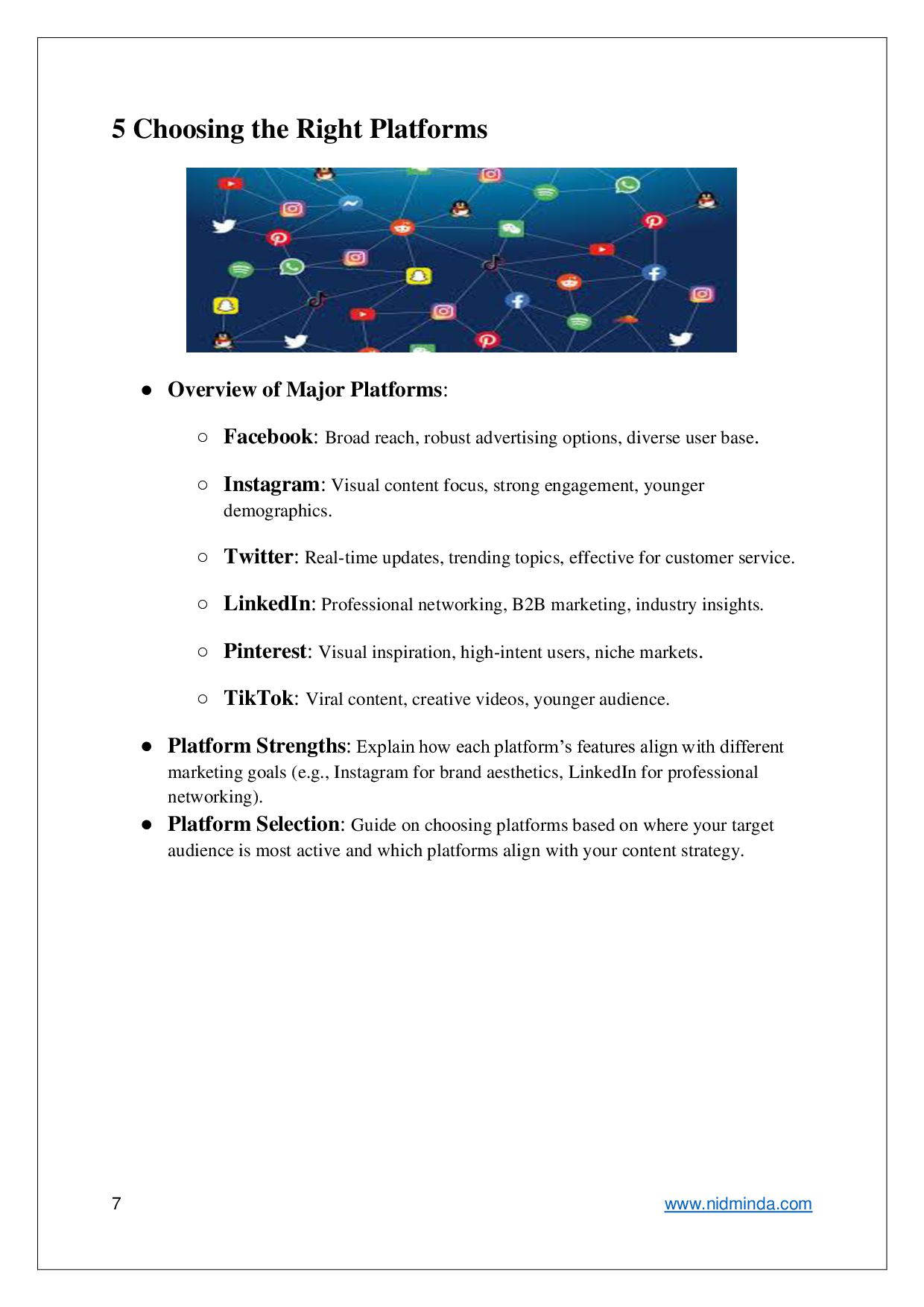
  7. 7 www.nidminda.com 5 Choosing the Right Platforms • Overview of

    Major Platforms: ◦ Facebook: Broad reach, robust advertising options, diverse user base. ◦ Instagram: Visual content focus, strong engagement, younger demographics. ◦ Twitter: Real-time updates, trending topics, effective for customer service. ◦ LinkedIn: Professional networking, B2B marketing, industry insights. ◦ Pinterest: Visual inspiration, high-intent users, niche markets. ◦ TikTok: Viral content, creative videos, younger audience. • Platform Strengths: Explain how each platform’s features align with different marketing goals (e.g., Instagram for brand aesthetics, LinkedIn for professional networking). • Platform Selection: Guide on choosing platforms based on where your target audience is most active and which platforms align with your content strategy.
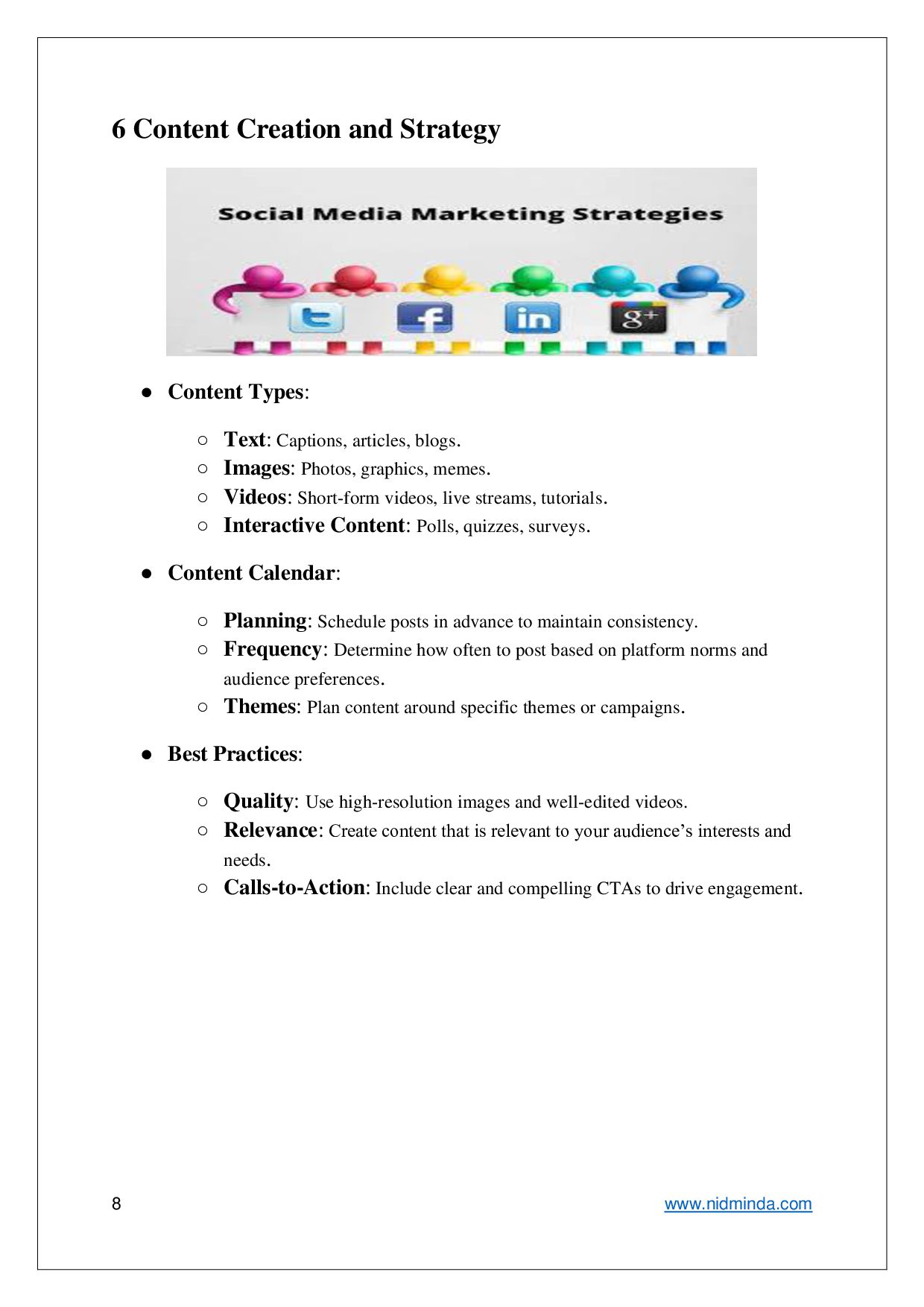
  8. 8 www.nidminda.com 6 Content Creation and Strategy • Content Types:

    ◦ Text: Captions, articles, blogs. ◦ Images: Photos, graphics, memes. ◦ Videos: Short-form videos, live streams, tutorials. ◦ Interactive Content: Polls, quizzes, surveys. • Content Calendar: ◦ Planning: Schedule posts in advance to maintain consistency. ◦ Frequency: Determine how often to post based on platform norms and audience preferences. ◦ Themes: Plan content around specific themes or campaigns. • Best Practices: ◦ Quality: Use high-resolution images and well-edited videos. ◦ Relevance: Create content that is relevant to your audience’s interests and needs. ◦ Calls-to-Action: Include clear and compelling CTAs to drive engagement.
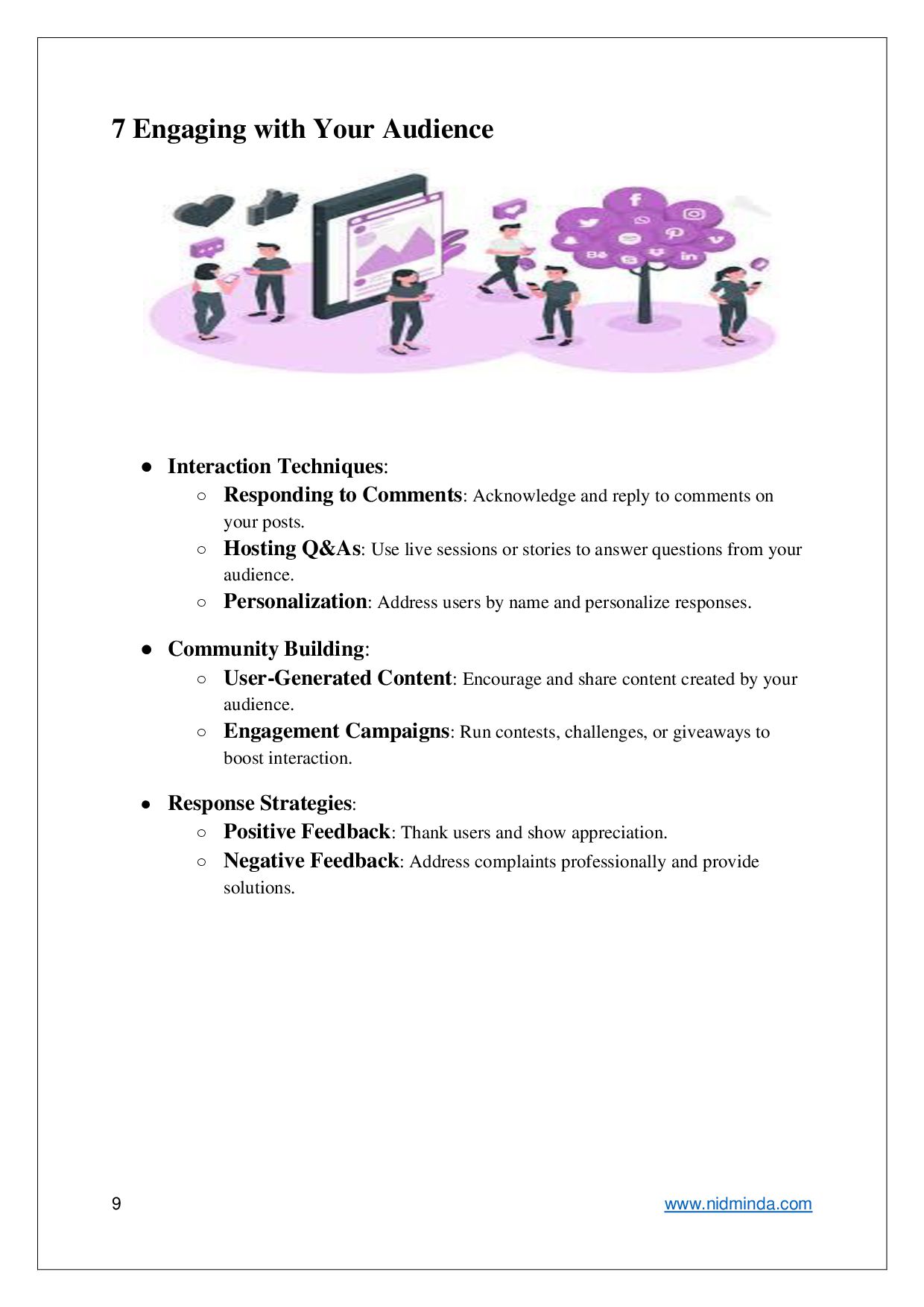
  9. 9 www.nidminda.com 7 Engaging with Your Audience • Interaction Techniques:

    ◦ Responding to Comments: Acknowledge and reply to comments on your posts. ◦ Hosting Q&As: Use live sessions or stories to answer questions from your audience. ◦ Personalization: Address users by name and personalize responses. • Community Building: ◦ User-Generated Content: Encourage and share content created by your audience. ◦ Engagement Campaigns: Run contests, challenges, or giveaways to boost interaction. • Response Strategies: ◦ Positive Feedback: Thank users and show appreciation. ◦ Negative Feedback: Address complaints professionally and provide solutions.
  10. 10 www.nidminda.com 8 Advertising on Social Media Ad Formats: ◦

    Sponsored Posts: Native ads that blend with regular content. ◦ Stories: Full-screen ads that appear between user stories. ◦ Video Ads: Engaging video content that appears in feeds or as pre-rolls. ◦ Carousel Ads: Multiple images or videos that users can swipe through. • Targeting Options: ◦ Demographic Targeting: Based on age, gender, income, etc. ◦ Interest Targeting: Based on users’ interests and behaviours. ◦ Behavioural Targeting: Based on past interactions and actions. ◦ Retargeting: Re-engage users who have previously interacted with your brand. • Budgeting and Bidding: ◦ Budget Setting: Define daily or lifetime budgets. ◦ Bidding Strategies: Choose between cost-per-click (CPC) or cost-per- impression (CPM). ◦ Optimization: Adjust bids based on performance and competition.
  11. 11 www.nidminda.com 9 Measuring Success with Analytics • Key Metrics:

    ◦ Engagement Rate: Ratio of interactions to total reach ◦ Reach and Impressions: Number of unique viewers and total views ◦ Click-Through Rate (CTR): Percentage of users who click on your links. ◦ Conversion Rate: Percentage of users who complete a desired action. • Tools and Platforms ◦ Google Analytics: Track website traffic and user behavior. ◦ Facebook Insights: Monitor performance of Facebook pages and ads. ◦ Twitter Analytics: Analyse tweet engagement and follower growth. ◦ Instagram Insights: Measure post and story performance. • Interpreting Data: ◦ Performance: Assess what’s working and what needs adjustment. ◦ Reporting: Create regular reports to track progress and inform strategy.
  12. 12 www.nidminda.com 10 Managing Social Media Presence • Consistency: ◦

    Brand Voice: Maintain a consistent tone and style across all platforms. ◦ Visual Identity: Use consistent branding elements like colours, logos, and fonts. • Automation Tools: ◦ Scheduling: Tools like Hootsuite, Buffer, or Sprout Social to schedule posts. ◦ Monitoring: Track mentions, hashtags, and keywords. ◦ Analytics: Measure performance and generate reports. • Crisis Management ◦ Response: Address issues quickly and transparently. ◦ Recovery: Implement strategies to rebuild trust and resolve issues.
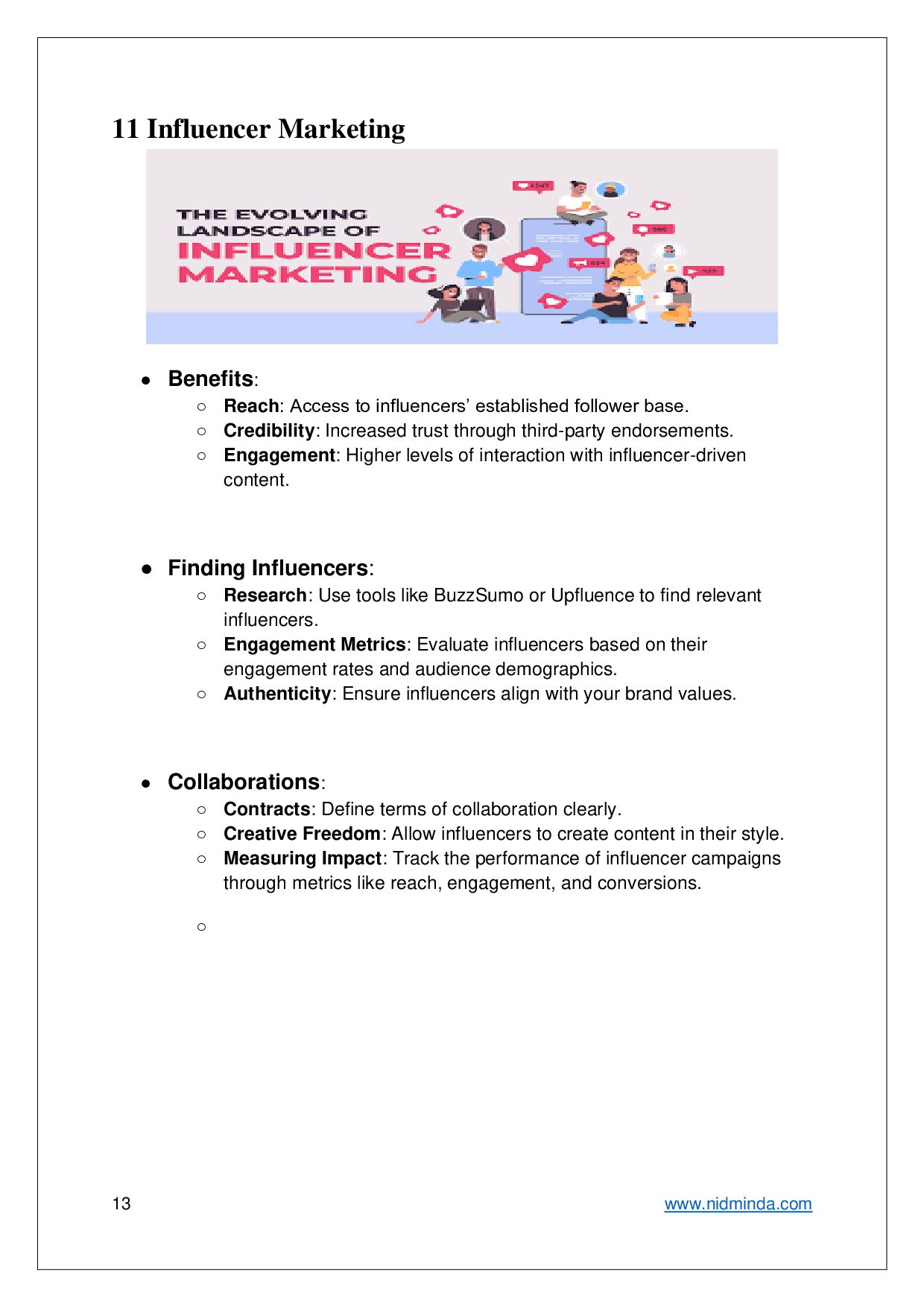
  13. 13 www.nidminda.com 11 Influencer Marketing • Benefits: ◦ Reach: Access

    to influencers’ established follower base. ◦ Credibility: Increased trust through third-party endorsements. ◦ Engagement: Higher levels of interaction with influencer-driven content. • Finding Influencers: ◦ Research: Use tools like BuzzSumo or Upfluence to find relevant influencers. ◦ Engagement Metrics: Evaluate influencers based on their engagement rates and audience demographics. ◦ Authenticity: Ensure influencers align with your brand values. • Collaborations: ◦ Contracts: Define terms of collaboration clearly. ◦ Creative Freedom: Allow influencers to create content in their style. ◦ Measuring Impact: Track the performance of influencer campaigns through metrics like reach, engagement, and conversions. ◦
  14. 14 www.nidminda.com 12 Handling Customer Feedback • Feedback Channels: ◦

    Social media: Monitor comments, direct messages, and reviews. ◦ Surveys: Use surveys and polls to gather feedback. • Responding to Feedback: ◦ Positive Feedback: Acknowledge and thank customers for positive reviews. ◦ Negative Feedback: Address complaints with empathy and provide solutions. ◦ Follow-up: Resolve issues and follow up to ensure customer satisfaction. • Improving Service: ◦ Insights: Use feedback to identify areas for improvement. ◦ Action Plans: Implement changes based on customer suggestions. ◦ Communication: Inform customers about improvements and changes.
  15. 15 www.nidminda.com 13 Staying Updated with Trends • Industry Trends:

    ◦ AI and Automation: Use of AI for chatbots, personalized content, and automated responses. ◦ Ephemeral Content: Rise of temporary content like stories and live videos. ◦ Influencer Evolution: Increasing importance of micro and nano- influencers. • Adapting Strategies: ◦ Flexibility: Be prepared to adjust strategies based on new trends. ◦ Innovation: Experiment with new features and formats. • Continuous Learning: ◦ Webinars: Attend industry webinars and online workshops. ◦ Courses: Enrol in social media marketing courses and certifications.
  16. 16 www.nidminda.com CONCLUSION In the rapidly evolving landscape of digital

    marketing, social media stands out as one of the most dynamic and influential channels available. As we conclude this comprehensive guide, it’s crucial to reflect on the overarching principles and strategic insights that can drive your success in social media marketing. From the above the topic of social media marketing, which i have gone through. Social media marketing is a powerful tool that, when used strategically, can drive significant growth for your brand. By understanding the core principles, applying best practices, and continuously optimizing your approach, you can harness the full potential of social media to achieve your marketing goals. As you move forward, remember that success in social media marketing requires a combination of creativity, strategic thinking, and data-driven decision-making. Embrace the opportunities that social media offers, stay adaptable, and always keep your audience at the center of your efforts. Thank you for exploring this guide on social media marketing. We hope the insights and strategies provided will empower you to create effective and impactful social media campaigns that resonate with your audience and drive meaningful results. Social media marketing, when approached with strategic insight, creativity, and a focus on data-driven results, can be a transformative force for your brand. By understanding and implementing the principles and strategies outlined in this guide, you position yourself to harness the full potential of social media to drive brand growth, engage with your audience, and achieve your marketing goals. As you move forward, remember that social media is not just a marketing channel but a platform for building meaningful connections and driving authentic interactions. Embrace the opportunities it offers, remain adaptable, and continue to refine your strategies for ongoing success. Thank you for engaging with this guide. We hope it provides you with the knowledge and inspiration needed to excel in your social media marketing endeavours and make a lasting impact in the digital world.
  17. 17 www.nidminda.com REFERENCE 1) Social media marketing: The above content

    about social media marketing is extracted and collected from www.chatgpt.com 2) Images: The above images all are taken from www.googleimages.com 3) conclusion: The above conclusion and final thoughts were generated by me and I have given my final opinion on the SOCIAL MEDIA MARKETING part