Upgrade to Pro — share decks privately, control downloads, hide ads and more …

Predictive_Analysis_using_Microsoft_SQL_Server_...

Avatar for Fisnik Fisnik
November 20, 2018

 Predictive_Analysis_using_Microsoft_SQL_Server_R_Services.pdf

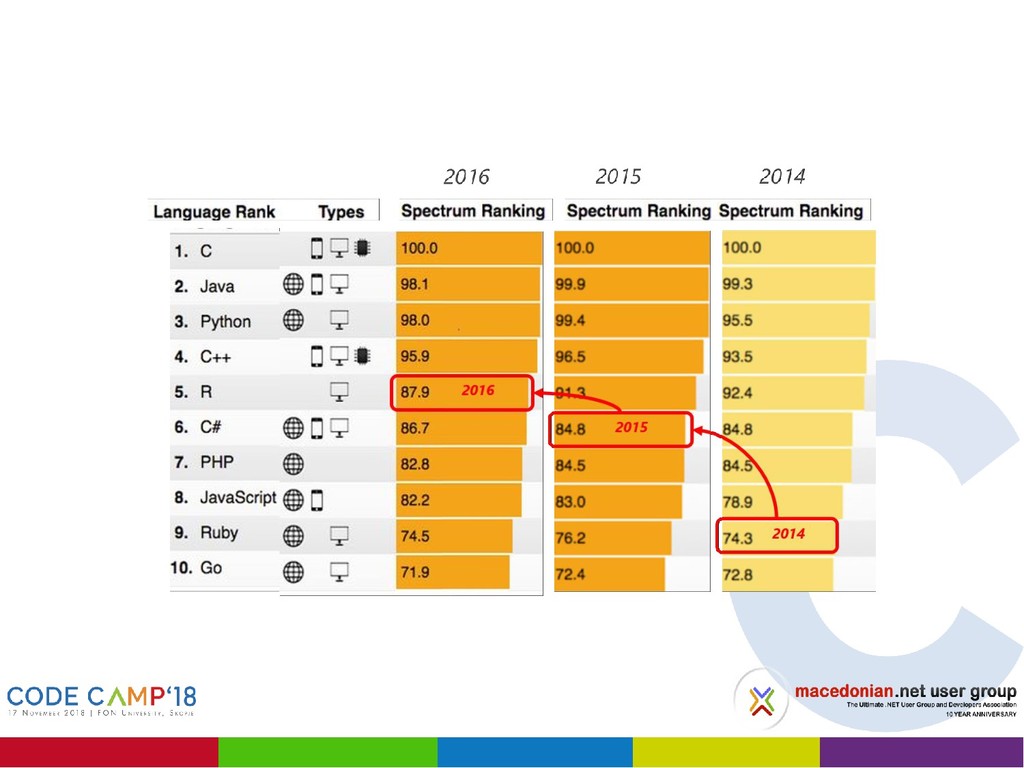
R is rapidly becoming the leading language in Data Science and statistics.

This session will show how Microsoft SQL Server can help meet an increasingly “predictive” world by supporting the R language inside the database.

Demonstration using R and SQL Server Services in rental industry.

Avatar for Fisnik

Fisnik

November 20, 2018

Other Decks in Technology

Transcript

  1. Speaker • Fisnik Doko Microsoft Certified Trainer • 21 active

    certificates - Microsoft • MCSD: App Builder | Web applications • MCSE: Data Management and Analytics | Data Platform • MCSE: Cloud Platform and Infrastructure • Software Architect • Consultant • Speaker
  2. Content • Advanced Analytics Introduction • What is R? •

    What is Microsoft R? • Microsoft SQL Server R Services • R for machine learning • Demo • R and Python
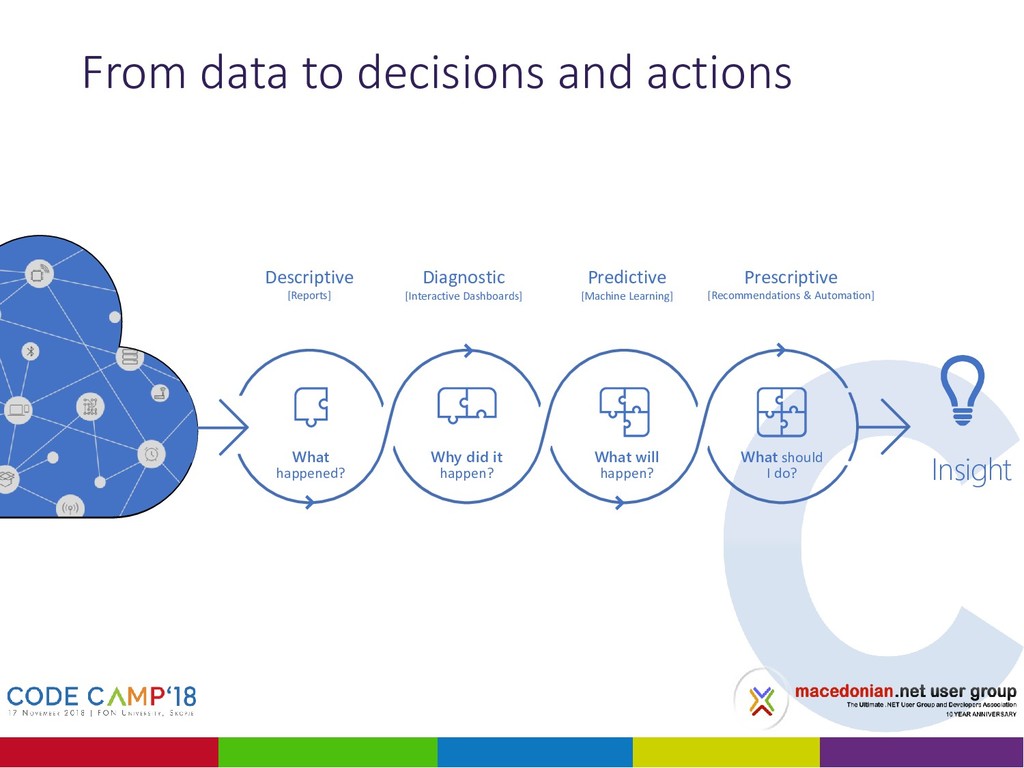
  3. Diagnostic [Interactive Dashboards] Prescriptive [Recommendations & Automation] Predictive [Machine Learning]

    Descriptive [Reports] What should I do? What will happen? Why did it happen? What happened? Insight From data to decisions and actions
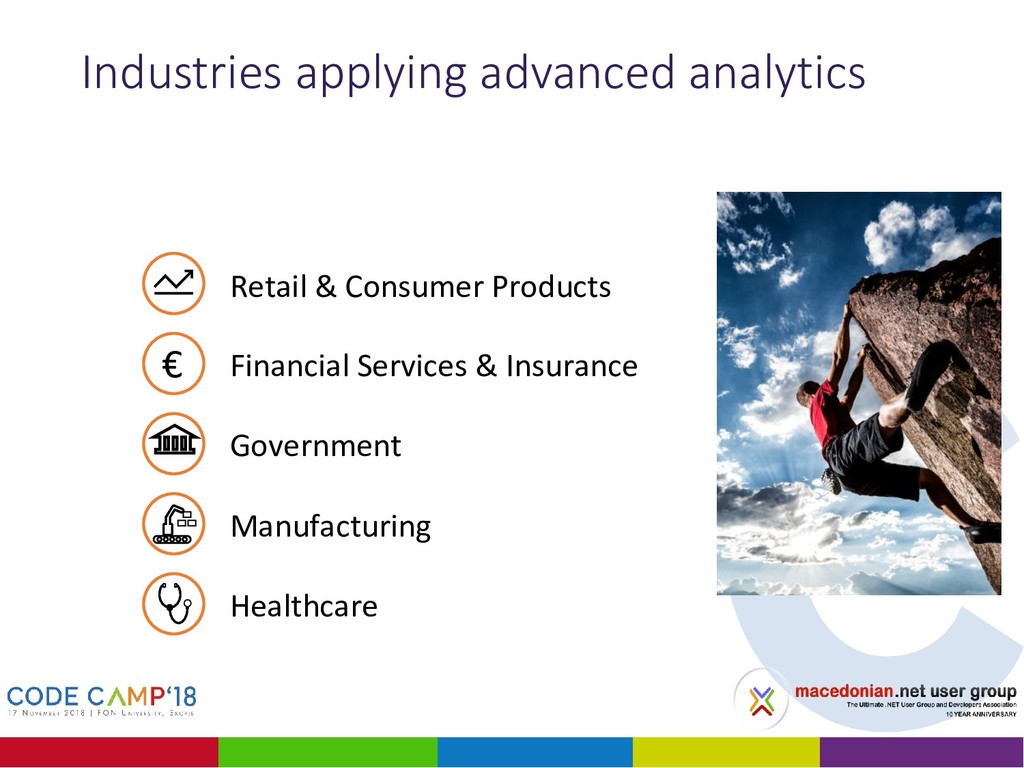
  4. Retail & Consumer Products Healthcare Financial Services & Insurance Government

    Manufacturing € Industries applying advanced analytics
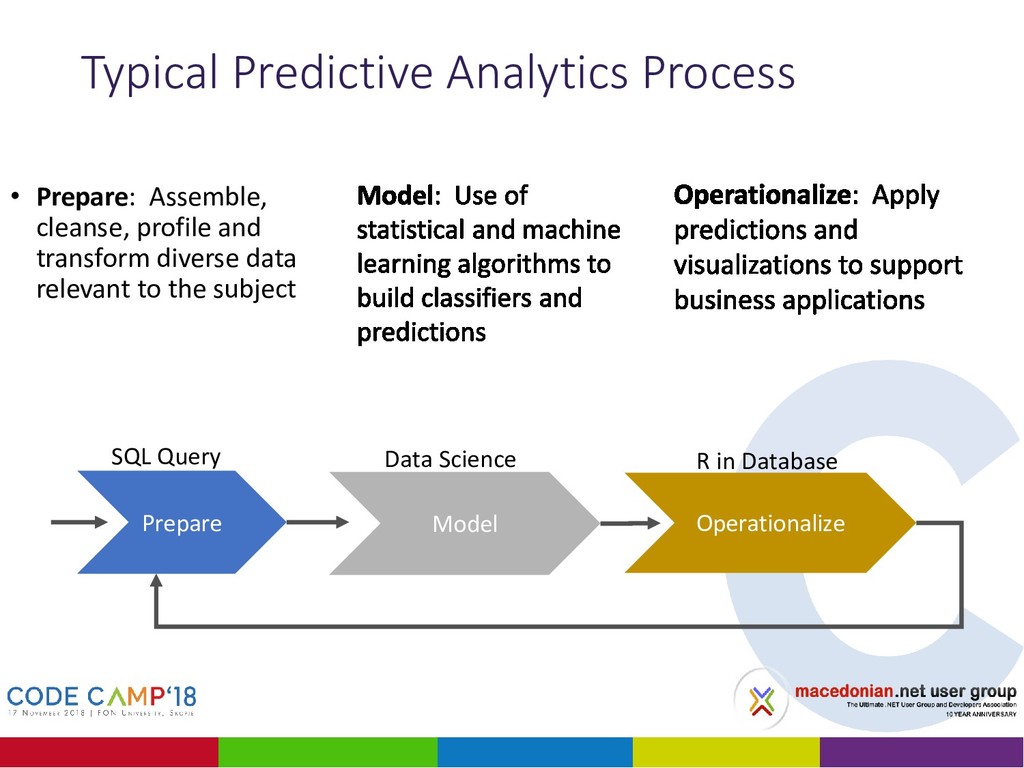
  5. Typical Predictive Analytics Process • Prepare: Assemble, cleanse, profile and

    transform diverse data relevant to the subject Operationalize Model Prepare SQL Query Data Science R in Database
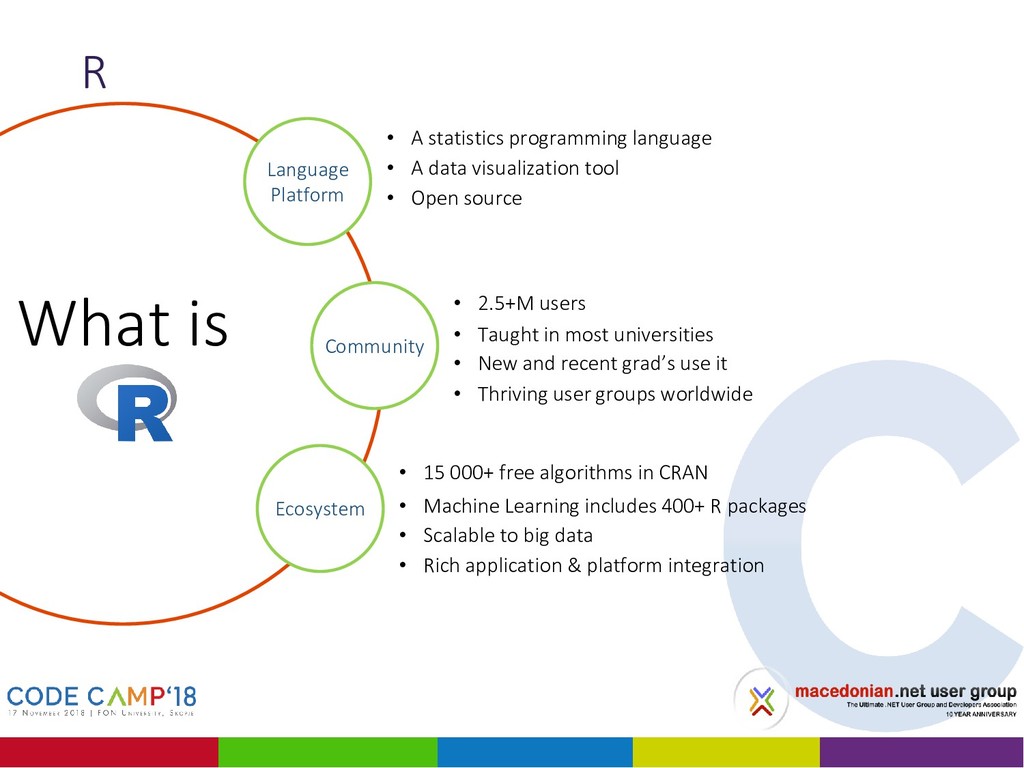
  6. What is • A statistics programming language • A data

    visualization tool • Open source • 2.5+M users • Taught in most universities • Thriving user groups worldwide • 15 000+ free algorithms in CRAN • Machine Learning includes 400+ R packages • Scalable to big data • New and recent grad’s use it Language Platform Community Ecosystem • Rich application & platform integration R
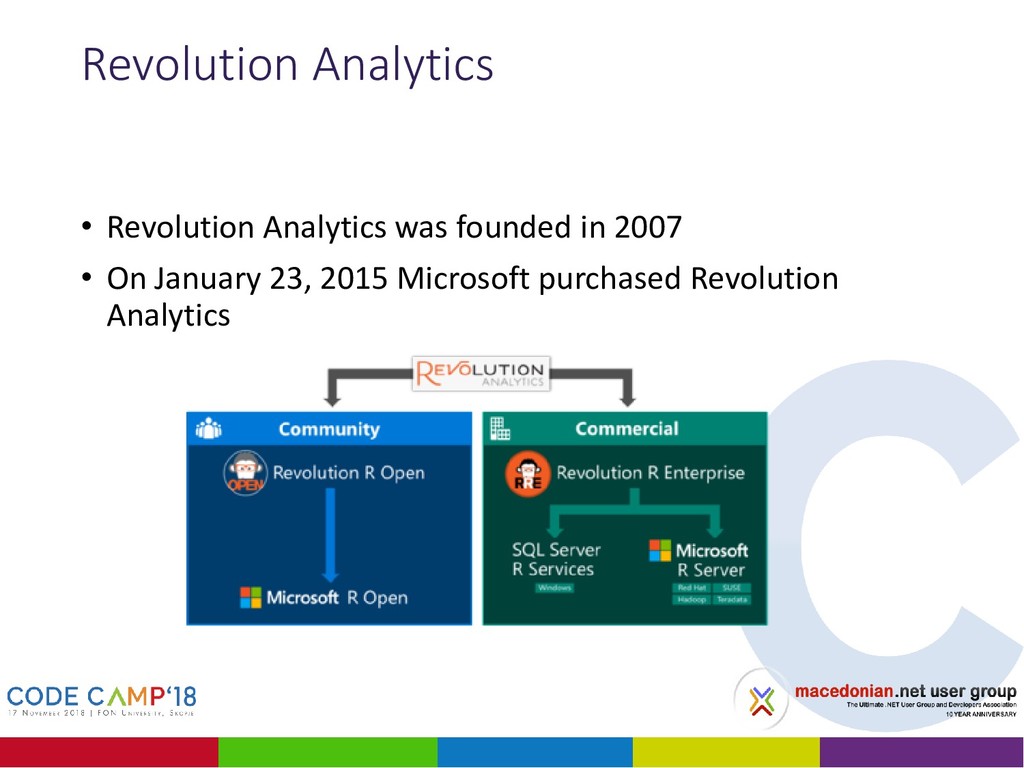
  7. Revolution Analytics • Revolution Analytics was founded in 2007 •

    On January 23, 2015 Microsoft purchased Revolution Analytics
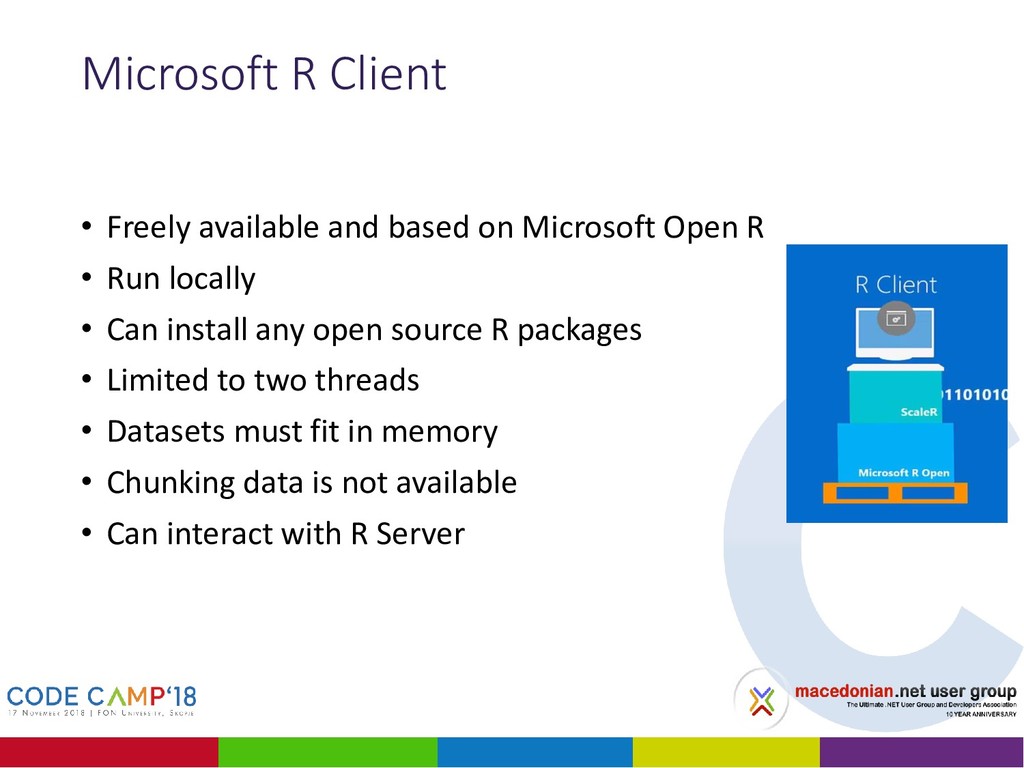
  8. Microsoft R Client • Freely available and based on Microsoft

    Open R • Run locally • Can install any open source R packages • Limited to two threads • Datasets must fit in memory • Chunking data is not available • Can interact with R Server
  9. What is Microsoft R Server? • Renamed to Microsoft Machine

    Learning Server (SQL 2017) • Added support for the full data science lifecycle of Python • Multithreaded Performance, parallelization, and distributed • RevoScaleR package machine learning, supports data science at scale • MicrosoftML package for distributed machine learning • Operationalization functions for deploying to remote servers
  10. What is SQL Server R Services? • An implementation of

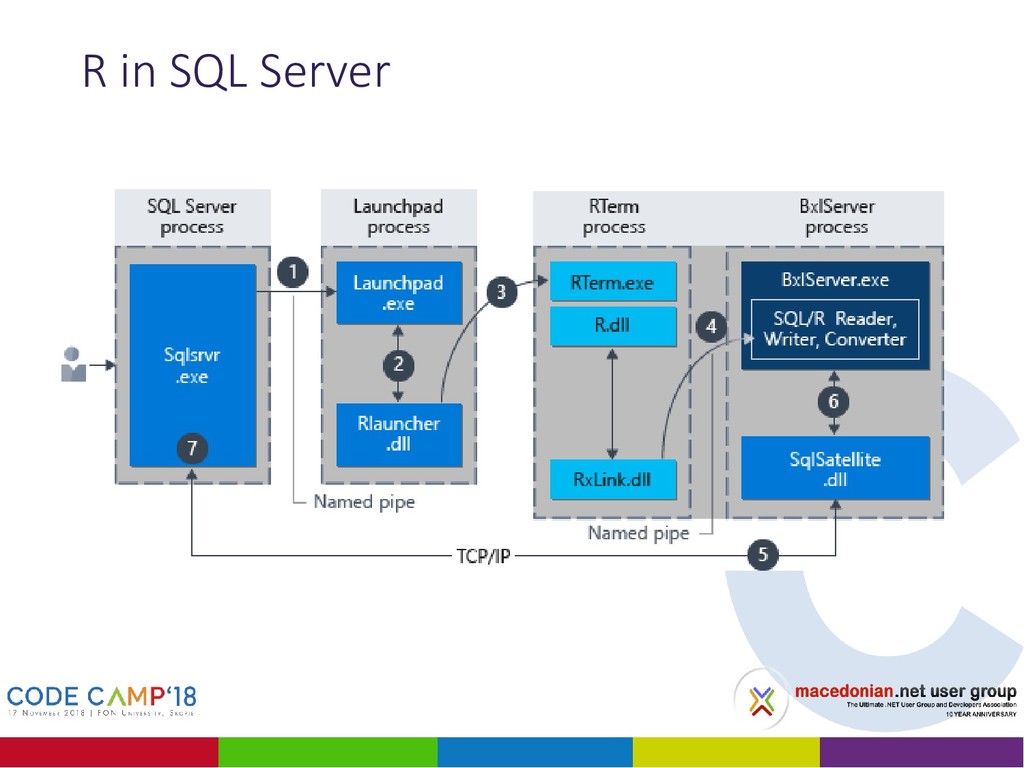
    Microsoft R Server, optimized for SQL Server • Intended to run R code stored within the database • Supports enterprise-scale data science • Helps you embrace the highly popular open source R language in your business. • R processes execute outside of the database engine • Security is handled by SQL Server Trusted Launchpad
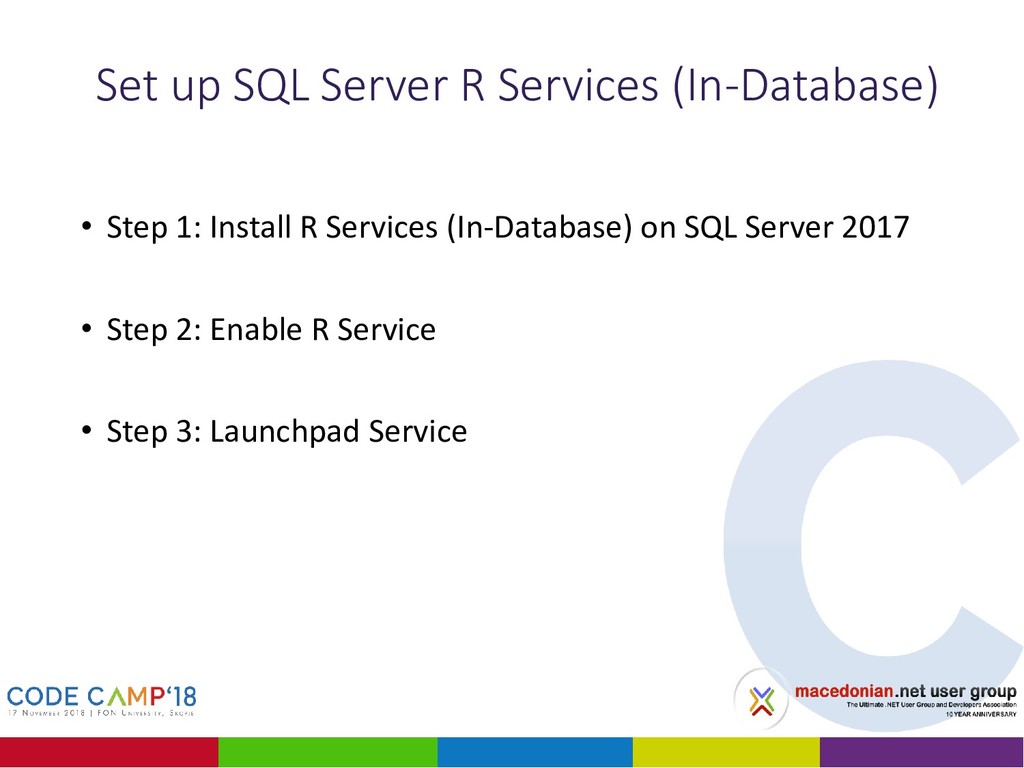
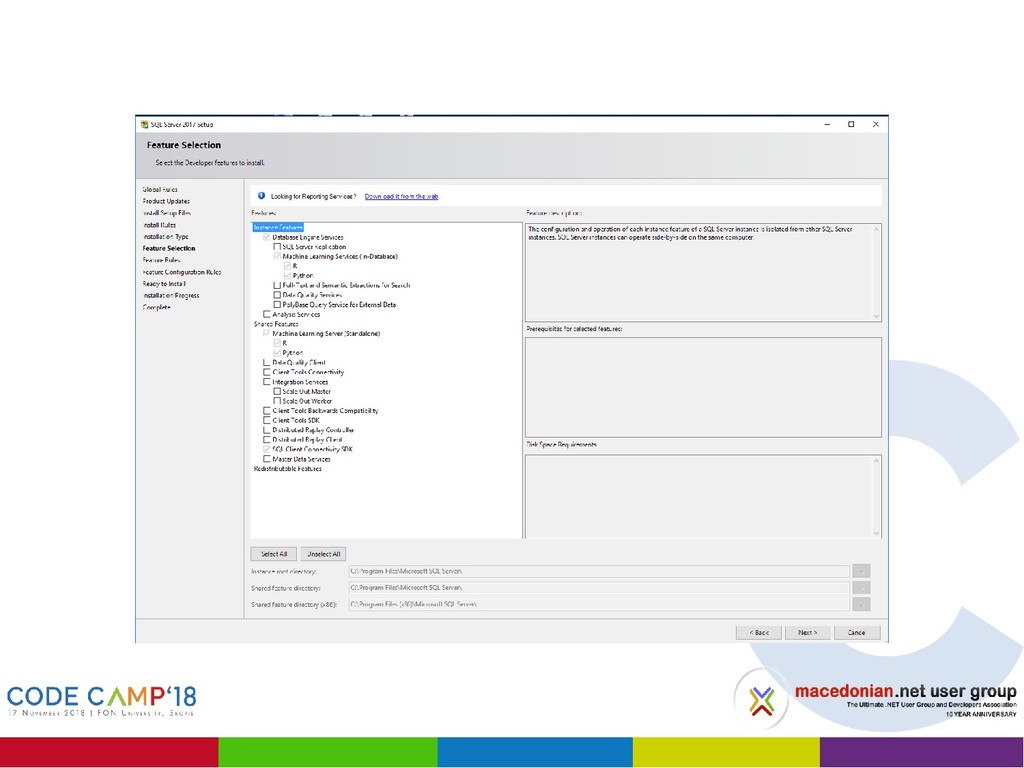
  11. Set up SQL Server R Services (In-Database) • Step 1:

    Install R Services (In-Database) on SQL Server 2017 • Step 2: Enable R Service • Step 3: Launchpad Service
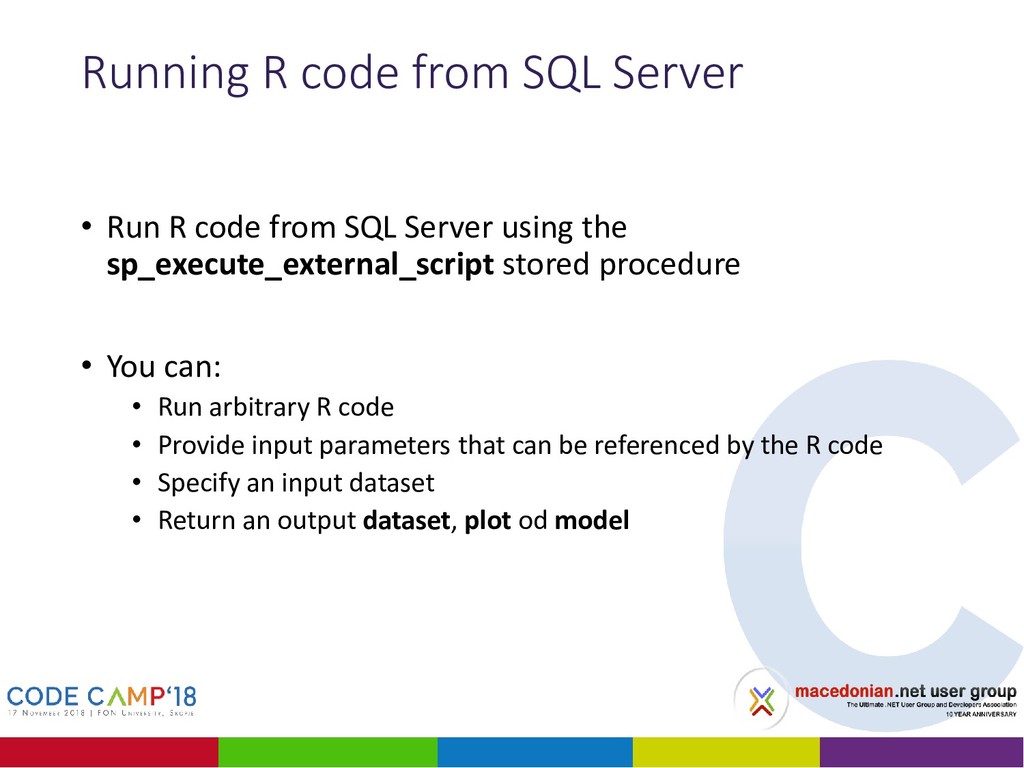
  12. Running R code from SQL Server • Run R code

    from SQL Server using the sp_execute_external_script stored procedure • You can: • Run arbitrary R code • Provide input parameters that can be referenced by the R code • Specify an input dataset • Return an output dataset, plot od model
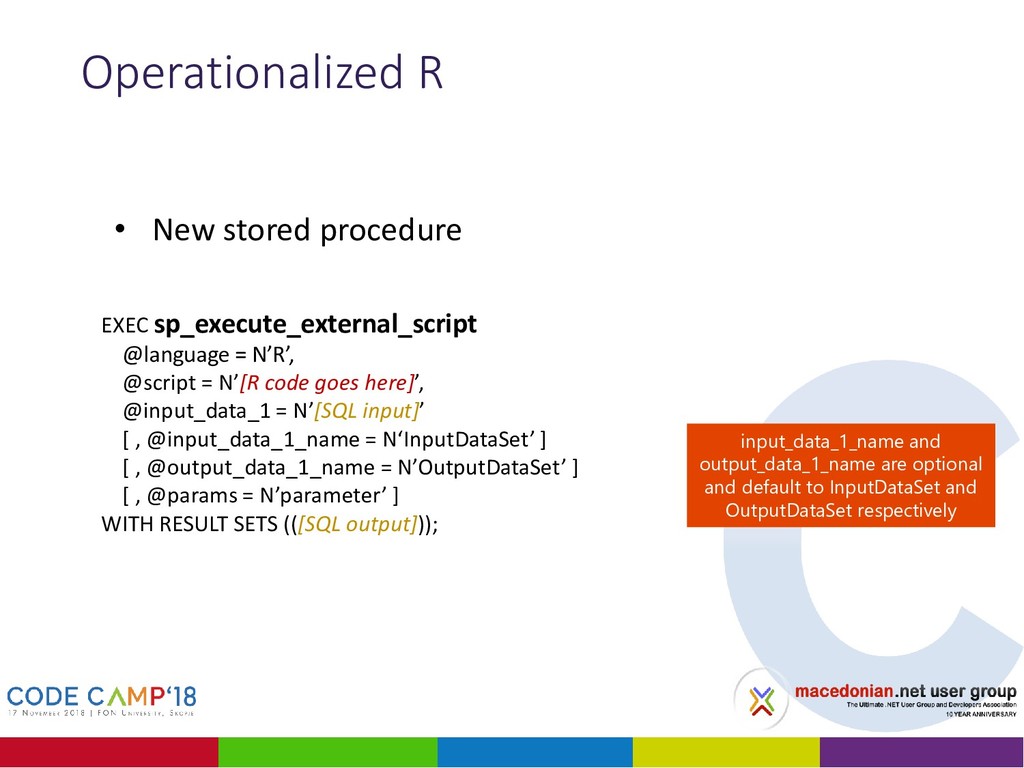
  13. • New stored procedure EXEC sp_execute_external_script @language = N’R’, @script

    = N’[R code goes here]’, @input_data_1 = N’[SQL input]’ [ , @input_data_1_name = N‘InputDataSet’ ] [ , @output_data_1_name = N’OutputDataSet’ ] [ , @params = N’parameter’ ] WITH RESULT SETS (([SQL output])); input_data_1_name and output_data_1_name are optional and default to InputDataSet and OutputDataSet respectively Operationalized R
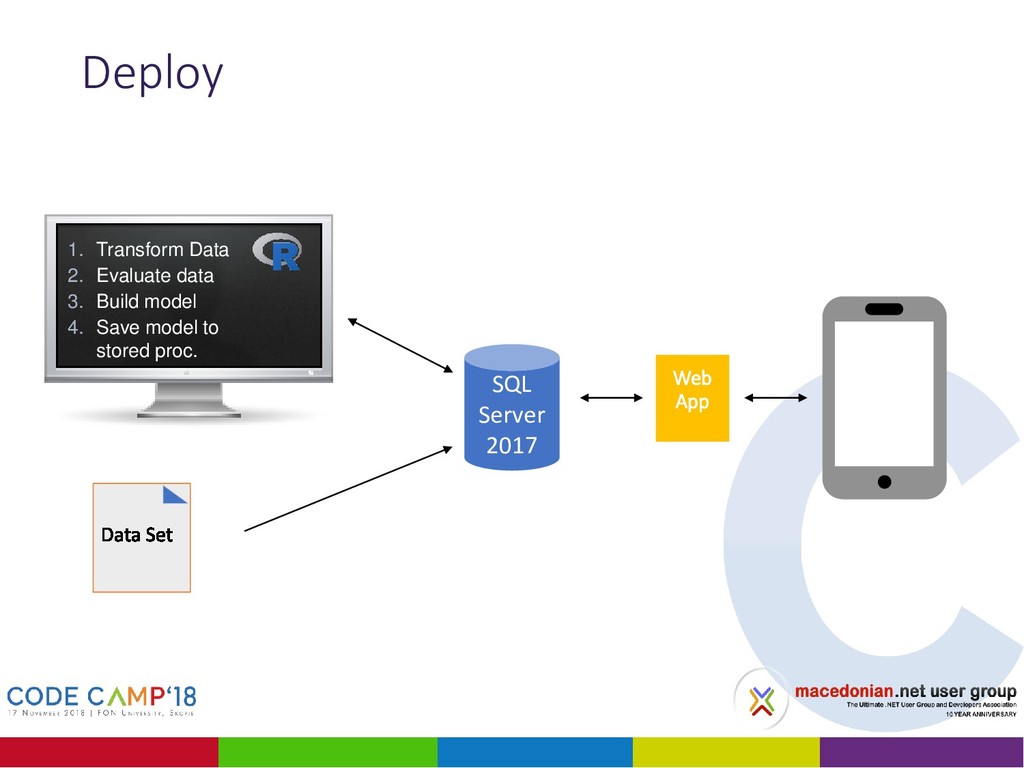
  14. 1. Transform Data 2. Evaluate data 3. Build model 4.

    Save model to stored proc. SQL Server 2017 Web App Deploy
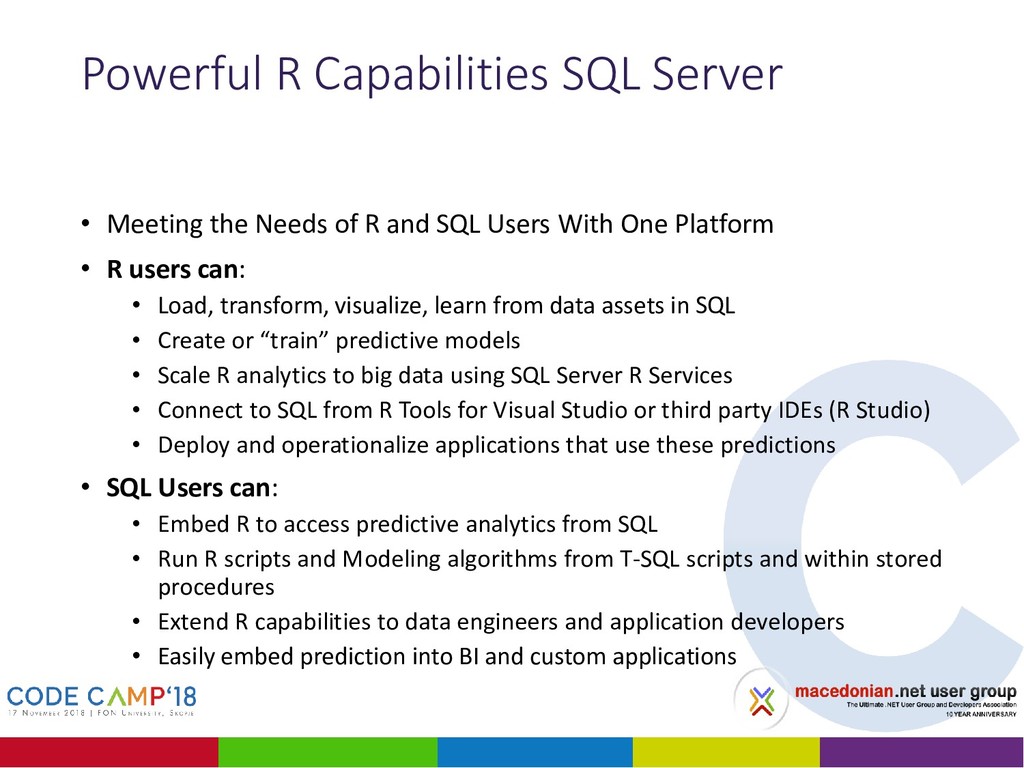
  15. Powerful R Capabilities SQL Server • Meeting the Needs of

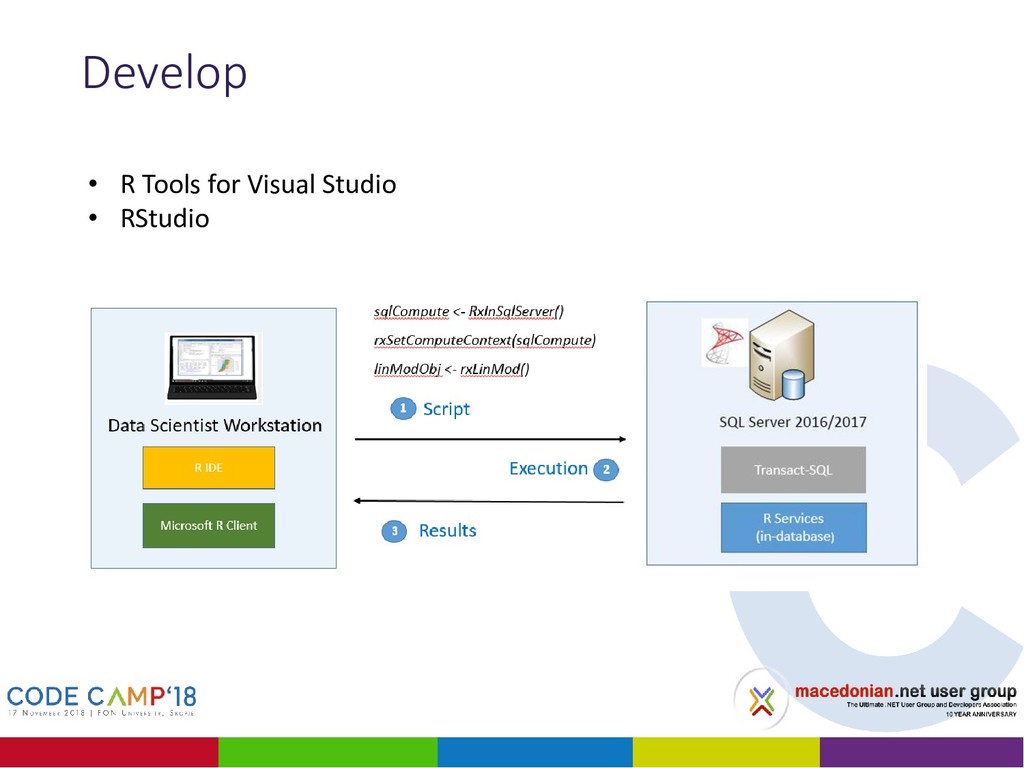
    R and SQL Users With One Platform • R users can: • Load, transform, visualize, learn from data assets in SQL • Create or “train” predictive models • Scale R analytics to big data using SQL Server R Services • Connect to SQL from R Tools for Visual Studio or third party IDEs (R Studio) • Deploy and operationalize applications that use these predictions • SQL Users can: • Embed R to access predictive analytics from SQL • Run R scripts and Modeling algorithms from T-SQL scripts and within stored procedures • Extend R capabilities to data engineers and application developers • Easily embed prediction into BI and custom applications
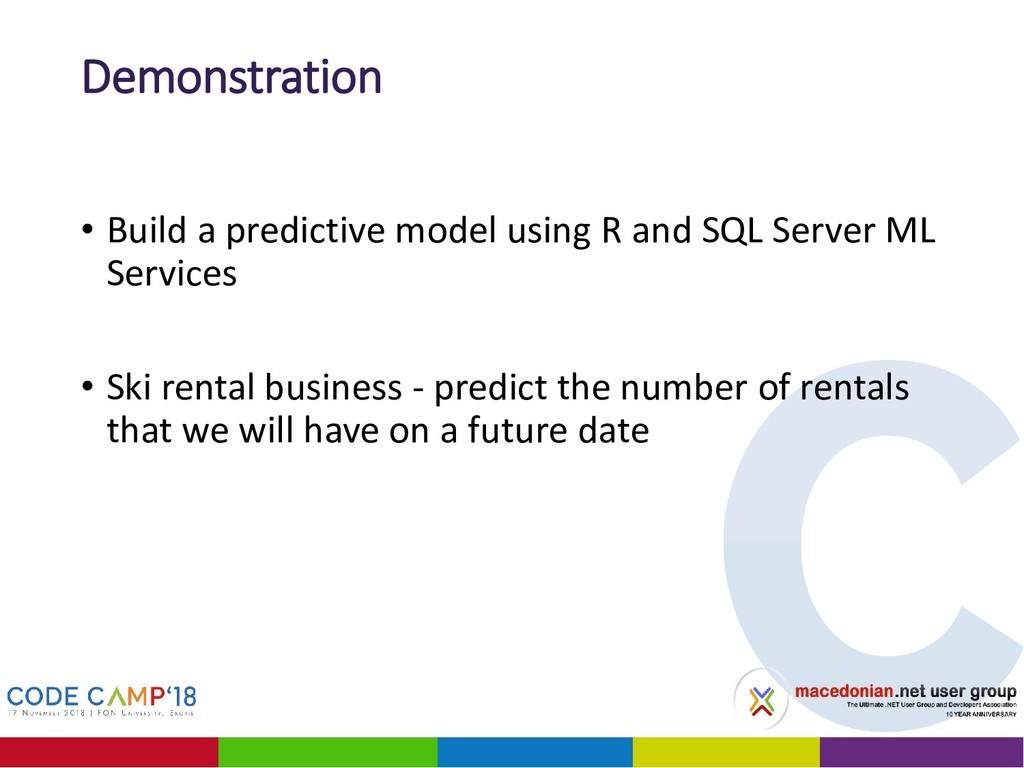
  16. Demonstration • Build a predictive model using R and SQL

    Server ML Services • Ski rental business - predict the number of rentals that we will have on a future date
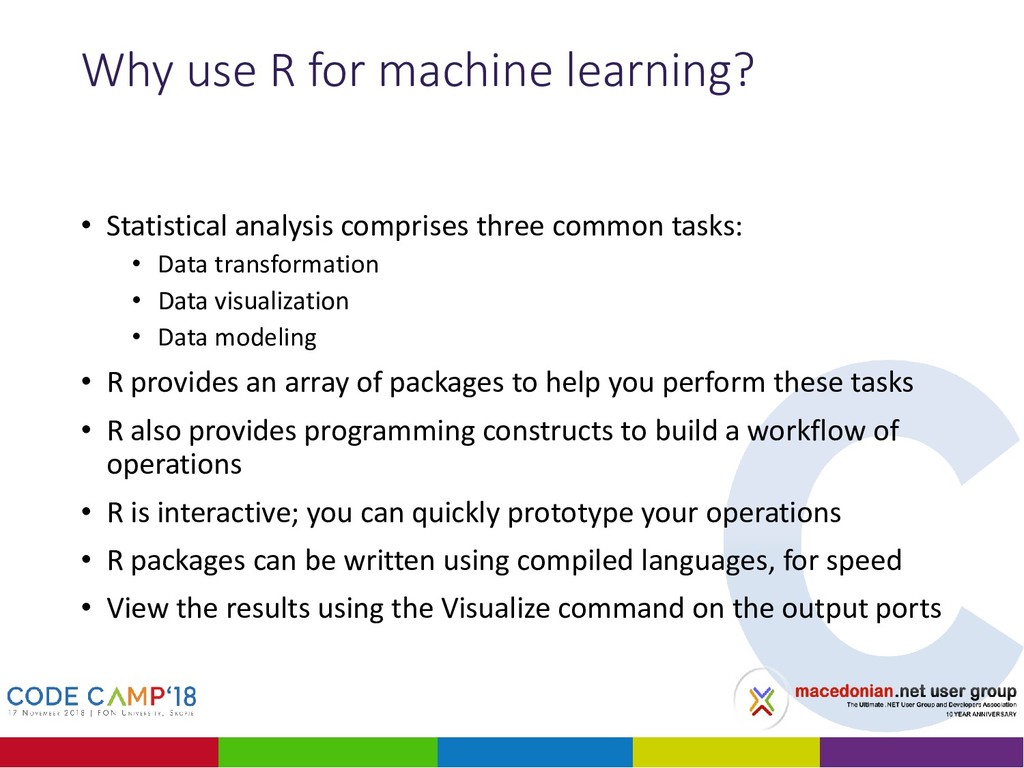
  17. Why use R for machine learning? • Statistical analysis comprises

    three common tasks: • Data transformation • Data visualization • Data modeling • R provides an array of packages to help you perform these tasks • R also provides programming constructs to build a workflow of operations • R is interactive; you can quickly prototype your operations • R packages can be written using compiled languages, for speed • View the results using the Visualize command on the output ports
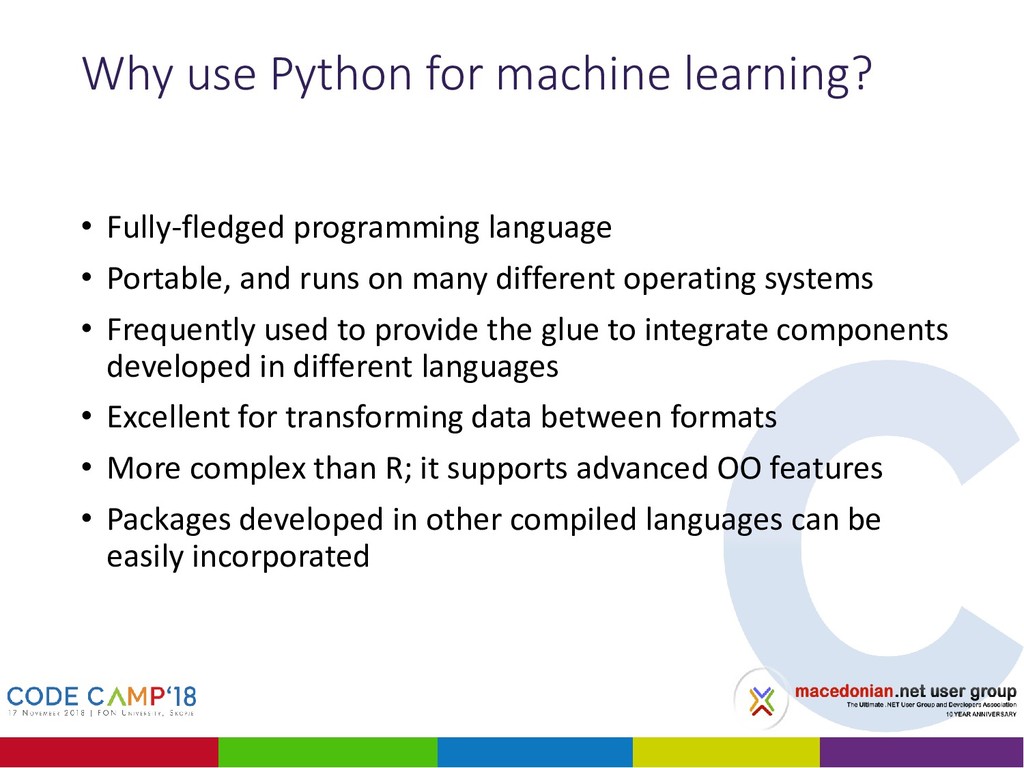
  18. Why use Python for machine learning? • Fully-fledged programming language

    • Portable, and runs on many different operating systems • Frequently used to provide the glue to integrate components developed in different languages • Excellent for transforming data between formats • More complex than R; it supports advanced OO features • Packages developed in other compiled languages can be easily incorporated
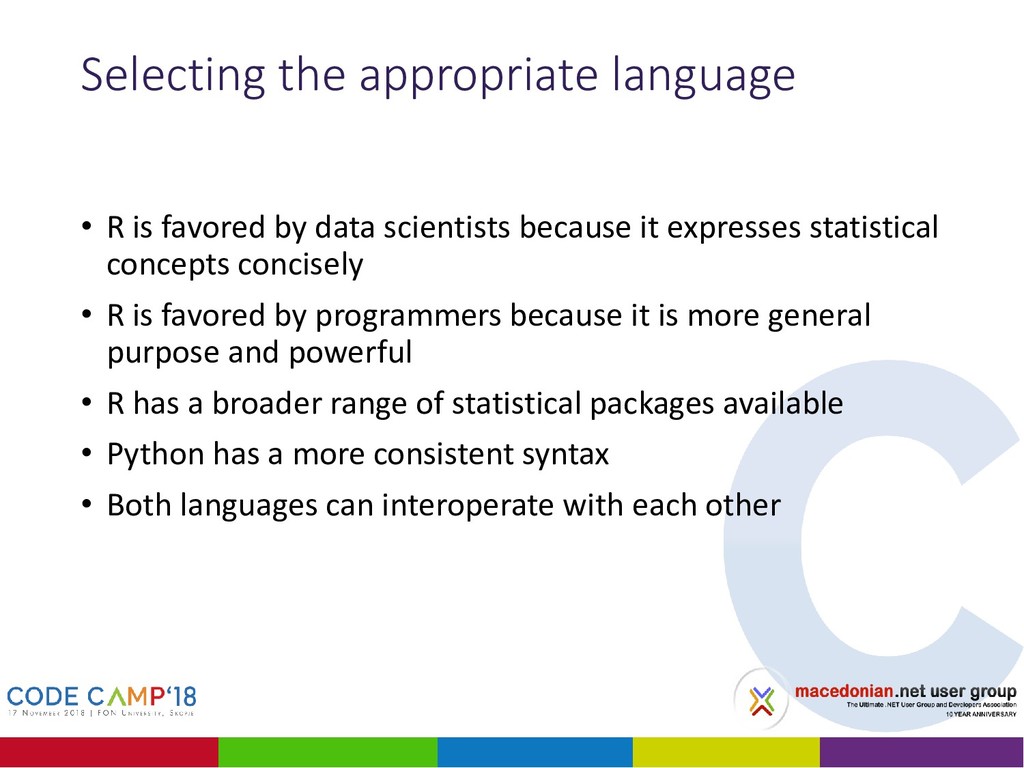
  19. Selecting the appropriate language • R is favored by data

    scientists because it expresses statistical concepts concisely • R is favored by programmers because it is more general purpose and powerful • R has a broader range of statistical packages available • Python has a more consistent syntax • Both languages can interoperate with each other