Can Someone With Diabetes or High Blood Pressure Still Get Liver Transplant Treatment?
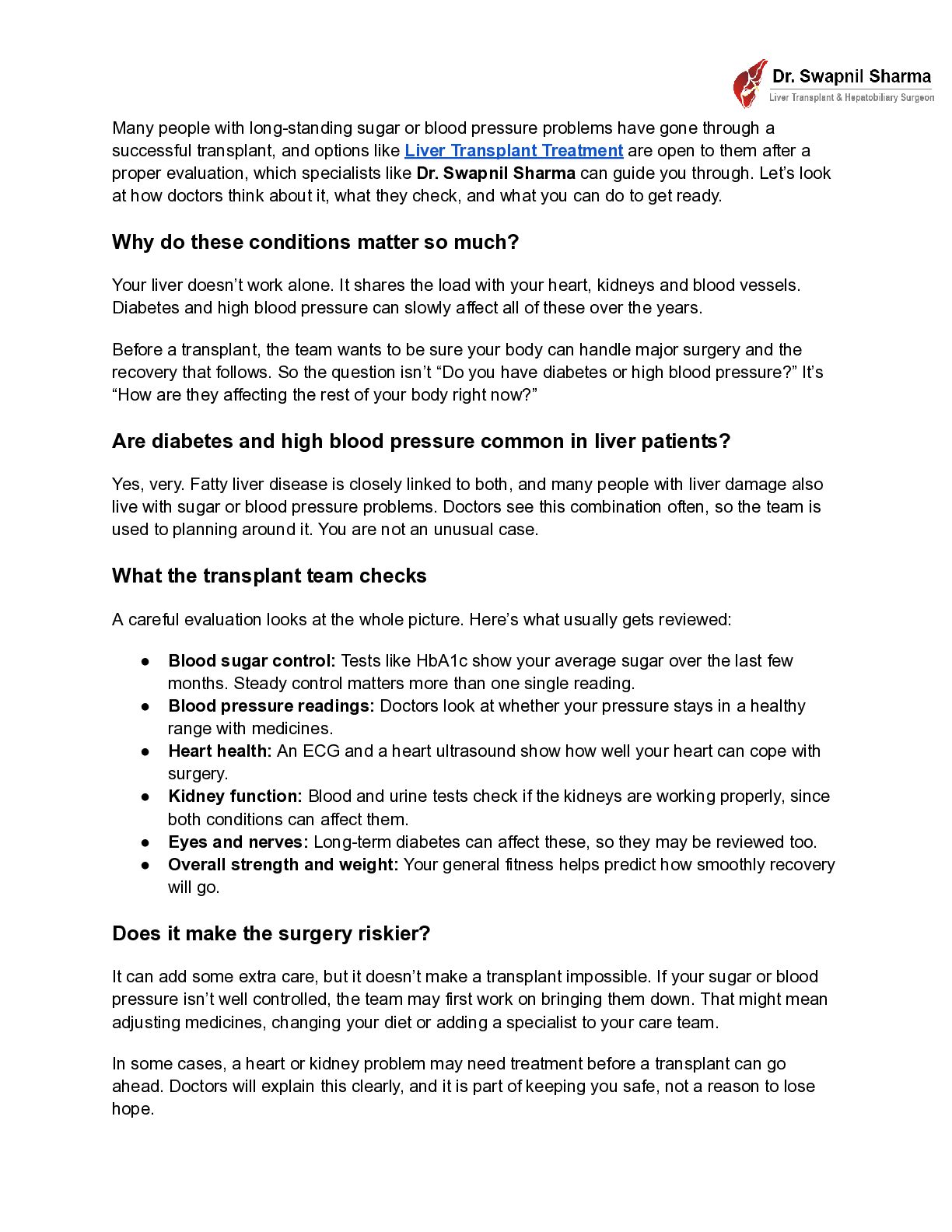
Living with diabetes or high blood pressure? Find out if you can still have Liver Transplant Treatment in Mumbai, what tests are done and how to prepare.
Liver Transplant Treatment? If you or someone at home lives with diabetes or high blood pressure, and the doctor has now mentioned a liver transplant, it’s natural to ask, “Does this make me ineligible?” The short answer is no. Having either condition does not automatically rule out a transplant. What matters is how well they are controlled and how your body is doing overall.
gone through a successful transplant, and options like Liver Transplant Treatment are open to them after a proper evaluation, which specialists like Dr. Swapnil Sharma can guide you through. Let’s look at how doctors think about it, what they check, and what you can do to get ready. Why do these conditions matter so much? Your liver doesn’t work alone. It shares the load with your heart, kidneys and blood vessels. Diabetes and high blood pressure can slowly affect all of these over the years. Before a transplant, the team wants to be sure your body can handle major surgery and the recovery that follows. So the question isn’t “Do you have diabetes or high blood pressure?” It’s “How are they affecting the rest of your body right now?” Are diabetes and high blood pressure common in liver patients? Yes, very. Fatty liver disease is closely linked to both, and many people with liver damage also live with sugar or blood pressure problems. Doctors see this combination often, so the team is used to planning around it. You are not an unusual case. What the transplant team checks A careful evaluation looks at the whole picture. Here’s what usually gets reviewed: • Blood sugar control: Tests like HbA1c show your average sugar over the last few months. Steady control matters more than one single reading. • Blood pressure readings: Doctors look at whether your pressure stays in a healthy range with medicines. • Heart health: An ECG and a heart ultrasound show how well your heart can cope with surgery. • Kidney function: Blood and urine tests check if the kidneys are working properly, since both conditions can affect them. • Eyes and nerves: Long-term diabetes can affect these, so they may be reviewed too. • Overall strength and weight: Your general fitness helps predict how smoothly recovery will go. Does it make the surgery riskier? It can add some extra care, but it doesn’t make a transplant impossible. If your sugar or blood pressure isn’t well controlled, the team may first work on bringing them down. That might mean adjusting medicines, changing your diet or adding a specialist to your care team. In some cases, a heart or kidney problem may need treatment before a transplant can go ahead. Doctors will explain this clearly, and it is part of keeping you safe, not a reason to lose hope.
medicines that stop the body from rejecting the new liver. Some of these can raise blood sugar or blood pressure, so both are watched closely. Your doctors may adjust your diabetes or blood pressure medicines, and you’ll have regular check-ups. For many people, sugar and blood pressure remain very manageable with the right plan. In some people, a healthy new liver even makes day-to-day management easier. When should you see a specialist? Don’t wait for a transplant to be mentioned. Book a consultation if you notice any of these: • • • • • • constant tiredness or weakness yellow eyes or skin (jaundice) swelling in the belly or legs pain or heaviness in the upper right belly loss of appetite or unexplained weight loss liver problems that keep getting worse despite treatment A Liver Transplant Surgeon studies your blood tests and scans, checks how much of the liver is still working, and works with your diabetes and heart doctors to see if a transplant is safe for you. Specialists such as Dr. Swapnil Sharma, a liver and HPB surgeon, look at your whole health picture first, so you get honest advice on whether a transplant, or another treatment, is the right step. How doctors check your liver The tests are usually simple and step by step: • • • • Blood tests: They show how well the liver and kidneys are working. Ultrasound: A quick look at the liver’s size and shape. CT or MRI scan: A clearer picture of scarring or any growth. Biopsy: A tiny tissue sample, taken only when it is truly needed. What you can do right now Small steps now make you a stronger candidate later: • Keep your sugar steady: Take your medicines on time and check your sugar as your doctor advises. • Watch your blood pressure: Measure it at home if you can, and keep a simple record. • Eat balanced meals: Cut sugary drinks, sweets and deep-fried food, and add more vegetables, pulses and fibre. • Move daily: A brisk 30-minute walk on most days is a good start, if your doctor agrees.
stressed liver. • Be careful with painkillers and herbal remedies: Check with a doctor before using them regularly. • Keep your reports together: Sugar reports, heart tests, scans and prescriptions make your first consultation much faster. The main thing to remember is that diabetes or high blood pressure doesn’t close the door on a transplant. Good control, a careful evaluation and early planning make a big difference, and if your doctor feels it’s needed, Liver Transplant Treatment is a path you can discuss with confidence. Start with small steps today. Website: https://liversurgeon.in/ Social Media Facebook | Instagram | Linkedin Email: [email protected] | Mobile No: +917304449320 Address: 14th floor, Wockhardt Hospitals Agripada, Dr Anandrao Nair Marg, Mumbai Central, Mumbai, Maharashtra 400011


 rkaga
 62gerente
 leimatthew05
 inesmontani
 konakalab
 honzajavorek
 mfonobong
 codingconduct
 bryan
 apolaine
 jonoalderson
 lara