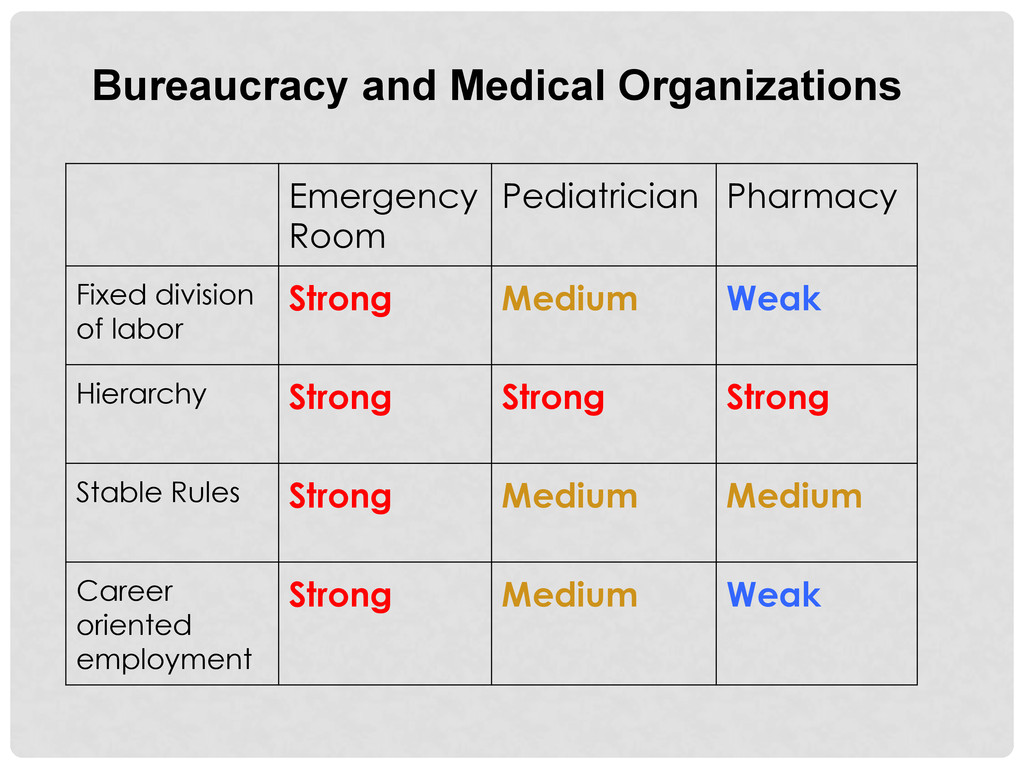
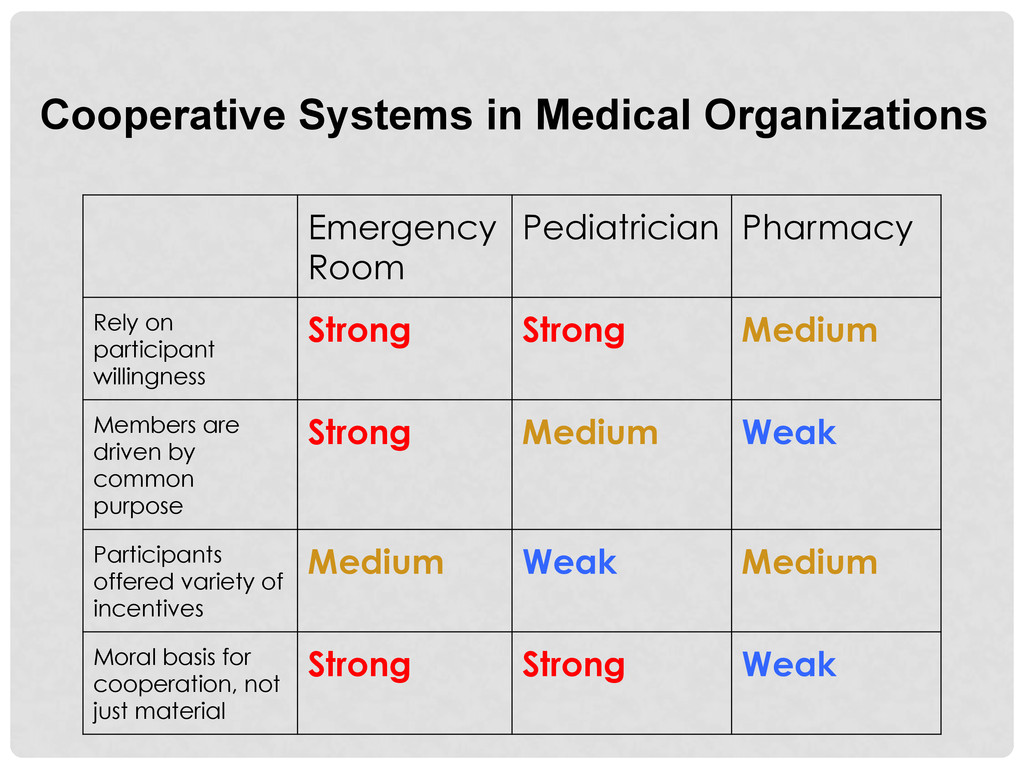
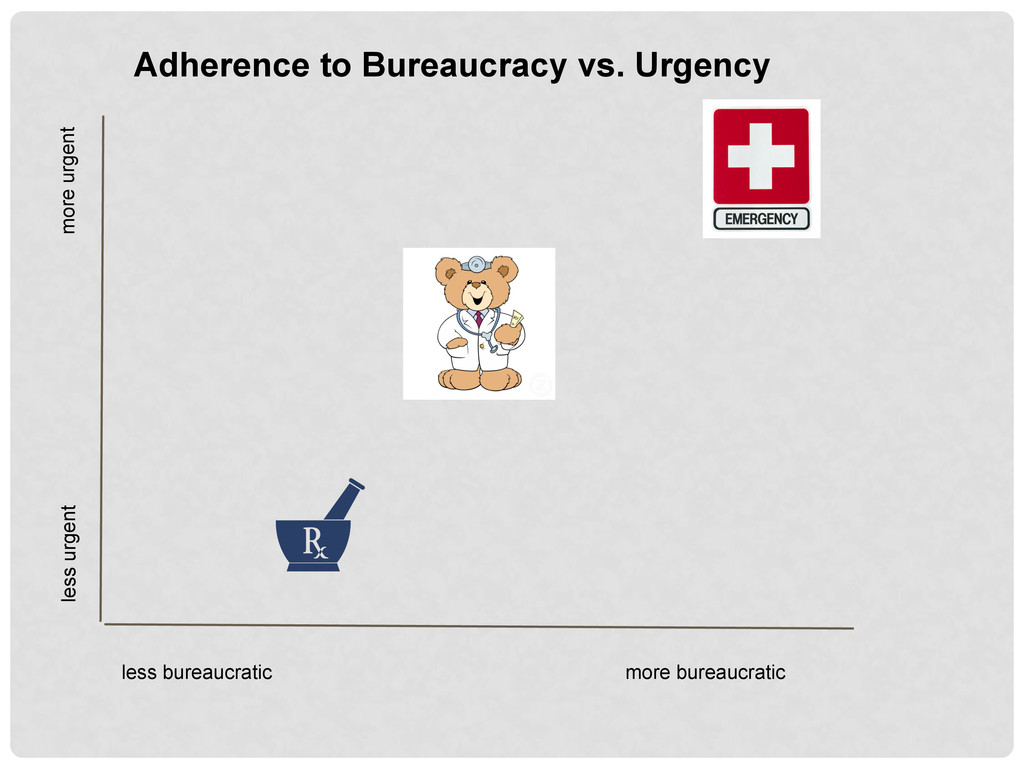
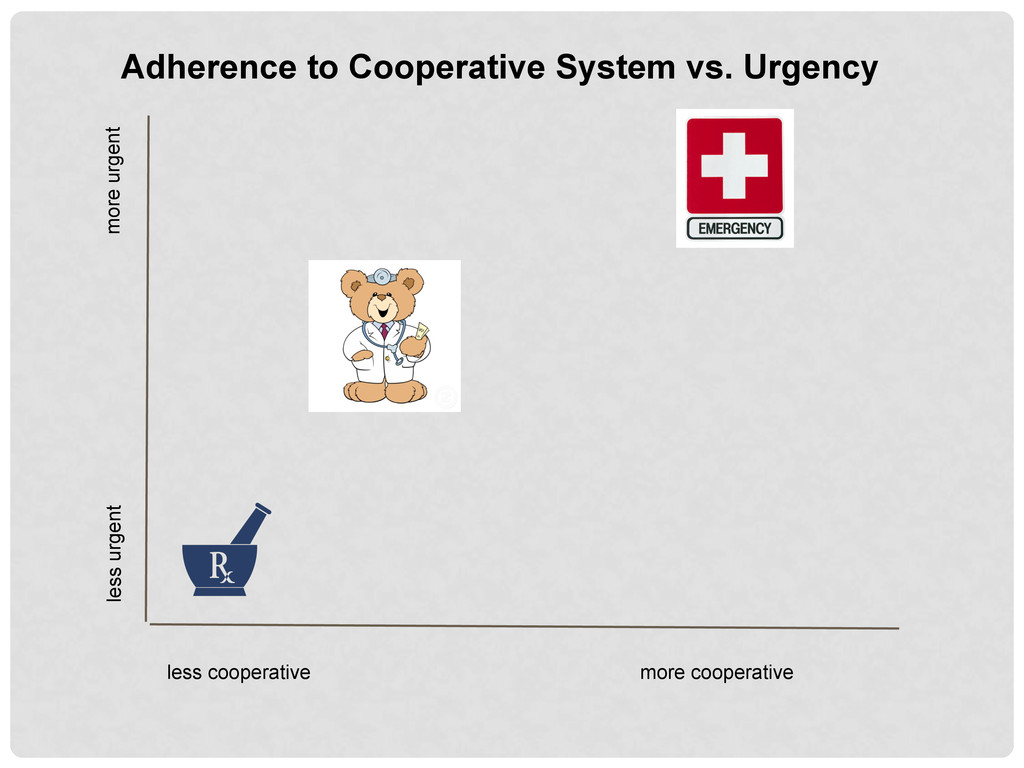
order to regulate their participants and maintain efficacy and stability. Organizations that provide more urgent care tend to have stricter adherence to these systems.
Organizational hierarchy - Stable rules - Career oriented employment Cooperative Systems - Rely on willingness of participants - Members are given incentive - Members share common purpose. - There should be a moral basis for cooperation, not just material.
Weak Hierarchy Strong Strong Strong Stable Rules Strong Medium Medium Career oriented employment Strong Medium Weak Bureaucracy and Medical Organizations
Medium Members are driven by common purpose Strong Medium Weak Participants offered variety of incentives Medium Weak Medium Moral basis for cooperation, not just material Strong Strong Weak Cooperative Systems in Medical Organizations
- The bureaucratic and cooperative systems help medical organizations survive and function. The higher the stakes, the more the organizations need to adhere to the systems.


 mlcsv
 garrettdimon
 orderedlist
 axbom
 keavy
 pedronauck
 davidcarrasco
 danielanewman
 baasie
 tammyeverts
 palkan
 skipperchong