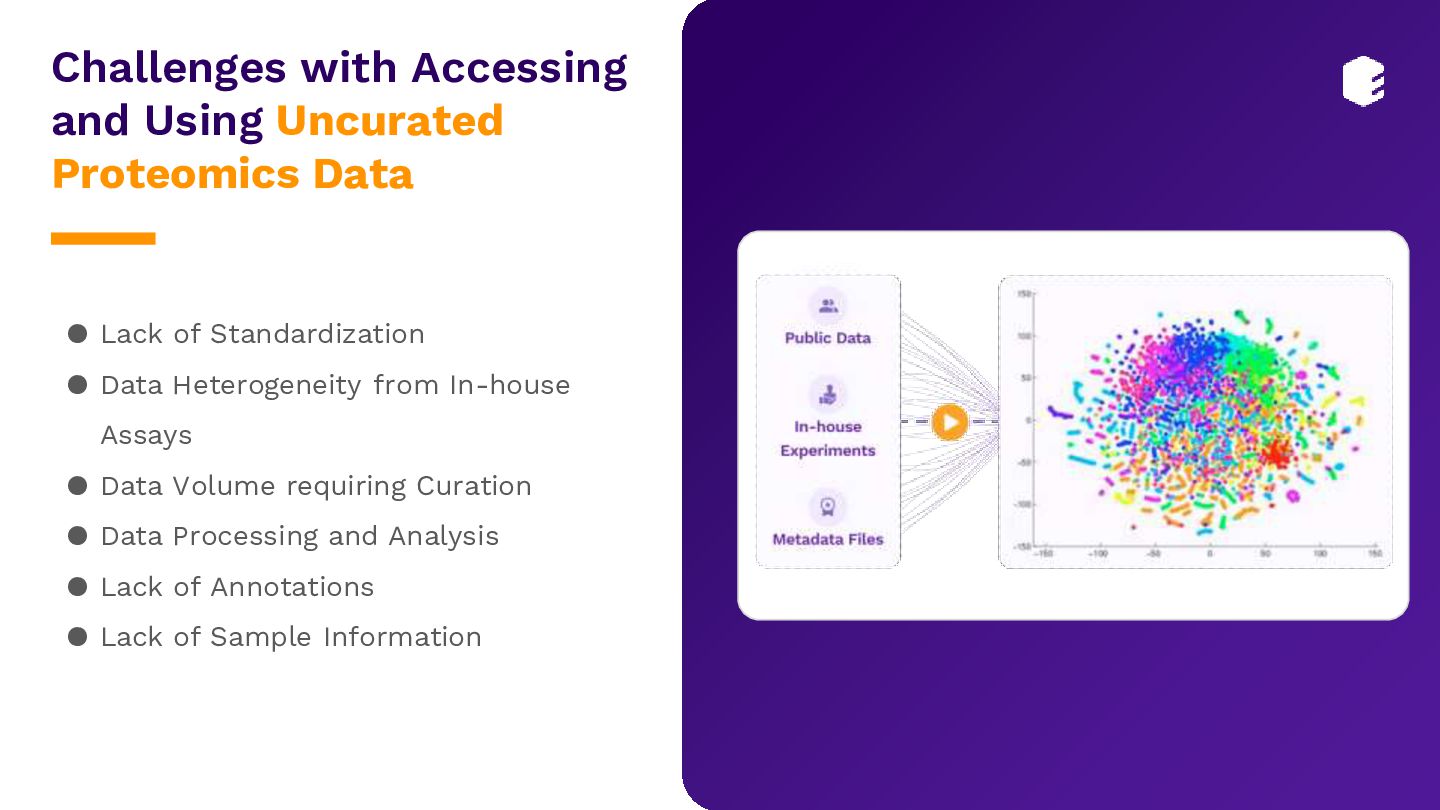
of Standardization • Data Heterogeneity from In-house Assays • Data Volume requiring Curation • Data Processing and Analysis • Lack of Annotations • Lack of Sample Information
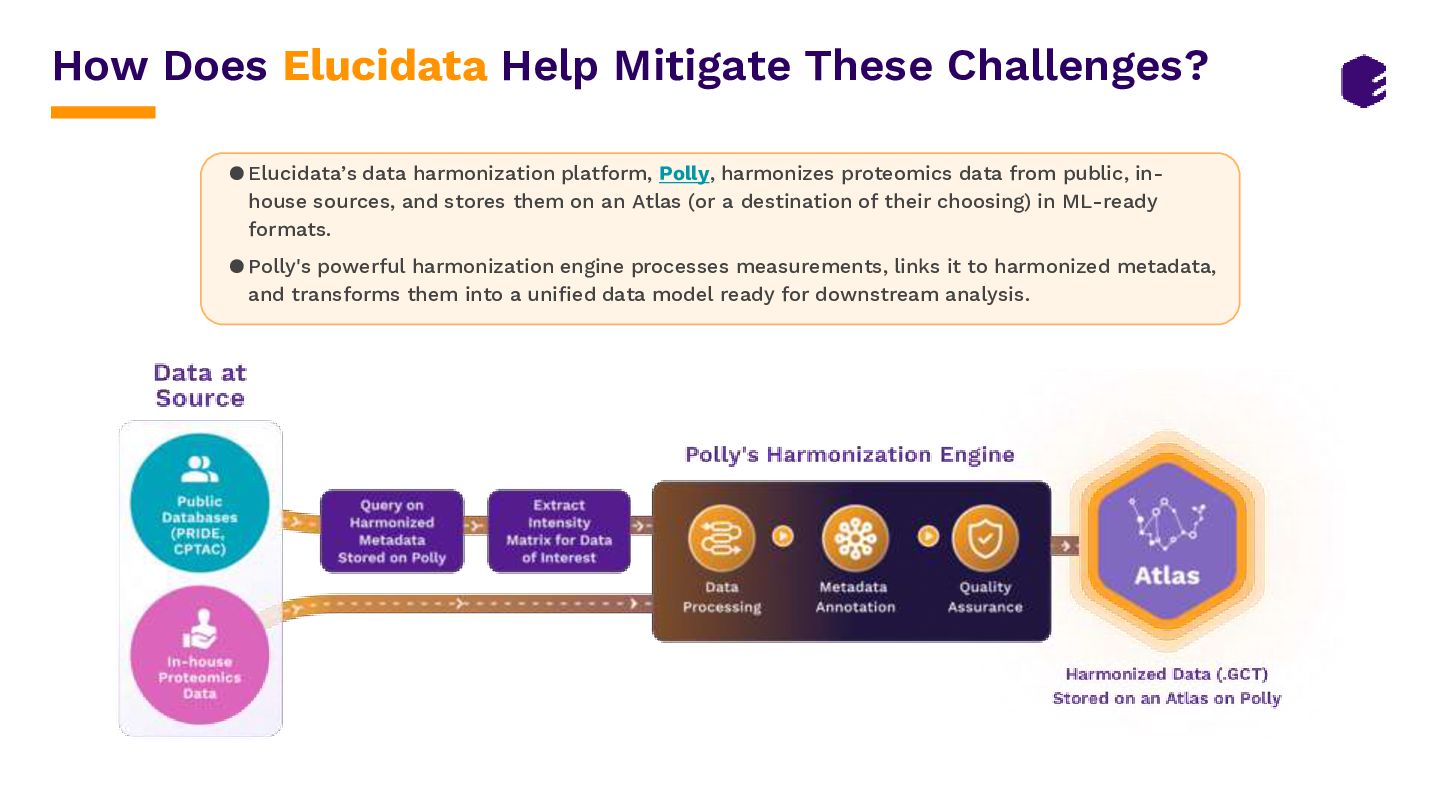
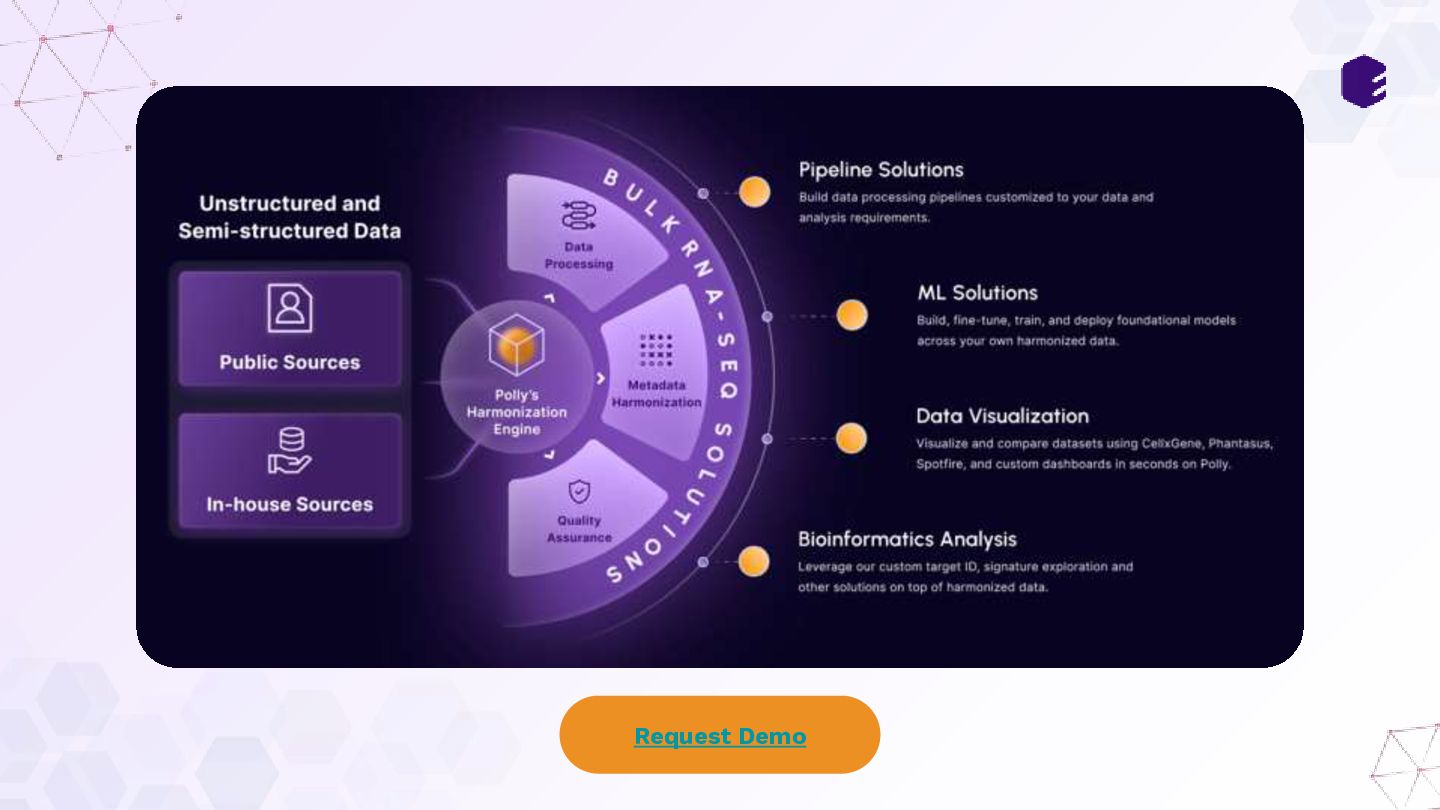
public, in- house sources, and stores them on an Atlas (or a destination of their choosing) in ML-ready formats. • Polly's powerful harmonization engine processes measurements, links it to harmonized metadata, and transforms them into a unified data model ready for downstream analysis. How Does Elucidata Help Mitigate These Challenges?
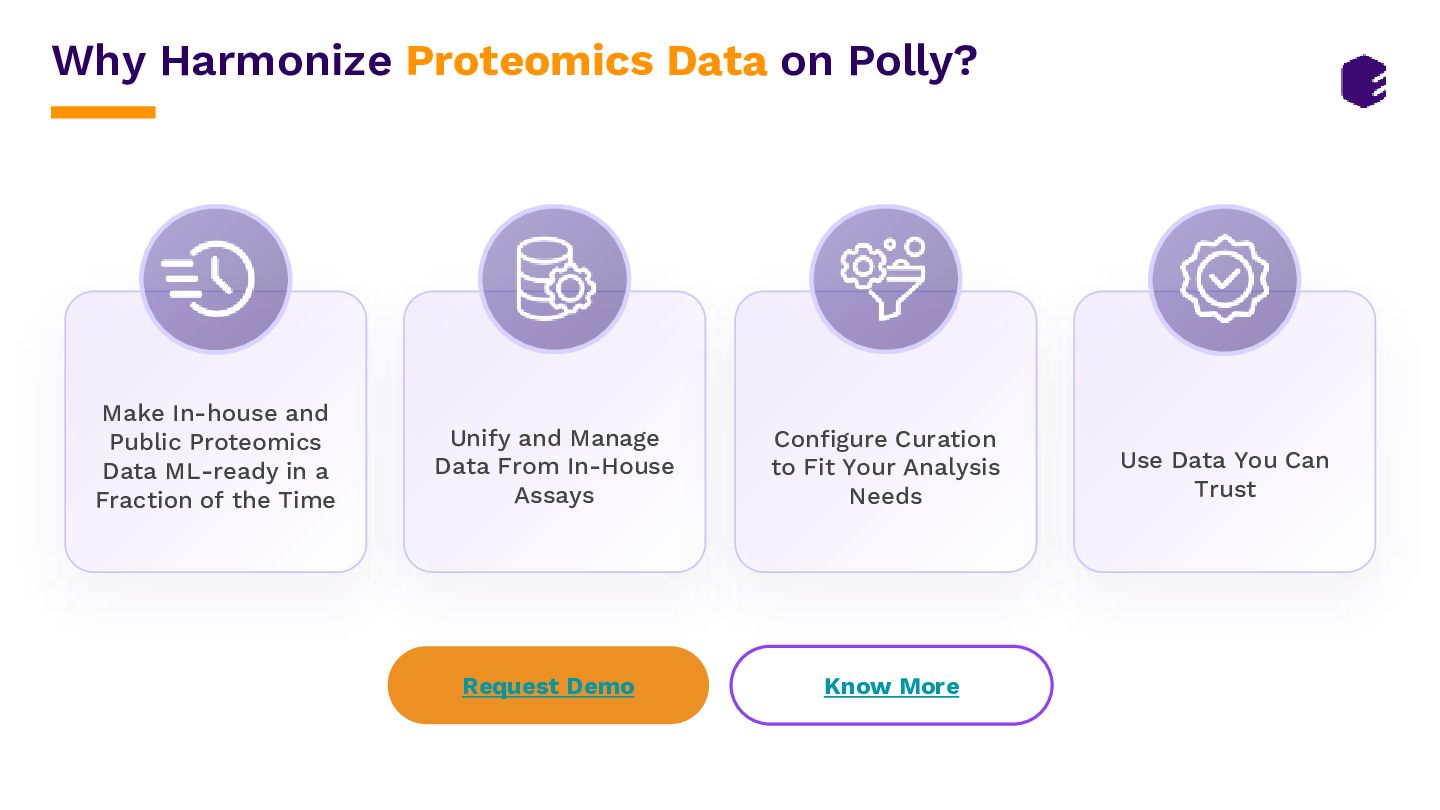
Make In-house and Public Proteomics Data ML-ready in a Fraction of the Time Unify and Manage Data From In-House Assays Configure Curation to Fit Your Analysis Needs Use Data You Can Trust
• A London-based therapeutics company faced a significant challenge in finding relevant proteomics datasets from the PRIDE repository, as only ~25% of these are completely annotated. • The company partnered with Elucidata to access high-quality, ML-ready proteomics data and completely annotated metadata to construct a comprehensive knowledge graph illustrating the intricate relationships and interactions between proteins in biological systems. • Elucidata employed a 3-step approach to deliver 60 high-quality proteomics datasets, each with over 10,000 samples. These datasets aligned with their inclusion criteria, ensuring that the datasets included disease labeling and all necessary information on samples. • Elucidata’s Polly Verified datasets allowed them to kickstart their research in 1 month versus 24 months, saving them over half a million dollars. Read full case-study here.


 elucidata1
 aarron
 csswizardry
 sabderemane
 sergeychernyshev
 raygrieselhuber
 charlesmeaden
 danielanewman
 elsirapls
 portentint
 ipullrank
 shpigford
 maltzj