needs to be mined from various publications and multiple repositories like SCP, HCA, GEO, etc. And this is just the beginning. The researcher then has to spend a huge chunk of time extracting and preprocessing this data because it will be present in different file formats, which may not be easily accessible or compatible with all data analysis tools. Here’s a glimpse of the single-cell datasets on Elucidata’s data harmonization platform- Polly. Polly harmonizes unstructured single-cell data with a configurable, transparent, and granular curation process as per your inclusion/ exclusion criteria to accelerate downstream analysis. Another challenge is incomplete or poorly described metadata (cell types, experimental conditions, sample information, etc.), making it challenging to interpret the results.
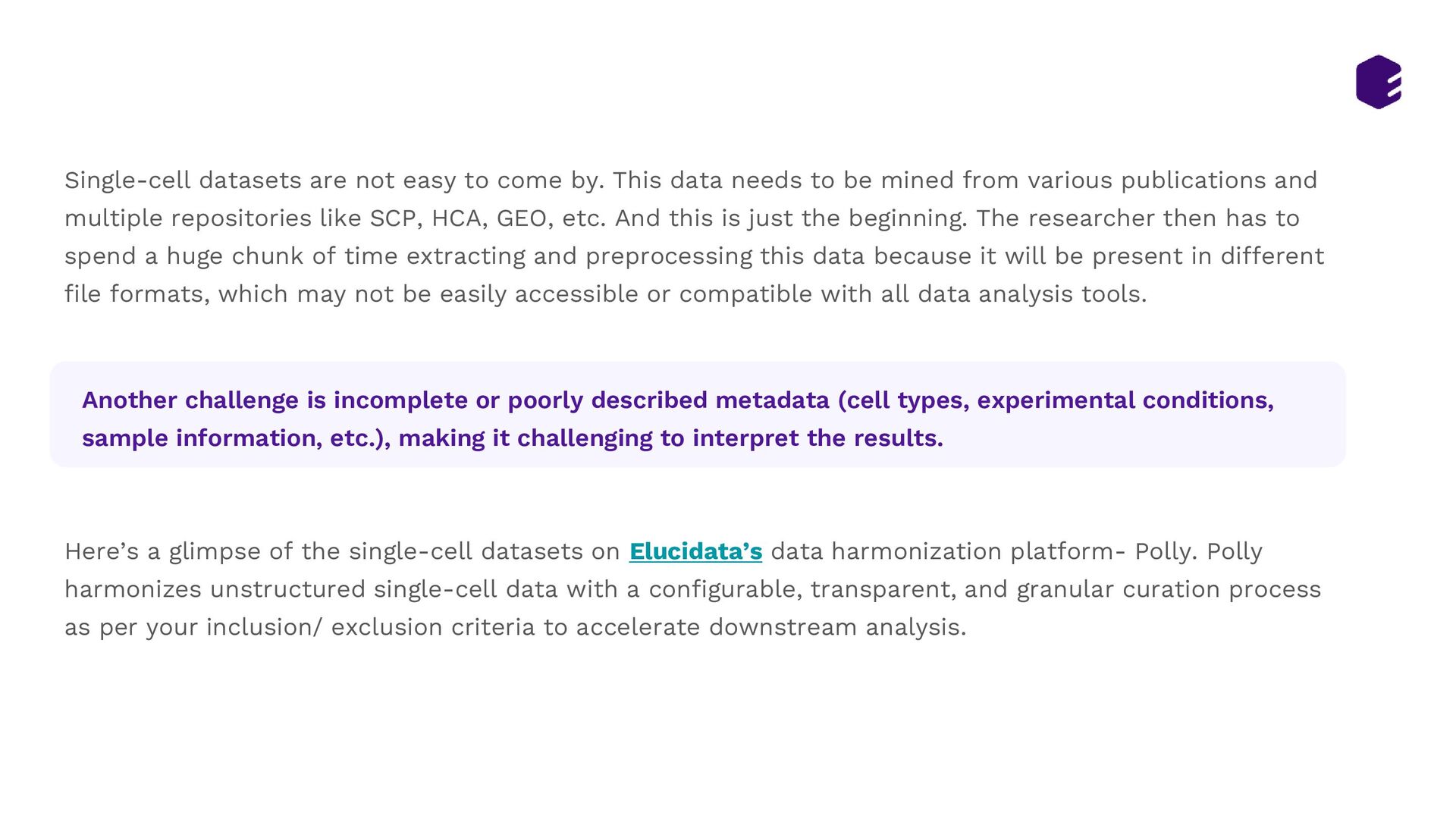
NSCLC 01 Dataset ID: GSE148071_GPL20795 Year of Publication: 2021 No of cells: 58 396 Organism: Homo sapiens Source: GEO Reference link: Single-cell profiling of tumor heterogeneity and the microenvironment in advanced non- small cell lung cancer t-SNE plot showing the different cell types
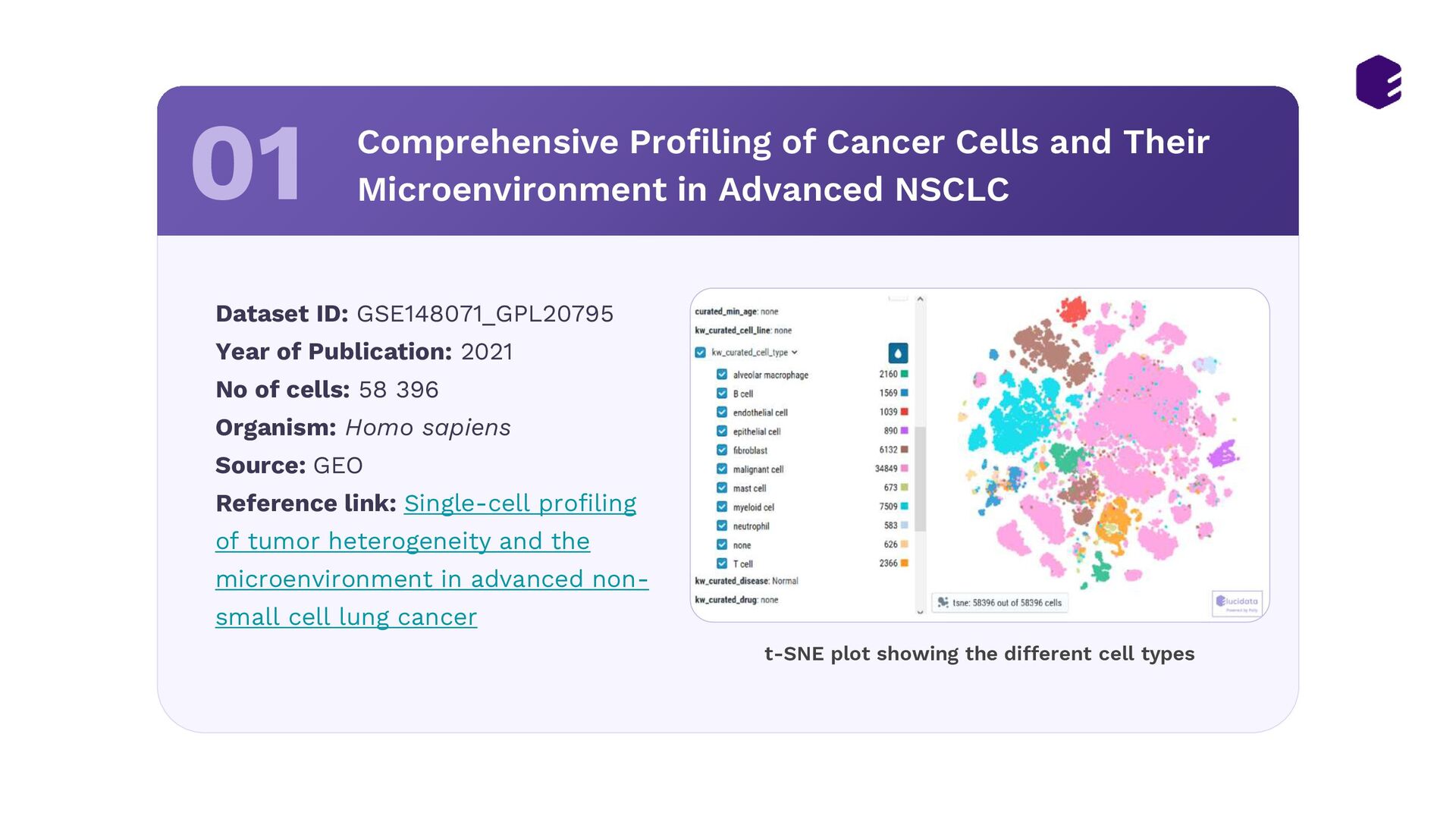
of Publication: 2022 No of cells: 589 390 Source: Publication Polly ID: HSC_immune_cells_all_hematopoietic- derived_cells Organism: Homo sapiens Reference link: Mapping the developing human immune system across organs UMAP shows immune cells in different developmental stages
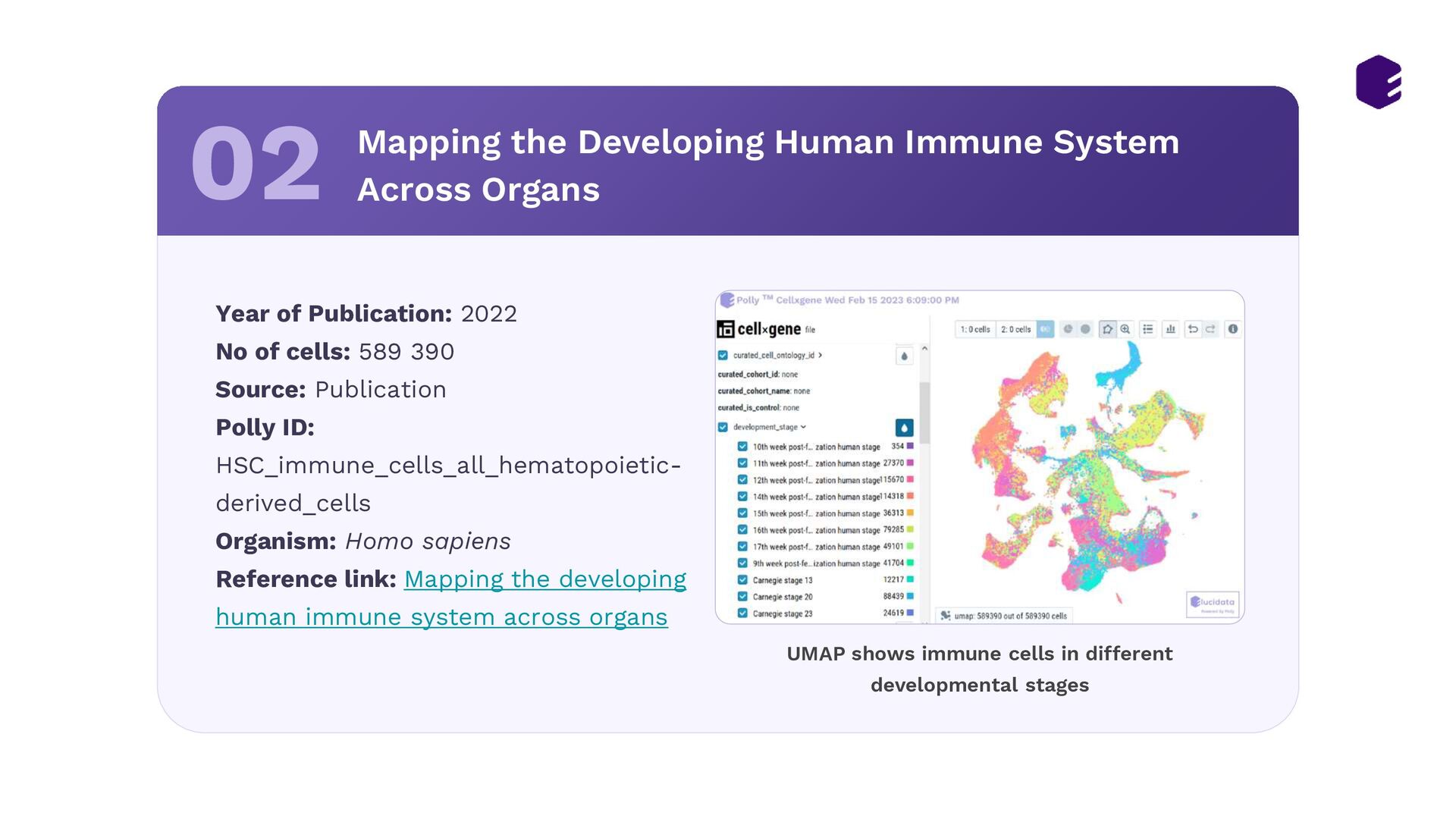
03 Year of Publication: 2020 Organism: Homo sapiens No of cells: 599 926 Polly ID: Construction_of_a_human_cell_lands cape_at_single-cell_level Source: Publication Reference link: Construction of a human cell landscape at single-cell level UMAP shows the distribution of different cells in the human cell landscape
in Melanoma Year of Publication: 2018 Organism: Homo sapiens No of cells: 14 151 Source: GEO Dataset ID: GSE120575_GPL18573 Reference link: Defining T Cell States Associated with Response to Checkpoint Immunotherapy in Melanoma UMAP shows the distribution of immune cells 0 4
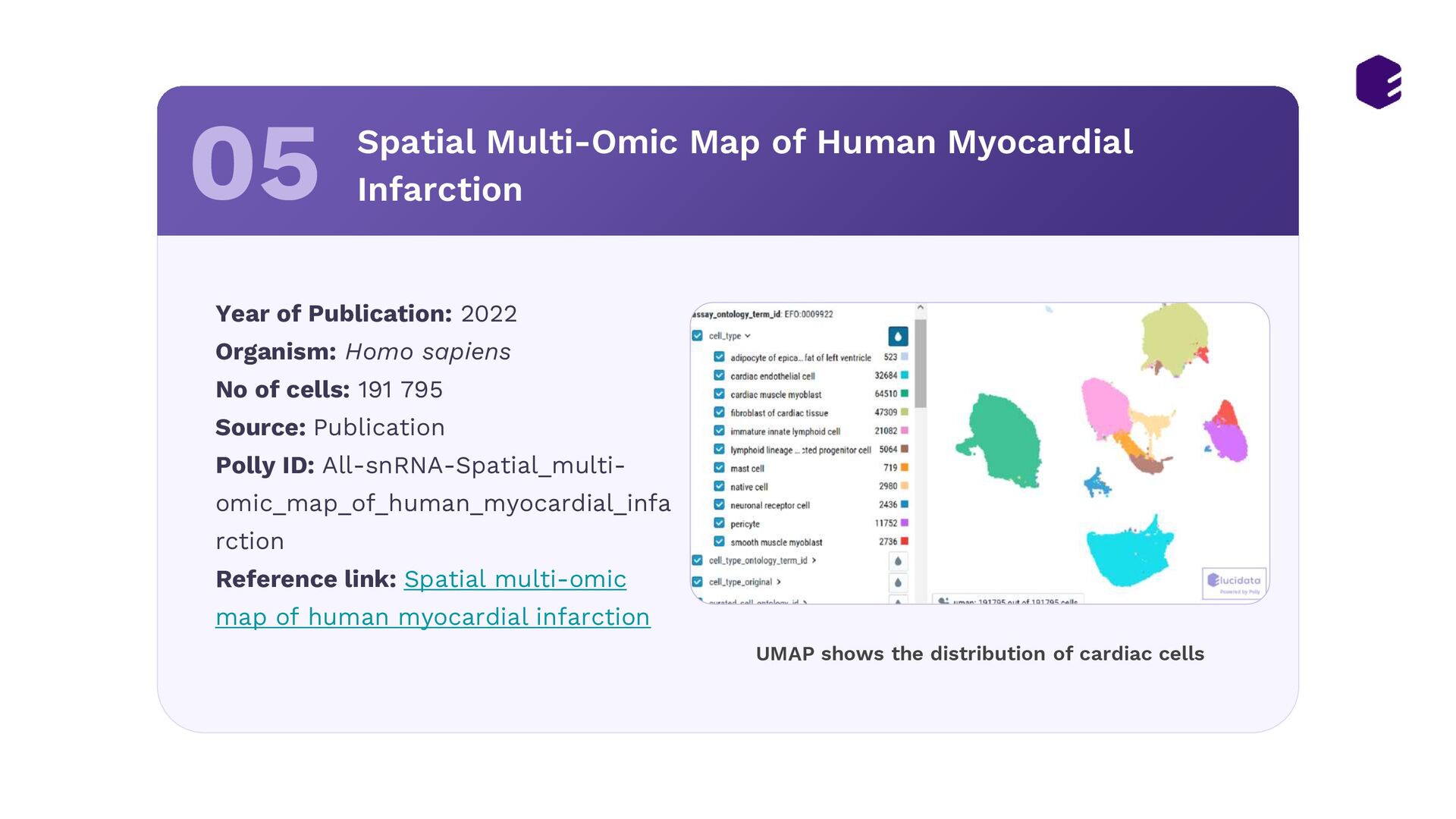
2022 Organism: Homo sapiens No of cells: 191 795 Source: Publication Polly ID: All-snRNA-Spatial_multi- omic_map_of_human_myocardial_infa rction Reference link: Spatial multi-omic map of human myocardial infarction UMAP shows the distribution of cardiac cells 05


 elucidata1
 joshbly
 bermonpainter
 aleyda
 csswizardry
 garrettdimon
 tammyeverts
 jcasabona
 portentint
 lynnandtonic
 caitiem20