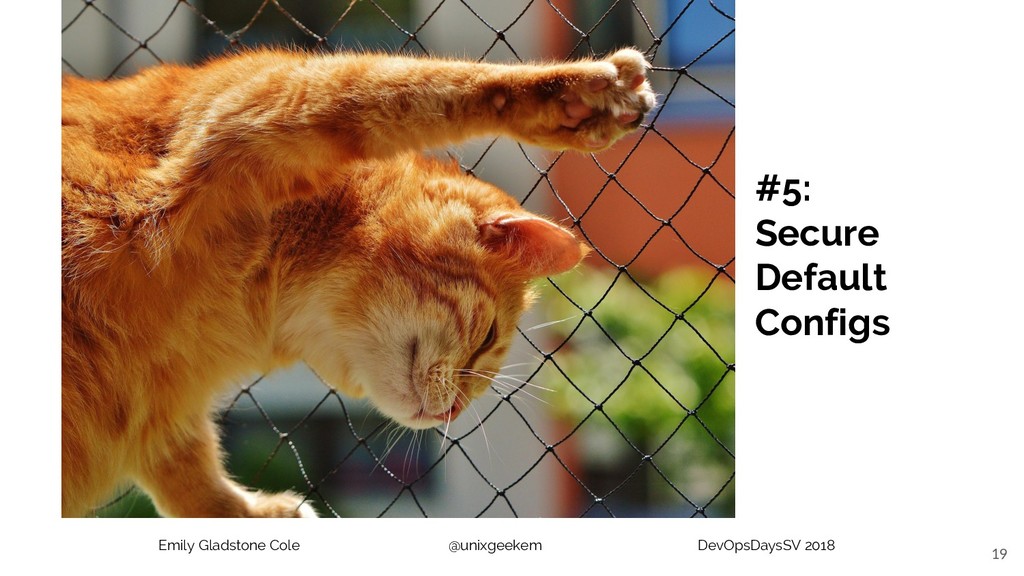
2. CIS Critical Security Controls 3. More Security Thoughts Standard Disclaimer: The opinions expressed in this talk are my own and do not represent the views of my employer. Non-Standard Disclaimer: I hope you like cat photos. 2
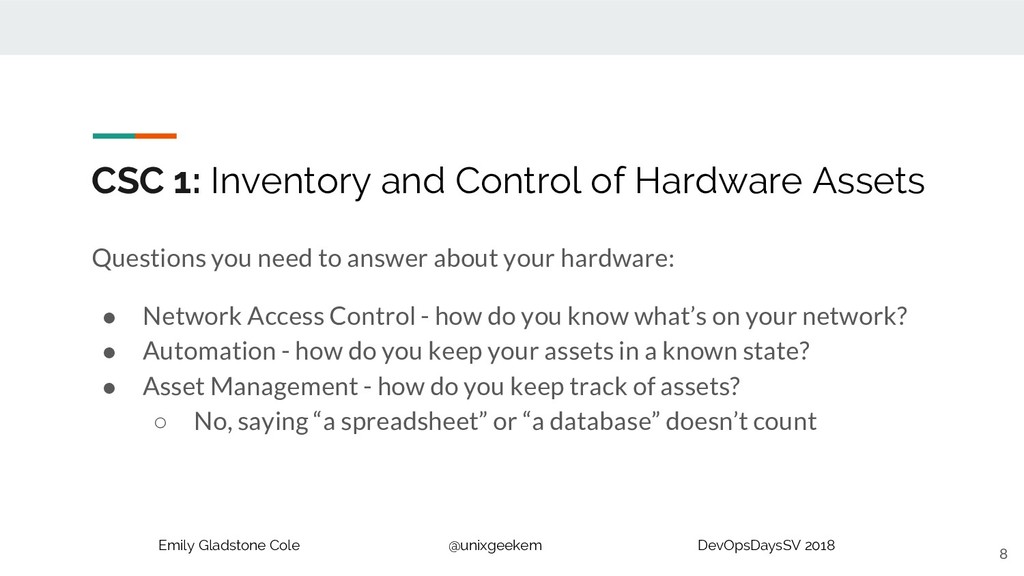
Control of Hardware Assets Questions you need to answer about your hardware: • Network Access Control - how do you know what’s on your network? • Automation - how do you keep your assets in a known state? • Asset Management - how do you keep track of assets? ◦ No, saying “a spreadsheet” or “a database” doesn’t count 8
Control of Software Assets Questions you need to answer about your software: • What software is on your systems? • Who installed the software? • What does the software do? 11
Management: Patching • Understand your risks, and remediate the serious vulnerabilities. ◦ Highest risk first is the best practice • Use your automation to ensure updates are applied everywhere. ◦ Though maybe you test first before you upgrade Python/Ruby in your Production environment... 16
of Admin Privileges • Separate out admin accounts from user accounts if you can. • Use groups or roles. • Consider functional names for your groups. ◦ “sec-logging-read-only” is more informative than “logging” 18
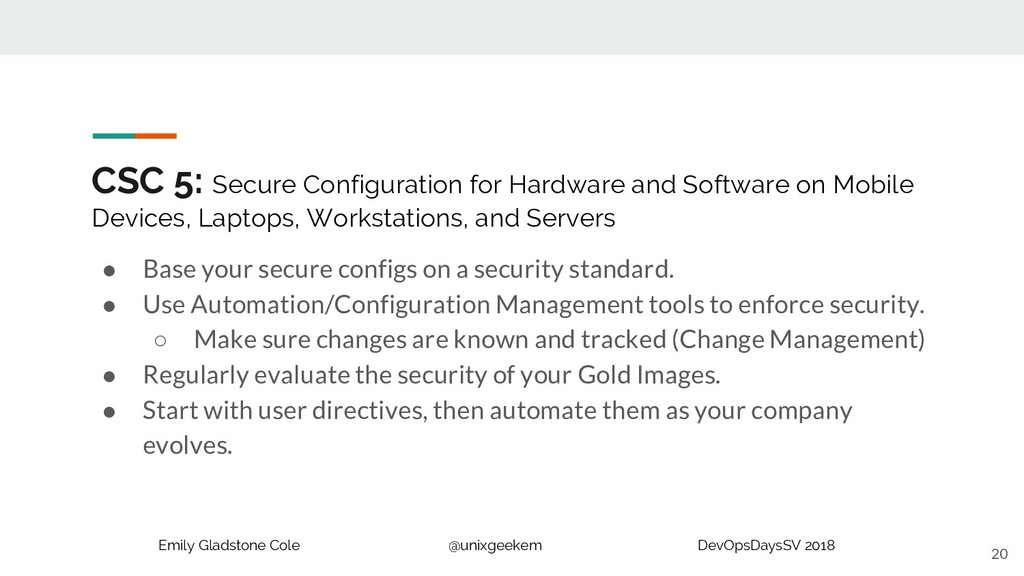
for Hardware and Software on Mobile Devices, Laptops, Workstations, and Servers • Base your secure configs on a security standard. • Use Automation/Configuration Management tools to enforce security. ◦ Make sure changes are known and tracked (Change Management) • Regularly evaluate the security of your Gold Images. • Start with user directives, then automate them as your company evolves. 20
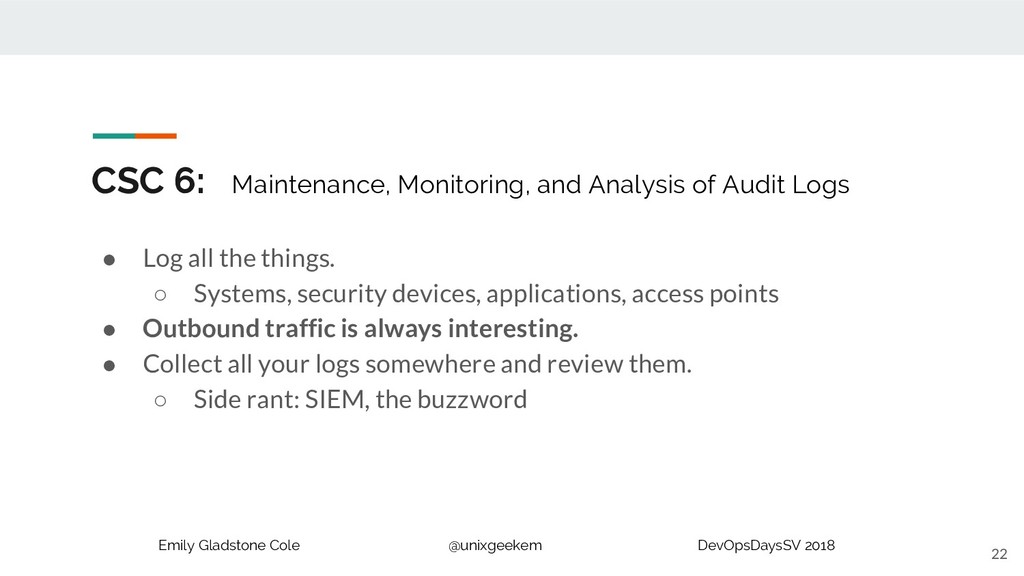
and Analysis of Audit Logs • Log all the things. ◦ Systems, security devices, applications, access points • Outbound traffic is always interesting. • Collect all your logs somewhere and review them. ◦ Side rant: SIEM, the buzzword 22
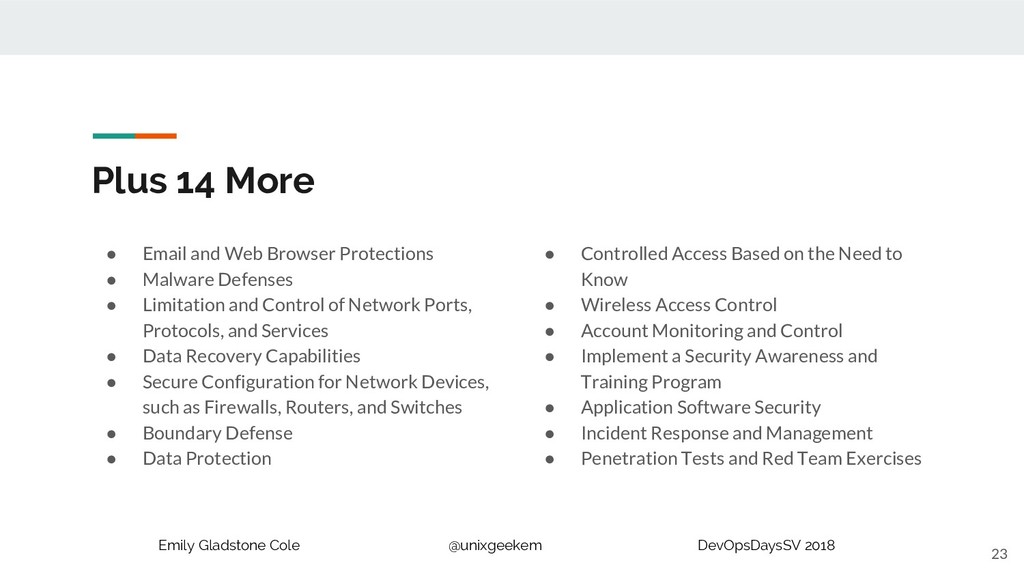
Email and Web Browser Protections • Malware Defenses • Limitation and Control of Network Ports, Protocols, and Services • Data Recovery Capabilities • Secure Configuration for Network Devices, such as Firewalls, Routers, and Switches • Boundary Defense • Data Protection 23 • Controlled Access Based on the Need to Know • Wireless Access Control • Account Monitoring and Control • Implement a Security Awareness and Training Program • Application Software Security • Incident Response and Management • Penetration Tests and Red Team Exercises
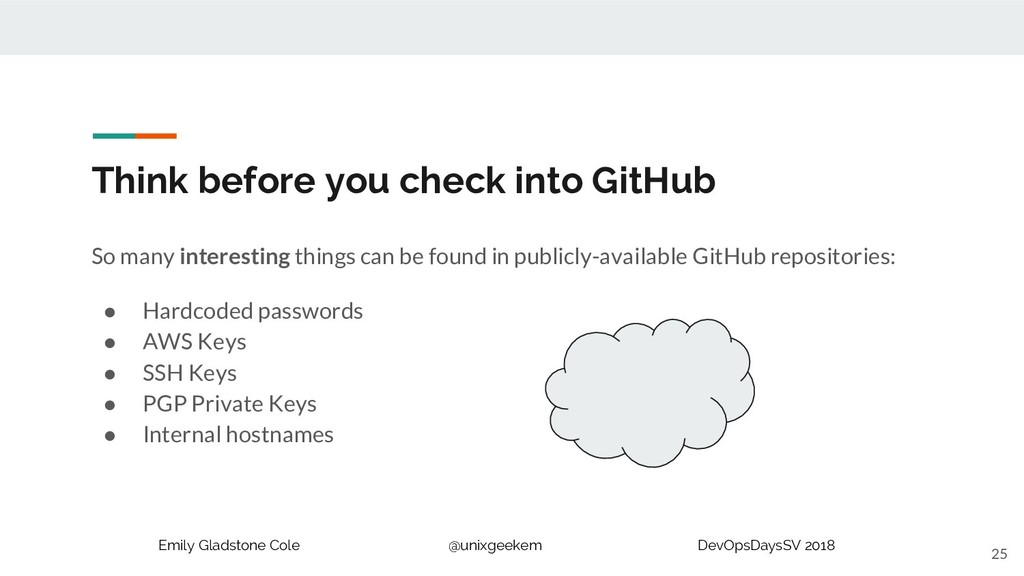
into GitHub So many interesting things can be found in publicly-available GitHub repositories: • Hardcoded passwords • AWS Keys • SSH Keys • PGP Private Keys • Internal hostnames 25
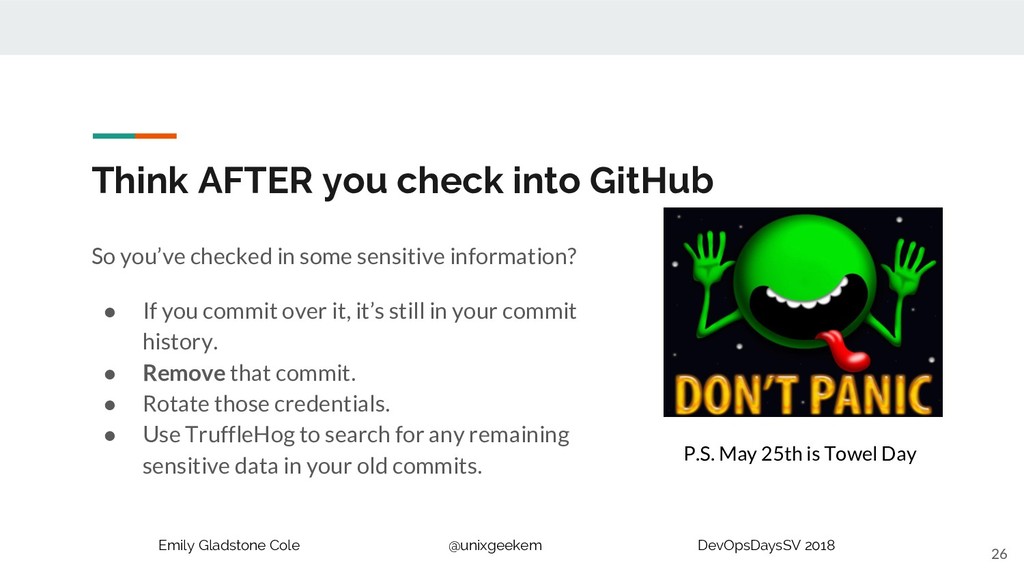
into GitHub So you’ve checked in some sensitive information? • If you commit over it, it’s still in your commit history. • Remove that commit. • Rotate those credentials. • Use TruffleHog to search for any remaining sensitive data in your old commits. 26 P.S. May 25th is Towel Day
• AWS now sets S3 Buckets to be private by default. • Amazon Macie monitors S3 to find insecure buckets. • Bucket names are important too. ◦ S3 bucket names are unique, and it’s easy to enumerate the names. Hackers may guess that important data is stored in buckets whose names start with Prod, or with your company name. 27
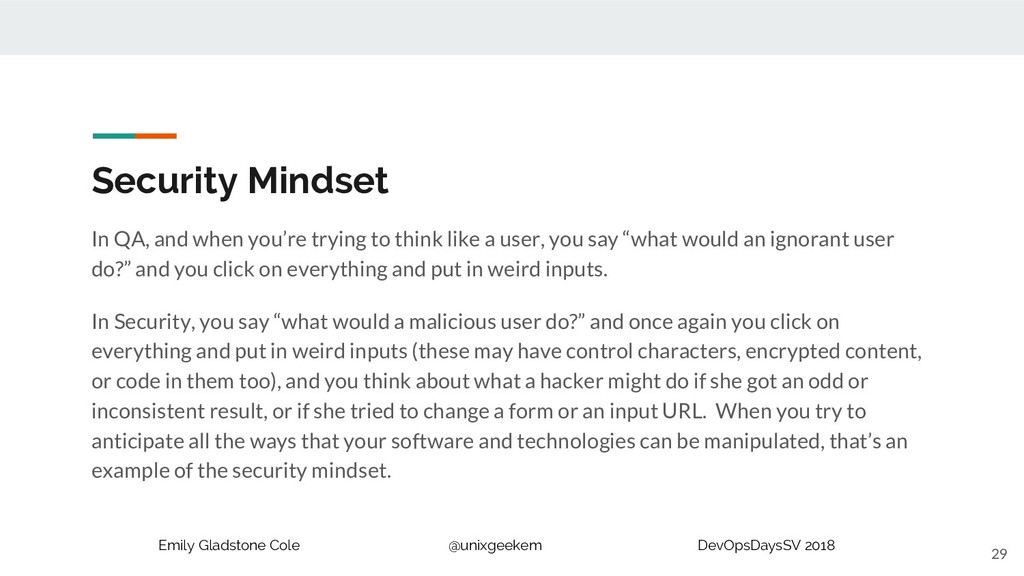
and when you’re trying to think like a user, you say “what would an ignorant user do?” and you click on everything and put in weird inputs. In Security, you say “what would a malicious user do?” and once again you click on everything and put in weird inputs (these may have control characters, encrypted content, or code in them too), and you think about what a hacker might do if she got an odd or inconsistent result, or if she tried to change a form or an input URL. When you try to anticipate all the ways that your software and technologies can be manipulated, that’s an example of the security mindset. 29
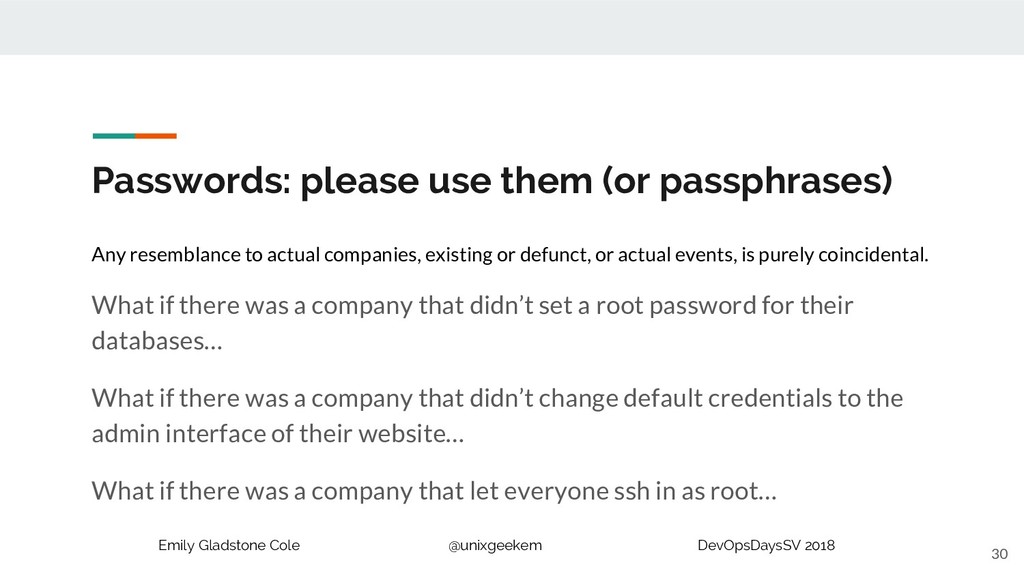
(or passphrases) Any resemblance to actual companies, existing or defunct, or actual events, is purely coincidental. What if there was a company that didn’t set a root password for their databases… What if there was a company that didn’t change default credentials to the admin interface of their website… What if there was a company that let everyone ssh in as root… 30
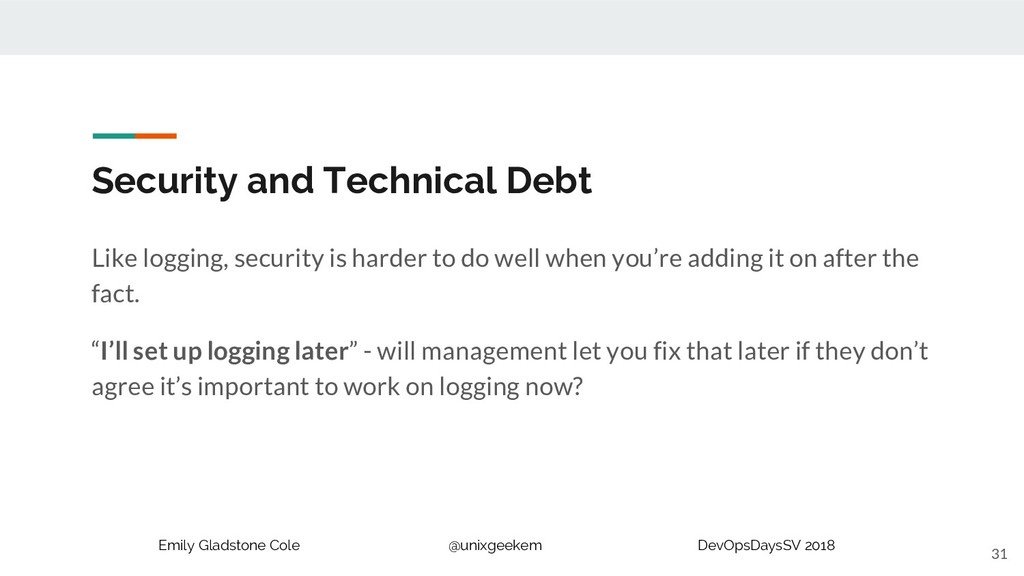
Like logging, security is harder to do well when you’re adding it on after the fact. “I’ll set up logging later” - will management let you fix that later if they don’t agree it’s important to work on logging now? 31
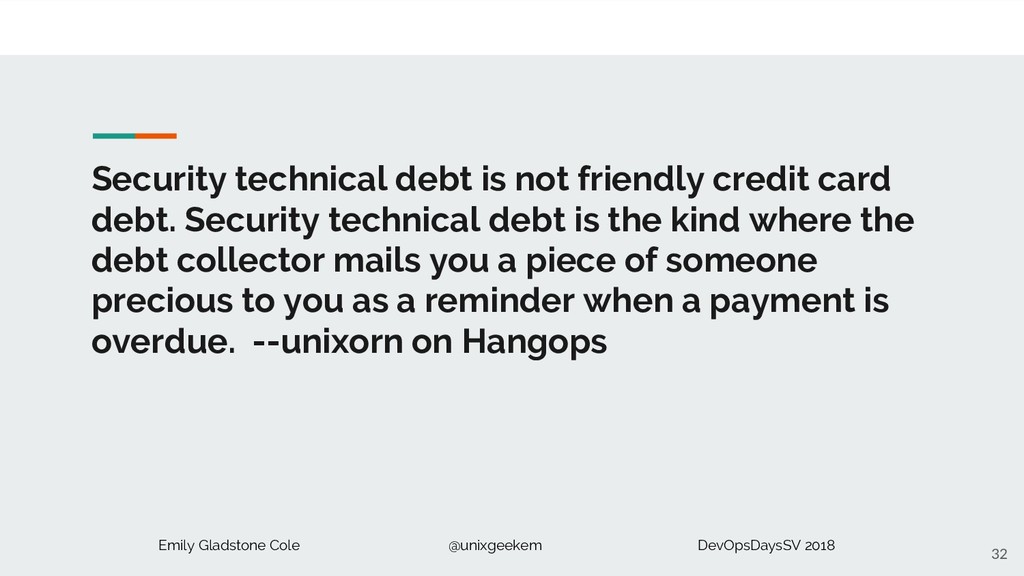
not friendly credit card debt. Security technical debt is the kind where the debt collector mails you a piece of someone precious to you as a reminder when a payment is overdue. --unixorn on Hangops 32
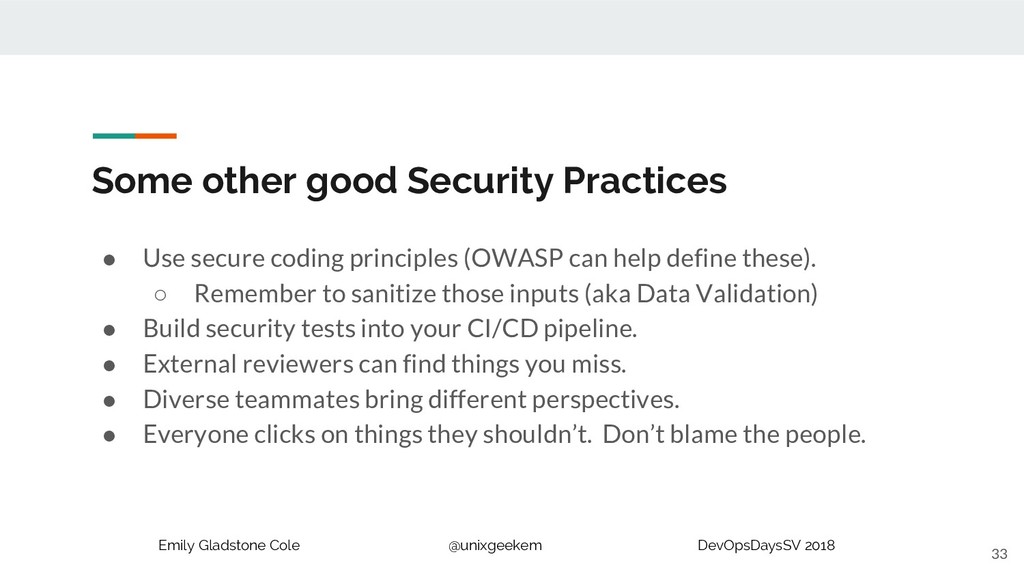
Practices • Use secure coding principles (OWASP can help define these). ◦ Remember to sanitize those inputs (aka Data Validation) • Build security tests into your CI/CD pipeline. • External reviewers can find things you miss. • Diverse teammates bring different perspectives. • Everyone clicks on things they shouldn’t. Don’t blame the people. 33
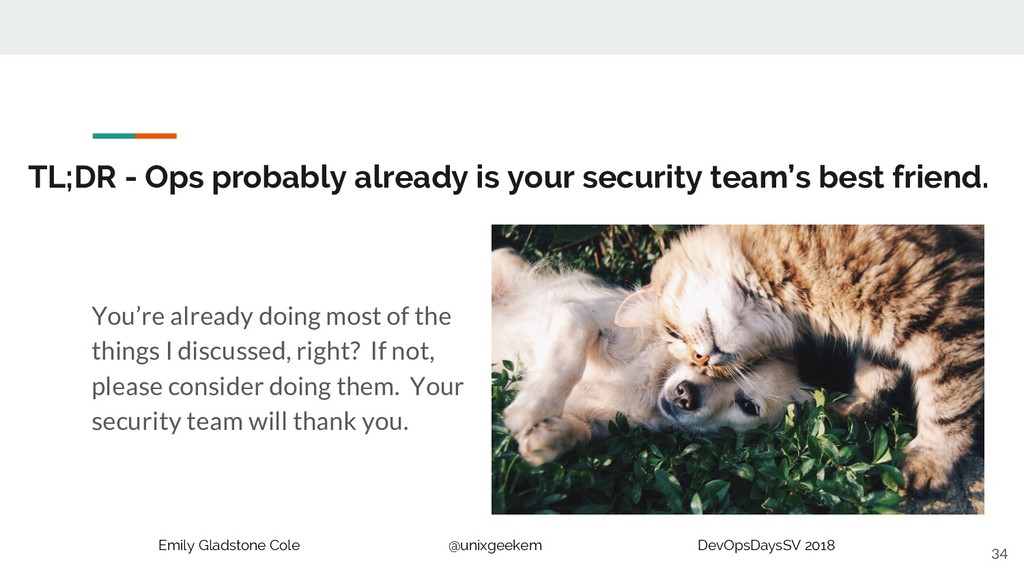
already is your security team’s best friend. You’re already doing most of the things I discussed, right? If not, please consider doing them. Your security team will thank you. 34


 prog893
 y0hgi
 nealle
 bgpat
 odashi
 jtakeda
 tetsuya28
 jyouryuusui
 carta_engineering
 yut0naga1_fa
 grimoh
 mhrtech
 greggifford
 tonyrice
 axbom
 cassininazir
 aleyda
 eileencodes
 tmiket
 mkilby
 jdejongh
 aemeredith
 tamaranovitovic
 stephenakadiri