Upgrade to Pro — share decks privately, control downloads, hide ads and more …

Visit 2: Top Down Body Practices for the Manage...

Avatar for Fibromyalgia Fibromyalgia
January 28, 2026
5

Visit 2: Top Down Body Practices for the Management of Fibromyalgia

Avatar for Fibromyalgia

Fibromyalgia

January 28, 2026
Tweet

Transcript

  1. Integrative Medicine & Mind - Body Practices for the Management

    of Fibromyalgia 2nd Group Visit Top-Down Strategies 4 group medical visit series presented by Integrative Medicine Specialist Marc Fierro, PA-C, L.Ac., Frank Russell MFT, Lauren McDaniel CNC, FMHC and Kimberly Defazio LVN, FMHC, at the Sutter Institute for Health and Healing
  2. Welcome back! • Today’s class is the 2nd in the

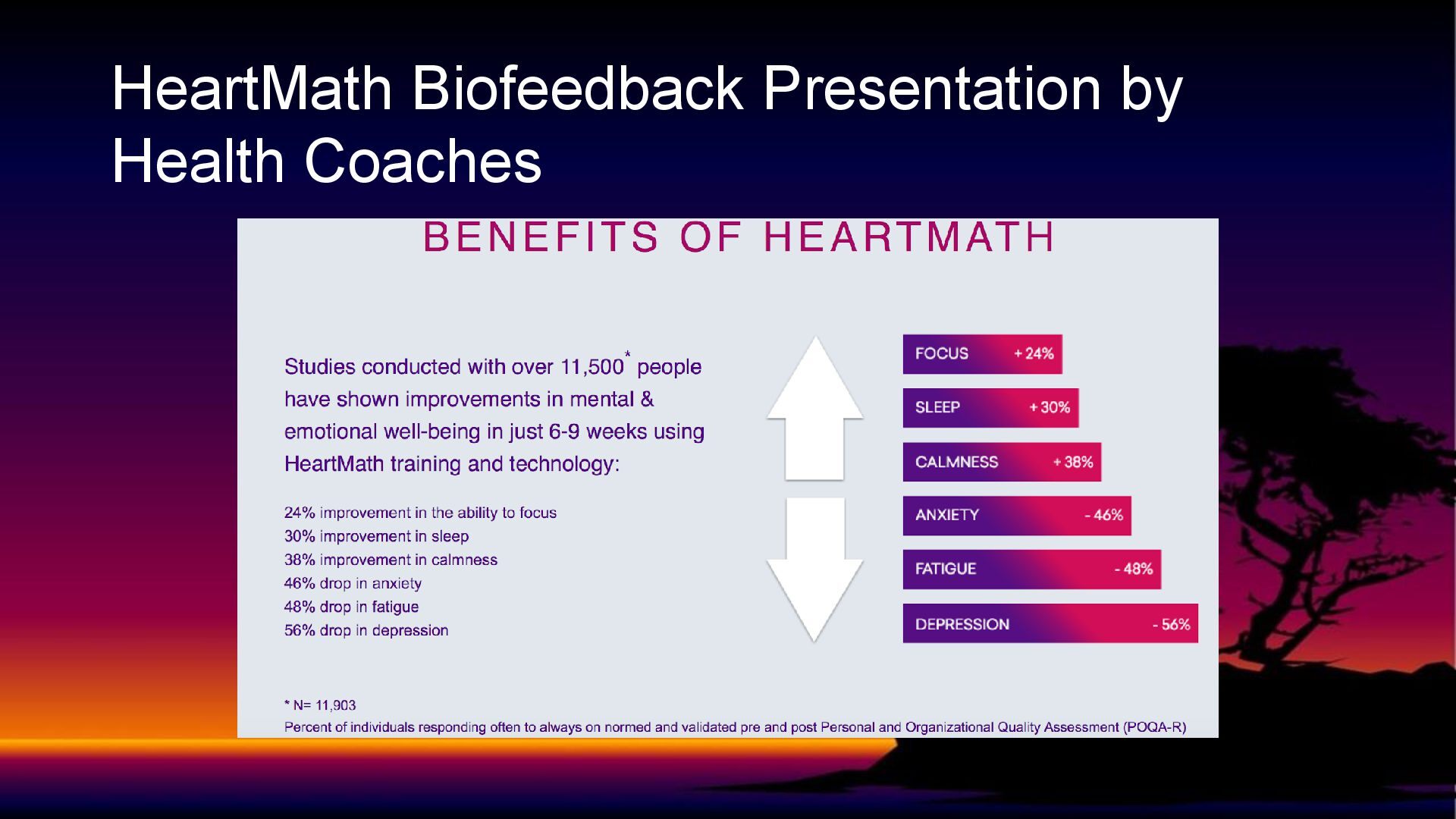
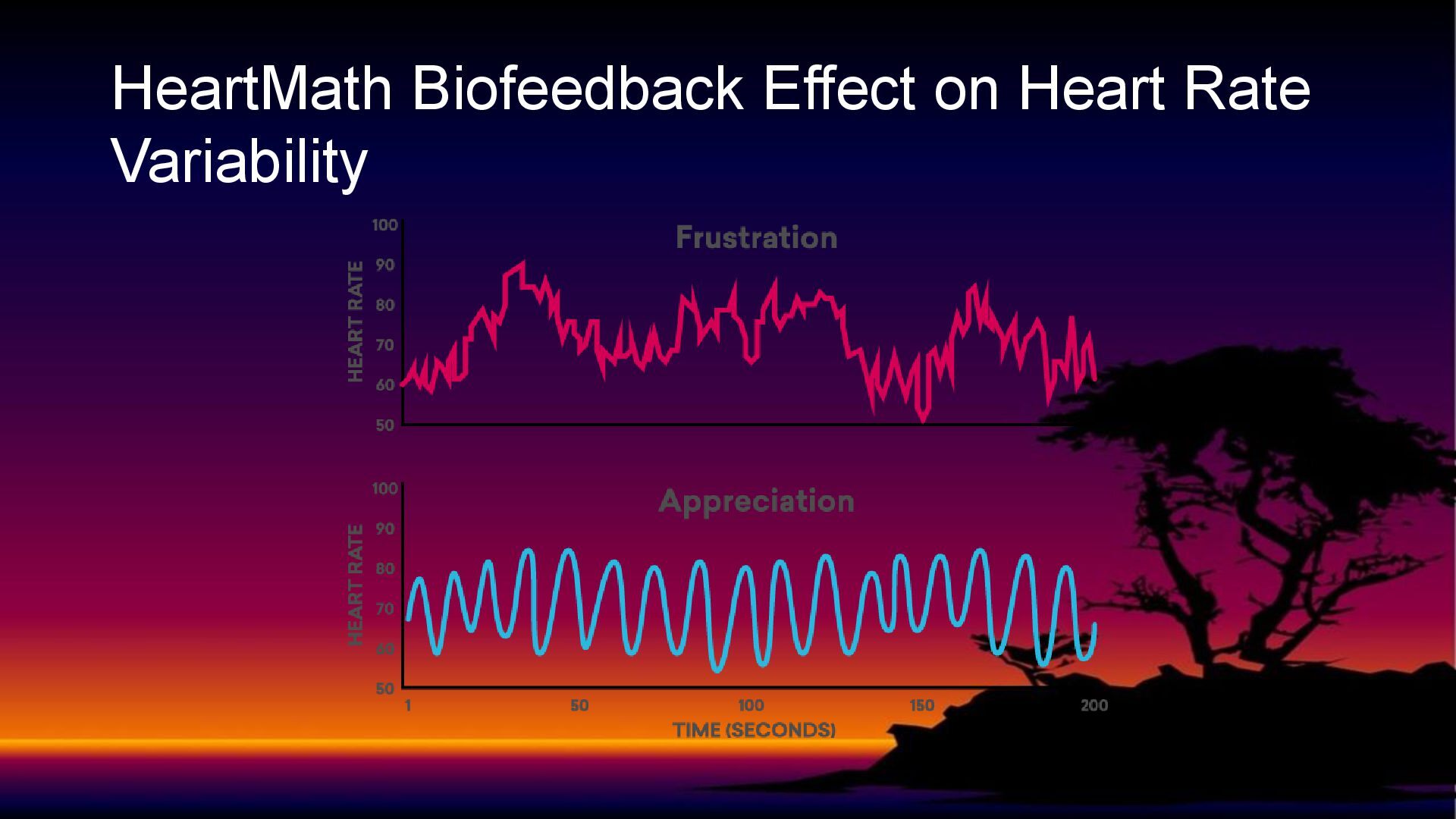
    series. • In today’s group visit, the participants will have the opportunity to share how much they were able to implement the therapeutic recommendations from the initial group visit and assess how it is affecting their quality of life. • Today’s topics will include teaching how to implement the approaches from the categories of: • Top Down: including • Discussion on pain management with Cognitive Behavioral Therapy presented by Frank Russell, MFT. • Experiential PRT and Mindfulness based Cognitive Behavioral Therapy exercises for pain management • Additional Tai Chi – Qi Gong exercises will be taught today. • HeartMath Biofeedback discussion and demonstration with health coaches Kim and Lauren. • Management of Brain Fog and Sleep deprivation. • Discuss the # 1 Cognitive Behavioral Sleep Therapy.
  3. Quick summary review of last group visit Tri flex approach

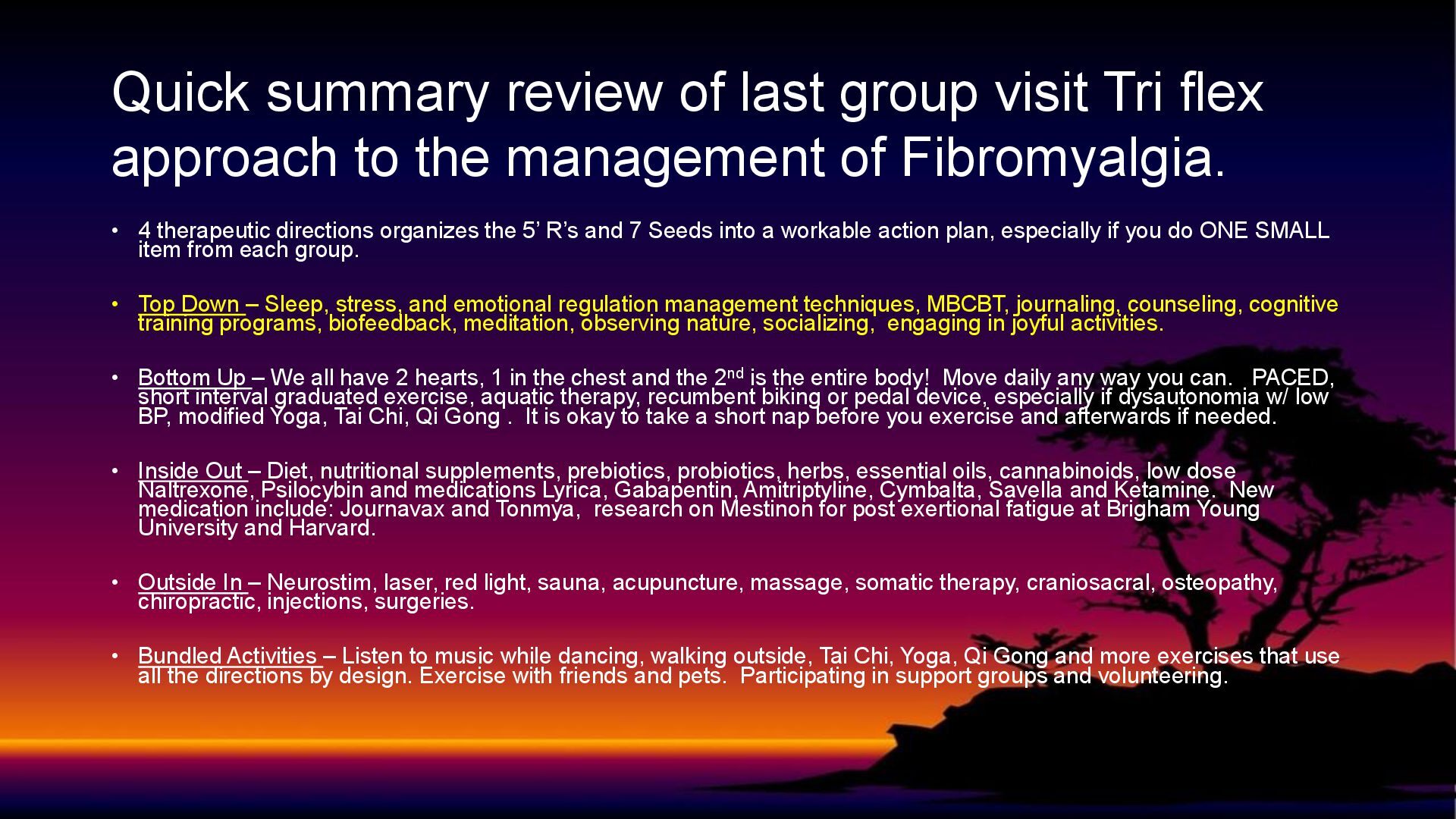
    to the management of Fibromyalgia. • 4 therapeutic directions organizes the 5’ R’s and 7 Seeds into a workable action plan, especially if you do ONE SMALL item from each group. • Top Down – Sleep, stress, and emotional regulation management techniques, MBCBT, journaling, counseling, cognitive training programs, biofeedback, meditation, observing nature, socializing, engaging in joyful activities. • Bottom Up – We all have 2 hearts, 1 in the chest and the 2nd is the entire body! Move daily any way you can. PACED, short interval graduated exercise, aquatic therapy, recumbent biking or pedal device, especially if dysautonomia w/ low BP, modified Yoga, Tai Chi, Qi Gong . It is okay to take a short nap before you exercise and afterwards if needed. • Inside Out – Diet, nutritional supplements, prebiotics, probiotics, herbs, essential oils, cannabinoids, low dose Naltrexone, Psilocybin and medications Lyrica, Gabapentin, Amitriptyline, Cymbalta, Savella and Ketamine. New medication include: Journavax and Tonmya, research on Mestinon for post exertional fatigue at Brigham Young University and Harvard. • Outside In – Neurostim, laser, red light, sauna, acupuncture, massage, somatic therapy, craniosacral, osteopathy, chiropractic, injections, surgeries. • Bundled Activities – Listen to music while dancing, walking outside, Tai Chi, Yoga, Qi Gong and more exercises that use all the directions by design. Exercise with friends and pets. Participating in support groups and volunteering.
  4. Patient check in: Patient check-in time! How have you been

    doing since last class? Please feel free to tell us what you have tried to incorporate from the pain reprocessing therapy and Tri-Flex Lifestyle Changes into your self-care program since we met last. Please limit your comments to 2 minutes or less so everyone has a chance to share if they would like. Please raise your hand to speak or leave comments in chat. Thank you!
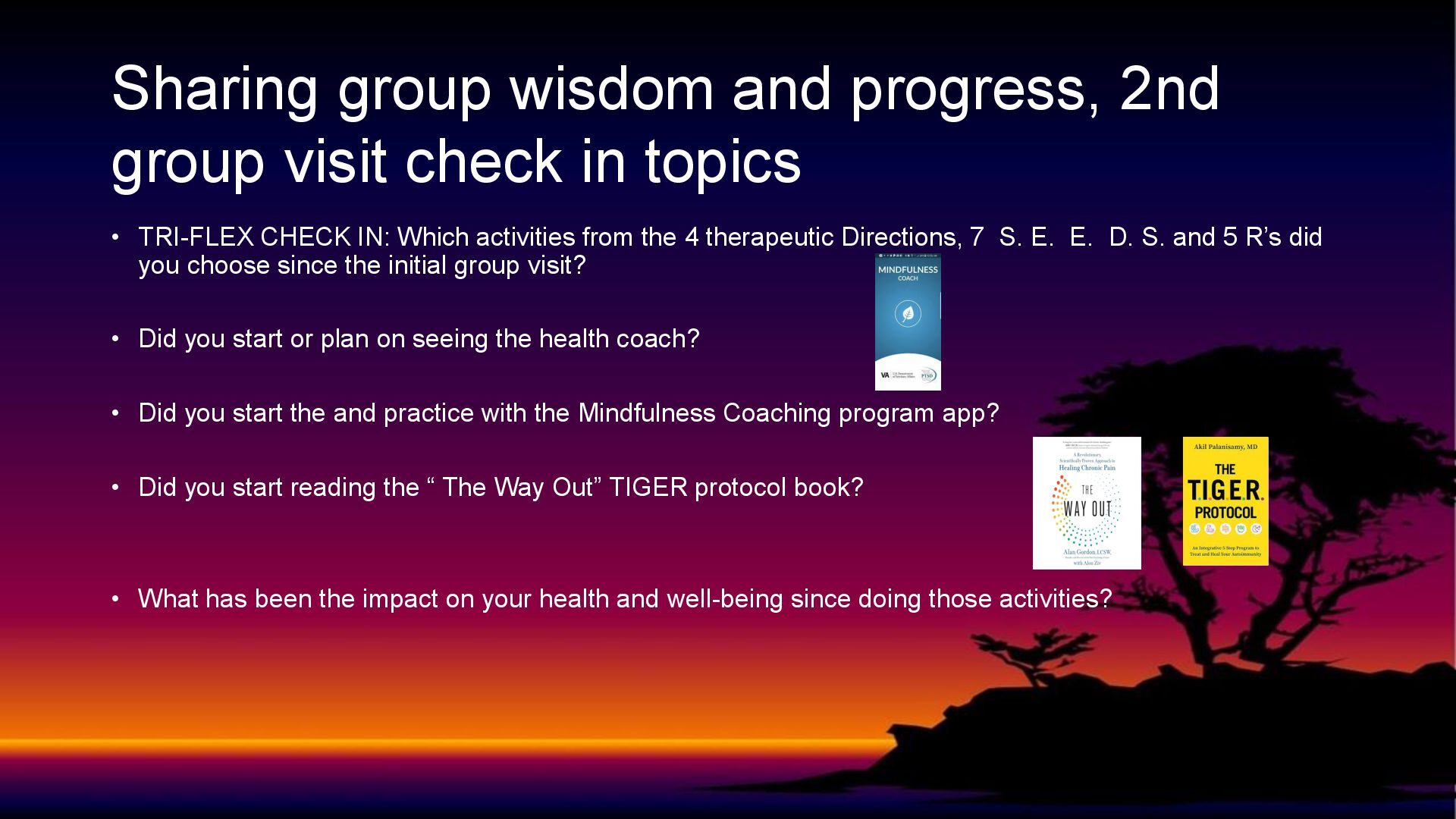
  5. Sharing group wisdom and progress, 2nd group visit check in

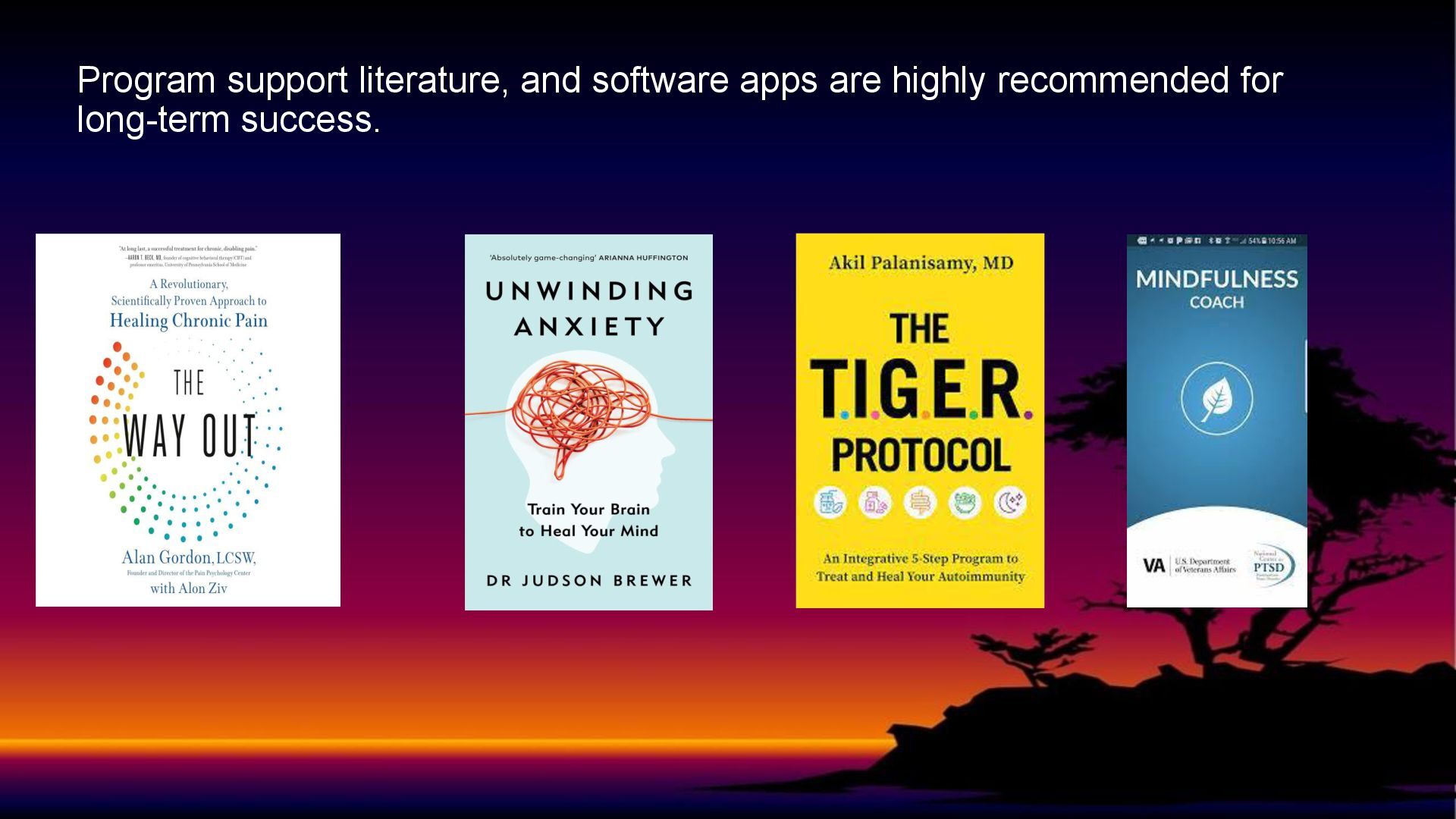
    topics • TRI-FLEX CHECK IN: Which activities from the 4 therapeutic Directions, 7 S. E. E. D. S. and 5 R’s did you choose since the initial group visit? • Did you start or plan on seeing the health coach? • Did you start the and practice with the Mindfulness Coaching program app? • Did you start reading the “ The Way Out” TIGER protocol book? • What has been the impact on your health and well-being since doing those activities?
  6. How To Manage The Brain’s Danger Predictions That Creates Real

    Neurobiological Pain. Discussion of the neurobiology of prediction error, emotional forecasting, how to mange it from the Top-Down
  7. The PCC, PFC CreateThe Fortune Telling Narrative Role of the

    Prefrontal Cortex(PFC) and Posterior Cingulate Cortex (PCC) The PCC is the original source of our pain story and the PFC acts as the brain’s fortune teller, interpreting sensory inputs that have been compared to our past experiences to shape our current life false narratives. Catastrophic Narrative Impact Catastrophic thinking triggers the Amygdala to amplify perceived threats, intensifying symptoms and protective responses. Therapeutic Narrative Reframing Compassionate Cognitive reframing and mindfulness help calm the Amygdala, reducing symptom amplification and promoting healing. 8 Presentation title 1/28/2026
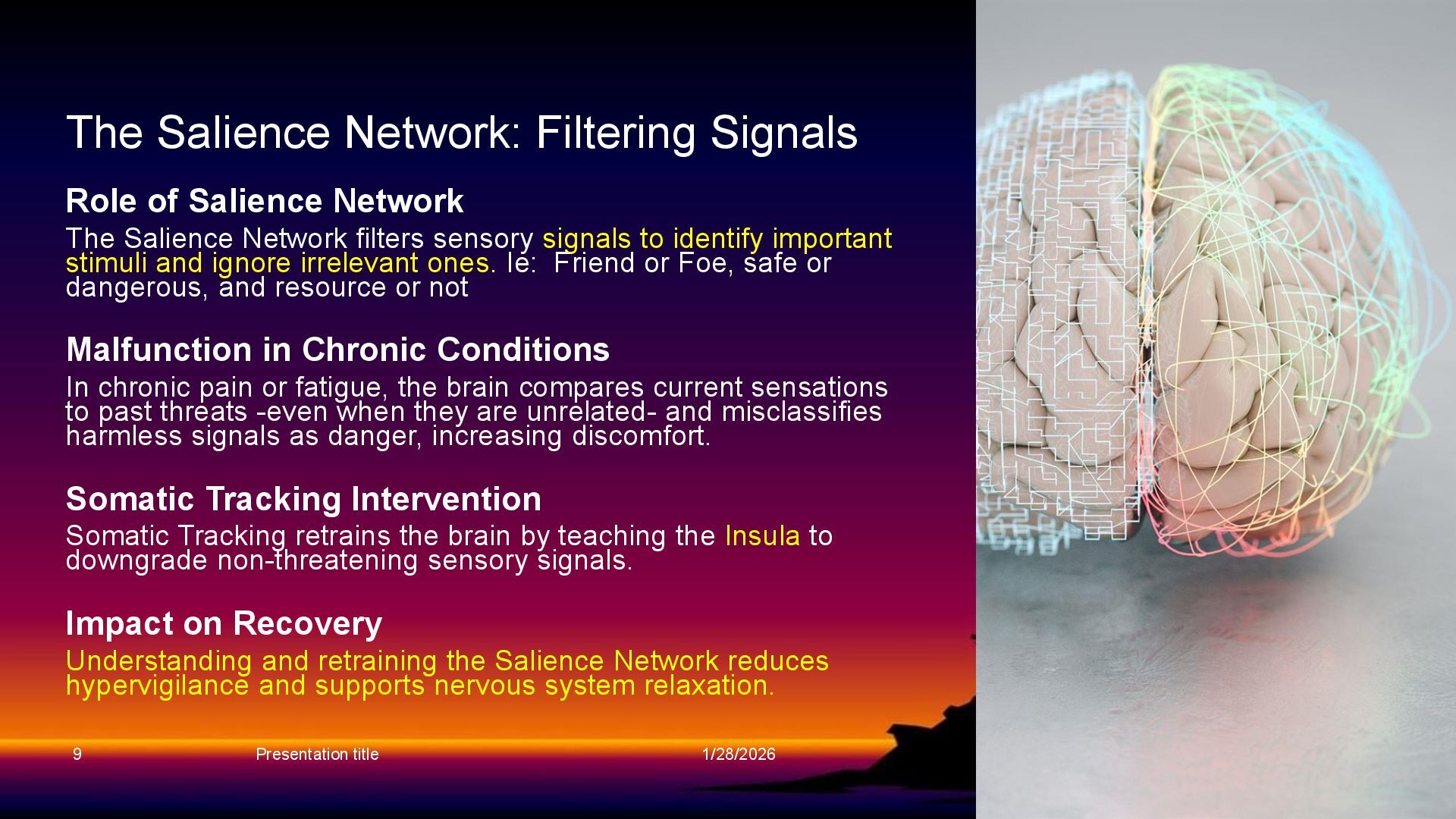
  8. The Salience Network: Filtering Signals Role of Salience Network The

    Salience Network filters sensory signals to identify important stimuli and ignore irrelevant ones. Ie: Friend or Foe, safe or dangerous, and resource or not Malfunction in Chronic Conditions In chronic pain or fatigue, the brain compares current sensations to past threats -even when they are unrelated- and misclassifies harmless signals as danger, increasing discomfort. Somatic Tracking Intervention Somatic Tracking retrains the brain by teaching the Insula to downgrade non-threatening sensory signals. Impact on Recovery Understanding and retraining the Salience Network reduces hypervigilance and supports nervous system relaxation. 9 Presentation title 1/28/2026
  9. Pain Amplification and Chemical Messengers 11 Presentation title 1/28/2026 Chemical

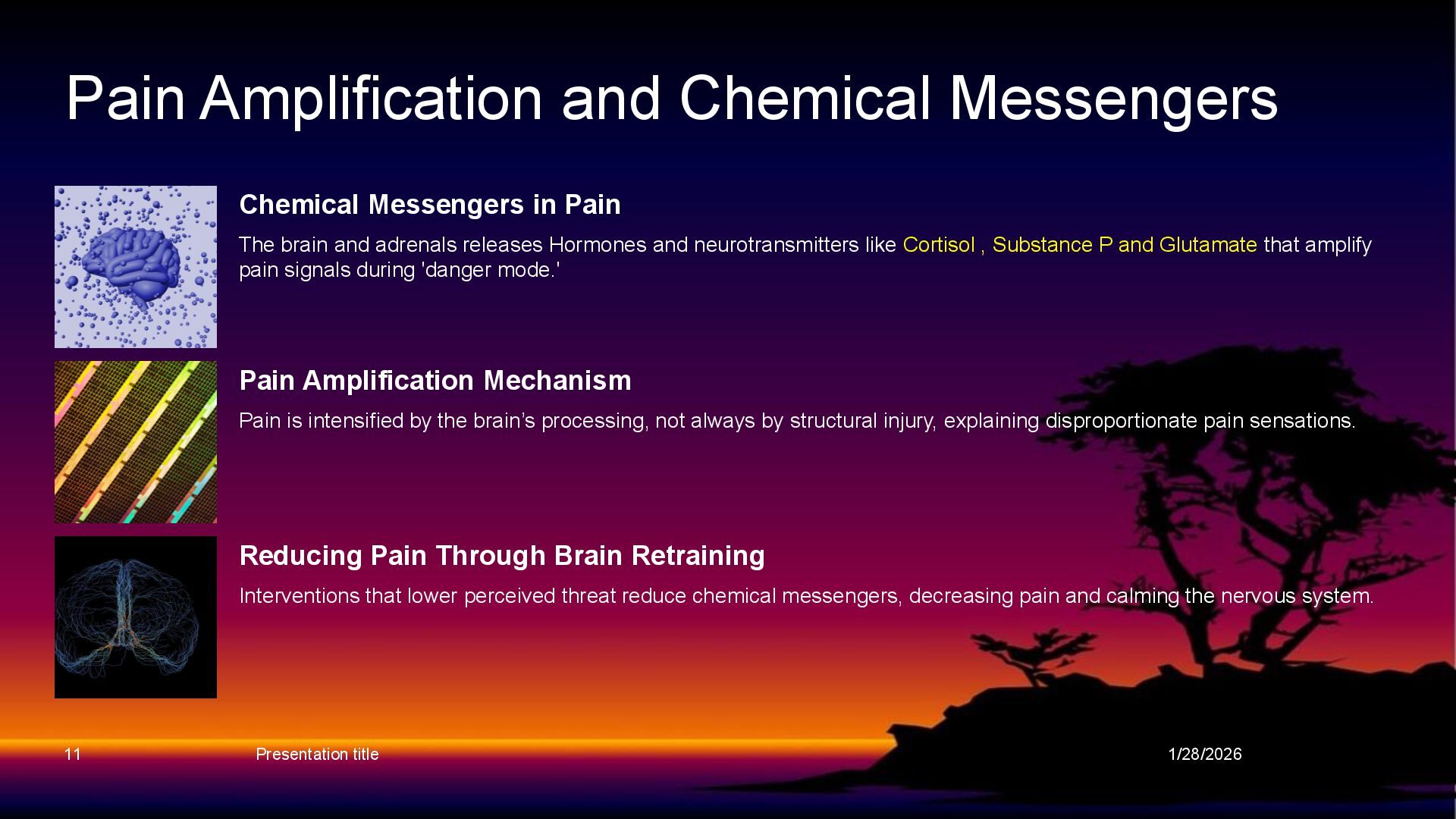
    Messengers in Pain The brain and adrenals releases Hormones and neurotransmitters like Cortisol , Substance P and Glutamate that amplify pain signals during 'danger mode.' Pain Amplification Mechanism Pain is intensified by the brain’s processing, not always by structural injury, explaining disproportionate pain sensations. Reducing Pain Through Brain Retraining Interventions that lower perceived threat reduce chemical messengers, decreasing pain and calming the nervous system.
  10. The Thalamus is the Master Switchboard and Gate Keeper •

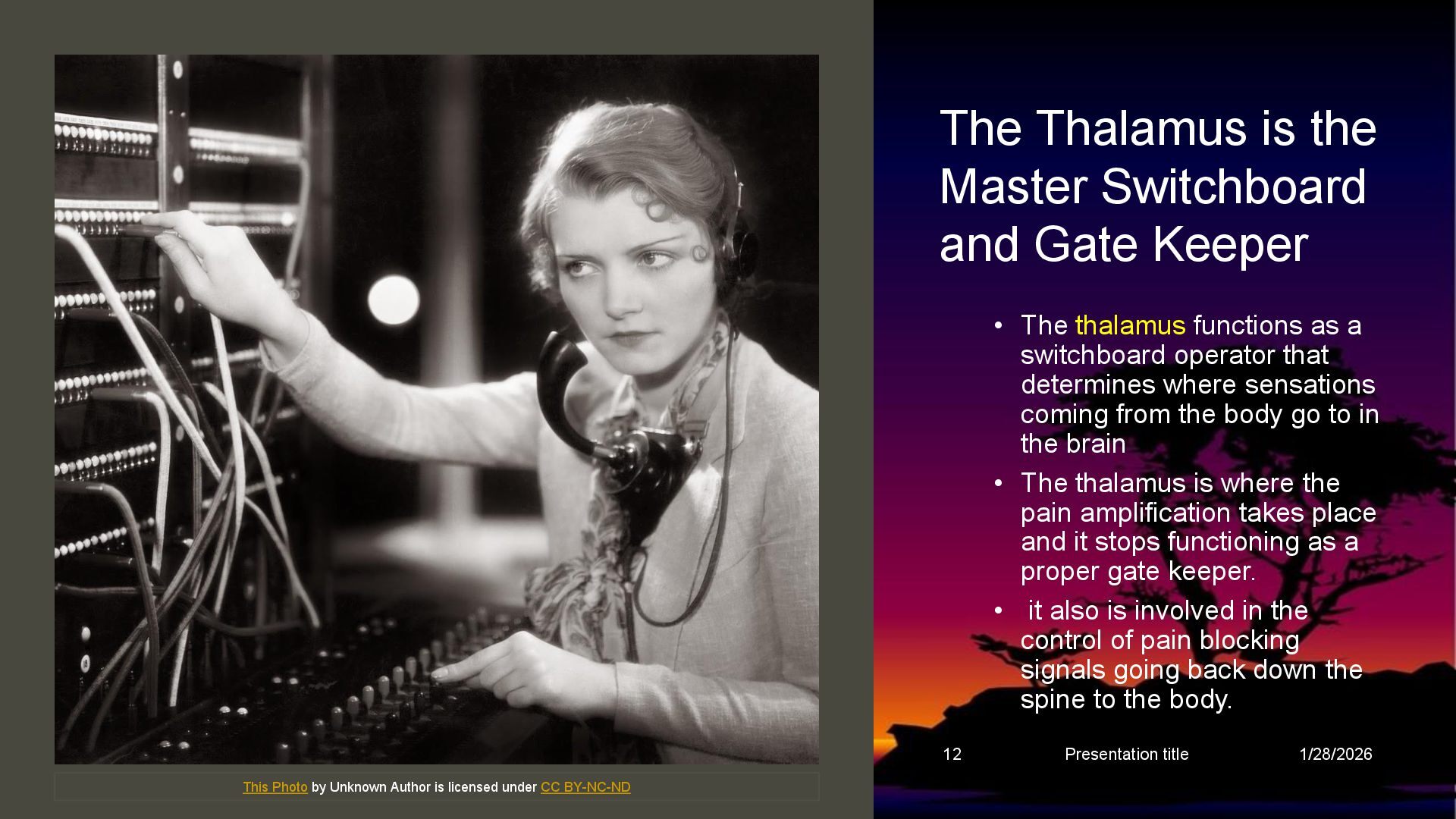
    The thalamus functions as a switchboard operator that determines where sensations coming from the body go to in the brain • The thalamus is where the pain amplification takes place and it stops functioning as a proper gate keeper. • it also is involved in the control of pain blocking signals going back down the spine to the body. 12 Presentation title 1/28/2026 This Photo by Unknown Author is licensed under CC BY-NC-ND
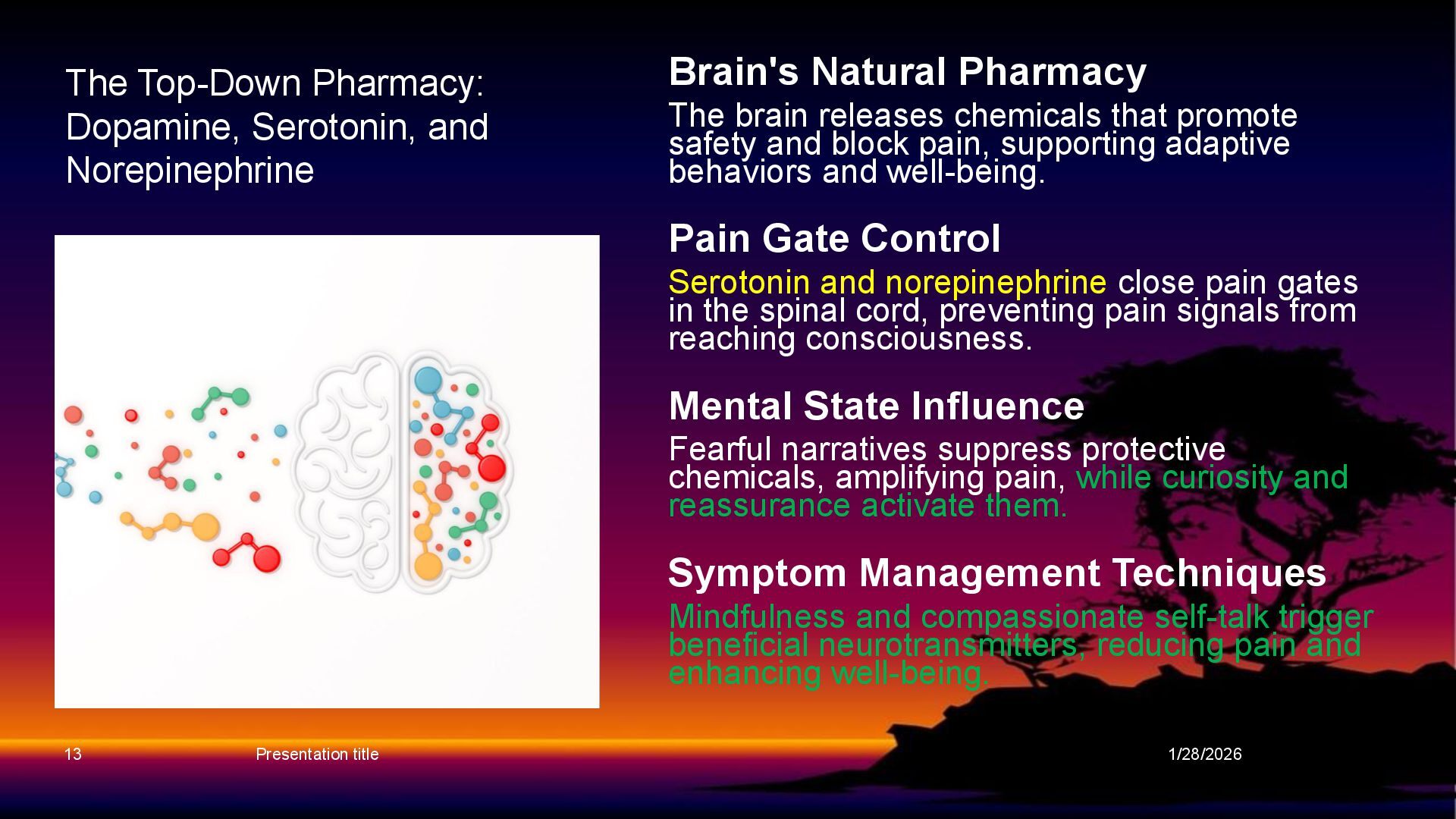
  11. The Top-Down Pharmacy: Dopamine, Serotonin, and Norepinephrine Brain's Natural Pharmacy

    The brain releases chemicals that promote safety and block pain, supporting adaptive behaviors and well-being. Pain Gate Control Serotonin and norepinephrine close pain gates in the spinal cord, preventing pain signals from reaching consciousness. Mental State Influence Fearful narratives suppress protective chemicals, amplifying pain, while curiosity and reassurance activate them. Symptom Management Techniques Mindfulness and compassionate self-talk trigger beneficial neurotransmitters, reducing pain and enhancing well-being. 13 Presentation title 1/28/2026
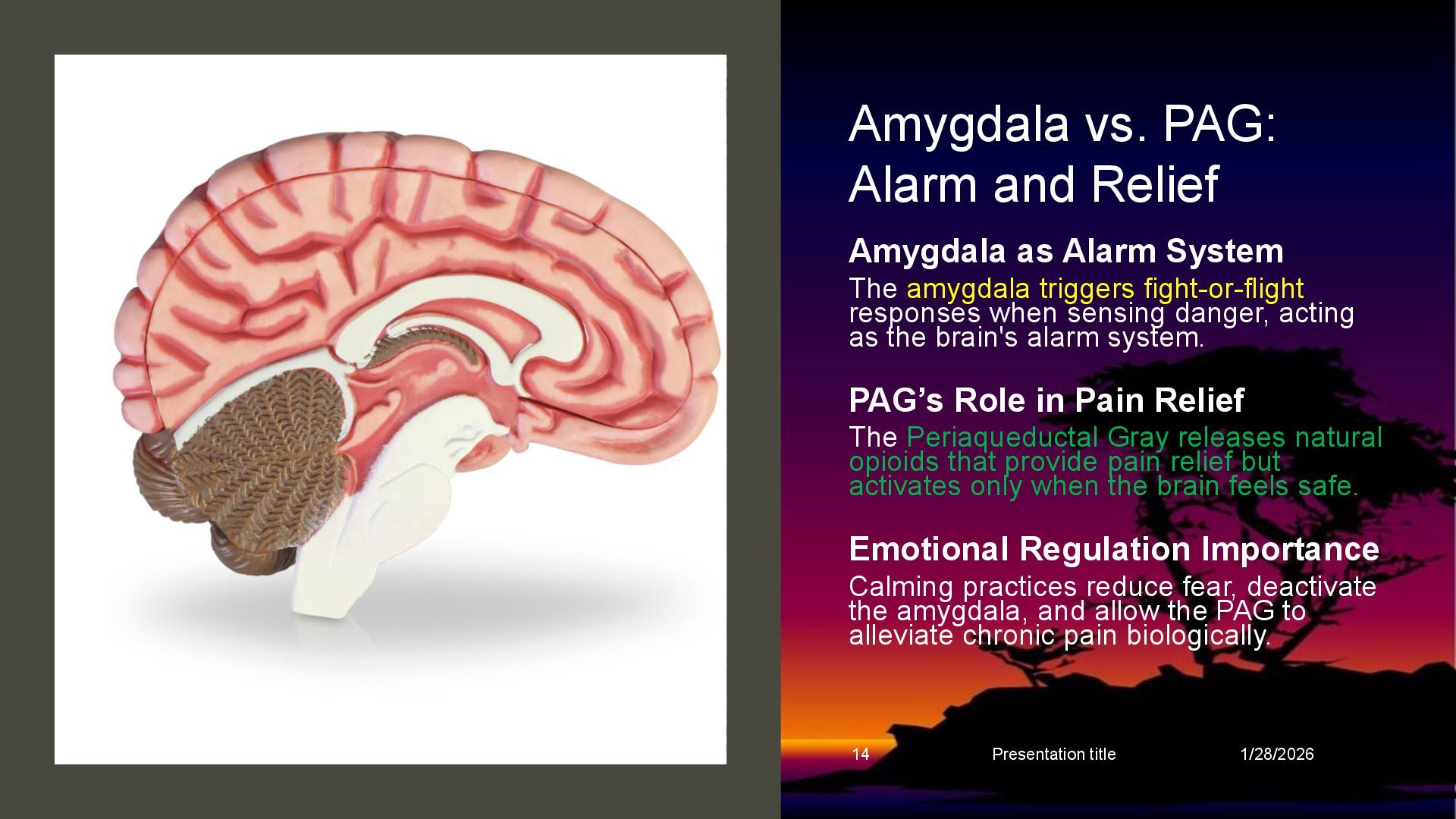
  12. Amygdala vs. PAG: Alarm and Relief Amygdala as Alarm System

    The amygdala triggers fight-or-flight responses when sensing danger, acting as the brain's alarm system. PAG’s Role in Pain Relief The Periaqueductal Gray releases natural opioids that provide pain relief but activates only when the brain feels safe. Emotional Regulation Importance Calming practices reduce fear, deactivate the amygdala, and allow the PAG to alleviate chronic pain biologically. 14 Presentation title 1/28/2026
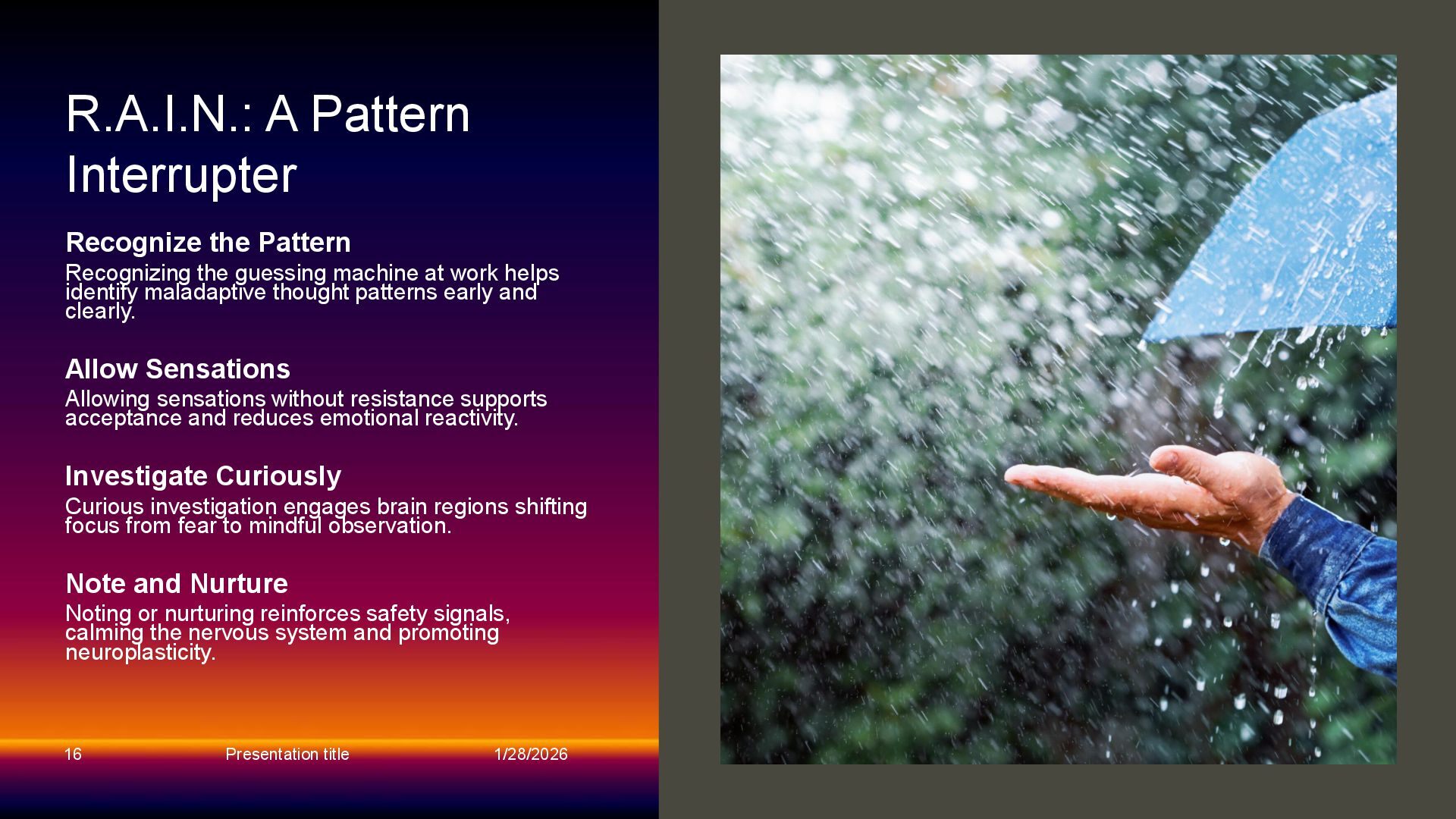
  13. R.A.I.N.: A Pattern Interrupter Recognize the Pattern Recognizing the guessing

    machine at work helps identify maladaptive thought patterns early and clearly. Allow Sensations Allowing sensations without resistance supports acceptance and reduces emotional reactivity. Investigate Curiously Curious investigation engages brain regions shifting focus from fear to mindful observation. Note and Nurture Noting or nurturing reinforces safety signals, calming the nervous system and promoting neuroplasticity. 16 Presentation title 1/28/2026
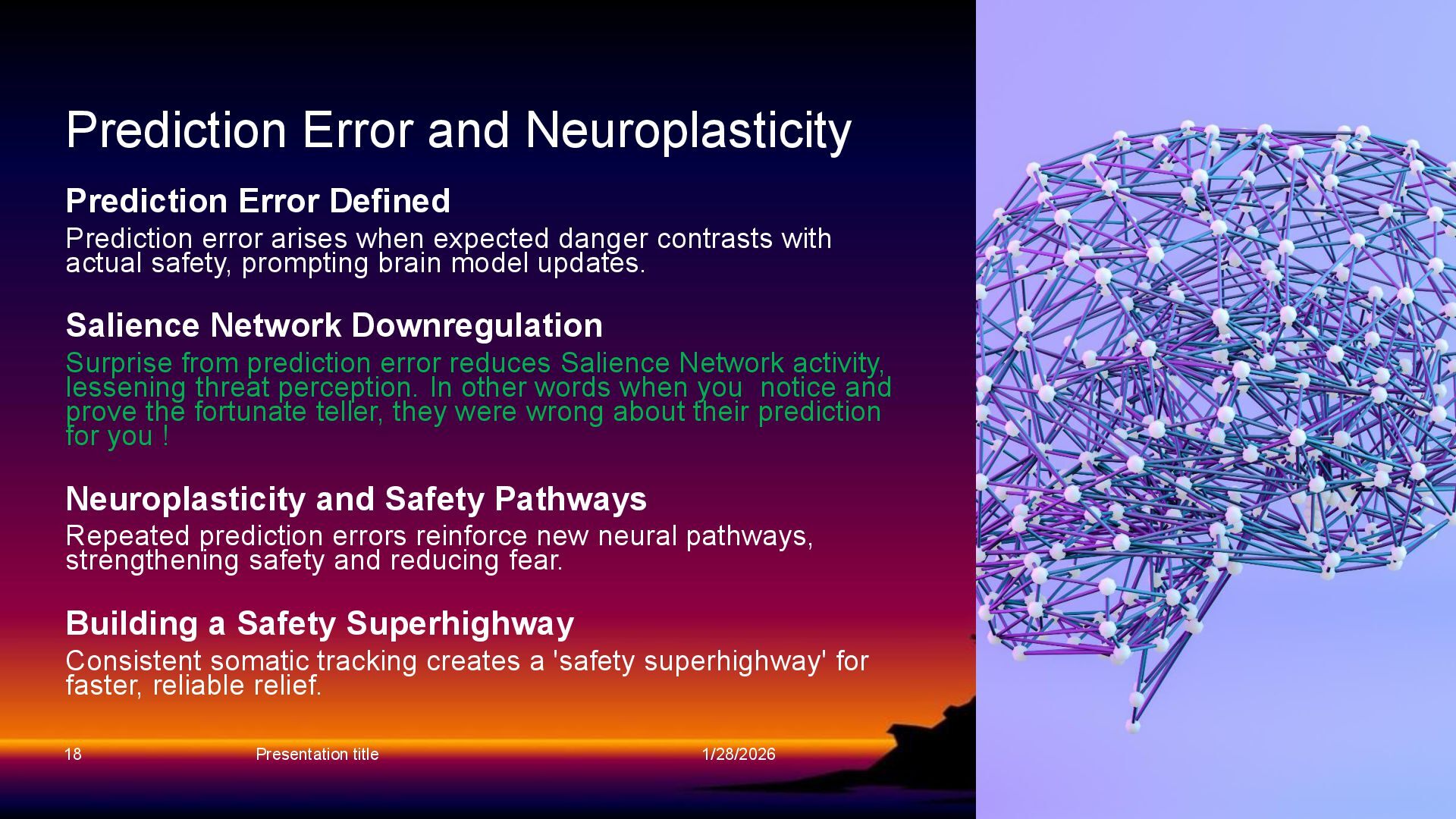
  14. Prediction Error and Neuroplasticity Prediction Error Defined Prediction error arises

    when expected danger contrasts with actual safety, prompting brain model updates. Salience Network Downregulation Surprise from prediction error reduces Salience Network activity, lessening threat perception. In other words when you notice and prove the fortunate teller, they were wrong about their prediction for you ! Neuroplasticity and Safety Pathways Repeated prediction errors reinforce new neural pathways, strengthening safety and reducing fear. Building a Safety Superhighway Consistent somatic tracking creates a 'safety superhighway' for faster, reliable relief. 18 Presentation title 1/28/2026
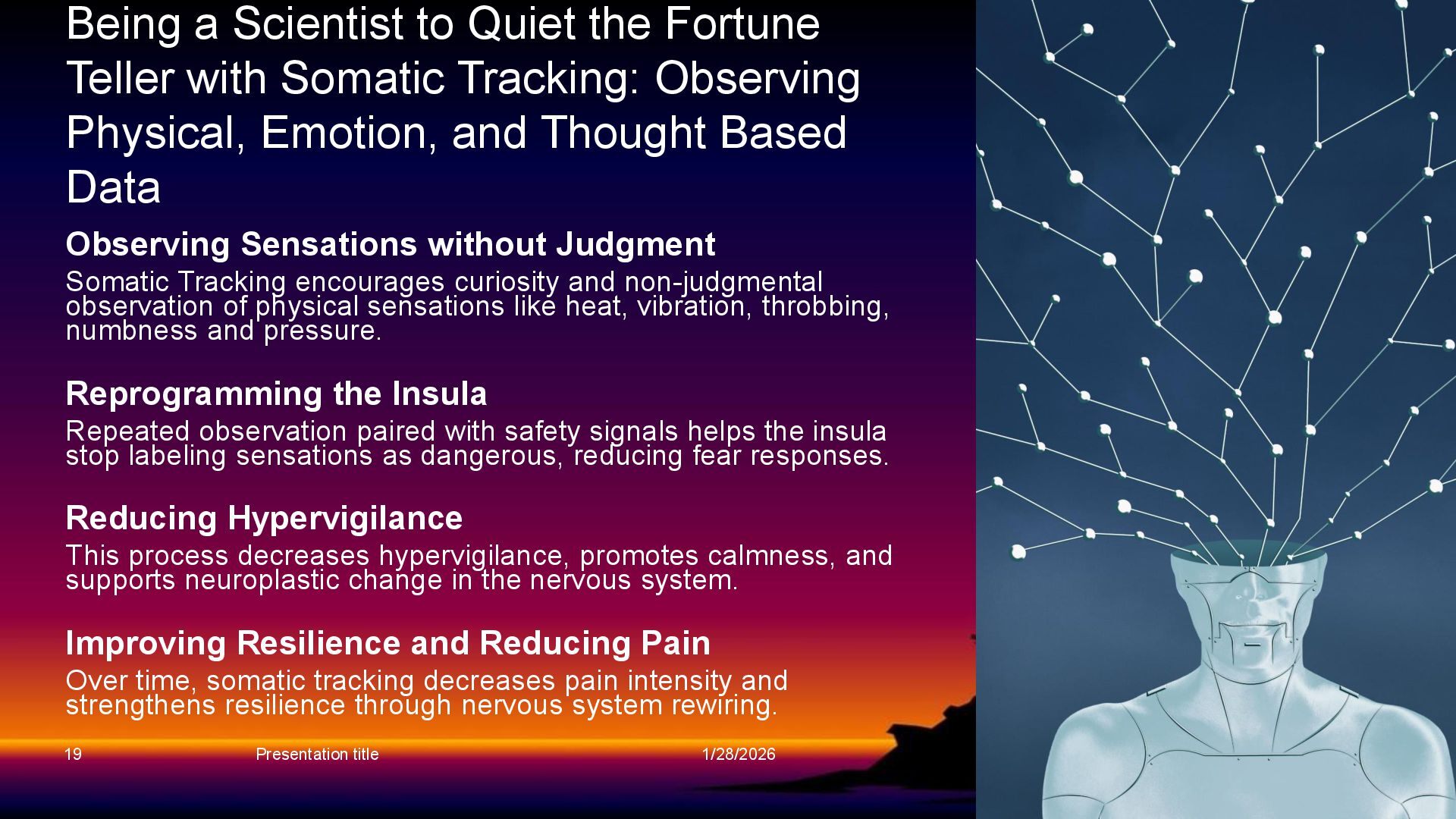
  15. Being a Scientist to Quiet the Fortune Teller with Somatic

    Tracking: Observing Physical, Emotion, and Thought Based Data Observing Sensations without Judgment Somatic Tracking encourages curiosity and non-judgmental observation of physical sensations like heat, vibration, throbbing, numbness and pressure. Reprogramming the Insula Repeated observation paired with safety signals helps the insula stop labeling sensations as dangerous, reducing fear responses. Reducing Hypervigilance This process decreases hypervigilance, promotes calmness, and supports neuroplastic change in the nervous system. Improving Resilience and Reducing Pain Over time, somatic tracking decreases pain intensity and strengthens resilience through nervous system rewiring. 19 Presentation title 1/28/2026
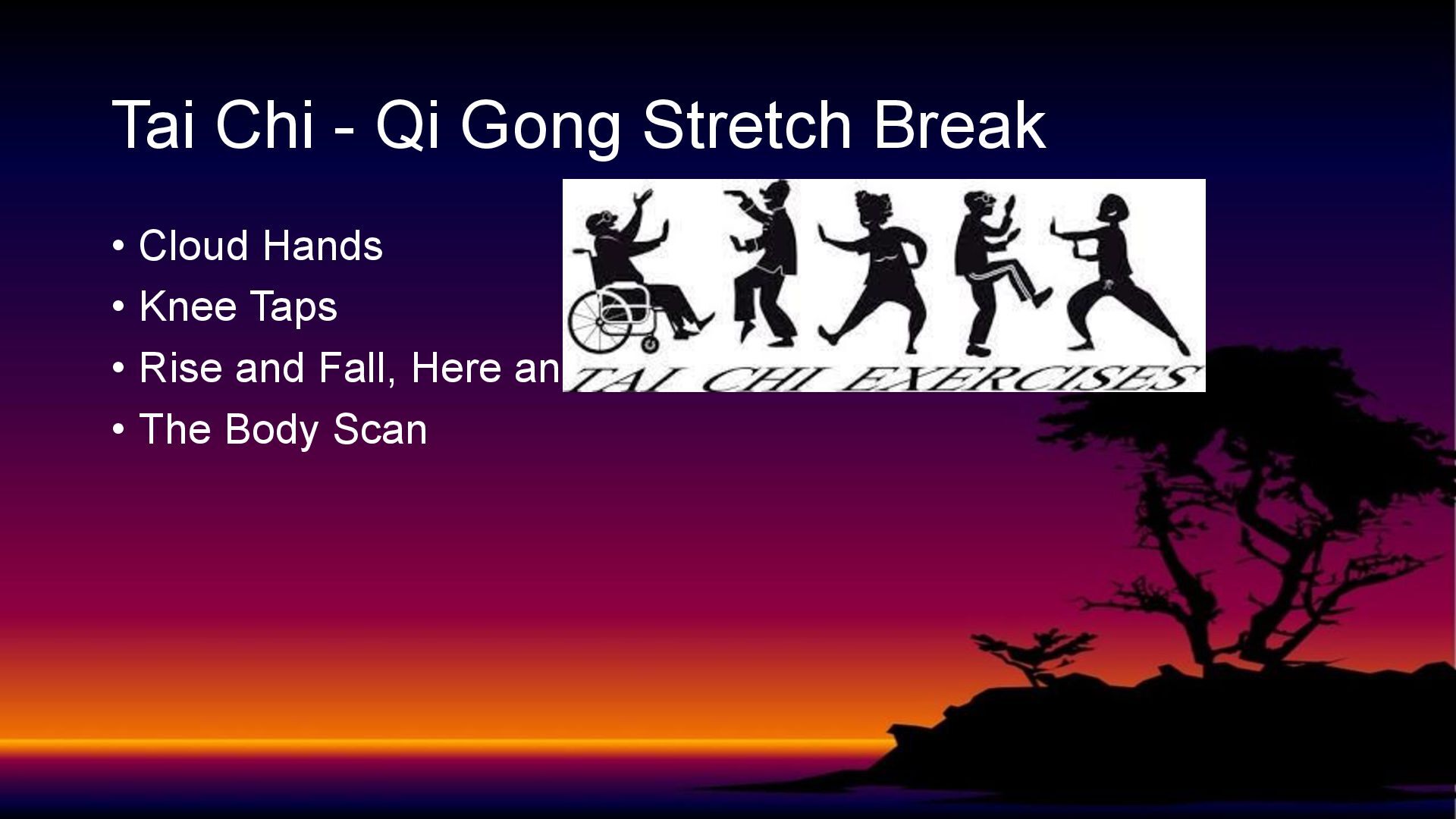
  16. Tai Chi - Qi Gong Stretch Break • Cloud Hands

    • Knee Taps • Rise and Fall, Here and Now, Breathing • The Body Scan
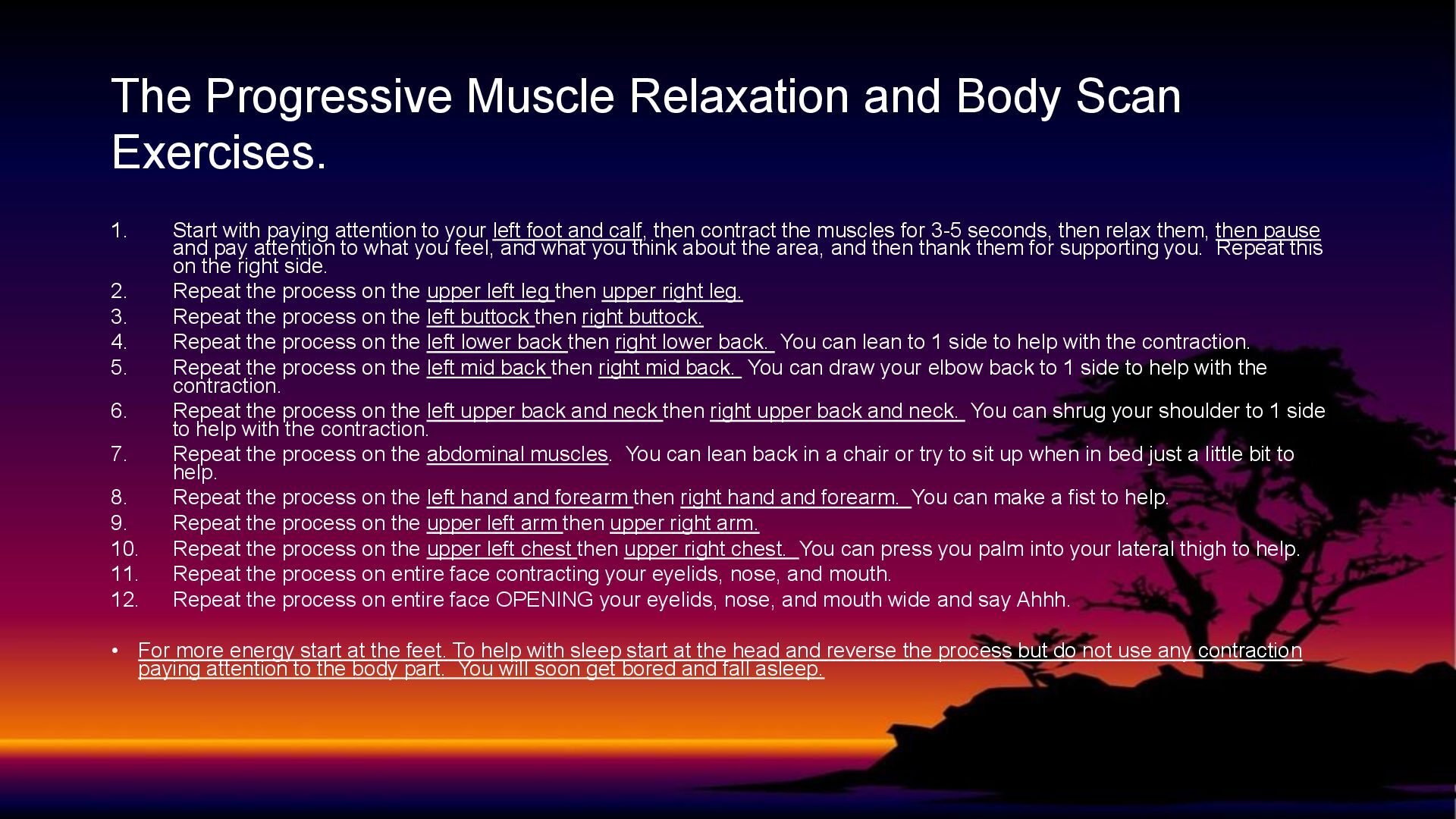
  17. The Progressive Muscle Relaxation and Body Scan Exercises. 1. Start

    with paying attention to your left foot and calf, then contract the muscles for 3-5 seconds, then relax them, then pause and pay attention to what you feel, and what you think about the area, and then thank them for supporting you. Repeat this on the right side. 2. Repeat the process on the upper left leg then upper right leg. 3. Repeat the process on the left buttock then right buttock. 4. Repeat the process on the left lower back then right lower back. You can lean to 1 side to help with the contraction. 5. Repeat the process on the left mid back then right mid back. You can draw your elbow back to 1 side to help with the contraction. 6. Repeat the process on the left upper back and neck then right upper back and neck. You can shrug your shoulder to 1 side to help with the contraction. 7. Repeat the process on the abdominal muscles. You can lean back in a chair or try to sit up when in bed just a little bit to help. 8. Repeat the process on the left hand and forearm then right hand and forearm. You can make a fist to help. 9. Repeat the process on the upper left arm then upper right arm. 10. Repeat the process on the upper left chest then upper right chest. You can press you palm into your lateral thigh to help. 11. Repeat the process on entire face contracting your eyelids, nose, and mouth. 12. Repeat the process on entire face OPENING your eyelids, nose, and mouth wide and say Ahhh. • For more energy start at the feet. To help with sleep start at the head and reverse the process but do not use any contraction paying attention to the body part. You will soon get bored and fall asleep.
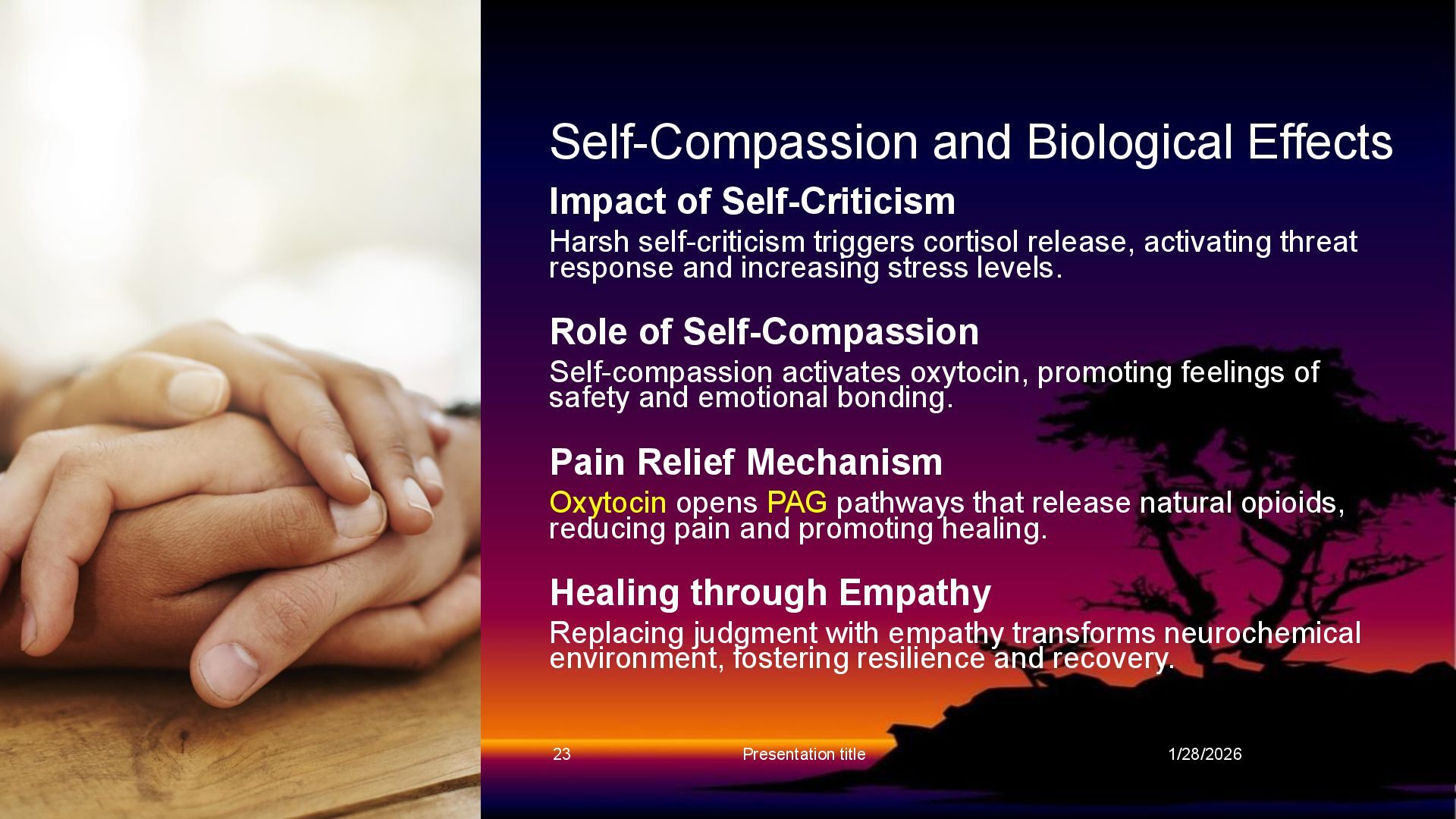
  18. Self-Compassion and Biological Effects Impact of Self-Criticism Harsh self-criticism triggers

    cortisol release, activating threat response and increasing stress levels. Role of Self-Compassion Self-compassion activates oxytocin, promoting feelings of safety and emotional bonding. Pain Relief Mechanism Oxytocin opens PAG pathways that release natural opioids, reducing pain and promoting healing. Healing through Empathy Replacing judgment with empathy transforms neurochemical environment, fostering resilience and recovery. 23 Presentation title 1/28/2026
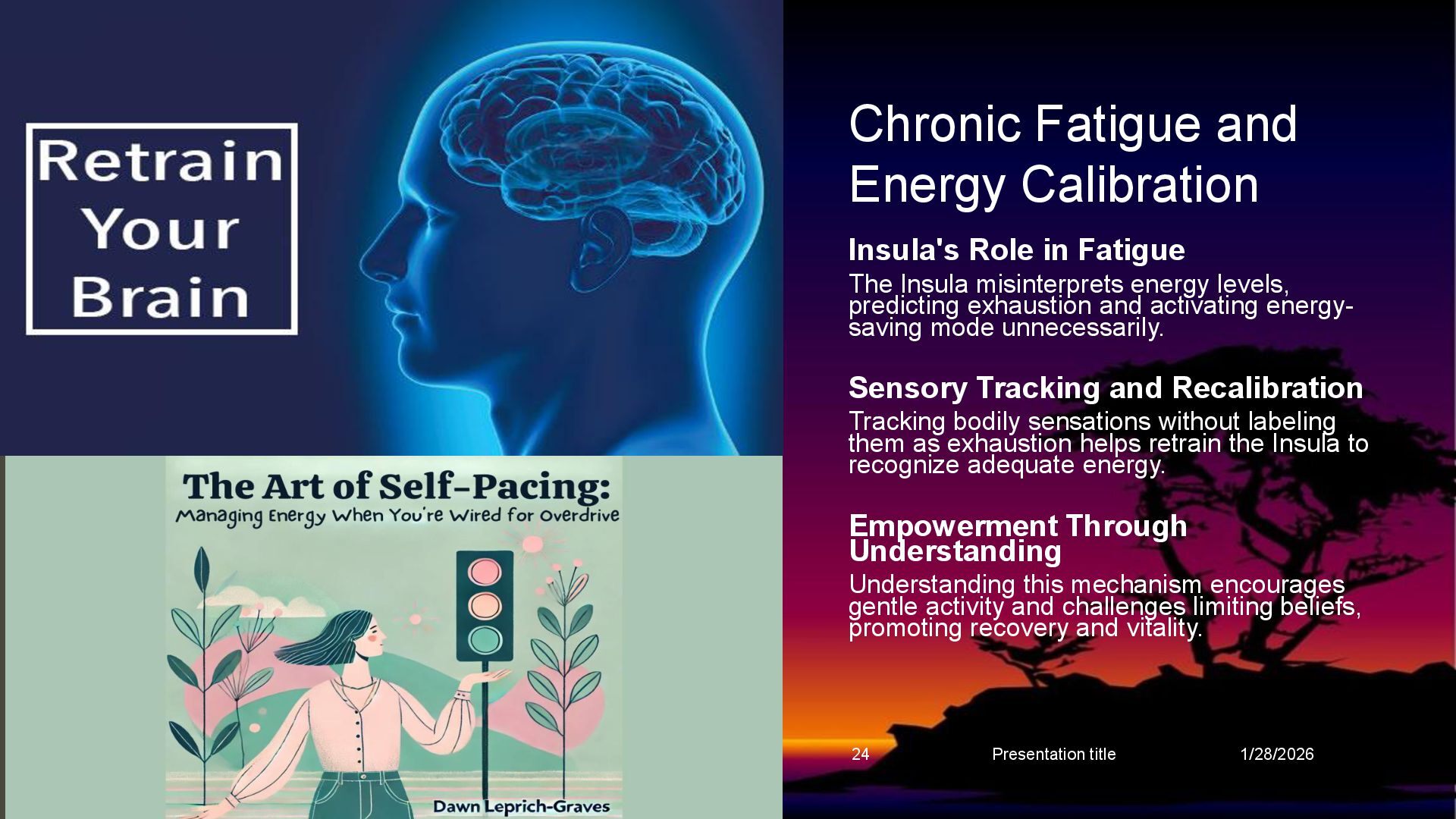
  19. Chronic Fatigue and Energy Calibration Insula's Role in Fatigue The

    Insula misinterprets energy levels, predicting exhaustion and activating energy- saving mode unnecessarily. Sensory Tracking and Recalibration Tracking bodily sensations without labeling them as exhaustion helps retrain the Insula to recognize adequate energy. Empowerment Through Understanding Understanding this mechanism encourages gentle activity and challenges limiting beliefs, promoting recovery and vitality. 24 Presentation title 1/28/2026
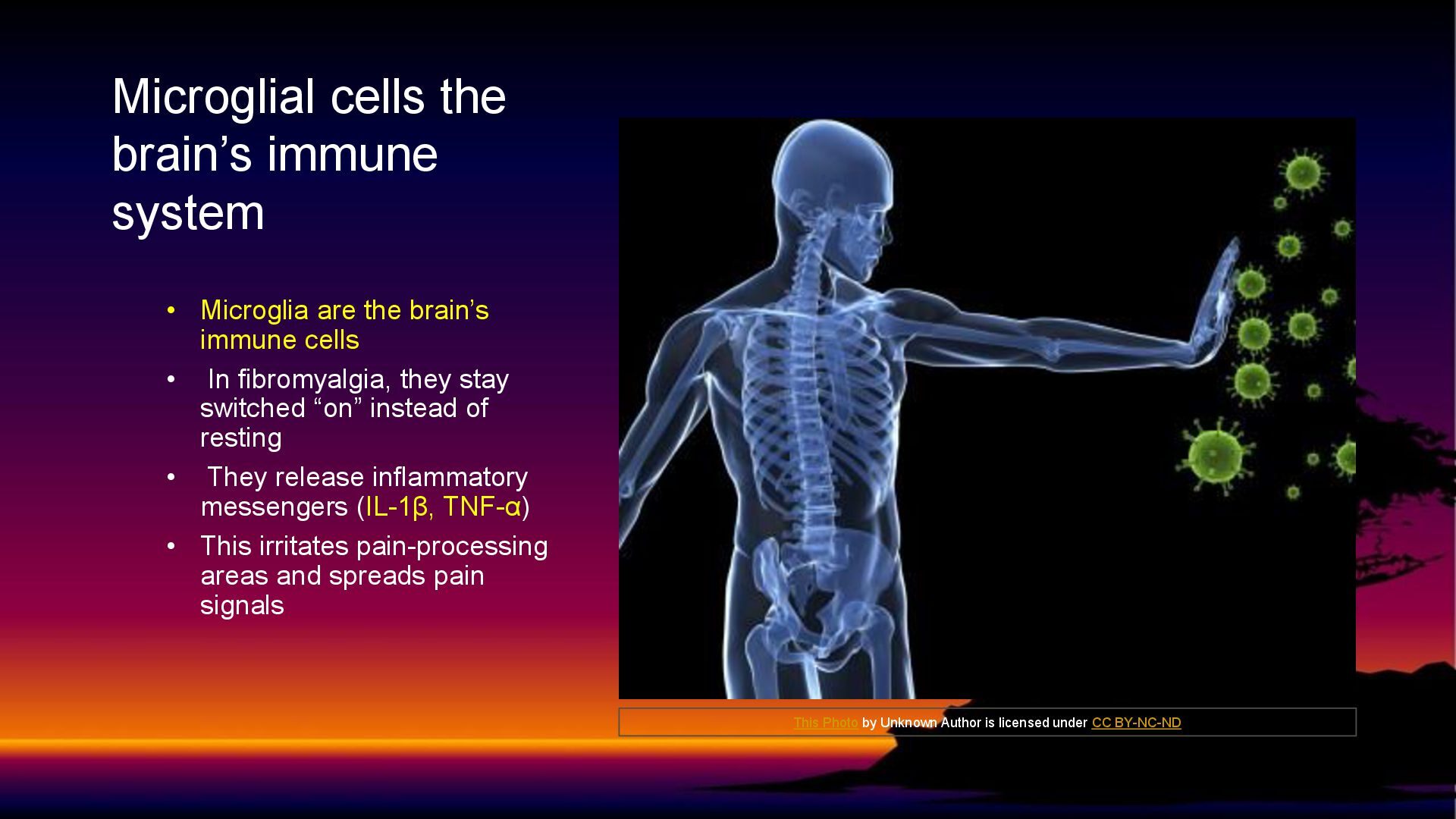
  20. Microglial cells the brain’s immune system • Microglia are the

    brain’s immune cells • In fibromyalgia, they stay switched “on” instead of resting • They release inflammatory messengers (IL-1β, TNF-α) • This irritates pain-processing areas and spreads pain signals This Photo by Unknown Author is licensed under CC BY-NC-ND
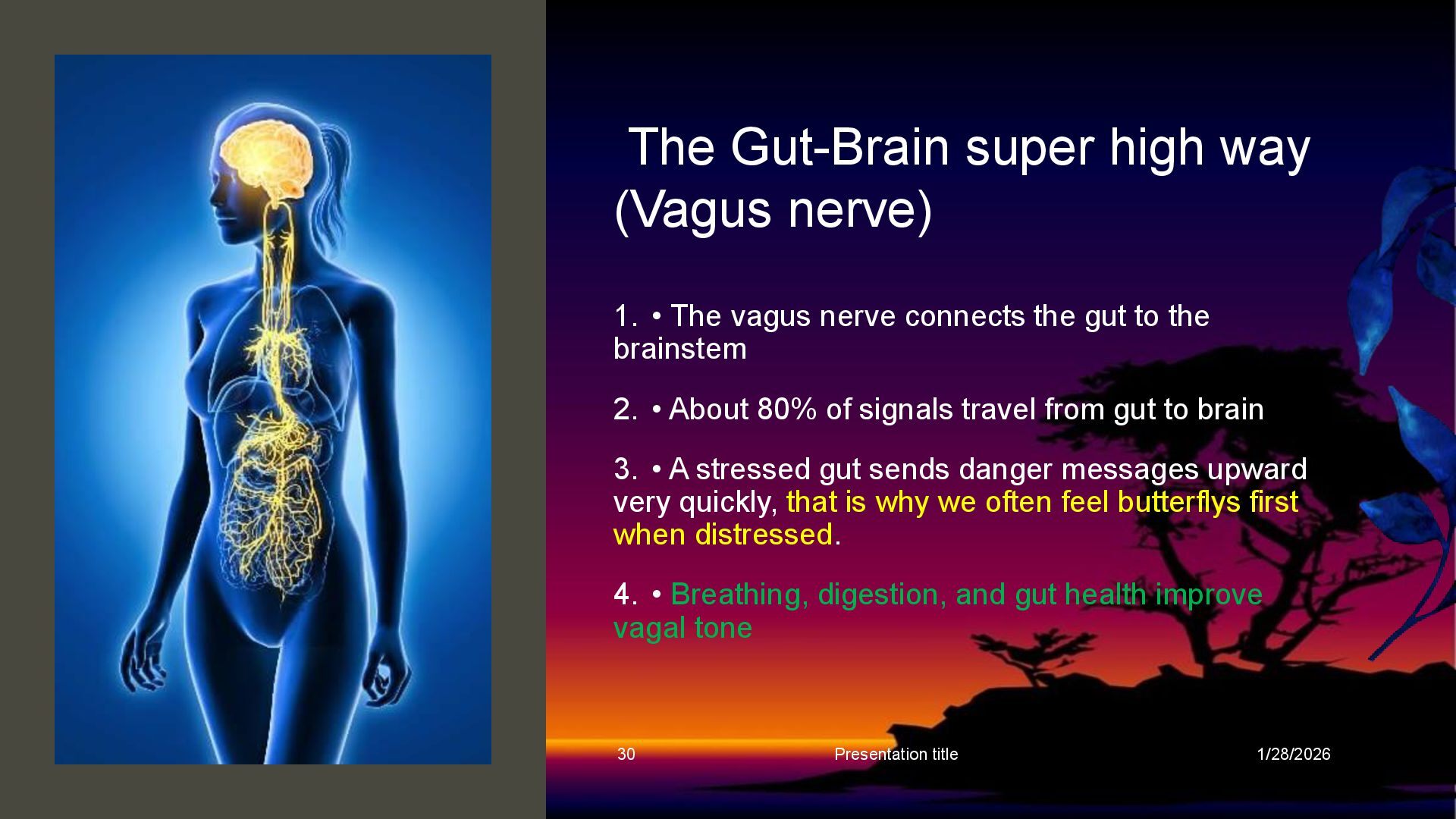
  21. The Gut-Brain super high way (Vagus nerve) 1. • The

    vagus nerve connects the gut to the brainstem 2. • About 80% of signals travel from gut to brain 3. • A stressed gut sends danger messages upward very quickly, that is why we often feel butterflys first when distressed. 4. • Breathing, digestion, and gut health improve vagal tone 30 Presentation title 1/28/2026
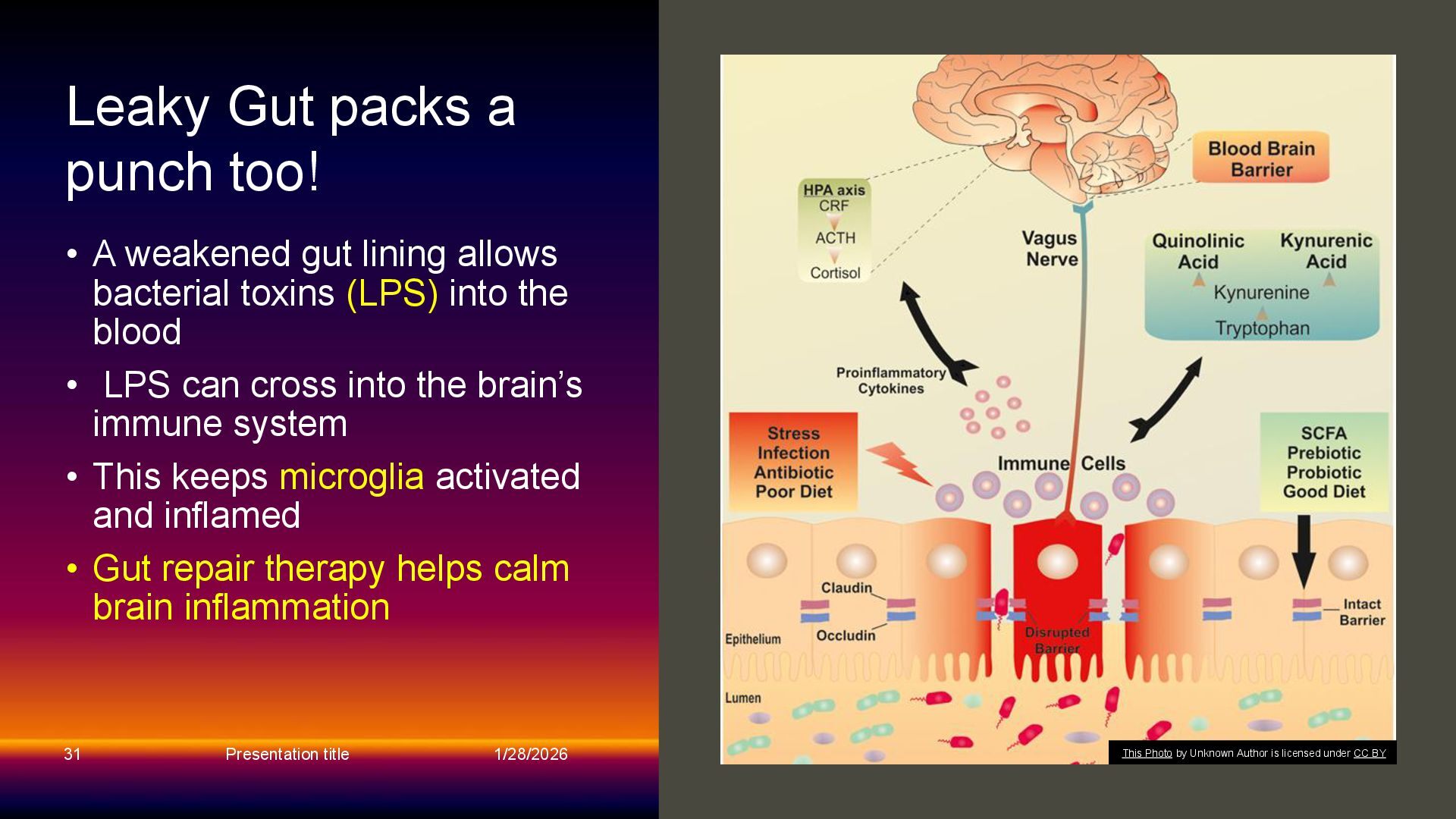
  22. Leaky Gut packs a punch too! • A weakened gut

    lining allows bacterial toxins (LPS) into the blood • LPS can cross into the brain’s immune system • This keeps microglia activated and inflamed • Gut repair therapy helps calm brain inflammation 31 Presentation title 1/28/2026 This Photo by Unknown Author is licensed under CC BY
  23. The importance of sleep • Fibromyalgia often disrupts deep sleep

    stages • Inflammation builds when the system cannot fully run Deep sleep activates the brain's waste- removal system (autophagy) • Restoring sleep helps reduce pain through autophagy Note: Time restricted eating known as intermittent fasting also causes this process. 33
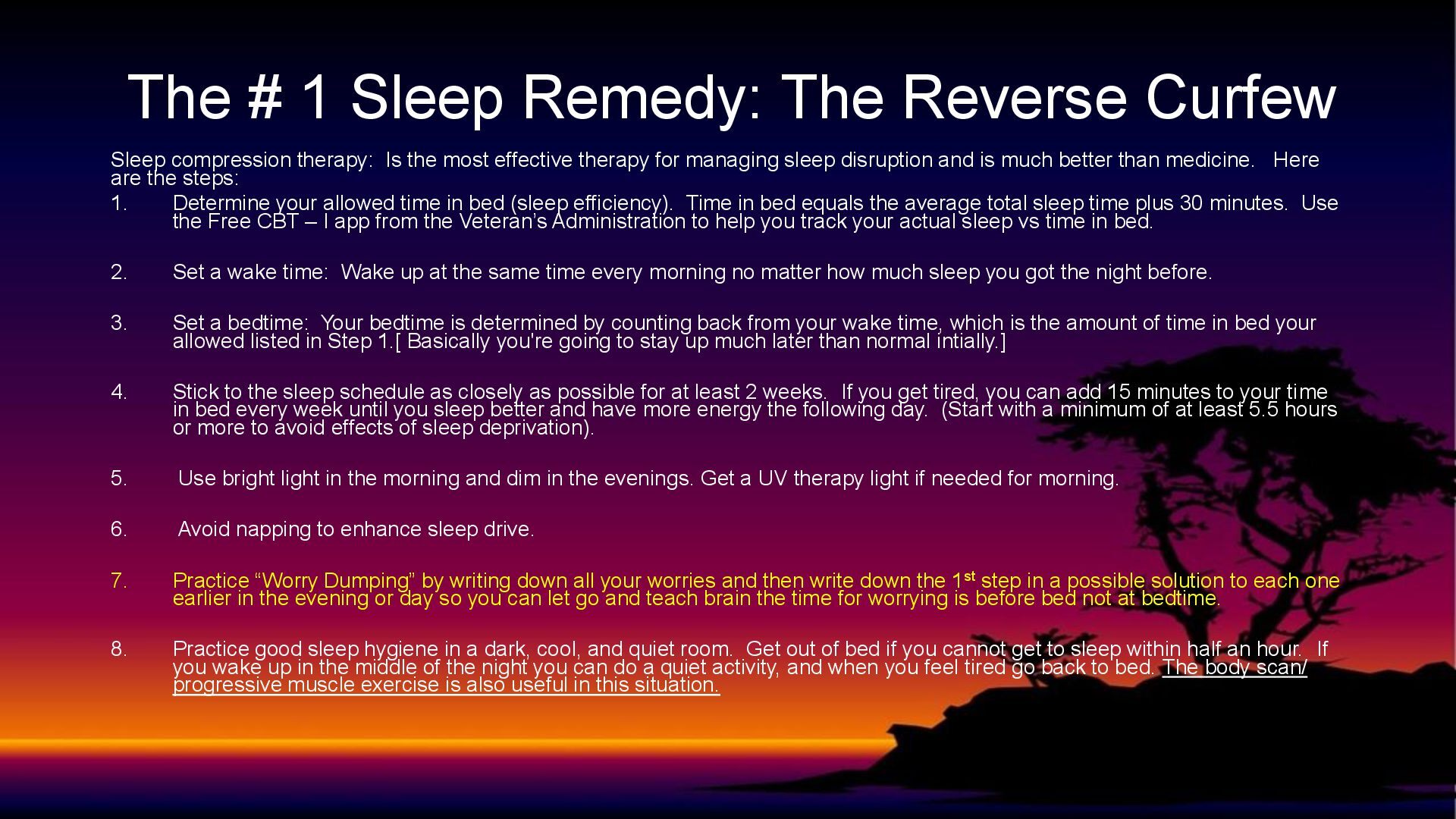
  24. The # 1 Sleep Remedy: The Reverse Curfew Sleep compression

    therapy: Is the most effective therapy for managing sleep disruption and is much better than medicine. Here are the steps: 1. Determine your allowed time in bed (sleep efficiency). Time in bed equals the average total sleep time plus 30 minutes. Use the Free CBT – I app from the Veteran’s Administration to help you track your actual sleep vs time in bed. 2. Set a wake time: Wake up at the same time every morning no matter how much sleep you got the night before. 3. Set a bedtime: Your bedtime is determined by counting back from your wake time, which is the amount of time in bed your allowed listed in Step 1.[ Basically you're going to stay up much later than normal intially.] 4. Stick to the sleep schedule as closely as possible for at least 2 weeks. If you get tired, you can add 15 minutes to your time in bed every week until you sleep better and have more energy the following day. (Start with a minimum of at least 5.5 hours or more to avoid effects of sleep deprivation). 5. Use bright light in the morning and dim in the evenings. Get a UV therapy light if needed for morning. 6. Avoid napping to enhance sleep drive. 7. Practice “Worry Dumping” by writing down all your worries and then write down the 1st step in a possible solution to each one earlier in the evening or day so you can let go and teach brain the time for worrying is before bed not at bedtime. 8. Practice good sleep hygiene in a dark, cool, and quiet room. Get out of bed if you cannot get to sleep within half an hour. If you wake up in the middle of the night you can do a quiet activity, and when you feel tired go back to bed. The body scan/ progressive muscle exercise is also useful in this situation.
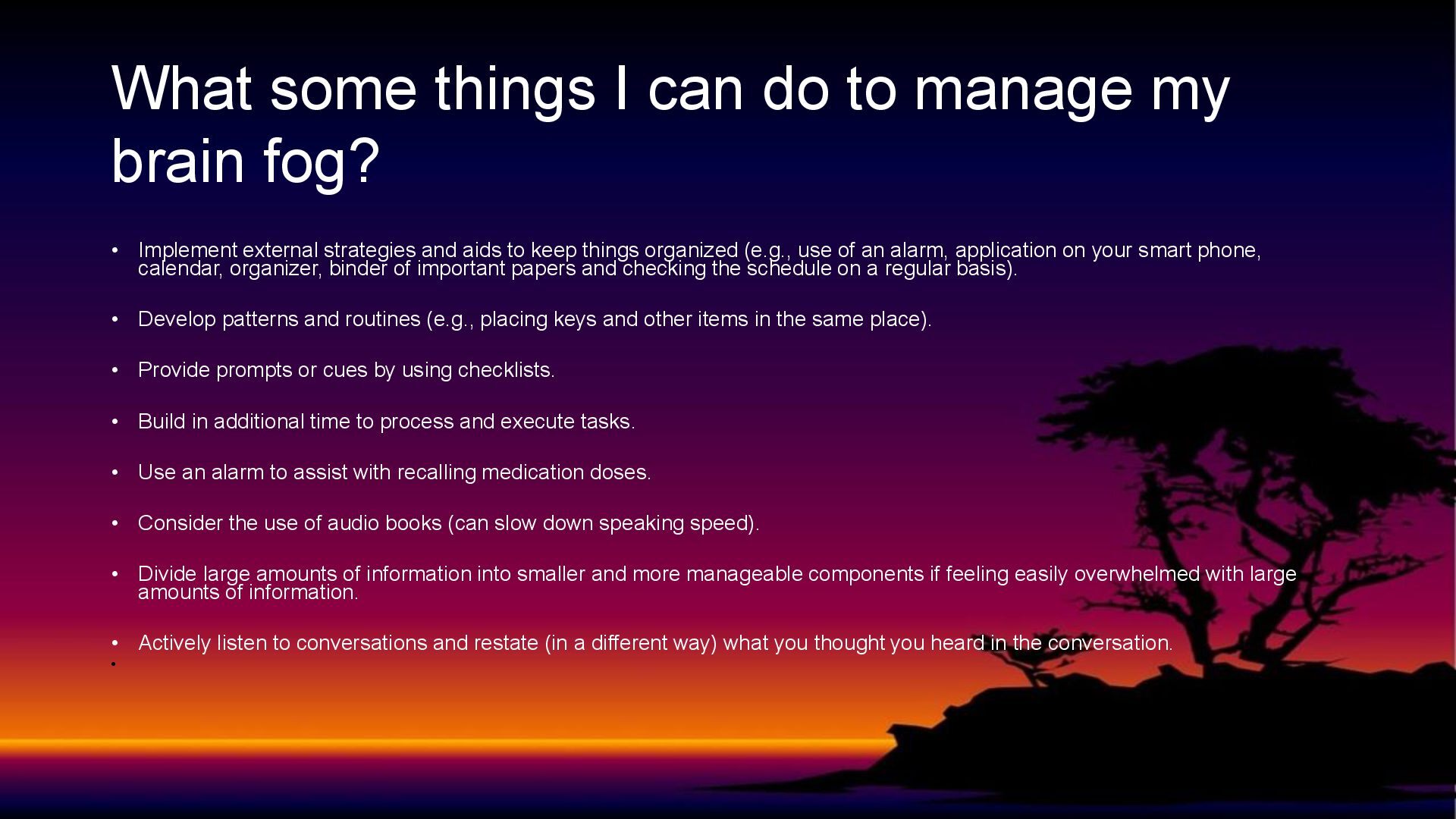
  25. What some things I can do to manage my brain

    fog? • Implement external strategies and aids to keep things organized (e.g., use of an alarm, application on your smart phone, calendar, organizer, binder of important papers and checking the schedule on a regular basis). • Develop patterns and routines (e.g., placing keys and other items in the same place). • Provide prompts or cues by using checklists. • Build in additional time to process and execute tasks. • Use an alarm to assist with recalling medication doses. • Consider the use of audio books (can slow down speaking speed). • Divide large amounts of information into smaller and more manageable components if feeling easily overwhelmed with large amounts of information. • Actively listen to conversations and restate (in a different way) what you thought you heard in the conversation. •
  26. Brain Fog: Software Programs for Cognitive Support and Training BrainHQ

    is an online headquarters for working out your brain. Think of it as a personal gym, where you exercise your memory, attention, brain speed, people skills, intelligence and navigation instead of your abs, delts, and quads. Just as our bodies require care and exercise over the course of life, so do our brains. BrainHQ provides the exercise your brain needs to be at its sharpest. Using a special algorithm, each exercise adapts in difficulty as you work so that you always train at the optimum level for you— where you are most likely to improve your performance.
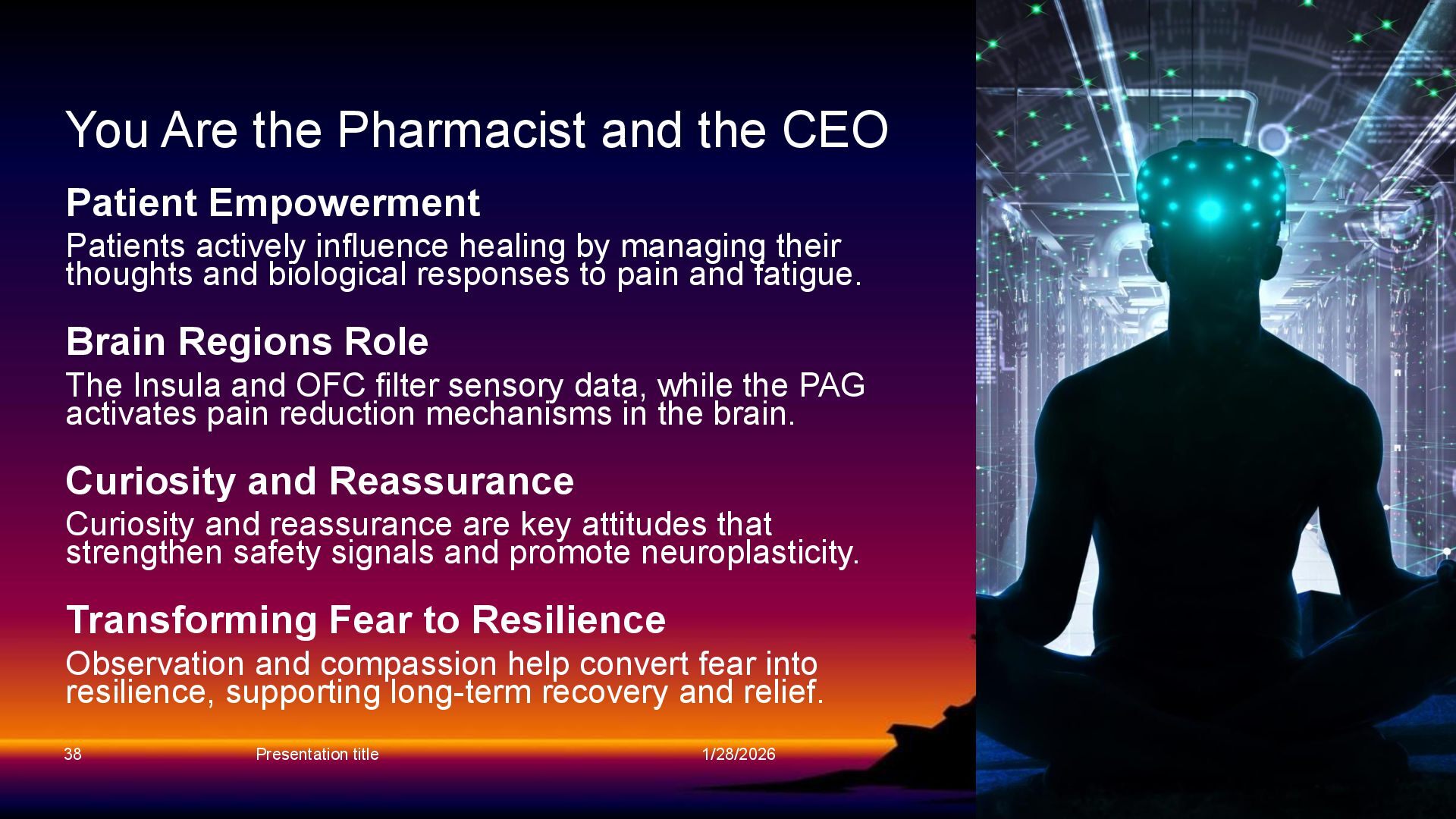
  27. You Are the Pharmacist and the CEO Patient Empowerment Patients

    actively influence healing by managing their thoughts and biological responses to pain and fatigue. Brain Regions Role The Insula and OFC filter sensory data, while the PAG activates pain reduction mechanisms in the brain. Curiosity and Reassurance Curiosity and reassurance are key attitudes that strengthen safety signals and promote neuroplasticity. Transforming Fear to Resilience Observation and compassion help convert fear into resilience, supporting long-term recovery and relief. 38 Presentation title 1/28/2026
  28. Second group therapeutic recommendations • TOP DOWN: • Pain Re

    processing therapy “The Way Out” do the free 21 day course. • 4 Pro Social Attitudes + 5 N Technique + the Serenity Prayer. • Pro Social Attitudes - Treat yourself with Kindness, Compassion, Equanimity in the form of Acceptance, and Joy. • 5N - Notice it, Name it, Normalize it, Nurture self, Now take action and do something useful or helpful for yourself and/or others. • Recognize what you can control and act on it, and things you can’t control recognize that you still can respond in a way that is consistent with your best self. • HeartMath Biofeed Back with health coach. • Use Brain Fog management tips as discussed. • Trial of Sleep Restriction CBT-I therapy if needed. • Progressive Muscle exercise and Tai Chi – Qi Gong.
  29. Next Class Topics: • Inside Out – • Integrative Medicine

    tests • Diet • Nutritional supplements • Medications
  30. 2nd group class question and answers. • What did you

    learn today? • Comments? • Concerns?
  31. Fibromyalgia Resources • Arthritis Foundation • American College of Rheumatology

    • National Fibromyalgia Association • Fibromyalgia on MedicineNet • Fibromyalgia on eMedicineHealth