Upgrade to PRO for Only $50/Year—Limited-Time Offer! 🔥

Where is My Crypto Dude!

Where is My Crypto Dude!

This talk was presented at Defcon 33.

Cryptocurrency is everywhere now. Billion-dollar companies are built on it, entire economies run on Bitcoin, and cybercriminals love using it to finance their operations or hide stolen money. Cryptocurrencies promise anonymity, yet blockchain transactions are fully public, and make it tricky to hide funds.

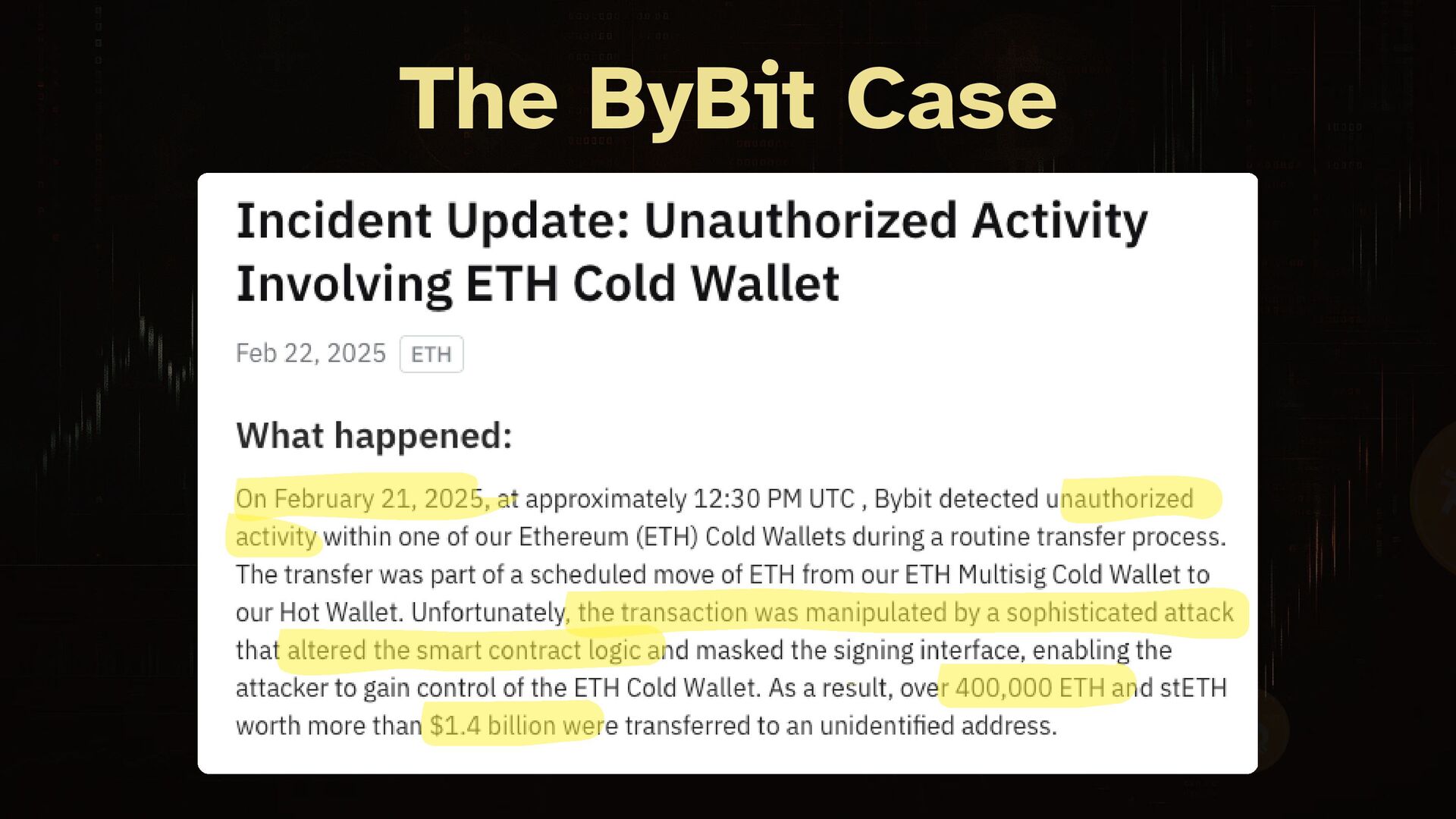
In February 2025, the Bybit breach exposed two advanced attack vectors. First, a third-party wallet tool was compromised through malicious JavaScript injected into its logic, allowing attackers to manipulate smart contract behavior. Second, a SAFE Wallet developer was tricked through social engineering into running a fake Docker container, giving attackers persistent access to his machine.

With control established, they hijacked proxy contracts and executed stealth withdrawals of ETH and ERC-20 tokens. The stolen assets were laundered through decentralized exchanges, split across multiple wallets, bridged to Bitcoin, and passed through mixers like Wasabi Wallet.

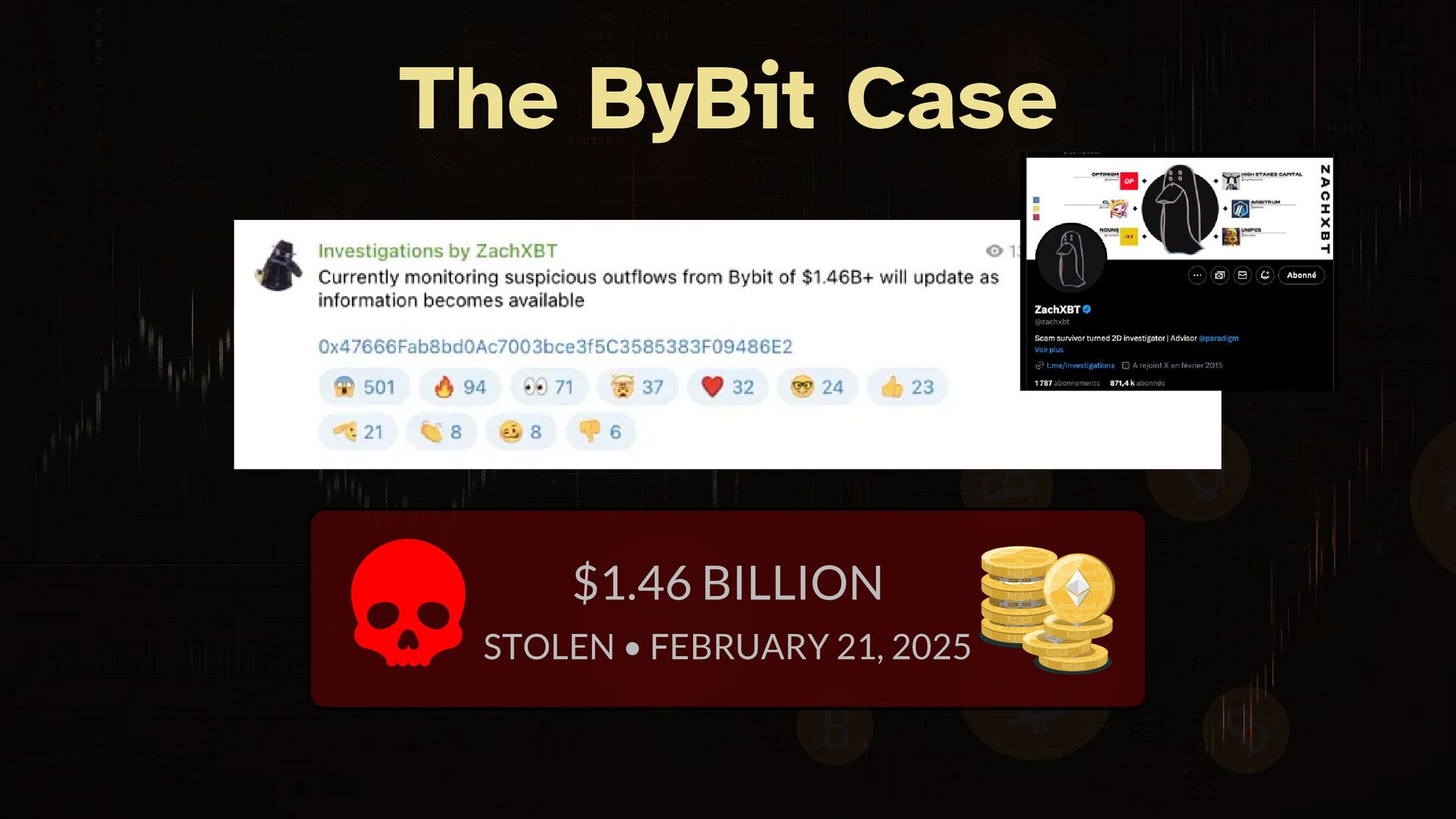
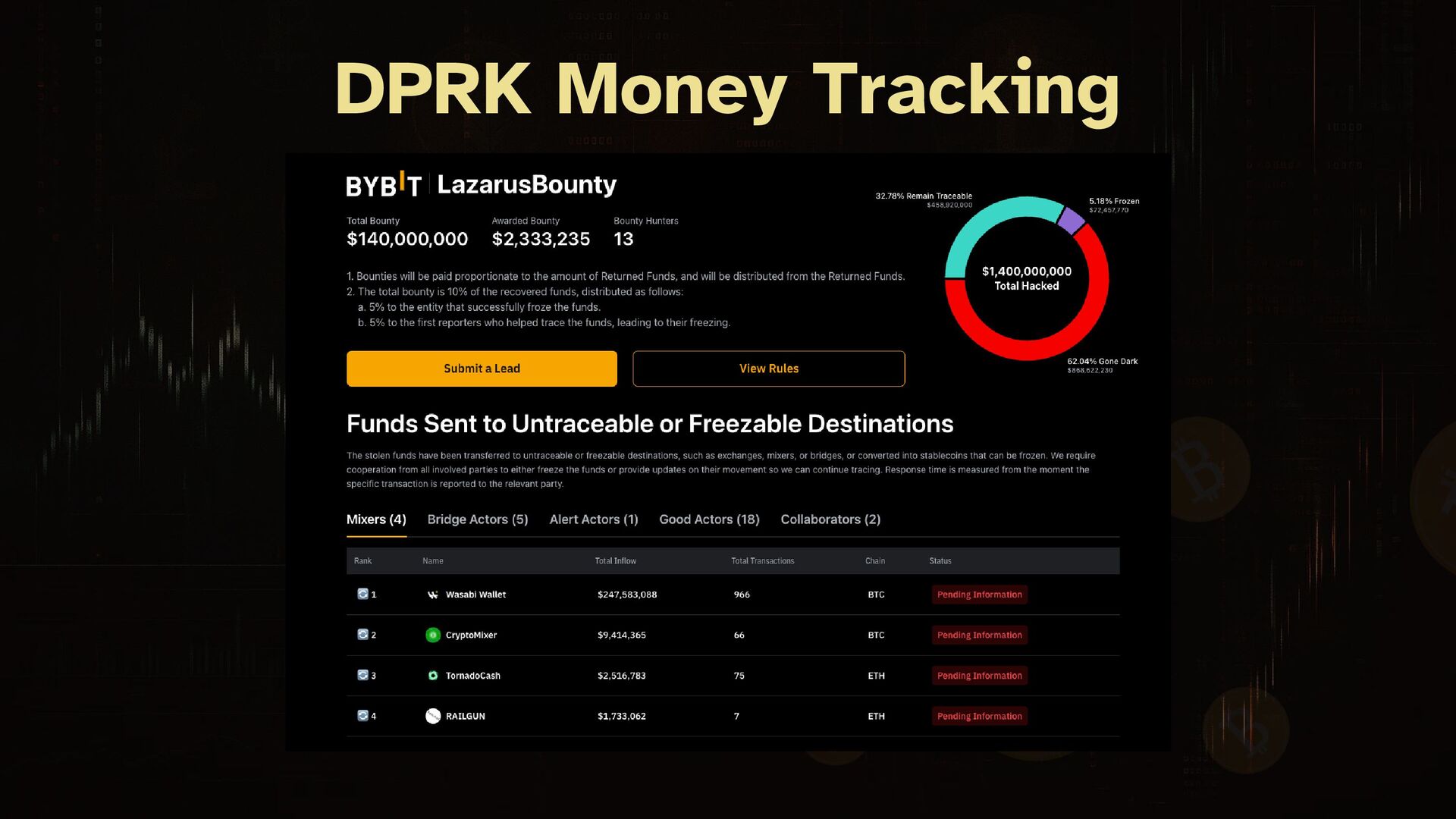
So how do attackers manage to launder crypto, and how can we stop them? Using the 1.46 billion dollar Bybit hack by North Korea’s Lazarus Group as a case study, this talk breaks down each laundering step and explains how to automate tracking and accelerate investigations using AI.

Avatar for Thomas Roccia

Thomas Roccia

December 21, 2025
Tweet

More Decks by Thomas Roccia

Other Decks in Technology

Transcript

  1. Where’s my crypto, Dude? Thomas Roccia | @fr0gger_ Sr. Threat

    Researcher @ Microsoft The Ultimate Guide to Crypto Money Laundering (and how to track it) Las Vegas - Aug 7-10
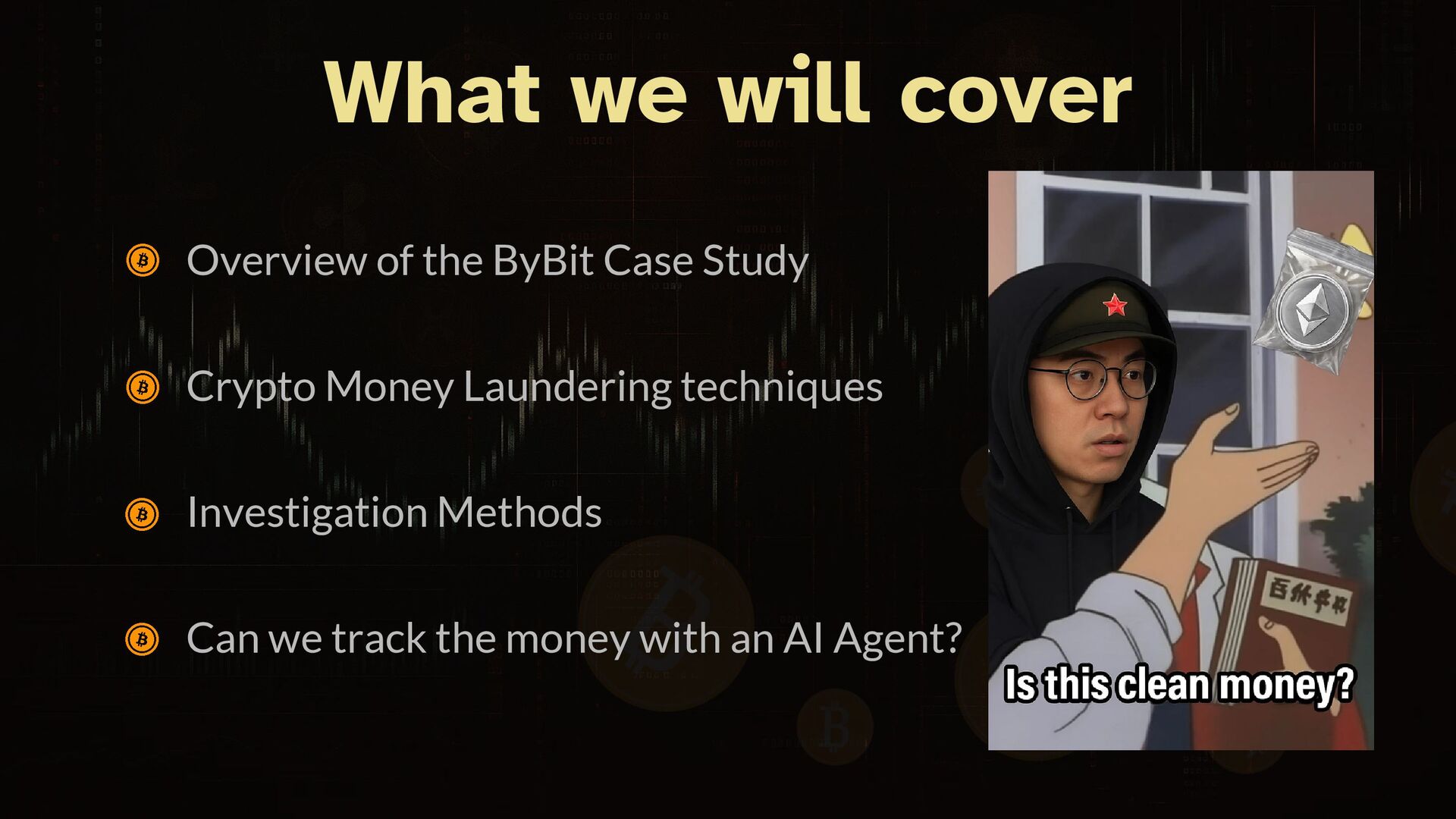
  2. Overview of the ByBit Case Study Crypto Money Laundering techniques

    Investigation Methods Can we track the money with an AI Agent? What we will cover
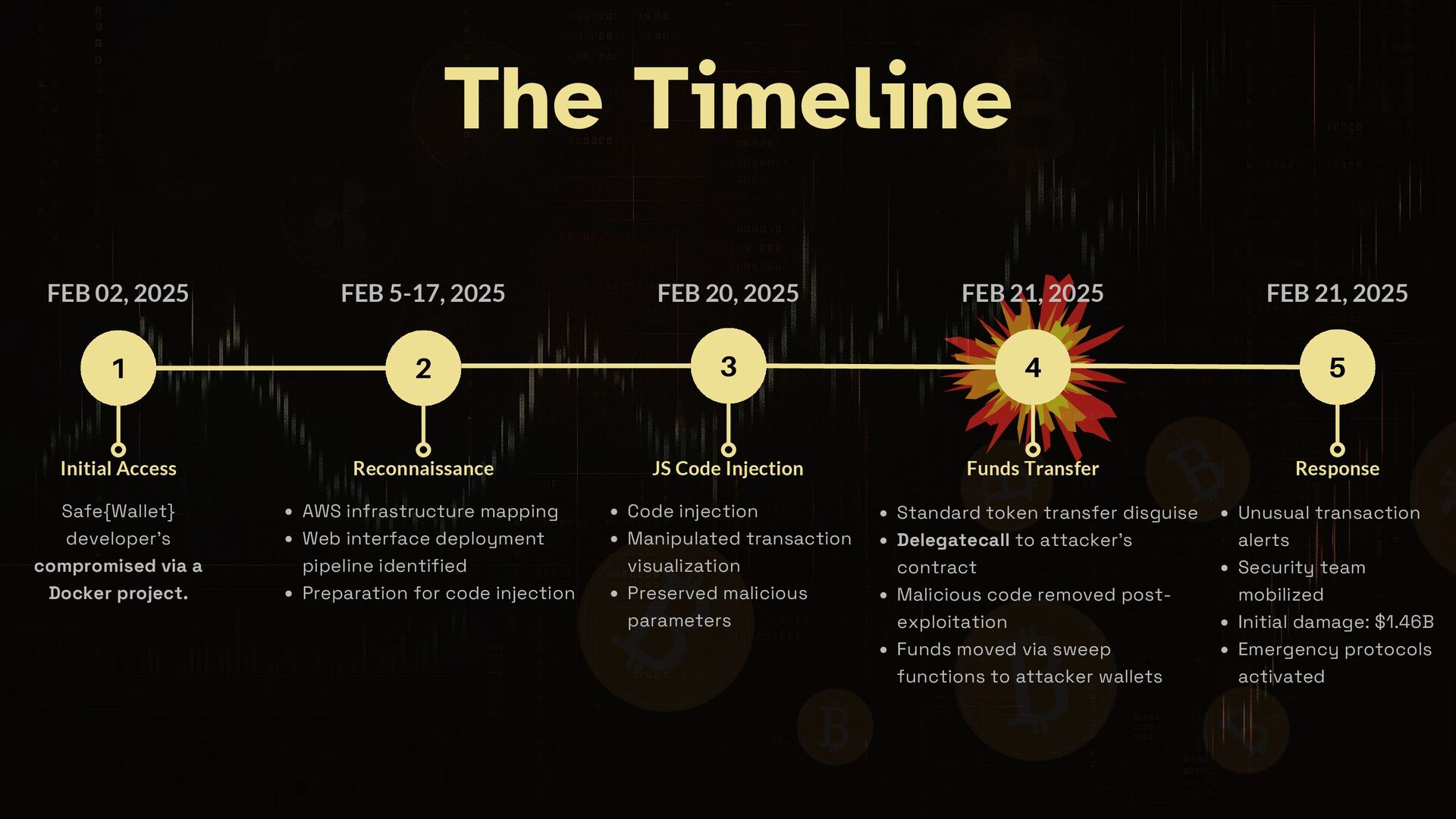
  3. 1 2 3 4 5 The Timeline FEB 02, 2025

    Initial Access FEB 5-17, 2025 Reconnaissance JS Code Injection Funds Transfer FEB 20, 2025 FEB 21, 2025 Response FEB 21, 2025 Safe{Wallet} developer's compromised via a Docker project. AWS infrastructure mapping Web interface deployment pipeline identified Preparation for code injection Code injection Manipulated transaction visualization Preserved malicious parameters Standard token transfer disguise Delegatecall to attacker's contract Malicious code removed post- exploitation Funds moved via sweep functions to attacker wallets Unusual transaction alerts Security team mobilized Initial damage: $1.46B Emergency protocols activated
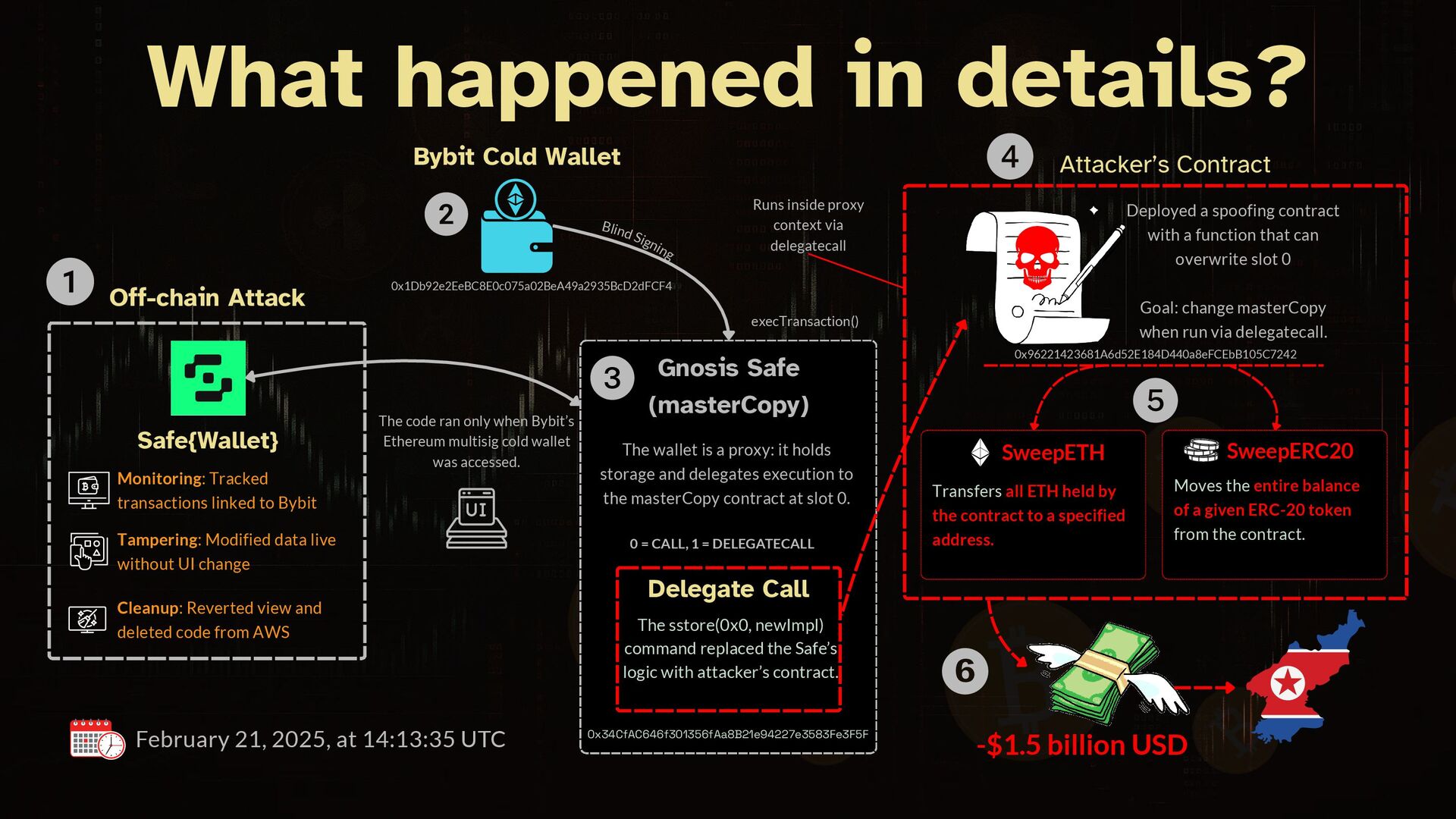
  4. Delegate Call The sstore(0x0, newImpl) command replaced the Safe’s logic

    with attacker’s contract. Runs inside proxy context via delegatecall Gnosis Safe (masterCopy) The code ran only when Bybit’s Ethereum multisig cold wallet was accessed. What happened in details? Off-chain Attack Safe{Wallet} Cleanup: Reverted view and deleted code from AWS Monitoring: Tracked transactions linked to Bybit Tampering: Modified data live without UI change Bybit Cold Wallet 0 = CALL, 1 = DELEGATECALL The wallet is a proxy: it holds storage and delegates execution to the masterCopy contract at slot 0. Blind Signing execTransaction() Attacker’s Contract Deployed a spoofing contract with a function that can overwrite slot 0 Goal: change masterCopy when run via delegatecall. SweepETH SweepERC20 Transfers all ETH held by the contract to a specified address. Moves the entire balance of a given ERC-20 token from the contract. -$1.5 billion USD 0x96221423681A6d52E184D440a8eFCEbB105C7242 0x1Db92e2EeBC8E0c075a02BeA49a2935BcD2dFCF4 0x34CfAC646f301356fAa8B21e94227e3583Fe3F5F February 21, 2025, at 14:13:35 UTC
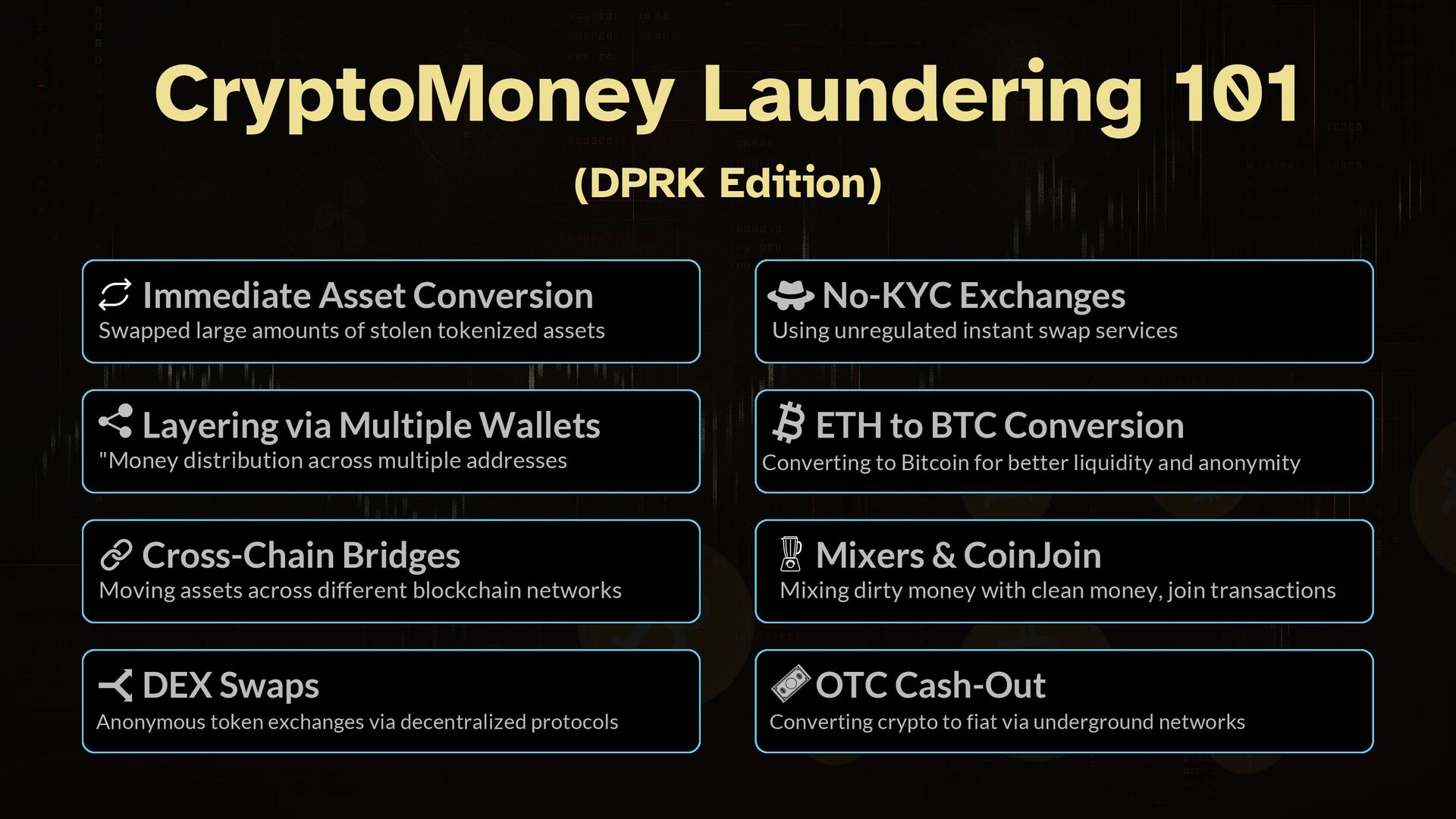
  5. CryptoMoney Laundering 101 (DPRK Edition) Immediate Asset Conversion Swapped large

    amounts of stolen tokenized assets Layering via Multiple Wallets "Money distribution across multiple addresses Cross-Chain Bridges Moving assets across different blockchain networks DEX Swaps Anonymous token exchanges via decentralized protocols No-KYC Exchanges Using unregulated instant swap services ETH to BTC Conversion Converting to Bitcoin for better liquidity and anonymity Mixers & CoinJoin Mixing dirty money with clean money, join transactions OTC Cash-Out Converting crypto to fiat via underground networks
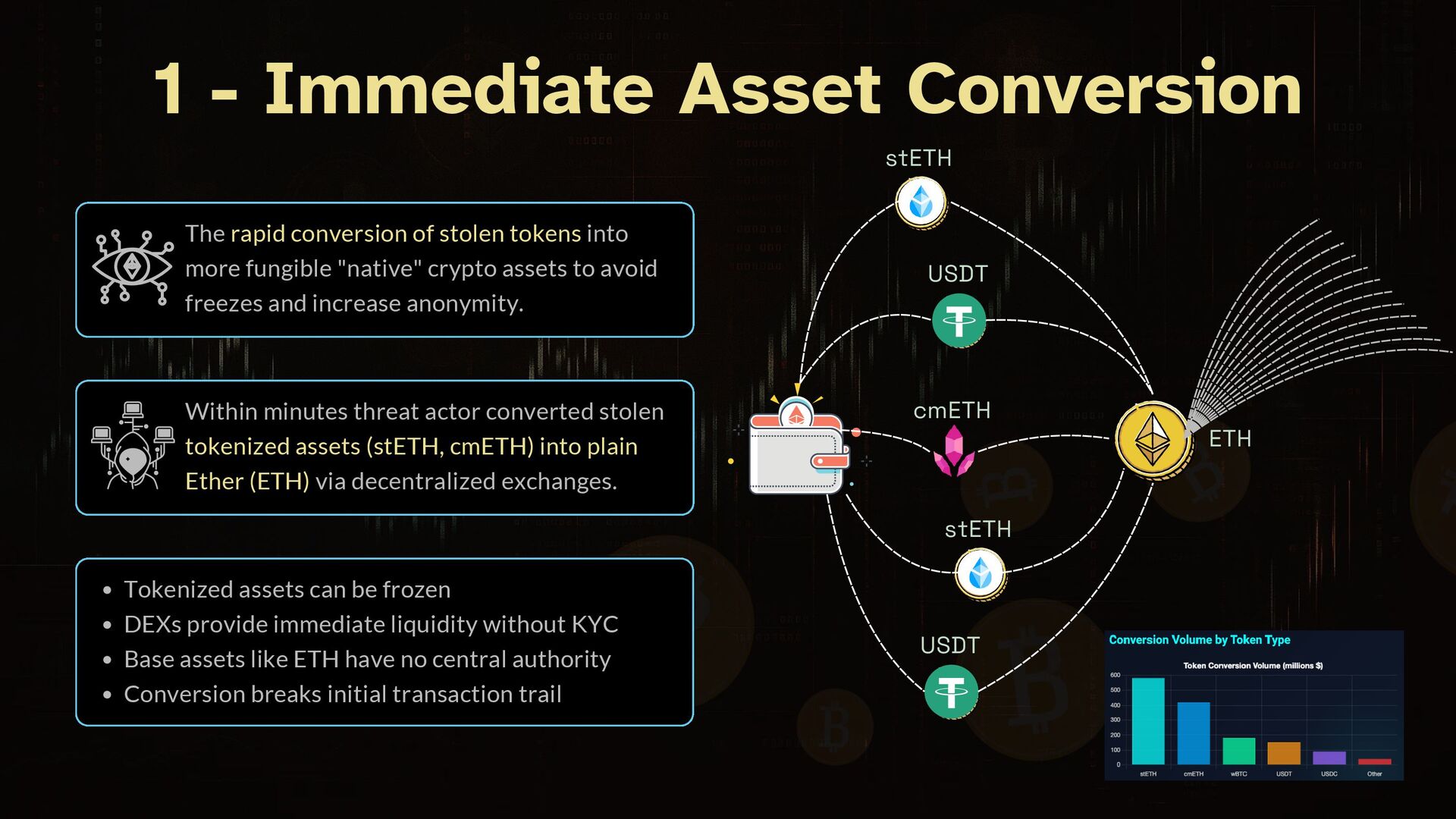
  6. USDT ETH 1 - Immediate Asset Conversion The rapid conversion

    of stolen tokens into more fungible "native" crypto assets to avoid freezes and increase anonymity. Within minutes threat actor converted stolen tokenized assets (stETH, cmETH) into plain Ether (ETH) via decentralized exchanges. Tokenized assets can be frozen DEXs provide immediate liquidity without KYC Base assets like ETH have no central authority Conversion breaks initial transaction trail stETH cmETH stETH USDT
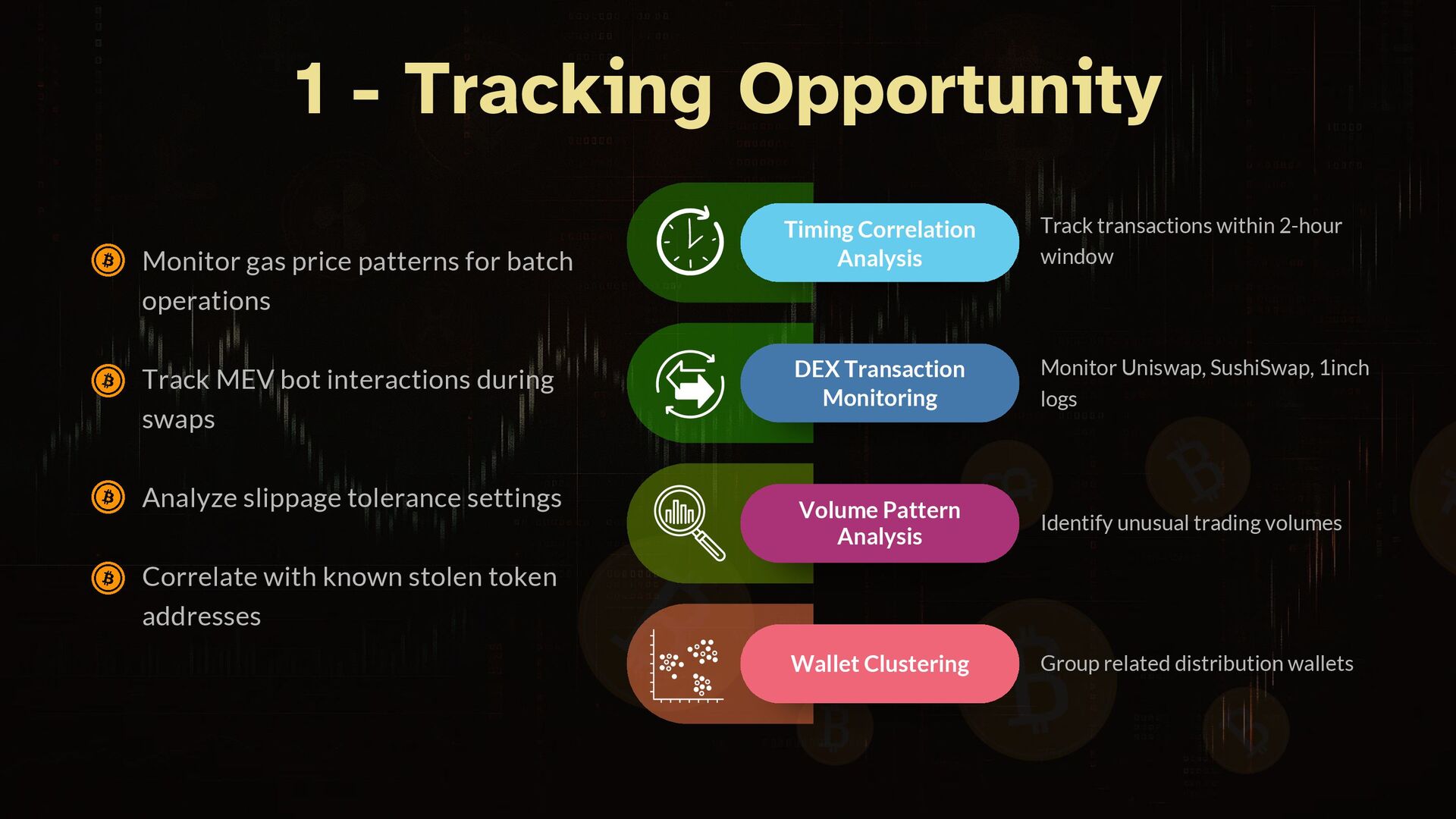
  7. 1 - Tracking Opportunity Timing Correlation Analysis Volume Pattern Analysis

    DEX Transaction Monitoring Wallet Clustering Track transactions within 2-hour window Monitor Uniswap, SushiSwap, 1inch logs Identify unusual trading volumes Group related distribution wallets Monitor gas price patterns for batch operations Track MEV bot interactions during swaps Analyze slippage tolerance settings Correlate with known stolen token addresses
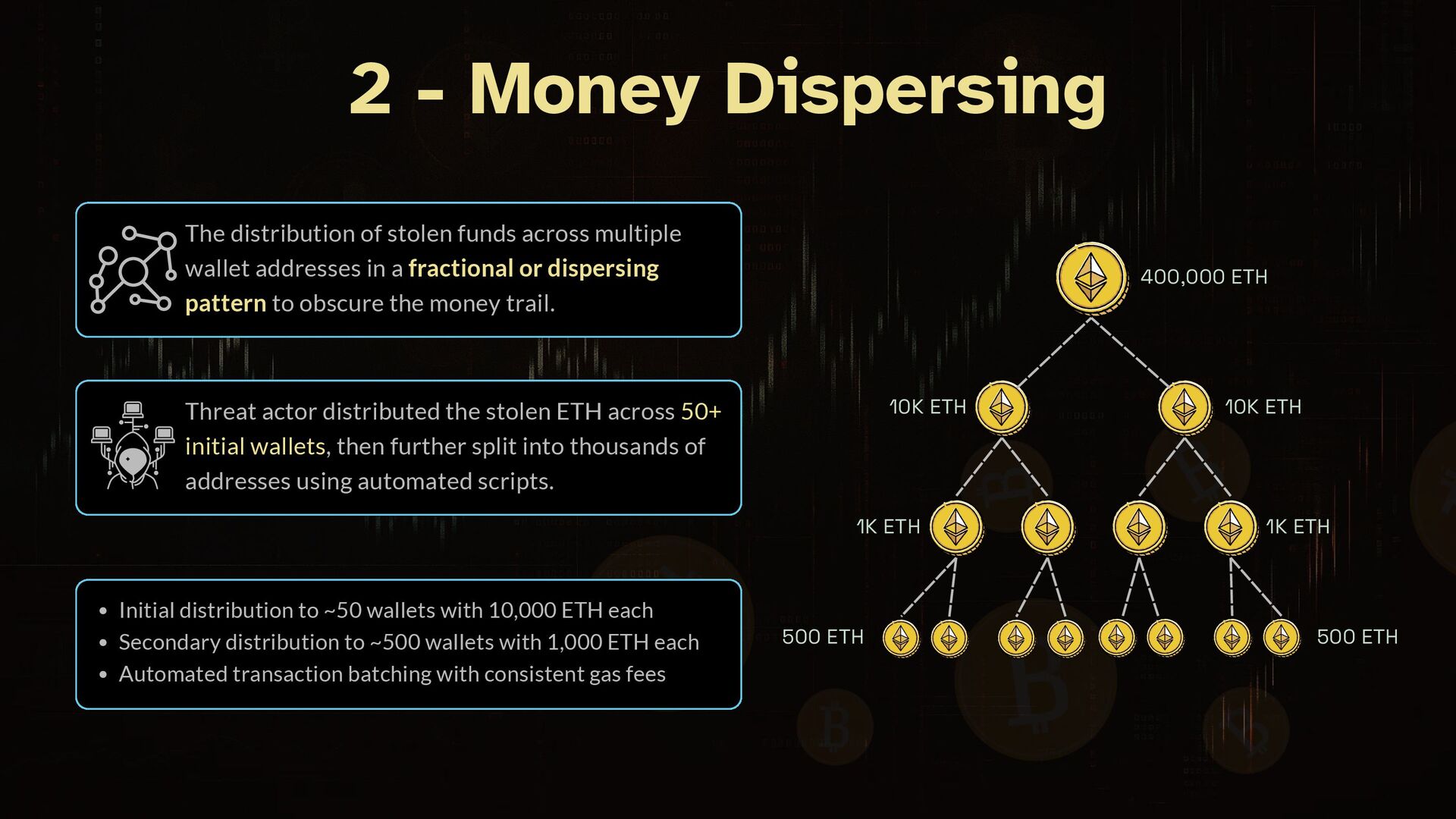
  8. 2 - Money Dispersing The distribution of stolen funds across

    multiple wallet addresses in a fractional or dispersing pattern to obscure the money trail. Threat actor distributed the stolen ETH across 50+ initial wallets, then further split into thousands of addresses using automated scripts. Initial distribution to ~50 wallets with 10,000 ETH each Secondary distribution to ~500 wallets with 1,000 ETH each Automated transaction batching with consistent gas fees 400,000 ETH 10K ETH 10K ETH 1K ETH 1K ETH 500 ETH 500 ETH
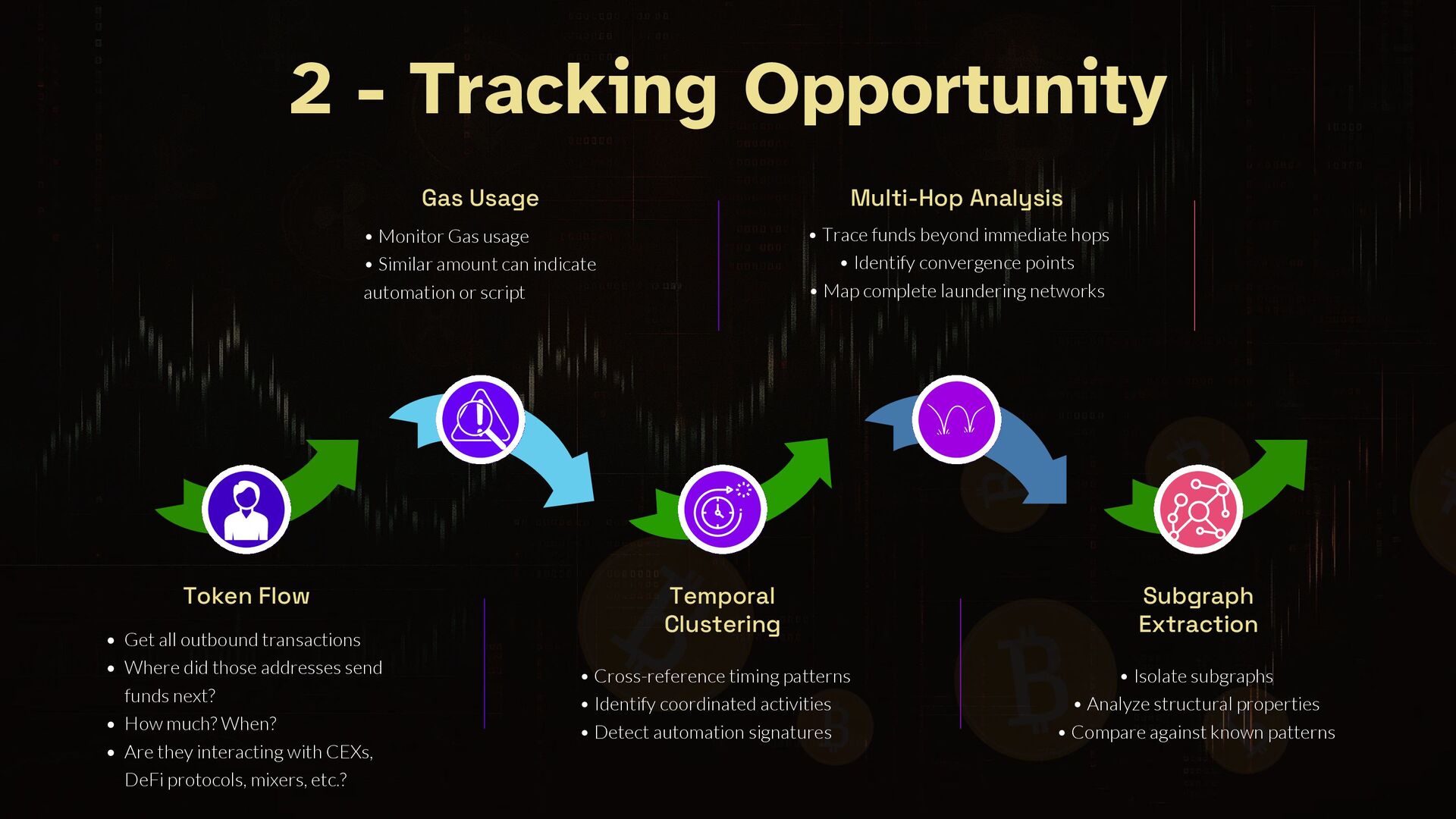
  9. 2 - Tracking Opportunity Token Flow Get all outbound transactions

    Where did those addresses send funds next? How much? When? Are they interacting with CEXs, DeFi protocols, mixers, etc.? Gas Usage • Monitor Gas usage • Similar amount can indicate automation or script Temporal Clustering • Cross-reference timing patterns • Identify coordinated activities • Detect automation signatures Multi-Hop Analysis • Trace funds beyond immediate hops • Identify convergence points • Map complete laundering networks Subgraph Extraction • Isolate subgraphs • Analyze structural properties • Compare against known patterns
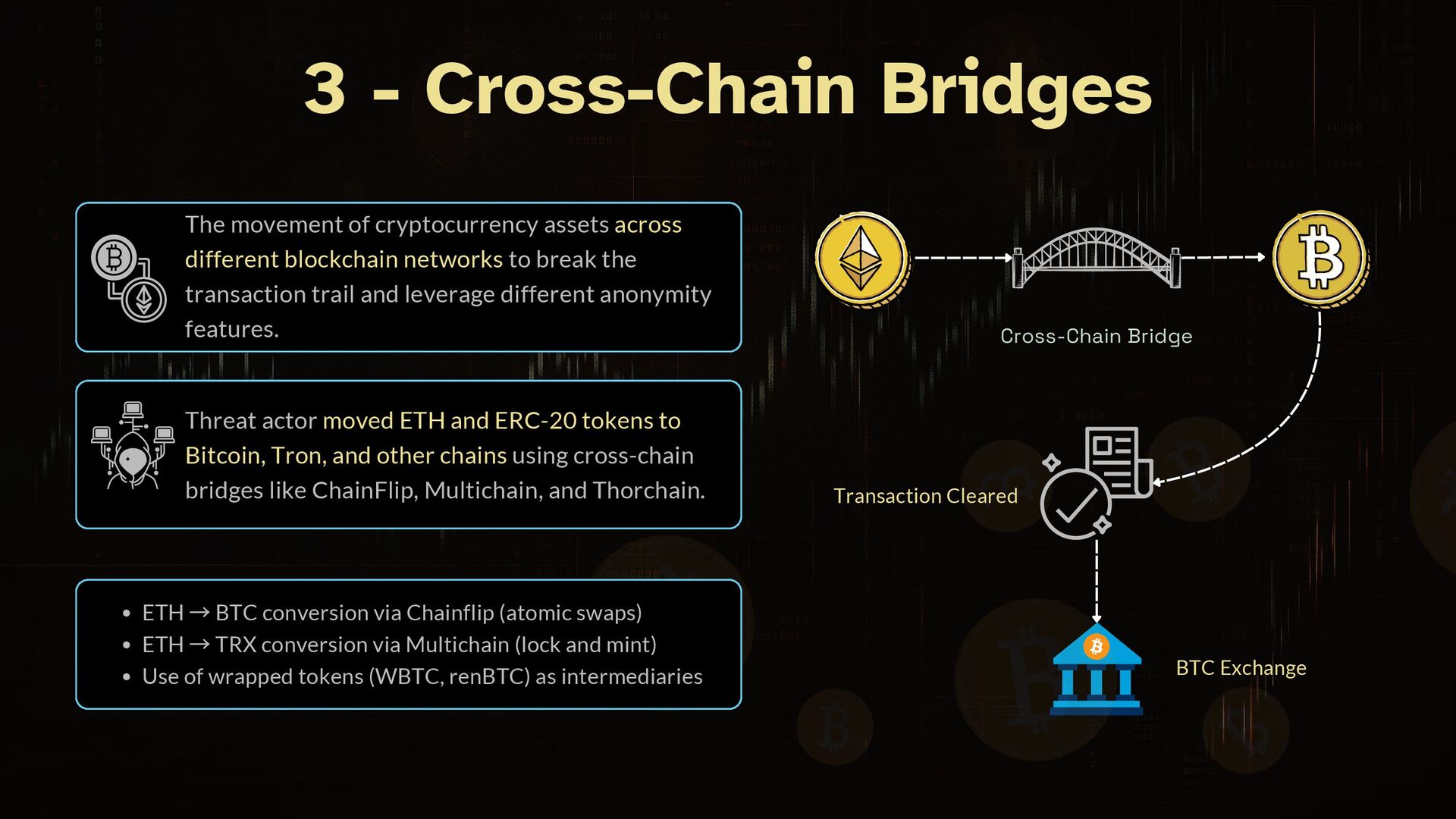
  10. 3 - Cross-Chain Bridges The movement of cryptocurrency assets across

    different blockchain networks to break the transaction trail and leverage different anonymity features. Threat actor moved ETH and ERC-20 tokens to Bitcoin, Tron, and other chains using cross-chain bridges like ChainFlip, Multichain, and Thorchain. ETH → BTC conversion via Chainflip (atomic swaps) ETH → TRX conversion via Multichain (lock and mint) Use of wrapped tokens (WBTC, renBTC) as intermediaries Cross-Chain Bridge Transaction Cleared BTC Exchange
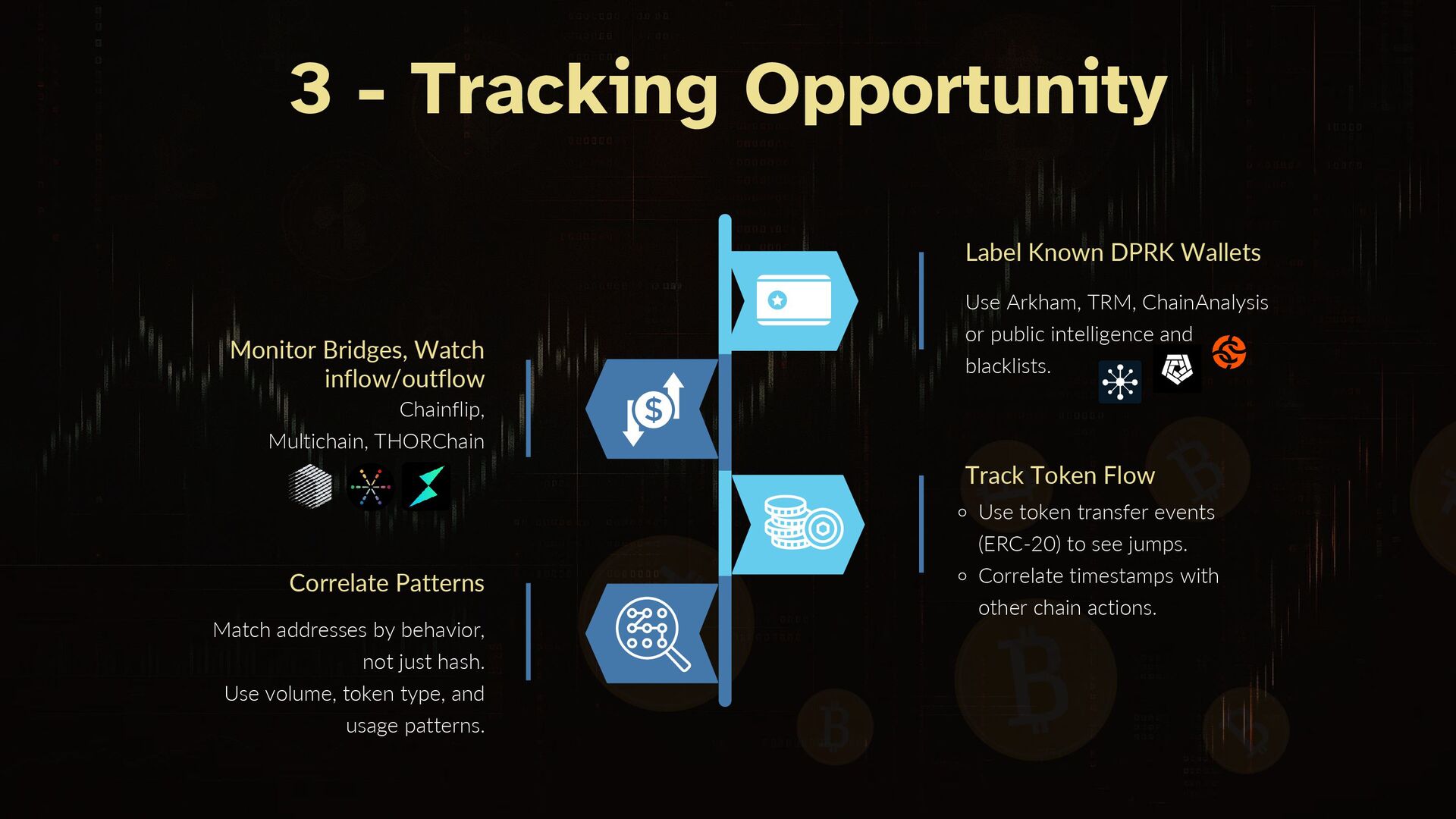
  11. 3 - Tracking Opportunity Label Known DPRK Wallets Use Arkham,

    TRM, ChainAnalysis or public intelligence and blacklists. Monitor Bridges, Watch inflow/outflow Chainflip, Multichain, THORChain Track Token Flow Use token transfer events (ERC-20) to see jumps. Correlate timestamps with other chain actions. Correlate Patterns Match addresses by behavior, not just hash. Use volume, token type, and usage patterns.
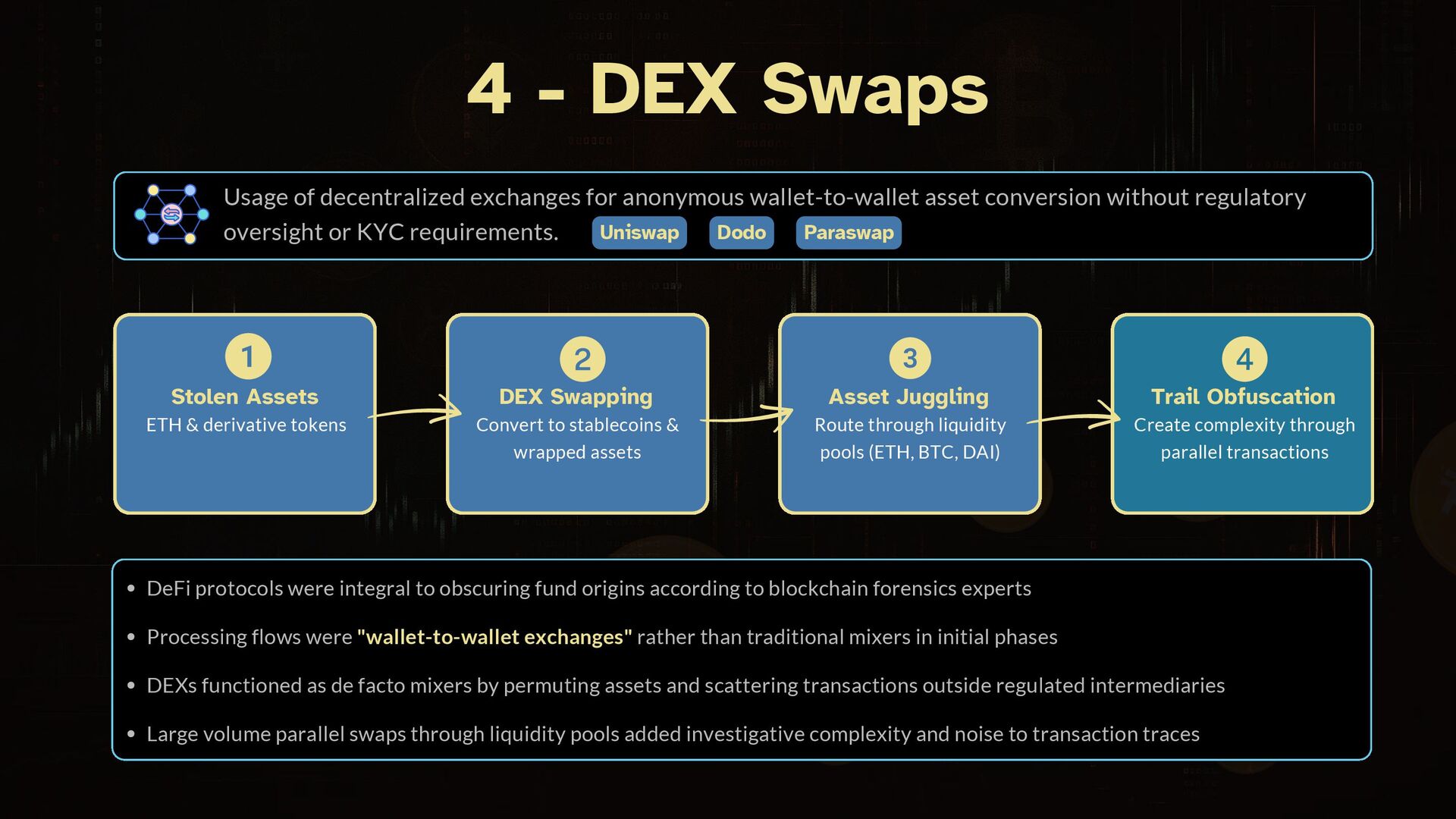
  12. Route through liquidity pools (ETH, BTC, DAI) 4 - DEX

    Swaps Usage of decentralized exchanges for anonymous wallet-to-wallet asset conversion without regulatory oversight or KYC requirements. Uniswap Dodo Paraswap ETH & derivative tokens Stolen Assets Convert to stablecoins & wrapped assets DEX Swapping Asset Juggling Create complexity through parallel transactions Trail Obfuscation DeFi protocols were integral to obscuring fund origins according to blockchain forensics experts Processing flows were "wallet-to-wallet exchanges" rather than traditional mixers in initial phases DEXs functioned as de facto mixers by permuting assets and scattering transactions outside regulated intermediaries Large volume parallel swaps through liquidity pools added investigative complexity and noise to transaction traces
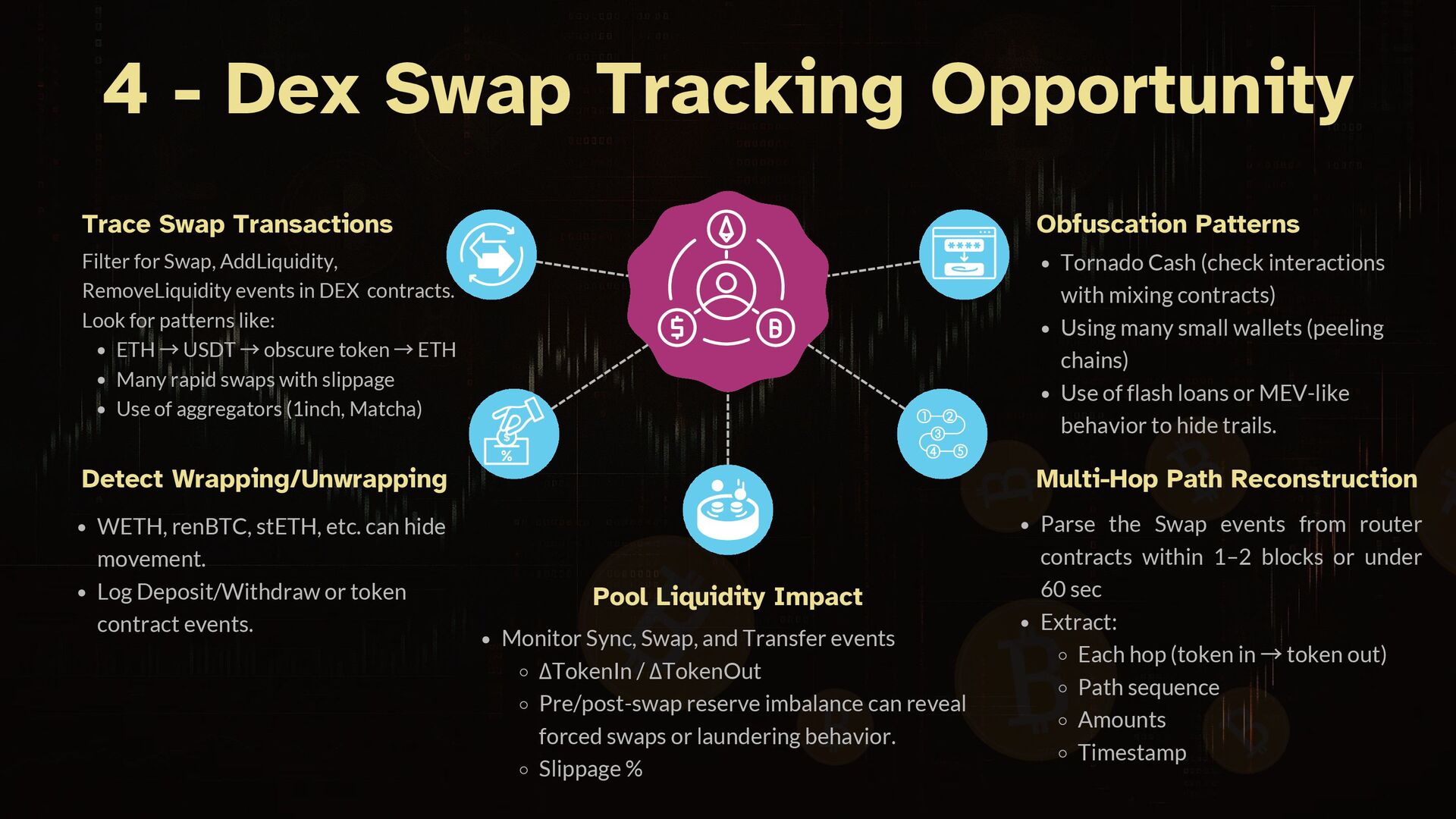
  13. 4 - Dex Swap Tracking Opportunity Trace Swap Transactions Filter

    for Swap, AddLiquidity, RemoveLiquidity events in DEX contracts. Look for patterns like: ETH → USDT → obscure token → ETH Many rapid swaps with slippage Use of aggregators (1inch, Matcha) Obfuscation Patterns Tornado Cash (check interactions with mixing contracts) Using many small wallets (peeling chains) Use of flash loans or MEV-like behavior to hide trails. Multi-Hop Path Reconstruction Parse the Swap events from router contracts within 1–2 blocks or under 60 sec Extract: Each hop (token in → token out) Path sequence Amounts Timestamp Pool Liquidity Impact Monitor Sync, Swap, and Transfer events ΔTokenIn / ΔTokenOut Pre/post-swap reserve imbalance can reveal forced swaps or laundering behavior. Slippage % Detect Wrapping/Unwrapping WETH, renBTC, stETH, etc. can hide movement. Log Deposit/Withdraw or token contract events.
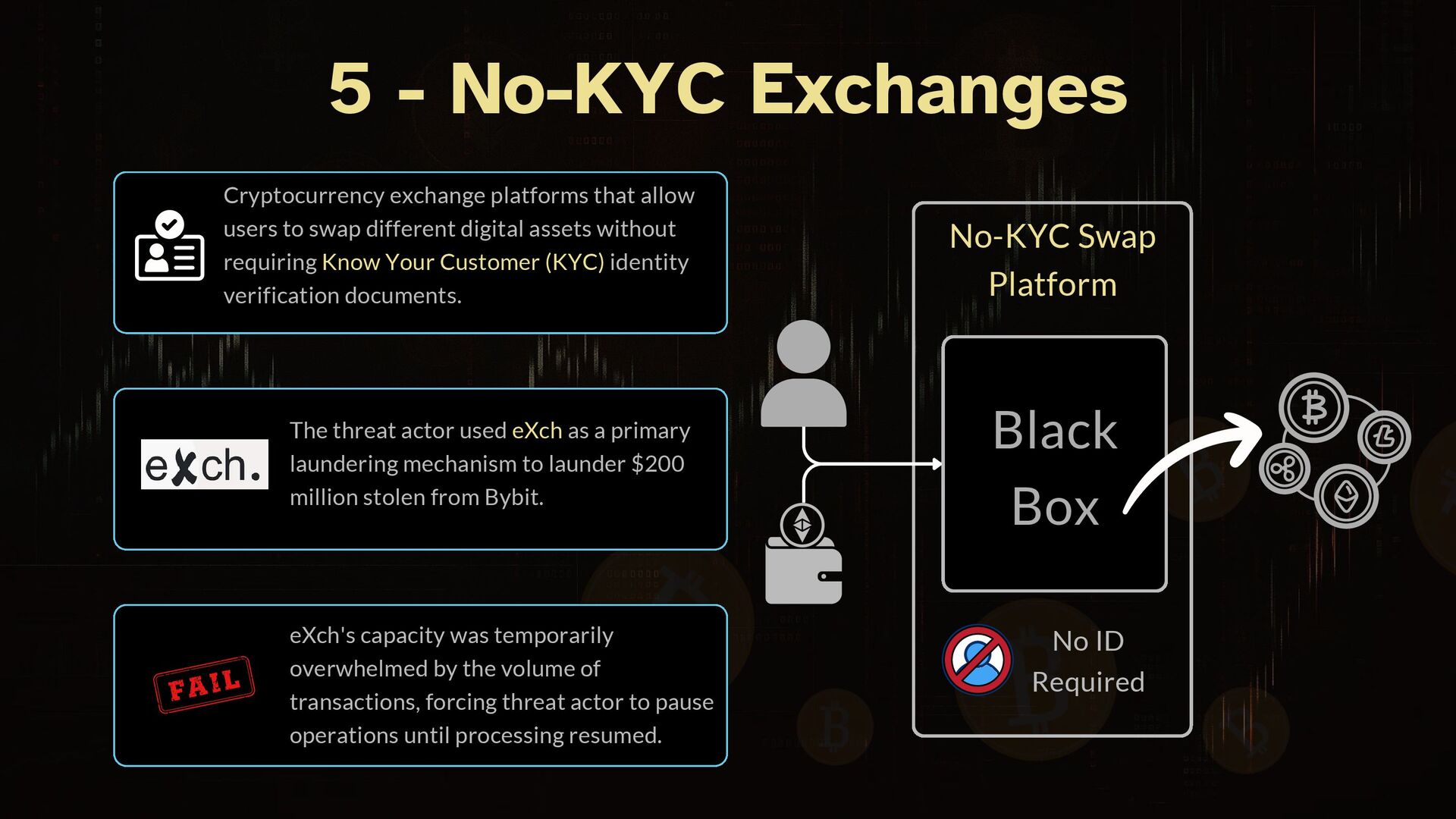
  14. 5 - No-KYC Exchanges Cryptocurrency exchange platforms that allow users

    to swap different digital assets without requiring Know Your Customer (KYC) identity verification documents. No-KYC Swap Platform No ID Required Black Box The threat actor used eXch as a primary laundering mechanism to launder $200 million stolen from Bybit. eXch's capacity was temporarily overwhelmed by the volume of transactions, forcing threat actor to pause operations until processing resumed.
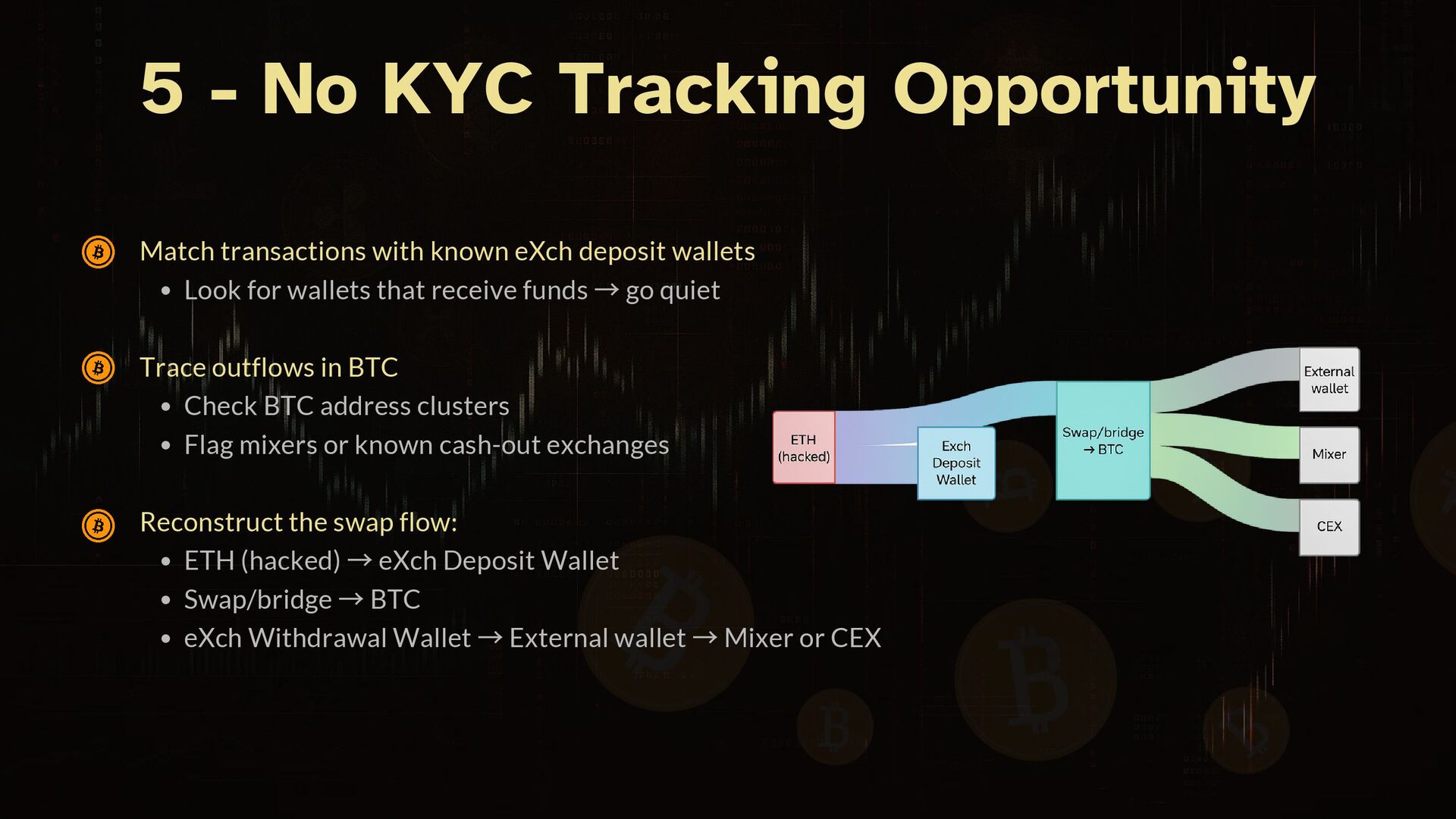
  15. Match transactions with known eXch deposit wallets Look for wallets

    that receive funds → go quiet Trace outflows in BTC Check BTC address clusters Flag mixers or known cash-out exchanges Reconstruct the swap flow: ETH (hacked) → eXch Deposit Wallet Swap/bridge → BTC eXch Withdrawal Wallet → External wallet → Mixer or CEX 5 - No KYC Tracking Opportunity
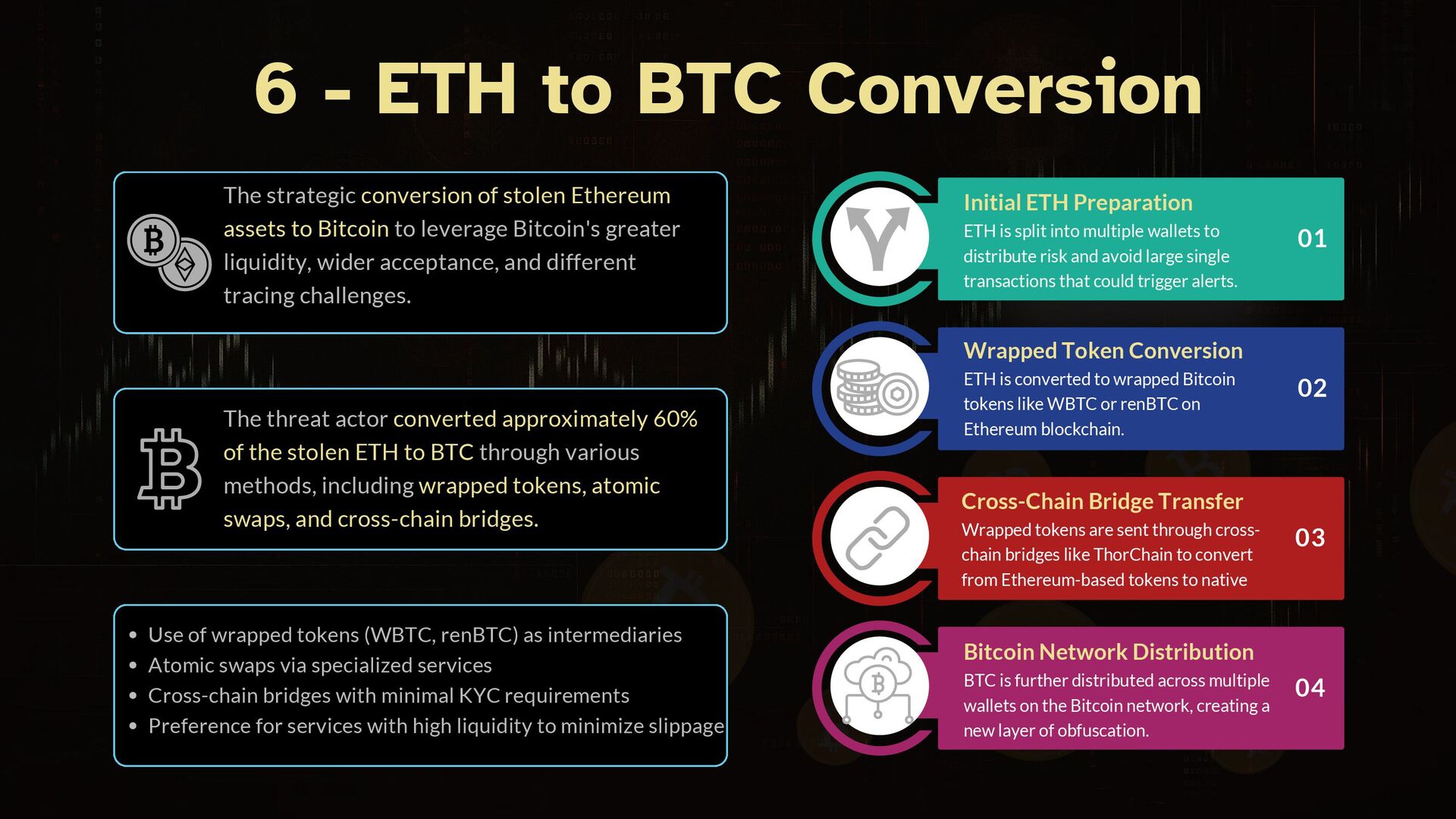
  16. 6 - ETH to BTC Conversion The strategic conversion of

    stolen Ethereum assets to Bitcoin to leverage Bitcoin's greater liquidity, wider acceptance, and different tracing challenges. The threat actor converted approximately 60% of the stolen ETH to BTC through various methods, including wrapped tokens, atomic swaps, and cross-chain bridges. Use of wrapped tokens (WBTC, renBTC) as intermediaries Atomic swaps via specialized services Cross-chain bridges with minimal KYC requirements Preference for services with high liquidity to minimize slippage Initial ETH Preparation ETH is split into multiple wallets to distribute risk and avoid large single transactions that could trigger alerts. 01 02 03 04 Wrapped Token Conversion ETH is converted to wrapped Bitcoin tokens like WBTC or renBTC on Ethereum blockchain. Cross-Chain Bridge Transfer Wrapped tokens are sent through cross- chain bridges like ThorChain to convert from Ethereum-based tokens to native Bitcoin Network Distribution BTC is further distributed across multiple wallets on the Bitcoin network, creating a new layer of obfuscation.
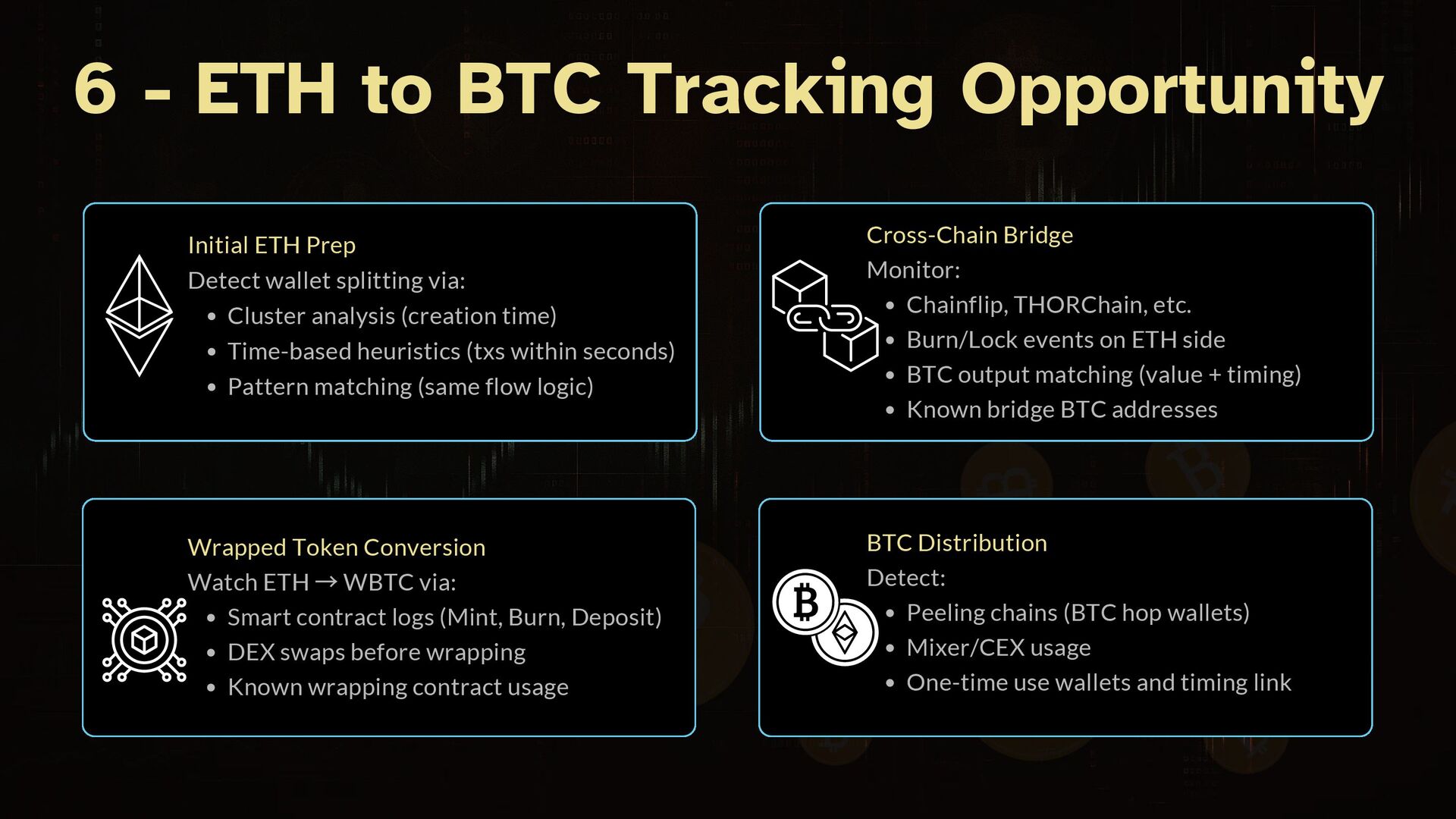
  17. 6 - ETH to BTC Tracking Opportunity Initial ETH Prep

    Detect wallet splitting via: Cluster analysis (creation time) Time-based heuristics (txs within seconds) Pattern matching (same flow logic) Wrapped Token Conversion Watch ETH → WBTC via: Smart contract logs (Mint, Burn, Deposit) DEX swaps before wrapping Known wrapping contract usage Cross-Chain Bridge Monitor: Chainflip, THORChain, etc. Burn/Lock events on ETH side BTC output matching (value + timing) Known bridge BTC addresses BTC Distribution Detect: Peeling chains (BTC hop wallets) Mixer/CEX usage One-time use wallets and timing link
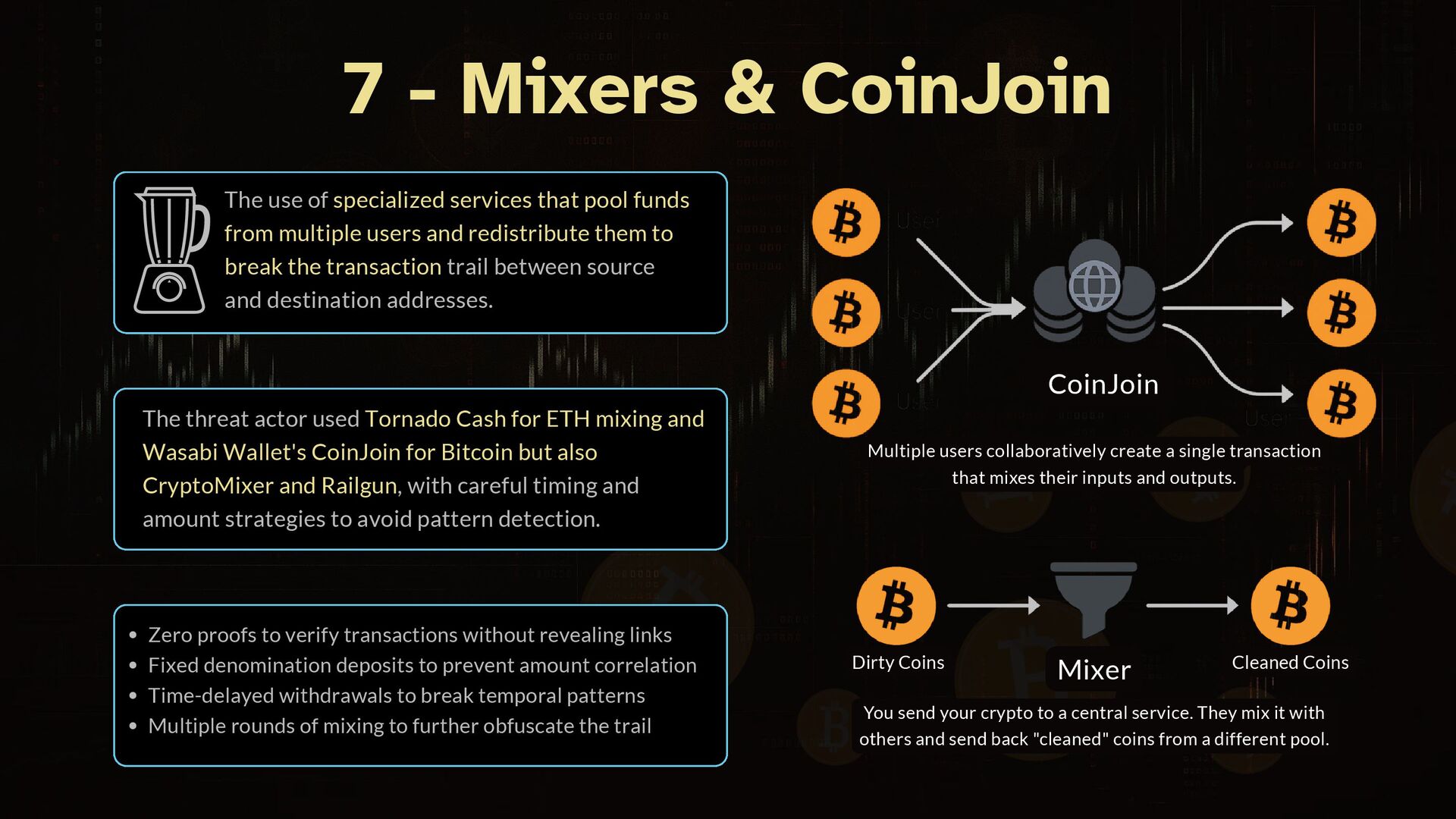
  18. 7 - Mixers & CoinJoin The use of specialized services

    that pool funds from multiple users and redistribute them to break the transaction trail between source and destination addresses. The threat actor used Tornado Cash for ETH mixing and Wasabi Wallet's CoinJoin for Bitcoin but also CryptoMixer and Railgun, with careful timing and amount strategies to avoid pattern detection. Zero proofs to verify transactions without revealing links Fixed denomination deposits to prevent amount correlation Time-delayed withdrawals to break temporal patterns Multiple rounds of mixing to further obfuscate the trail CoinJoin Mixer CoinJoin Multiple users collaboratively create a single transaction that mixes their inputs and outputs. You send your crypto to a central service. They mix it with others and send back "cleaned" coins from a different pool. Dirty Coins Cleaned Coins
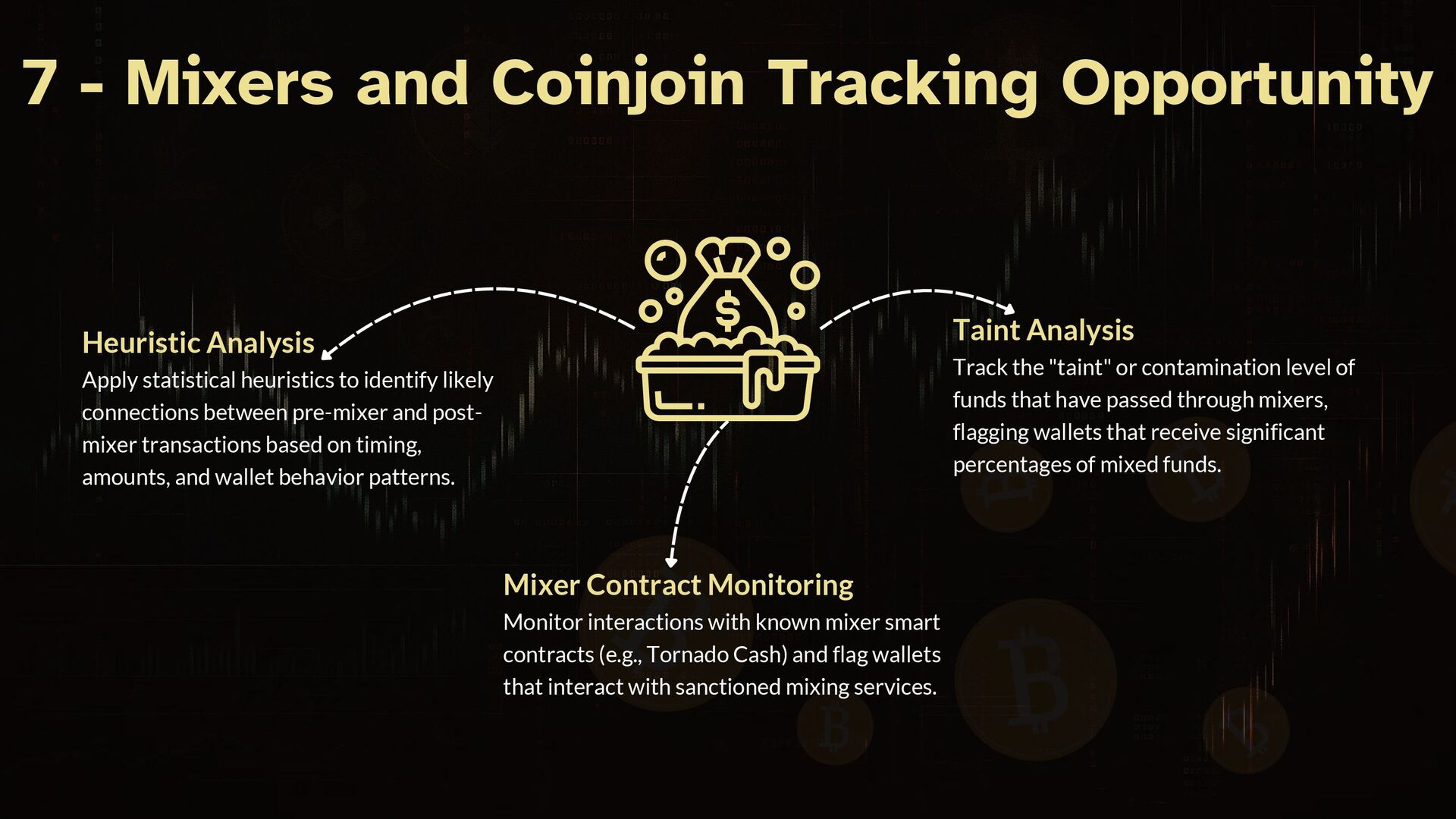
  19. 7 - Mixers and Coinjoin Tracking Opportunity Mixer Contract Monitoring

    Monitor interactions with known mixer smart contracts (e.g., Tornado Cash) and flag wallets that interact with sanctioned mixing services. Heuristic Analysis Apply statistical heuristics to identify likely connections between pre-mixer and post- mixer transactions based on timing, amounts, and wallet behavior patterns. Taint Analysis Track the "taint" or contamination level of funds that have passed through mixers, flagging wallets that receive significant percentages of mixed funds.
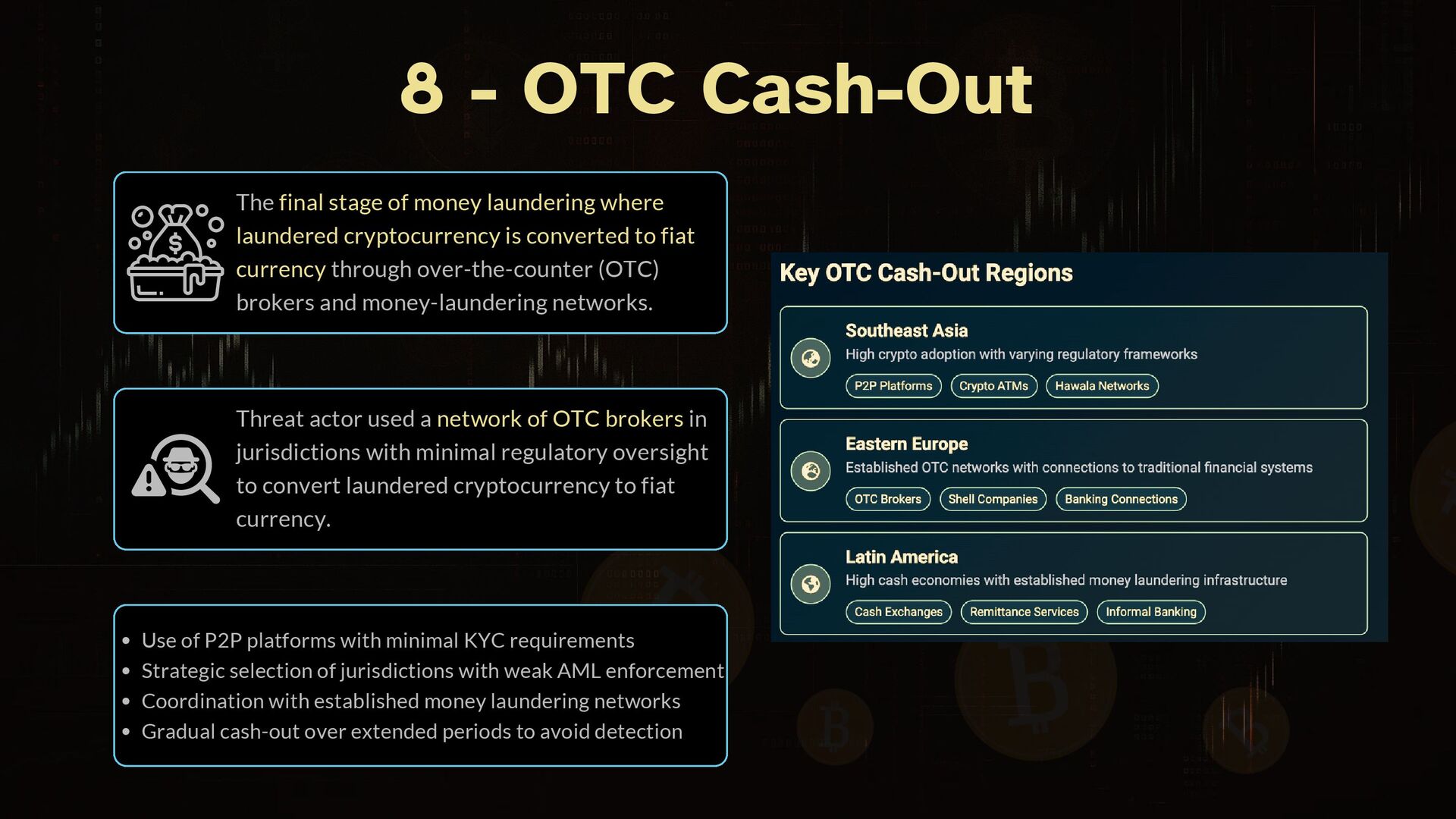
  20. 8 - OTC Cash-Out The final stage of money laundering

    where laundered cryptocurrency is converted to fiat currency through over-the-counter (OTC) brokers and money-laundering networks. Threat actor used a network of OTC brokers in jurisdictions with minimal regulatory oversight to convert laundered cryptocurrency to fiat currency. Use of P2P platforms with minimal KYC requirements Strategic selection of jurisdictions with weak AML enforcement Coordination with established money laundering networks Gradual cash-out over extended periods to avoid detection
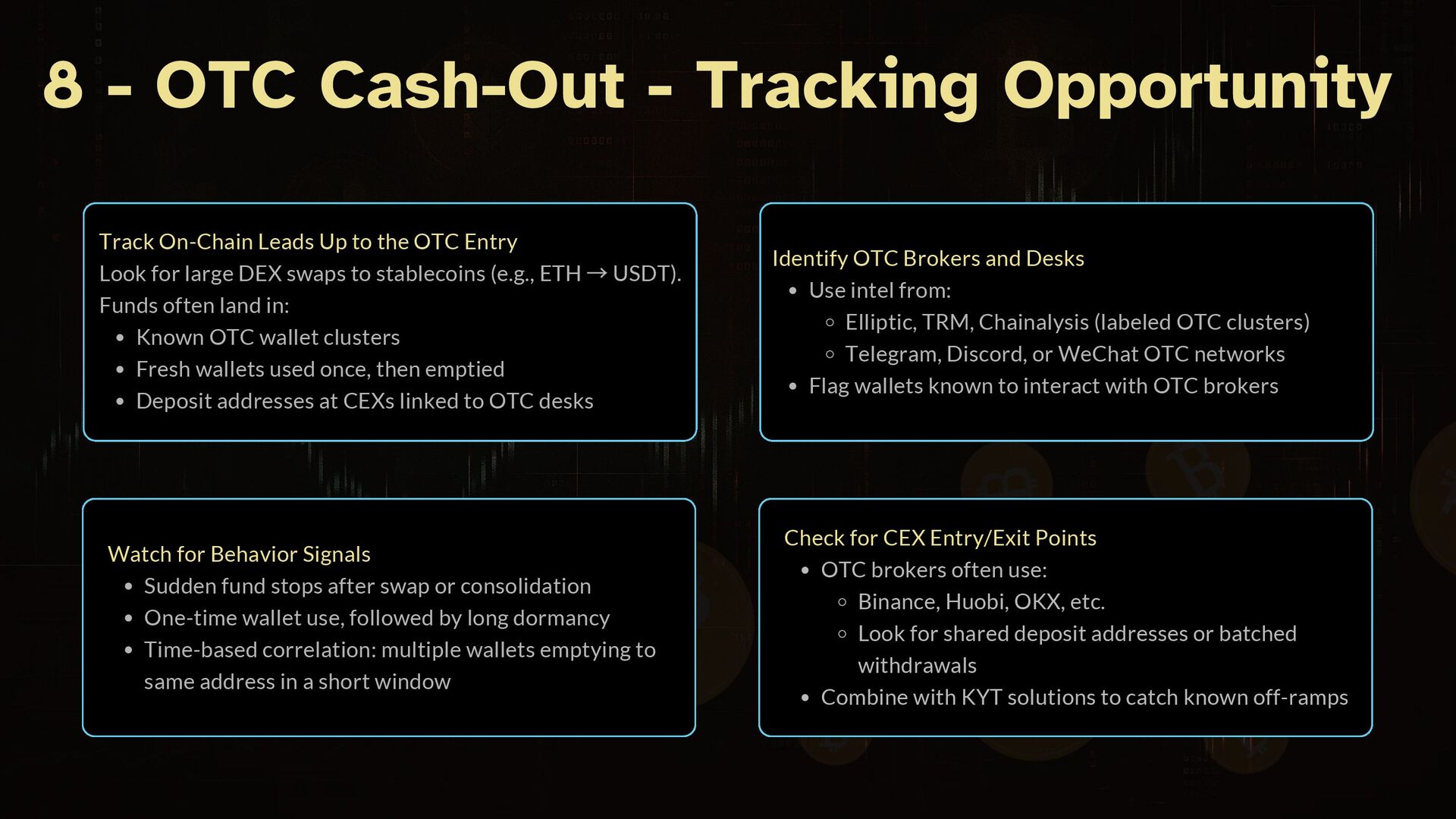
  21. 8 - OTC Cash-Out - Tracking Opportunity Track On-Chain Leads

    Up to the OTC Entry Look for large DEX swaps to stablecoins (e.g., ETH → USDT). Funds often land in: Known OTC wallet clusters Fresh wallets used once, then emptied Deposit addresses at CEXs linked to OTC desks Watch for Behavior Signals Sudden fund stops after swap or consolidation One-time wallet use, followed by long dormancy Time-based correlation: multiple wallets emptying to same address in a short window Identify OTC Brokers and Desks Use intel from: Elliptic, TRM, Chainalysis (labeled OTC clusters) Telegram, Discord, or WeChat OTC networks Flag wallets known to interact with OTC brokers Check for CEX Entry/Exit Points OTC brokers often use: Binance, Huobi, OKX, etc. Look for shared deposit addresses or batched withdrawals Combine with KYT solutions to catch known off-ramps
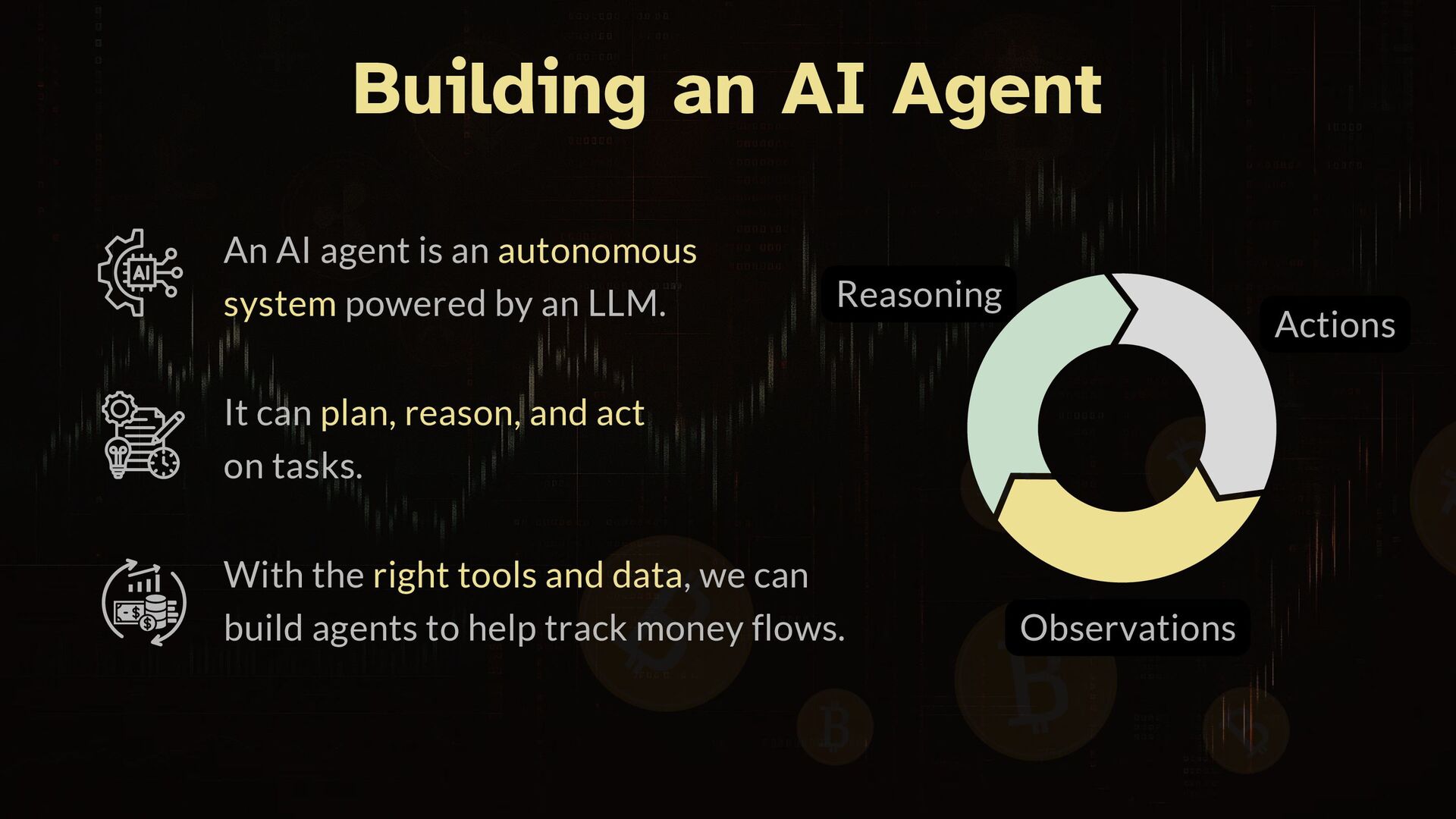
  22. Building an AI Agent An AI agent is an autonomous

    system powered by an LLM. With the right tools and data, we can build agents to help track money flows. It can plan, reason, and act on tasks. Reasoning Actions Observations
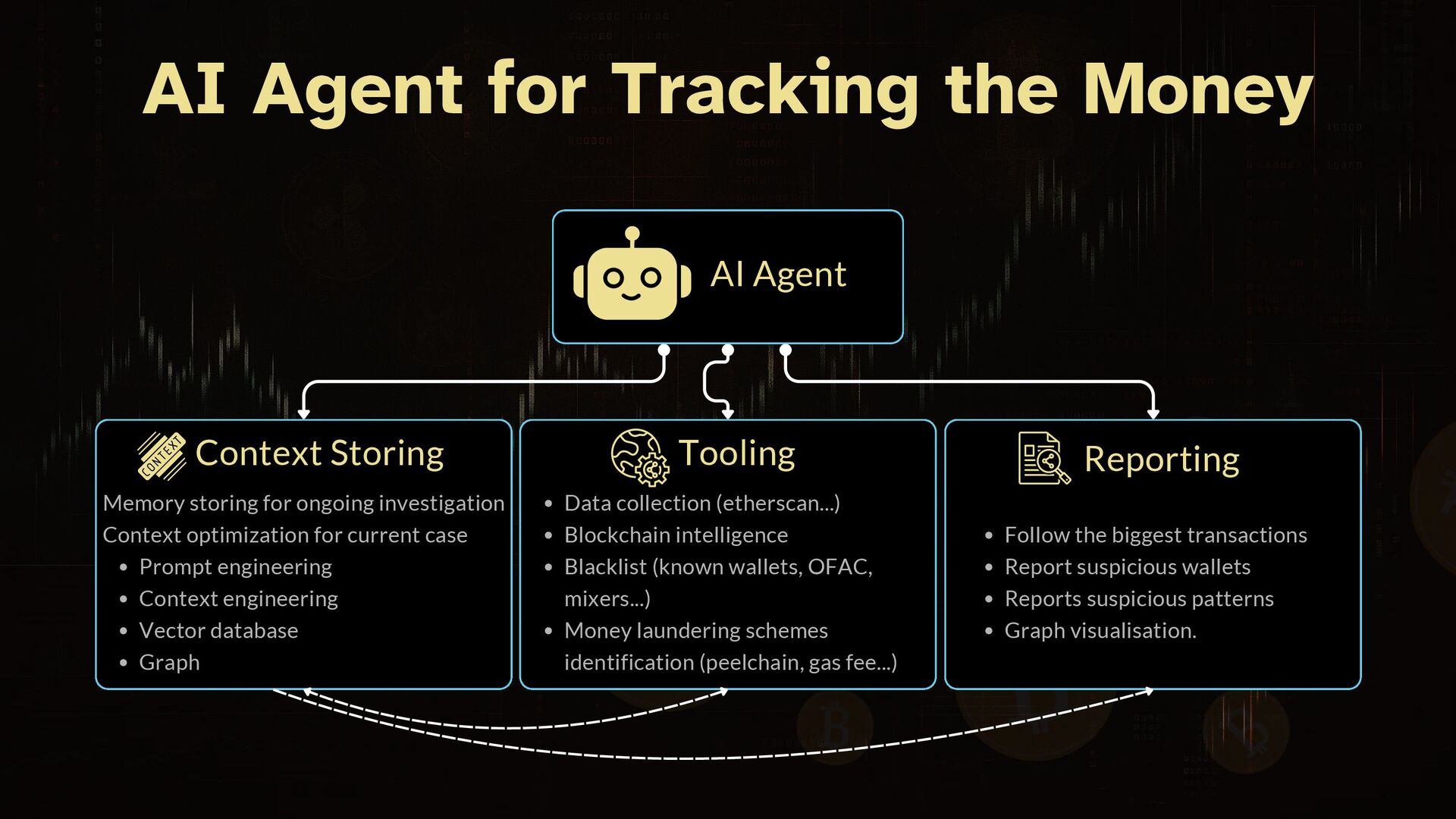
  23. AI Agent for Tracking the Money AI Agent Context Storing

    Tooling Reporting Memory storing for ongoing investigation Context optimization for current case Prompt engineering Context engineering Vector database Graph Data collection (etherscan...) Blockchain intelligence Blacklist (known wallets, OFAC, mixers...) Money laundering schemes identification (peelchain, gas fee...) Follow the biggest transactions Report suspicious wallets Reports suspicious patterns Graph visualisation.
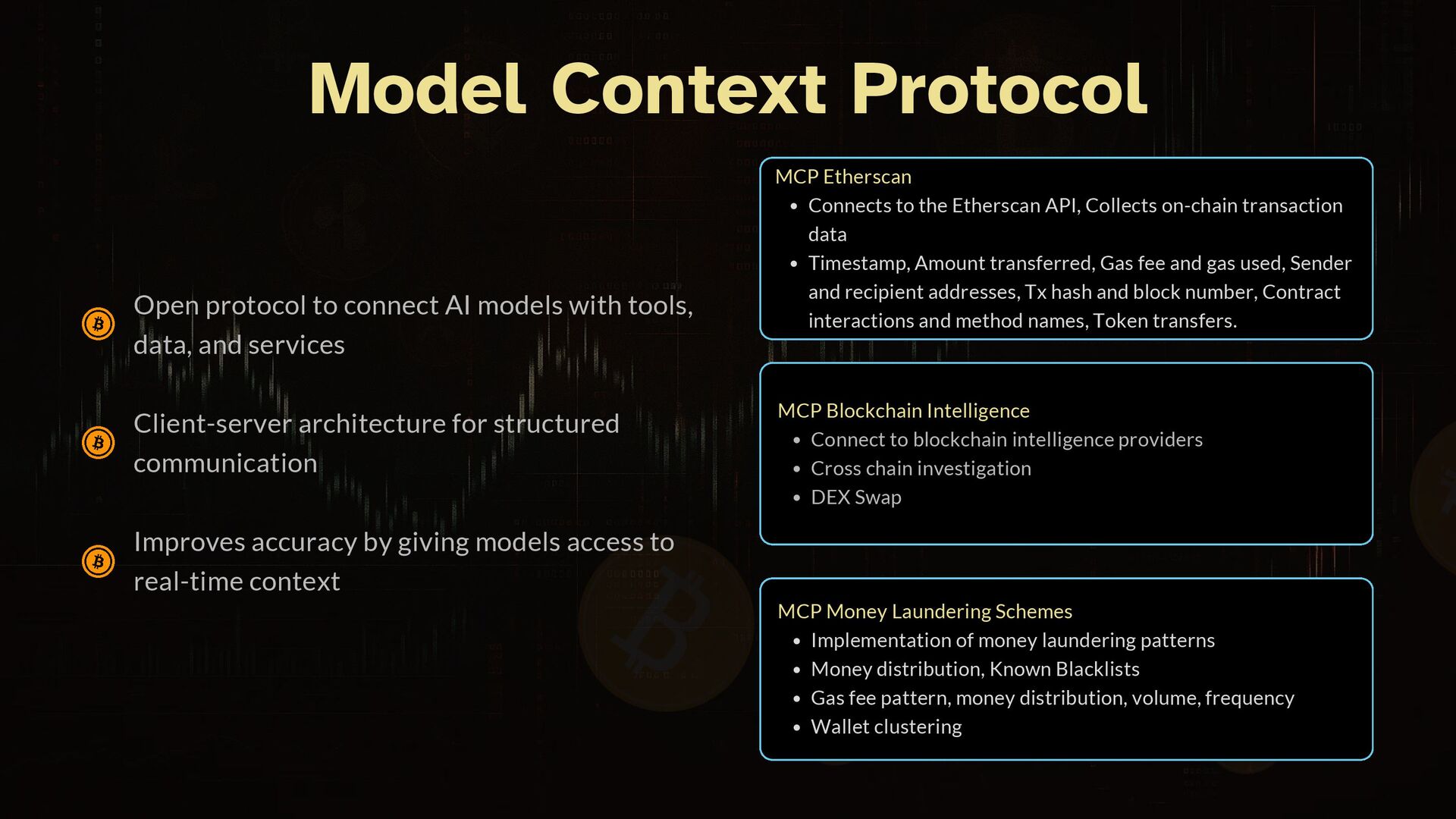
  24. Model Context Protocol Open protocol to connect AI models with

    tools, data, and services Client-server architecture for structured communication Improves accuracy by giving models access to real-time context MCP Etherscan Connects to the Etherscan API, Collects on-chain transaction data Timestamp, Amount transferred, Gas fee and gas used, Sender and recipient addresses, Tx hash and block number, Contract interactions and method names, Token transfers. MCP Blockchain Intelligence Connect to blockchain intelligence providers Cross chain investigation DEX Swap MCP Money Laundering Schemes Implementation of money laundering patterns Money distribution, Known Blacklists Gas fee pattern, money distribution, volume, frequency Wallet clustering
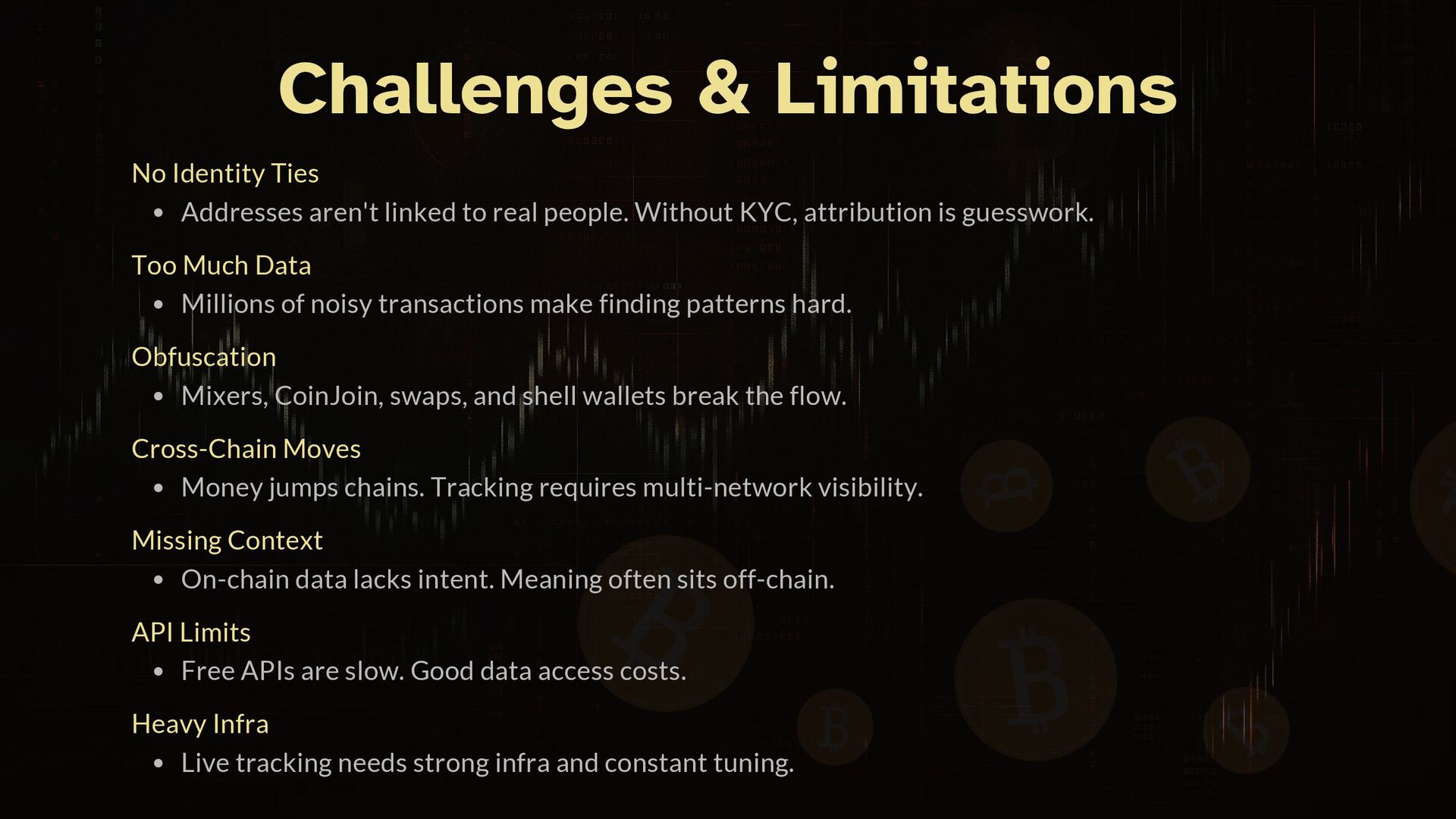
  25. Challenges & Limitations No Identity Ties Addresses aren't linked to

    real people. Without KYC, attribution is guesswork. Too Much Data Millions of noisy transactions make finding patterns hard. Obfuscation Mixers, CoinJoin, swaps, and shell wallets break the flow. Cross-Chain Moves Money jumps chains. Tracking requires multi-network visibility. Missing Context On-chain data lacks intent. Meaning often sits off-chain. API Limits Free APIs are slow. Good data access costs. Heavy Infra Live tracking needs strong infra and constant tuning.
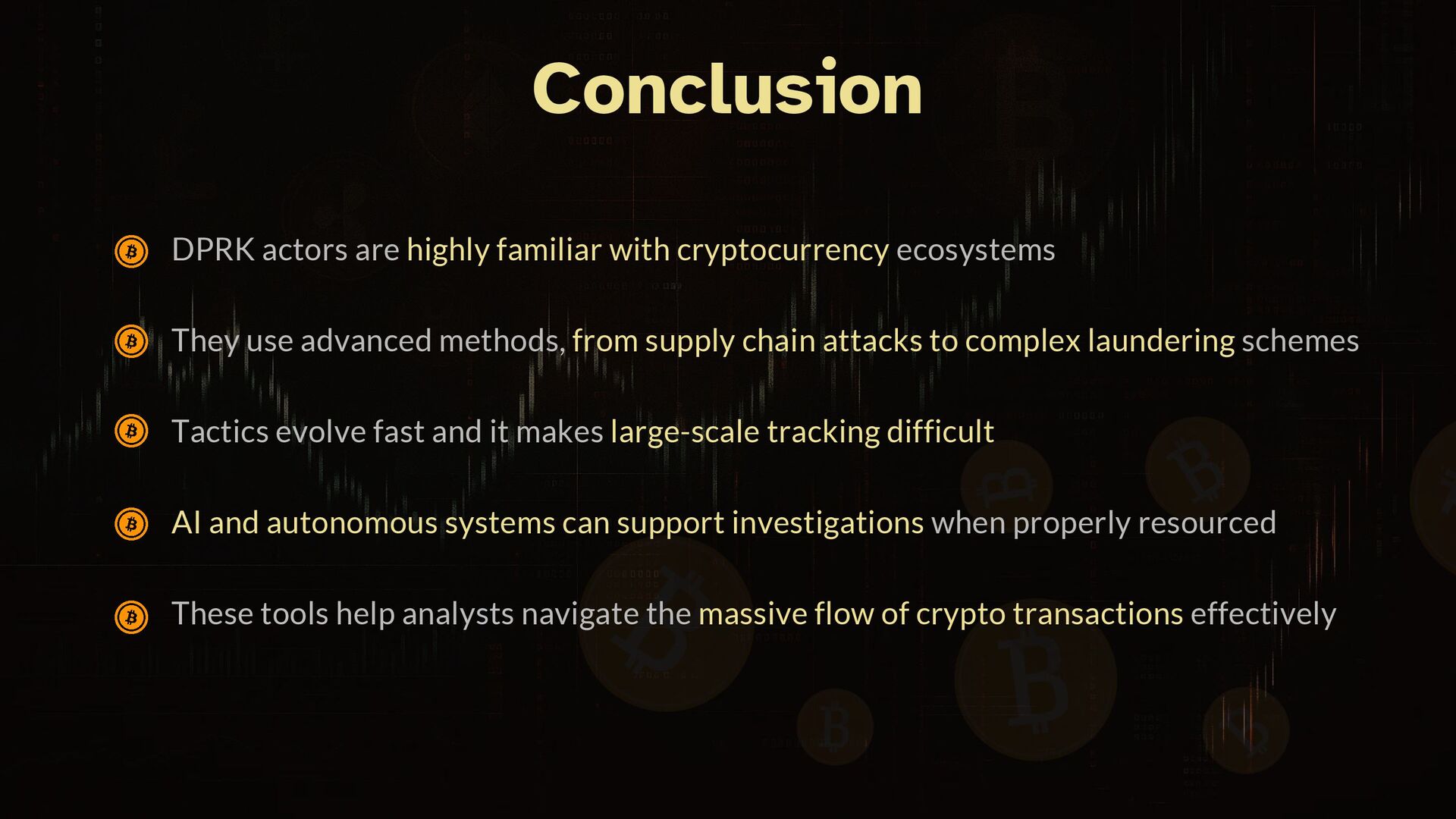
  26. Conclusion DPRK actors are highly familiar with cryptocurrency ecosystems They

    use advanced methods, from supply chain attacks to complex laundering schemes Tactics evolve fast and it makes large-scale tracking difficult AI and autonomous systems can support investigations when properly resourced These tools help analysts navigate the massive flow of crypto transactions effectively
  27. https://www.nccgroup.com/au/research-blog/in-depth-technical-analysis-of-the-bybit-hack/ https://certik.com/resources/blog/bybit-incident-technical-analysis https://lukka.tech/bybit-hack-deep-dive/ https://research.checkpoint.com/2025/the-bybit-incident-when-research-meets-reality/ https://www.sygnia.co/blog/sygnia-investigation-bybit-hack/ https://www.chainalysis.com/blog/bybit-exchange hack-february-2025-crypto-security-dprk/ https://crystalintelligence.com/investigations/the-bybit-heist-how-the-hackers-took-control/ https://cointelegraph.com/news/safe-wallet-releases-bybit-hack-post-mortem https://www.binance.com/en/square/post/03-06-2025-bybit-hack-safewallet-report-reveals-details-of-1-4-

    billion-cybersecurity-breach-21195682977506 https://www.trmlabs.com/resources/blog/the-bybit-hack-following-north-koreas-largest-exploit https://www.trmlabs.com/resources/blog/exch-remains-active-despite-shutdown-how-the-bybit-hack-linked- exchange-continues-to-enable-laundering-of-csam-funds https://www.trmlabs.com/resources/blog/bybit-hack-update-north-korea-moves-to-next-stage-of-laundering https://www.trmlabs.com/resources/blog/trm-links-north-korea-to-record-1-5-billion-record-hack https://x.com/safe/status/1894768522720350673 https://twitter.com/Bybit_Official/status/1760999999999999999 https://cointelegraph.com/news/zach-xbt-identifies-lazarus-group-bybit-hack-arkham-bounty https://twitter.com/zachxbt Additional Resources Umberto @misterserious (recoveris.io) JBK Sean O’Connor @Vhumint Aymen Jaffry TRM Labs