Upgrade to Pro — share decks privately, control downloads, hide ads and more …

Meeting the challenges of SCCL

Sponsored · Your Podcast. Everywhere. Effortlessly. Share. Educate. Inspire. Entertain. You do you. We'll handle the rest.
Avatar for Moun Seo Moun Seo
January 07, 2026
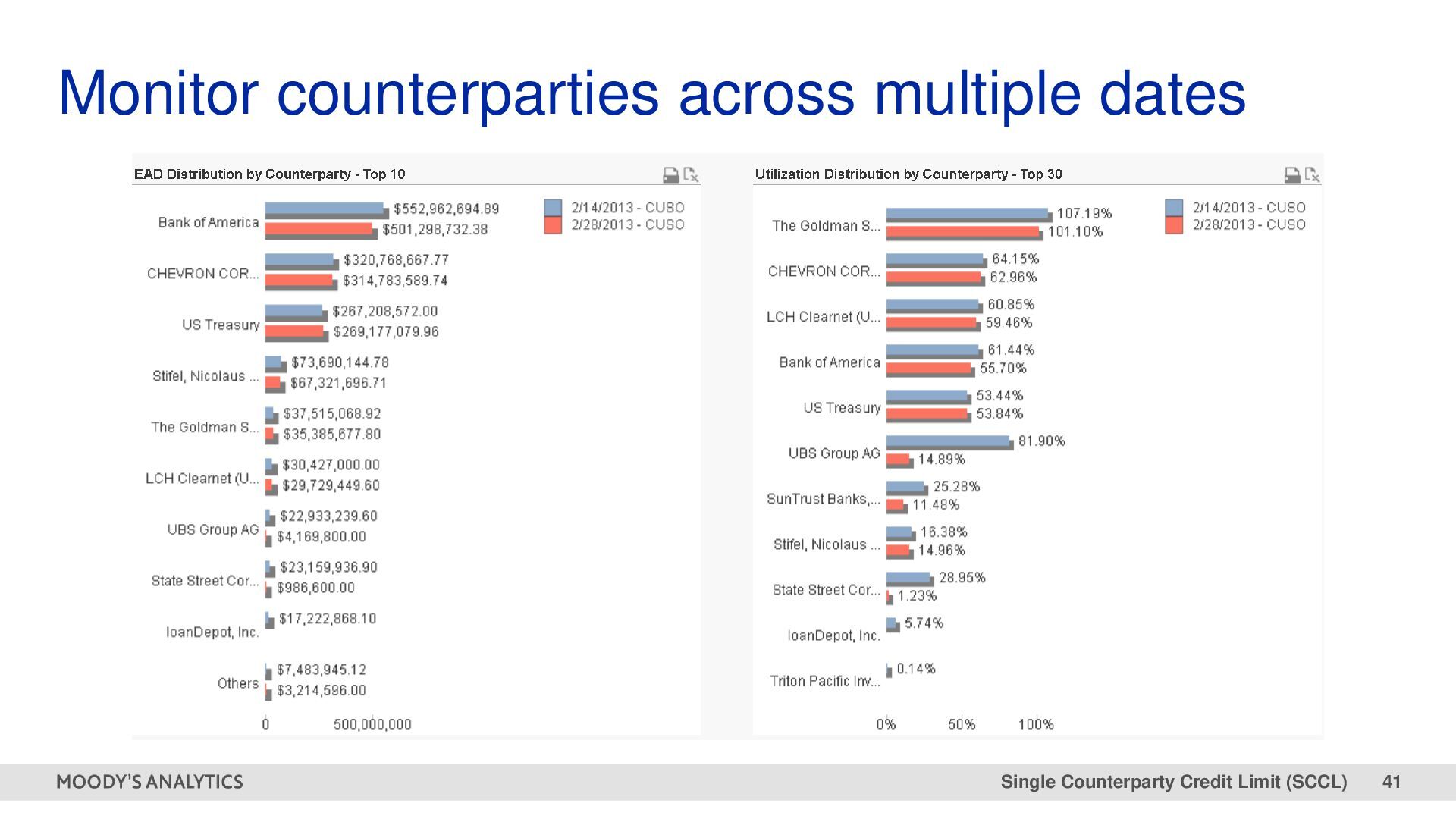
1

Meeting the challenges of SCCL

Avatar for Moun Seo

Moun Seo

January 07, 2026
Tweet

Transcript

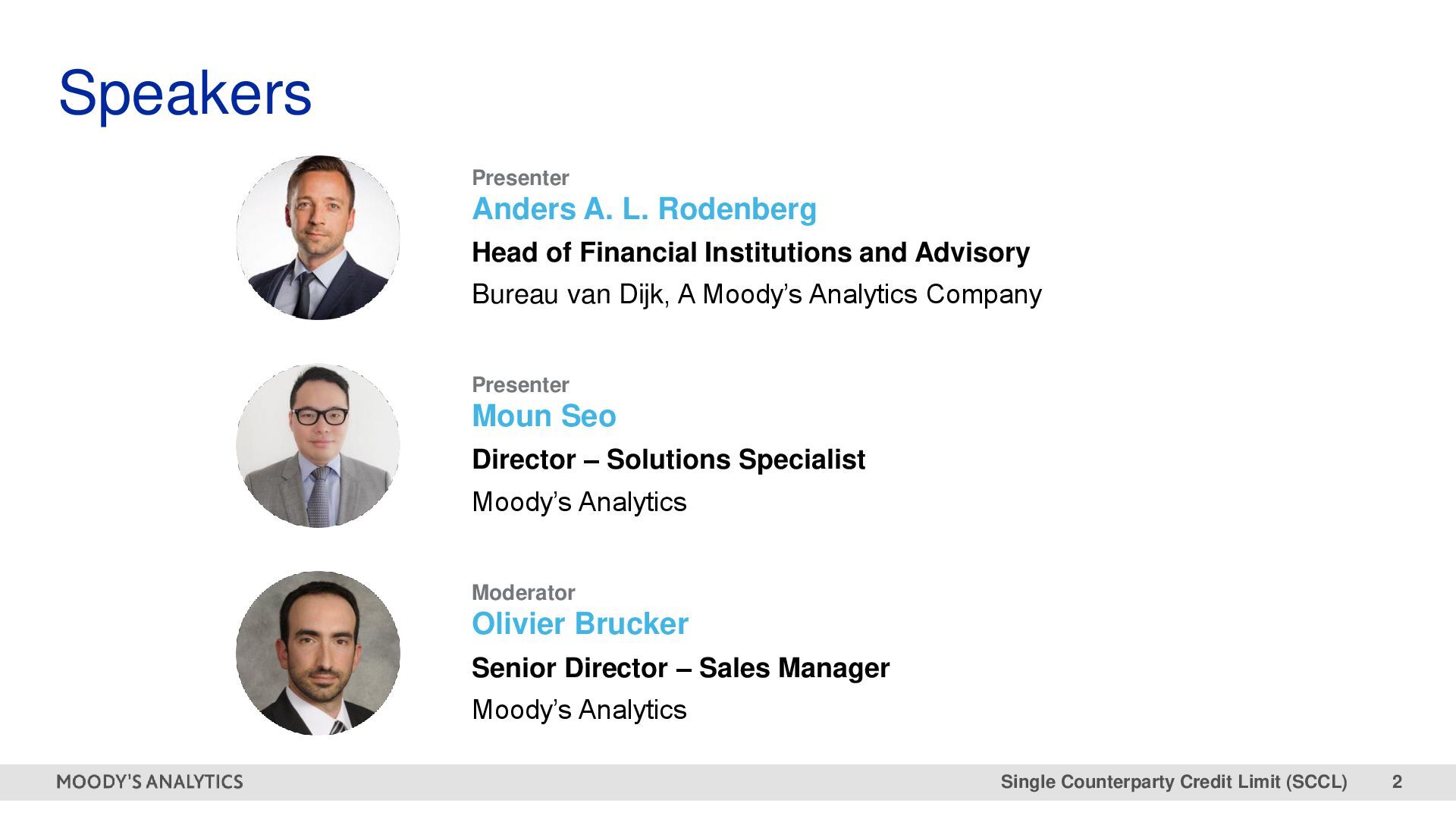
  1. Single Counterparty Credit Limit (SCCL) 2 Speakers Presenter Moun Seo
    Director – Solutions Specialist Moody’s Analytics Presenter Anders A. L. Rodenberg Head of Financial Institutions and Advisory Bureau van Dijk, A Moody’s Analytics Company Moderator Olivier Brucker Senior Director – Sales Manager Moody’s Analytics
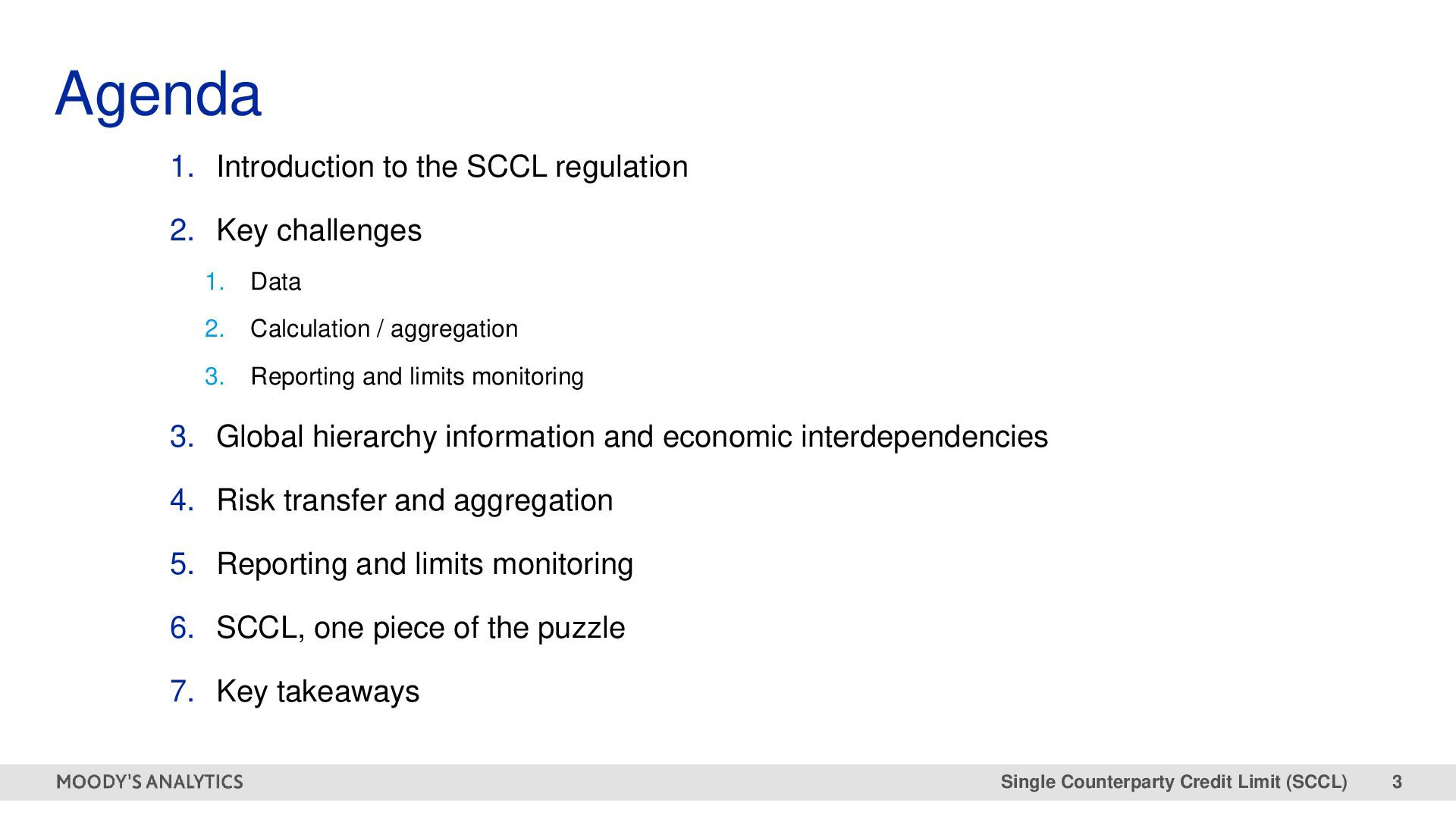
  2. Single Counterparty Credit Limit (SCCL) 3 Agenda 1. Introduction to

    the SCCL regulation 2. Key challenges 1. Data 2. Calculation / aggregation 3. Reporting and limits monitoring 3. Global hierarchy information and economic interdependencies 4. Risk transfer and aggregation 5. Reporting and limits monitoring 6. SCCL, one piece of the puzzle 7. Key takeaways
  3. Single Counterparty Credit Limit (SCCL) 5 SCCL in a glance

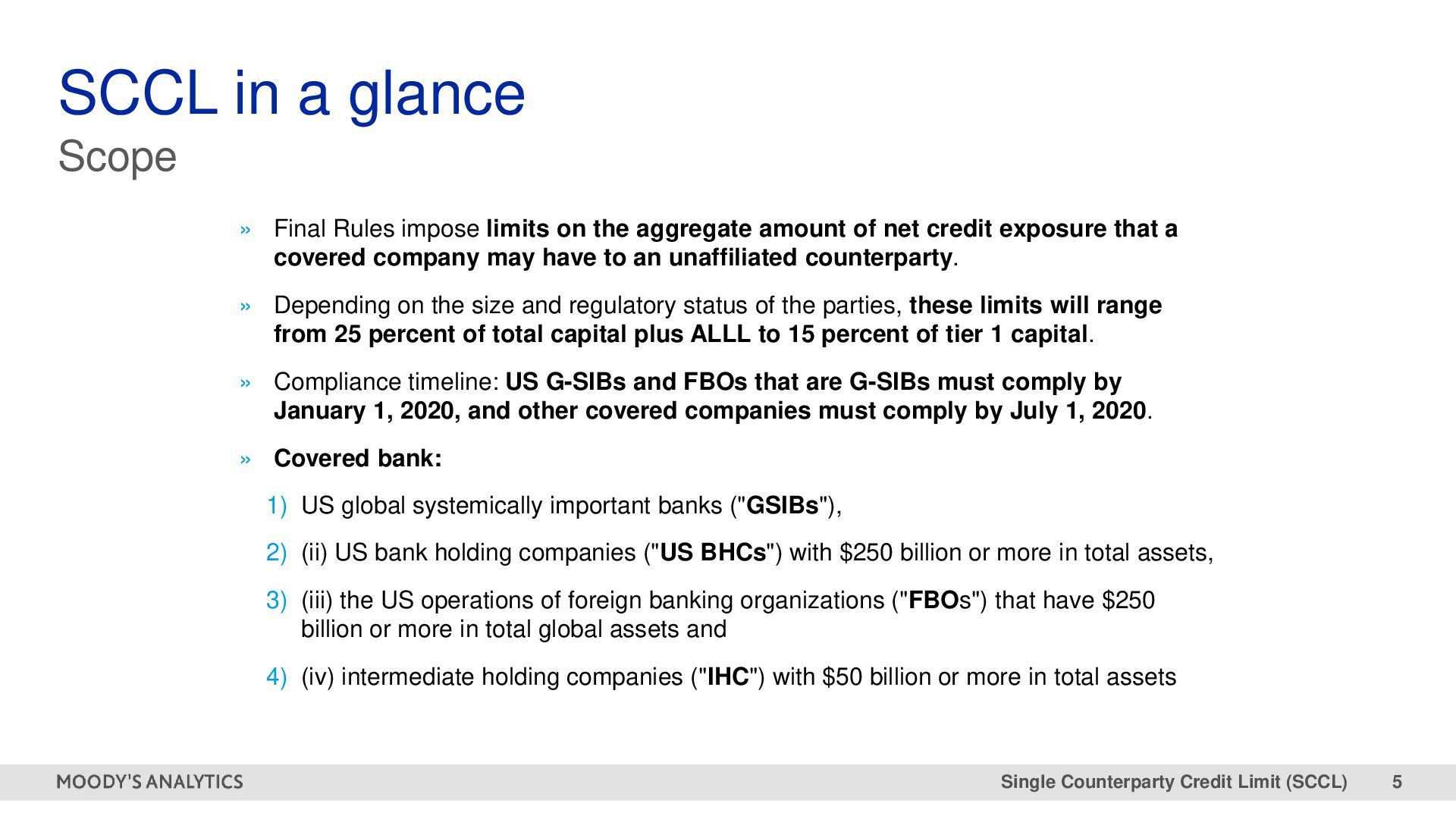
    » Final Rules impose limits on the aggregate amount of net credit exposure that a covered company may have to an unaffiliated counterparty. » Depending on the size and regulatory status of the parties, these limits will range from 25 percent of total capital plus ALLL to 15 percent of tier 1 capital. » Compliance timeline: US G-SIBs and FBOs that are G-SIBs must comply by January 1, 2020, and other covered companies must comply by July 1, 2020. » Covered bank: 1) US global systemically important banks ("GSIBs"), 2) (ii) US bank holding companies ("US BHCs") with $250 billion or more in total assets, 3) (iii) the US operations of foreign banking organizations ("FBOs") that have $250 billion or more in total global assets and 4) (iv) intermediate holding companies ("IHC") with $50 billion or more in total assets Scope
  4. Single Counterparty Credit Limit (SCCL) 6 » Aggregate net credit

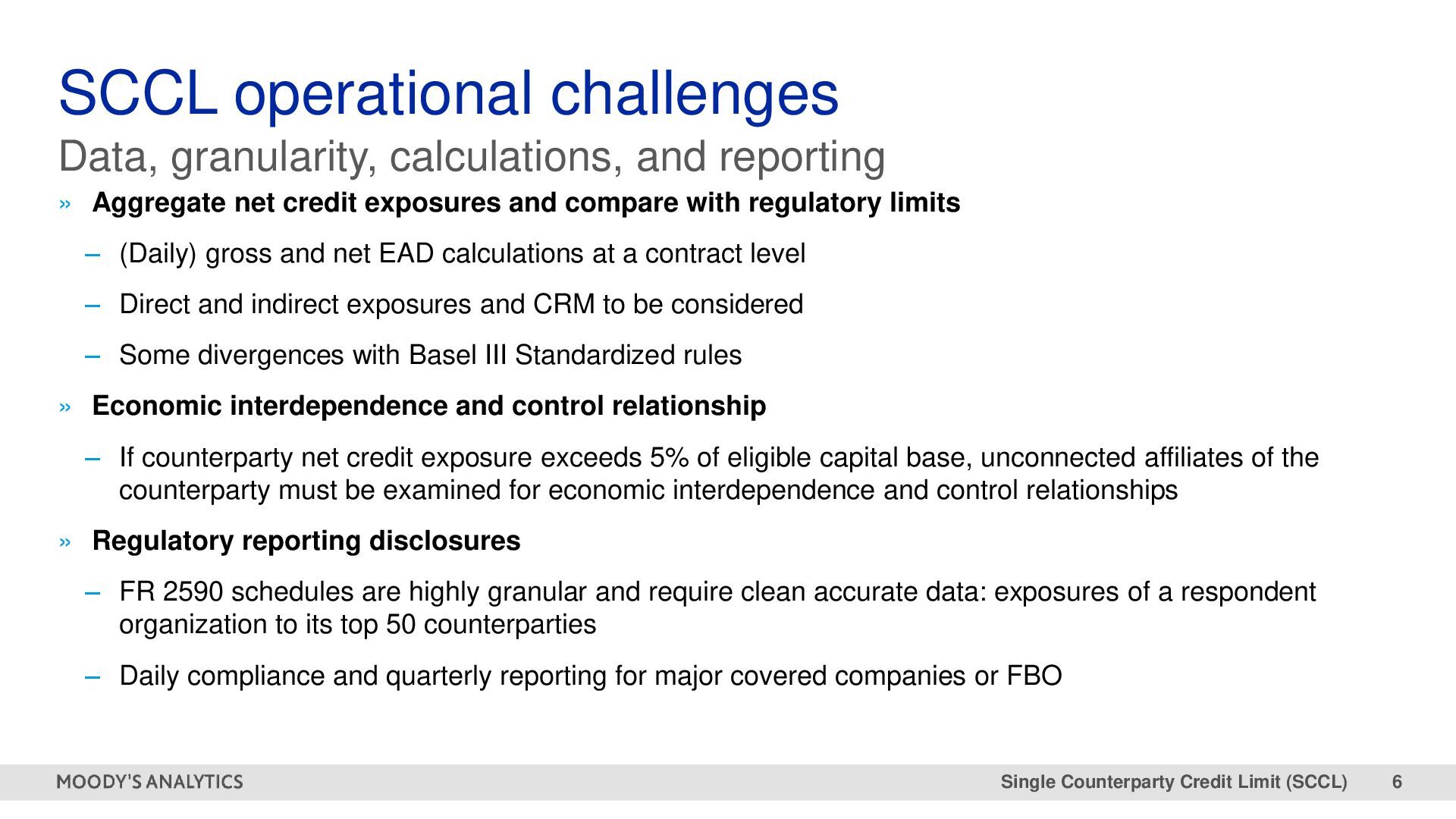
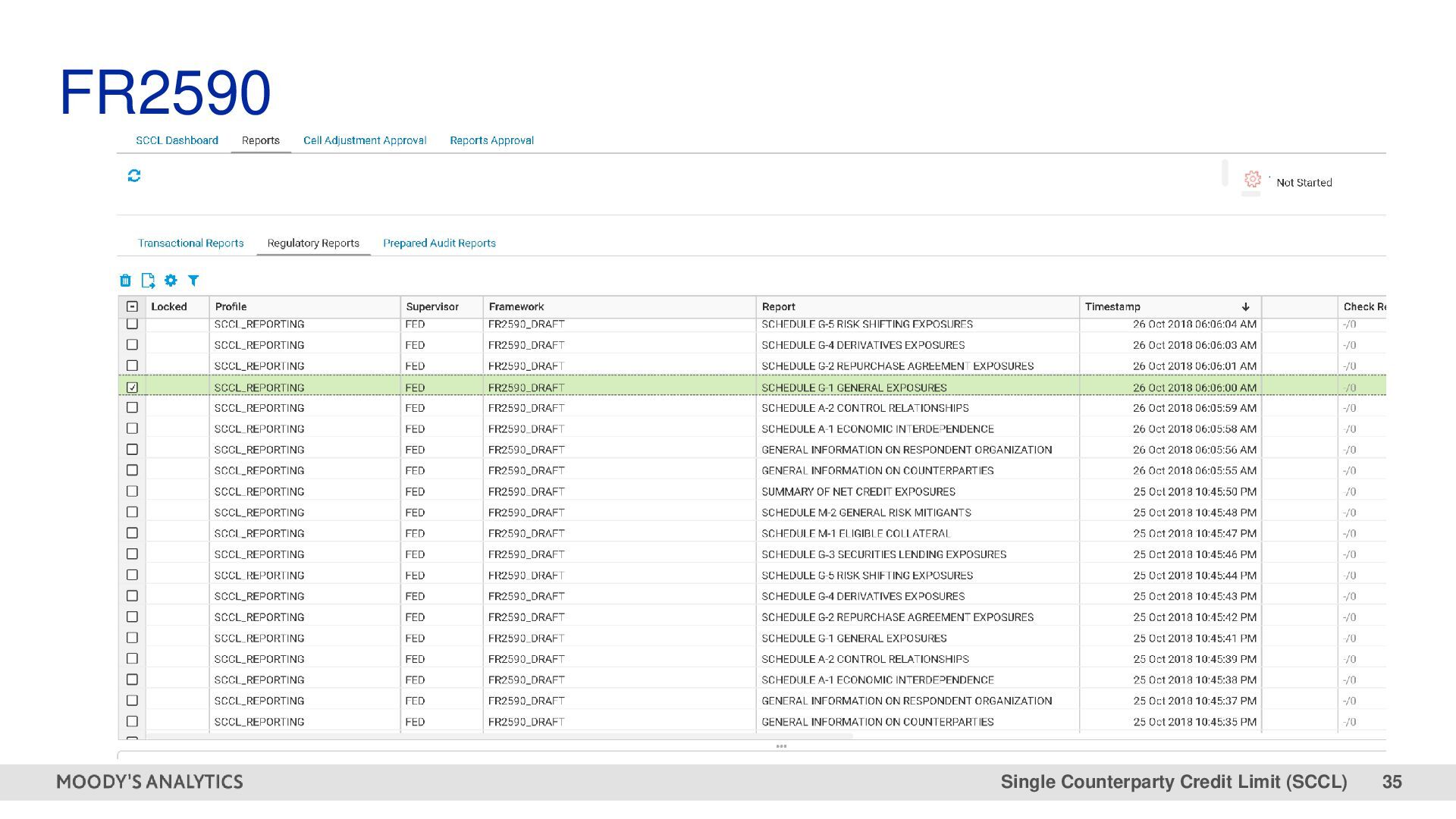
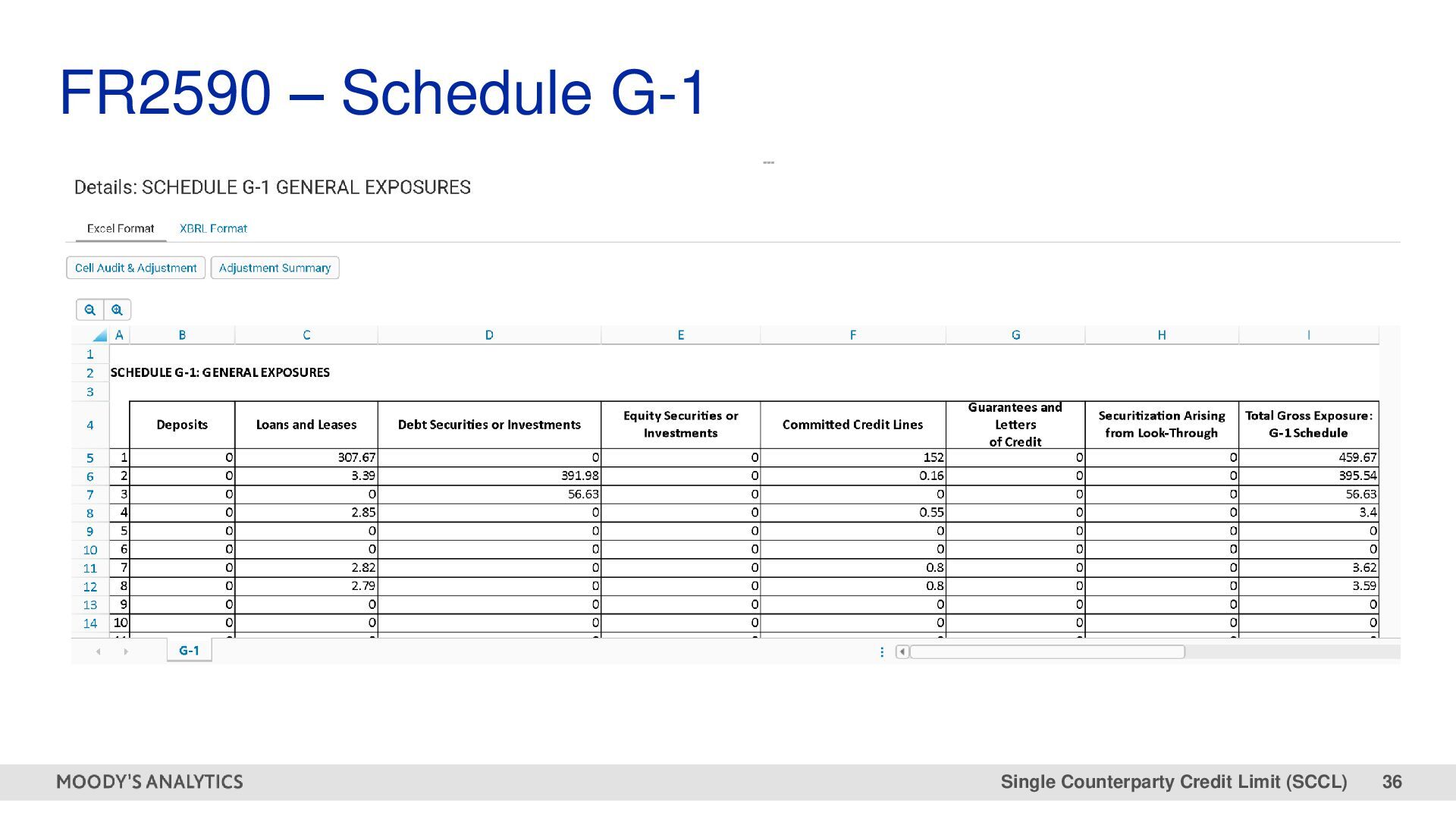
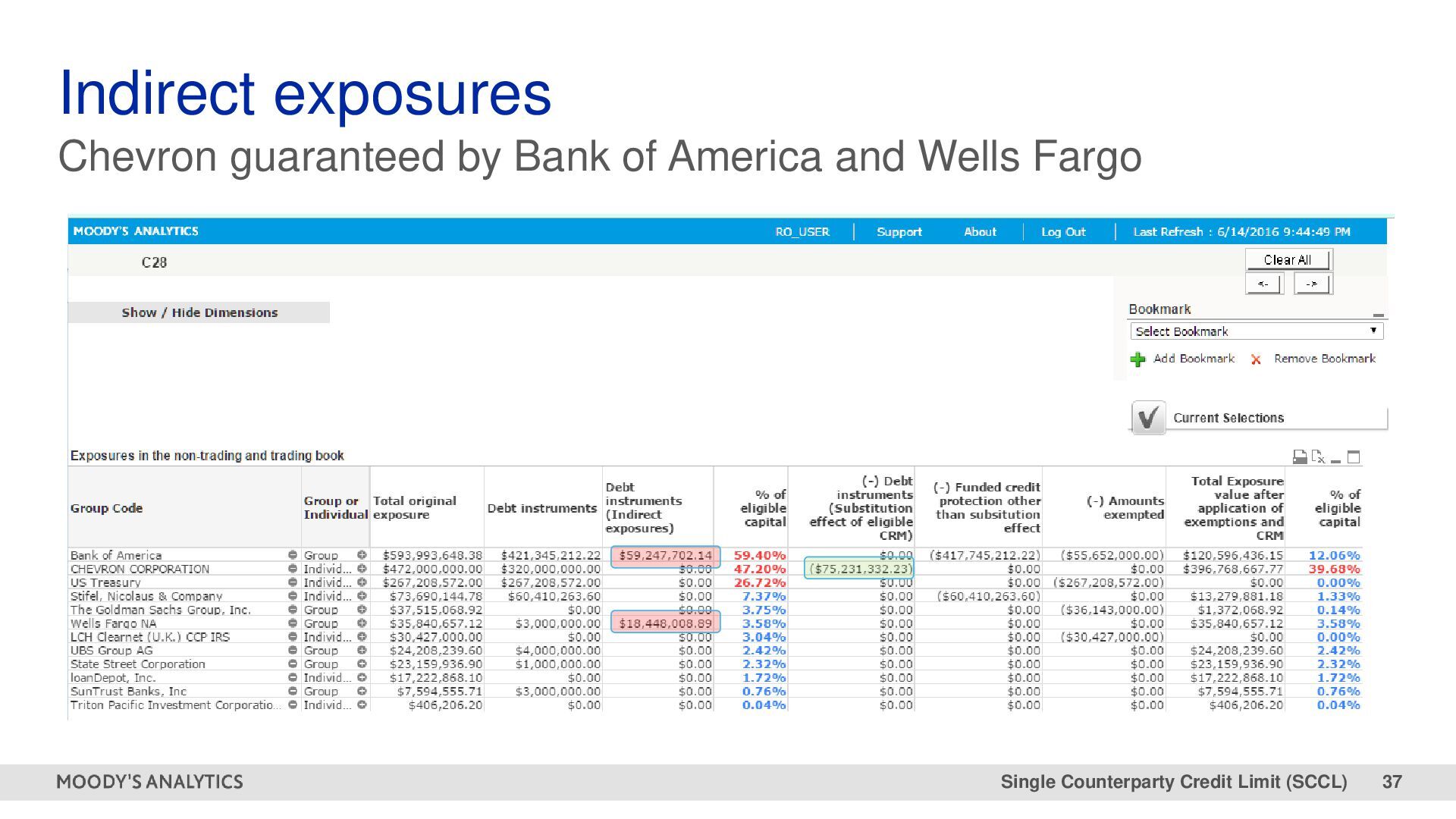
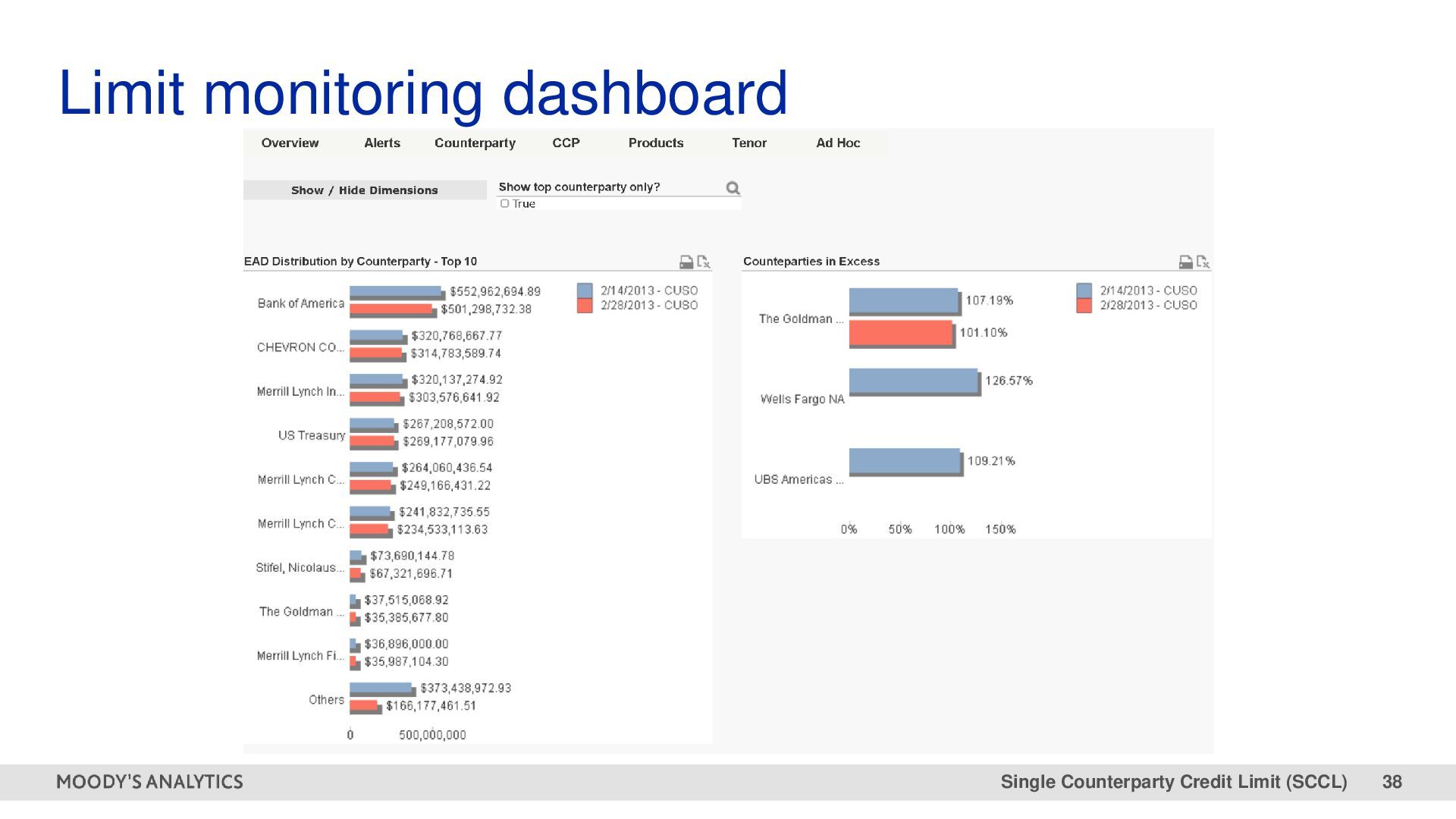
    exposures and compare with regulatory limits – (Daily) gross and net EAD calculations at a contract level – Direct and indirect exposures and CRM to be considered – Some divergences with Basel III Standardized rules » Economic interdependence and control relationship – If counterparty net credit exposure exceeds 5% of eligible capital base, unconnected affiliates of the counterparty must be examined for economic interdependence and control relationships » Regulatory reporting disclosures – FR 2590 schedules are highly granular and require clean accurate data: exposures of a respondent organization to its top 50 counterparties – Daily compliance and quarterly reporting for major covered companies or FBO Data, granularity, calculations, and reporting SCCL operational challenges
  5. Single Counterparty Credit Limit (SCCL) 7 FED US regulatory capital

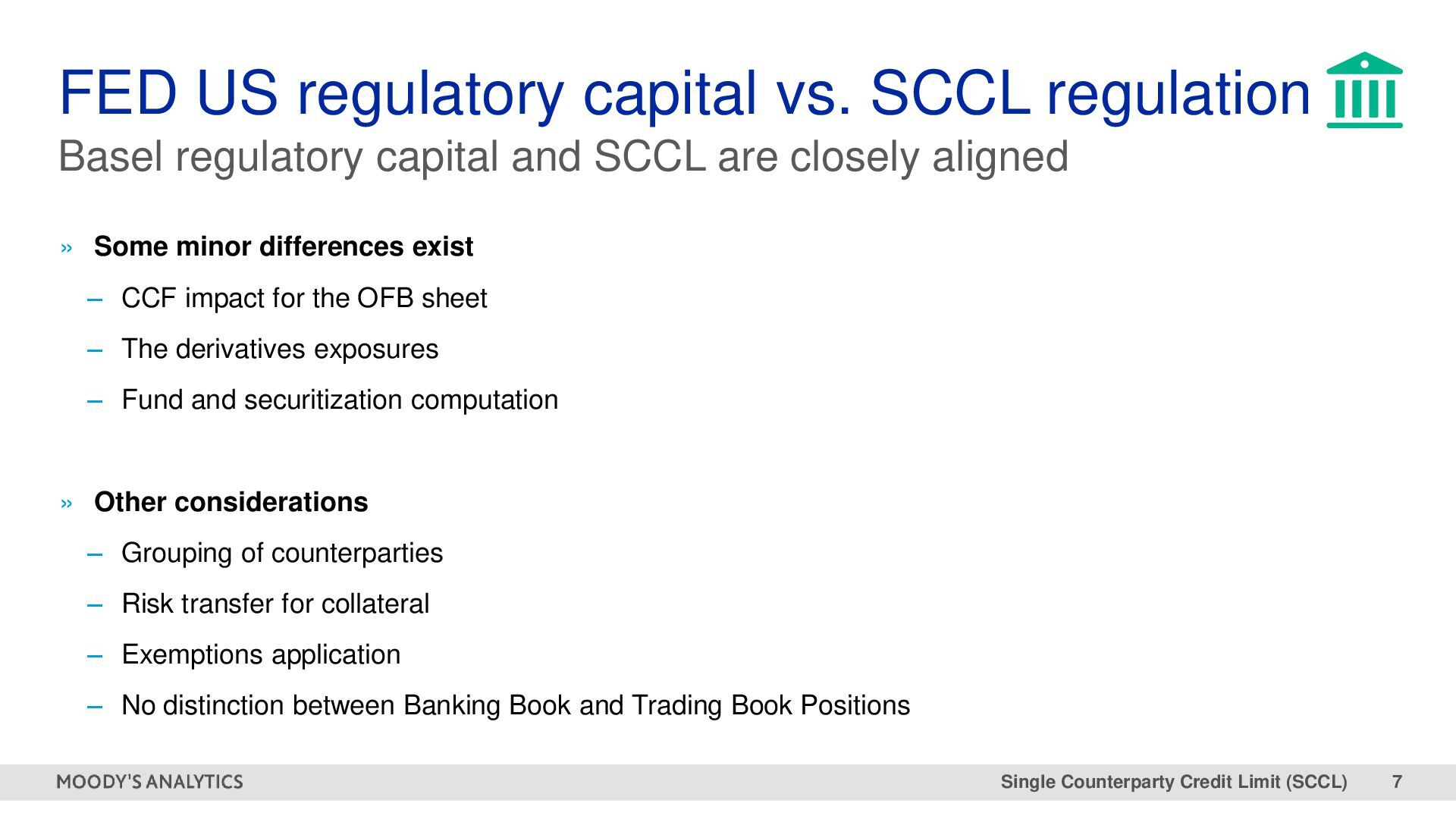
    vs. SCCL regulation » Some minor differences exist – CCF impact for the OFB sheet – The derivatives exposures – Fund and securitization computation » Other considerations – Grouping of counterparties – Risk transfer for collateral – Exemptions application – No distinction between Banking Book and Trading Book Positions Basel regulatory capital and SCCL are closely aligned
  6. Single Counterparty Credit Limit (SCCL) 8 Large exposure vs. SCCL

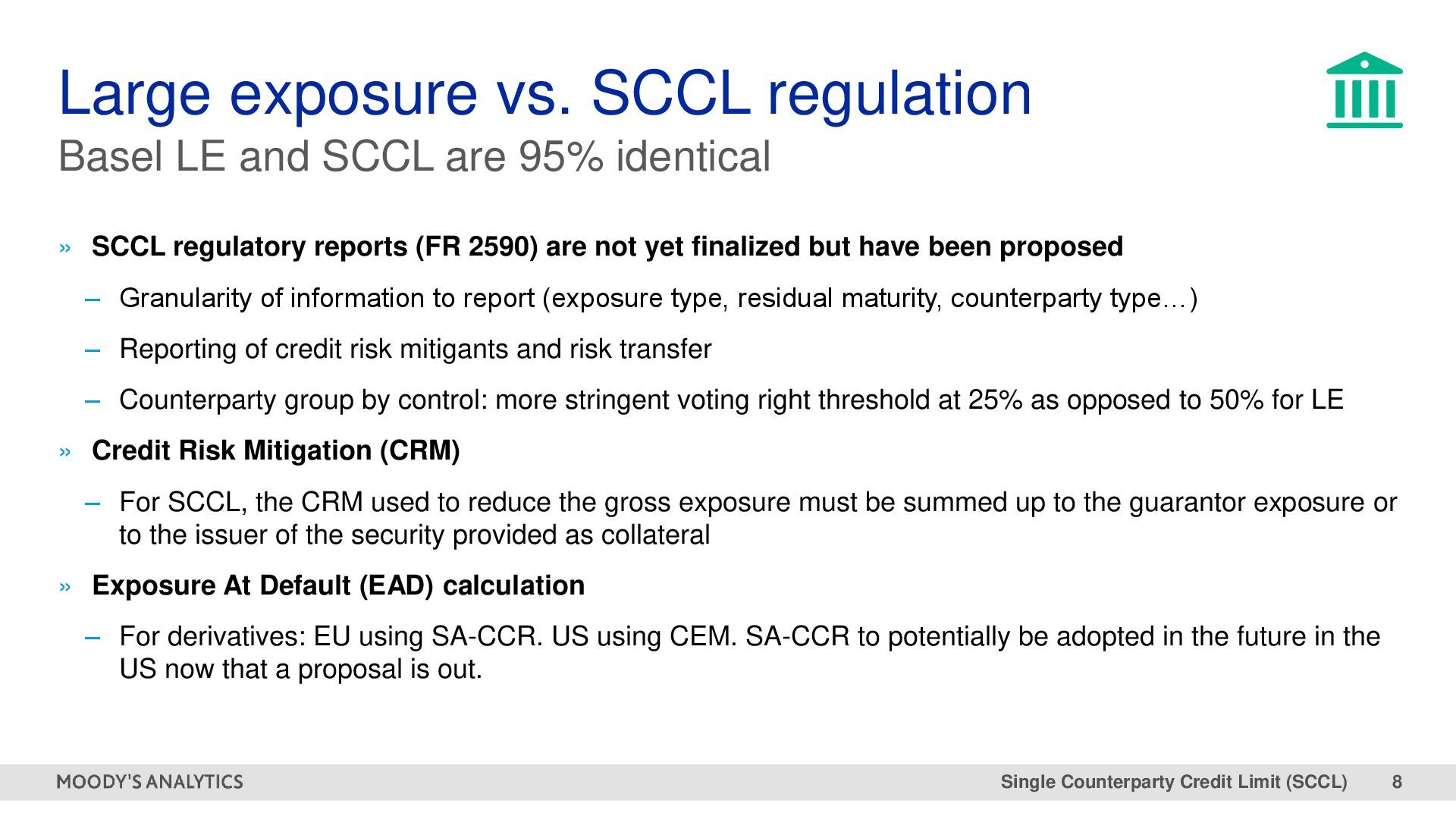
    regulation » SCCL regulatory reports (FR 2590) are not yet finalized but have been proposed – Granularity of information to report (exposure type, residual maturity, counterparty type…) – Reporting of credit risk mitigants and risk transfer – Counterparty group by control: more stringent voting right threshold at 25% as opposed to 50% for LE » Credit Risk Mitigation (CRM) – For SCCL, the CRM used to reduce the gross exposure must be summed up to the guarantor exposure or to the issuer of the security provided as collateral » Exposure At Default (EAD) calculation – For derivatives: EU using SA-CCR. US using CEM. SA-CCR to potentially be adopted in the future in the US now that a proposal is out. Basel LE and SCCL are 95% identical
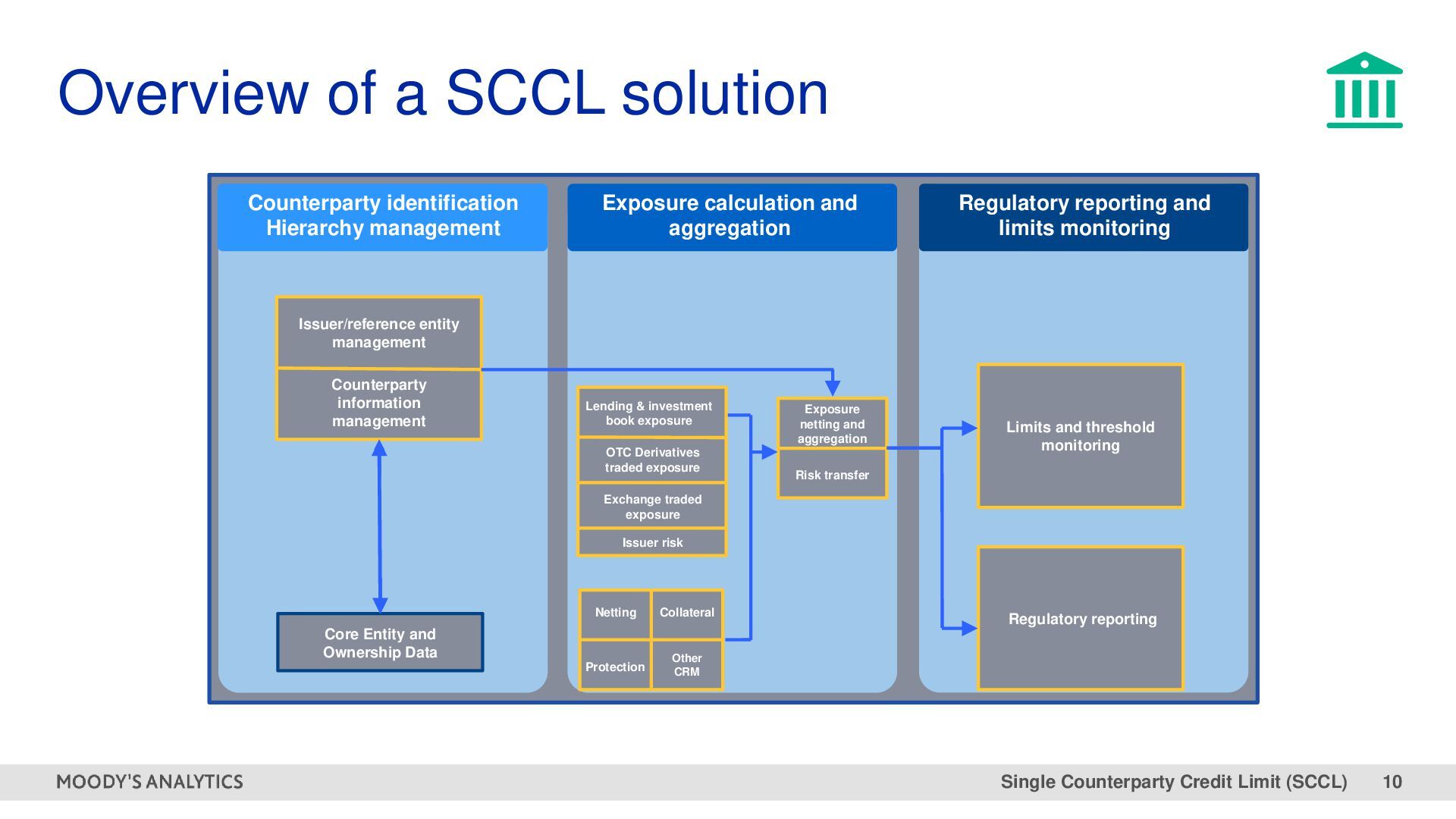
  7. Single Counterparty Credit Limit (SCCL) 10 Overview of a SCCL

    solution Counterparty identification Hierarchy management Exposure calculation and aggregation Regulatory reporting and limits monitoring Issuer/reference entity management Counterparty information management Lending & investment book exposure OTC Derivatives traded exposure Exchange traded exposure Issuer risk Netting Collateral Protection Other CRM Exposure netting and aggregation Risk transfer Limits and threshold monitoring Regulatory reporting Core Entity and Ownership Data
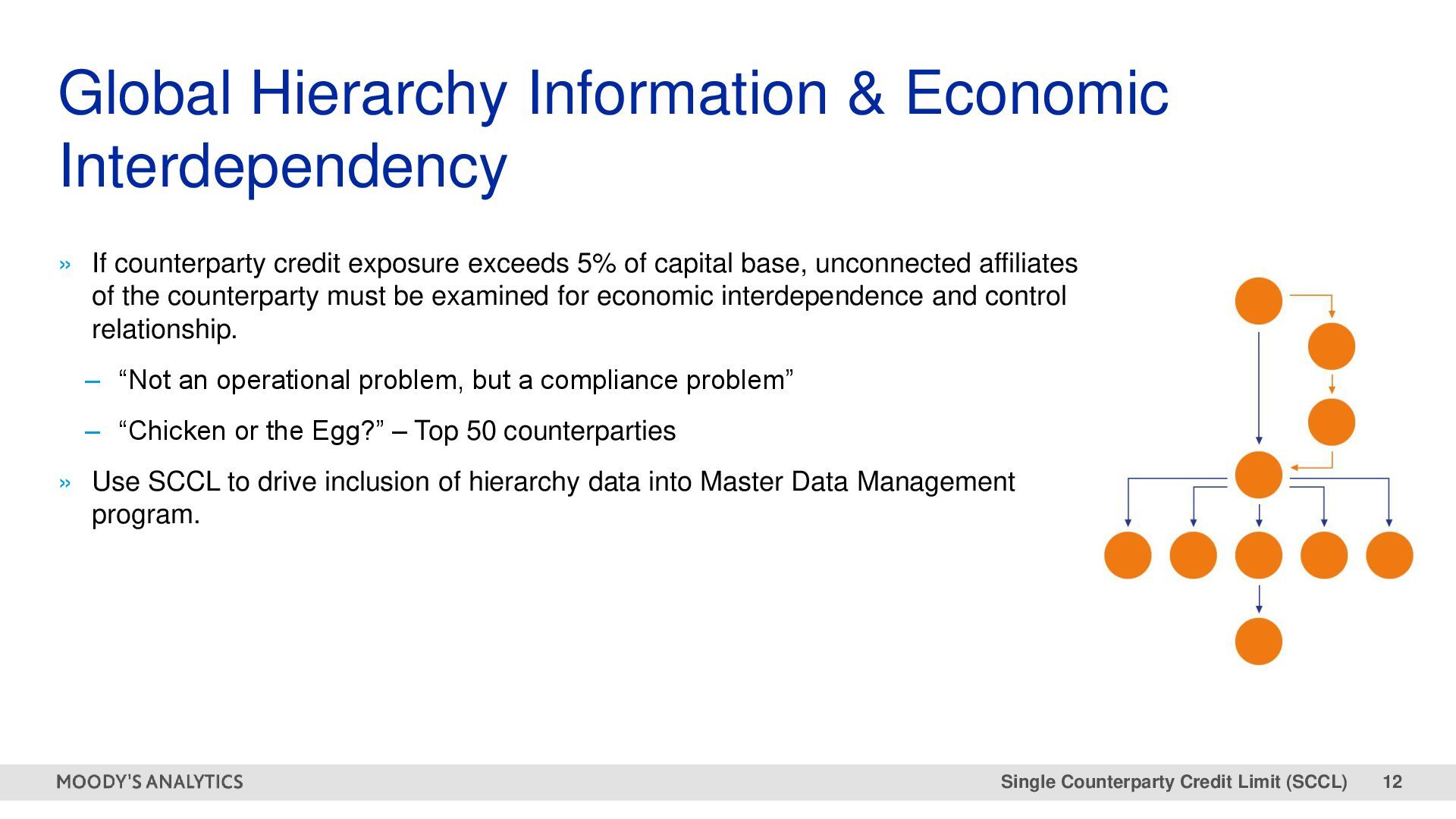
  8. Single Counterparty Credit Limit (SCCL) 12 Global Hierarchy Information &

    Economic Interdependency » If counterparty credit exposure exceeds 5% of capital base, unconnected affiliates of the counterparty must be examined for economic interdependence and control relationship. – “Not an operational problem, but a compliance problem” – “Chicken or the Egg?” – Top 50 counterparties » Use SCCL to drive inclusion of hierarchy data into Master Data Management program.
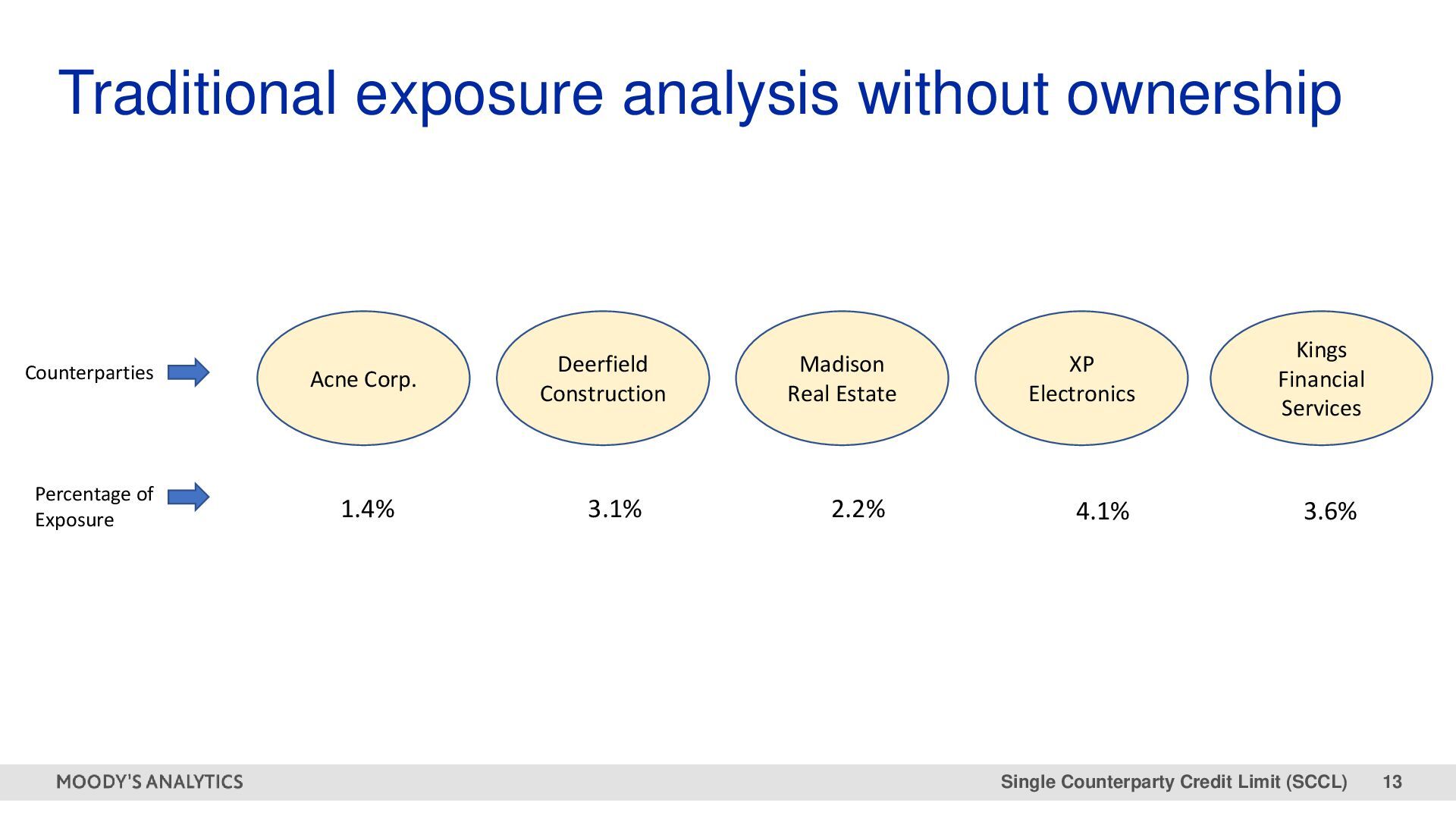
  9. Single Counterparty Credit Limit (SCCL) 13 Traditional exposure analysis without

    ownership Acne Corp. Deerfield Construction Madison Real Estate XP Electronics Kings Financial Services 1.4% 3.1% 2.2% 4.1% 3.6% Percentage of Exposure Counterparties
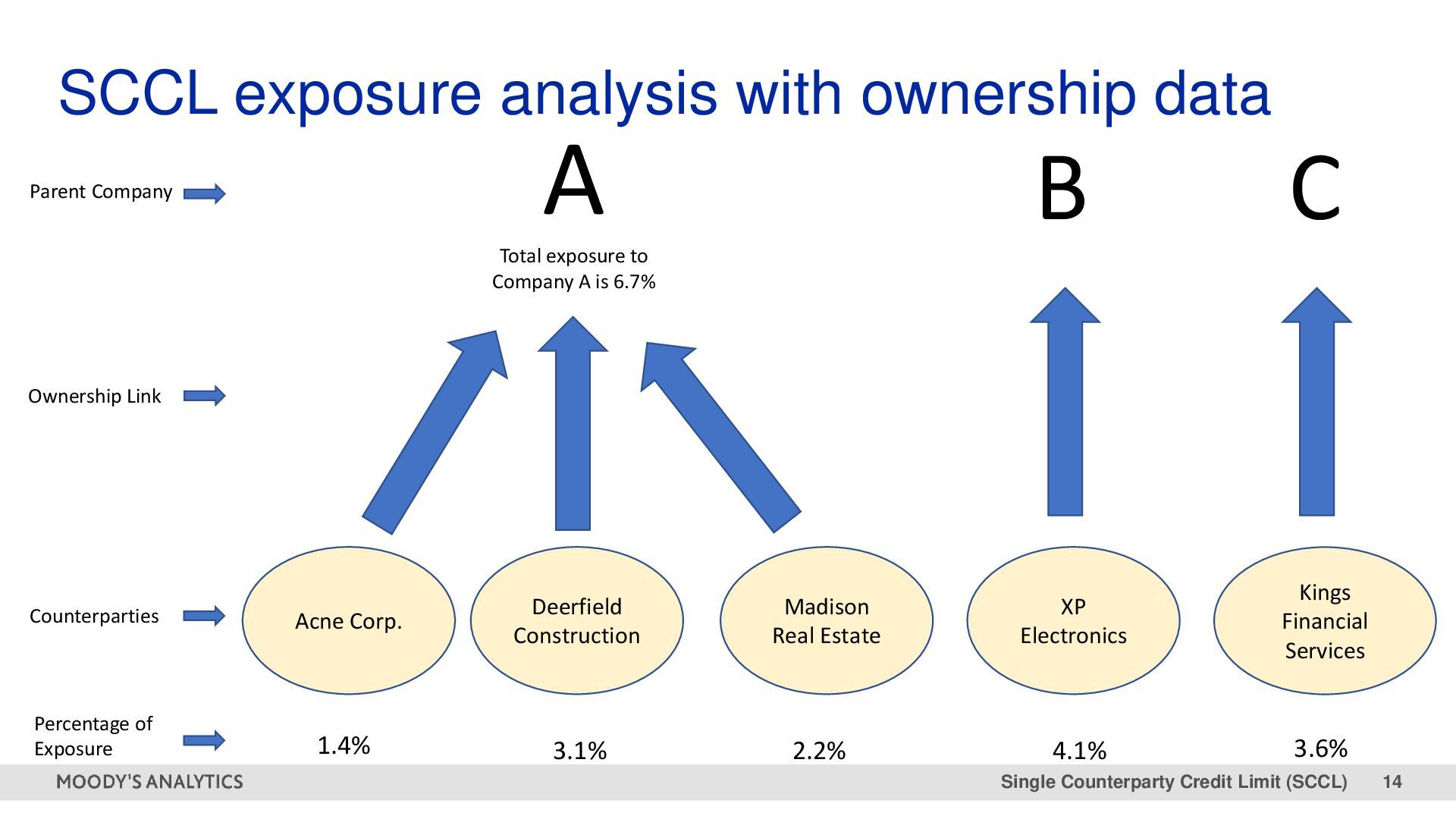
  10. Single Counterparty Credit Limit (SCCL) 14 SCCL exposure analysis with

    ownership data Acne Corp. Deerfield Construction Madison Real Estate XP Electronics Kings Financial Services 1.4% 3.1% 2.2% 4.1% 3.6% C B A Total exposure to Company A is 6.7% Percentage of Exposure Counterparties Parent Company Ownership Link
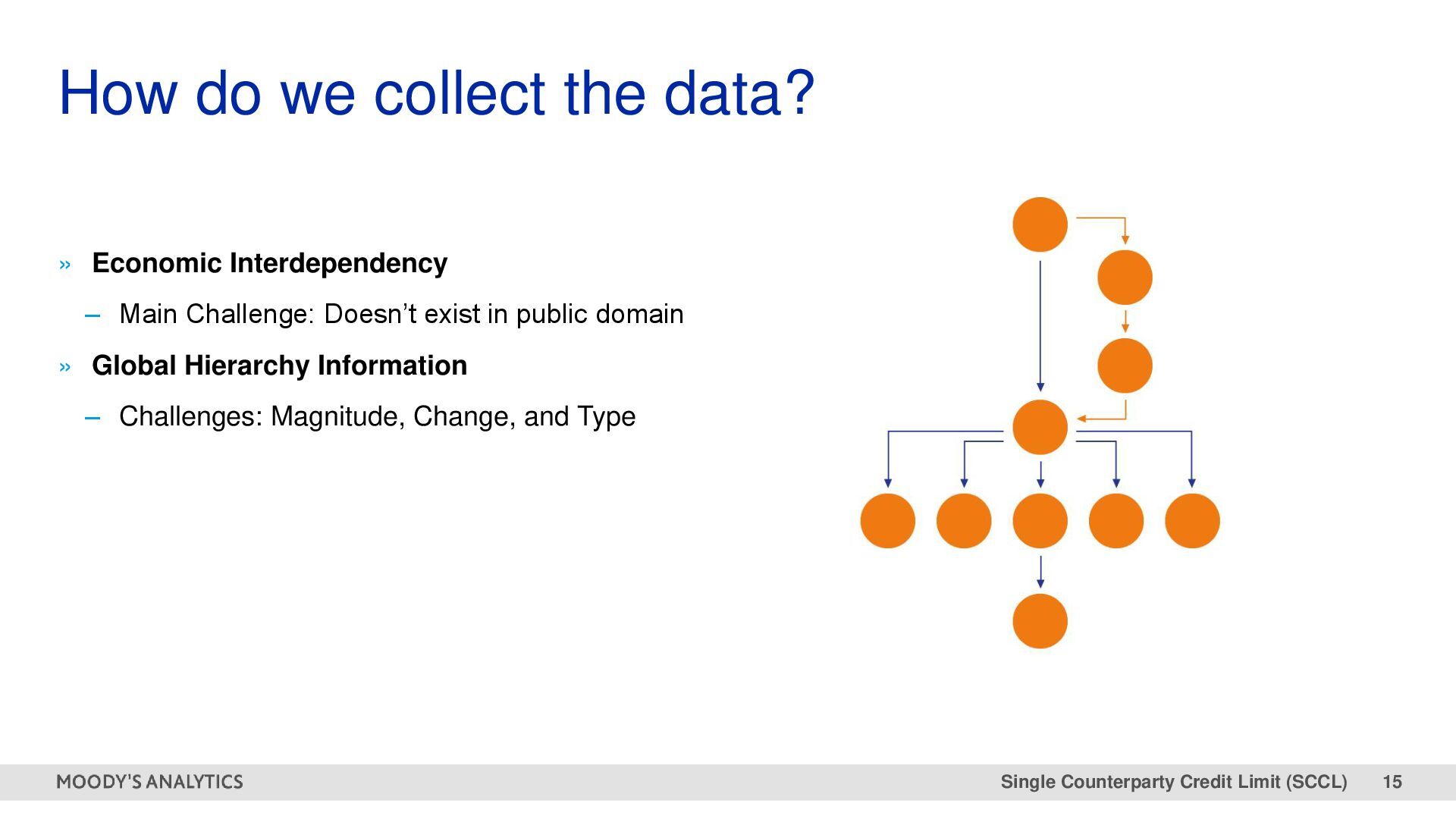
  11. Single Counterparty Credit Limit (SCCL) 15 How do we collect

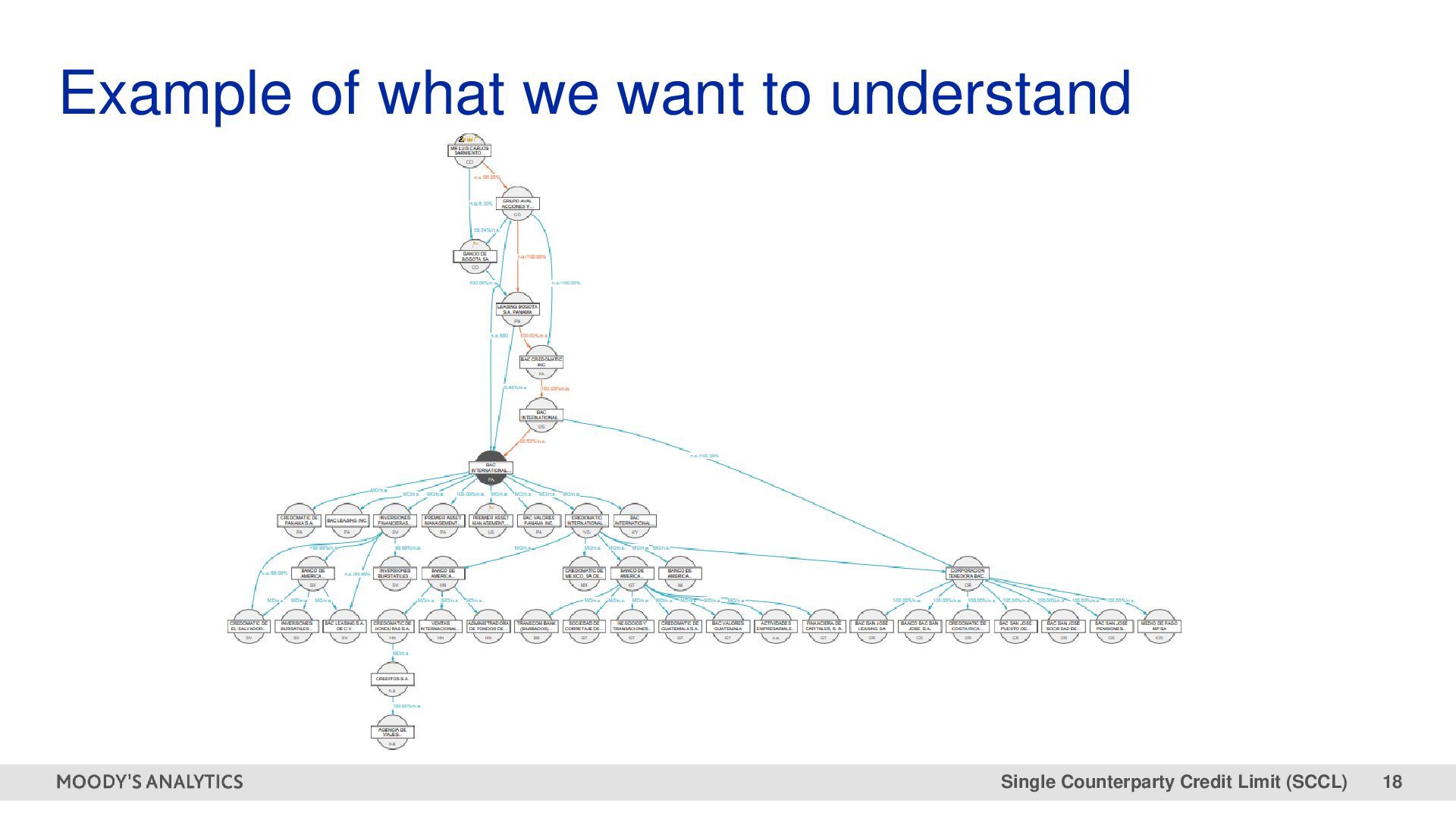
    the data? » Economic Interdependency – Main Challenge: Doesn’t exist in public domain » Global Hierarchy Information – Challenges: Magnitude, Change, and Type
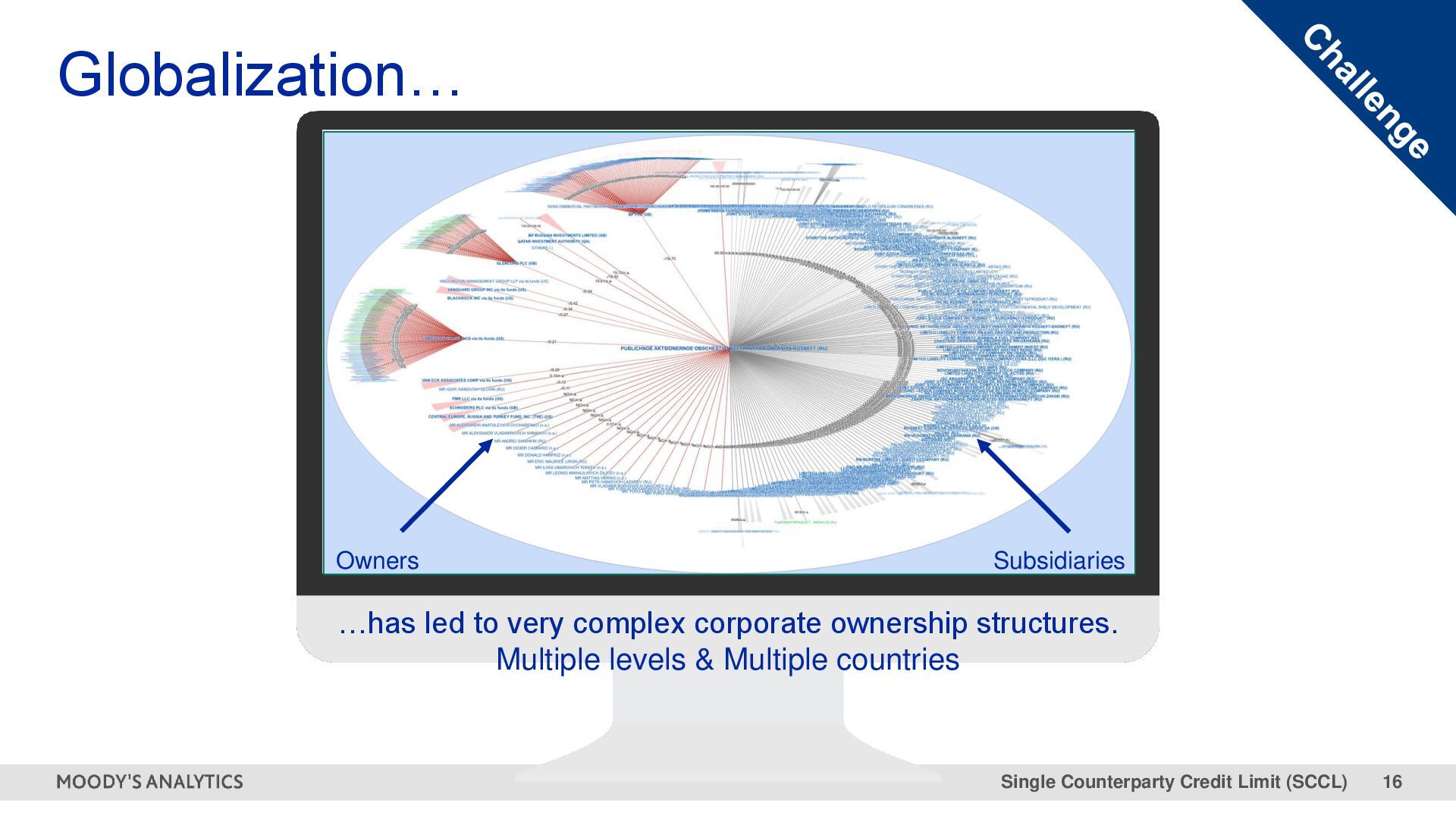
  12. Single Counterparty Credit Limit (SCCL) 16 …has led to very

    complex corporate ownership structures. Multiple levels & Multiple countries Globalization… Owners Subsidiaries
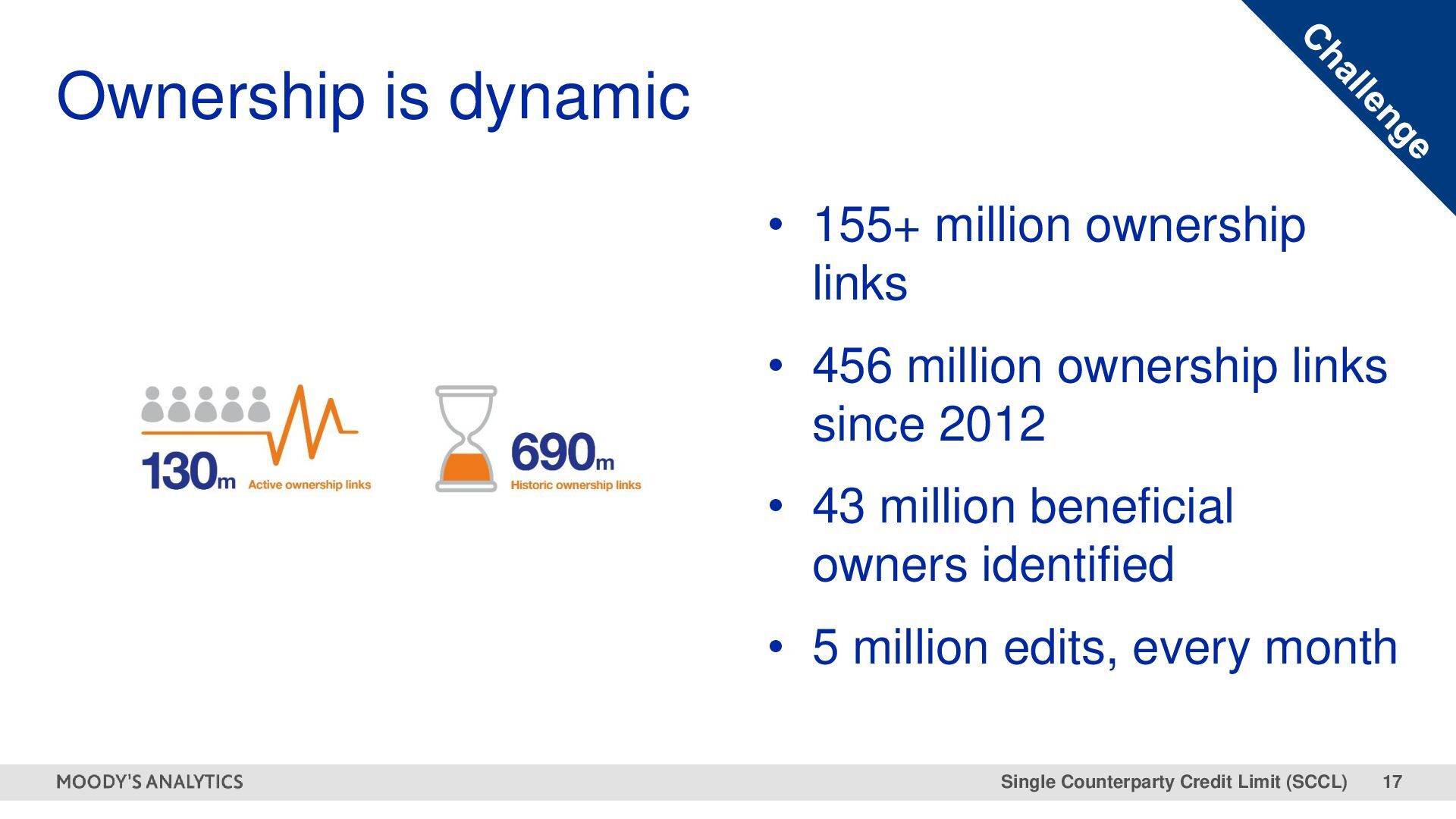
  13. Single Counterparty Credit Limit (SCCL) 17 Ownership is dynamic •

    155+ million ownership links • 456 million ownership links since 2012 • 43 million beneficial owners identified • 5 million edits, every month
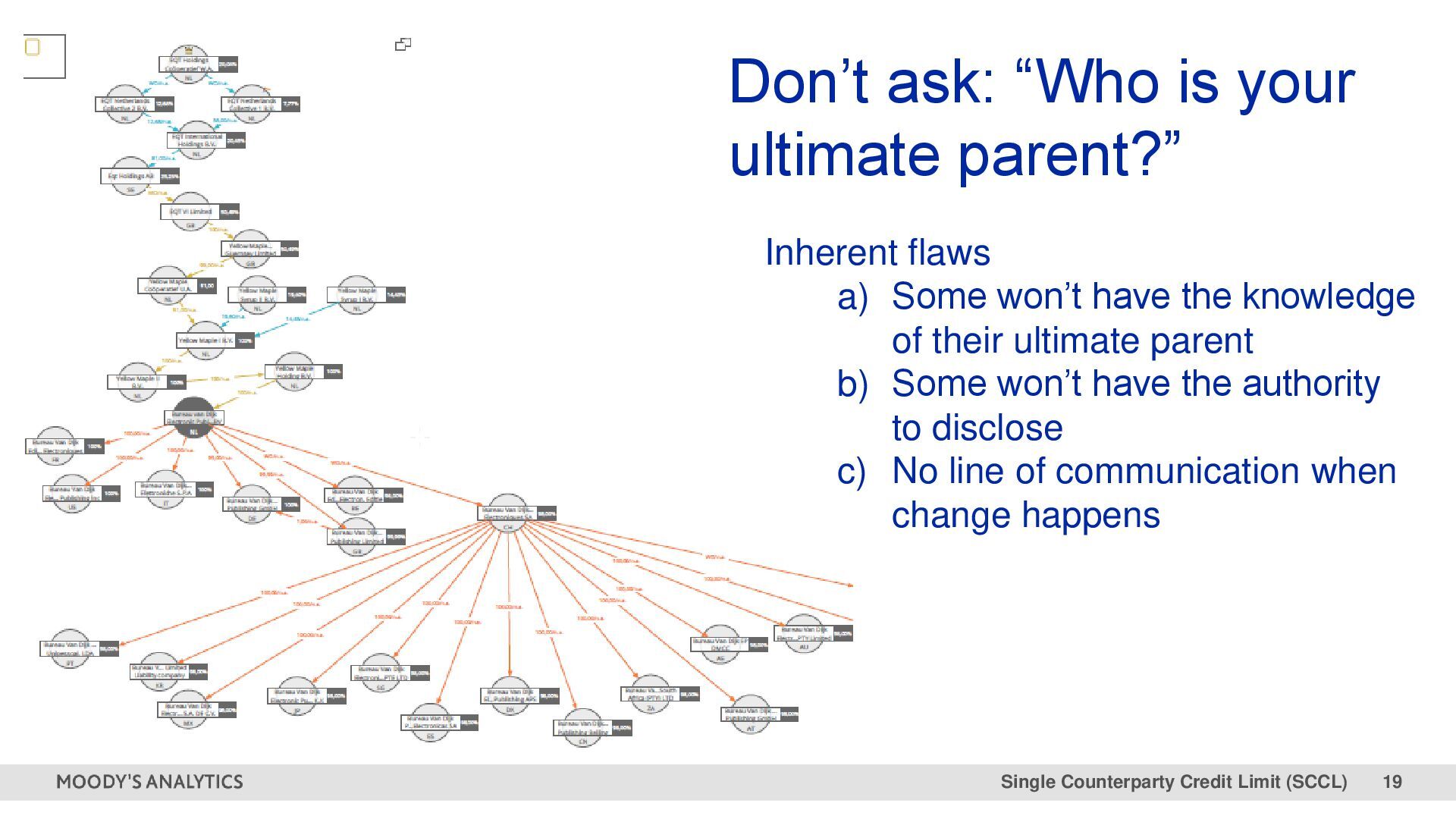
  14. Single Counterparty Credit Limit (SCCL) 19 Don’t ask: “Who is

    your ultimate parent?” Inherent flaws a) Some won’t have the knowledge of their ultimate parent b) Some won’t have the authority to disclose c) No line of communication when change happens
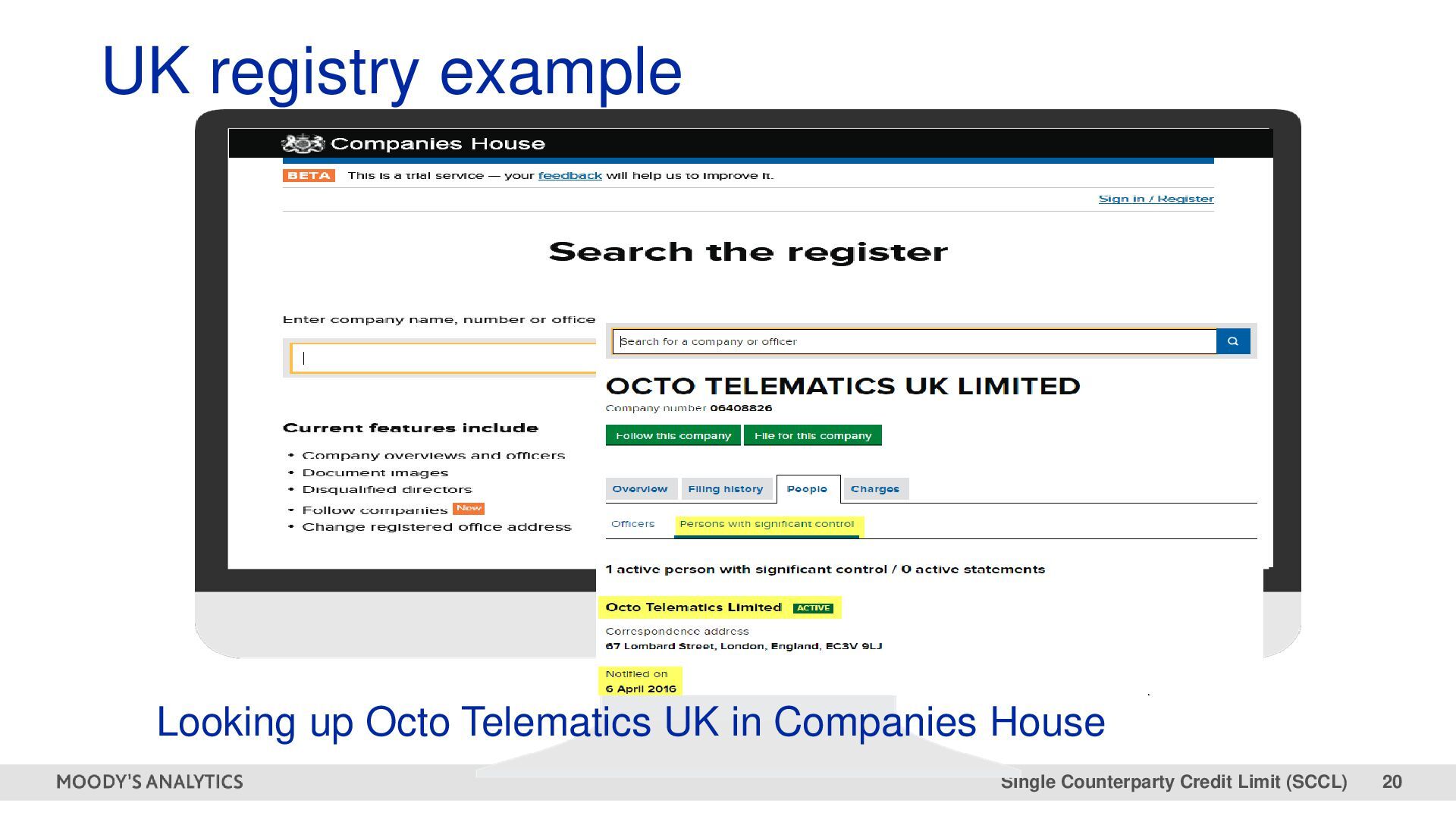
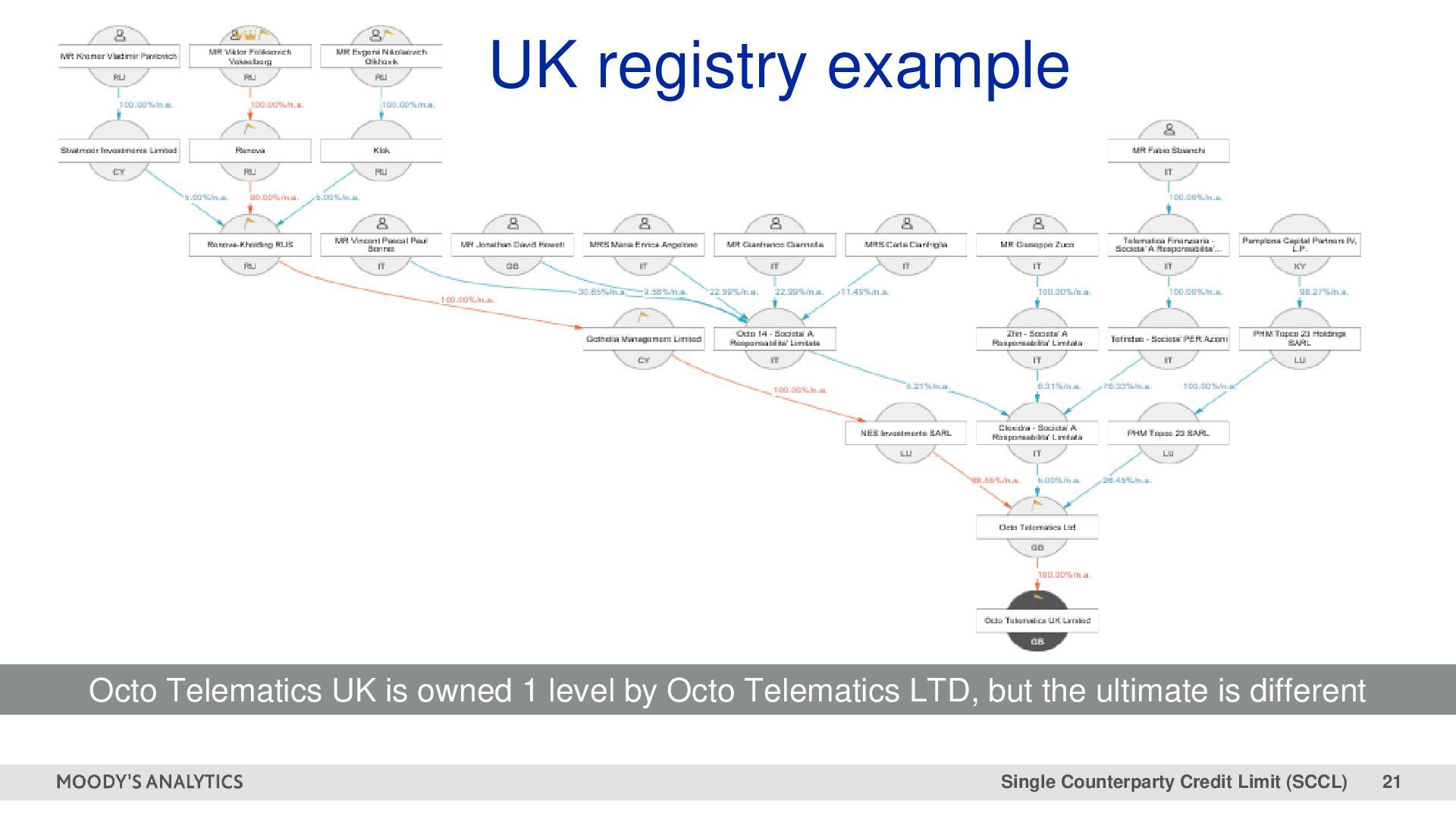
  15. Single Counterparty Credit Limit (SCCL) 21 UK registry example Octo

    Telematics UK is owned 1 level by Octo Telematics LTD, but the ultimate is different
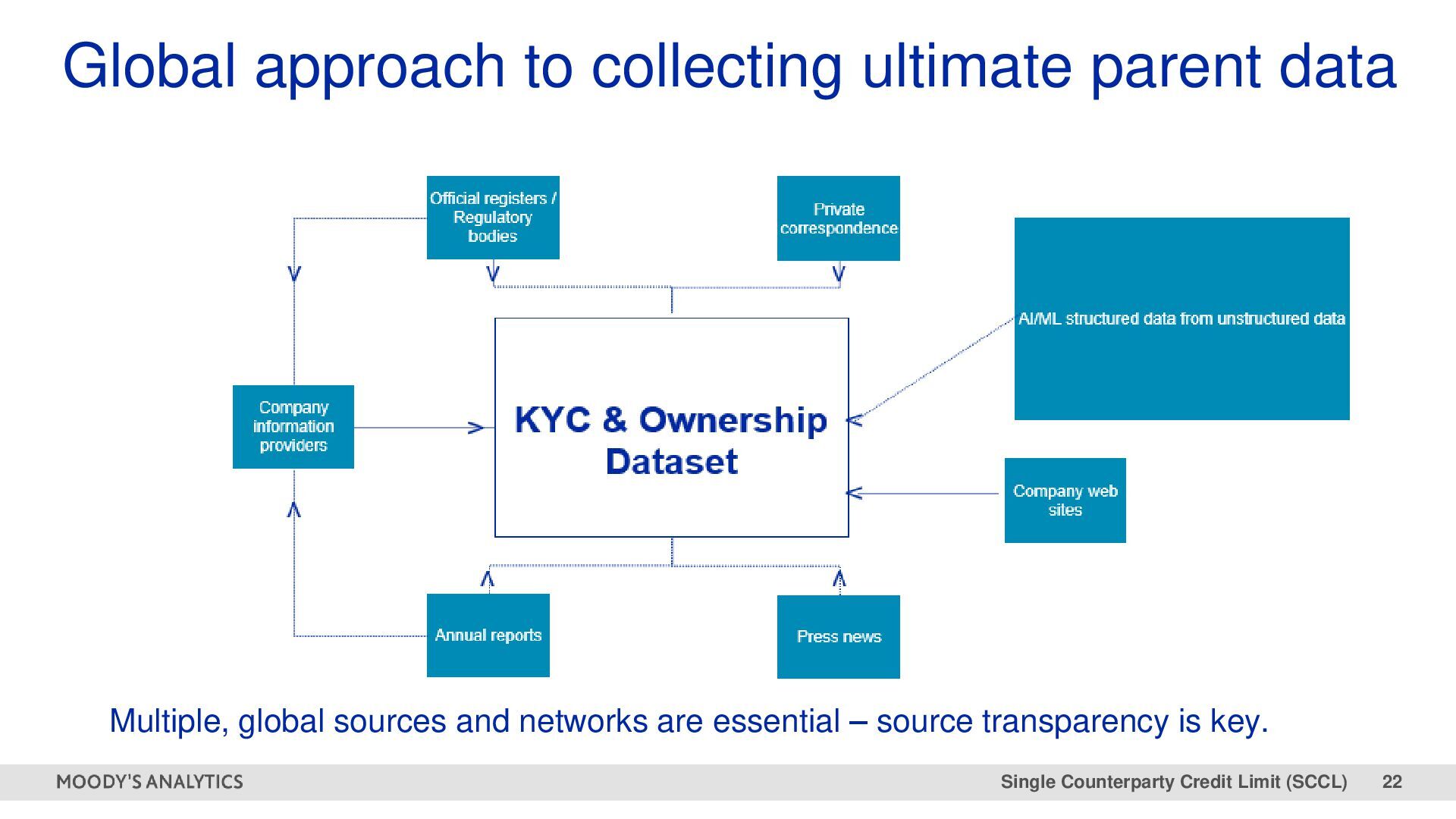
  16. Single Counterparty Credit Limit (SCCL) 22 Global approach to collecting

    ultimate parent data Multiple, global sources and networks are essential – source transparency is key.
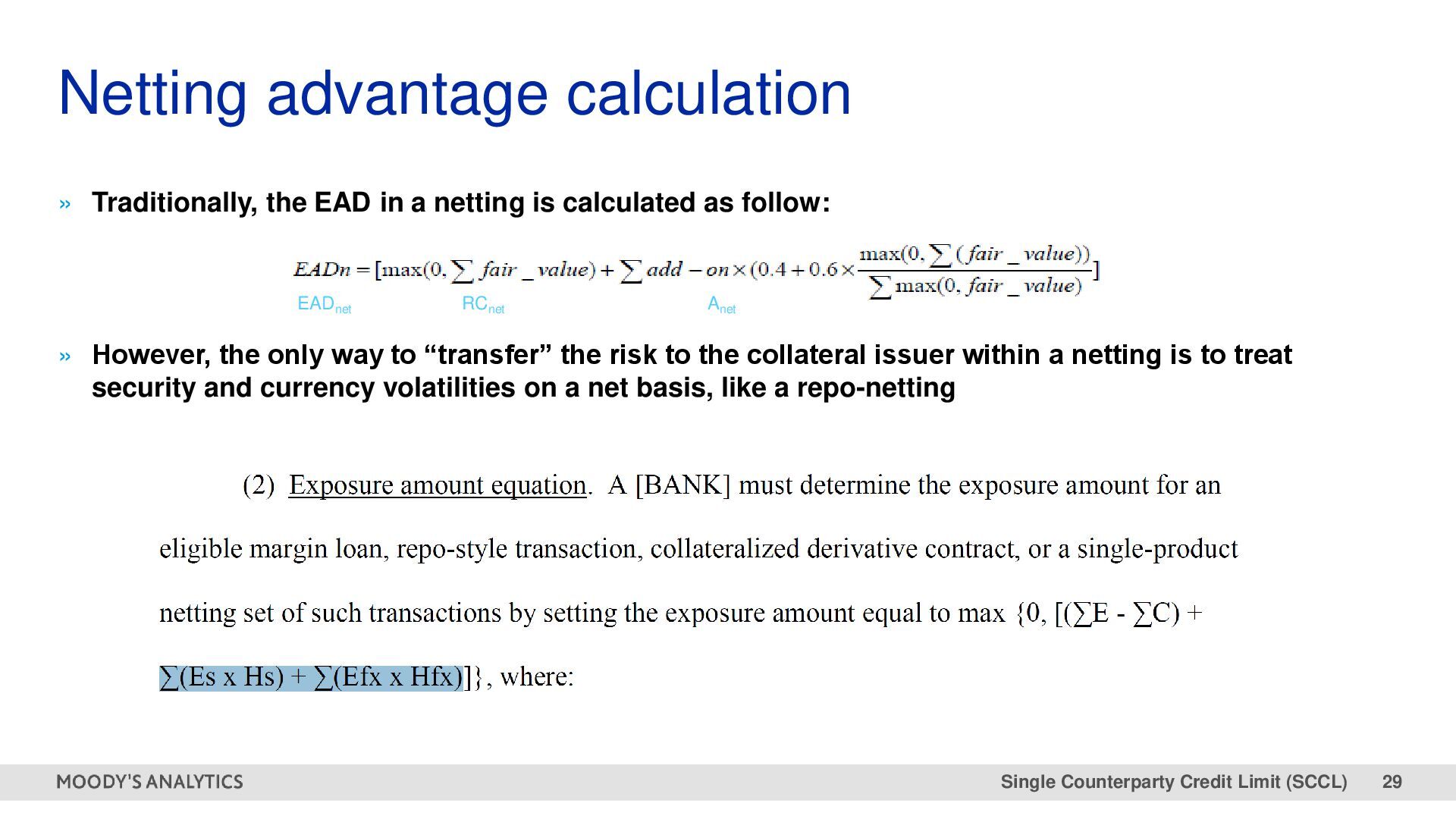
  17. Single Counterparty Credit Limit (SCCL) 29 » Traditionally, the EAD

    in a netting is calculated as follow: » However, the only way to “transfer” the risk to the collateral issuer within a netting is to treat security and currency volatilities on a net basis, like a repo-netting Netting advantage calculation RCnet Anet EADnet
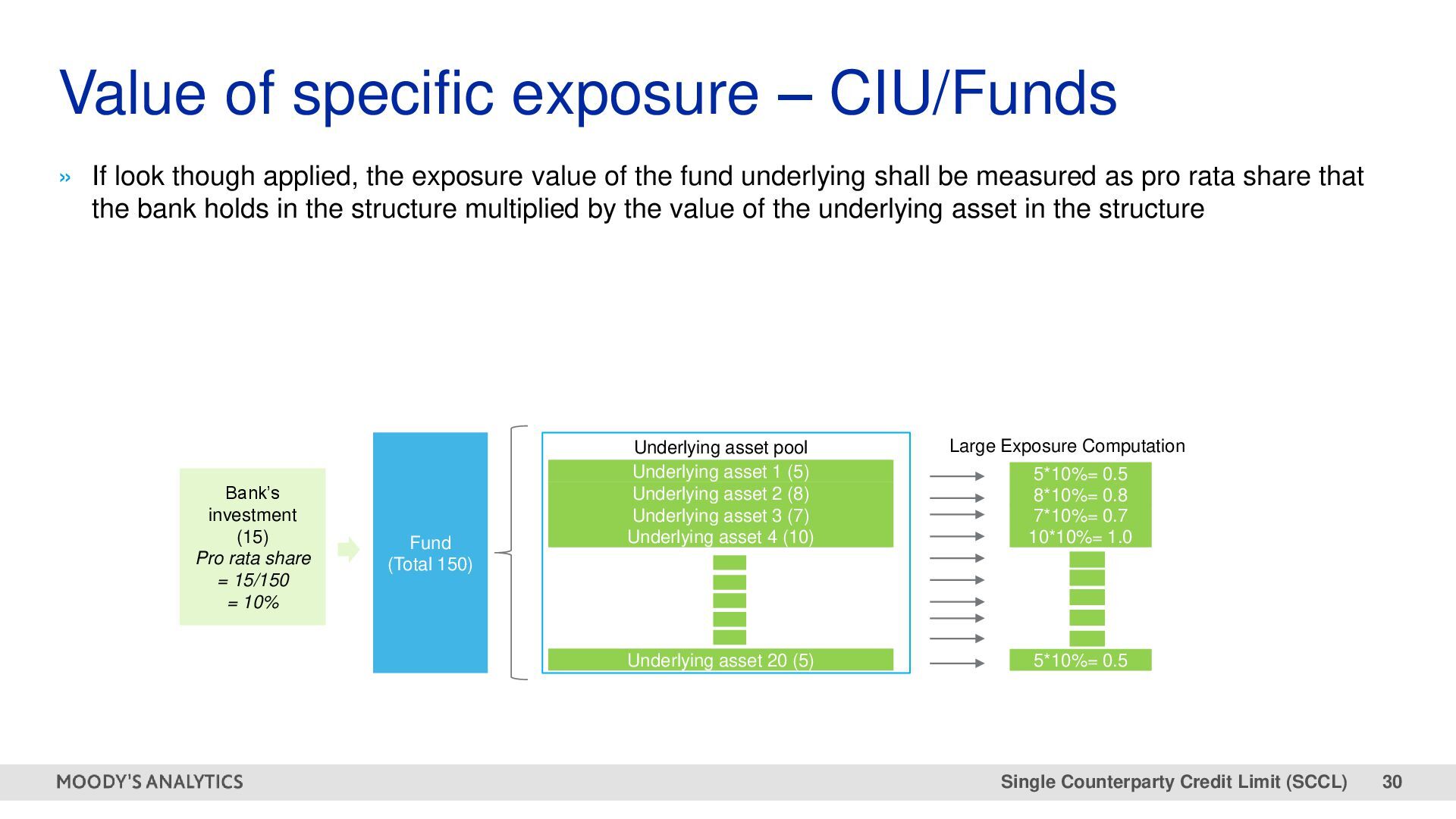
  18. Single Counterparty Credit Limit (SCCL) 30 Value of specific exposure

    – CIU/Funds Fund (Total 150) Bank’s investment (15) Pro rata share = 15/150 = 10% Underlying asset 1 (5) Underlying asset 2 (8) Underlying asset 3 (7) Underlying asset 20 (5) Underlying asset 4 (10) Underlying asset pool 5*10%= 0.5 8*10%= 0.8 7*10%= 0.7 10*10%= 1.0 5*10%= 0.5 Large Exposure Computation » If look though applied, the exposure value of the fund underlying shall be measured as pro rata share that the bank holds in the structure multiplied by the value of the underlying asset in the structure
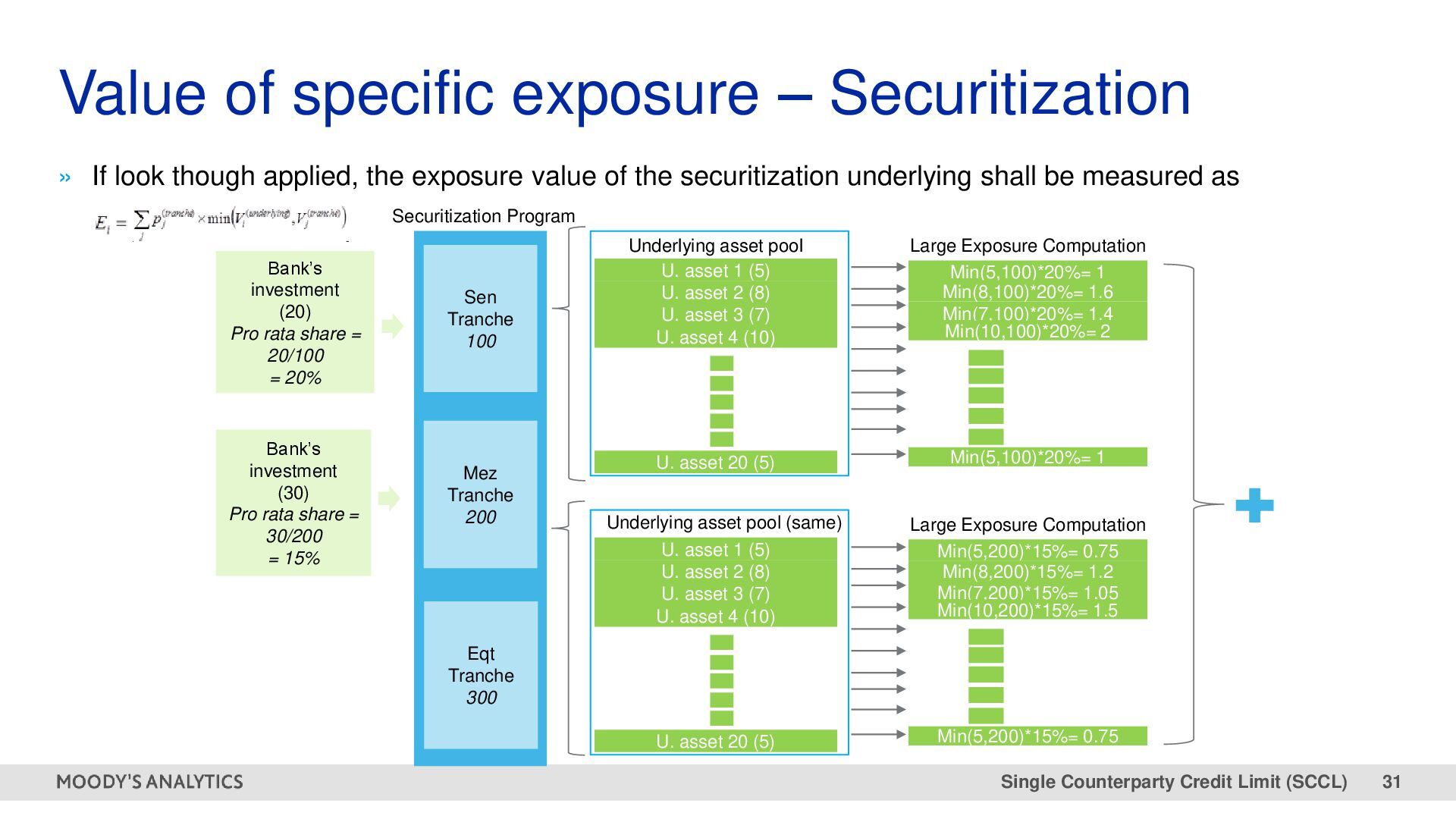
  19. Single Counterparty Credit Limit (SCCL) 31 Value of specific exposure

    – Securitization » If look though applied, the exposure value of the securitization underlying shall be measured as Bank’s investment (20) Pro rata share = 20/100 = 20% U. asset 1 (5) U. asset 2 (8) U. asset 3 (7) U. asset 20 (5) U. asset 4 (10) Underlying asset pool Mez Tranche 200 Sen Tranche 100 Eqt Tranche 300 Securitization Program Bank’s investment (30) Pro rata share = 30/200 = 15% Min(5,100)*20%= 1 Min(7,100)*20%= 1.4 Min(10,100)*20%= 2 Min(5,100)*20%= 1 Large Exposure Computation Min(8,100)*20%= 1.6 U. asset 1 (5) U. asset 2 (8) U. asset 3 (7) U. asset 20 (5) U. asset 4 (10) Underlying asset pool (same) Min(5,200)*15%= 0.75 Min(7,200)*15%= 1.05 Min(10,200)*15%= 1.5 Min(5,200)*15%= 0.75 Large Exposure Computation Min(8,200)*15%= 1.2
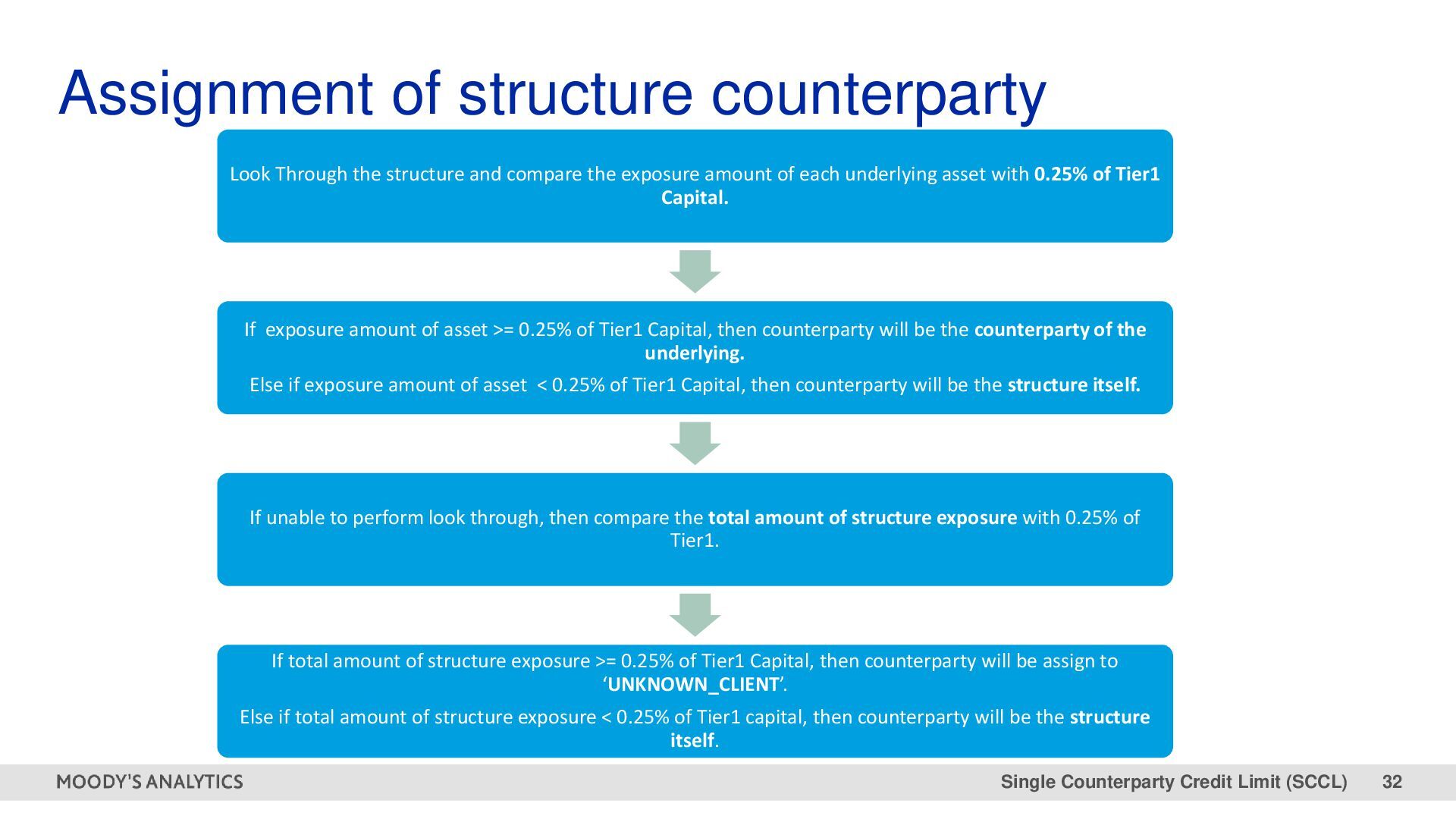
  20. Single Counterparty Credit Limit (SCCL) 32 Assignment of structure counterparty

    Look Through the structure and compare the exposure amount of each underlying asset with 0.25% of Tier1 Capital. If exposure amount of asset >= 0.25% of Tier1 Capital, then counterparty will be the counterparty of the underlying. Else if exposure amount of asset < 0.25% of Tier1 Capital, then counterparty will be the structure itself. If unable to perform look through, then compare the total amount of structure exposure with 0.25% of Tier1. If total amount of structure exposure >= 0.25% of Tier1 Capital, then counterparty will be assign to ‘UNKNOWN_CLIENT’. Else if total amount of structure exposure < 0.25% of Tier1 capital, then counterparty will be the structure itself.
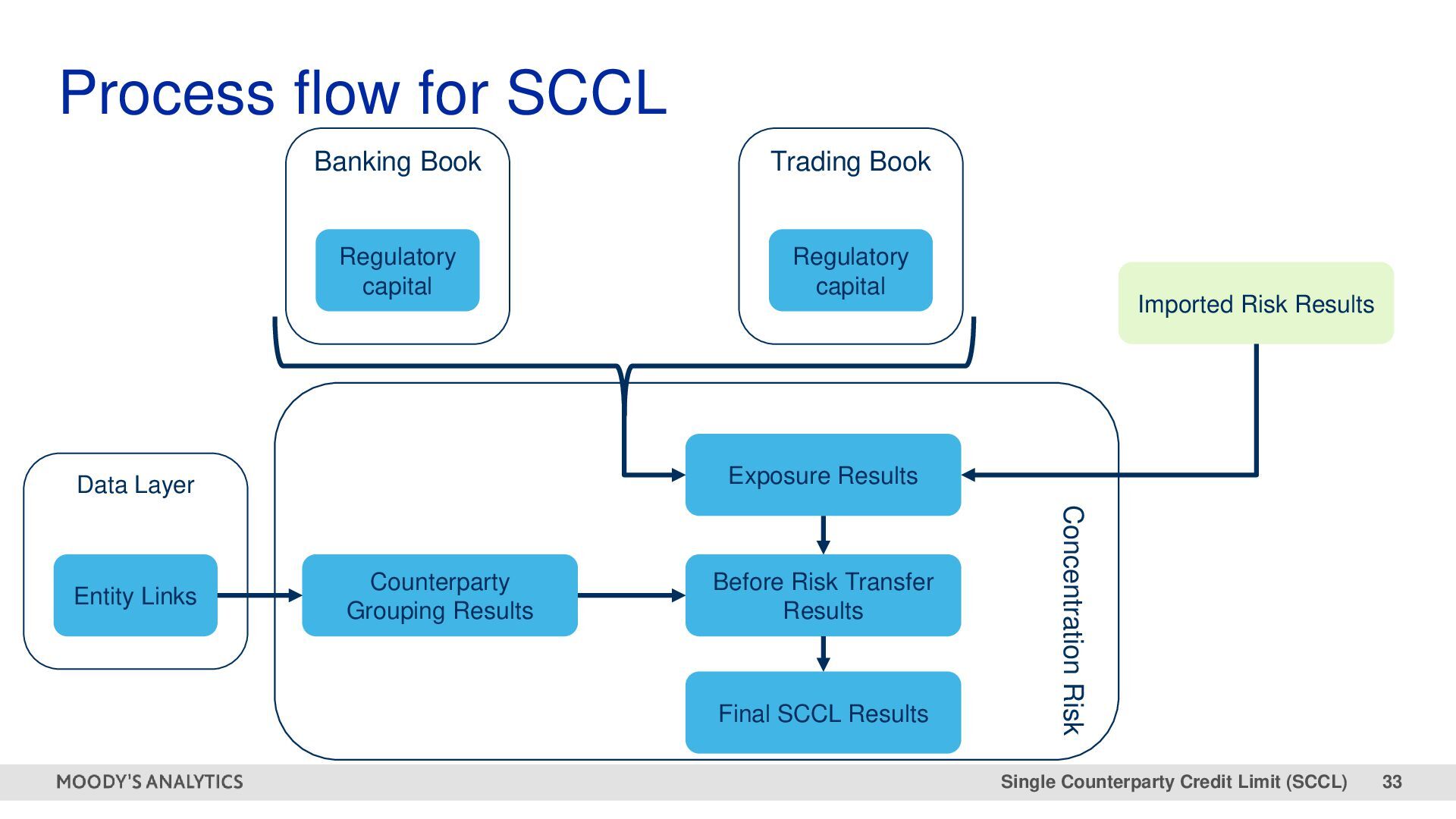
  21. Single Counterparty Credit Limit (SCCL) 33 Process flow for SCCL

    Regulatory capital Banking Book Regulatory capital Trading Book Imported Risk Results Entity Links Data Layer Exposure Results Counterparty Grouping Results Before Risk Transfer Results Final SCCL Results Concentration Risk
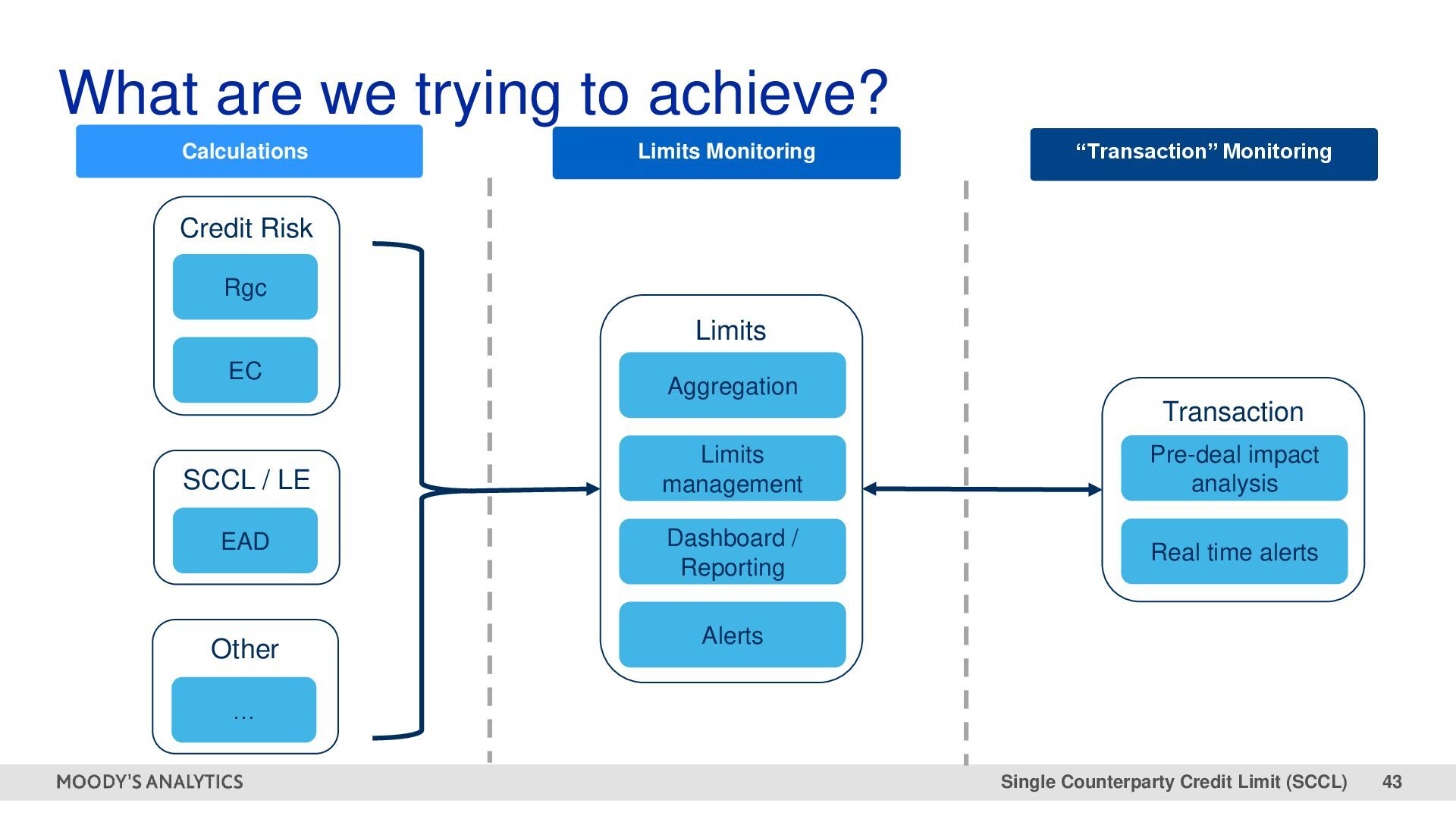
  22. Single Counterparty Credit Limit (SCCL) 43 What are we trying

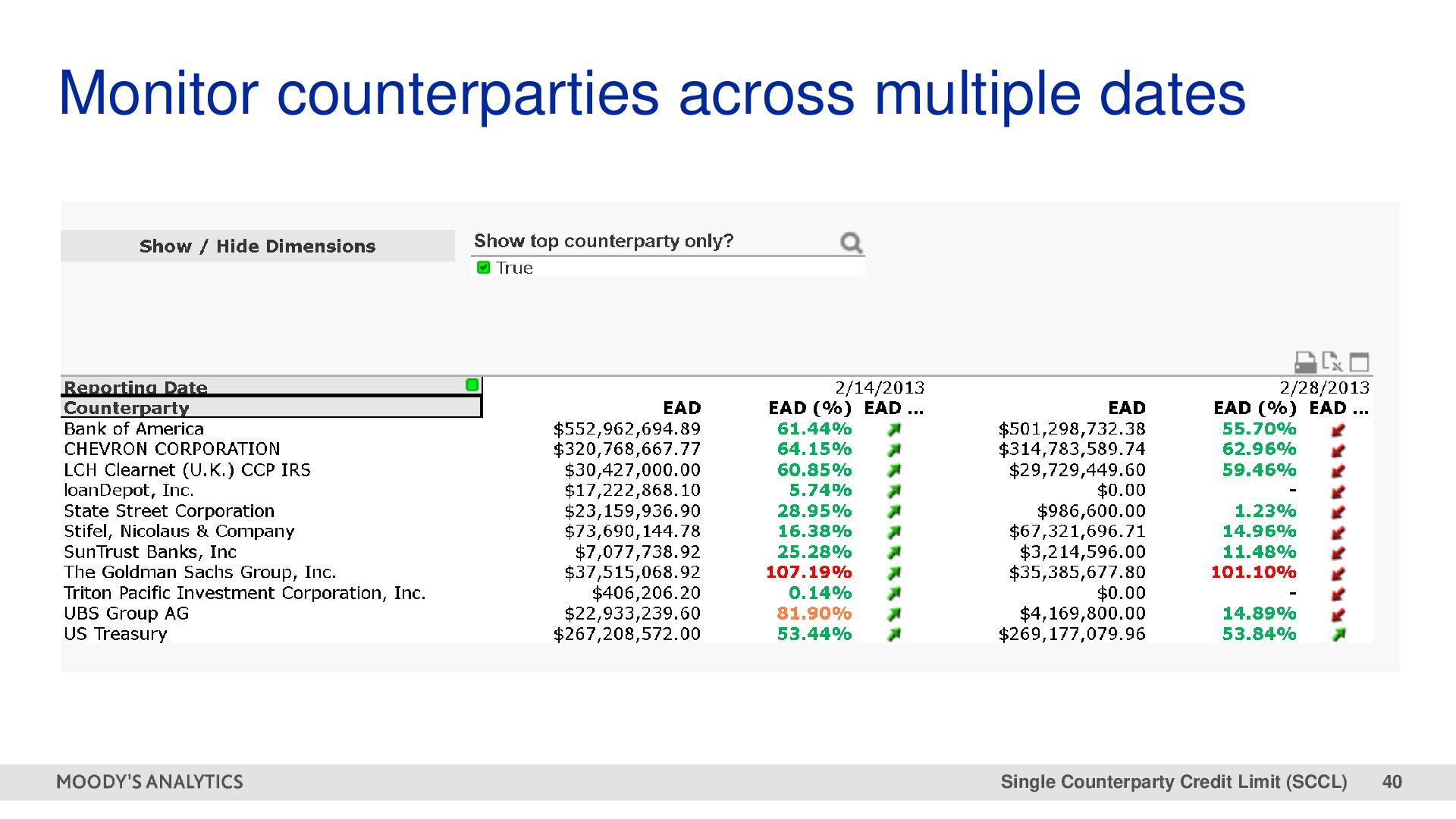
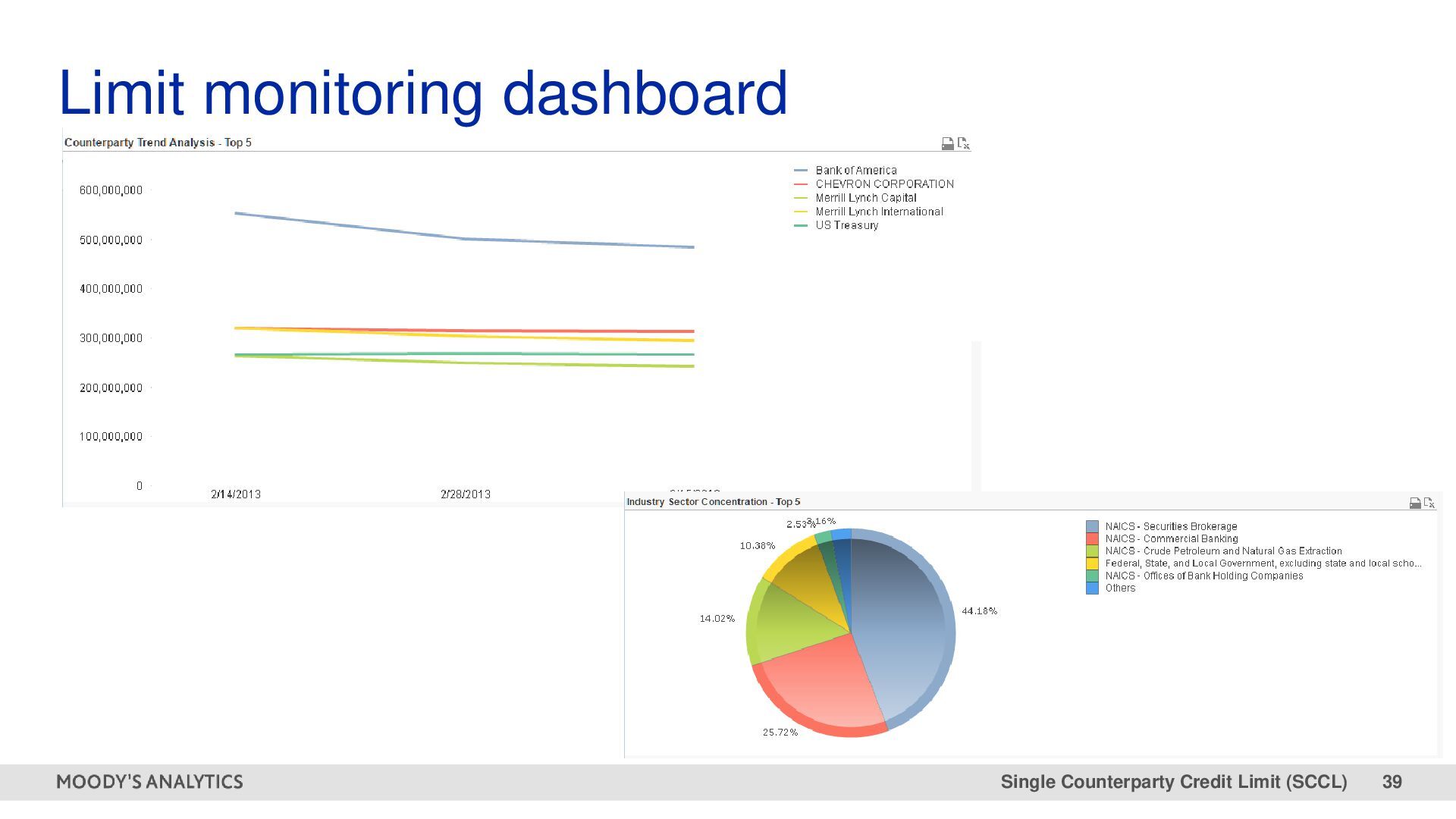
    to achieve? Rgc Credit Risk EAD SCCL / LE EC … Other Aggregation Limits Limits management Dashboard / Reporting Alerts Calculations Limits Monitoring “Transaction” Monitoring Pre-deal impact analysis Transaction Real time alerts
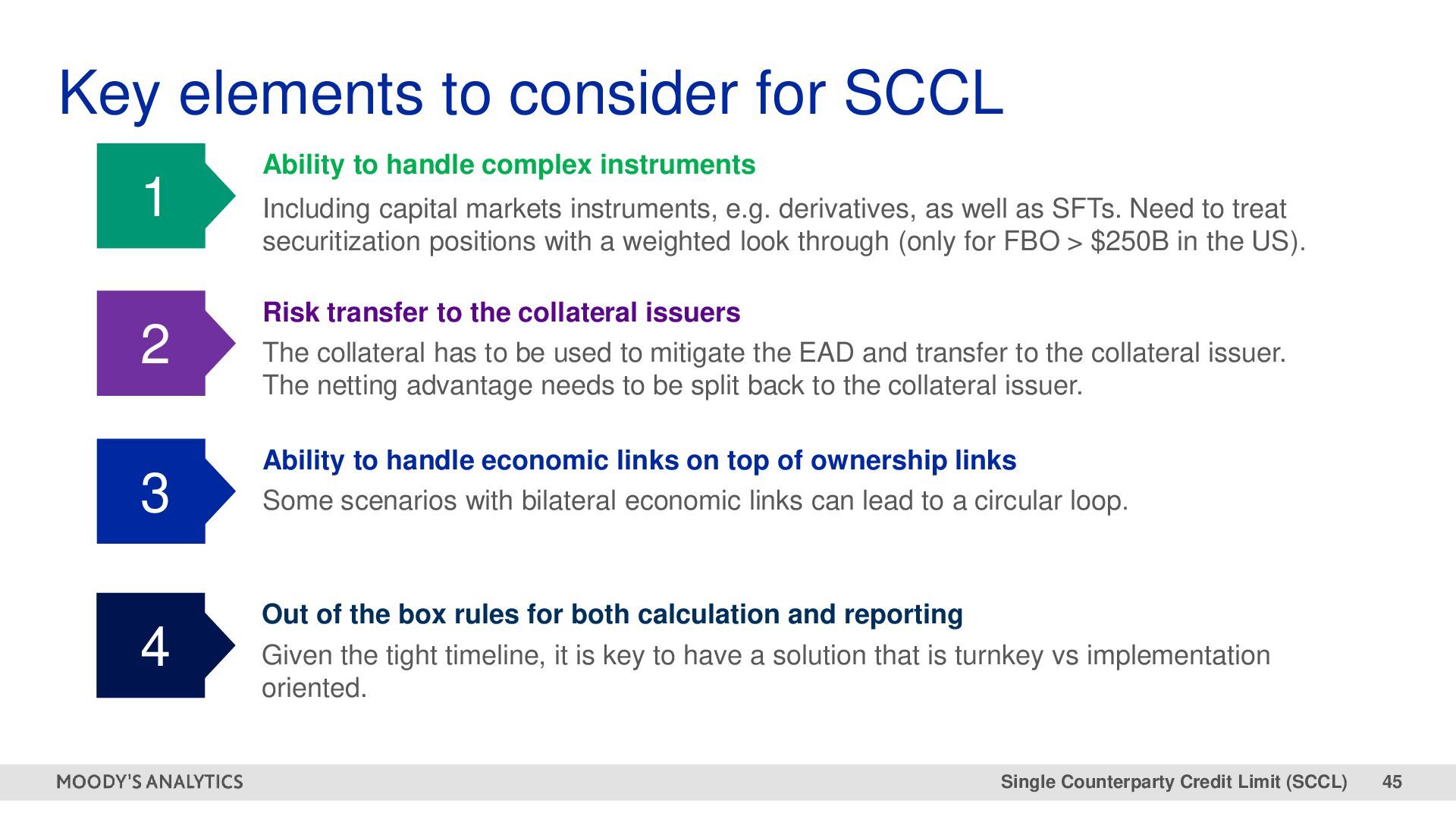
  23. Single Counterparty Credit Limit (SCCL) 45 1 Ability to handle

    complex instruments Including capital markets instruments, e.g. derivatives, as well as SFTs. Need to treat securitization positions with a weighted look through (only for FBO > $250B in the US). 2 Risk transfer to the collateral issuers The collateral has to be used to mitigate the EAD and transfer to the collateral issuer. The netting advantage needs to be split back to the collateral issuer. 3 Ability to handle economic links on top of ownership links Some scenarios with bilateral economic links can lead to a circular loop. Key elements to consider for SCCL 4 Out of the box rules for both calculation and reporting Given the tight timeline, it is key to have a solution that is turnkey vs implementation oriented.
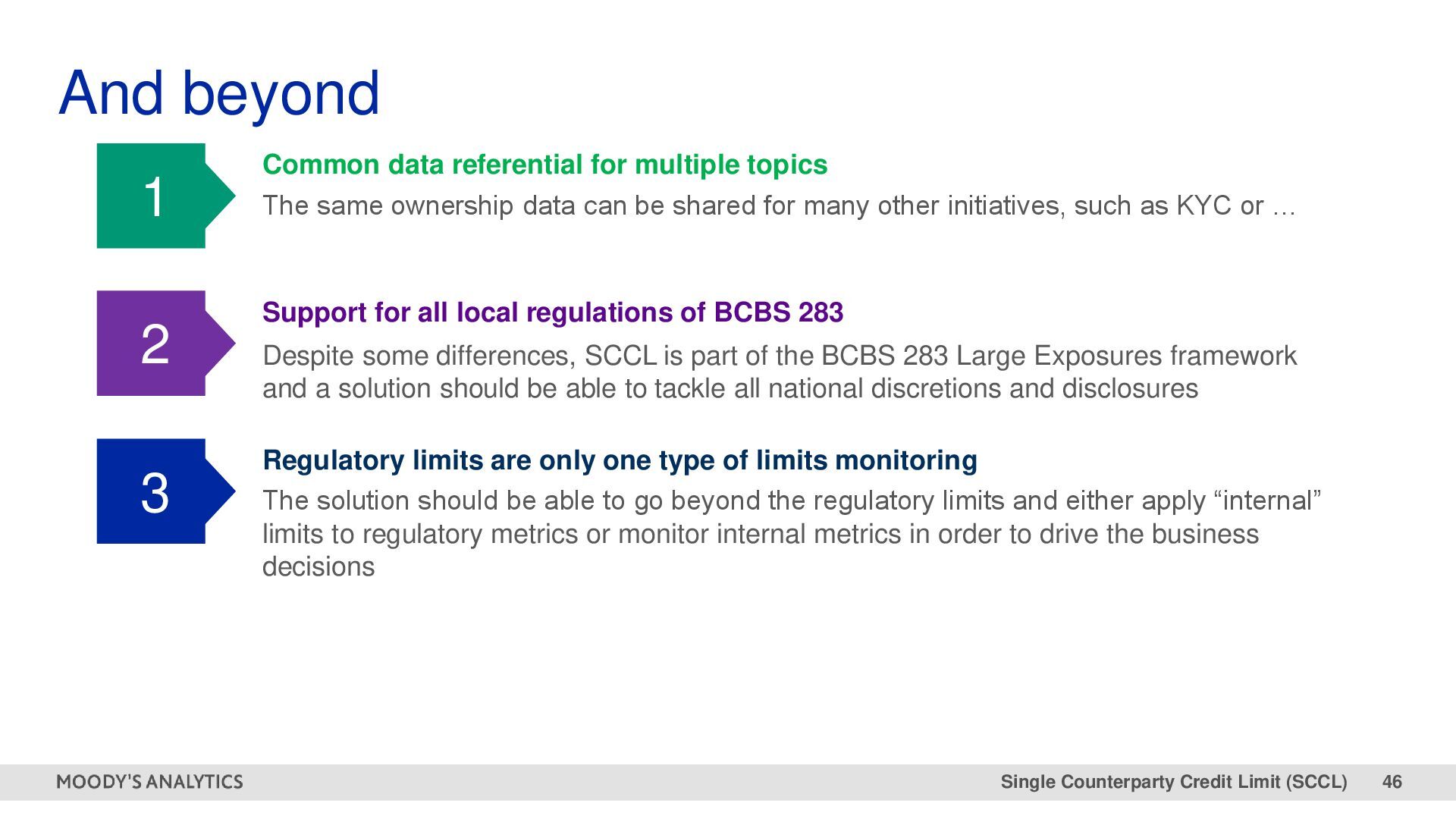
  24. Single Counterparty Credit Limit (SCCL) 46 1 Common data referential

    for multiple topics The same ownership data can be shared for many other initiatives, such as KYC or … 2 Support for all local regulations of BCBS 283 Despite some differences, SCCL is part of the BCBS 283 Large Exposures framework and a solution should be able to tackle all national discretions and disclosures 3 Regulatory limits are only one type of limits monitoring The solution should be able to go beyond the regulatory limits and either apply “internal” limits to regulatory metrics or monitor internal metrics in order to drive the business decisions And beyond
  25. Single Counterparty Credit Limit (SCCL) 48 © 2018 Moody’s Corporation,

    Moody’s Investors Service, Inc., Moody’s Analytics, Inc. and/or their licensors and affiliates (collectively, “MOODY’S”). All rights reserved. CREDIT RATINGS ISSUED BY MOODY'S INVESTORS SERVICE, INC. AND ITS RATINGS AFFILIATES (“MIS”) ARE MOODY’S CURRENT OPINIONS OF THE RELATIVE FUTURE CREDIT RISK OF ENTITIES, CREDIT COMMITMENTS, OR DEBT OR DEBT-LIKE SECURITIES, AND MOODY’S PUBLICATIONS MAY INCLUDE MOODY’S CURRENT OPINIONS OF THE RELATIVE FUTURE CREDIT RISK OF ENTITIES, CREDIT COMMITMENTS, OR DEBT OR DEBT-LIKE SECURITIES. MOODY’S DEFINES CREDIT RISK AS THE RISK THAT AN ENTITY MAY NOT MEET ITS CONTRACTUAL, FINANCIAL OBLIGATIONS AS THEY COME DUE AND ANY ESTIMATED FINANCIAL LOSS IN THE EVENT OF DEFAULT. CREDIT RATINGS DO NOT ADDRESS ANY OTHER RISK, INCLUDING BUT NOT LIMITED TO: LIQUIDITY RISK, MARKET VALUE RISK, OR PRICE VOLATILITY. CREDIT RATINGS AND MOODY’S OPINIONS INCLUDED IN MOODY’S PUBLICATIONS ARE NOT STATEMENTS OF CURRENT OR HISTORICAL FACT. MOODY’S PUBLICATIONS MAY ALSO INCLUDE QUANTITATIVE MODEL-BASED ESTIMATES OF CREDIT RISK AND RELATED OPINIONS OR COMMENTARY PUBLISHED BY MOODY’S ANALYTICS, INC. CREDIT RATINGS AND MOODY’S PUBLICATIONS DO NOT CONSTITUTE OR PROVIDE INVESTMENT OR FINANCIAL ADVICE, AND CREDIT RATINGS AND MOODY’S PUBLICATIONS ARE NOT AND DO NOT PROVIDE RECOMMENDATIONS TO PURCHASE, SELL, OR HOLD PARTICULAR SECURITIES. NEITHER CREDIT RATINGS NOR MOODY’S PUBLICATIONS COMMENT ON THE SUITABILITY OF AN INVESTMENT FOR ANY PARTICULAR INVESTOR. MOODY’S ISSUES ITS CREDIT RATINGS AND PUBLISHES MOODY’S PUBLICATIONS WITH THE EXPECTATION AND UNDERSTANDING THAT EACH INVESTOR WILL, WITH DUE CARE, MAKE ITS OWN STUDY AND EVALUATION OF EACH SECURITY THAT IS UNDER CONSIDERATION FOR PURCHASE, HOLDING, OR SALE. MOODY’S CREDIT RATINGS AND MOODY’S PUBLICATIONS ARE NOT INTENDED FOR USE BY RETAIL INVESTORS AND IT WOULD BE RECKLESS AND INAPPROPRIATE FOR RETAIL INVESTORS TO USE MOODY’S CREDIT RATINGS OR MOODY’S PUBLICATIONS WHEN MAKING AN INVESTMENT DECISION. IF IN DOUBT YOU SHOULD CONTACT YOUR FINANCIAL OR OTHER PROFESSIONAL ADVISER. ALL INFORMATION CONTAINED HEREIN IS PROTECTED BY LAW, INCLUDING BUT NOT LIMITED TO, COPYRIGHT LAW, AND NONE OF SUCH INFORMATION MAY BE COPIED OR OTHERWISE REPRODUCED, REPACKAGED, FURTHER TRANSMITTED, TRANSFERRED, DISSEMINATED, REDISTRIBUTED OR RESOLD, OR STORED FOR SUBSEQUENT USE FOR ANY SUCH PURPOSE, IN WHOLE OR IN PART, IN ANY FORM OR MANNER OR BY ANY MEANS WHATSOEVER, BY ANY PERSON WITHOUT MOODY’S PRIOR WRITTEN CONSENT. All information contained herein is obtained by MOODY’S from sources believed by it to be accurate and reliable. Because of the possibility of human or mechanical error as well as other factors, however, all information contained herein is provided “AS IS” without warranty of any kind. MOODY'S adopts all necessary measures so that the information it uses in assigning a credit rating is of sufficient quality and from sources MOODY'S considers to be reliable including, when appropriate, independent third-party sources. However, MOODY’S is not an auditor and cannot in every instance independently verify or validate information received in the rating process or in preparing the Moody’s publications. To the extent permitted by law, MOODY’S and its directors, officers, employees, agents, representatives, licensors and suppliers disclaim liability to any person or entity for any indirect, special, consequential, or incidental losses or damages whatsoever arising from or in connection with the information contained herein or the use of or inability to use any such information, even if MOODY’S or any of its directors, officers, employees, agents, representatives, licensors or suppliers is advised in advance of the possibility of such losses or damages, including but not limited to: (a) any loss of present or prospective profits or (b) any loss or damage arising where the relevant financial instrument is not the subject of a particular credit rating assigned by MOODY’S. To the extent permitted by law, MOODY’S and its directors, officers, employees, agents, representatives, licensors and suppliers disclaim liability for any direct or compensatory losses or damages caused to any person or entity, including but not limited to by any negligence (but excluding fraud, willful misconduct or any other type of liability that, for the avoidance of doubt, by law cannot be excluded) on the part of, or any contingency within or beyond the control of, MOODY’S or any of its directors, officers, employees, agents, representatives, licensors or suppliers, arising from or in connection with the information contained herein or the use of or inability to use any such information. NO WARRANTY, EXPRESS OR IMPLIED, AS TO THE ACCURACY, TIMELINESS, COMPLETENESS, MERCHANTABILITY OR FITNESS FOR ANY PARTICULAR PURPOSE OF ANY SUCH RATING OR OTHER OPINION OR INFORMATION IS GIVEN OR MADE BY MOODY’S IN ANY FORM OR MANNER WHATSOEVER. Moody’s Investors Service, Inc., a wholly-owned credit rating agency subsidiary of Moody’s Corporation (“MCO”), hereby discloses that most issuers of debt securities (including corporate and municipal bonds, debentures, notes and commercial paper) and preferred stock rated by Moody’s Investors Service, Inc. have, prior to assignment of any rating, agreed to pay to Moody’s Investors Service, Inc. for appraisal and rating services rendered by it fees ranging from $1,500 to approximately $2,500,000. MCO and MIS also maintain policies and procedures to address the independence of MIS’s ratings and rating processes. Information regarding certain affiliations that may exist between directors of MCO and rated entities, and between entities who hold ratings from MIS and have also publicly reported to the SEC an ownership interest in MCO of more than 5%, is posted annually at www.moodys.com under the heading “Investor Relations — Corporate Governance — Director and Shareholder Affiliation Policy.” Additional terms for Australia only: Any publication into Australia of this document is pursuant to the Australian Financial Services License of MOODY’S affiliate, Moody’s Investors Service Pty Limited ABN 61 003 399 657AFSL 336969 and/or Moody’s Analytics Australia Pty Ltd ABN 94 105 136 972 AFSL 383569 (as applicable). This document is intended to be provided only to “wholesale clients” within the meaning of section 761G of the Corporations Act 2001. By continuing to access this document from within Australia, you represent to MOODY’S that you are, or are accessing the document as a representative of, a “wholesale client” and that neither you nor the entity you represent will directly or indirectly disseminate this document or its contents to “retail clients” within the meaning of section 761G of the Corporations Act 2001. MOODY’S credit rating is an opinion as to the creditworthiness of a debt obligation of the issuer, not on the equity securities of the issuer or any form of security that is available to retail investors. It would be reckless and inappropriate for retail investors to use MOODY’S credit ratings or publications when making an investment decision. If in doubt you should contact your financial or other professional adviser. Additional terms for Japan only: Moody's Japan K.K. (“MJKK”) is a wholly-owned credit rating agency subsidiary of Moody's Group Japan G.K., which is wholly-owned by Moody’s Overseas Holdings Inc., a wholly-owned subsidiary of MCO. Moody’s SF Japan K.K. (“MSFJ”) is a wholly-owned credit rating agency subsidiary of MJKK. MSFJ is not a Nationally Recognized Statistical Rating Organization (“NRSRO”). Therefore, credit ratings assigned by MSFJ are Non-NRSRO Credit Ratings. Non-NRSRO Credit Ratings are assigned by an entity that is not a NRSRO and, consequently, the rated obligation will not qualify for certain types of treatment under U.S. laws. MJKK and MSFJ are credit rating agencies registered with the Japan Financial Services Agency and their registration numbers are FSA Commissioner (Ratings) No. 2 and 3 respectively. MJKK or MSFJ (as applicable) hereby disclose that most issuers of debt securities (including corporate and municipal bonds, debentures, notes and commercial paper) and preferred stock rated by MJKK or MSFJ (as applicable) have, prior to assignment of any rating, agreed to pay to MJKK or MSFJ (as applicable) for appraisal and rating services rendered by it fees ranging from JPY200,000 to approximately JPY350,000,000. MJKK and MSFJ also maintain policies and procedures to address Japanese regulatory requirements.