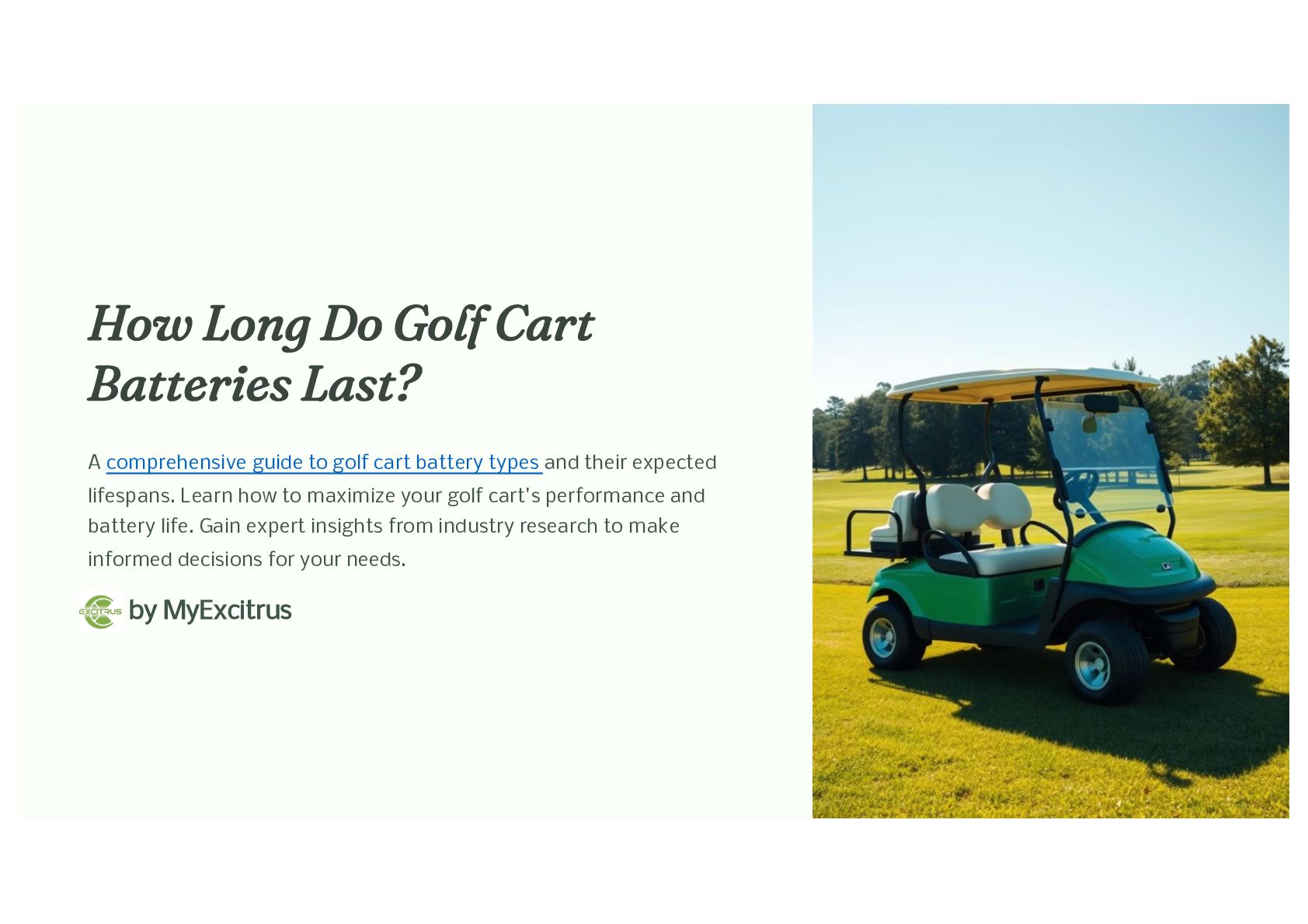
Wondering how long golf cart batteries last? Learn about their average lifespan, factors affecting durability, and expert tips to extend battery life. Plus, FAQs answered!
to golf cart battery types and their expected lifespans. Learn how to maximize your golf cart's performance and battery life. Gain expert insights from industry research to make informed decisions for your needs. by MyExcitrus
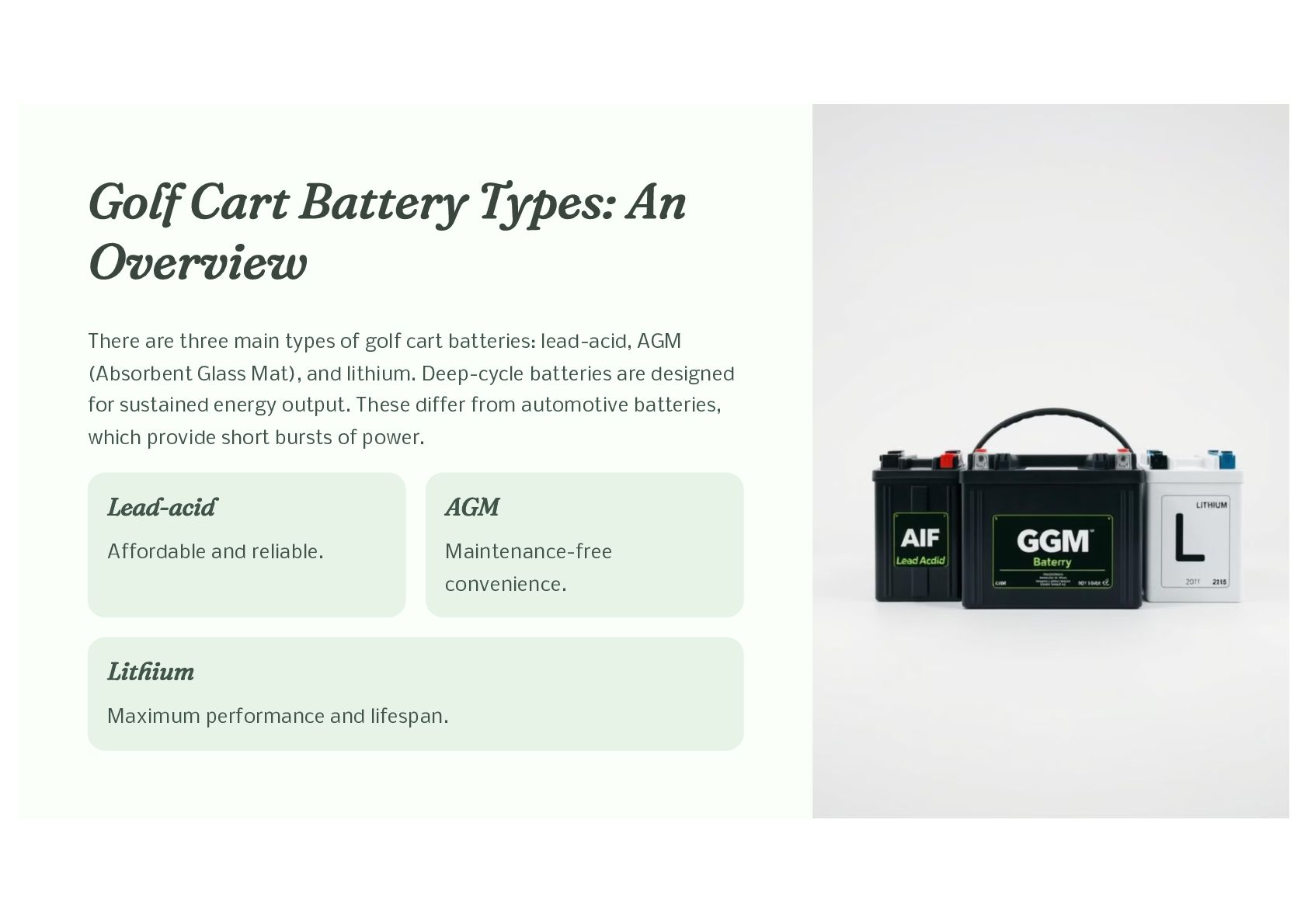
types of golf cart batteries: lead-acid, AGM (Absorbent Glass Mat), and lithium. Deep-cycle batteries are designed for sustained energy output. These differ from automotive batteries, which provide short bursts of power. Lead-acid Affordable and reliable. AGM Maintenance-free convenience. Lithium Maximum performance and lifespan.
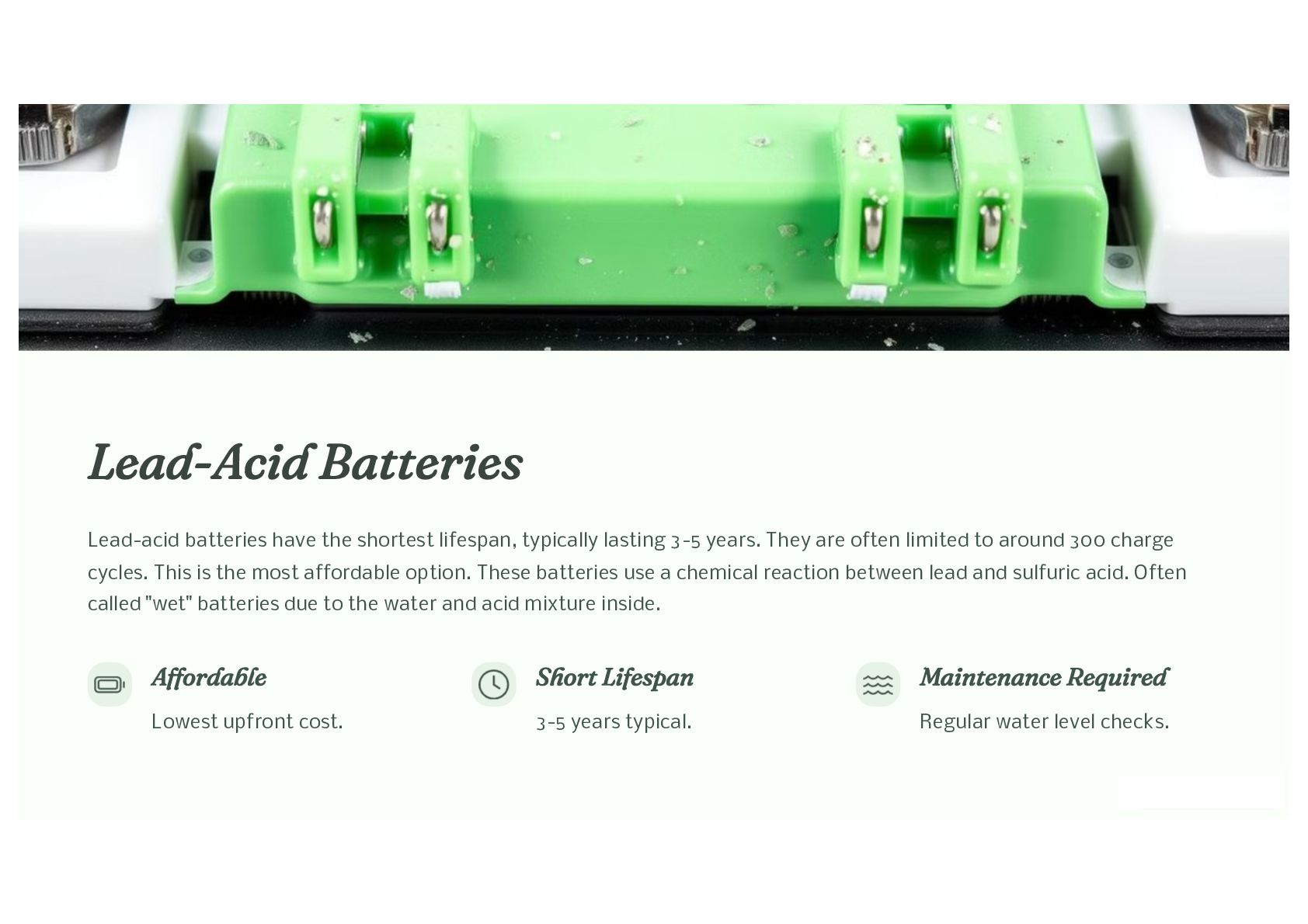
3-5 years. They are often limited to around 300 charge cycles. This is the most affordable option. These batteries use a chemical reaction between lead and sulfuric acid. Often called "wet" batteries due to the water and acid mixture inside. Affordable Lowest upfront cost. Short Lifespan 3-5 years typical. Maintenance Required Regular water level checks.
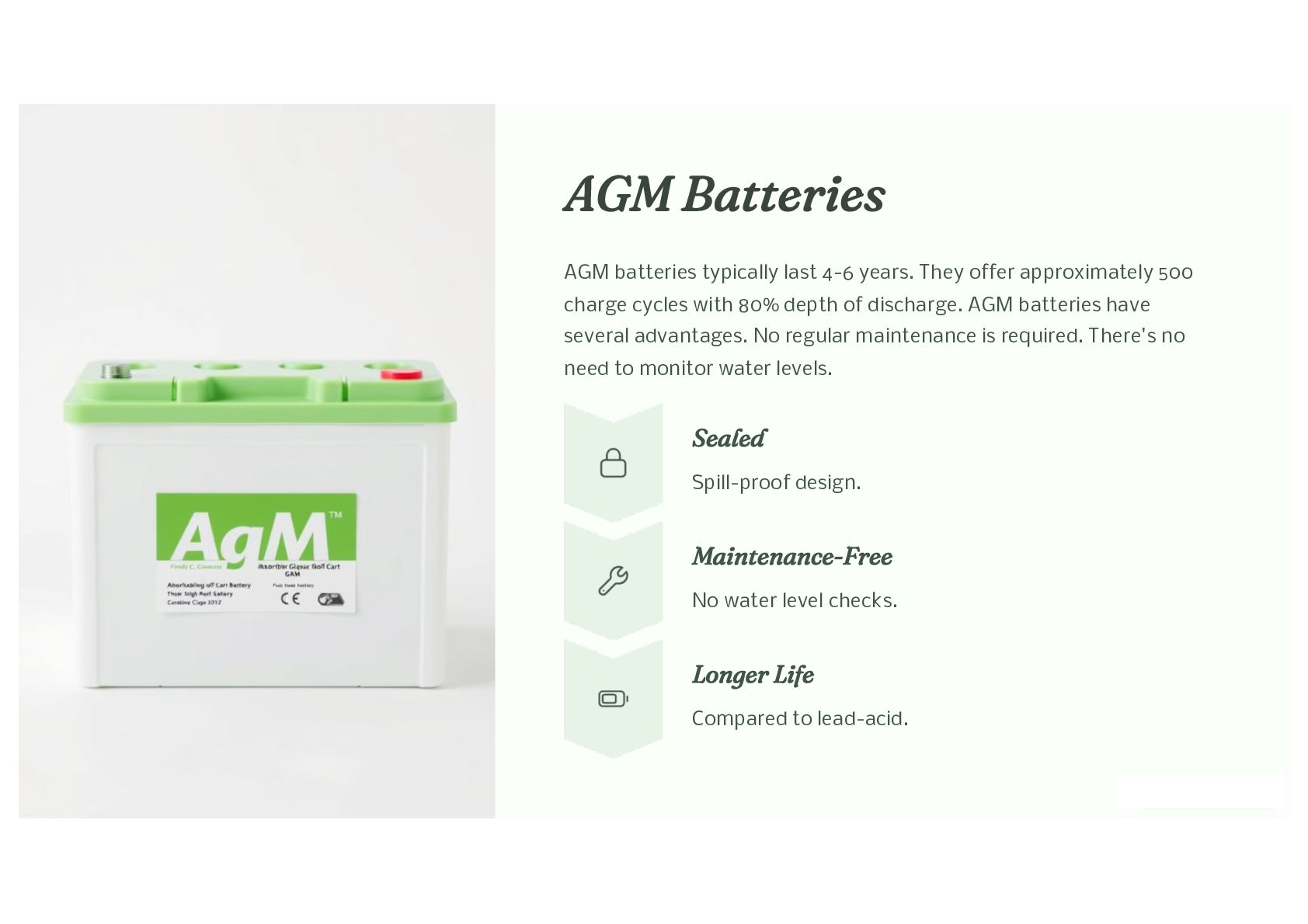
approximately 500 charge cycles with 80% depth of discharge. AGM batteries have several advantages. No regular maintenance is required. There's no need to monitor water levels. Sealed Spill-proof design. Maintenance-Free No water level checks. Longer Life Compared to lead-acid.
10 years. This is significantly longer than traditional batteries. They provide more power and a higher energy capacity. Lithium batteries also offer improved climbing ability, a longer range, and faster charging times. Longer Life Up to 10 years of use. More Power Improved performance. Faster Charging Reduced downtime.
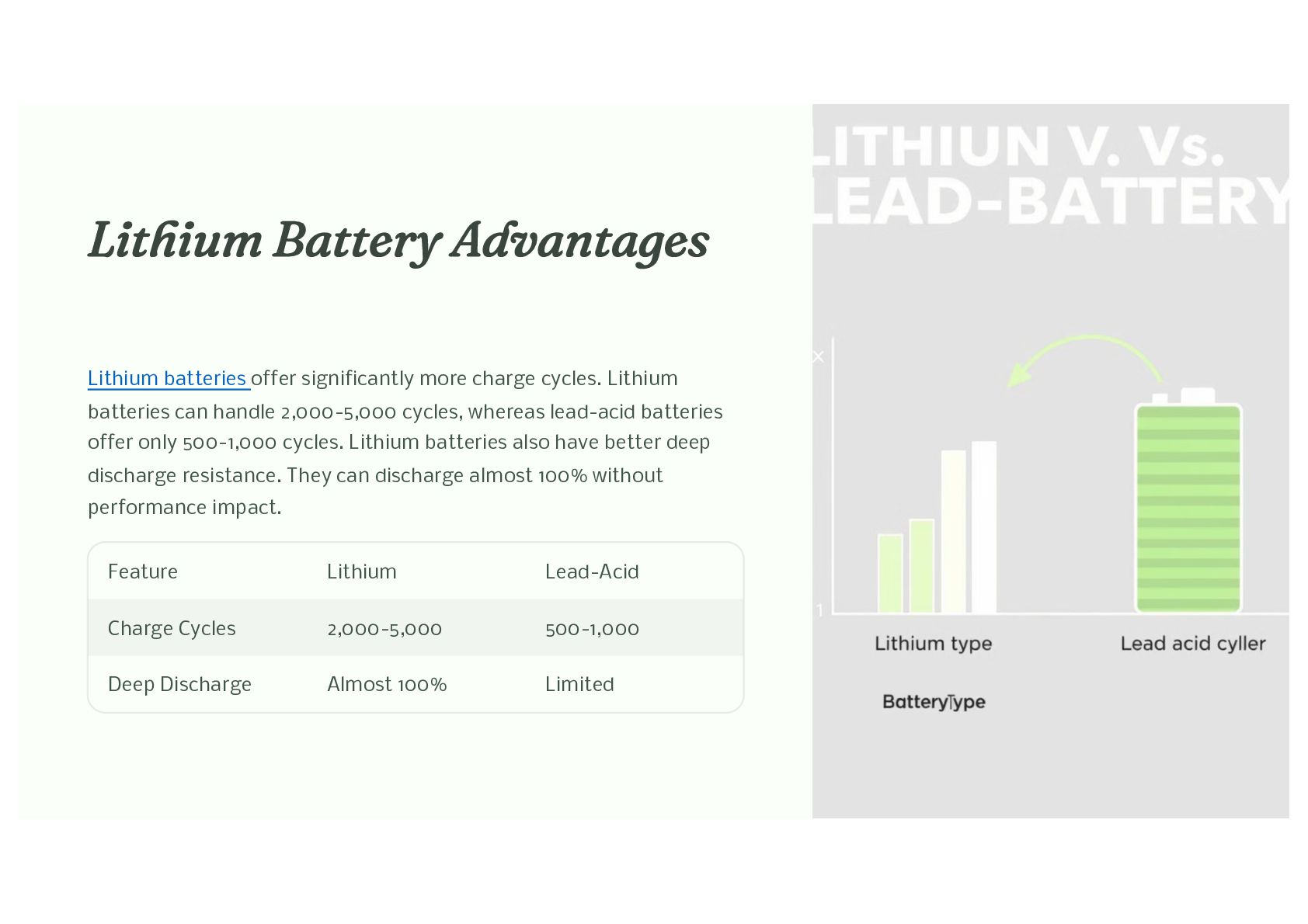
Lithium batteries can handle 2,000-5,000 cycles, whereas lead-acid batteries offer only 500-1,000 cycles. Lithium batteries also have better deep discharge resistance. They can discharge almost 100% without performance impact. Feature Lithium Lead-Acid Charge Cycles 2,000-5,000 500-1,000 Deep Discharge Almost 100% Limited
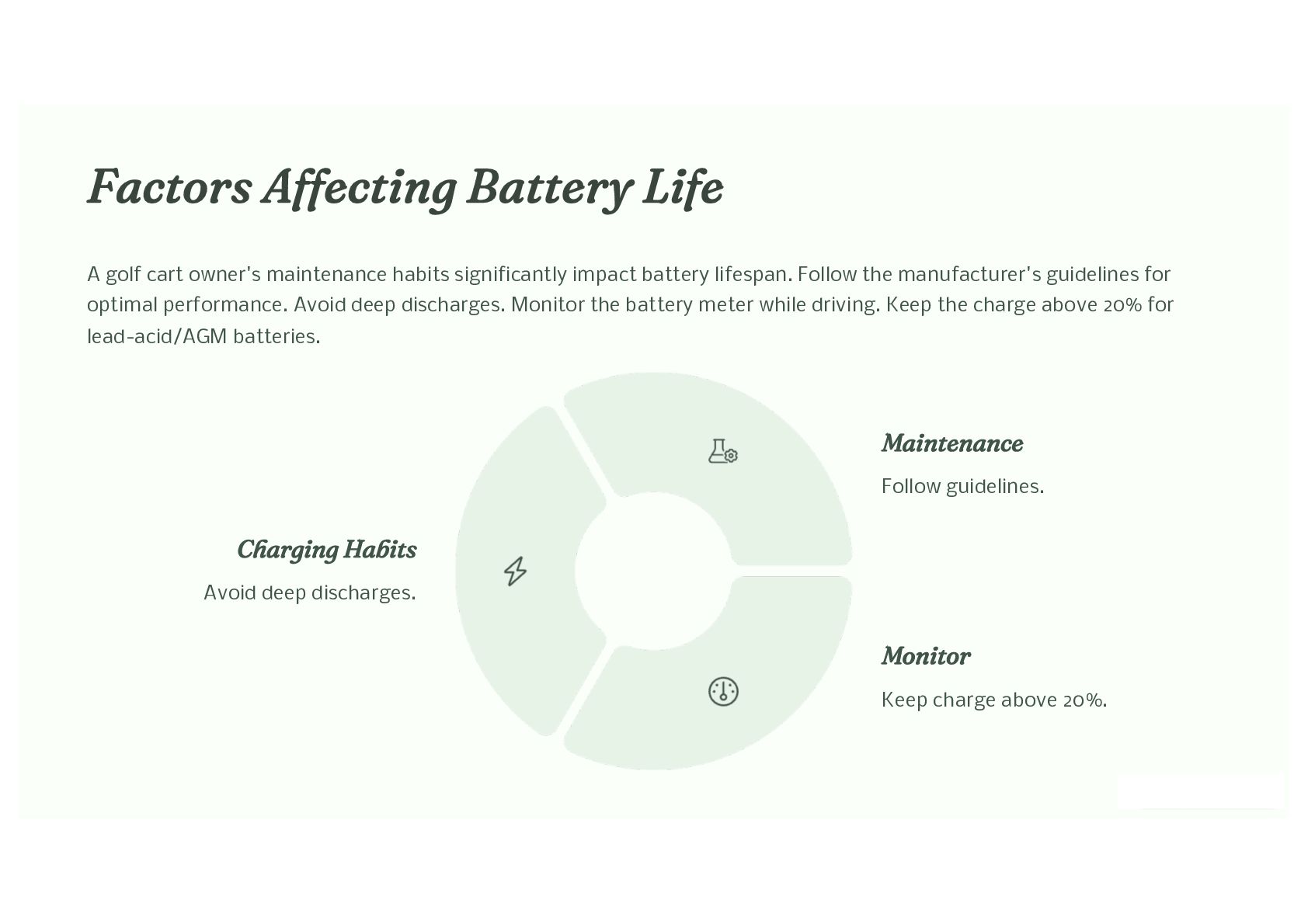
significantly impact battery lifespan. Follow the manufacturer's guidelines for optimal performance. Avoid deep discharges. Monitor the battery meter while driving. Keep the charge above 20% for lead-acid/AGM batteries. Charging Habits Avoid deep discharges. Maintenance Follow guidelines. Monitor Keep charge above 20%.
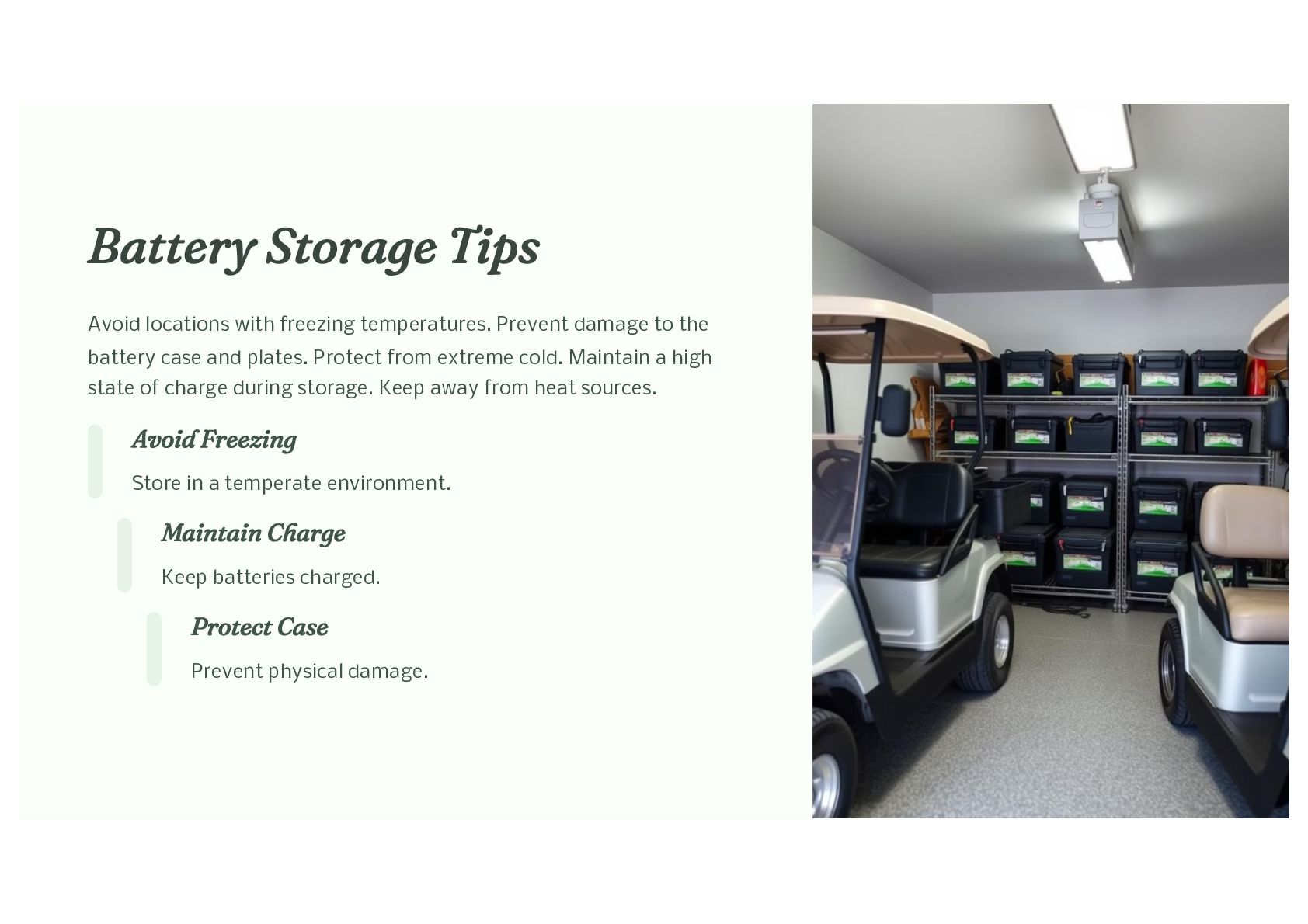
to the battery case and plates. Protect from extreme cold. Maintain a high state of charge during storage. Keep away from heat sources. Avoid Freezing Store in a temperate environment. Maintain Charge Keep batteries charged. Protect Case Prevent physical damage.
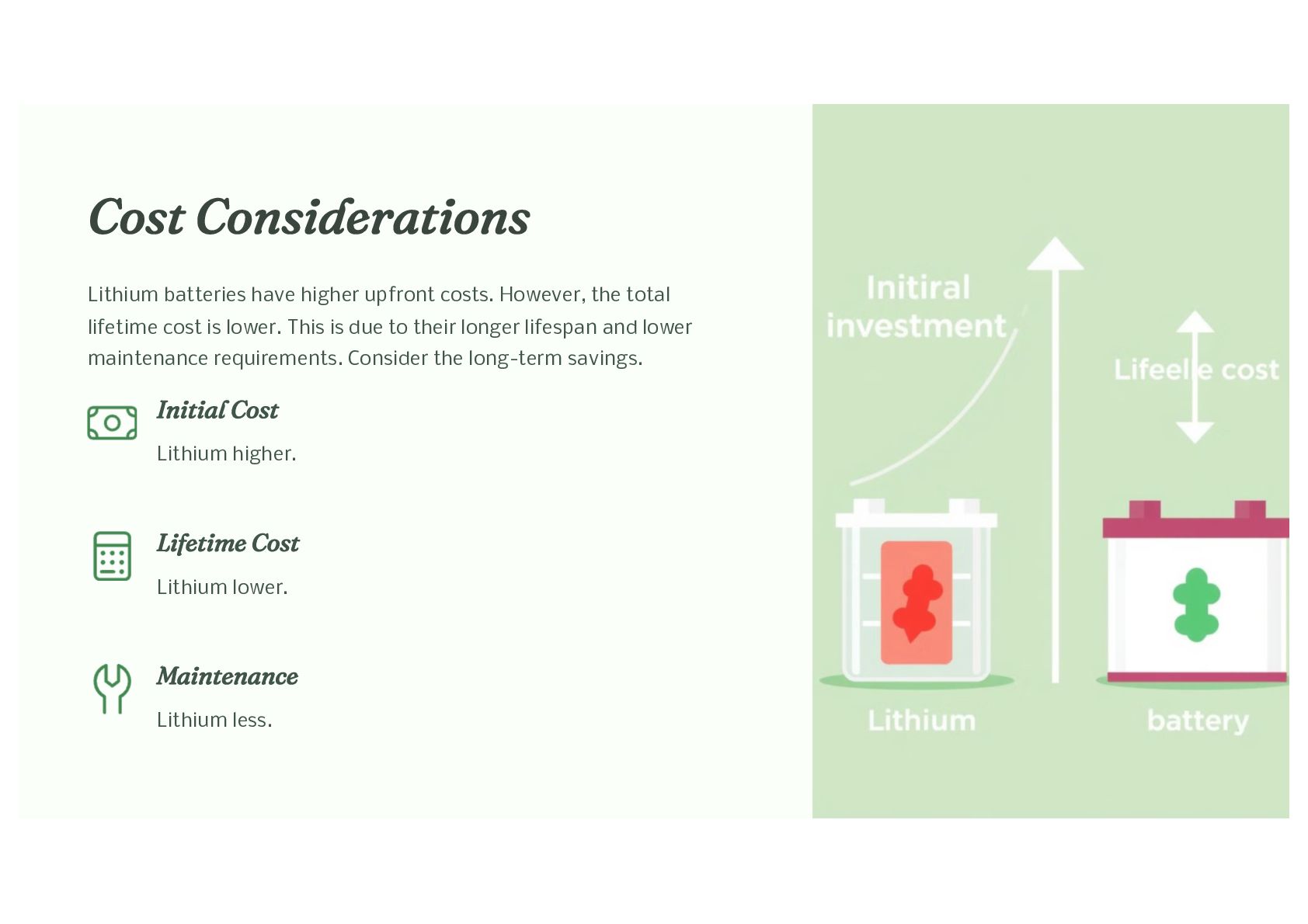
total lifetime cost is lower. This is due to their longer lifespan and lower maintenance requirements. Consider the long-term savings. Initial Cost Lithium higher. Lifetime Cost Lithium lower. Maintenance Lithium less.
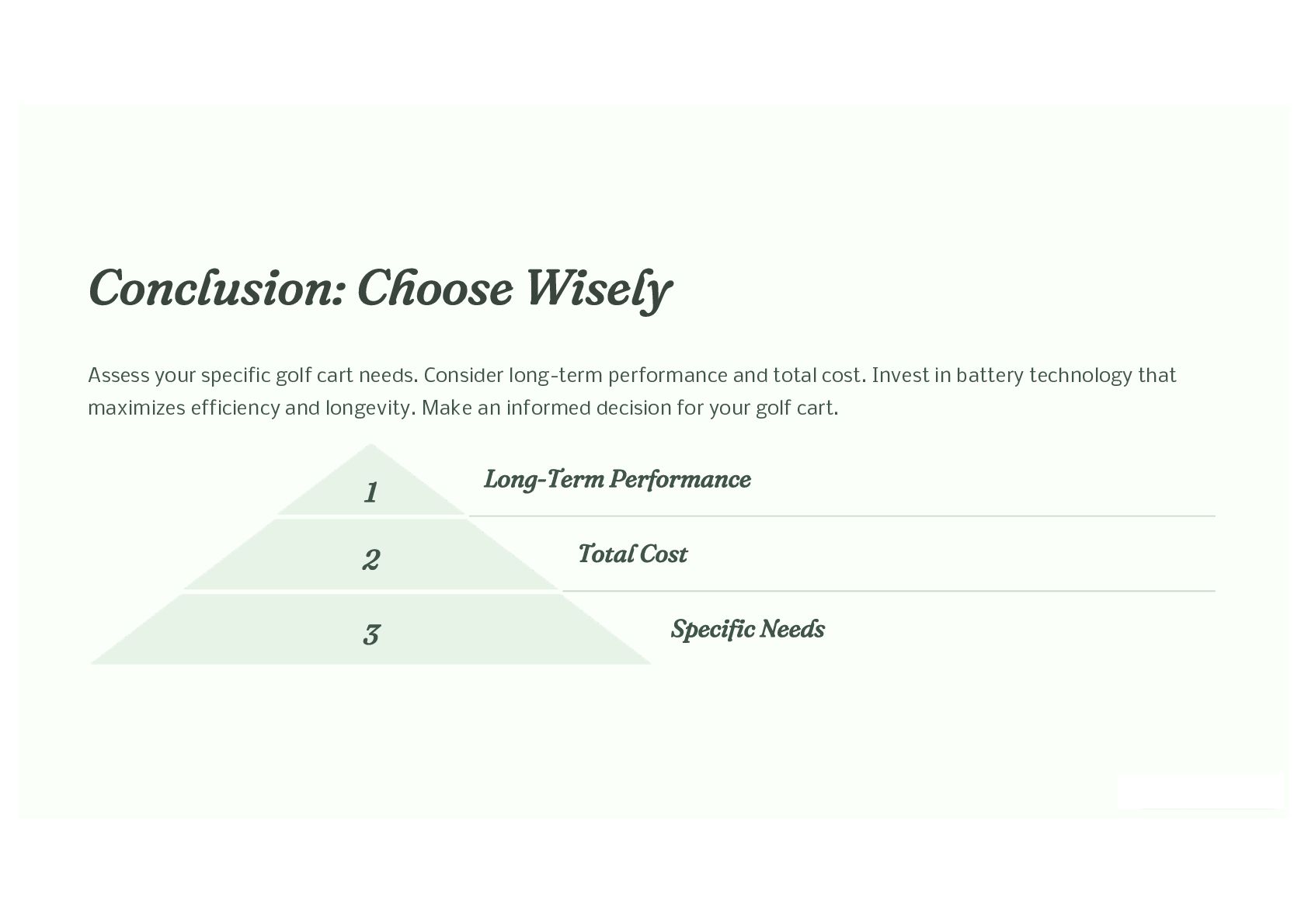
long-term performance and total cost. Invest in battery technology that maximizes efficiency and longevity. Make an informed decision for your golf cart. 1 Long-Term Performance 2 Total Cost 3 Specific Needs


 satomasahiro2005
 willnet
 bitkey
 jozono
 hiracky16
 koukihosaka
 tetsuya28
 iktakahiro
 genda
genda
 shumei_ito
 bengo4com
 ivry_presentationmaterials
 3n
3n
 chriscoyier
 bkeepers
 watany
 davidcarrasco
 chikuwait
 emna__ayadi
 akademiya2063
 tammielis
 jacobtomlinson
 popppiees
 tomoyanonymous