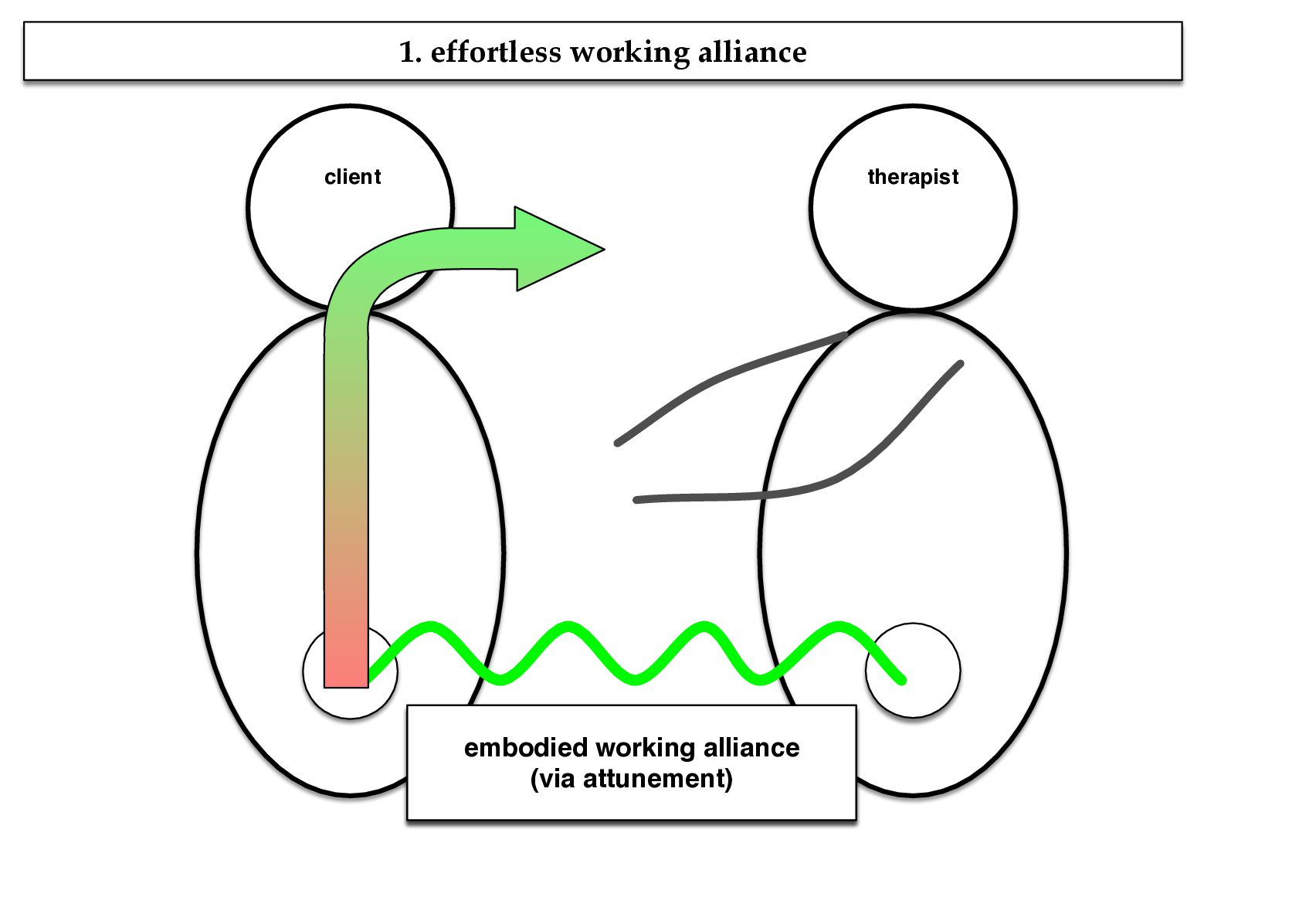
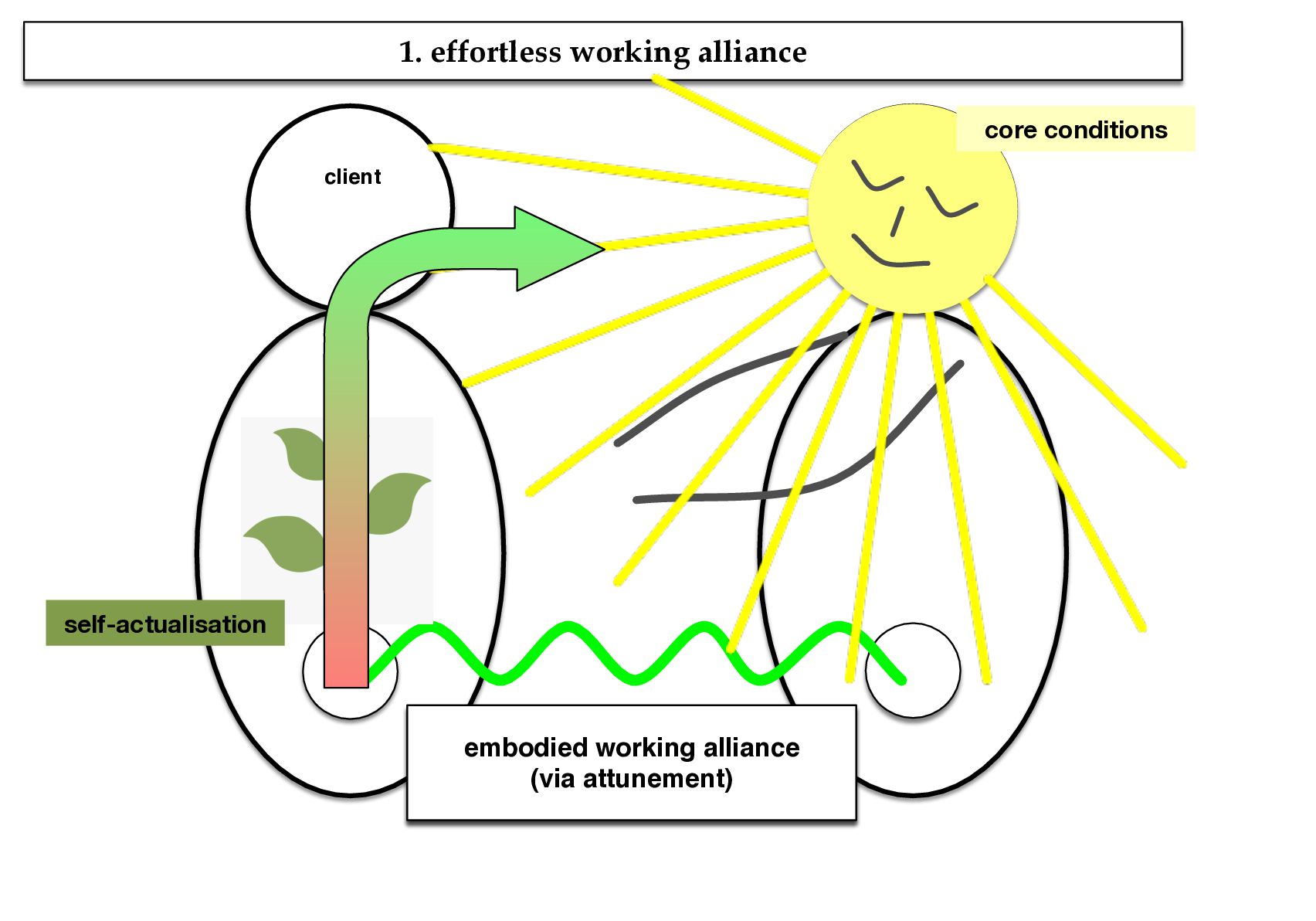
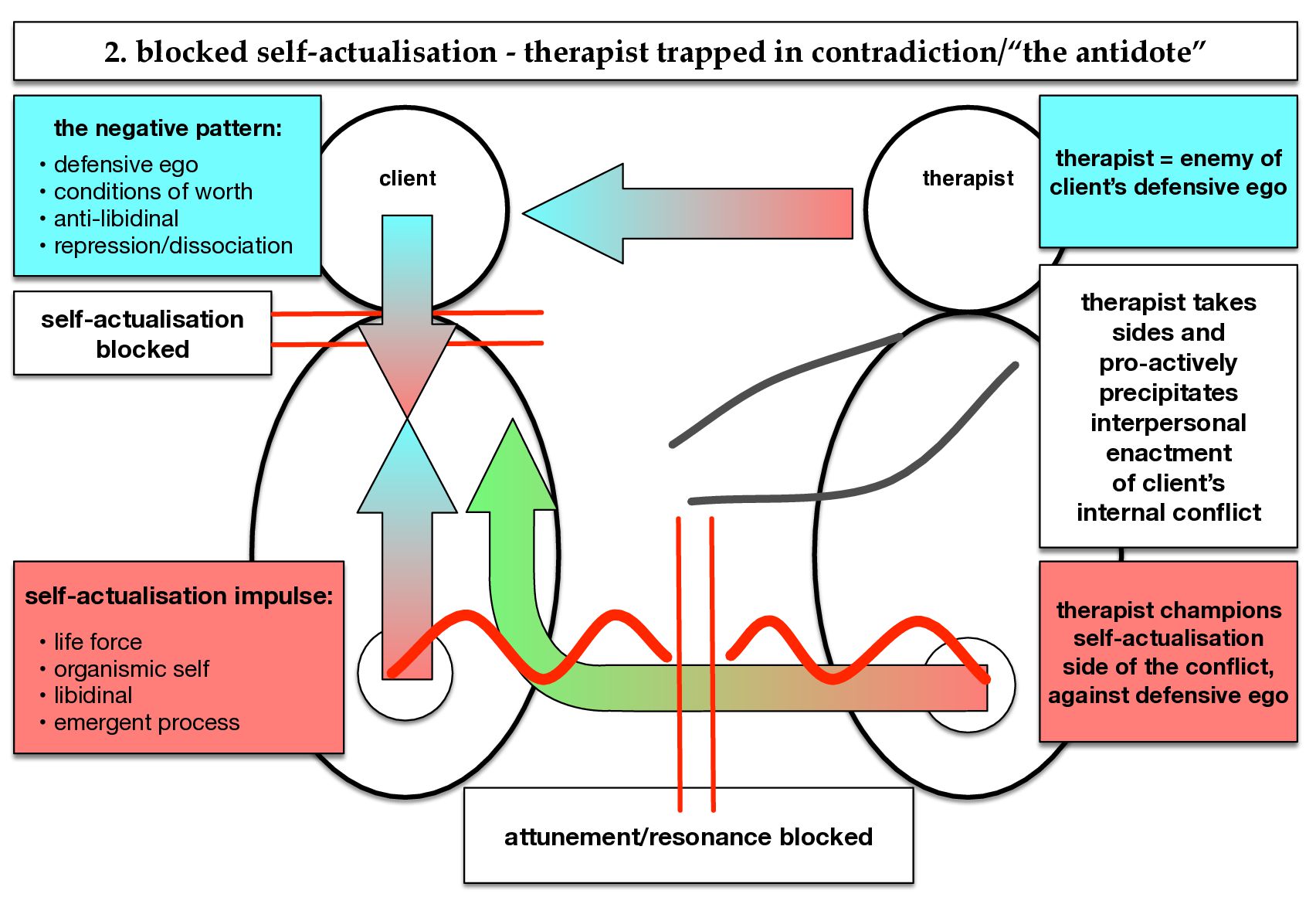
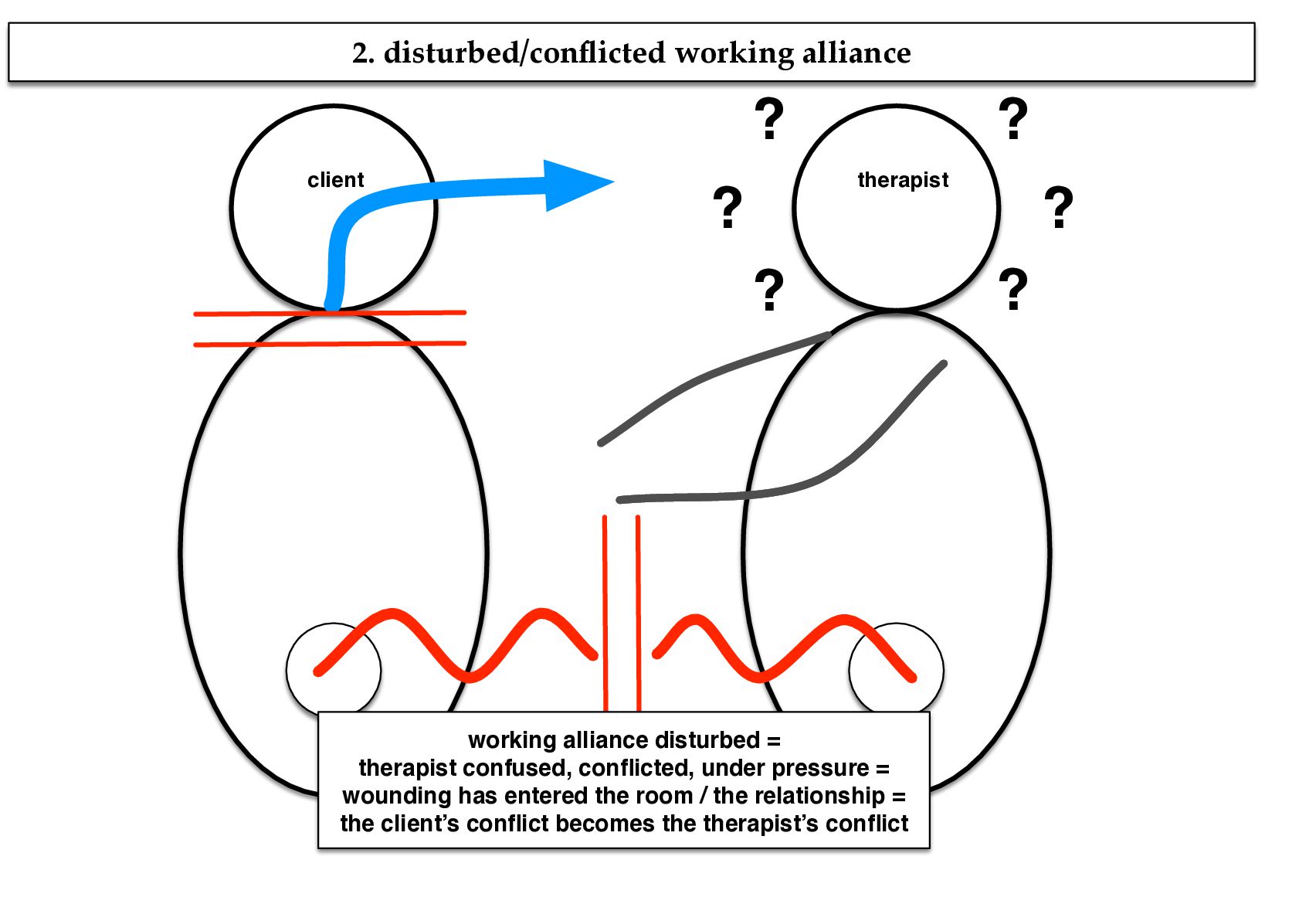
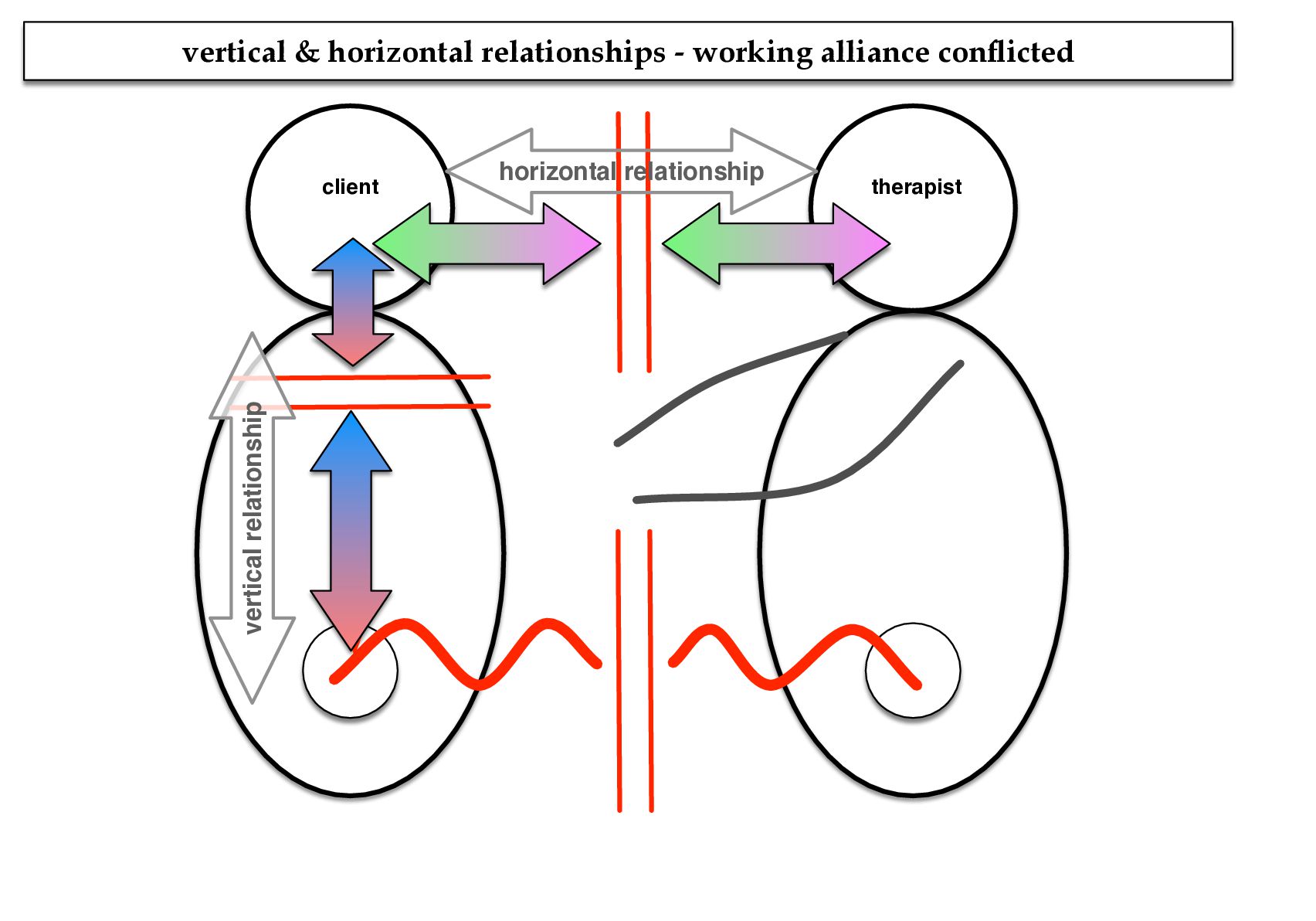
working alliance disturbed = therapist confused, conflicted, under pressure = wounding has entered the room / the relationship = the client’s conflict becomes the therapist’s conflict ? ?
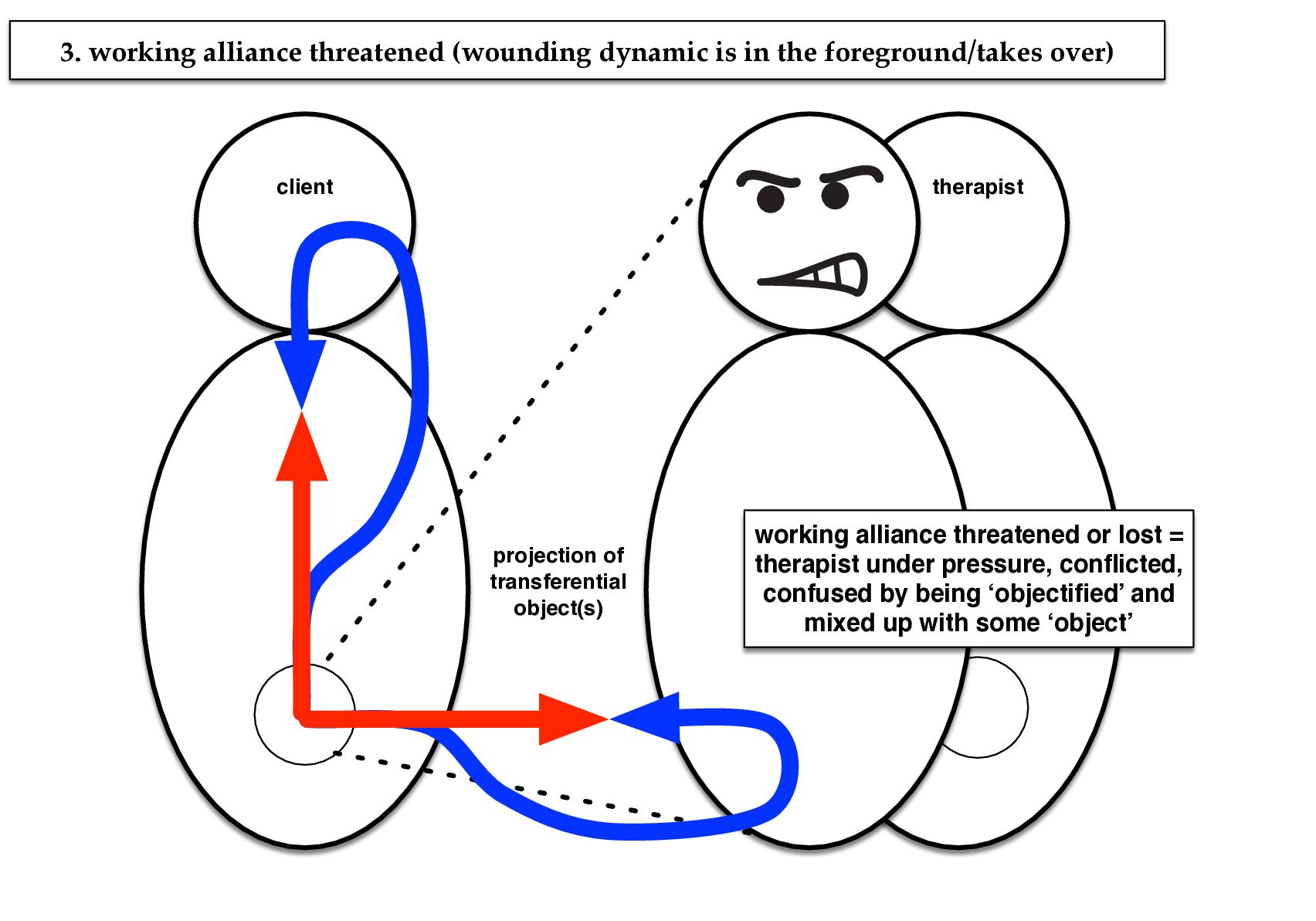
over) client therapist projection of transferential object(s) working alliance threatened or lost = therapist under pressure, conflicted, confused by being ‘objectified’ and mixed up with some ‘object’
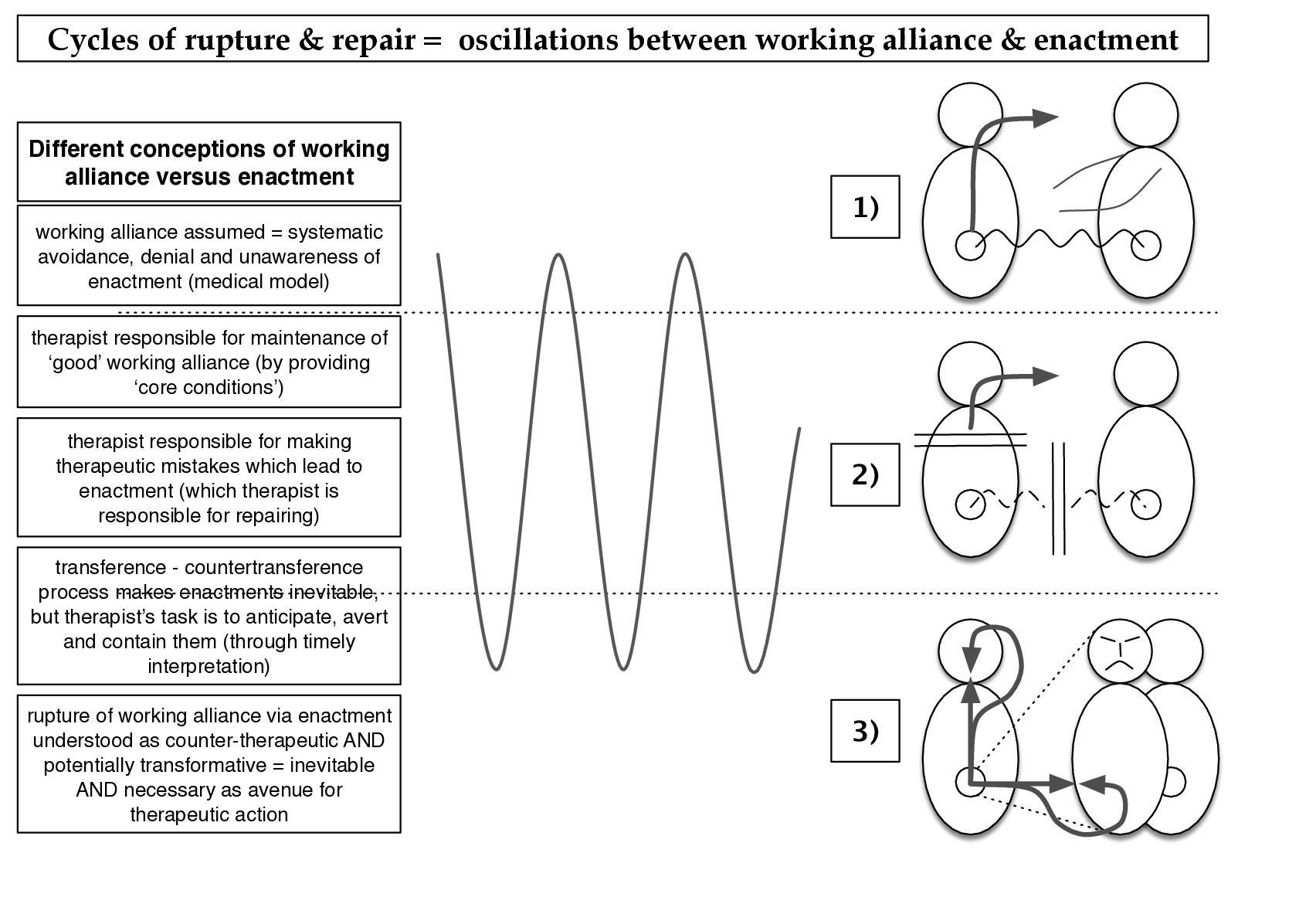
& enactment Different conceptions of working alliance versus enactment 1) working alliance assumed = systematic avoidance, denial and unawareness of enactment (medical model) therapist responsible for maintenance of ‘good’ working alliance (by providing ‘core conditions’) therapist responsible for making therapeutic mistakes which lead to enactment (which therapist is responsible for repairing) 2) transference - countertransference process makes enactments inevitable, but therapist’s task is to anticipate, avert and contain them (through timely interpretation) rupture of working alliance via enactment understood as counter-therapeutic AND potentially transformative = inevitable AND necessary as avenue for therapeutic action 3)
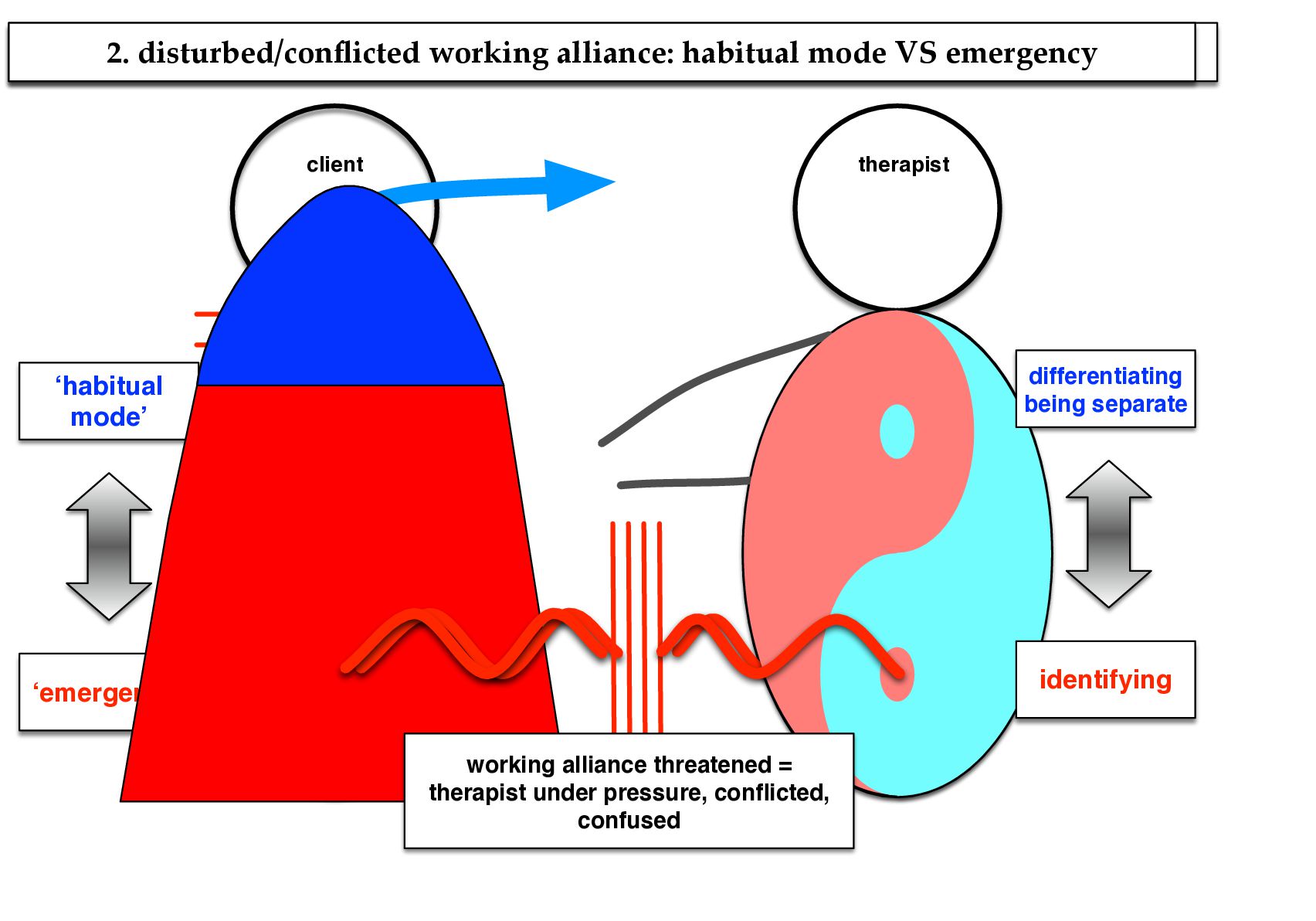
VS emergency client therapist differentiating being separate ‘habitual mode’ identifying ‘emergency’ working alliance threatened = therapist under pressure, conflicted, confused
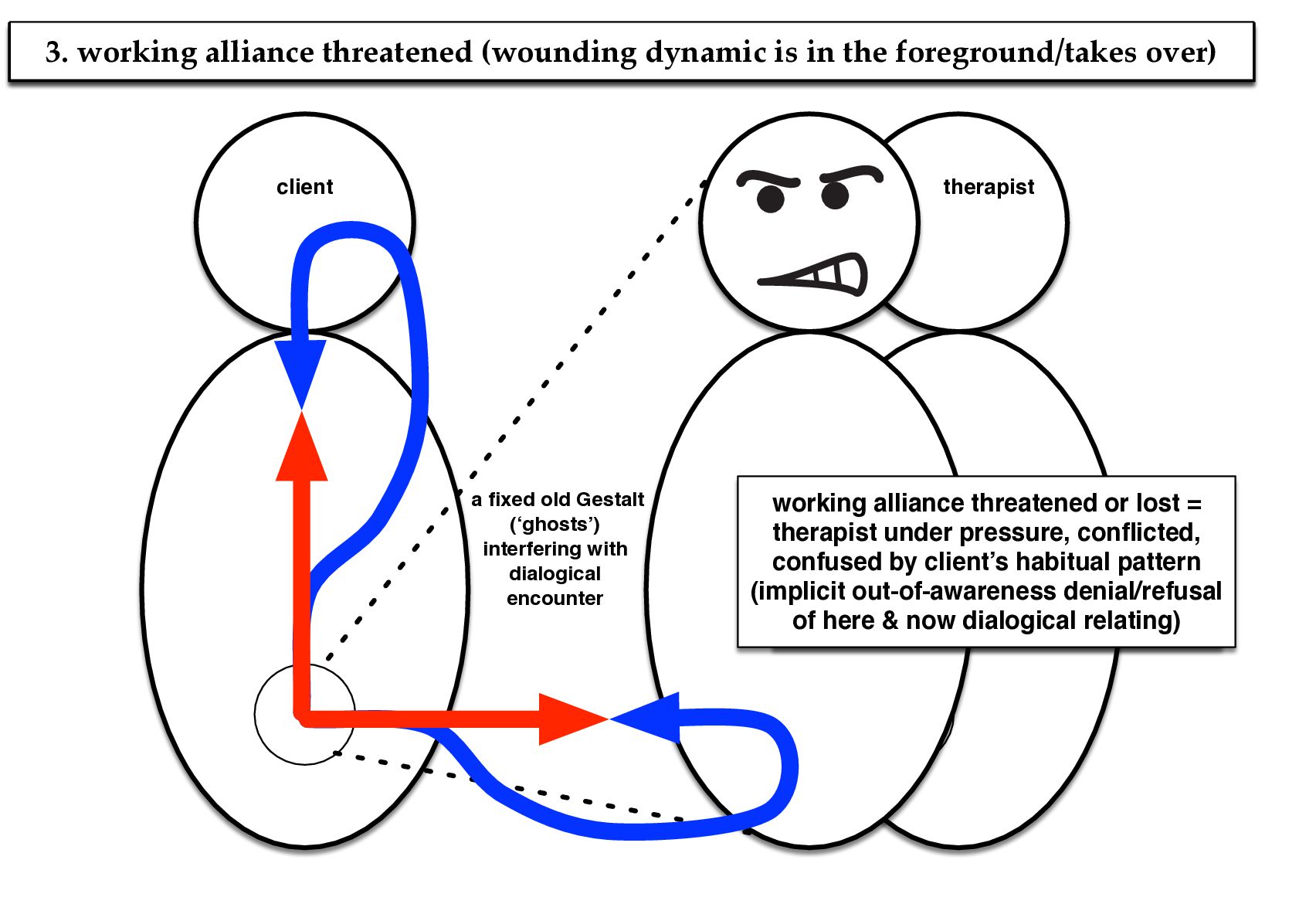
working When Gomez's position allows transference to manifest and take over) over client therapist a fixed old Gestalt (‘ghosts’) interfering with dialogical encounter working alliance threatened or lost = therapist under pressure, conflicted, wounding dynamic manifests in confused client’s habitual pattern relation by to ‘opposite’ therapist and (implicit out-of-awareness outweighs ‘alongside’denial/refusal empathy, of hereacceptance & now dialogical relating) & support
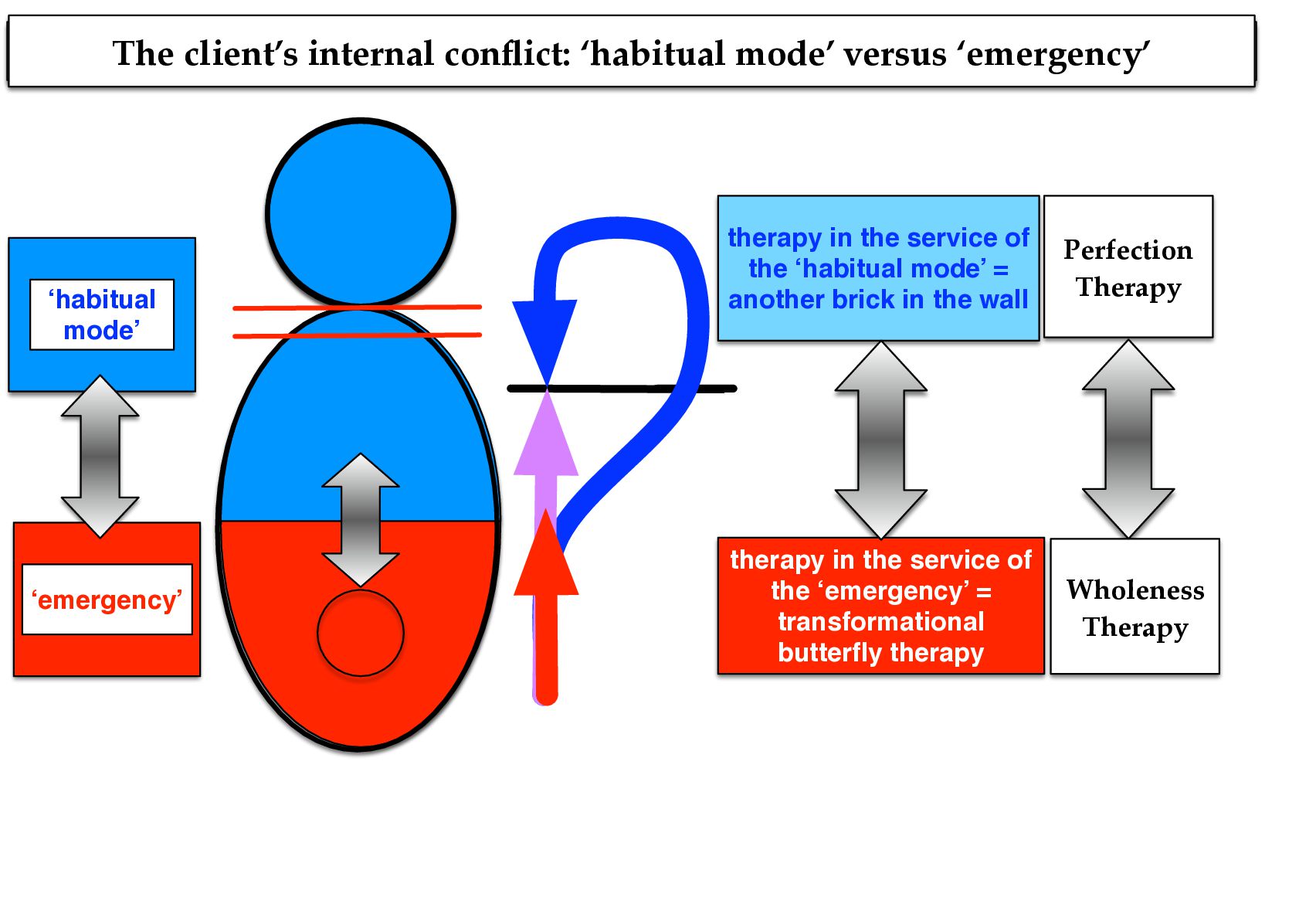
being received The client’s internaland conflict: ‘habitual mode’ versus ‘habitual mode’ ‘emergency’ therapy in the service of the ‘habitual mode’ = another brick in the wall Perfection Therapy therapy in the service of the ‘emergency’ = transformational butterfly therapy Wholeness Therapy
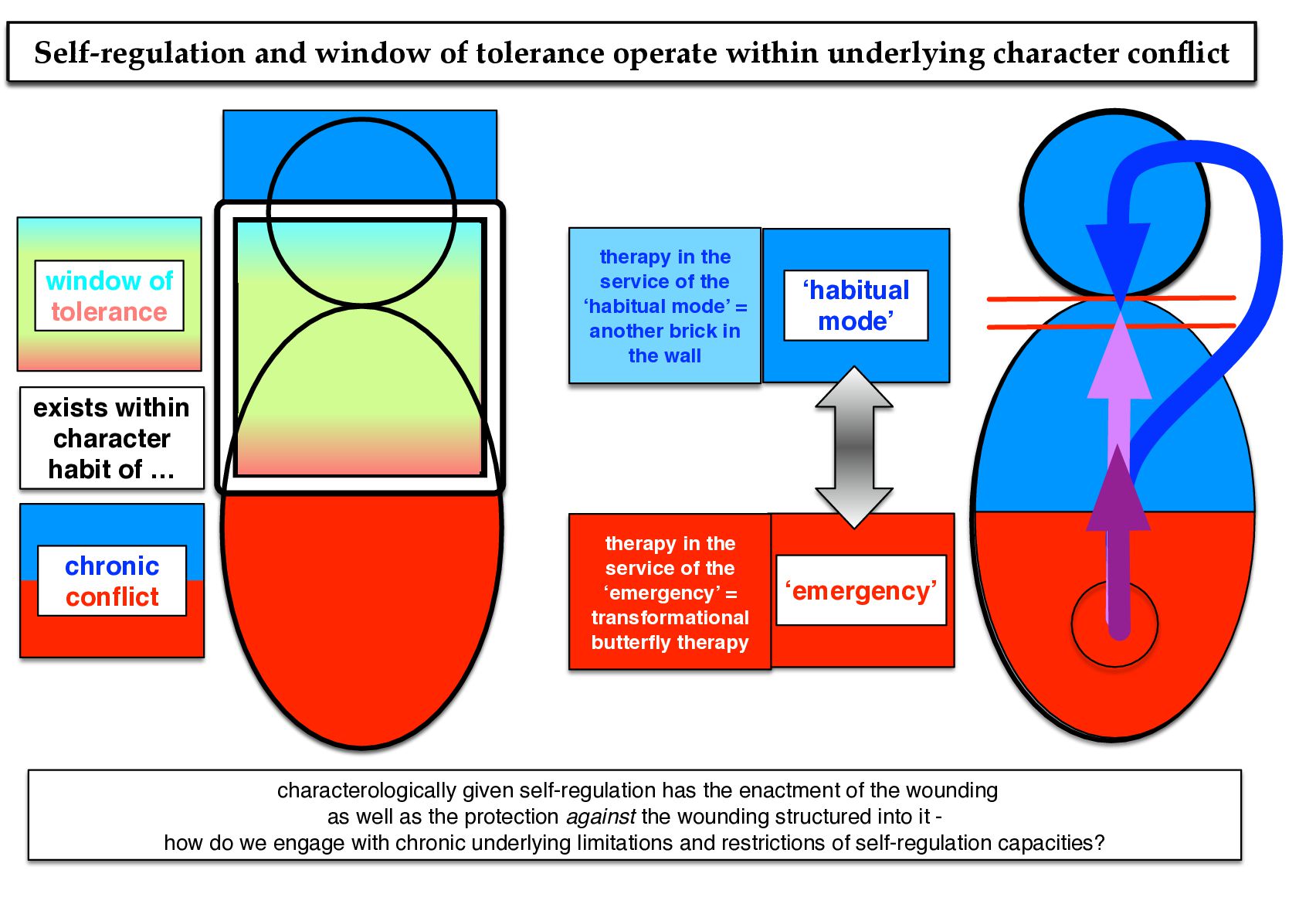
conflict received window and of tolerance within underlying character window of tolerance therapy in the service of the ‘habitual mode’ = another brick in the wall ‘habitual mode’ therapy in the service of the ‘emergency’ = transformational butterfly therapy ‘emergency’ exists within character habit of … chronic conflict characterologically given self-regulation has the enactment of the wounding as well as the protection against the wounding structured into it how do we engage with chronic underlying limitations and restrictions of self-regulation capacities?
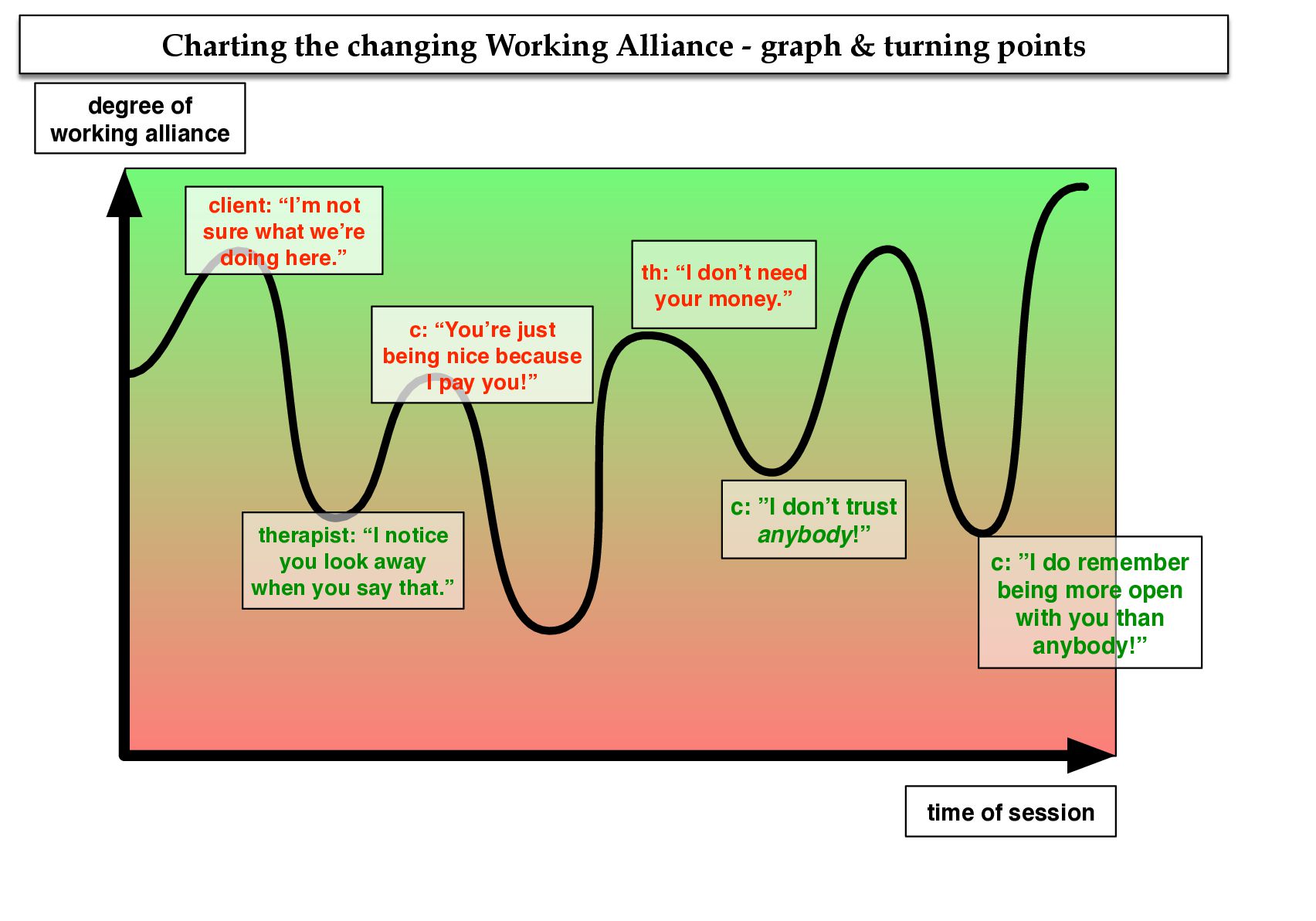
degree of working alliance client: “I’m not sure what we’re doing here.” th: “I don’t need your money.” c: “You’re just being nice because I pay you!” therapist: “I notice you look away when you say that.” c: ”I don’t trust anybody!” c: ”I do remember being more open with you than anybody!” time of session


 irinanazarova
 samanthasiow
 bkeepers
 tamaranovitovic
 akihiro_kokubo
 eileencodes
 katarinadahlin
 mayatellez
 frankvandijk
 moore
 mlcsv
 paigeccino