Upgrade to Pro — share decks privately, control downloads, hide ads and more …

SemPart: Yet Another RDF Partitioning Strategy ...

Sponsored · Ship Features Fearlessly Turn features on and off without deploys. Used by thousands of Ruby developers. →

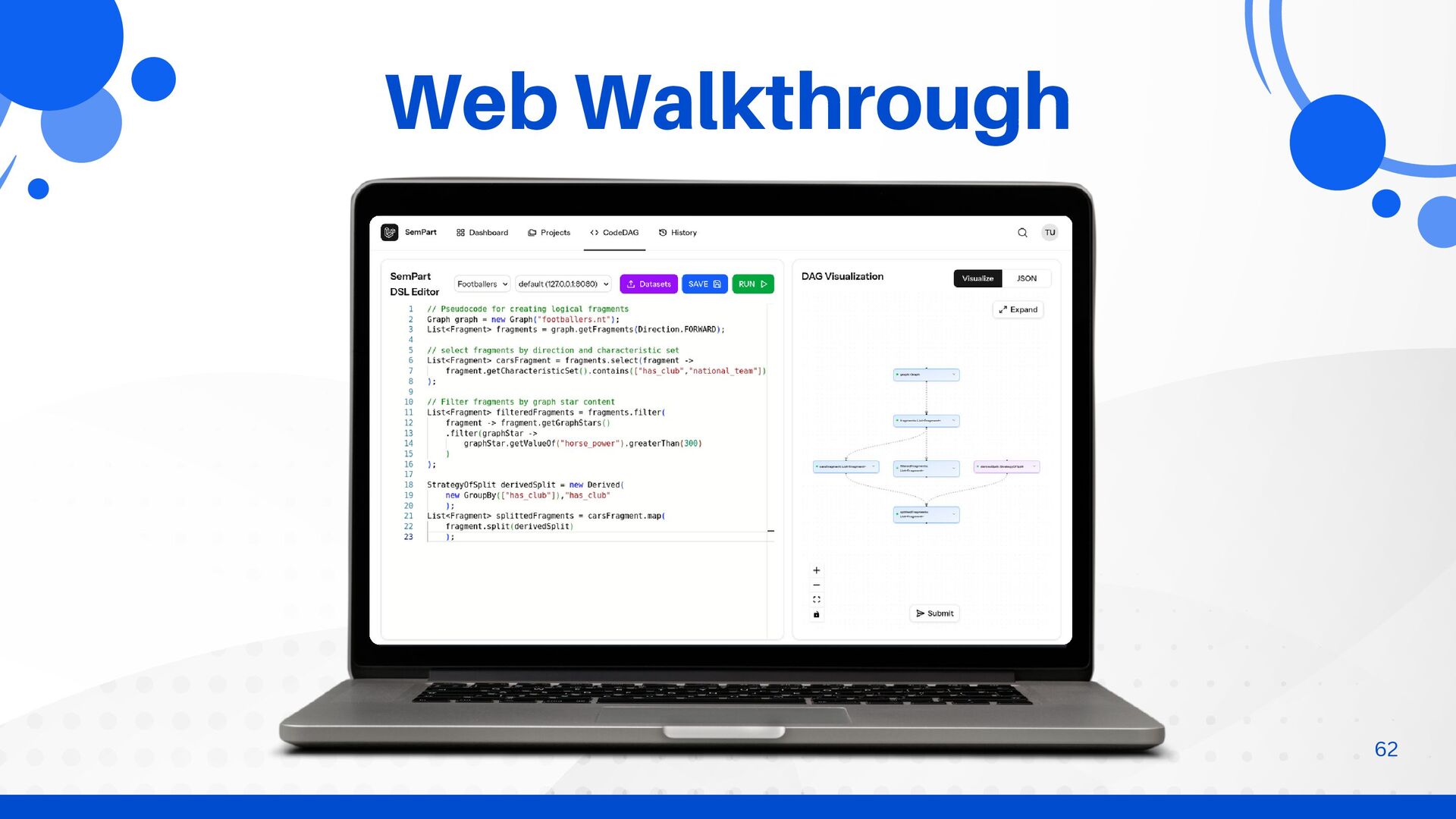
SemPart: Yet Another RDF Partitioning Strategy In Action.

With the continued growth of the Semantic Web, RDF (Resource Description Framework) has become a foundational standard for modeling structured knowledge. However,
managing large-scale RDF datasets remains a challenge, especially in distributed environments where effective data partitioning is critical to performance. Existing RDF
triplestores predominantly rely on triple-based partitioning strategies, which, although
simple, often scatter semantically related data across partitions, resulting in increased
query latency and communication overhead. Another important limitation is the lack of
involvement of database administrators (DBAs) in the partitioning process. Current systems do not provide mechanisms for DBAs to leverage their domain expertise to influence
or adjust the partitioning. As a result, partitioning remains static and rigid, reducing
the systems adaptability to evolving workloads or semantic structures.
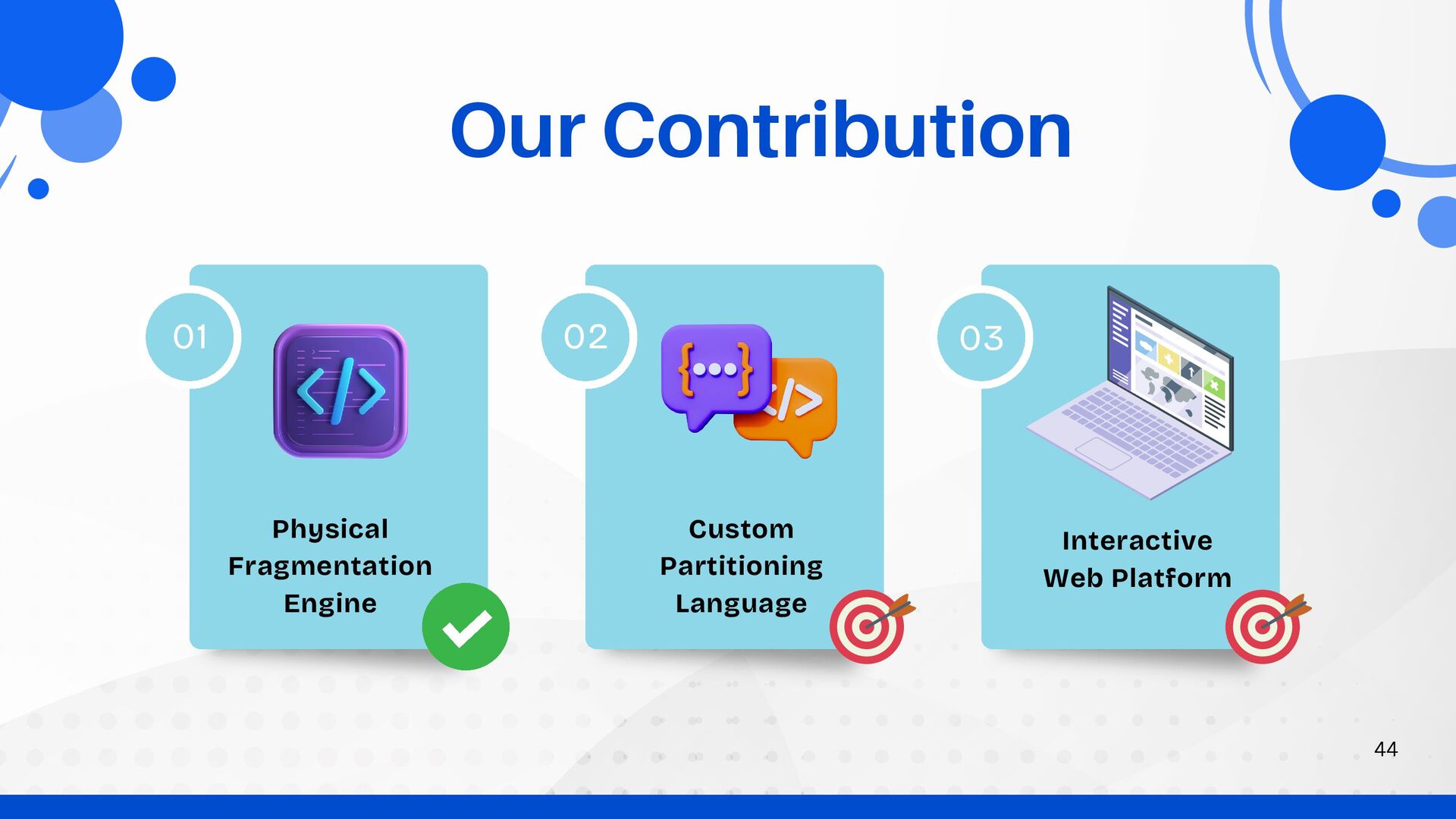
To address these limitations, the PQDAG team at the LIAS laboratory (ISAEENSMA) proposed SemPart, a fragment-based RDF partitioning framework designed
to introduce semantic coherence and expert-driven control into the partitioning process
by enabling a range of physical transformations on RDF fragments. While SemPart had
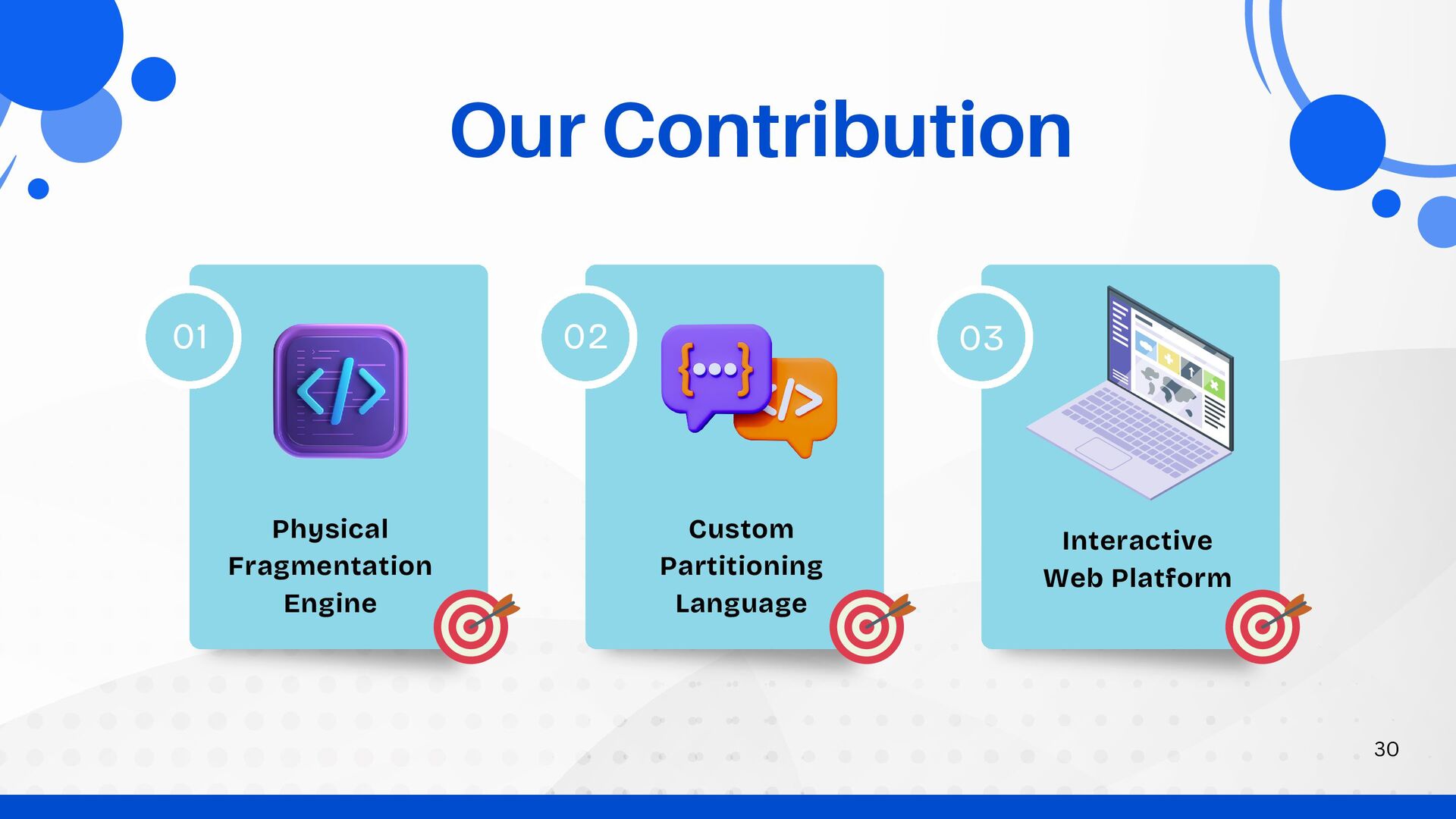
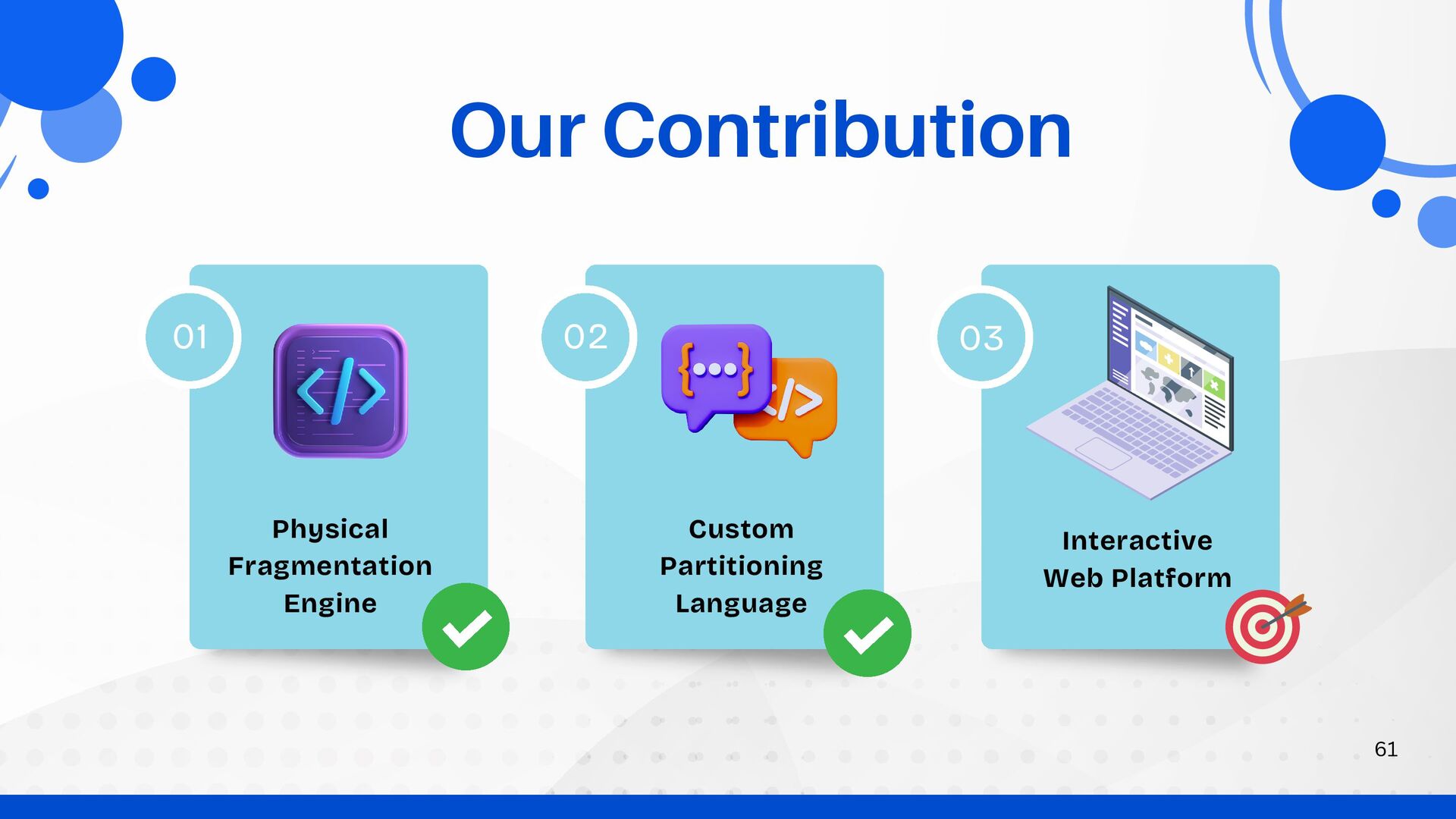
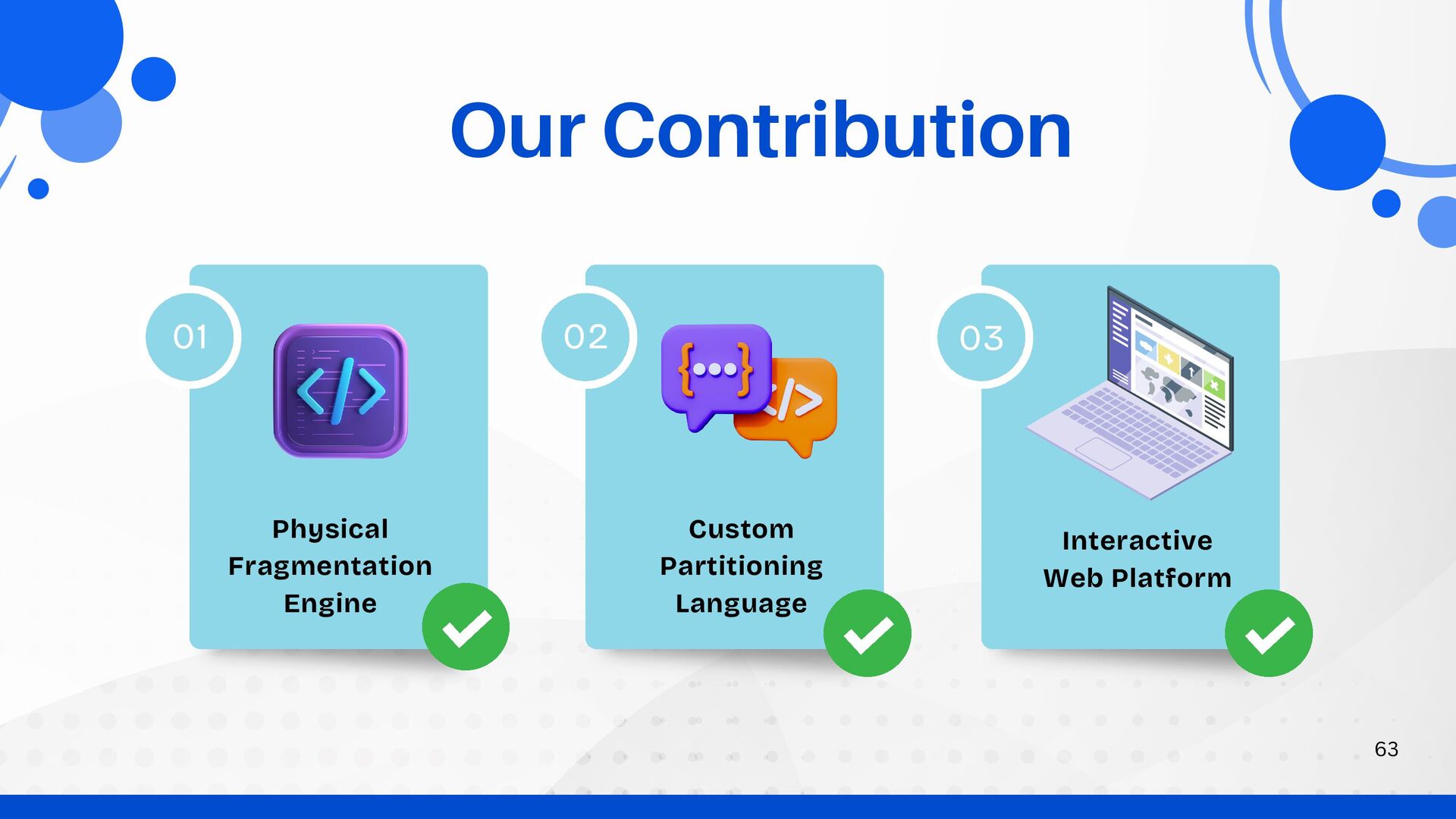
been introduced as a theoretical concept, this work focuses on its practical implementation. Our contribution consists of designing and developing the full SemPart framework
and integrating it into the distributed PQDAG system. By transforming the theoretical
principles of SemPart into a functional system, this work enables flexible, semantically
rich, and performance-oriented RDF partitioning, with potential applications in dynamic
and resource-constrained environments.

Avatar for Tarik hammoumi
Tarik hammoumi

June 24, 2025

Other Decks in Technology

Transcript

  1. University of Abou Bekr Belkaid – Tlemcen Department of Computer

    Science With LIAS – France SemPart: Yet Another RDF Partitioning Strategy In Action. Presented by KHIAT Sara Nardjes HAMMOUMI Tarik Supervised by Mr. MATALLAH Houcine Mr. SAIDI Boumediene Mr. MESMOUDI Amin Master’s Thesis Jury Members Mrs. HALFAOUI AMAL Mrs. KHITRI Souad Option : Software Engineering 24 June 2025 1
  2. 1 2 3 4 5 GENERAL CONTEXT SEMPART FRAMEWORK PROBLEM

    STATEMENT OUR CONTRIBUTION CONCLUSION TABLE OF CONTENT 2
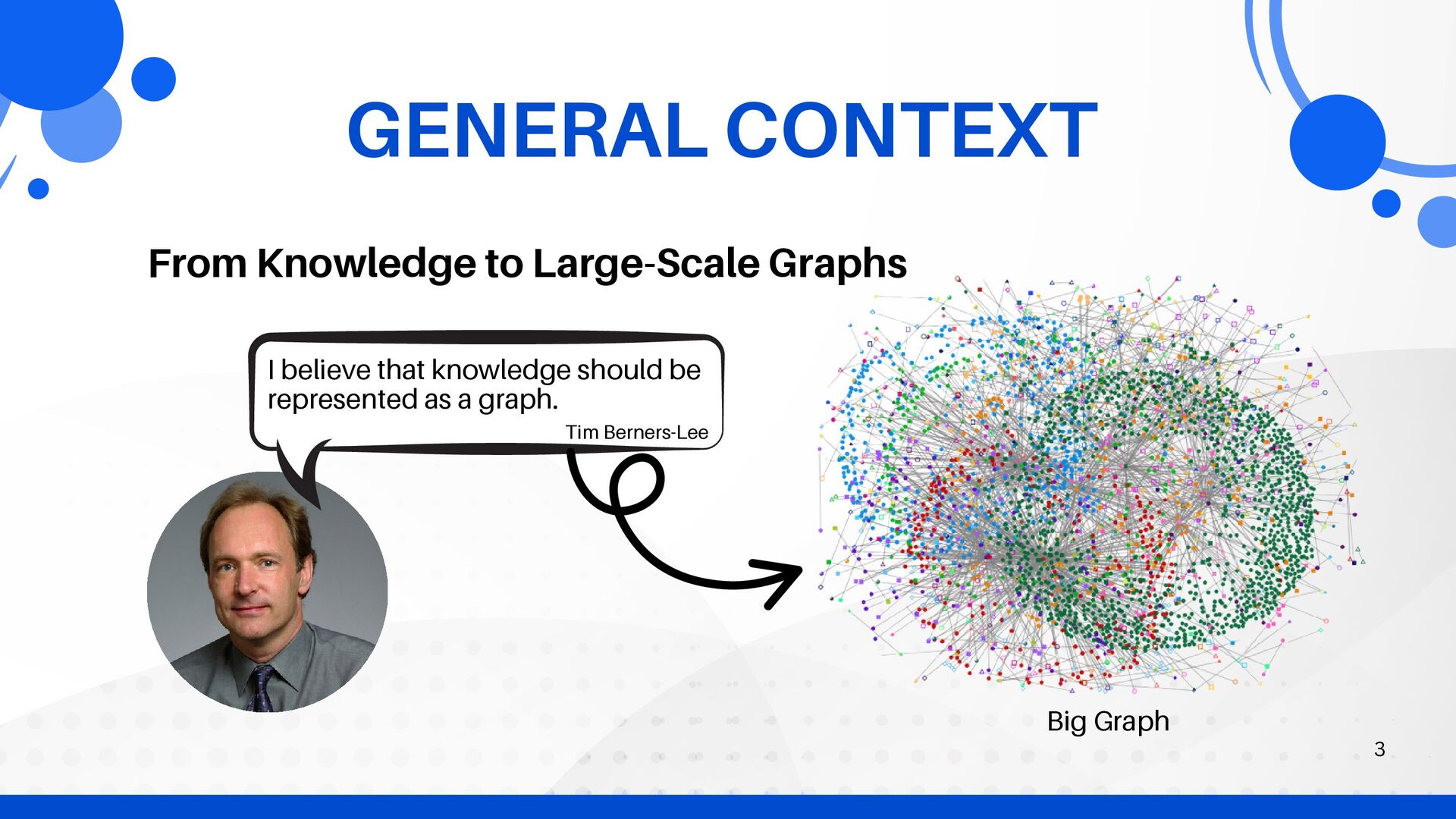
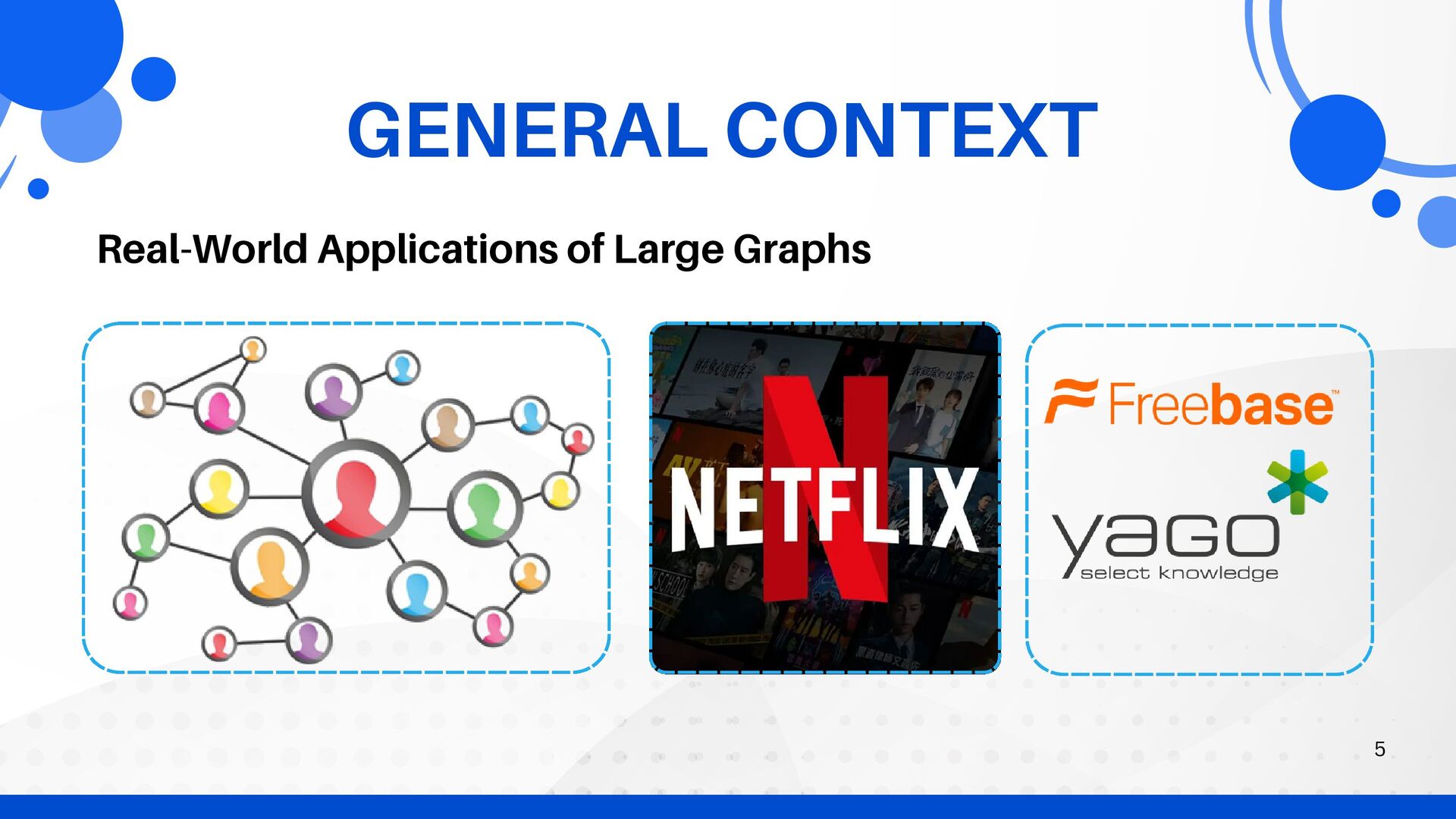
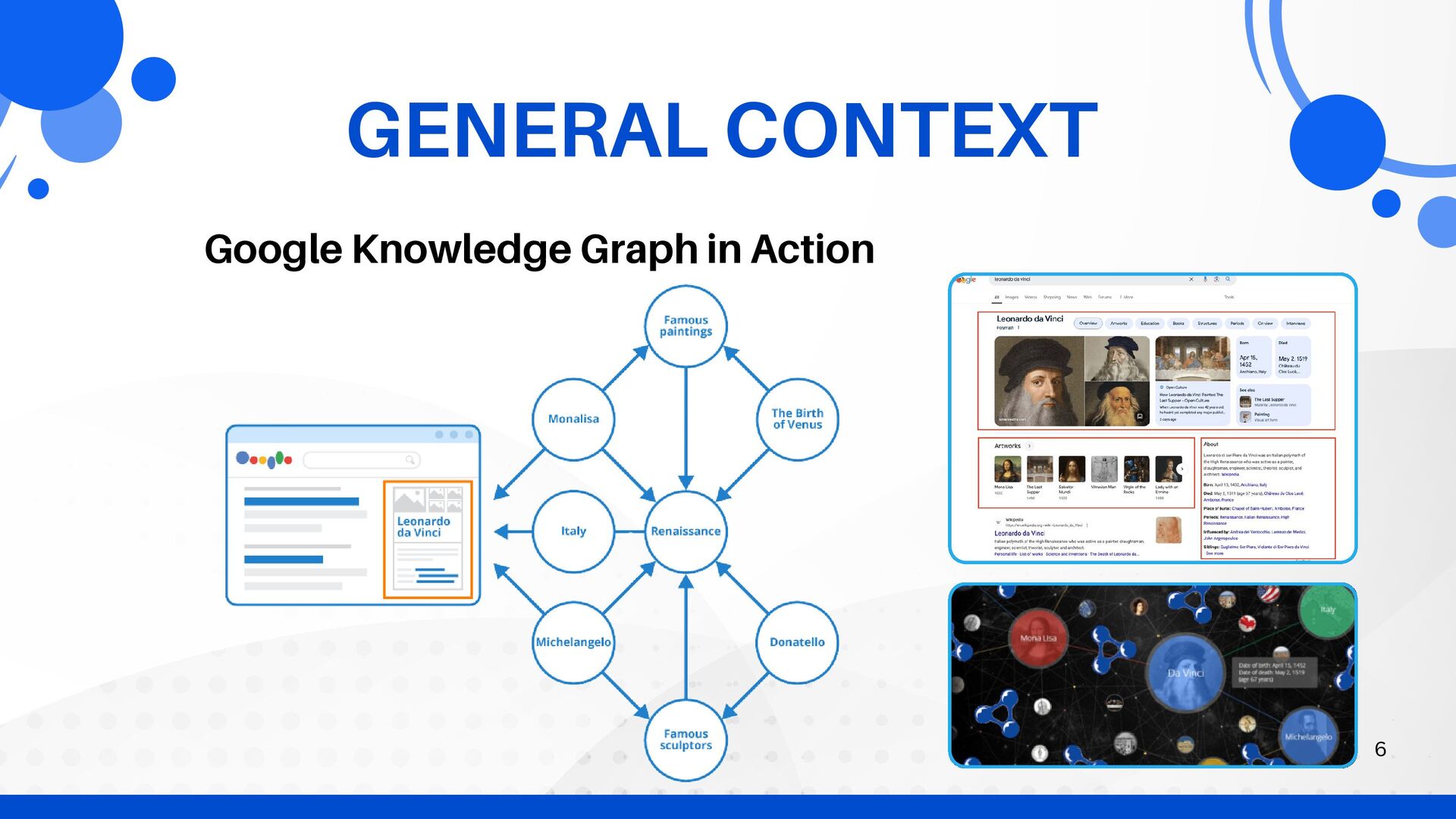
  3. GENERAL CONTEXT I believe that knowledge should be represented as

    a graph. Tim Berners-Lee From Knowledge to Large-Scale Graphs 3 Big Graph
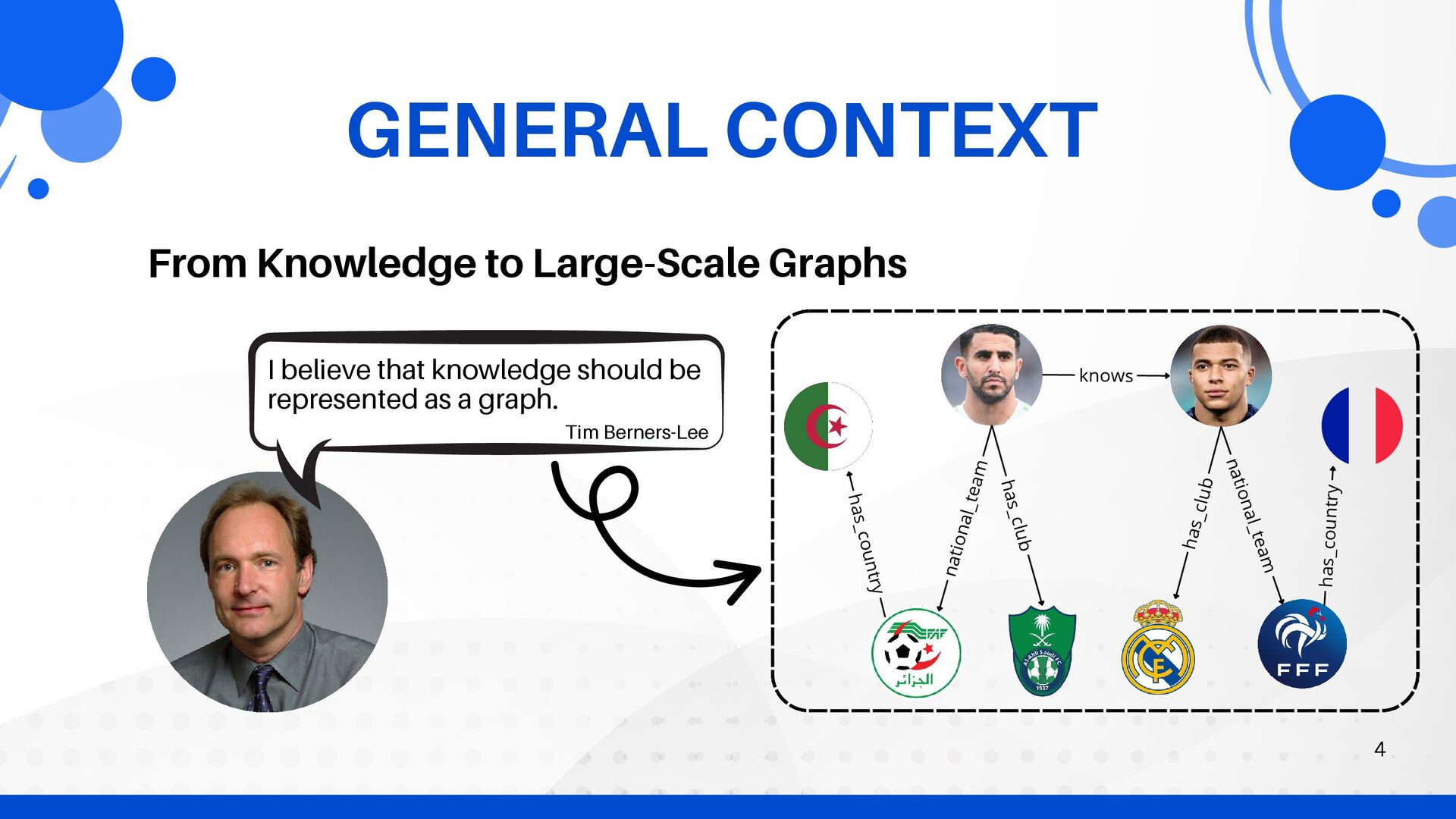
  4. national_team has_club knows has_country has_club national_team has_country GENERAL CONTEXT I

    believe that knowledge should be represented as a graph. Tim Berners-Lee From Knowledge to Large-Scale Graphs 4
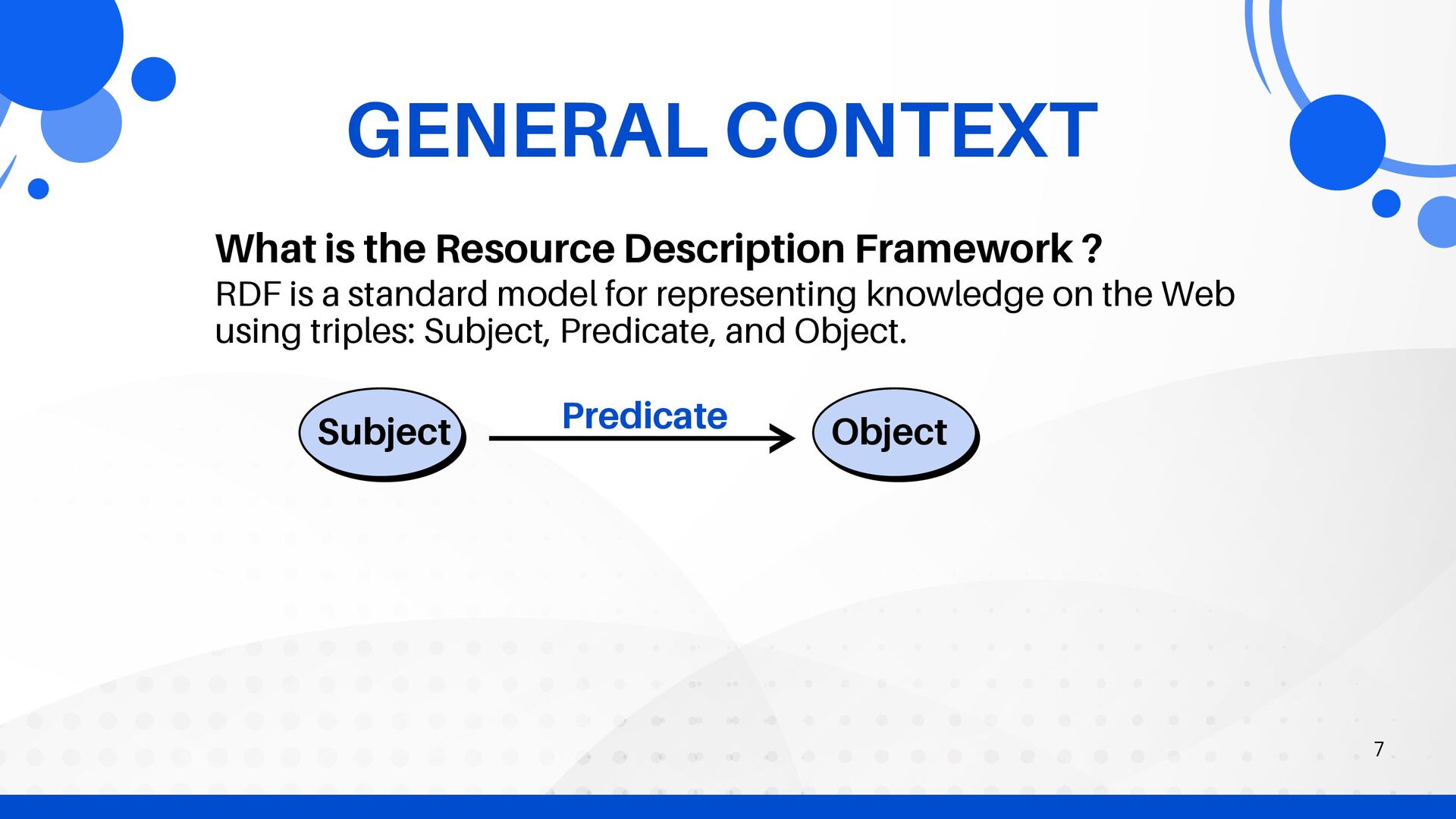
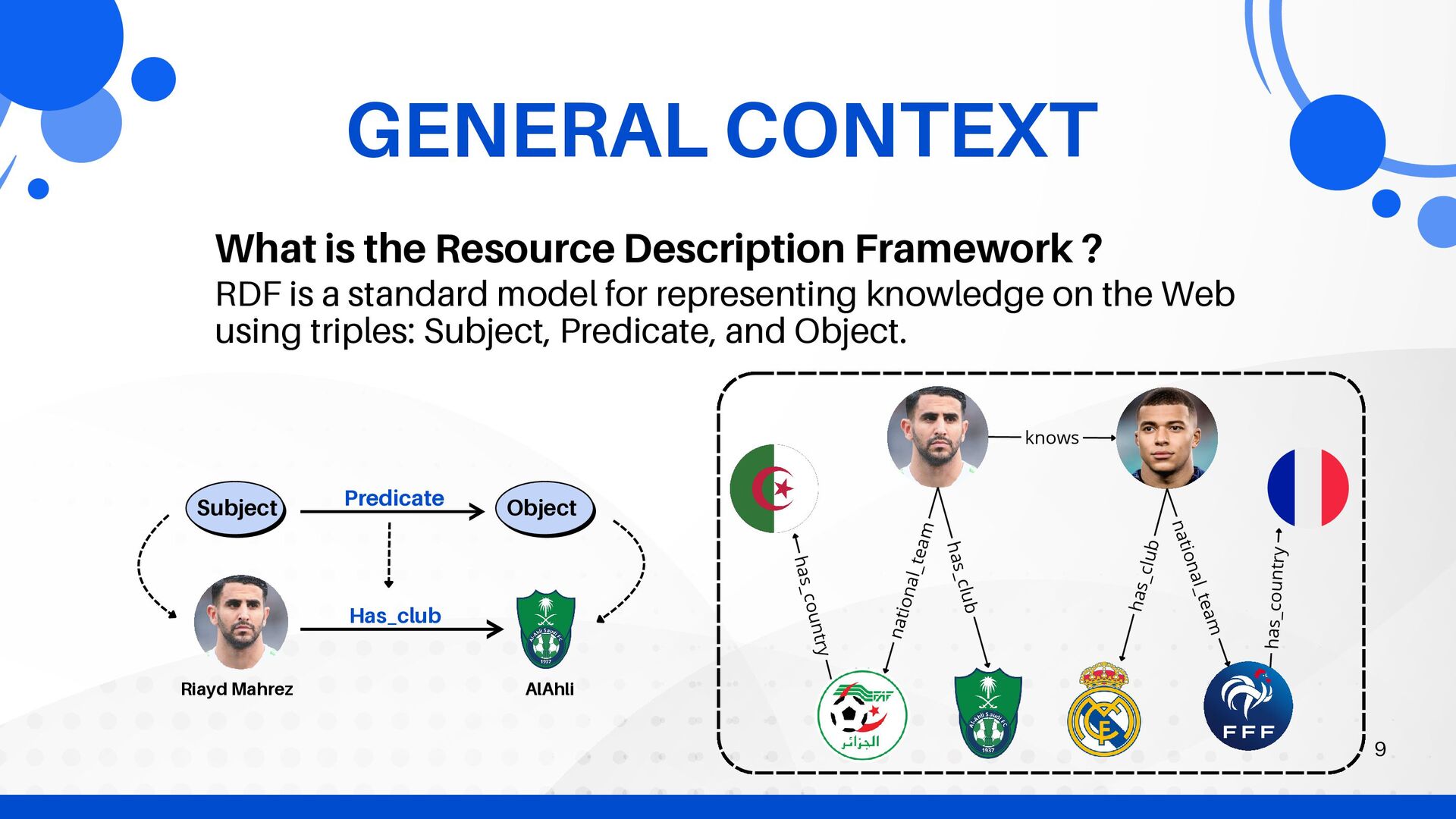
  5. GENERAL CONTEXT RDF is a standard model for representing knowledge

    on the Web using triples: Subject, Predicate, and Object. What is the Resource Description Framework ? Subject Object Predicate 7
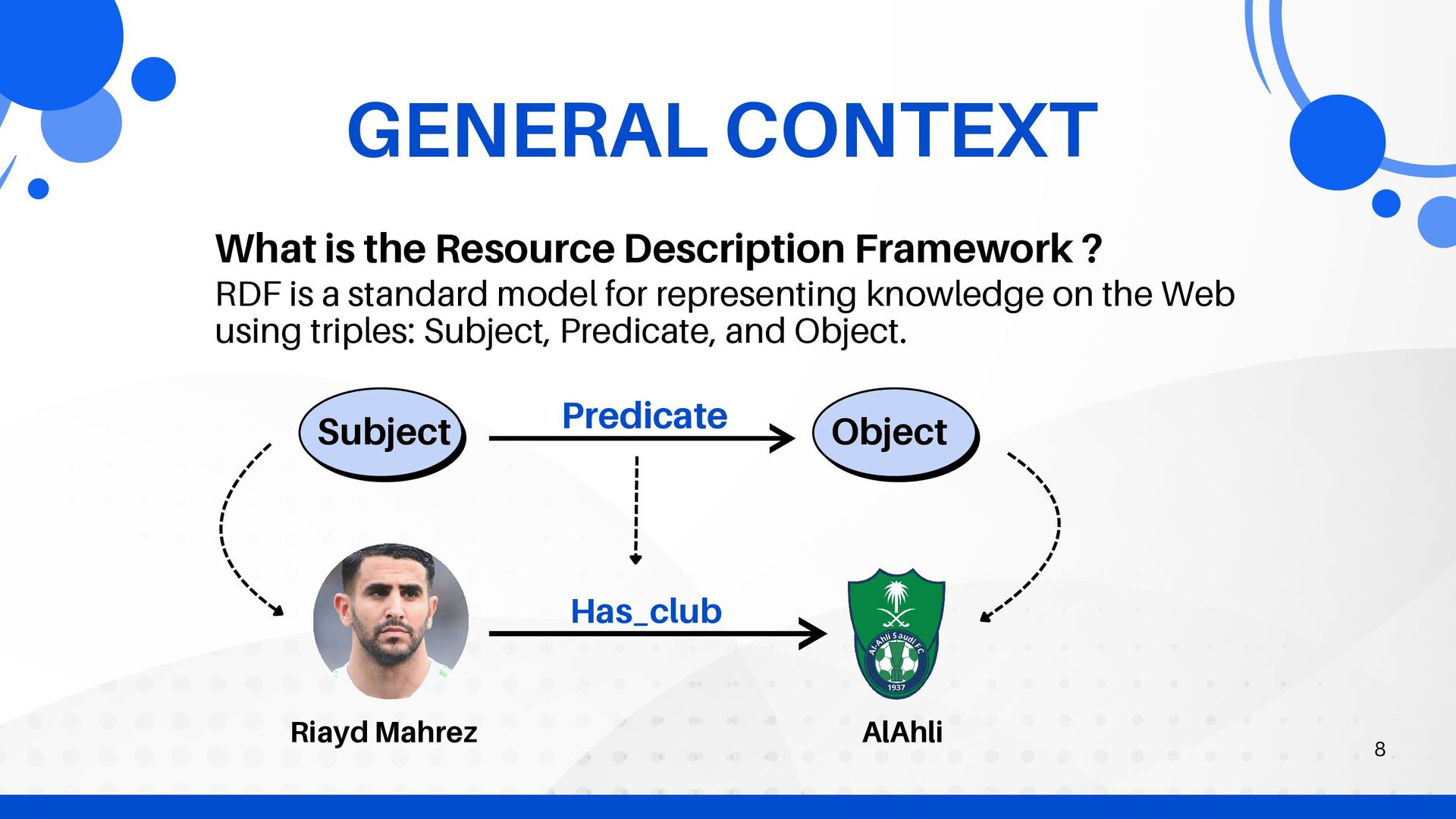
  6. Has_club RDF is a standard model for representing knowledge on

    the Web using triples: Subject, Predicate, and Object. GENERAL CONTEXT What is the Resource Description Framework ? Riayd Mahrez AlAhli Subject Object Predicate 8
  7. Has_club RDF is a standard model for representing knowledge on

    the Web using triples: Subject, Predicate, and Object. GENERAL CONTEXT What is the Resource Description Framework ? Riayd Mahrez AlAhli Subject Object Predicate national_team has_club knows has_country has_club national_team has_country 9
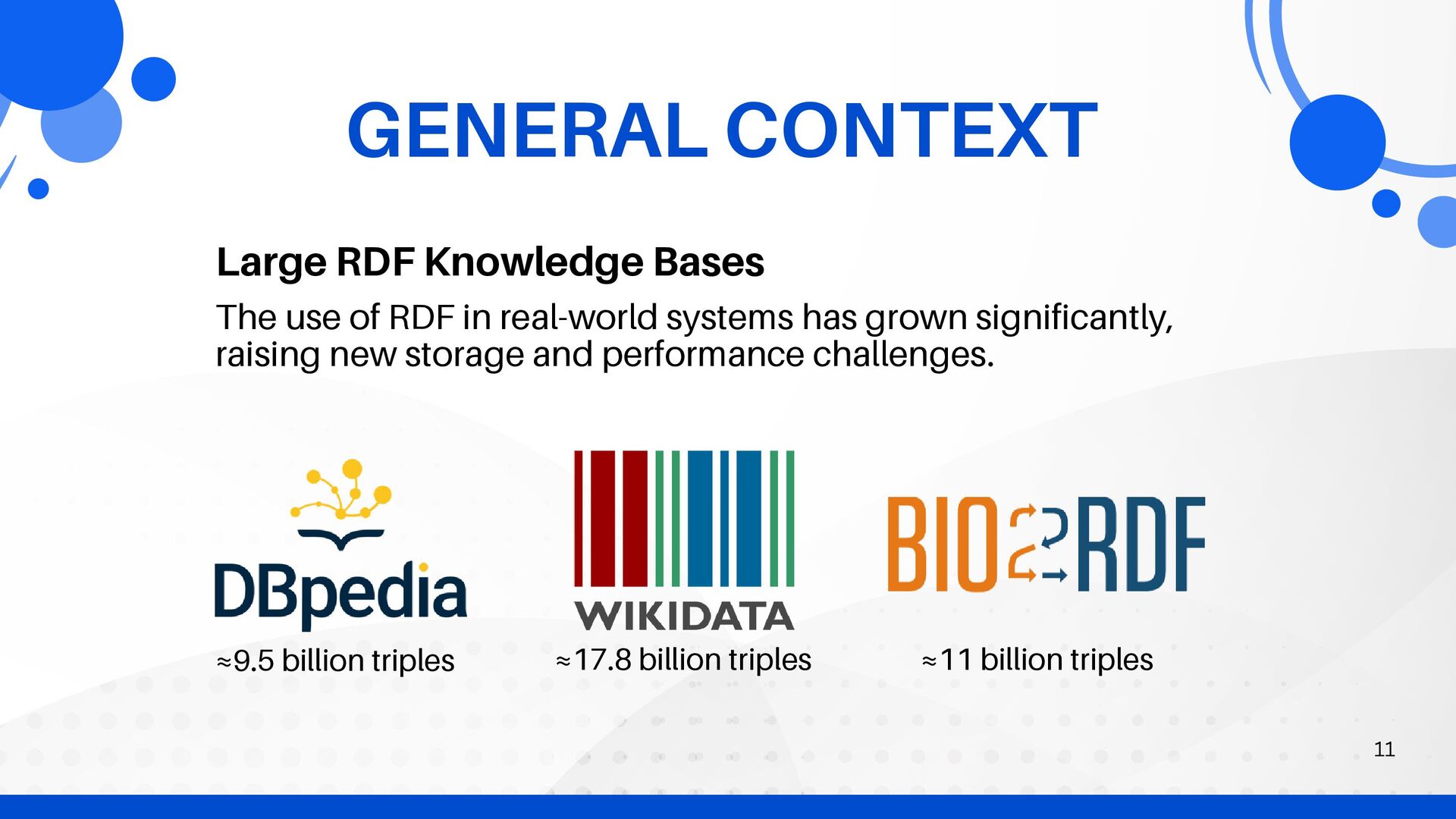
  8. GENERAL CONTEXT Large RDF Knowledge Bases The use of RDF

    in real-world systems has grown significantly, raising new storage and performance challenges. ≈9.5 billion triples ≈11 billion triples ≈17.8 billion triples 11
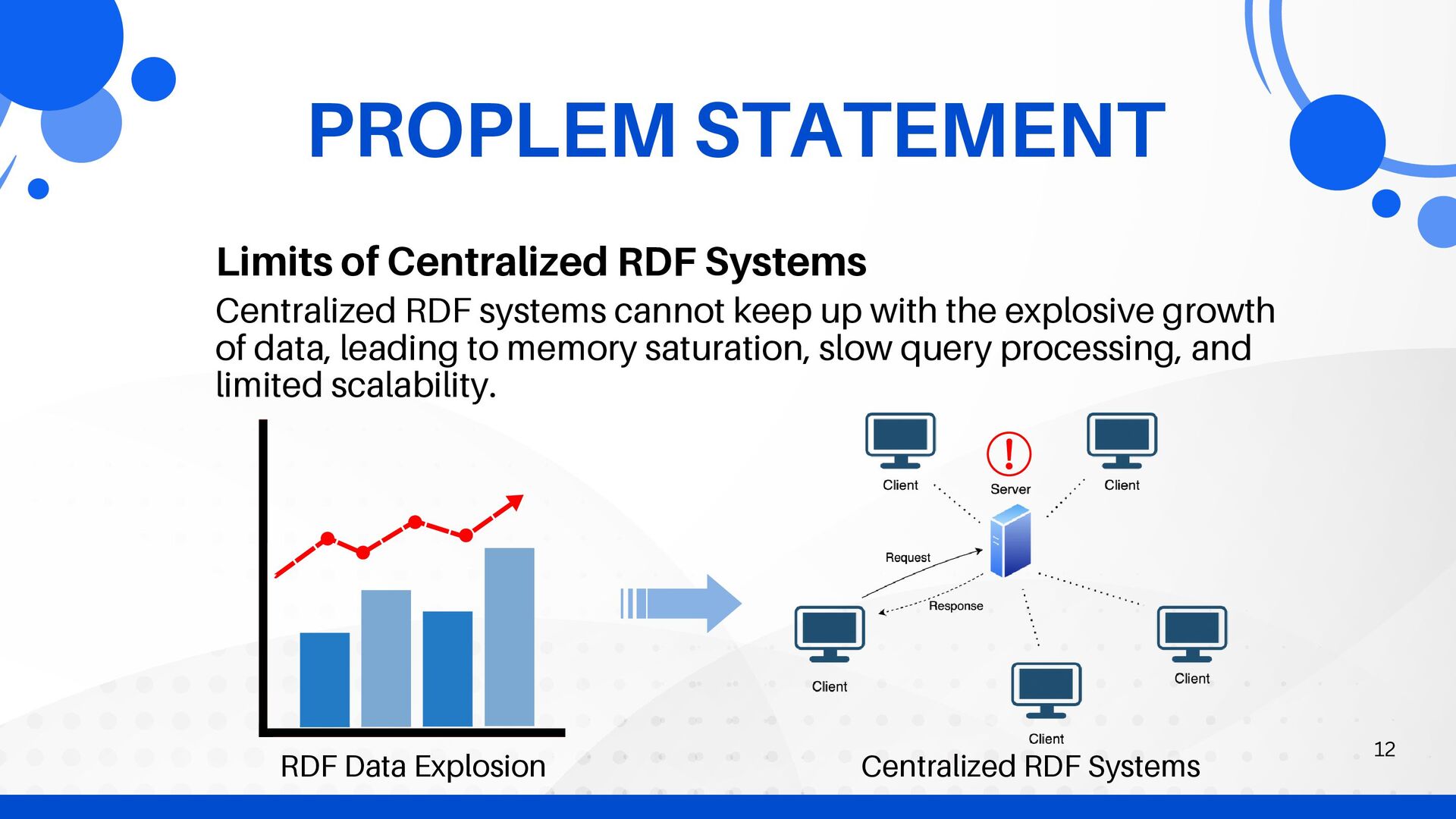
  9. PROPLEM STATEMENT Limits of Centralized RDF Systems RDF Data Explosion

    Centralized RDF Systems Centralized RDF systems cannot keep up with the explosive growth of data, leading to memory saturation, slow query processing, and limited scalability. 12
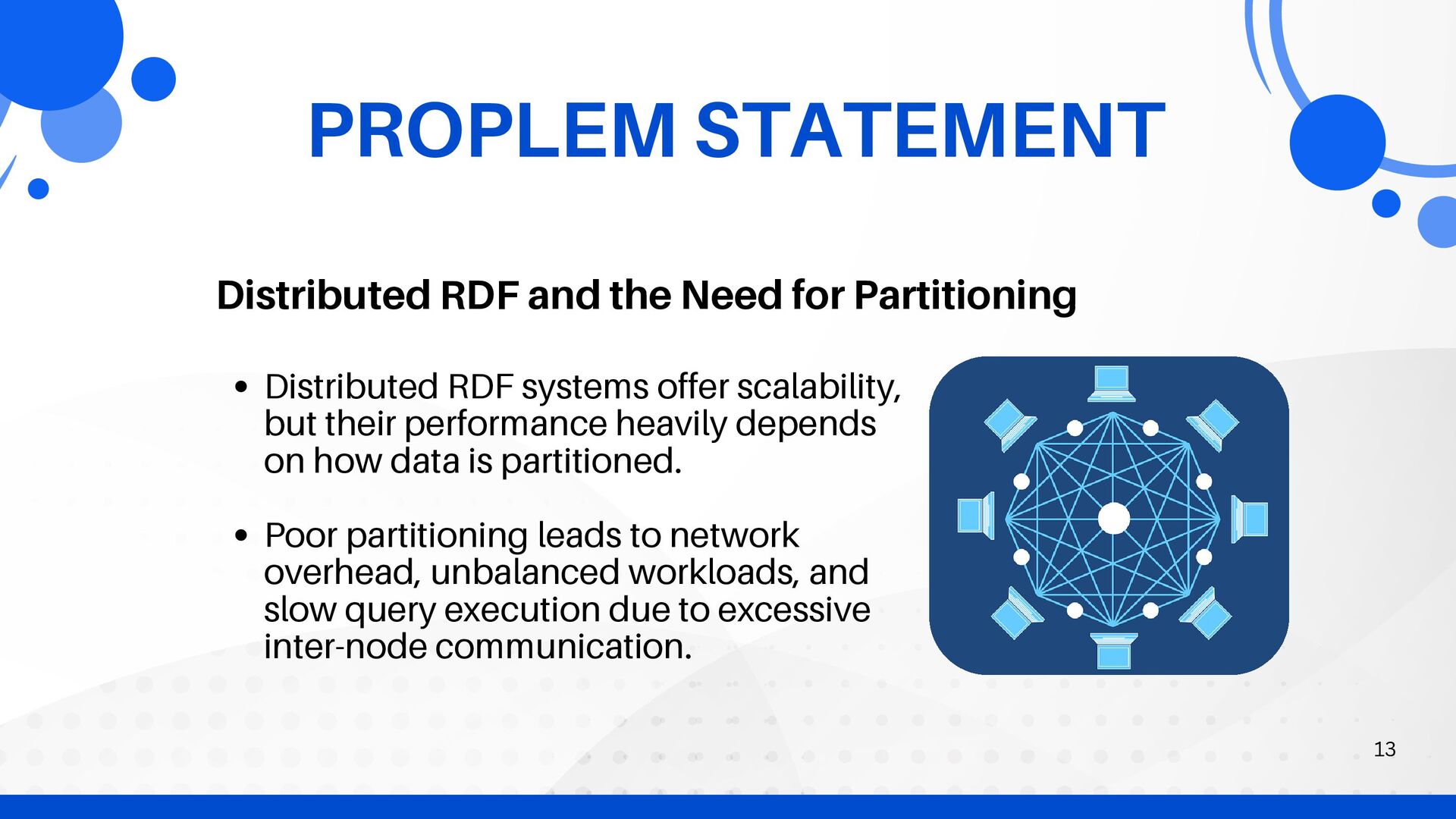
  10. PROPLEM STATEMENT Distributed RDF and the Need for Partitioning Distributed

    RDF systems offer scalability, but their performance heavily depends on how data is partitioned. Poor partitioning leads to network overhead, unbalanced workloads, and slow query execution due to excessive inter-node communication. 13
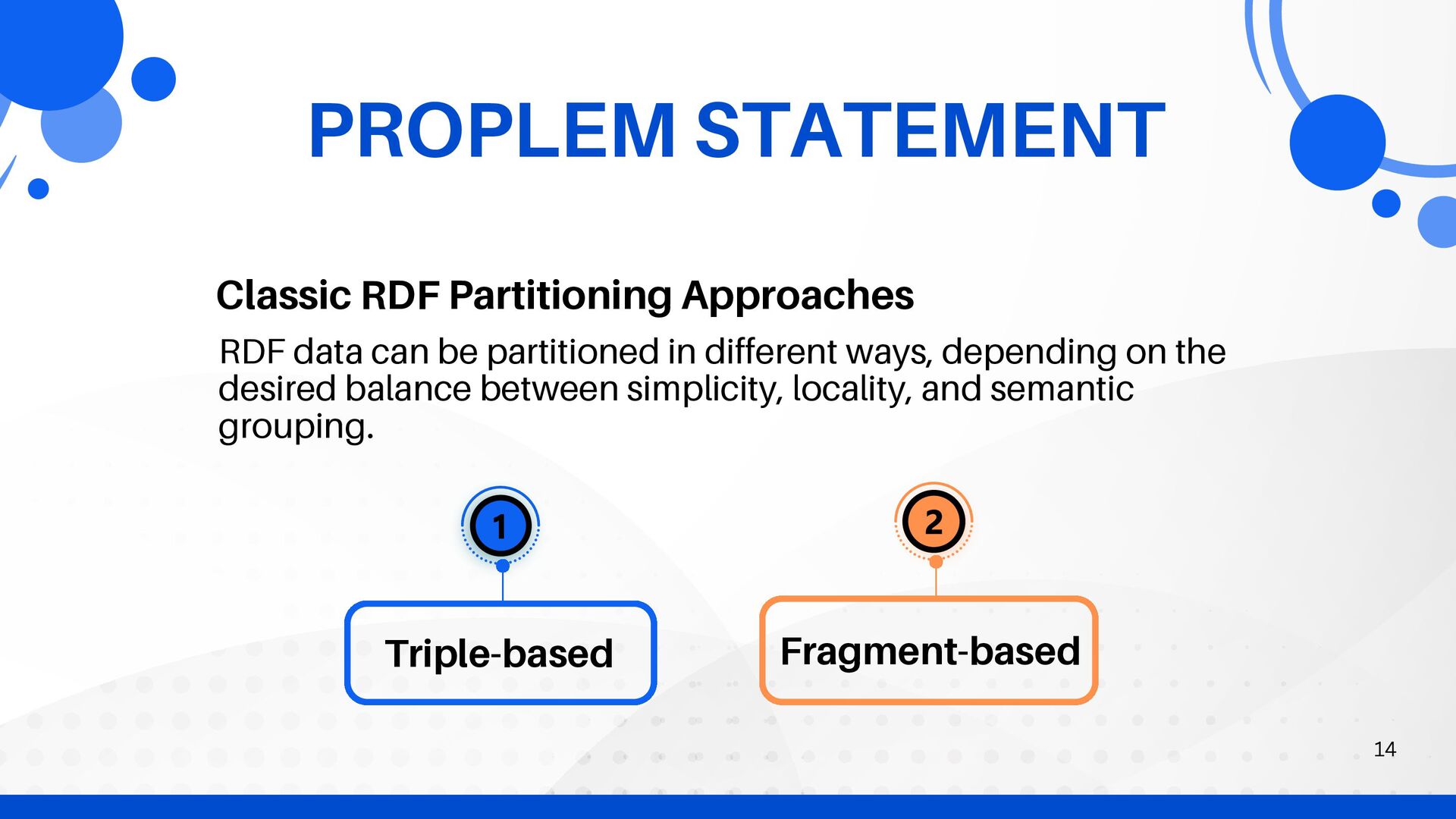
  11. PROPLEM STATEMENT Classic RDF Partitioning Approaches Triple-based Fragment-based RDF data

    can be partitioned in different ways, depending on the desired balance between simplicity, locality, and semantic grouping. 14
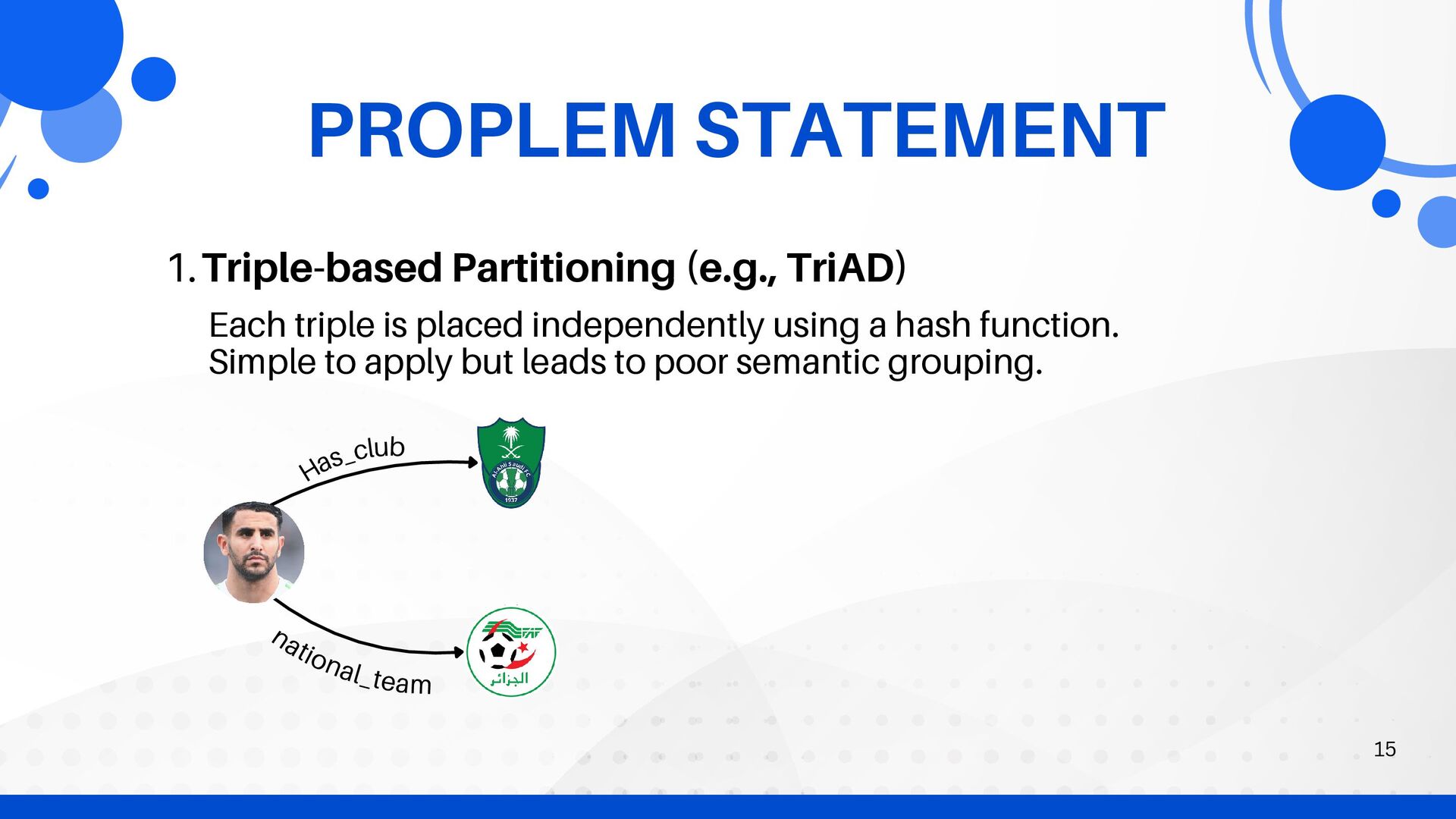
  12. PROPLEM STATEMENT 1.Triple-based Partitioning (e.g., TriAD) Each triple is placed

    independently using a hash function. Simple to apply but leads to poor semantic grouping. Has_club national_team 15
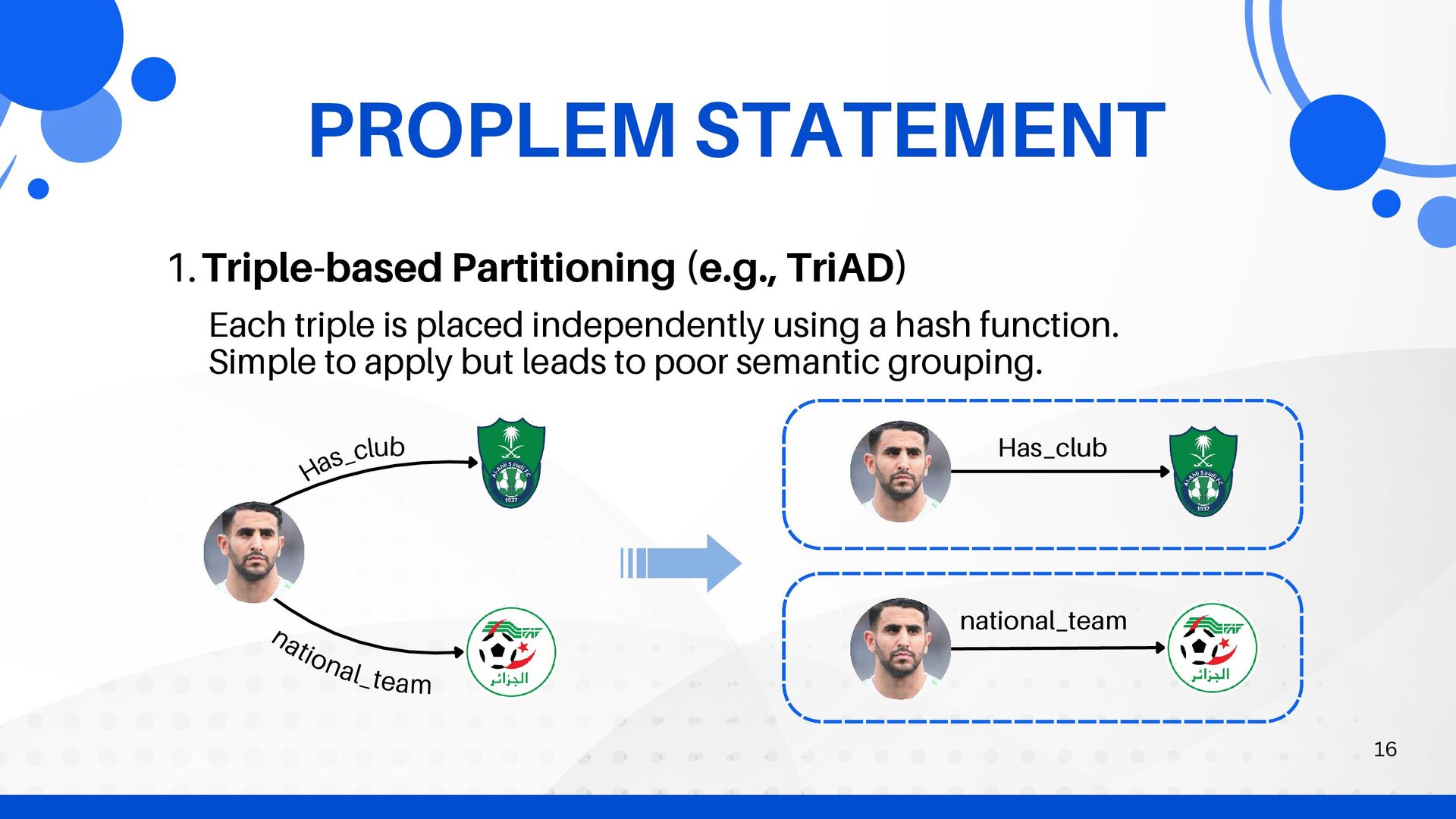
  13. PROPLEM STATEMENT 1.Triple-based Partitioning (e.g., TriAD) Each triple is placed

    independently using a hash function. Simple to apply but leads to poor semantic grouping. Has_club national_team Has_club national_team 16
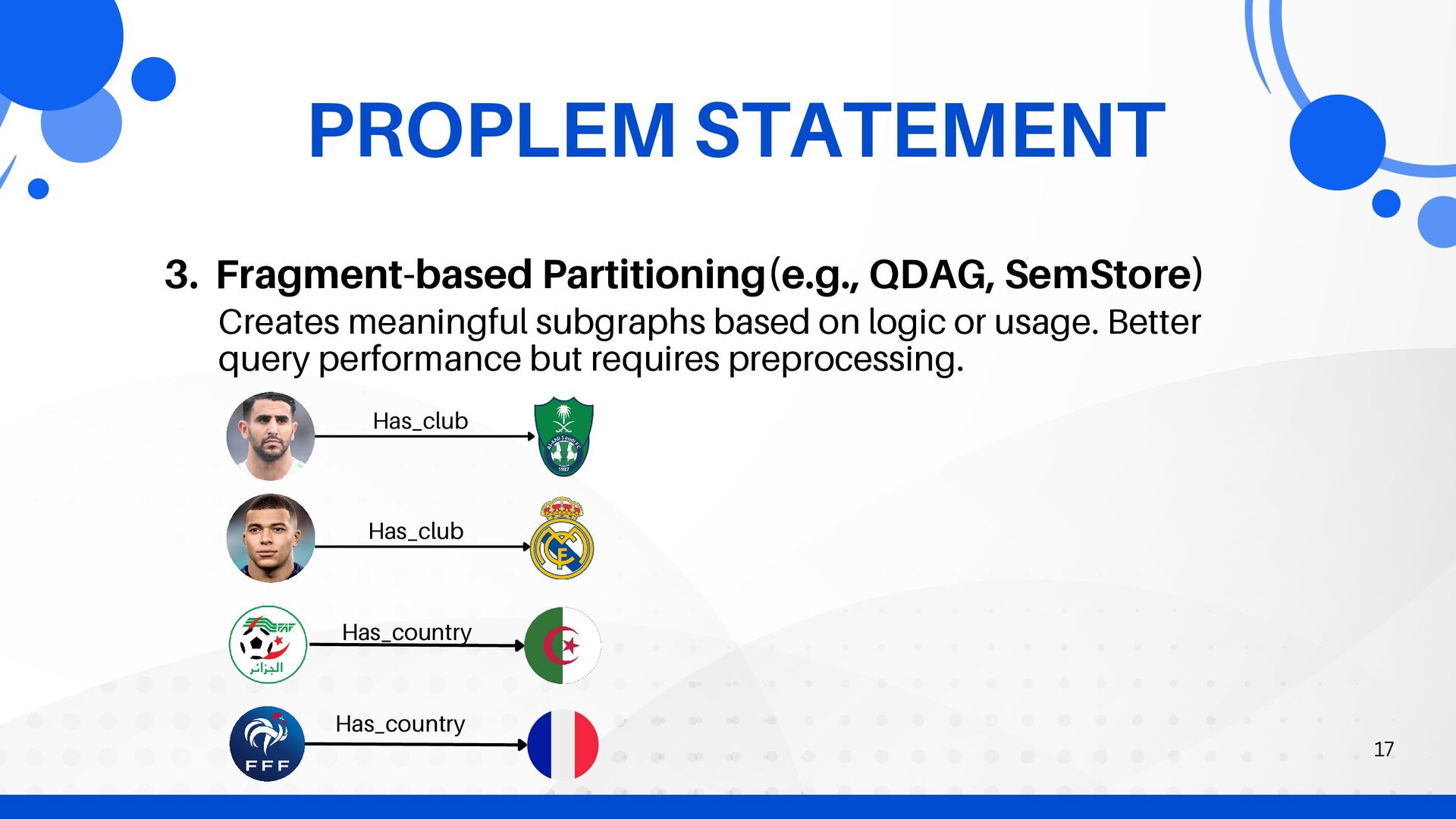
  14. PROPLEM STATEMENT 3. Fragment-based Partitioning(e.g., QDAG, SemStore) Creates meaningful subgraphs

    based on logic or usage. Better query performance but requires preprocessing. Has_club Has_club Has_country Has_country 17
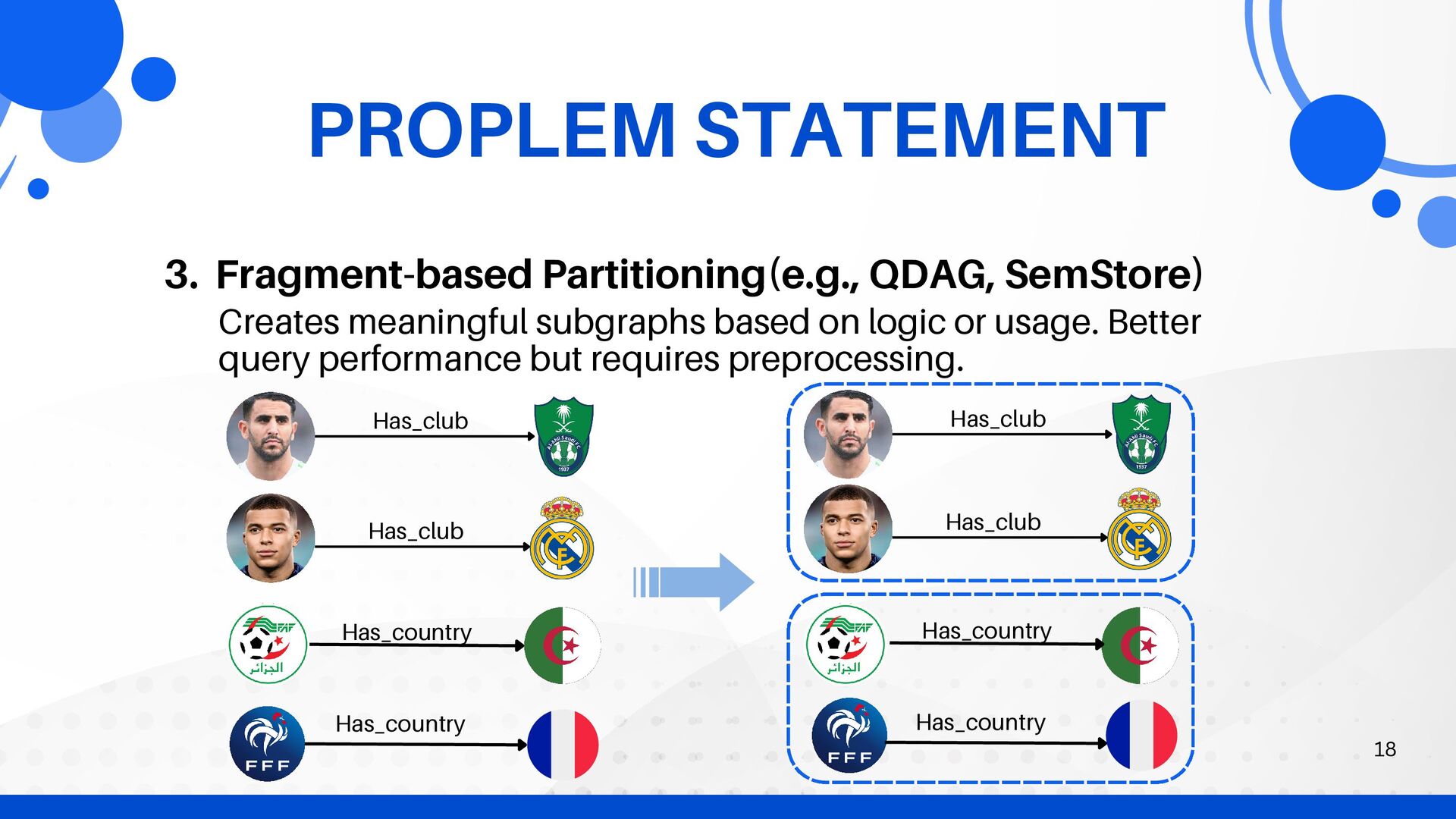
  15. PROPLEM STATEMENT 3. Fragment-based Partitioning(e.g., QDAG, SemStore) Creates meaningful subgraphs

    based on logic or usage. Better query performance but requires preprocessing. Has_club Has_club Has_club Has_club Has_country Has_country Has_country Has_country 18
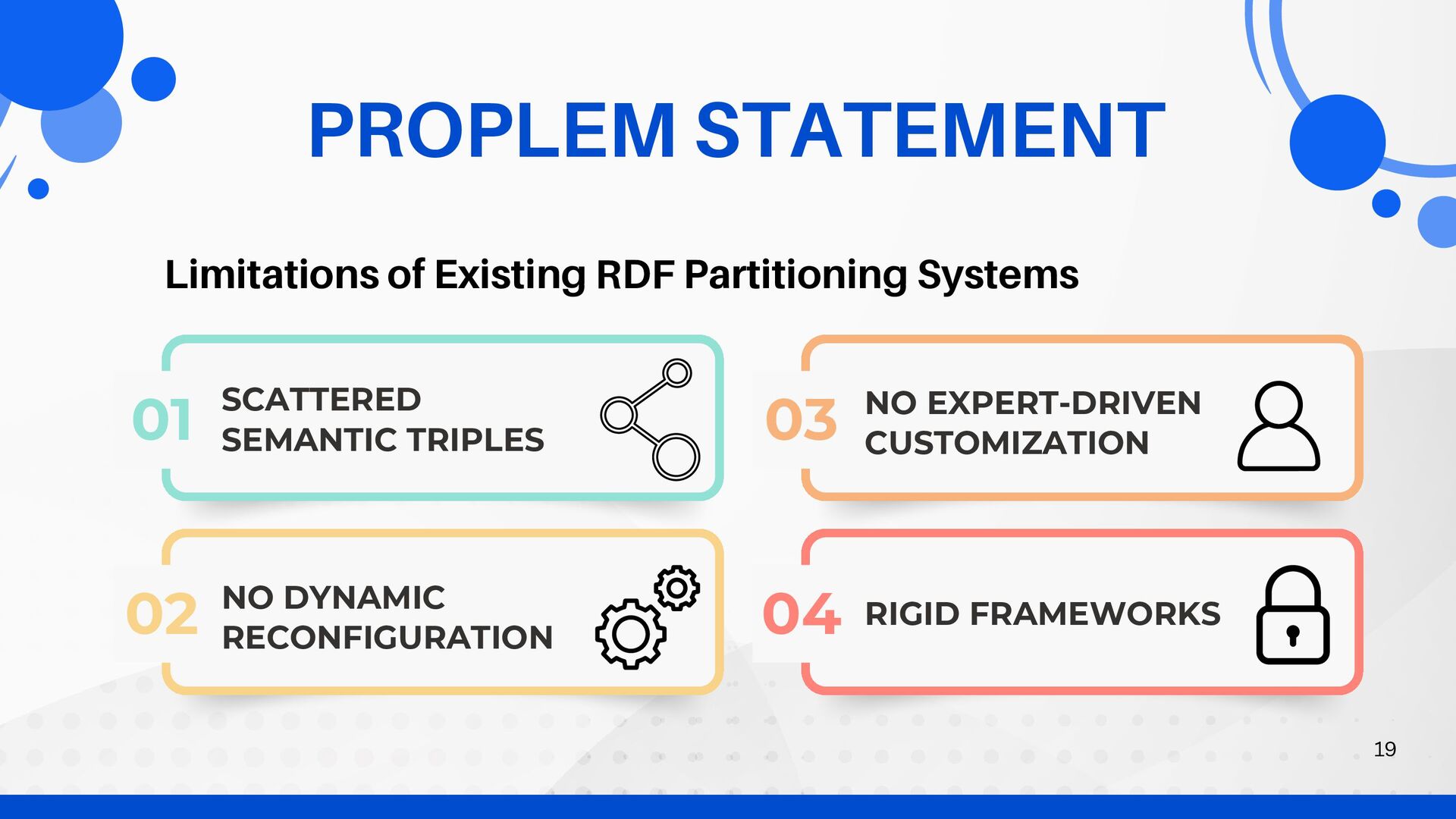
  16. PROPLEM STATEMENT Limitations of Existing RDF Partitioning Systems 01 03

    02 04 SCATTERED SEMANTIC TRIPLES NO DYNAMIC RECONFIGURATION NO EXPERT-DRIVEN CUSTOMIZATION RIGID FRAMEWORKS 19
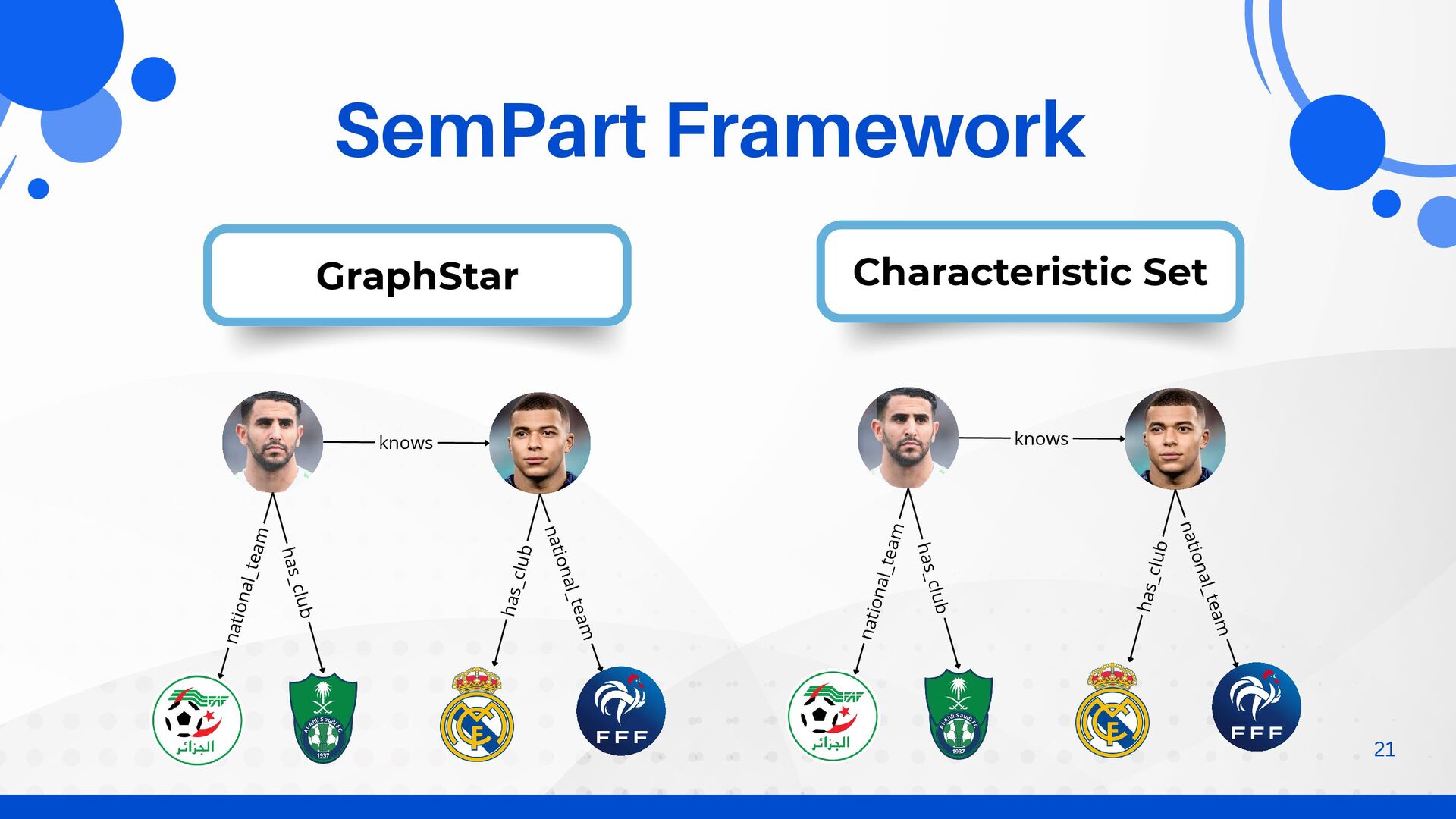
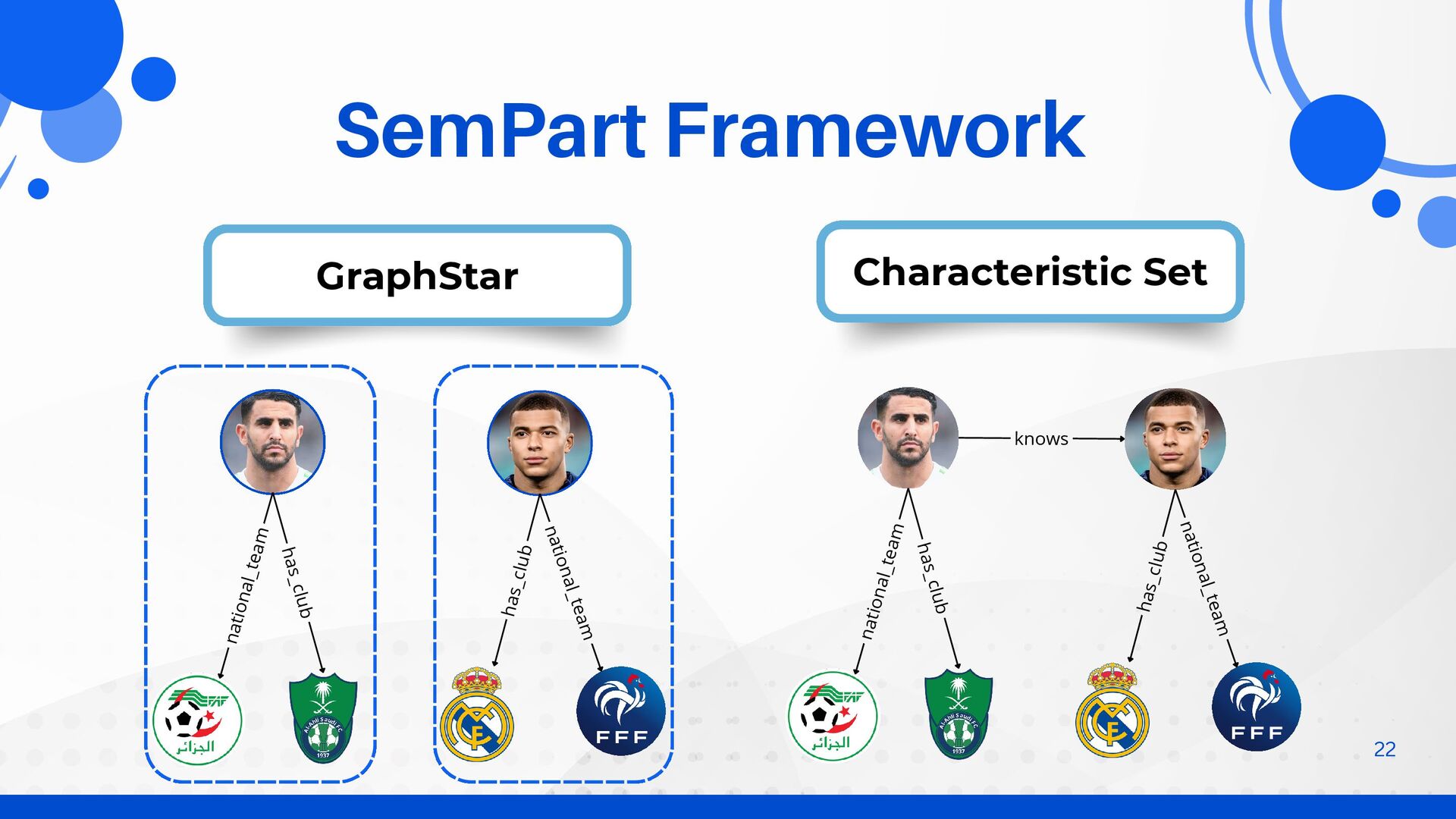
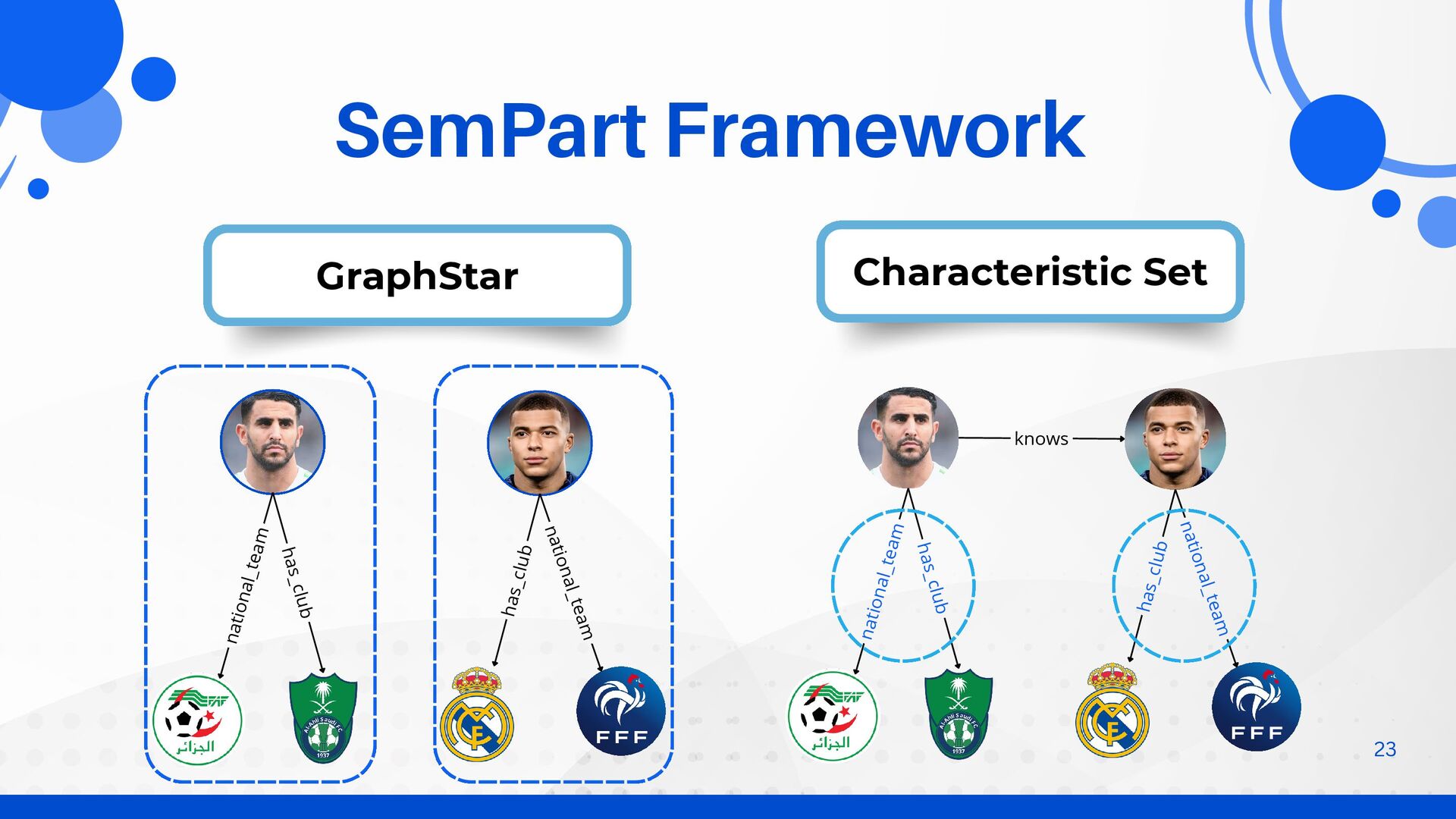
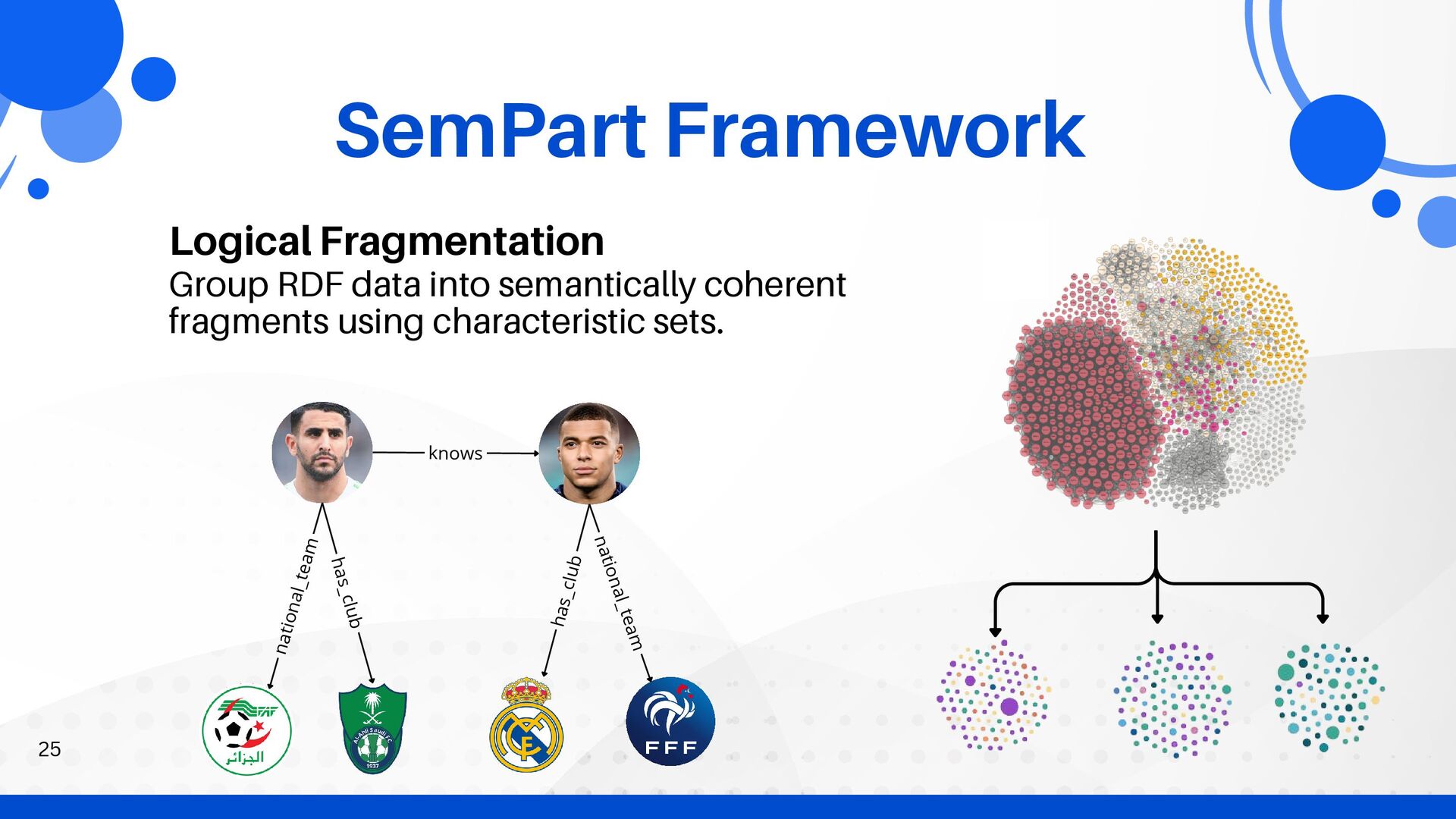
  17. SemPart Framework national_team has_club knows has_club national_team Logical Fragmentation Group

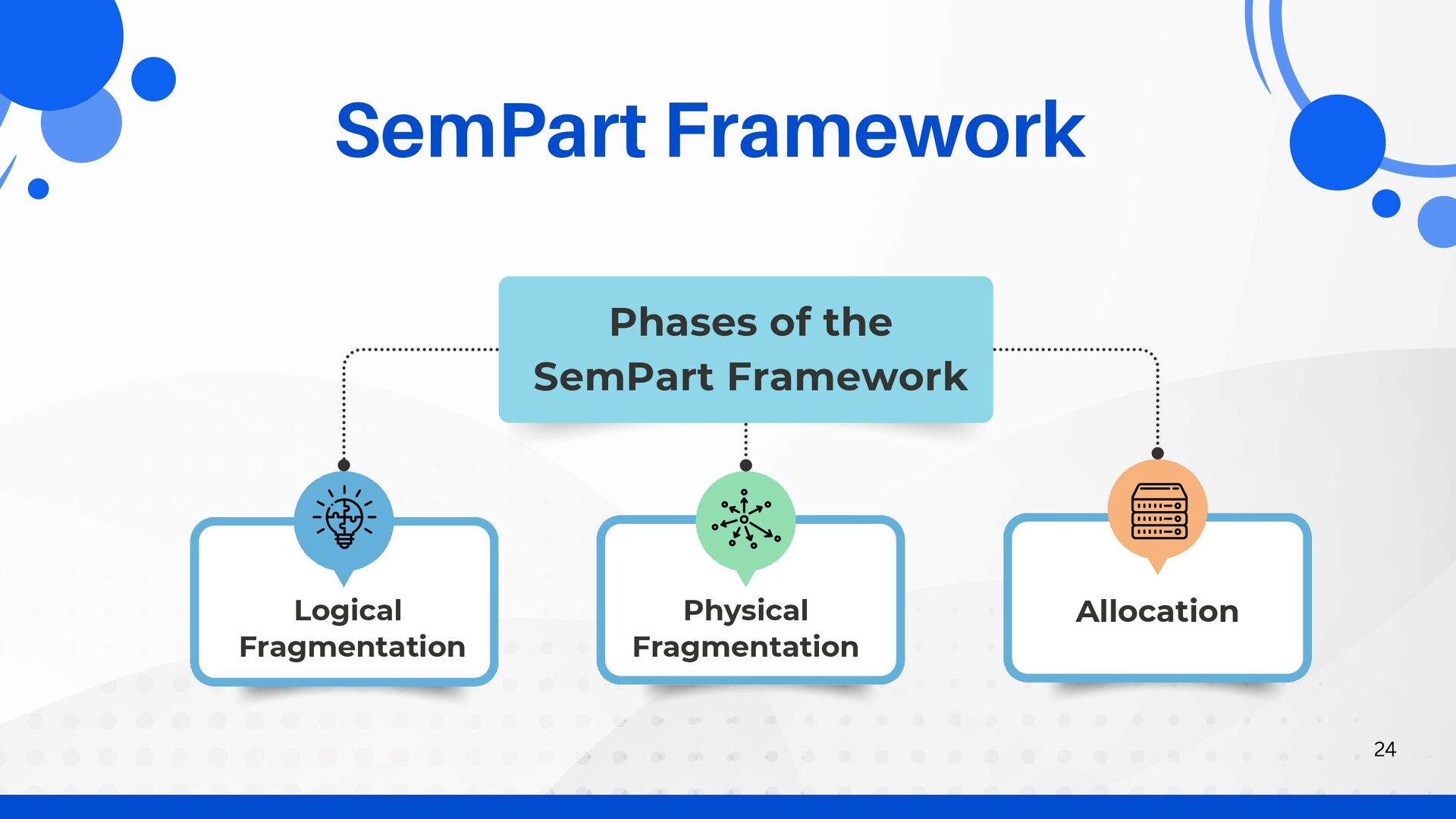
    RDF data into semantically coherent fragments using characteristic sets. 25
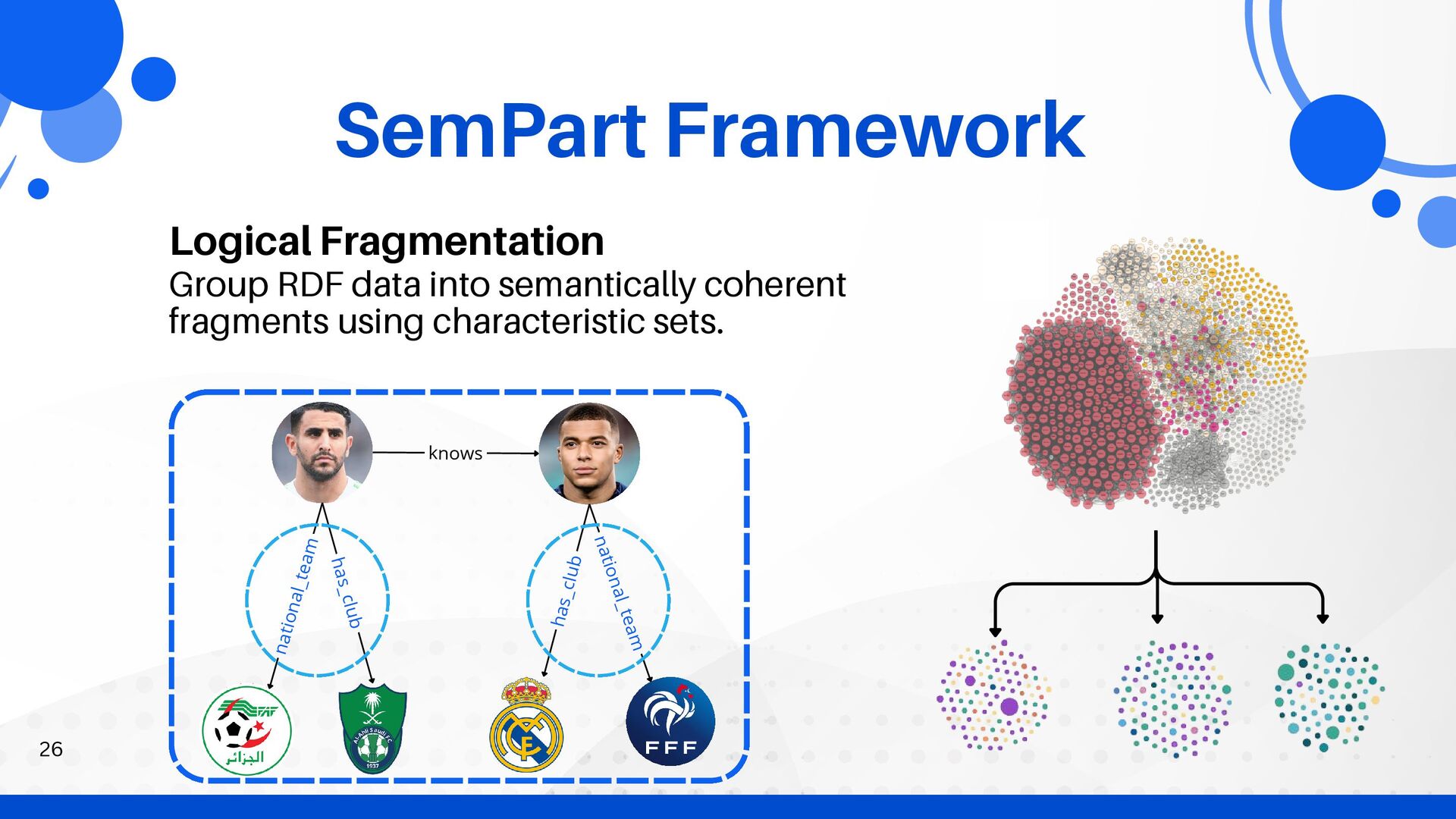
  18. SemPart Framework Logical Fragmentation Group RDF data into semantically coherent

    fragments using characteristic sets. national_team has_club knows has_club national_team 26
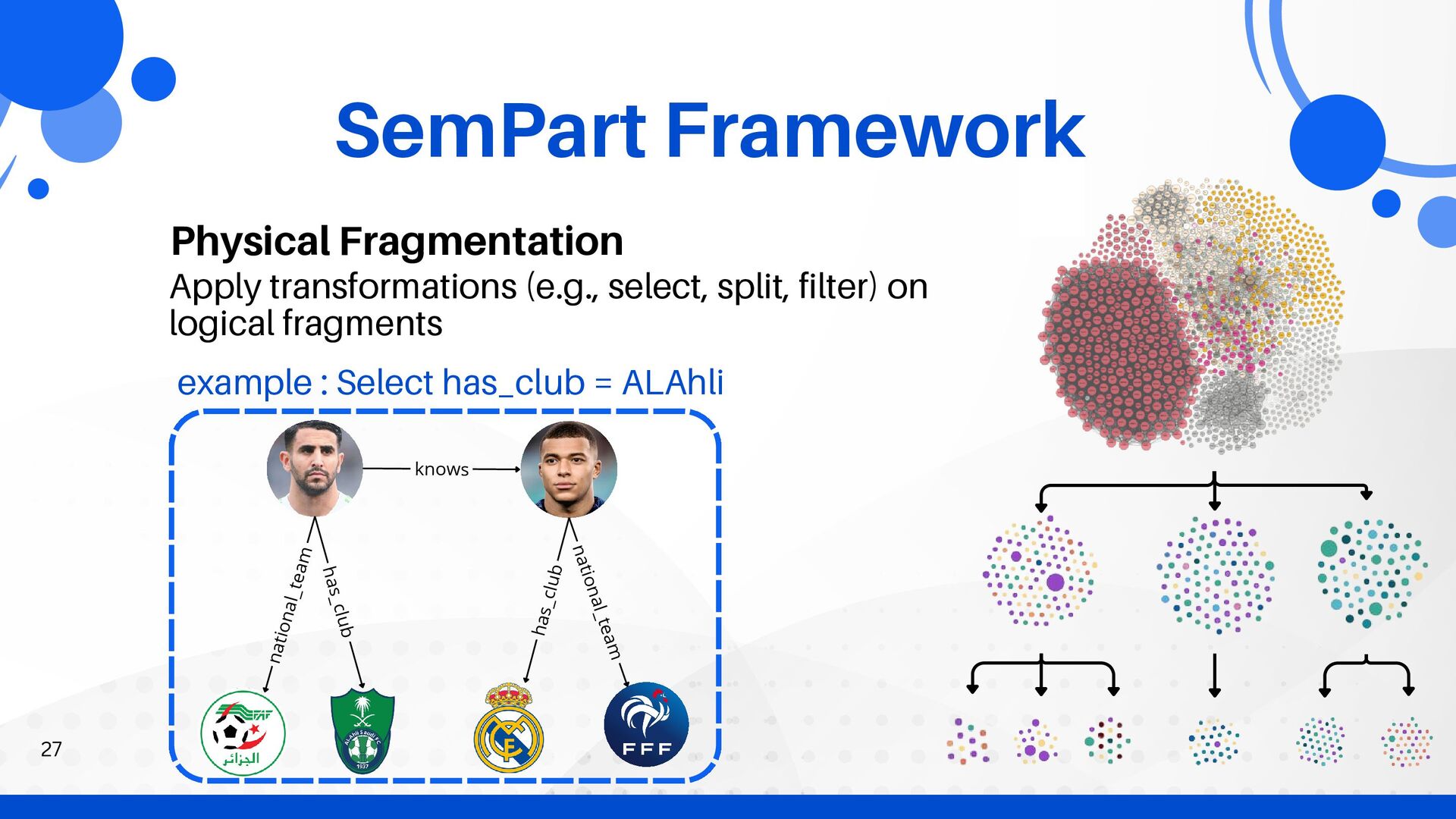
  19. SemPart Framework national_team has_club knows has_club national_team Physical Fragmentation Apply

    transformations (e.g., select, split, filter) on logical fragments example : Select has_club = ALAhli 27
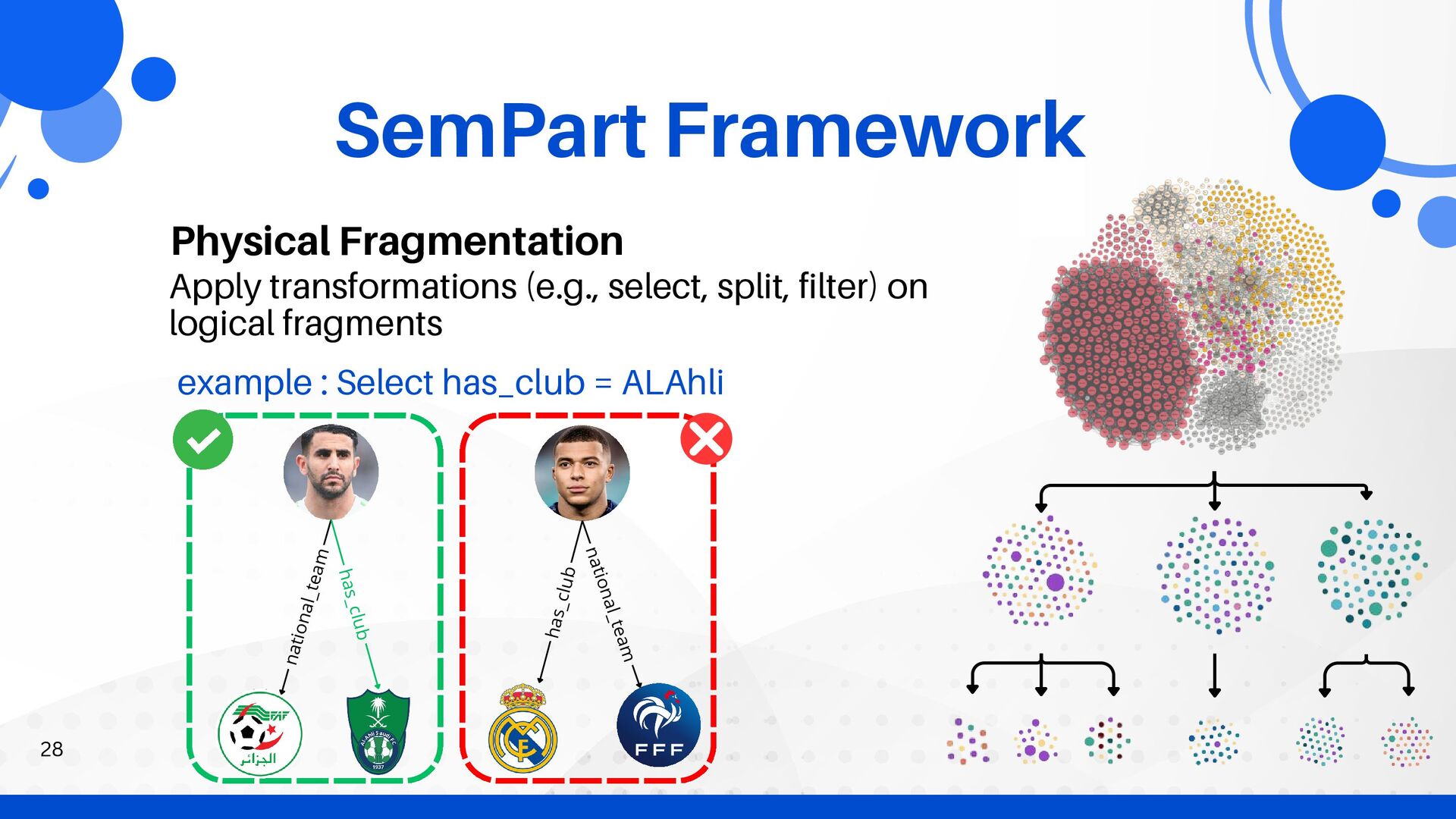
  20. SemPart Framework Physical Fragmentation Apply transformations (e.g., select, split, filter)

    on logical fragments national_team has_club has_club national_team example : Select has_club = ALAhli 28
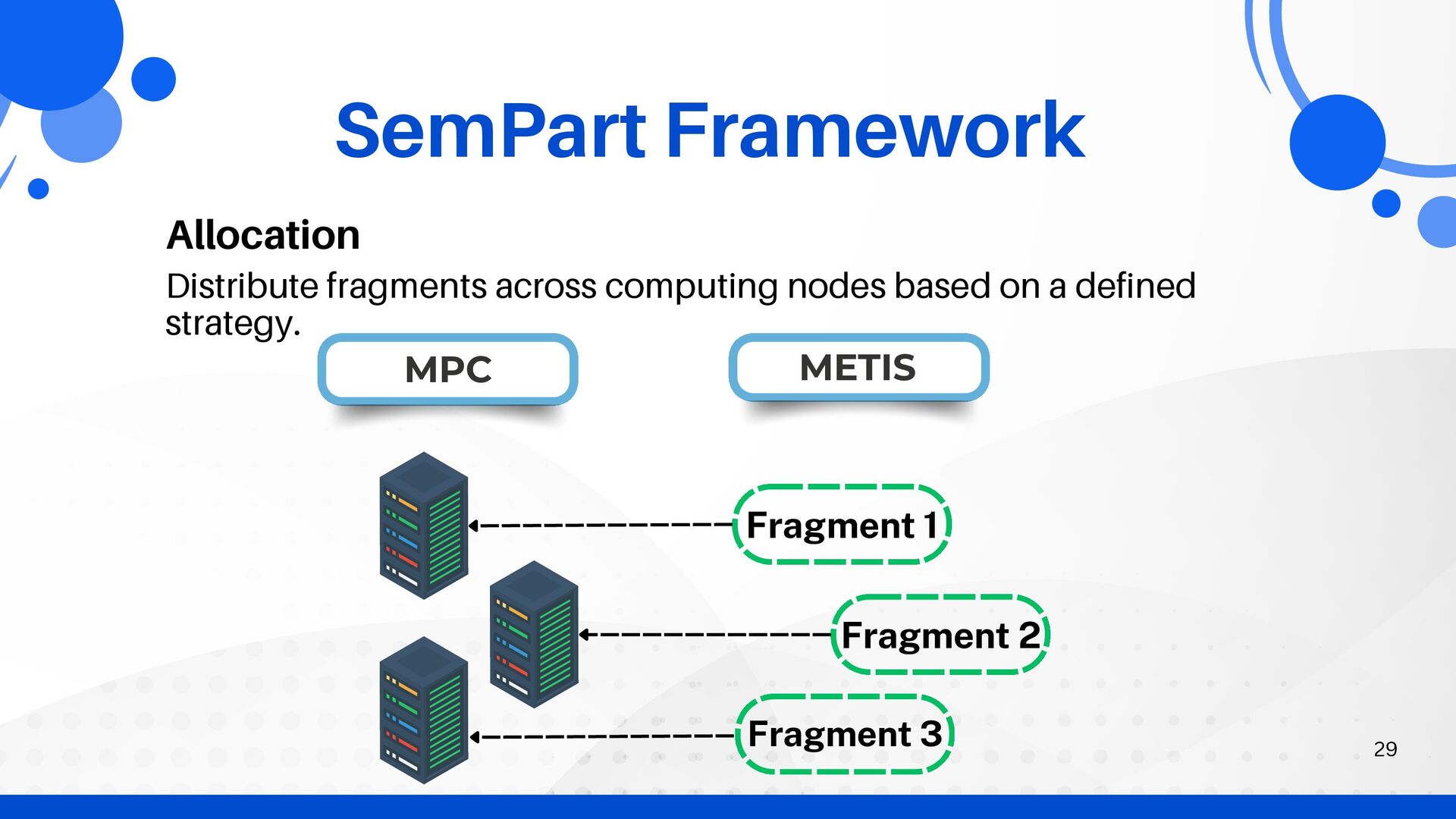
  21. Fragment 1 Fragment 2 Fragment 3 SemPart Framework Allocation Distribute

    fragments across computing nodes based on a defined strategy. MPC METIS 29
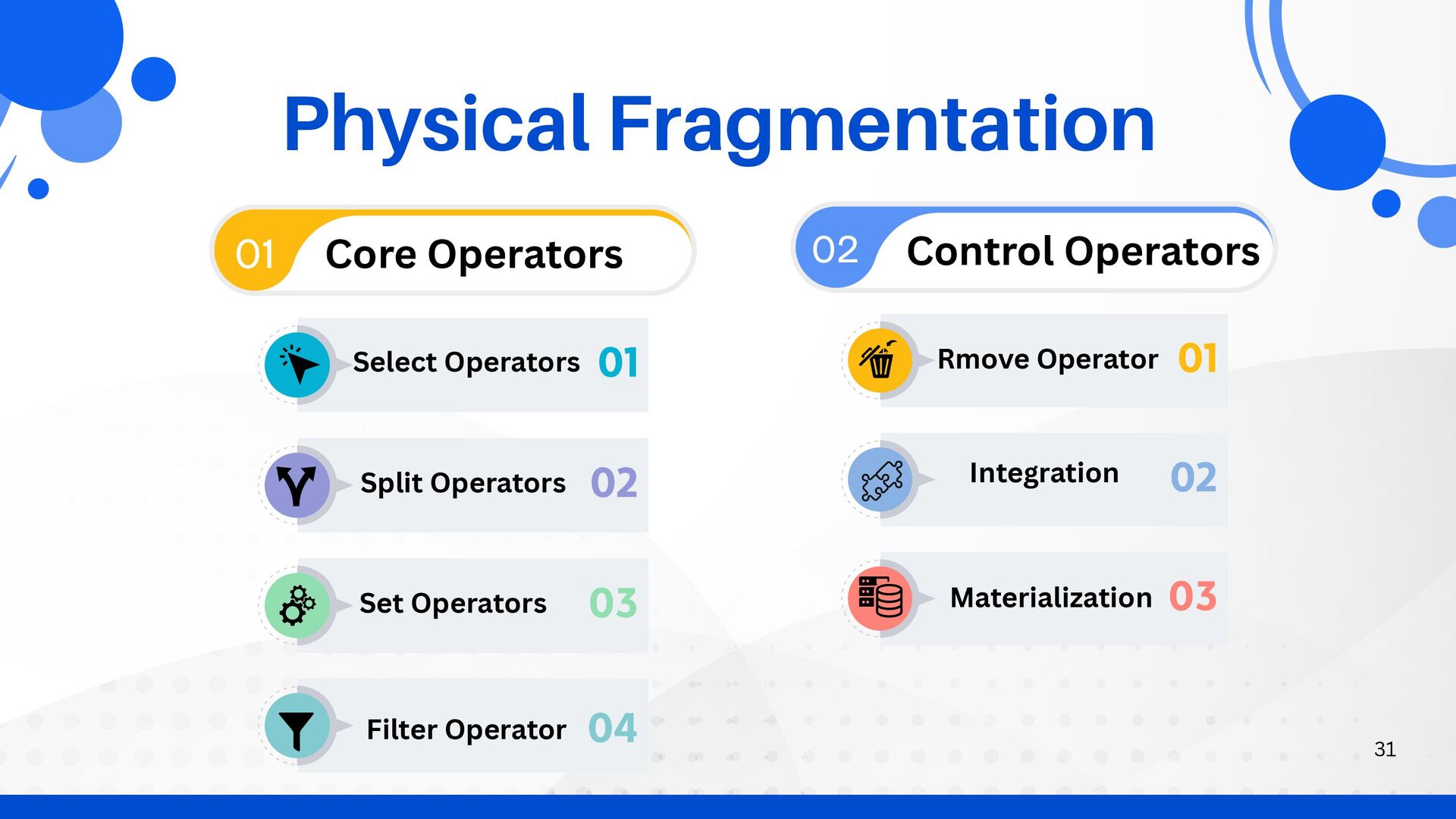
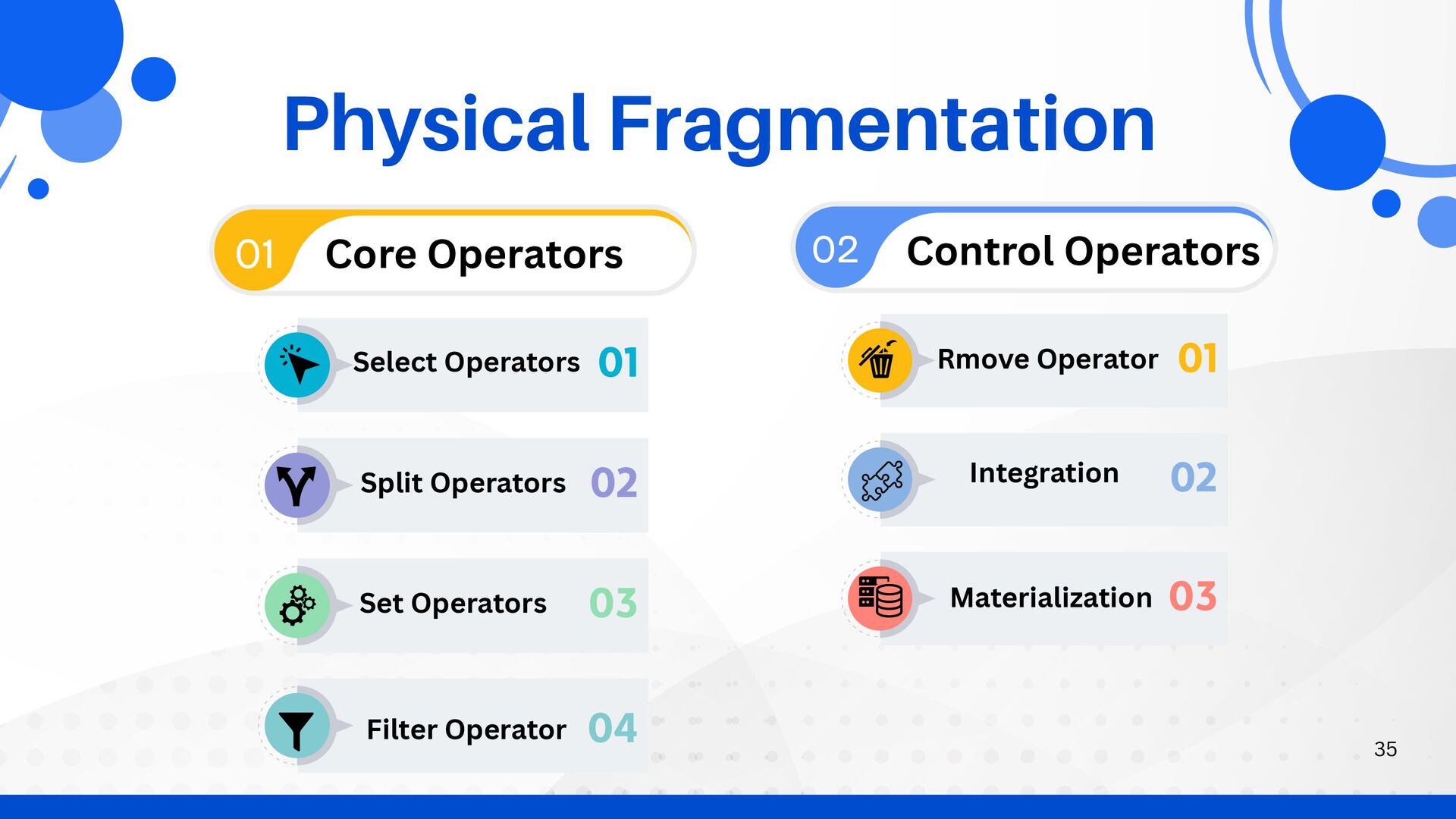
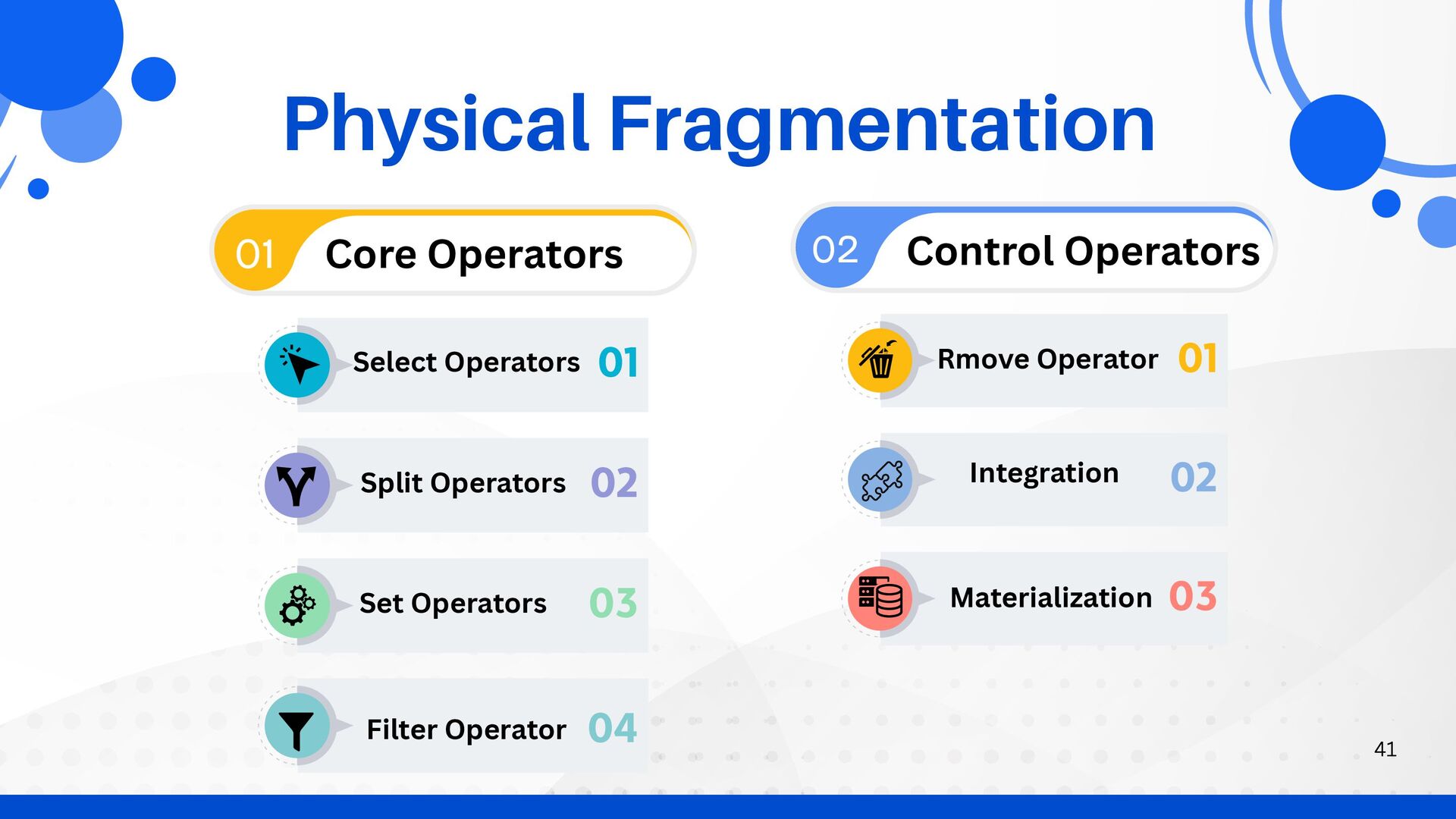
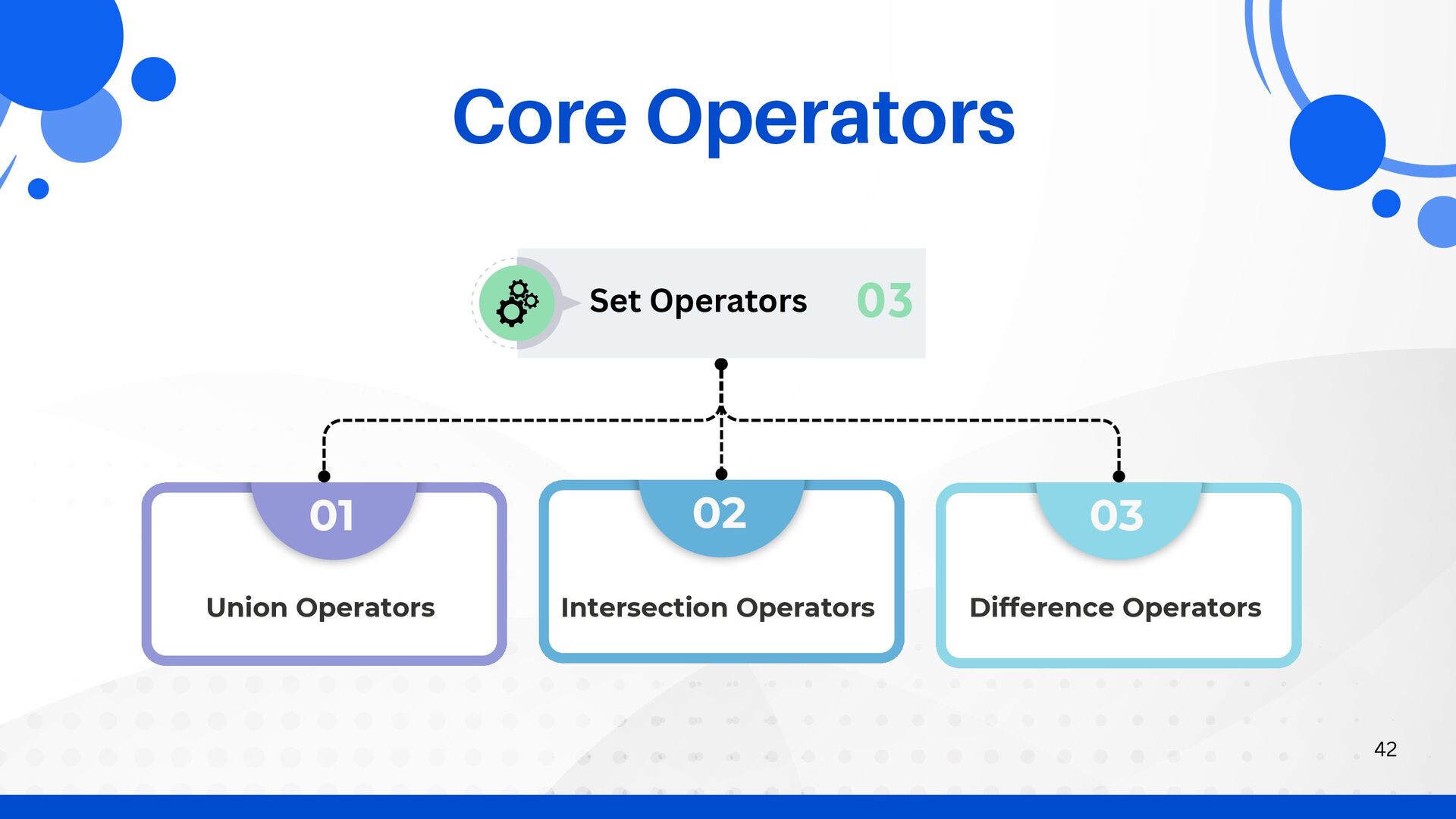
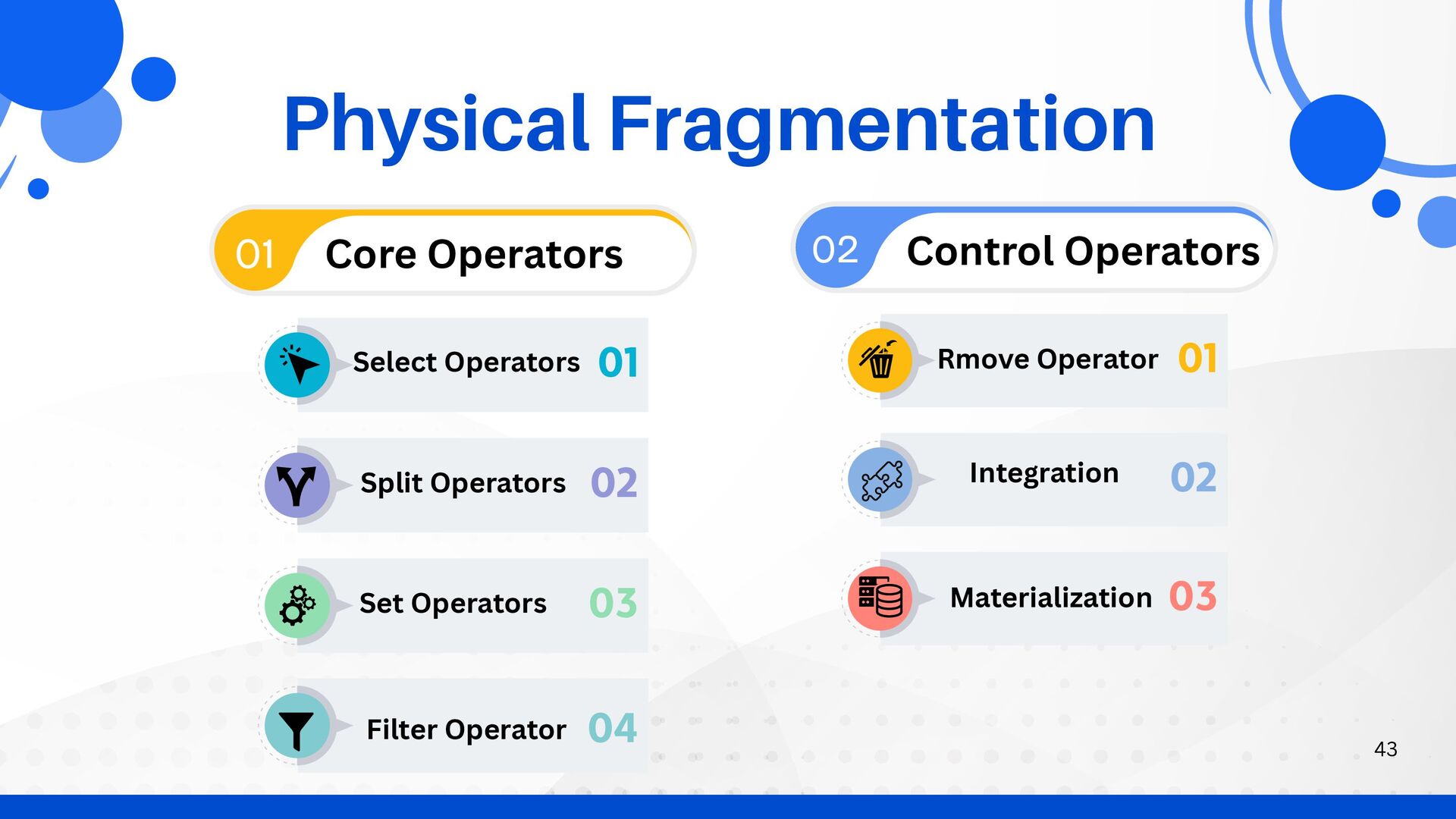
  22. Physical Fragmentation Control Operators Core Operators 01 02 01 02

    03 01 02 03 04 Select Operators Filter Operator Split Operators Set Operators Rmove Operator Integration Materialization 31
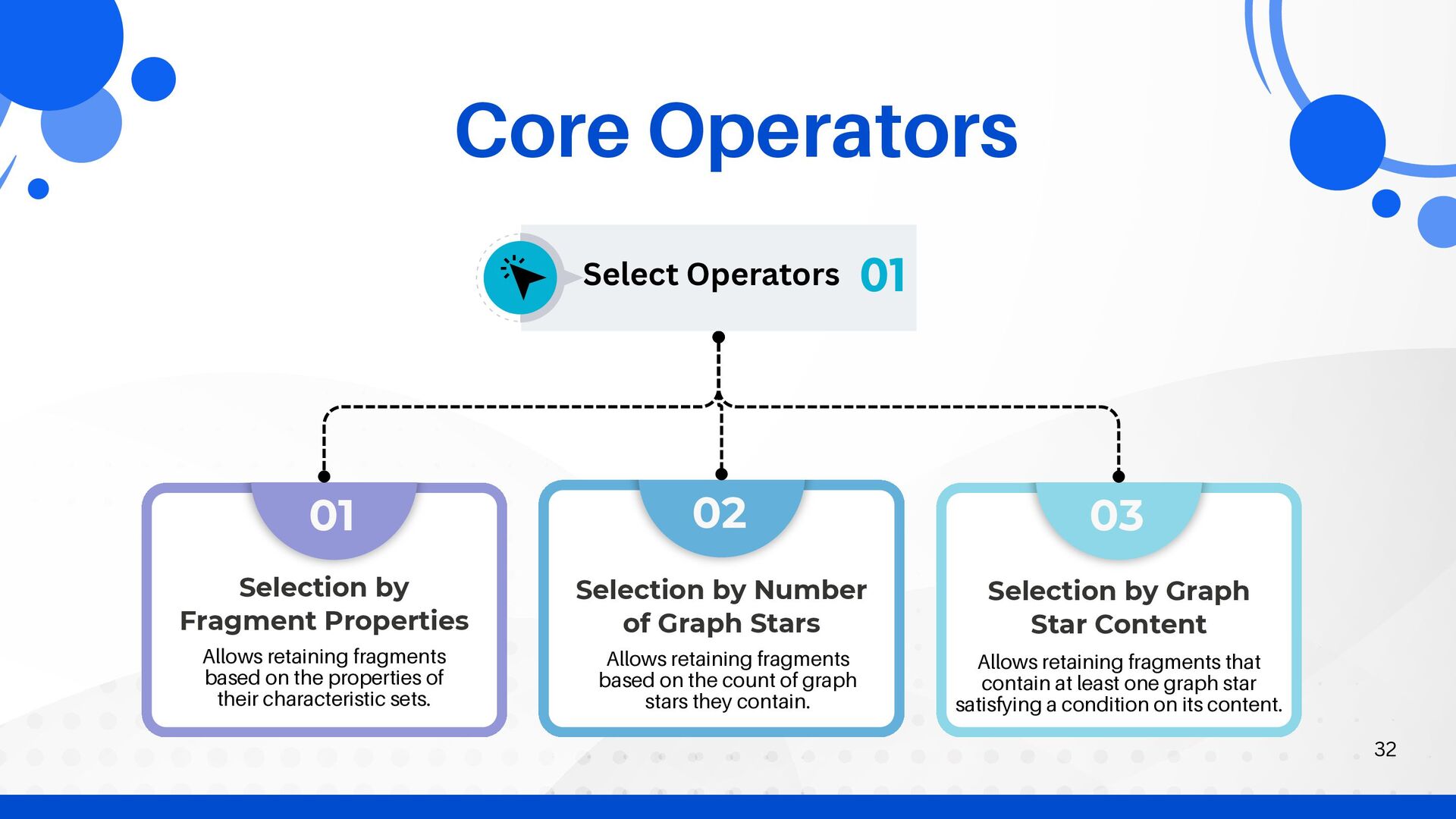
  23. Core Operators 02 03 01 Selection by Fragment Properties Selection

    by Number of Graph Stars Selection by Graph Star Content Allows retaining fragments based on the properties of their characteristic sets. Allows retaining fragments based on the count of graph stars they contain. Allows retaining fragments that contain at least one graph star satisfying a condition on its content. 01 Select Operators 32
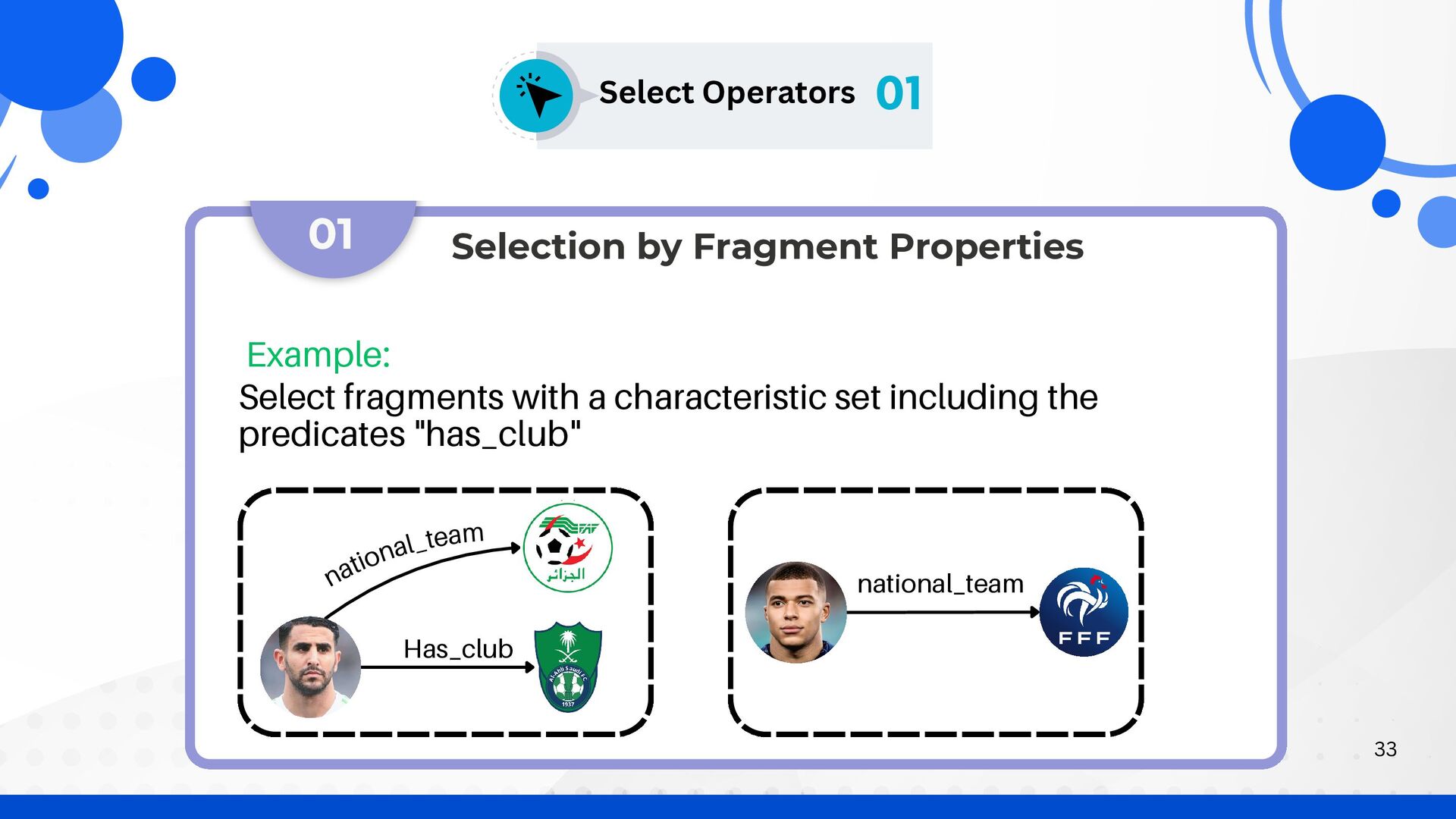
  24. 01 Selection by Fragment Properties Select fragments with a characteristic

    set including the predicates "has_club" Example: Has_club national_team national_team 01 Select Operators 33
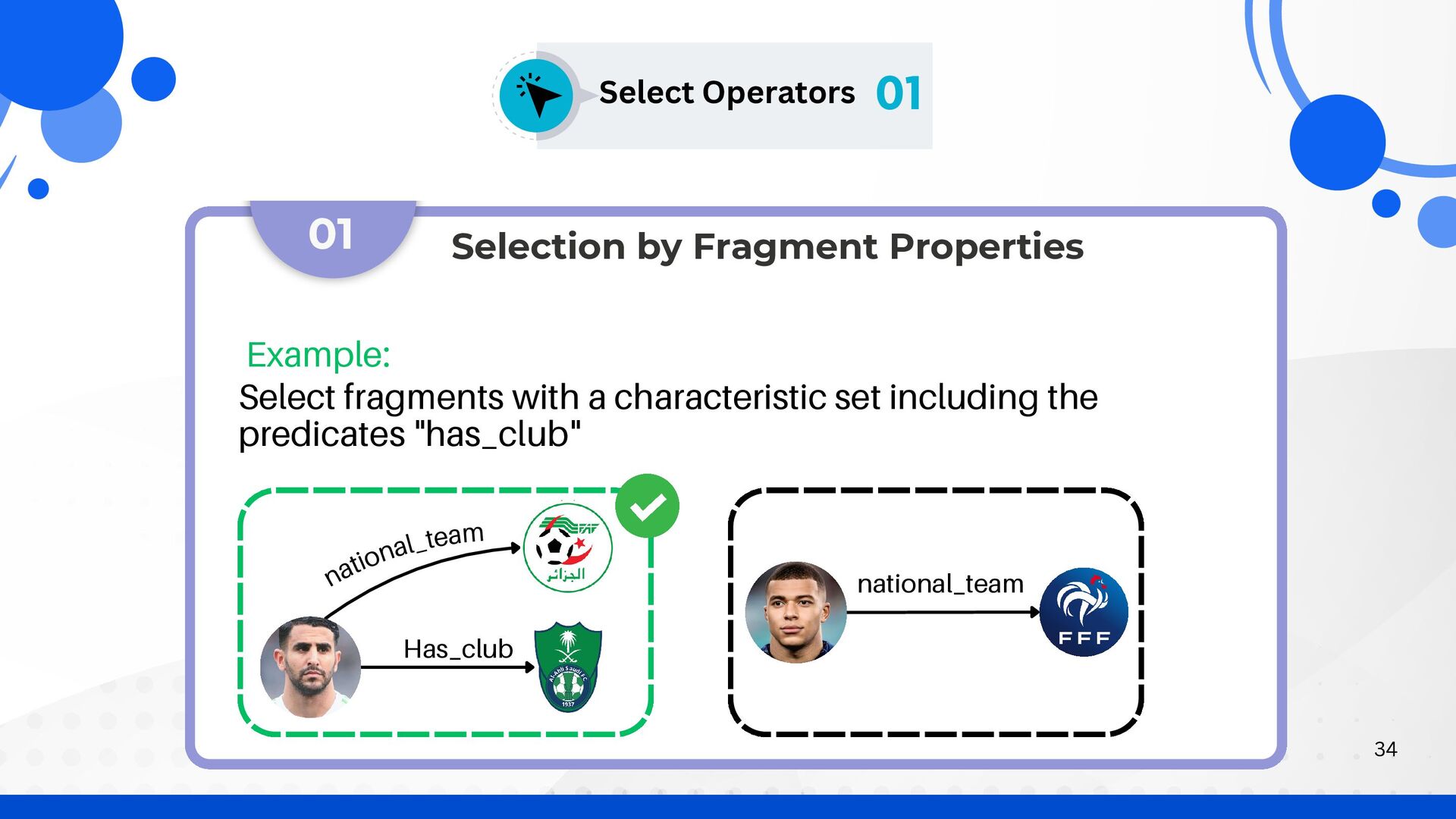
  25. 01 Selection by Fragment Properties Select fragments with a characteristic

    set including the predicates "has_club" Example: Has_club national_team national_team 01 Select Operators 34
  26. Physical Fragmentation Control Operators Core Operators 01 02 01 02

    03 01 02 03 04 Select Operators Filter Operator Split Operators Set Operators Rmove Operator Integration Materialization 35
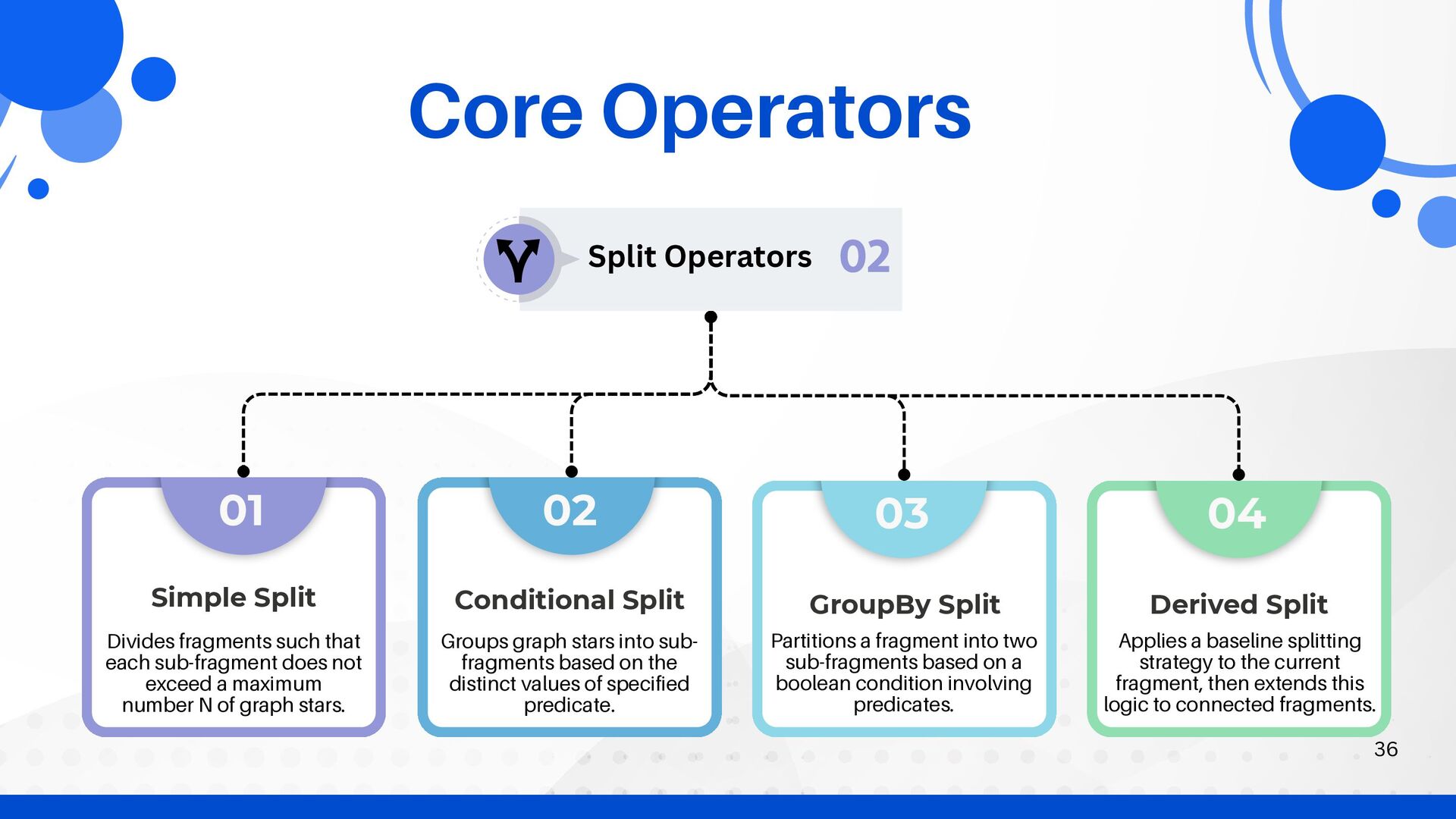
  27. Core Operators 02 03 01 Simple Split Conditional Split GroupBy

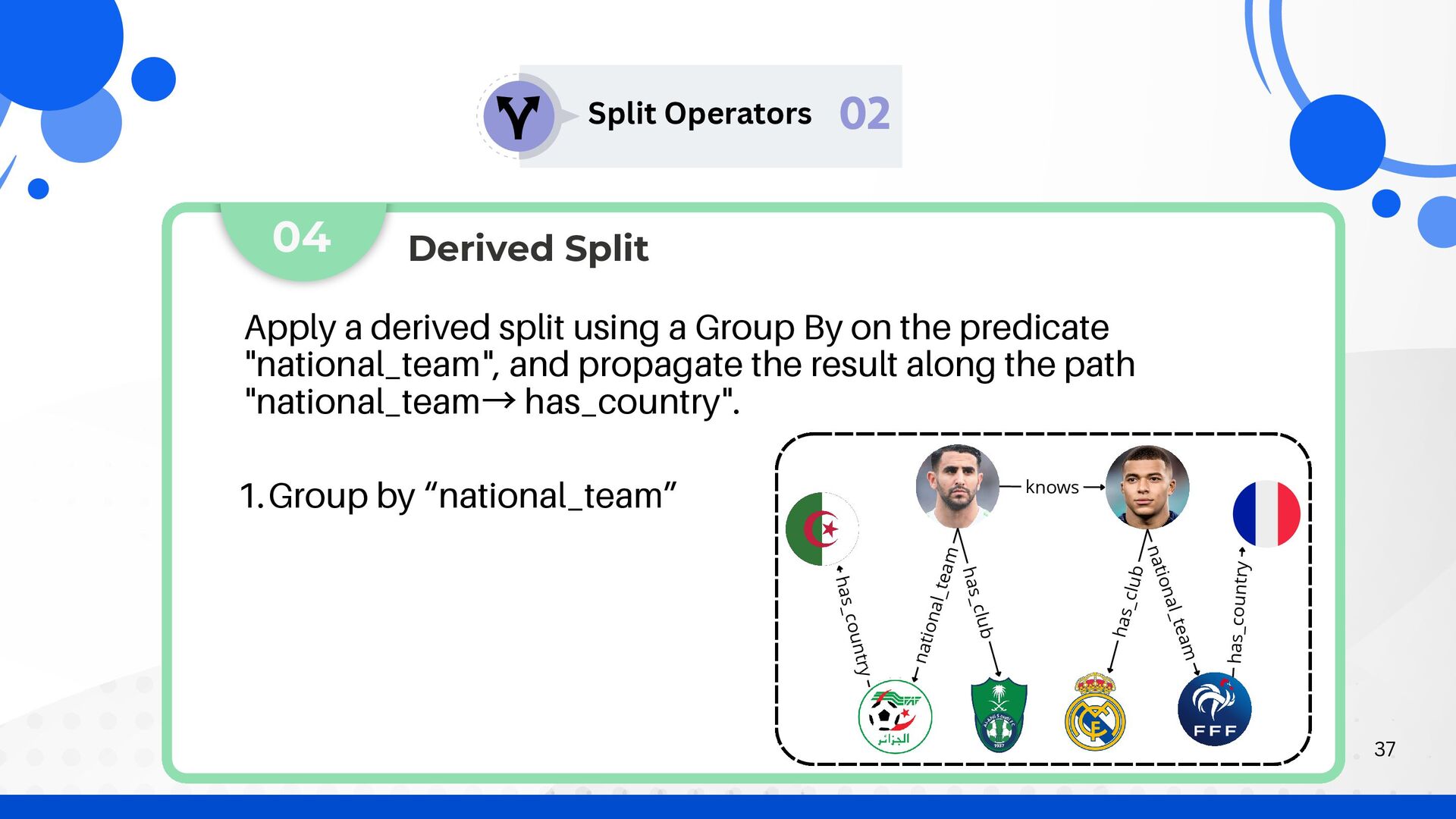
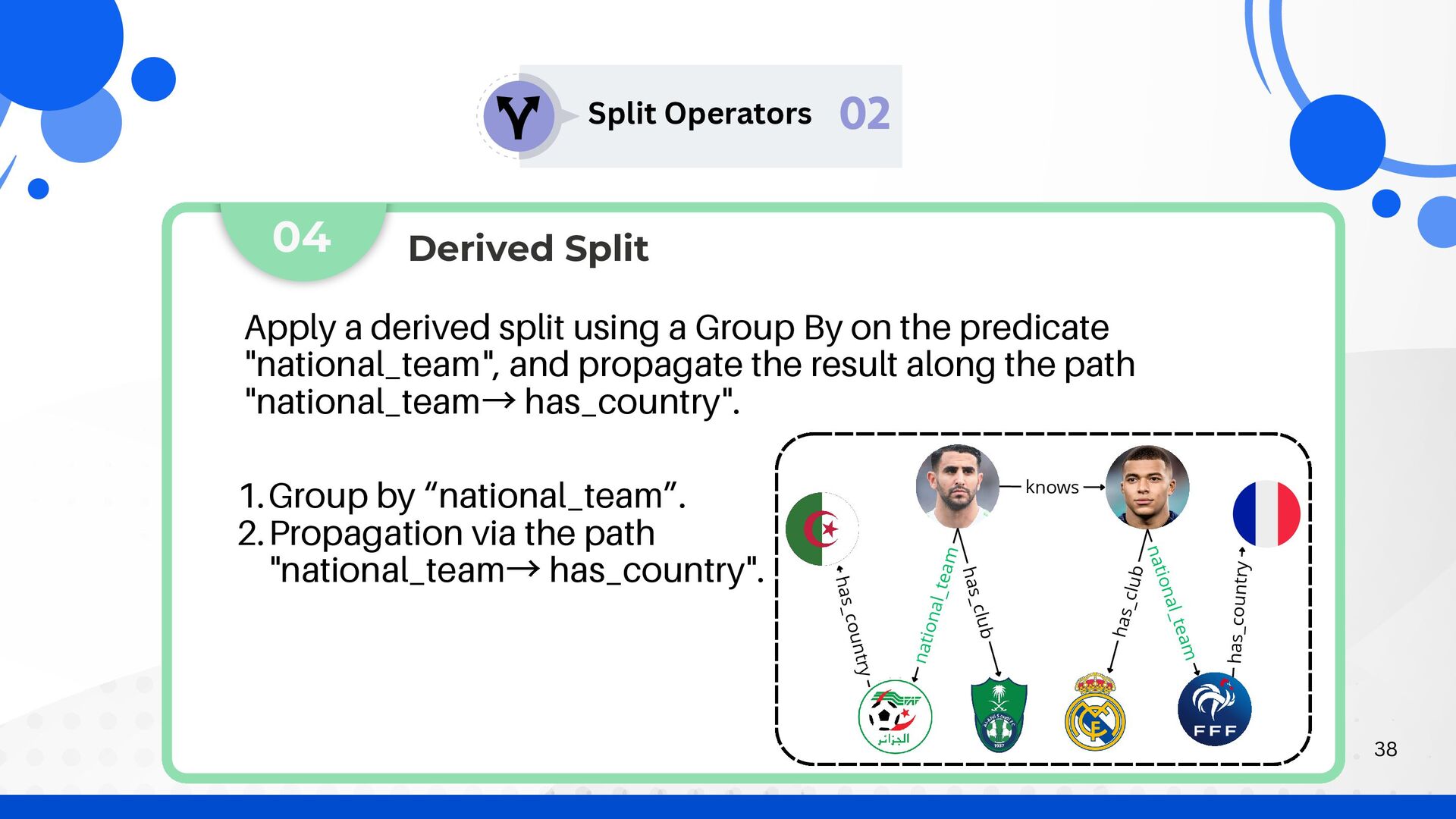
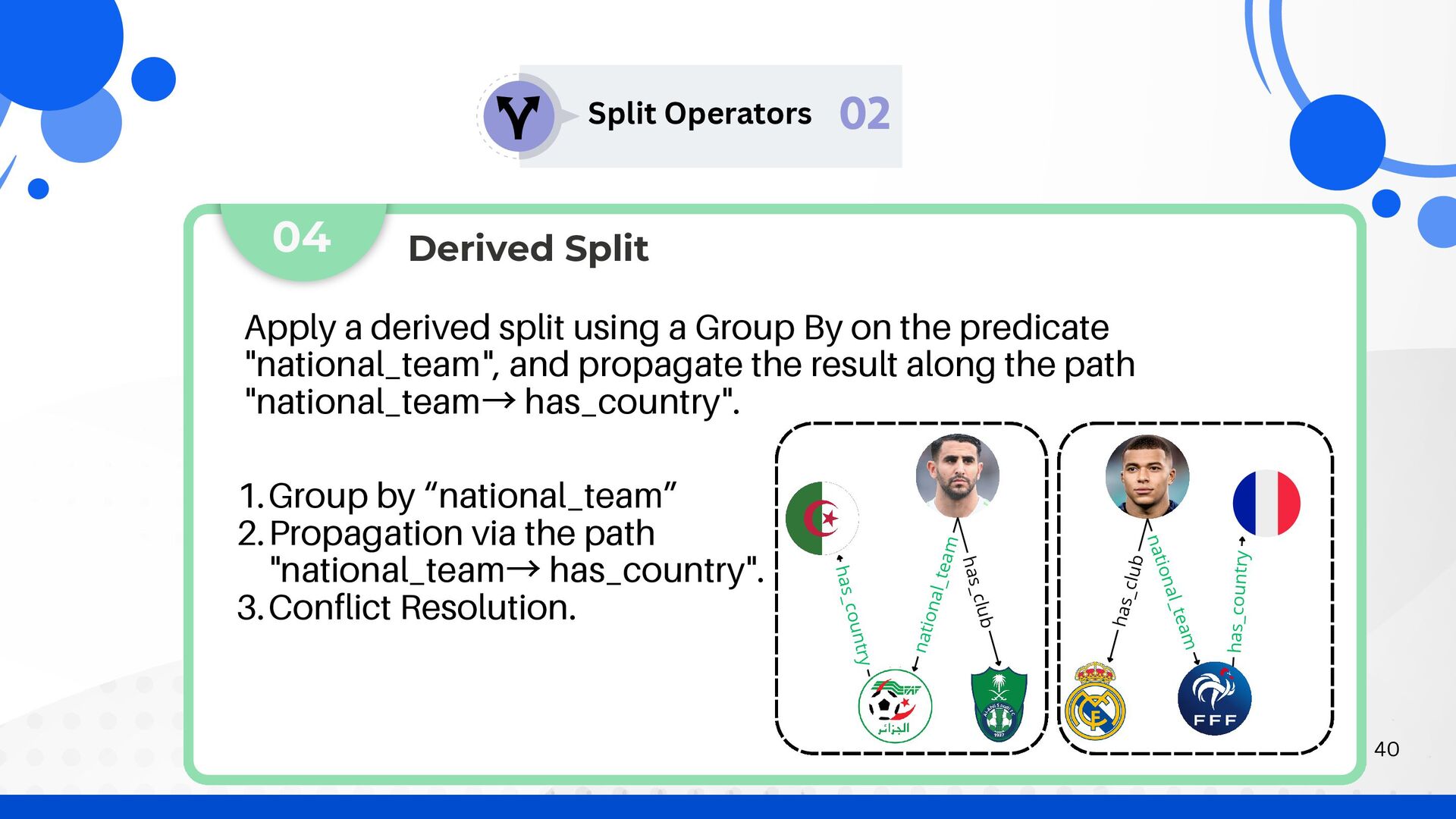
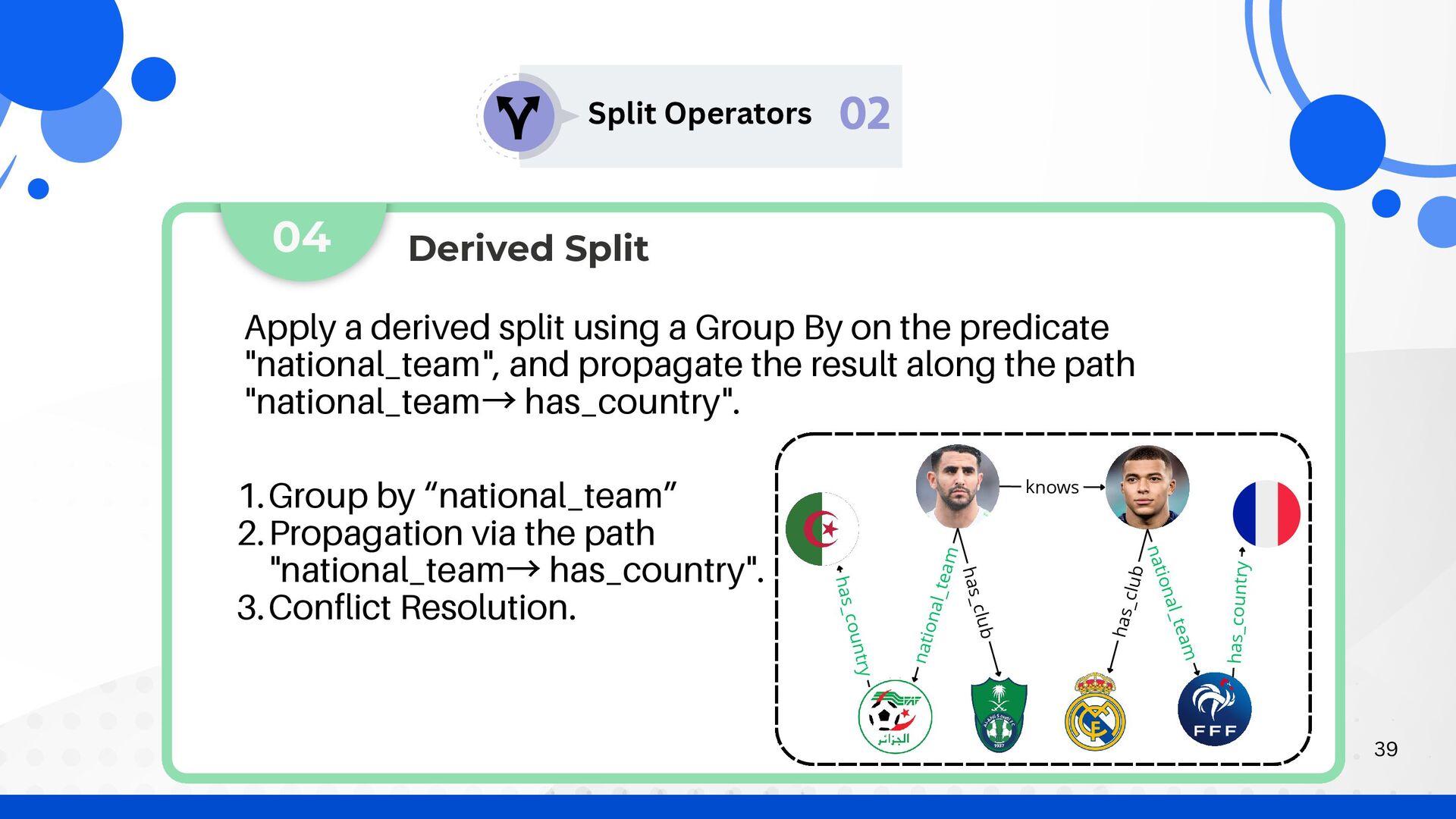
    Split 04 Derived Split Divides fragments such that each sub-fragment does not exceed a maximum number N of graph stars. Groups graph stars into sub- fragments based on the distinct values of specified predicate. Partitions a fragment into two sub-fragments based on a boolean condition involving predicates. Applies a baseline splitting strategy to the current fragment, then extends this logic to connected fragments. 02 Split Operators 36
  28. 04 02 Split Operators Derived Split national_team has_club knows has_country

    has_club national_team has_country Apply a derived split using a Group By on the predicate "national_team", and propagate the result along the path "national_team → has_country". 1.Group by “national_team” 37
  29. 04 02 Split Operators Derived Split national_team has_club knows has_country

    has_club national_team has_country Apply a derived split using a Group By on the predicate "national_team", and propagate the result along the path "national_team → has_country". 1.Group by “national_team”. 2.Propagation via the path "national_team → has_country". 38
  30. 04 02 Split Operators Derived Split national_team has_club knows has_country

    has_club national_team has_country Apply a derived split using a Group By on the predicate "national_team", and propagate the result along the path "national_team → has_country". 1.Group by “national_team” 2.Propagation via the path "national_team → has_country". 3.Conflict Resolution. 39
  31. 04 02 Split Operators Derived Split Apply a derived split

    using a Group By on the predicate "national_team", and propagate the result along the path "national_team → has_country". national_team has_club has_country has_club national_team has_country 1.Group by “national_team” 2.Propagation via the path "national_team → has_country". 3.Conflict Resolution. 40
  32. Physical Fragmentation Control Operators Core Operators 01 02 01 02

    03 01 02 03 04 Select Operators Filter Operator Split Operators Set Operators Rmove Operator Integration Materialization 41
  33. Physical Fragmentation Control Operators Core Operators 01 02 01 02

    03 01 02 03 04 Select Operators Filter Operator Split Operators Set Operators Rmove Operator Integration Materialization 43
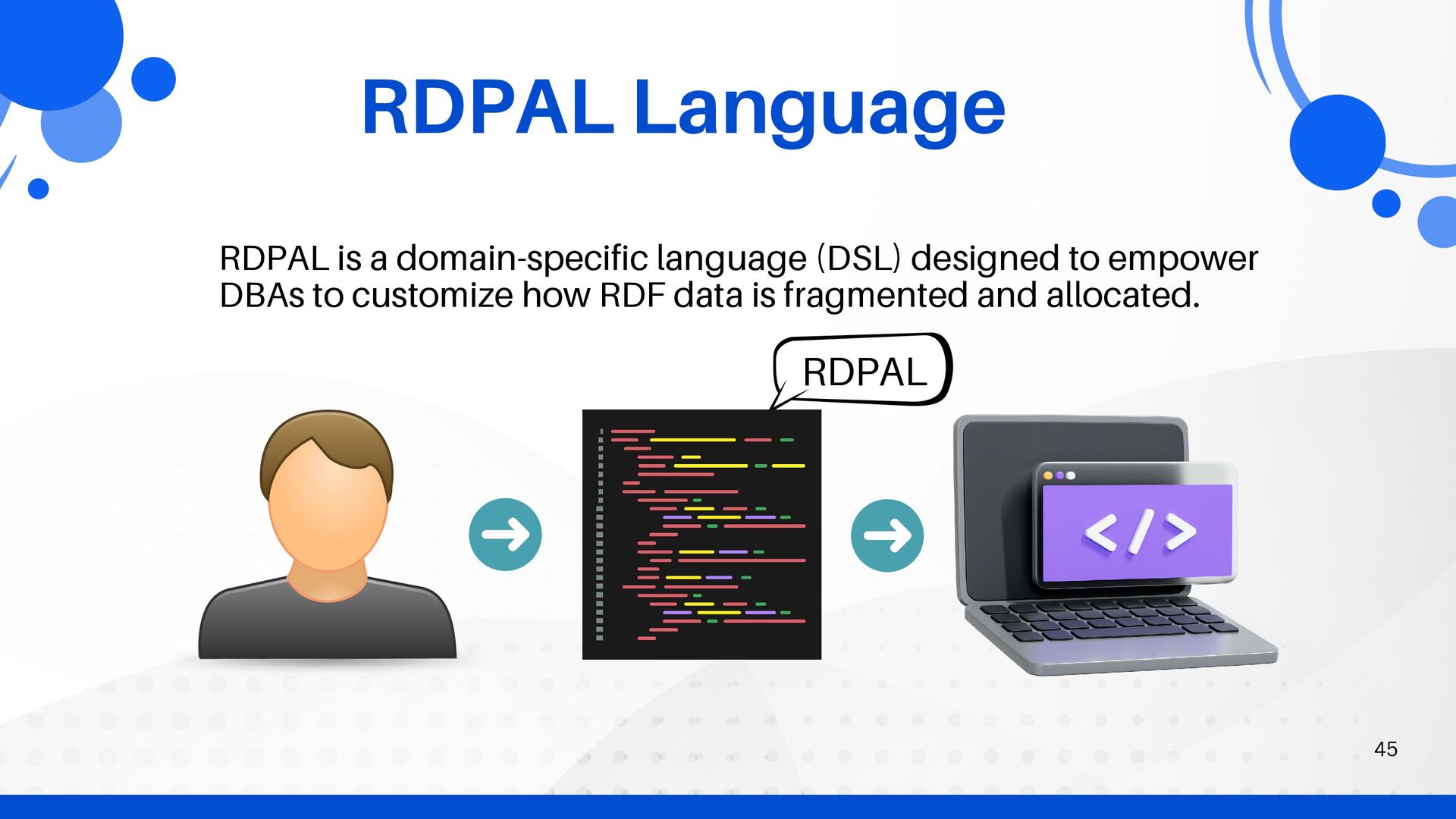
  34. RDPAL Language RDPAL is a domain-specific language (DSL) designed to

    empower DBAs to customize how RDF data is fragmented and allocated. RDPAL 45
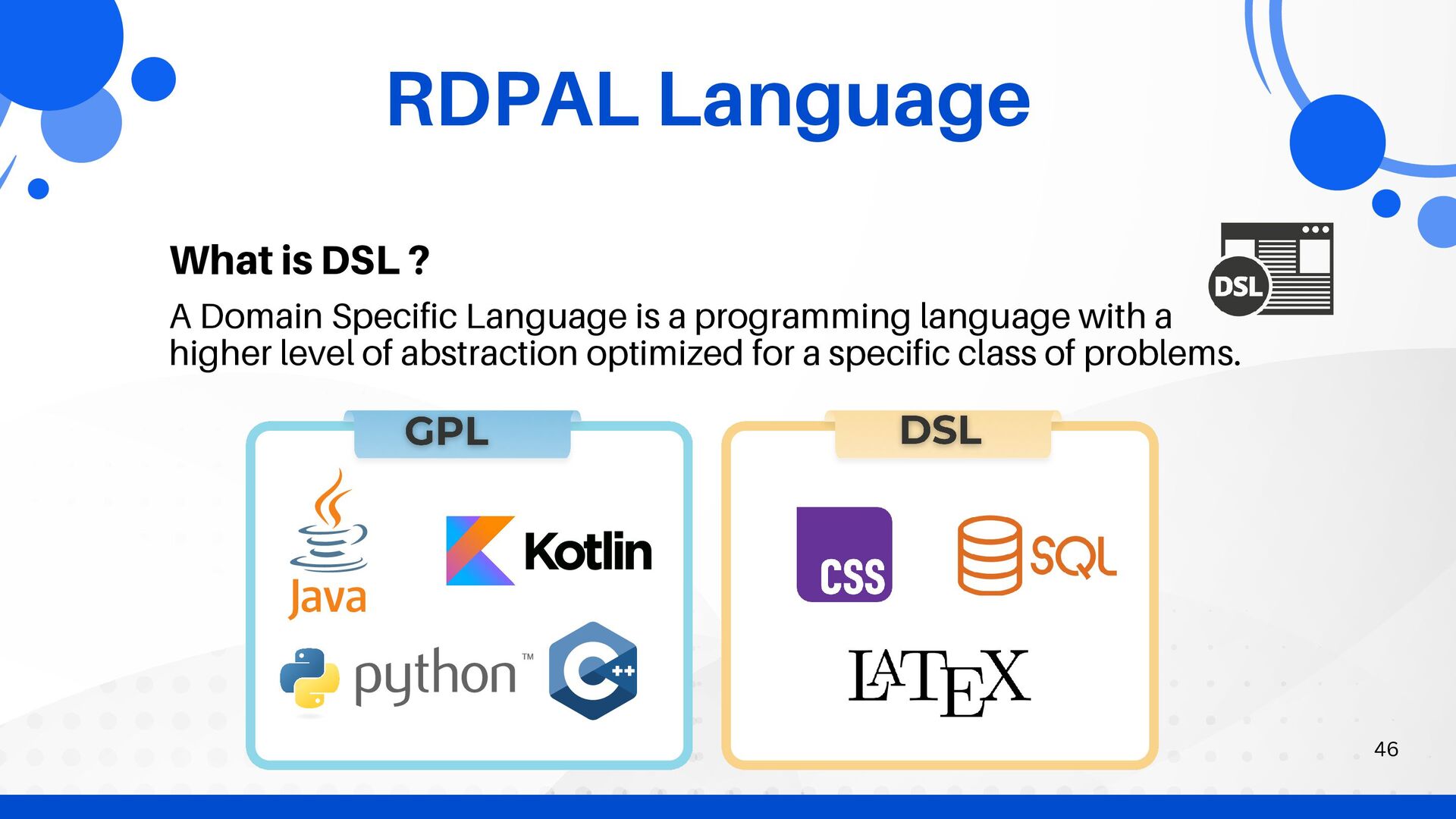
  35. What is DSL ? A Domain Specific Language is a

    programming language with a higher level of abstraction optimized for a specific class of problems. RDPAL Language 46
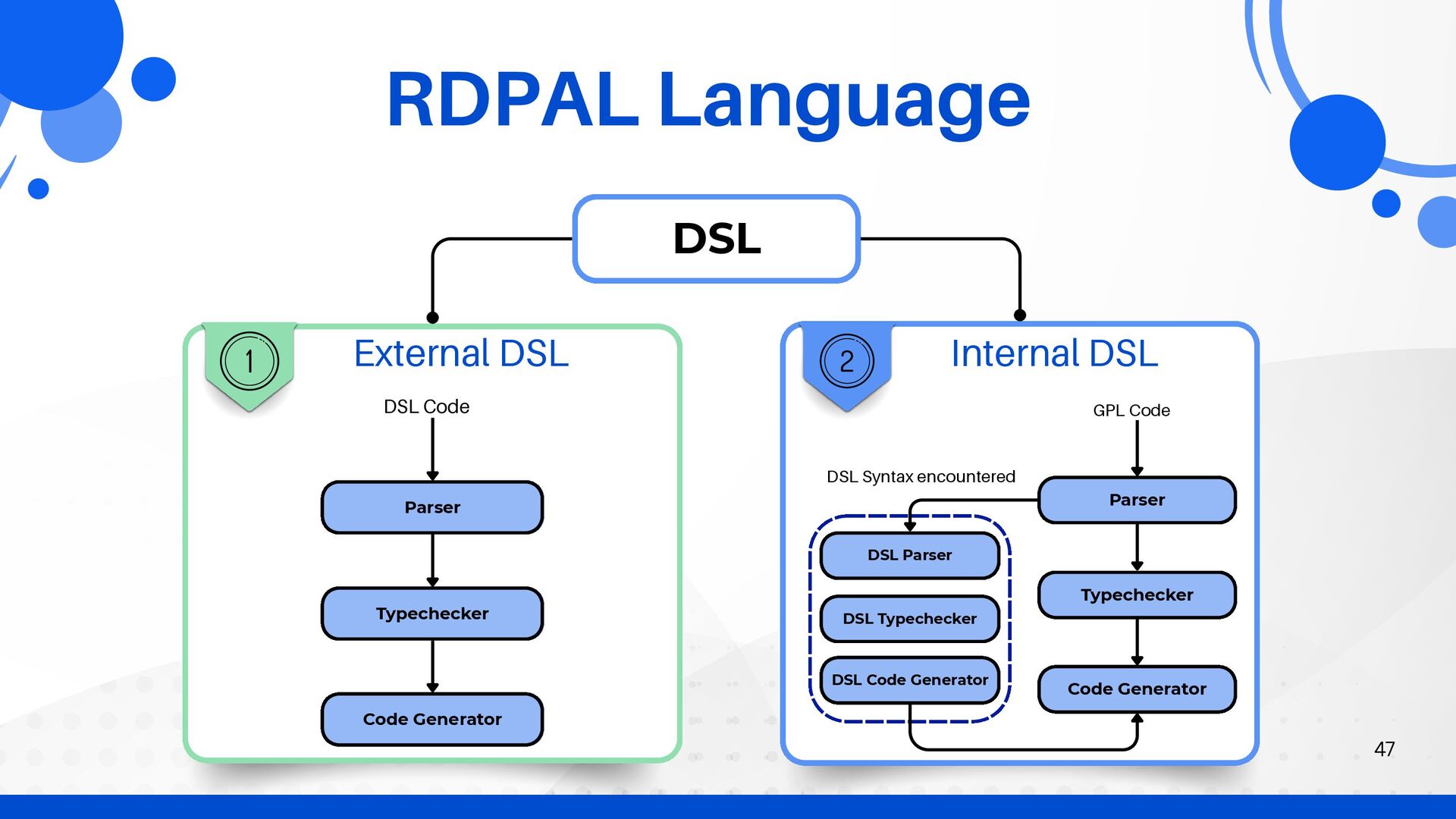
  36. DSL Code Generator Parser Typechecker Code Generator DSL Typechecker DSL

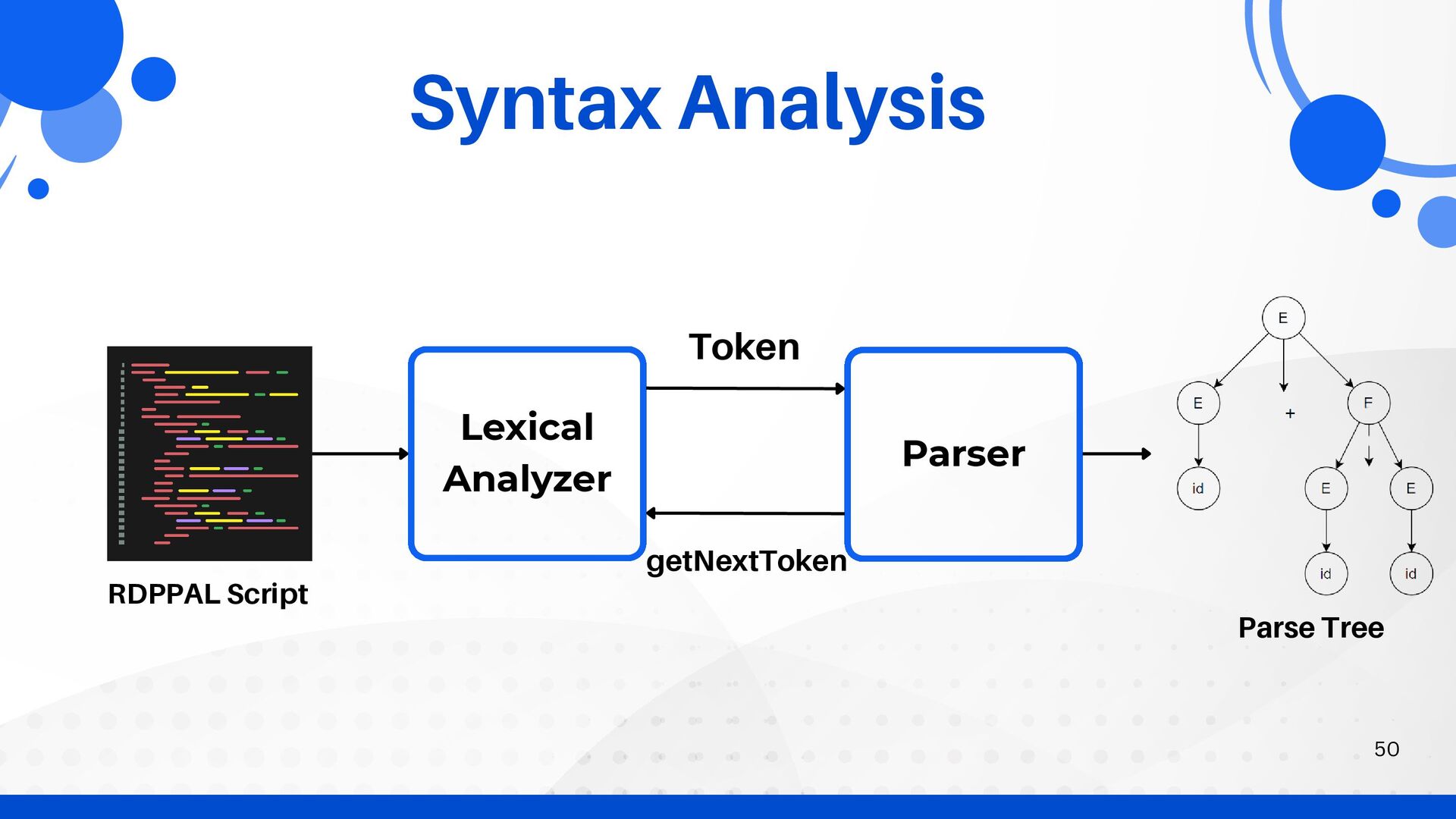
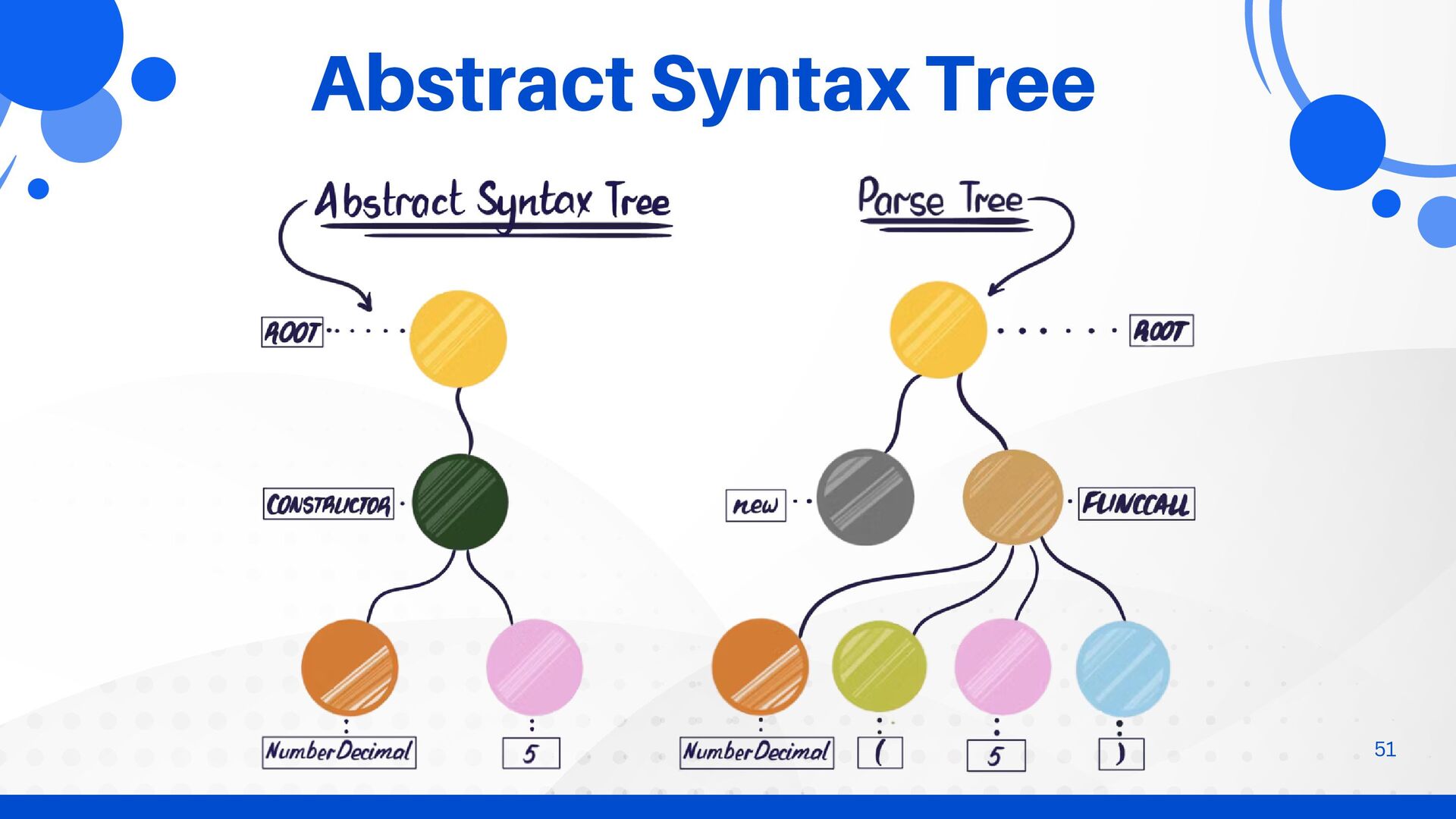
    Parser RDPAL Language Internal DSL External DSL GPL Code DSL Syntax encountered Parser Typechecker Code Generator DSL Code DSL 47
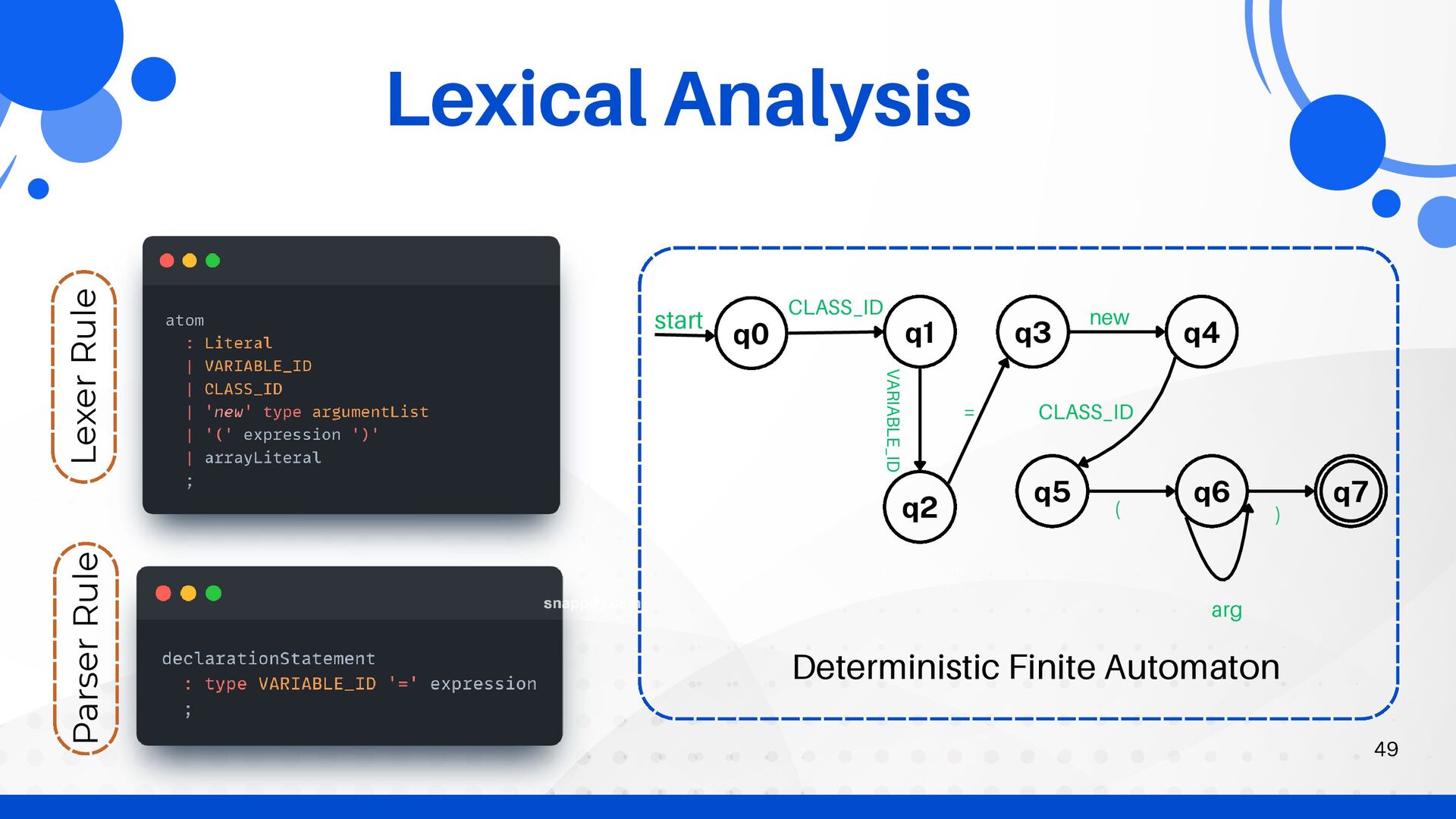
  37. q0 q1 q2 q3 q4 q5 q6 q7 Parser Rule

    Lexical Analysis start CLASS_ID VARIABLE_ID = new CLASS_ID ( arg ) Deterministic Finite Automaton 49 Lexer Rule
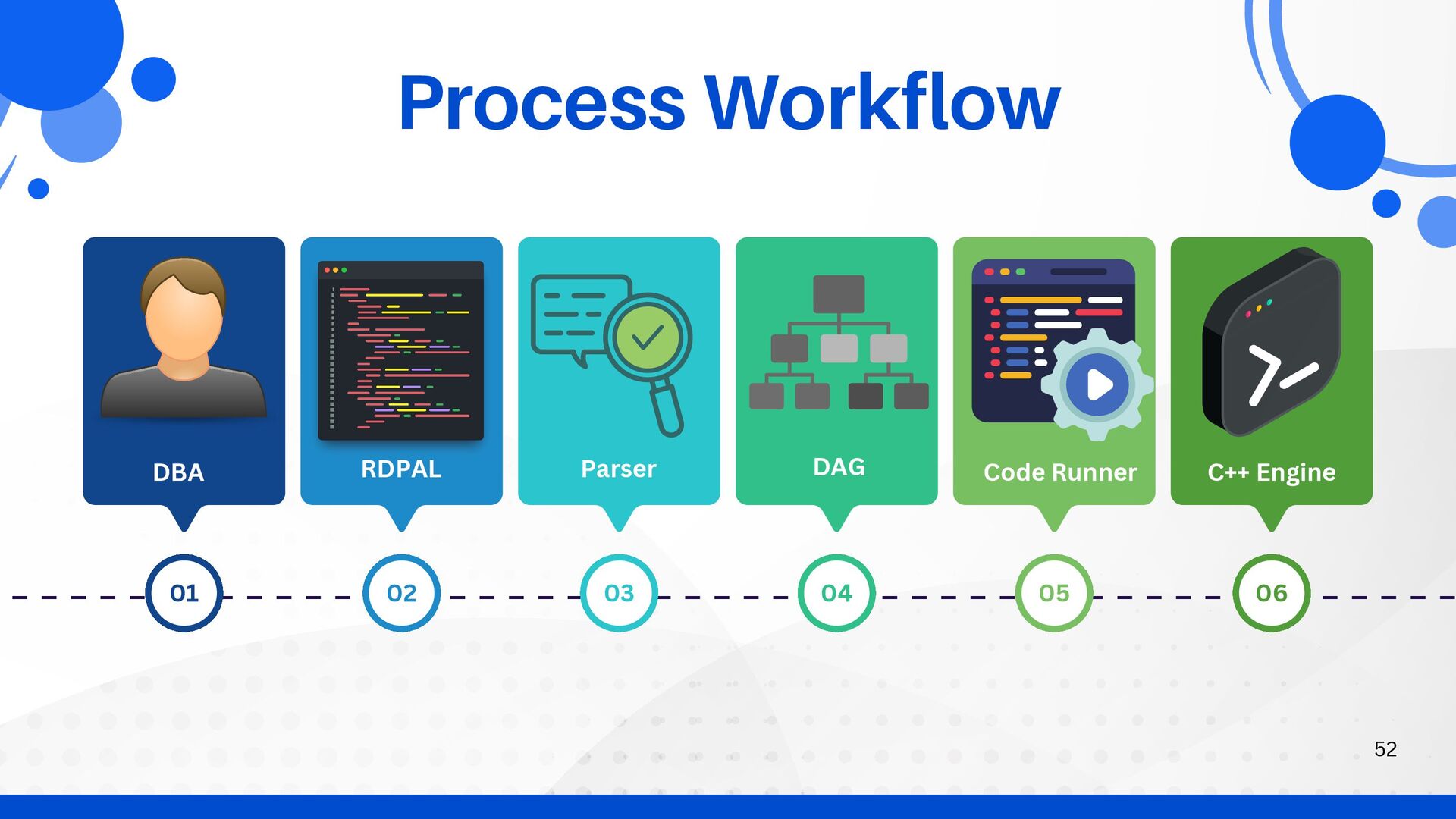
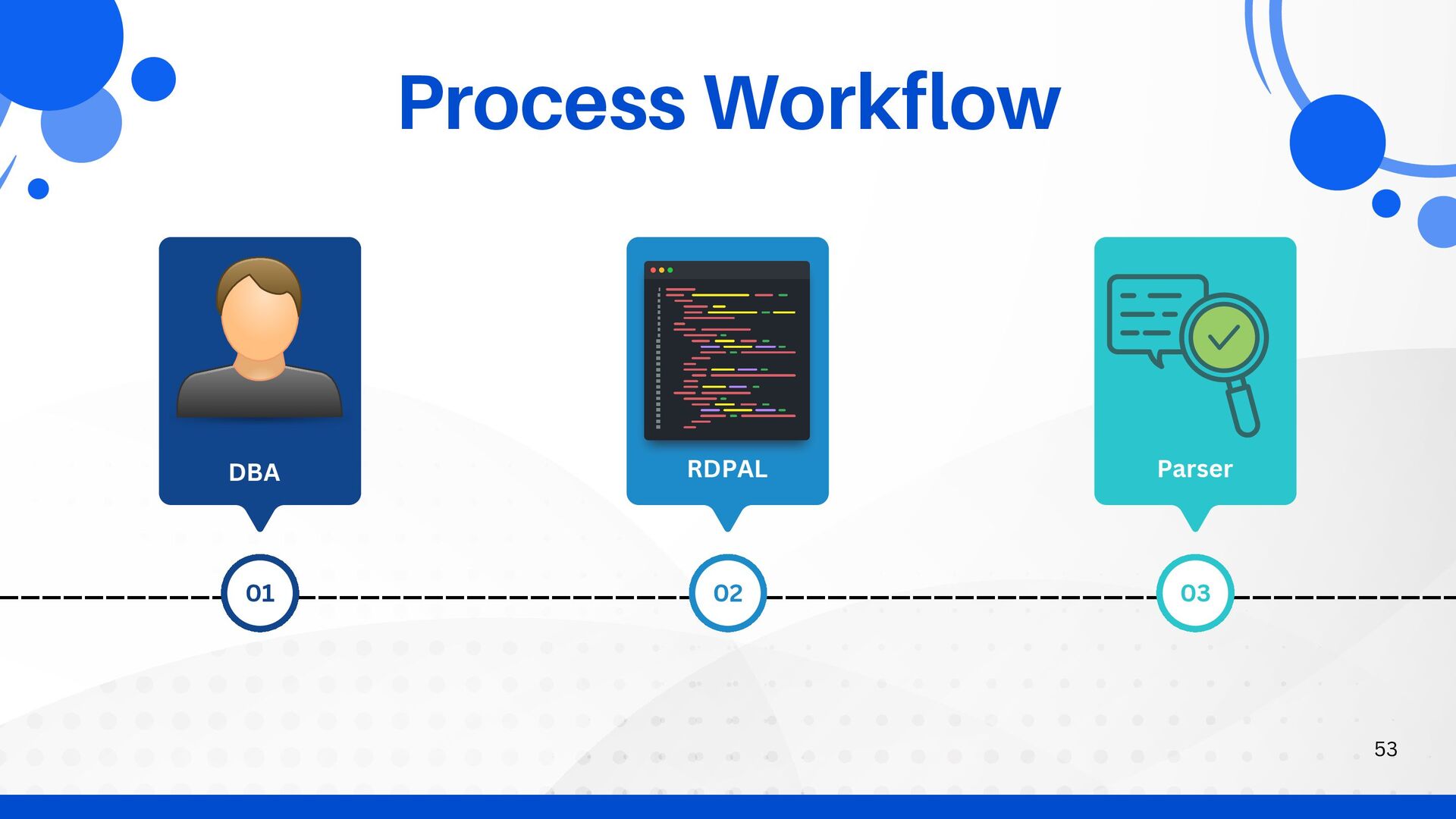
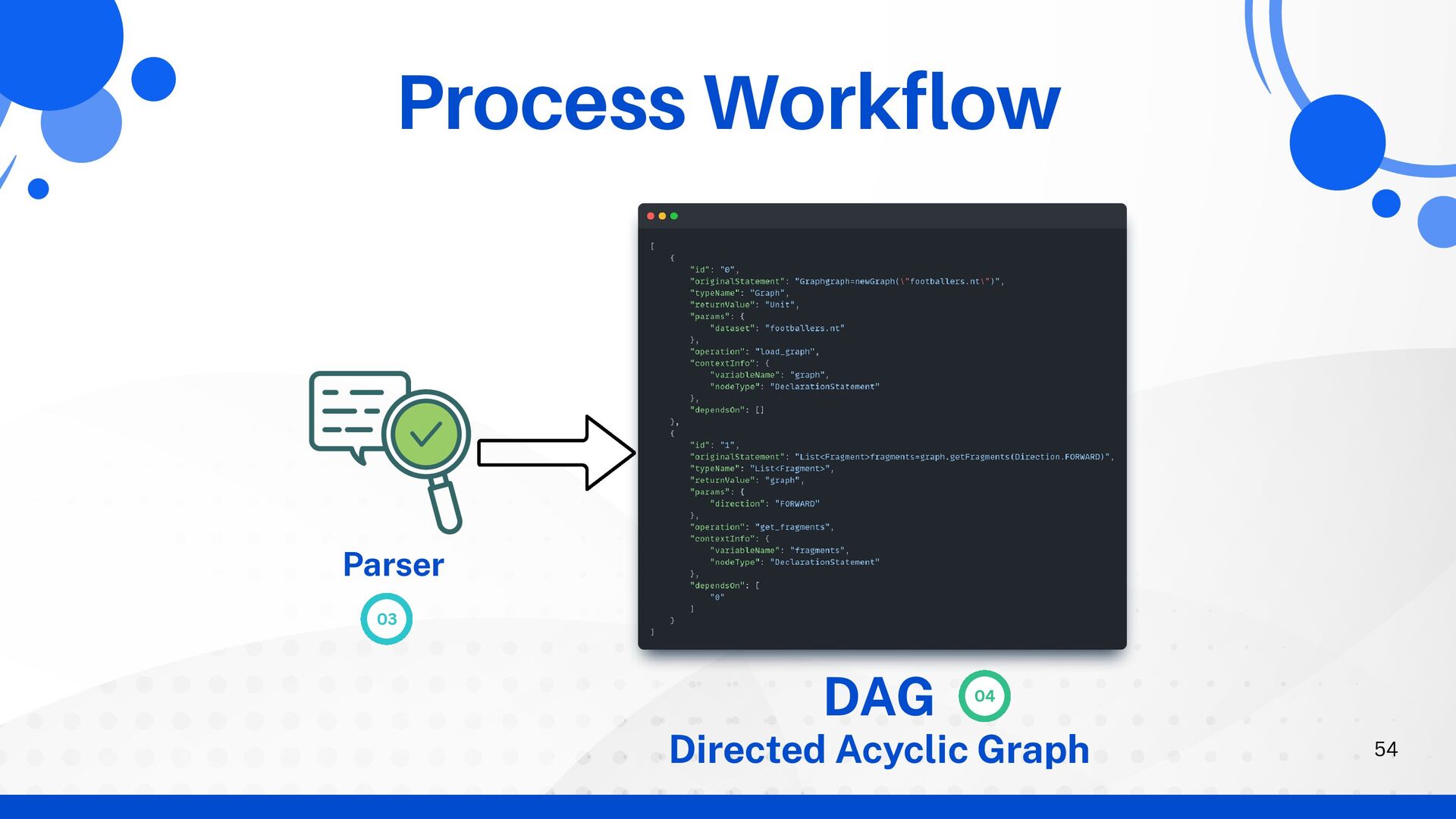
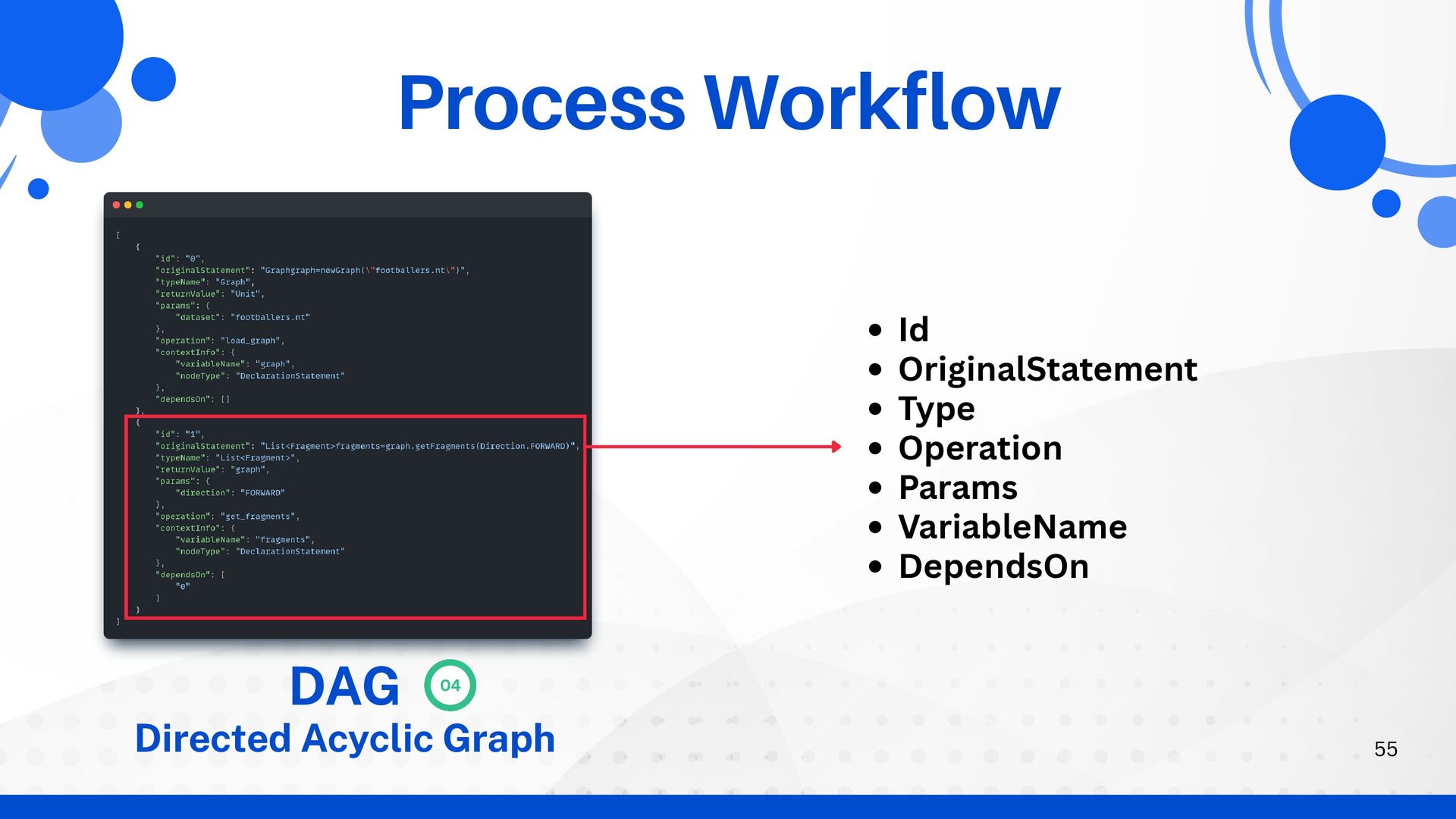
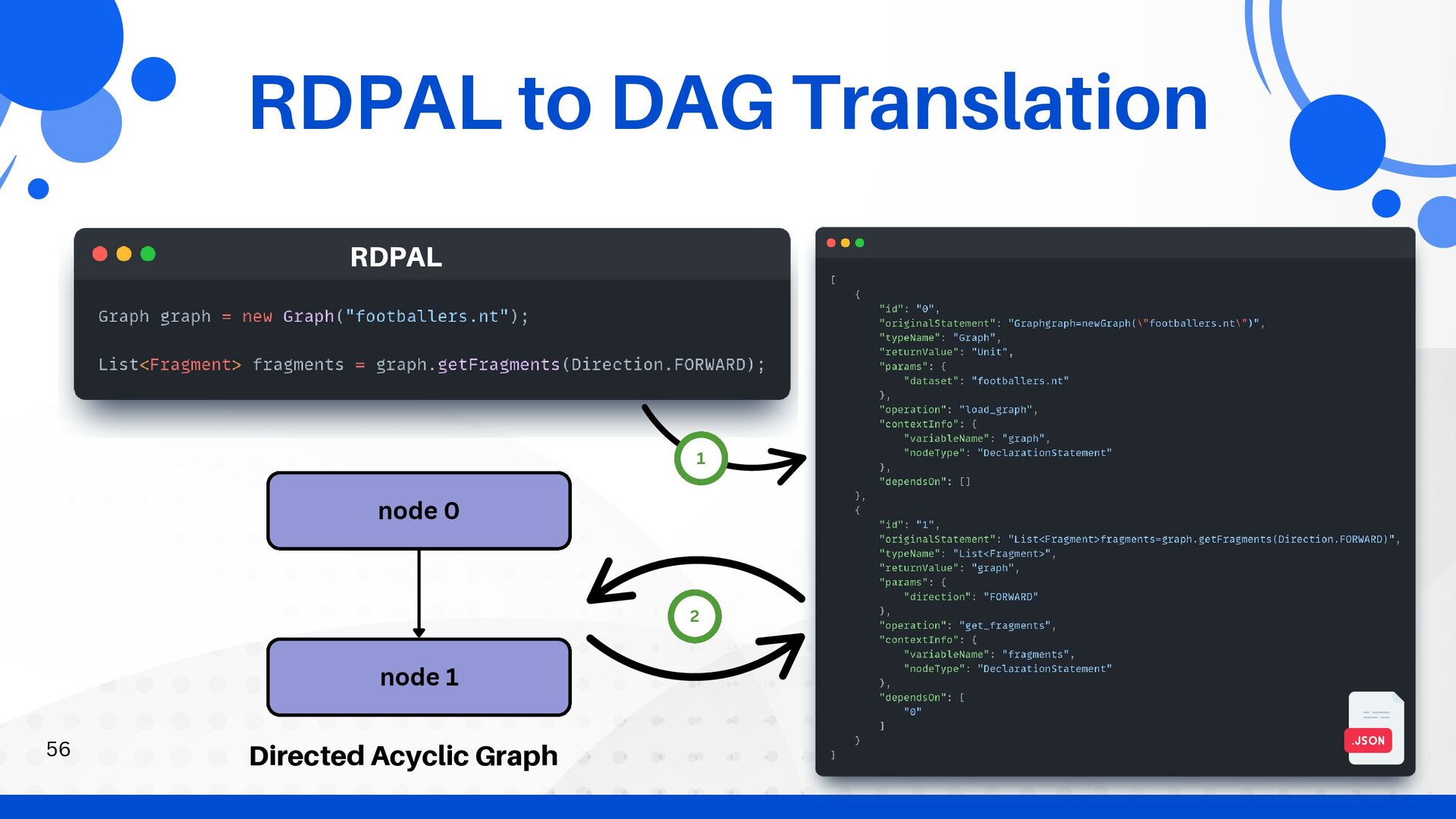
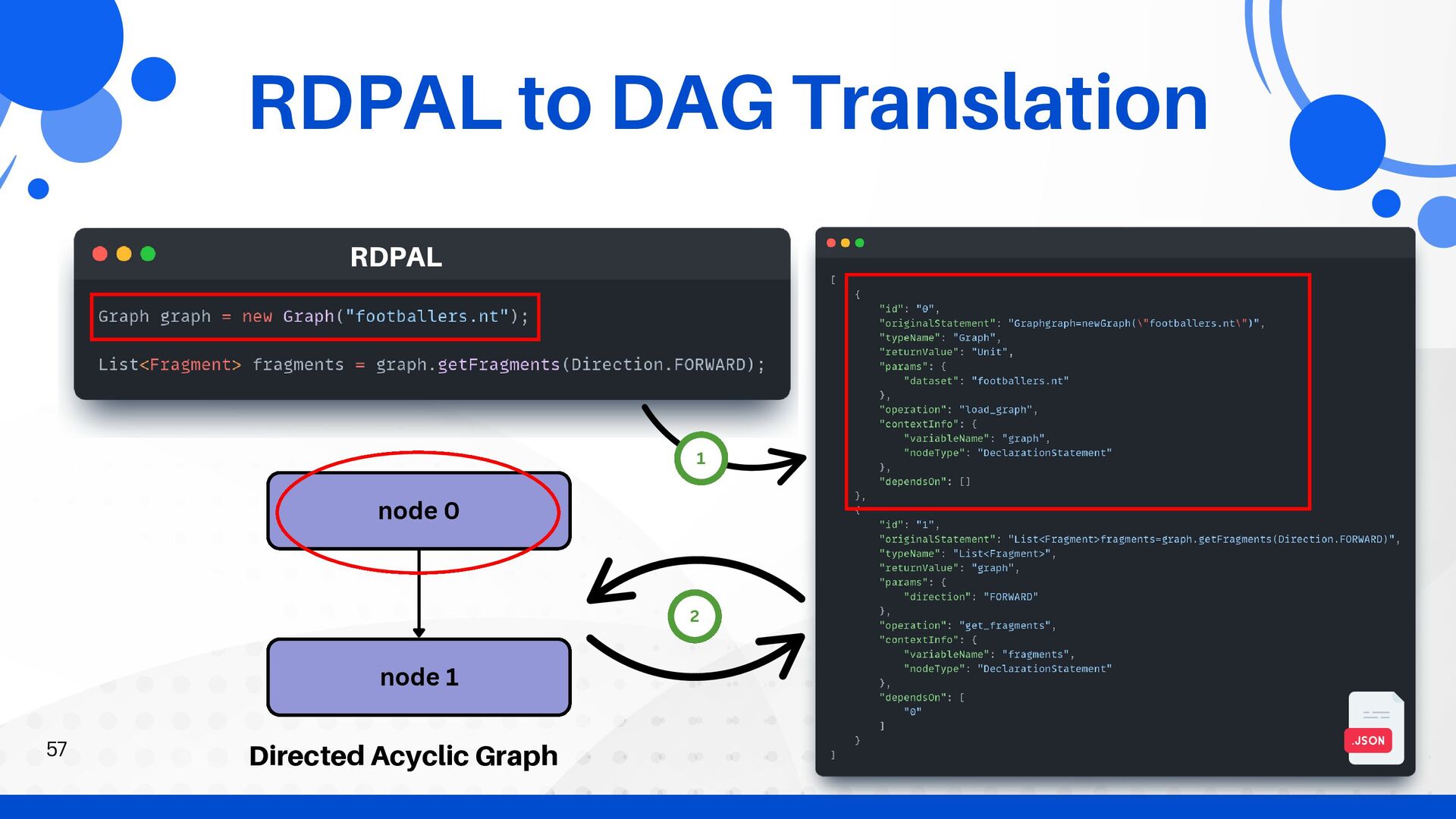
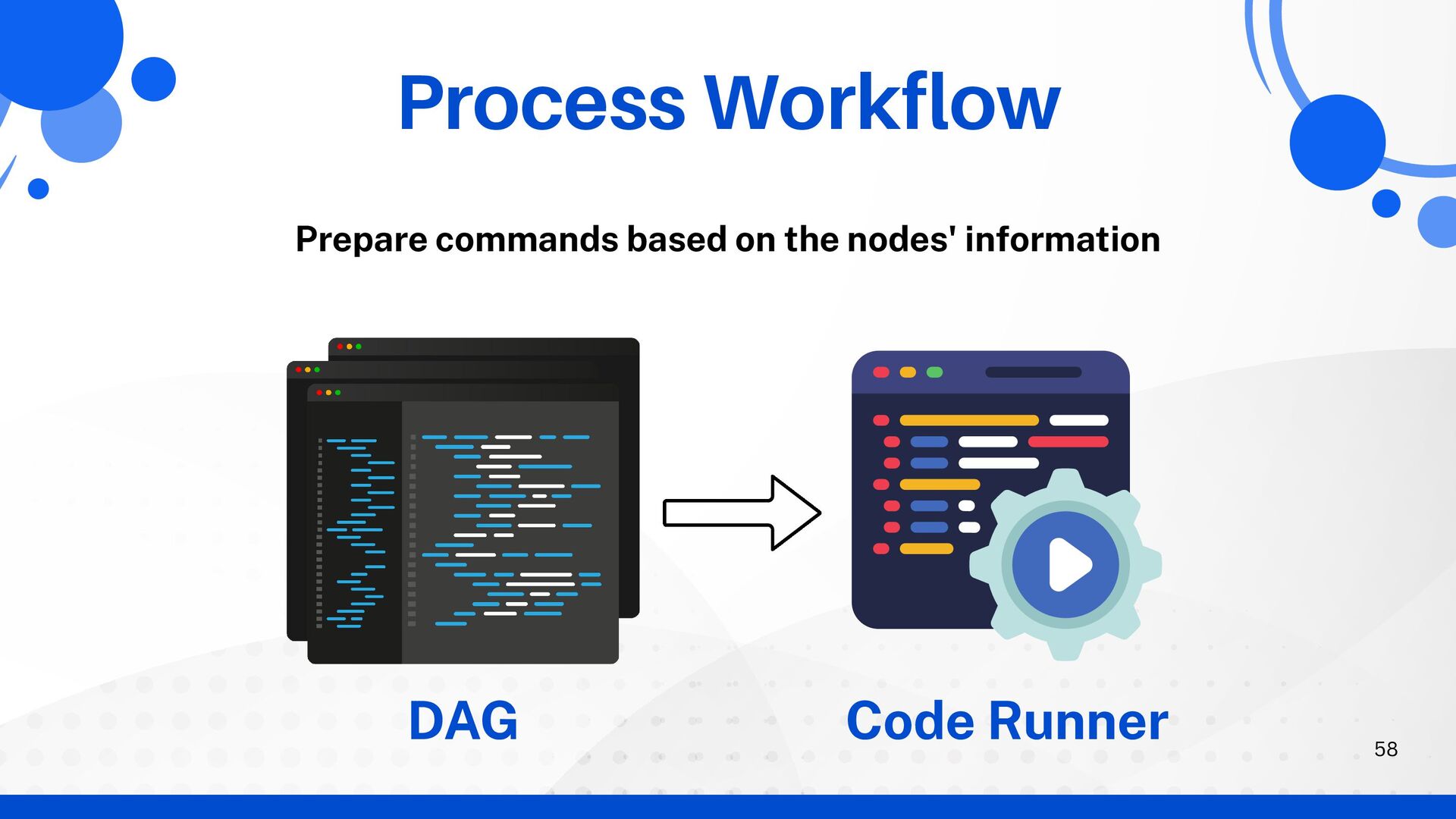
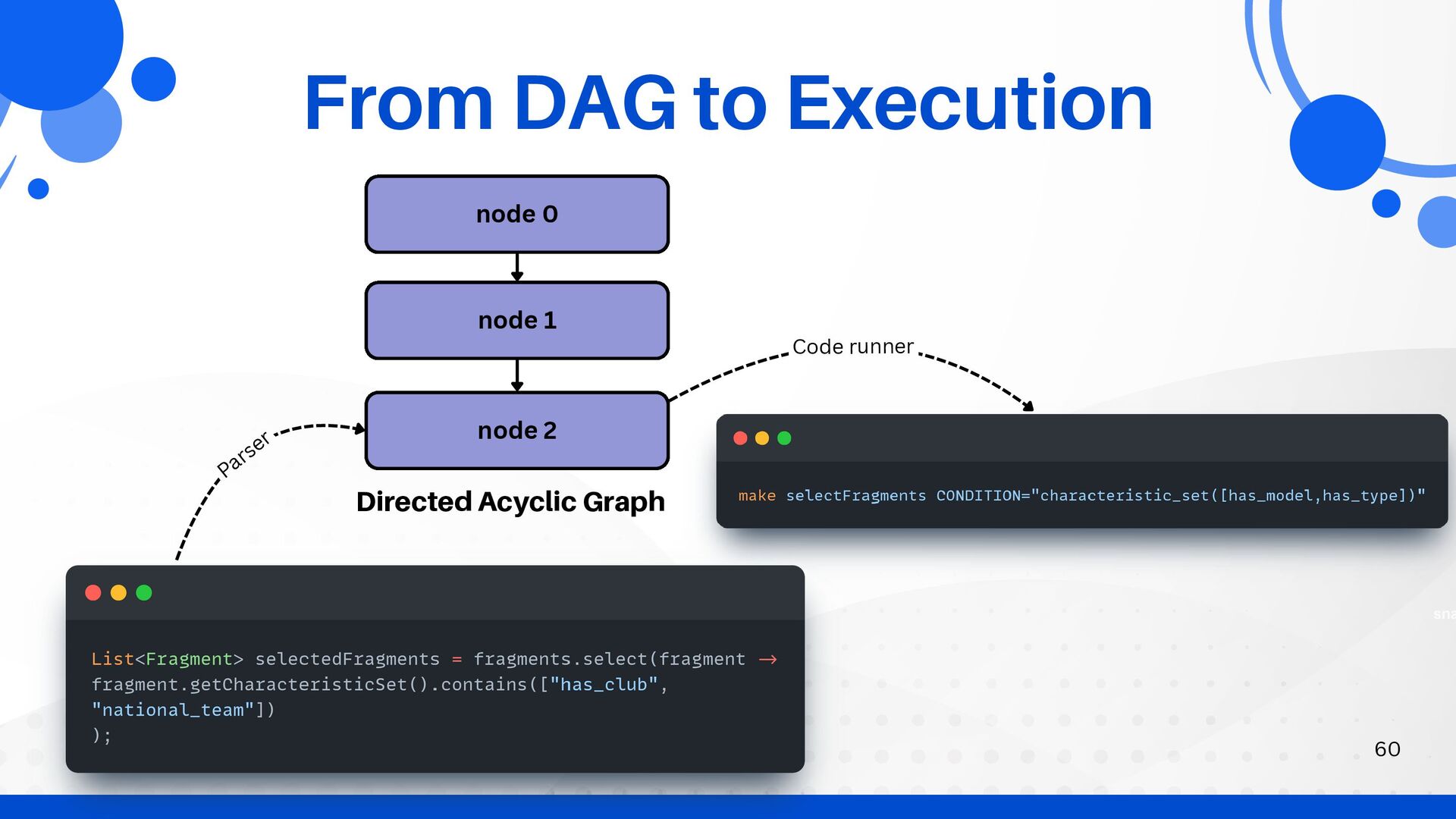
  38. Process Workflow DAG Directed Acyclic Graph 55 04 Id OriginalStatement

    Type Operation Params VariableName DependsOn
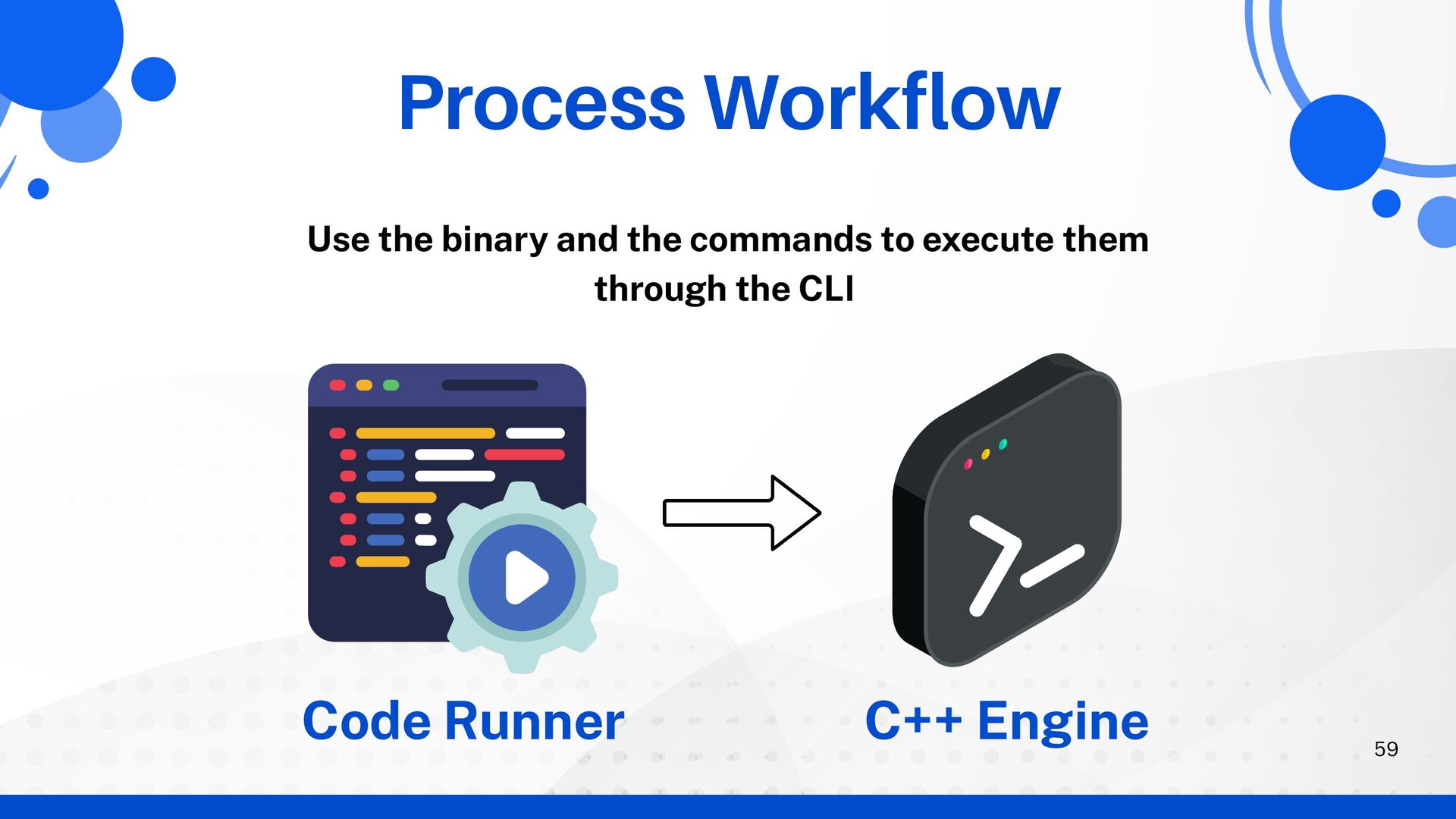
  39. Process Workflow C++ Engine Use the binary and the commands

    to execute them through the CLI Code Runner 59