Beer You are no doubt familiar with the term “FOSS”, for Free and Open Source Software. You probably are aware that “free” refers to free speech, not free beer, and that the movement began in the ’80s under the leadership of Richard Stallman.
Free Software today. We are talking about Open Source. Free Software and Open Source are the same thing on the surface, but come from completely different viewpoints, and Open Source is typically poorly understood.
market as premium products protected by patents and copyright. The innovator benefits from their innovation, but as the product becomes more and more integrated into society, there’s rising pressure from clones and alternatives that provide similar functionality, until the functionality becomes commoditized.
work by copying bits from one place to another for every little operation Commoditization forces down the price of physical goods until there’s no “premium” margin. The price you pay is basically the price of manufacturing and distribution. With digital goods, there is no replication cost, so prices tend towards zero, either via piracy or open source alternatives.
Toothbrushes Applications and Operating Systems Many goods require something else in order to be usable, so producers of one are incentivized to commoditize the other. If you sell database software, it helps if you don’t have to sell your client the operating system as well. That is why enterprise vendors invest in Linux.
below it is infrastructure. You want to keep the platform yours, but make everyone else share the cost of infrastructure (by open sourcing it and getting others to use it). The risk is that your platform is someone else’s infrastructure, and they are incentivized to commoditize you.
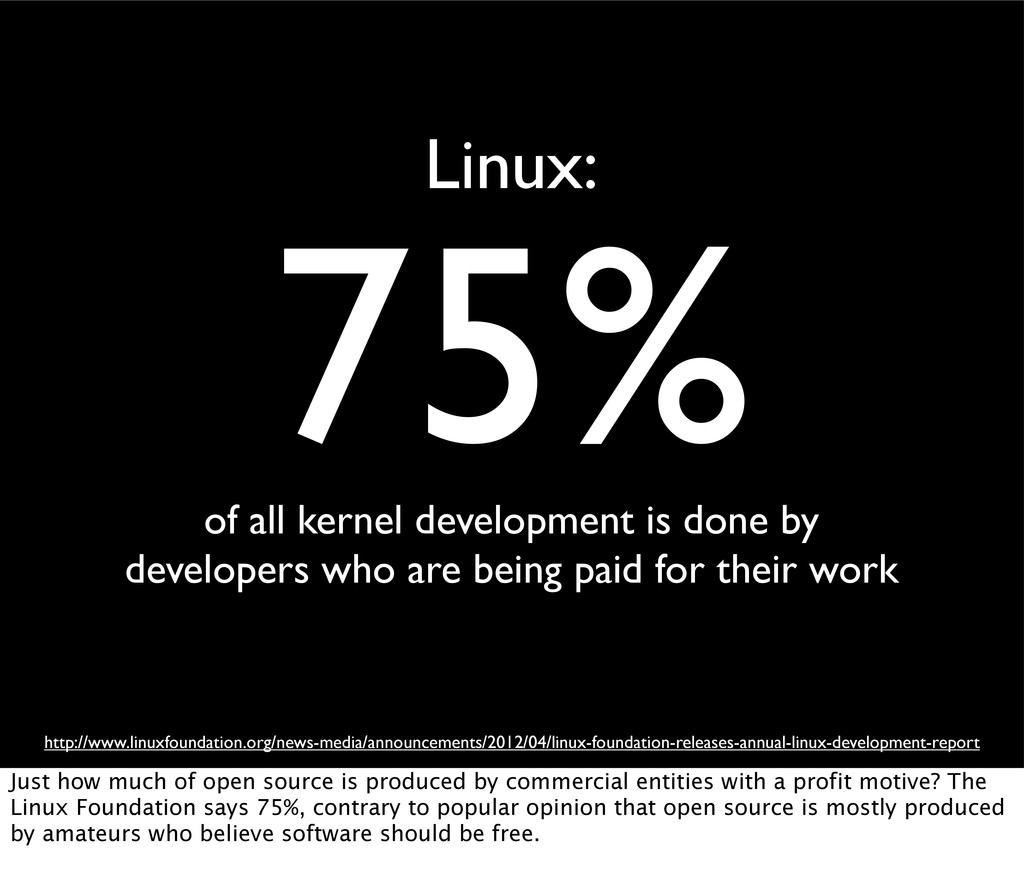
who are being paid for their work http://www.linuxfoundation.org/news-media/announcements/2012/04/linux-foundation-releases-annual-linux-development-report Just how much of open source is produced by commercial entities with a profit motive? The Linux Foundation says 75%, contrary to popular opinion that open source is mostly produced by amateurs who believe software should be free.
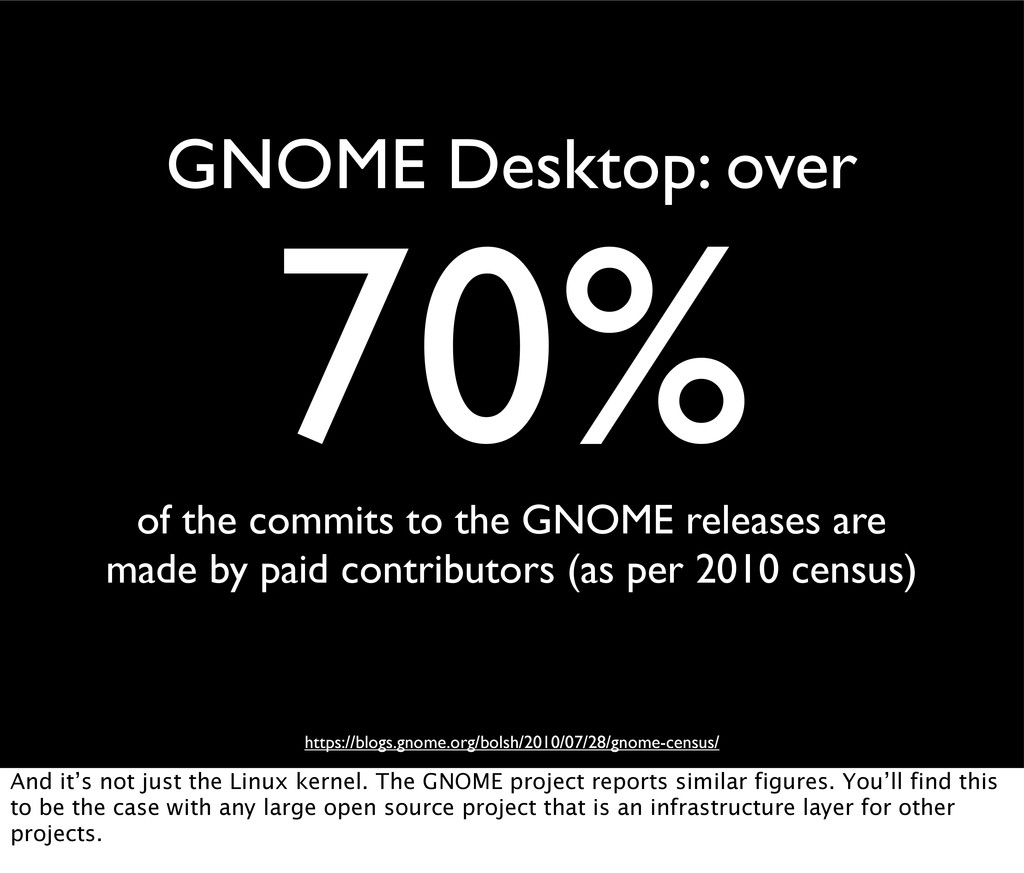
releases are made by paid contributors (as per 2010 census) https://blogs.gnome.org/bolsh/2010/07/28/gnome-census/ And it’s not just the Linux kernel. The GNOME project reports similar figures. You’ll find this to be the case with any large open source project that is an infrastructure layer for other projects.
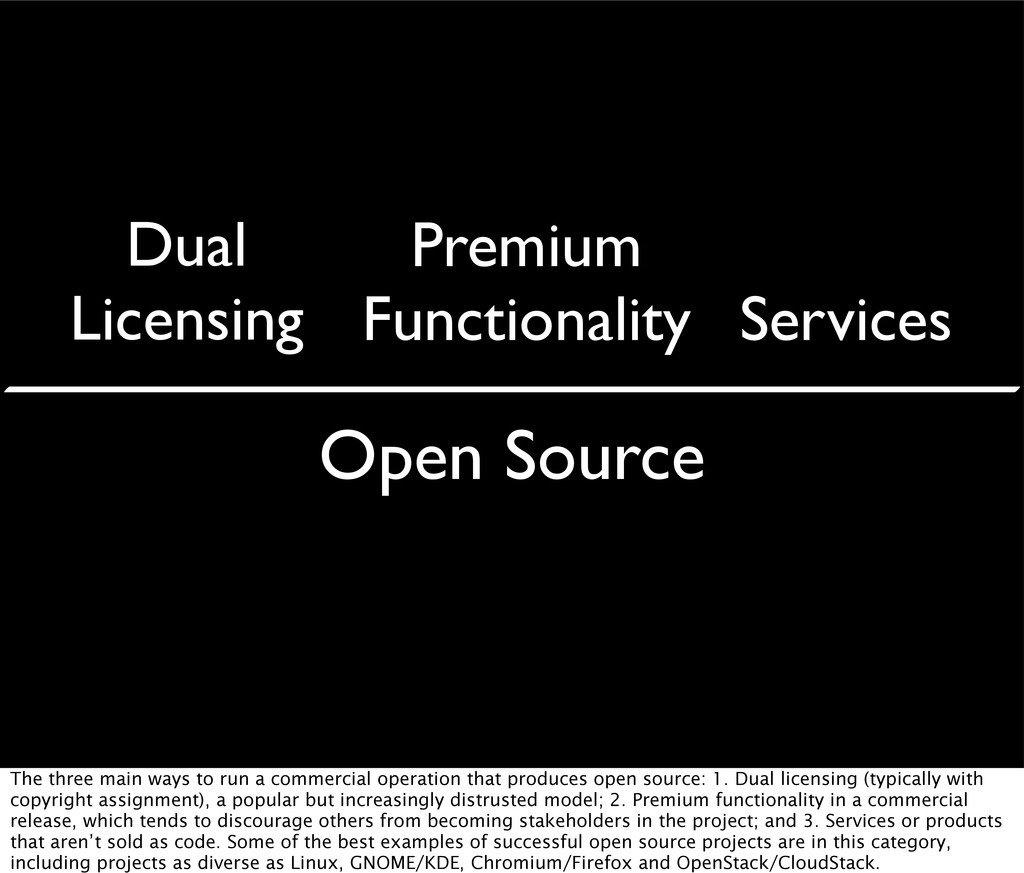
ways to run a commercial operation that produces open source: 1. Dual licensing (typically with copyright assignment), a popular but increasingly distrusted model; 2. Premium functionality in a commercial release, which tends to discourage others from becoming stakeholders in the project; and 3. Services or products that aren’t sold as code. Some of the best examples of successful open source projects are in this category, including projects as diverse as Linux, GNOME/KDE, Chromium/Firefox and OpenStack/CloudStack.


 jackerhack
 yama3133
 miu_crescent
 hagino3000
 sue445
 tomoki10
 oidfj
 yamakenji24
 keitah
 bengo4com
 daitak
 mikanichinose
 tkito
 schlessera
 marktimemedia
 kastner
 honzajavorek
 twada
 mkilby
 techseoconnect
 tammyeverts
 portentint
 davidcarrasco
 lemiorhan
 chrisshort