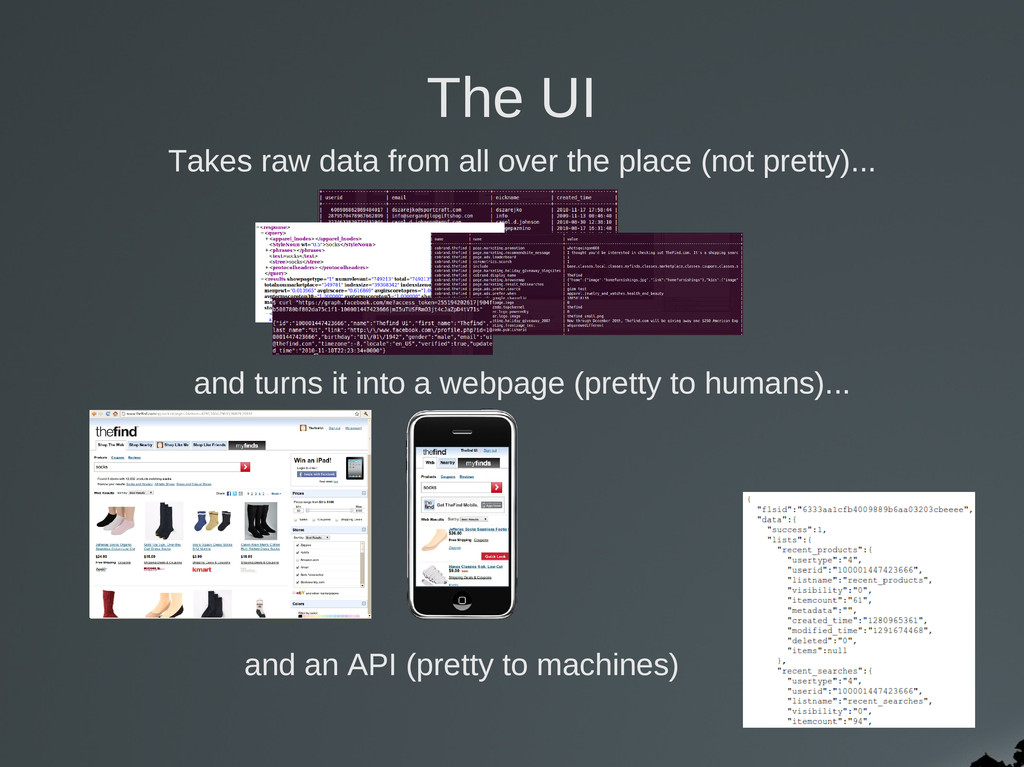
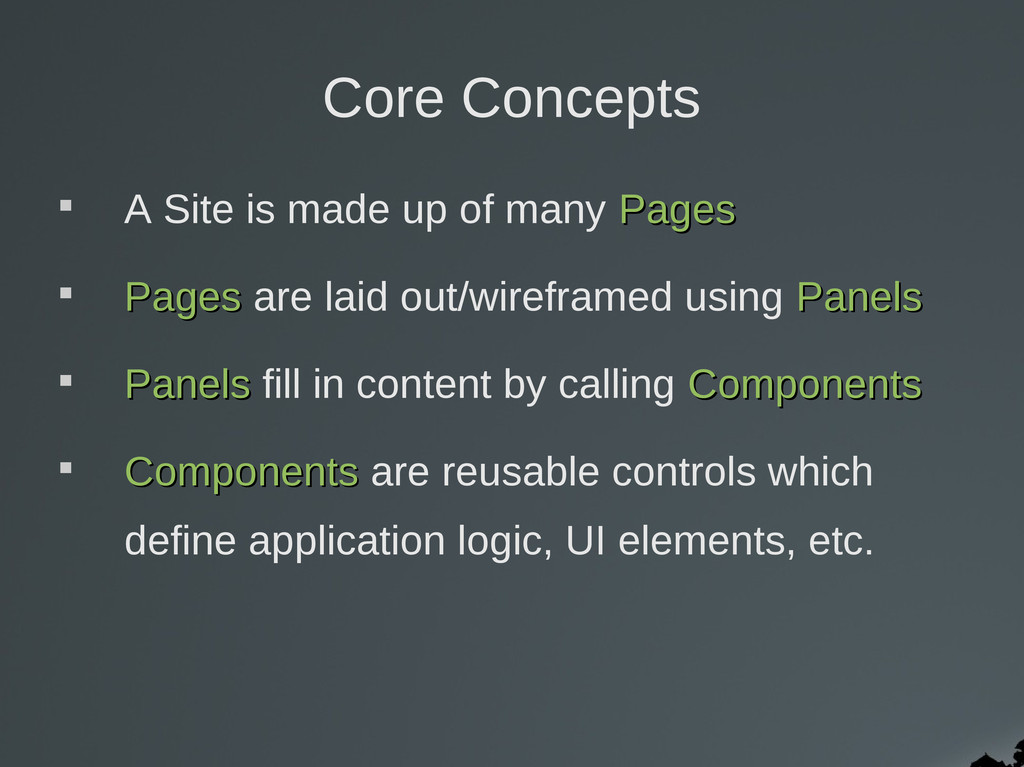
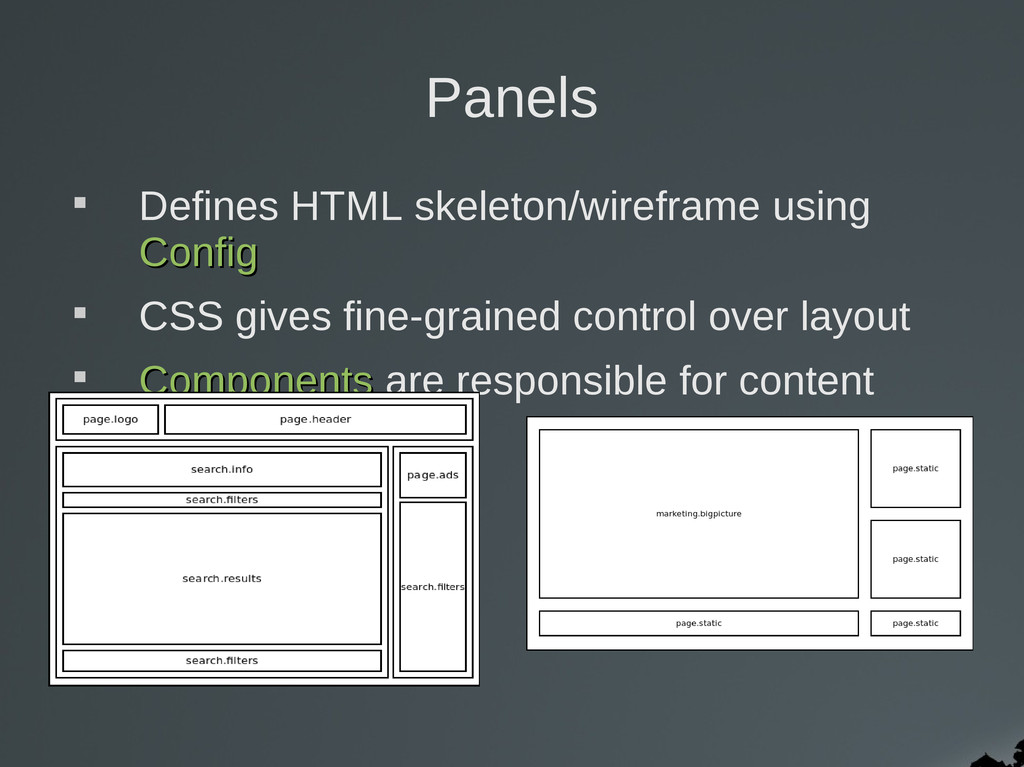
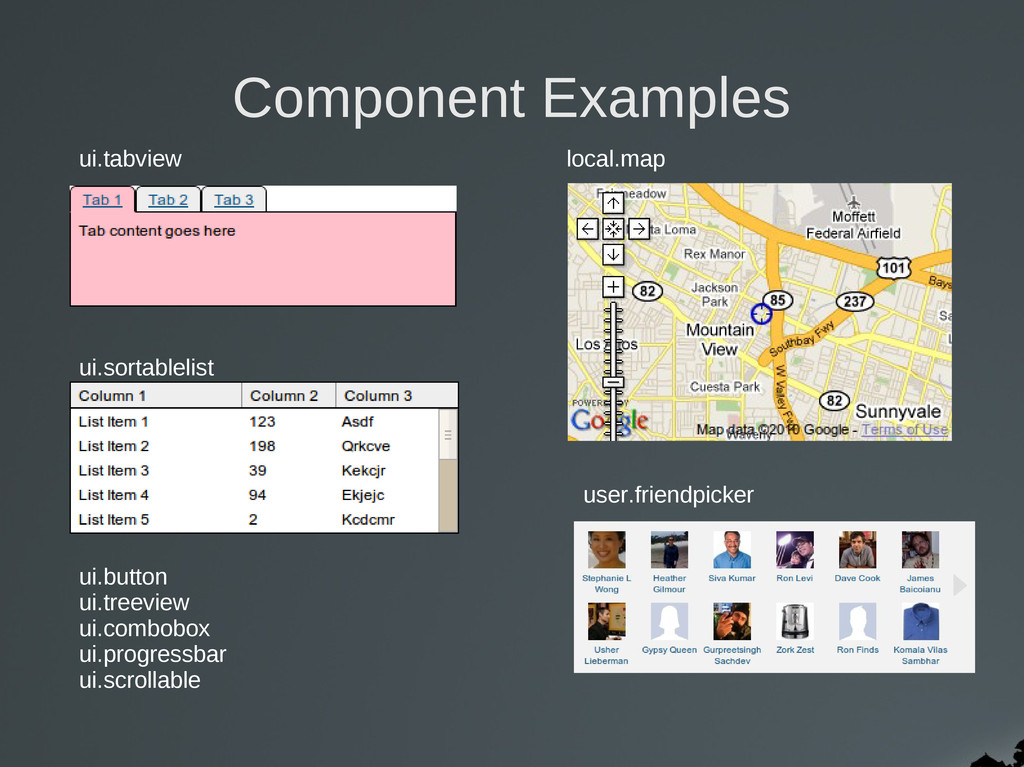
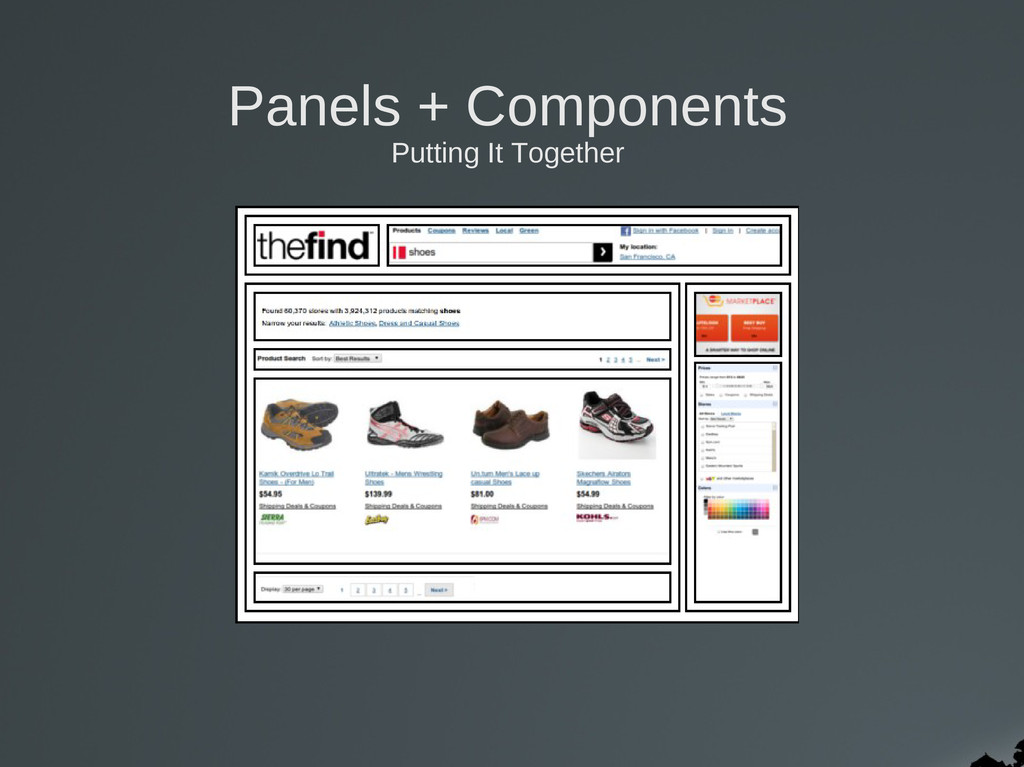
Pages Pages Pages Pages are laid out/wireframed using Panels Panels Panels Panels fill in content by calling Components Components Components Components are reusable controls which define application logic, UI elements, etc.
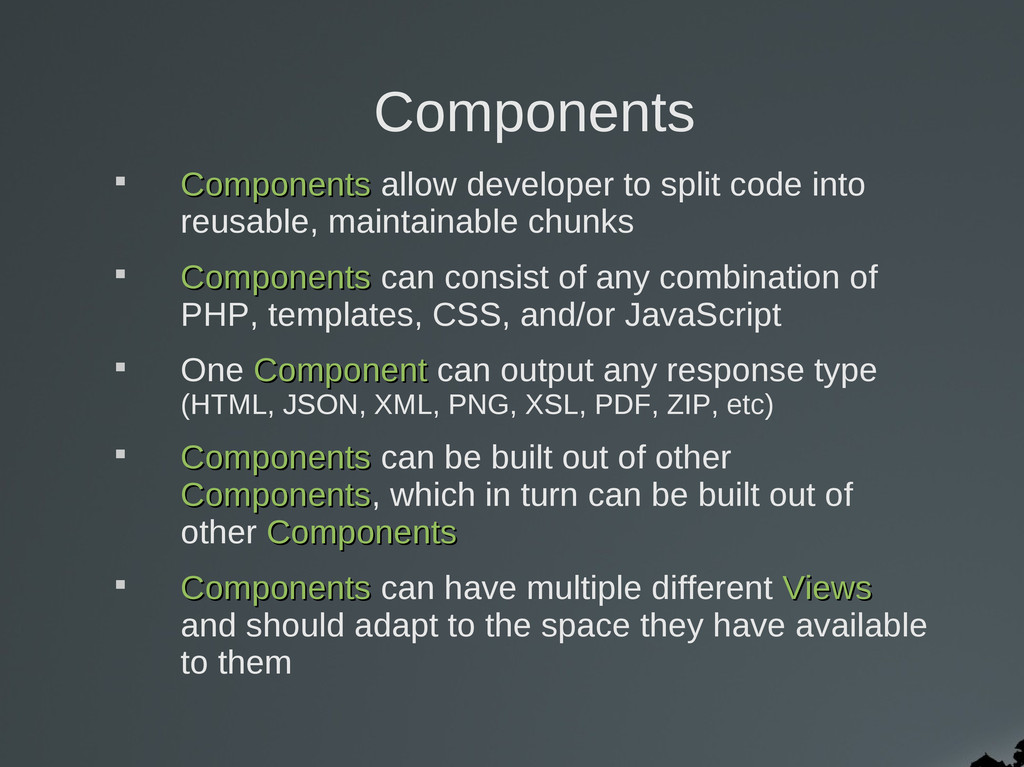
reusable, maintainable chunks Components Components can consist of any combination of PHP, templates, CSS, and/or JavaScript One Component Component can output any response type (HTML, JSON, XML, PNG, XSL, PDF, ZIP, etc) Components Components can be built out of other Components Components, which in turn can be built out of other Components Components Components Components can have multiple different Views Views and should adapt to the space they have available to them
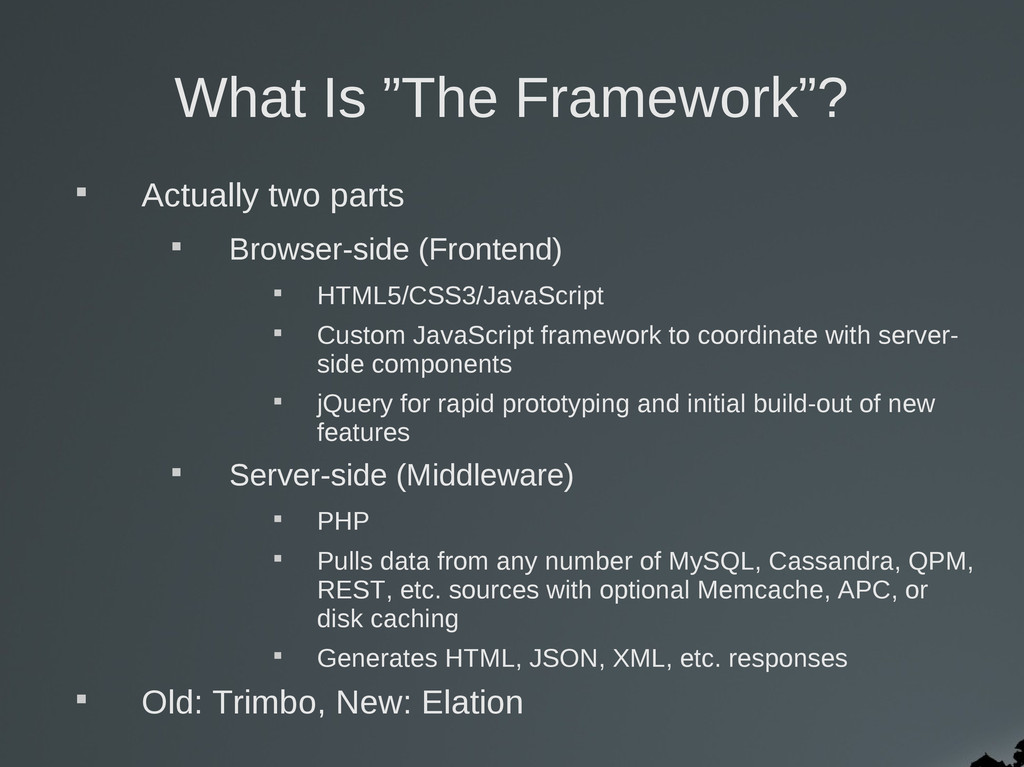
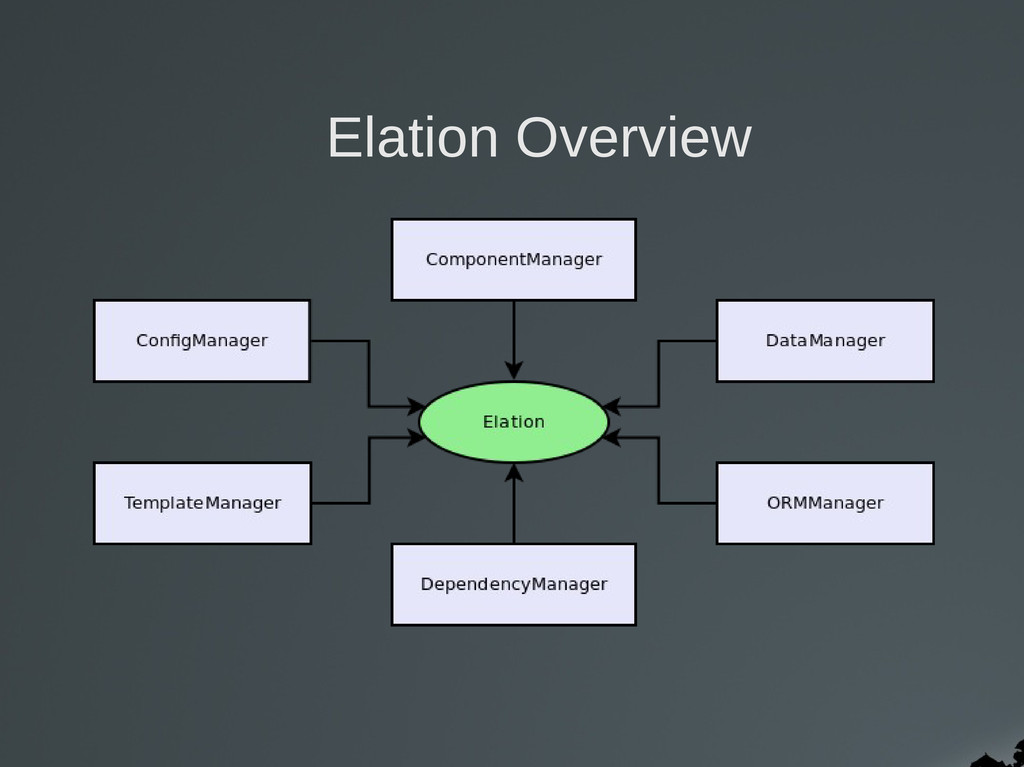
(Frontend) HTML5/CSS3/JavaScript Custom JavaScript framework to coordinate with server- side components jQuery for rapid prototyping and initial build-out of new features Server-side (Middleware) PHP Pulls data from any number of MySQL, Cassandra, QPM, REST, etc. sources with optional Memcache, APC, or disk caching Generates HTML, JSON, XML, etc. responses Old: Trimbo, New: Elation
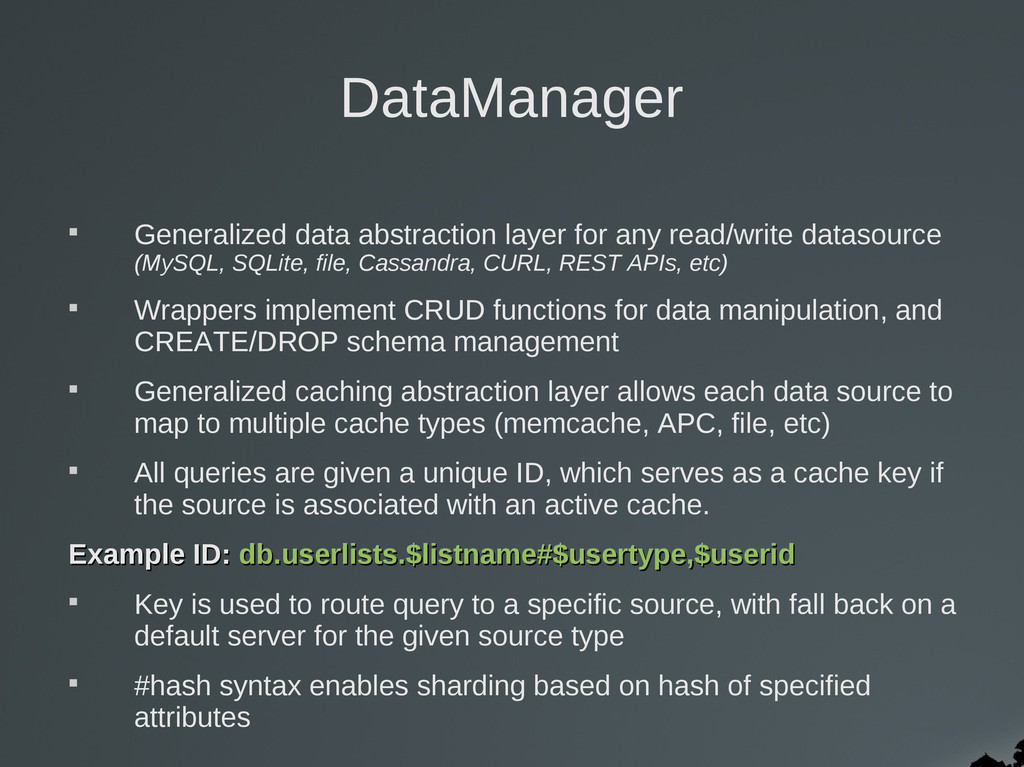
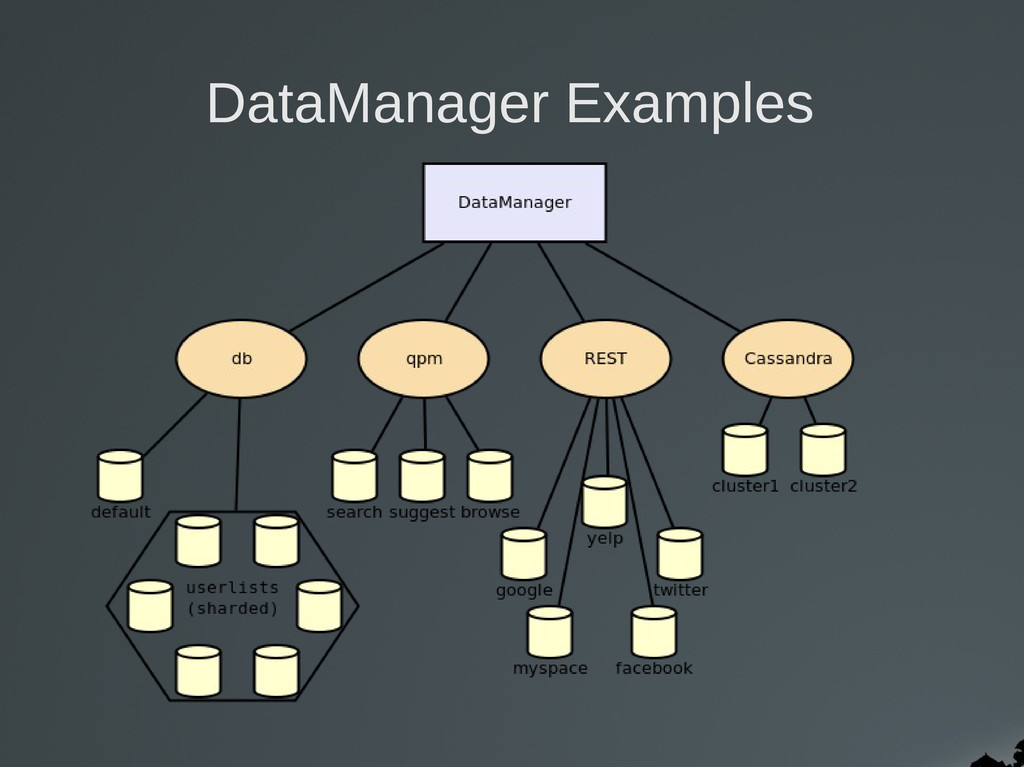
(MySQL, SQLite, file, Cassandra, CURL, REST APIs, etc) Wrappers implement CRUD functions for data manipulation, and CREATE/DROP schema management Generalized caching abstraction layer allows each data source to map to multiple cache types (memcache, APC, file, etc) All queries are given a unique ID, which serves as a cache key if the source is associated with an active cache. Example ID: Example ID: db.userlists.$listname#$usertype,$userid db.userlists.$listname#$usertype,$userid Key is used to route query to a specific source, with fall back on a default server for the given source type #hash syntax enables sharding based on hash of specified attributes
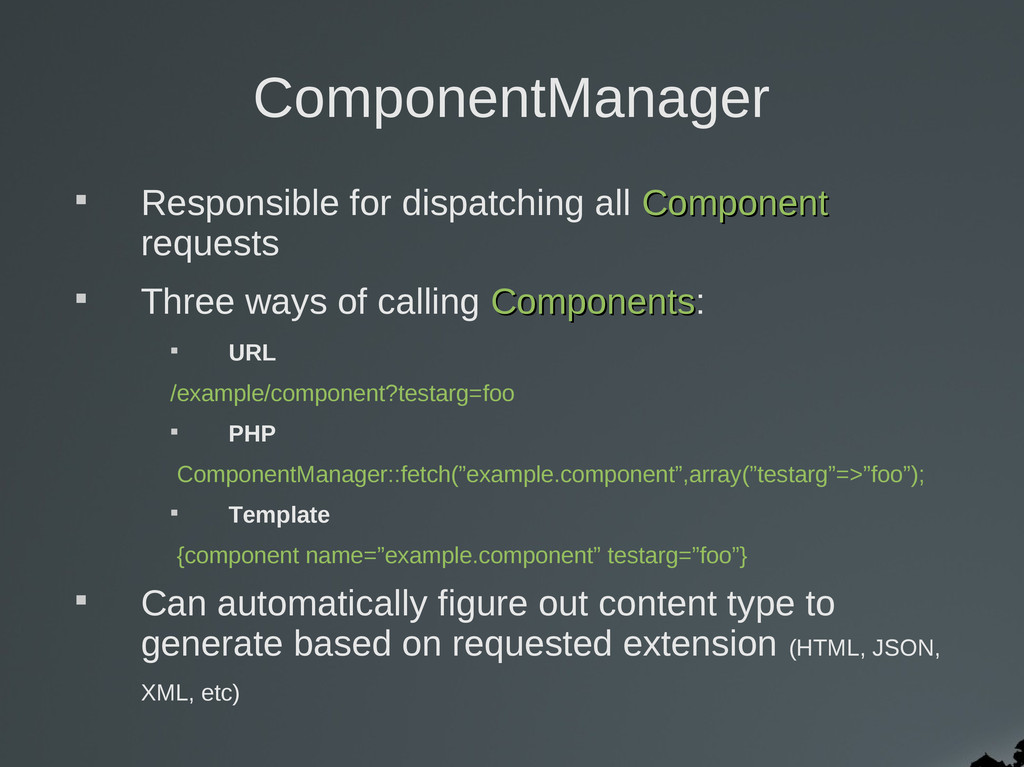
Three ways of calling Components Components: URL /example/component?testarg=foo PHP ComponentManager::fetch(”example.component”,array(”testarg”=>”foo”); Template {component name=”example.component” testarg=”foo”} Can automatically figure out content type to generate based on requested extension (HTML, JSON, XML, etc)
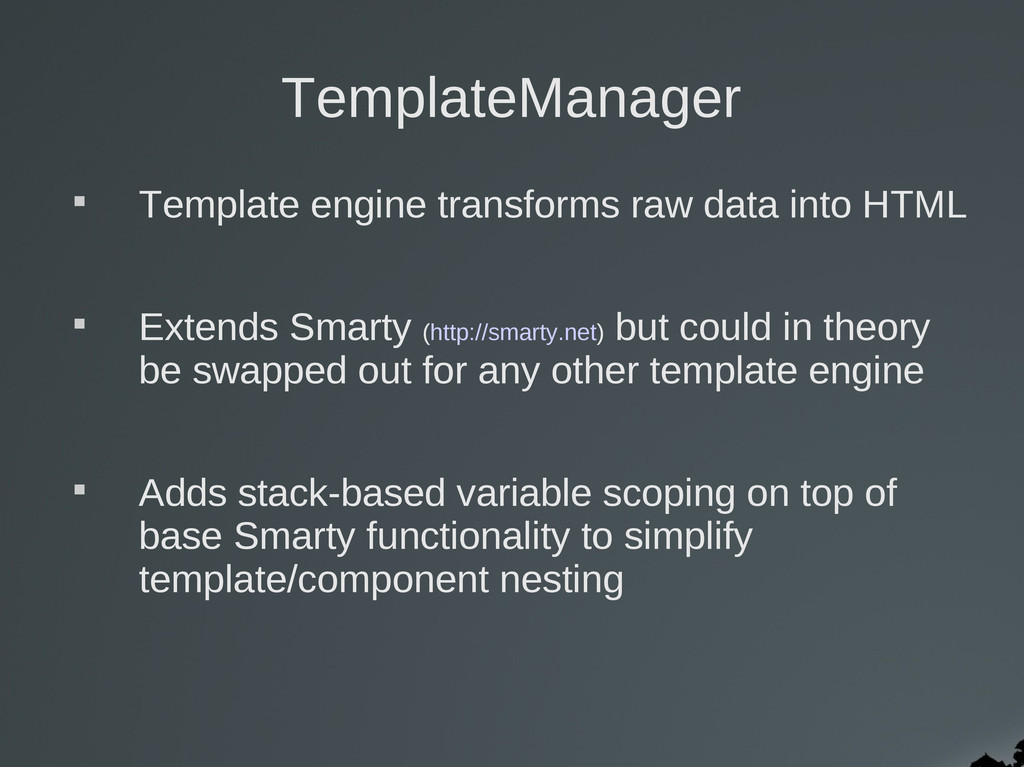
Extends Smarty (http://smarty.net) but could in theory be swapped out for any other template engine Adds stack-based variable scoping on top of base Smarty functionality to simplify template/component nesting
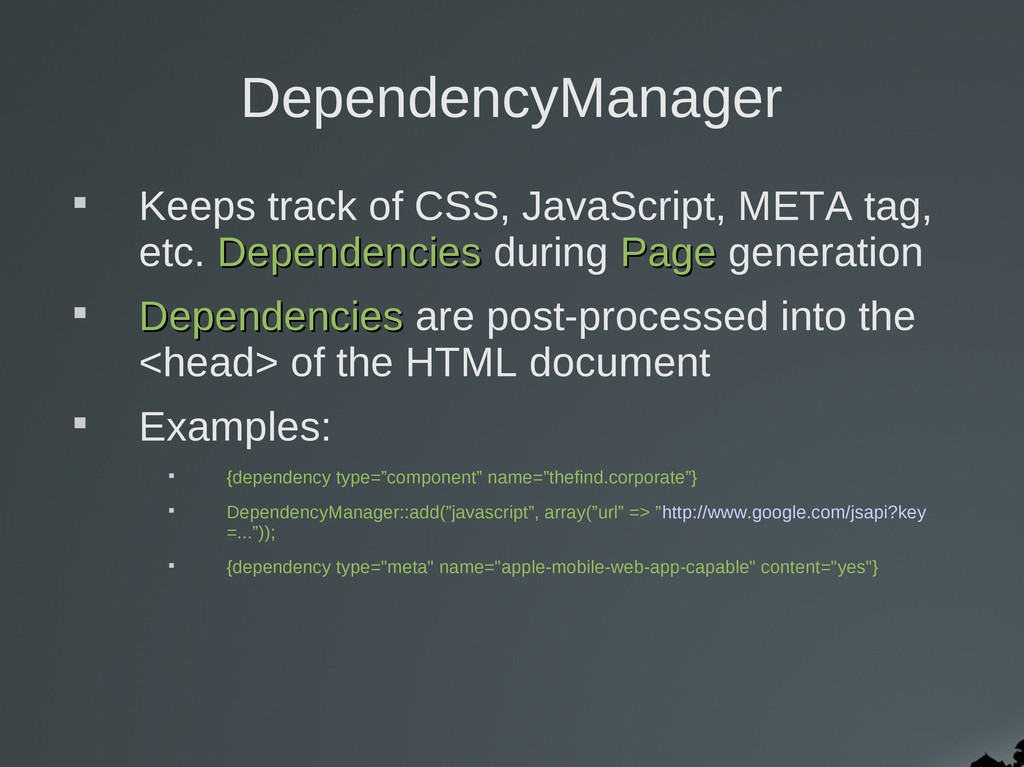
Dependencies Dependencies during Page Page generation Dependencies Dependencies are post-processed into the <head> of the HTML document Examples: {dependency type=”component” name=”thefind.corporate”} DependencyManager::add(”javascript”, array(”url” => ”http://www.google.com/jsapi?key =...”)); {dependency type="meta" name="apple-mobile-web-app-capable" content="yes"}
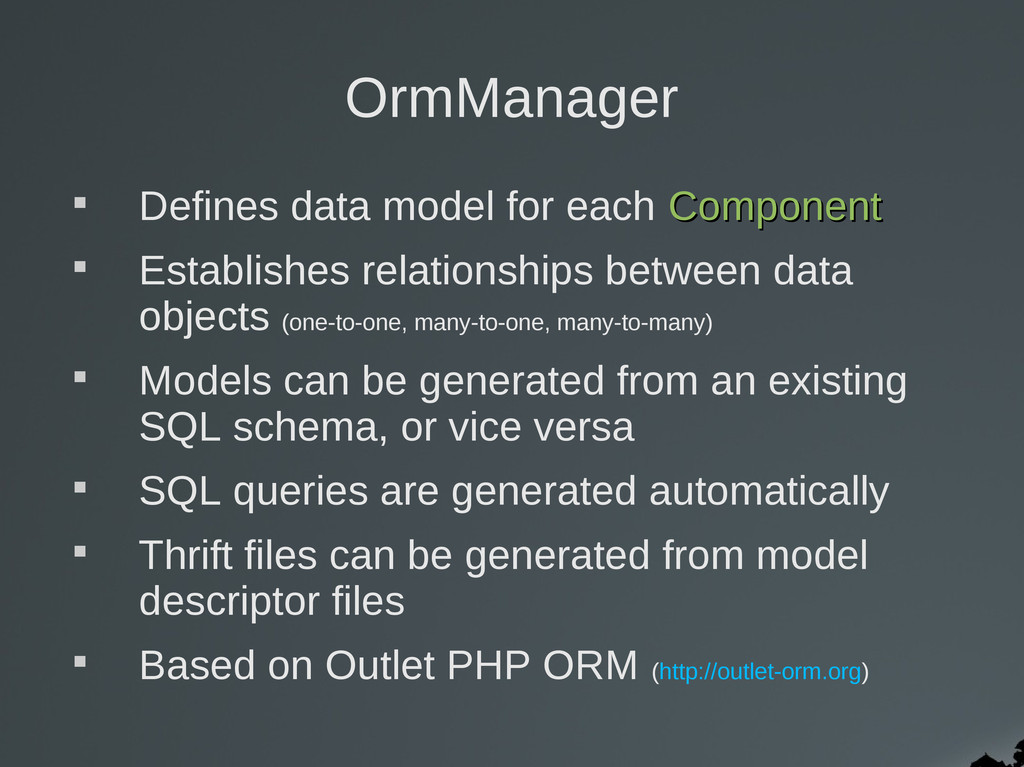
Establishes relationships between data objects (one-to-one, many-to-one, many-to-many) Models can be generated from an existing SQL schema, or vice versa SQL queries are generated automatically Thrift files can be generated from model descriptor files Based on Outlet PHP ORM (http://outlet-orm.org)
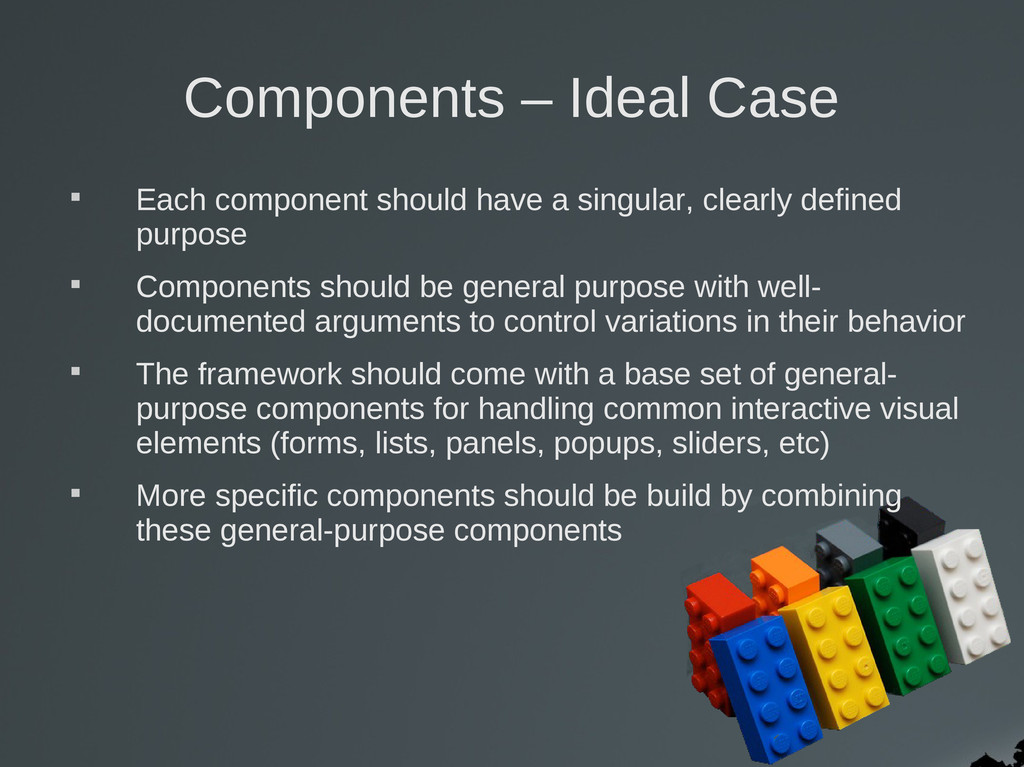
singular, clearly defined purpose Components should be general purpose with well- documented arguments to control variations in their behavior The framework should come with a base set of general- purpose components for handling common interactive visual elements (forms, lists, panels, popups, sliders, etc) More specific components should be build by combining these general-purpose components
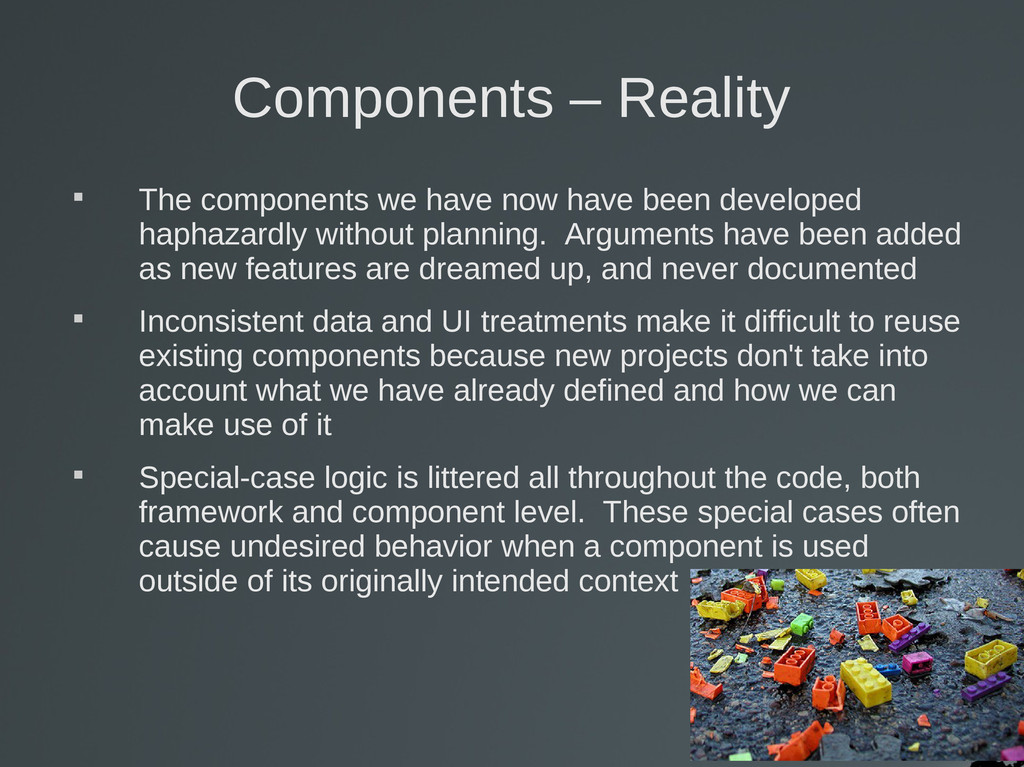
been developed haphazardly without planning. Arguments have been added as new features are dreamed up, and never documented Inconsistent data and UI treatments make it difficult to reuse existing components because new projects don't take into account what we have already defined and how we can make use of it Special-case logic is littered all throughout the code, both framework and component level. These special cases often cause undesired behavior when a component is used outside of its originally intended context


 satoshi256kbyte
 utakaha
 falcon8823
 guaca
 drumath2237
 yukiny
 optim
 yub0n
 akit37
 oku053
 kishida
 gonta
 aleyda
 eileencodes
 aki_iinuma
 inesmontani
 leimatthew05
 axbom
 chriscoyier
 thirion
 tammyeverts
 dugsong
 honzajavorek