Upgrade to Pro — share decks privately, control downloads, hide ads and more …

From manual test shop to fully automated test c...

From manual test shop to fully automated test coverage: A How-To session to speed up your journey

Scores of applications. Hundreds of production deployments per week. Test automation is a must. But how does a QA department go from a manual test shop to fully automated test coverage within a continuous integration and deployment environment?
These are our early steps towards full automation, walking through what worked (and didn’t work) for us.
Presented at Agile & Beyond 2017 (#aab17)

Avatar for Jayshree Bhakta

Jayshree Bhakta

May 04, 2017

Other Decks in Technology

Transcript

  1. From manual test shop to fully automated test coverage: A

    How-To session to speed up your journey JAYSHREE BHAKTA ITHAKA/JSTOR
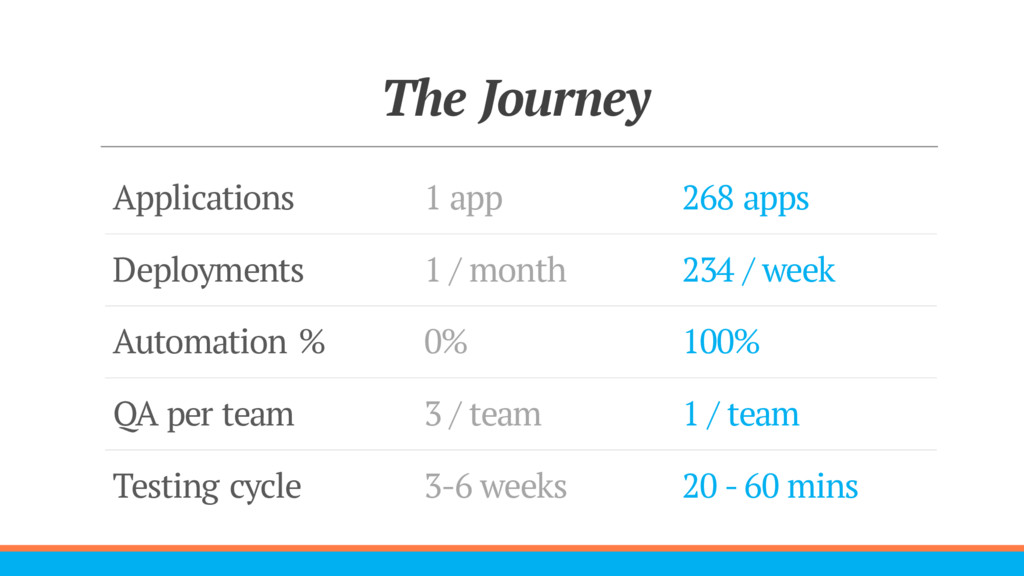
  2. The Journey Applications 1 app 268 apps Deployments 1 /

    month 234 / week Automation % 0% 100% QA per team 3 / team 1 / team Testing cycle 3-6 weeks 20 - 60 mins
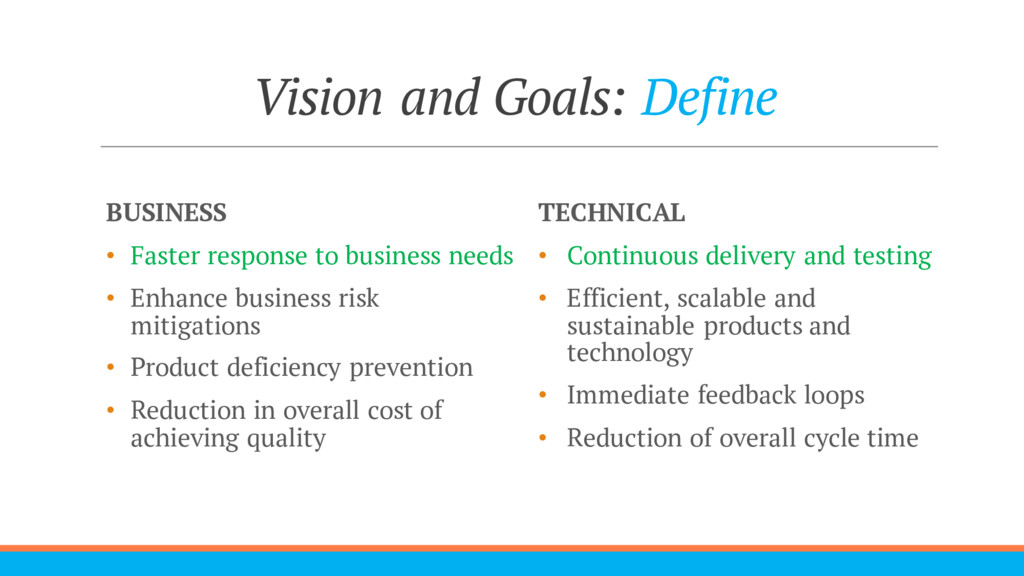
  3. Vision and Goals: Define BUSINESS • Faster response to business

    needs • Enhance business risk mitigations • Product deficiency prevention • Reduction in overall cost of achieving quality TECHNICAL • Continuous delivery and testing • Efficient, scalable and sustainable products and technology • Immediate feedback loops • Reduction of overall cycle time
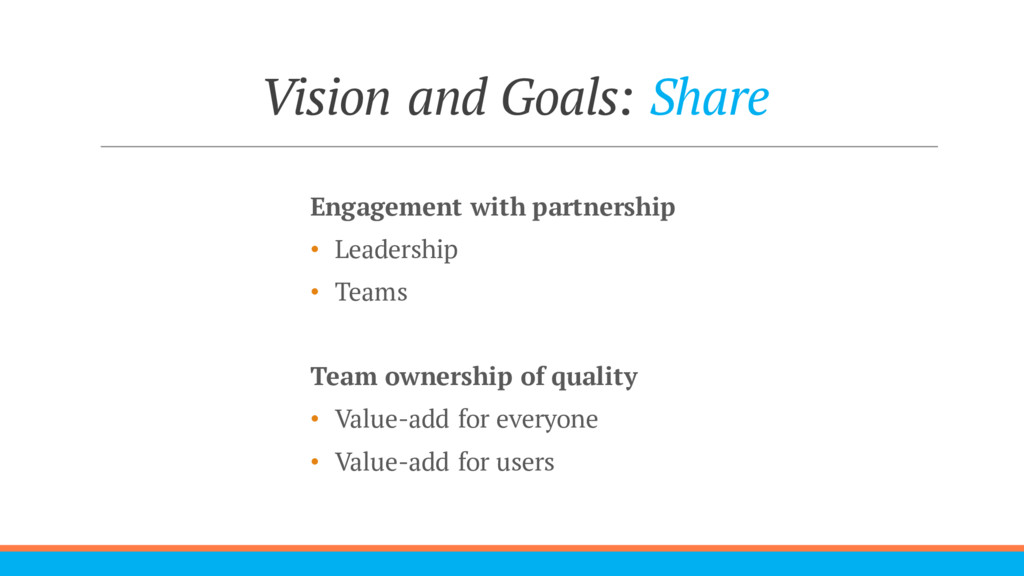
  4. Vision and Goals: Share Engagement with partnership • Leadership •

    Teams Team ownership of quality • Value-add for everyone • Value-add for users
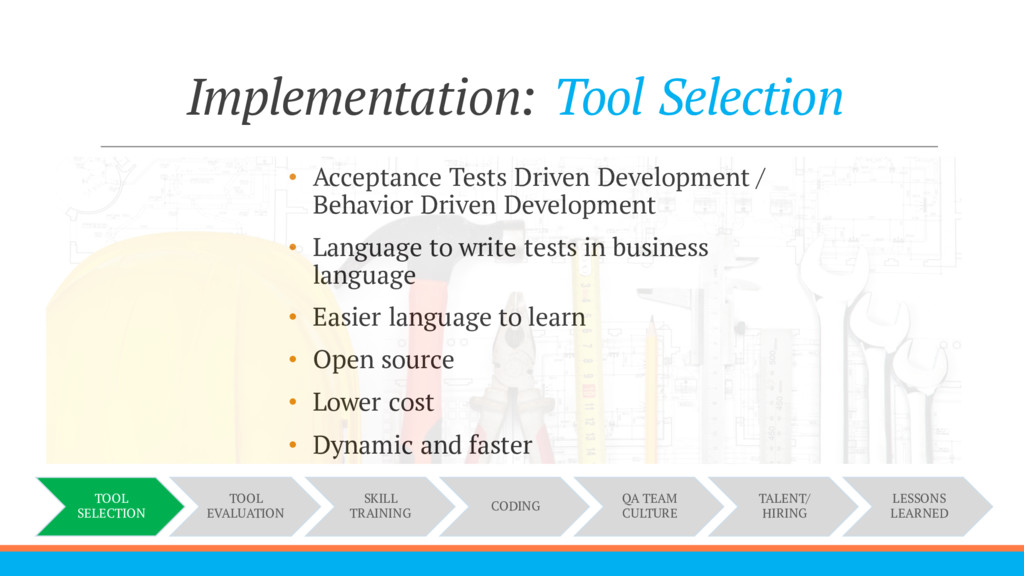
  5. Implementation: Tool Selection TOOL SELECTION TOOL EVALUATION SKILL TRAINING CODING

    QA TEAM CULTURE TALENT/ HIRING LESSONS LEARNED • Acceptance Tests Driven Development / Behavior Driven Development • Language to write tests in business language • Easier language to learn • Open source • Lower cost • Dynamic and faster
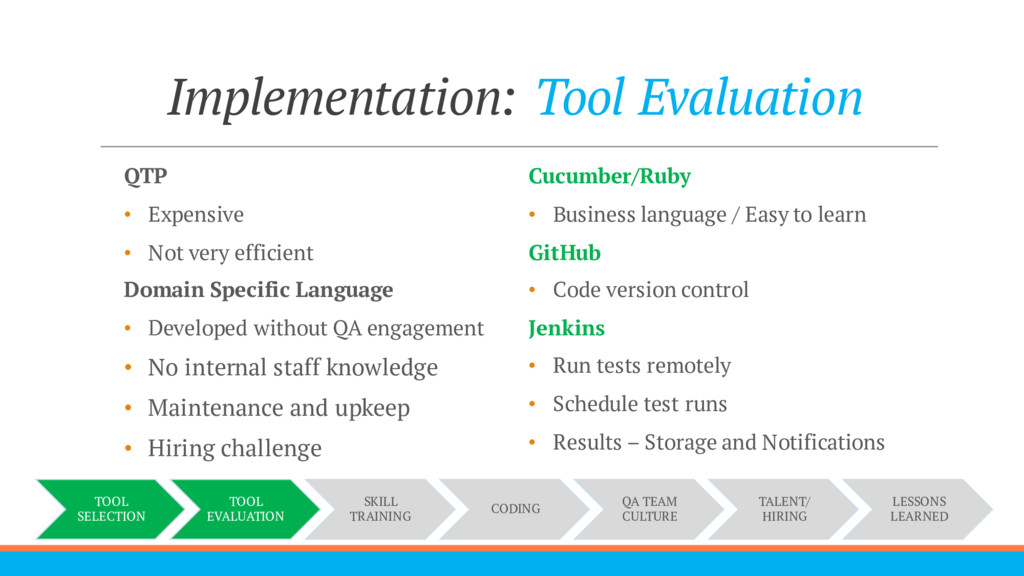
  6. Implementation: Tool Evaluation TOOL SELECTION TOOL EVALUATION SKILL TRAINING CODING

    QA TEAM CULTURE TALENT/ HIRING LESSONS LEARNED Cucumber/Ruby • Business language / Easy to learn GitHub • Code version control Jenkins • Run tests remotely • Schedule test runs • Results – Storage and Notifications QTP • Expensive • Not very efficient Domain Specific Language • Developed without QA engagement • No internal staff knowledge • Maintenance and upkeep • Hiring challenge
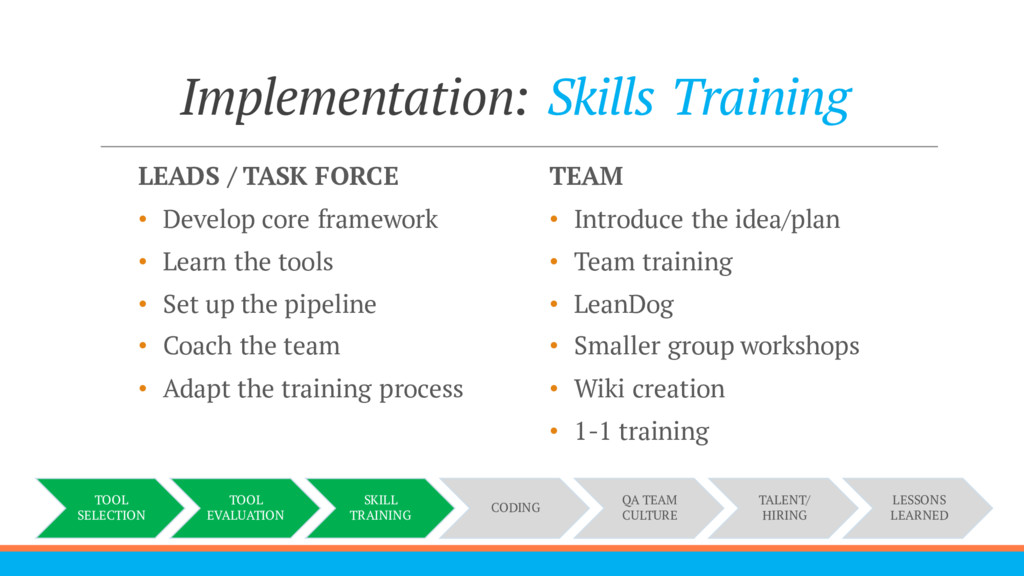
  7. Implementation: Skills Training TEAM • Introduce the idea/plan • Team

    training • LeanDog • Smaller group workshops • Wiki creation • 1-1 training TOOL SELECTION TOOL EVALUATION SKILL TRAINING CODING QA TEAM CULTURE TALENT/ HIRING LESSONS LEARNED LEADS / TASK FORCE • Develop core framework • Learn the tools • Set up the pipeline • Coach the team • Adapt the training process
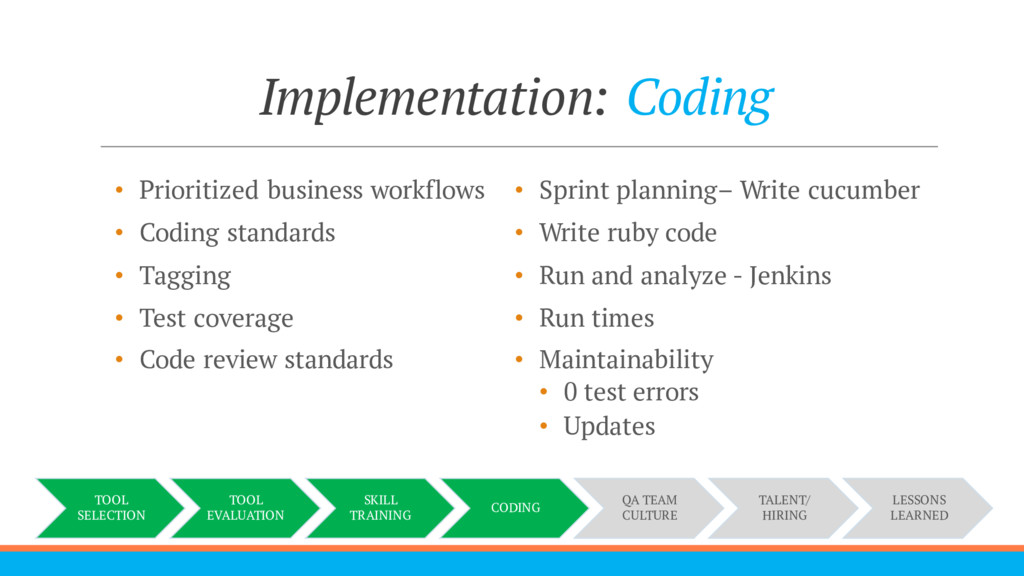
  8. Implementation: Coding • Prioritized business workflows • Coding standards •

    Tagging • Test coverage • Code review standards TOOL SELECTION TOOL EVALUATION SKILL TRAINING CODING QA TEAM CULTURE TALENT/ HIRING LESSONS LEARNED • Sprint planning– Write cucumber • Write ruby code • Run and analyze - Jenkins • Run times • Maintainability • 0 test errors • Updates
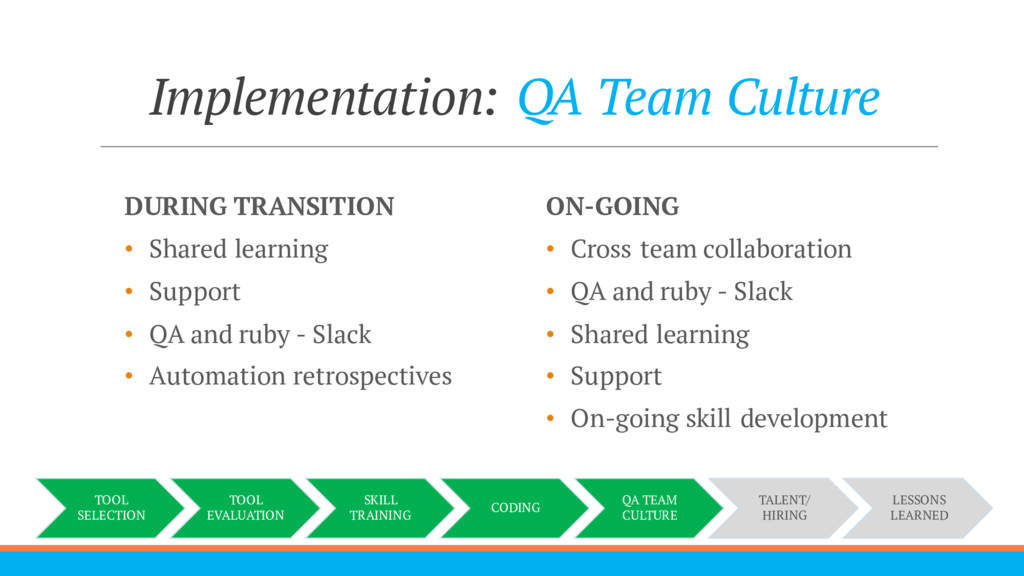
  9. Implementation: QA Team Culture DURING TRANSITION • Shared learning •

    Support • QA and ruby - Slack • Automation retrospectives TOOL SELECTION TOOL EVALUATION SKILL TRAINING CODING QA TEAM CULTURE TALENT/ HIRING LESSONS LEARNED ON-GOING • Cross team collaboration • QA and ruby - Slack • Shared learning • Support • On-going skill development
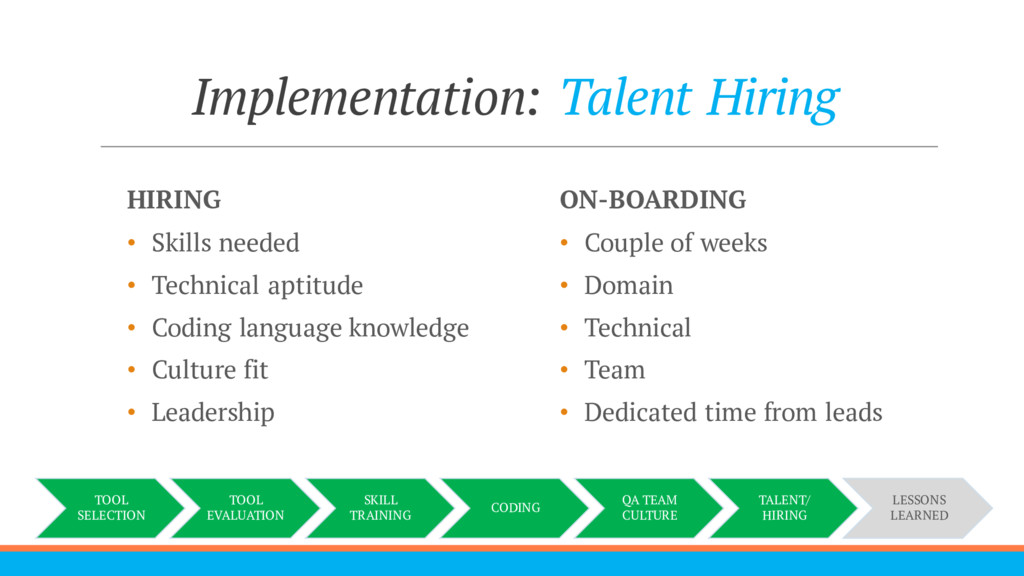
  10. Implementation: Talent Hiring HIRING • Skills needed • Technical aptitude

    • Coding language knowledge • Culture fit • Leadership TOOL SELECTION TOOL EVALUATION SKILL TRAINING CODING QA TEAM CULTURE TALENT/ HIRING LESSONS LEARNED ON-BOARDING • Couple of weeks • Domain • Technical • Team • Dedicated time from leads
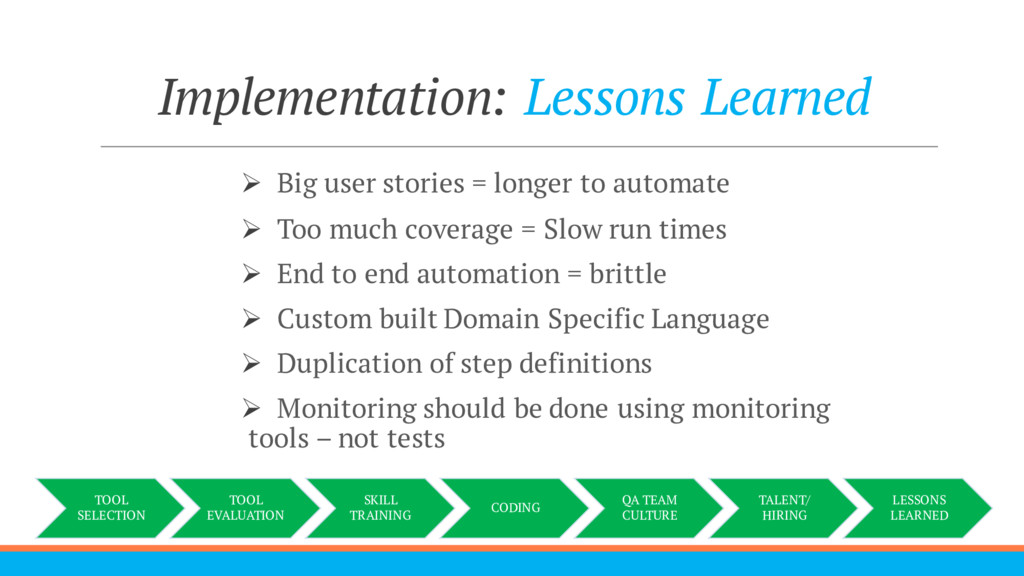
  11. Implementation: Lessons Learned Ø Big user stories = longer to

    automate Ø Too much coverage = Slow run times Ø End to end automation = brittle Ø Custom built Domain Specific Language Ø Duplication of step definitions Ø Monitoring should be done using monitoring tools – not tests TOOL SELECTION TOOL EVALUATION SKILL TRAINING CODING QA TEAM CULTURE TALENT/ HIRING LESSONS LEARNED
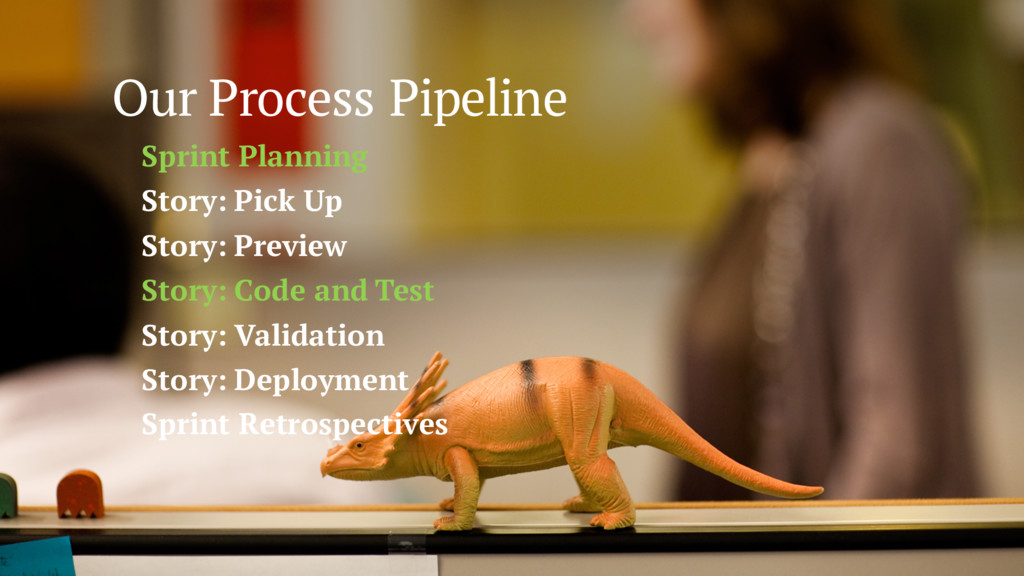
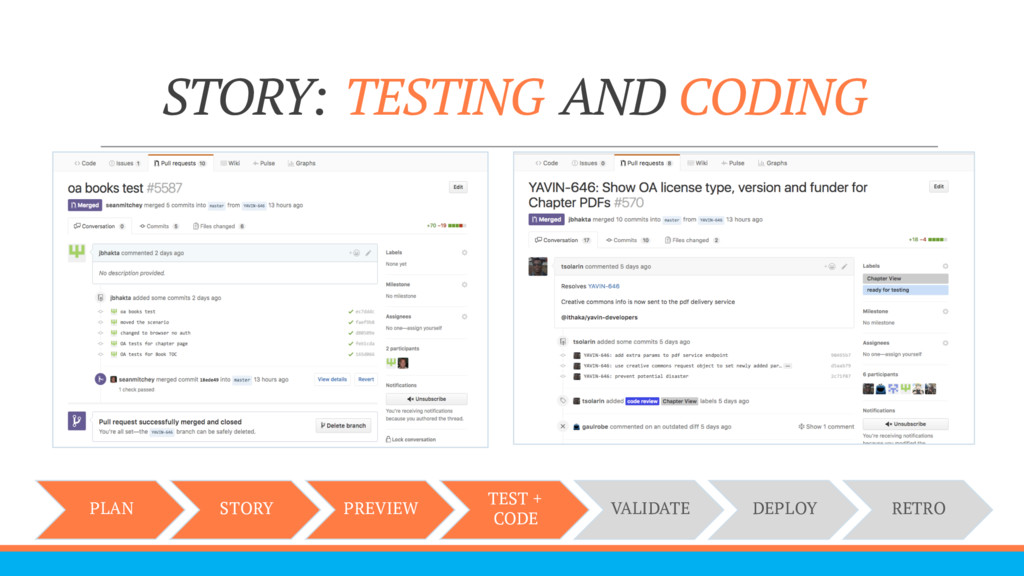
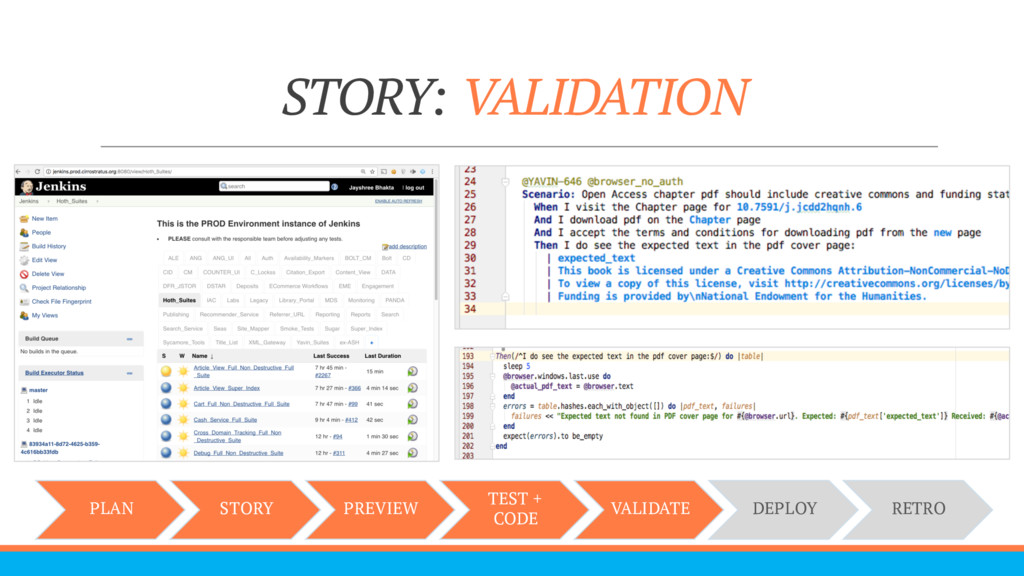
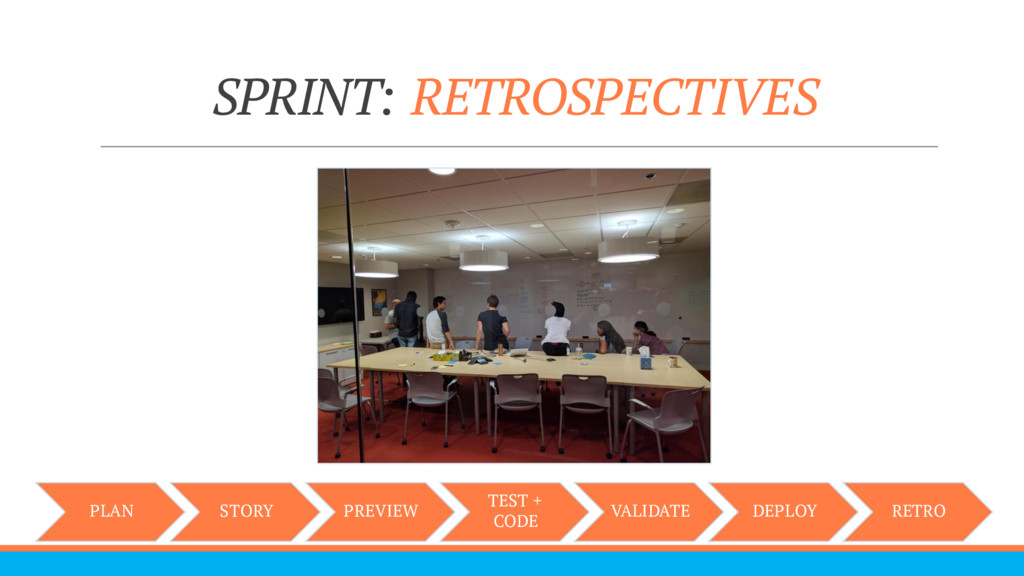
  12. Our Process Pipeline Sprint Planning Story: Pick Up Story: Preview

    Story: Code and Test Story: Validation Story: Deployment Sprint Retrospectives
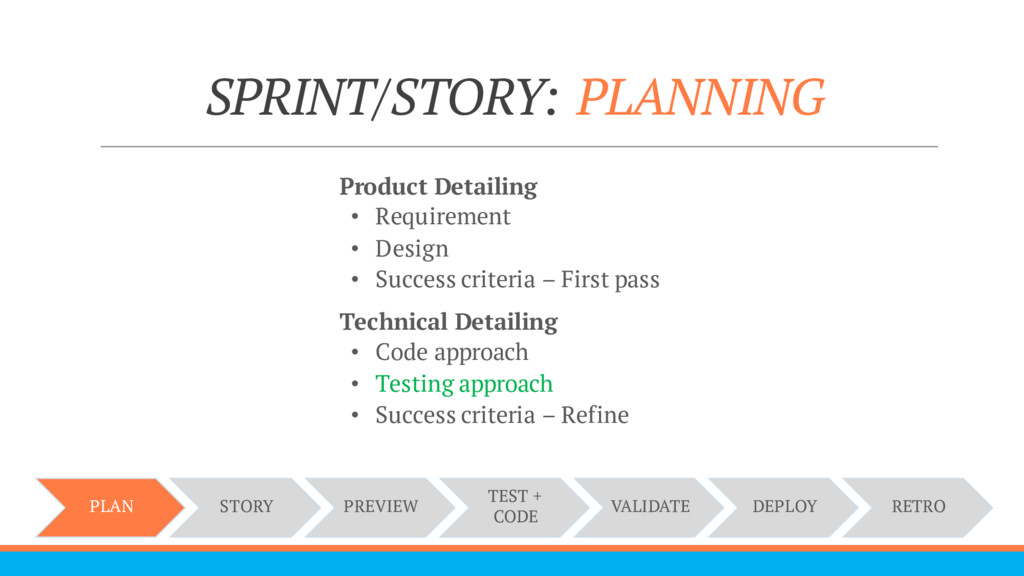
  13. SPRINT/STORY: PLANNING Product Detailing • Requirement • Design • Success

    criteria – First pass Technical Detailing • Code approach • Testing approach • Success criteria – Refine PLAN STORY PREVIEW TEST + CODE VALIDATE DEPLOY RETRO
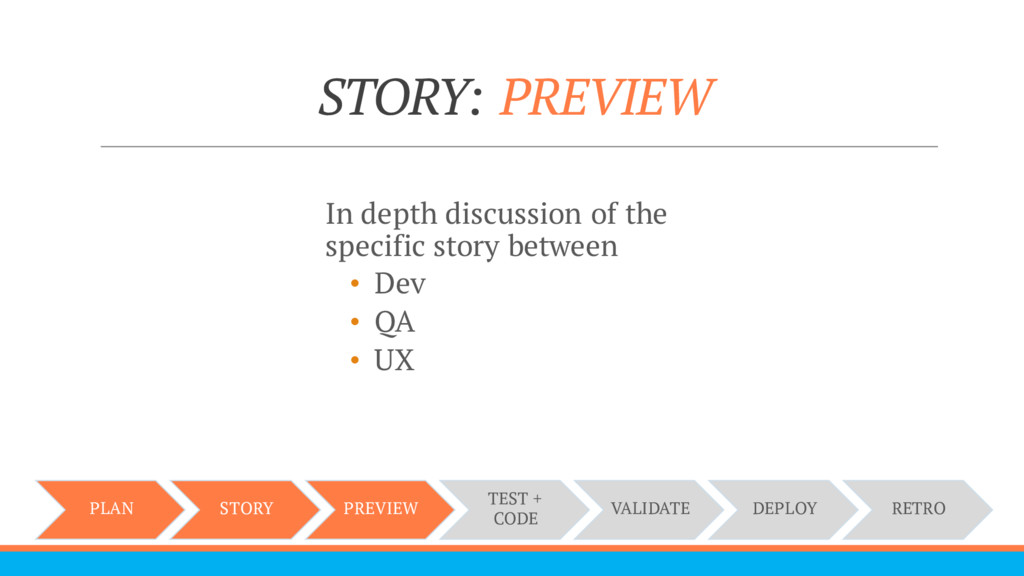
  14. STORY: PREVIEW In depth discussion of the specific story between

    • Dev • QA • UX PLAN STORY PREVIEW TEST + CODE VALIDATE DEPLOY RETRO
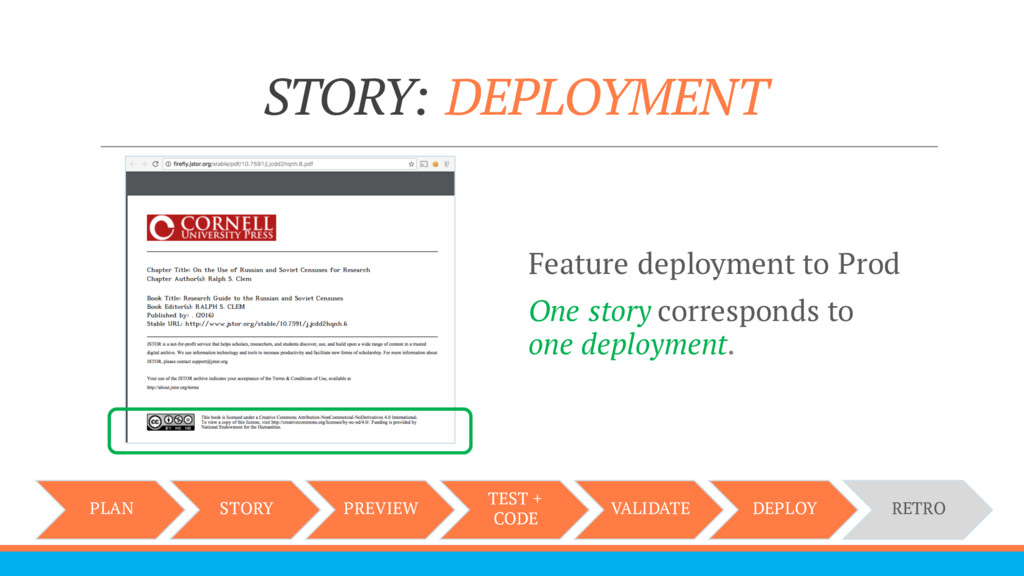
  15. STORY: DEPLOYMENT PLAN STORY PREVIEW TEST + CODE VALIDATE DEPLOY

    RETRO Feature deployment to Prod One story corresponds to one deployment.
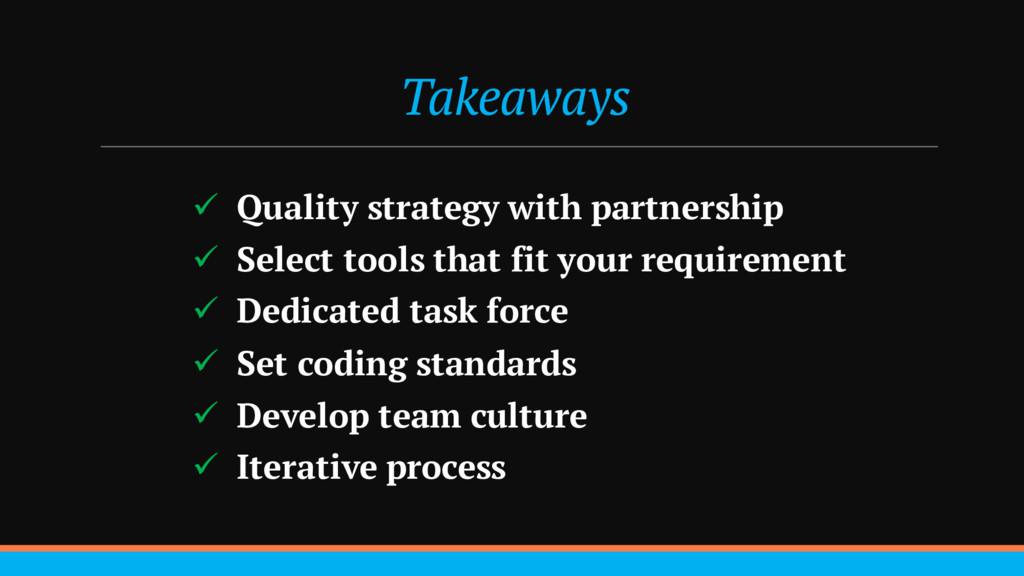
  16. Takeaways ü Quality strategy with partnership ü Select tools that

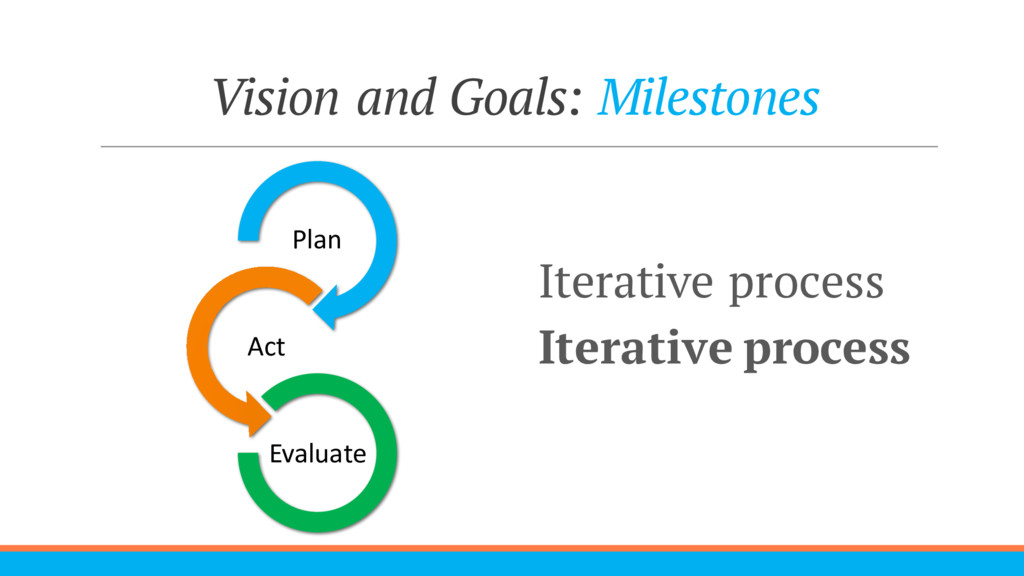
    fit your requirement ü Dedicated task force ü Set coding standards ü Develop team culture ü Iterative process