Upgrade to Pro — share decks privately, control downloads, hide ads and more …

Joyful Python Web App development with Appier

Joyful Python Web App development with Appier

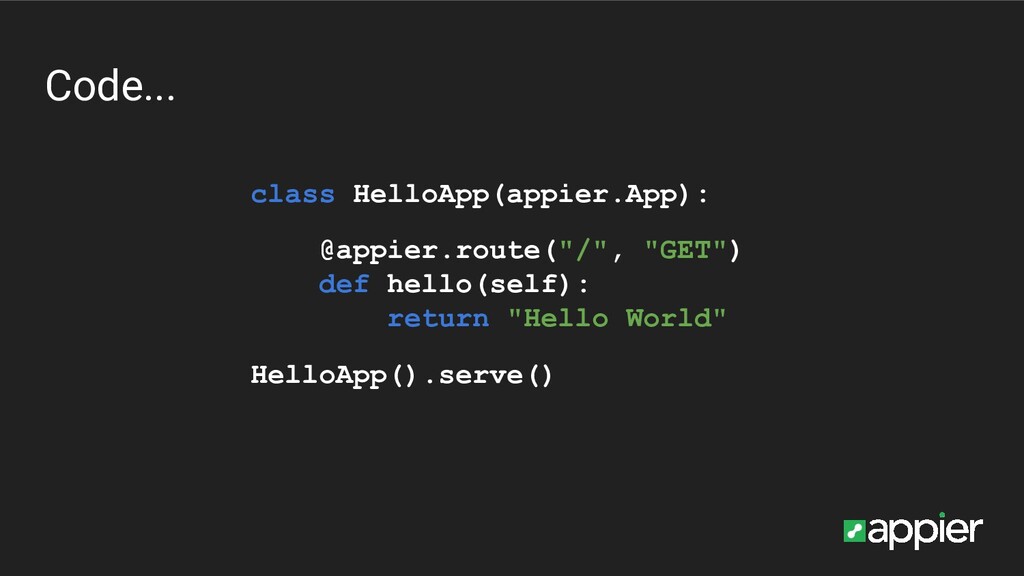
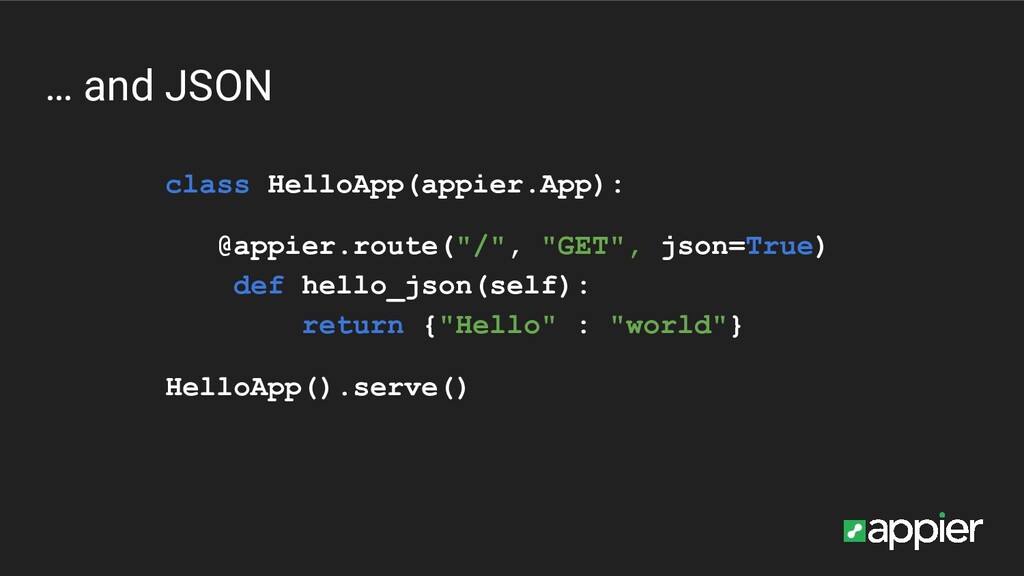
Presentation on the Appier Framework from Hive Solution for the Python Porto Community. It provides a simple introduction to the framework's core features and use-cases.

Avatar for João Magalhães

João Magalhães

September 27, 2017

Other Decks in Programming

Transcript

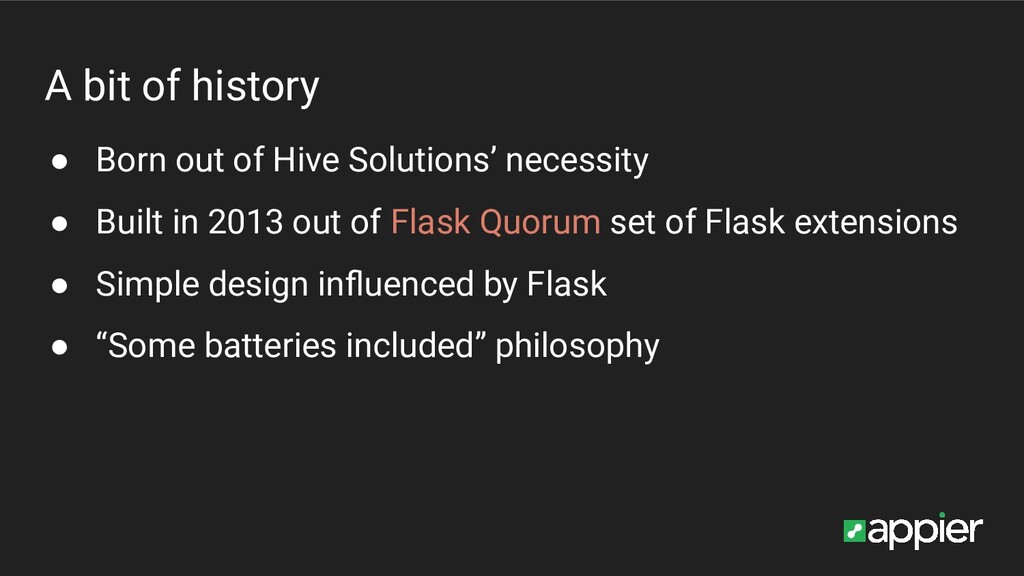
  1. A bit of history • Born out of Hive Solutions’

    necessity • Built in 2013 out of Flask Quorum set of Flask extensions • Simple design influenced by Flask • “Some batteries included” philosophy
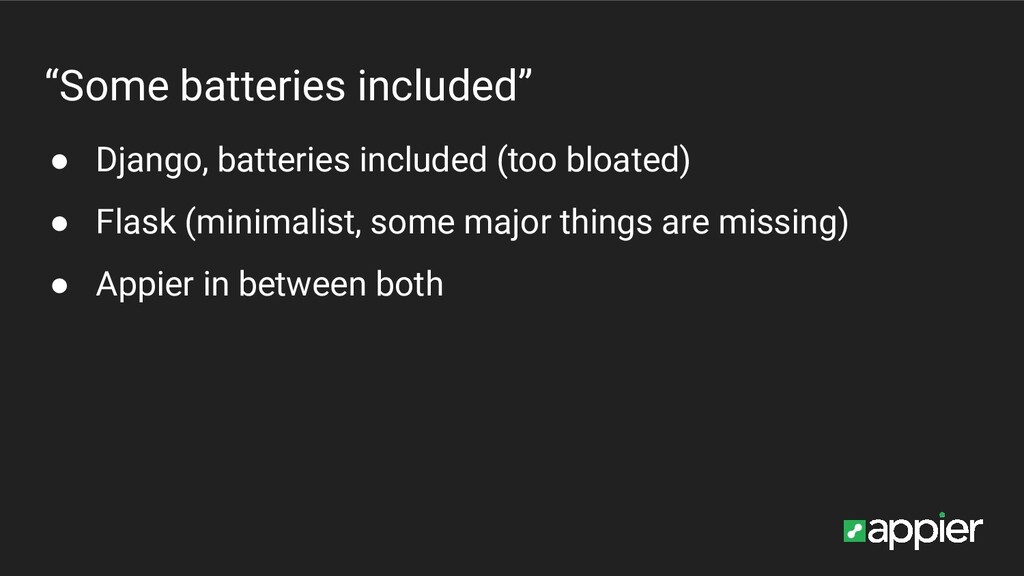
  2. “Some batteries included” • Django, batteries included (too bloated) •

    Flask (minimalist, some major things are missing) • Appier in between both
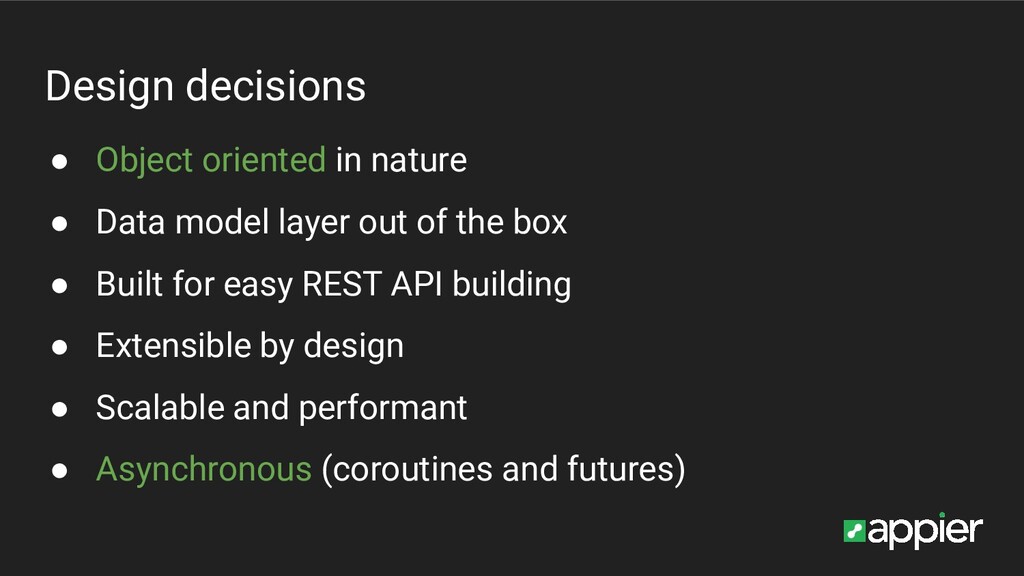
  3. Design decisions • Object oriented in nature • Data model

    layer out of the box • Built for easy REST API building • Extensible by design • Scalable and performant • Asynchronous (coroutines and futures)
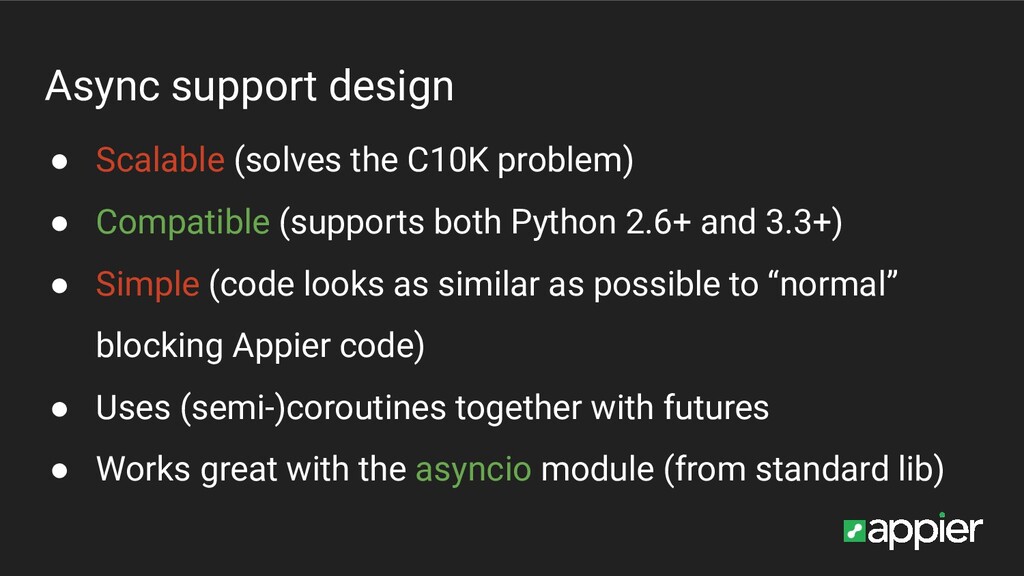
  4. Async support design • Scalable (solves the C10K problem) •

    Compatible (supports both Python 2.6+ and 3.3+) • Simple (code looks as similar as possible to “normal” blocking Appier code) • Uses (semi-)coroutines together with futures • Works great with the asyncio module (from standard lib)
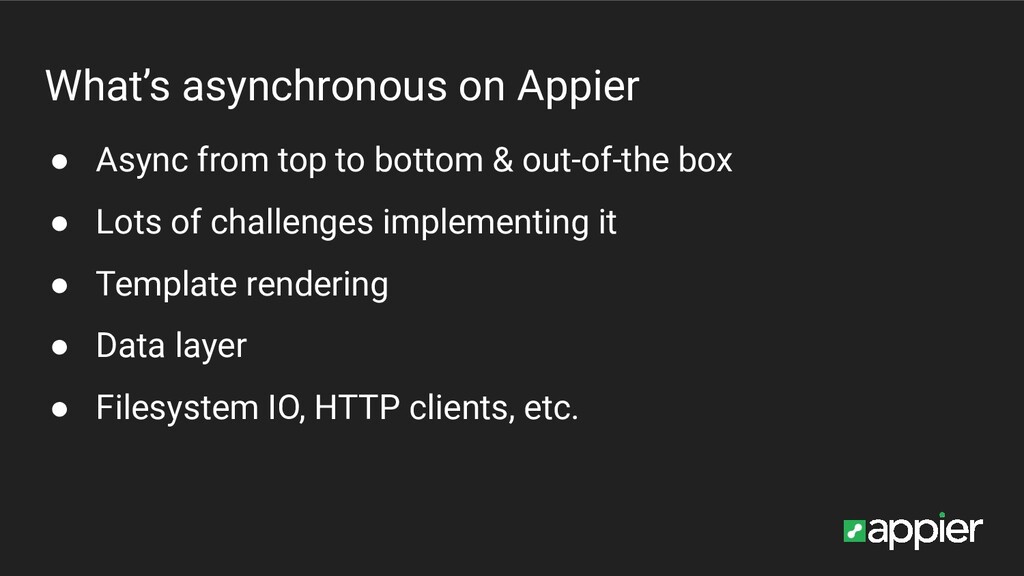
  5. What’s asynchronous on Appier • Async from top to bottom

    & out-of-the box • Lots of challenges implementing it • Template rendering • Data layer • Filesystem IO, HTTP clients, etc.
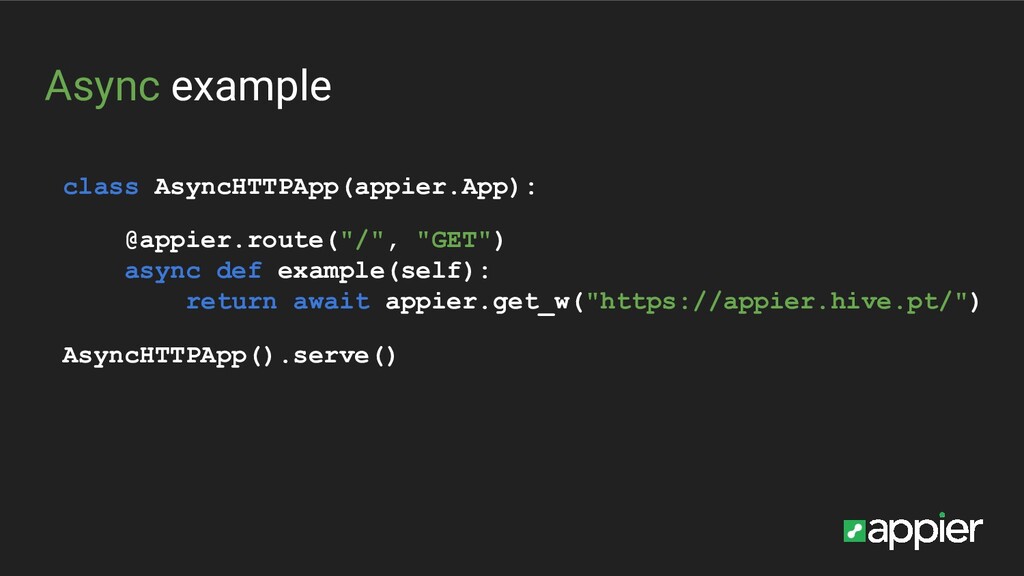
  6. Async example class AsyncHTTPApp(appier.App): @appier.route("/", "GET") async def example(self): return

    await appier.get_w("https://appier.hive.pt/") AsyncHTTPApp().serve()
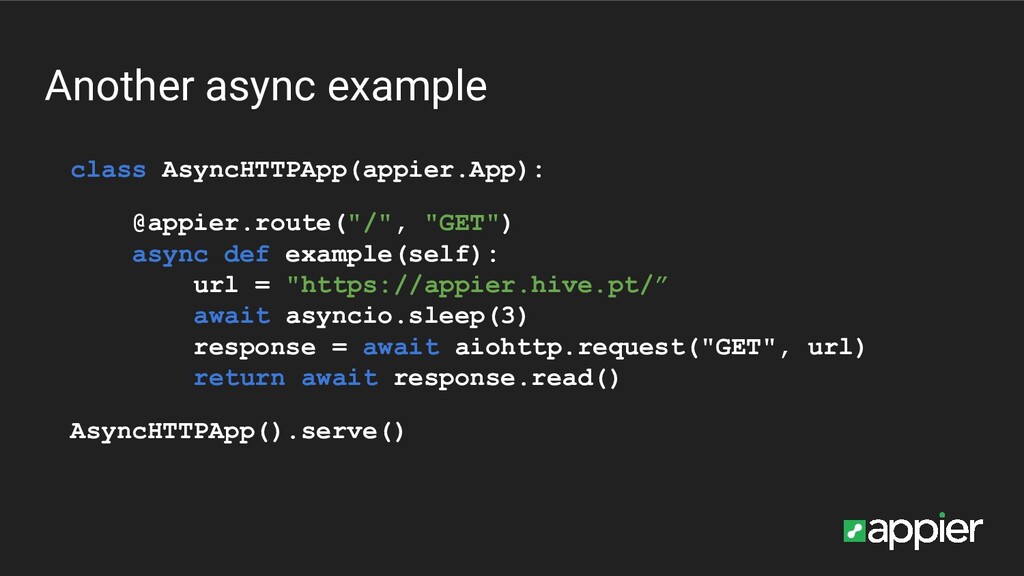
  7. Another async example class AsyncHTTPApp(appier.App): @appier.route("/", "GET") async def example(self):

    url = "https://appier.hive.pt/” await asyncio.sleep(3) response = await aiohttp.request("GET", url) return await response.read() AsyncHTTPApp().serve()
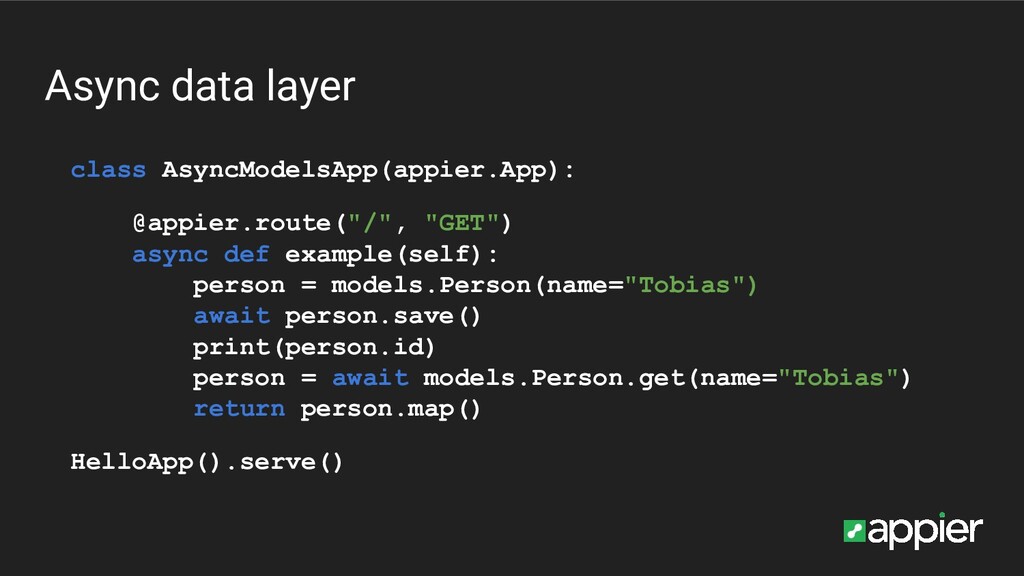
  8. Async data layer class AsyncModelsApp(appier.App): @appier.route("/", "GET") async def example(self):

    person = models.Person(name="Tobias") await person.save() print(person.id) person = await models.Person.get(name="Tobias") return person.map() HelloApp().serve()
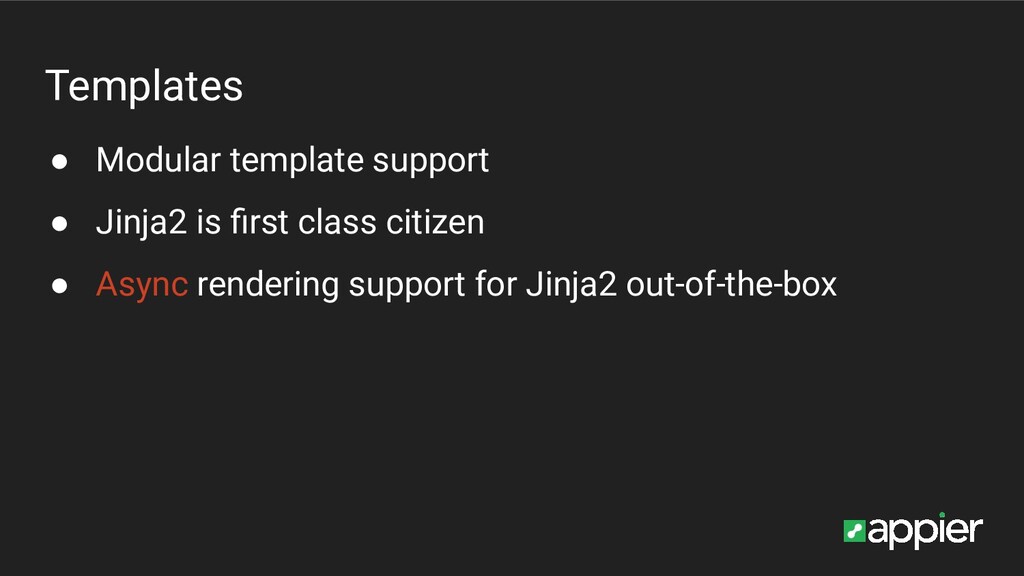
  9. Templates • Modular template support • Jinja2 is first class

    citizen • Async rendering support for Jinja2 out-of-the-box
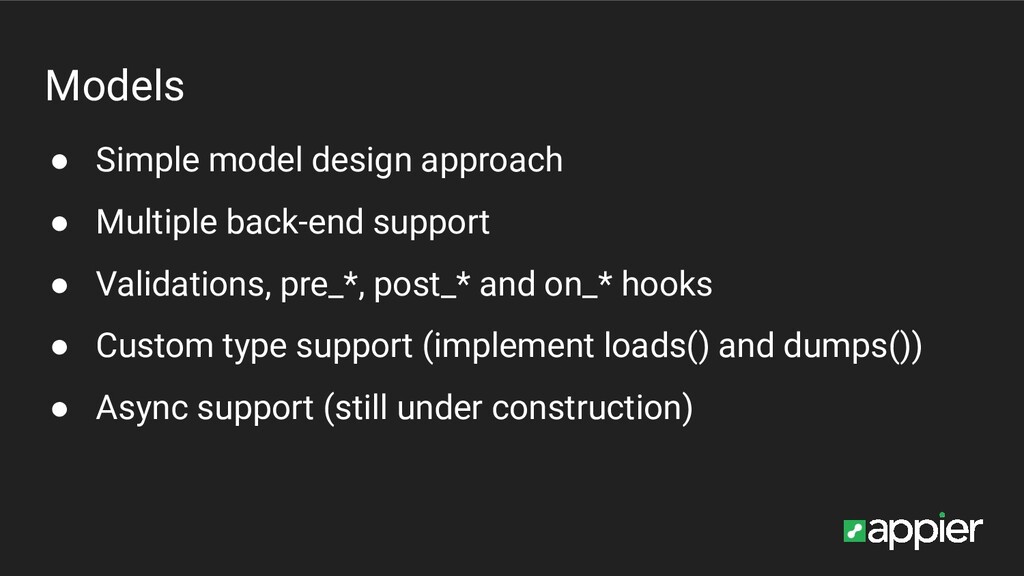
  10. Models • Simple model design approach • Multiple back-end support

    • Validations, pre_*, post_* and on_* hooks • Custom type support (implement loads() and dumps()) • Async support (still under construction)
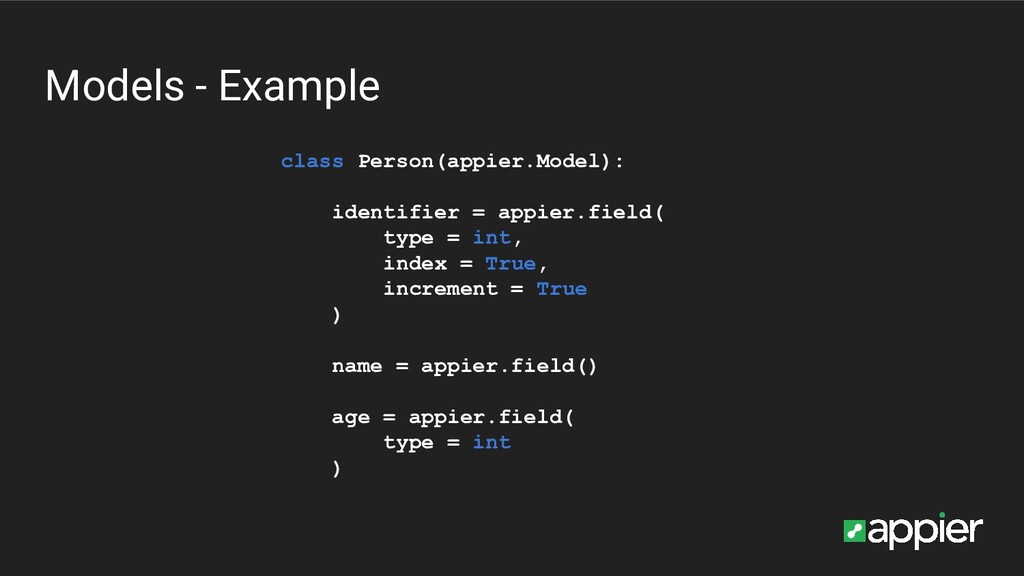
  11. Models - Example class Person(appier.Model): identifier = appier.field( type =

    int, index = True, increment = True ) name = appier.field() age = appier.field( type = int )
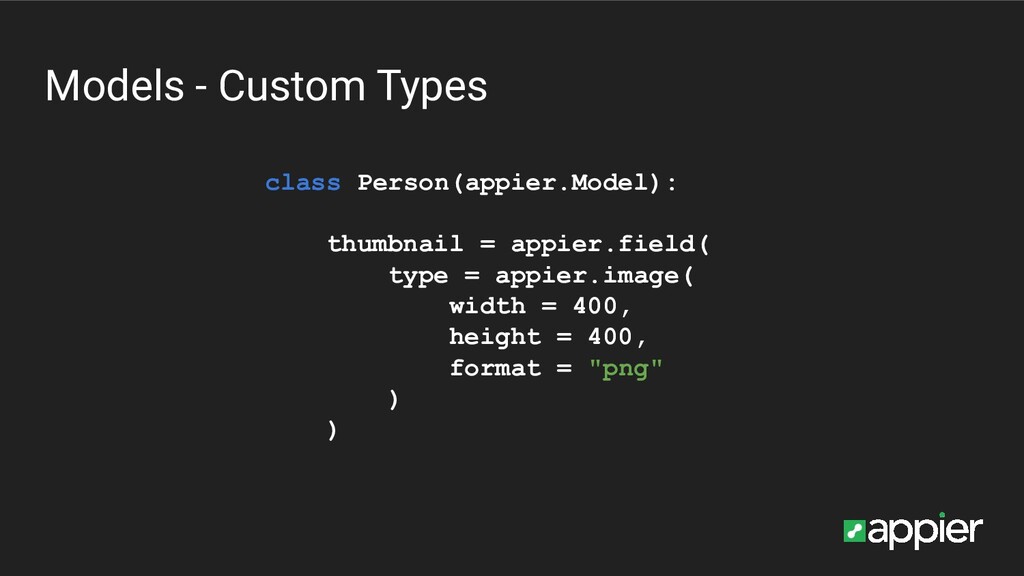
  12. Models - Custom Types class Person(appier.Model): thumbnail = appier.field( type

    = appier.image( width = 400, height = 400, format = "png" ) )
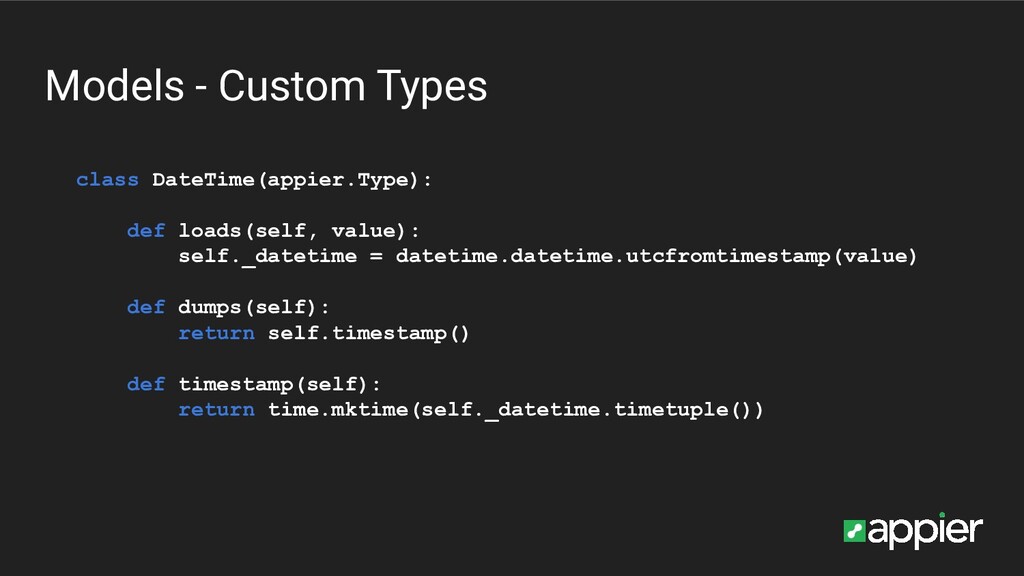
  13. Models - Custom Types class DateTime(appier.Type): def loads(self, value): self._datetime

    = datetime.datetime.utcfromtimestamp(value) def dumps(self): return self.timestamp() def timestamp(self): return time.mktime(self._datetime.timetuple())
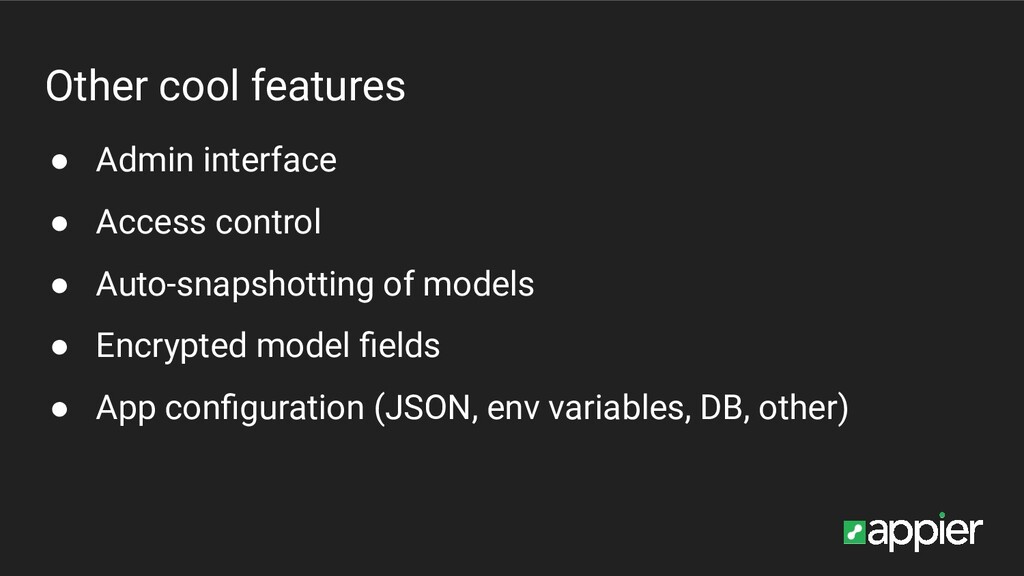
  14. • Admin interface • Access control • Auto-snapshotting of models

    • Encrypted model fields • App configuration (JSON, env variables, DB, other) Other cool features
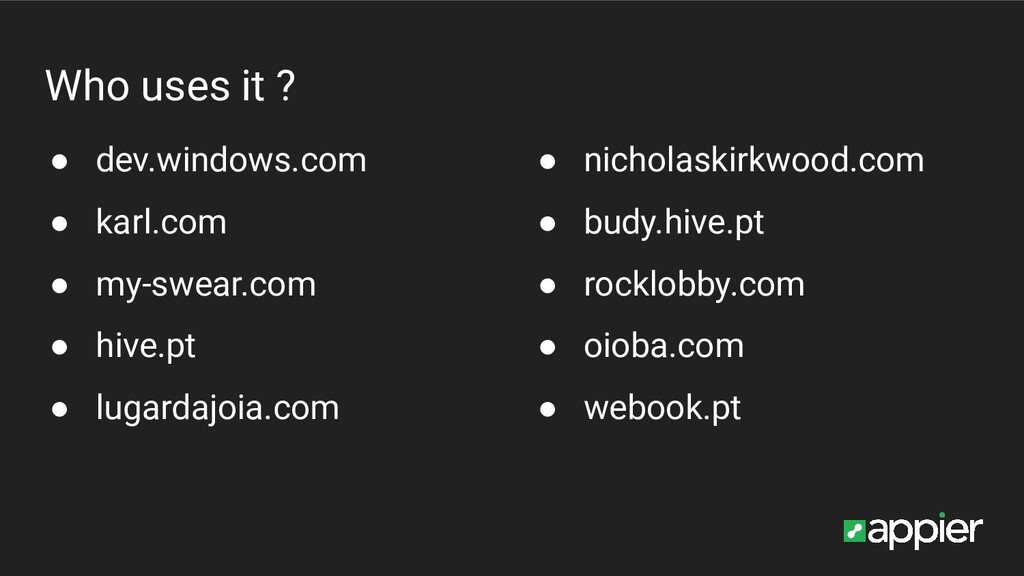
  15. • nicholaskirkwood.com • budy.hive.pt • rocklobby.com • oioba.com • webook.pt

    • dev.windows.com • karl.com • my-swear.com • hive.pt • lugardajoia.com Who uses it ?
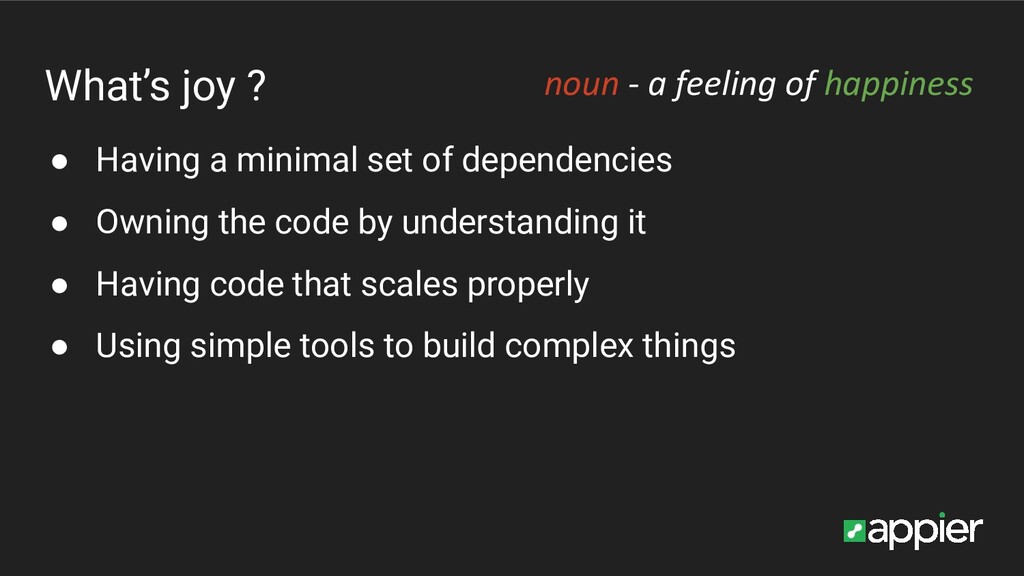
  16. What’s joy ? noun - a feeling of happiness •

    Having a minimal set of dependencies • Owning the code by understanding it • Having code that scales properly • Using simple tools to build complex things