Upgrade to Pro — share decks privately, control downloads, hide ads and more …

Introduction to Sensu

Sponsored · Ship Features Fearlessly Turn features on and off without deploys. Used by thousands of Ruby developers.
Avatar for joemiller joemiller
September 26, 2012

Introduction to Sensu

Slides from the Sensu SF Meetup @ Pantheon offices (9/26/2012)

Avatar for joemiller

joemiller

September 26, 2012
Tweet

More Decks by joemiller

Other Decks in Technology

Transcript

  1. Who am I? Joe Miller Systems Engineer @ Pantheon (getpantheon.com)

    @miller_joe / https://github.com/joemiller
  2. Why A New Framework? • Existing systems ... • ...

    not built with config management tools in mind • ... not built with "cloud" in mind. Server lifecycles can be very short. • ... don't scale well So ... • Sonian, Inc. wrote Sensu to replace their struggling Nagios infrastructure • released as open-source in 2011 (MIT license)
  3. Sensu Core Features • Simple, small codebase (<1200 LOC) •

    CM friendly (Chef, Puppet, etc) • Simple plugin interface, write them in any language • Re-use Nagios plugins! There are thousands. • Available as Ruby Gem or .. • .. a simple "Omnibus"-style installer (.deb, .rpm)
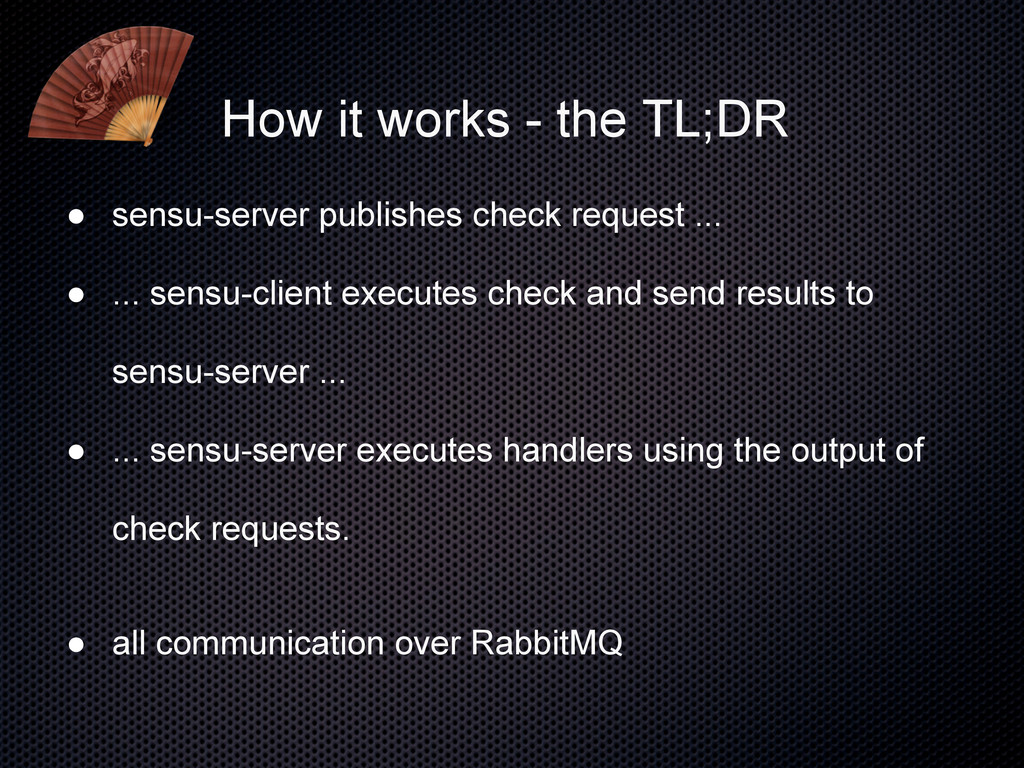
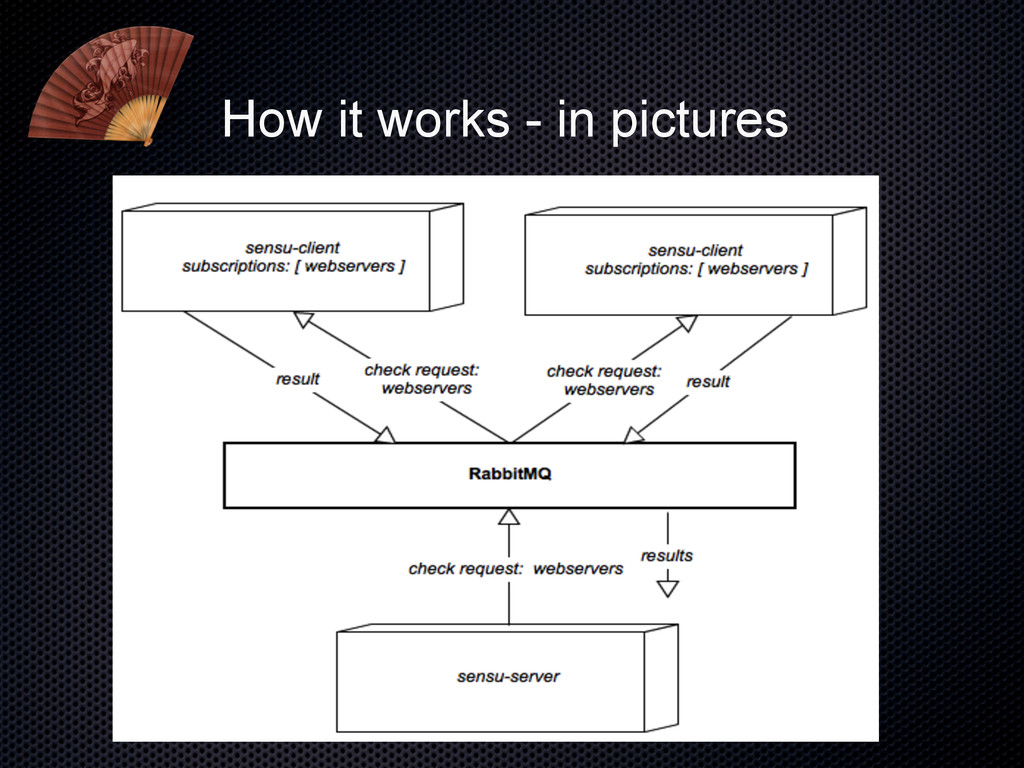
  4. How it works - the TL;DR • sensu-server publishes check

    request ... • ... sensu-client executes check and send results to sensu-server ... • ... sensu-server executes handlers using the output of check requests. • all communication over RabbitMQ
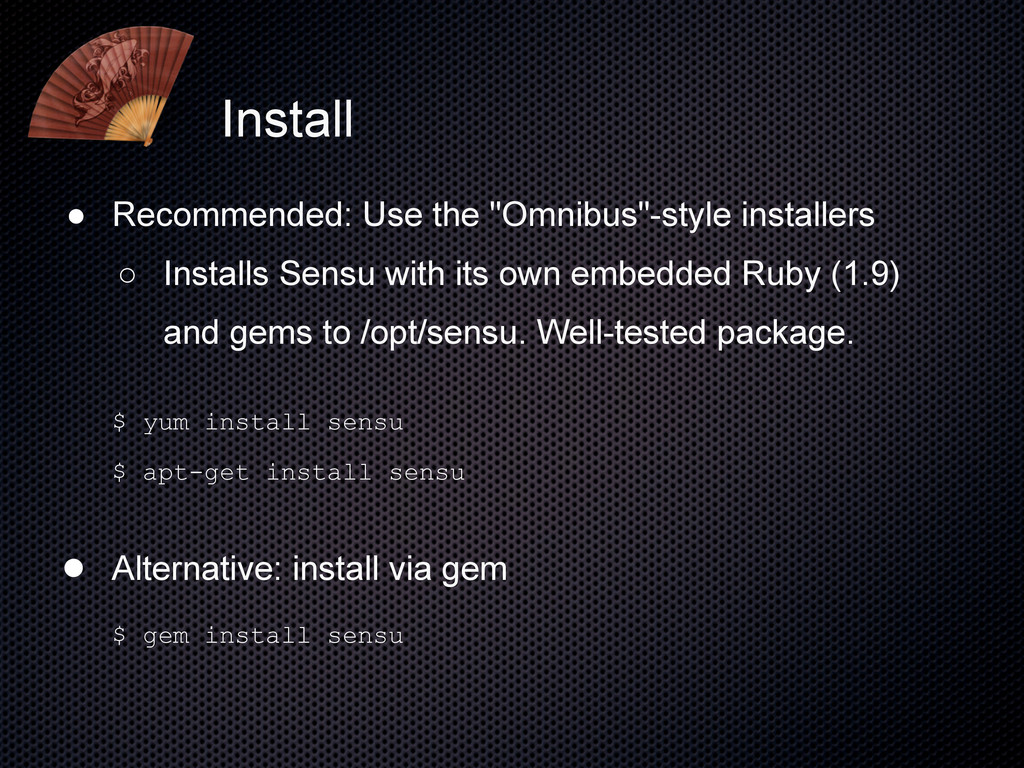
  5. Install • Recommended: Use the "Omnibus"-style installers ◦ Installs Sensu

    with its own embedded Ruby (1.9) and gems to /opt/sensu. Well-tested package. $ yum install sensu $ apt-get install sensu • Alternative: install via gem $ gem install sensu
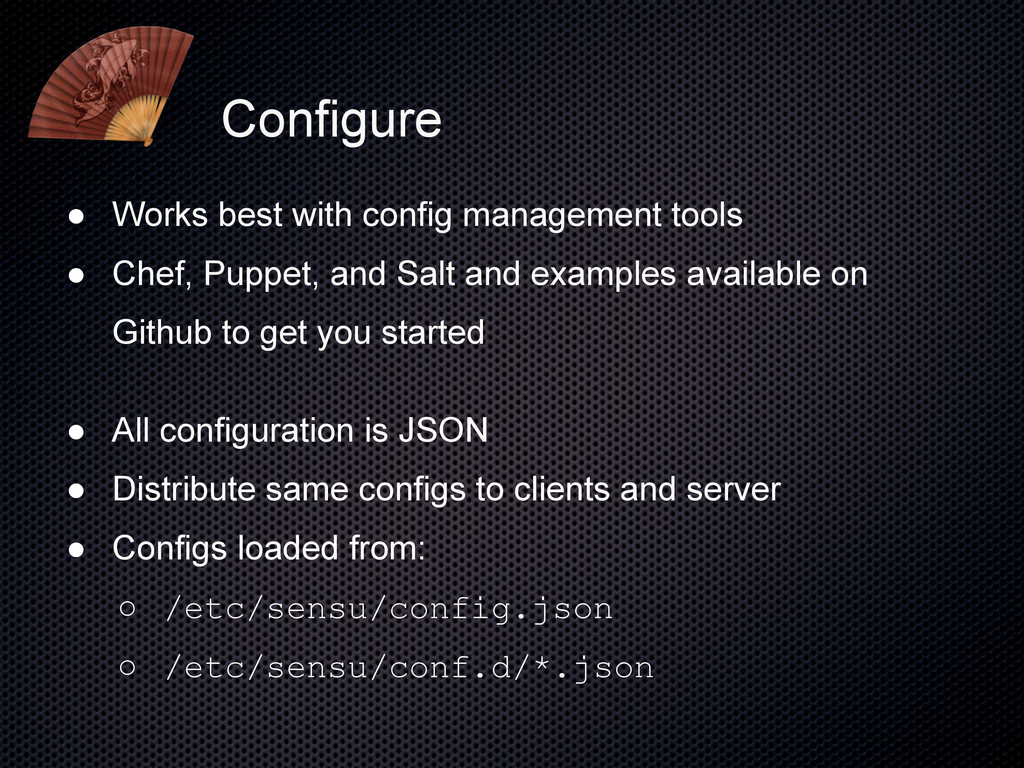
  6. Configure • Works best with config management tools • Chef,

    Puppet, and Salt and examples available on Github to get you started • All configuration is JSON • Distribute same configs to clients and server • Configs loaded from: ◦ /etc/sensu/config.json ◦ /etc/sensu/conf.d/*.json
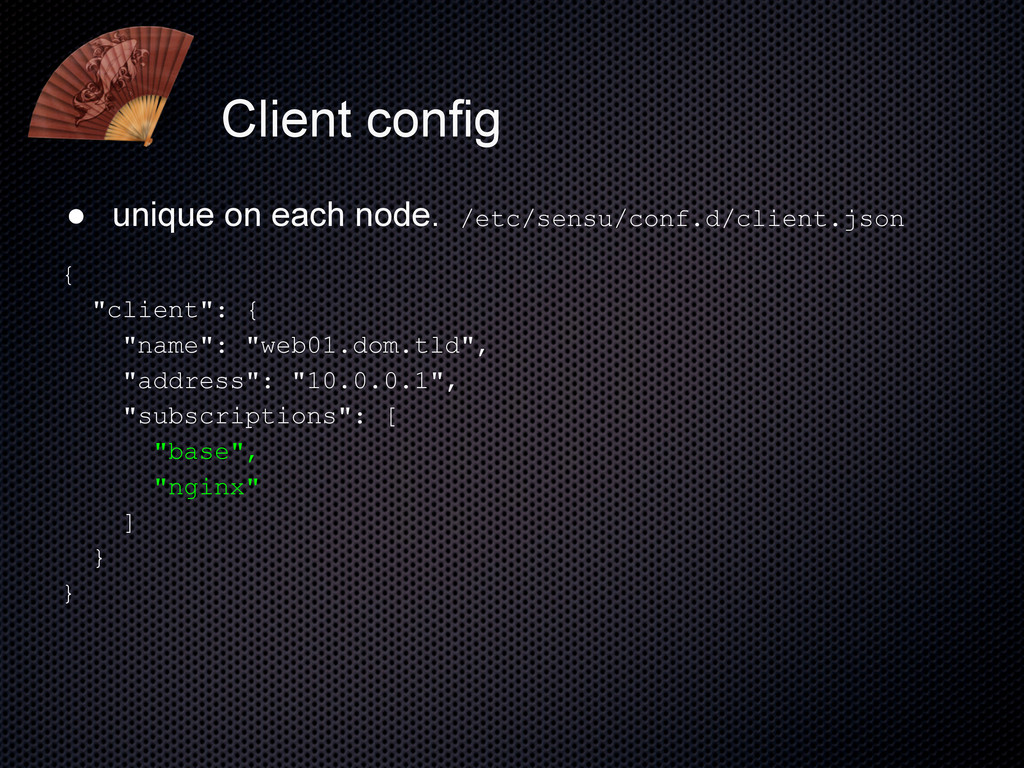
  7. Client config • unique on each node. /etc/sensu/conf.d/client.json { "client":

    { "name": "web01.dom.tld", "address": "10.0.0.1", "subscriptions": [ "base", "nginx" ] } }
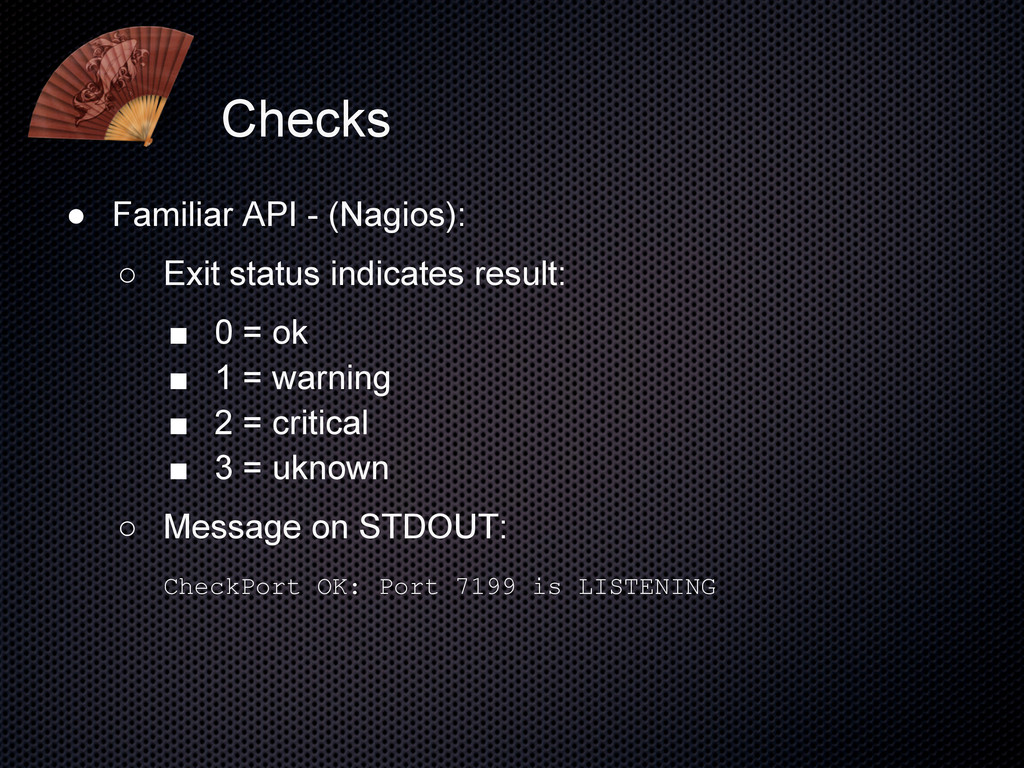
  8. Checks • Familiar API - (Nagios): ◦ Exit status indicates

    result: ▪ 0 = ok ▪ 1 = warning ▪ 2 = critical ▪ 3 = uknown ◦ Message on STDOUT: CheckPort OK: Port 7199 is LISTENING
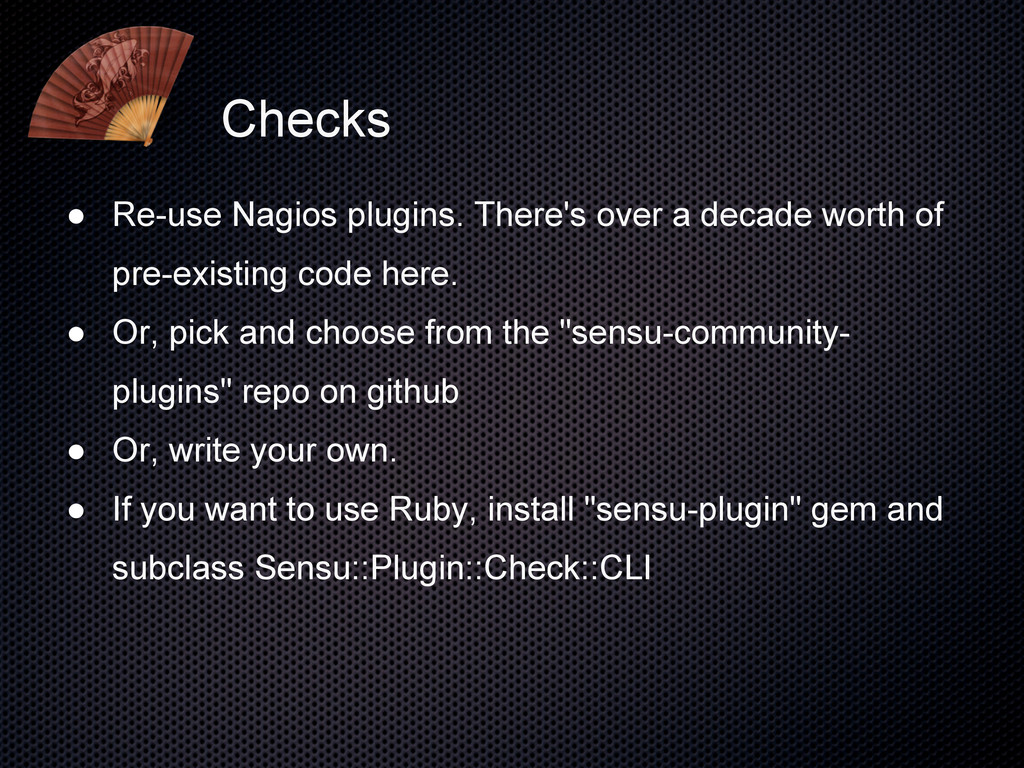
  9. Checks • Re-use Nagios plugins. There's over a decade worth

    of pre-existing code here. • Or, pick and choose from the "sensu-community- plugins" repo on github • Or, write your own. • If you want to use Ruby, install "sensu-plugin" gem and subclass Sensu::Plugin::Check::CLI
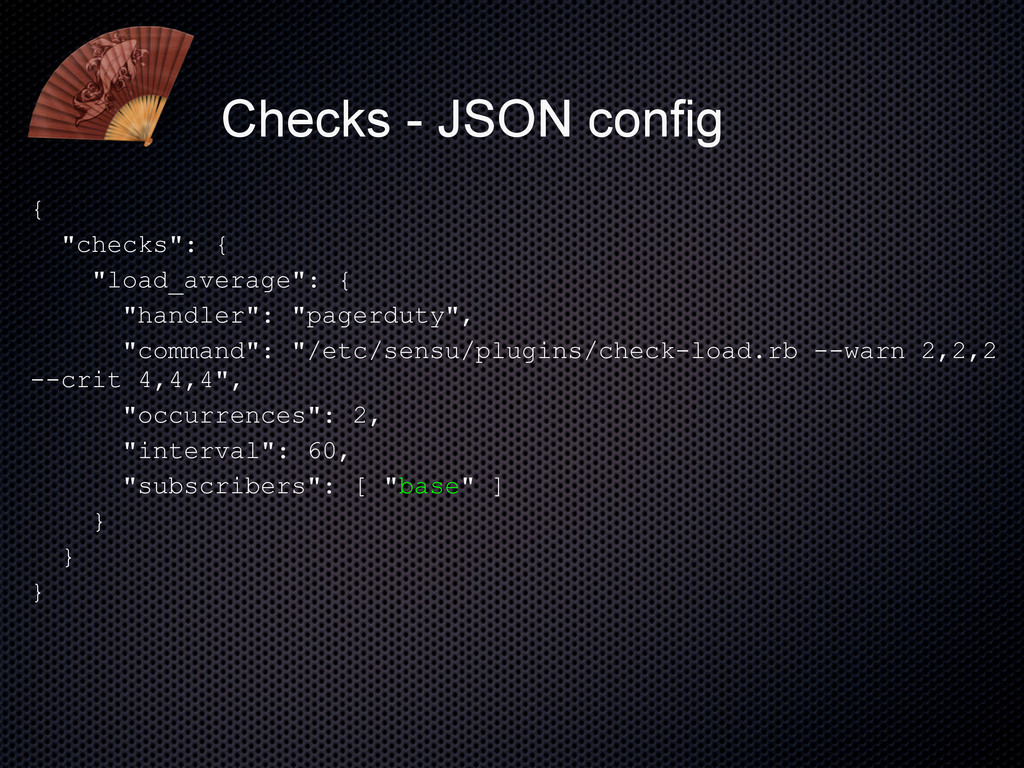
  10. Checks - JSON config { "checks": { "load_average": { "handler":

    "pagerduty", "command": "/etc/sensu/plugins/check-load.rb --warn 2,2,2 --crit 4,4,4", "occurrences": 2, "interval": 60, "subscribers": [ "base" ] } } }
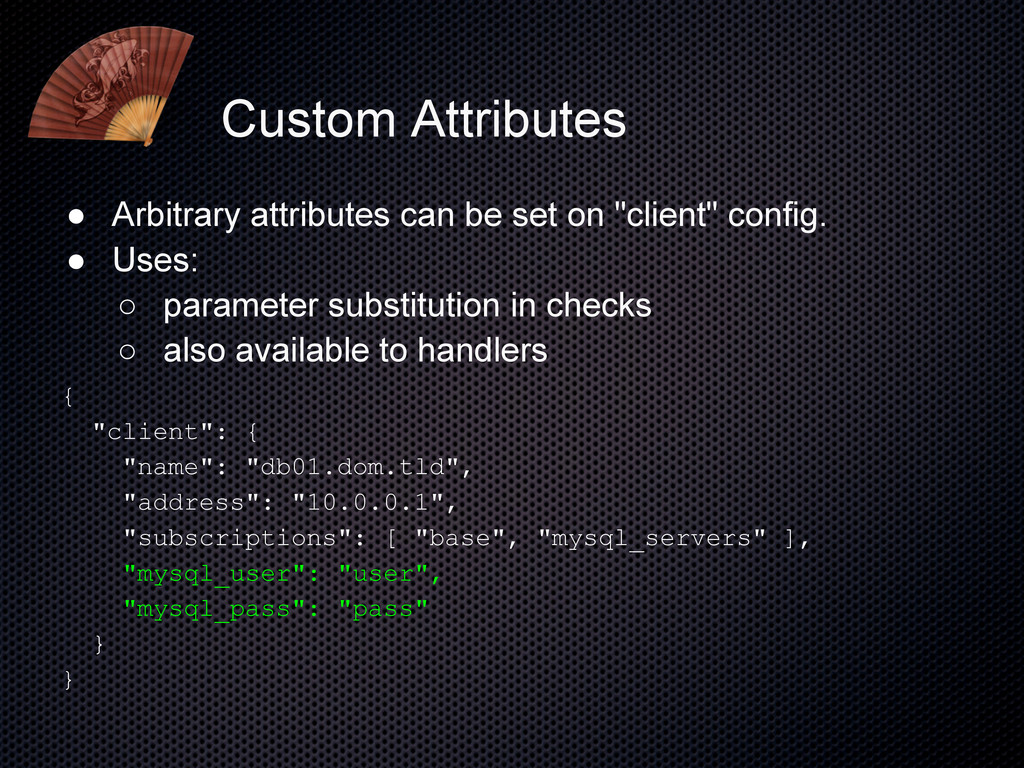
  11. Custom Attributes • Arbitrary attributes can be set on "client"

    config. • Uses: ◦ parameter substitution in checks ◦ also available to handlers { "client": { "name": "db01.dom.tld", "address": "10.0.0.1", "subscriptions": [ "base", "mysql_servers" ], "mysql_user": "user", "mysql_pass": "pass" } }
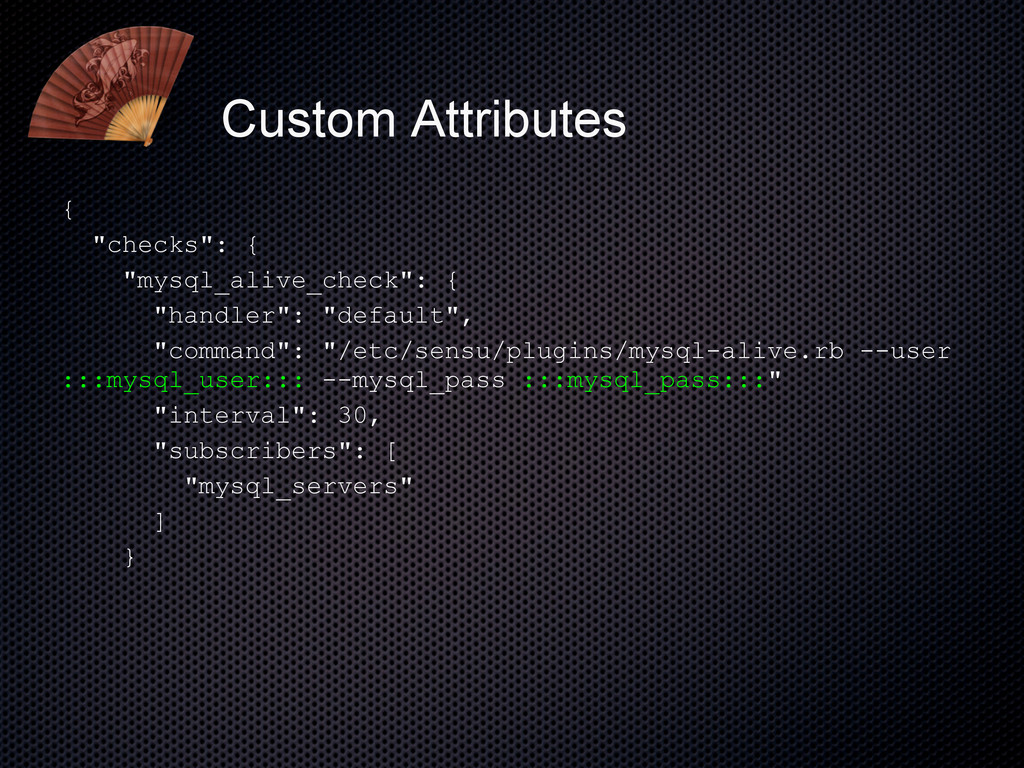
  12. Custom Attributes { "checks": { "mysql_alive_check": { "handler": "default", "command":

    "/etc/sensu/plugins/mysql-alive.rb --user :::mysql_user::: --mysql_pass :::mysql_pass:::" "interval": 30, "subscribers": [ "mysql_servers" ] }
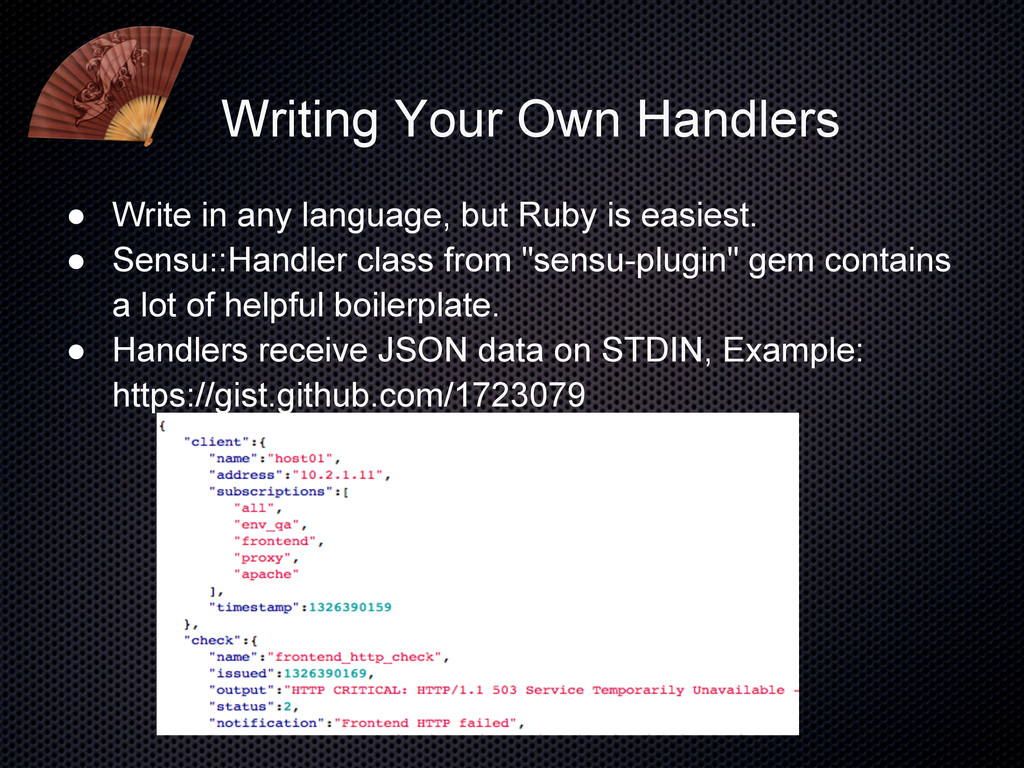
  13. Writing Your Own Handlers • Write in any language, but

    Ruby is easiest. • Sensu::Handler class from "sensu-plugin" gem contains a lot of helpful boilerplate. • Handlers receive JSON data on STDIN, Example: https://gist.github.com/1723079
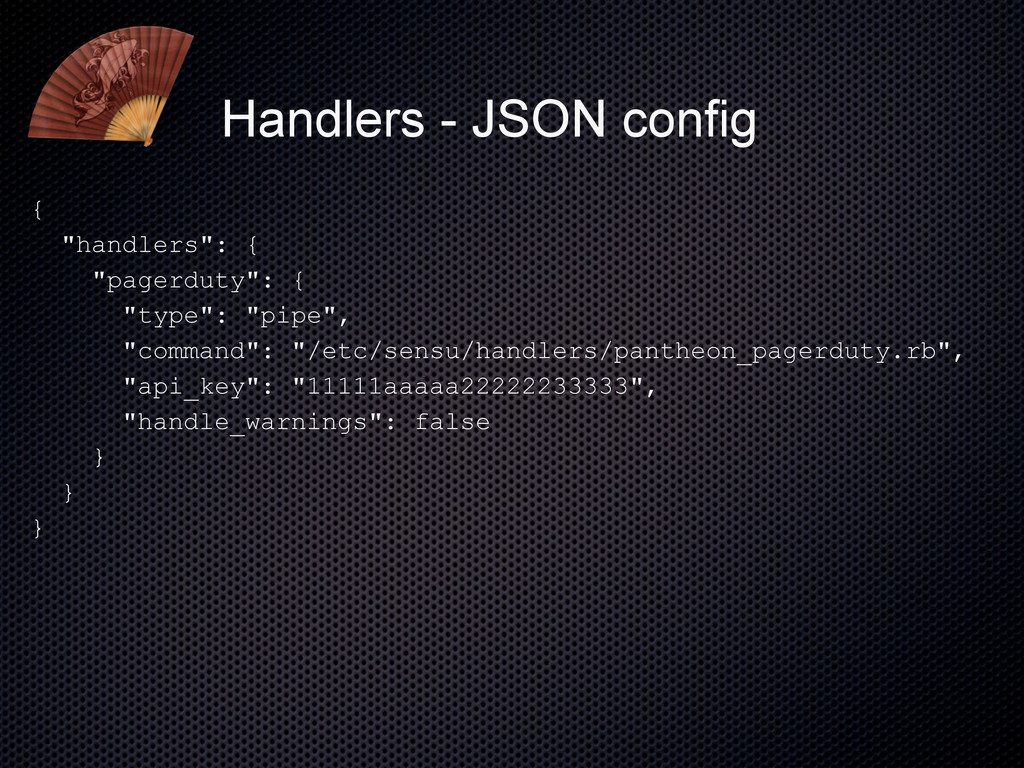
  14. Handlers - JSON config { "handlers": { "pagerduty": { "type":

    "pipe", "command": "/etc/sensu/handlers/pantheon_pagerduty.rb", "api_key": "11111aaaaa22222233333", "handle_warnings": false } } }
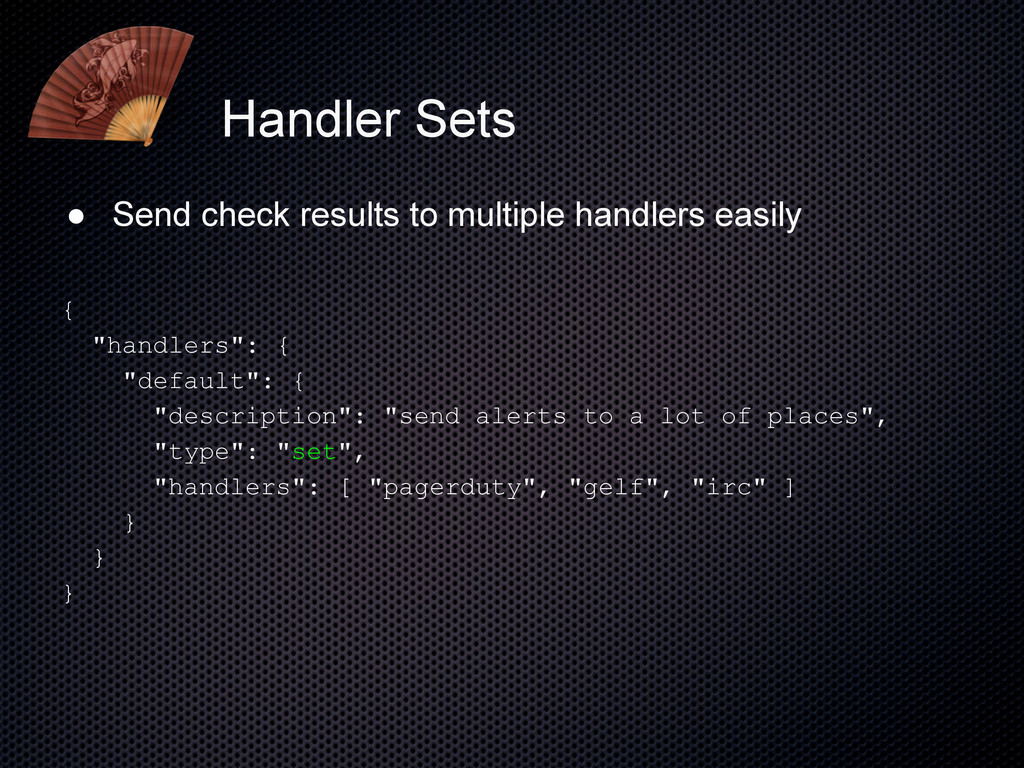
  15. Handler Sets • Send check results to multiple handlers easily

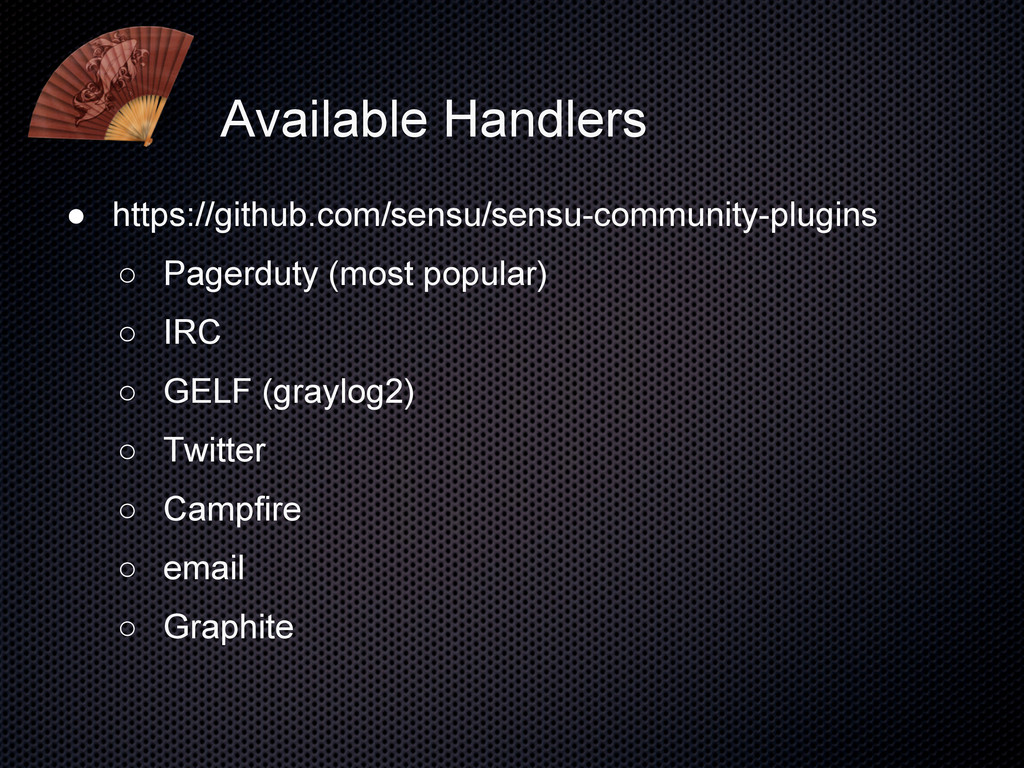
    { "handlers": { "default": { "description": "send alerts to a lot of places", "type": "set", "handlers": [ "pagerduty", "gelf", "irc" ] } } }
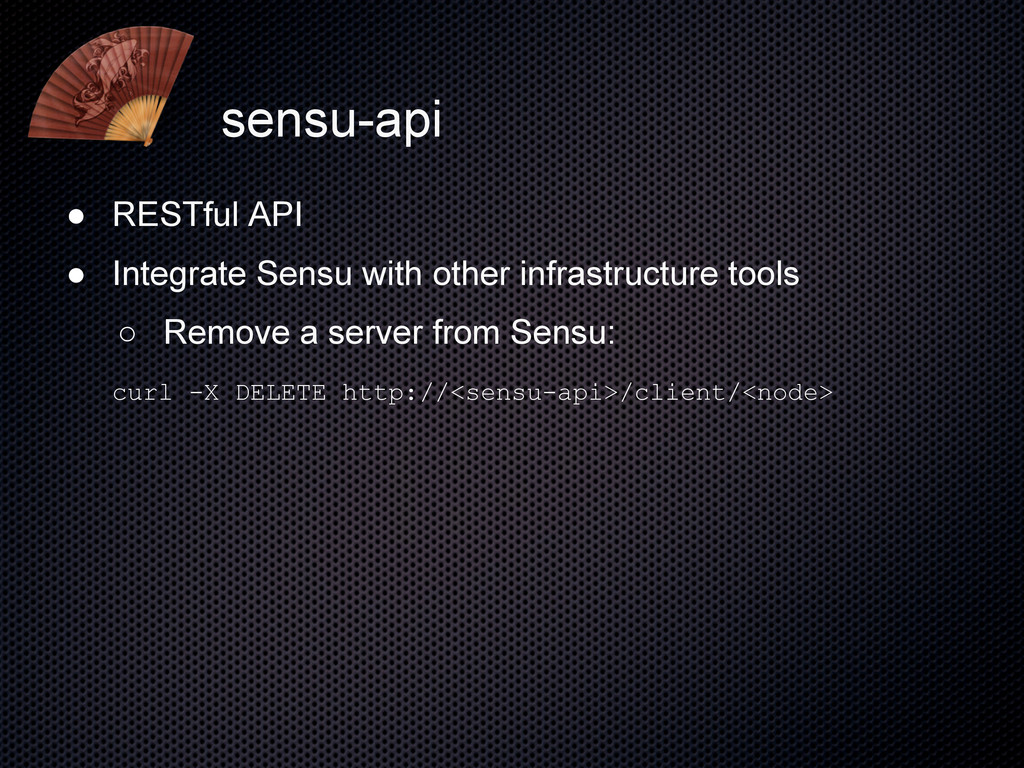
  16. sensu-api • RESTful API • Integrate Sensu with other infrastructure

    tools ◦ Remove a server from Sensu: curl -X DELETE http://<sensu-api>/client/<node>
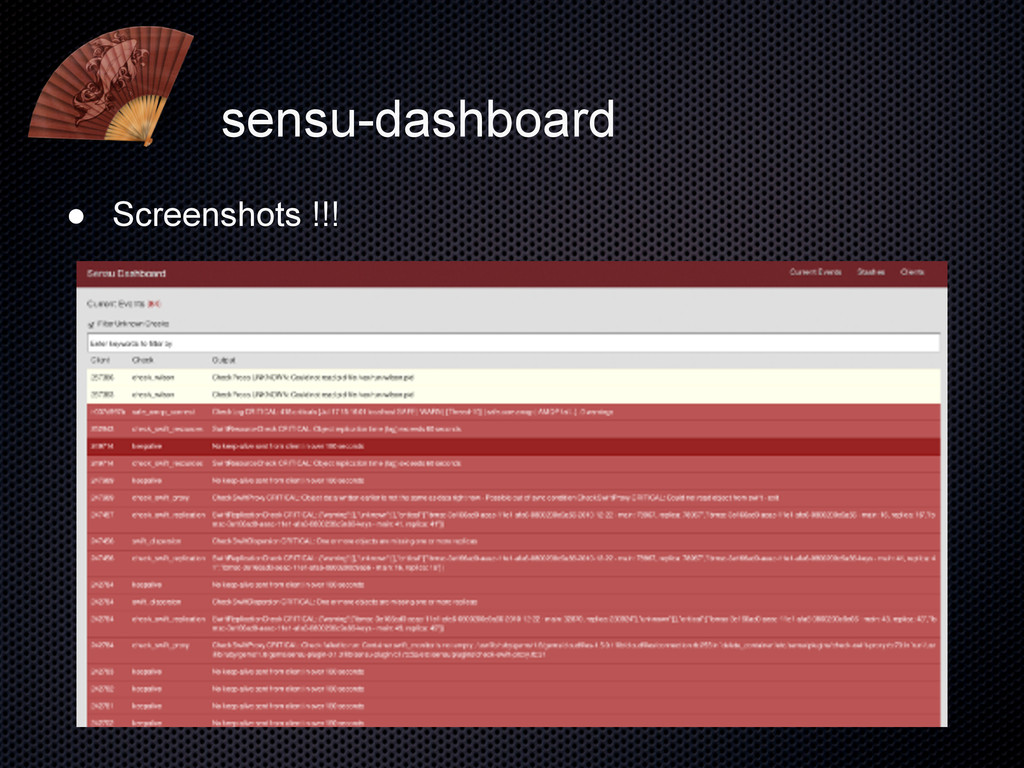
  17. Other Cool Stuff • Multi-master Sensu (HA) • Standalone Checks

    • Sensu-client Socket • Aggregated Checks (coming soon): ◦ "Alert if 20% of my webservers fail" • sensu-admin (coming soon): ◦ Replaces sensu-dashboard ◦ downtime scheduling, expiration on silences, audit log, users accounts & permissions.