Upgrade to Pro — share decks privately, control downloads, hide ads and more …

Bracelet Care Tips How to Clean and Maintain Yo...

Avatar for Johnny Peru Johnny Peru
November 22, 2025
5

Bracelet Care Tips How to Clean and Maintain Your Jewelry

Oath Jewelry is here to ensure that you have the best selection in fine jewelry for your upcoming engagement, anniversary, birthday, or other special occasion. At the heart of nearly all gifts of jewelry, is the notion of an oath. Gifts of love, friendship, loyalty, and more. Shop with Oath jewelry and make your statement.

Avatar for Johnny Peru

Johnny Peru

November 22, 2025

Transcript

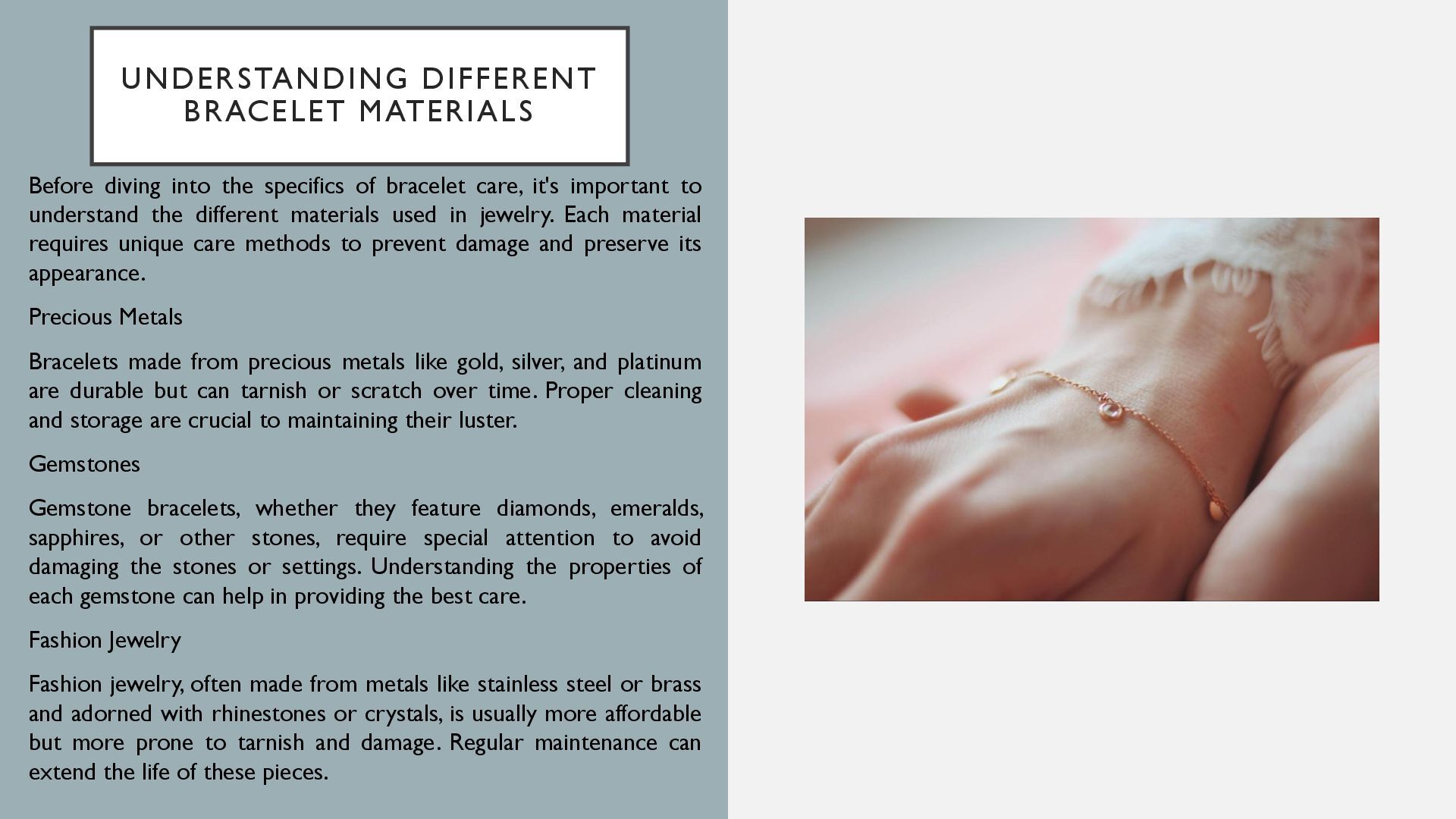
  1. UNDERSTANDING DIFFERENT BRACELET MATERIALS Before diving into the specifics of

    bracelet care, it's important to understand the different materials used in jewelry. Each material requires unique care methods to prevent damage and preserve its appearance. Precious Metals Bracelets made from precious metals like gold, silver, and platinum are durable but can tarnish or scratch over time. Proper cleaning and storage are crucial to maintaining their luster. Gemstones Gemstone bracelets, whether they feature diamonds, emeralds, sapphires, or other stones, require special attention to avoid damaging the stones or settings. Understanding the properties of each gemstone can help in providing the best care. Fashion Jewelry Fashion jewelry, often made from metals like stainless steel or brass and adorned with rhinestones or crystals, is usually more affordable but more prone to tarnish and damage. Regular maintenance can extend the life of these pieces.
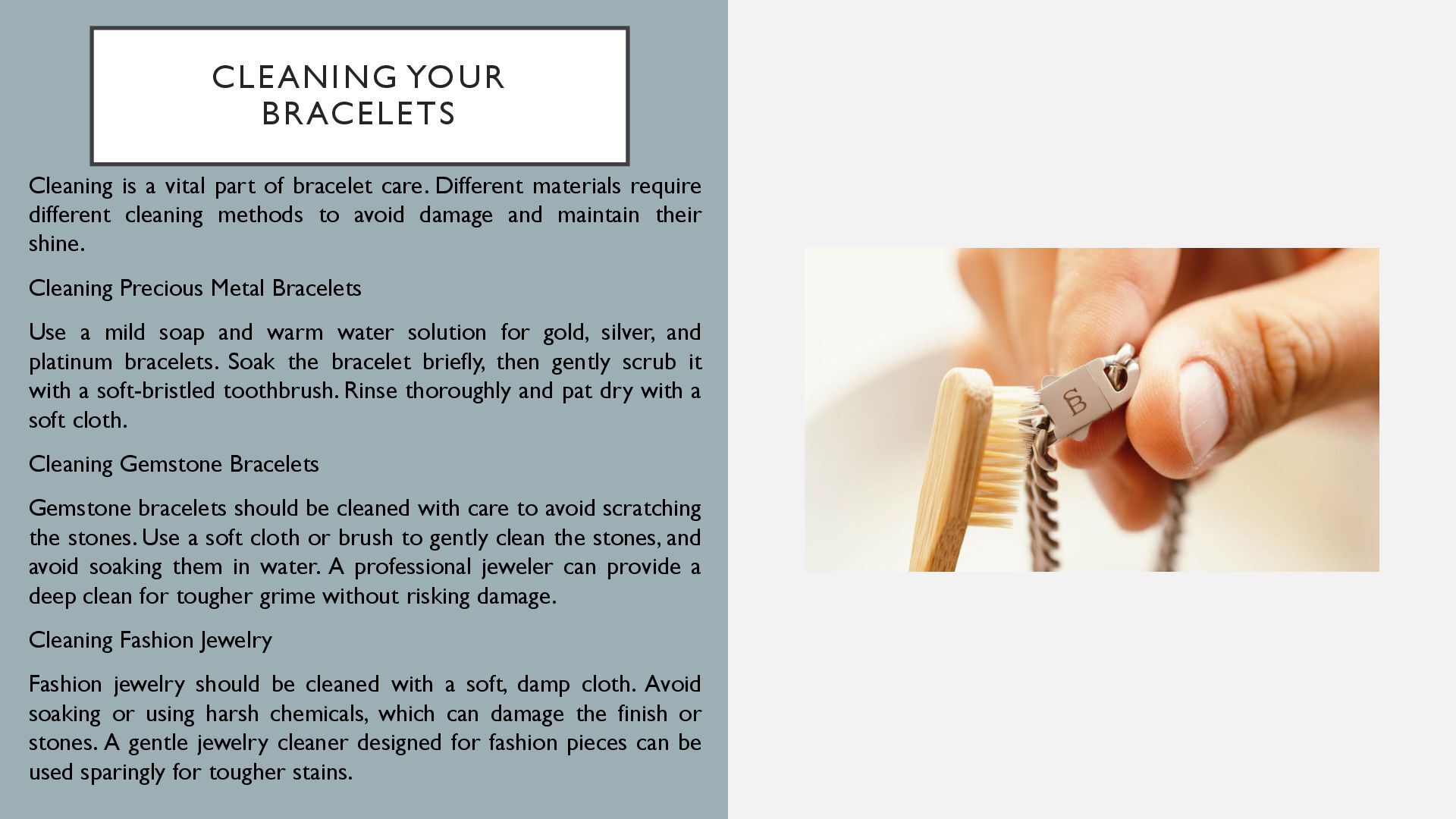
  2. CLEANING YOUR BRACELETS Cleaning is a vital part of bracelet

    care. Different materials require different cleaning methods to avoid damage and maintain their shine. Cleaning Precious Metal Bracelets Use a mild soap and warm water solution for gold, silver, and platinum bracelets. Soak the bracelet briefly, then gently scrub it with a soft-bristled toothbrush. Rinse thoroughly and pat dry with a soft cloth. Cleaning Gemstone Bracelets Gemstone bracelets should be cleaned with care to avoid scratching the stones. Use a soft cloth or brush to gently clean the stones, and avoid soaking them in water. A professional jeweler can provide a deep clean for tougher grime without risking damage. Cleaning Fashion Jewelry Fashion jewelry should be cleaned with a soft, damp cloth. Avoid soaking or using harsh chemicals, which can damage the finish or stones. A gentle jewelry cleaner designed for fashion pieces can be used sparingly for tougher stains.
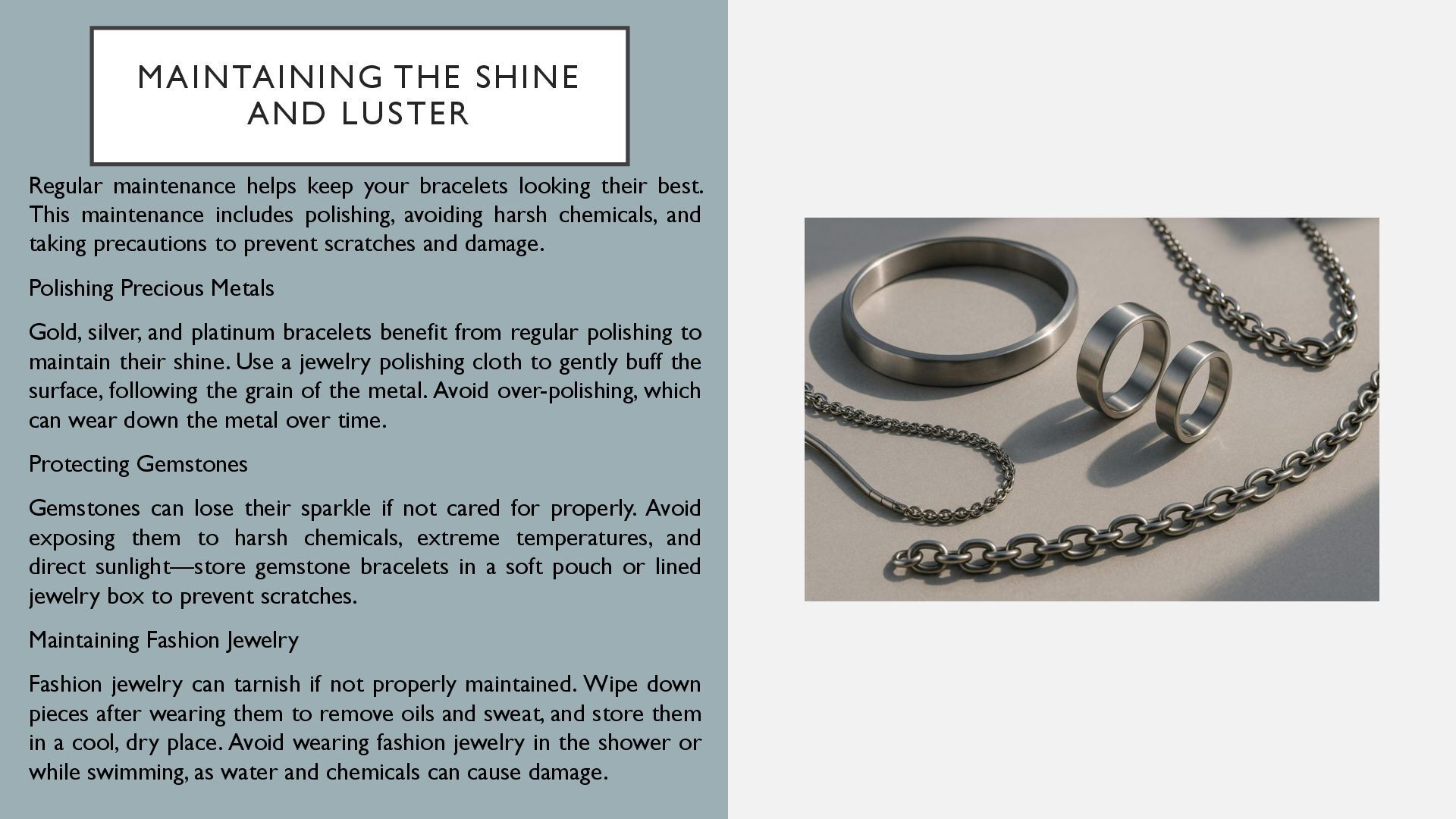
  3. MAINTAINING THE SHINE AND LUSTER Regular maintenance helps keep your

    bracelets looking their best. This maintenance includes polishing, avoiding harsh chemicals, and taking precautions to prevent scratches and damage. Polishing Precious Metals Gold, silver, and platinum bracelets benefit from regular polishing to maintain their shine. Use a jewelry polishing cloth to gently buff the surface, following the grain of the metal. Avoid over-polishing, which can wear down the metal over time. Protecting Gemstones Gemstones can lose their sparkle if not cared for properly. Avoid exposing them to harsh chemicals, extreme temperatures, and direct sunlight—store gemstone bracelets in a soft pouch or lined jewelry box to prevent scratches. Maintaining Fashion Jewelry Fashion jewelry can tarnish if not properly maintained. Wipe down pieces after wearing them to remove oils and sweat, and store them in a cool, dry place. Avoid wearing fashion jewelry in the shower or while swimming, as water and chemicals can cause damage.
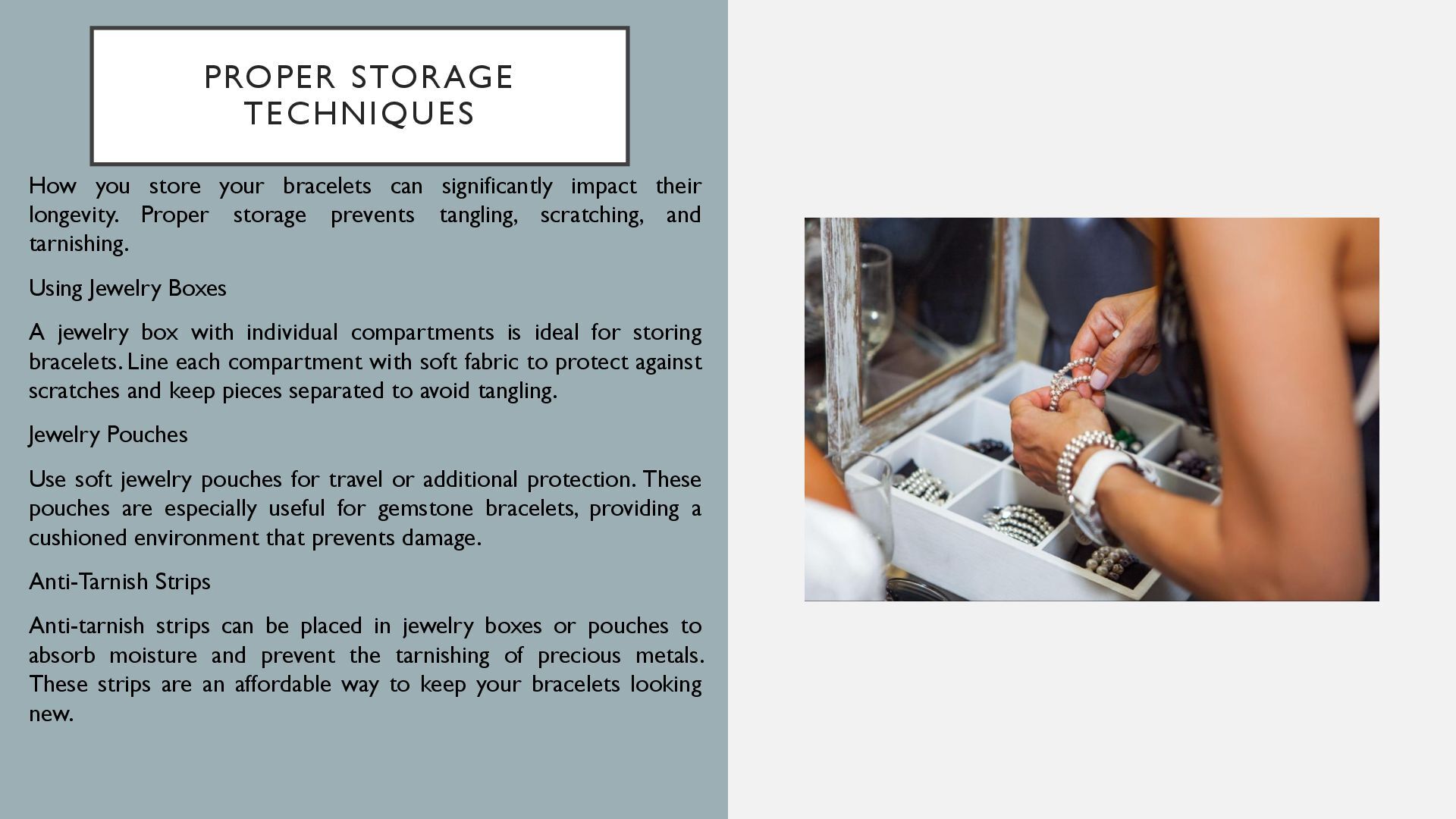
  4. PROPER STORAGE TECHNIQUES How you store your bracelets can significantly

    impact their longevity. Proper storage prevents tangling, scratching, and tarnishing. Using Jewelry Boxes A jewelry box with individual compartments is ideal for storing bracelets. Line each compartment with soft fabric to protect against scratches and keep pieces separated to avoid tangling. Jewelry Pouches Use soft jewelry pouches for travel or additional protection. These pouches are especially useful for gemstone bracelets, providing a cushioned environment that prevents damage. Anti-Tarnish Strips Anti-tarnish strips can be placed in jewelry boxes or pouches to absorb moisture and prevent the tarnishing of precious metals. These strips are an affordable way to keep your bracelets looking new.
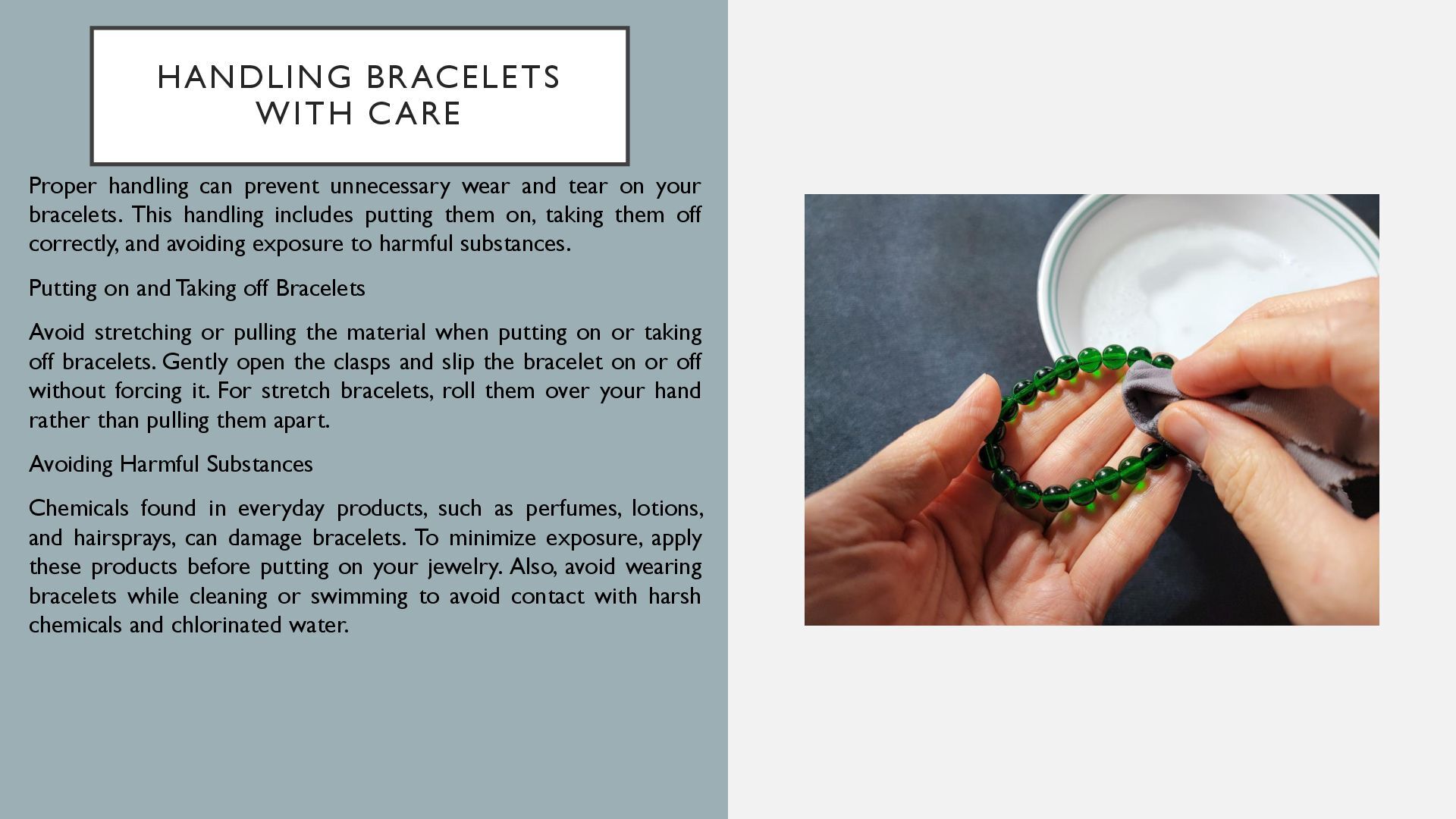
  5. HANDLING BRACELETS WITH CARE Proper handling can prevent unnecessary wear

    and tear on your bracelets. This handling includes putting them on, taking them off correctly, and avoiding exposure to harmful substances. Putting on and Taking off Bracelets Avoid stretching or pulling the material when putting on or taking off bracelets. Gently open the clasps and slip the bracelet on or off without forcing it. For stretch bracelets, roll them over your hand rather than pulling them apart. Avoiding Harmful Substances Chemicals found in everyday products, such as perfumes, lotions, and hairsprays, can damage bracelets. To minimize exposure, apply these products before putting on your jewelry. Also, avoid wearing bracelets while cleaning or swimming to avoid contact with harsh chemicals and chlorinated water.
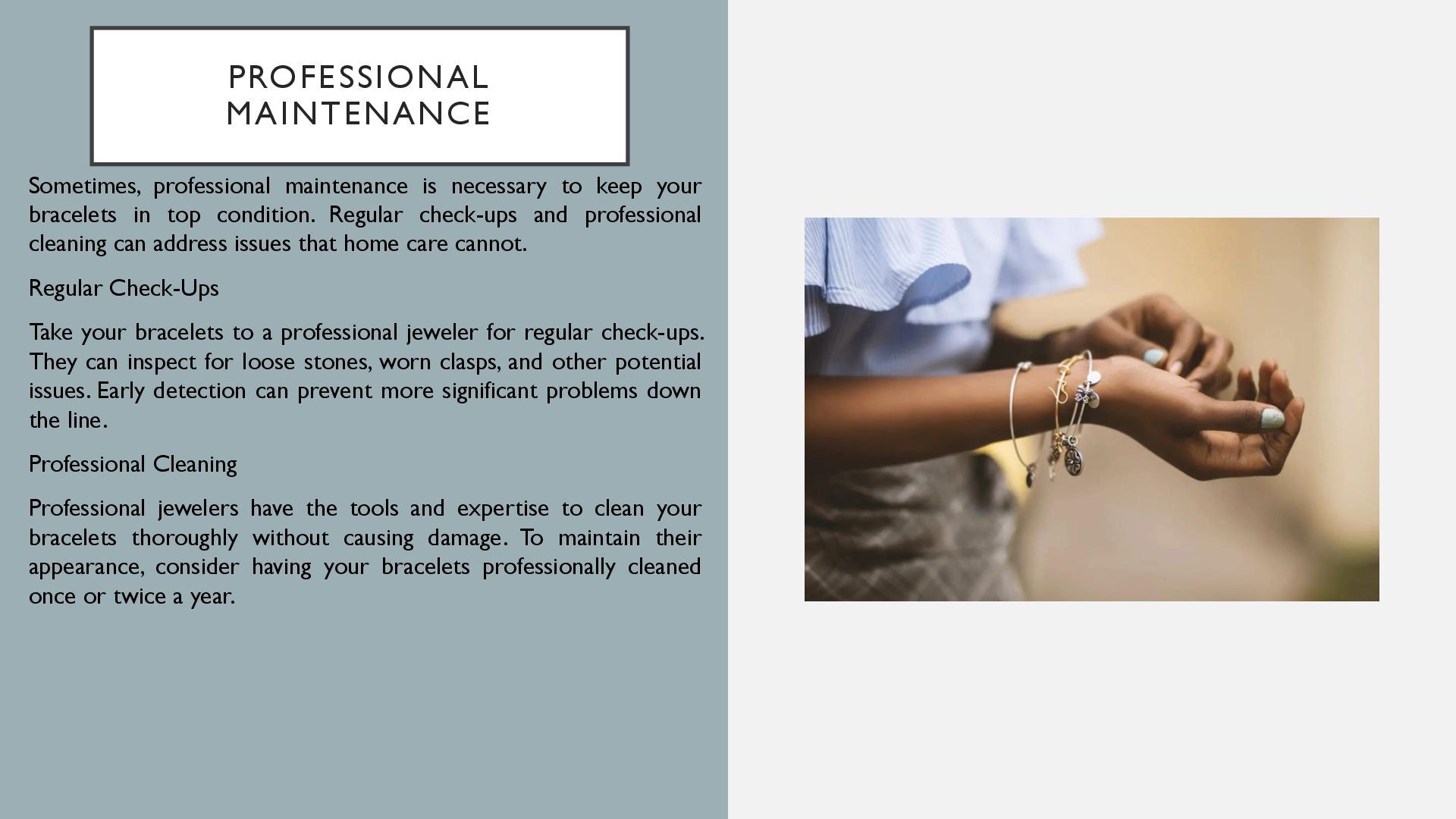
  6. PROFESSIONAL MAINTENANCE Sometimes, professional maintenance is necessary to keep your

    bracelets in top condition. Regular check-ups and professional cleaning can address issues that home care cannot. Regular Check-Ups Take your bracelets to a professional jeweler for regular check-ups. They can inspect for loose stones, worn clasps, and other potential issues. Early detection can prevent more significant problems down the line. Professional Cleaning Professional jewelers have the tools and expertise to clean your bracelets thoroughly without causing damage. To maintain their appearance, consider having your bracelets professionally cleaned once or twice a year.
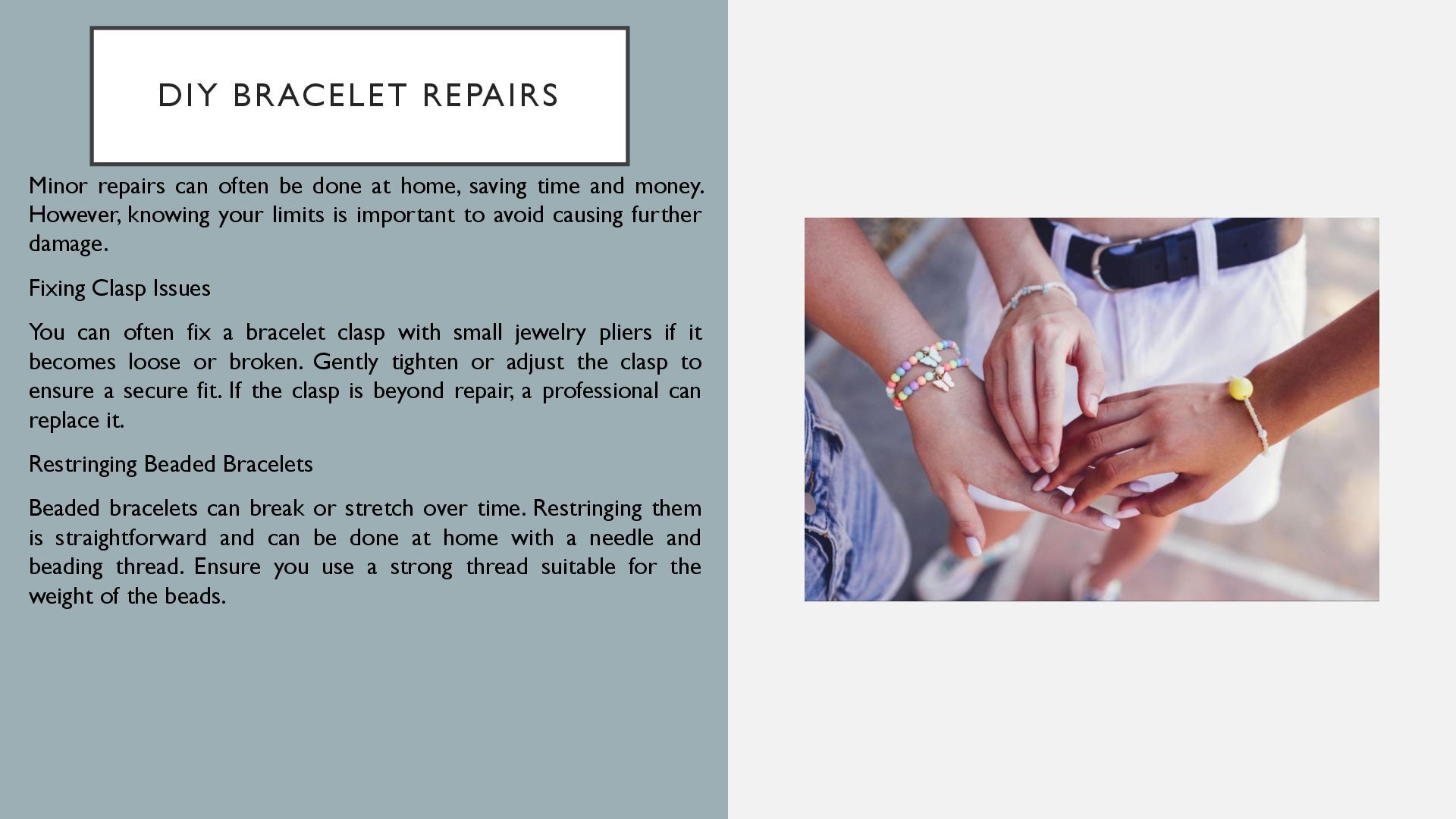
  7. DIY BRACELET REPAIRS Minor repairs can often be done at

    home, saving time and money. However, knowing your limits is important to avoid causing further damage. Fixing Clasp Issues You can often fix a bracelet clasp with small jewelry pliers if it becomes loose or broken. Gently tighten or adjust the clasp to ensure a secure fit. If the clasp is beyond repair, a professional can replace it. Restringing Beaded Bracelets Beaded bracelets can break or stretch over time. Restringing them is straightforward and can be done at home with a needle and beading thread. Ensure you use a strong thread suitable for the weight of the beads.