Events Foundation North America) Board Member • DjangoCon Europe Website Committee Member • Project Manager • Web Designer and Developer Twitter: @KatiMichel GitHub: KatherineMichel
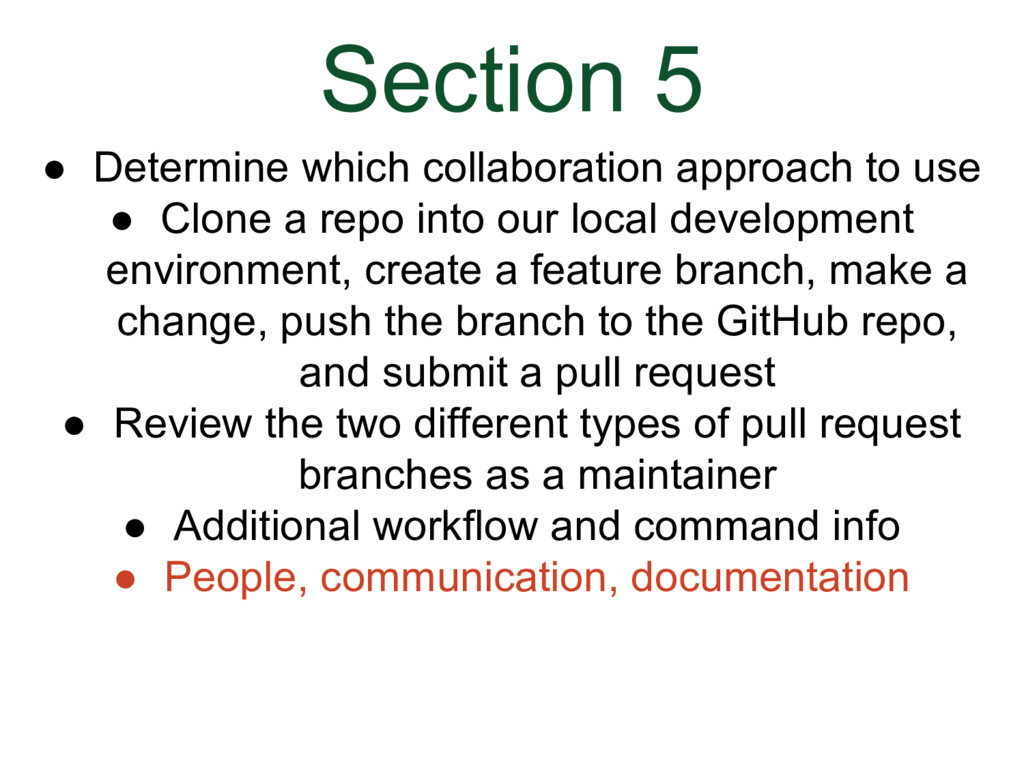
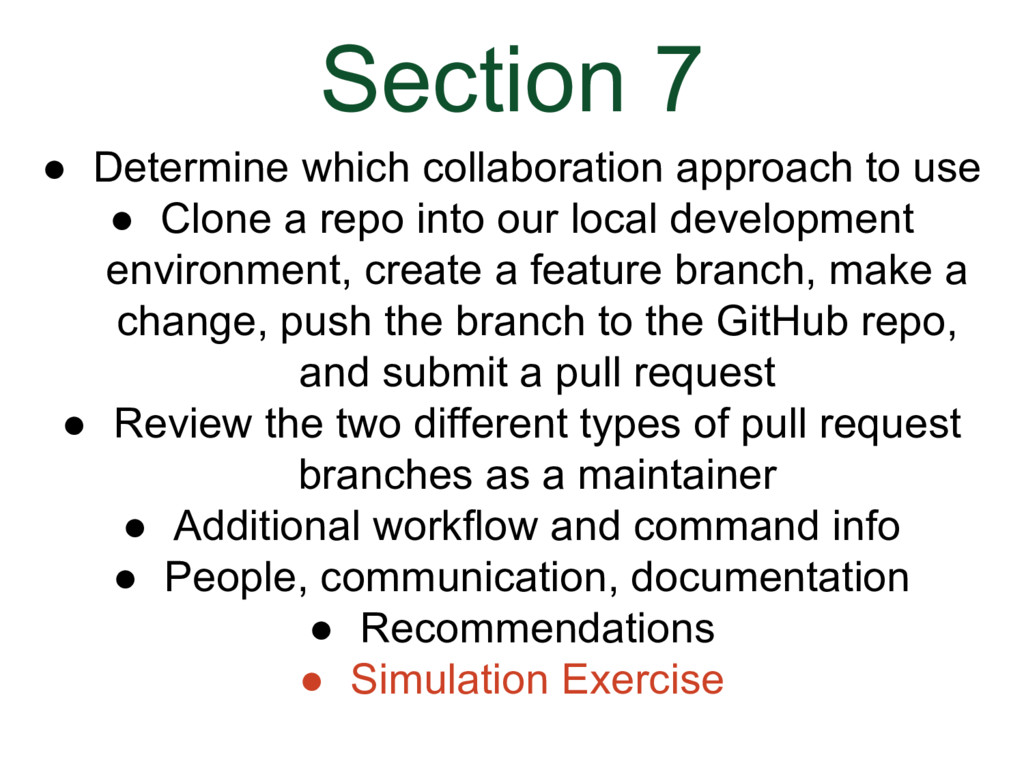
a repo into our local development environment, create a feature branch, make a change, push the branch to the GitHub repo, and submit a pull request • Review the two different types of pull request branches as a maintainer • Additional workflow and command info • People, communication, documentation • Recommendations • Simulation exercise
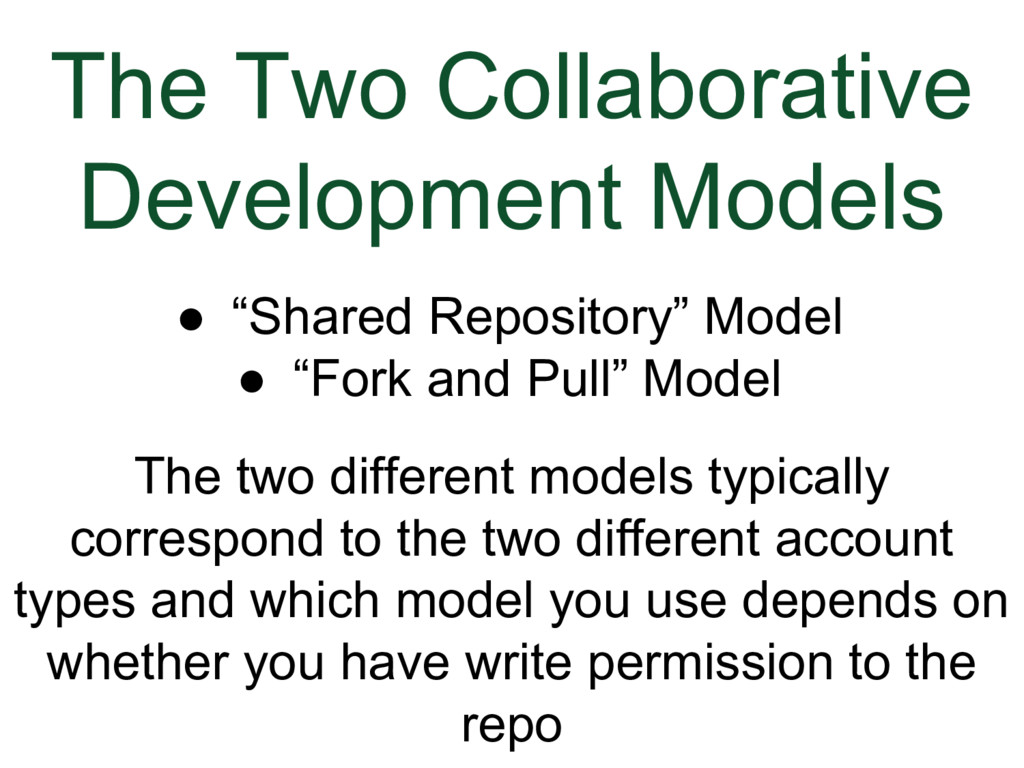
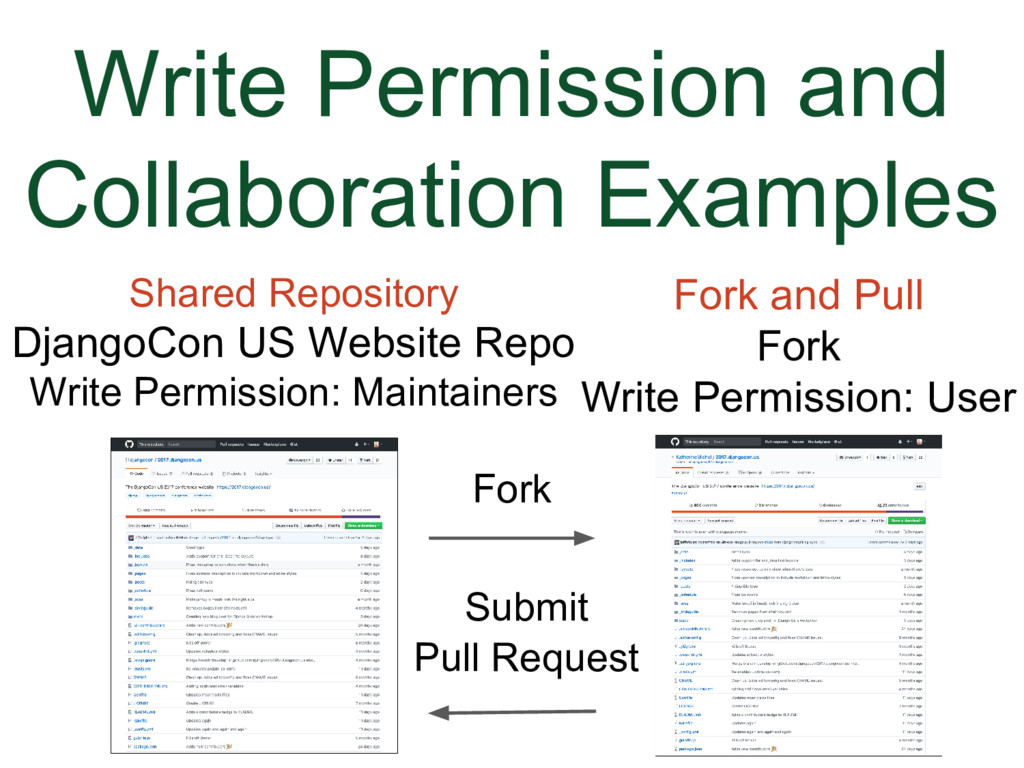
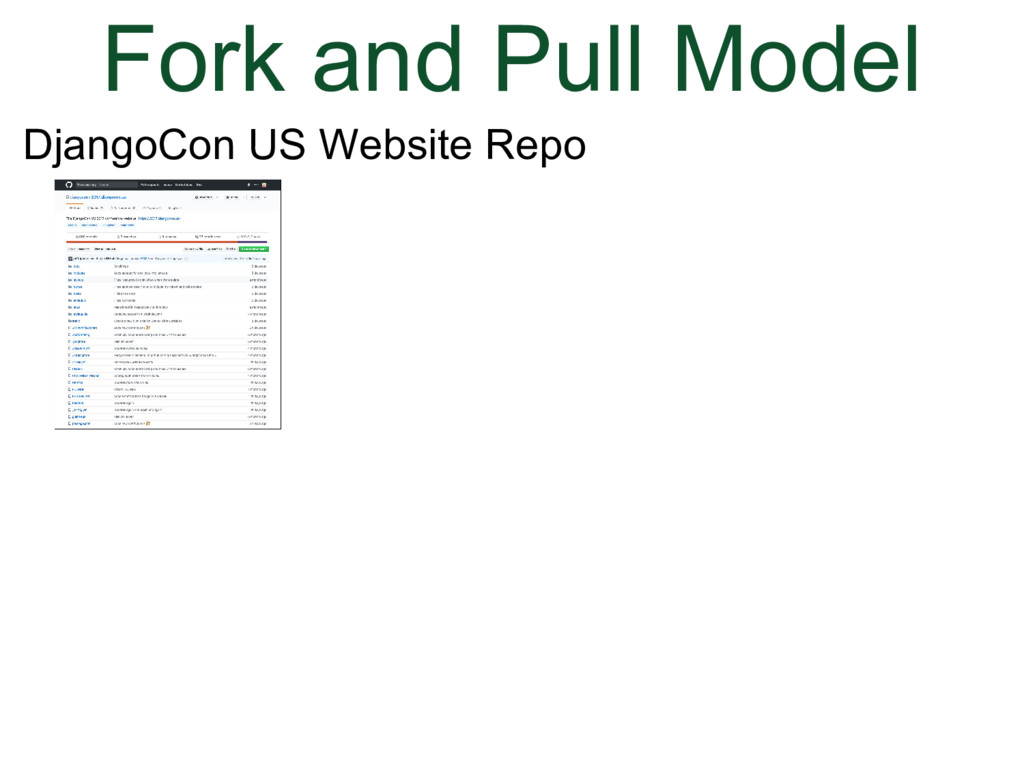
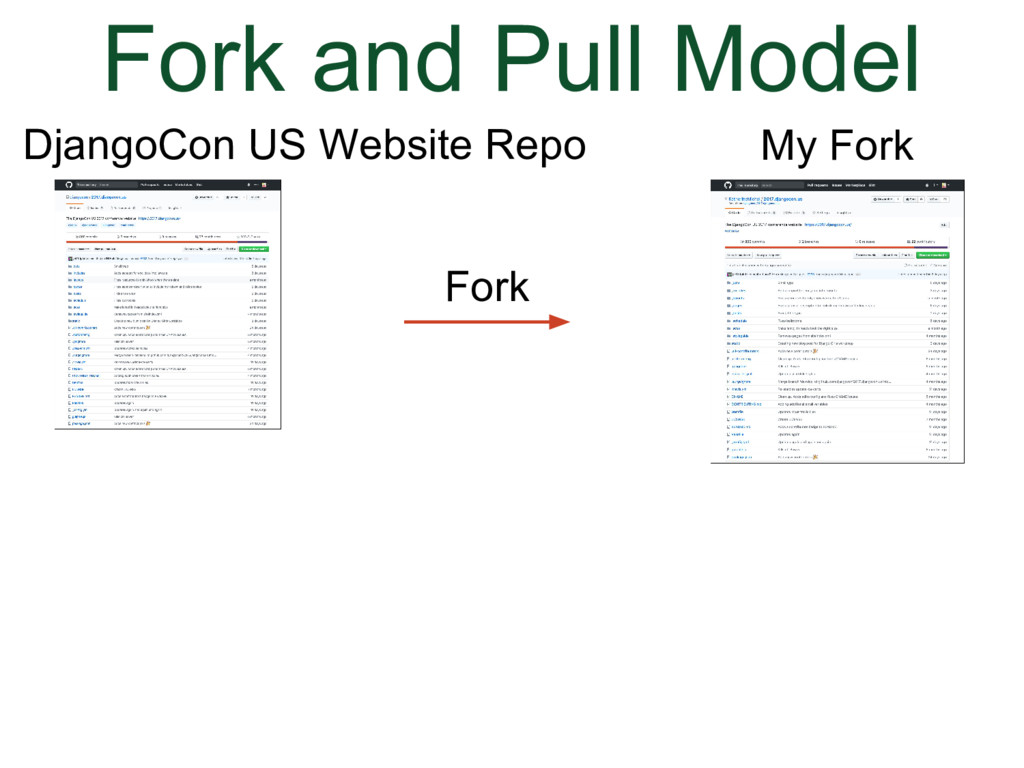
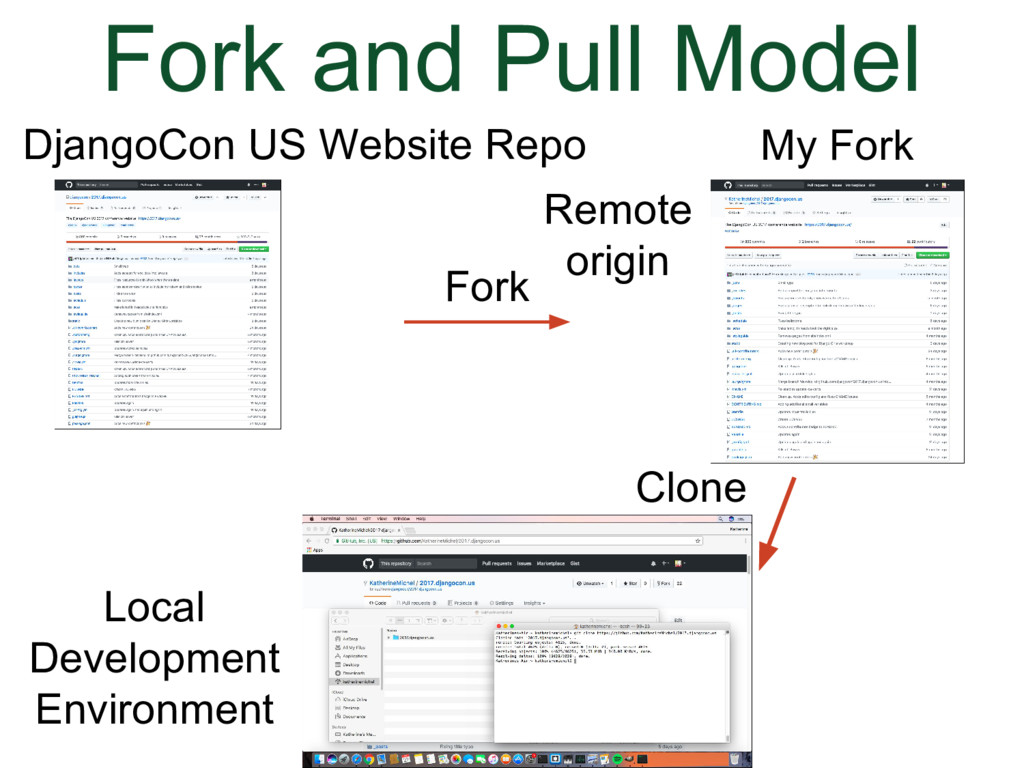
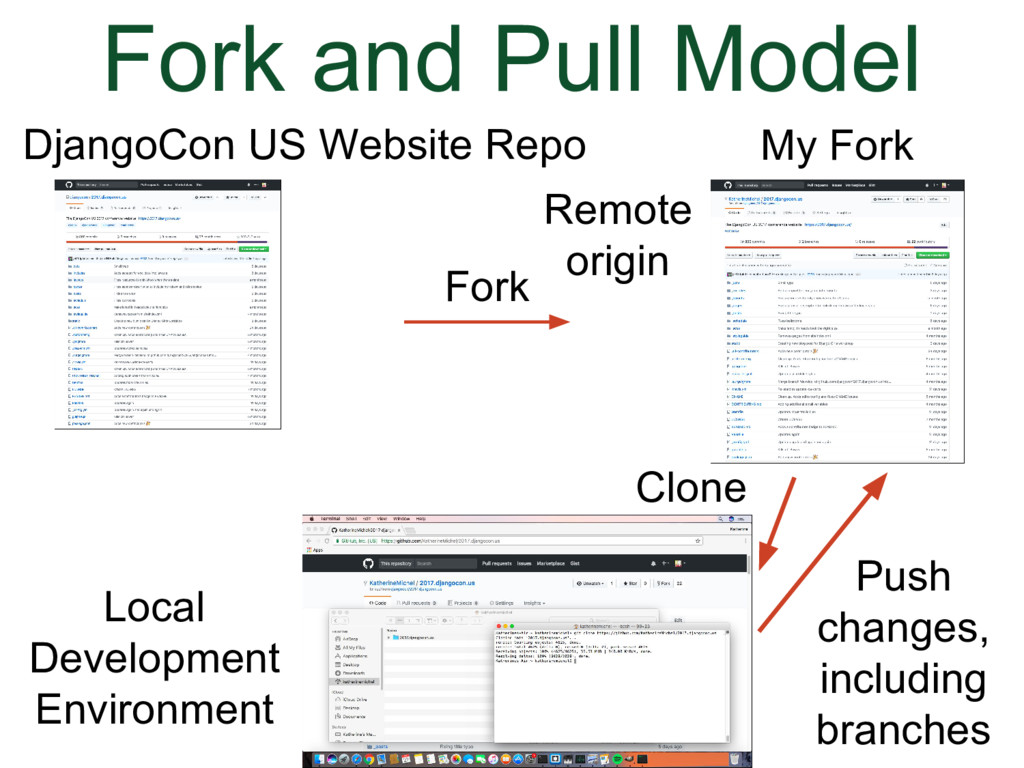
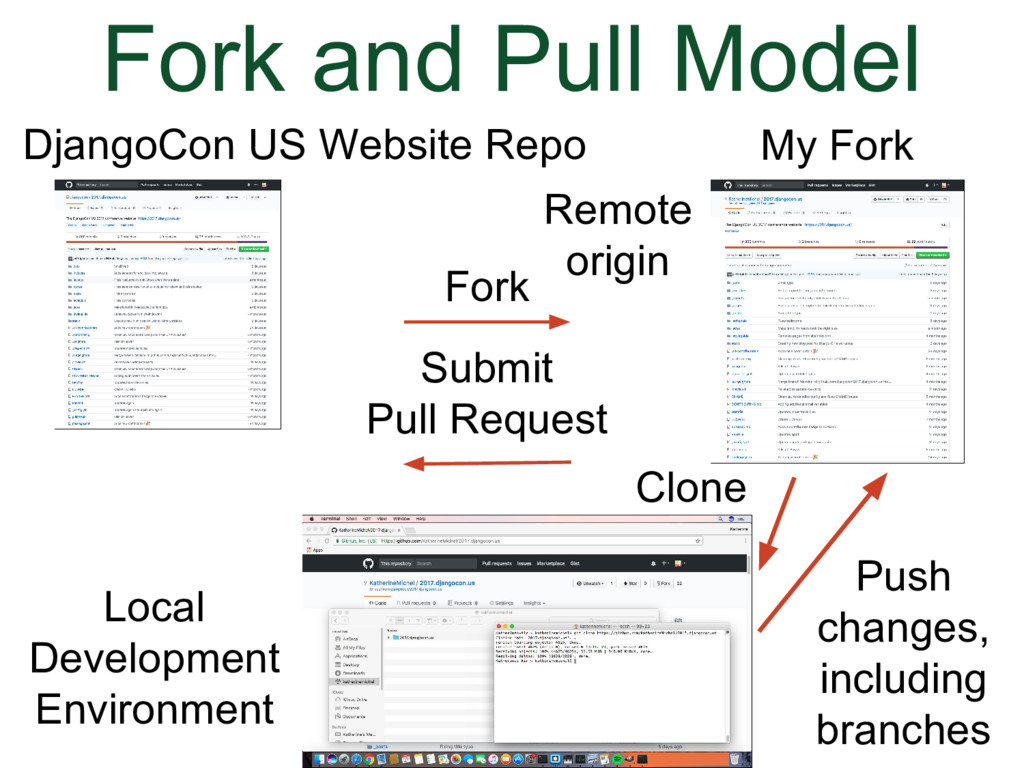
“Fork and Pull” Model The two different models typically correspond to the two different account types and which model you use depends on whether you have write permission to the repo
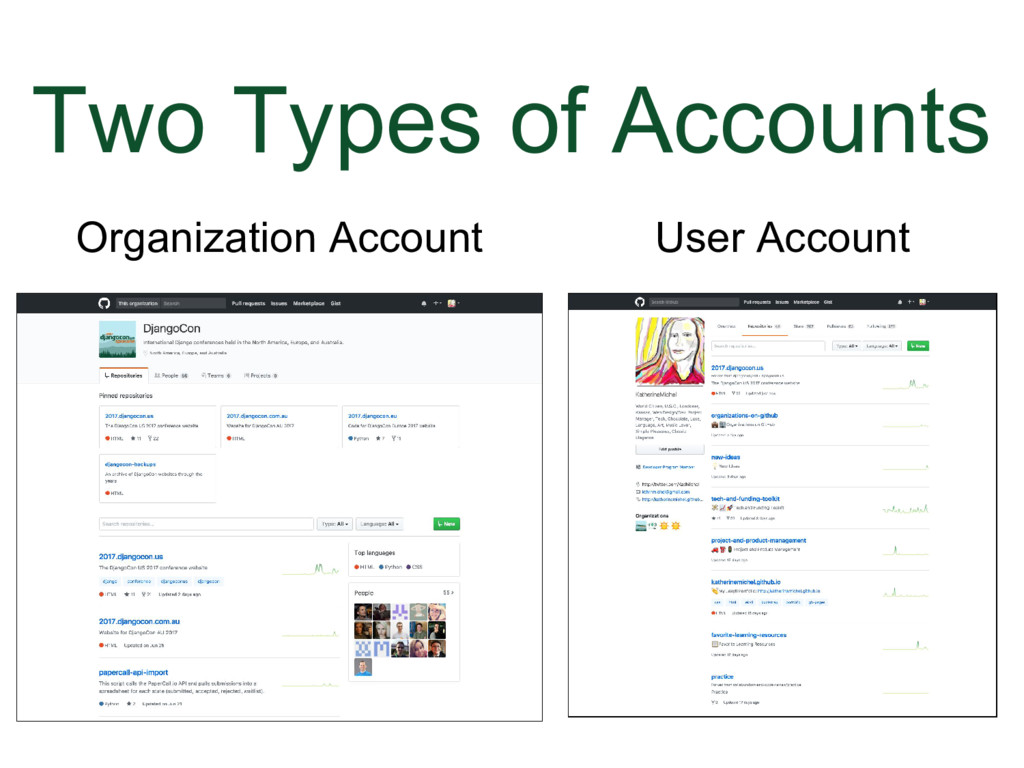
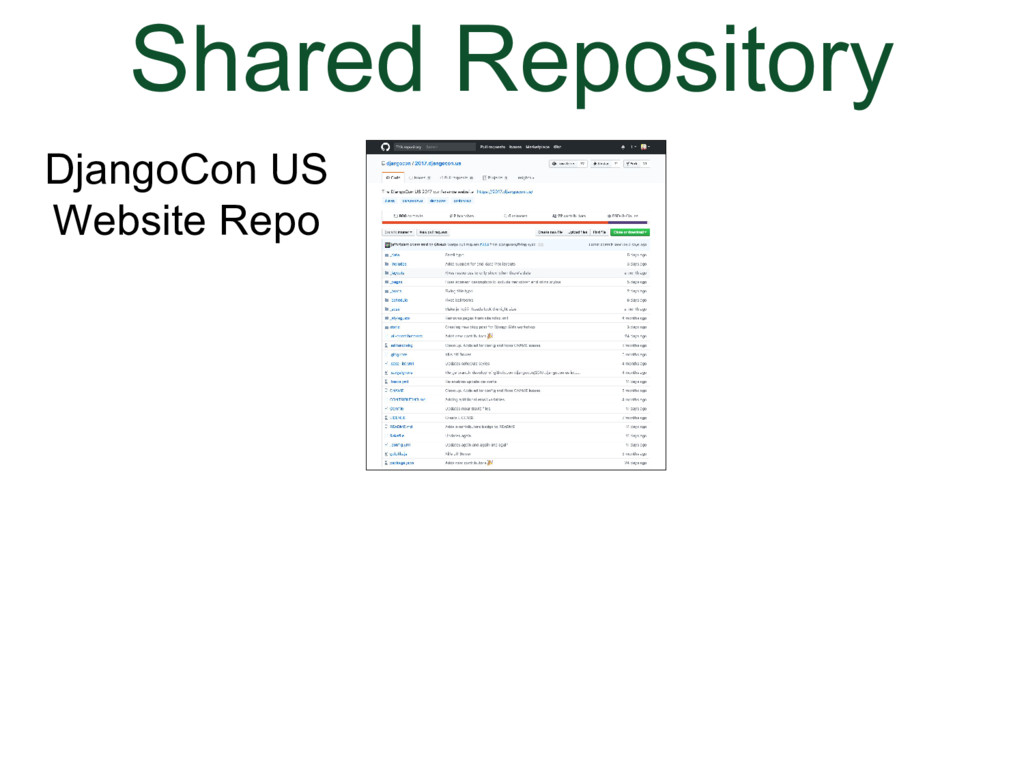
multiple repos • Otherwise, the repo “Shared Repository” settings are almost exactly the same Interesting Thing #2: User Account Shared Repo Disadvantage
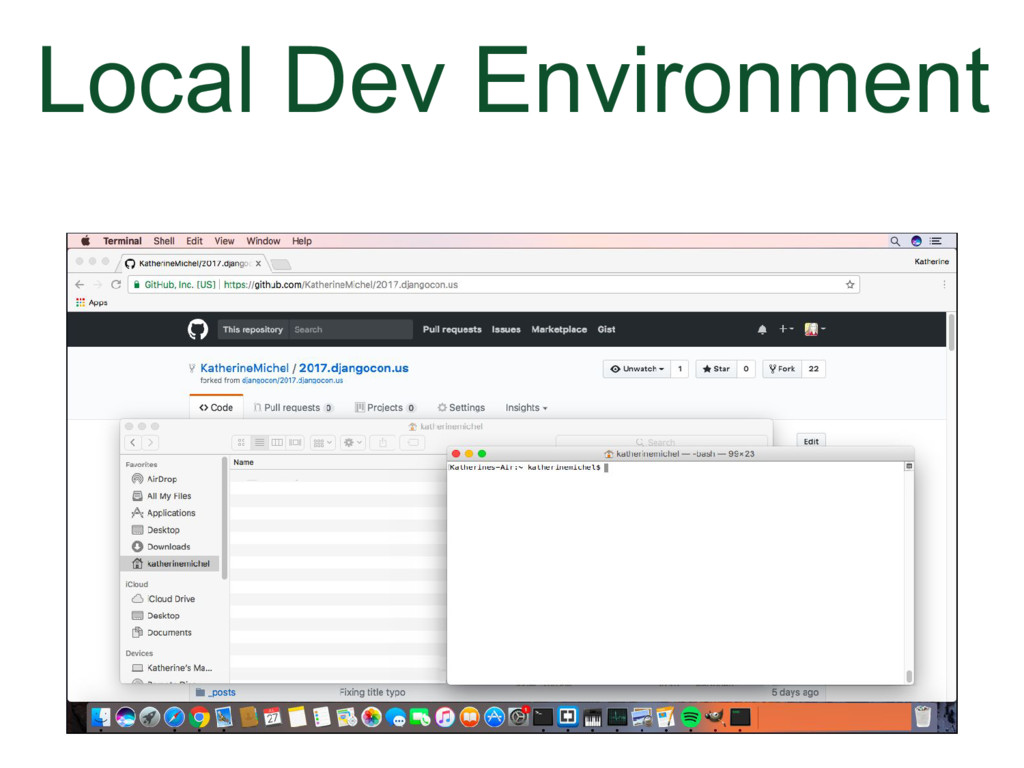
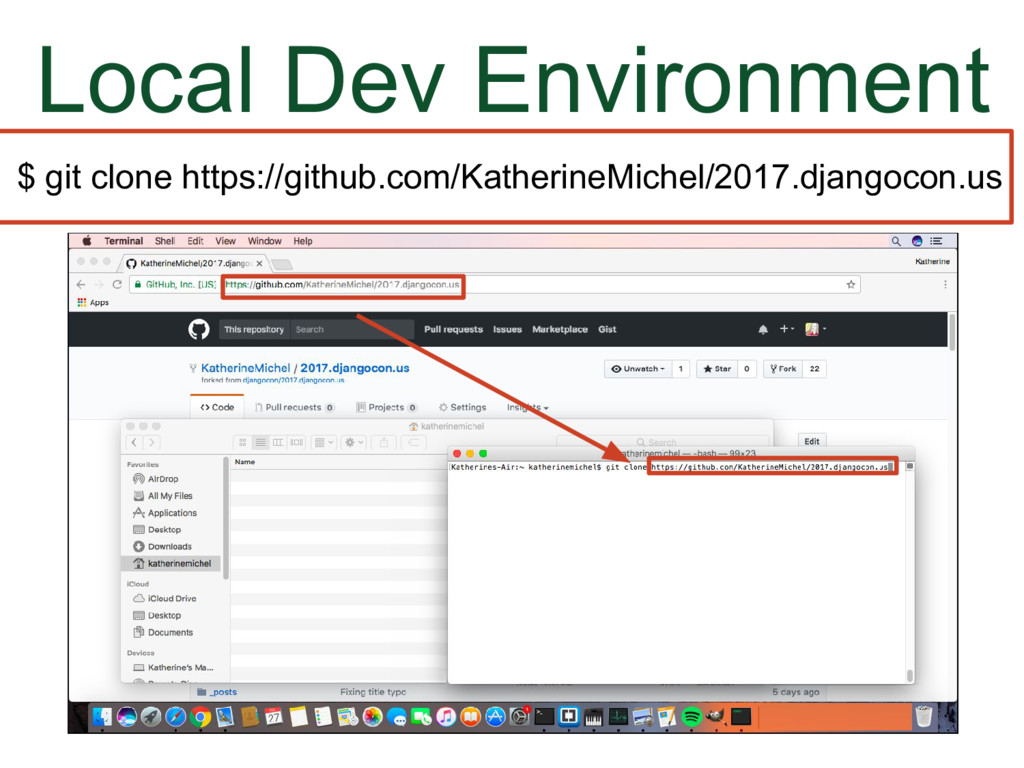
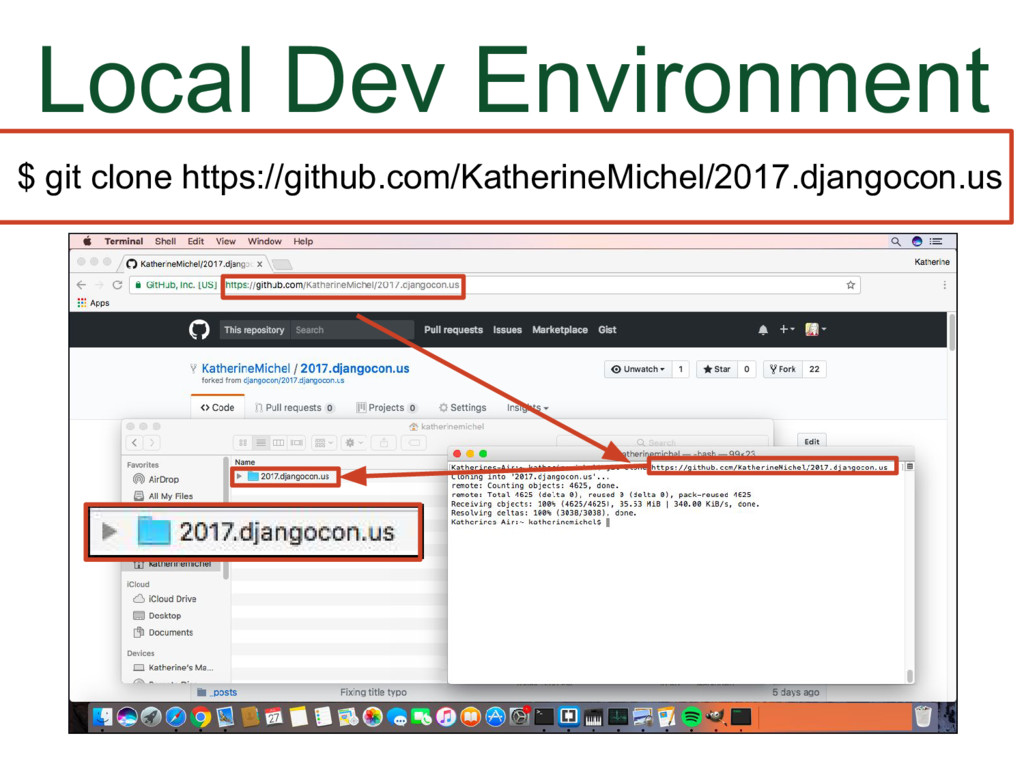
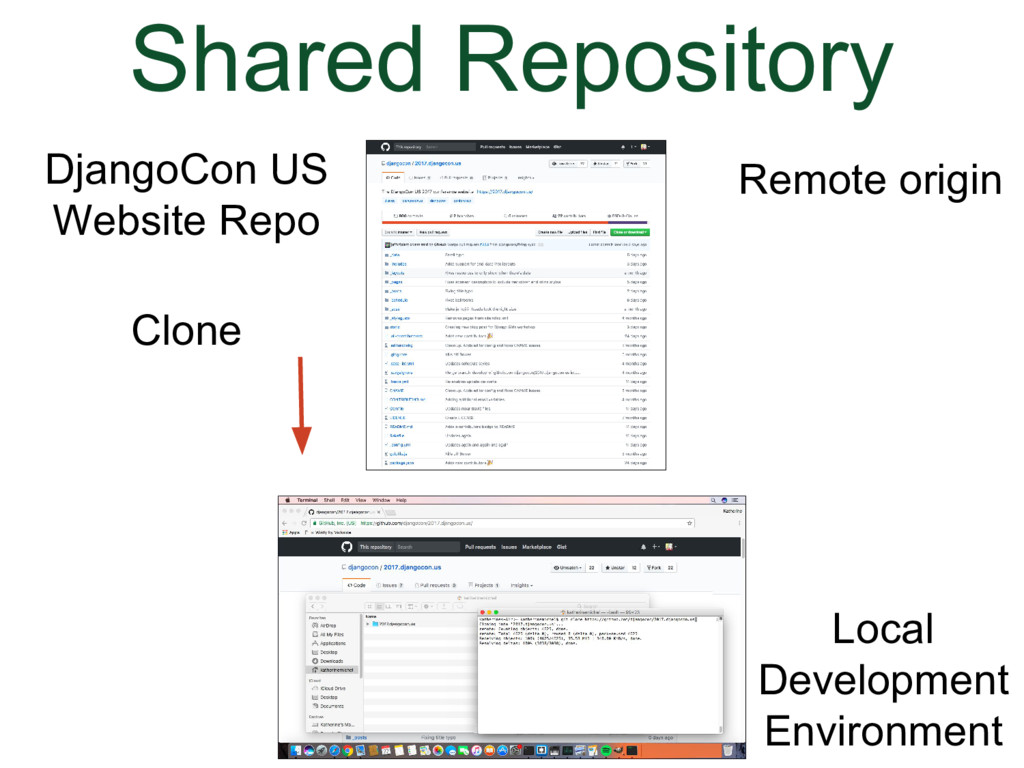
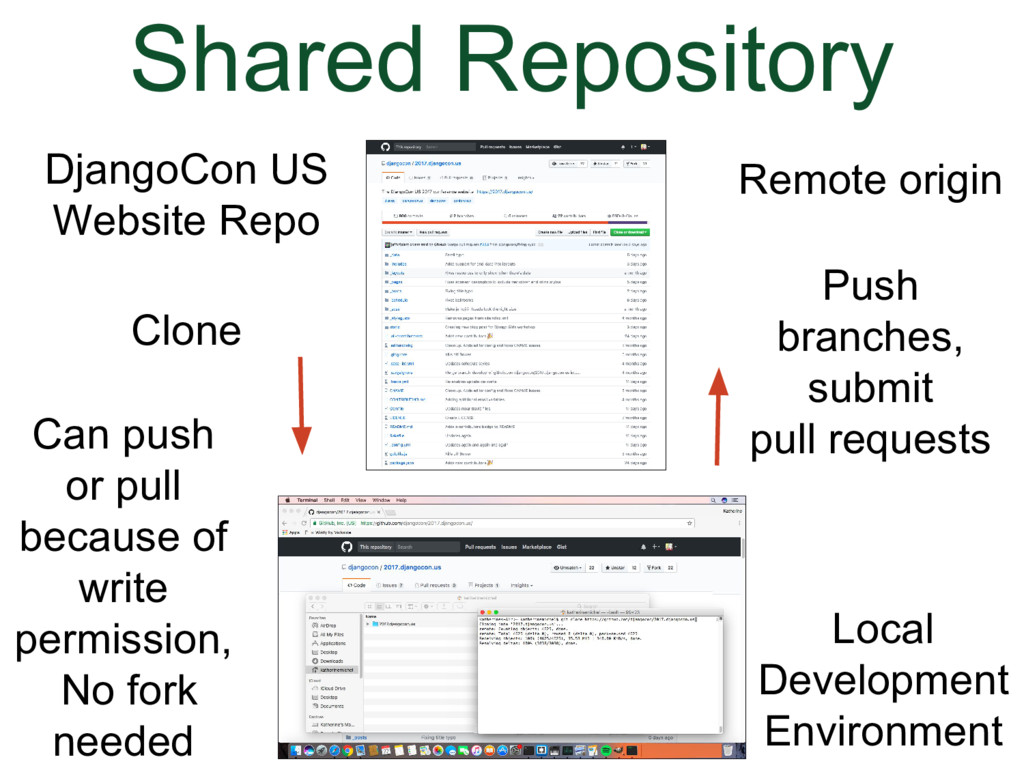
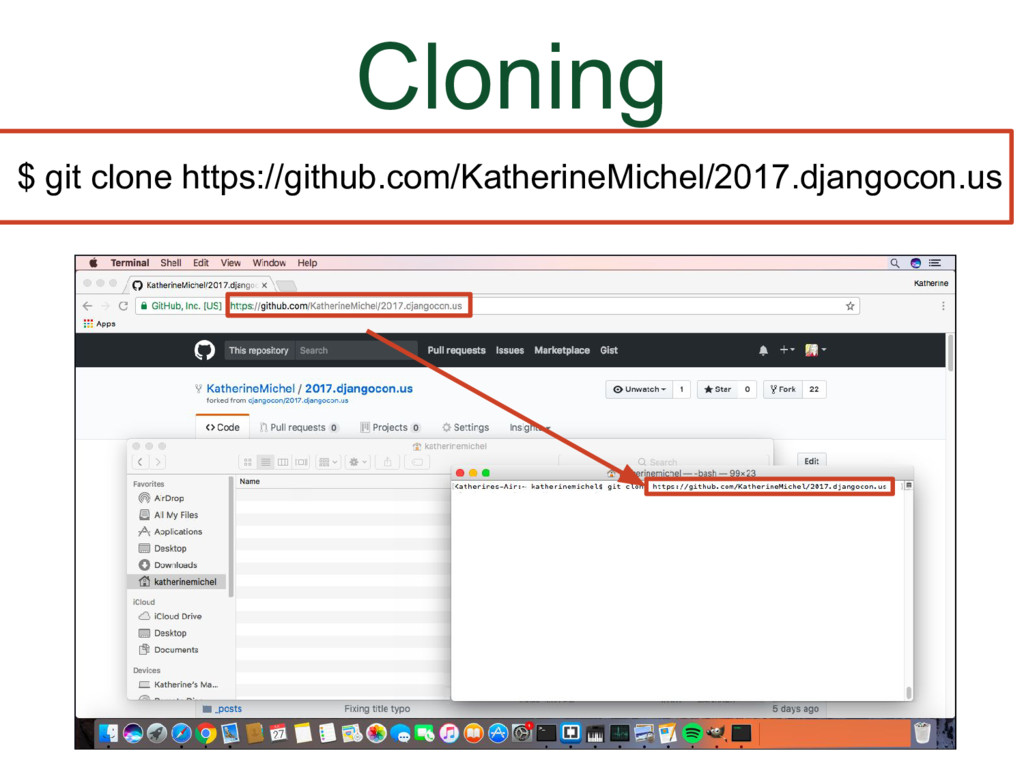
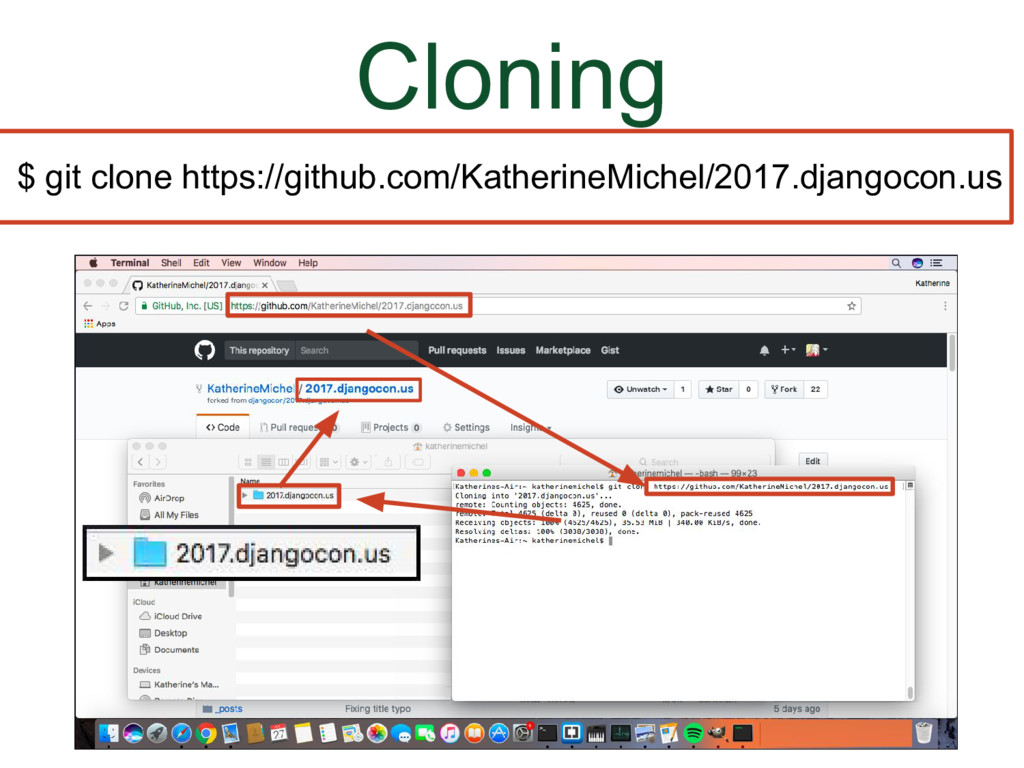
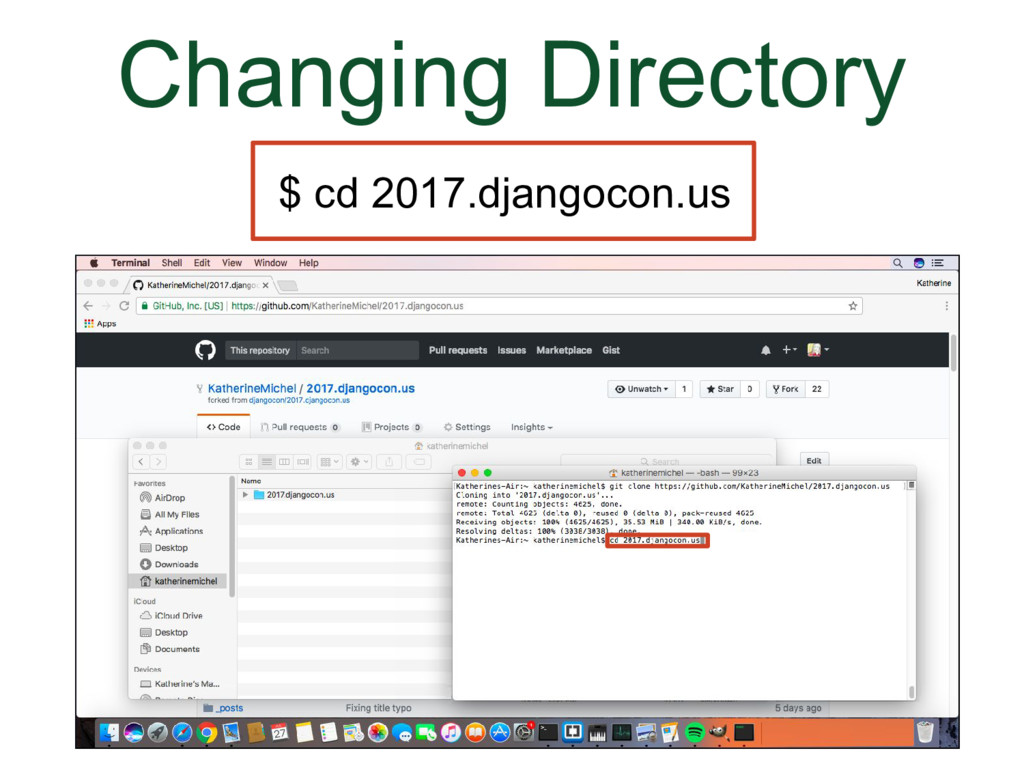
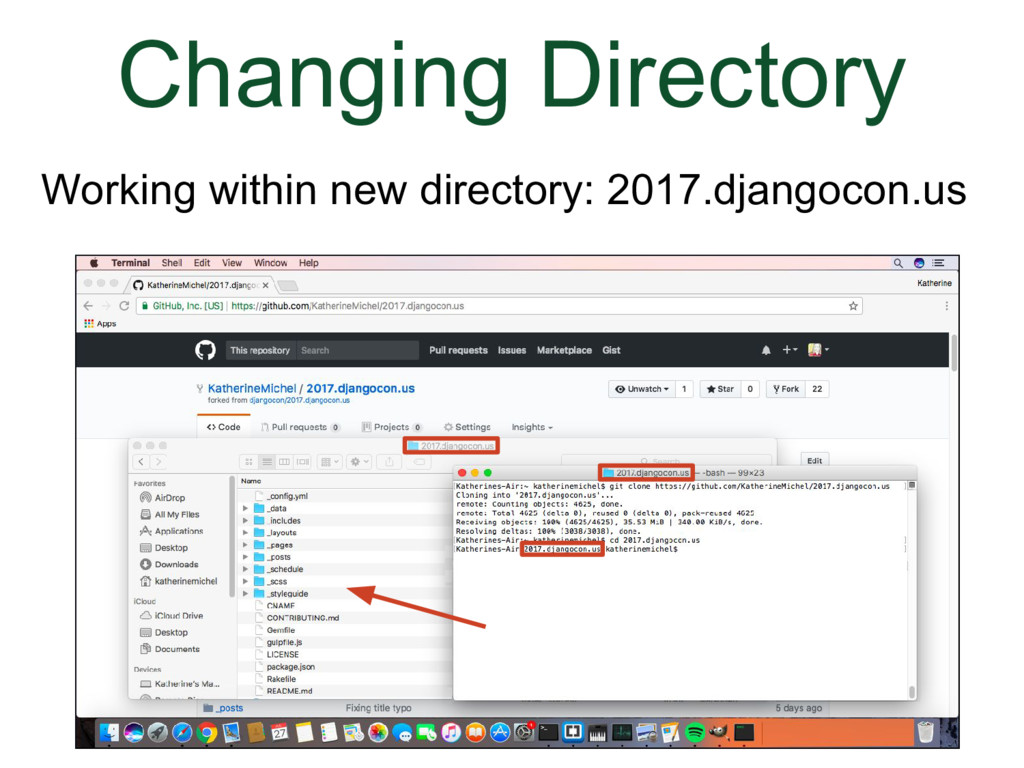
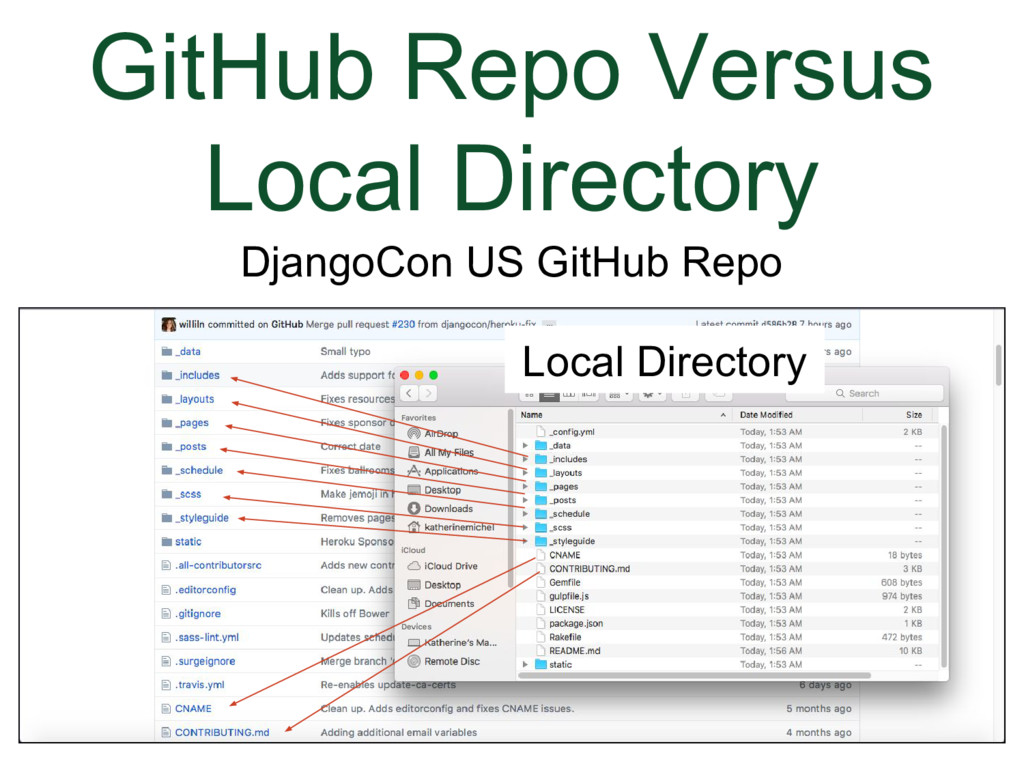
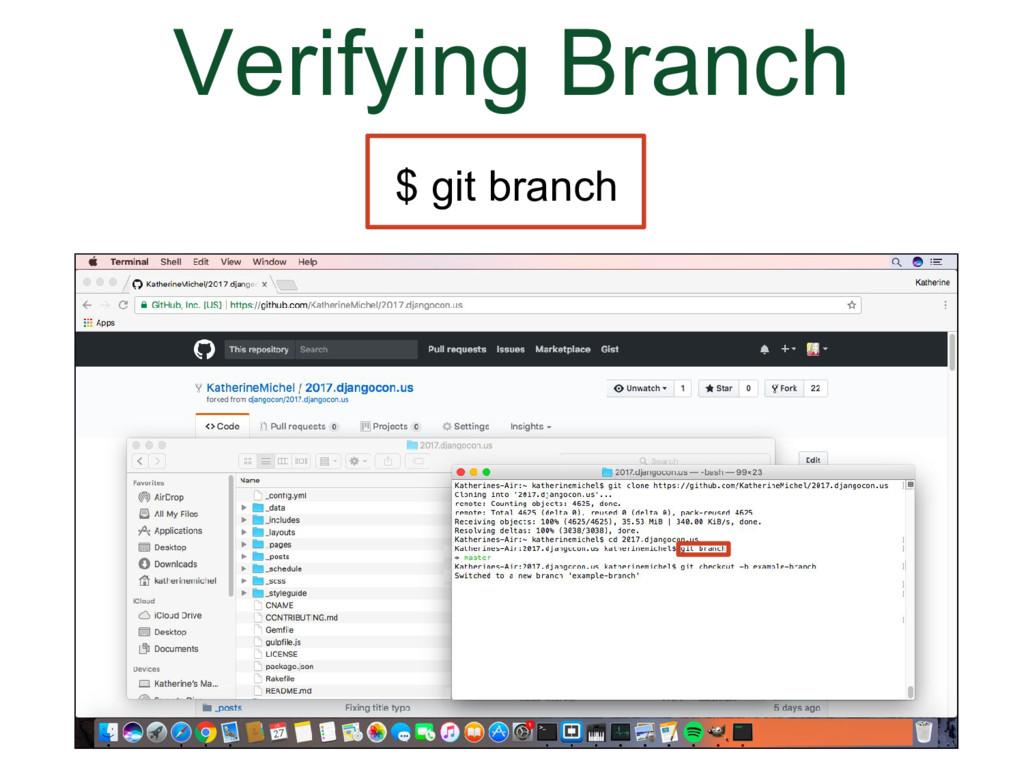
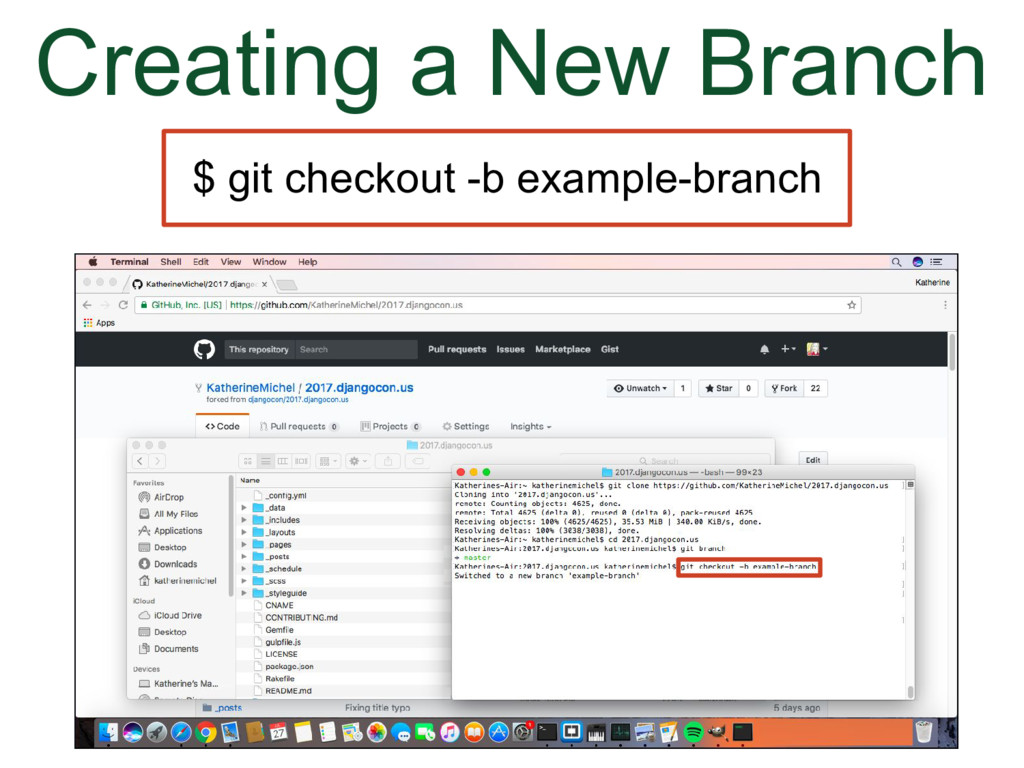
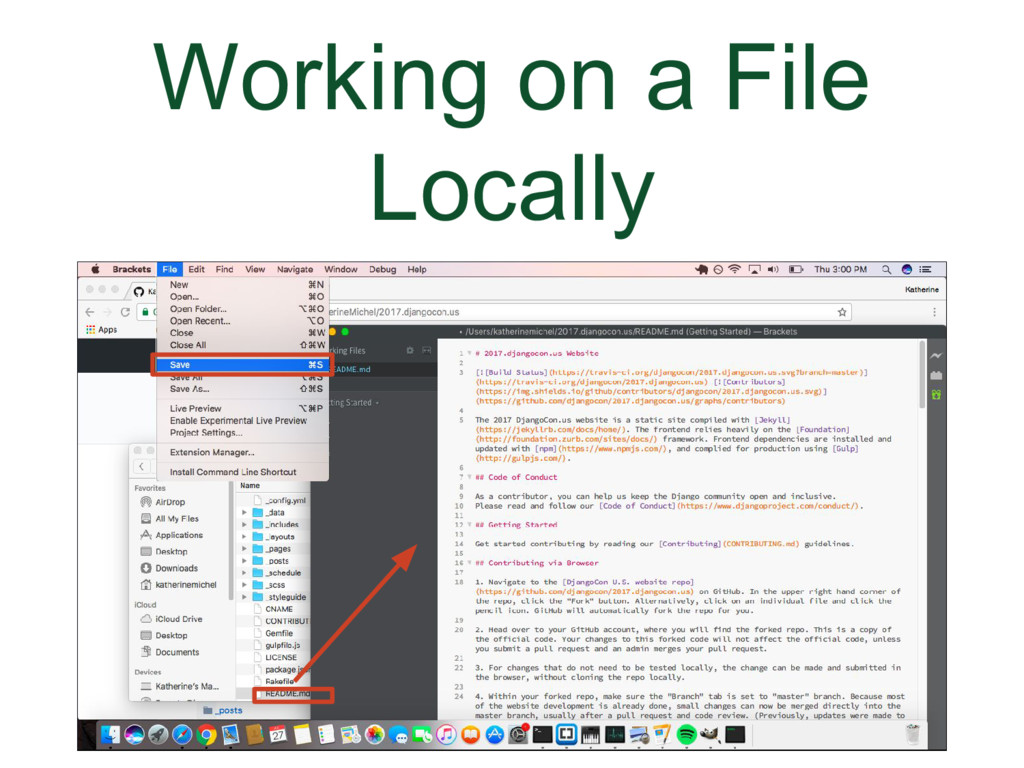
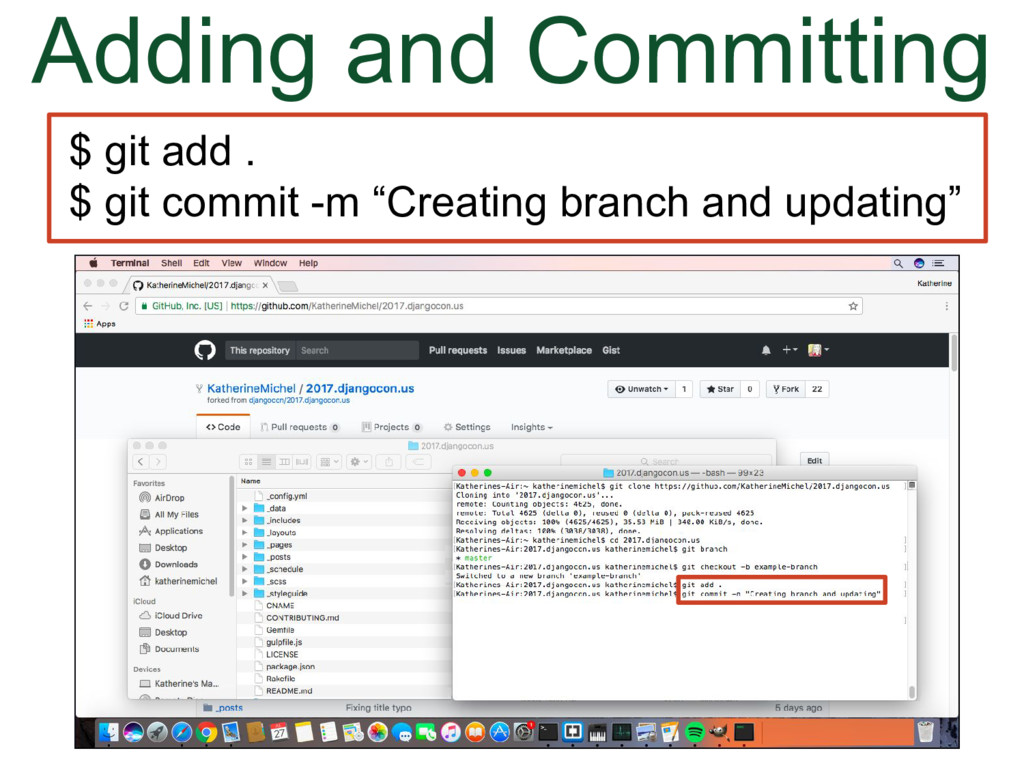
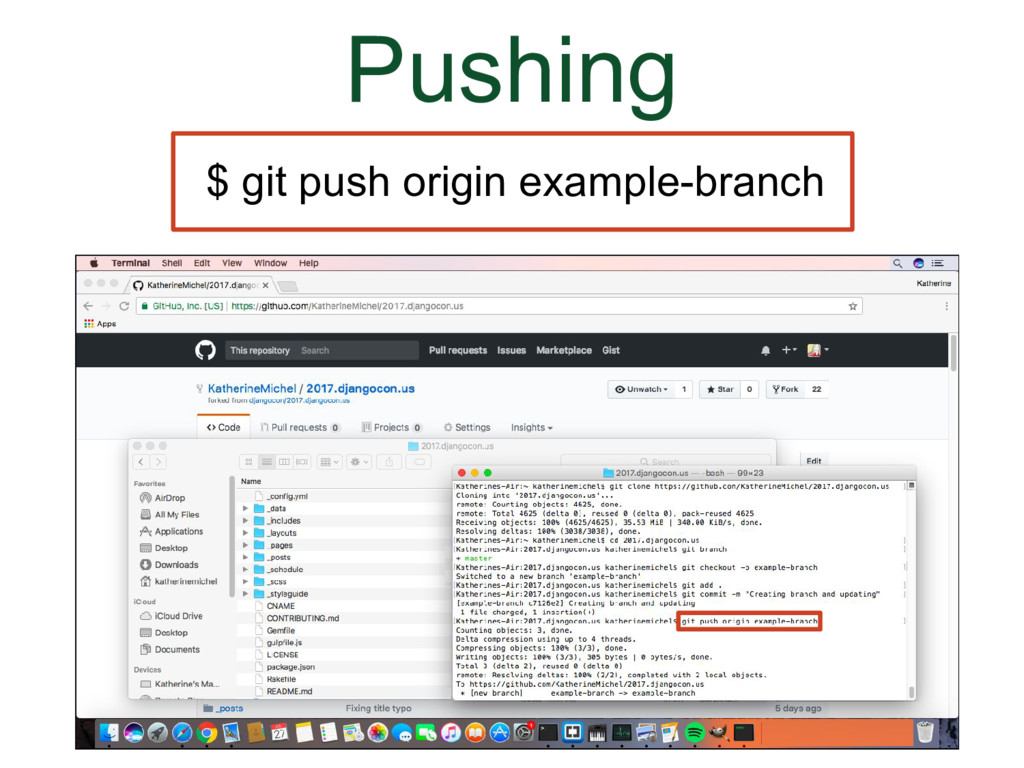
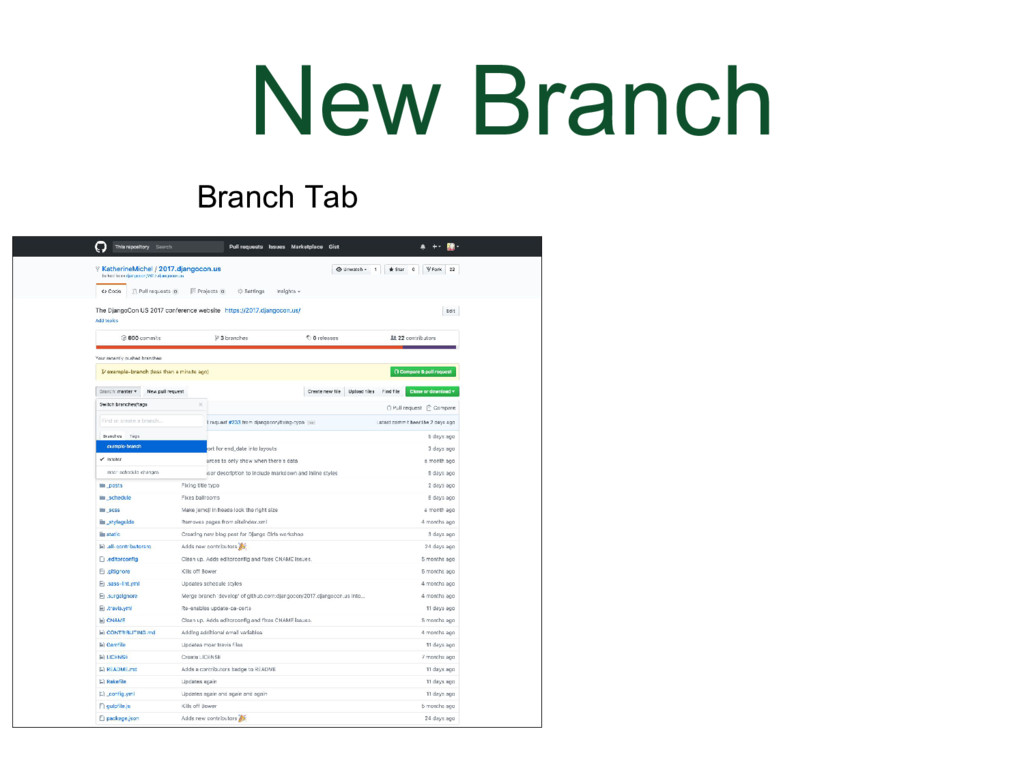
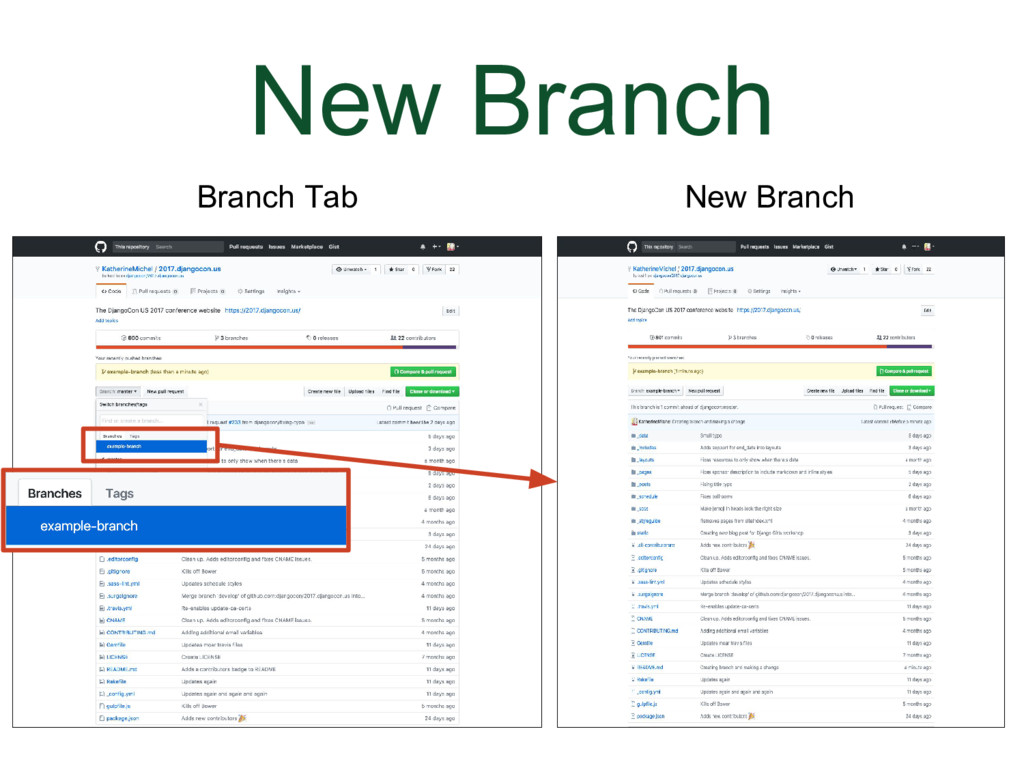
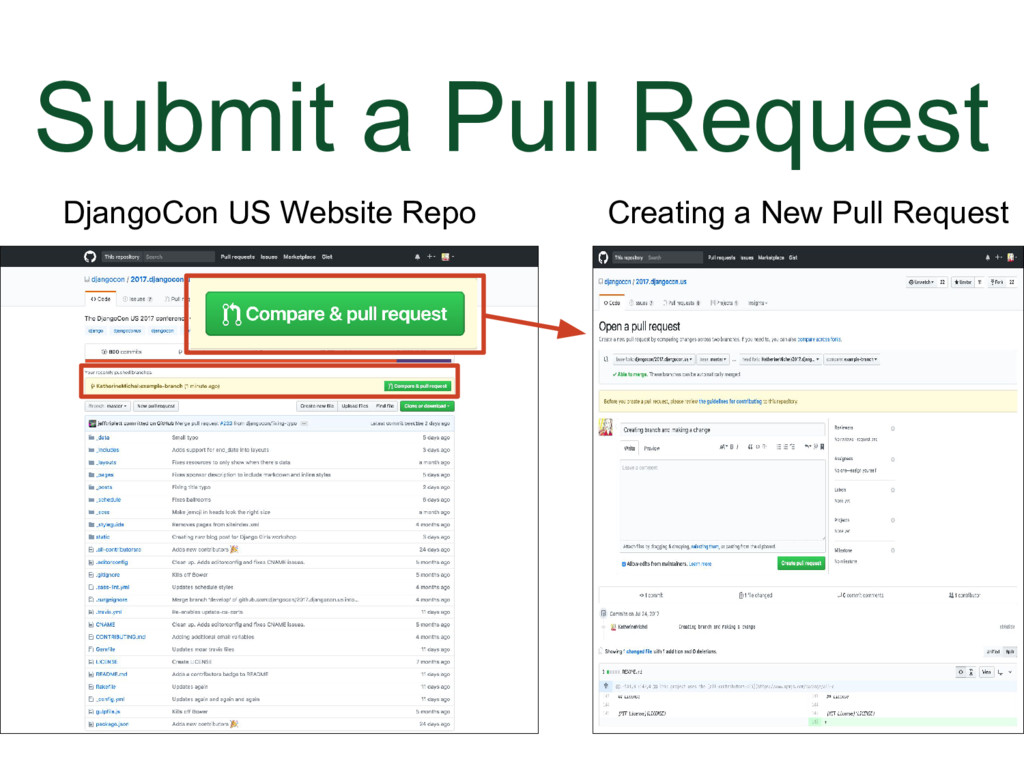
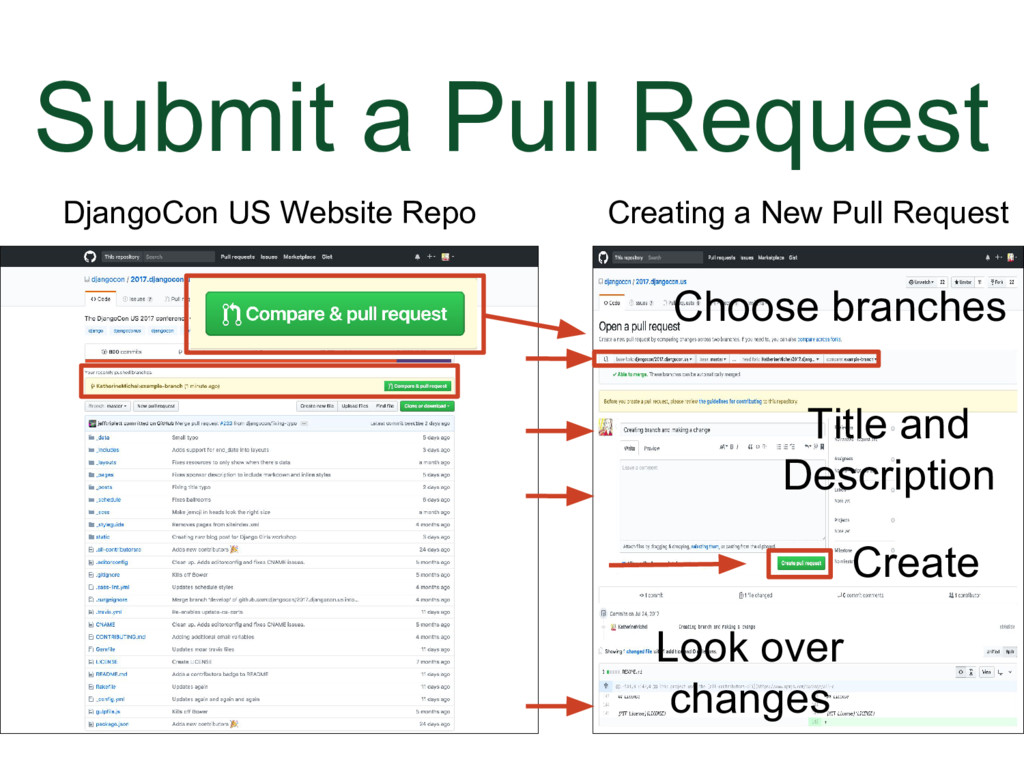
Clone a repo into our local development environment, create a feature branch, make a change, push the branch to the GitHub repo, and submit a pull request
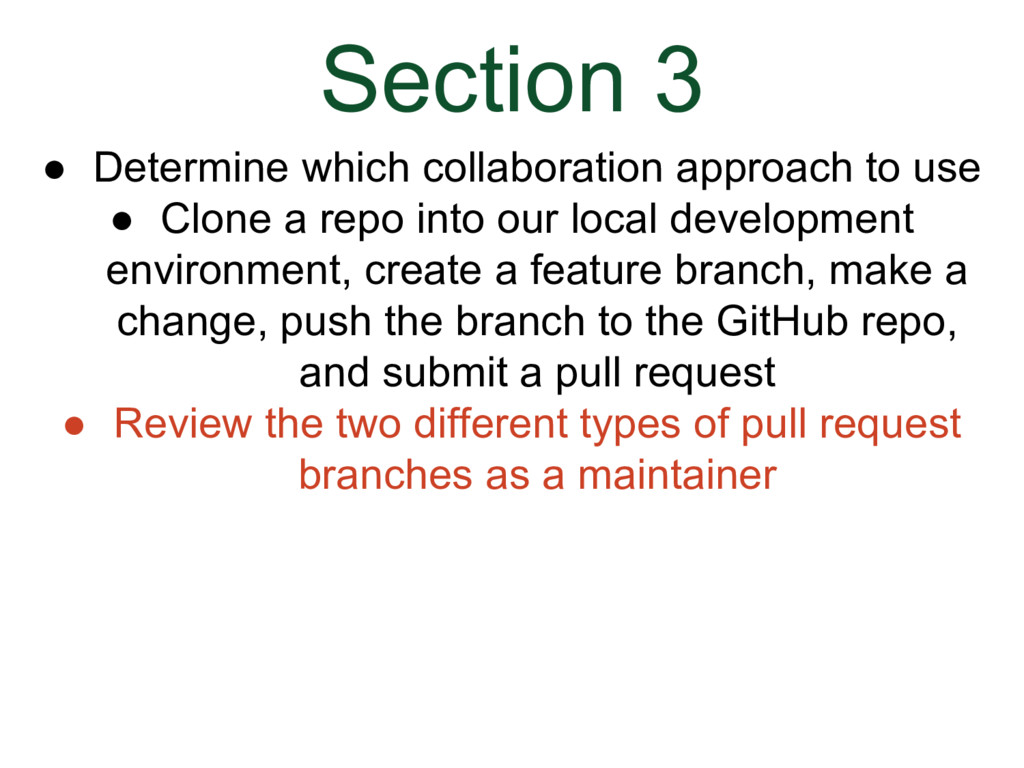
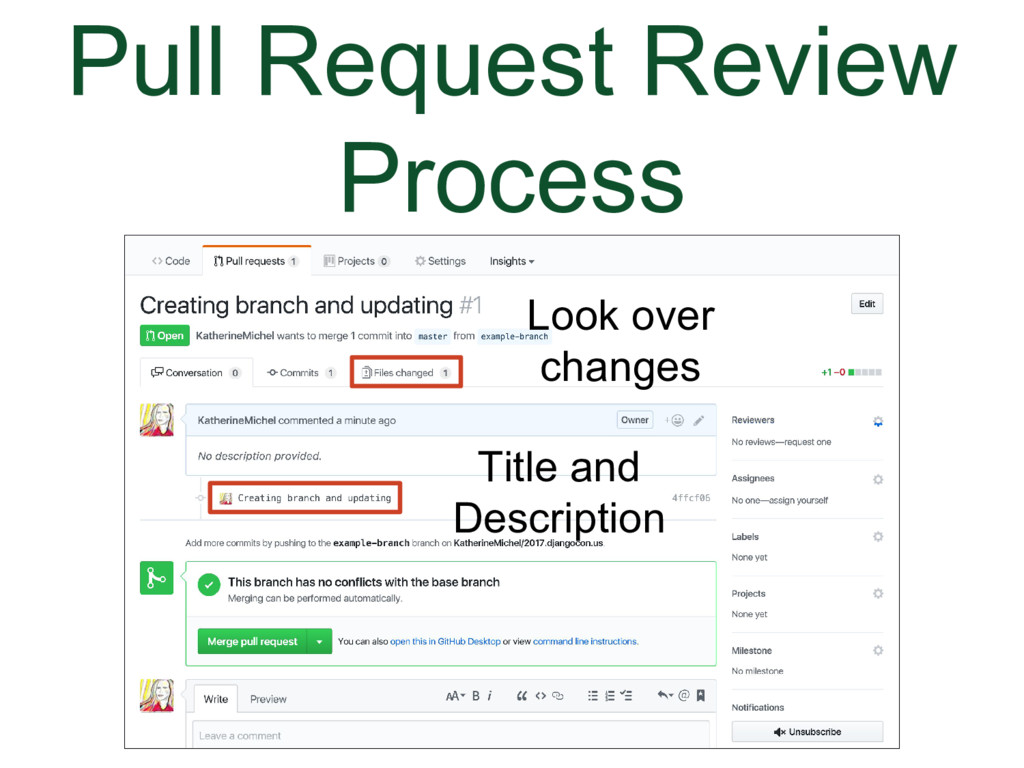
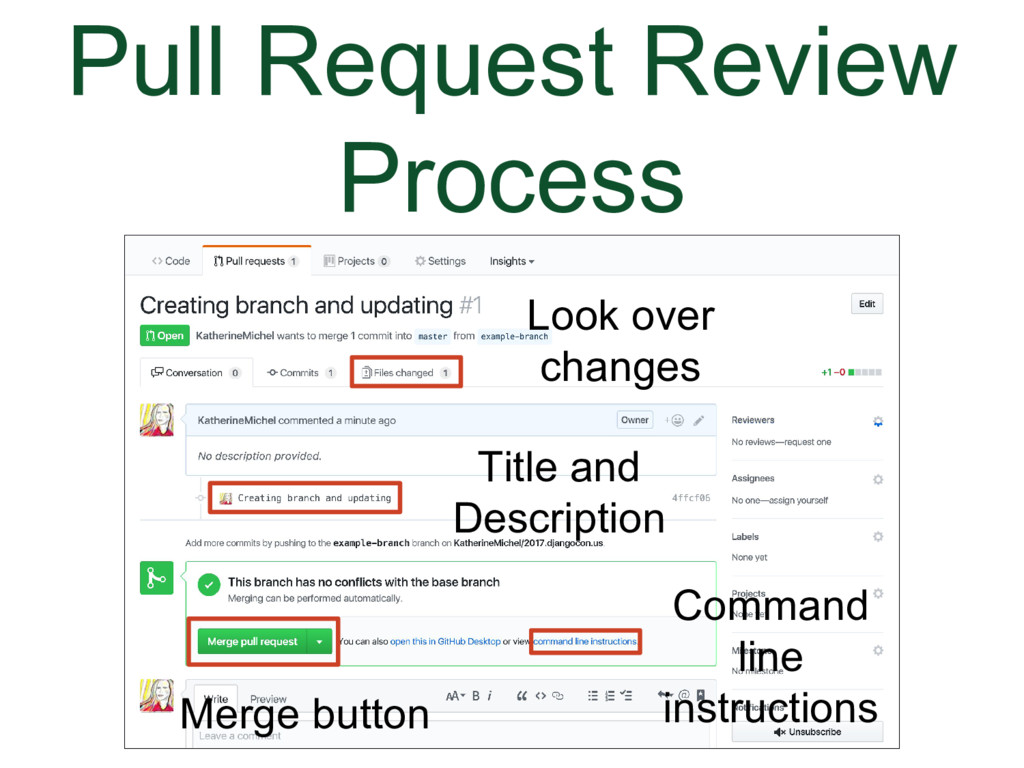
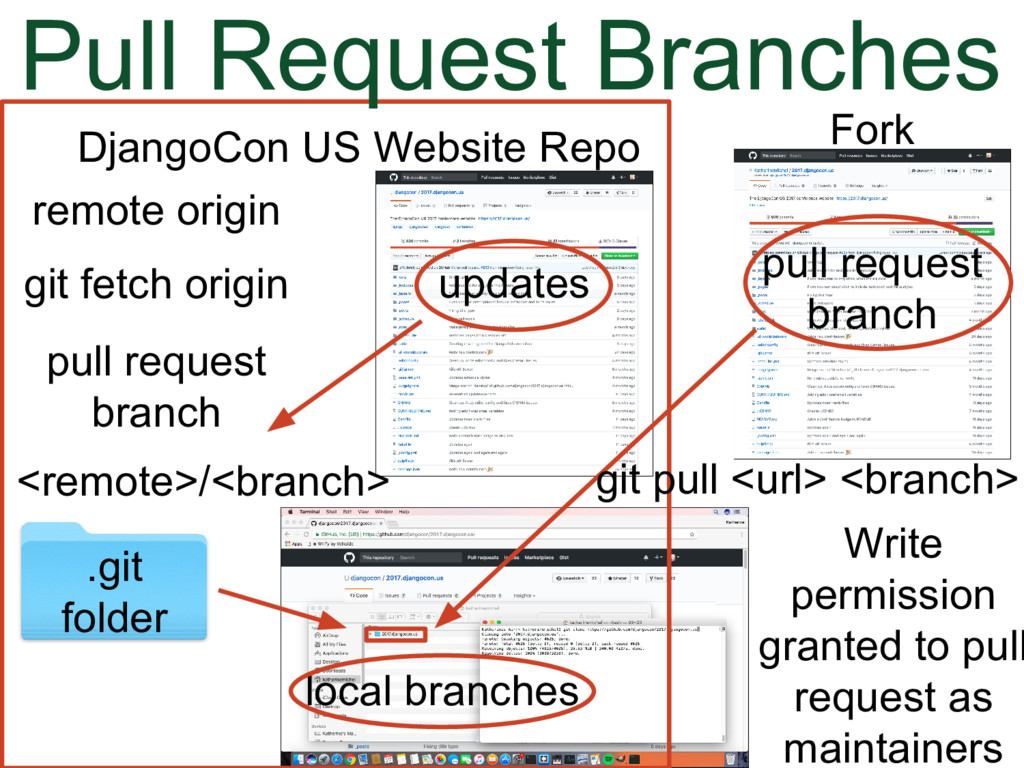
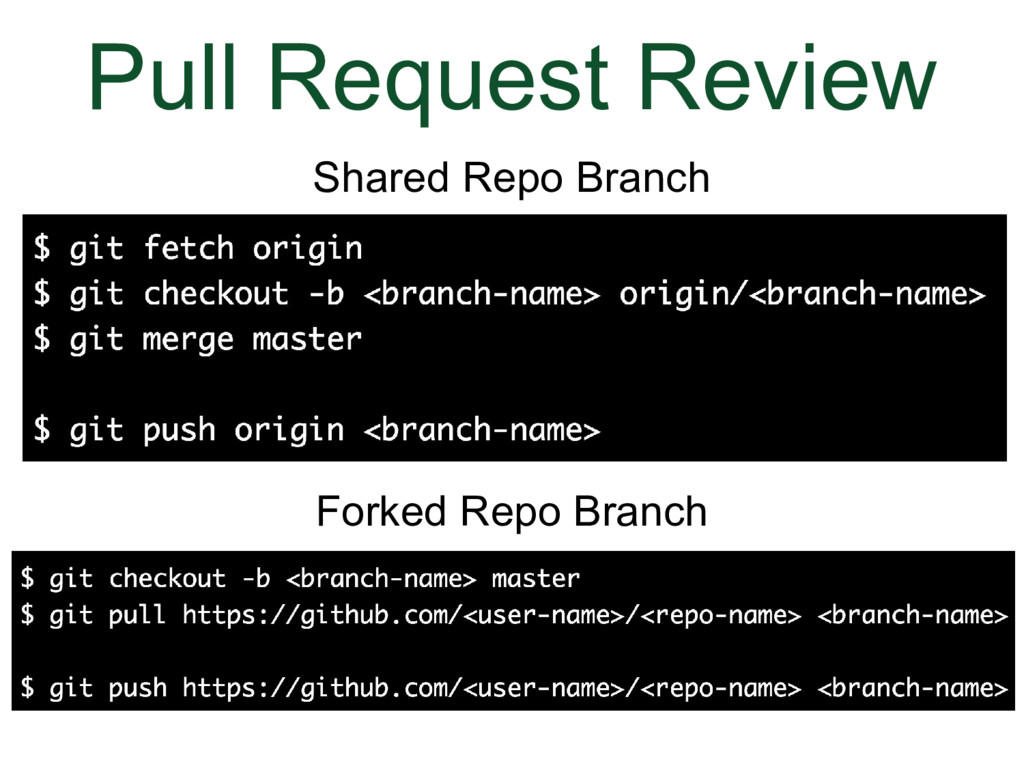
Clone a repo into our local development environment, create a feature branch, make a change, push the branch to the GitHub repo, and submit a pull request • Review the two different types of pull request branches as a maintainer
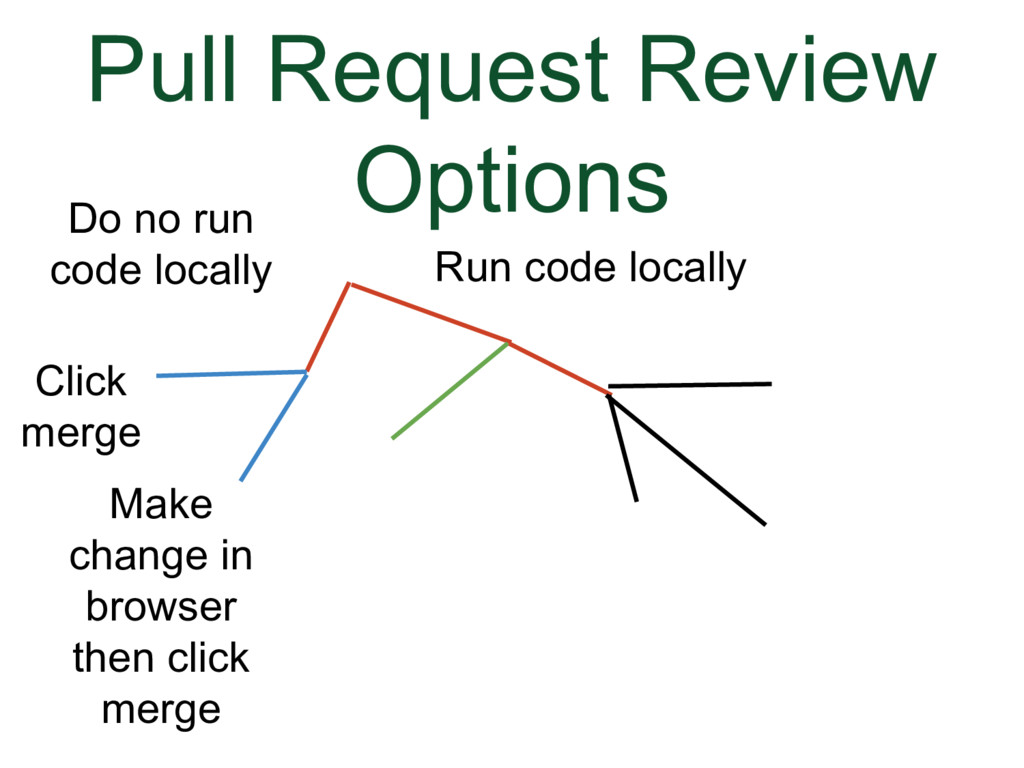
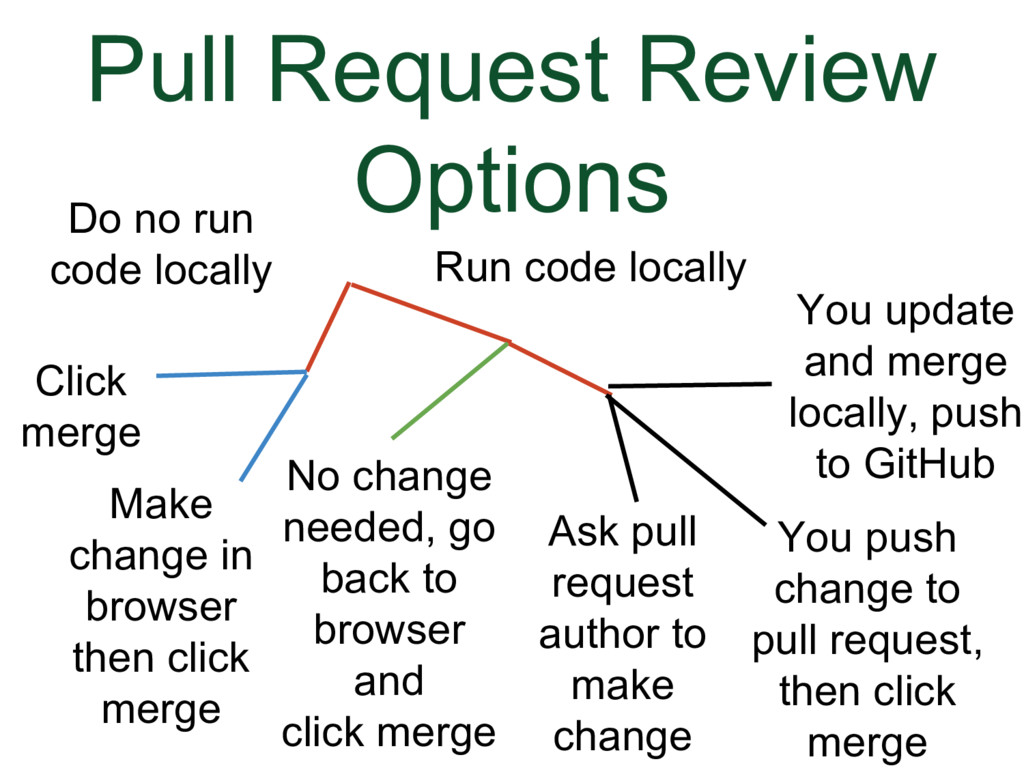
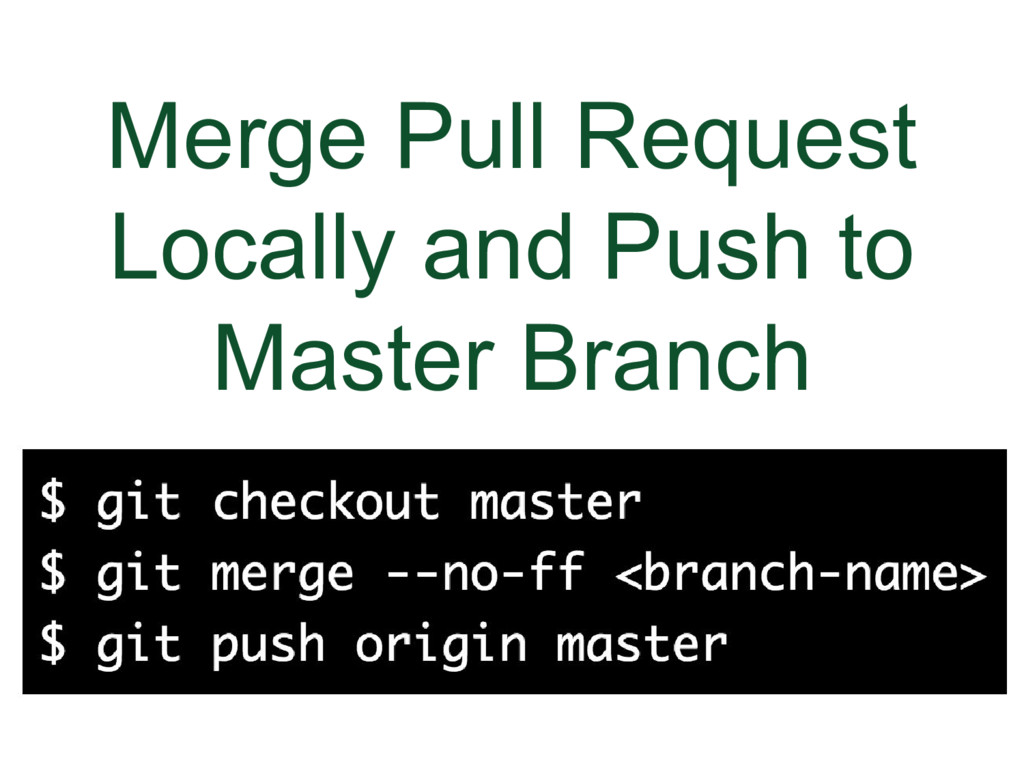
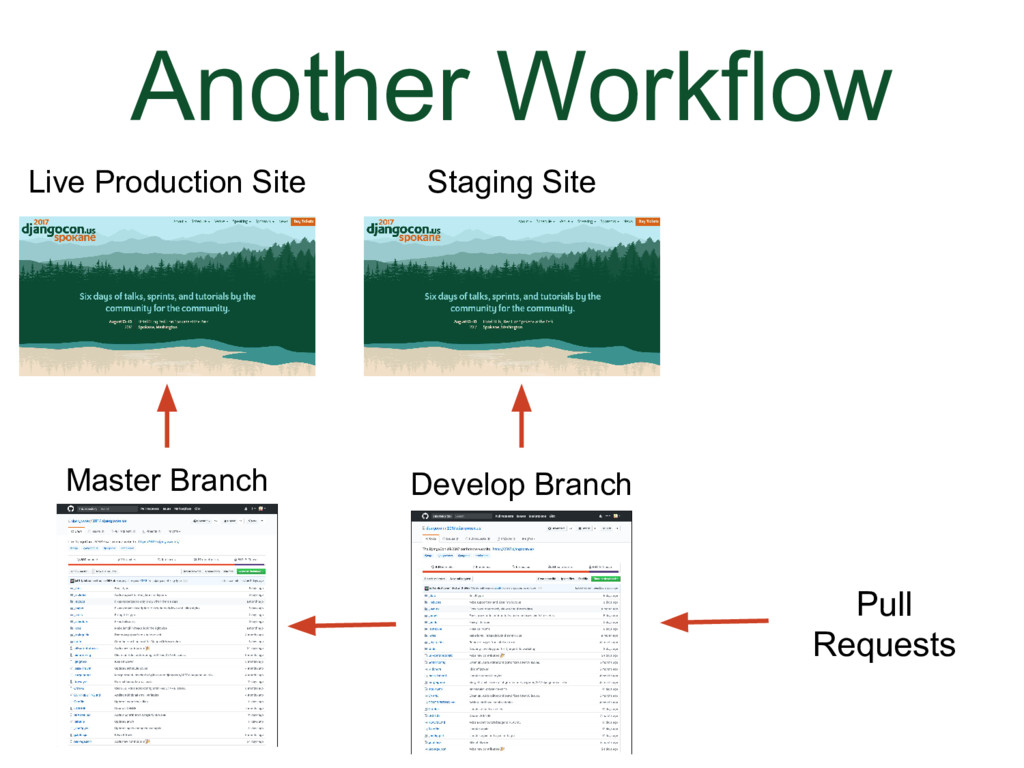
code locally Click merge Make change in browser then click merge No change needed, go back to browser and click merge Ask pull request author to make change You push change to pull request, then click merge You update and merge locally, push to GitHub
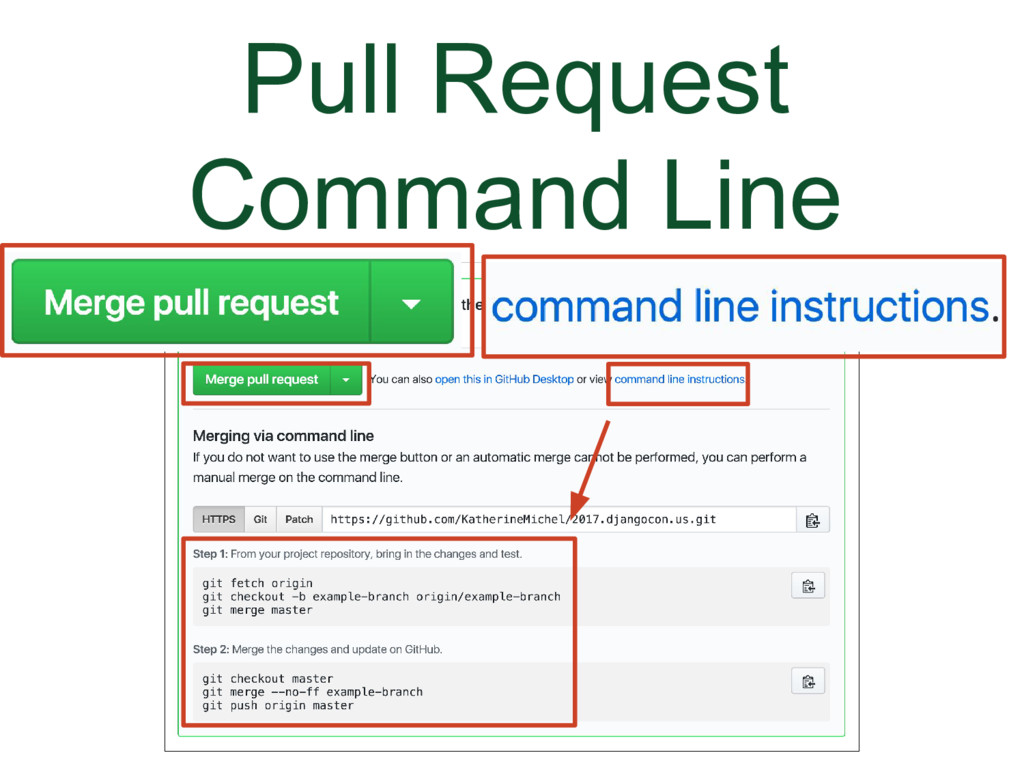
Clone a repo into our local development environment, create a feature branch, make a change, push the branch to the GitHub repo, and submit a pull request • Review the two different types of pull request branches as a maintainer • Additional workflow and command info
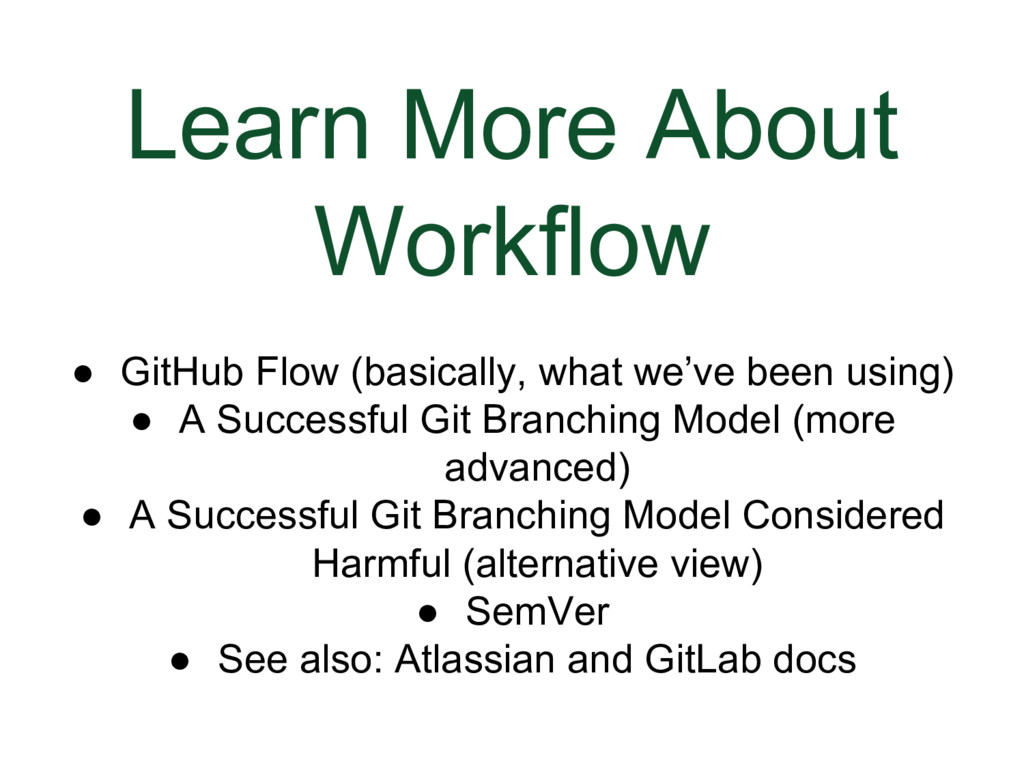
been using) • A Successful Git Branching Model (more advanced) • A Successful Git Branching Model Considered Harmful (alternative view) • SemVer • See also: Atlassian and GitLab docs
Clone a repo into our local development environment, create a feature branch, make a change, push the branch to the GitHub repo, and submit a pull request • Review the two different types of pull request branches as a maintainer • Additional workflow and command info • People, communication, documentation
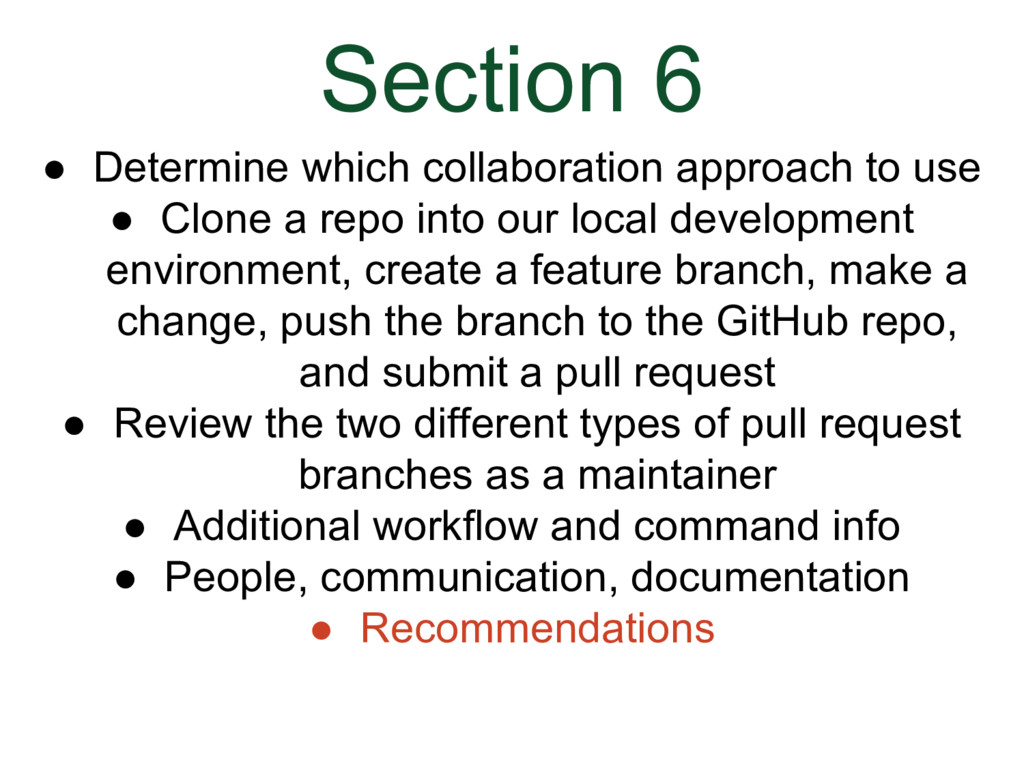
Clone a repo into our local development environment, create a feature branch, make a change, push the branch to the GitHub repo, and submit a pull request • Review the two different types of pull request branches as a maintainer • Additional workflow and command info • People, communication, documentation • Recommendations
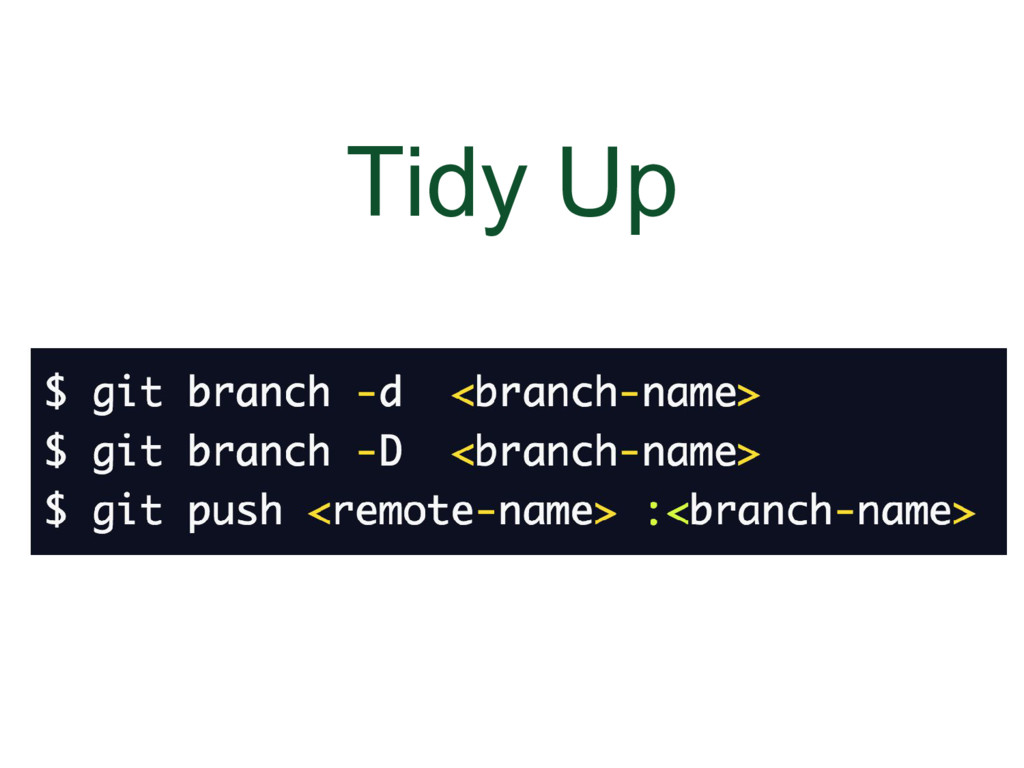
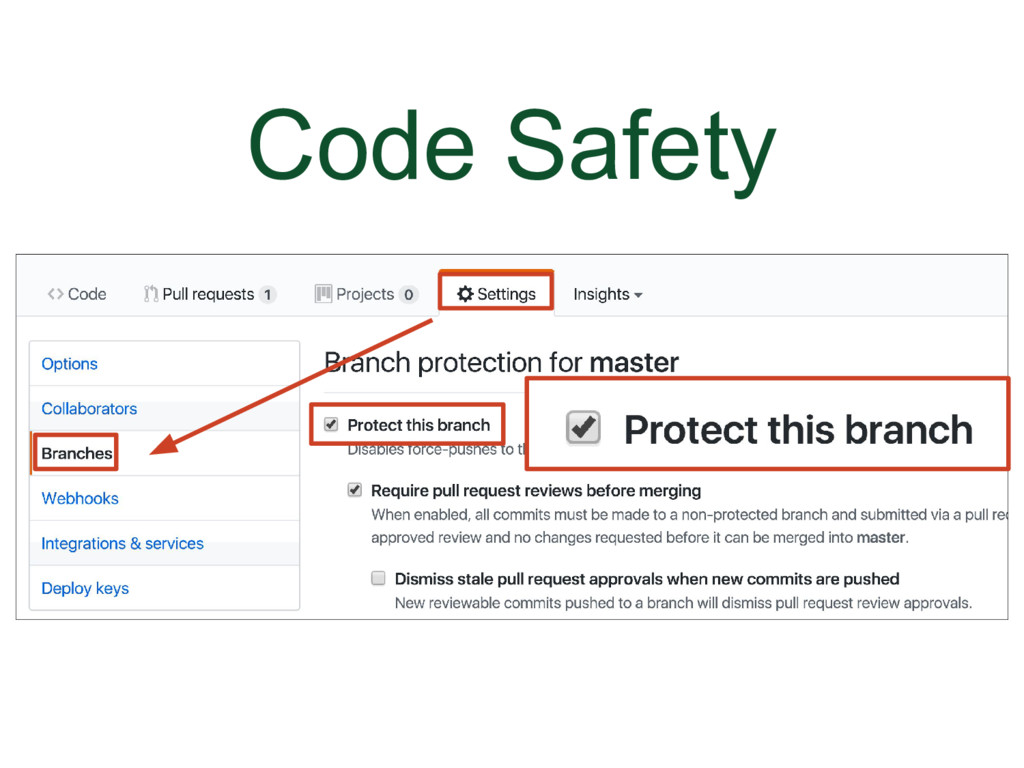
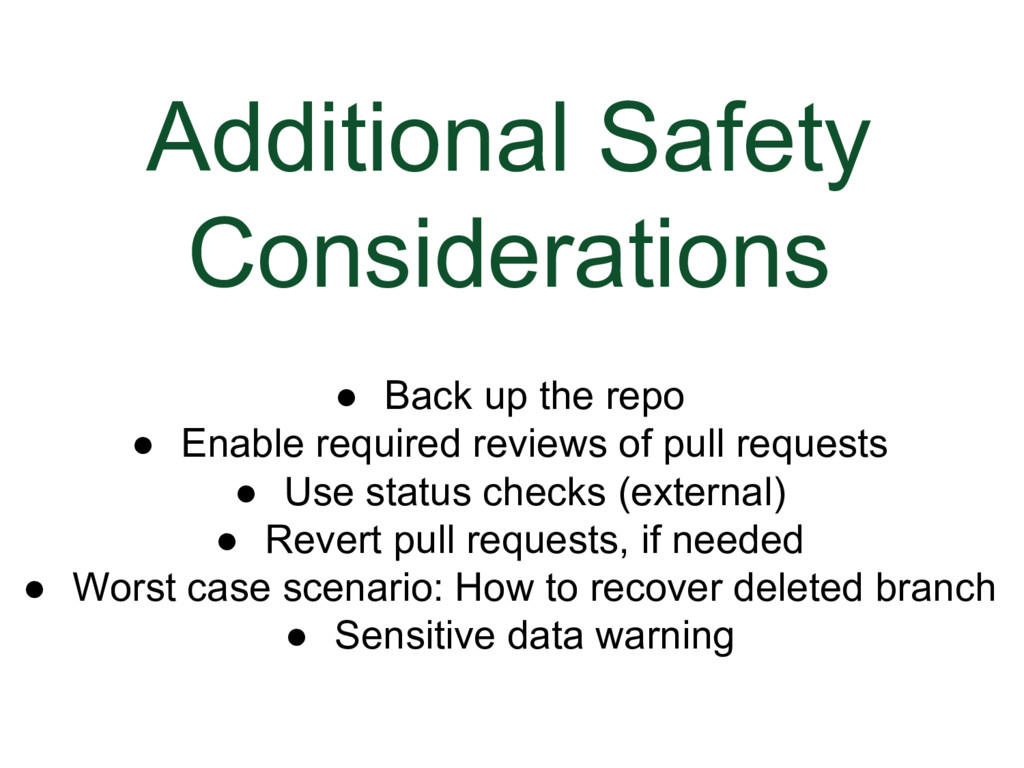
required reviews of pull requests • Use status checks (external) • Revert pull requests, if needed • Worst case scenario: How to recover deleted branch • Sensitive data warning
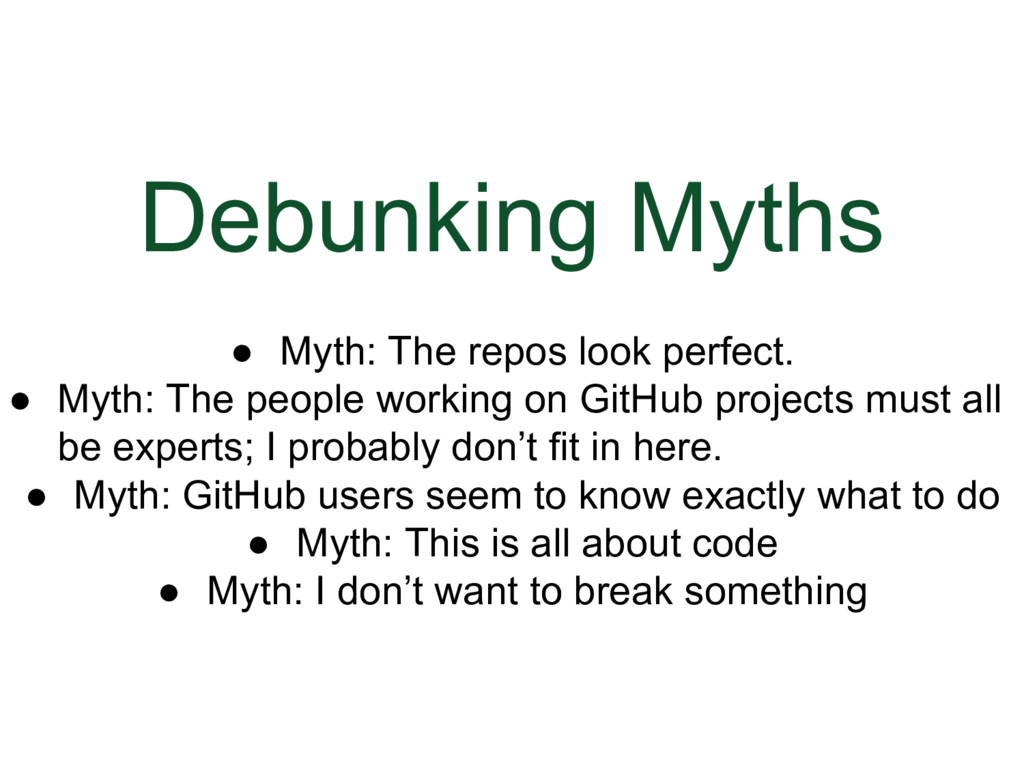
The people working on GitHub projects must all be experts; I probably don’t fit in here. • Myth: GitHub users seem to know exactly what to do • Myth: This is all about code • Myth: I don’t want to break something
Clone a repo into our local development environment, create a feature branch, make a change, push the branch to the GitHub repo, and submit a pull request • Review the two different types of pull request branches as a maintainer • Additional workflow and command info • People, communication, documentation • Recommendations • Simulation Exercise
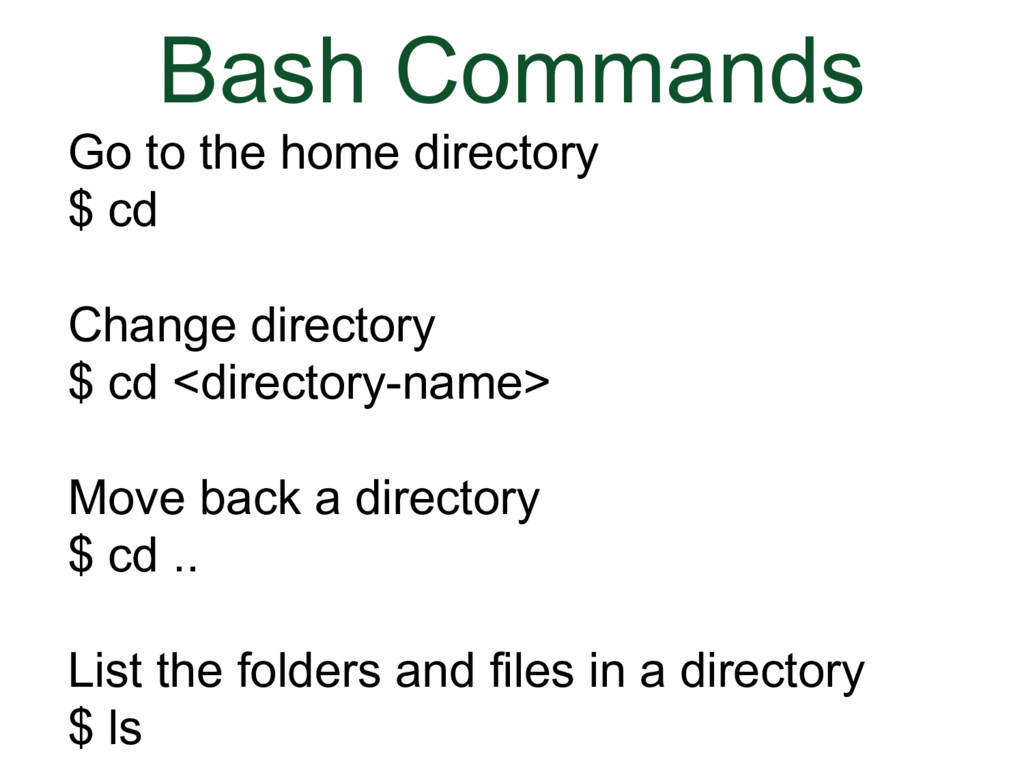
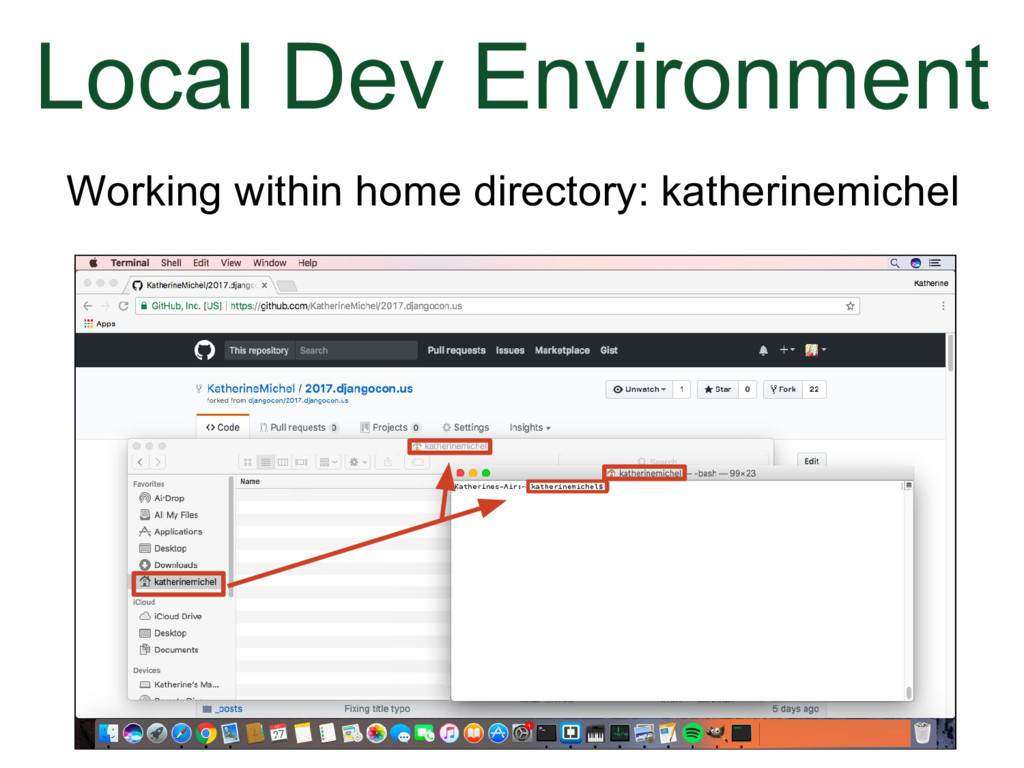
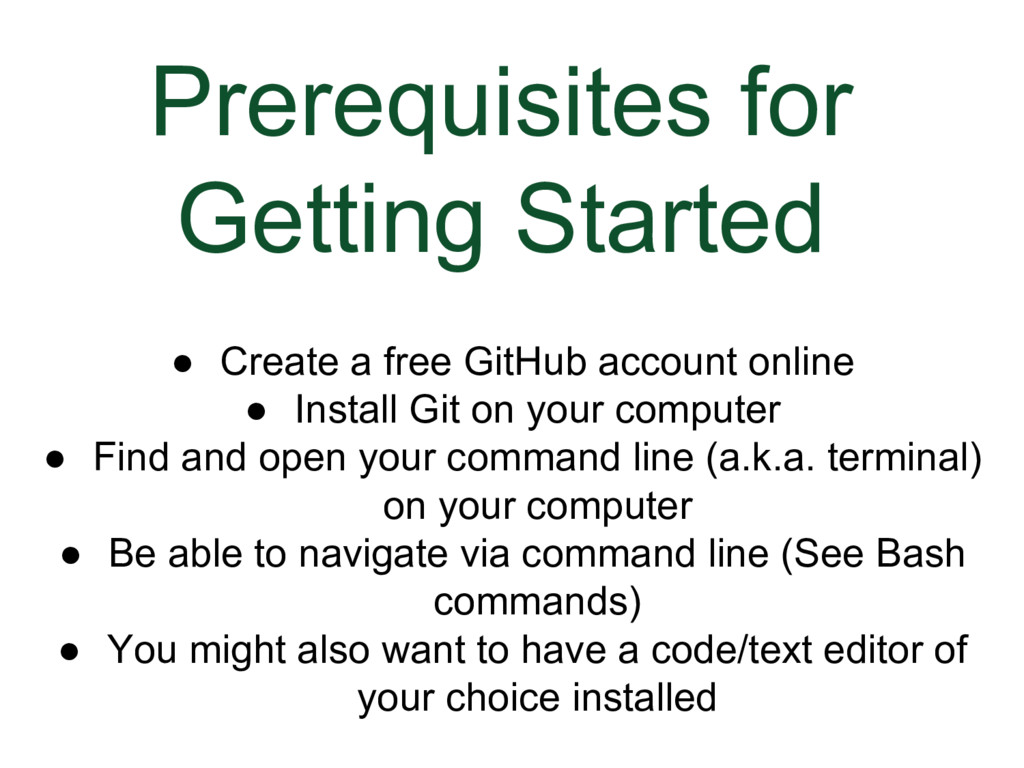
online • Install Git on your computer • Find and open your command line (a.k.a. terminal) on your computer • Be able to navigate via command line (See Bash commands) • You might also want to have a code/text editor of your choice installed

 SiteGround - Reliable hosting with speed, security, and support you can count on.


 katherinemichel
 mhrtech
 pfn
pfn
 codmoninc
 ymotongpoo
 tomokusaba
 shumei_ito
 onk
onk
 odashi
 oikon48
 kentarofujii
 maimyyym
 jct
jct
 morganepeng
 aleyda
 marktimemedia
 ianozsvald
 rocio
rocio
 akademiya2063
 reverentgeek
 chriscoyier
 marcoroth
 cassininazir
 tammyeverts