Upgrade to Pro — share decks privately, control downloads, hide ads and more …

VCR - A Gem used for caching HTTP requests duri...

Sponsored · Your Podcast. Everywhere. Effortlessly. Share. Educate. Inspire. Entertain. You do you. We'll handle the rest.
Avatar for Mike Dalton Mike Dalton
March 28, 2026
0

VCR - A Gem used for caching HTTP requests during tests

Avatar for Mike Dalton

Mike Dalton

March 28, 2026

Transcript

  1. Who am I? • Mike Dalton • Developer @ GrubHub

    • Using Ruby for 7 years • Frequent attendee of meetups
  2. The problem • Tests should be deterministic • Result of

    an HTTP request might not be known ◦ Change in data beyond your control ◦ Network connectivity issues • How do we have deterministic tests that involve 3rd party web services?
  3. The solution • VCR Gem • https://github.com/vcr/vcr • Created by

    Myron Marston (maintainer of RSpec) • Around since 2010 • Record your test suite's HTTP interactions and replay them during future test runs for fast, deterministic, accurate tests.
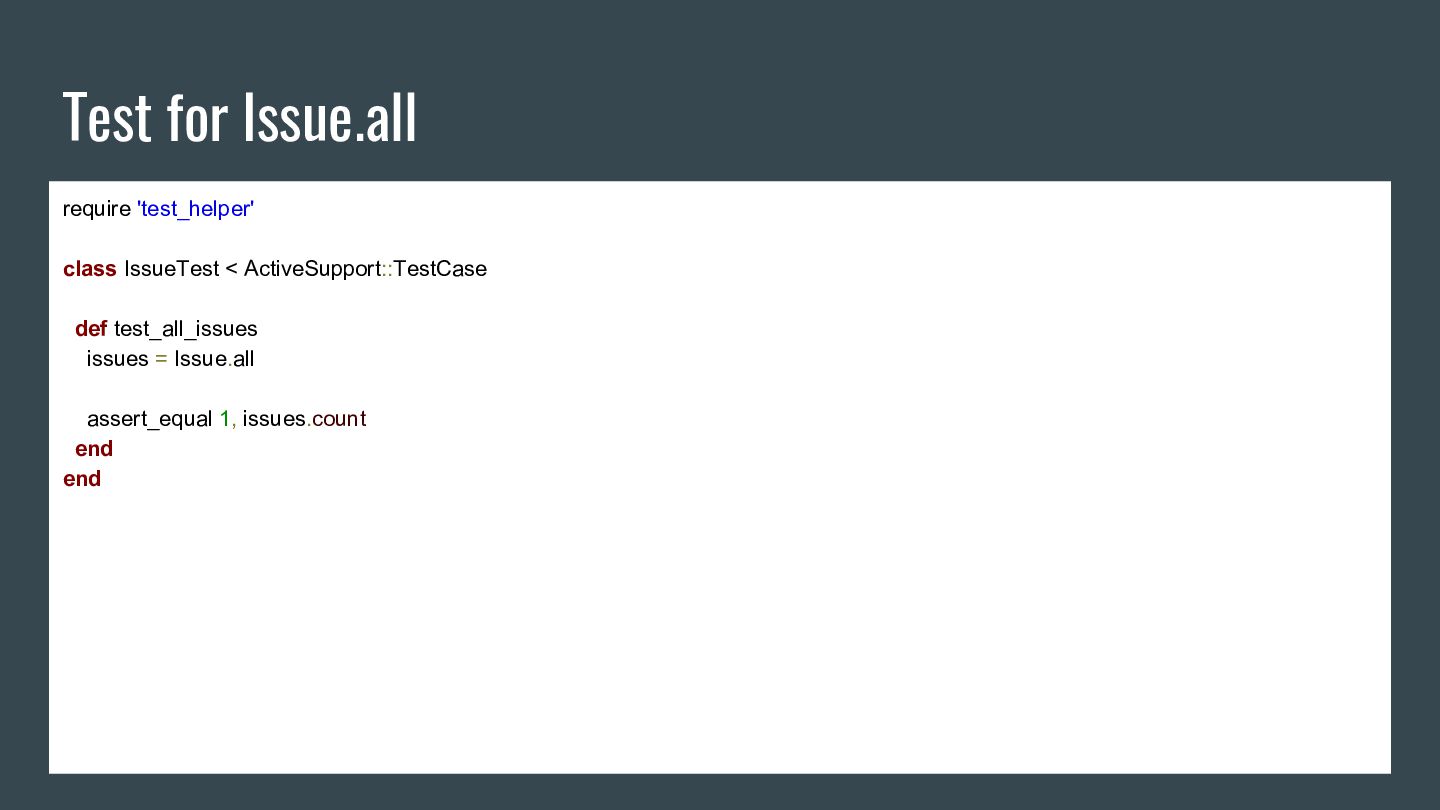
  4. Test for Issue.all require 'test_helper' class IssueTest < ActiveSupport::TestCase def

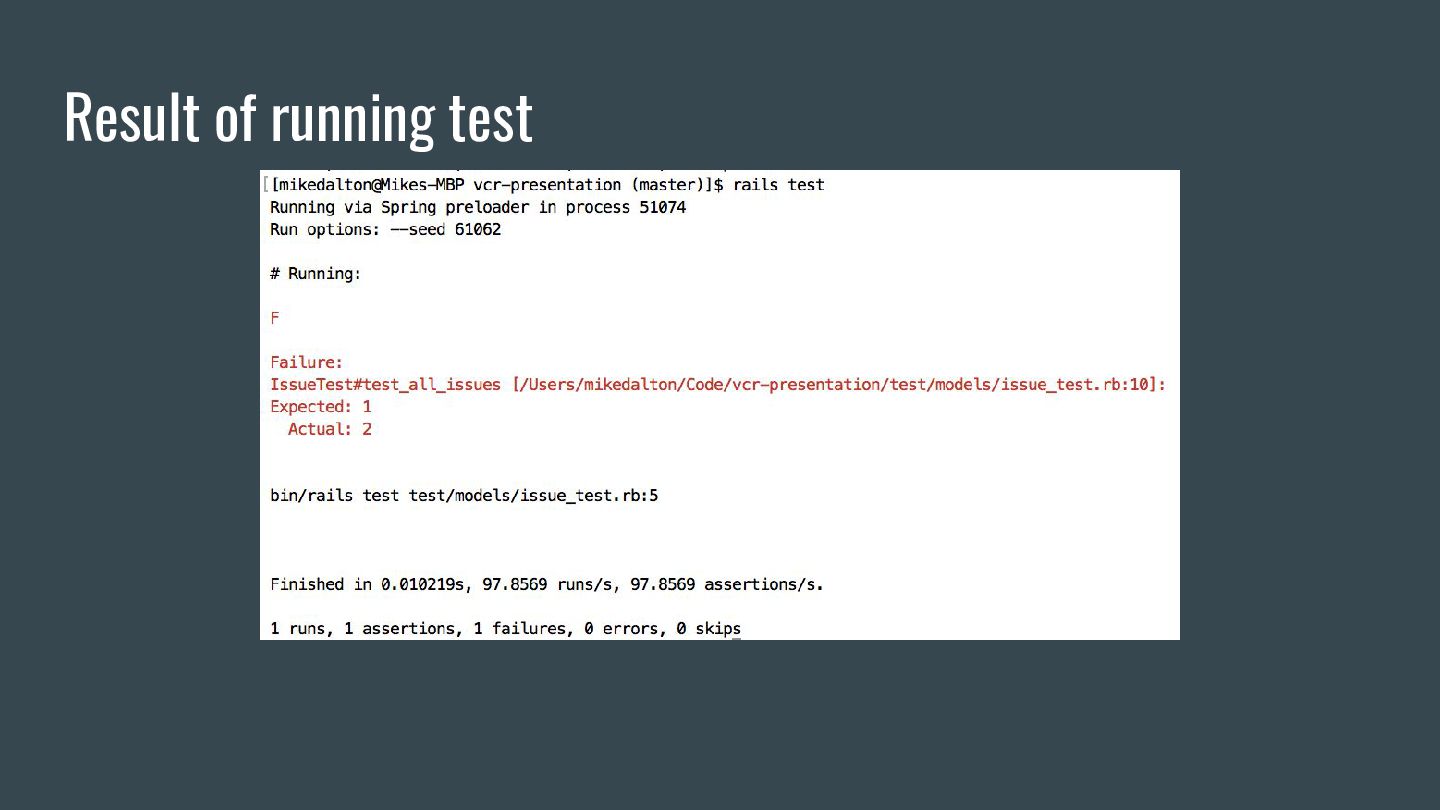
    test_all_issues issues = Issue.all assert_equal 1, issues.count end end
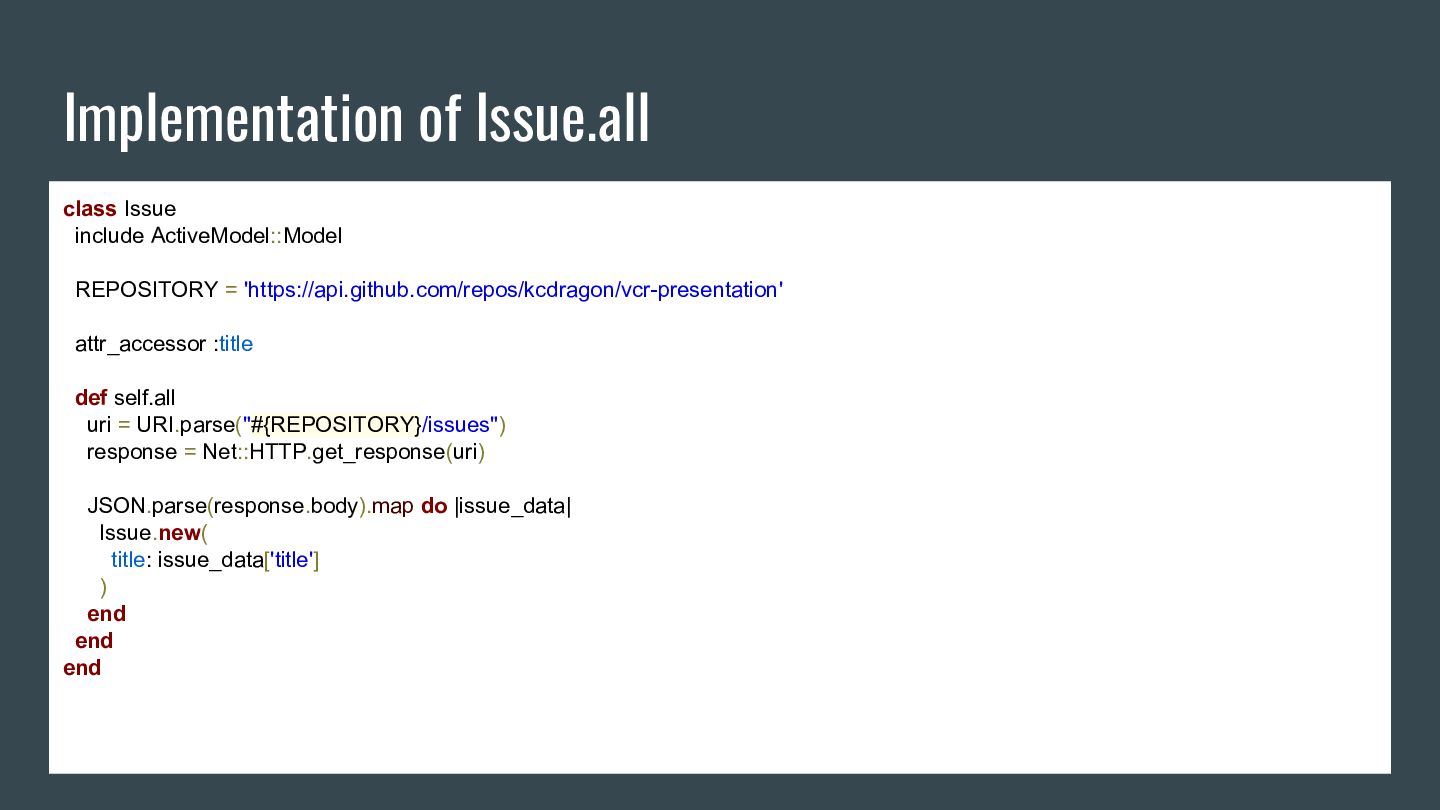
  5. Implementation of Issue.all class Issue include ActiveModel::Model REPOSITORY = 'https://api.github.com/repos/kcdragon/vcr-presentation'

    attr_accessor :title def self.all uri = URI.parse("#{REPOSITORY}/issues") response = Net::HTTP.get_response(uri) JSON.parse(response.body).map do |issue_data| Issue.new( title: issue_data['title'] ) end end end
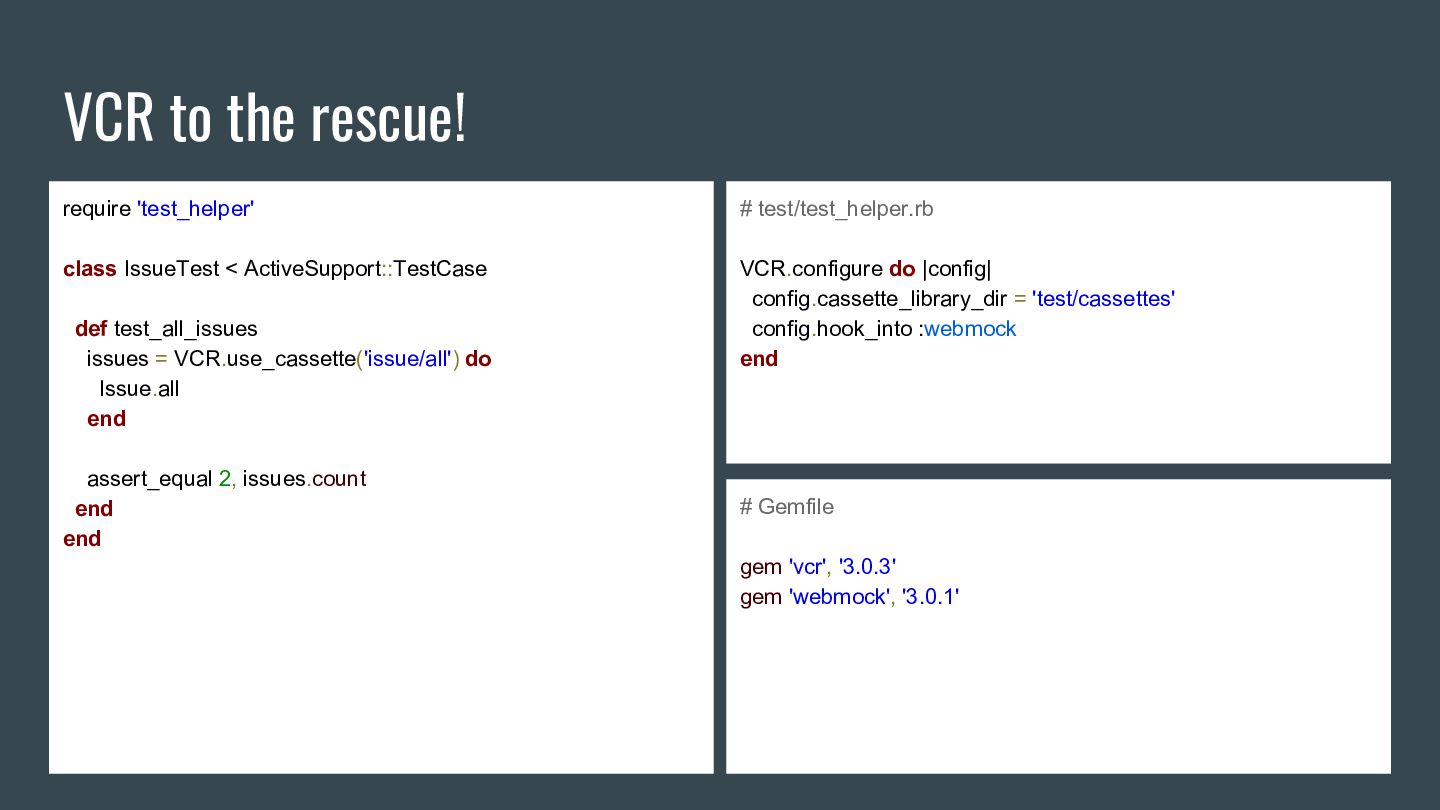
  6. require 'test_helper' class IssueTest < ActiveSupport::TestCase def test_all_issues issues =

    VCR.use_cassette('issue/all') do Issue.all end assert_equal 2, issues.count end end VCR to the rescue! # Gemfile gem 'vcr', '3.0.3' gem 'webmock', '3.0.1' # test/test_helper.rb VCR.configure do |config| config.cassette_library_dir = 'test/cassettes' config.hook_into :webmock end
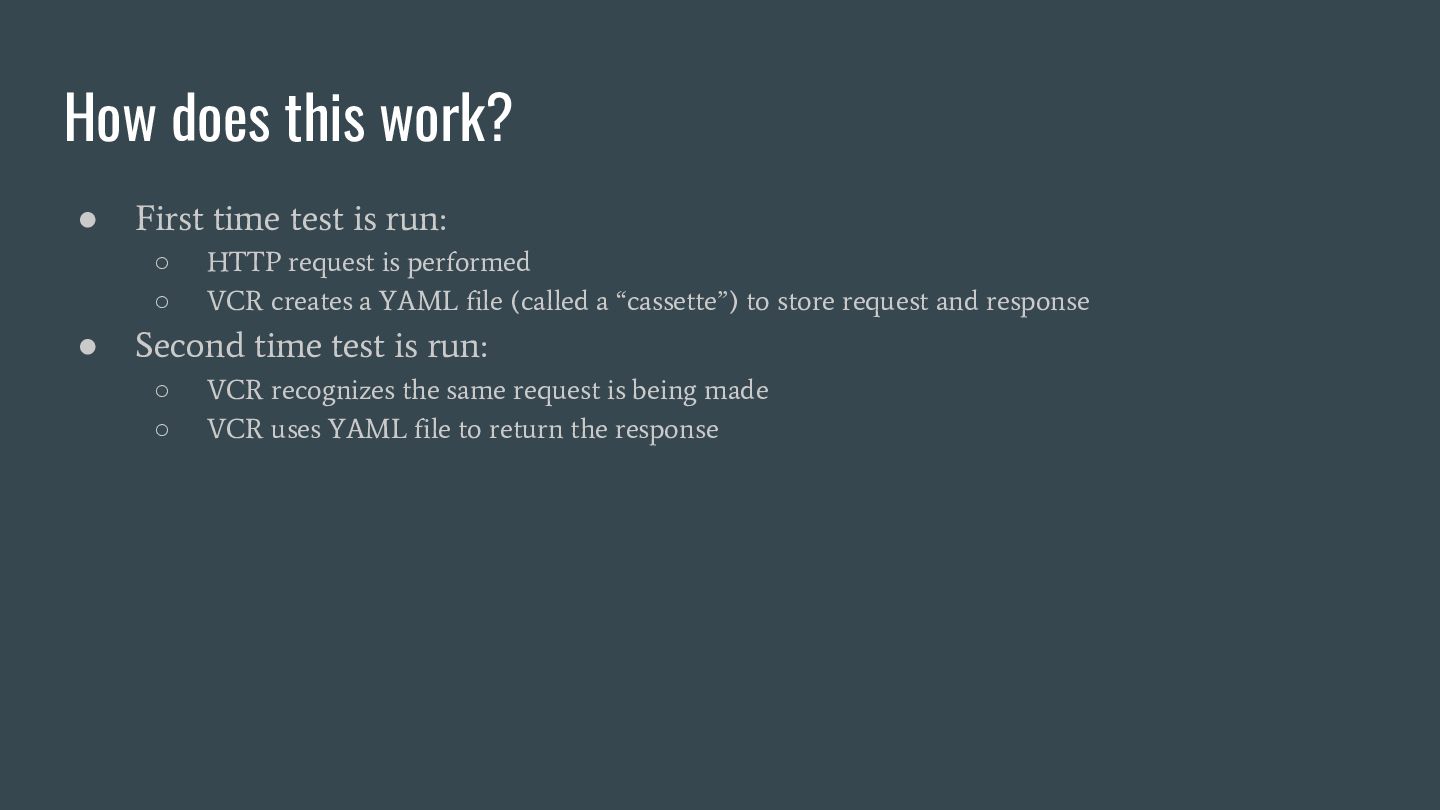
  7. How does this work? • First time test is run:

    ◦ HTTP request is performed ◦ VCR creates a YAML file (called a “cassette”) to store request and response • Second time test is run: ◦ VCR recognizes the same request is being made ◦ VCR uses YAML file to return the response
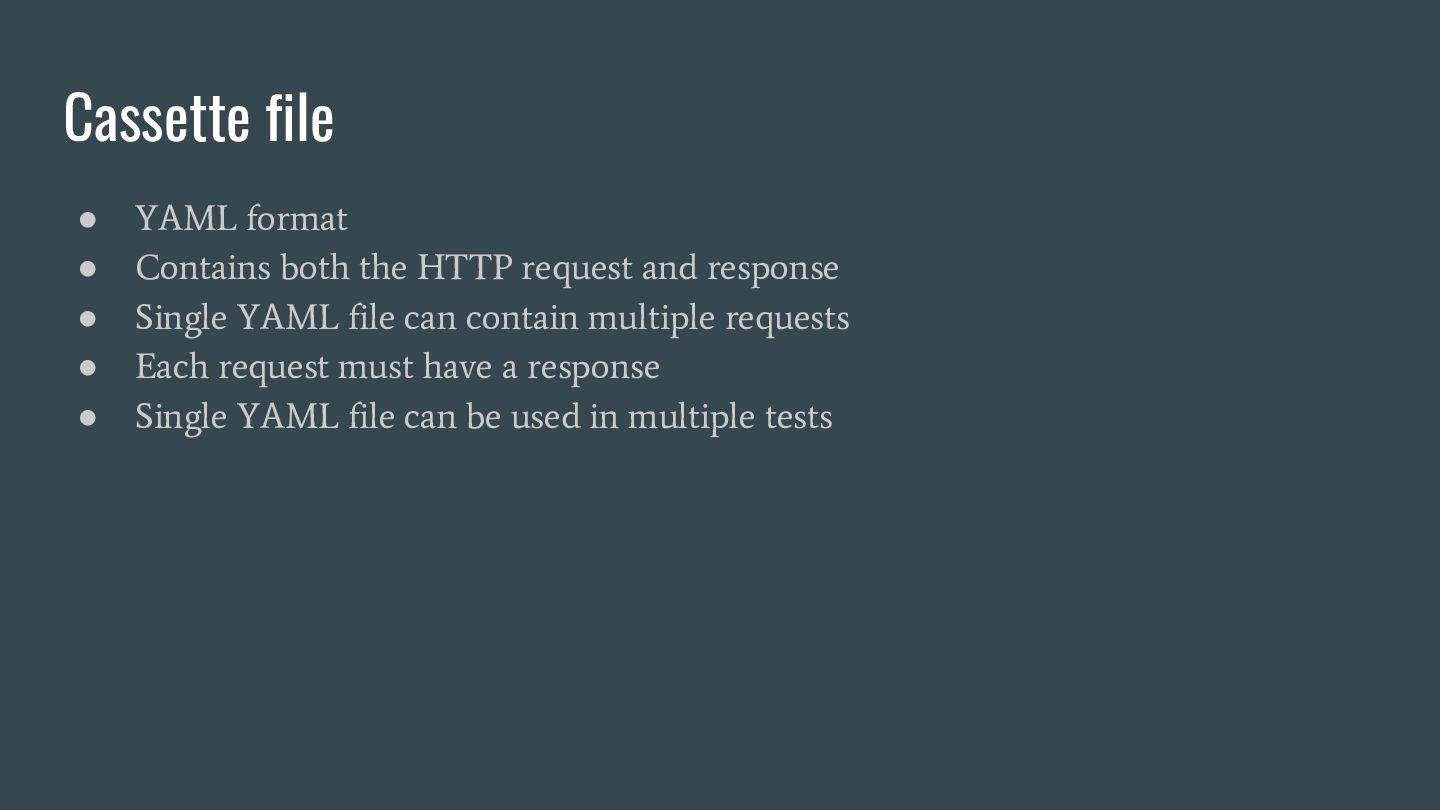
  8. Cassette file • YAML format • Contains both the HTTP

    request and response • Single YAML file can contain multiple requests • Each request must have a response • Single YAML file can be used in multiple tests
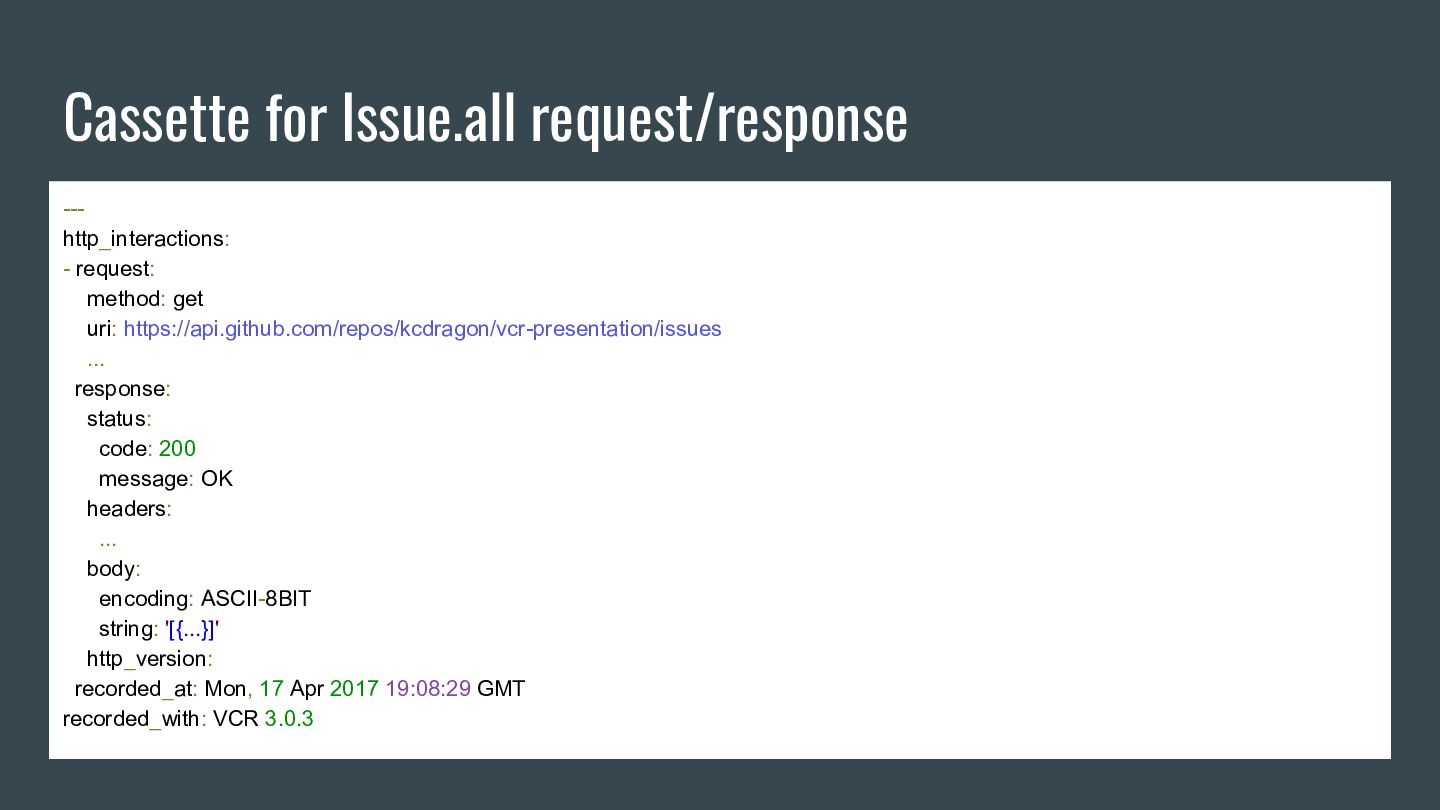
  9. Cassette for Issue.all request/response --- http_interactions: - request: method: get

    uri: https://api.github.com/repos/kcdragon/vcr-presentation/issues ... response: status: code: 200 message: OK headers: ... body: encoding: ASCII-8BIT string: '[{...}]' http_version: recorded_at: Mon, 17 Apr 2017 19:08:29 GMT recorded_with: VCR 3.0.3
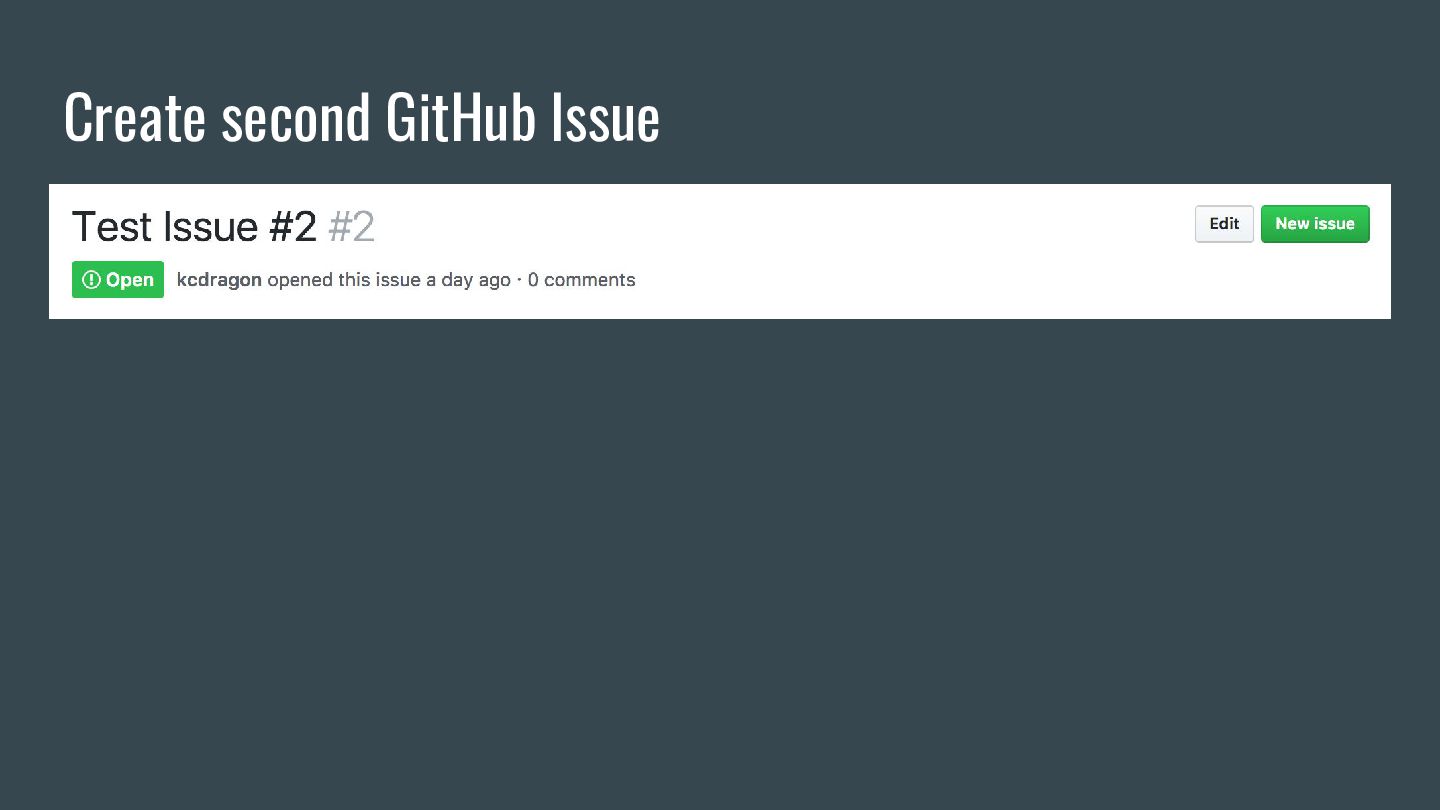
  10. Second example • Create an issue via the GitHub API

    • Check that issue has been created
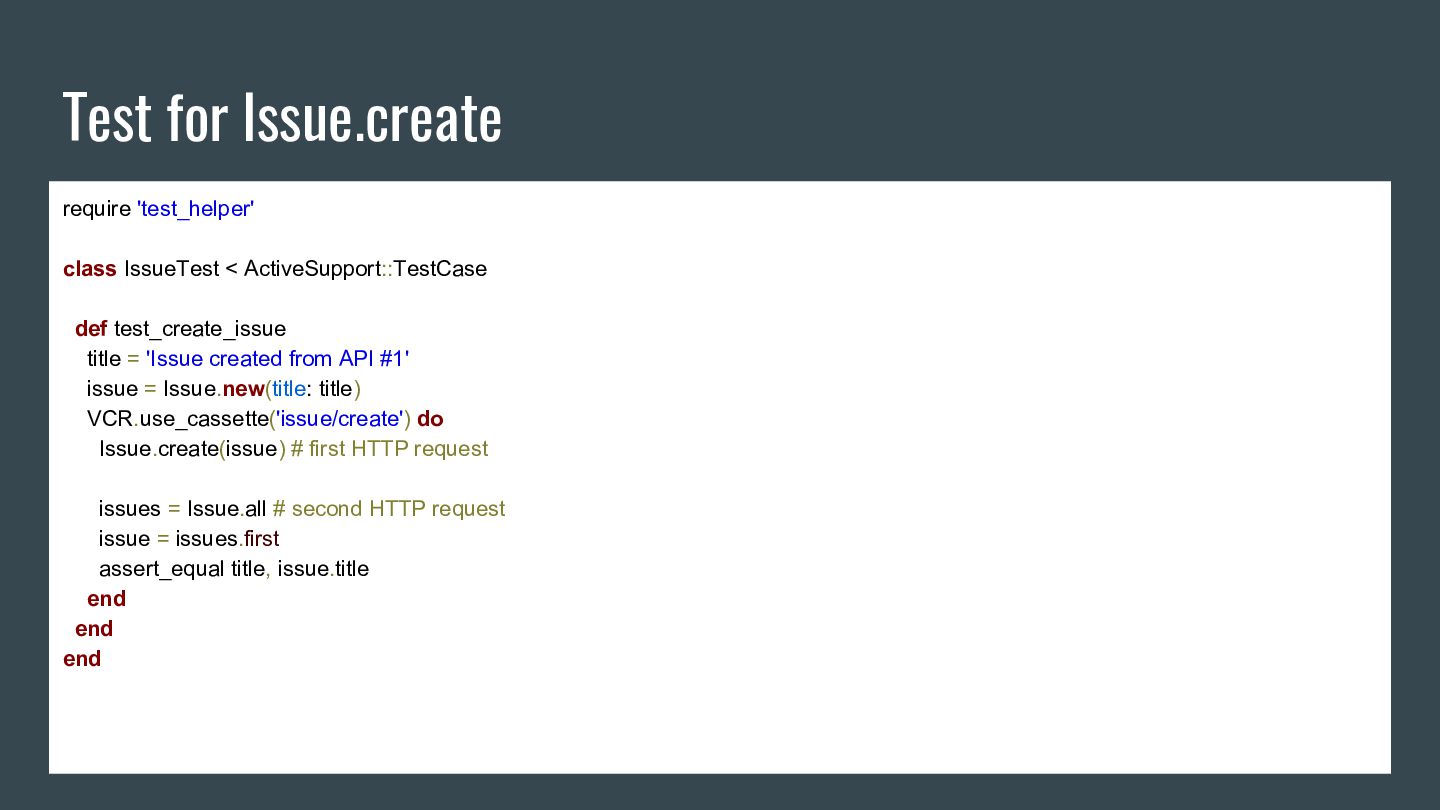
  11. Test for Issue.create require 'test_helper' class IssueTest < ActiveSupport::TestCase def

    test_create_issue title = 'Issue created from API #1' issue = Issue.new(title: title) VCR.use_cassette('issue/create') do Issue.create(issue) # first HTTP request issues = Issue.all # second HTTP request issue = issues.first assert_equal title, issue.title end end end
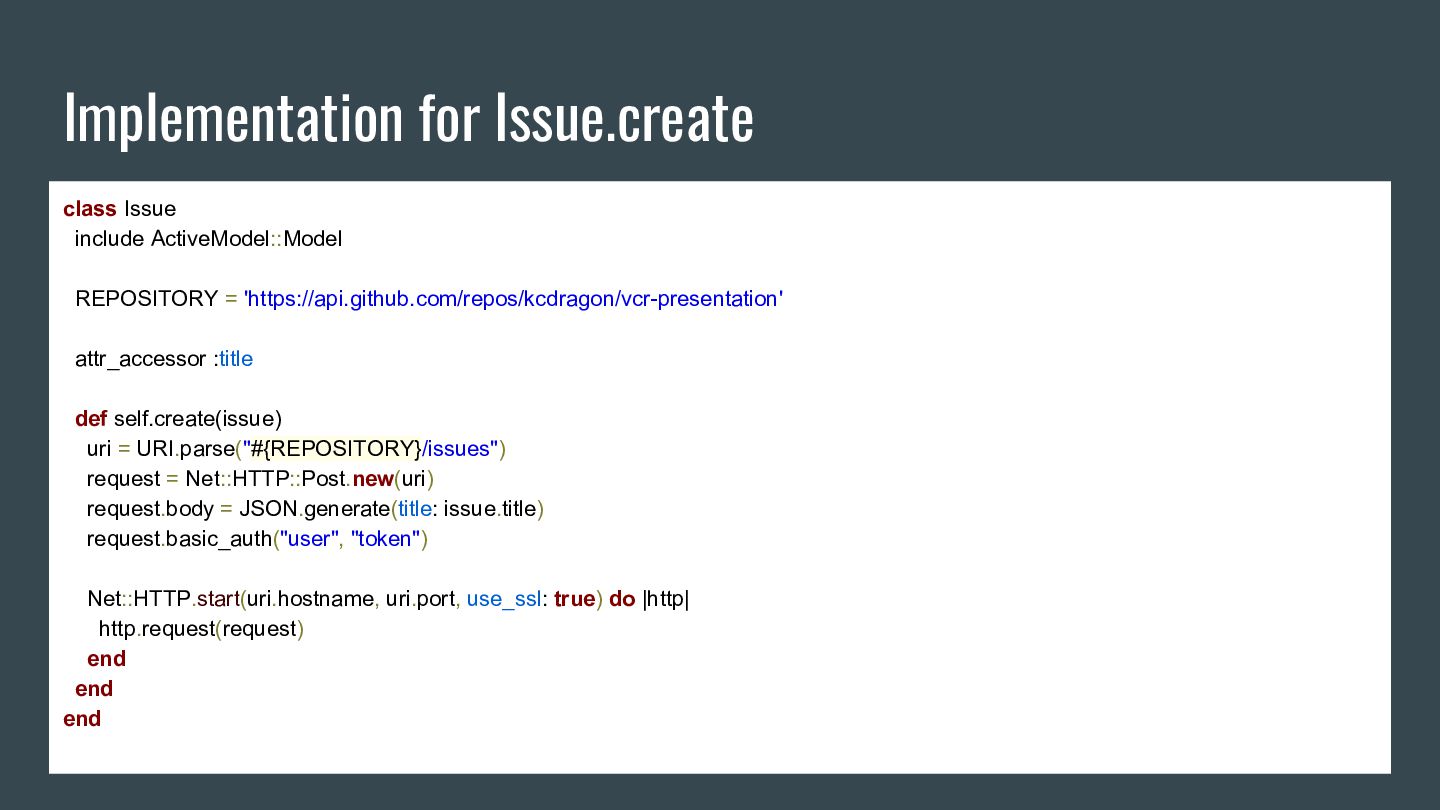
  12. Implementation for Issue.create class Issue include ActiveModel::Model REPOSITORY = 'https://api.github.com/repos/kcdragon/vcr-presentation'

    attr_accessor :title def self.create(issue) uri = URI.parse("#{REPOSITORY}/issues") request = Net::HTTP::Post.new(uri) request.body = JSON.generate(title: issue.title) request.basic_auth("user", "token") Net::HTTP.start(uri.hostname, uri.port, use_ssl: true) do |http| http.request(request) end end end
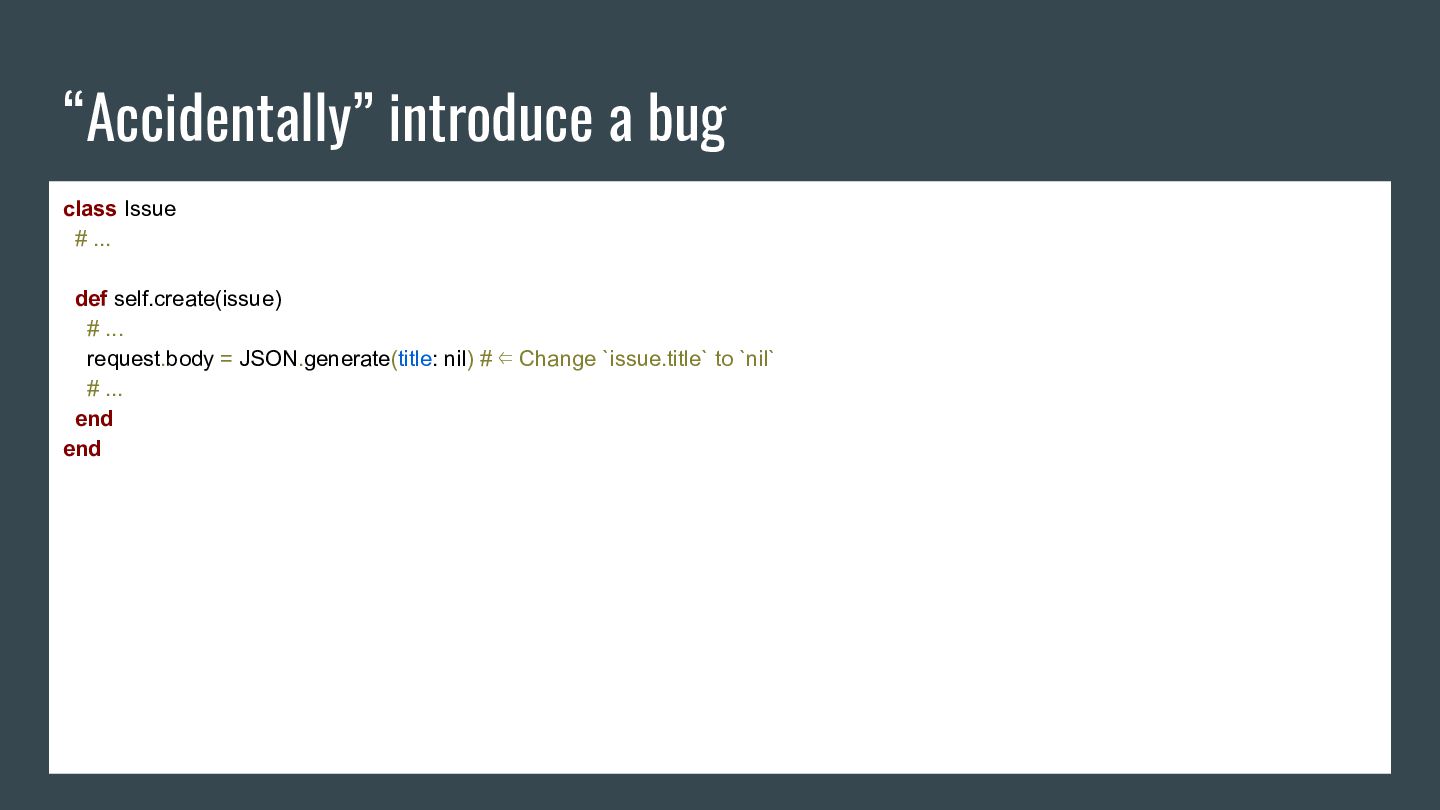
  13. “Accidentally” introduce a bug class Issue # ... def self.create(issue)

    # ... request.body = JSON.generate(title: nil) # ⇐ Change `issue.title` to `nil` # ... end end
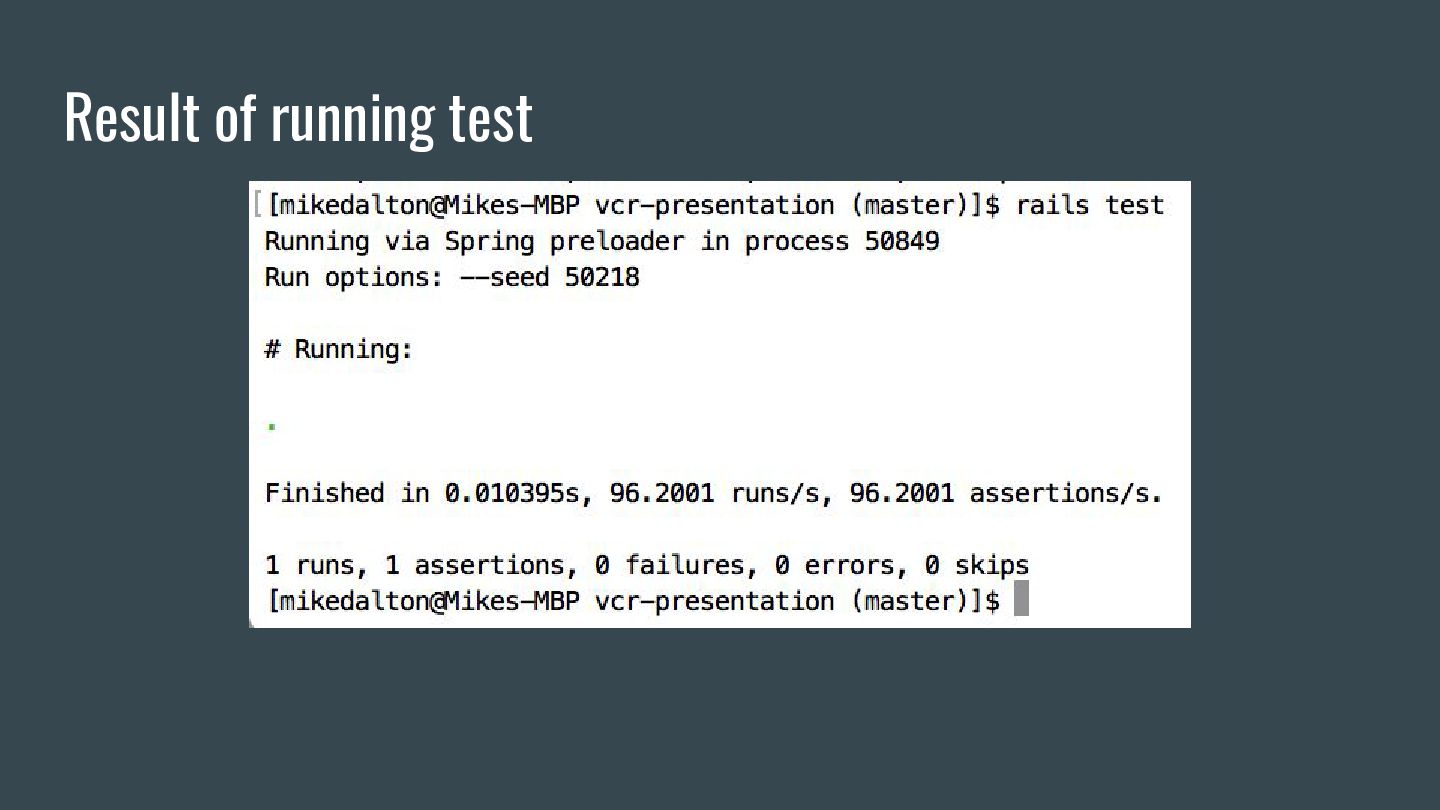
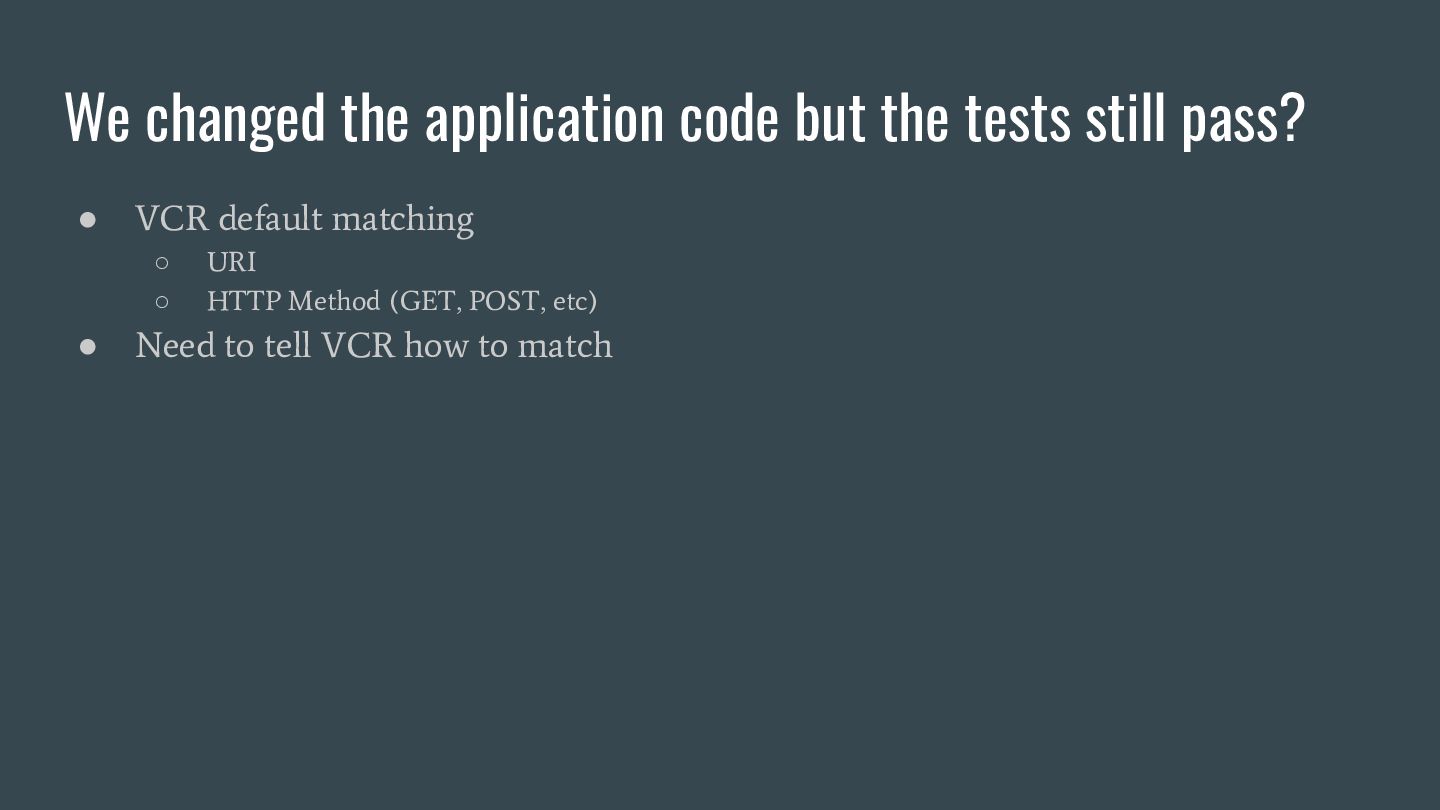
  14. We changed the application code but the tests still pass?

    • VCR default matching ◦ URI ◦ HTTP Method (GET, POST, etc) • Need to tell VCR how to match
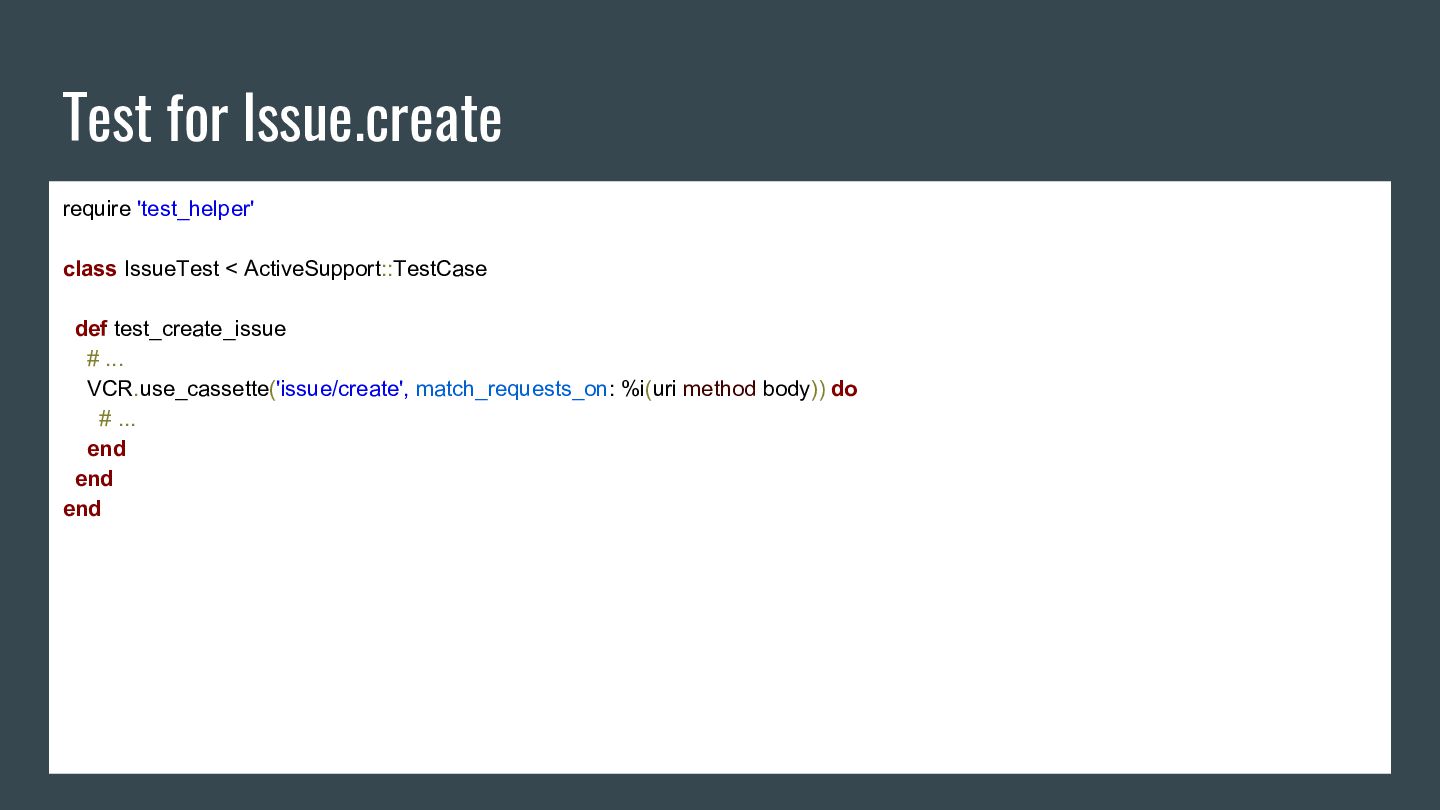
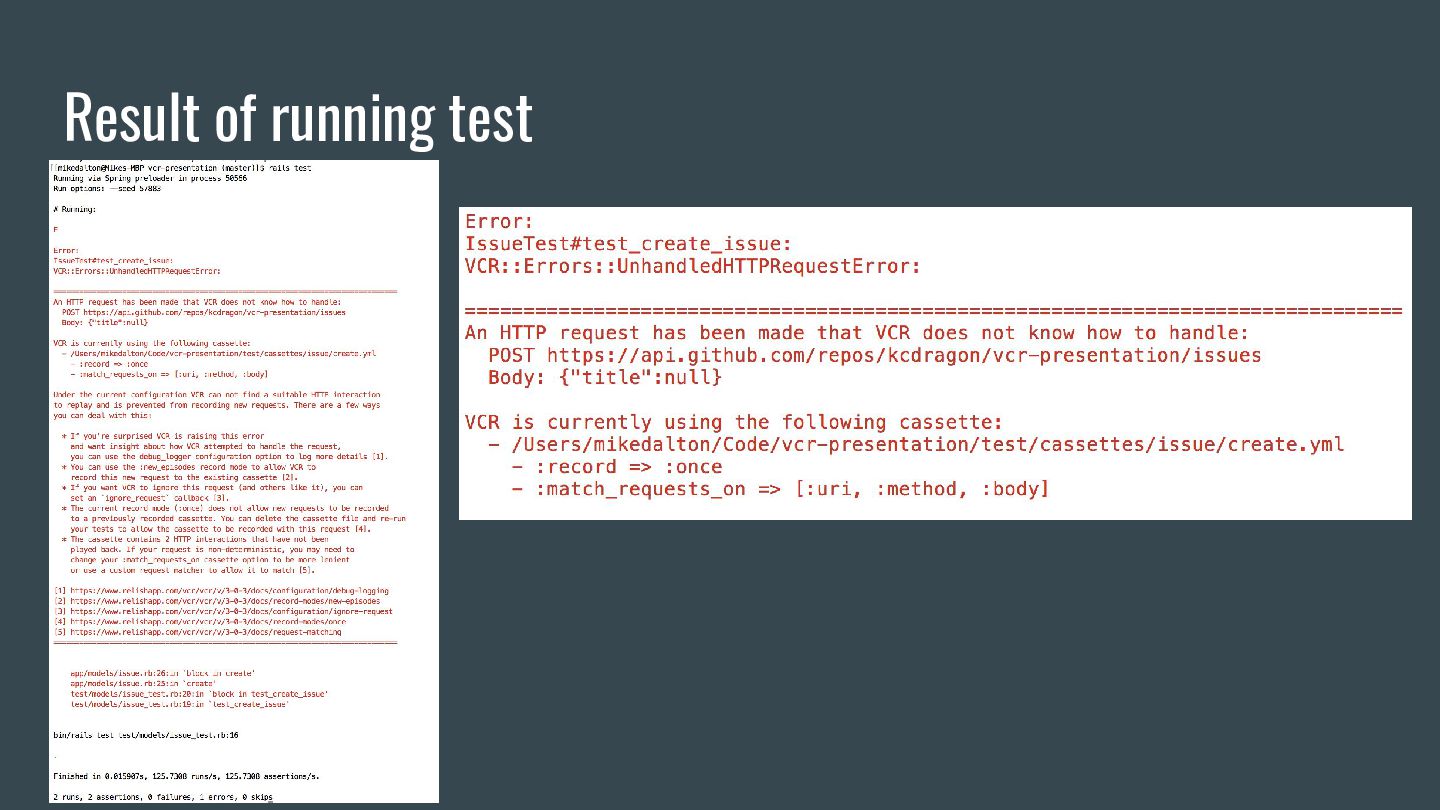
  15. Test for Issue.create require 'test_helper' class IssueTest < ActiveSupport::TestCase def

    test_create_issue # ... VCR.use_cassette('issue/create', match_requests_on: %i(uri method body)) do # ... end end end
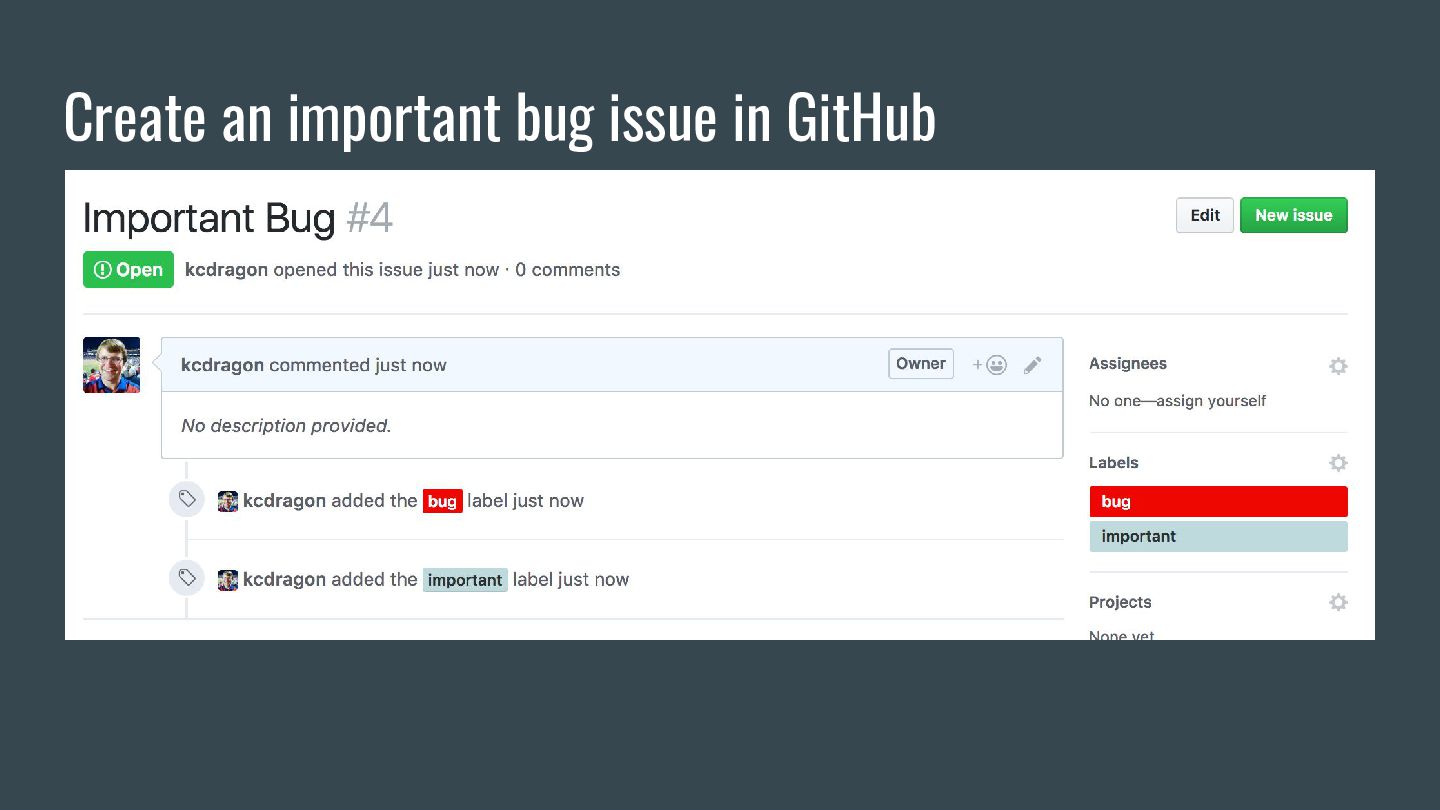
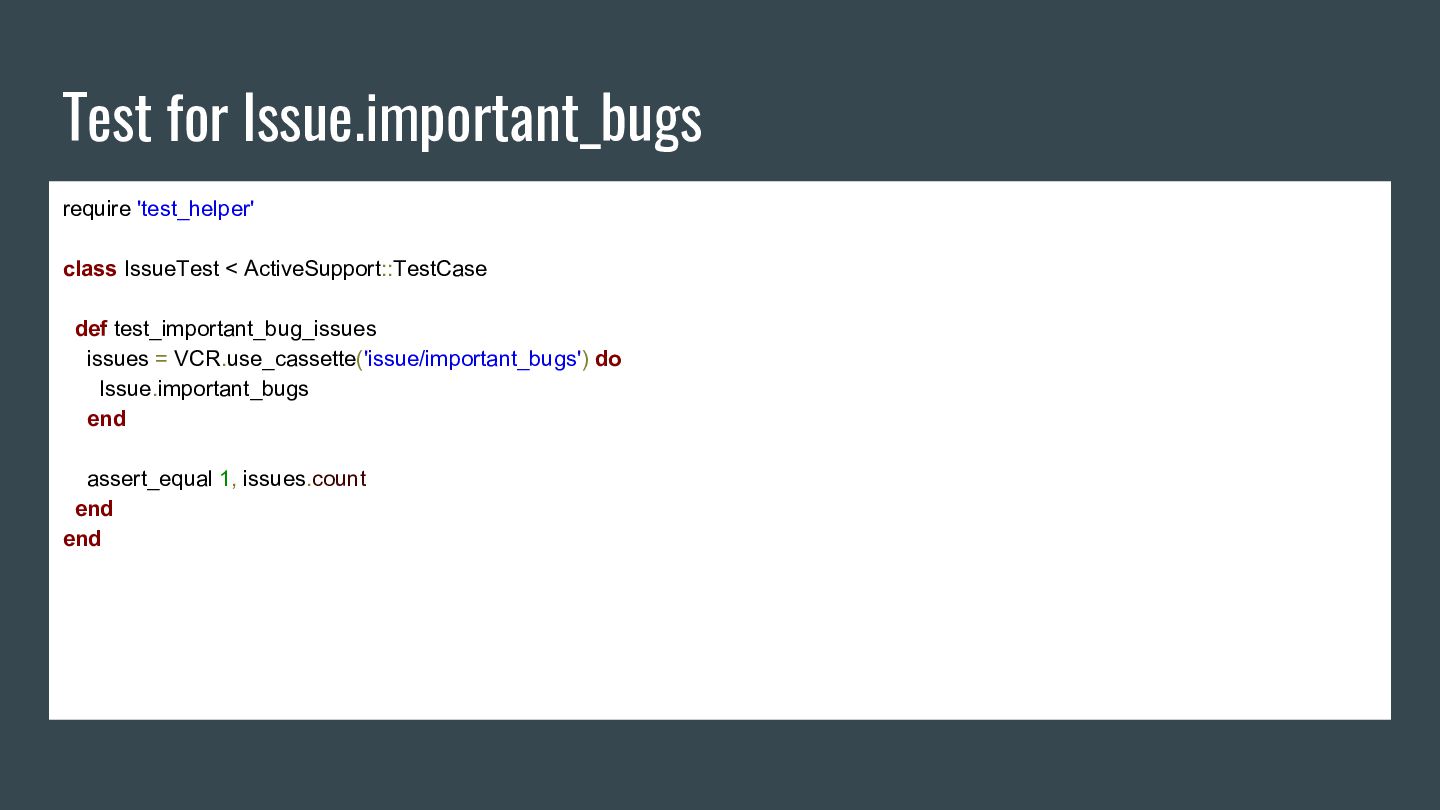
  16. Test for Issue.important_bugs require 'test_helper' class IssueTest < ActiveSupport::TestCase def

    test_important_bug_issues issues = VCR.use_cassette('issue/important_bugs') do Issue.important_bugs end assert_equal 1, issues.count end end
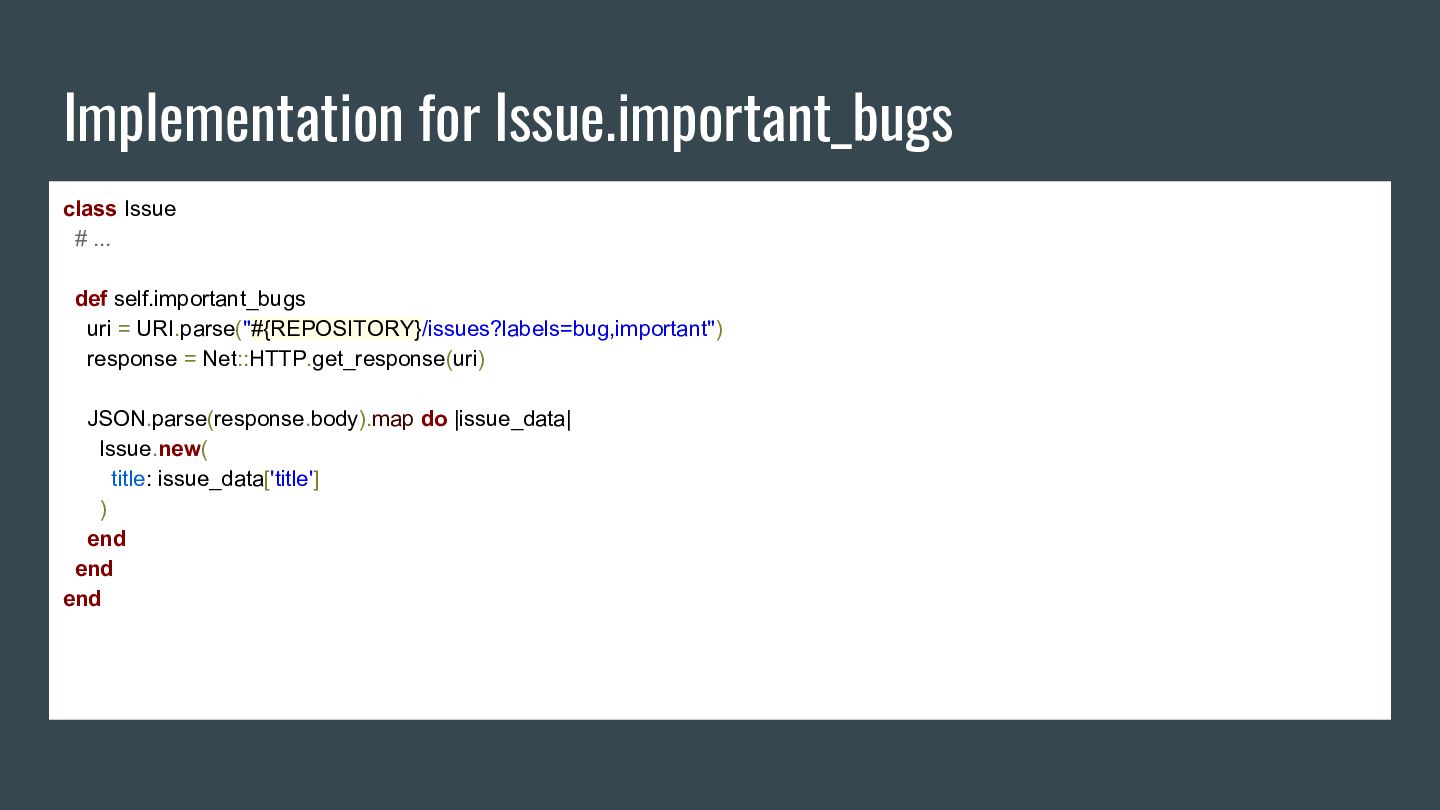
  17. Implementation for Issue.important_bugs class Issue # ... def self.important_bugs uri

    = URI.parse("#{REPOSITORY}/issues?labels=bug,important") response = Net::HTTP.get_response(uri) JSON.parse(response.body).map do |issue_data| Issue.new( title: issue_data['title'] ) end end end
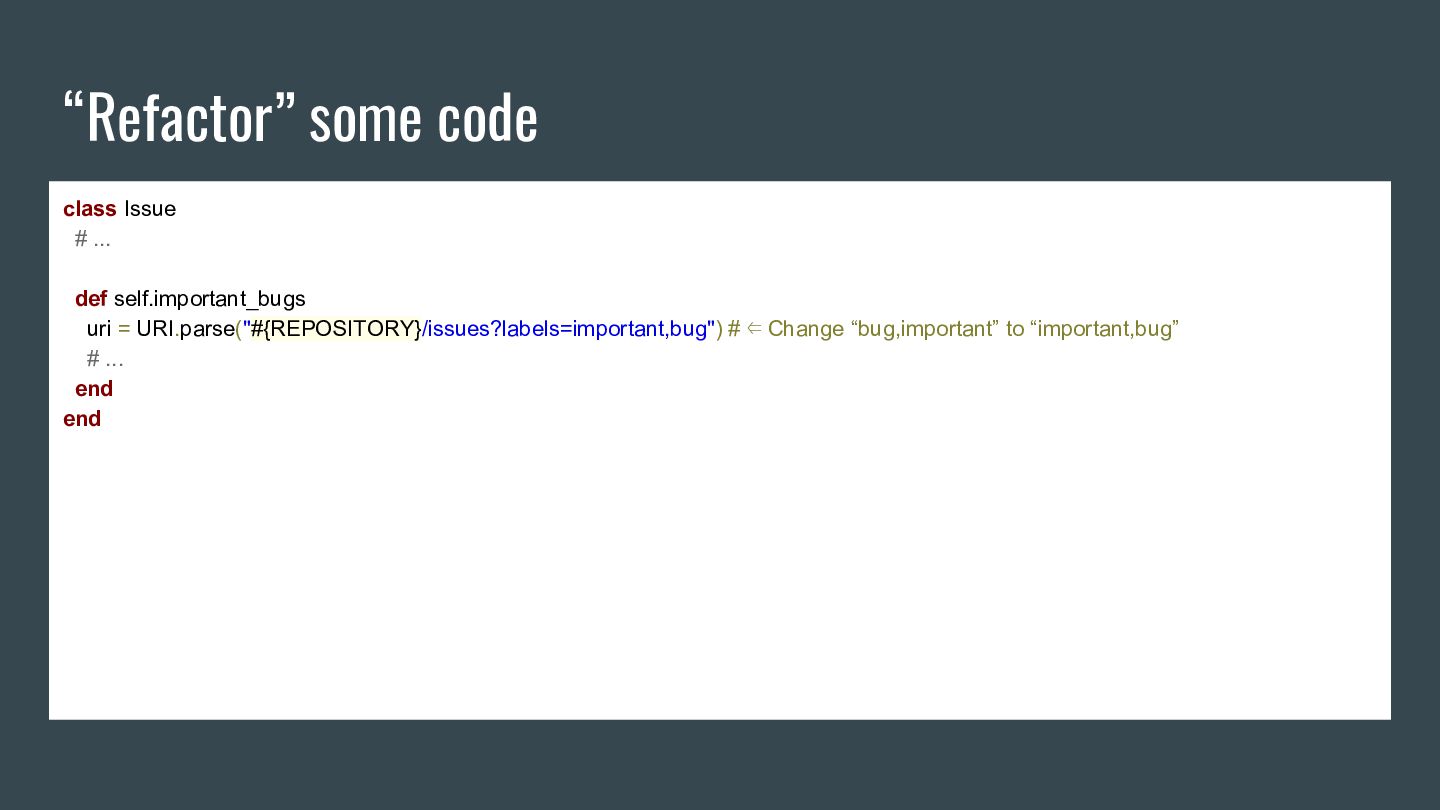
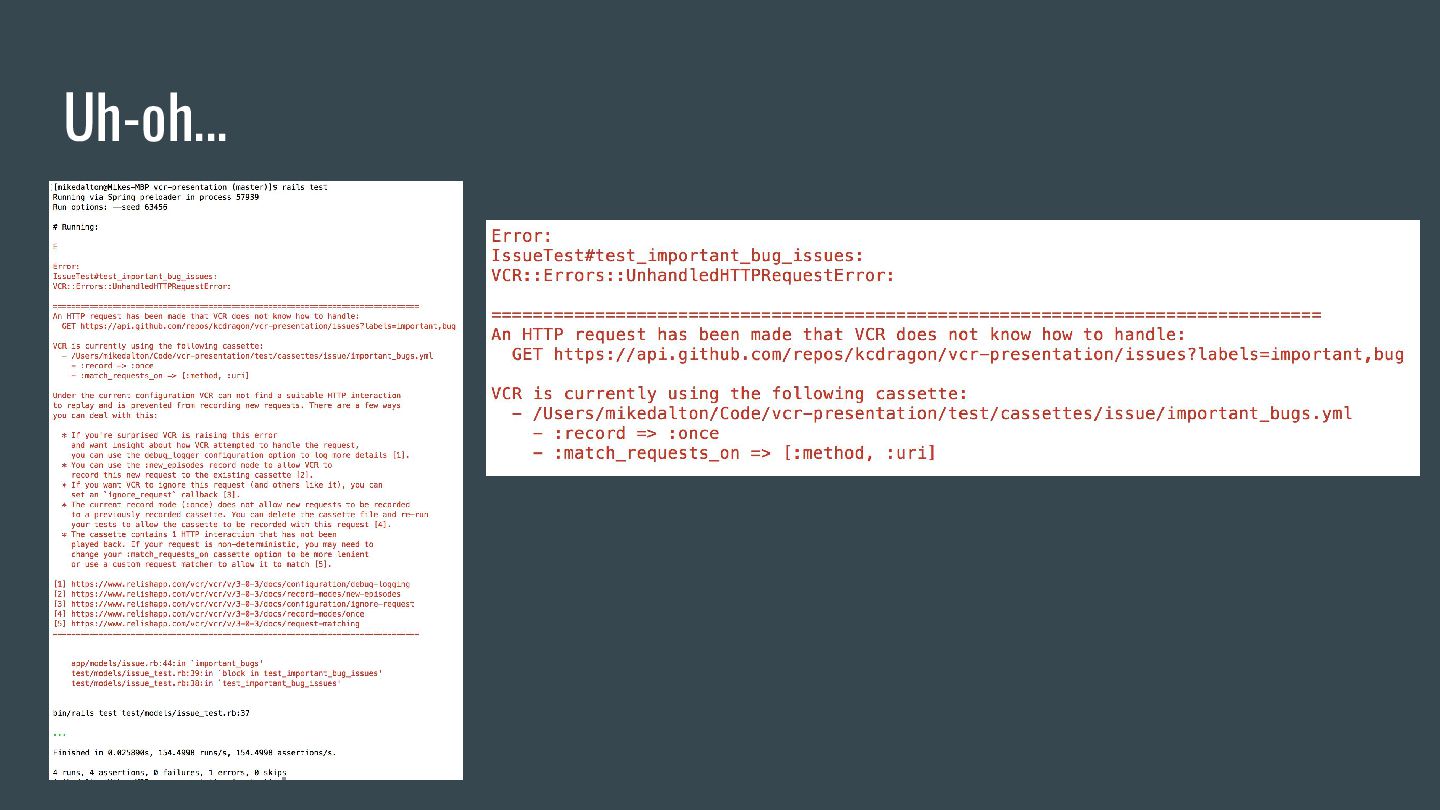
  18. “Refactor” some code class Issue # ... def self.important_bugs uri

    = URI.parse("#{REPOSITORY}/issues?labels=important,bug") # ⇐ Change “bug,important” to “important,bug” # ... end end
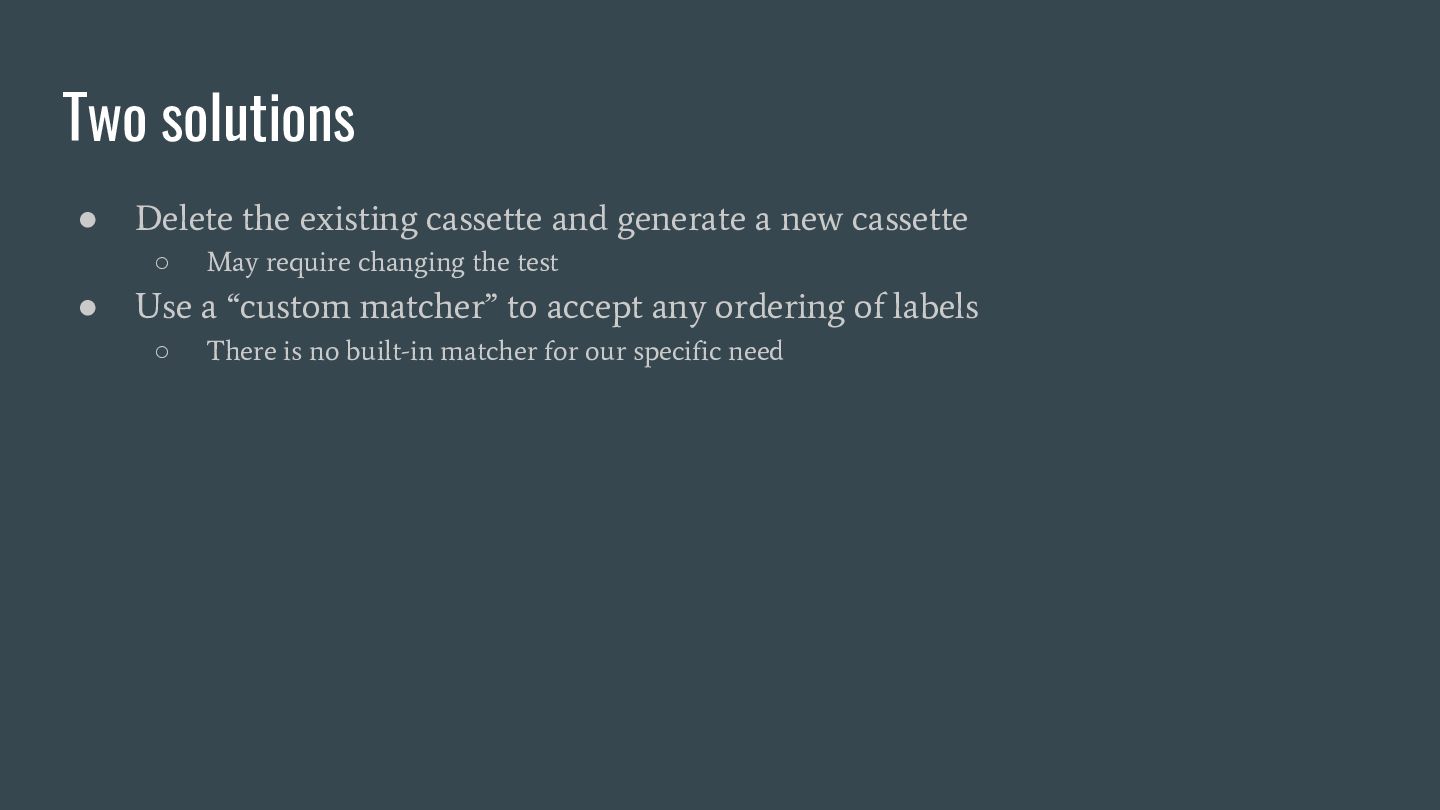
  19. Two solutions • Delete the existing cassette and generate a

    new cassette ◦ May require changing the test • Use a “custom matcher” to accept any ordering of labels ◦ There is no built-in matcher for our specific need
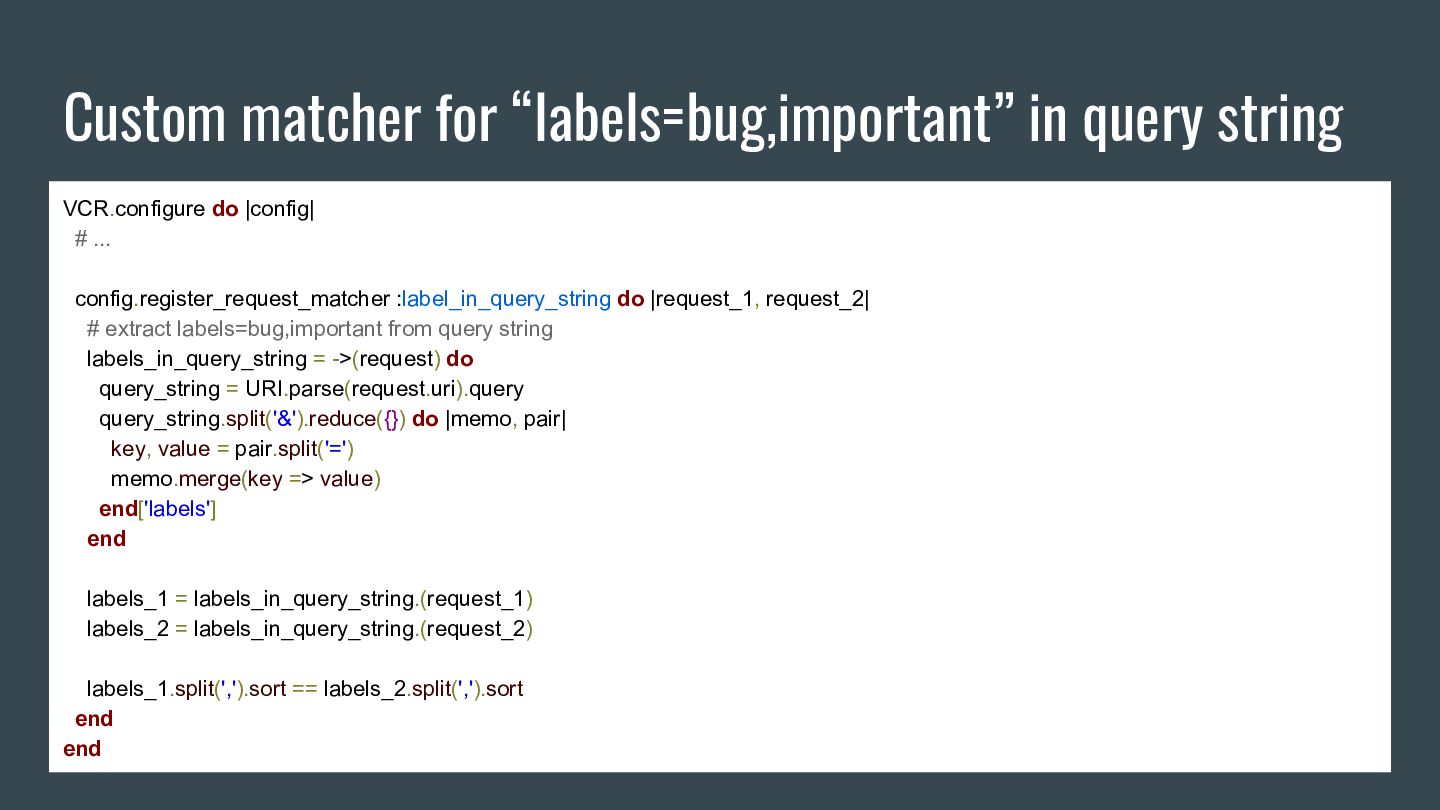
  20. Custom matcher for “labels=bug,important” in query string VCR.configure do |config|

    # ... config.register_request_matcher :label_in_query_string do |request_1, request_2| # extract labels=bug,important from query string labels_in_query_string = ->(request) do query_string = URI.parse(request.uri).query query_string.split('&').reduce({}) do |memo, pair| key, value = pair.split('=') memo.merge(key => value) end['labels'] end labels_1 = labels_in_query_string.(request_1) labels_2 = labels_in_query_string.(request_2) labels_1.split(',').sort == labels_2.split(',').sort end end
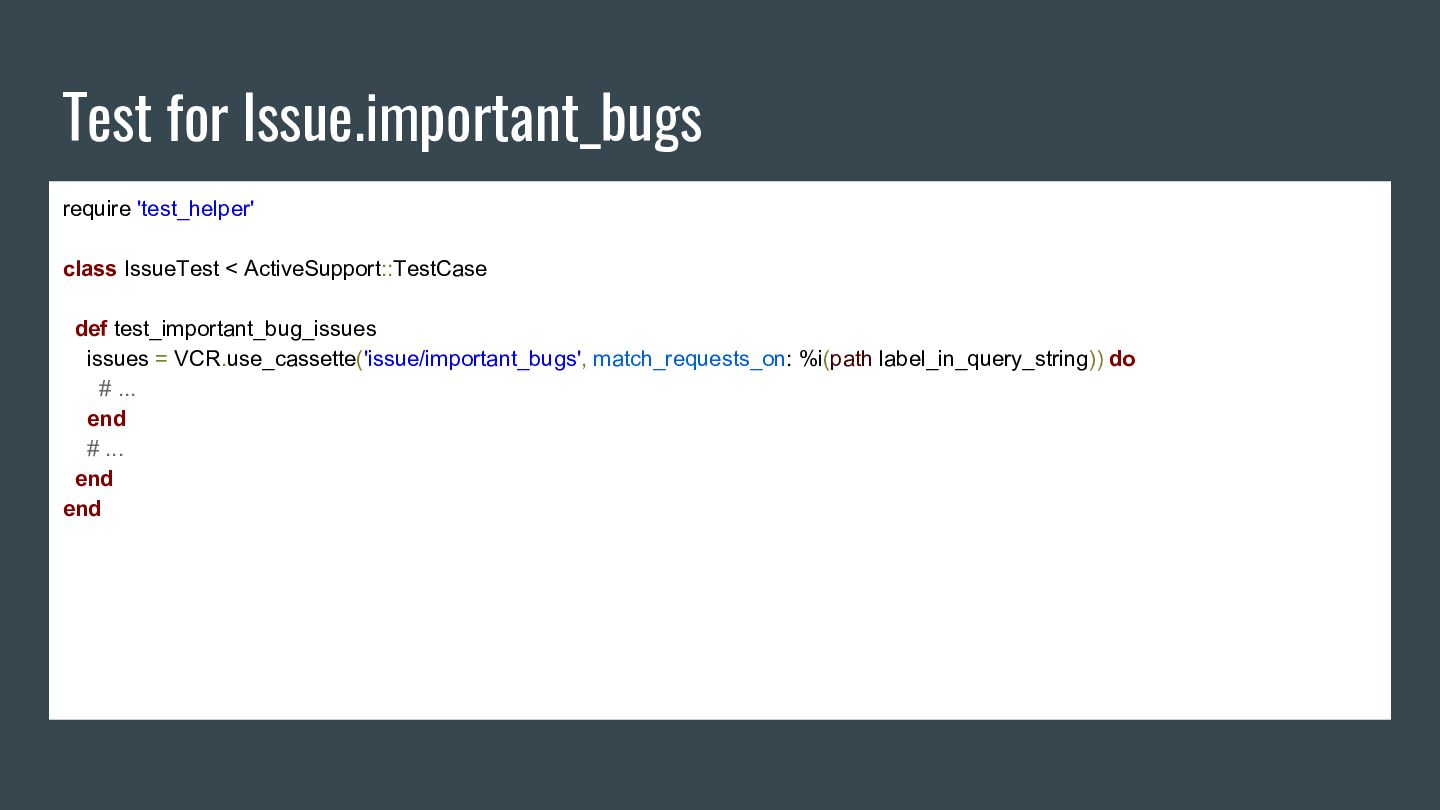
  21. Test for Issue.important_bugs require 'test_helper' class IssueTest < ActiveSupport::TestCase def

    test_important_bug_issues issues = VCR.use_cassette('issue/important_bugs', match_requests_on: %i(path label_in_query_string)) do # ... end # ... end end
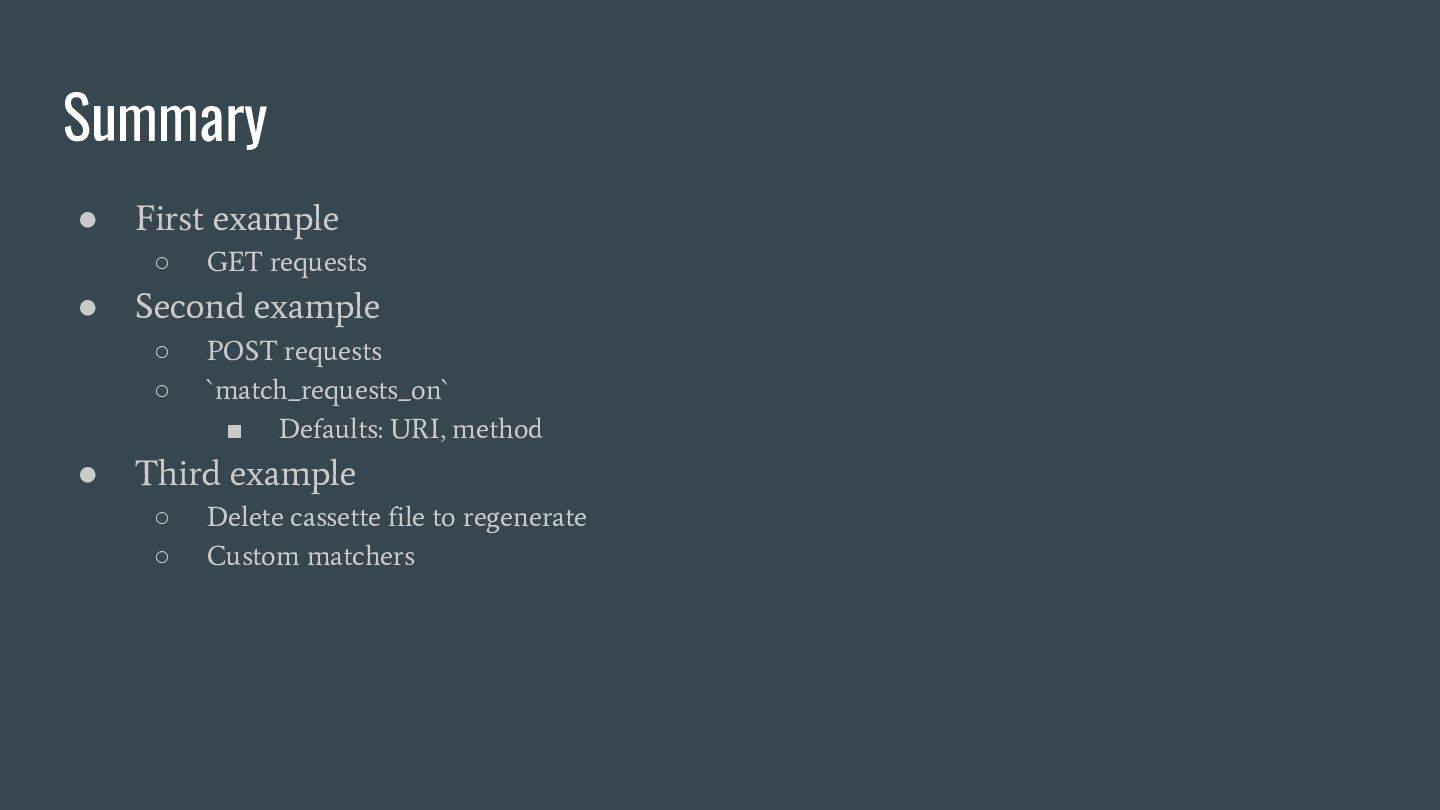
  22. Summary • First example ◦ GET requests • Second example

    ◦ POST requests ◦ `match_requests_on` ▪ Defaults: URI, method • Third example ◦ Delete cassette file to regenerate ◦ Custom matchers