this webinar series on tapping into essential leadership skills during challenging times. Opinions and content in this presentation are that of the featured speaker and panelists and may not necessarily be a direct representation of Sanford Inspire or NCUST. This recorded webinar is part of our leadership series and is designed for you to watch at any time. We encourage you to share this webinar with your colleagues as well.
participants on: • July 8th: Developing an Action Plan: Responding to Social, Emotional, and Academic Needs • July 15th: Building Capacity: Ensuring Social, Emotional, and Academic Needs are Met Audience Assignment (optional but encouraged) due: July 22nd by 5pm PDT Live Closing Session: Thursday, July 30th at 10 am PDT
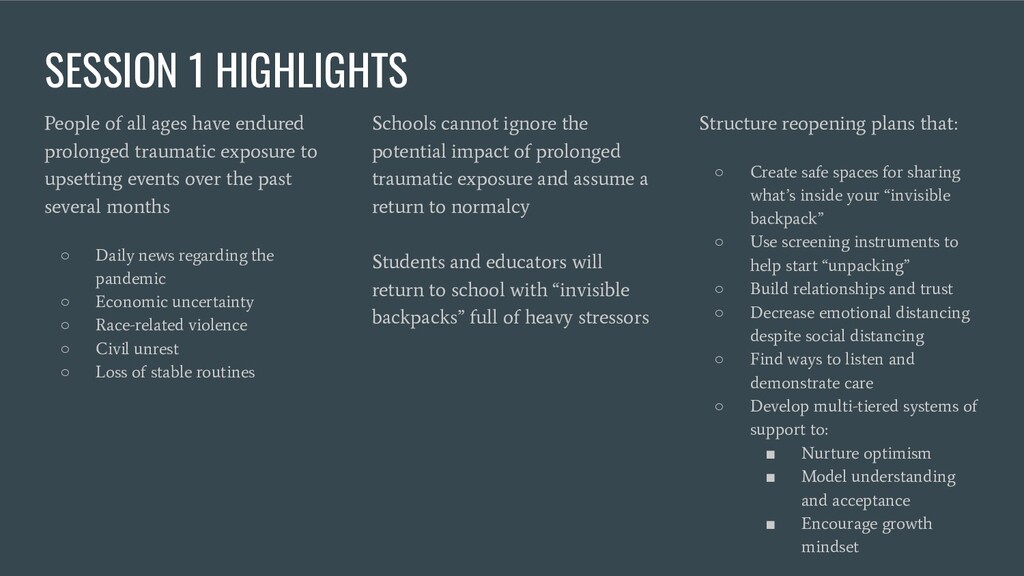
traumatic exposure to upsetting events over the past several months ◦ Daily news regarding the pandemic ◦ Economic uncertainty ◦ Race-related violence ◦ Civil unrest ◦ Loss of stable routines Schools cannot ignore the potential impact of prolonged traumatic exposure and assume a return to normalcy Students and educators will return to school with “invisible backpacks” full of heavy stressors Structure reopening plans that: ◦ Create safe spaces for sharing what’s inside your “invisible backpack” ◦ Use screening instruments to help start “unpacking” ◦ Build relationships and trust ◦ Decrease emotional distancing despite social distancing ◦ Find ways to listen and demonstrate care ◦ Develop multi-tiered systems of support to: ▪ Nurture optimism ▪ Model understanding and acceptance ▪ Encourage growth mindset
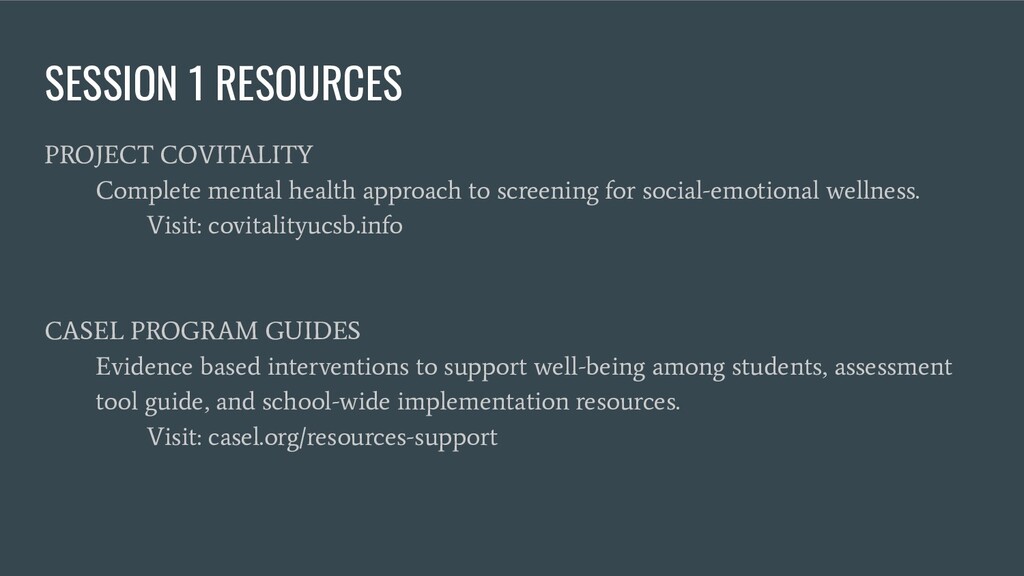
screening for social-emotional wellness. Visit: covitalityucsb.info CASEL PROGRAM GUIDES Evidence based interventions to support well-being among students, assessment tool guide, and school-wide implementation resources. Visit: casel.org/resources-support
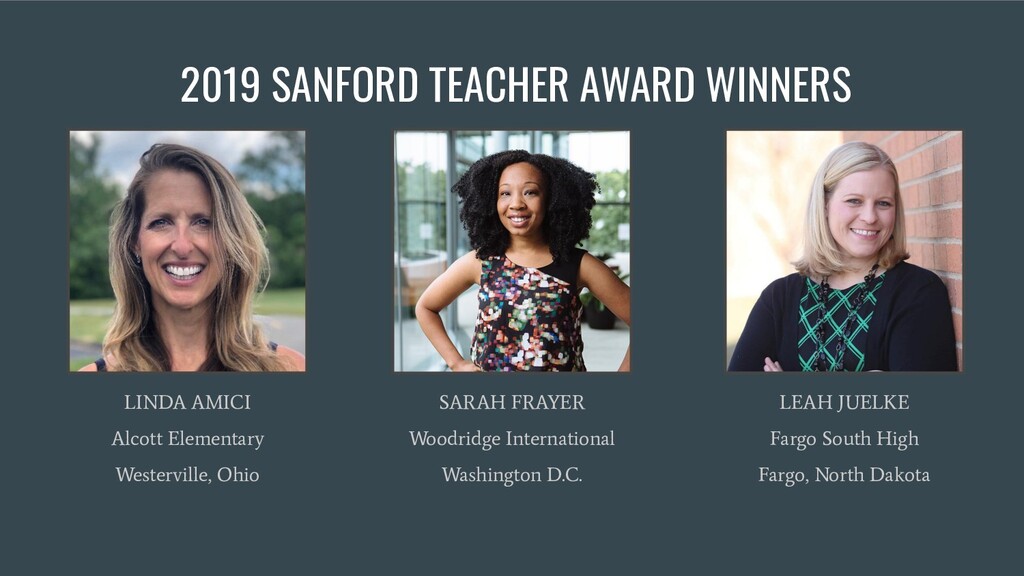
Alcott Elementary Westerville, Ohio (Insert image here) LEAH JUELKE Fargo South High Fargo, North Dakota (Insert image here) SARAH FRAYER Woodridge International Washington D.C.
listen to students’ concerns? How have you managed to make time to listen? CLAUDINE S. JAMES Teacher: 7th & 8th Grades Malvern Middle School Malvern, AR [email protected]
listen to students’ concerns? How have you managed to make time to listen? LEAH JUELKE Teacher: 9th-12th Grades EL English Fargo South High Fargo, ND [email protected]
help your students know you’re willing to listen to them? What do you do to help your students know you care? LINDA AMICI 5th Grade Teacher Alcott Elementary School Westerville, OH [email protected]
colleagues have found useful as you try to create a safe space for students to share their concerns? SARAH FRAYER Intervention Teacher K-4 Woodridge International Washington D.C. [email protected]
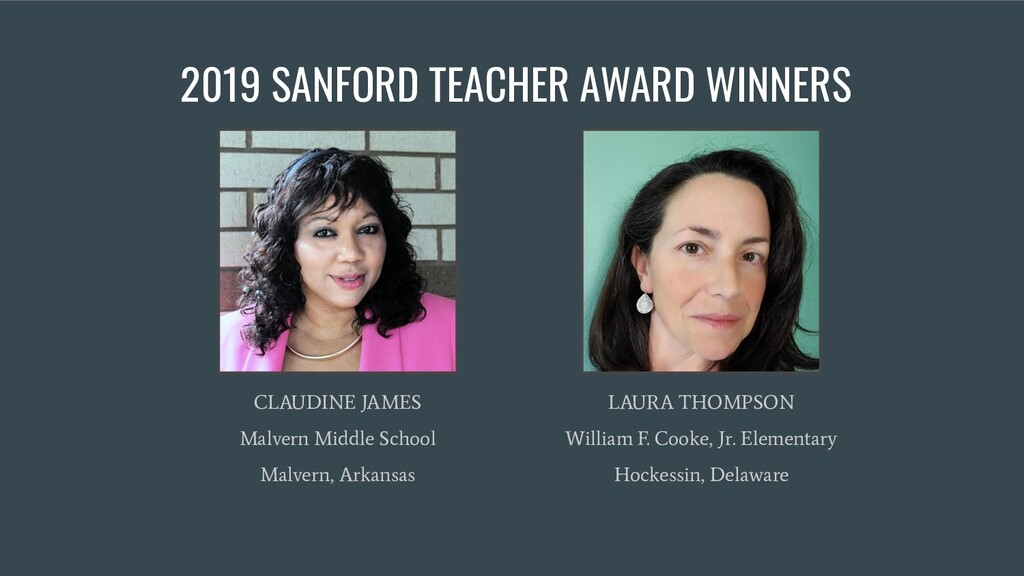
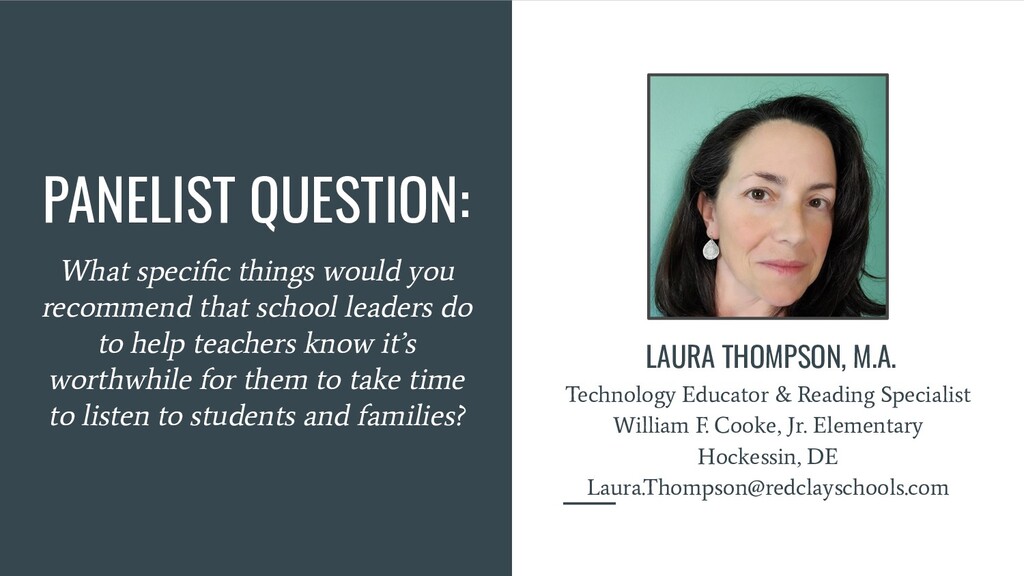
leaders do to help teachers know it’s worthwhile for them to take time to listen to students and families? LAURA THOMPSON, M.A. Technology Educator & Reading Specialist William F. Cooke, Jr. Elementary Hockessin, DE [email protected]
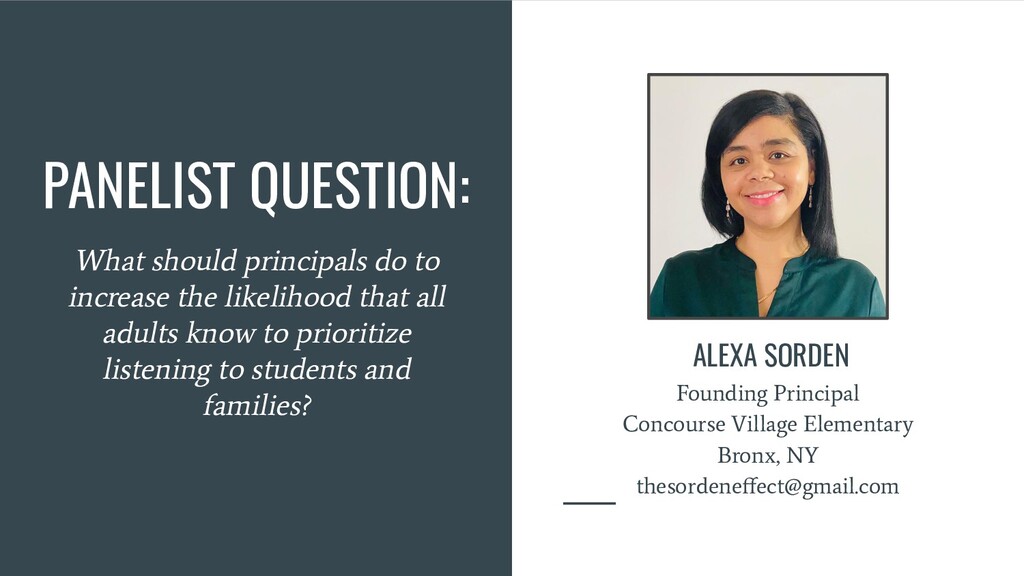
that all adults know to prioritize listening to students and families? ALEXA SORDEN Founding Principal Concourse Village Elementary Bronx, NY thesordeneff[email protected]
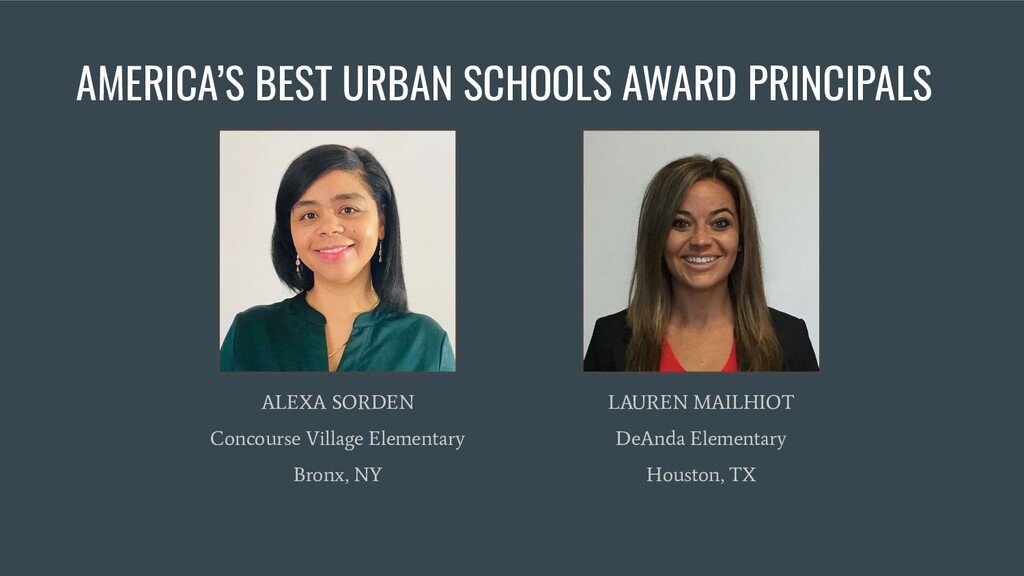
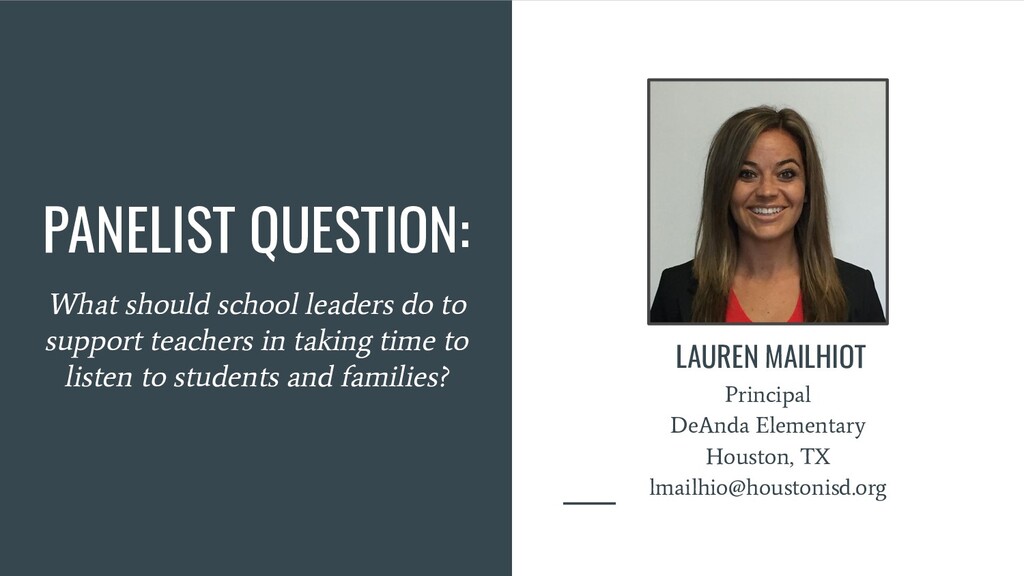
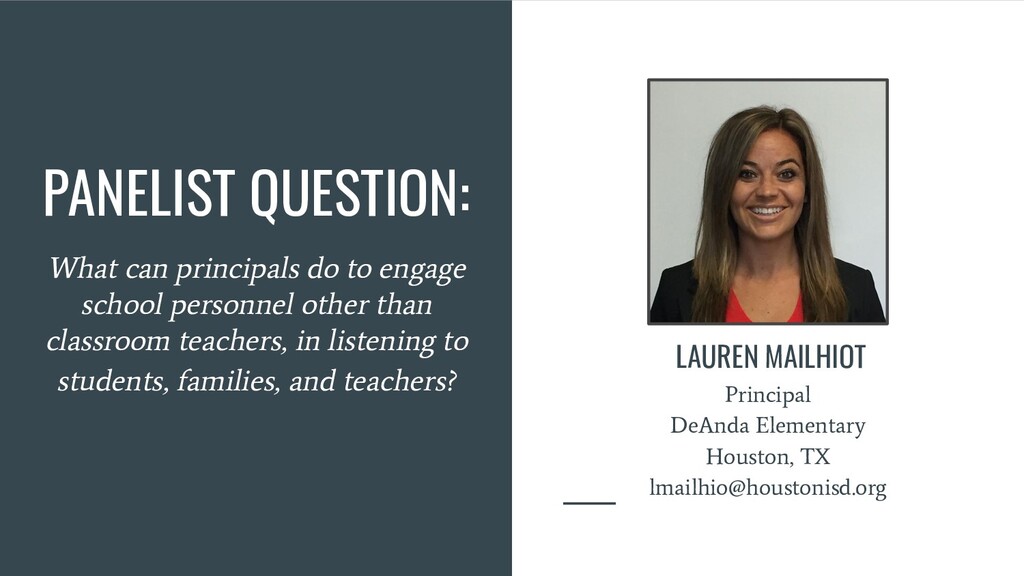
other than classroom teachers, in listening to students, families, and teachers? LAUREN MAILHIOT Principal DeAnda Elementary Houston, TX [email protected]
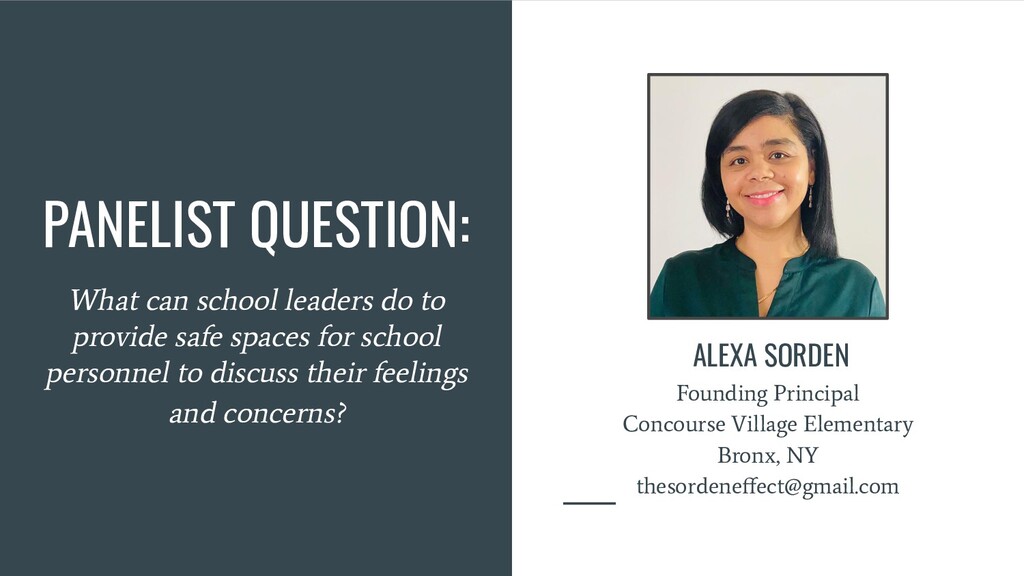
spaces for school personnel to discuss their feelings and concerns? ALEXA SORDEN Founding Principal Concourse Village Elementary Bronx, NY thesordeneff[email protected]
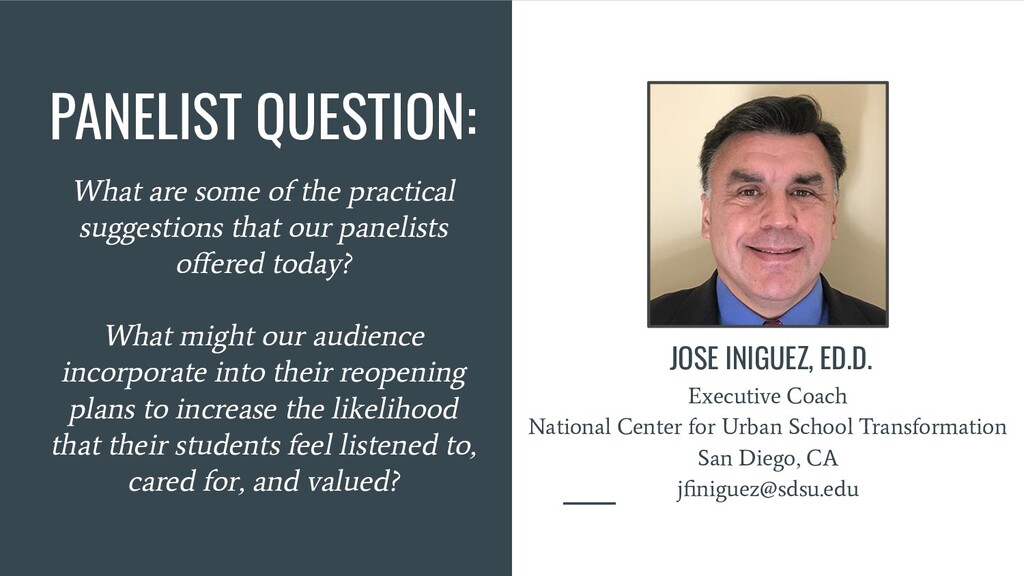
our panelists offered today? What might our audience incorporate into their reopening plans to increase the likelihood that their students feel listened to, cared for, and valued? JOSE INIGUEZ, ED.D. Executive Coach National Center for Urban School Transformation San Diego, CA jfi[email protected]
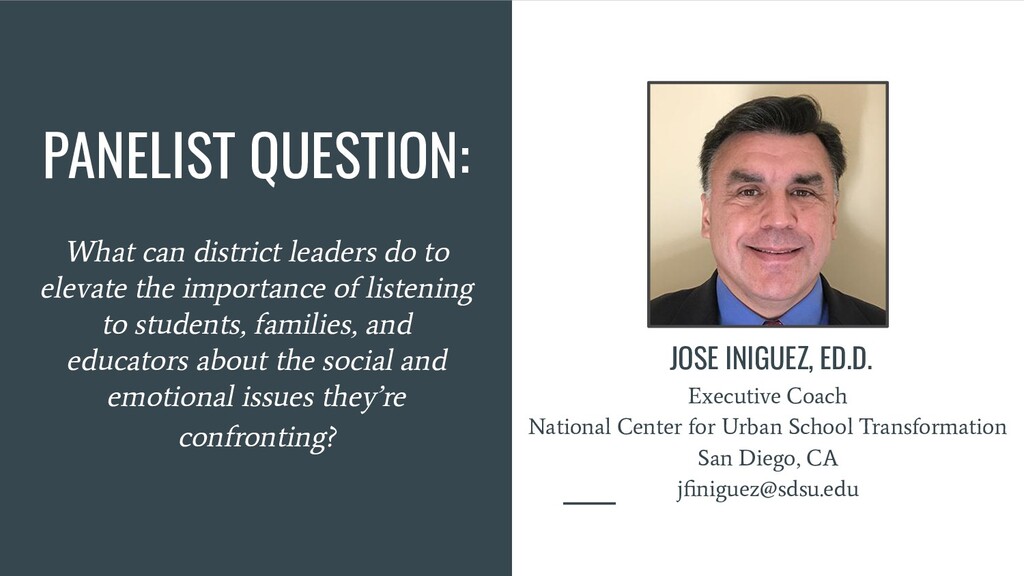
importance of listening to students, families, and educators about the social and emotional issues they’re confronting? JOSE INIGUEZ, ED.D. Executive Coach National Center for Urban School Transformation San Diego, CA jfi[email protected]
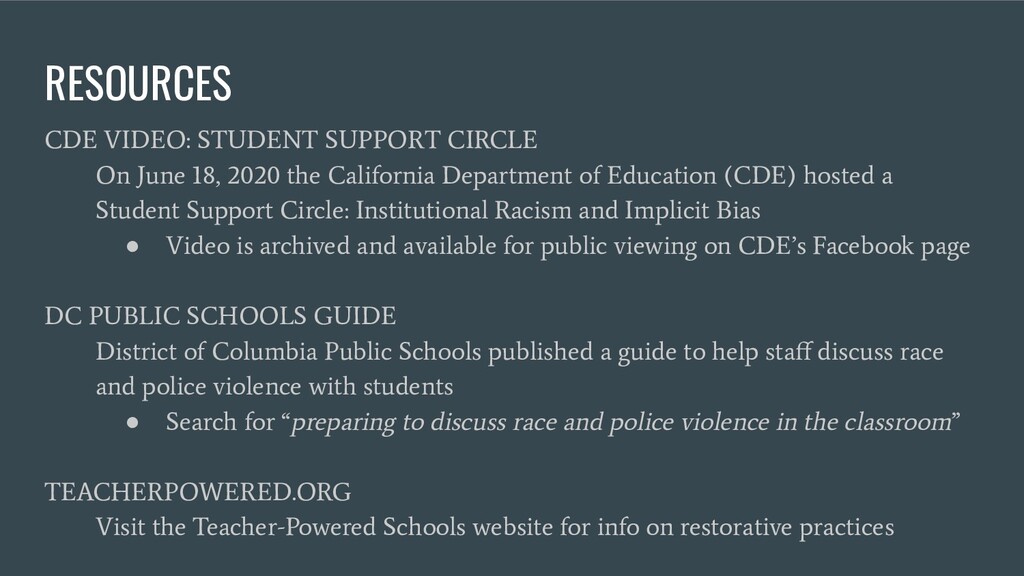
the California Department of Education (CDE) hosted a Student Support Circle: Institutional Racism and Implicit Bias • Video is archived and available for public viewing on CDE’s Facebook page DC PUBLIC SCHOOLS GUIDE District of Columbia Public Schools published a guide to help staff discuss race and police violence with students • Search for “preparing to discuss race and police violence in the classroom” TEACHERPOWERED.ORG Visit the Teacher-Powered Schools website for info on restorative practices
the link to the pre-recorded session: Developing an Action Plan: Responding to Social, Emotional, and Academic Needs Thank you for watching today! If you have questions about the webinar series, please reach out to: [email protected]
the National Center for Urban School Transformation at San Diego State University and Sanford Programs at National University. ncust.com sanfordinspire.org


 kcummings
 addyosmani
 emna__ayadi
 schroneko
 mkilby
 geshan
 cassininazir
 brad_frost
 csswizardry
 honzajavorek
 kneath
 kristinabergwall1
 colly
colly