Planning for Intentionality & Effectiveness PURPOSE This instructional intervention will provide high school teachers with a high-level overview of the ADDIE model and how it’s applicable to their role.
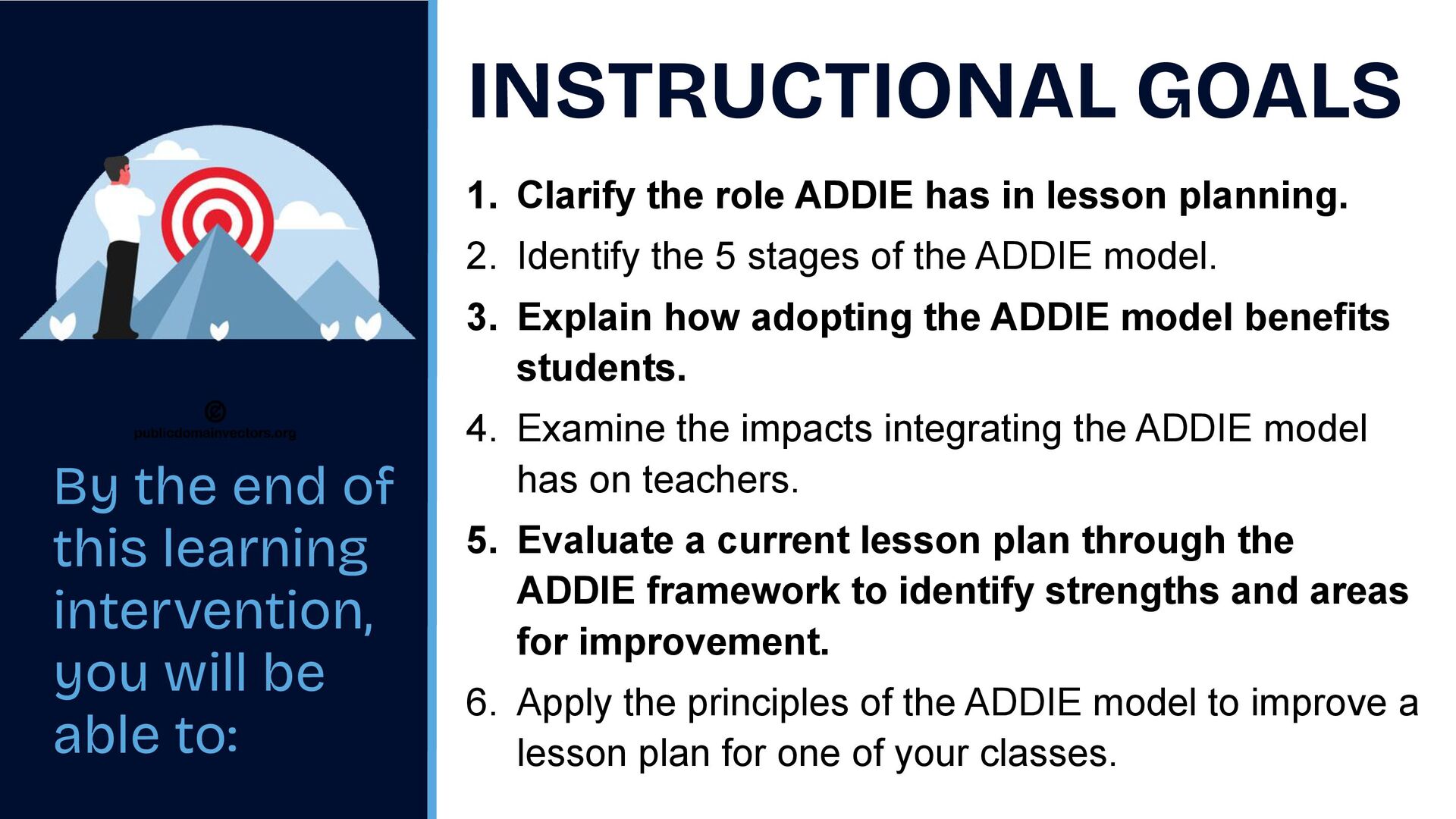
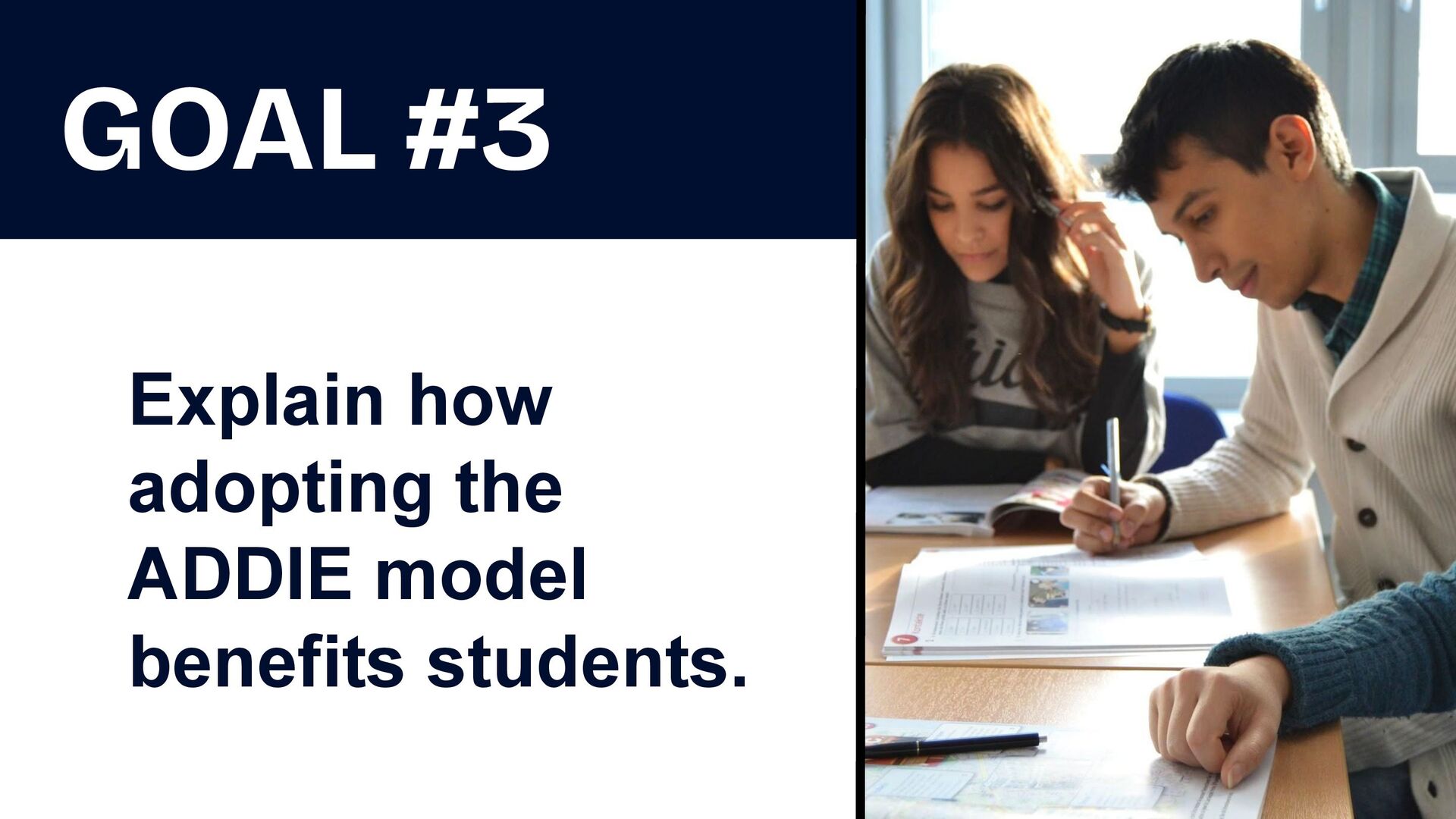
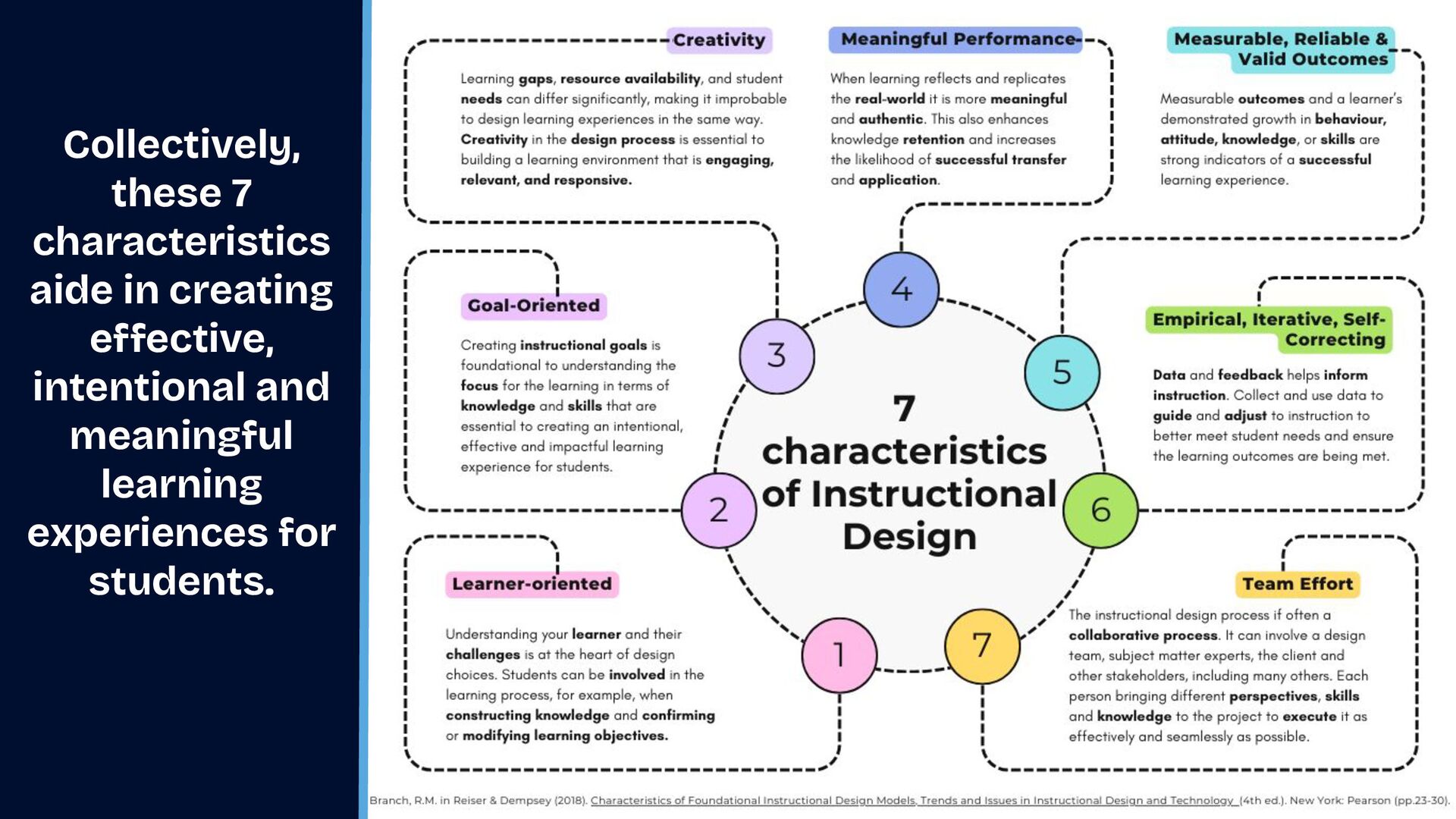
Identify the 5 stages of the ADDIE model. 3. Explain how adopting the ADDIE model benefits students. 4. Examine the impacts integrating the ADDIE model has on teachers. 5. Evaluate a current lesson plan through the ADDIE framework to identify strengths and areas for improvement. 6. Apply the principles of the ADDIE model to improve a lesson plan for one of your classes. INSTRUCTIONAL GOALS By the end of this learning intervention, you will be able to:
Planning Practices 1. What is the most important factor you consider when designing a lesson? 2. Do you follow a structured planning process, or is it more flexible and intuitive? 3. Think about one of your most successful lessons. What made it successful? 4. How did students engage with the lesson? What was their response? 5. What strategies or instructional techniques contributed to its success? 6. How did you assess whether students achieved the learning goals? 7. Reflect on a lesson that didn’t go as planned. What challenges did you face? 8. How do you communicate the learning objectives to your students?
connections to the purpose of ADDIE ❏ degree & depth of understanding: level of insight, reasoning, connections to real-world teaching applications Evaluation #1: Reflect Share your thoughts as a written or oral submission. Email your response to the facilitator. Prompts: 1. What 3 questions during the Design stage mentioned in the video do you think are the most essential when lesson planning? What purpose do these questions serve? 2. What are 3 reasons teachers should utilize the ADDIE model?
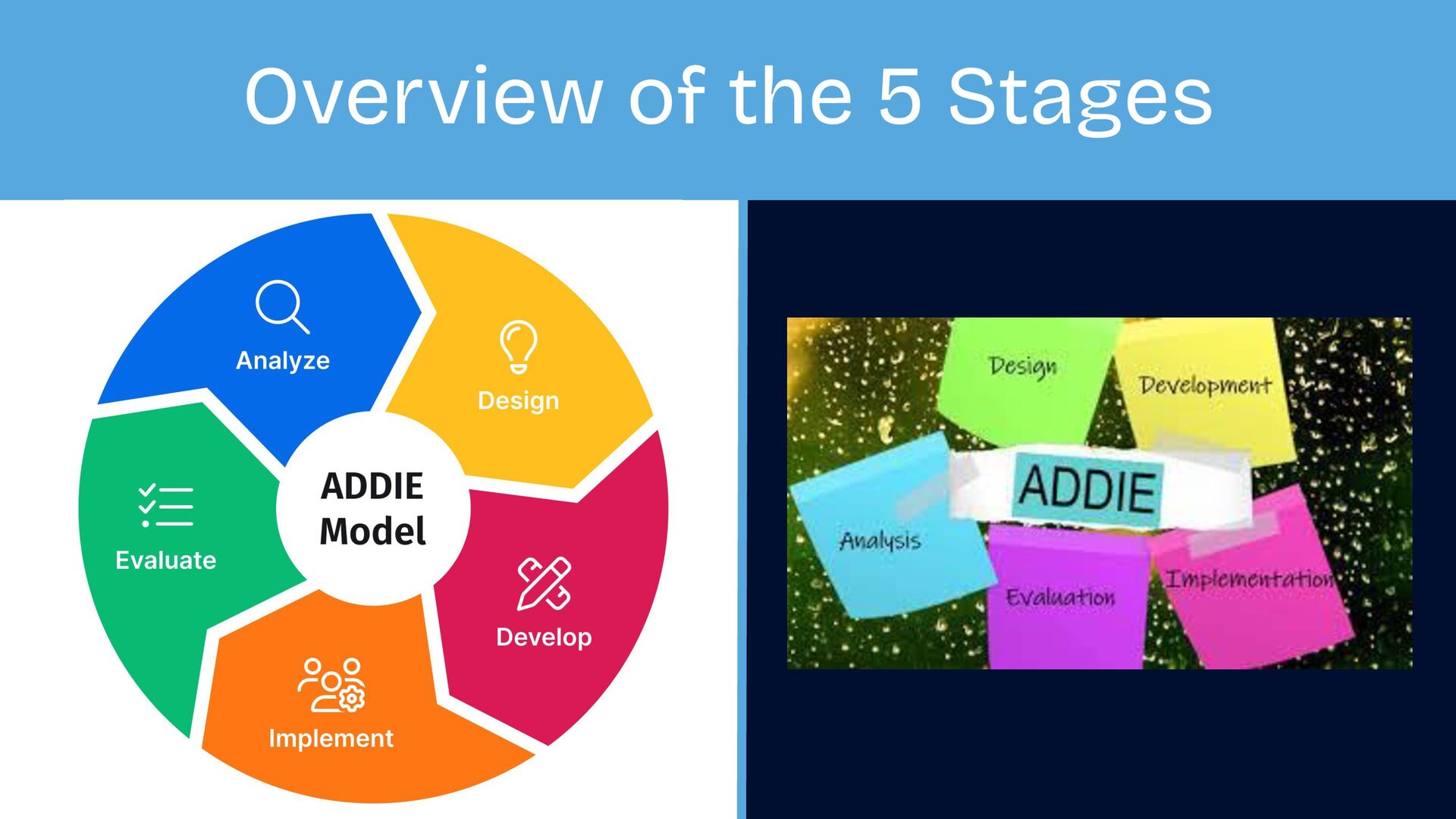
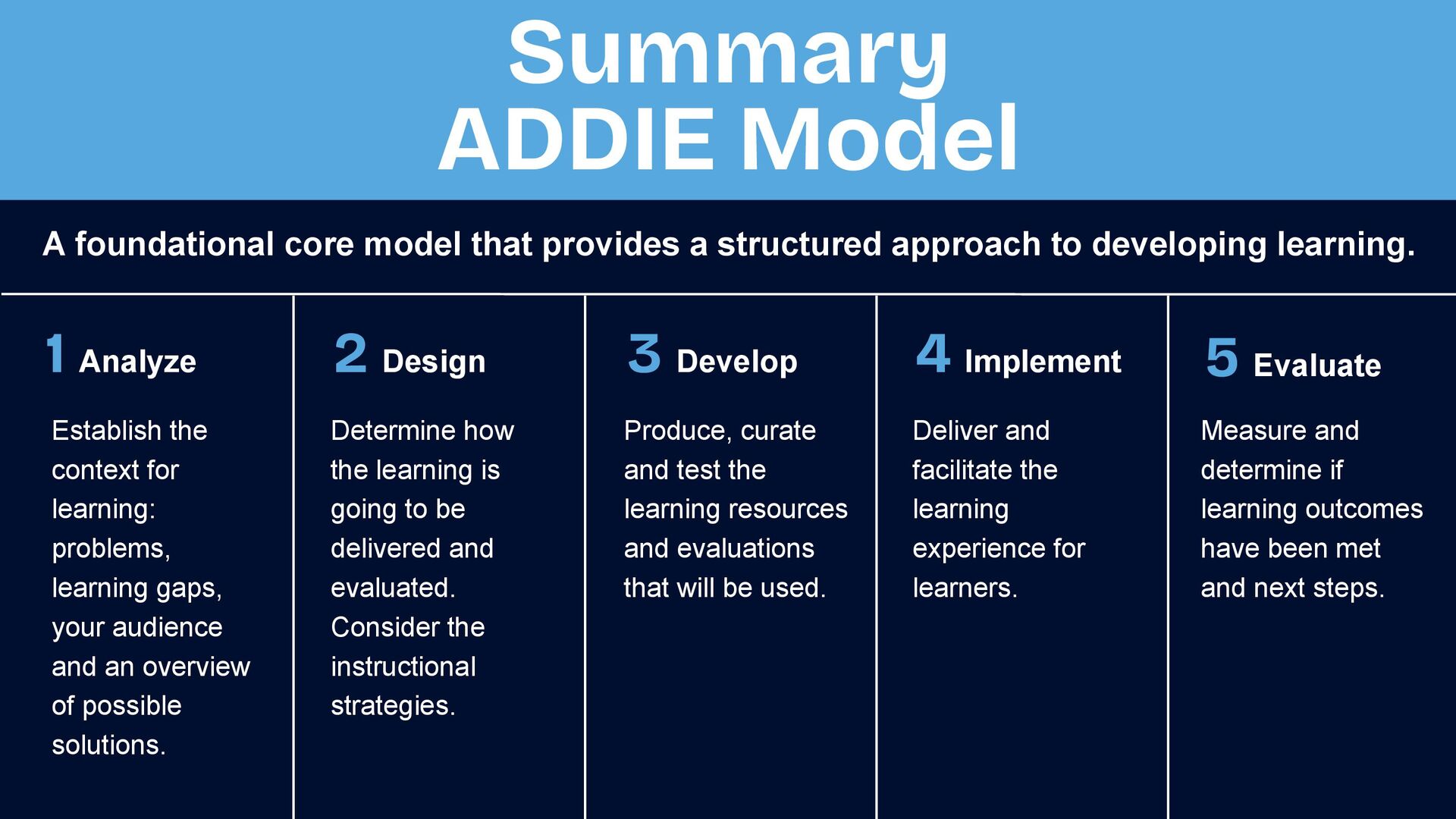
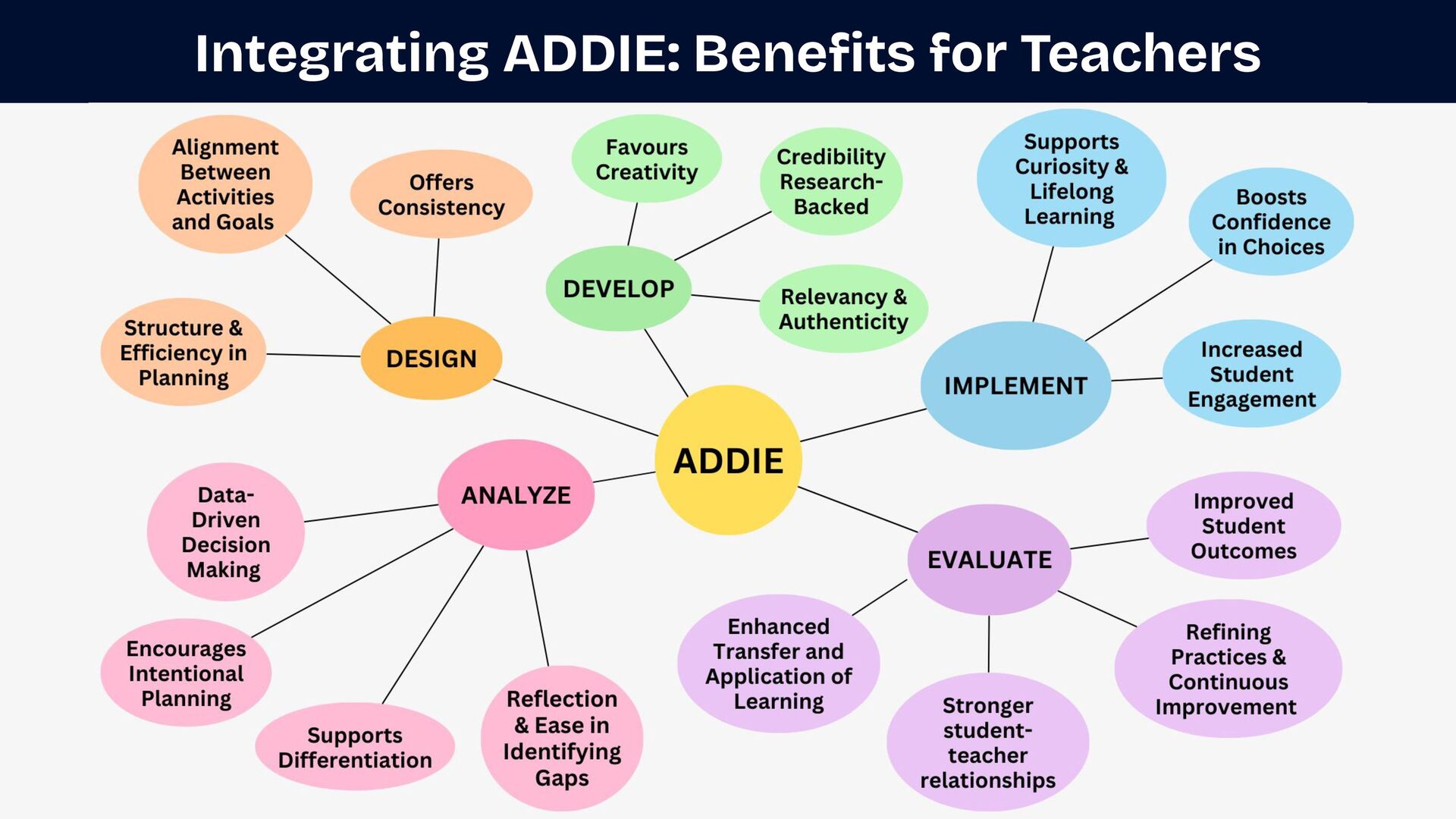
Develop 2 Design Establish the context for learning: problems, learning gaps, your audience and an overview of possible solutions. Deliver and facilitate the learning experience for learners. Measure and determine if learning outcomes have been met and next steps. Produce, curate and test the learning resources and evaluations that will be used. Determine how the learning is going to be delivered and evaluated. Consider the instructional strategies. A foundational core model that provides a structured approach to developing learning.
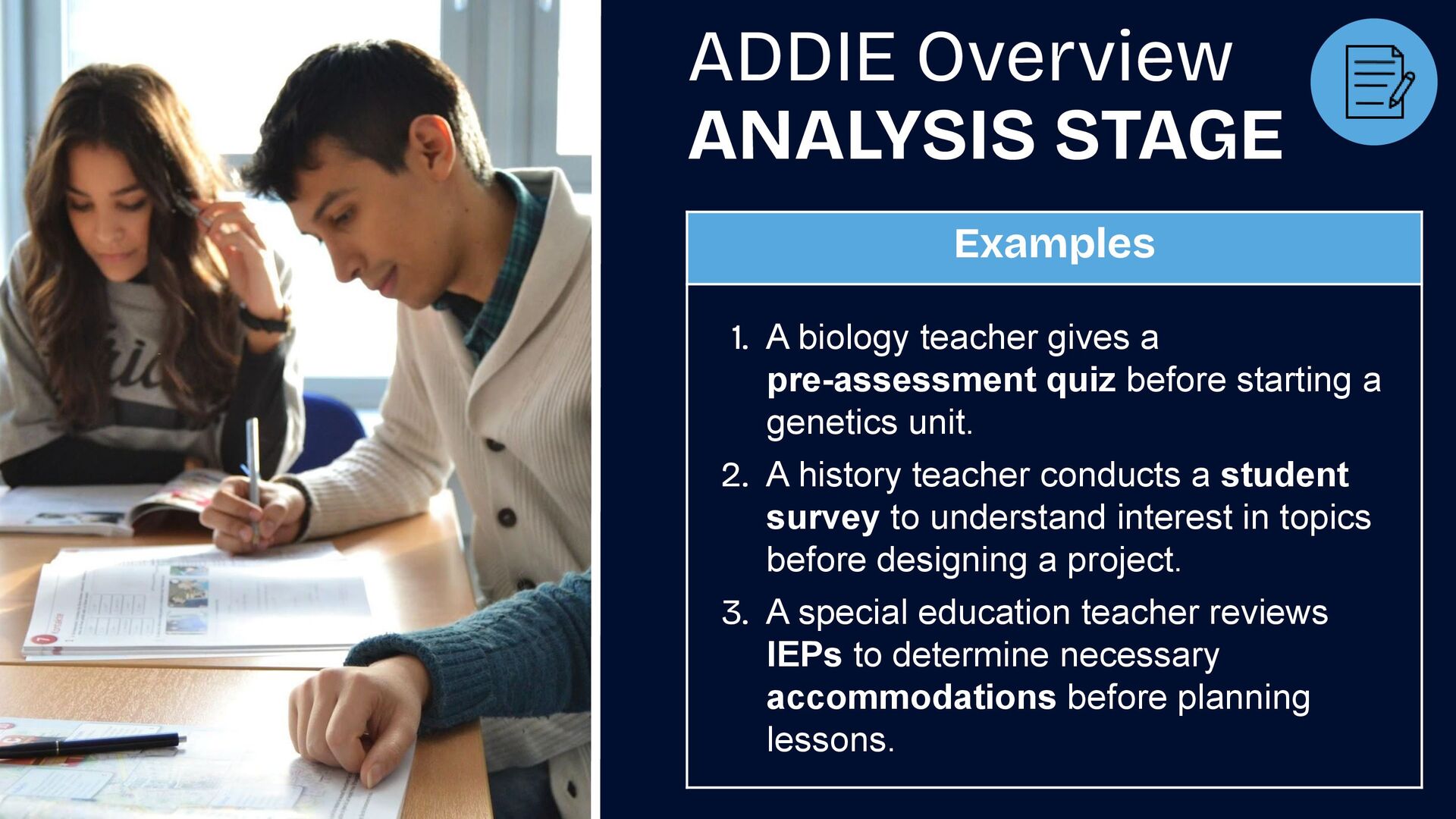
a pre-assessment quiz before starting a genetics unit. 2. A history teacher conducts a student survey to understand interest in topics before designing a project. 3. A special education teacher reviews IEPs to determine necessary accommodations before planning lessons.
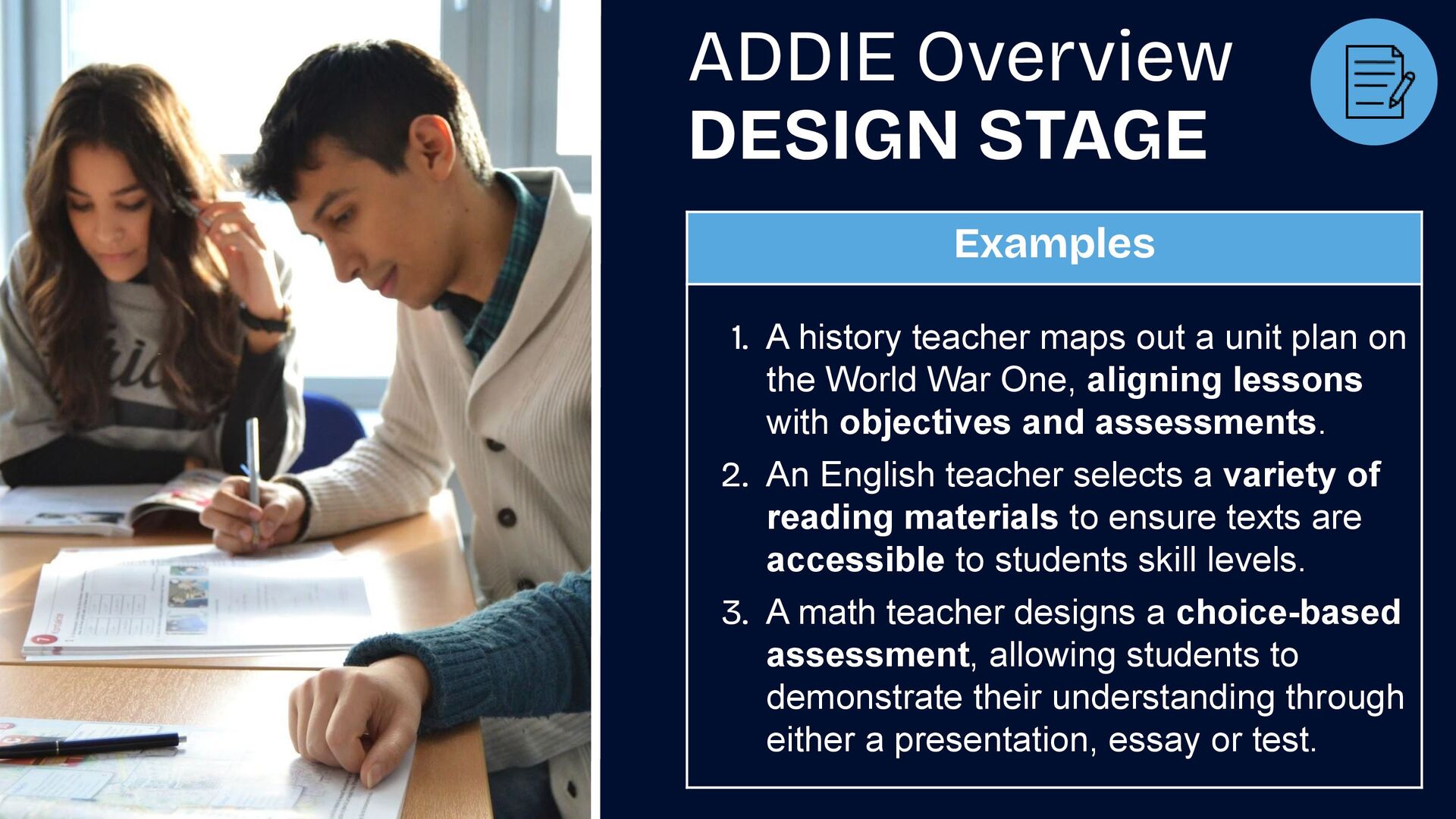
out a unit plan on the World War One, aligning lessons with objectives and assessments. 2. An English teacher selects a variety of reading materials to ensure texts are accessible to students skill levels. 3. A math teacher designs a choice-based assessment, allowing students to demonstrate their understanding through either a presentation, essay or test.
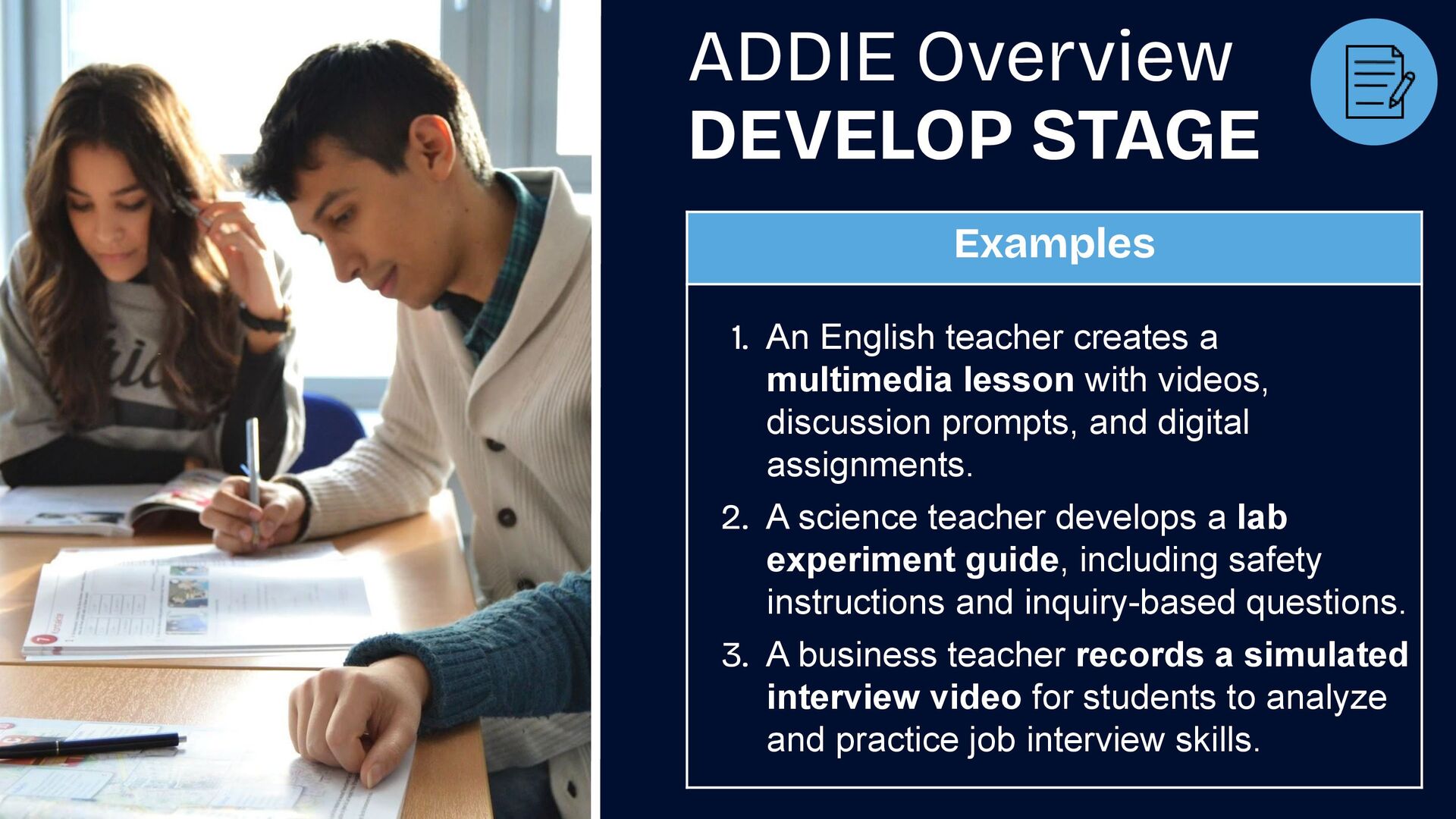
a multimedia lesson with videos, discussion prompts, and digital assignments. 2. A science teacher develops a lab experiment guide, including safety instructions and inquiry-based questions. 3. A business teacher records a simulated interview video for students to analyze and practice job interview skills.
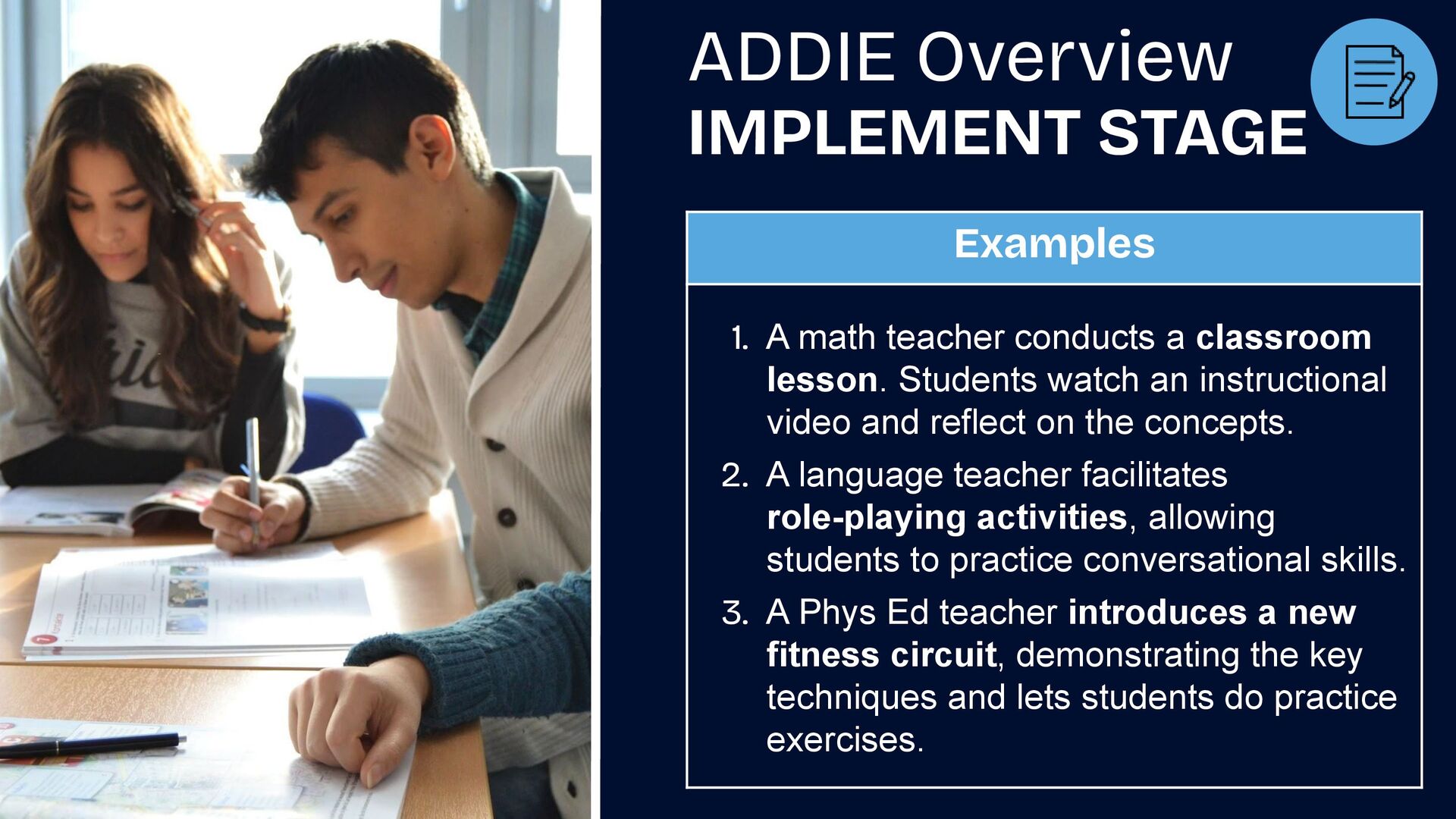
a classroom lesson. Students watch an instructional video and reflect on the concepts. 2. A language teacher facilitates role-playing activities, allowing students to practice conversational skills. 3. A Phys Ed teacher introduces a new fitness circuit, demonstrating the key techniques and lets students do practice exercises.
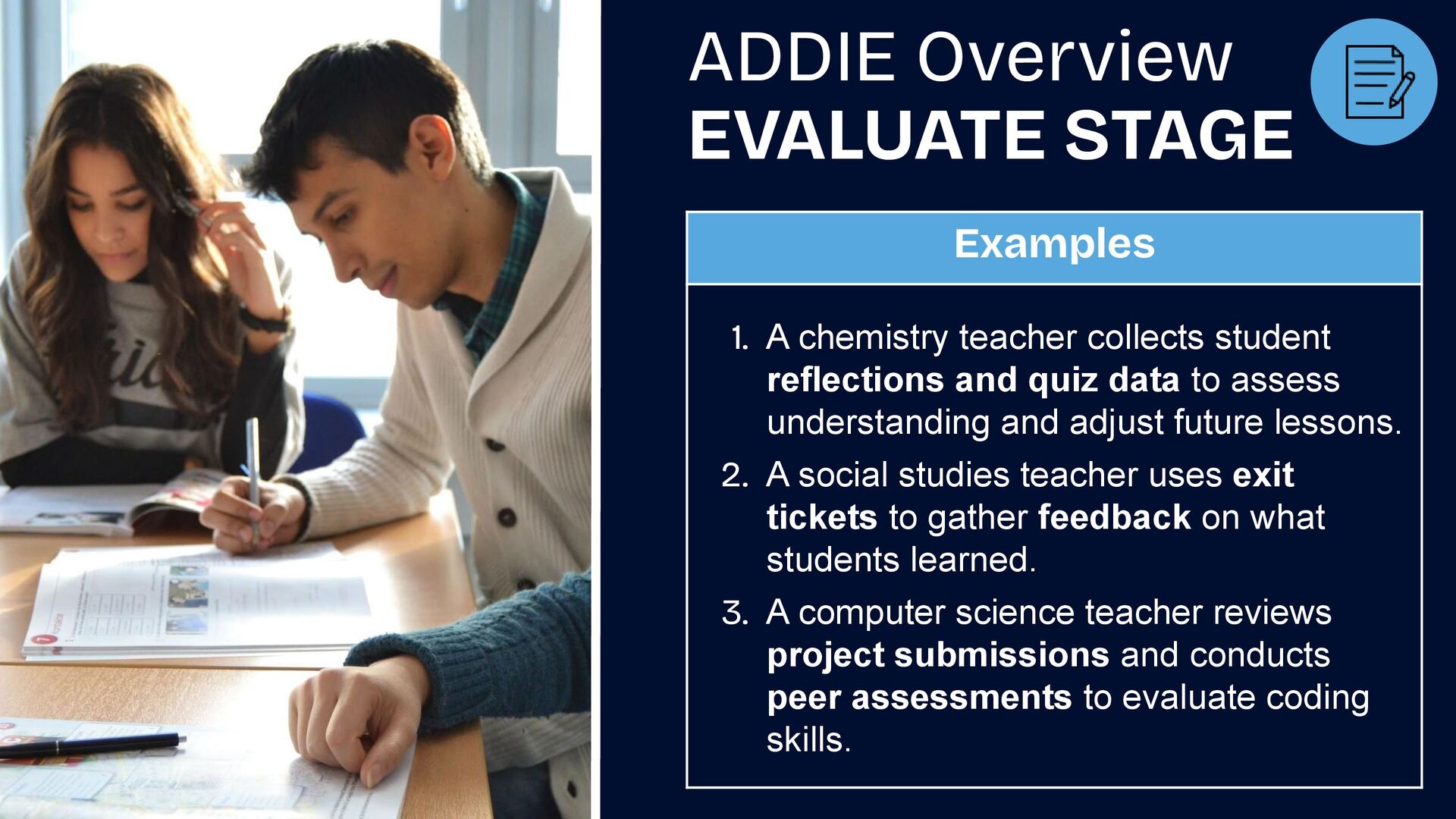
student reflections and quiz data to assess understanding and adjust future lessons. 2. A social studies teacher uses exit tickets to gather feedback on what students learned. 3. A computer science teacher reviews project submissions and conducts peer assessments to evaluate coding skills.
this document. ➔ Using the information and examples on slides 8-14 as inspiration to brainstorm examples of classroom applications or scenarios that illustrate how you could implement each stage of ADDIE into your own teaching practice.
your ability to correctly identify the different stages of ADDIE and associate them with an appropriate example Evaluation #2: Quiz Check Your Understanding Complete this Scored Quiz to check your understanding related to the different stages of ADDIE.
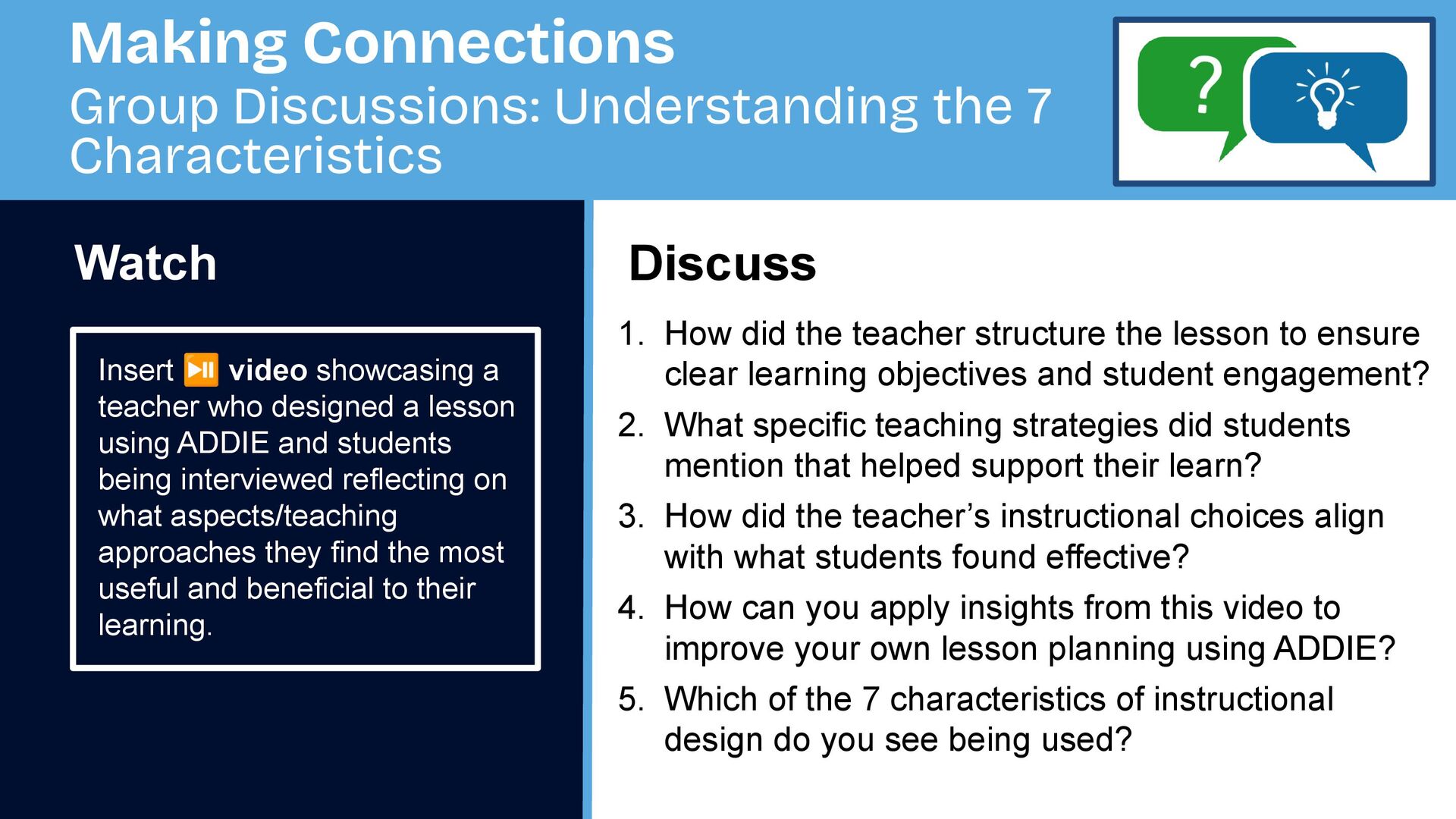
video showcasing a teacher who designed a lesson using ADDIE and students being interviewed reflecting on what aspects/teaching approaches they find the most useful and beneficial to their learning. Watch Discuss 1. How did the teacher structure the lesson to ensure clear learning objectives and student engagement? 2. What specific teaching strategies did students mention that helped support their learn? 3. How did the teacher’s instructional choices align with what students found effective? 4. How can you apply insights from this video to improve your own lesson planning using ADDIE? 5. Which of the 7 characteristics of instructional design do you see being used?
to connect the impact of ADDIE on student learning with the seven characteristics of Instructional Design ❏ degree & depth of understanding: level of insight, reasoning, connections to real-world teaching applications Evaluation #3: Case Study Impact of 7 characteristics of Instructional Design on student experiences Make a copy of this document. Review the case studies and go through the questions. Email your submission for revision.
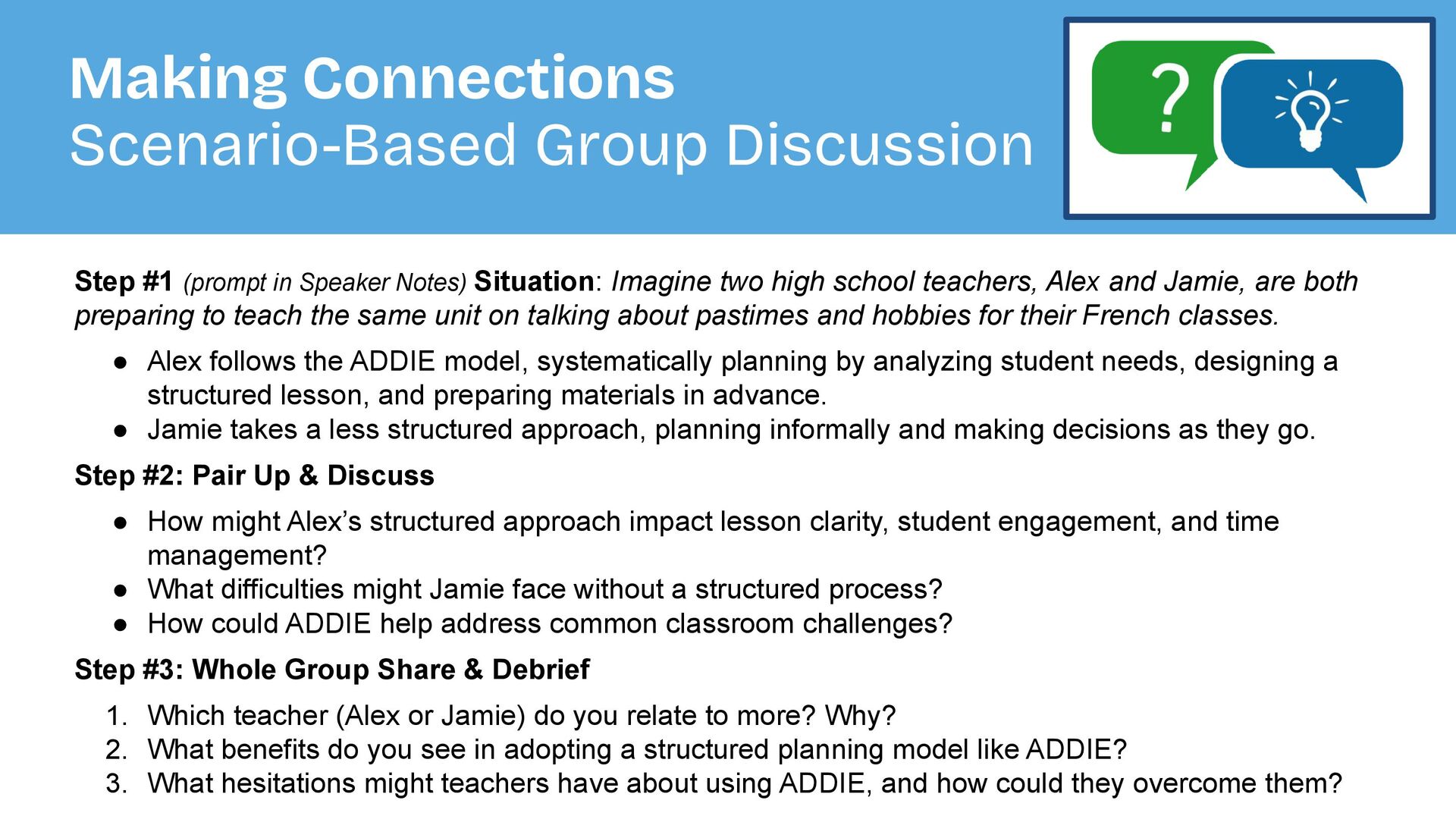
Notes) Situation: Imagine two high school teachers, Alex and Jamie, are both preparing to teach the same unit on talking about pastimes and hobbies for their French classes. • Alex follows the ADDIE model, systematically planning by analyzing student needs, designing a structured lesson, and preparing materials in advance. • Jamie takes a less structured approach, planning informally and making decisions as they go. Step #2: Pair Up & Discuss • How might Alex’s structured approach impact lesson clarity, student engagement, and time management? • What difficulties might Jamie face without a structured process? • How could ADDIE help address common classroom challenges? Step #3: Whole Group Share & Debrief 1. Which teacher (Alex or Jamie) do you relate to more? Why? 2. What benefits do you see in adopting a structured planning model like ADDIE? 3. What hesitations might teachers have about using ADDIE, and how could they overcome them?
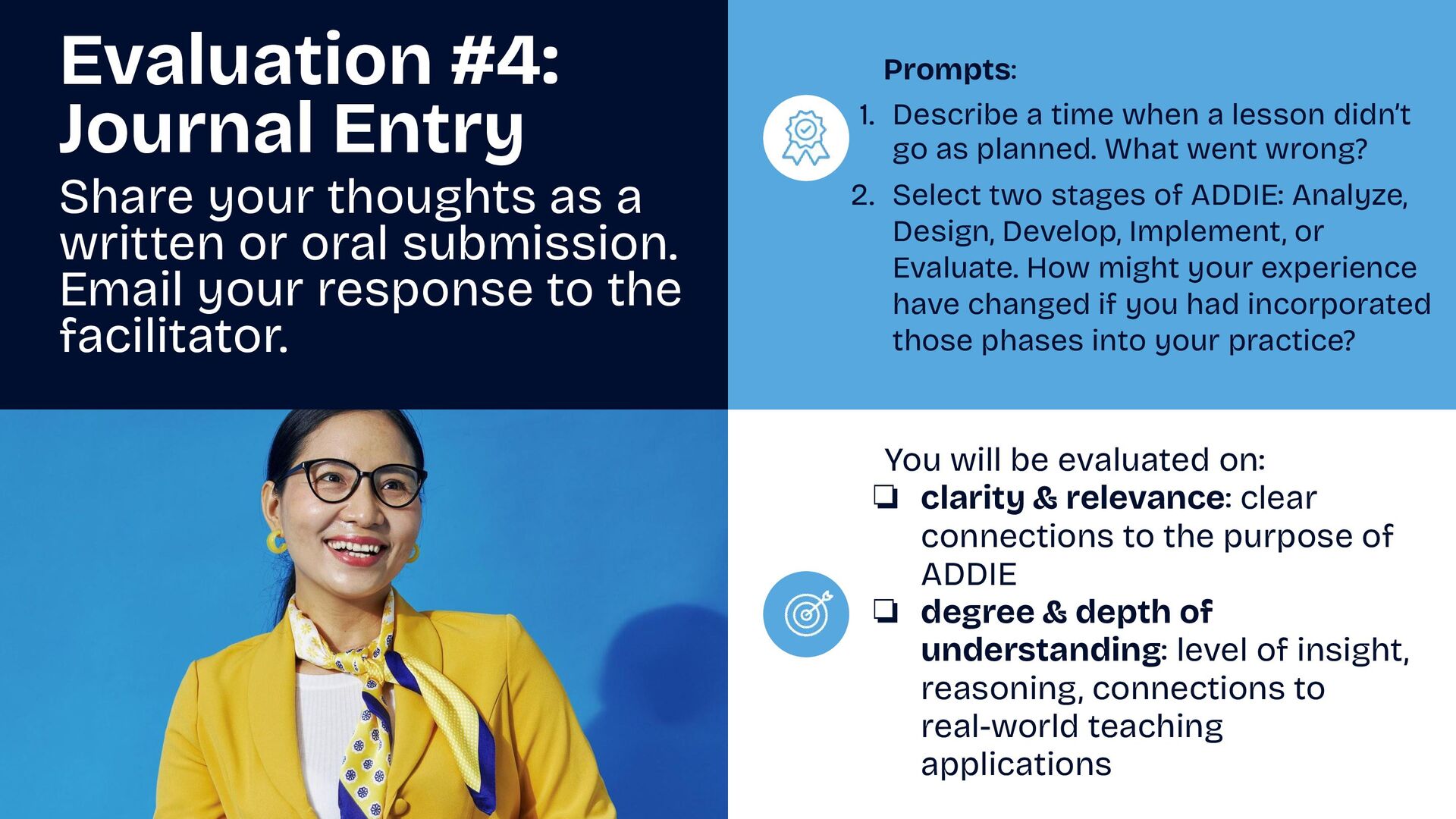
connections to the purpose of ADDIE ❏ degree & depth of understanding: level of insight, reasoning, connections to real-world teaching applications Evaluation #4: Journal Entry Share your thoughts as a written or oral submission. Email your response to the facilitator. Prompts: 1. Describe a time when a lesson didn’t go as planned. What went wrong? 2. Select two stages of ADDIE: Analyze, Design, Develop, Implement, or Evaluate. How might your experience have changed if you had incorporated those phases into your practice?
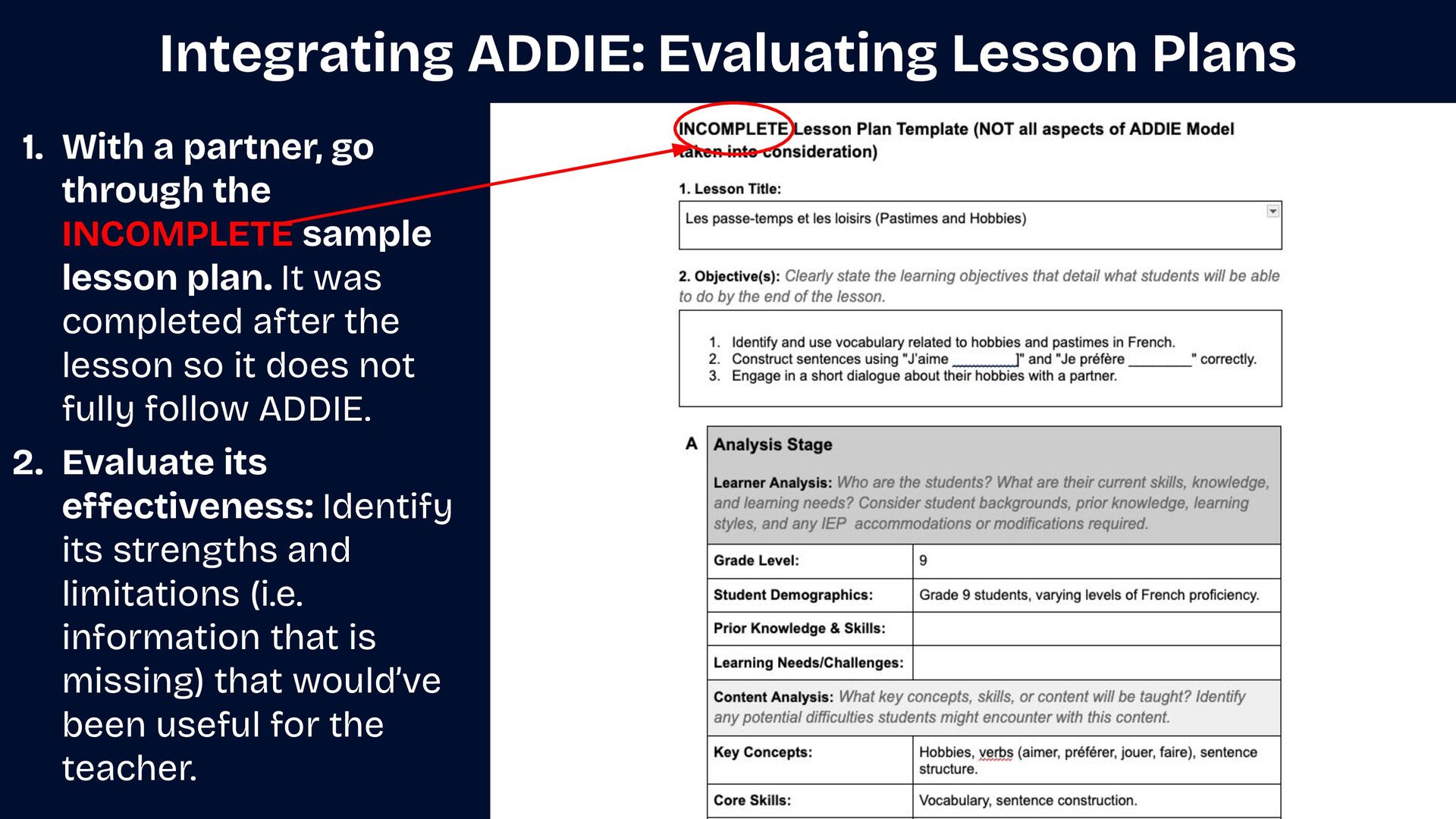
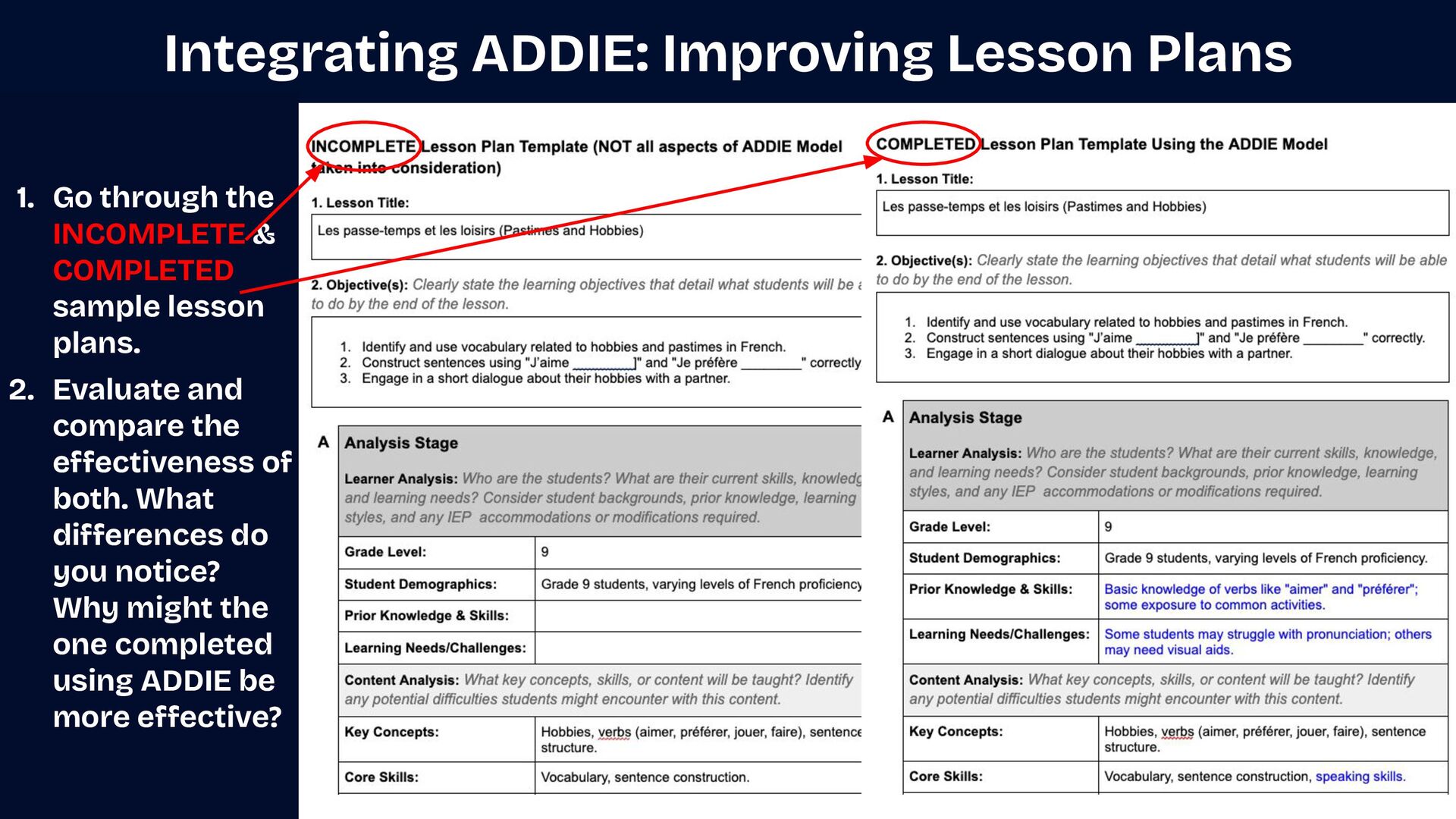
through the INCOMPLETE sample lesson plan. It was completed after the lesson so it does not fully follow ADDIE. 2. Evaluate its effectiveness: Identify its strengths and limitations (i.e. information that is missing) that would’ve been useful for the teacher.
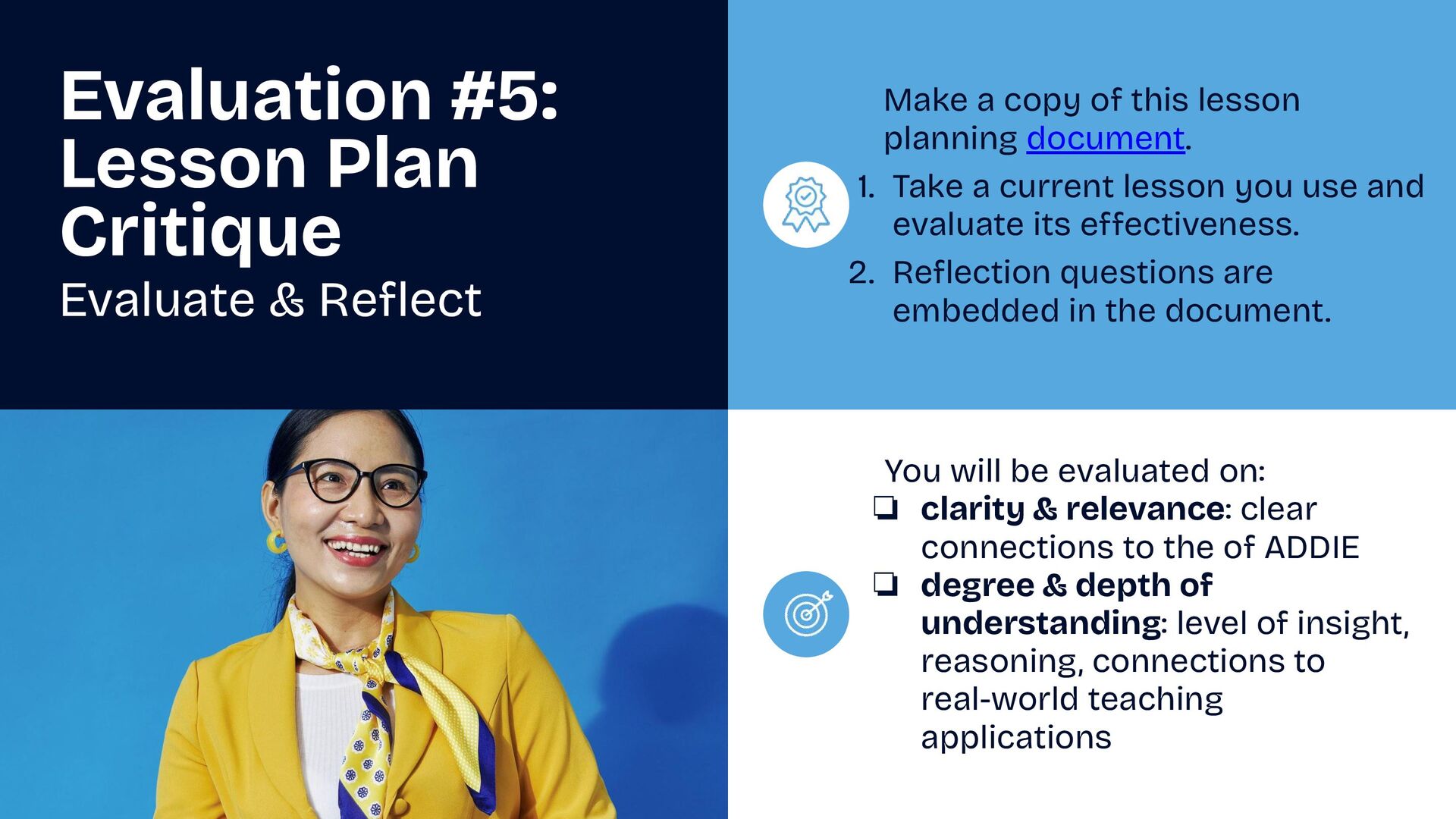
connections to the of ADDIE ❏ degree & depth of understanding: level of insight, reasoning, connections to real-world teaching applications Evaluation #5: Lesson Plan Critique Evaluate & Reflect Make a copy of this lesson planning document. 1. Take a current lesson you use and evaluate its effectiveness. 2. Reflection questions are embedded in the document.
& COMPLETED sample lesson plans. 2. Evaluate and compare the effectiveness of both. What differences do you notice? Why might the one completed using ADDIE be more effective?
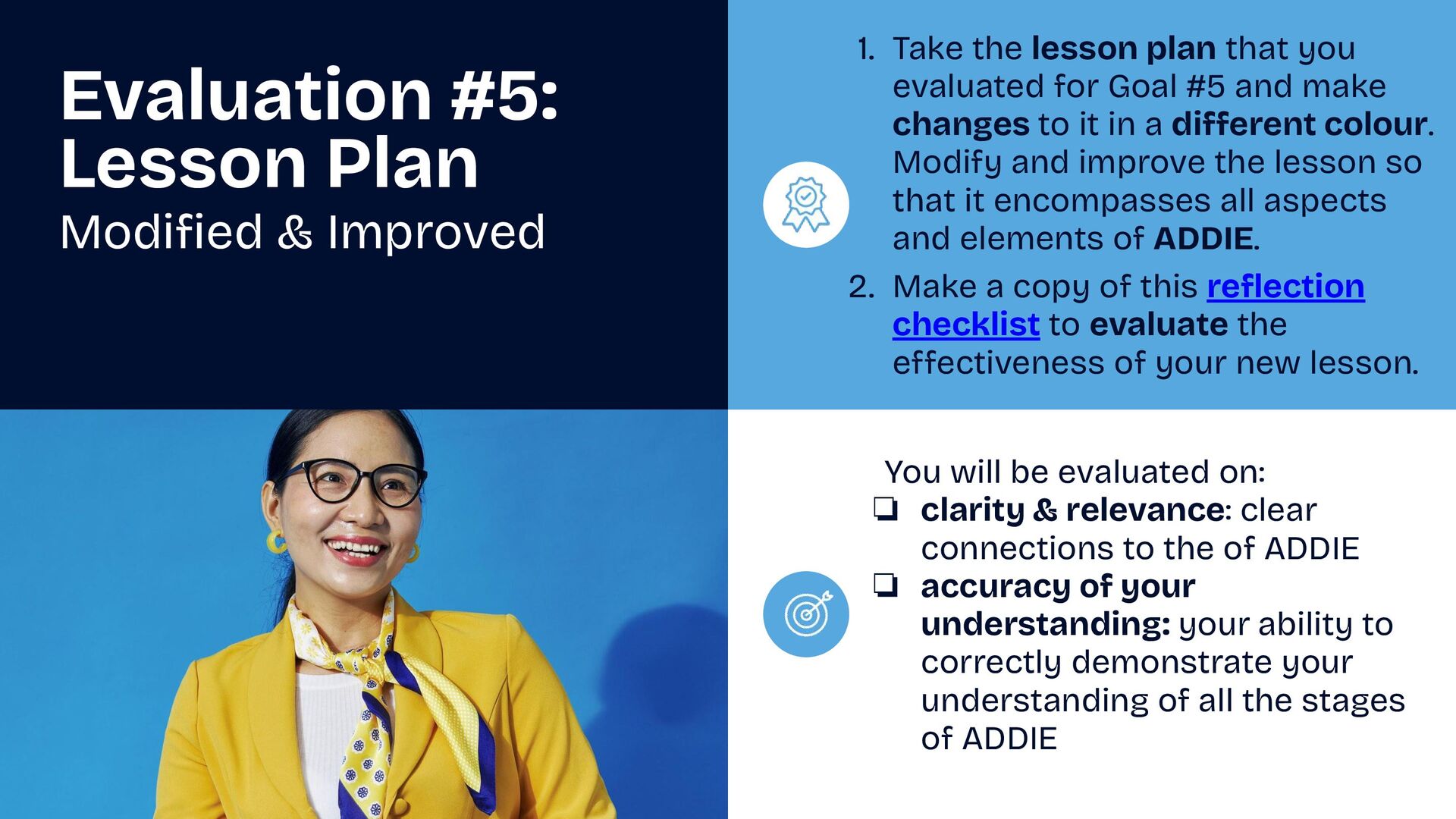
connections to the of ADDIE ❏ accuracy of your understanding: your ability to correctly demonstrate your understanding of all the stages of ADDIE Evaluation #5: Lesson Plan Modified & Improved 1. Take the lesson plan that you evaluated for Goal #5 and make changes to it in a different colour. Modify and improve the lesson so that it encompasses all aspects and elements of ADDIE. 2. Make a copy of this reflection checklist to evaluate the effectiveness of your new lesson.
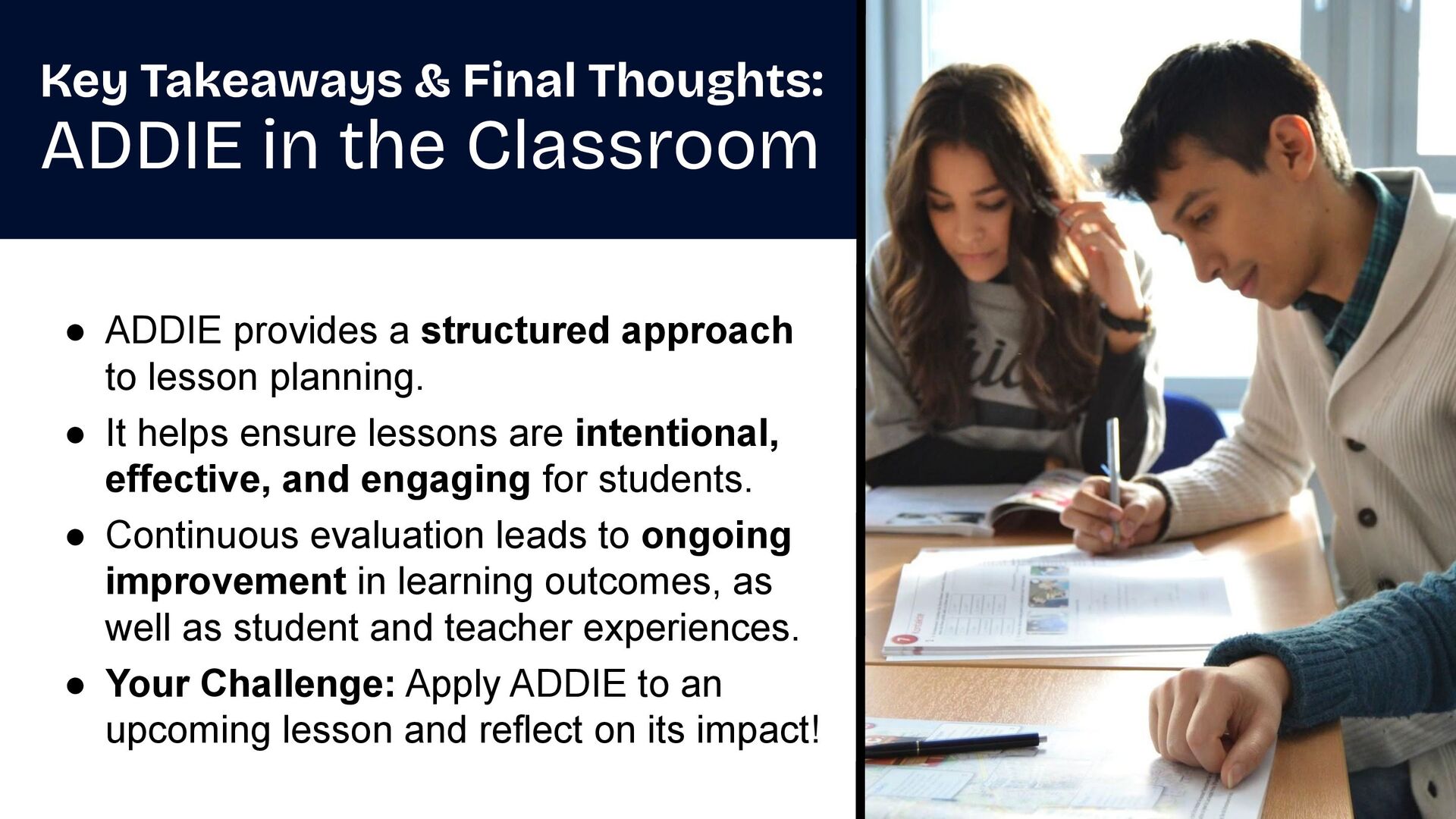
ADDIE provides a structured approach to lesson planning. • It helps ensure lessons are intentional, effective, and engaging for students. • Continuous evaluation leads to ongoing improvement in learning outcomes, as well as student and teacher experiences. • Your Challenge: Apply ADDIE to an upcoming lesson and reflect on its impact!


 kimpetersen
 lauravandoore
 addyosmani
 elsirapls
 bluesmoon
 codingconduct
 greggifford
 aemeredith
 lara
lara
 jnunemaker
 nikkihalliwell
 inesmontani