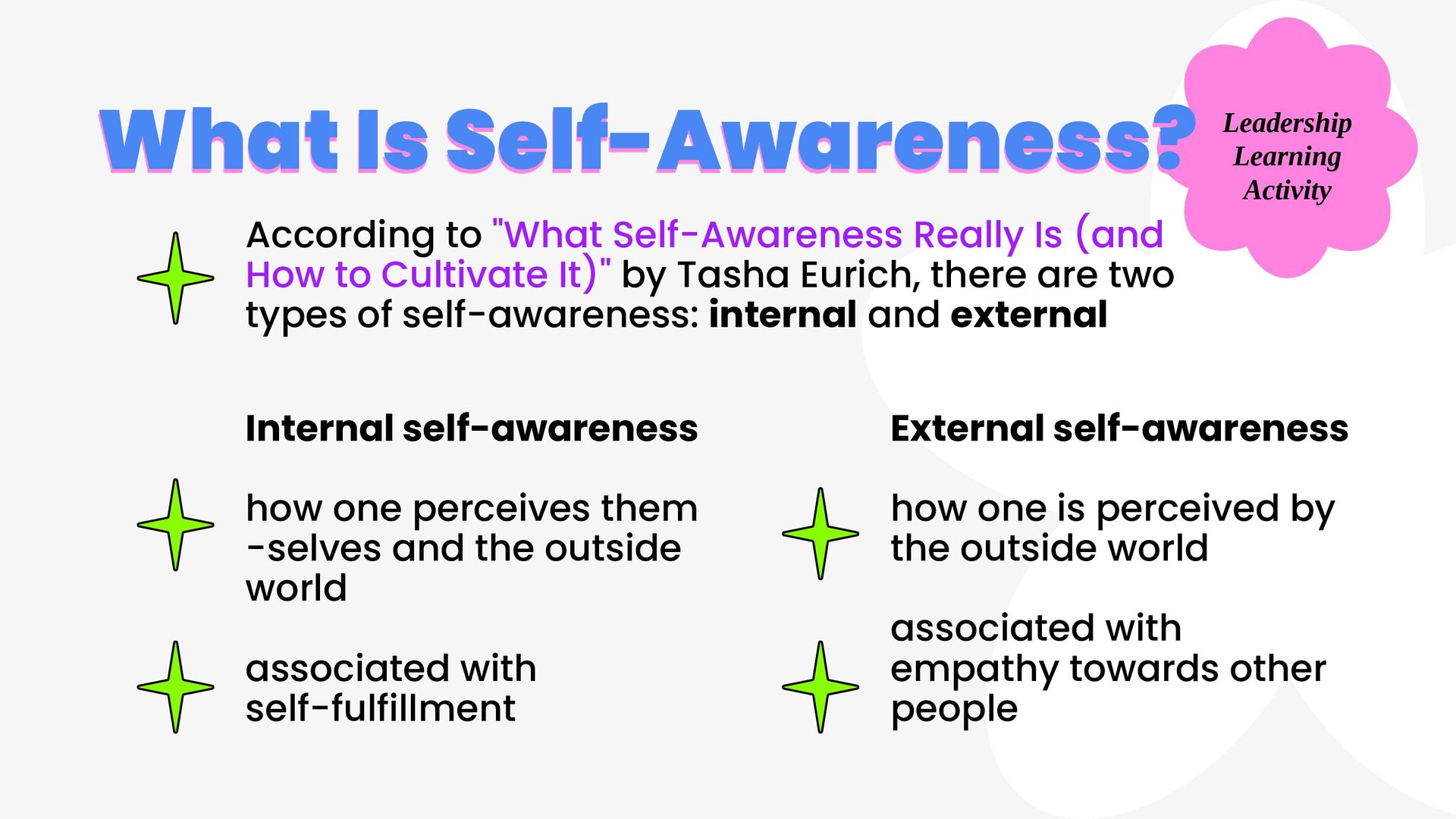
and the outside world associated with self-fulfillment External self-awareness how one is perceived by the outside world associated with empathy towards other people According to "What Self-Awareness Really Is (and How to Cultivate It)" by Tasha Eurich, there are two types of self-awareness: internal and external Leadership Learning Activity
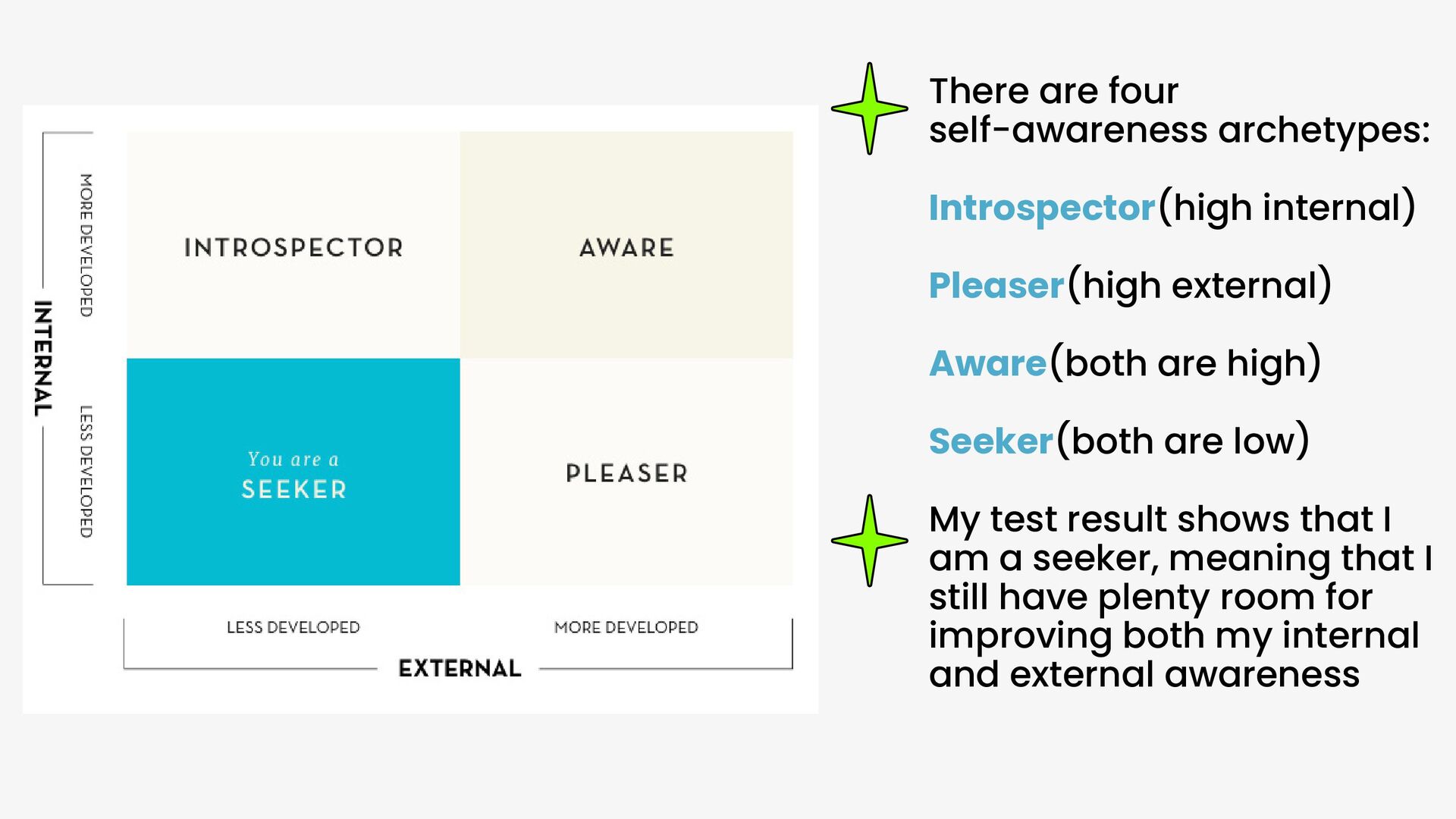
are high) Seeker(both are low) My test result shows that I am a seeker, meaning that I still have plenty room for improving both my internal and external awareness
Experience can make one overly-confident and overestimate their own skills, lowering their self-awareness in turn • Solution: always seek constructive feedback from peers Introspection can easily lead to rumination(too focused on negative emotions) instead of improving one's self-awareness • Solution: ask yourself "What can I do to make it better?" instead of "Why did I fail?"
necessary because it can help one make effective and accurate decisions. If a leader lacks it, their poor decisions will not only affect themselves, but also their colleagues To further develop my own self-awareness, I would need to...
surpasses my expectations, rather than attributing it all to luck, I need to reflect and make mental notes on what elements contribute to the quality of this work. Additionally, if I have dealt with similar projects before, I should also analyze what differentiates this new piece from the older one Understanding the strengths and weaknesses of my own work will help me maintain a more consistent quality in the future
Teamwork As I previously noted in Module 2, our team members come from various program backgrounds. Until this summer, my collaborations were solely with artists, making this a notably different experience. It has taught me to be more empathetic and consider perspectives from a non-artist in order to make my communication more effective This internship will prepare me to interact with a wider range of clients, artists and non-artists alike Improved Competency What I Strengthened
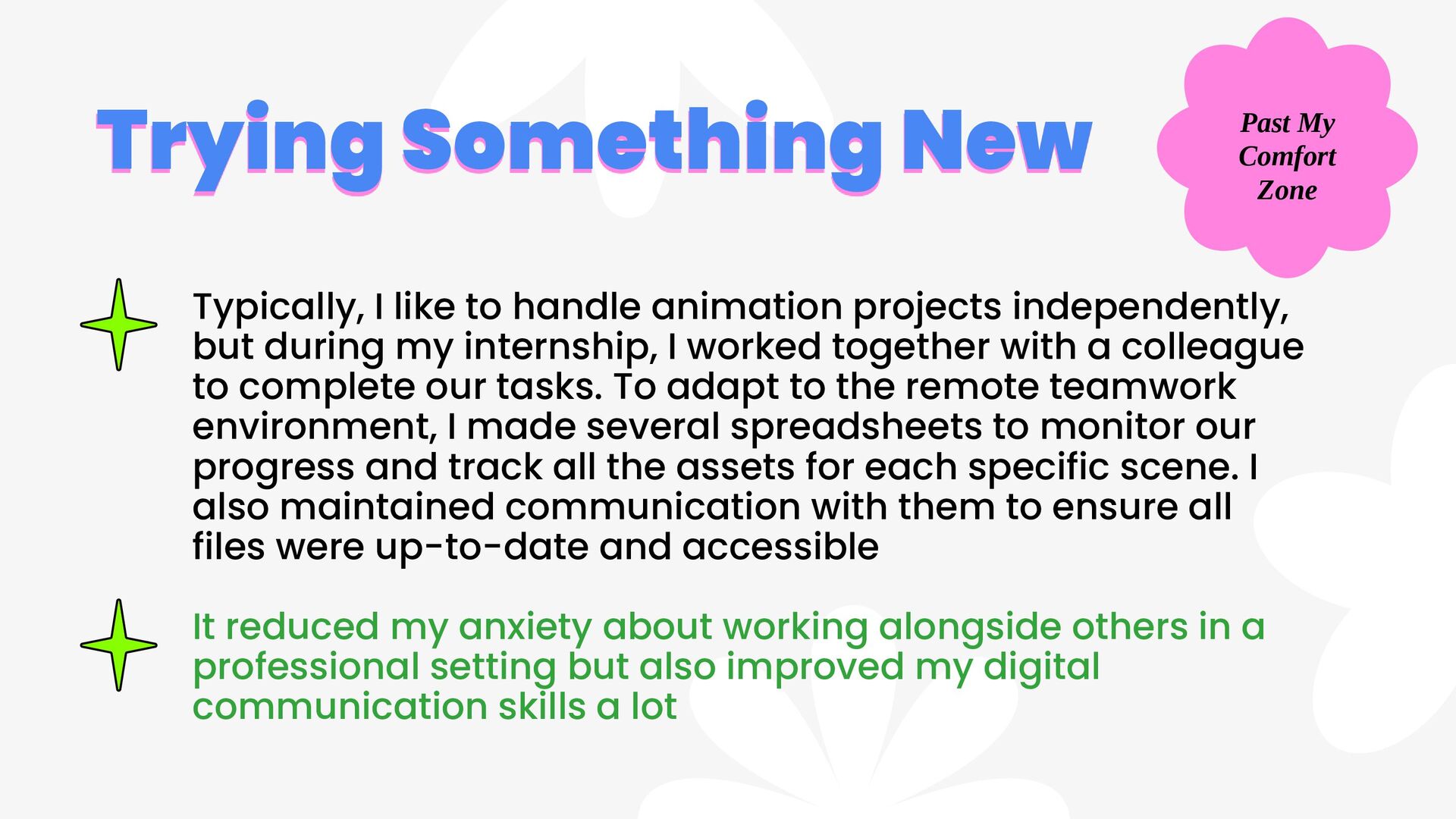
to handle animation projects independently, but during my internship, I worked together with a colleague to complete our tasks. To adapt to the remote teamwork environment, I made several spreadsheets to monitor our progress and track all the assets for each specific scene. I also maintained communication with them to ensure all files were up-to-date and accessible It reduced my anxiety about working alongside others in a professional setting but also improved my digital communication skills a lot
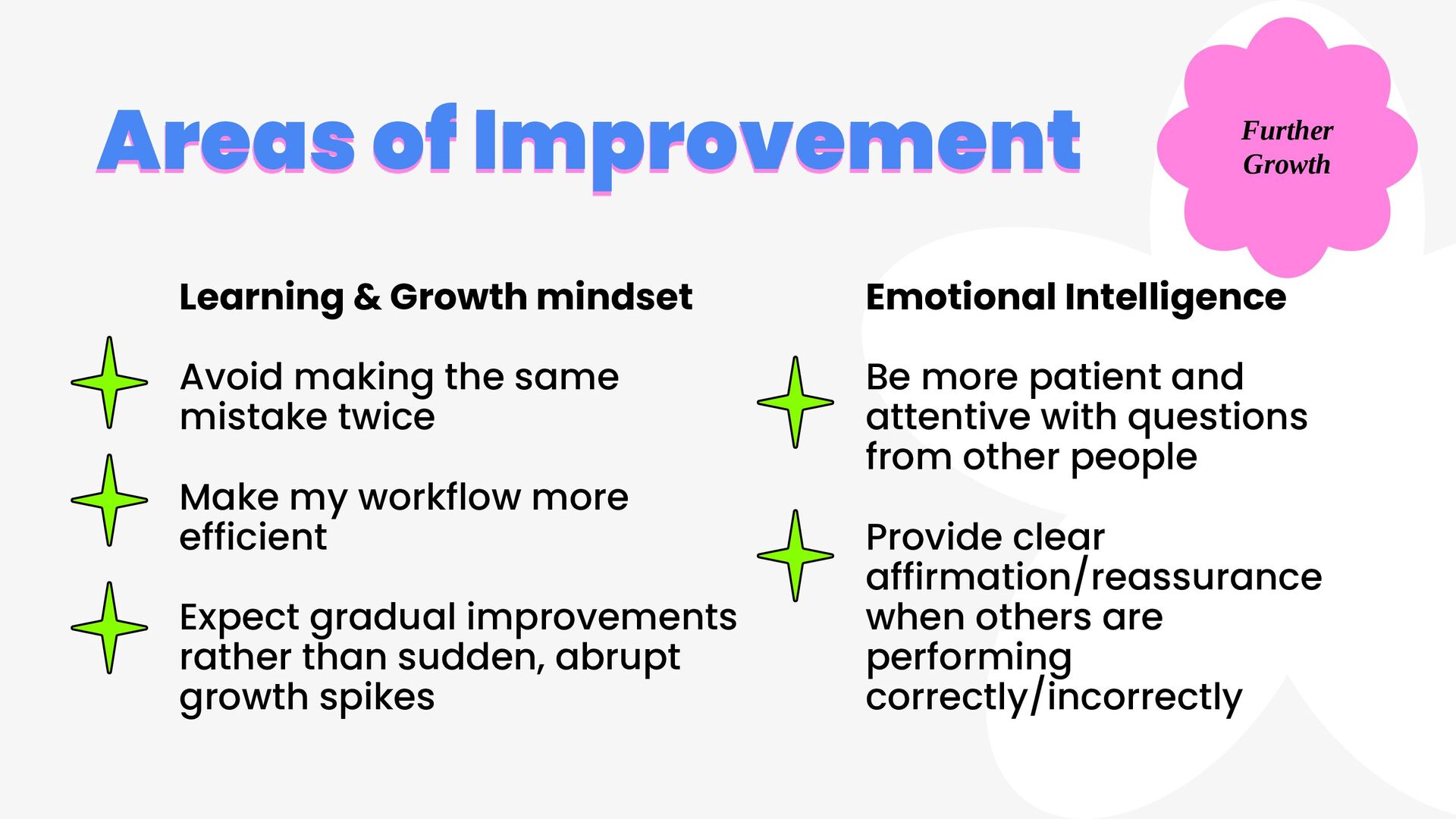
same mistake twice Make my workflow more efficient Expect gradual improvements rather than sudden, abrupt growth spikes Emotional Intelligence Be more patient and attentive with questions from other people Provide clear affirmation/reassurance when others are performing correctly/incorrectly Further Growth


 jdejongh
 keavy
 rakko
 pauljervisheath
 techseoconnect
 trishagee
 aleyda
 palkan
 helenjbeal
 addyosmani
 shlominoach