Upgrade to Pro — share decks privately, control downloads, hide ads and more …

Planetary Obliquity Evolution

Sponsored · Your Podcast. Everywhere. Effortlessly. Share. Educate. Inspire. Entertain. You do you. We'll handle the rest. →
Avatar for Steven Kreyche Steven Kreyche
November 15, 2019
5

Planetary Obliquity Evolution

Avatar for Steven Kreyche

Steven Kreyche

November 15, 2019

Transcript

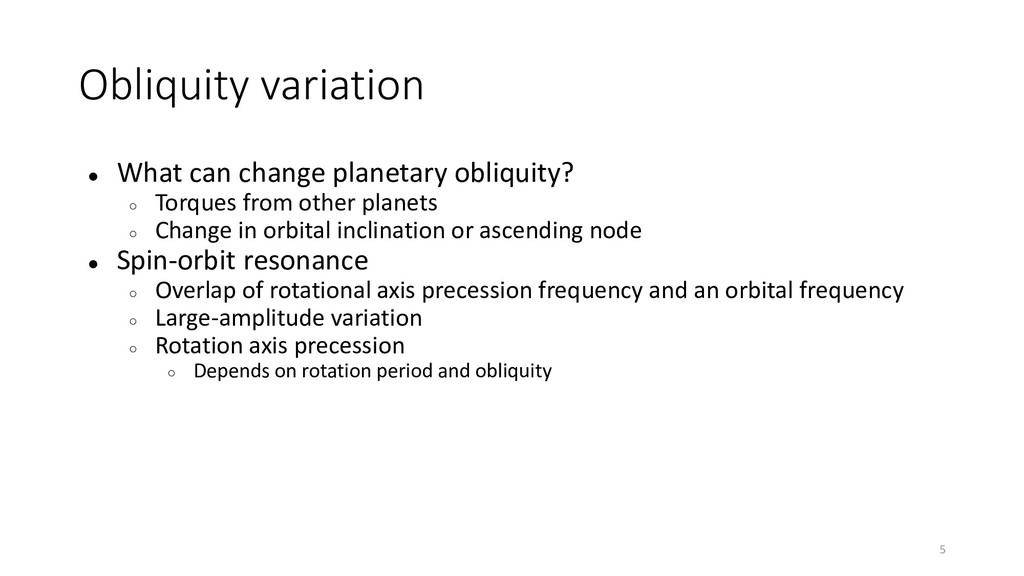
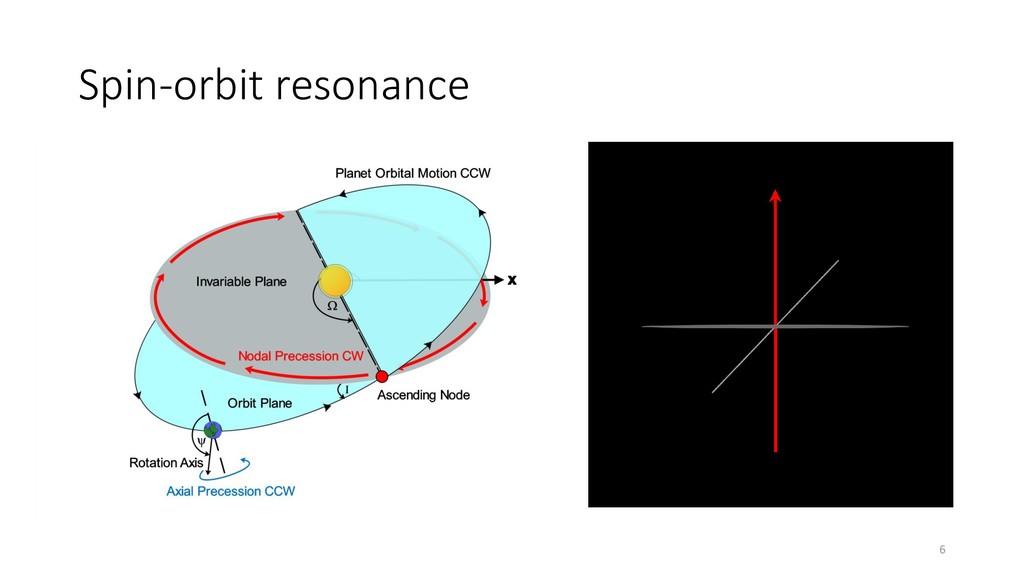
  1. Obliquity variation • What can change planetary obliquity? ◦ Torques

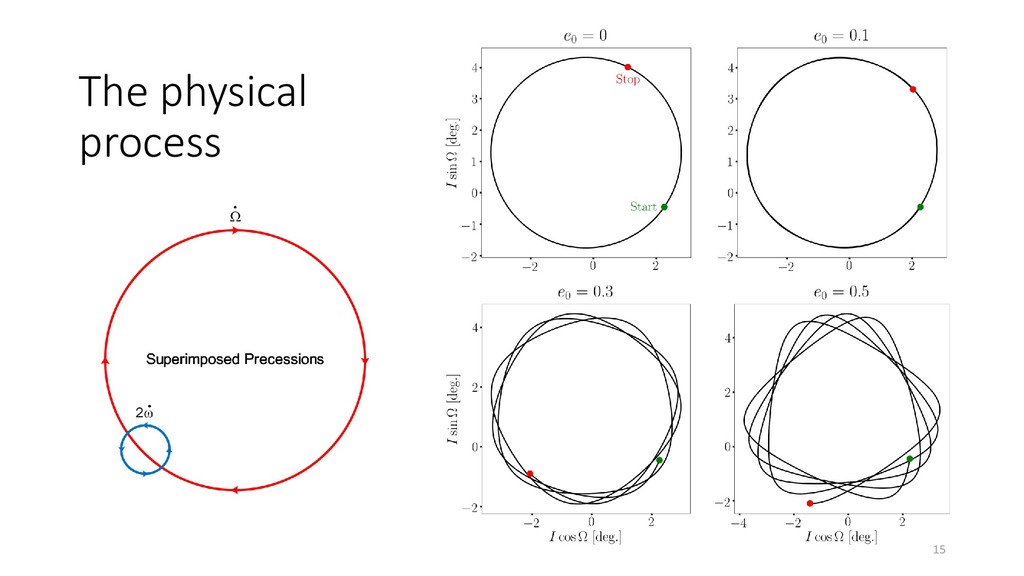
    from other planets ◦ Change in orbital inclination or ascending node • Spin-orbit resonance ◦ Overlap of rotational axis precession frequency and an orbital frequency ◦ Large-amplitude variation ◦ Rotation axis precession ◦ Depends on rotation period and obliquity 5
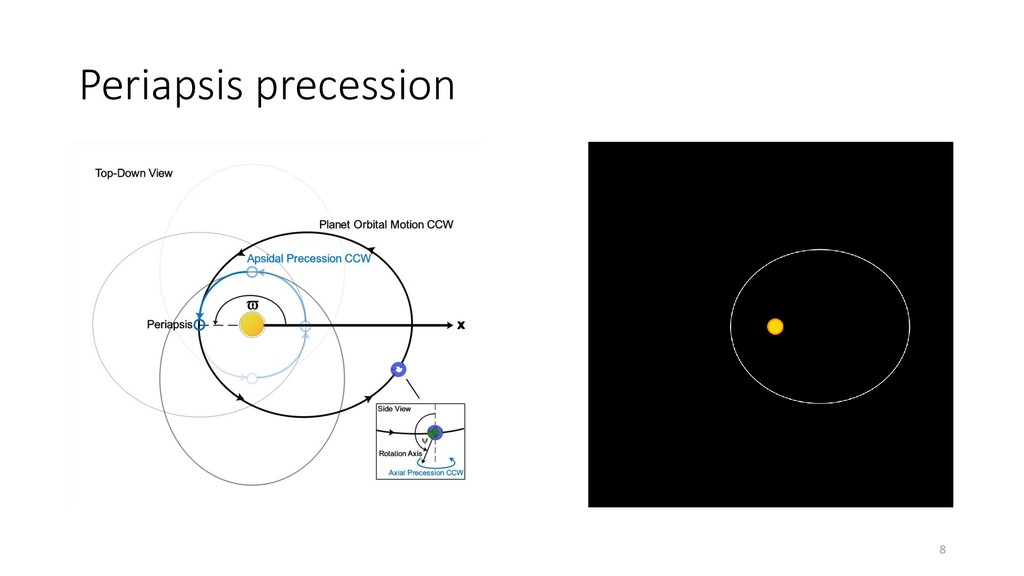
  2. Retrograde Motivation • Few studies focused on retrograde rotators •

    Studies that did focus on them found them to be especially obliquity stable • New resonance for eccentric, retrograde rotators 7
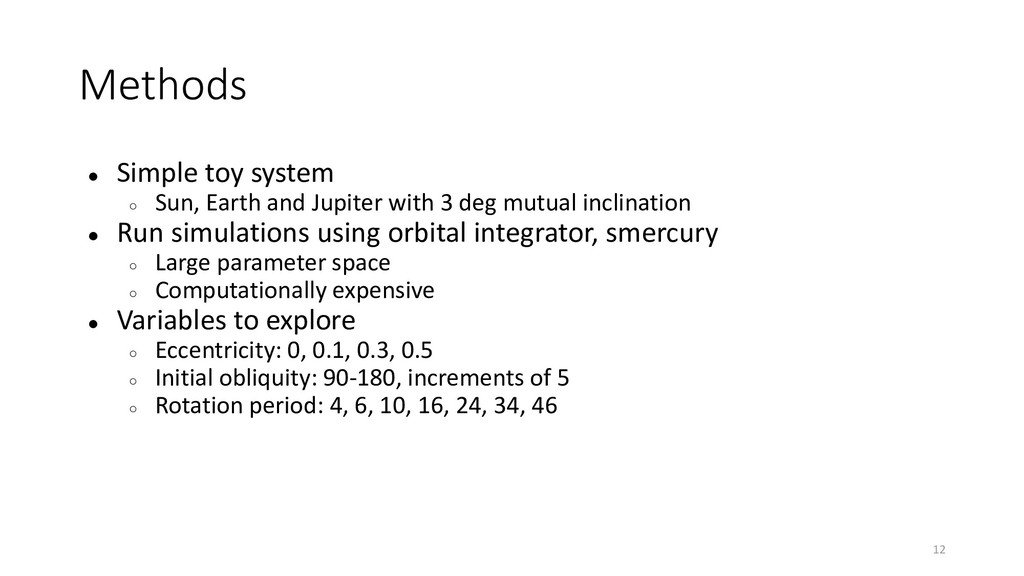
  3. Methods • Simple toy system ◦ Sun, Earth and Jupiter

    with 3 deg mutual inclination • Run simulations using orbital integrator, smercury ◦ Large parameter space ◦ Computationally expensive • Variables to explore ◦ Eccentricity: 0, 0.1, 0.3, 0.5 ◦ Initial obliquity: 90-180, increments of 5 ◦ Rotation period: 4, 6, 10, 16, 24, 34, 46 12
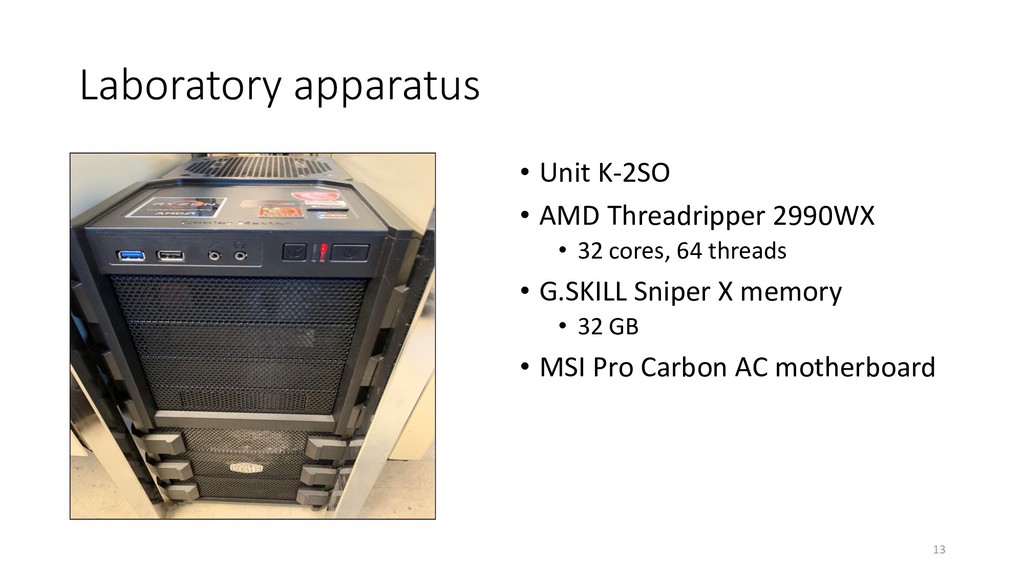
  4. Laboratory apparatus • Unit K-2SO • AMD Threadripper 2990WX •

    32 cores, 64 threads • G.SKILL Sniper X memory • 32 GB • MSI Pro Carbon AC motherboard 13
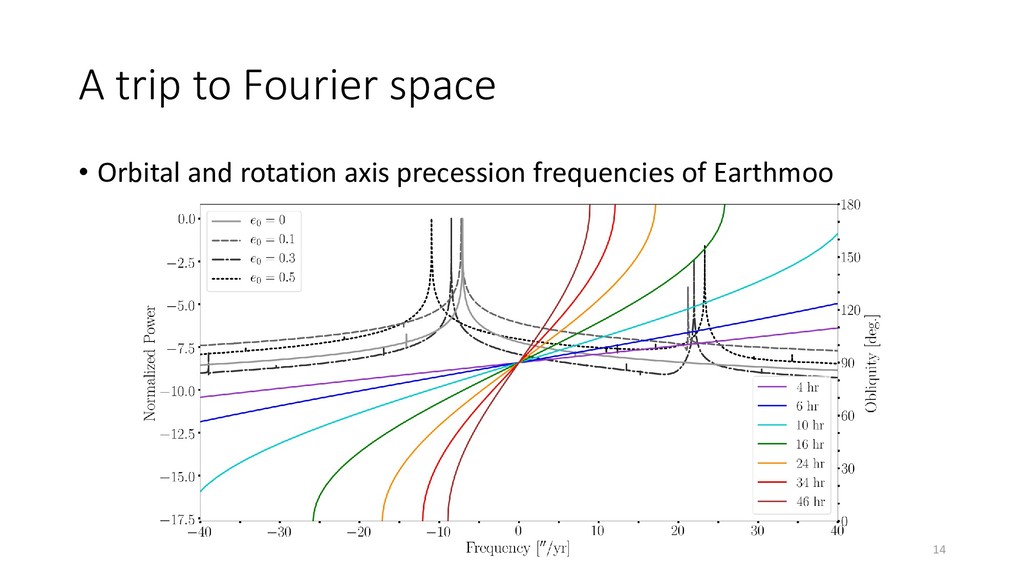
  5. A trip to Fourier space • Orbital and rotation axis

    precession frequencies of Earthmoo 14
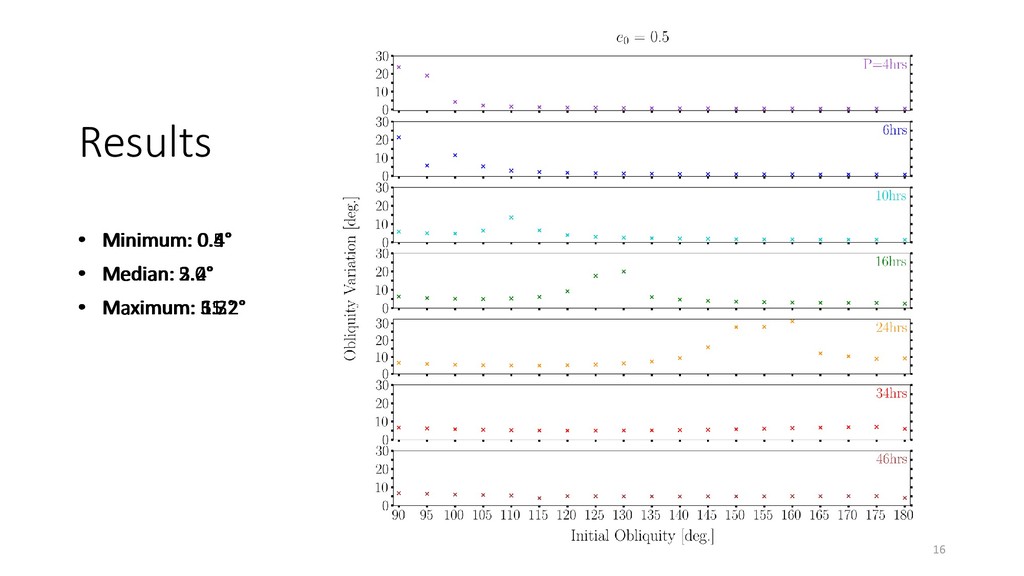
  6. • Minimum: 0.5° • Median: 5.0° • Maximum: 31.2° •

    Minimum: 0.4° • Median: 2.0° • Maximum: 5.7° • Minimum: 0.4° • Median: 2.2° • Maximum: 6.3° • Minimum: 0.4° • Median: 3.4° • Maximum: 15.2° Results 16
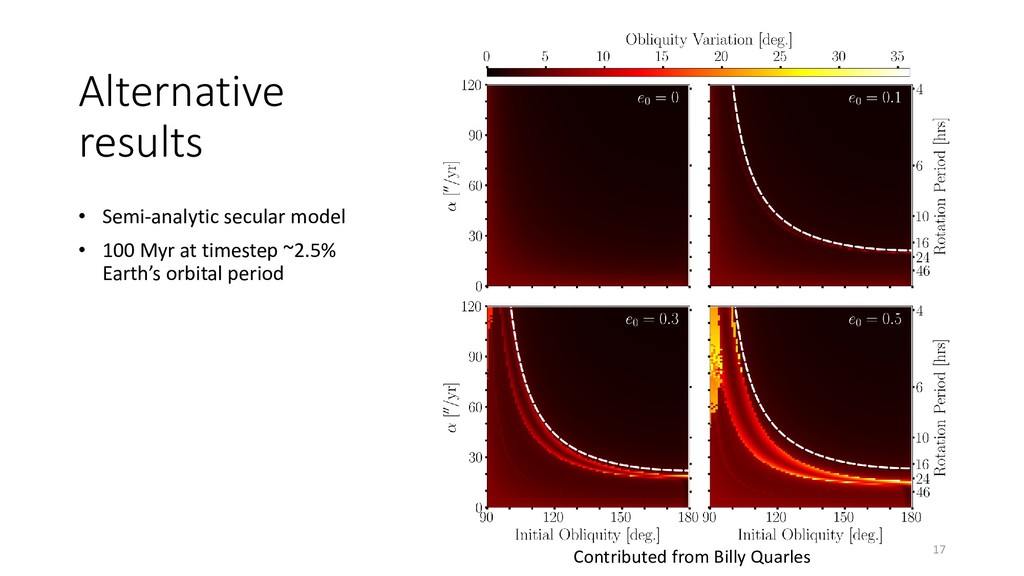
  7. Alternative results • Semi-analytic secular model • 100 Myr at

    timestep ~2.5% Earth’s orbital period 17 Contributed from Billy Quarles
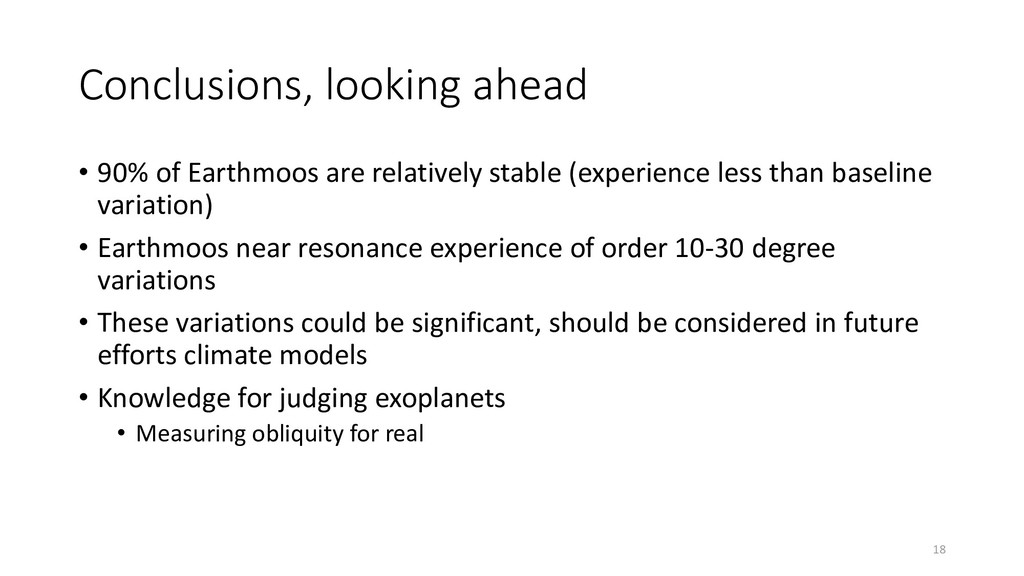
  8. Conclusions, looking ahead • 90% of Earthmoos are relatively stable

    (experience less than baseline variation) • Earthmoos near resonance experience of order 10-30 degree variations • These variations could be significant, should be considered in future efforts climate models • Knowledge for judging exoplanets • Measuring obliquity for real 18
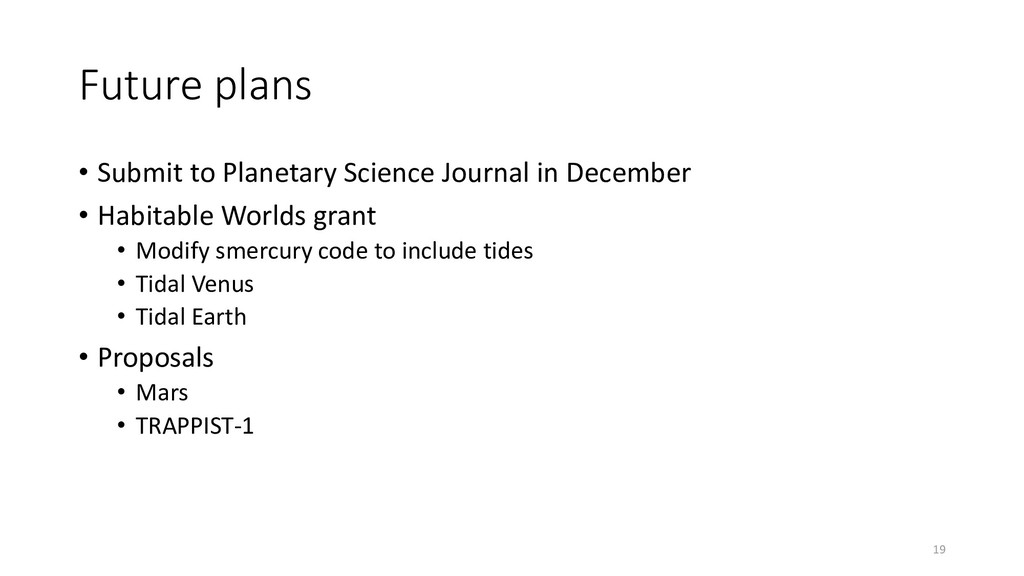
  9. Future plans • Submit to Planetary Science Journal in December

    • Habitable Worlds grant • Modify smercury code to include tides • Tidal Venus • Tidal Earth • Proposals • Mars • TRAPPIST-1 19
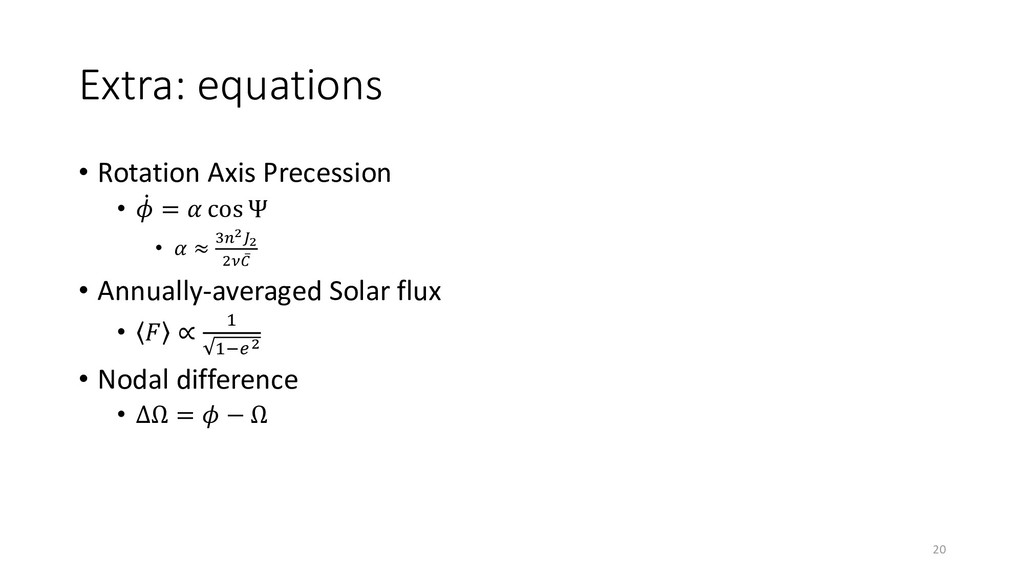
  10. Extra: equations • Rotation Axis Precession • ሶ = cos

    Ψ • ≈ 322 2 ҧ • Annually-averaged Solar flux • ∝ 1 1−2 • Nodal difference • ΔΩ = − Ω 20