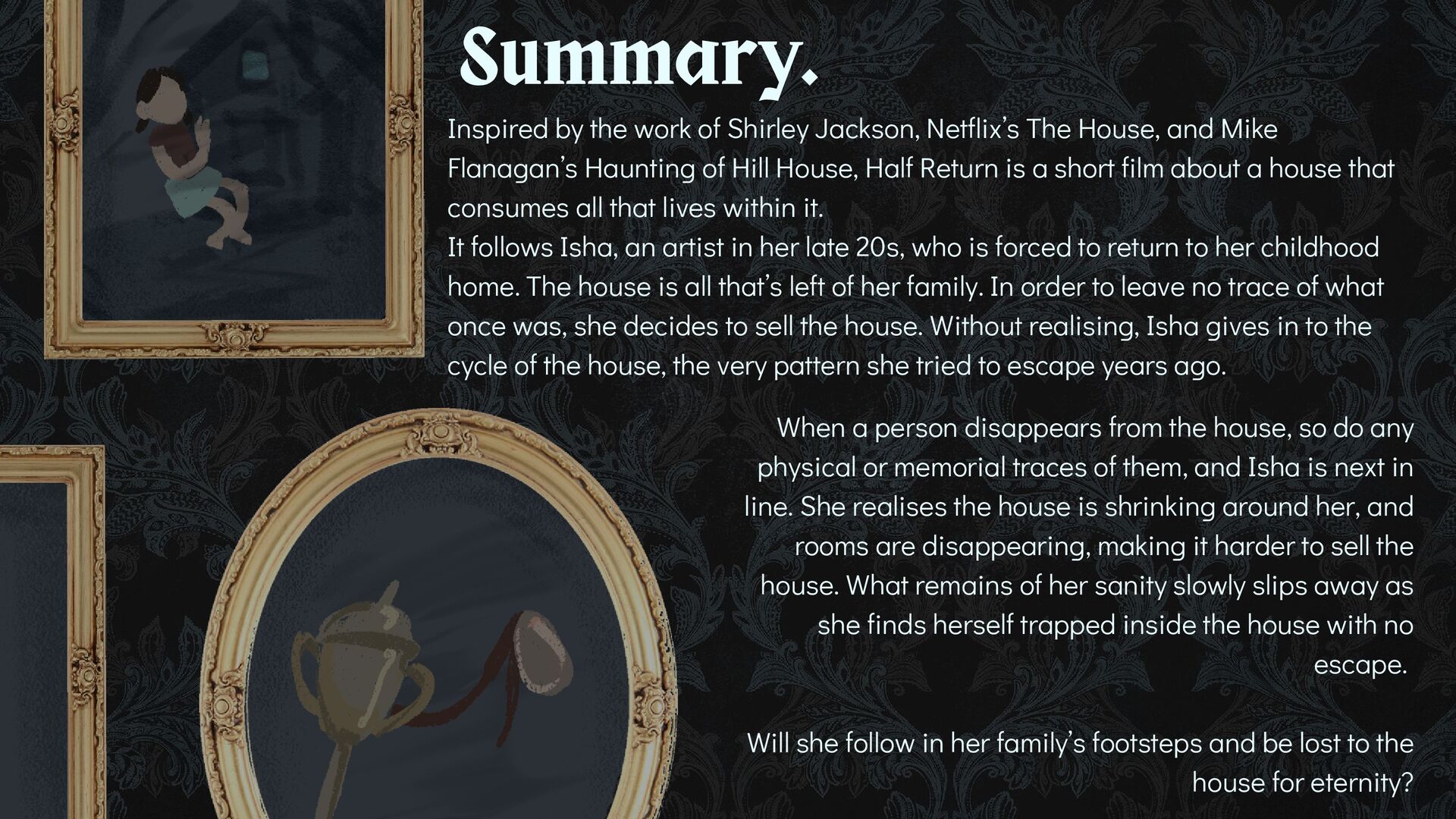
House, and Mike Flanagan’s Haunting of Hill House, Half Return is a short film about a house that consumes all that lives within it. It follows Isha, an artist in her late 20s, who is forced to return to her childhood home. The house is all that’s left of her family. In order to leave no trace of what once was, she decides to sell the house. Without realising, Isha gives in to the cycle of the house, the very pattern she tried to escape years ago. When a person disappears from the house, so do any physical or memorial traces of them, and Isha is next in line. She realises the house is shrinking around her, and rooms are disappearing, making it harder to sell the house. What remains of her sanity slowly slips away as she finds herself trapped inside the house with no escape. Will she follow in her family’s footsteps and be lost to the house for eternity?
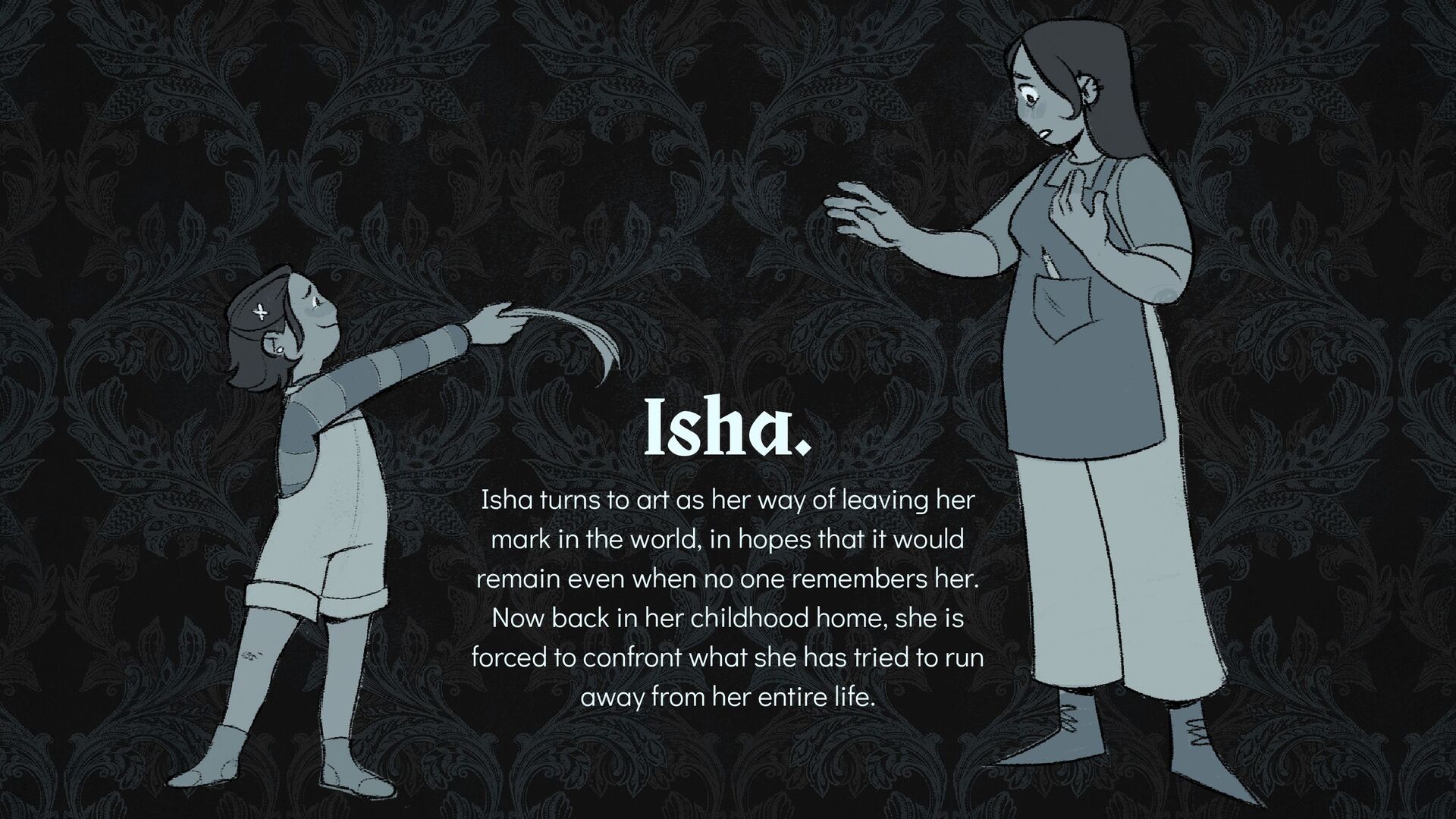
her mark in the world, in hopes that it would remain even when no one remembers her. Now back in her childhood home, she is forced to confront what she has tried to run away from her entire life.
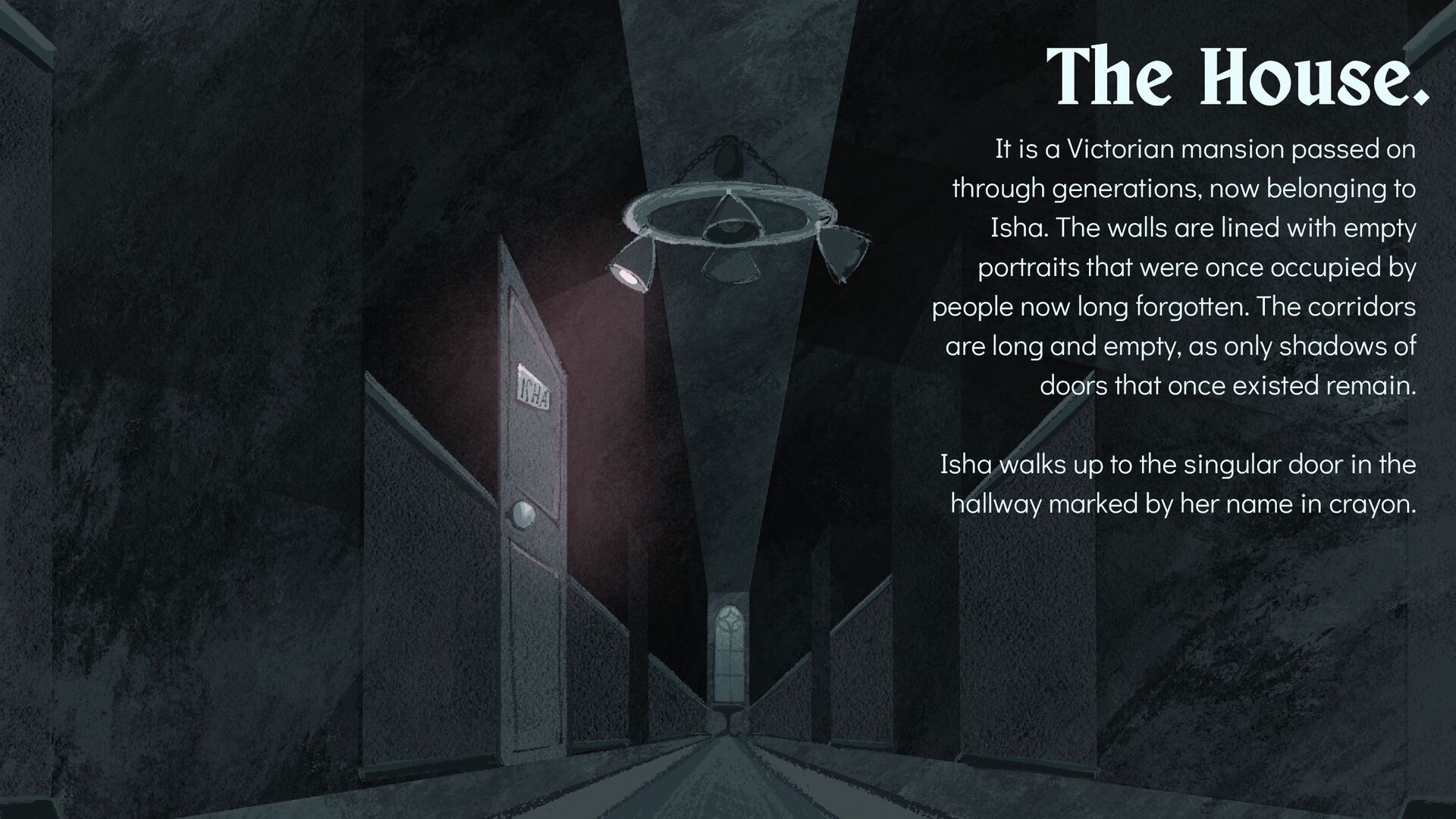
generations, now belonging to Isha. The walls are lined with empty portraits that were once occupied by people now long forgotten. The corridors are long and empty, as only shadows of doors that once existed remain. Isha walks up to the singular door in the hallway marked by her name in crayon.
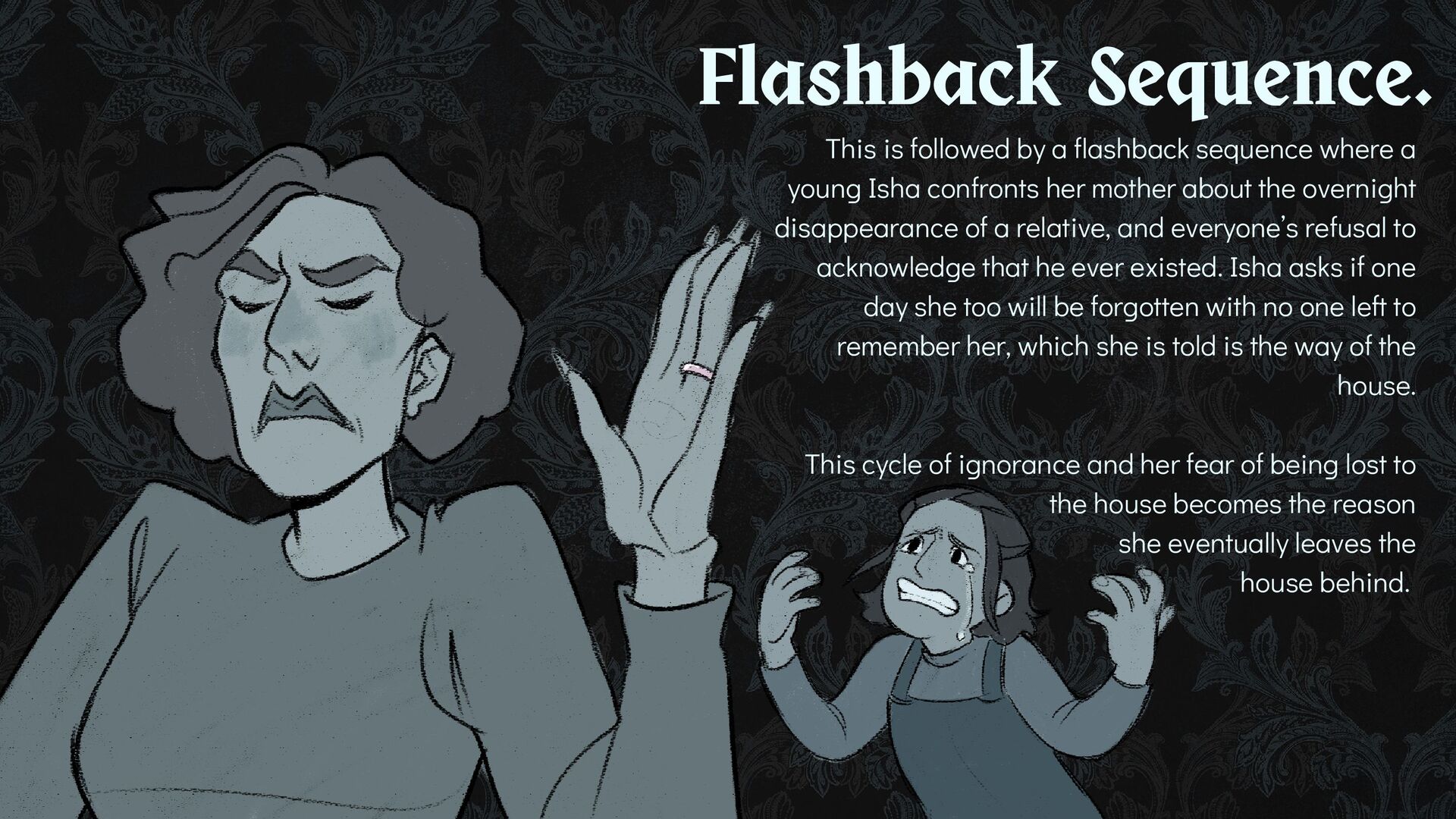
Isha confronts her mother about the overnight disappearance of a relative, and everyone’s refusal to acknowledge that he ever existed. Isha asks if one day she too will be forgotten with no one left to remember her, which she is told is the way of the house. This cycle of ignorance and her fear of being lost to the house becomes the reason she eventually leaves the house behind. Flashback Sequence.
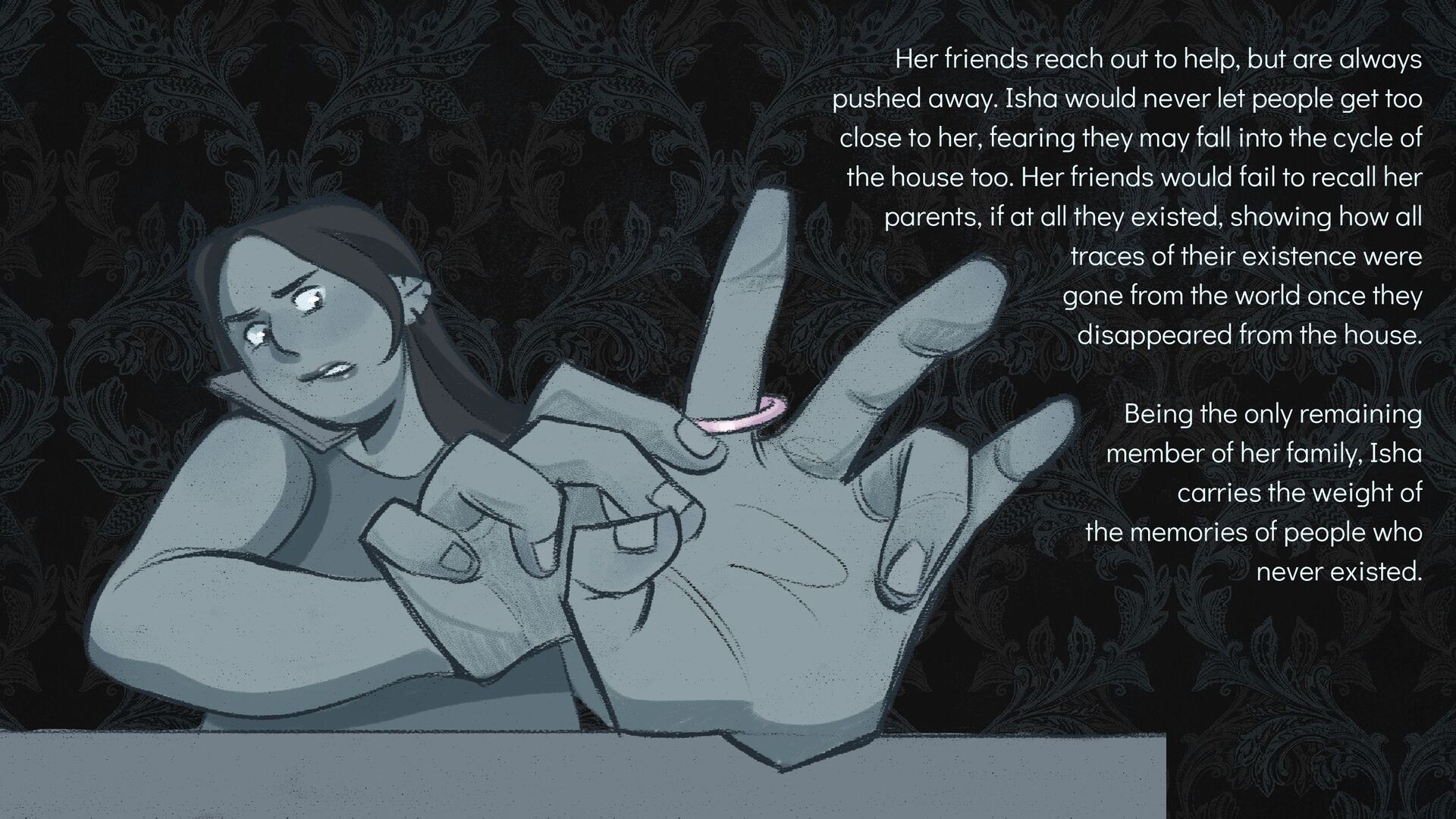
away. Isha would never let people get too close to her, fearing they may fall into the cycle of the house too. Her friends would fail to recall her parents, if at all they existed, showing how all traces of their existence were gone from the world once they disappeared from the house. Being the only remaining member of her family, Isha carries the weight of the memories of people who never existed.
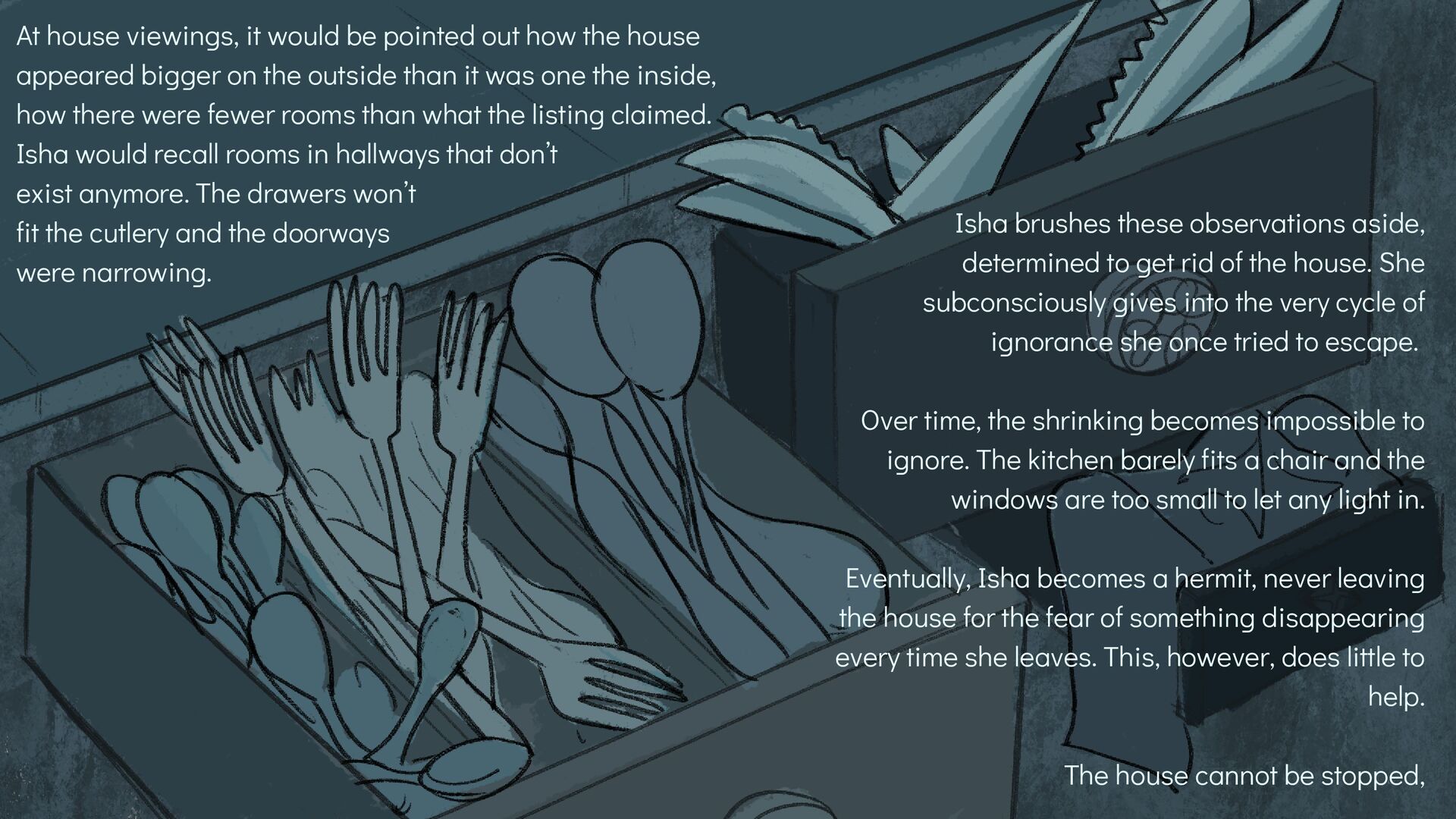
house appeared bigger on the outside than it was one the inside, how there were fewer rooms than what the listing claimed. Isha would recall rooms in hallways that don’t exist anymore. The drawers won’t fit the cutlery and the doorways were narrowing. Isha brushes these observations aside, determined to get rid of the house. She subconsciously gives into the very cycle of ignorance she once tried to escape. Over time, the shrinking becomes impossible to ignore. The kitchen barely fits a chair and the windows are too small to let any light in. Eventually, Isha becomes a hermit, never leaving the house for the fear of something disappearing every time she leaves. This, however, does little to help. The house cannot be stopped,
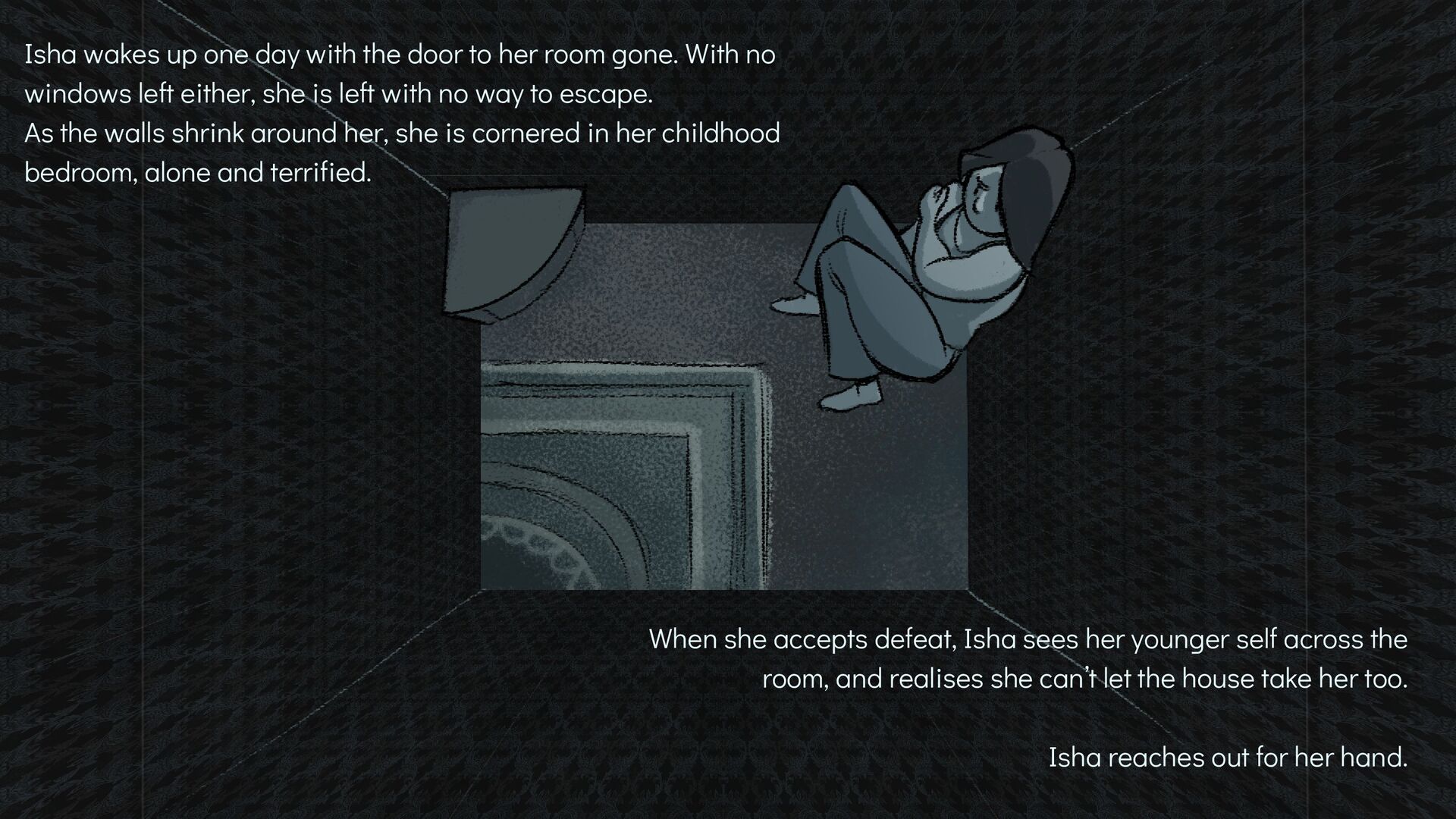
room gone. With no windows left either, she is left with no way to escape. As the walls shrink around her, she is cornered in her childhood bedroom, alone and terrified. When she accepts defeat, Isha sees her younger self across the room, and realises she can’t let the house take her too. Isha reaches out for her hand.


 kritihooja
 sabderemane
 garrettdimon
 schlessera
 jnunemaker
.png) helenjbeal
helenjbeal
 inesmontani
 akosma
 reverentgeek
 raygrieselhuber
 bermonpainter
 mongodb
 bkeepers
![Thank You! Kriti Hooja [email protected]](https://files.speakerdeck.com/presentations/73d46639141b4966bd554b880362b151/slide_8.jpg)