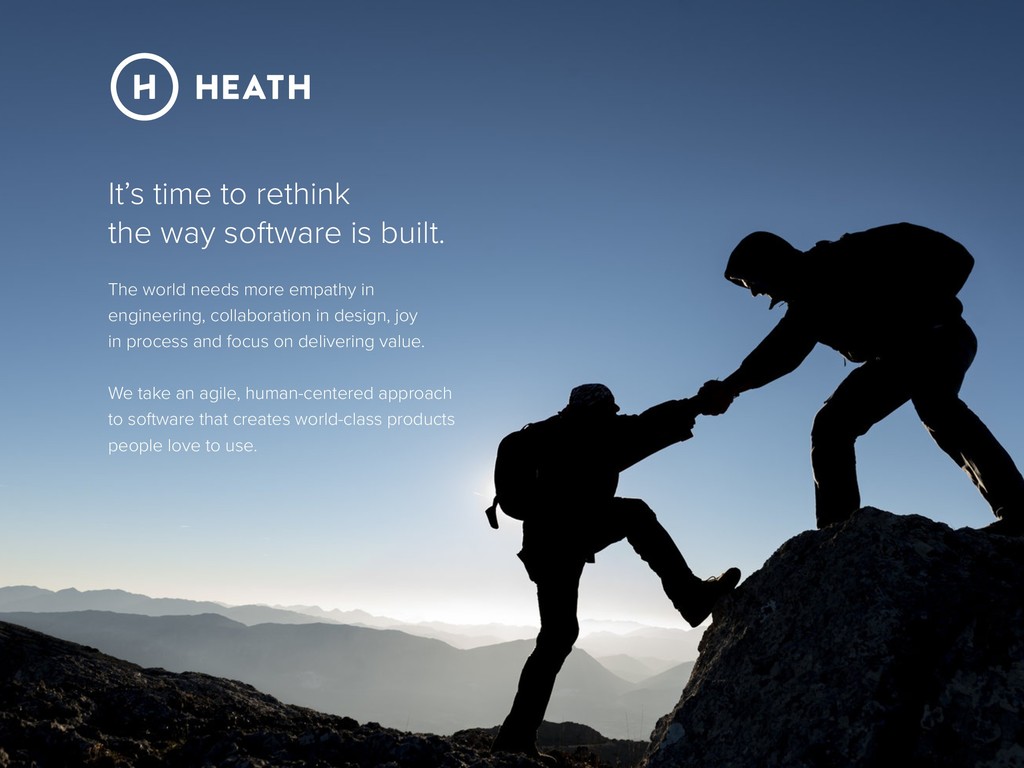
The world needs more empathy in engineering, collaboration in design, joy in process and focus on delivering value. We take an agile, human-centered approach to software that creates world-class products people love to use.
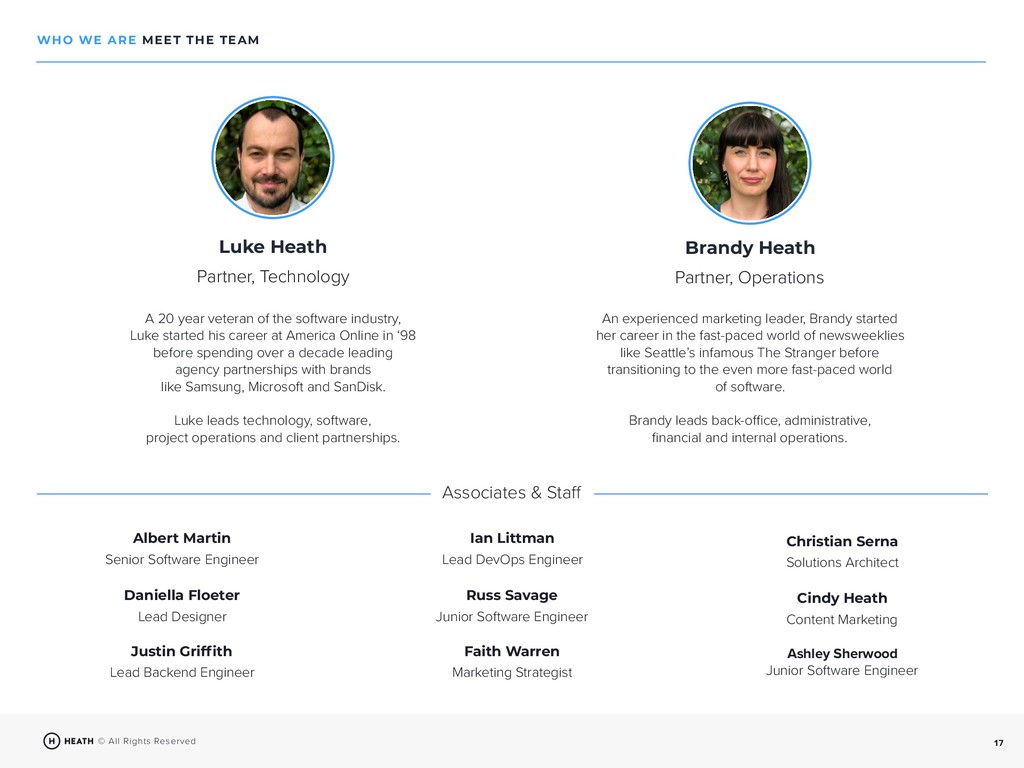
Partner, Technology A 20 year veteran of the software industry, Luke started his career at America Online in ‘98 before spending over a decade leading agency partnerships with brands like Samsung, Microsoft and SanDisk. Luke leads technology, software, project operations and client partnerships. WHO WE ARE MEET THE TEAM Brandy Heath Partner, Operations An experienced marketing leader, Brandy started her career in the fast-paced world of newsweeklies like Seattle’s infamous The Stranger before transitioning to the even more fast-paced world of software. Brandy leads back-office, administrative, financial and internal operations. Albert Martin Senior Software Engineer Daniella Floeter Lead Designer Justin Griffith Lead Backend Engineer Ian Littman Lead DevOps Engineer Russ Savage Junior Software Engineer Faith Warren Marketing Strategist Christian Serna Solutions Architect Cindy Heath Content Marketing Ashley Sherwood Junior Software Engineer
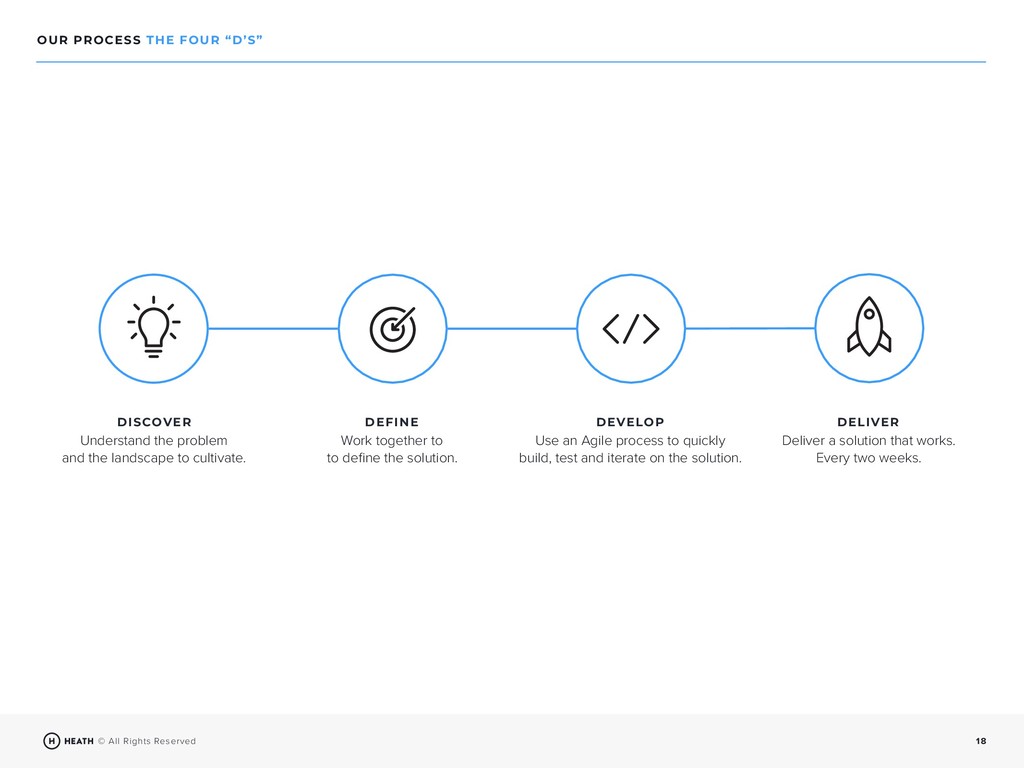
DISCOVER Understand the problem and the landscape to cultivate. DEFINE Work together to to define the solution. DEVELOP Use an Agile process to quickly build, test and iterate on the solution. DELIVER Deliver a solution that works. Every two weeks.
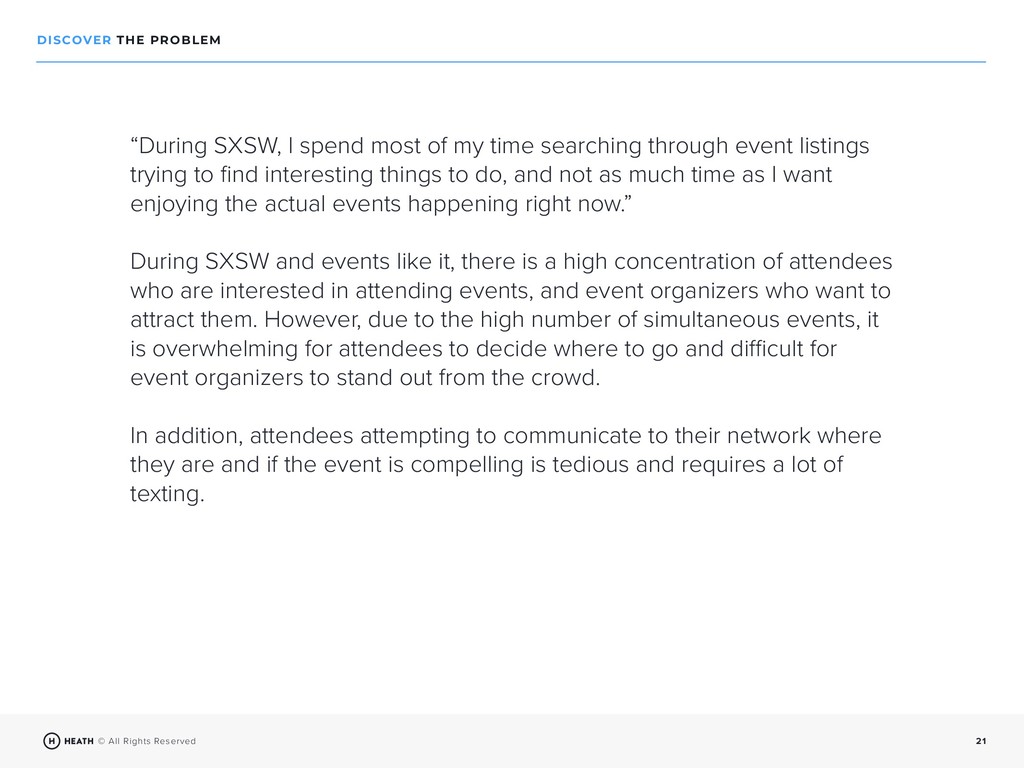
of my time searching through event listings trying to find interesting things to do, and not as much time as I want enjoying the actual events happening right now.” During SXSW and events like it, there is a high concentration of attendees who are interested in attending events, and event organizers who want to attract them. However, due to the high number of simultaneous events, it is overwhelming for attendees to decide where to go and difficult for event organizers to stand out from the crowd. In addition, attendees attempting to communicate to their network where they are and if the event is compelling is tedious and requires a lot of texting. DISCOVER THE PROBLEM
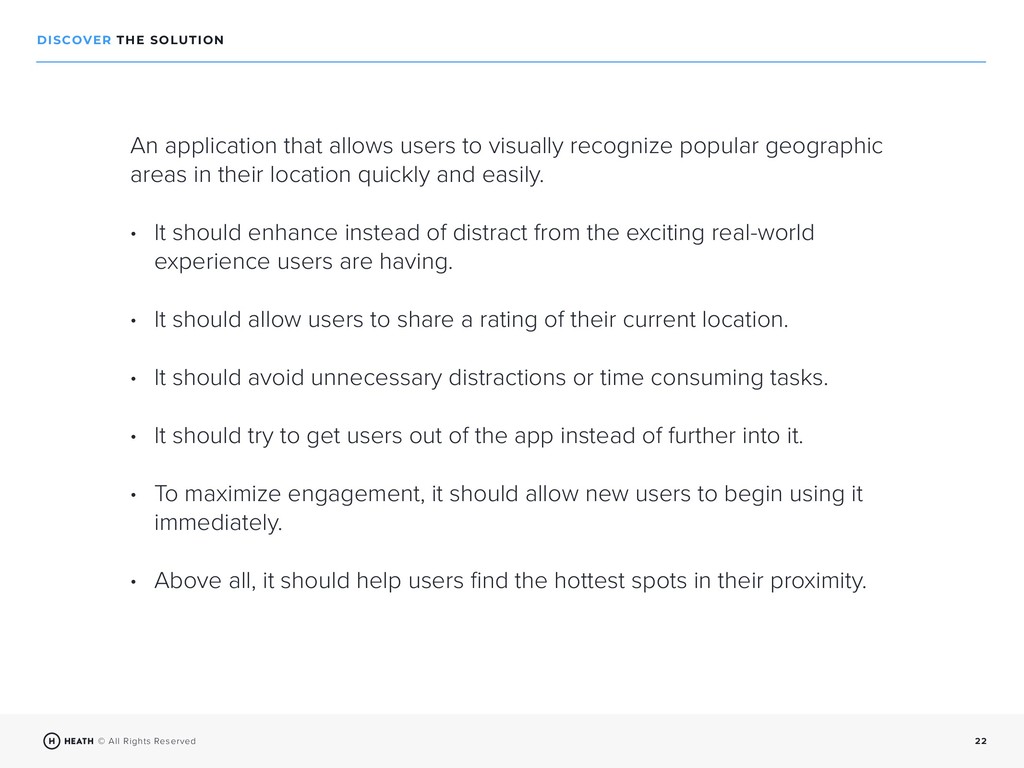
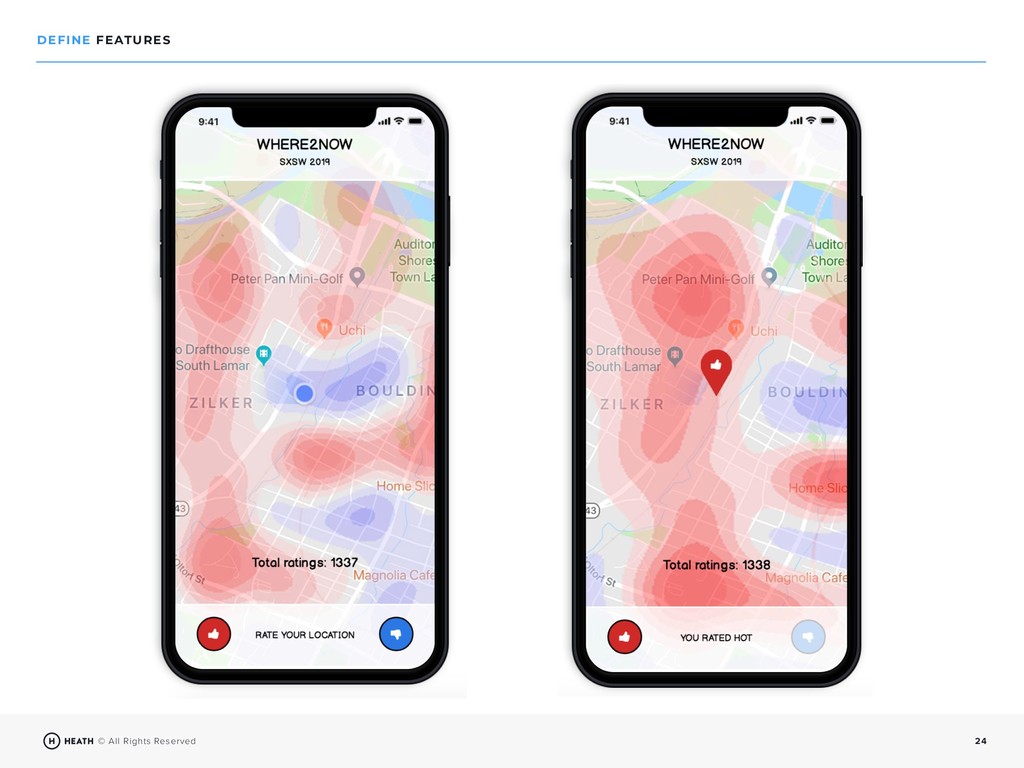
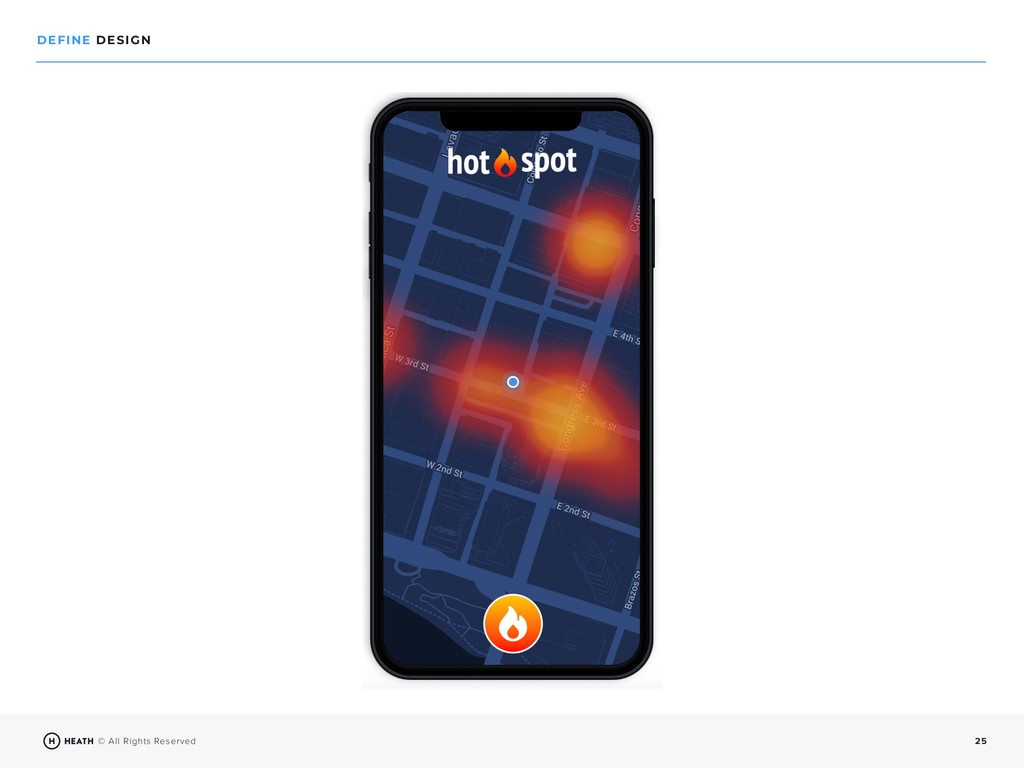
to visually recognize popular geographic areas in their location quickly and easily. • It should enhance instead of distract from the exciting real-world experience users are having. • It should allow users to share a rating of their current location. • It should avoid unnecessary distractions or time consuming tasks. • It should try to get users out of the app instead of further into it. • To maximize engagement, it should allow new users to begin using it immediately. • Above all, it should help users find the hottest spots in their proximity. DISCOVER THE SOLUTION
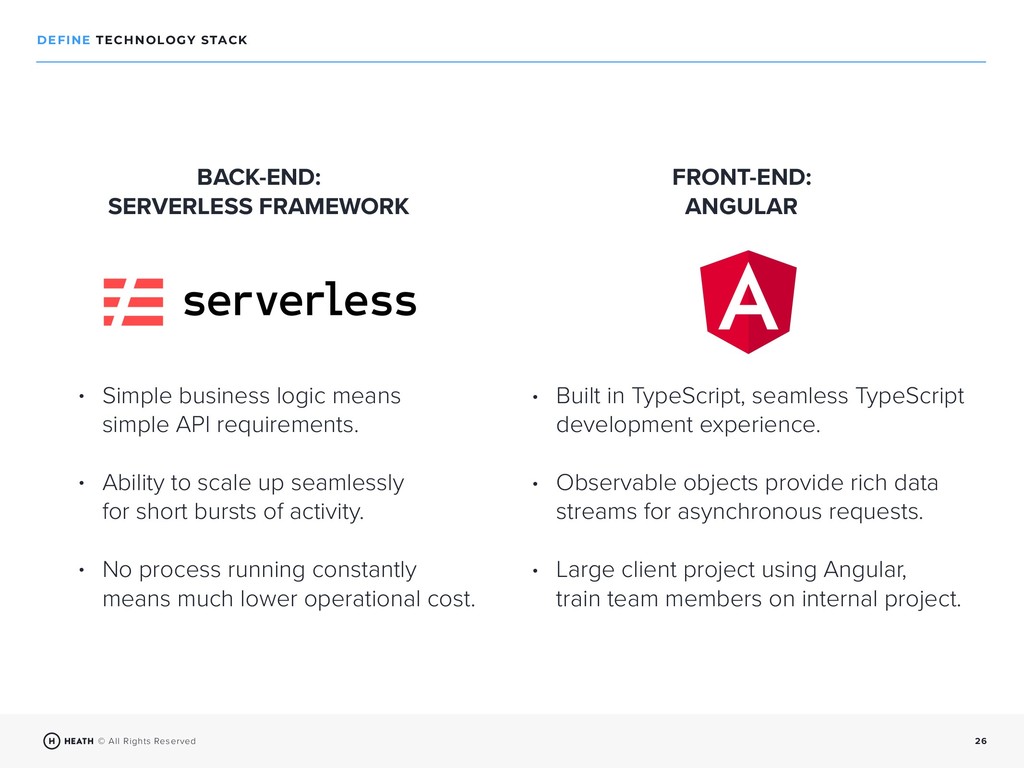
SERVERLESS FRAMEWORK FRONT-END: ANGULAR • Simple business logic means simple API requirements. • Ability to scale up seamlessly for short bursts of activity. • No process running constantly means much lower operational cost. • Built in TypeScript, seamless TypeScript development experience. • Observable objects provide rich data streams for asynchronous requests. • Large client project using Angular, train team members on internal project.
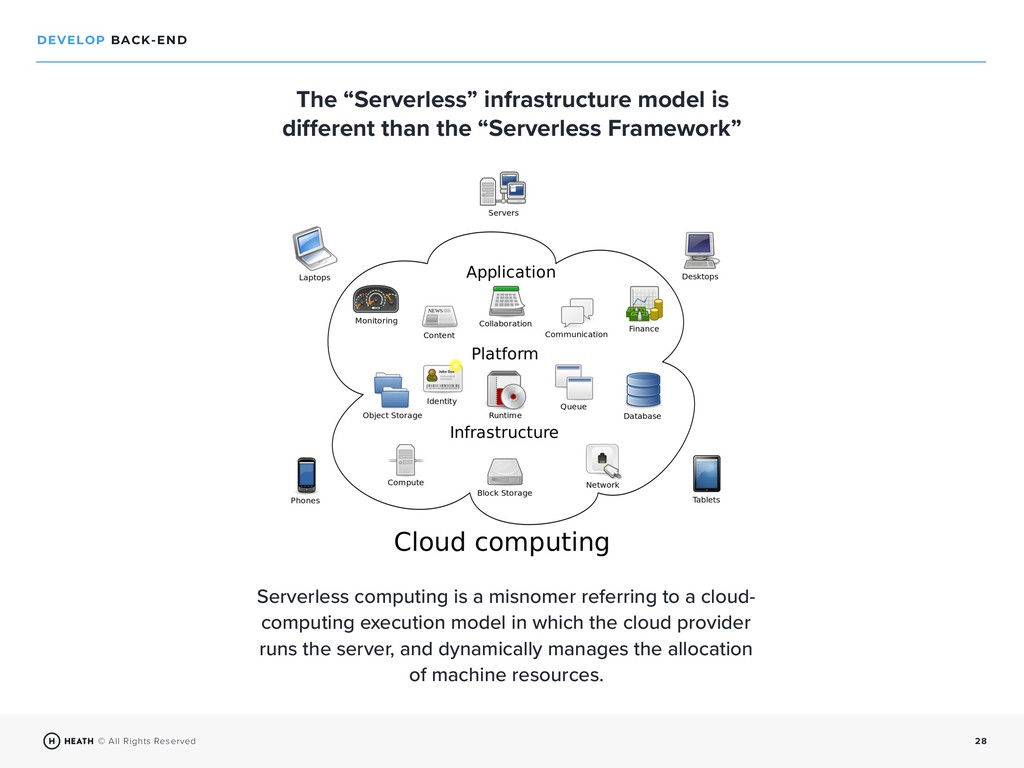
model is different than the “Serverless Framework” Serverless computing is a misnomer referring to a cloud- computing execution model in which the cloud provider runs the server, and dynamically manages the allocation of machine resources.
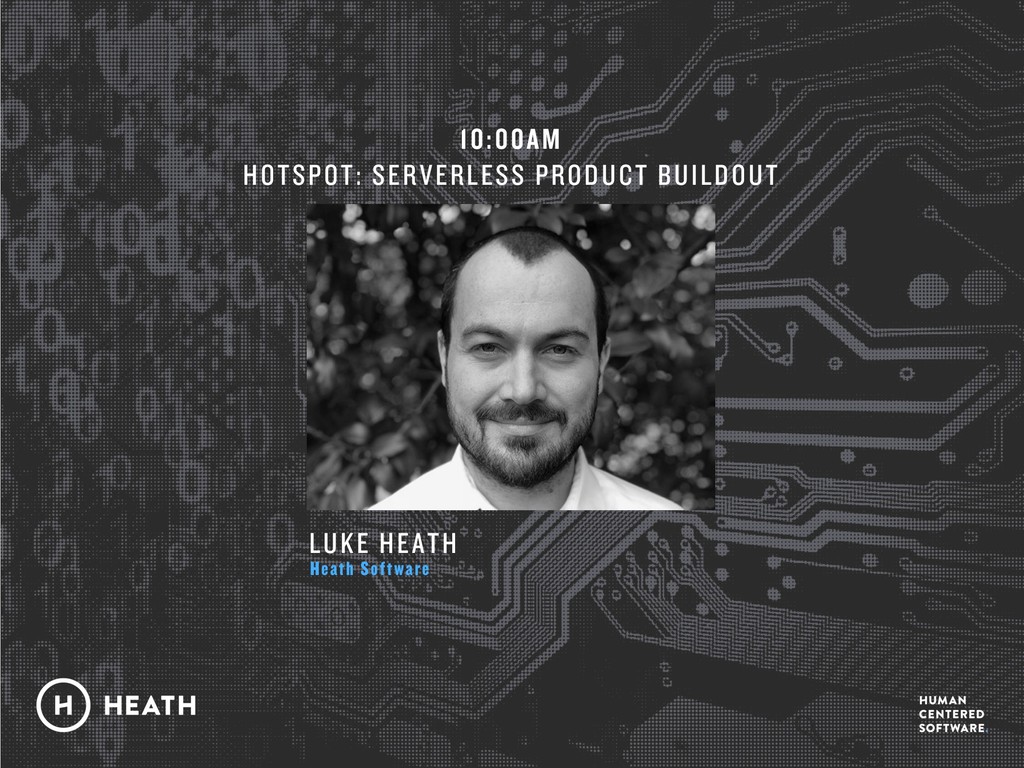
The Serverless Framework at serverless.com is an open-source library that uses new event-driven compute services like AWS Lambda, Google Cloud Functions, and more. It's a command-line tool, providing scaffolding, workflow automation and best practices for developing and deploying your serverless architecture. It's also completely extensible via plugins. Benefits • Simplifies deployment and reduces operational cost. • Fits well with microservices architecture pattern. • Decreased time to market and faster release cycles. Drawbacks • Performance issues due to latency inherent in model. • Debugging and logging can be tricky across deployed functions.
(commonly referred to as "Angular 2+") is a TypeScript-based open- source web application framework led by the Angular Team at Google and by a community of individuals and corporations. Angular is a complete rewrite from the same team that built AngularJS. Benefits • Written in TypeScript, supports TypeScript as first-class citizen. • The “Angular Way” convention enforces consistency across teams. • Material Design component library provides Google Apps components. Drawbacks • Learning curve, especially if new to TypeScript. • Large framework with a lot of boilerplate. • Not very flexible to customization.


 lukeheath
 irinanazarova
 a_matsuda
 ___akari11
 florets1
 kinopeee
 siroemk
 ryu1013
 ivargrimstad
 lynnswap
 drumath2237
 nokomoro3
 timakin
 shlominoach
 ryanjones
 tmiket
 iamctodd
 marcelosomers
 aleyda
 auna
 helmedeiros
 jakevdp
 pwiseman
 lindahogenes
 zakiyama