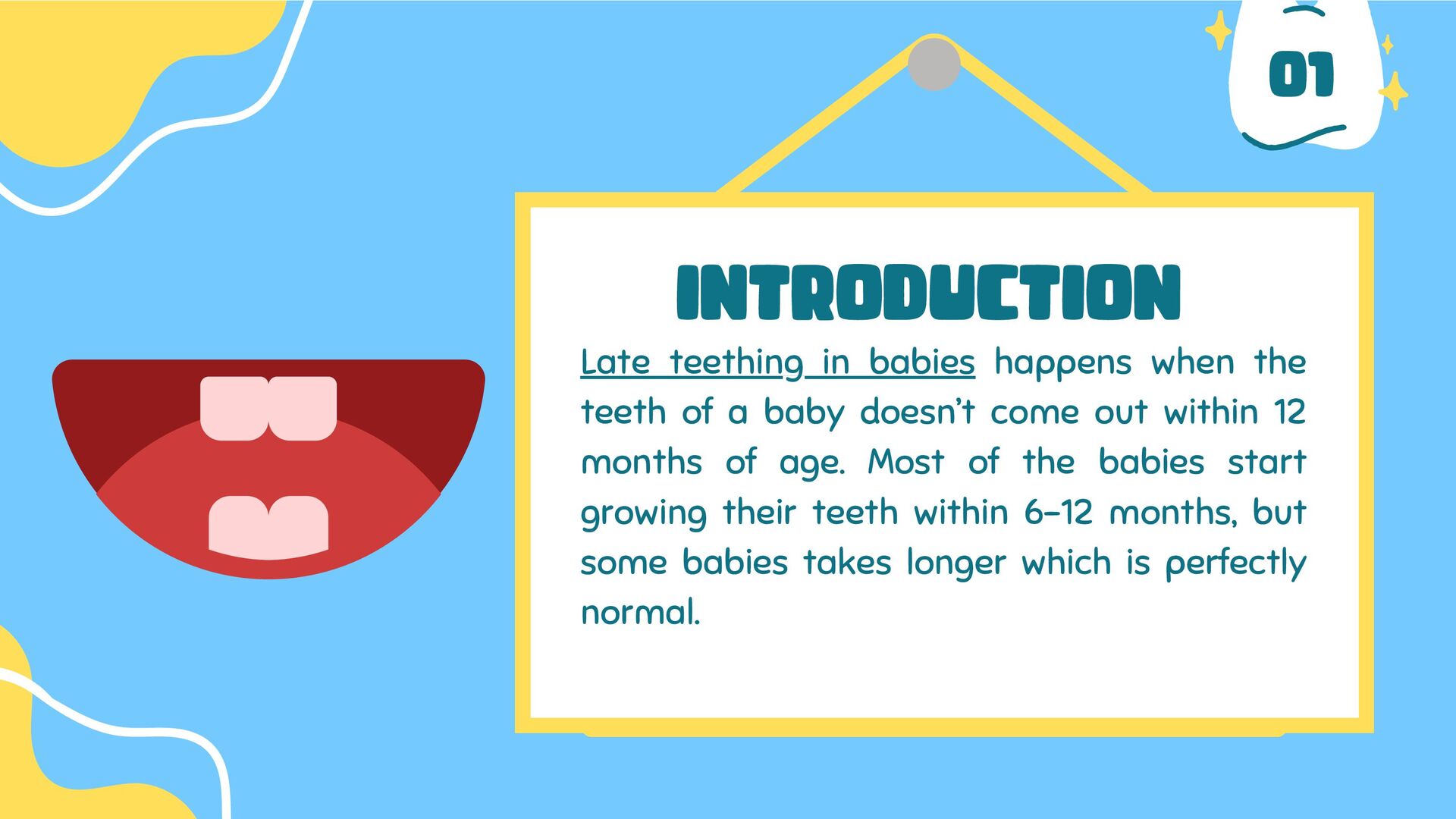
of a baby doesn’t come out within 12 months of age. Most of the babies start growing their teeth within 6-12 months, but some babies takes longer which is perfectly normal.
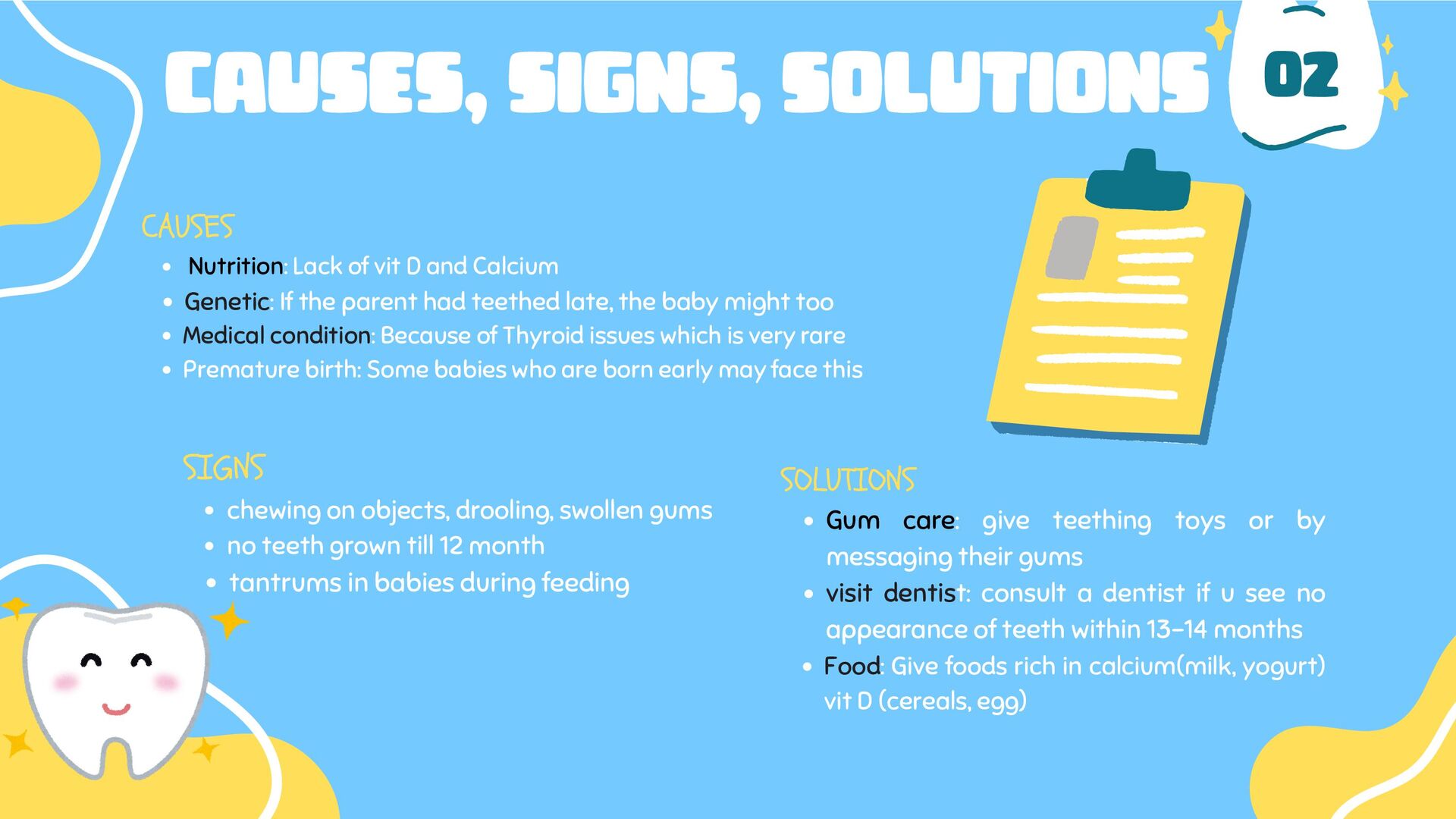
or by messaging their gums visit dentist: consult a dentist if u see no appearance of teeth within 13-14 months Food: Give foods rich in calcium(milk, yogurt) vit D (cereals, egg) CAUSES Nutrition: Lack of vit D and Calcium Genetic: If the parent had teethed late, the baby might too Medical condition: Because of Thyroid issues which is very rare Premature birth: Some babies who are born early may face this SIGNS chewing on objects, drooling, swollen gums no teeth grown till 12 month tantrums in babies during feeding
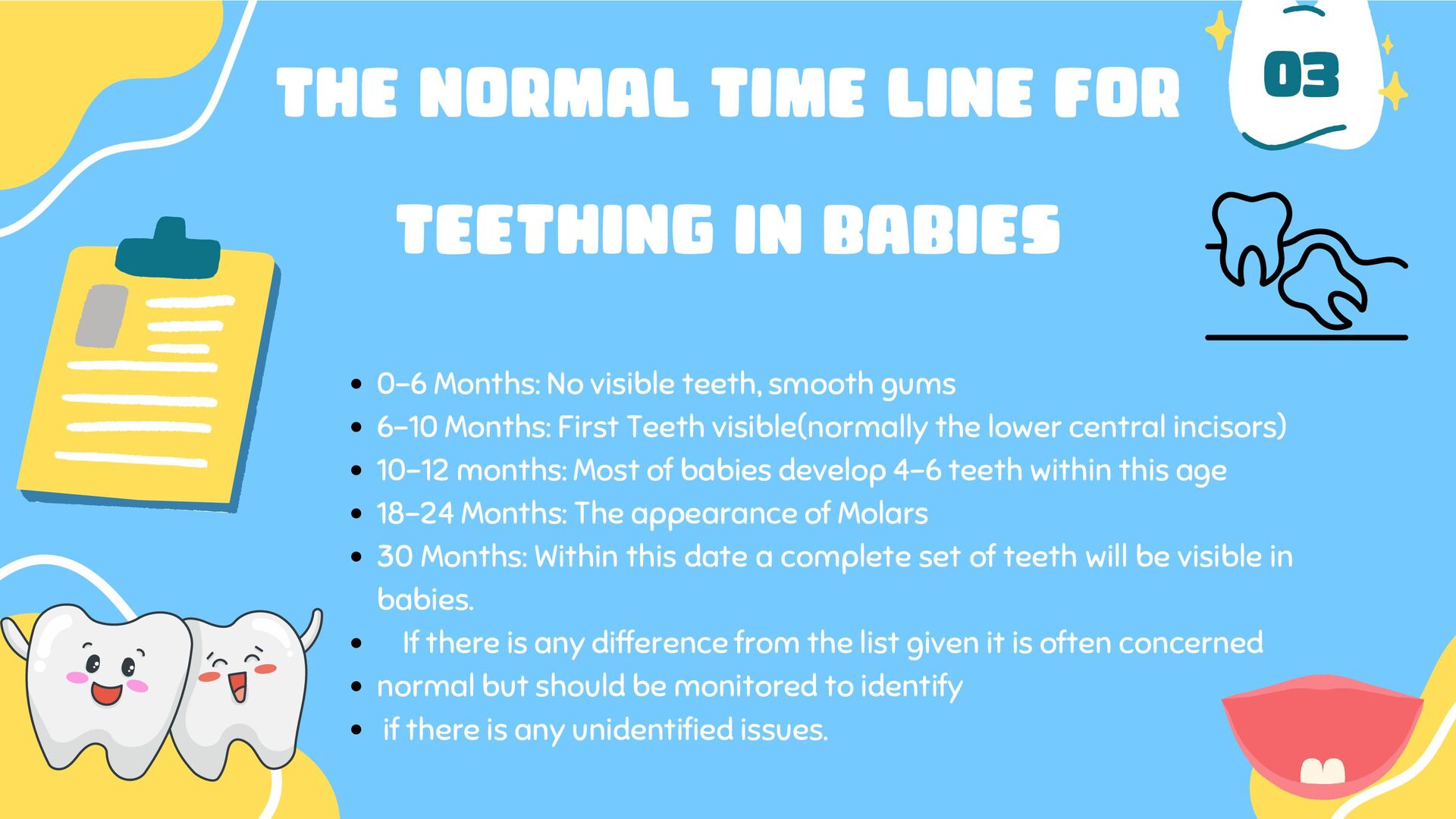
Months: No visible teeth, smooth gums 6-10 Months: First Teeth visible(normally the lower central incisors) 10-12 months: Most of babies develop 4-6 teeth within this age 18-24 Months: The appearance of Molars 30 Months: Within this date a complete set of teeth will be visible in babies. If there is any difference from the list given it is often concerned normal but should be monitored to identify if there is any unidentified issues.
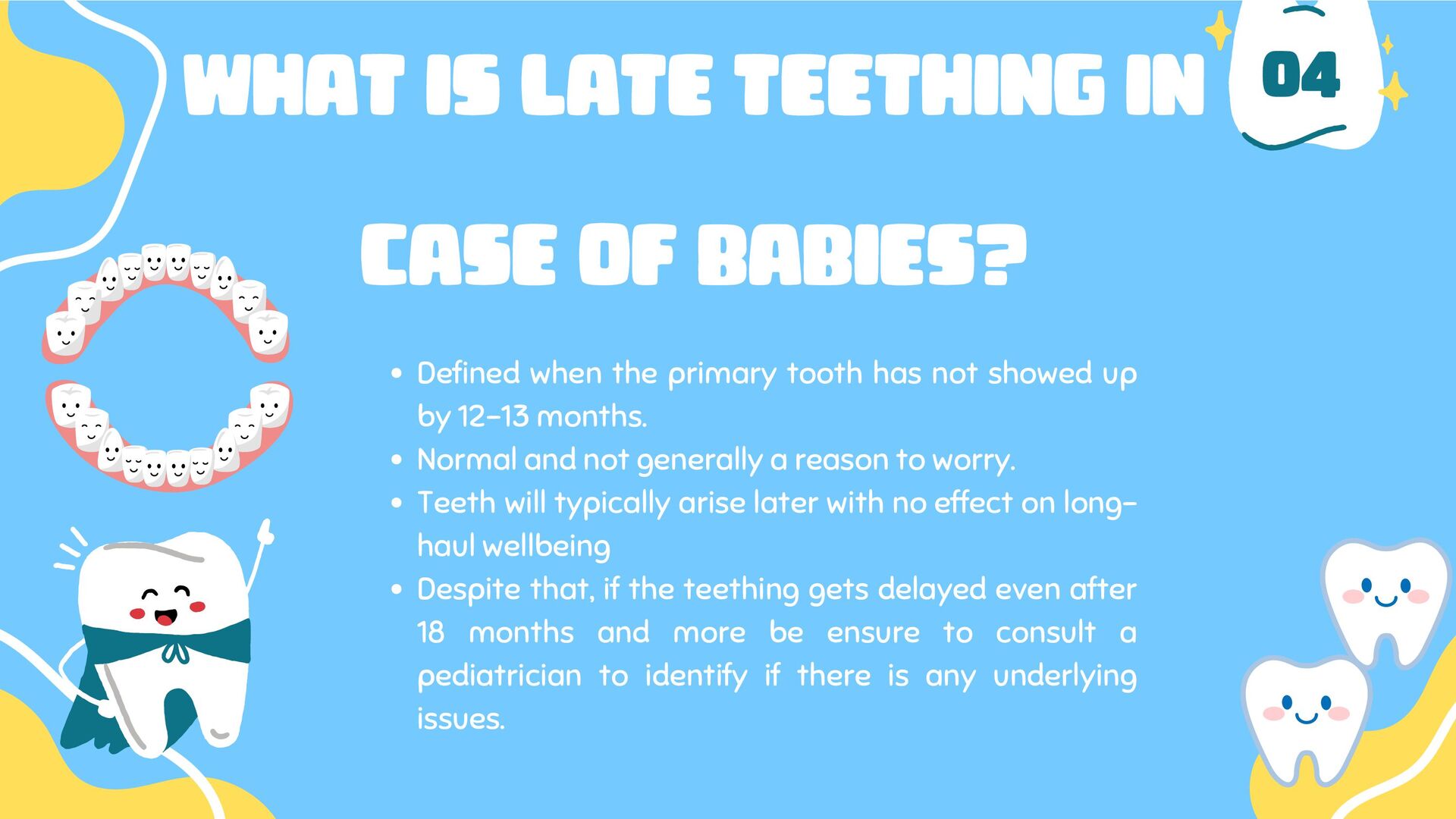
when the primary tooth has not showed up by 12-13 months. Normal and not generally a reason to worry. Teeth will typically arise later with no effect on long- haul wellbeing Despite that, if the teething gets delayed even after 18 months and more be ensure to consult a pediatrician to identify if there is any underlying issues.
of late getting teeth frequently decides when a child's teeth emit. 1. Nutritional facts: Lack of vit D , calcium, & phosphorus makes teething slower. 2. Low birth weight or premature birth: babies born before their due date or babies who has low weigh might suffer from delayed teething. 3. Medical disorders: babies with hypothyroidism may suffer from delayed teething and developmental problems. 4.
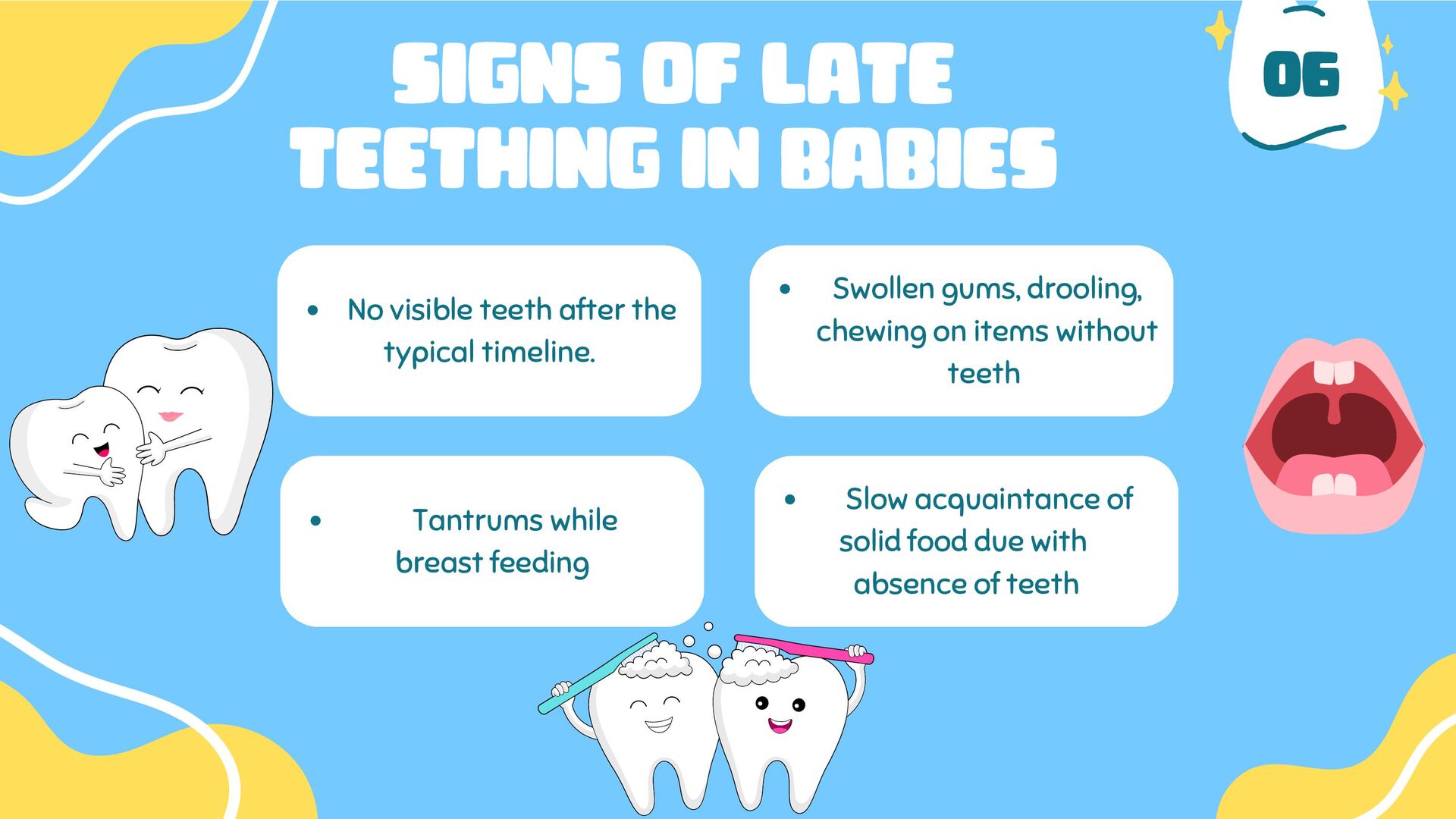
drooling, chewing on items without teeth Slow acquaintance of solid food due with absence of teeth Tantrums while breast feeding SIGNS OF LATE TEETHING IN BABIES
to see a specialist: 1. No teeth by 12-13 months. Indications of torment, irritation, or trouble taking care of. Whenever joined by other formative deferrals. Likely clinical worries: 2. Hereditary disorders (e.g., Down condition). Rickets or different circumstances brought about by lack of vitamin D. Pediatric dental specialists can give X-rays or other assessments to guarantee teeth are foaming underneath the gums “ Late teething in babies are normal, but it must be monitored day by day.”
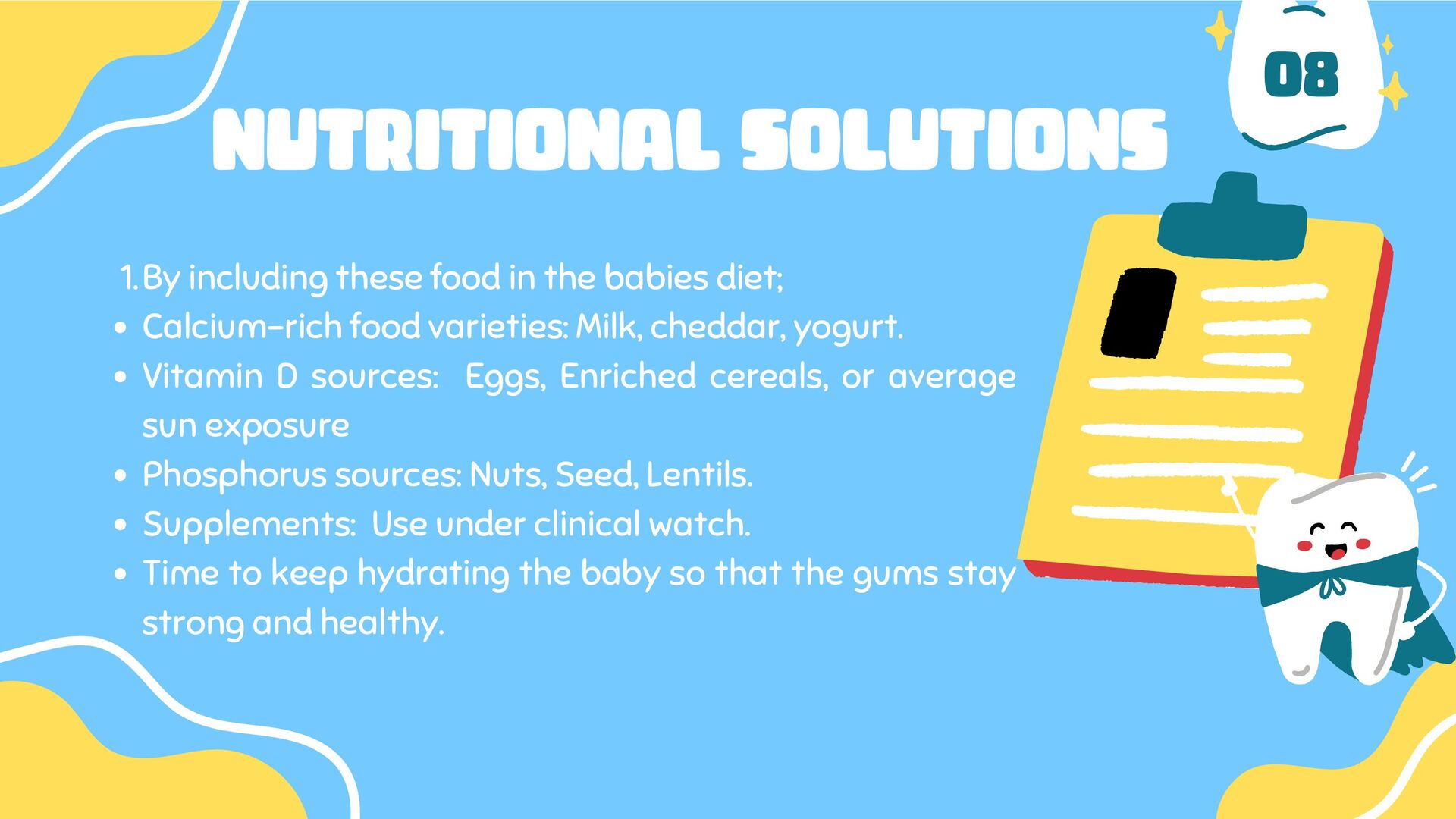
diet; 1. Calcium-rich food varieties: Milk, cheddar, yogurt. Vitamin D sources: Eggs, Enriched cereals, or average sun exposure Phosphorus sources: Nuts, Seed, Lentils. Supplements: Use under clinical watch. Time to keep hydrating the baby so that the gums stay strong and healthy.
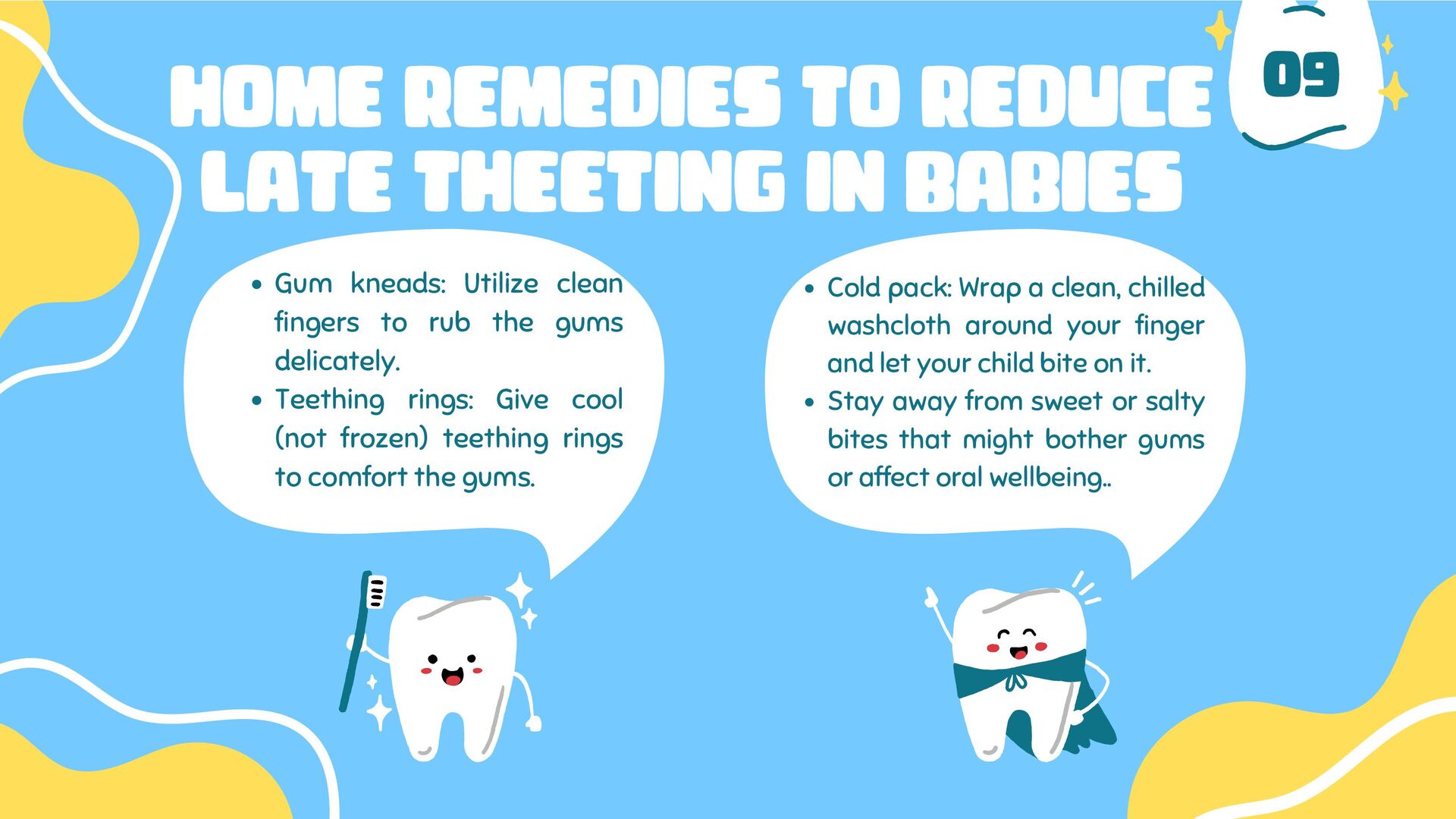
kneads: Utilize clean fingers to rub the gums delicately. Teething rings: Give cool (not frozen) teething rings to comfort the gums. Cold pack: Wrap a clean, chilled washcloth around your finger and let your child bite on it. Stay away from sweet or salty bites that might bother gums or affect oral wellbeing..
Late teething is considered as poor gut health TRUTH: Teething may wary within the babies and its not about gut health. MYTHS: Late teeth are considered stronger TRUTH: Teeth are not grown on the basis of strength. MYTHS: Babies with late teeth have developmental problems TRUTH: Baby teething doesn’t have any connection with the developmental factors.
oral cleanliness, even before teeth emit, by cleaning gums with a delicate fabric. Use of safe teething toys for teeth comfort and strengthening gum. Be patient and understand that every child is different in their development. Be cautious of severe bleeding gums and inflammations.
getting teeth at 14 months because of a hereditary family background of postponed getting teeth. No medical problems were noticed. Case 2: An untimely child experienced getting teeth at 16 months yet found all formative achievements by age 3. Case 3: A child with a lack of vitamin D showed late getting teeth at year and a half, which improved with dietary changes and enhancements.
deferrals are not generally a worry. A healthy regimen and great oral consideration can uphold the getting teeth process. Keep in mind: Persistence is critical, and proficient guidance can facilitate any concerns. Late Getting teeth in Children is a typical variety that ought not to be a wellspring of stress for guardians. Thus late teething in babies indicates their excursion for becoming sound and cheerful little ones!


 sabderemane
 leimatthew05
 katiecoart
 carmenintech
 mza
 mfonobong
 axbom
 thoeni
 aleyda
 lauravandoore
 keathley
 smashingmag