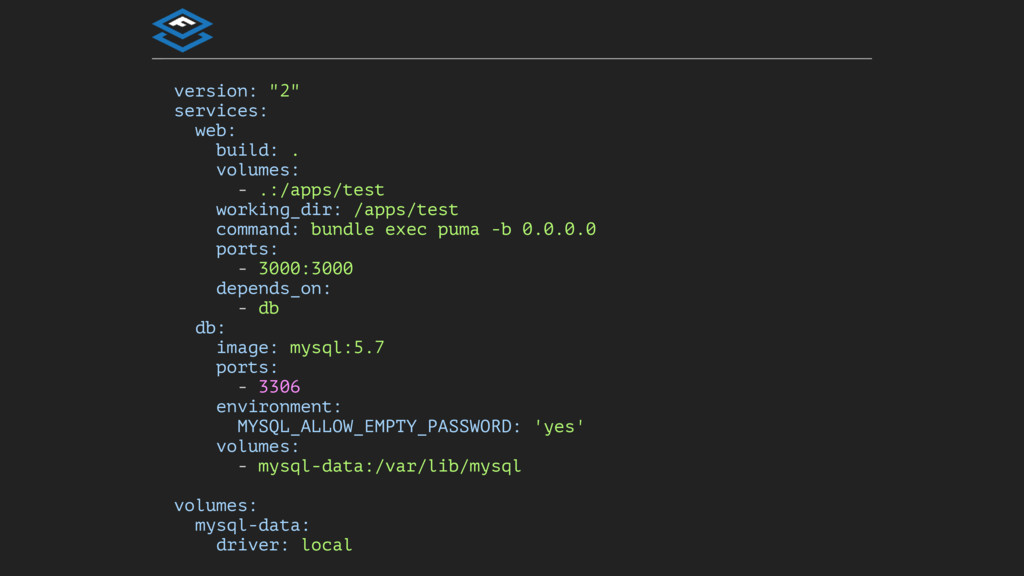
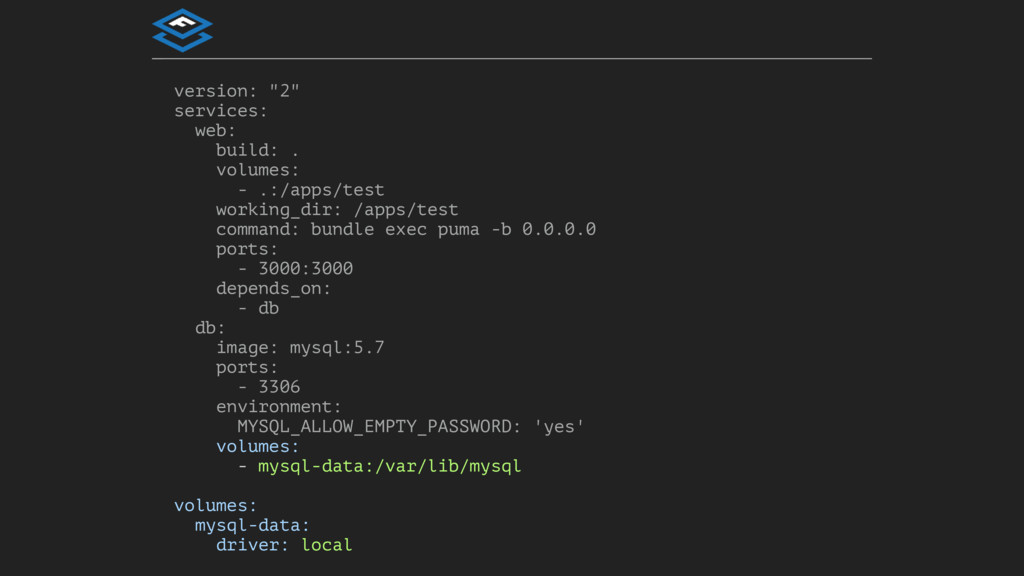
package your application into a standardized unit for Software Development. ▸ Docker containers wrap a piece of software in a complete filesystem that contains everything needed to run: code, runtime, system tools, system libraries – anything that can be installed on a server. This guarantees that the software will always run the same, regardless of its environment. —https:// www.docker.com/what-docker
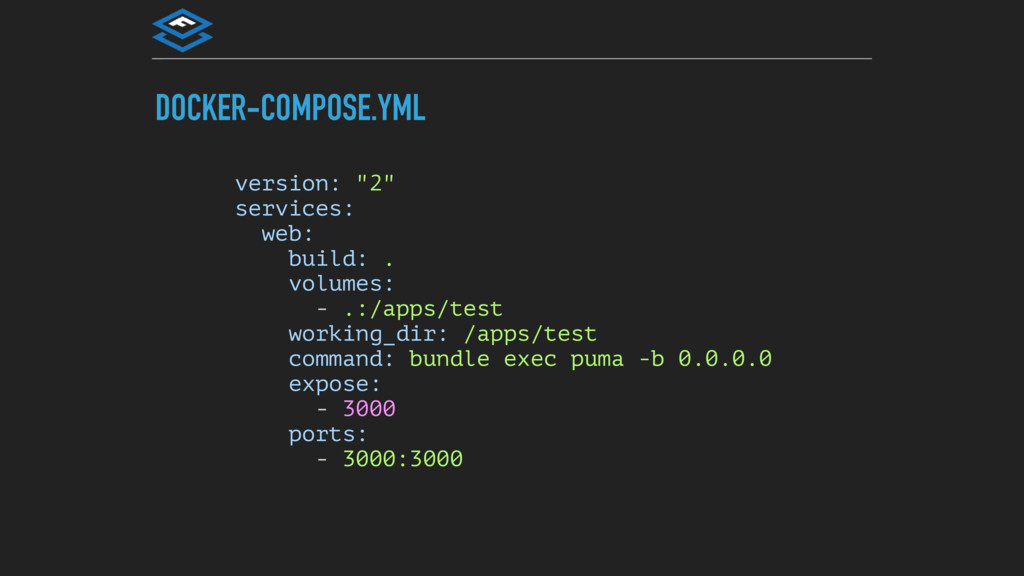
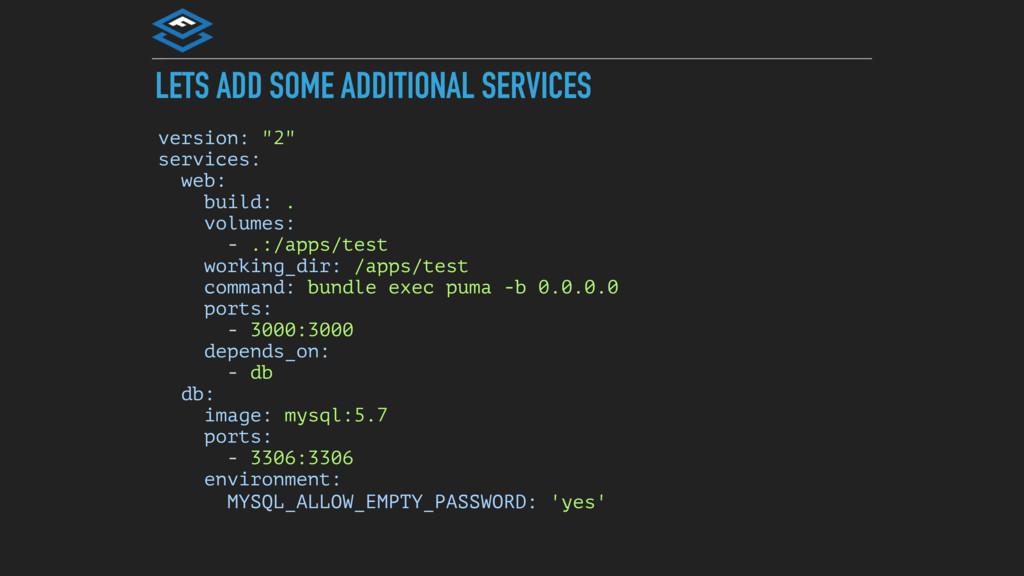
defining and running multi-container Docker applications. https://docs.docker.com/compose/' ▸ Its about arranging containers into logical services. Outlining dependencies and making sure that the appropriate containers are booted.
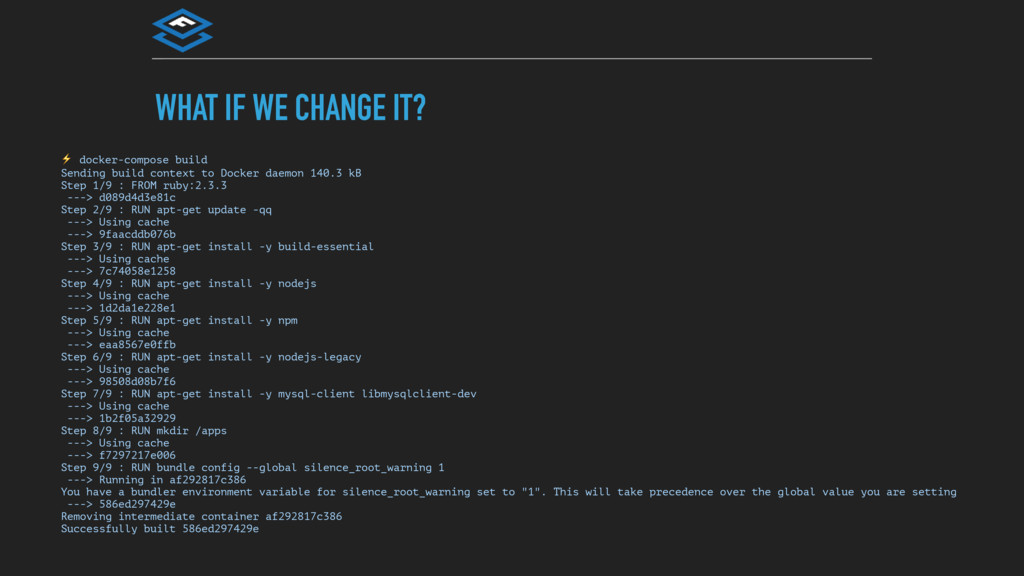
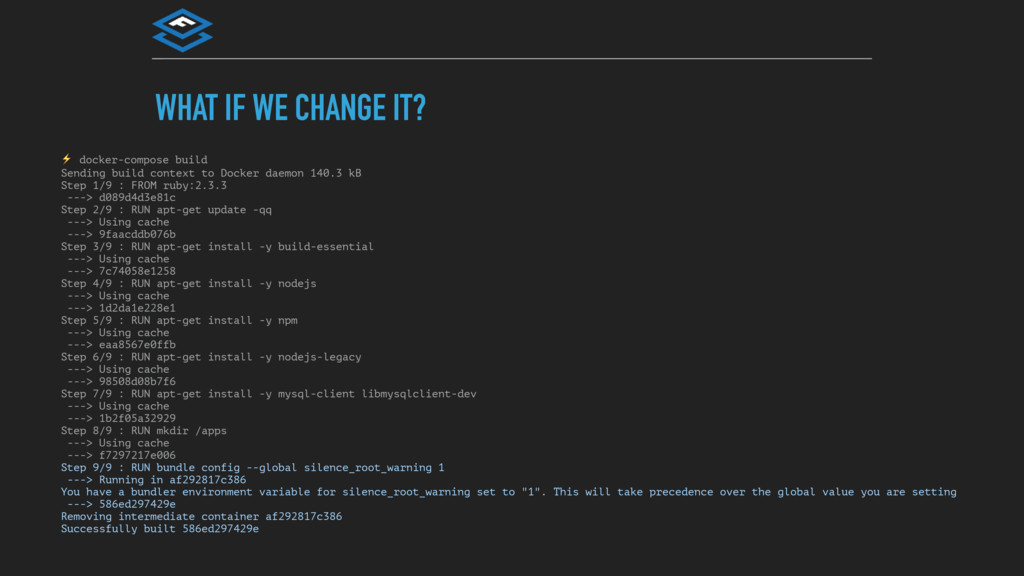
context to Docker daemon 140.3 kB Step 1/9 : FROM ruby:2.3.3 ---> d089d4d3e81c Step 2/9 : RUN apt-get update -qq ---> Using cache ---> 9faacddb076b Step 3/9 : RUN apt-get install -y build-essential ---> Using cache ---> 7c74058e1258 Step 4/9 : RUN apt-get install -y nodejs ---> Using cache ---> 1d2da1e228e1 Step 5/9 : RUN apt-get install -y npm ---> Using cache ---> eaa8567e0ffb Step 6/9 : RUN apt-get install -y nodejs-legacy ---> Using cache ---> 98508d08b7f6 Step 7/9 : RUN apt-get install -y mysql-client libmysqlclient-dev ---> Using cache ---> 1b2f05a32929 Step 8/9 : RUN mkdir /apps ---> Using cache ---> f7297217e006 Step 9/9 : RUN bundle config --global silence_root_warning 1 ---> Running in af292817c386 You have a bundler environment variable for silence_root_warning set to "1". This will take precedence over the global value you are setting ---> 586ed297429e Removing intermediate container af292817c386 Successfully built 586ed297429e
context to Docker daemon 140.3 kB Step 1/9 : FROM ruby:2.3.3 ---> d089d4d3e81c Step 2/9 : RUN apt-get update -qq ---> Using cache ---> 9faacddb076b Step 3/9 : RUN apt-get install -y build-essential ---> Using cache ---> 7c74058e1258 Step 4/9 : RUN apt-get install -y nodejs ---> Using cache ---> 1d2da1e228e1 Step 5/9 : RUN apt-get install -y npm ---> Using cache ---> eaa8567e0ffb Step 6/9 : RUN apt-get install -y nodejs-legacy ---> Using cache ---> 98508d08b7f6 Step 7/9 : RUN apt-get install -y mysql-client libmysqlclient-dev ---> Using cache ---> 1b2f05a32929 Step 8/9 : RUN mkdir /apps ---> Using cache ---> f7297217e006 Step 9/9 : RUN bundle config --global silence_root_warning 1 ---> Running in af292817c386 You have a bundler environment variable for silence_root_warning set to "1". This will take precedence over the global value you are setting ---> 586ed297429e Removing intermediate container af292817c386 Successfully built 586ed297429e
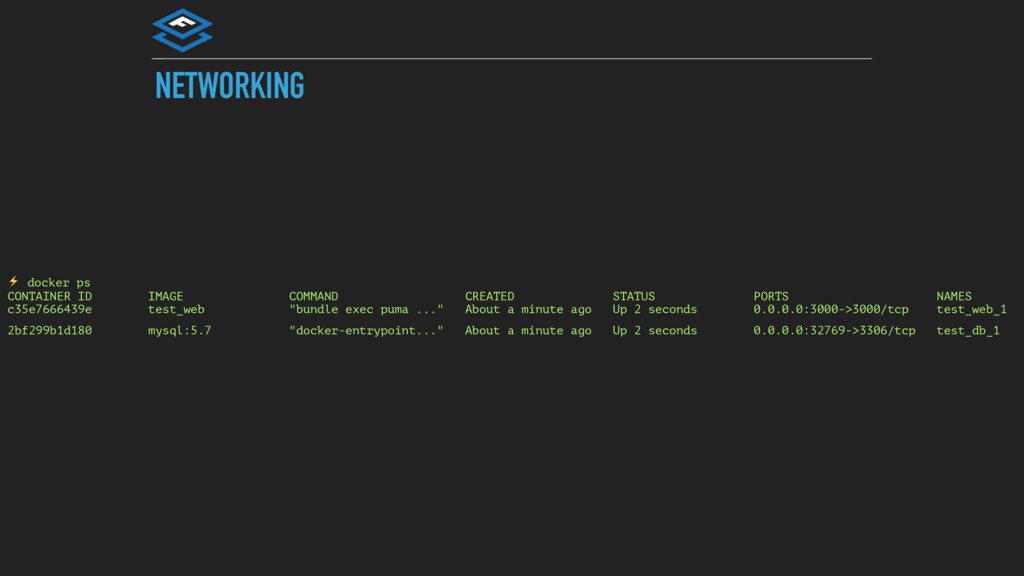
PORTS NAMES c35e7666439e test_web "bundle exec puma ..." About a minute ago Up 2 seconds 0.0.0.0:3000->3000/tcp test_web_1 2bf299b1d180 mysql:5.7 "docker-entrypoint..." About a minute ago Up 2 seconds 0.0.0.0:32769->3306/tcp test_db_1
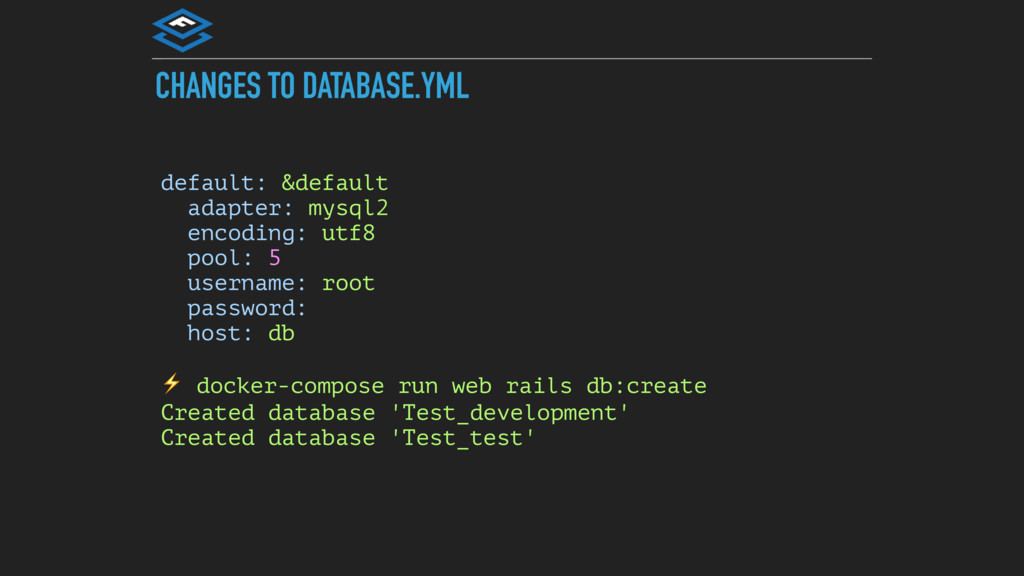
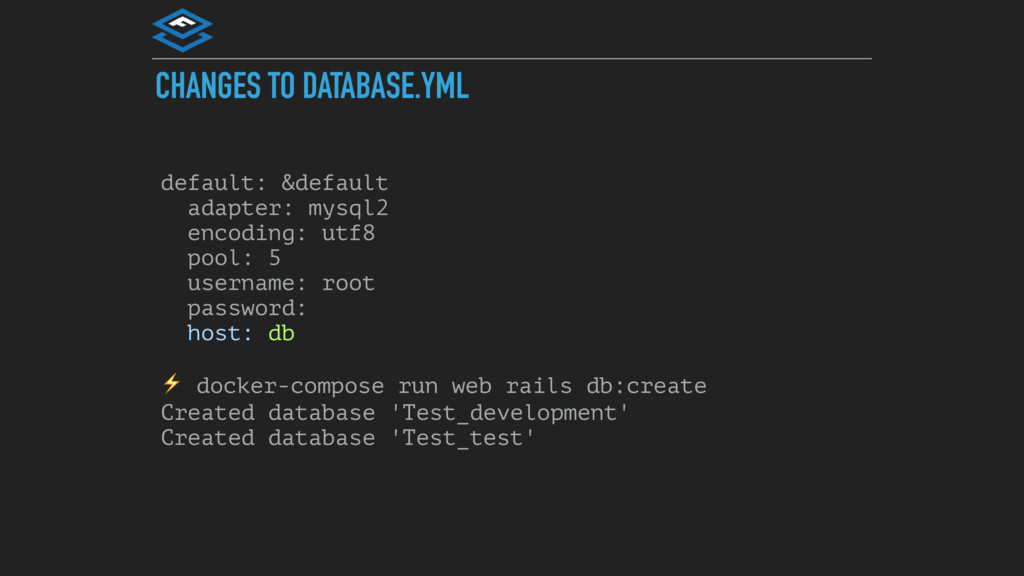
mysql2 encoding: utf8 pool: 5 username: root password: host: db ⚡ docker-compose run web rails db:create Created database 'Test_development' Created database 'Test_test'
mysql2 encoding: utf8 pool: 5 username: root password: host: db ⚡ docker-compose run web rails db:create Created database 'Test_development' Created database 'Test_test'
specific to your app not its environment. ▸ Use environment variables to set up environment specific aspects. ▸ Make individual containers disposable. ▸ Utilize community containers, but feel comfortable creating your own when you move to production. ▸ If your docker-compose.yml is getting really complicated use the extends command to break it up.
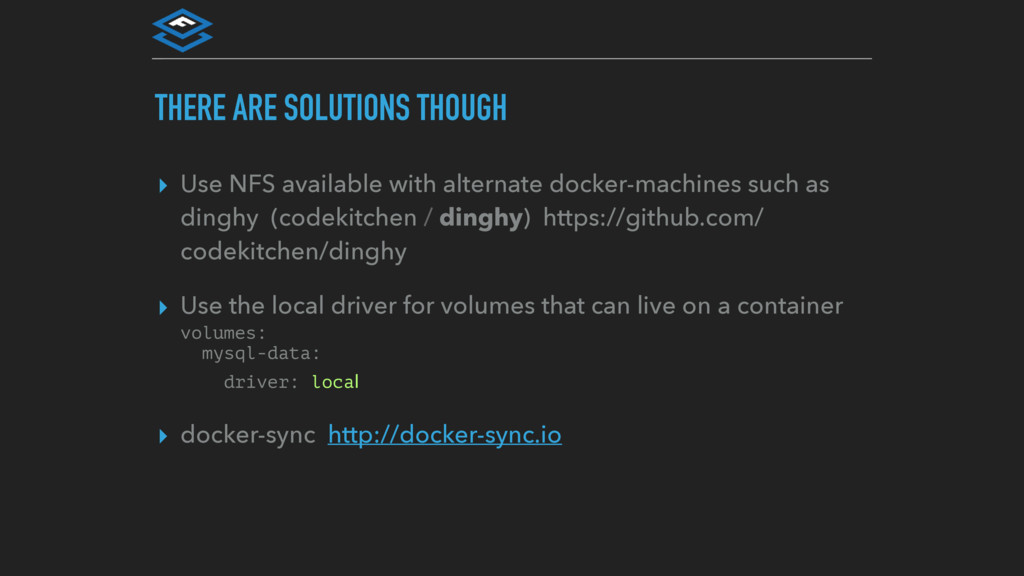
docker-machines such as dinghy (codekitchen / dinghy) https://github.com/ codekitchen/dinghy ▸ Use the local driver for volumes that can live on a container volumes: mysql-data: driver: local
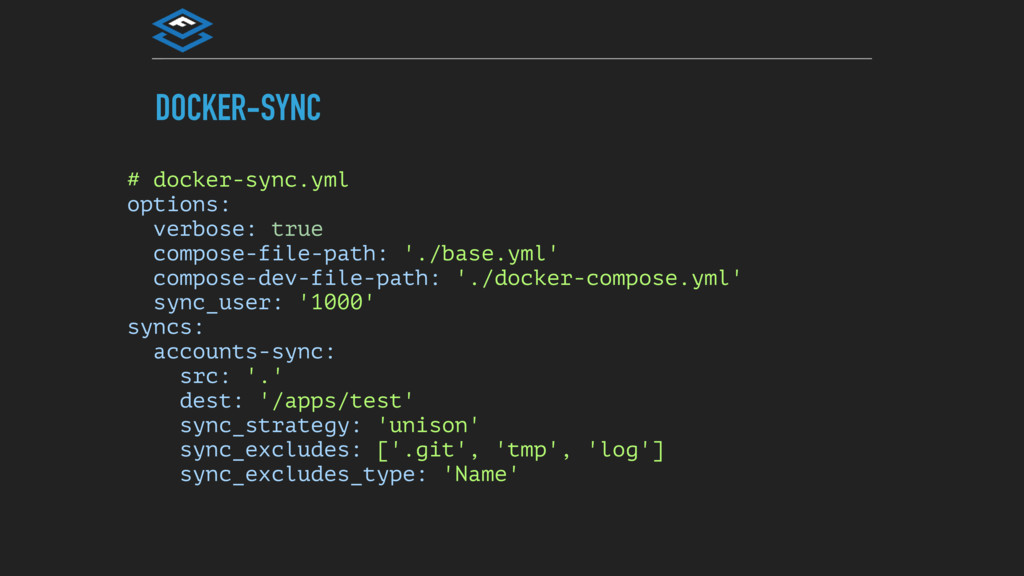
docker-machines such as dinghy (codekitchen / dinghy) https://github.com/ codekitchen/dinghy ▸ Use the local driver for volumes that can live on a container volumes: mysql-data: driver: local ▸ docker-sync http://docker-sync.io

 SiteGround - Reliable hosting with speed, security, and support you can count on.


 markdr
 mohab1
 taketakekaho
 nttcom
 genda
genda
 codmoninc
 akitoshiga
 shugo
shugo
 hiracky16
 bgpat
bgpat
 tomokusaba
 pfn
pfn
 akhino
 lemiorhan
 shlominoach
 sergeychernyshev
 inesmontani
 samtorres
 ipullrank
 frankvandijk
 tamaranovitovic
 greggifford
 marcoroth
 kimpetersen
 jct
jct