Lock in $30 Savings on PRO—Offer Ends Soon! ⏳

Platinum Wire in Glass & Ceramic Processing: Ro...

Platinum Wire in Glass & Ceramic Processing: Role in Stirring, Seeding & Temperature Sensing

Understand the critical role of platinum wire in glass and ceramic processing. This presentation explains its use in high-temperature stirring, crystal seeding, and precise temperature sensing, highlighting purity, oxidation resistance, and reliability in aggressive thermal environments.

Avatar for Mkube Enterprise Pty Ltd

Mkube Enterprise Pty Ltd

December 15, 2025
Tweet

More Decks by Mkube Enterprise Pty Ltd

Transcript

  1. Platinum Wire in Glass & Ceramic Processing: Role in Stirring,

    Seeding & Temperature Sensing Submitted by: M-Kube Enterprise Pty Ltd
  2. Why Platinum Wire Is the Industrial Standard in Molten Glass

    & Ceramic Furnaces • Pt wire maintains structural integrity above 1700–1750°C, outperforming Mo, W, and Ni-based alloys. • Pure platinum wire provides unmatched chemical inertness in silicates, borates, phosphates, and alkali-rich glass tanks. • Platinum alloy wire (Pt-Rh, Pt-Ir) resists creep under continuous stirring loads. • Does not oxidize even in high-oxygen ceramic furnaces. • Fully compliant with chemistry platinum wire purity requirements for contact with optical and dielectric glasses.
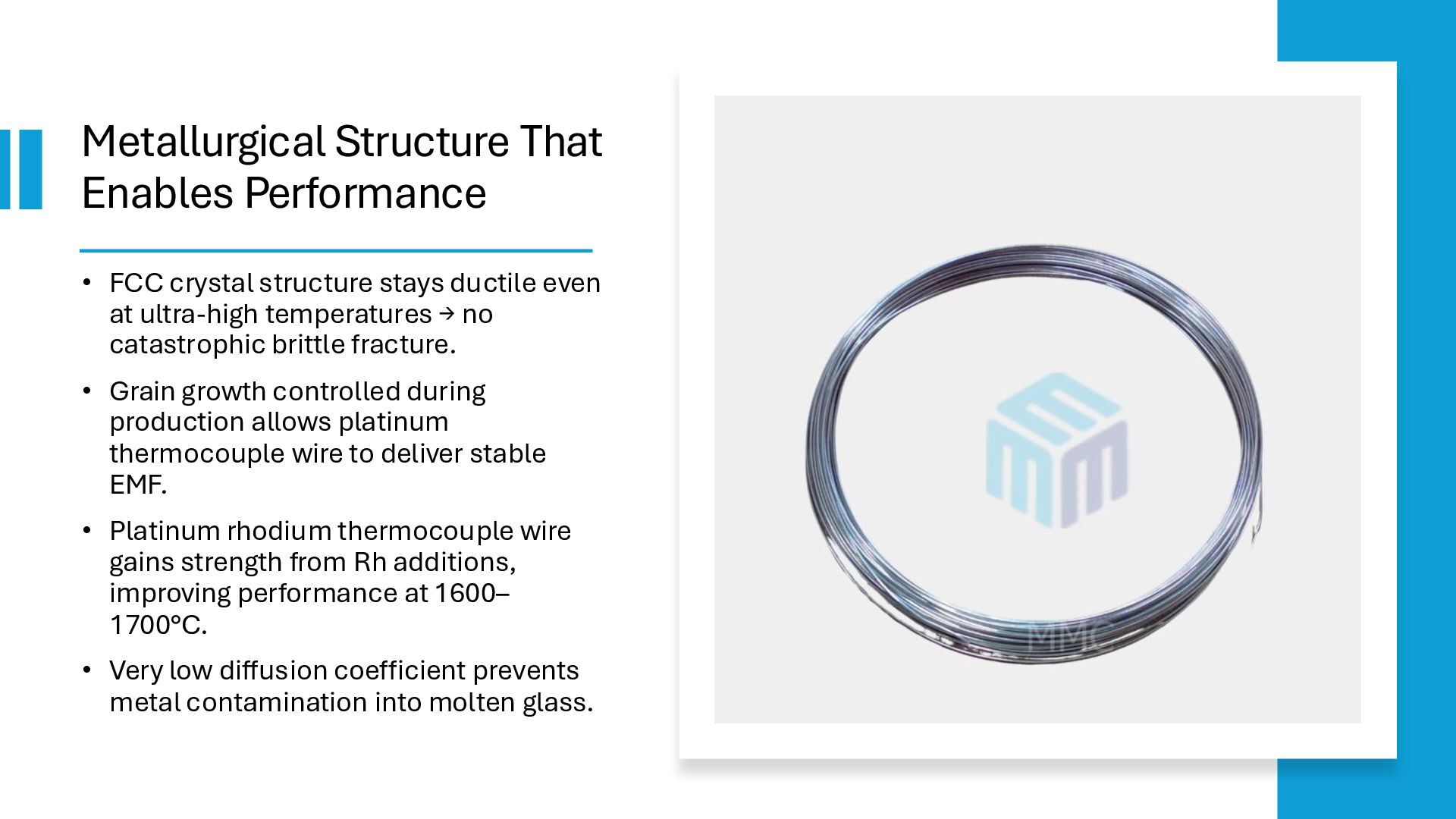
  3. Metallurgical Structure That Enables Performance • FCC crystal structure stays

    ductile even at ultra-high temperatures → no catastrophic brittle fracture. • Grain growth controlled during production allows platinum thermocouple wire to deliver stable EMF. • Platinum rhodium thermocouple wire gains strength from Rh additions, improving performance at 1600– 1700°C. • Very low diffusion coefficient prevents metal contamination into molten glass.
  4. Platinum Wire Grades Used in Glass & Ceramic Plants 1.

    Pure Platinum Wire (99.95–99.999%) • Used for seeding loops, micro-stirrers, viscometer wires, and immersion electrodes. 2. Pt-10Rh and Pt-20Rh Wire (Platinum Rhodium Wire) • Used for Type S, R, and B thermocouples, furnace probes, and structural hooks. 3. Platinum Coated Wire • Used in cost-sensitive assemblies where only the surface needs chemical inertness.
  5. Functional Role 1: High-Purity Stirring & Homogenization • Pt wire

    is machined into coils, helical paddles, and nested stirring assemblies. • No reaction with B₂O₃, SiO₂, Na₂O, K₂O, PbO, or rare-earth modifiers. • Prevents color shifts in optical glass due to zero metal ion leaching. • High fatigue resistance allows continuous stirring cycles up to 800–1200 hours. • Platinum wire for sale, buy platinum wire for OEM stirring assemblies.
  6. Functional Role 2: Crystal Seeding in Specialty Glass & Ceramics

    • Pure platinum wire acts as a chemically inert nucleation support during: – YAG and Nd:YAG crystal formation – Lithium aluminosilicate glass-ceramic seeding – Optical and dielectric ceramic crystallization • No catalytic nucleation → critical for laser glass uniformity. • Zero interaction with crystallizing phases like cordierite, spodumene, borates.
  7. Functional Role 3: High-Temperature Temperature-Sensing (Thermocouples) • Platinum thermocouple wire

    (Type S, R) provides stable EMF from 0–1600°C. • Platinum rhodium thermocouple wire withstands severe alkali vapor attack in glass tanks. • Drift <0.1% even after long-term operation. • Preferred in: – Tile and porcelain kilns – Continuous float glass furnaces – Fiber glass forehearths • OEM sensors often use platinum alloy wire for enhanced creep strength.
  8. Heating Roles Using Platinum Wire • Heating platinum wire is

    used for very localized, clean heating zones: – De-vitrification control – Melt viscosity experiments – Differential thermal analysis (DTA) crucible heating • Platinum’s high resistivity (~10.6 μΩ·cm) allows stable Joule heating without oxidation.
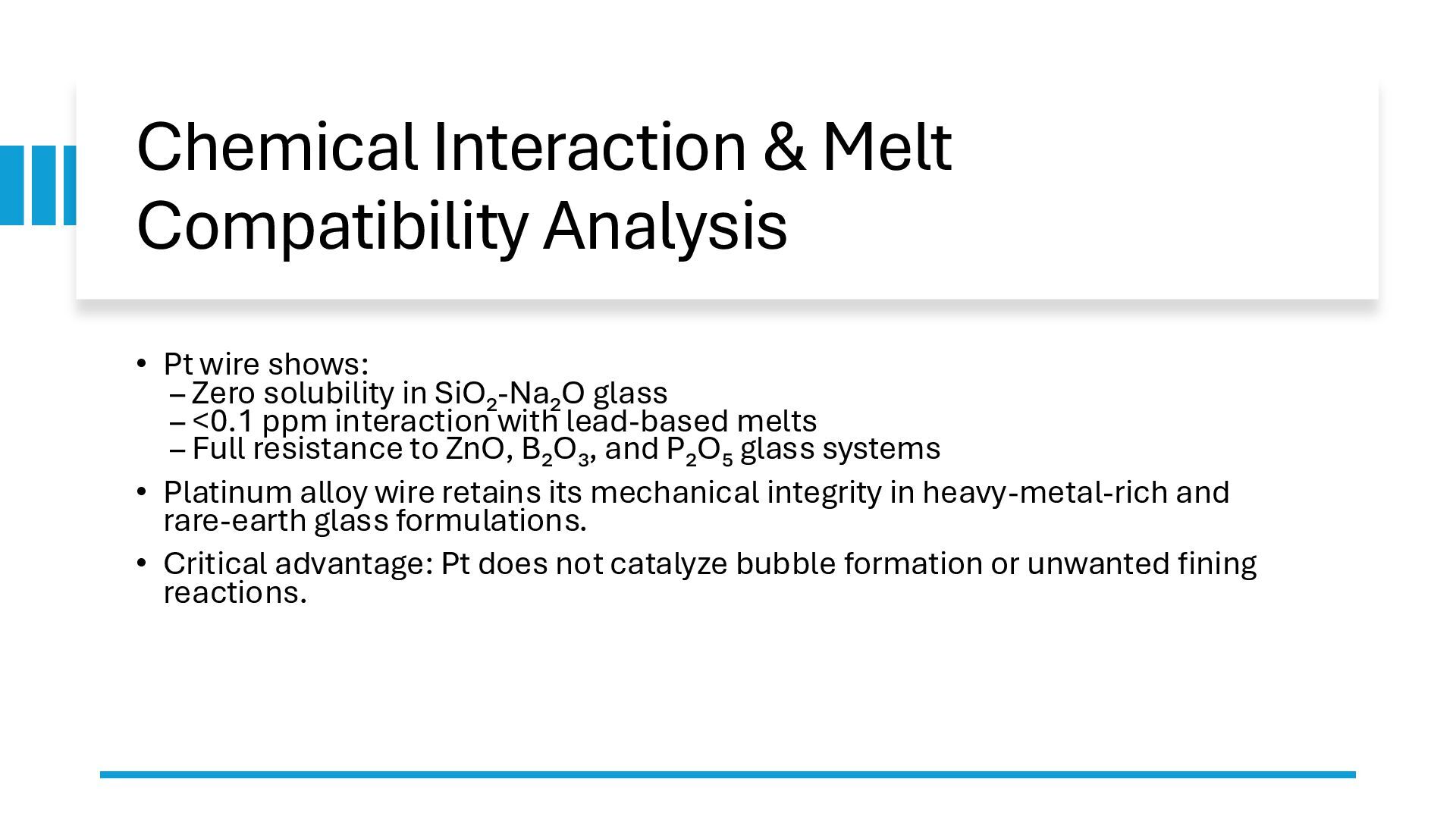
  9. Chemical Interaction & Melt Compatibility Analysis • Pt wire shows:

    – Zero solubility in SiO₂-Na₂O glass – <0.1 ppm interaction with lead-based melts – Full resistance to ZnO, B₂O₃, and P₂O₅ glass systems • Platinum alloy wire retains its mechanical integrity in heavy-metal-rich and rare-earth glass formulations. • Critical advantage: Pt does not catalyze bubble formation or unwanted fining reactions.
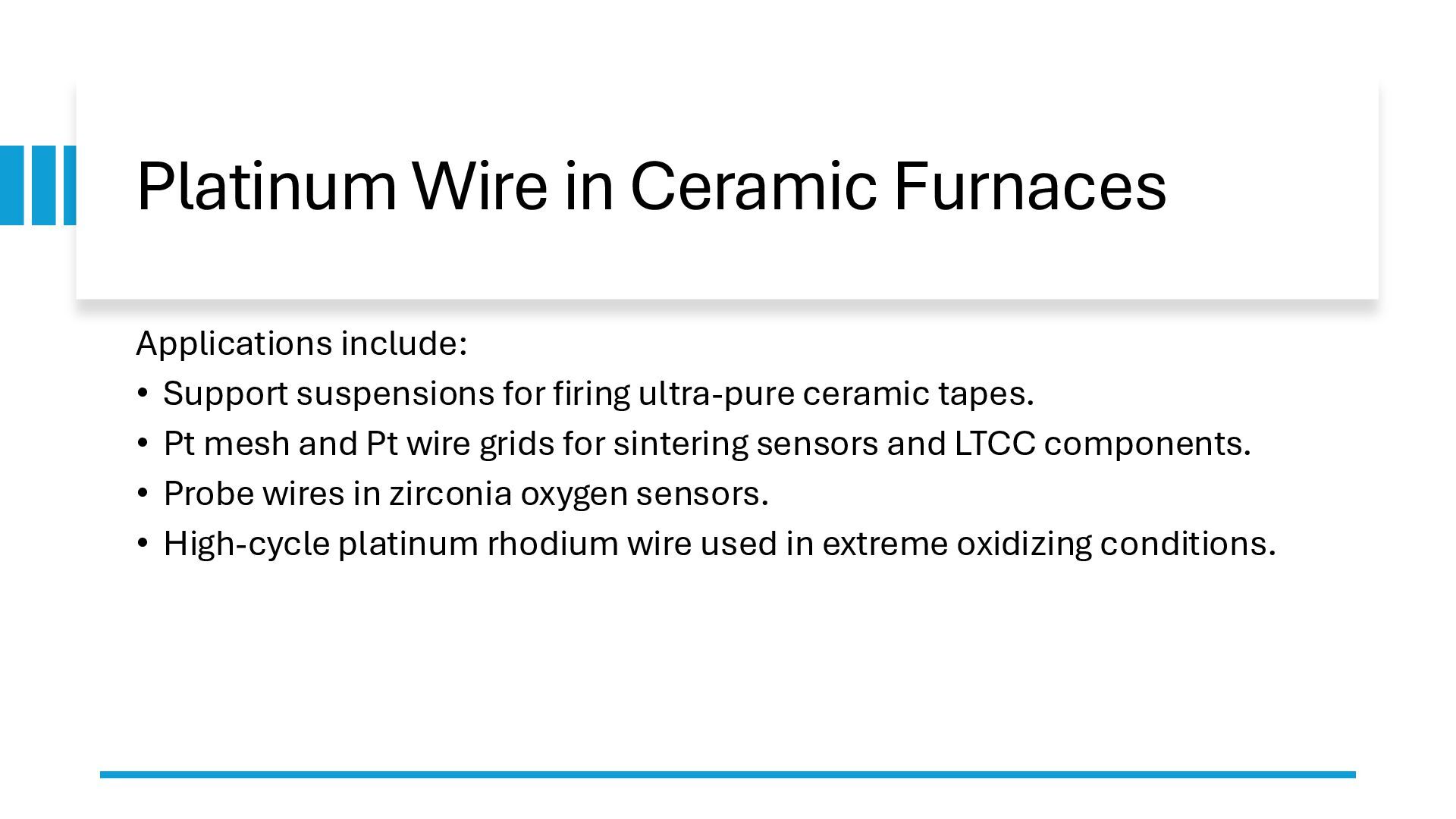
  10. Platinum Wire in Ceramic Furnaces Applications include: • Support suspensions

    for firing ultra-pure ceramic tapes. • Pt mesh and Pt wire grids for sintering sensors and LTCC components. • Probe wires in zirconia oxygen sensors. • High-cycle platinum rhodium wire used in extreme oxidizing conditions.
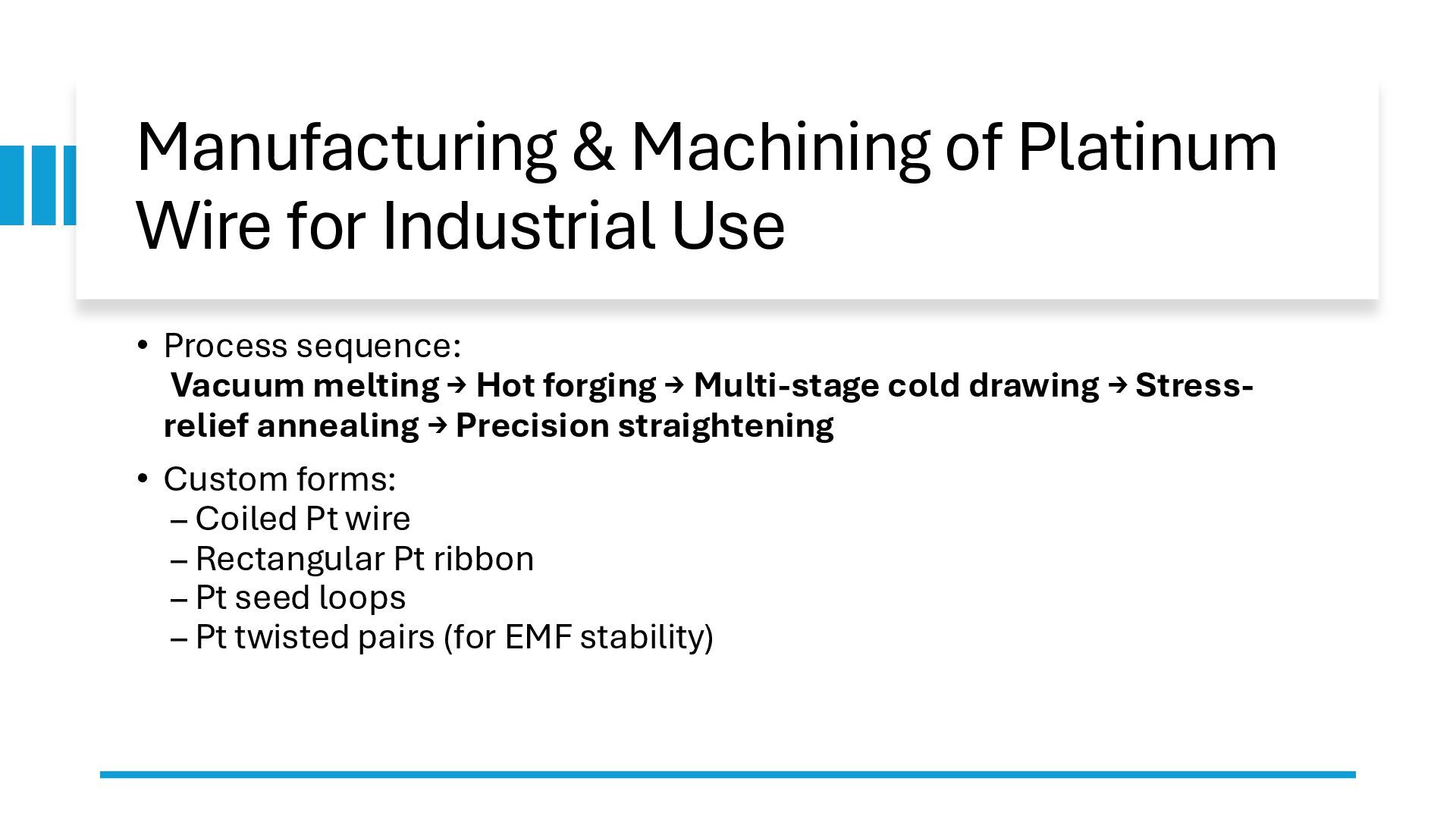
  11. Manufacturing & Machining of Platinum Wire for Industrial Use •

    Process sequence: Vacuum melting → Hot forging → Multi-stage cold drawing → Stress- relief annealing → Precision straightening • Custom forms: – Coiled Pt wire – Rectangular Pt ribbon – Pt seed loops – Pt twisted pairs (for EMF stability)
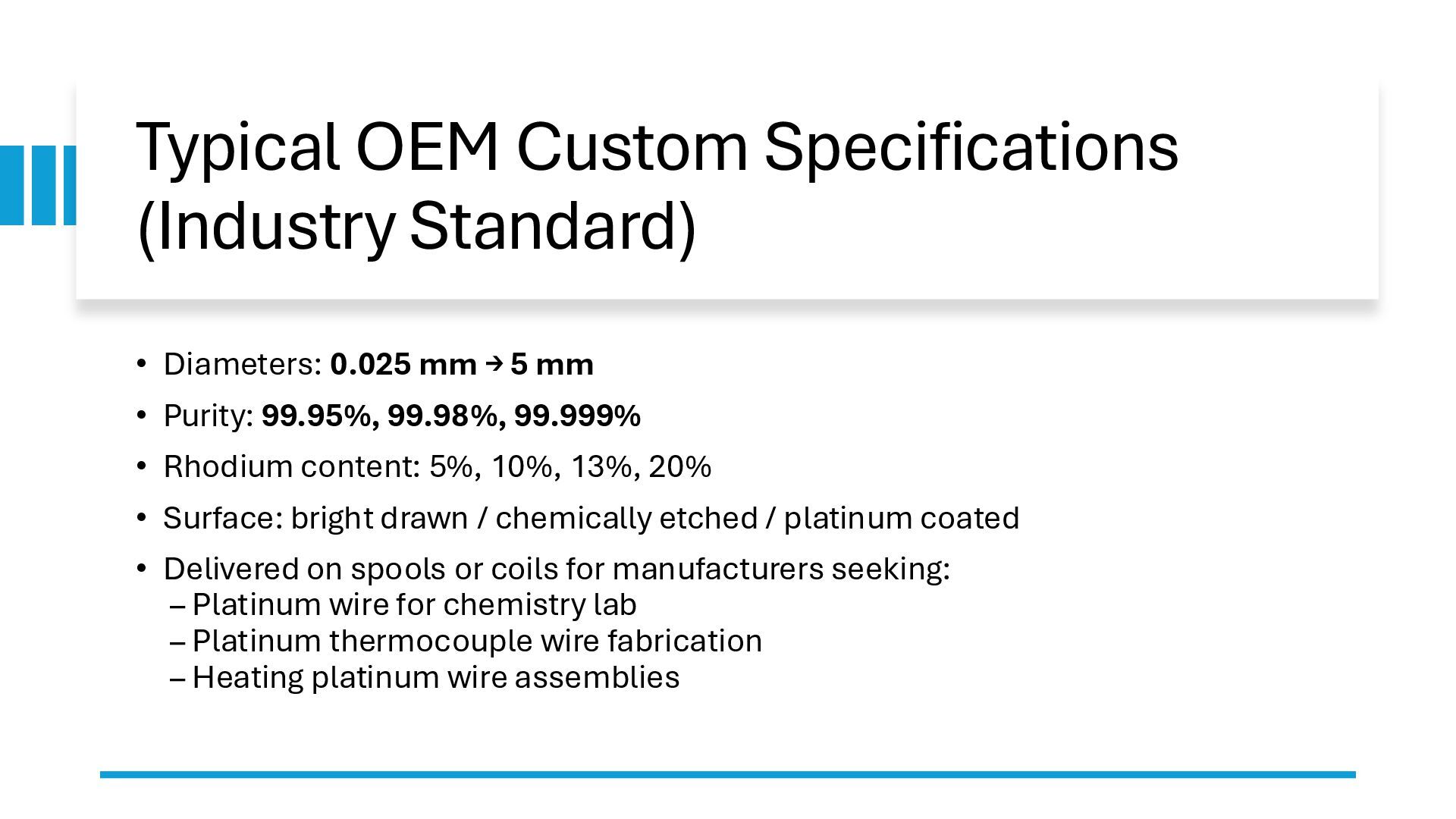
  12. Typical OEM Custom Specifications (Industry Standard) • Diameters: 0.025 mm

    → 5 mm • Purity: 99.95%, 99.98%, 99.999% • Rhodium content: 5%, 10%, 13%, 20% • Surface: bright drawn / chemically etched / platinum coated • Delivered on spools or coils for manufacturers seeking: – Platinum wire for chemistry lab – Platinum thermocouple wire fabrication – Heating platinum wire assemblies
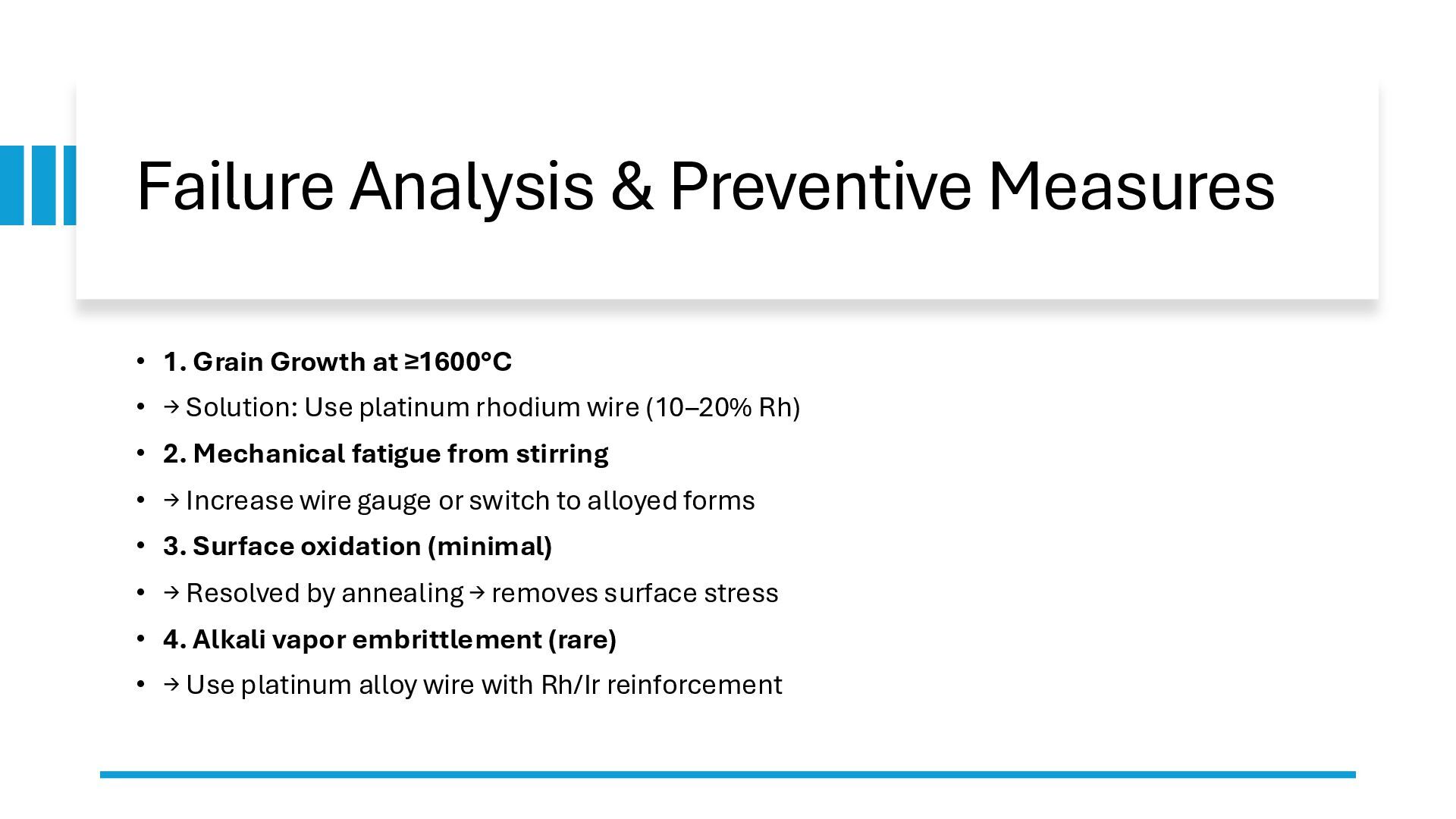
  13. Failure Analysis & Preventive Measures • 1. Grain Growth at

    ≥1600°C • → Solution: Use platinum rhodium wire (10–20% Rh) • 2. Mechanical fatigue from stirring • → Increase wire gauge or switch to alloyed forms • 3. Surface oxidation (minimal) • → Resolved by annealing → removes surface stress • 4. Alkali vapor embrittlement (rare) • → Use platinum alloy wire with Rh/Ir reinforcement
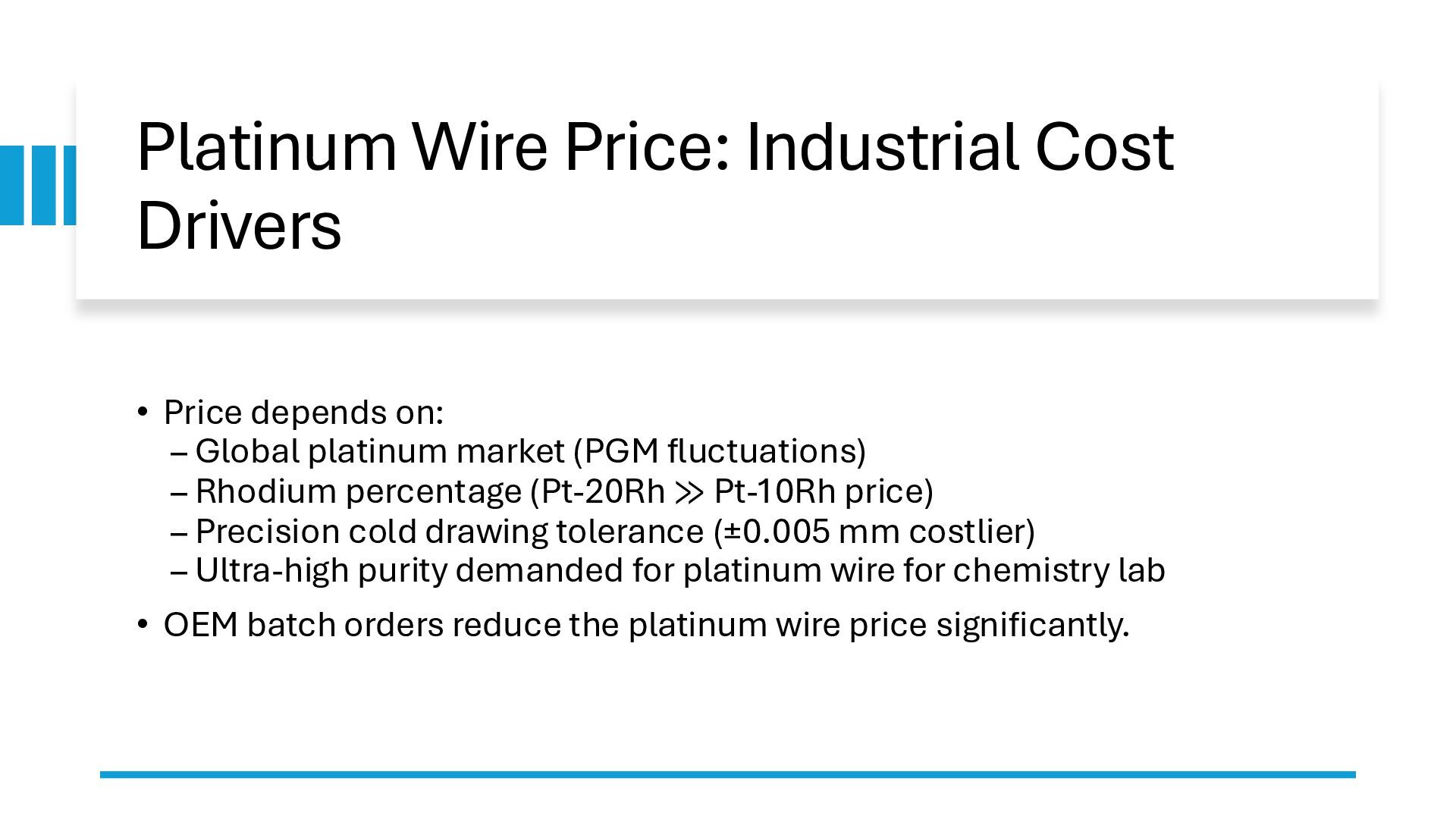
  14. Platinum Wire Price: Industrial Cost Drivers • Price depends on:

    – Global platinum market (PGM fluctuations) – Rhodium percentage (Pt-20Rh ≫ Pt-10Rh price) – Precision cold drawing tolerance (±0.005 mm costlier) – Ultra-high purity demanded for platinum wire for chemistry lab • OEM batch orders reduce the platinum wire price significantly.
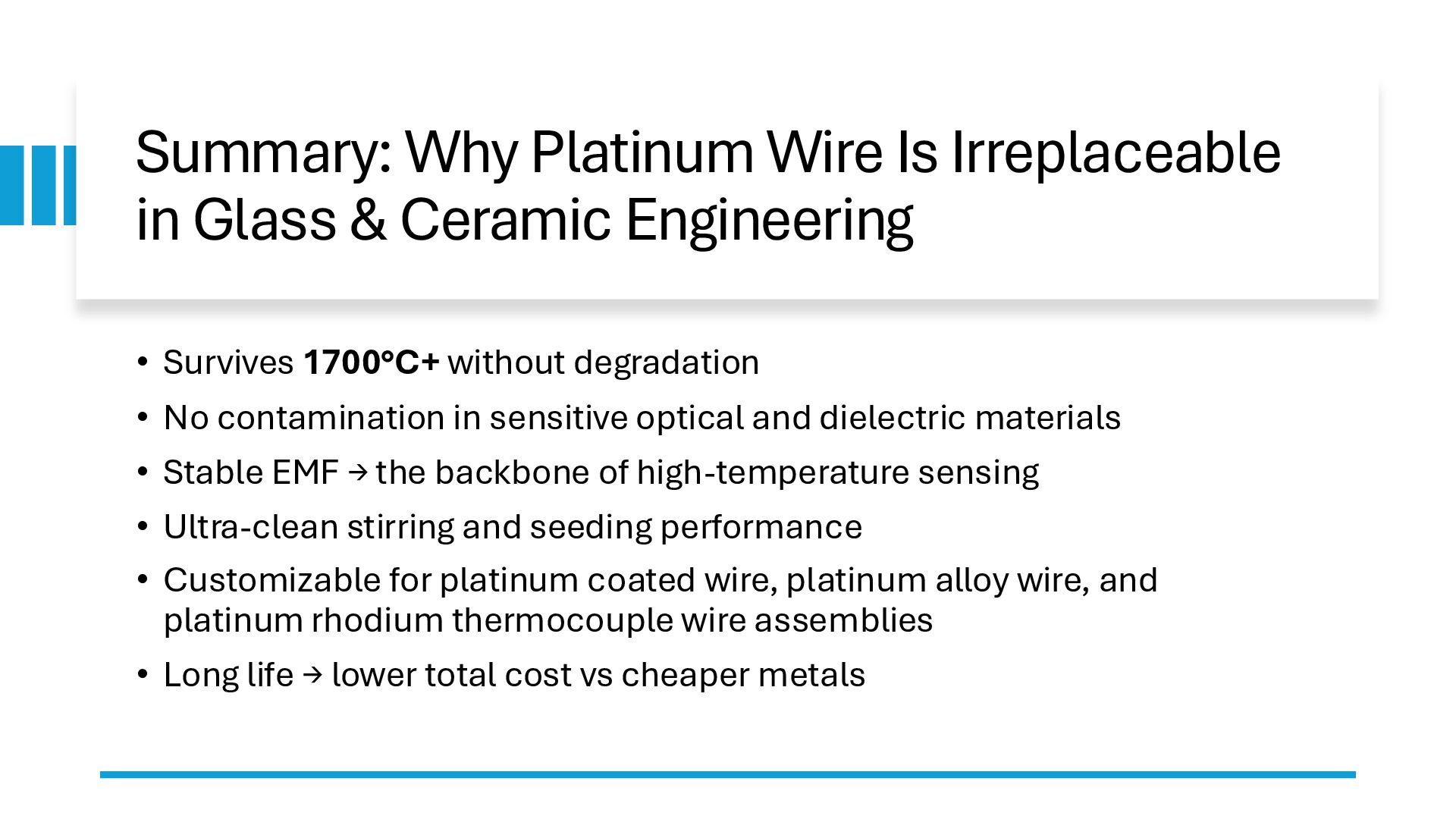
  15. Summary: Why Platinum Wire Is Irreplaceable in Glass & Ceramic

    Engineering • Survives 1700°C+ without degradation • No contamination in sensitive optical and dielectric materials • Stable EMF → the backbone of high-temperature sensing • Ultra-clean stirring and seeding performance • Customizable for platinum coated wire, platinum alloy wire, and platinum rhodium thermocouple wire assemblies • Long life → lower total cost vs cheaper metals