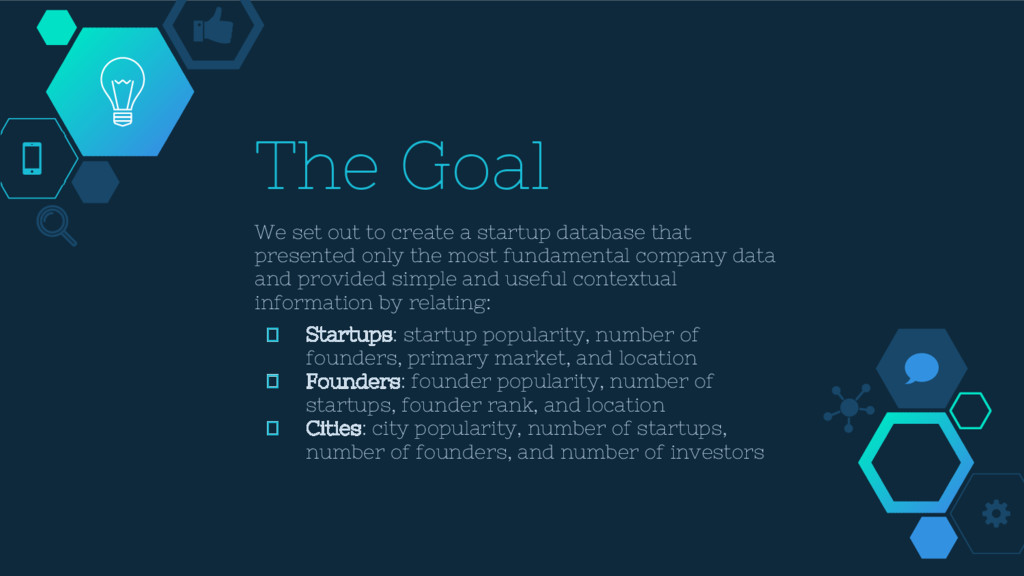
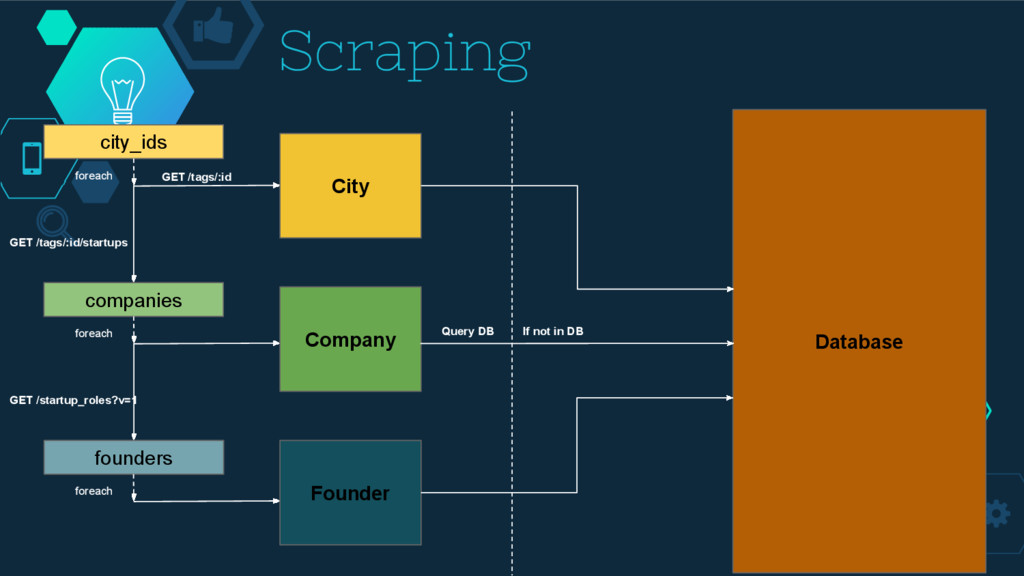
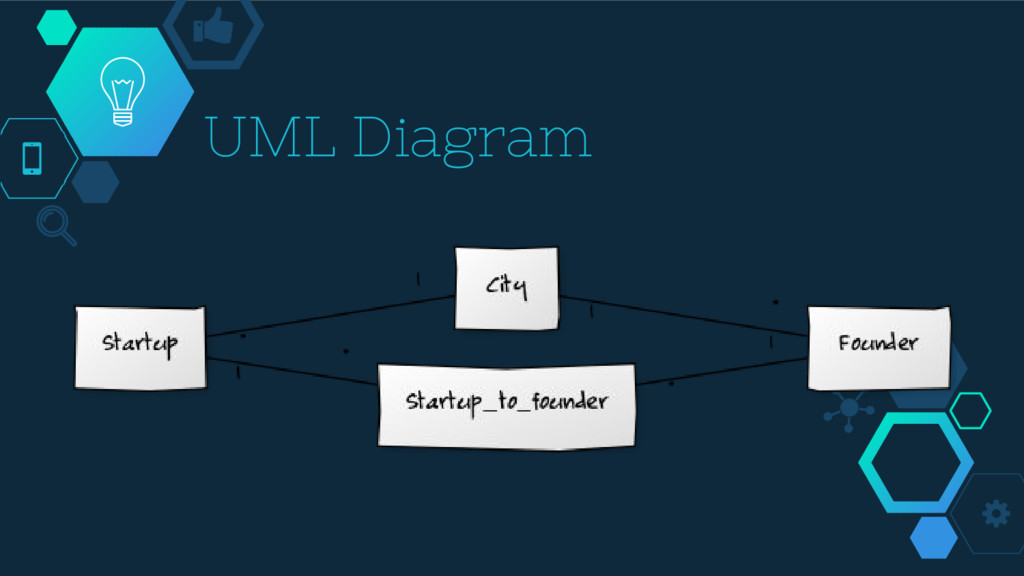
that presented only the most fundamental company data and provided simple and useful contextual information by relating: Startups: startup popularity, number of founders, primary market, and location Founders: founder popularity, number of startups, founder rank, and location Cities: city popularity, number of startups, number of founders, and number of investors
of any kind) ■ Tags (market or location) ◇ API Python Wrapper, https://github.com/bugra/angel-list ■ MIT Licensed Python library to access API of Angellist In[1] angel.get_jobs() Out[1]: {u'jobs': [{u'angellist_url': u'https://angel.co/jobs?startup_id=357384', u'equity_cliff': u'1.0', u'equity_max': u'3.0', ... }
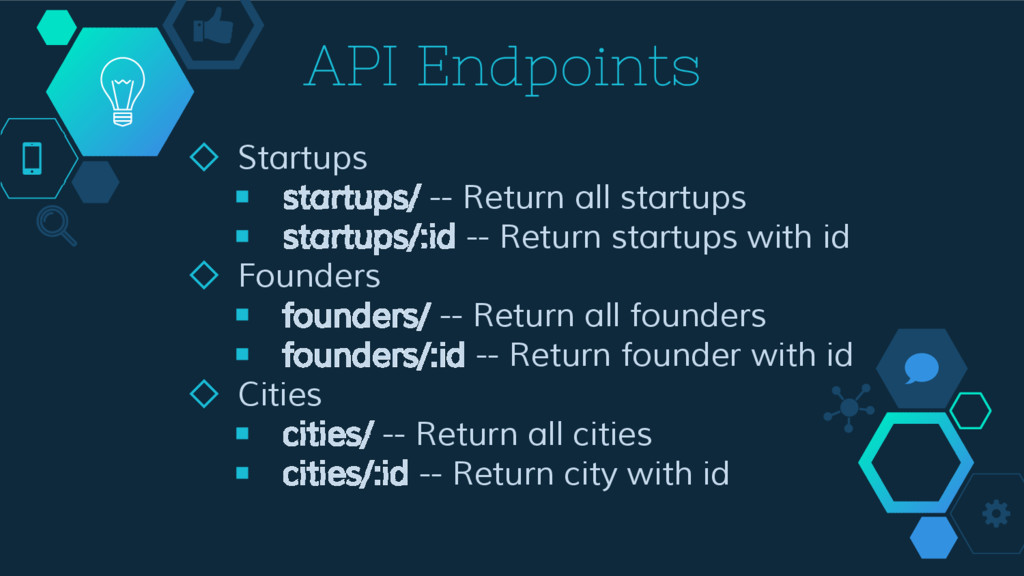
■ startups/:id -- Return startups with id ◇ Founders ■ founders/ -- Return all founders ■ founders/:id -- Return founder with id ◇ Cities ■ cities/ -- Return all cities ■ cities/:id -- Return city with id
home page ❏ We learned that using postgres probably works best with python scripts than MySQL as it appears they used MySQL with IDB1 and IDB2 but postgres with IDB3 ❏ They could’ve done a better job of making their 3 pages of data complete [i.e. if they weren’t going to include certain information, to not have columns for them in their tables] ❏ We are puzzled why they didn’t include the number of a particular breed available to adopt on the “Breeds” page
and easy to use website without much front-end development experience on our team ❏ We learned a myriad of tools from this project but most of all, how to use Docker ❏ We could’ve had a slightly more informative site [for instance how data is listed on each data page] ❏ We were puzzled by the best choice of database to use with Docker


 satoshi256kbyte
 hollycummins
 akase244
 mixplace
 timakin
 kinopeee
 naokihaba
 ivargrimstad
 uyuki234
 texmeijin
 kawashimo0
 mofurune
 codingconduct
 techseoconnect
 notwaldorf
 honzajavorek
 aarron
 aleyda
 tmiket
 samanthasiow
 mclloyd
 sarafernandez
 dougneiner