Discover the important Role of Fixed Asset Accounting for Business. Lean about what is it, its benefits, importance, challenges, and how to use them for better performance.
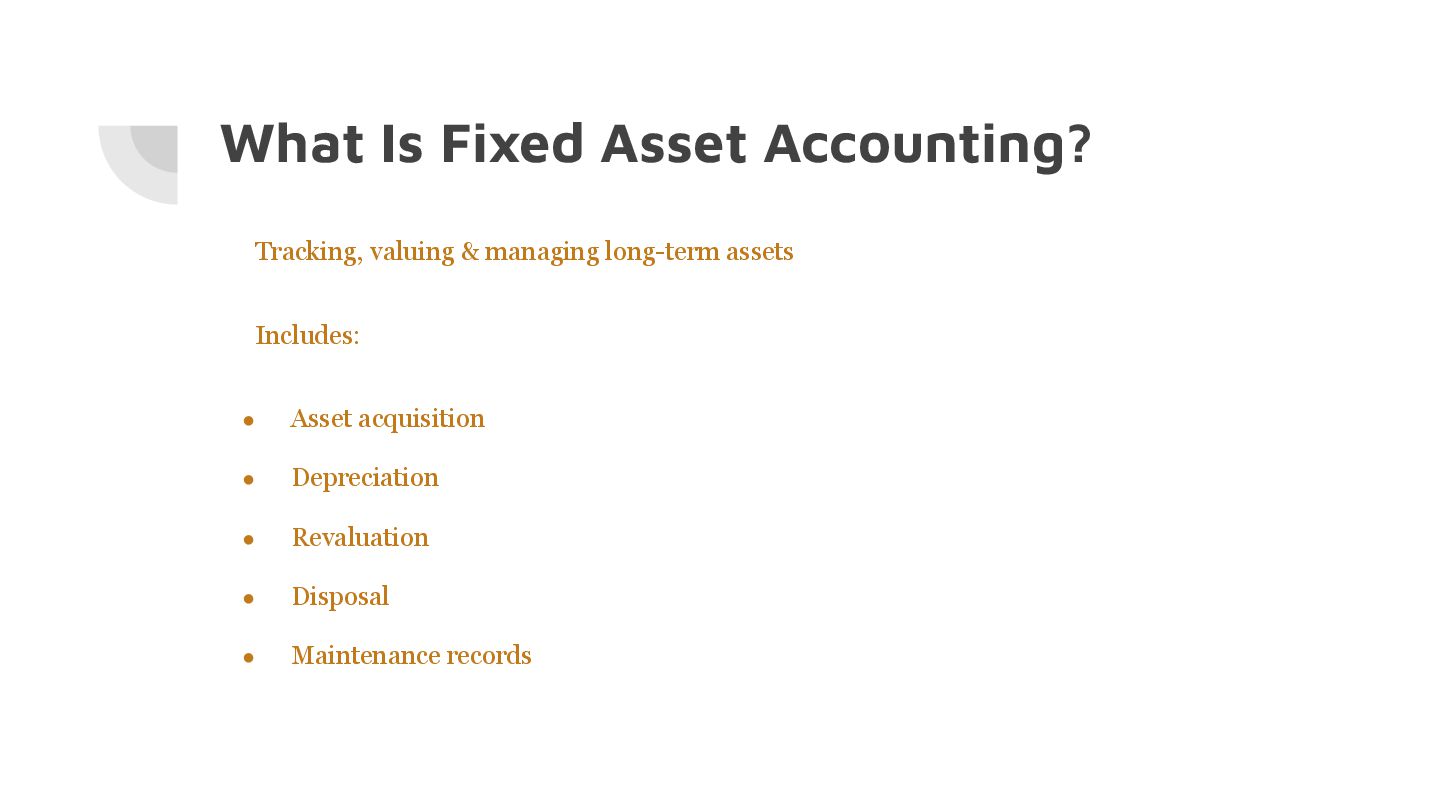
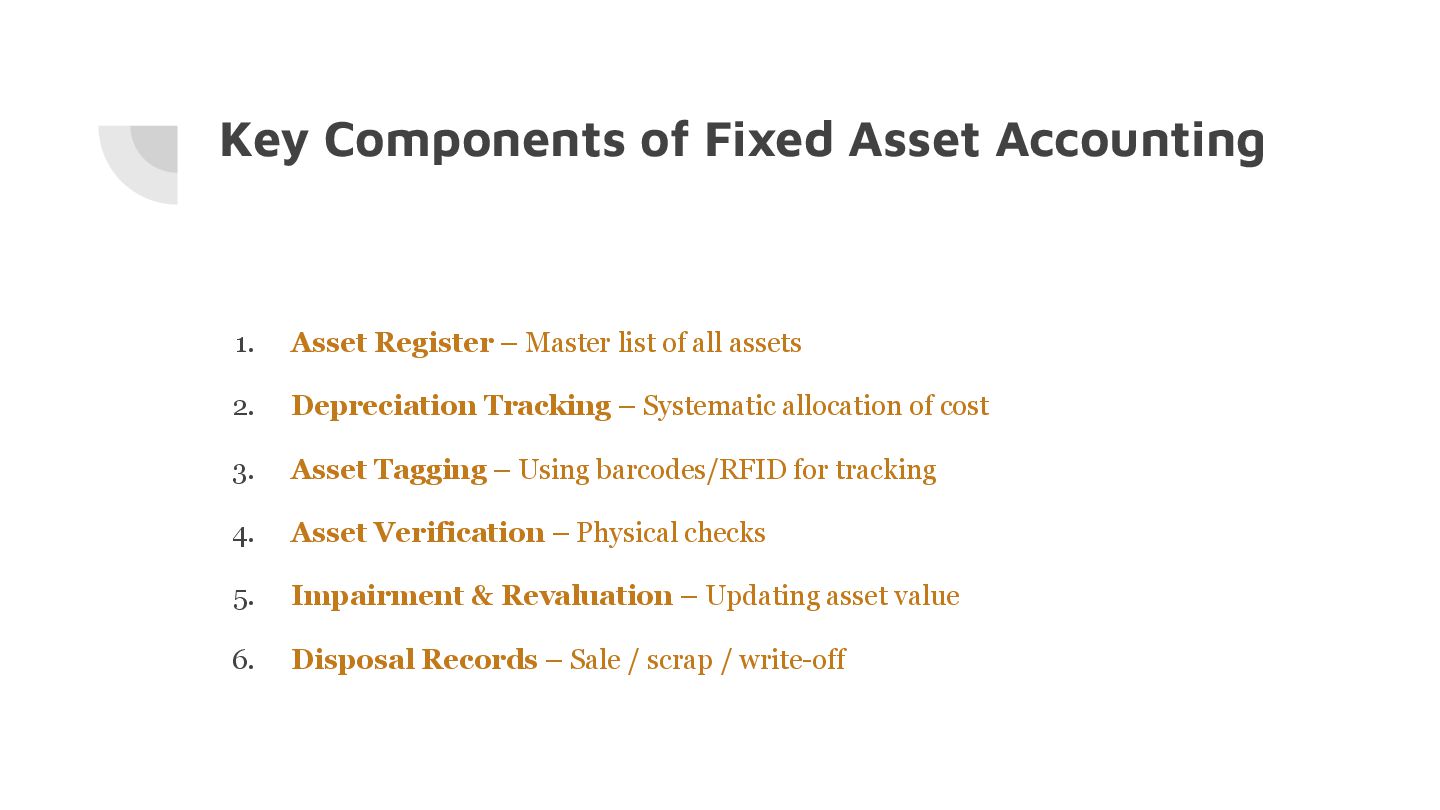
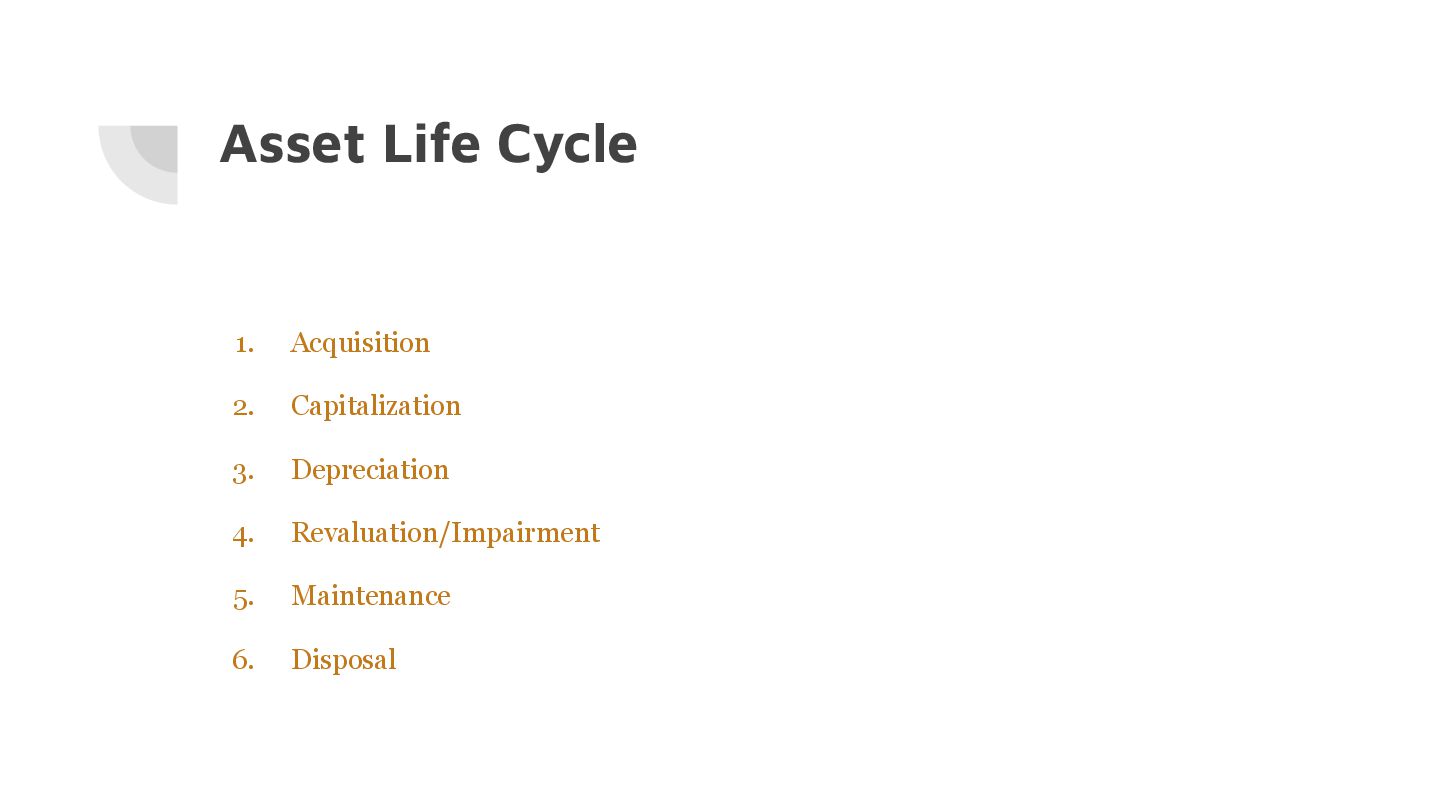
Master list of all assets 2. Depreciation Tracking – Systematic allocation of cost 3. Asset Tagging – Using barcodes/RFID for tracking 4. Asset Verification – Physical checks 5. Impairment & Revaluation – Updating asset value 6. Disposal Records – Sale / scrap / write-off
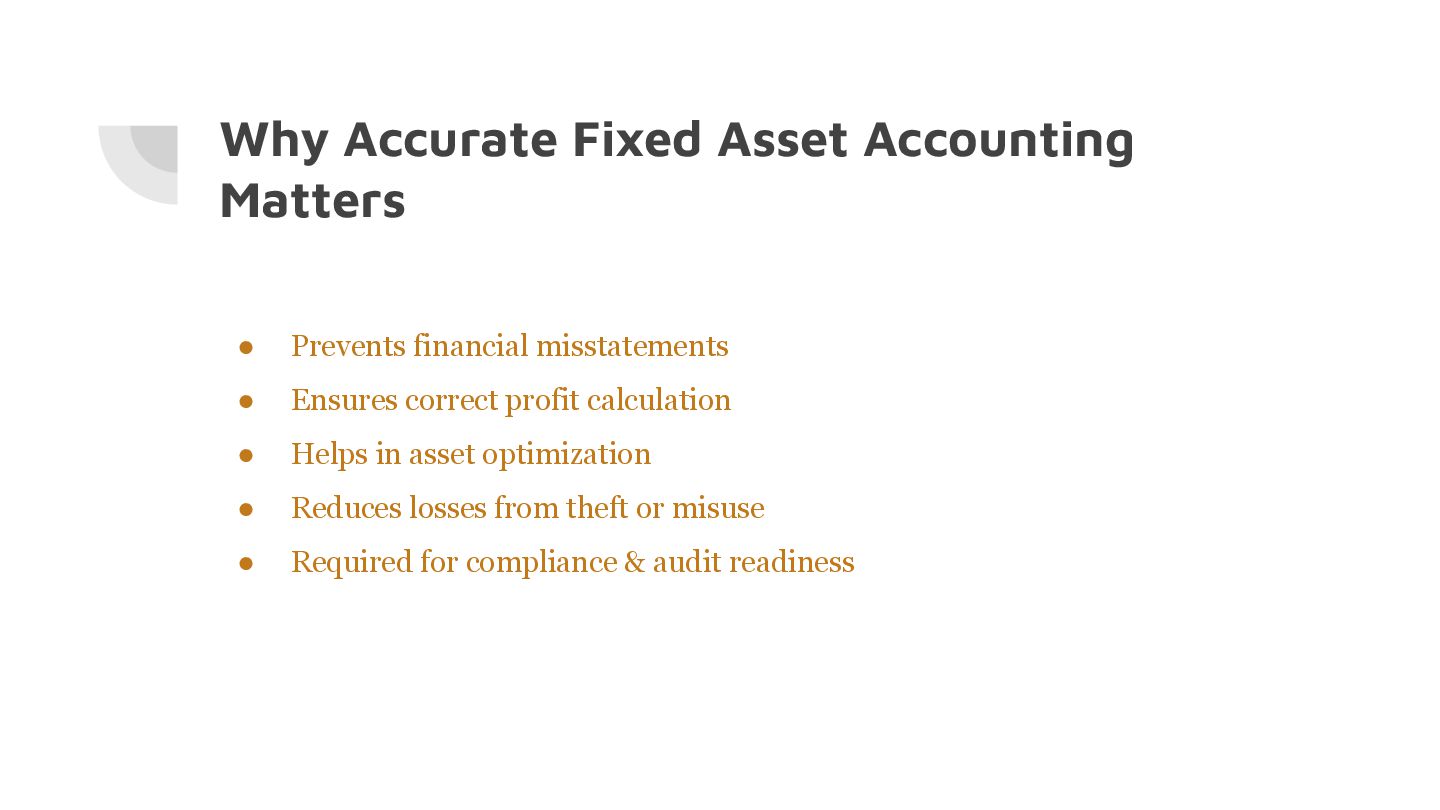
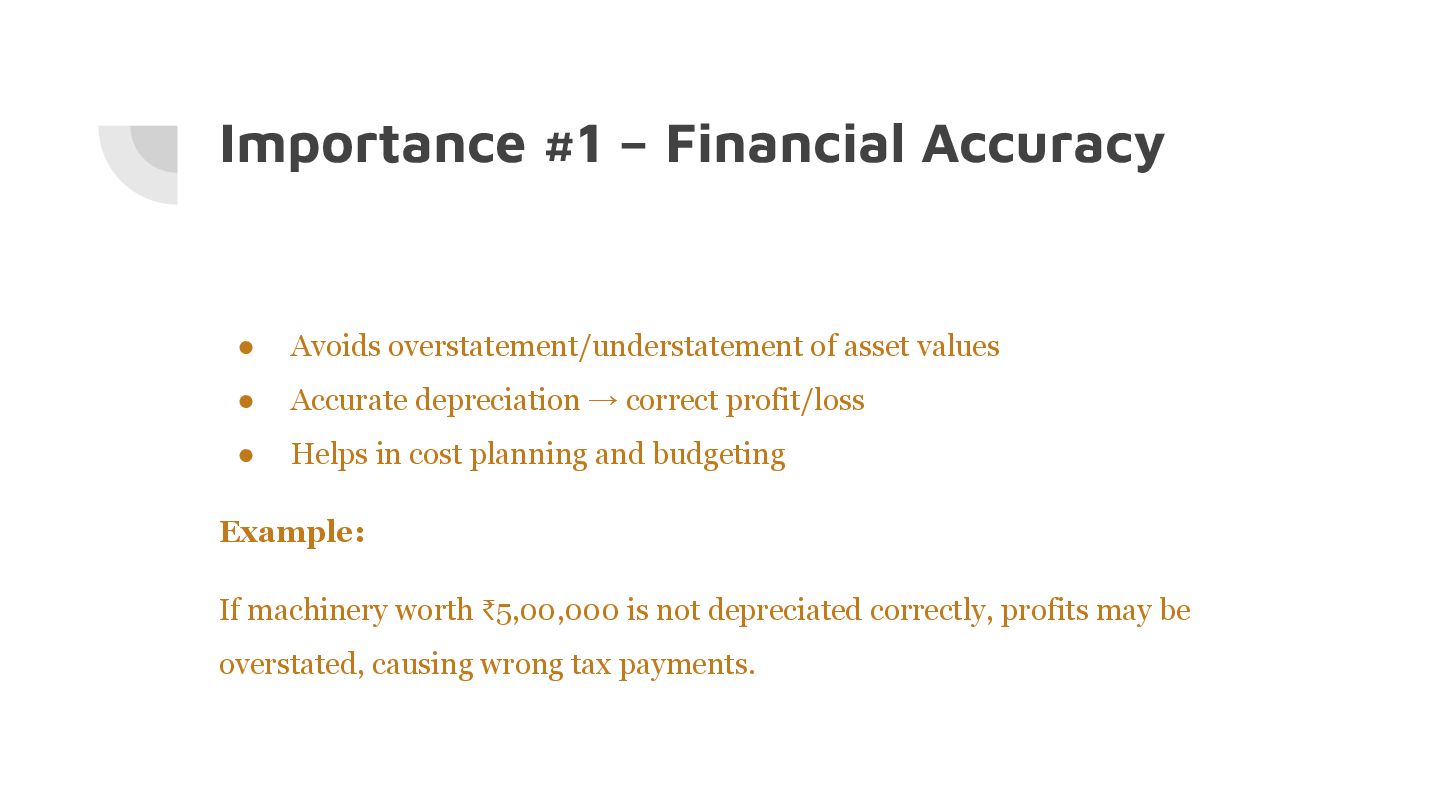
values • Accurate depreciation → correct profit/loss • Helps in cost planning and budgeting Example: If machinery worth ₹5,00,000 is not depreciated correctly, profits may be overstated, causing wrong tax payments.
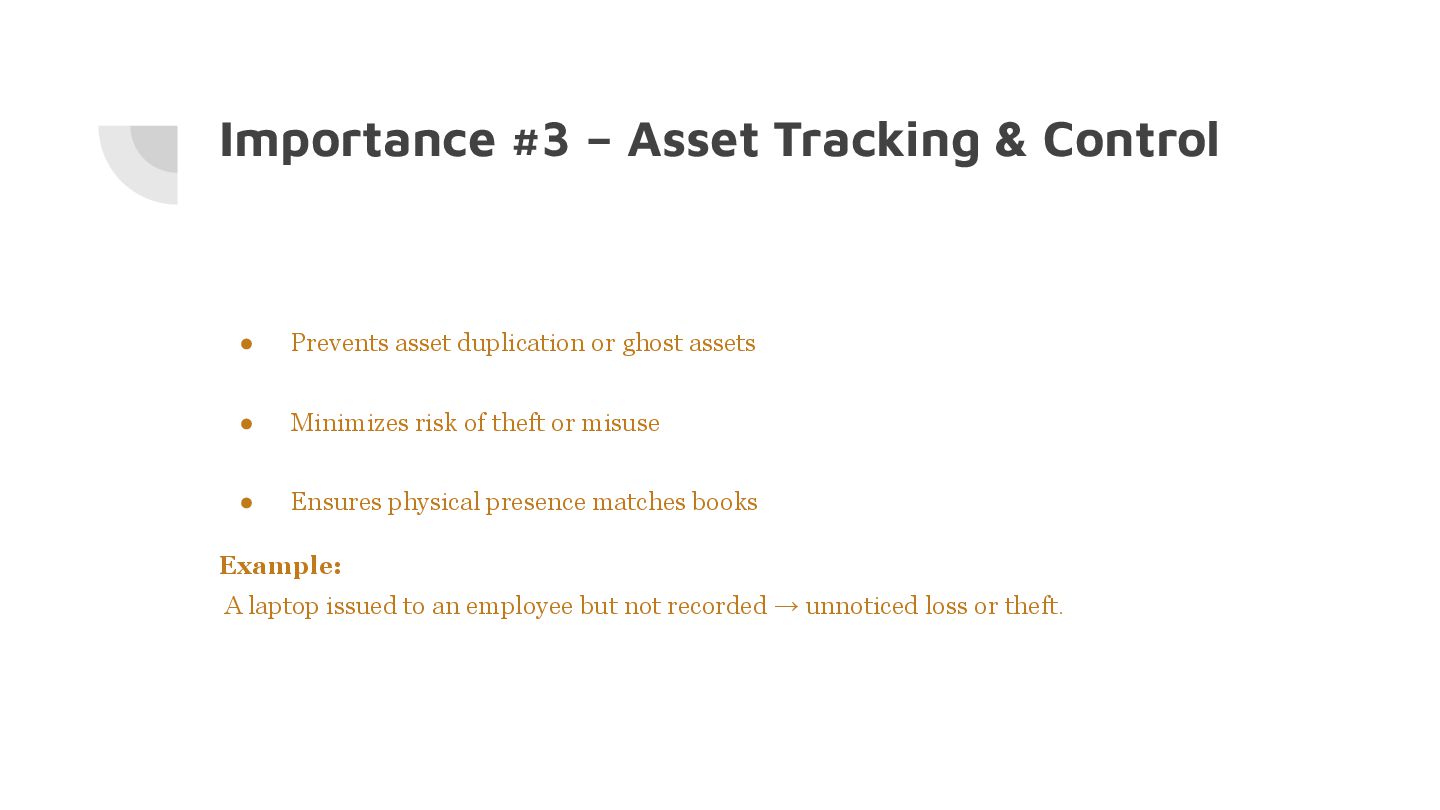
duplication or ghost assets • Minimizes risk of theft or misuse • Ensures physical presence matches books Example: A laptop issued to an employee but not recorded → unnoticed loss or theft.
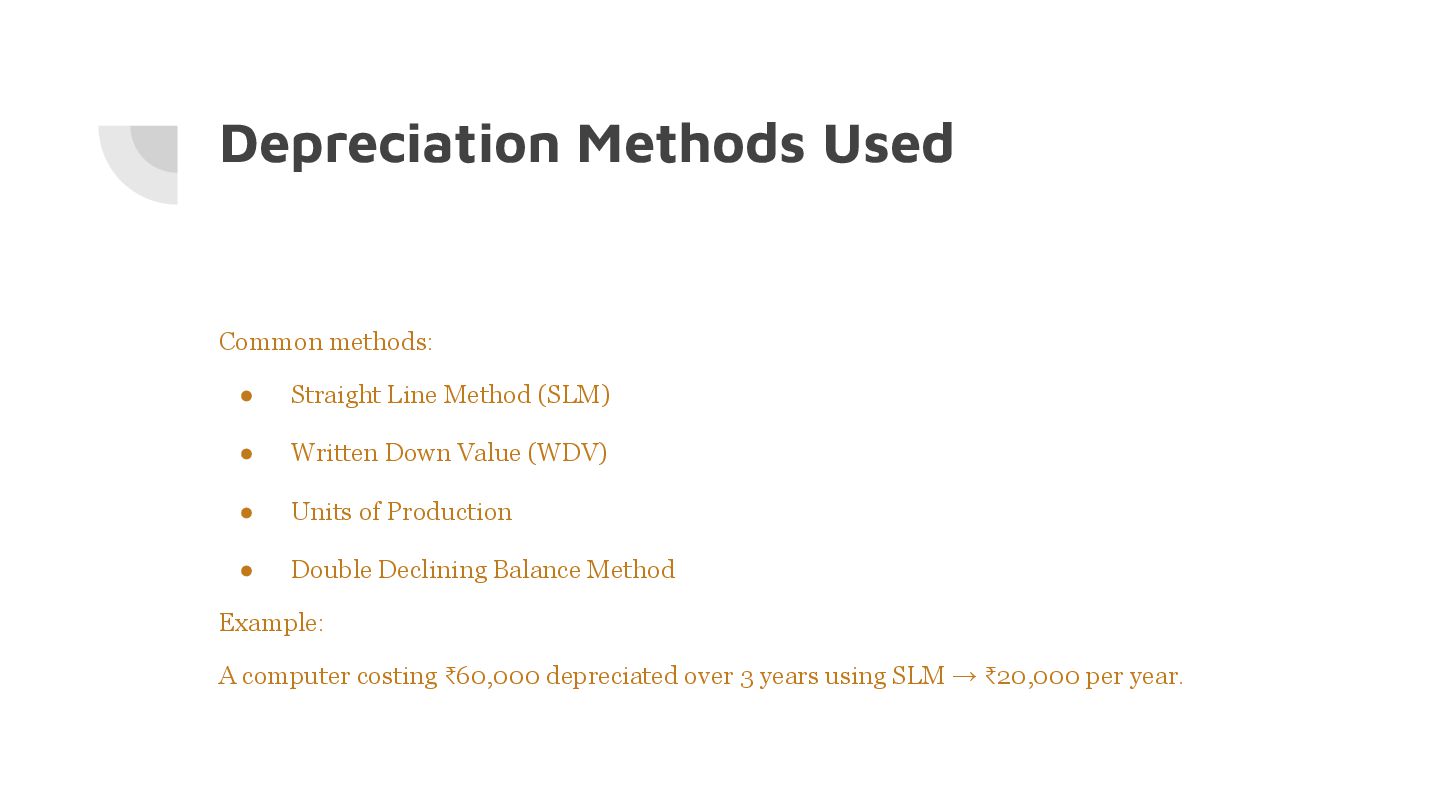
• Written Down Value (WDV) • Units of Production • Double Declining Balance Method Example: A computer costing ₹60,000 depreciated over 3 years using SLM → ₹20,000 per year.
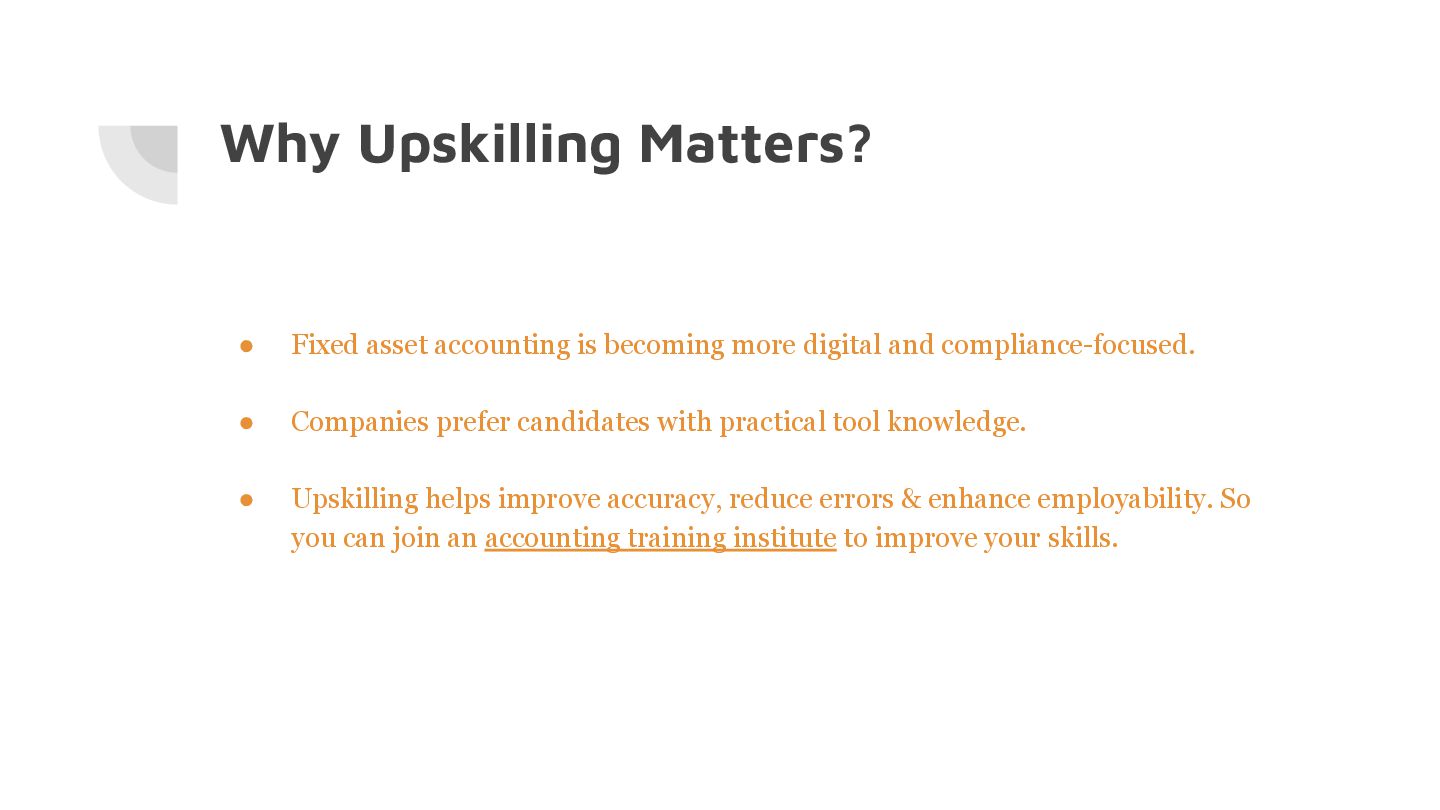
digital and compliance-focused. • Companies prefer candidates with practical tool knowledge. • Upskilling helps improve accuracy, reduce errors & enhance employability. So you can join an accounting training institute to improve your skills.


 nandanasm3087
 lara
 wayneb77
 mfonobong
 geoffreycrofte
 bryan
 retrage
 cassininazir
 jdejongh
 helenjbeal
 bermonpainter
 iamctodd
 stephaniewalter