Upgrade to Pro — share decks privately, control downloads, hide ads and more …

Entropy for Kids

Avatar for Noor Noor
November 25, 2020
2.4k

Entropy for Kids

Sister and brother duo Claude and Shannon get into antics together and discover how "entropy" works in the process. This playful book weaves the fundamental concepts of information theory into a story relatable to kids today. Claude and Shannon are curious, cunning kids that are sure to spark your young learner's interest in entropy. It's never too early to familiarize your little ones with the wonders of communication transmission! Give your child a head start grasping the stunning, simple concepts that underpin our technologically powered world.

Avatar for Noor

Noor

November 25, 2020
Tweet

Transcript

  1. Credit for the good stuff goes to Tsachy Weissman, mistakes

    are mine. Thanks to Shubham Chandak for reviewing and editing!
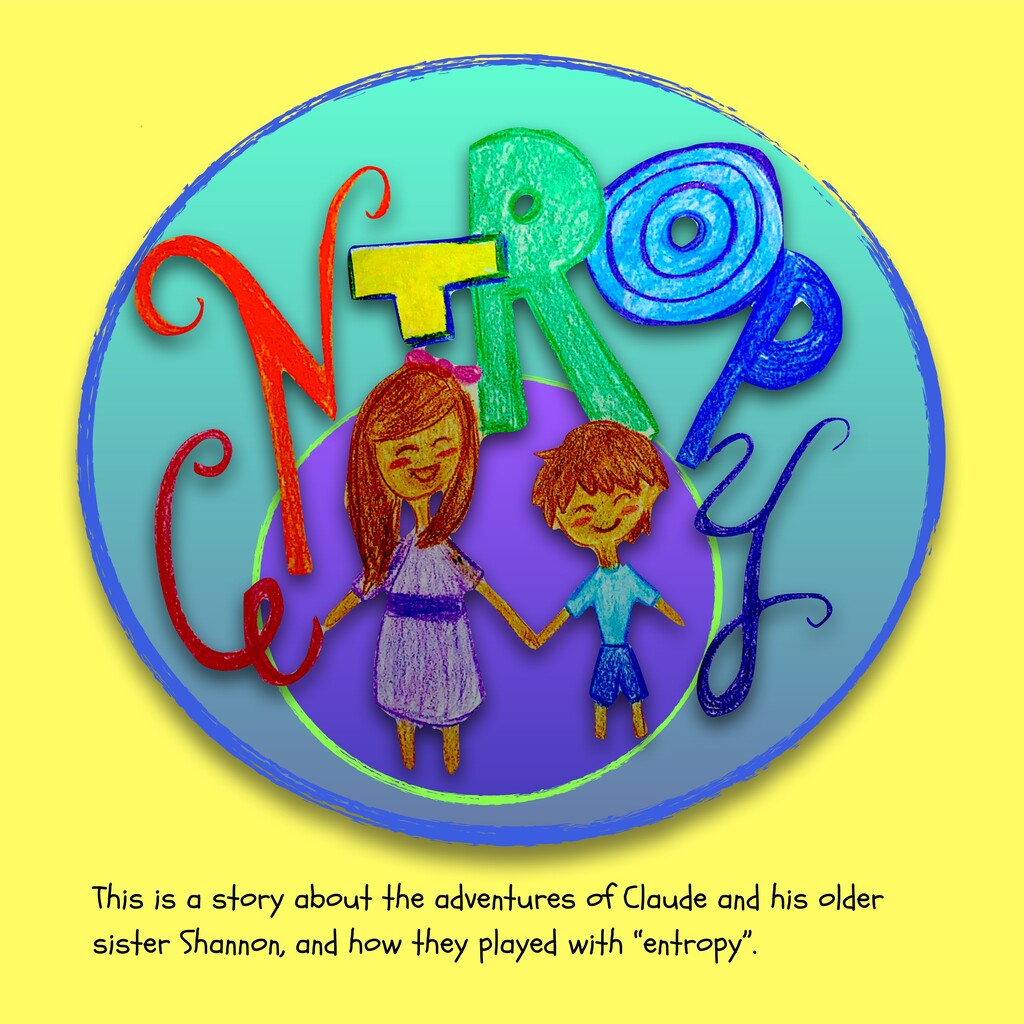
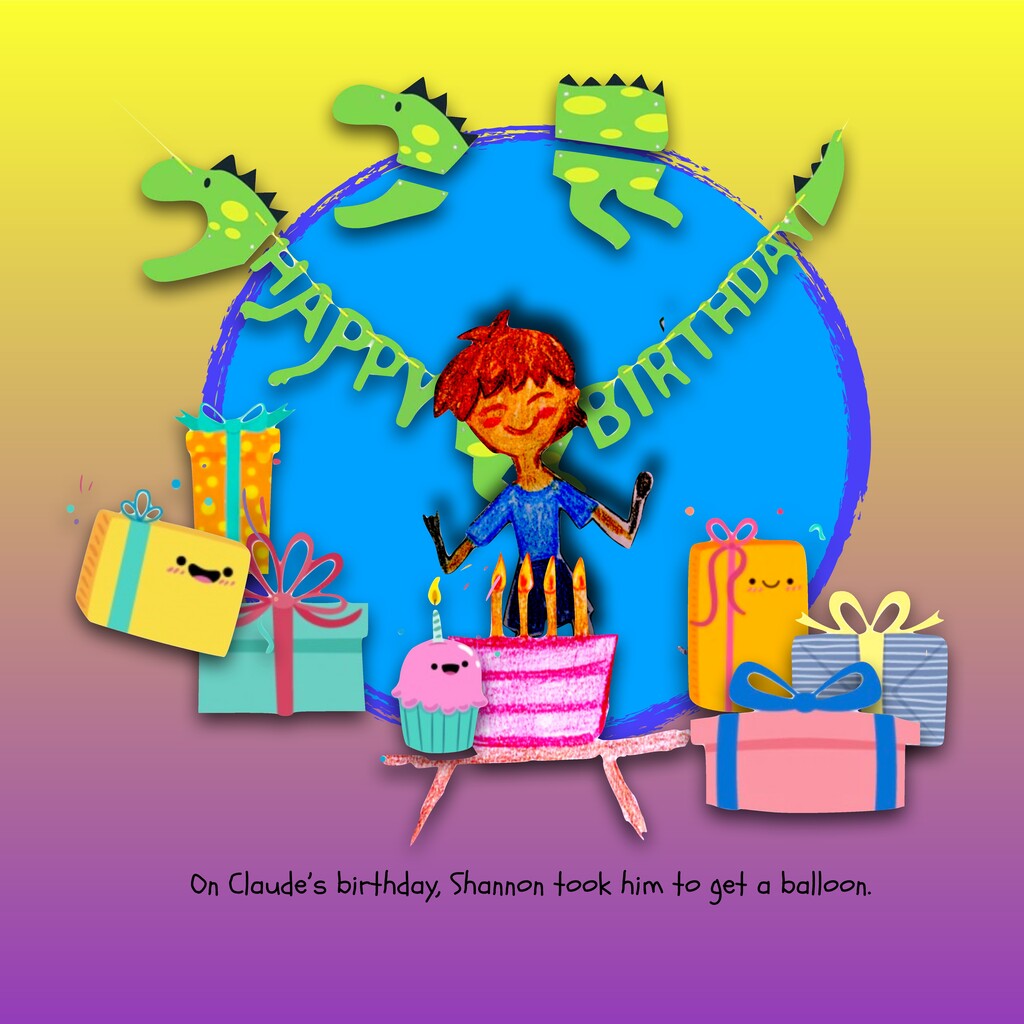
  2. This is a story about the adventures of Claude and

    his older sister Shannon, and how they played with “entropy”.
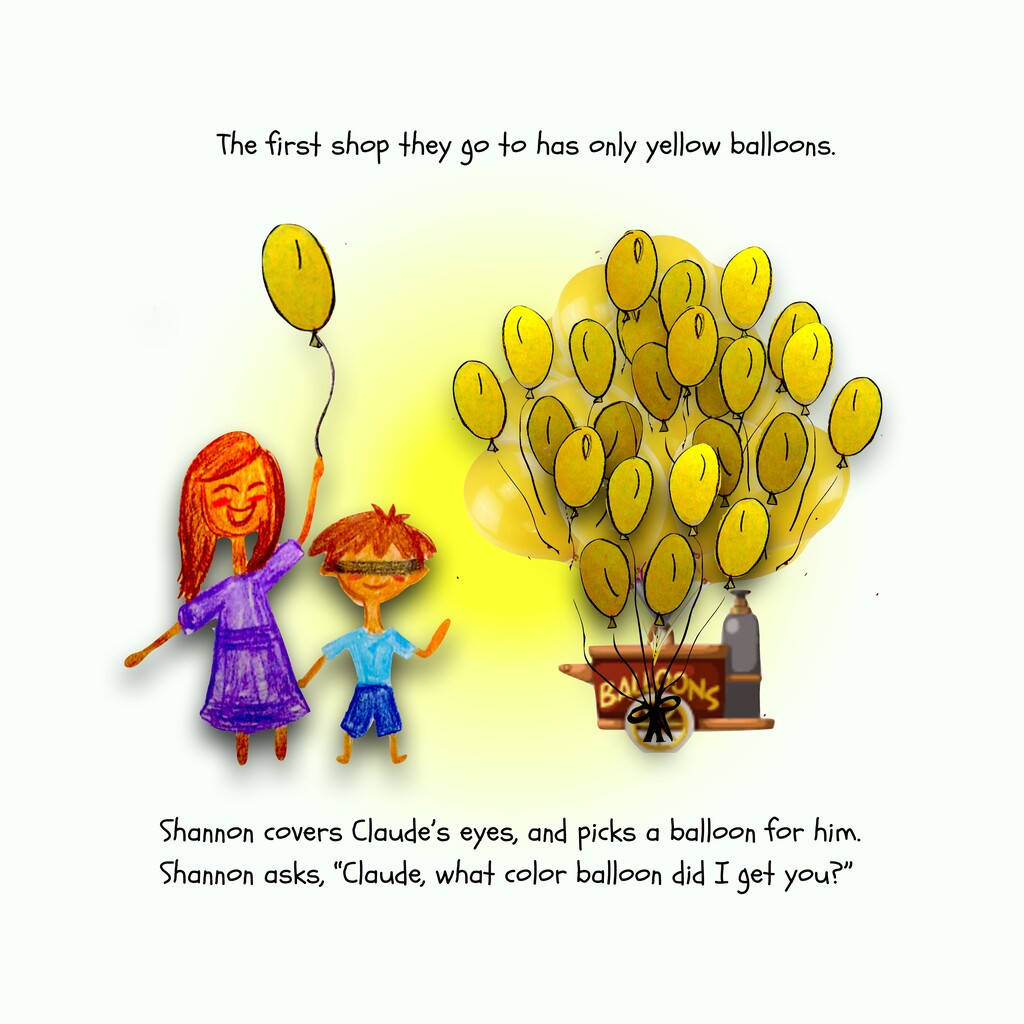
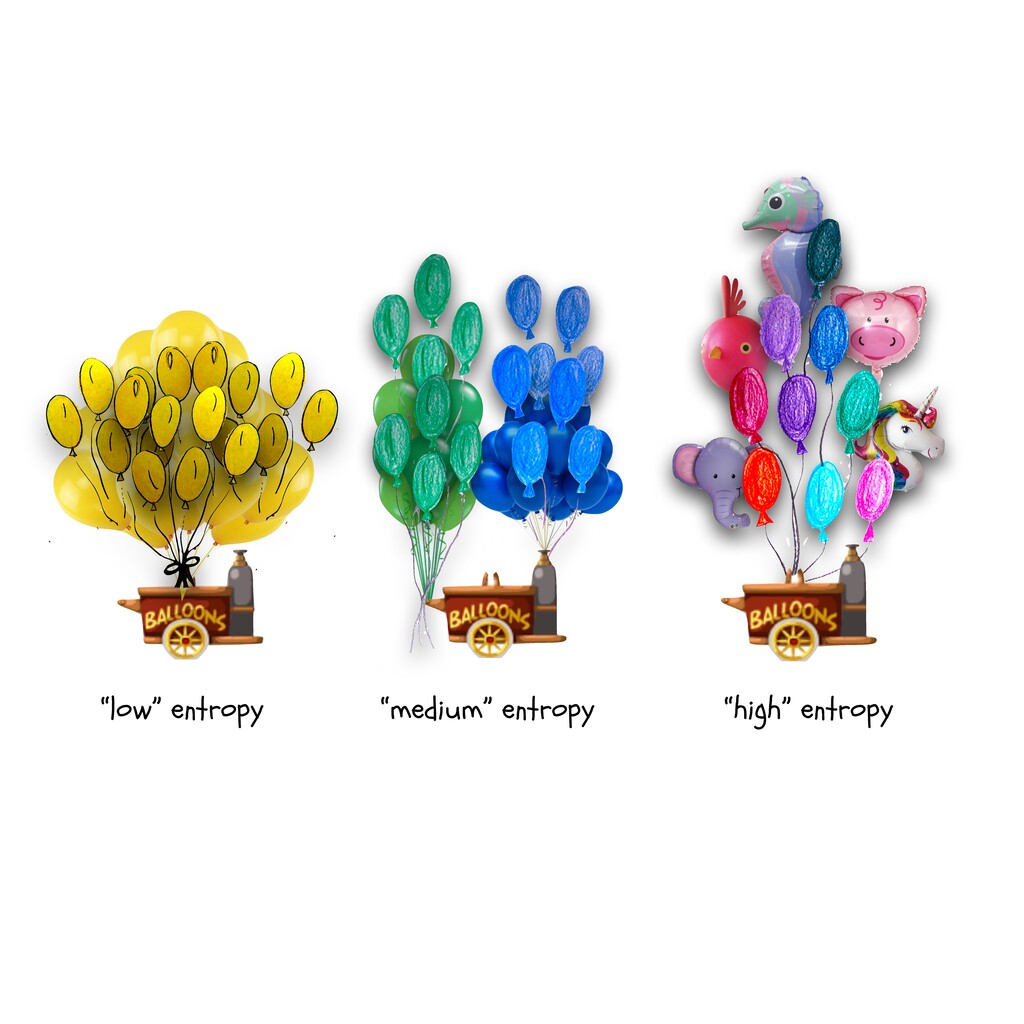
  3. The first shop they go to has only yellow balloons.

    Shannon covers Claude’s eyes, and picks a balloon for him. Shannon asks, “Claude, what color balloon did I get you?”
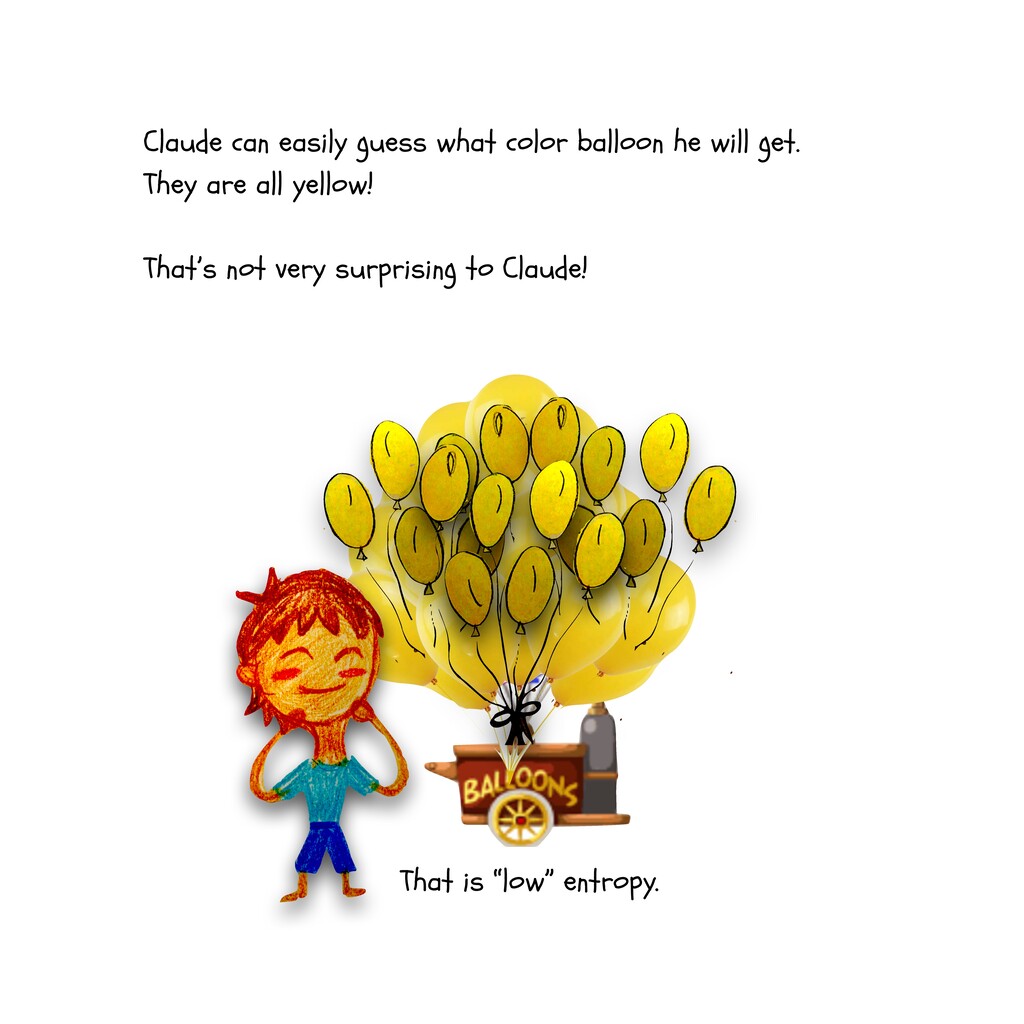
  4. Claude can easily guess what color balloon he will get.

    They are all yellow! That’s not very surprising to Claude! That is “low” entropy.
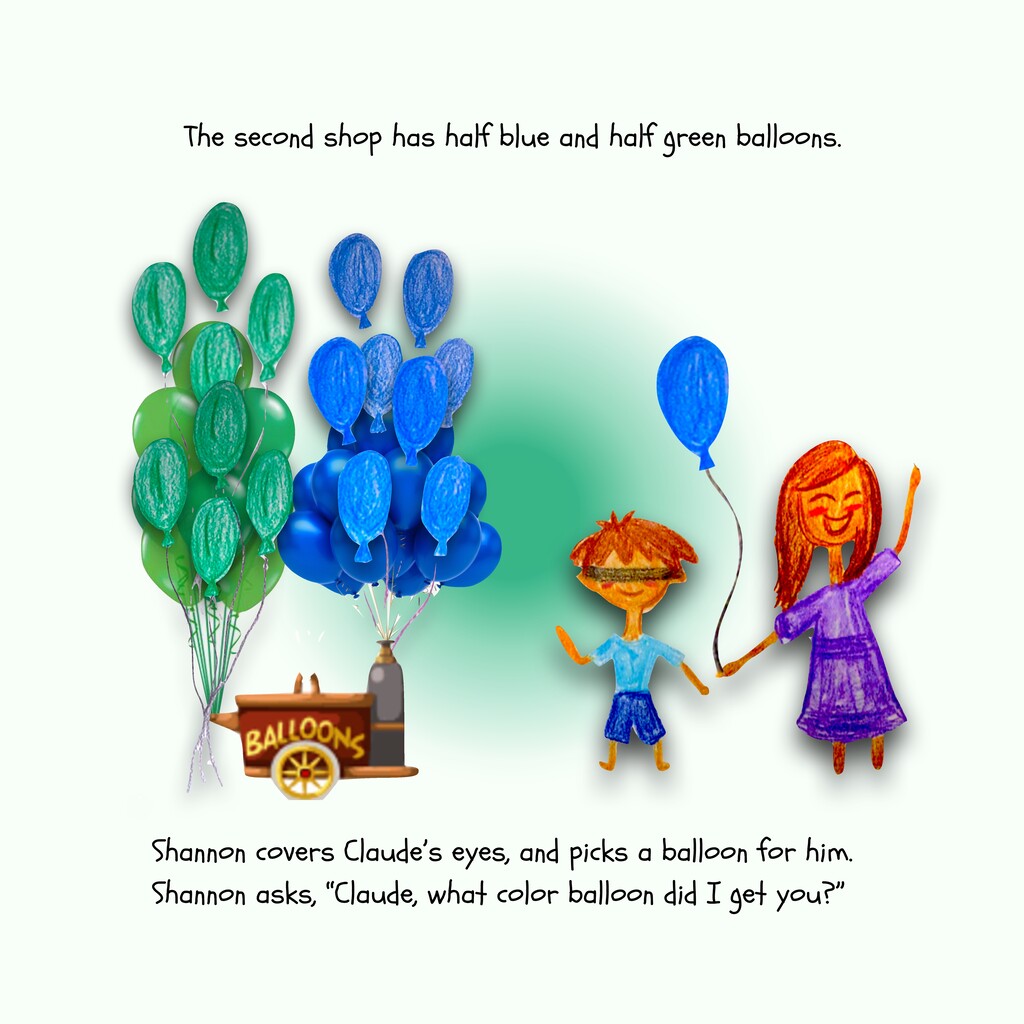
  5. The second shop has half blue and half green balloons.

    Shannon covers Claude’s eyes, and picks a balloon for him. Shannon asks, “Claude, what color balloon did I get you?”
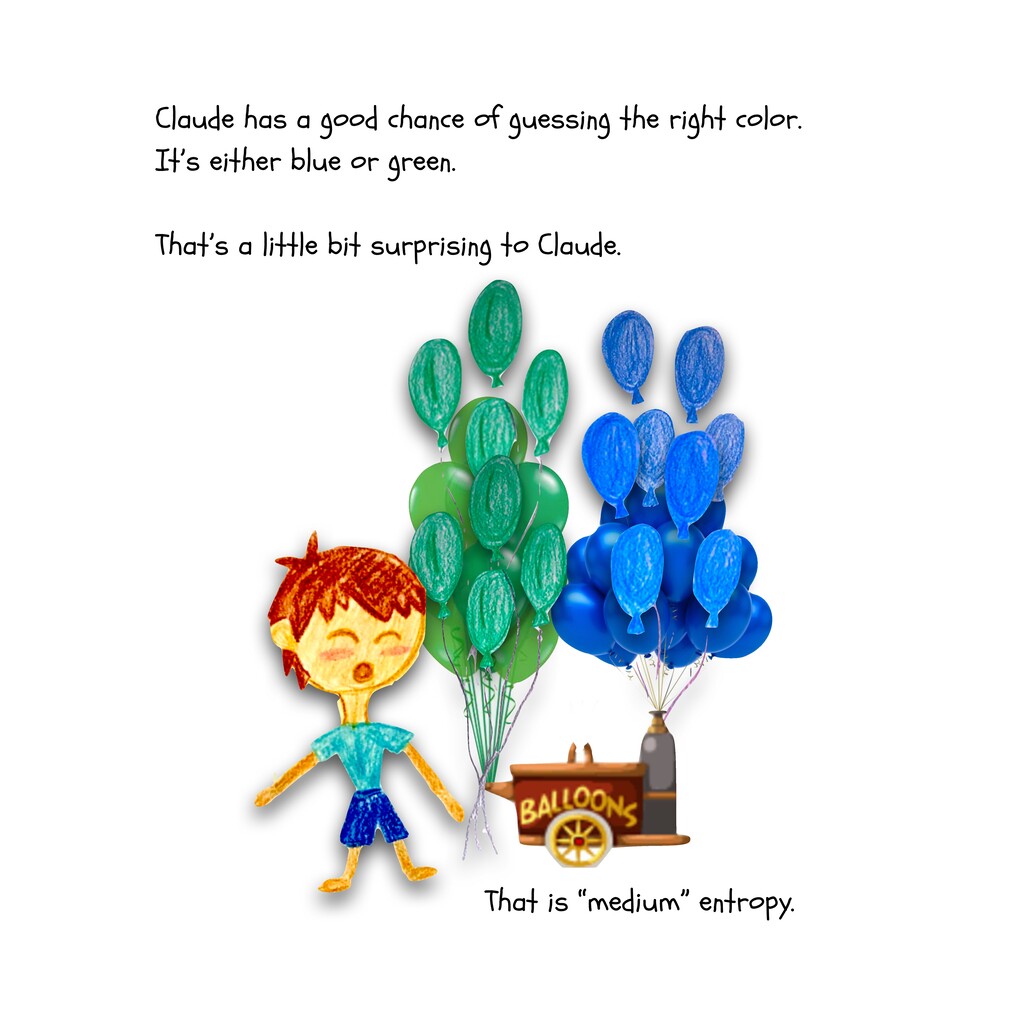
  6. Claude has a good chance of guessing the right color.

    It’s either blue or green. That’s a little bit surprising to Claude. That is “medium” entropy.
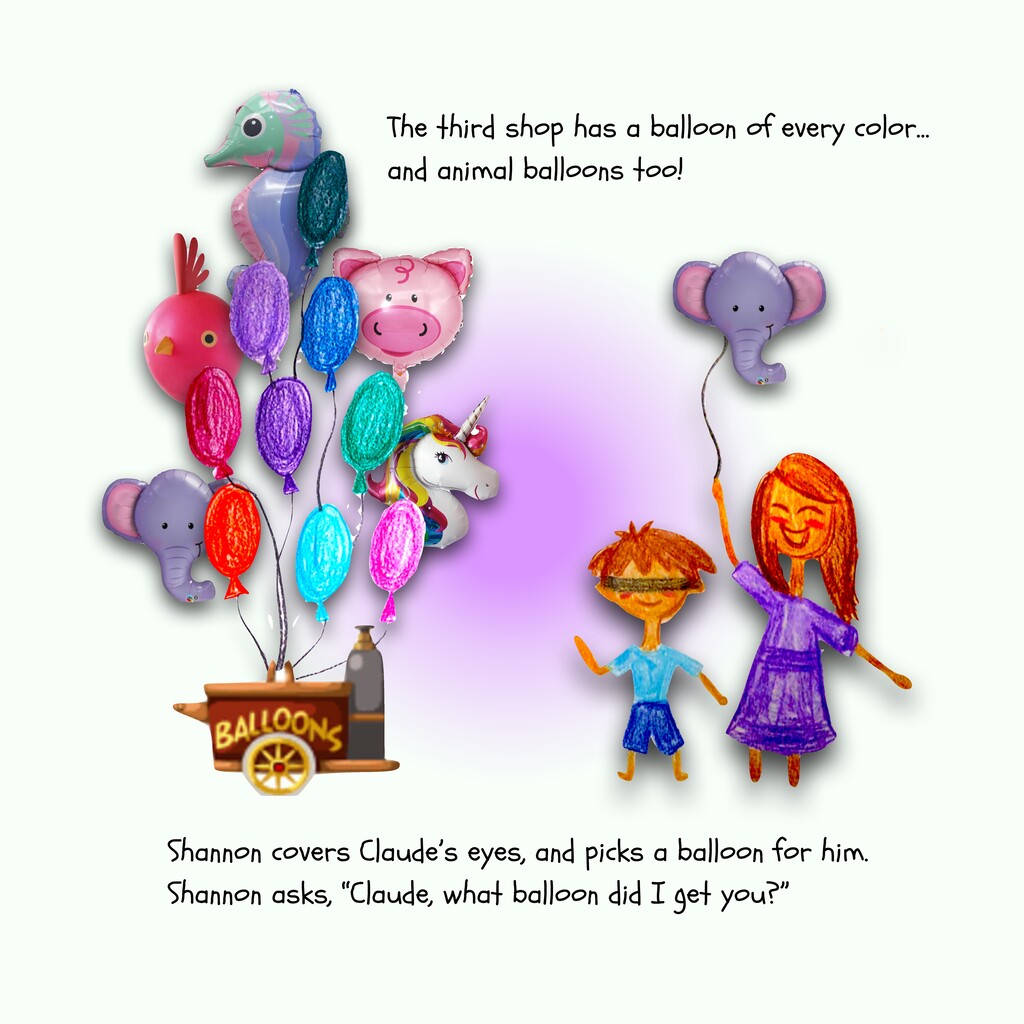
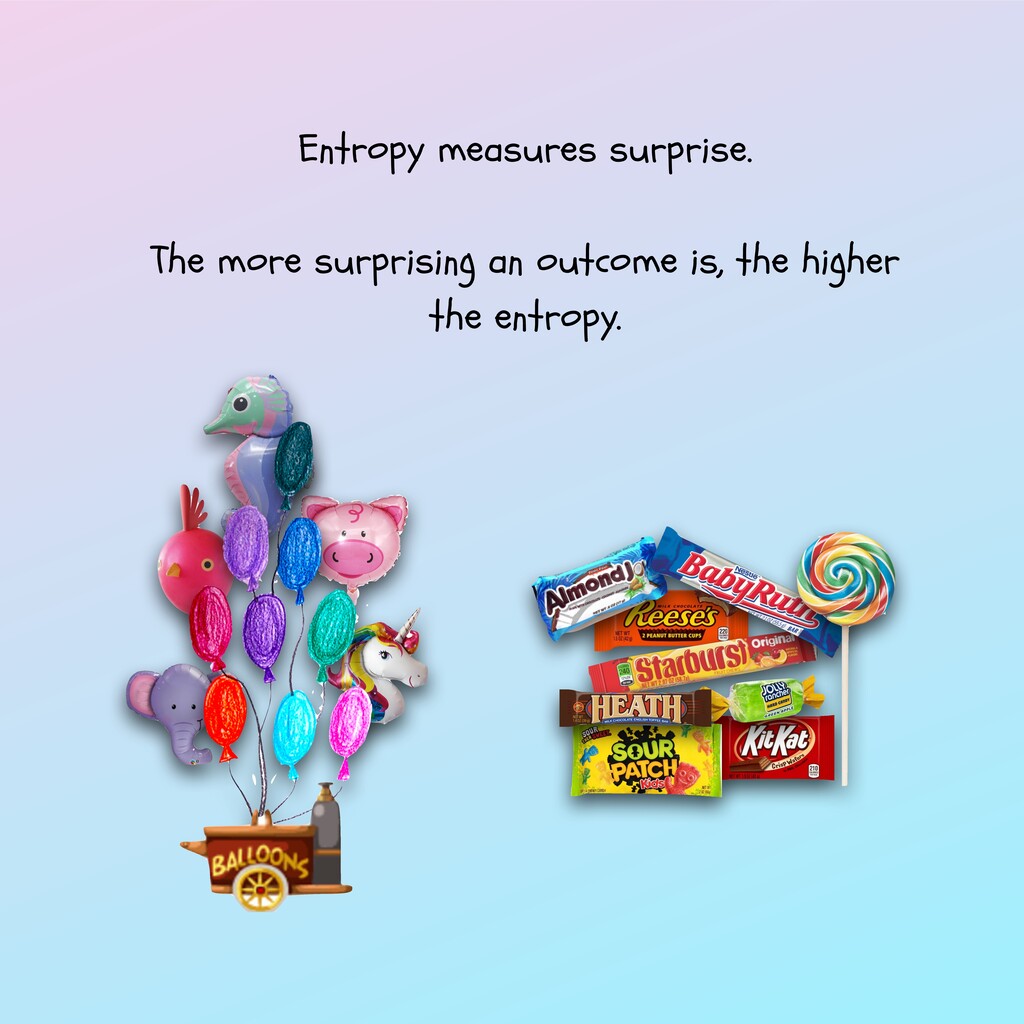
  7. The third shop has a balloon of every color… and

    animal balloons too! Shannon covers Claude’s eyes, and picks a balloon for him. Shannon asks, “Claude, what balloon did I get you?”
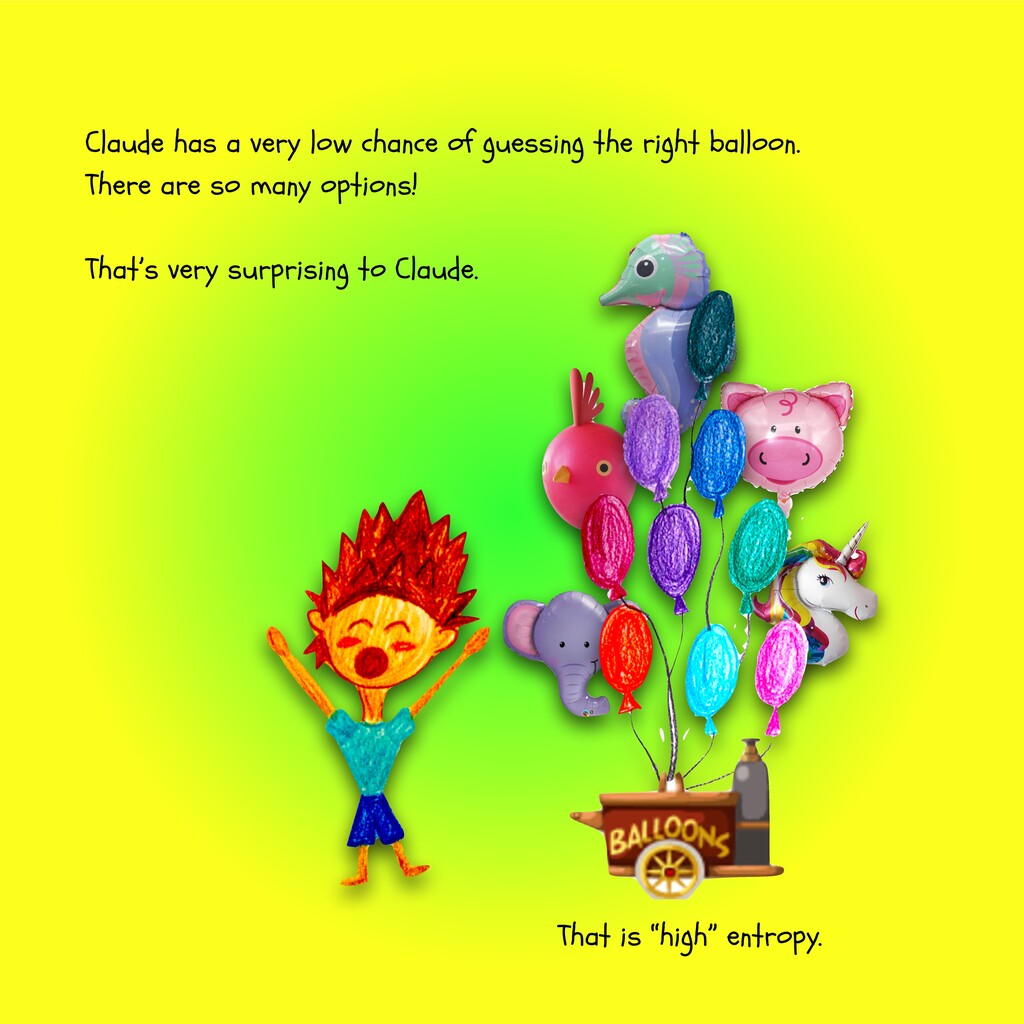
  8. Claude has a very low chance of guessing the right

    balloon. There are so many options! That’s very surprising to Claude. That is “high” entropy.
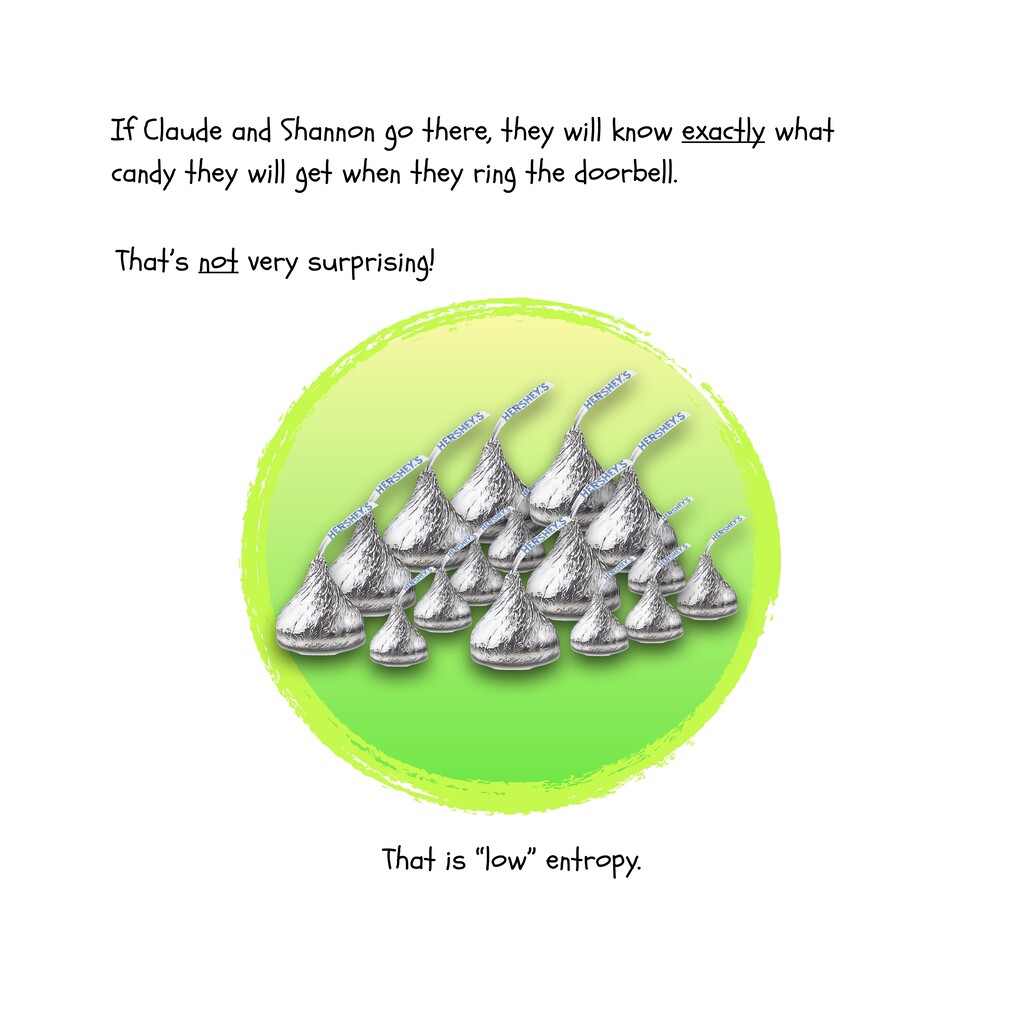
  9. If Claude and Shannon go there, they will know exactly

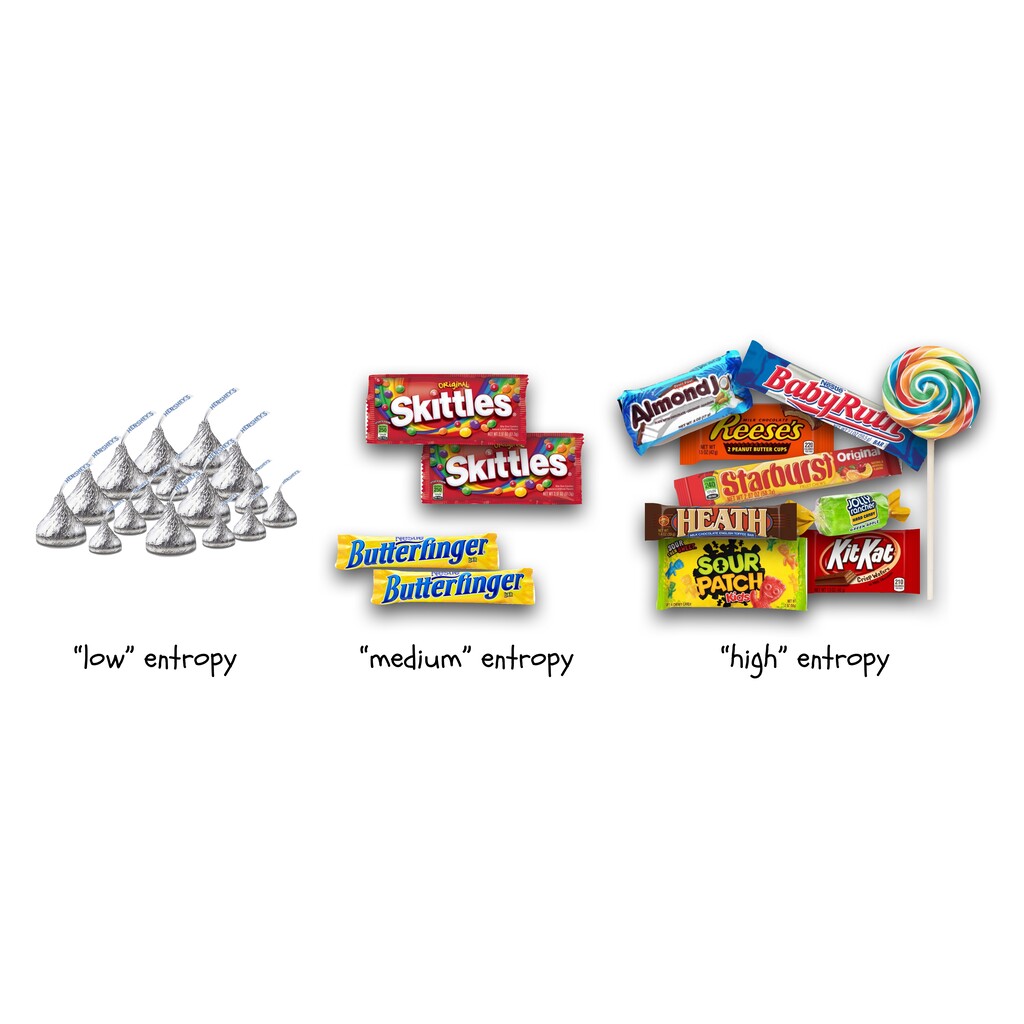
    what candy they will get when they ring the doorbell. That is “low” entropy. That’s not very surprising!
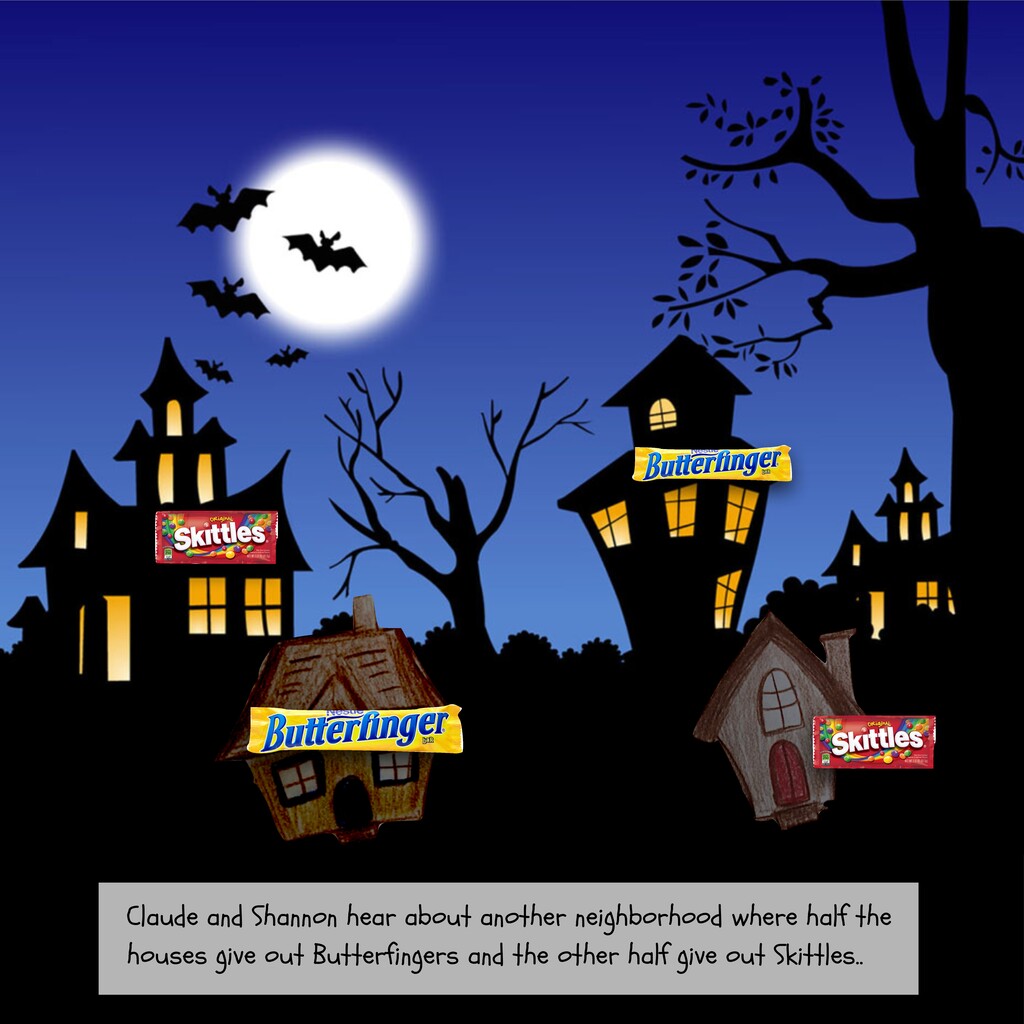
  10. Claude and Shannon hear about another neighborhood where half the

    houses give out Butterfingers and the other half give out Skittles..
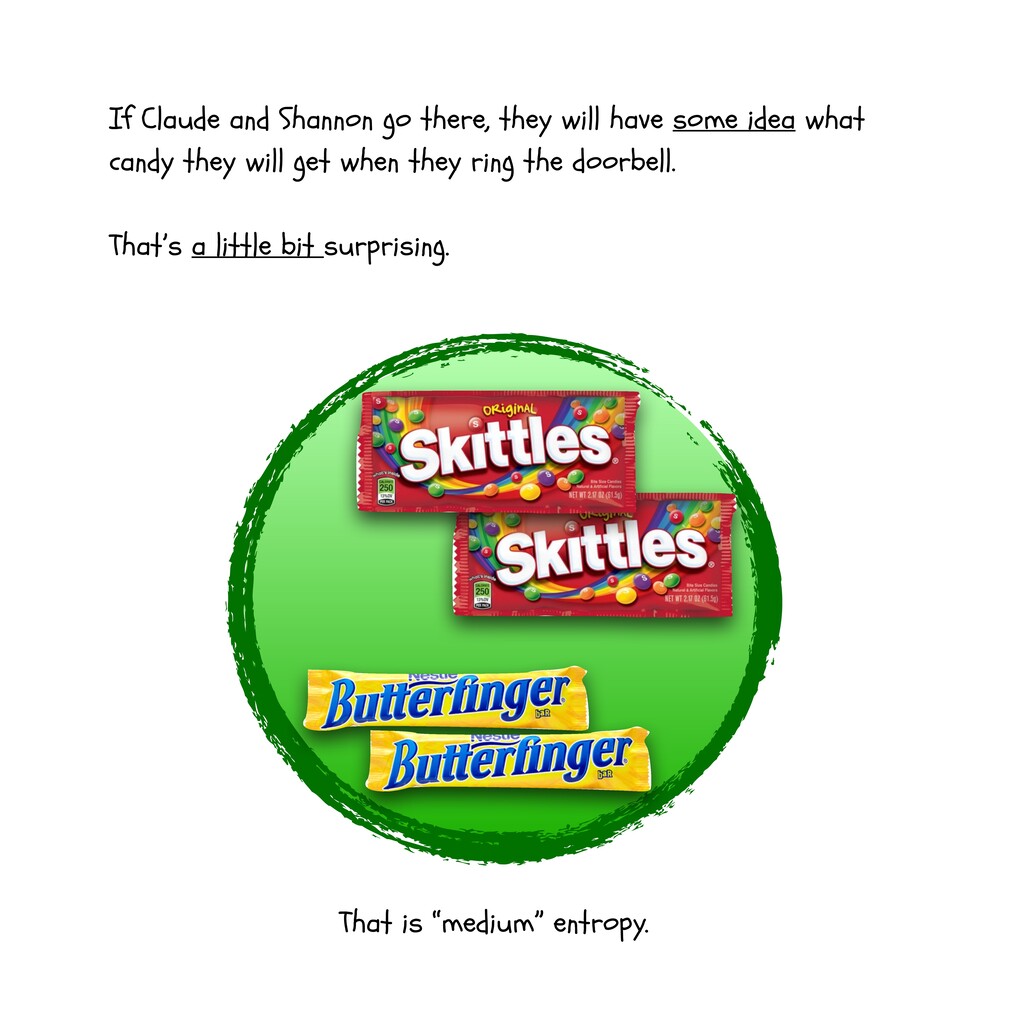
  11. If Claude and Shannon go there, they will have some

    idea what candy they will get when they ring the doorbell. That’s a little bit surprising. That is “medium” entropy.
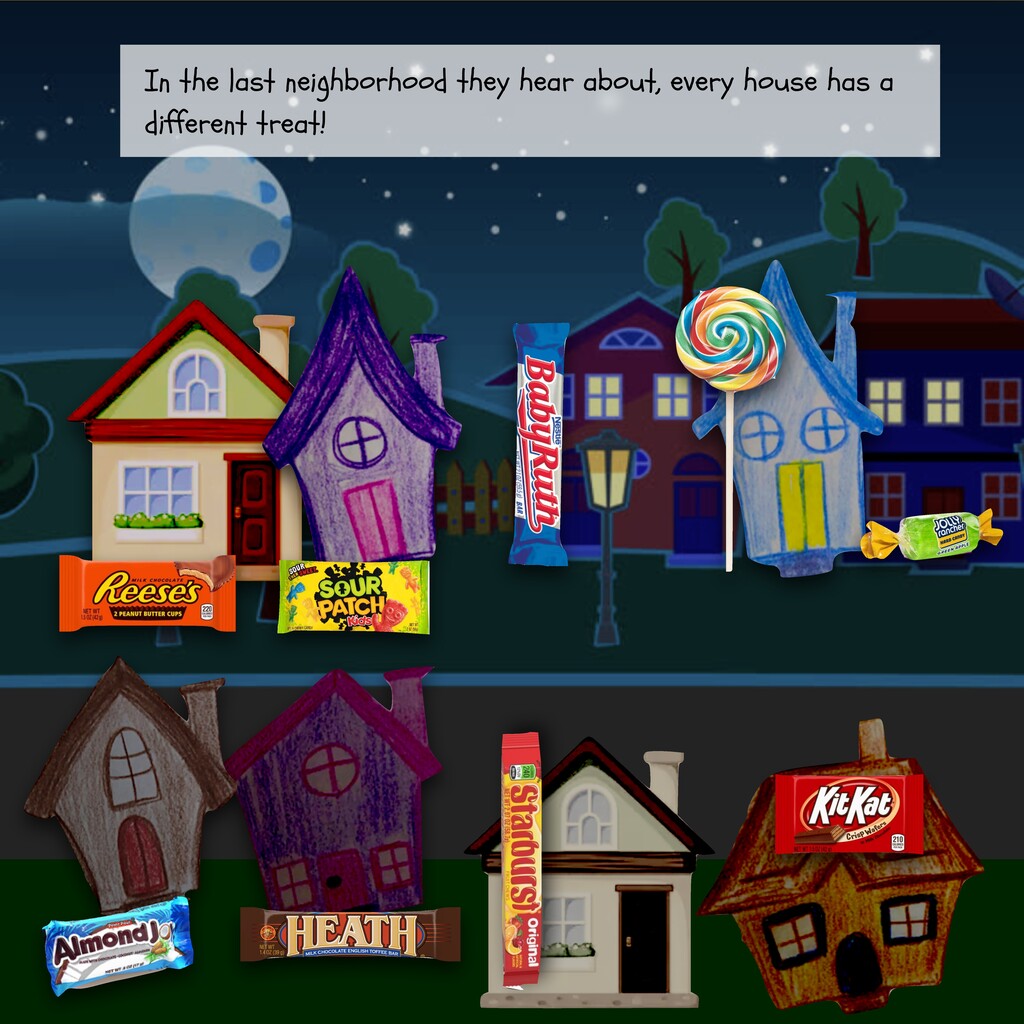
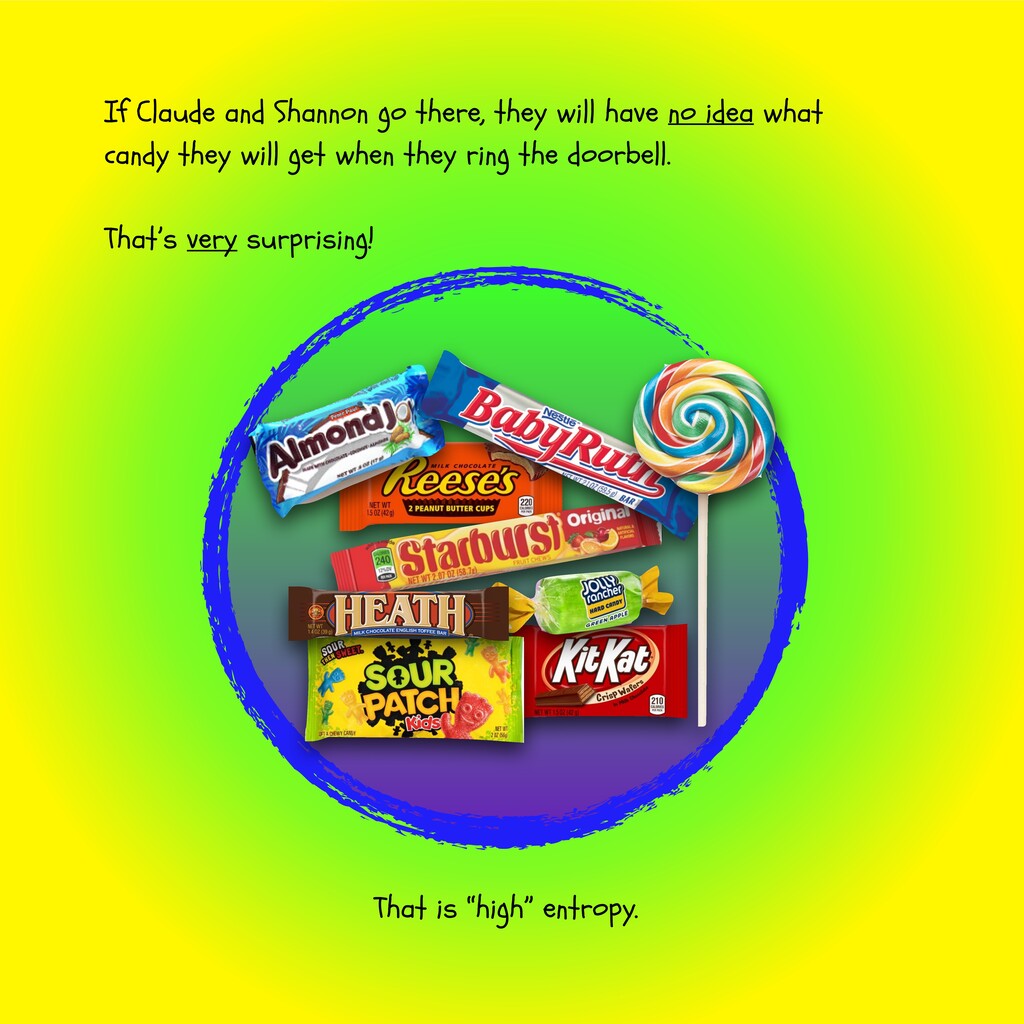
  12. If Claude and Shannon go there, they will have no

    idea what candy they will get when they ring the doorbell. That’s very surprising! That is “high” entropy.
  13. Claude loves hershey kisses. As soon as he heard about

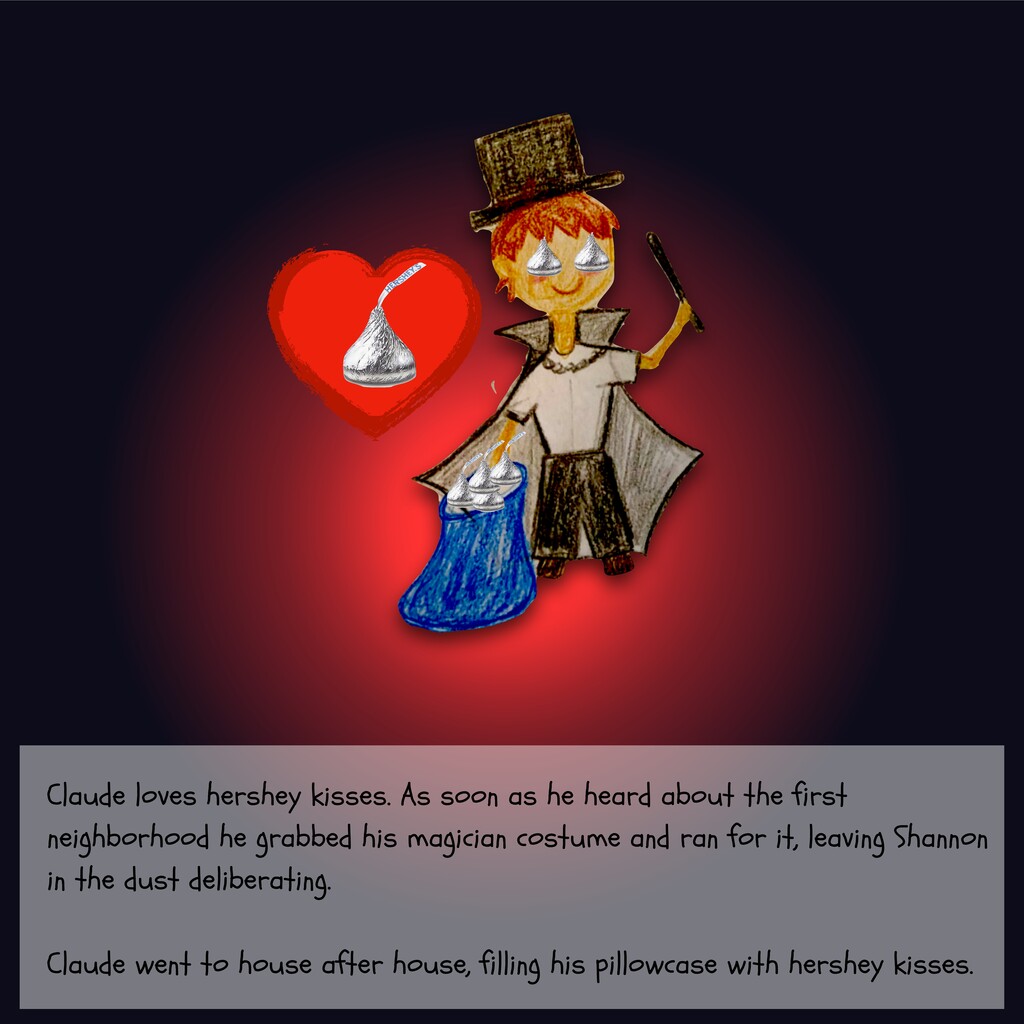
    the first neighborhood he grabbed his magician costume and ran for it, leaving Shannon in the dust deliberating. Claude went to house after house, filling his pillowcase with hershey kisses.
  14. When Claude got home and reunited with Shannon, he had

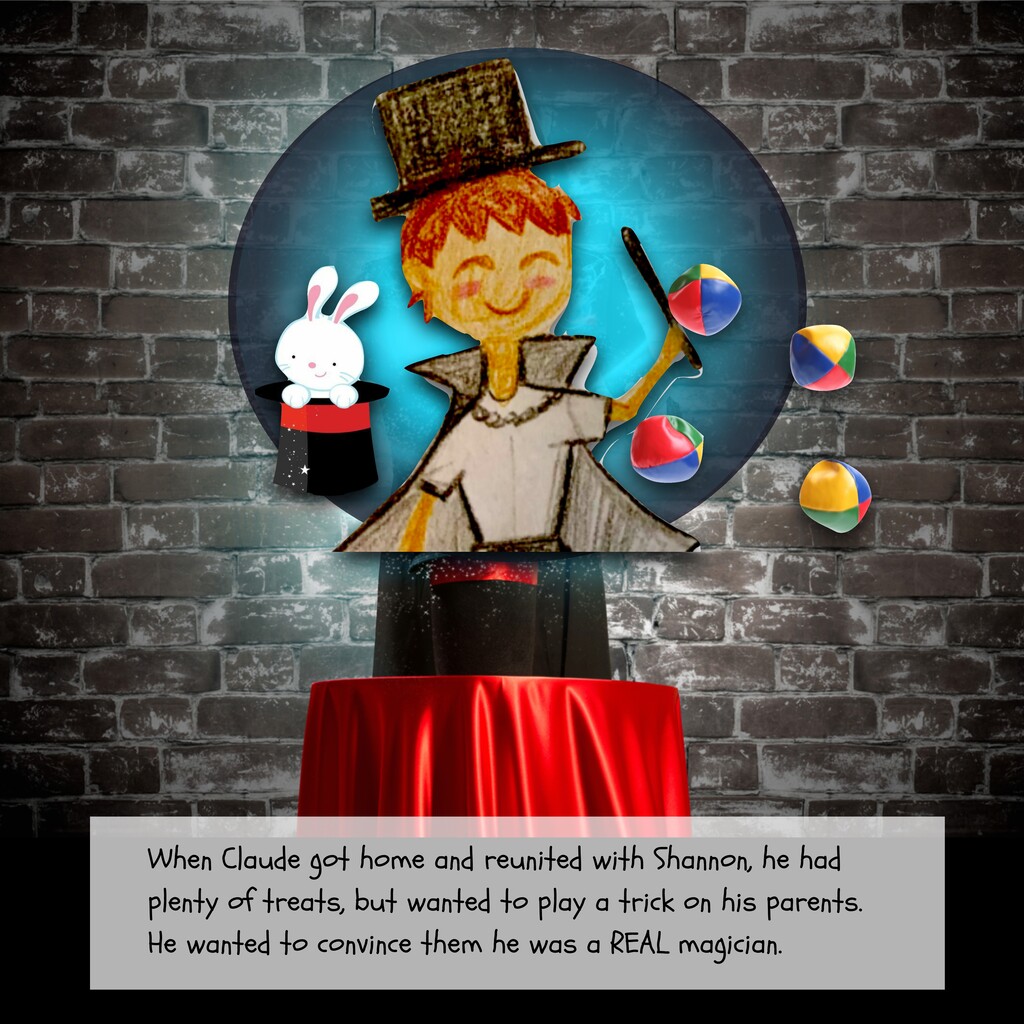
    plenty of treats, but wanted to play a trick on his parents. He wanted to convince them he was a REAL magician.
  15. Claude told Shannon, “Let’s do a magic trick where Mom

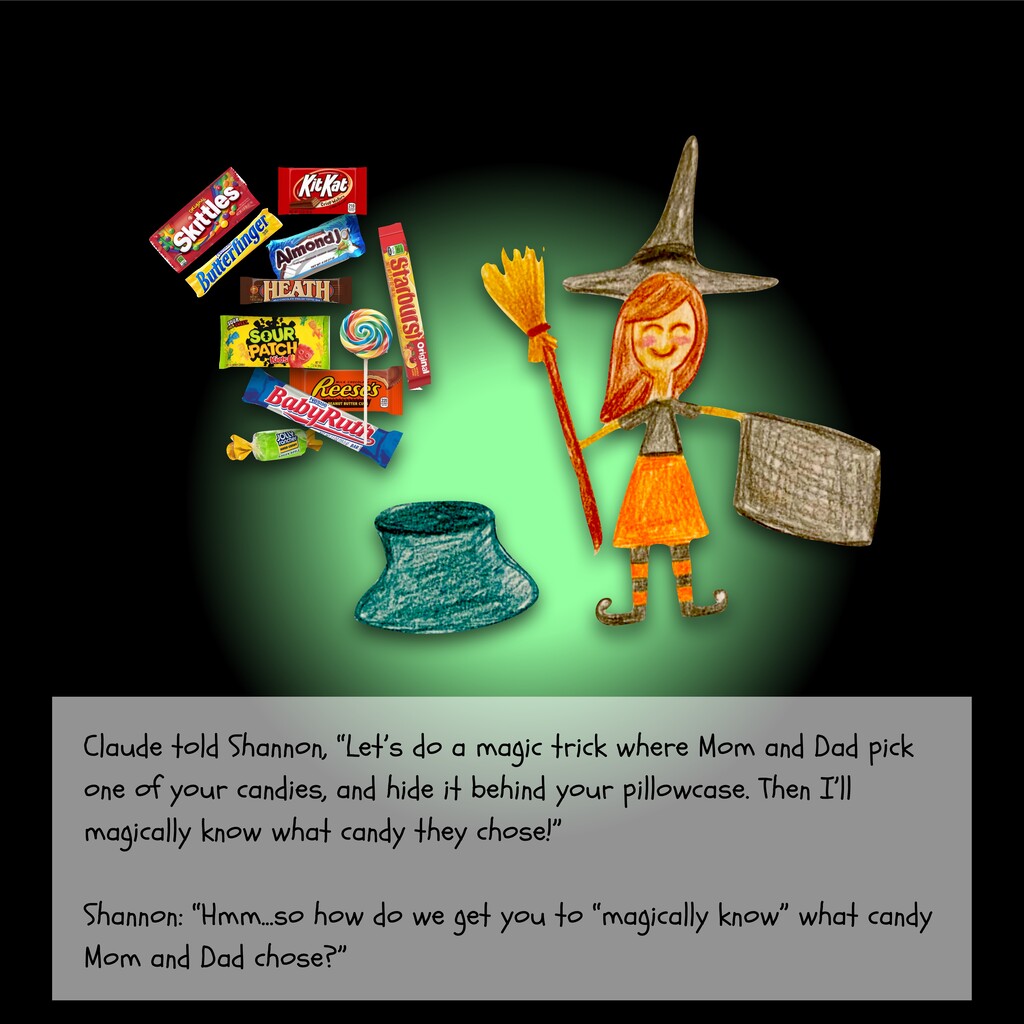
    and Dad pick one of your candies, and hide it behind your pillowcase. Then I’ll magically know what candy they chose!” Shannon: “Hmm...so how do we get you to “magically know” what candy Mom and Dad chose?”
  16. Shannon said, “We need to come up with a way

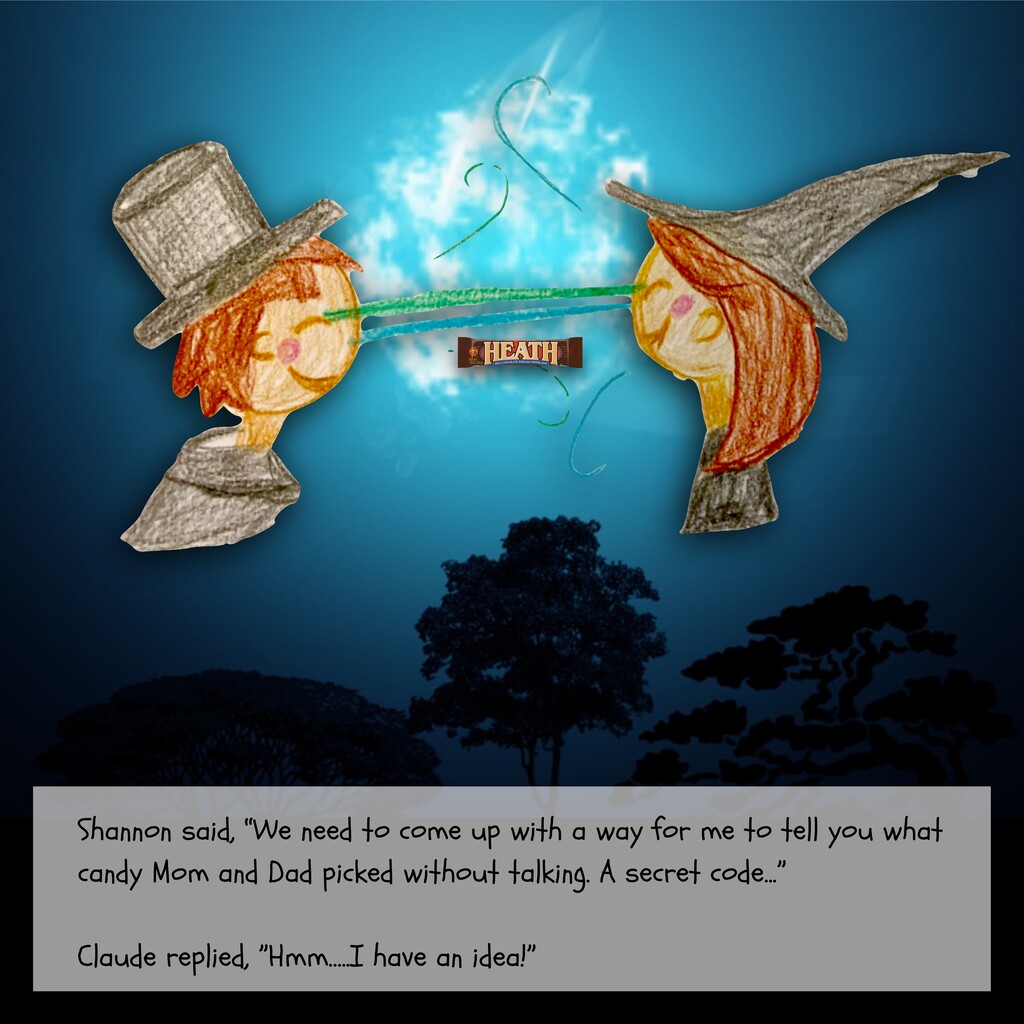
    for me to tell you what candy Mom and Dad picked without talking. A secret code...” Claude replied, ”Hmm…..I have an idea!”
  17. Claude explained, “We can use my hershey kisses as a

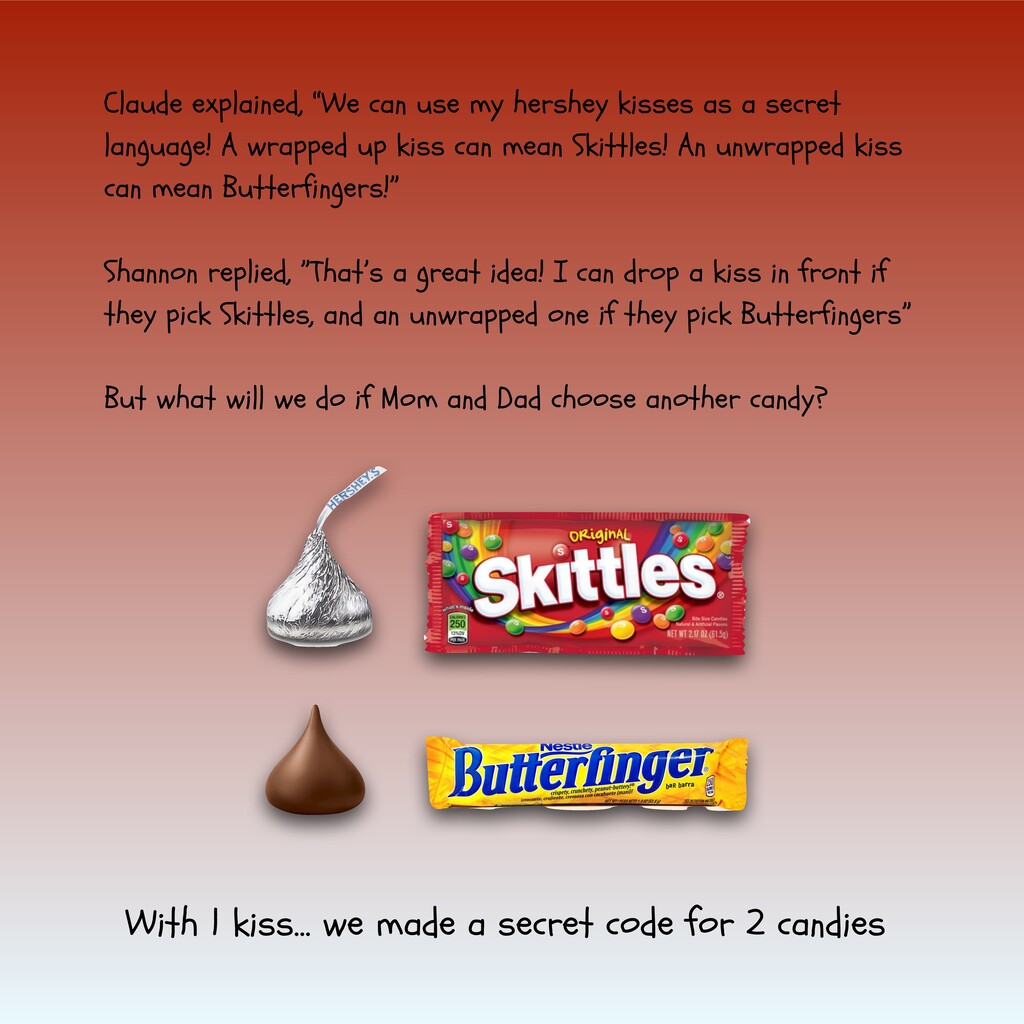
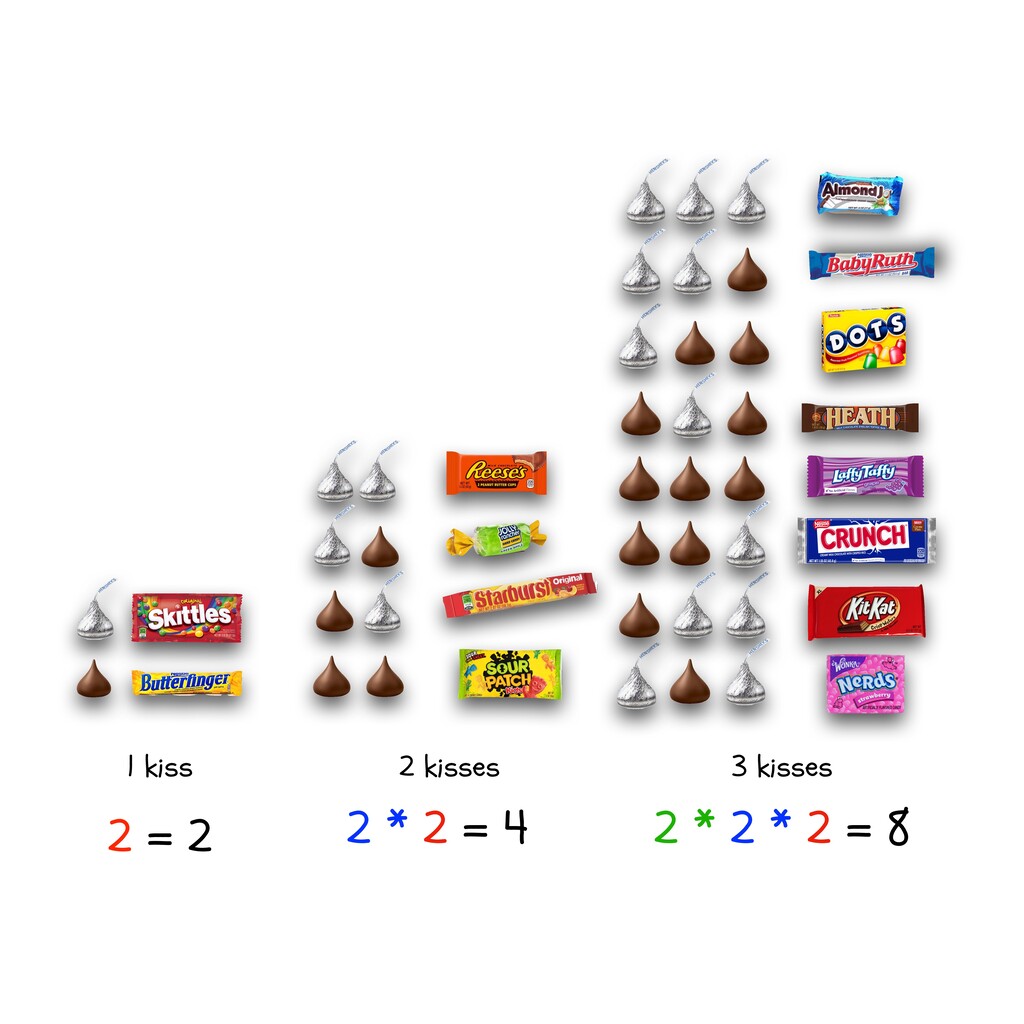
    secret language! A wrapped up kiss can mean Skittles! An unwrapped kiss can mean Butterfingers!” Shannon replied, ”That’s a great idea! I can drop a kiss in front if they pick Skittles, and an unwrapped one if they pick Butterfingers” But what will we do if Mom and Dad choose another candy? With 1 kiss… we made a secret code for 2 candies
  18. Shannon realized, “We can use another kiss! See, if we

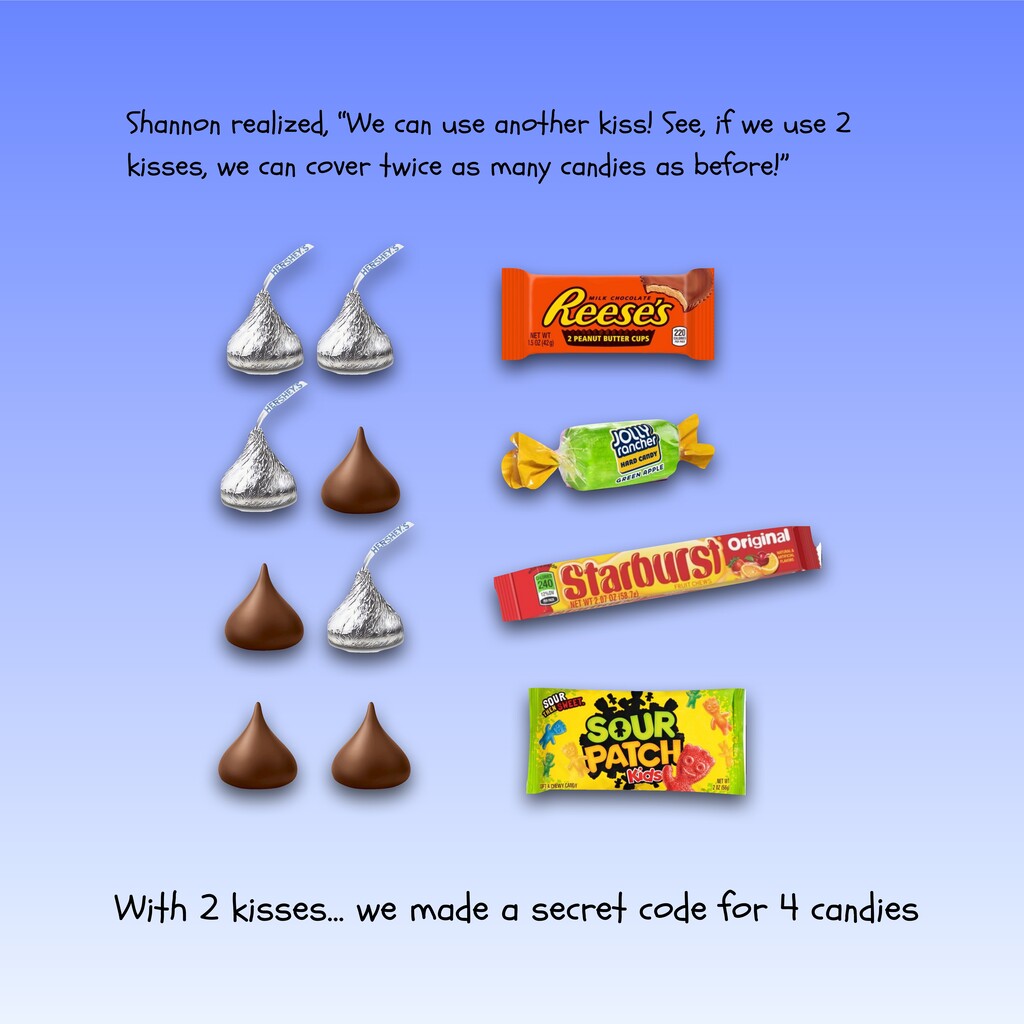
    use 2 kisses, we can cover twice as many candies as before!” With 2 kisses… we made a secret code for 4 candies
  19. Shannon: “If we use 3 kisses, we can cover twice

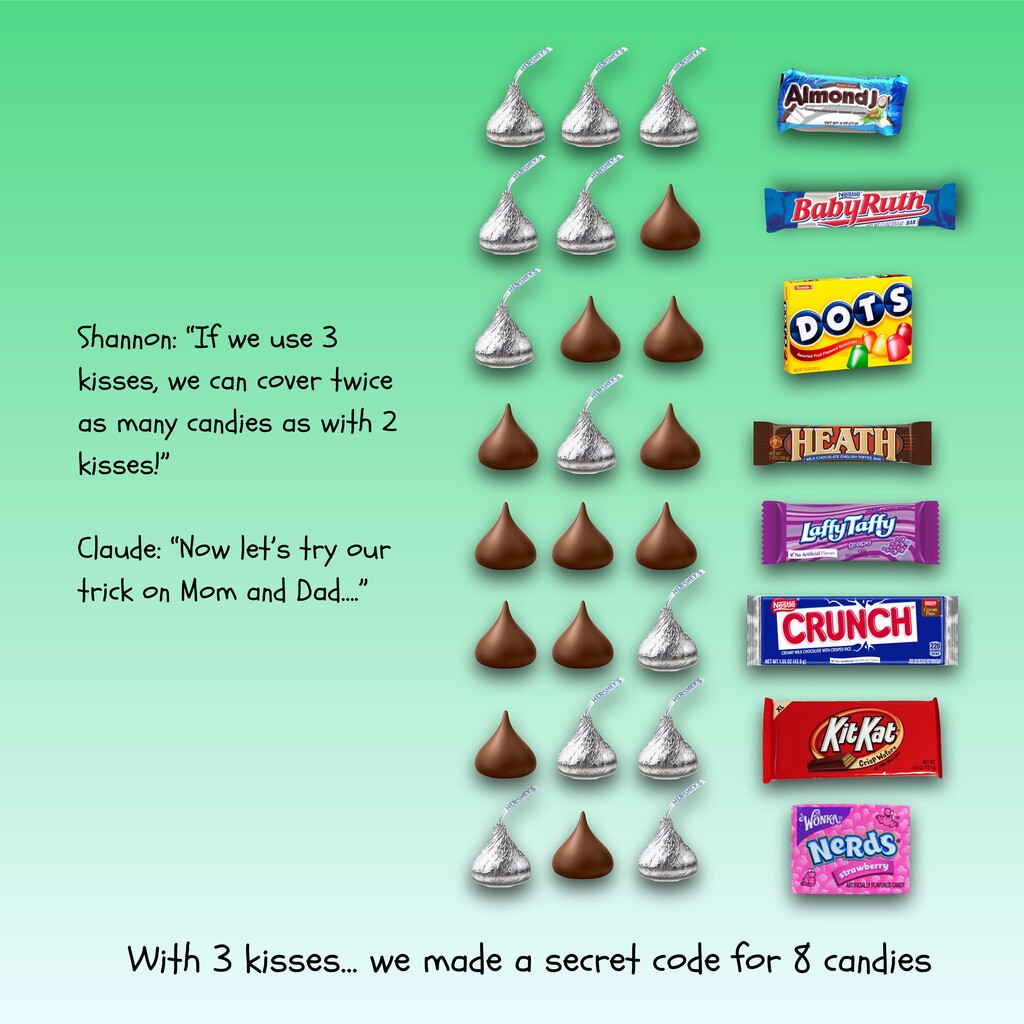
    as many candies as with 2 kisses!” Claude: “Now let’s try our trick on Mom and Dad….” With 3 kisses… we made a secret code for 8 candies
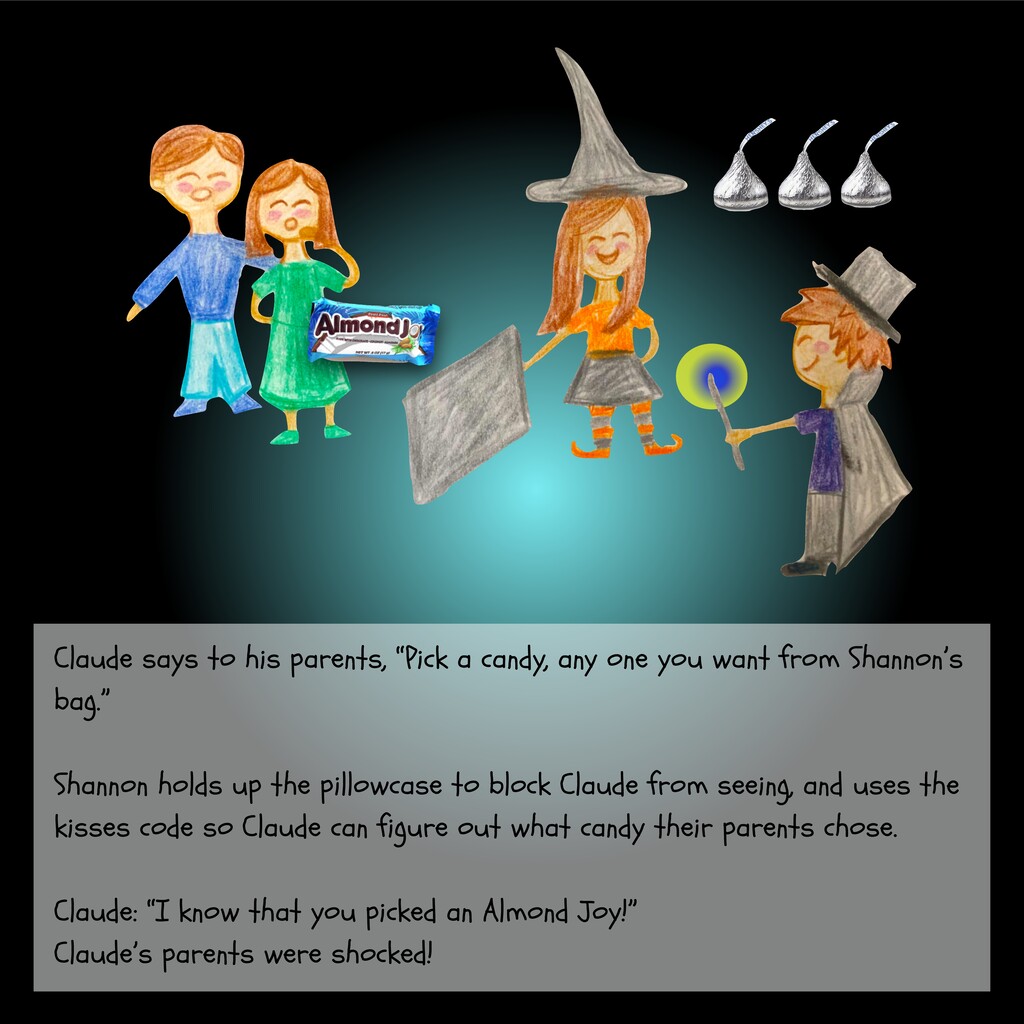
  20. Claude says to his parents, “Pick a candy, any one

    you want from Shannon’s bag.” Shannon holds up the pillowcase to block Claude from seeing, and uses the kisses code so Claude can figure out what candy their parents chose. Claude: “I know that you picked an Almond Joy!” Claude’s parents were shocked!
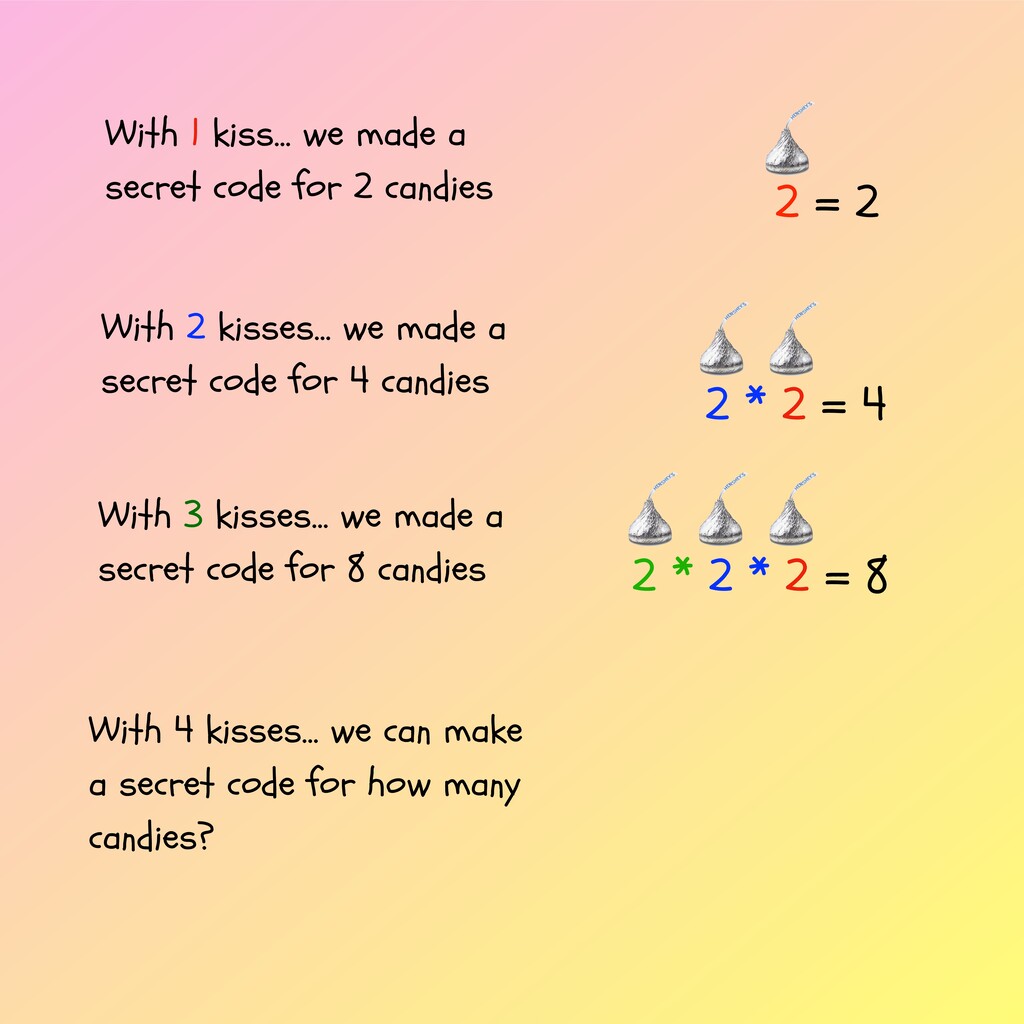
  21. With 1 kiss… we made a secret code for 2

    candies With 2 kisses… we made a secret code for 4 candies With 3 kisses… we made a secret code for 8 candies With 4 kisses… we can make a secret code for how many candies? 2 = 2 2 * 2 = 4 2 * 2 * 2 = 8
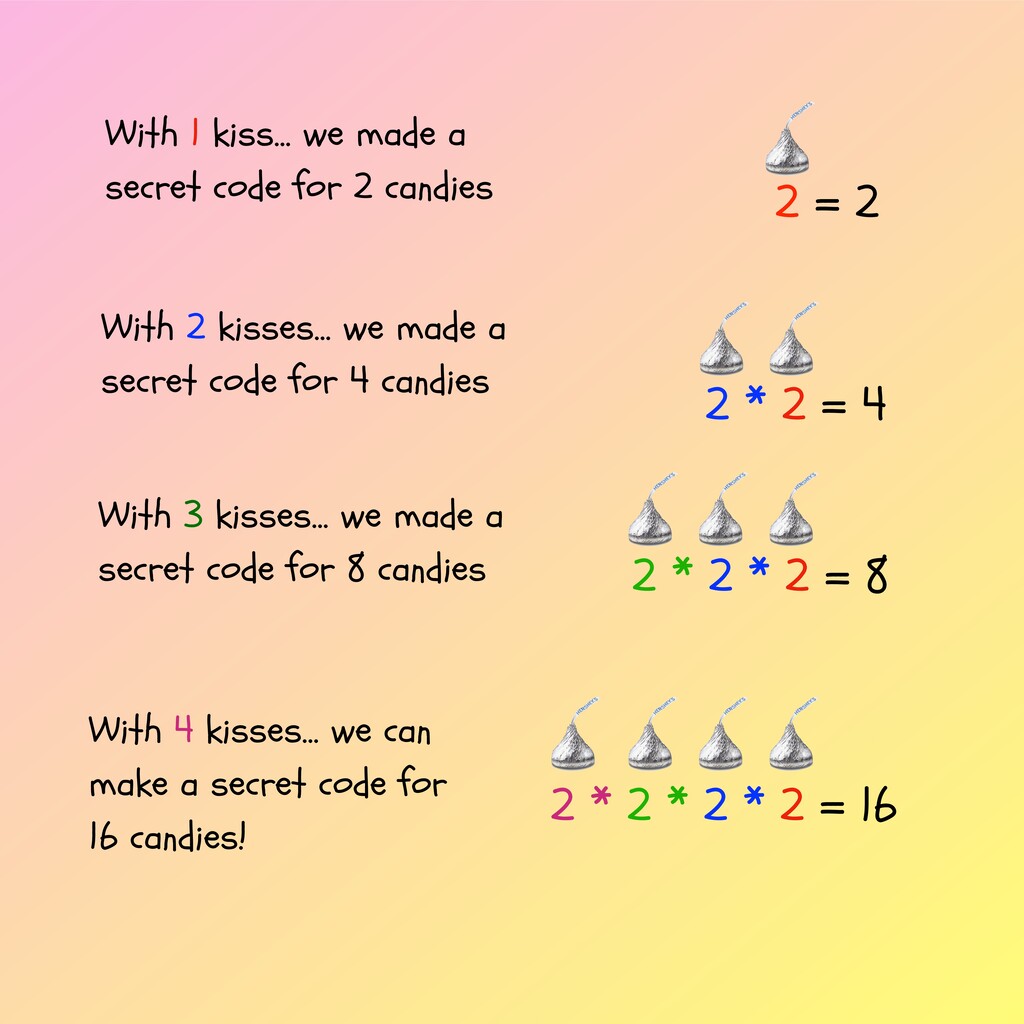
  22. With 1 kiss… we made a secret code for 2

    candies With 2 kisses… we made a secret code for 4 candies With 3 kisses… we made a secret code for 8 candies With 4 kisses… we can make a secret code for 16 candies! 2 = 2 2 * 2 = 4 2 * 2 * 2 = 8 2 * 2 * 2 * 2 = 16
  23. 1 kiss 2 kisses 3 kisses 2 = 2 2

    * 2 = 4 2 * 2 * 2 = 8
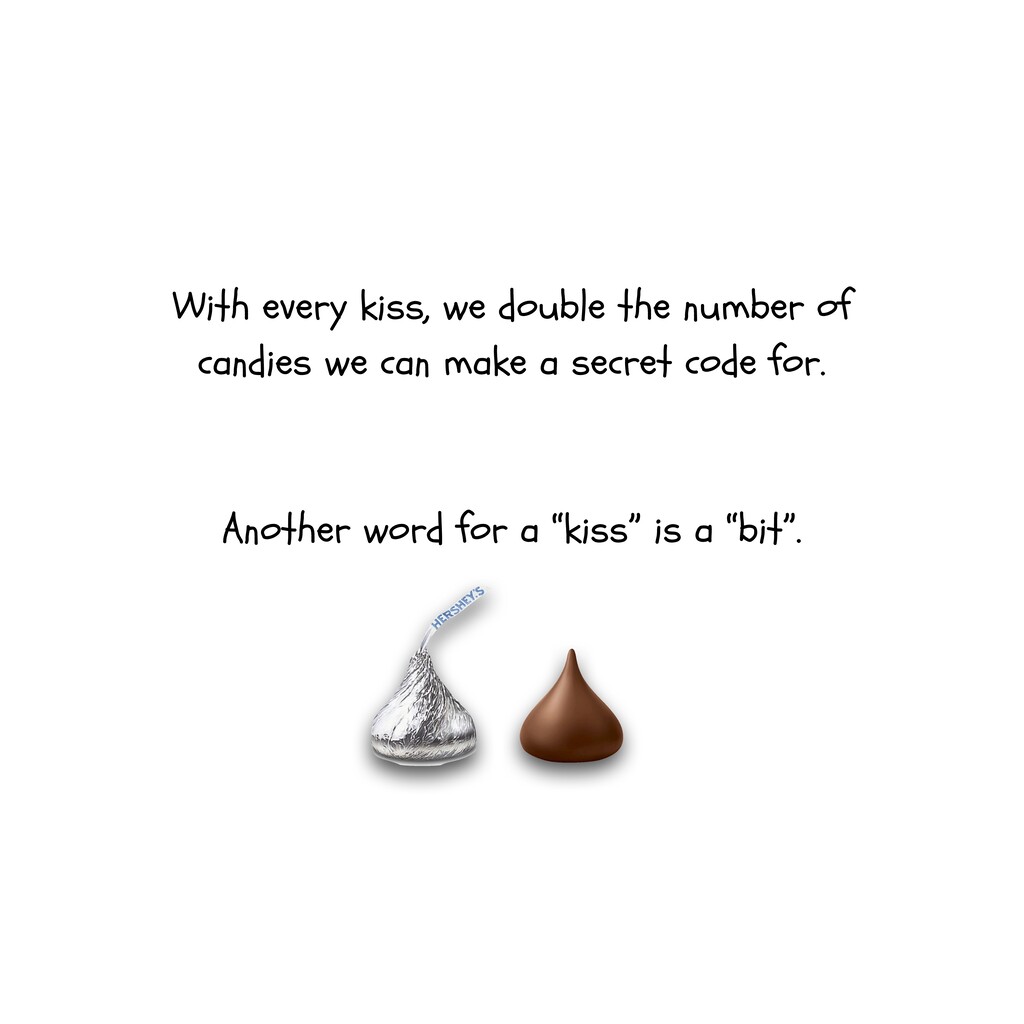
  24. With every kiss, we double the number of candies we

    can make a secret code for. Another word for a “kiss” is a “bit”.
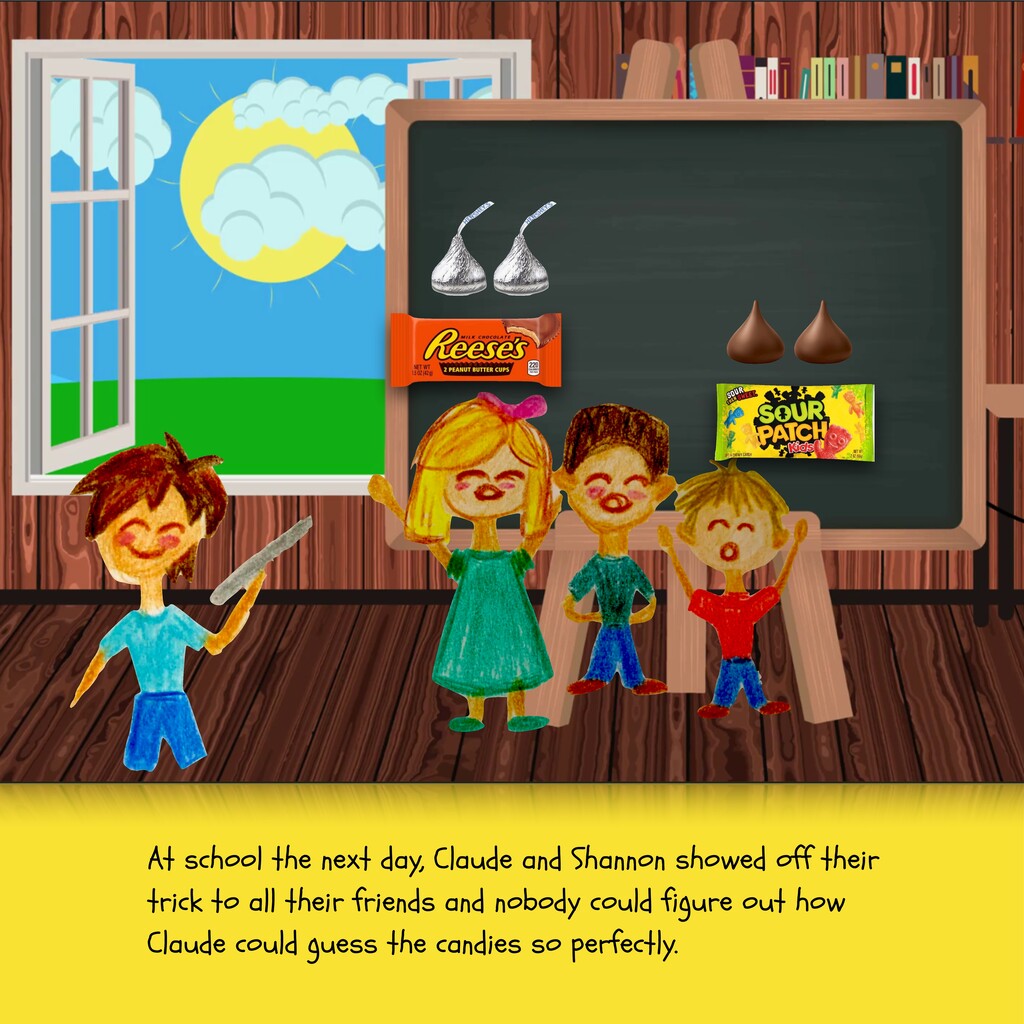
  25. At school the next day, Claude and Shannon showed off

    their trick to all their friends and nobody could figure out how Claude could guess the candies so perfectly.
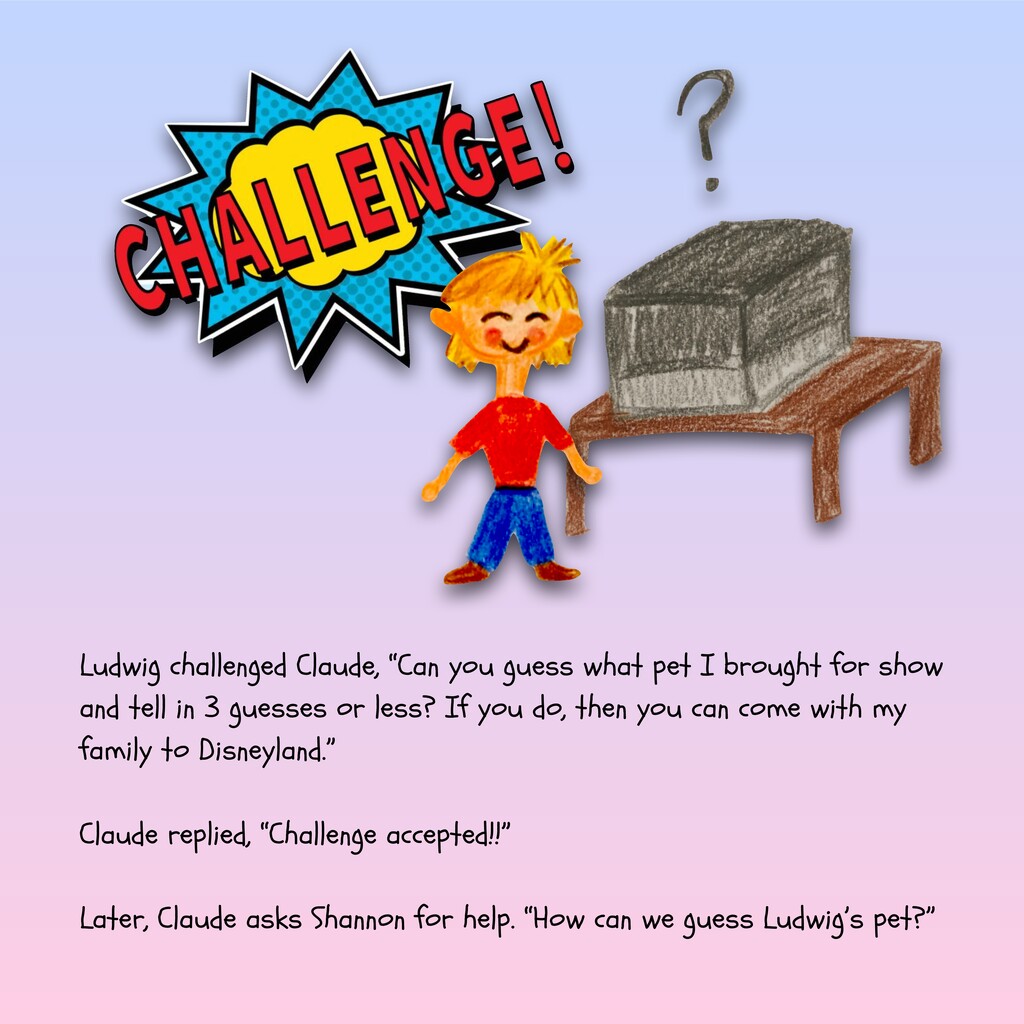
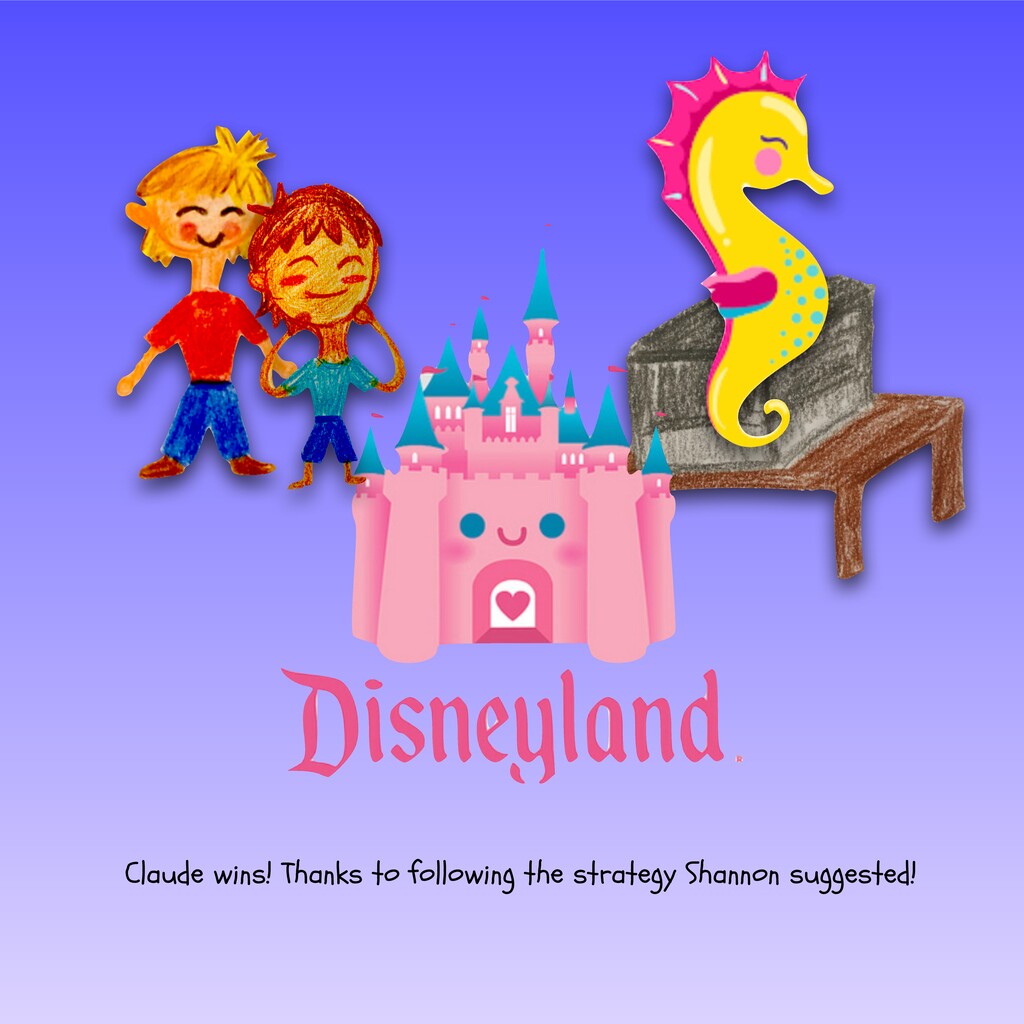
  26. Ludwig challenged Claude, “Can you guess what pet I brought

    for show and tell in 3 guesses or less? If you do, then you can come with my family to Disneyland.” Claude replied, “Challenge accepted!!” Later, Claude asks Shannon for help. “How can we guess Ludwig’s pet?”
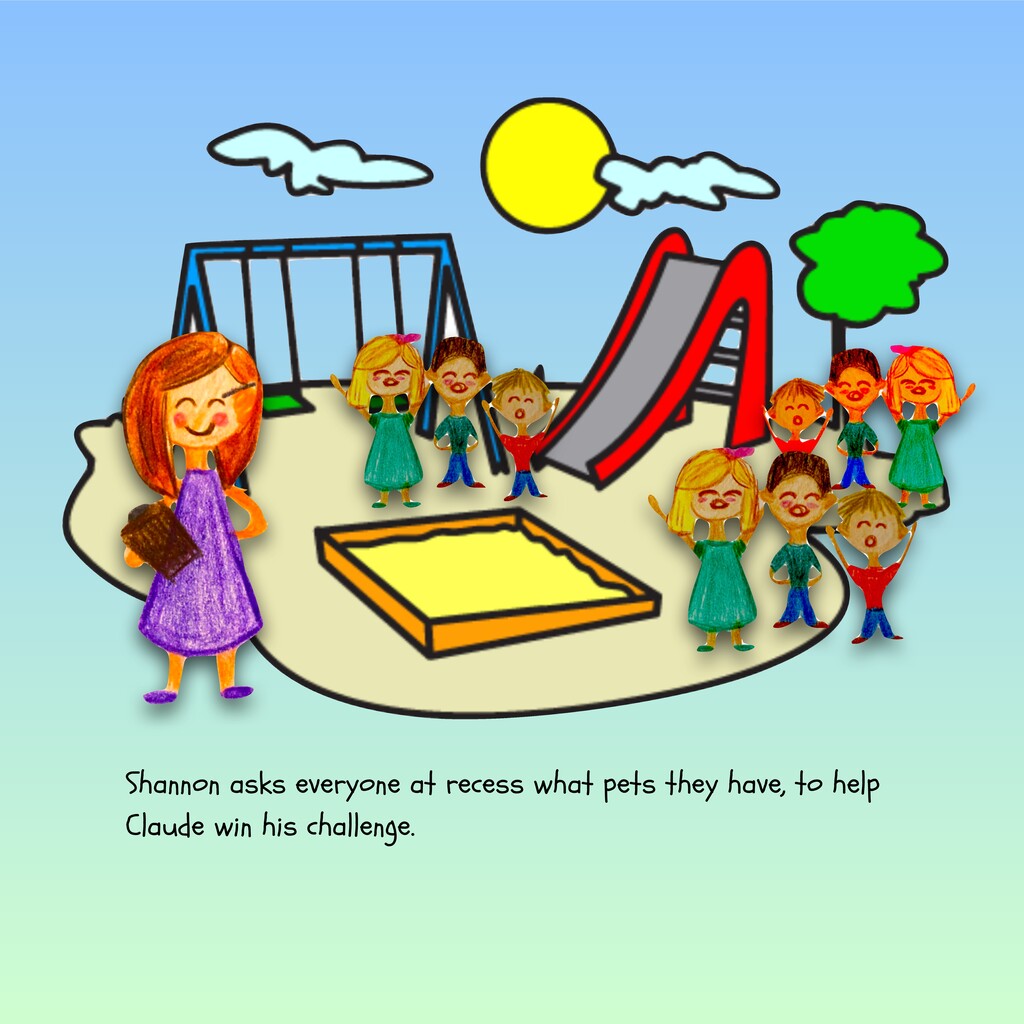
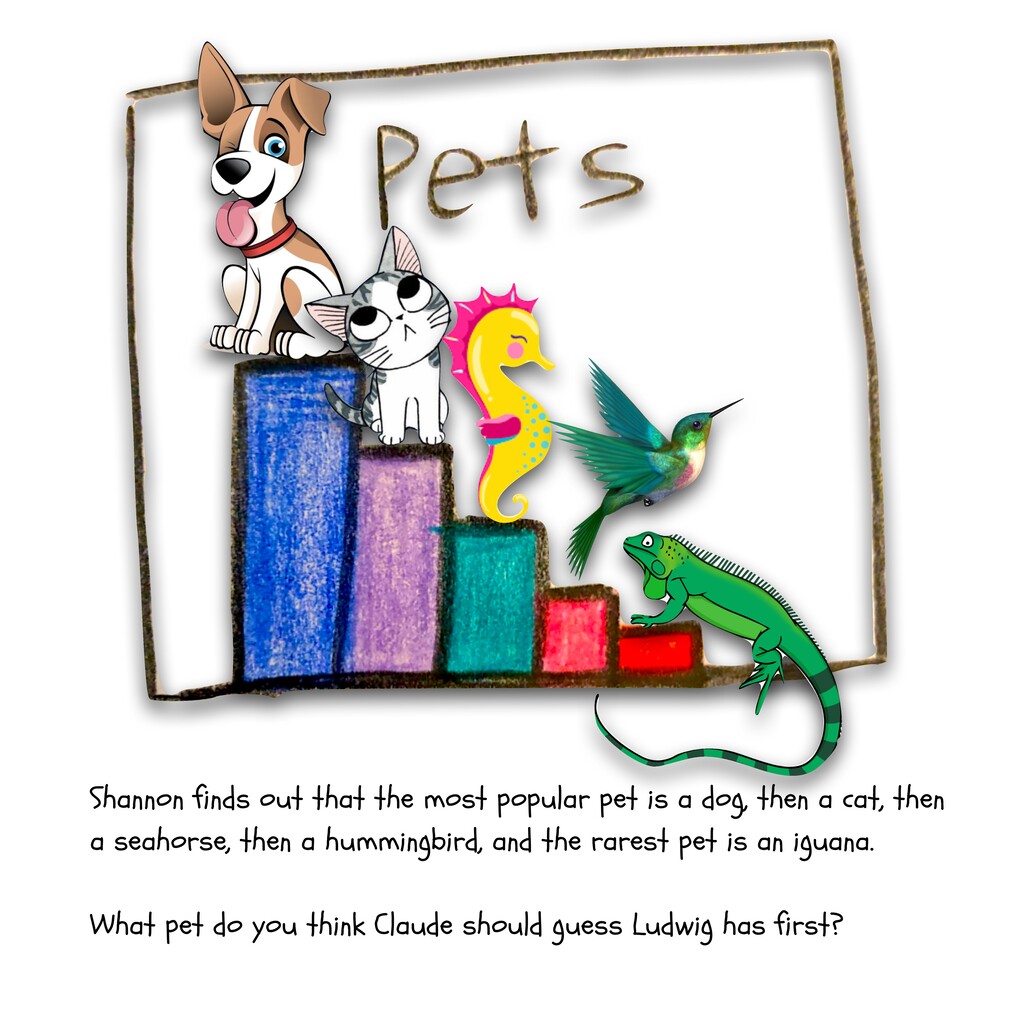
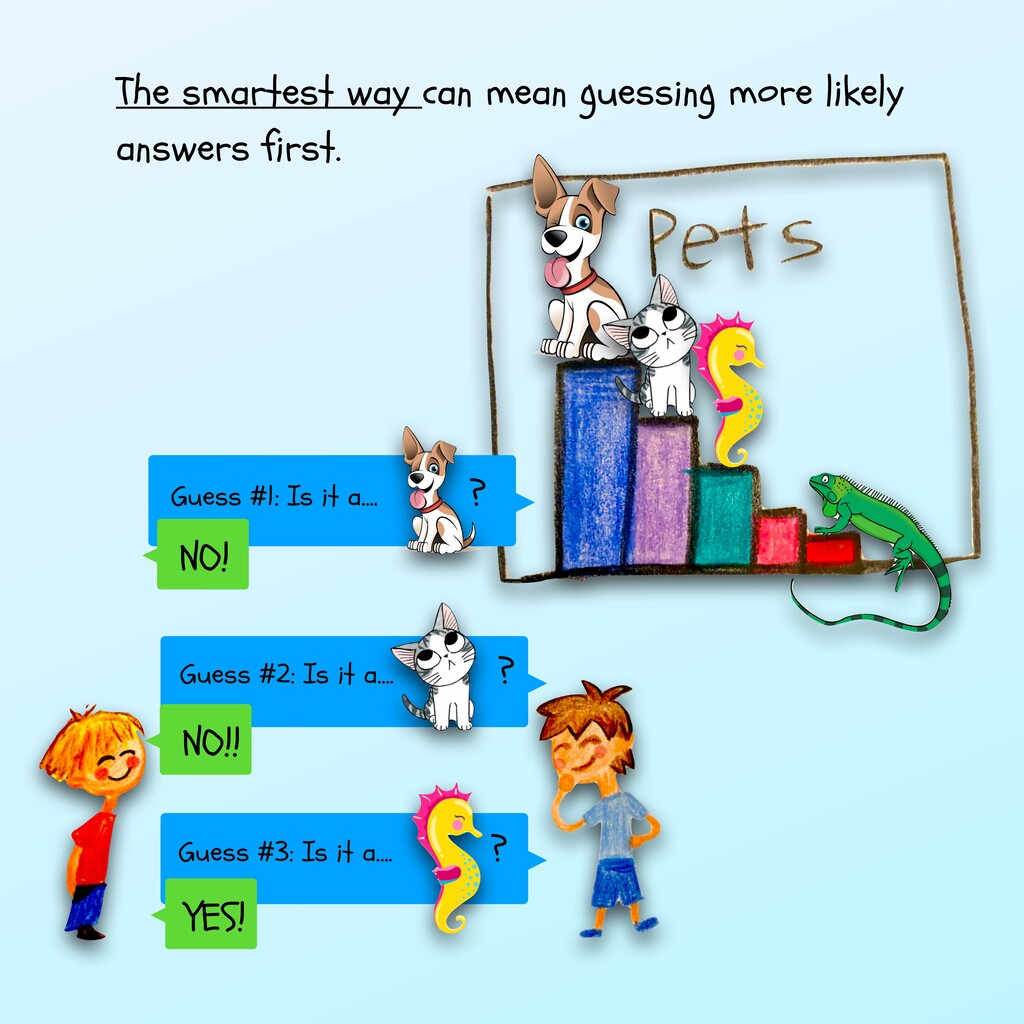
  27. Shannon finds out that the most popular pet is a

    dog, then a cat, then a seahorse, then a hummingbird, and the rarest pet is an iguana. What pet do you think Claude should guess Ludwig has first?
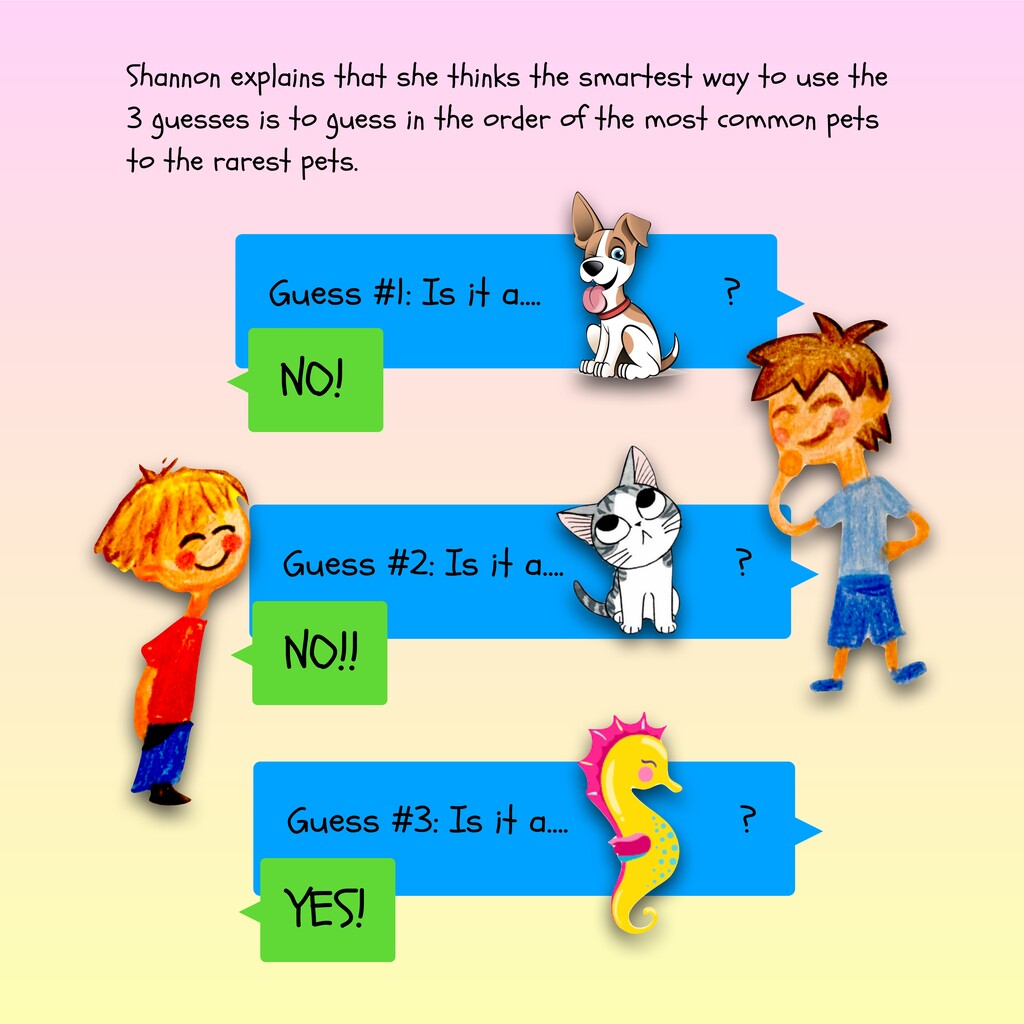
  28. Shannon explains that she thinks the smartest way to use

    the 3 guesses is to guess in the order of the most common pets to the rarest pets. Guess #2: Is it a…. ? Guess #1: Is it a…. ? NO! NO!! Guess #3: Is it a…. ? YES!
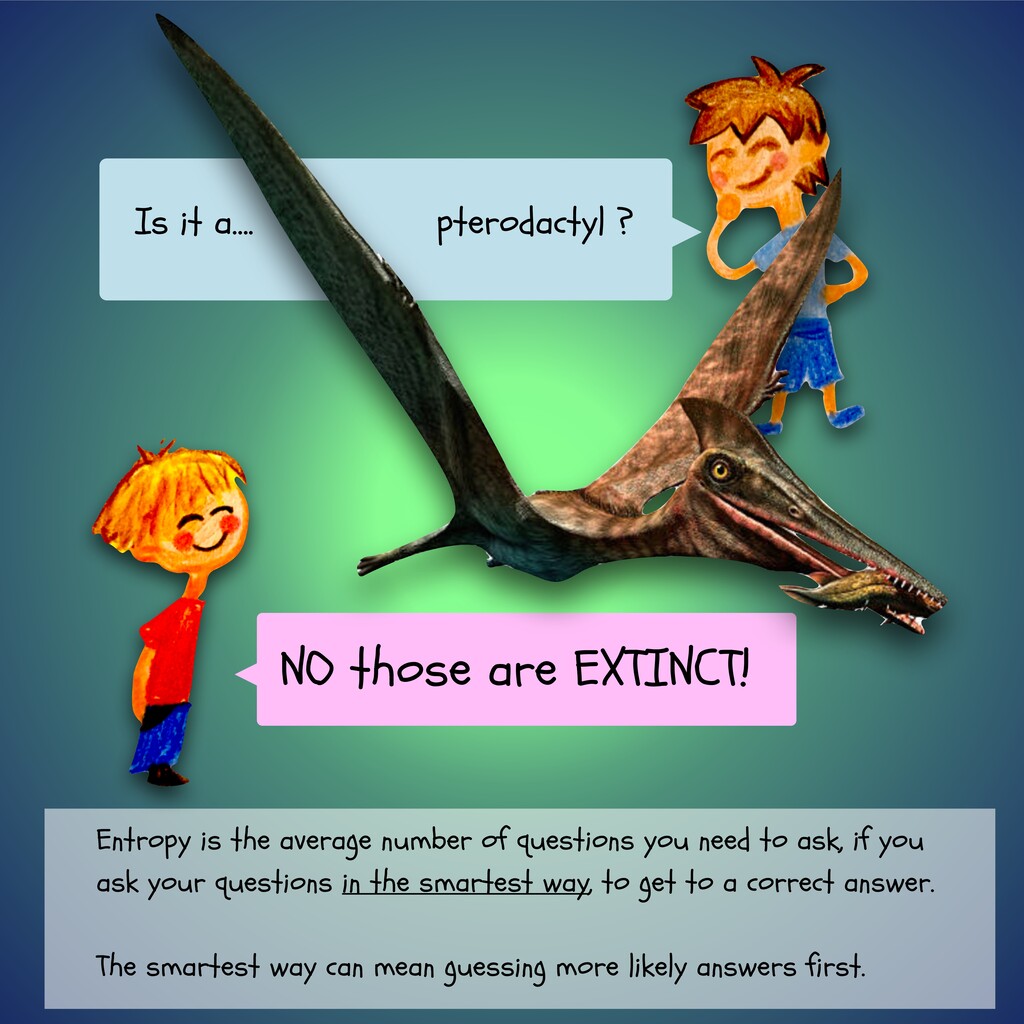
  29. Entropy is the average number of questions you need to

    ask, if you ask your questions in the smartest way, to get to a correct answer. The smartest way can mean guessing more likely answers first. Is it a…. pterodactyl ? NO those are EXTINCT!
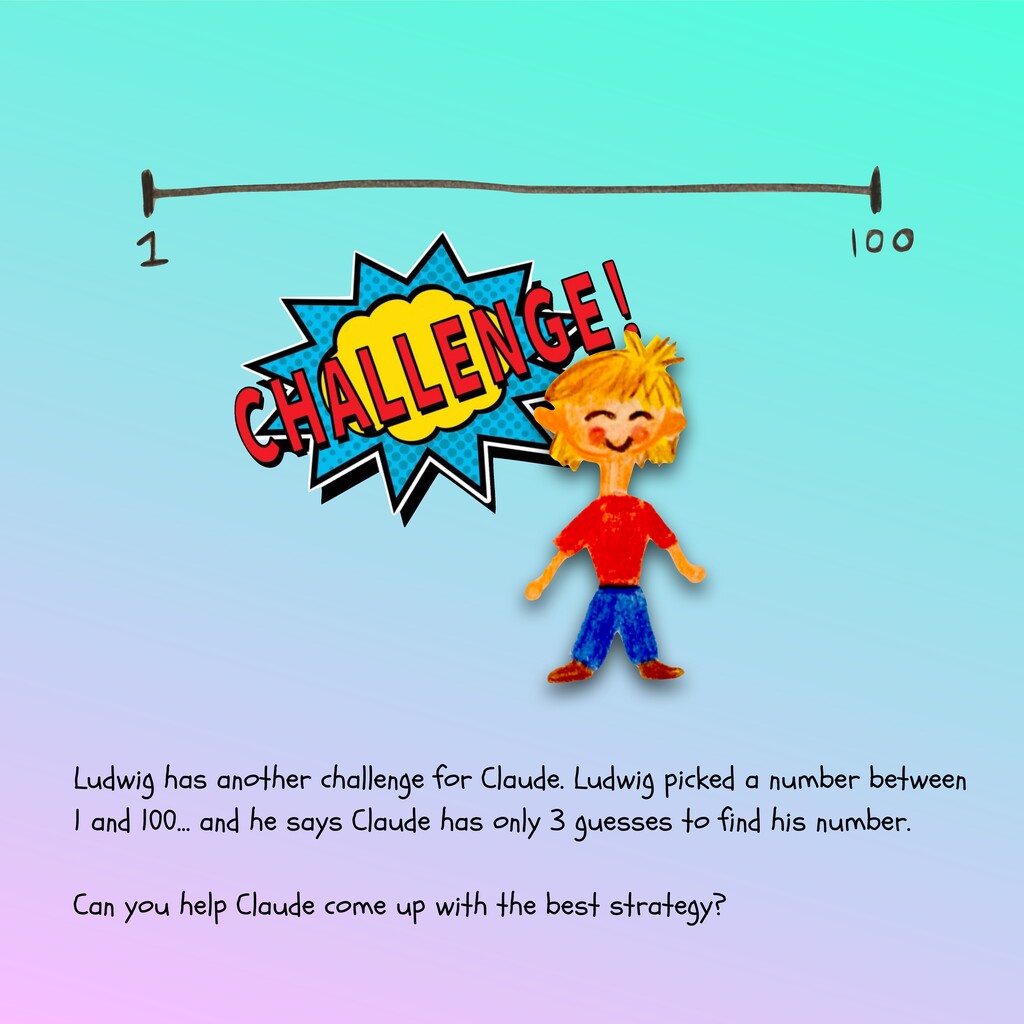
  30. Ludwig has another challenge for Claude. Ludwig picked a number

    between 1 and 100… and he says Claude has only 3 guesses to find his number. Can you help Claude come up with the best strategy?
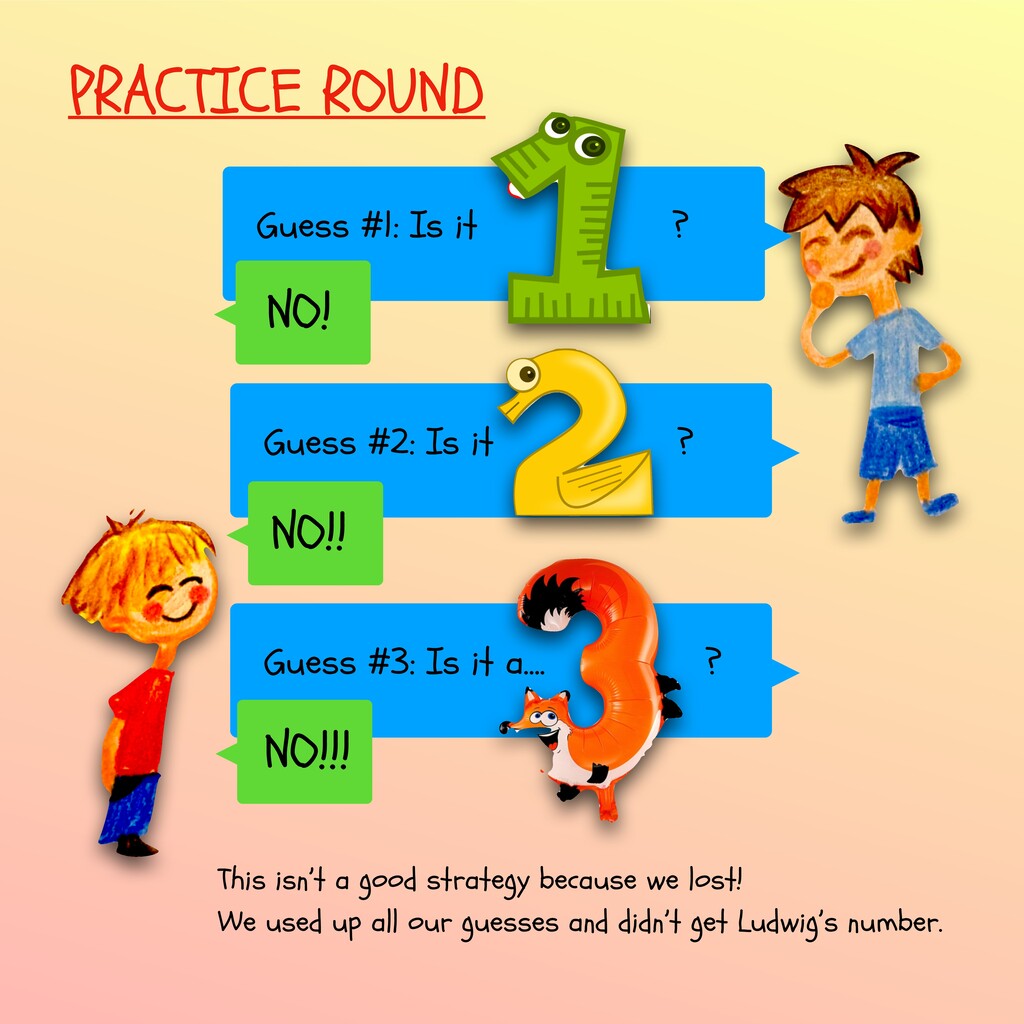
  31. This isn’t a good strategy because we lost! We used

    up all our guesses and didn’t get Ludwig’s number. Guess #1: Is it ? NO! Guess #3: Is it a…. ? NO!!! Guess #2: Is it ? NO!! PRACTICE ROUND
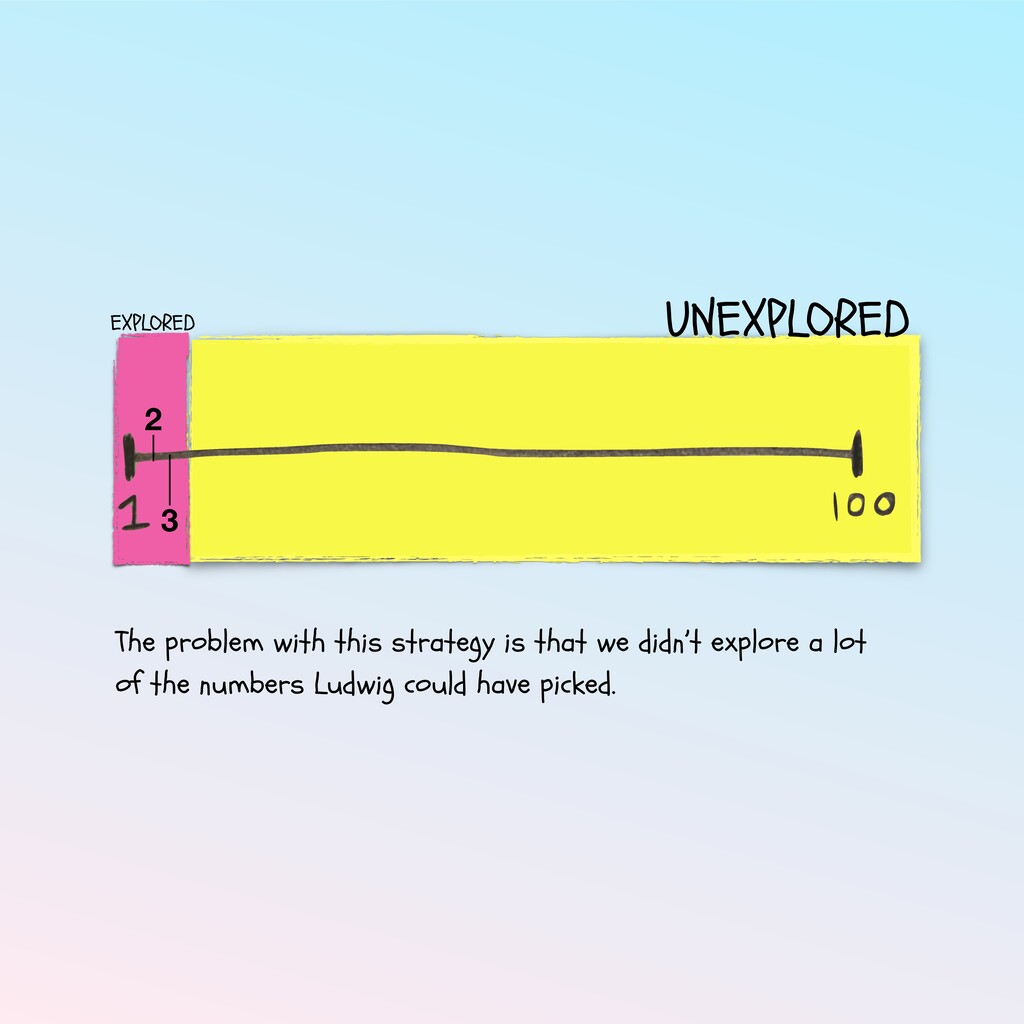
  32. The problem with this strategy is that we didn’t explore

    a lot of the numbers Ludwig could have picked. 3 2 EXPLORED UNEXPLORED
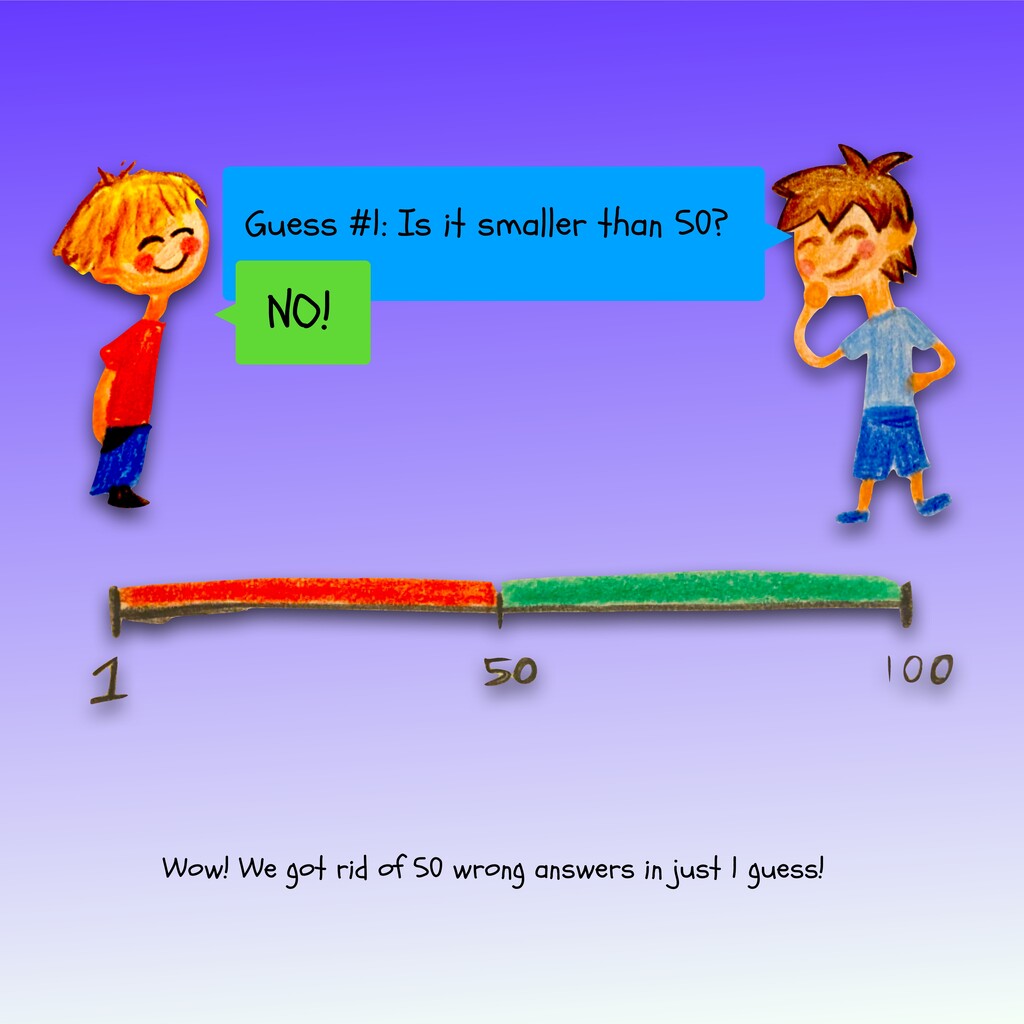
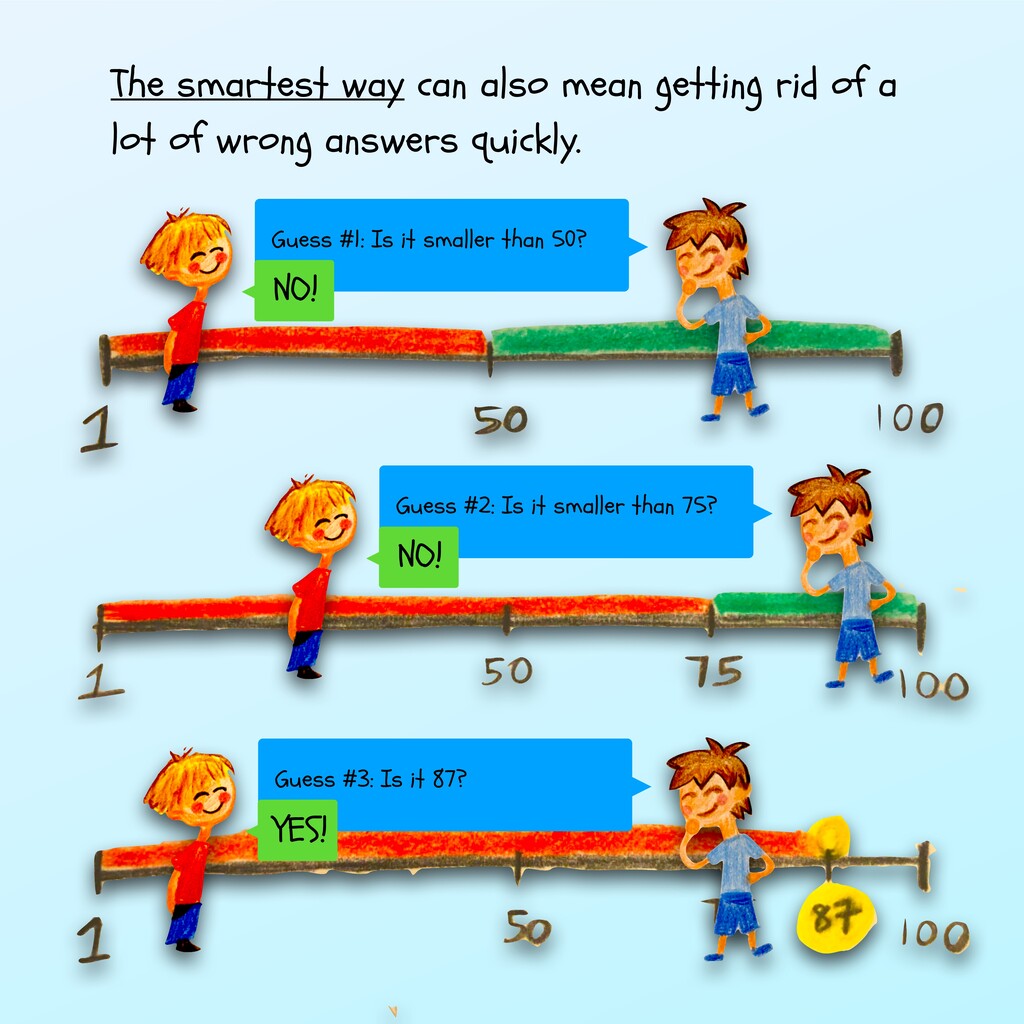
  33. Wow! We got rid of 50 wrong answers in just

    1 guess! Guess #1: Is it smaller than 50? NO!
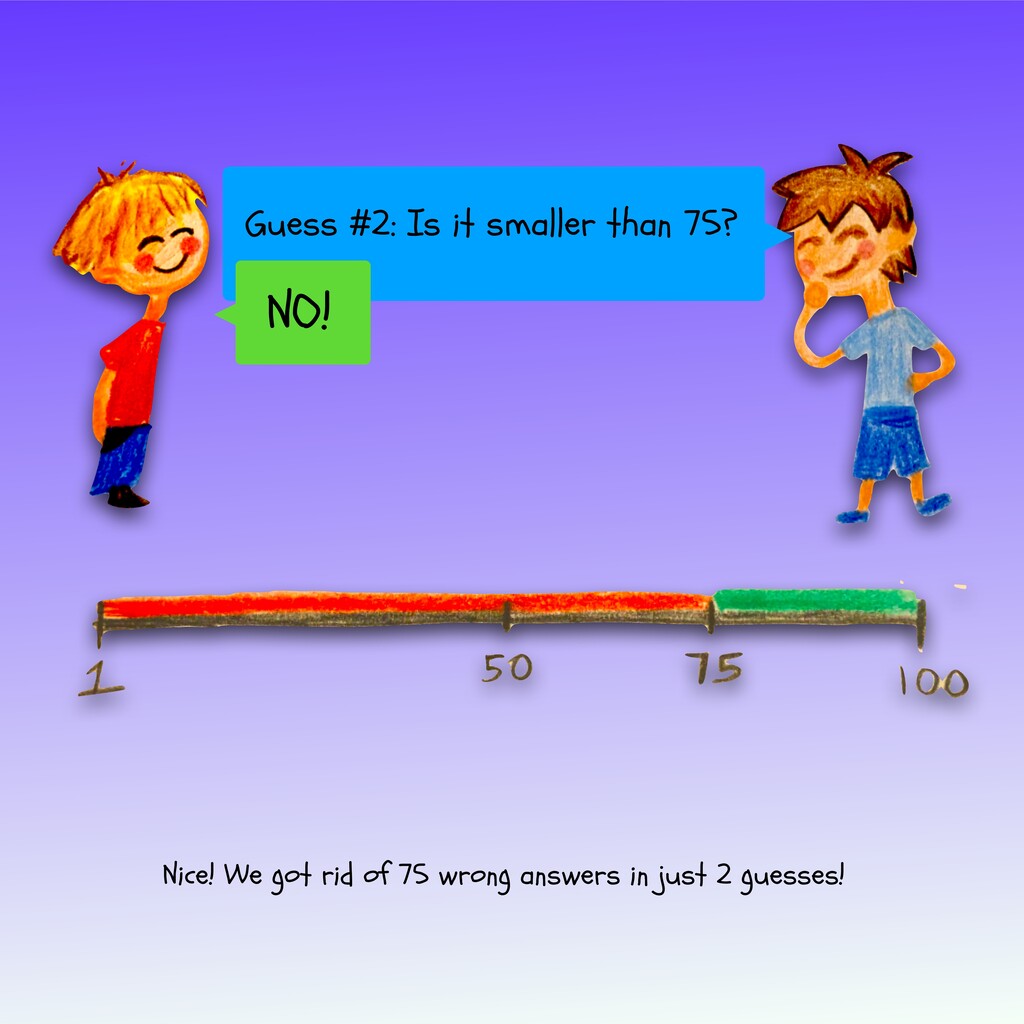
  34. Nice! We got rid of 75 wrong answers in just

    2 guesses! Guess #2: Is it smaller than 75? NO!
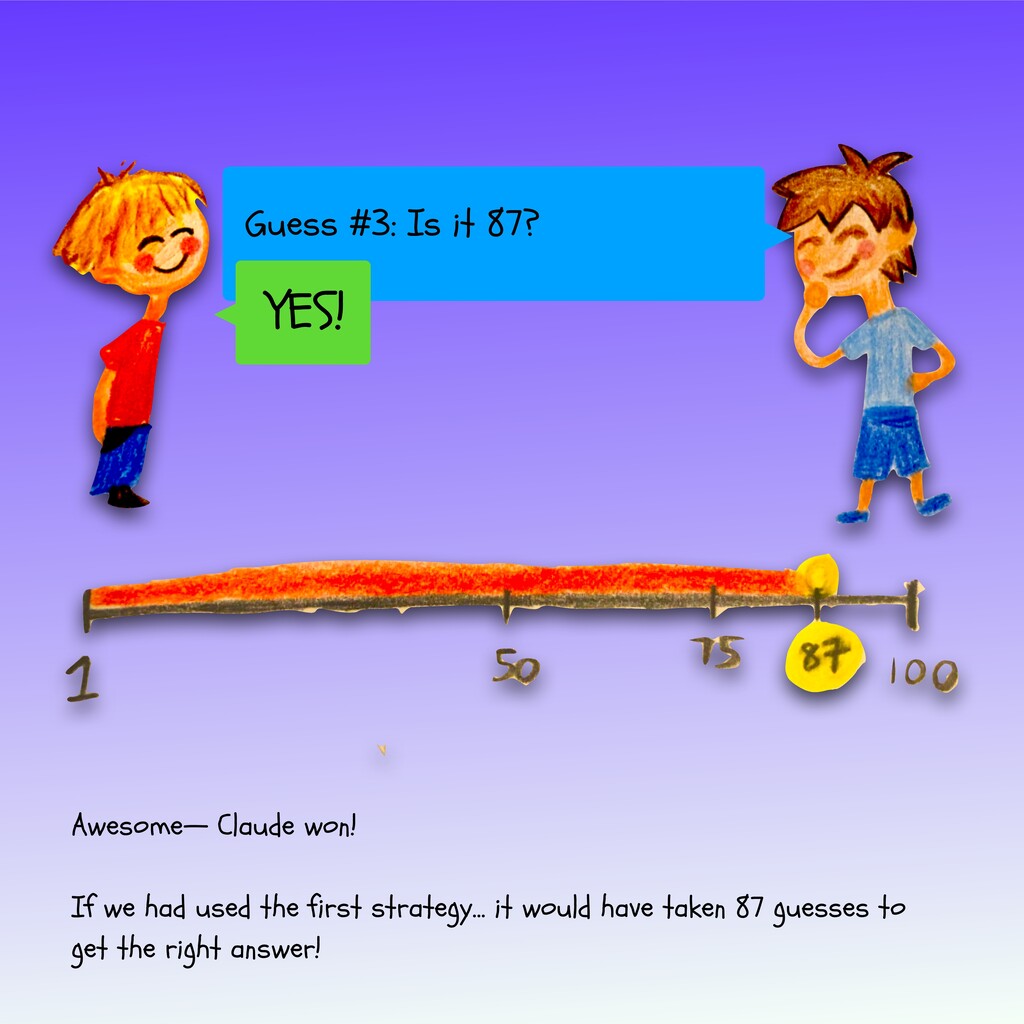
  35. Guess #3: Is it 87? YES! Awesome— Claude won! If

    we had used the first strategy… it would have taken 87 guesses to get the right answer!
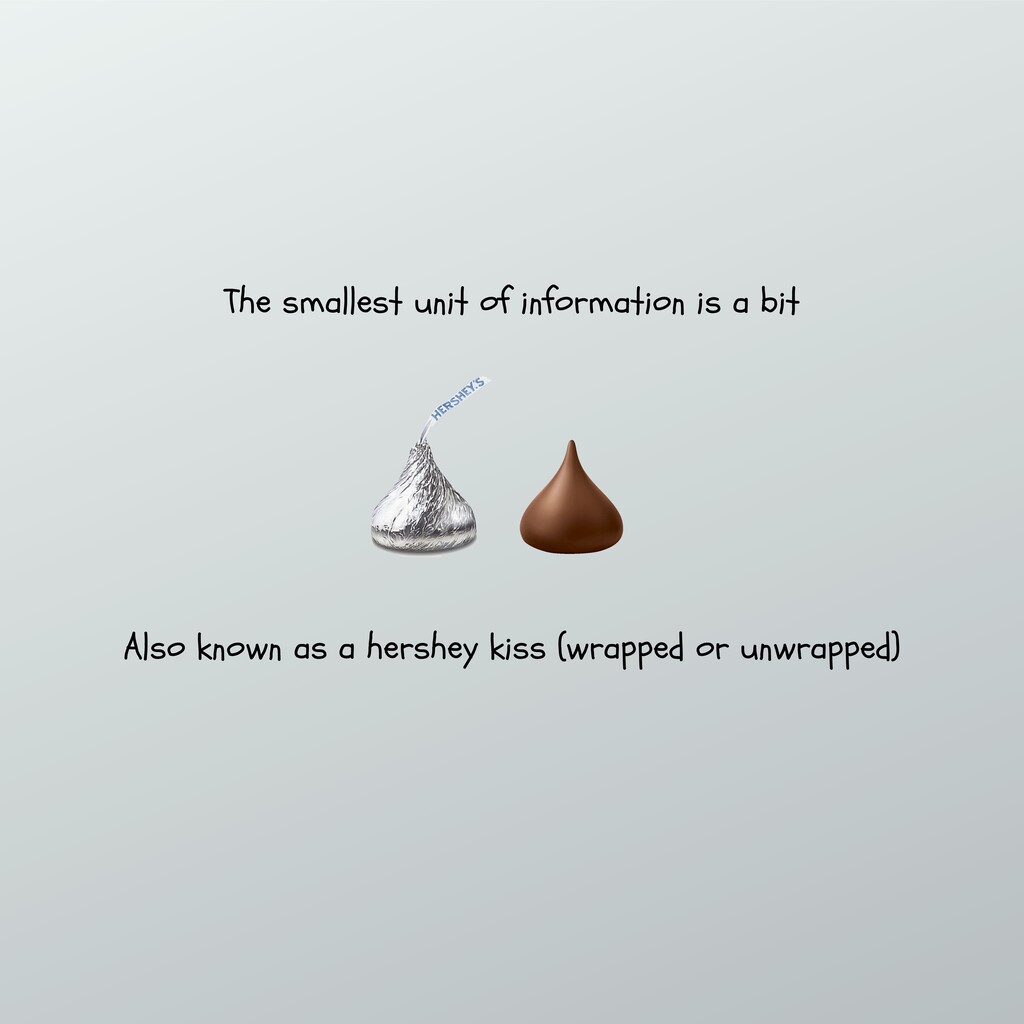
  36. The smallest unit of information is a bit Also known

    as a hershey kiss (wrapped or unwrapped)
  37. Entropy is the average number of questions you need to

    ask, if you ask your questions in the smartest way, to get to a correct answer.
  38. The smartest way can mean guessing more likely answers first.

    Guess #2: Is it a…. ? Guess #1: Is it a…. ? NO! NO!! Guess #3: Is it a…. ? YES!
  39. The smartest way can also mean getting rid of a

    lot of wrong answers quickly. Guess #1: Is it smaller than 50? NO! Guess #2: Is it smaller than 75? NO! Guess #3: Is it 87? YES!
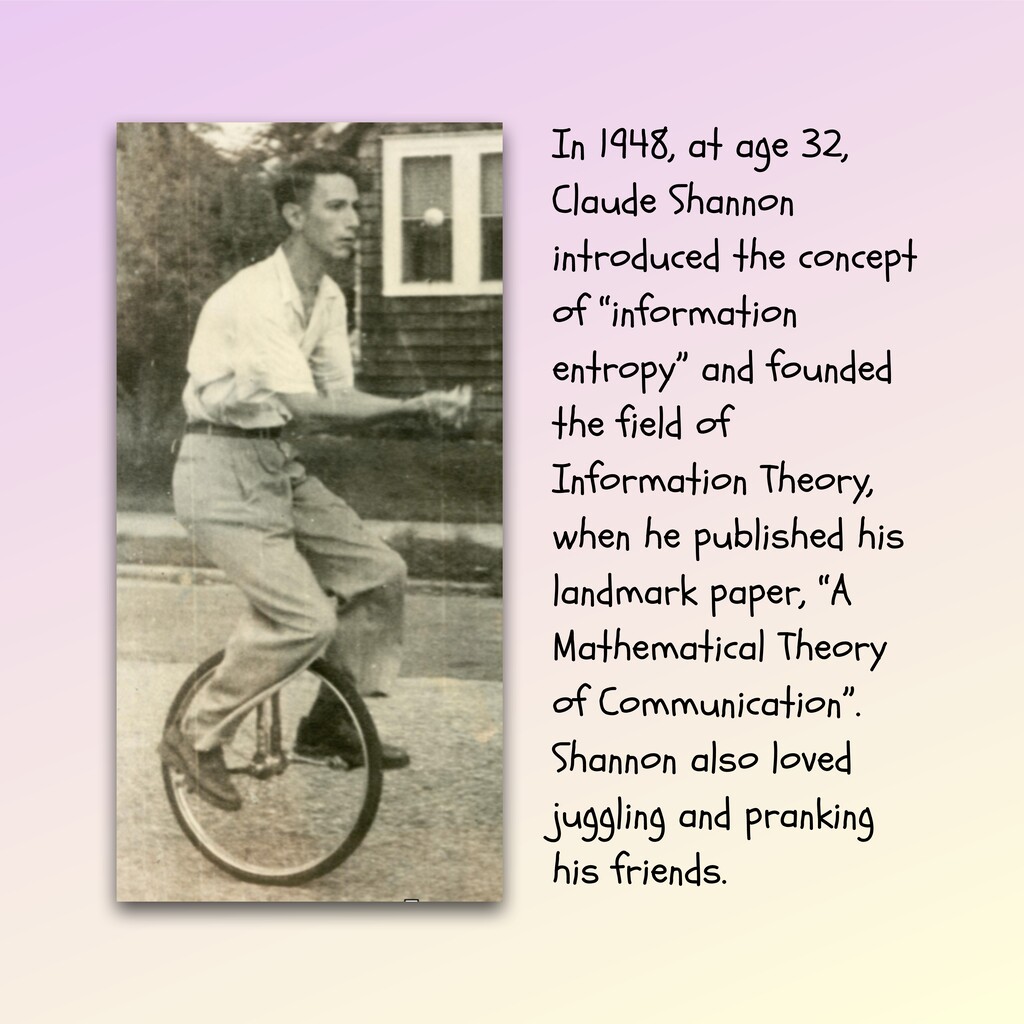
  40. In 1948, at age 32, Claude Shannon introduced the concept

    of “information entropy” and founded the field of Information Theory, when he published his landmark paper, “A Mathematical Theory of Communication”. Shannon also loved juggling and pranking his friends.
  41. Entropy For kids! NOOR SIDDIQUI Sister and brother duo Claude

    and Shannon get into antics together and discover how "entropy" works in the process. This playful book weaves the fundamental concepts of information theory into a story relatable to kids today. Claude and Shannon are curious, cunning kids that are sure to spark your young learner's interest in entropy. It's never too early to familiarize your little ones with the wonders of communication transmission! Give your child a head start grasping the stunning, simple concepts that underpin our technologically powered world.