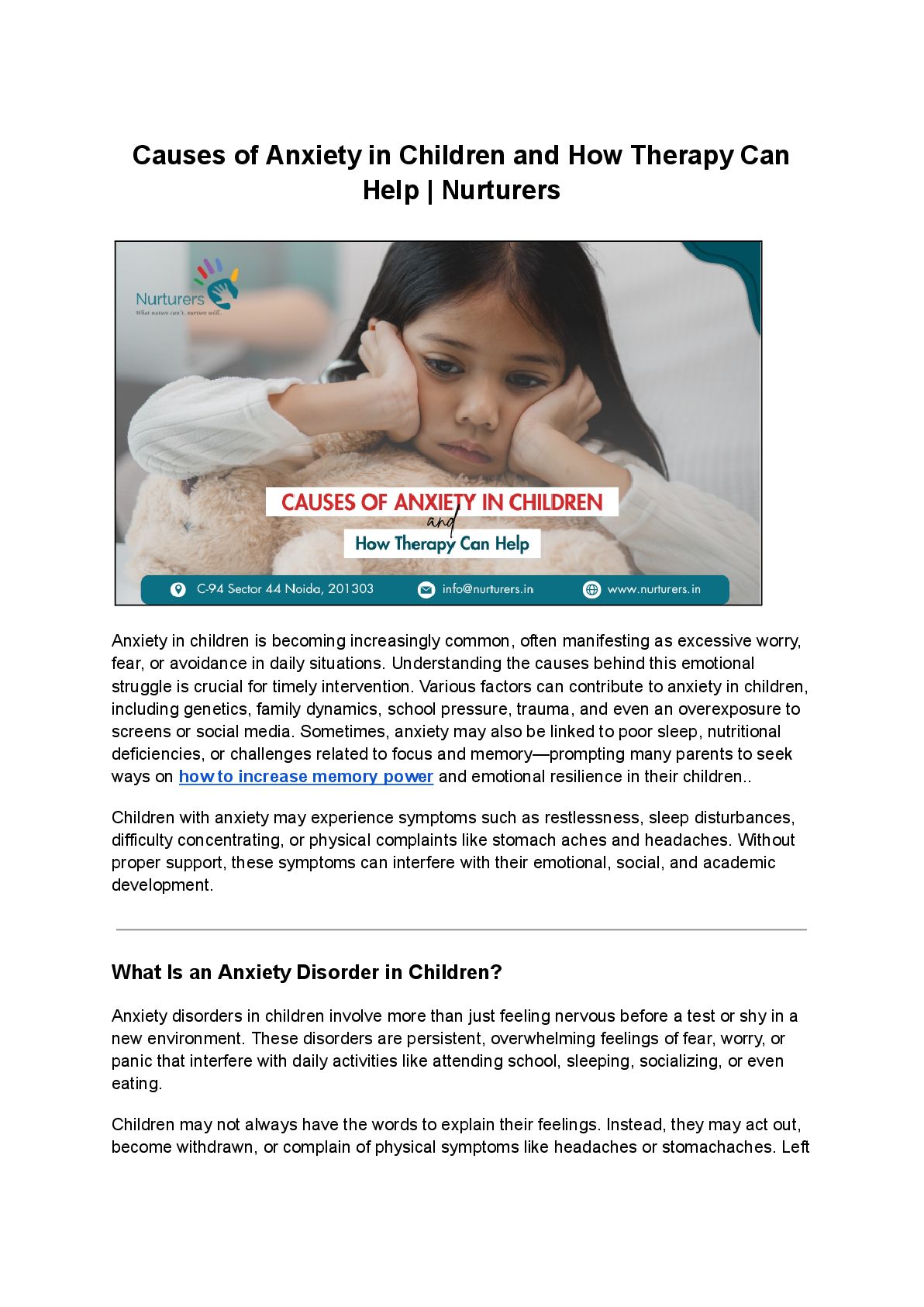
Help | Nurturers Anxiety in children is becoming increasingly common, often manifesting as excessive worry, fear, or avoidance in daily situations. Understanding the causes behind this emotional struggle is crucial for timely intervention. Various factors can contribute to anxiety in children, including genetics, family dynamics, school pressure, trauma, and even an overexposure to screens or social media. Sometimes, anxiety may also be linked to poor sleep, nutritional deficiencies, or challenges related to focus and memory—prompting many parents to seek ways on how to increase memory power and emotional resilience in their children.. Children with anxiety may experience symptoms such as restlessness, sleep disturbances, difficulty concentrating, or physical complaints like stomach aches and headaches. Without proper support, these symptoms can interfere with their emotional, social, and academic development. What Is an Anxiety Disorder in Children? Anxiety disorders in children involve more than just feeling nervous before a test or shy in a new environment. These disorders are persistent, overwhelming feelings of fear, worry, or panic that interfere with daily activities like attending school, sleeping, socializing, or even eating. Children may not always have the words to explain their feelings. Instead, they may act out, become withdrawn, or complain of physical symptoms like headaches or stomachaches. Left
and social life. Types of Anxiety Disorders in Children Understanding the different forms of anxiety can help parents and caregivers respond appropriately: 1. Separation Anxiety Disorder This is most common in children between 1–6 years but can continue longer. Children with this disorder fear being away from their caregivers and may cry excessively, refuse to go to school, or complain of sickness when separation is expected. 2. Generalized Anxiety Disorder (GAD) Children with GAD worry about a wide range of everyday issues—school performance, family health, or natural disasters. The anxiety is constant, unrealistic, and difficult to control. 3. Social Anxiety Disorder Also known as social phobia, this involves intense fear of being judged or humiliated in social situations. These children might avoid speaking in class, attending parties, or even eating in front of others. 4. Specific Phobias This includes intense fears of specific things—like heights, animals, darkness, or doctors. The fear is disproportionate to the actual danger and can lead to avoidance behaviors. 5. Panic Disorder Marked by sudden, unpredictable panic attacks with physical symptoms like chest pain, dizziness, breathlessness, or rapid heartbeat. Children may fear these attacks so much that it affects their ability to function. 6. Obsessive-Compulsive Disorder (OCD) and Post-Traumatic Stress Disorder (PTSD) Though not always classified strictly under anxiety, both include anxious thoughts and behaviors. OCD involves compulsive rituals like handwashing or checking, while PTSD follows traumatic events and leads to nightmares, flashbacks, and hypervigilance. Symptoms of Anxiety Disorders in Children It’s important to recognize that anxiety may show up in both emotional and physical ways. Here are some common emotional, behavioral, and physical symptoms :
of making mistakes, low self-confidence, clinginess. • Behavioral Symptoms : Avoidance of activities, tantrums, restlessness, procrastination, trouble focusing. • Physical Symptoms : Headaches, stomach pain, fatigue, nausea, difficulty sleeping, muscle tension. If these symptoms persist for more than a few weeks and disrupt your child's daily life, it could be a sign of an anxiety disorder. What Causes Anxiety Disorders? There’s no single cause of anxiety in children; it’s usually a mix of biological, psychological, and environmental factors: 1. Genetic Factors Children with a family history of anxiety or other mental health issues are more likely to develop anxiety themselves. This suggests a biological sensitivity to stress. 2. Brain Chemistry An imbalance in brain chemicals like serotonin and dopamine can contribute to anxiety. These neurotransmitters affect mood, sleep, and emotional regulation. 3. Temperament Children who are naturally more cautious, shy, or perfectionistic may be more prone to anxiety. Their personality traits may amplify their response to stressful situations. 4. Parenting and Family Environment Children exposed to overprotective parenting, frequent family conflict, or inconsistent discipline may develop anxiety. Even well-meaning parents can unknowingly reinforce fear by always stepping in to protect their child from distress. 5. Trauma or Stressful Events Experiences like bullying, moving homes, academic pressure, illness, or loss of a loved one can trigger anxiety. Children with a history of abuse or neglect are especially vulnerable. 6. Learned Behavior Sometimes, children “learn” to be anxious by observing anxious behaviors in parents or caregivers.
treatment path. How Common Are Anxiety Disorders in Children? Anxiety disorders are among the most common mental health conditions in children and adolescents. Studies show that up to 7–10% of children may be affected at any given time, with many cases going undiagnosed due to lack of awareness or fear of stigma. Early intervention can make a significant difference. The earlier the signs are recognized, the easier it is to manage symptoms and build long-term emotional resilience. Which Therapy Helps for Anxiety Disorders? At Nurturers, we offer a variety of child-focused therapies to address anxiety holistically. Our approach is gentle, non-invasive, and personalized based on your child’s needs: 1. Cognitive Behavioral Therapy (CBT) CBT is one of the most effective evidence-based approaches. It helps children recognize negative thought patterns, replace them with realistic thinking, and develop healthy coping strategies. CBT may include role-playing, journaling, or exposure exercises in a safe space. 2. Play Therapy For younger children, play therapy allows them to express their emotions in a comfortable, non-verbal way. Through toys, drawing, or storytelling, therapists gain insight into what the child is feeling and help them navigate those emotions. 3. Mindfulness and Relaxation Training We teach children breathing exercises, progressive muscle relaxation, and visualization techniques to calm their bodies and minds during stressful situations. 4. Parental Counseling and Support An anxious child often needs a calm and informed parent. We guide parents on how to support their child’s emotional needs without reinforcing anxiety. 5. Homeopathic Treatment Our center specializes in gentle, holistic homeopathy for anxiety in children , which works on the emotional and physical levels without any side effects. It can be especially effective when used in combination with counseling or play therapy. 6. Behavioral Therapy and Routine Structuring
can improve a child’s confidence and reduce the unpredictability that fuels anxiety. Conclusion Anxiety in children is real, but it is also manageable and treatable. By understanding the causes of anxiety disorders, identifying the symptoms, and choosing the right therapeutic approach, parents can empower their children to face their fears with strength and resilience. At Nurturers, we are dedicated to nurturing mental health through child-friendly therapies, emotional support, and holistic care. If you’ve noticed signs of anxiety in your child, reach out to us today—because early intervention leads to lifelong confidence.


 nurturers0
 addyosmani
 cassininazir
 jonoalderson
 skipperchong
 charlesmeaden
 katarinadahlin
 vanstee
 maltzj
 aleyda
 brad_frost
 ianozsvald