Developing gross motor skills is one of the most important aspects of a child’s early growth. These skills involve the coordination of large muscles responsible for actions like walking, running, jumping, balancing, and throwing. Children who build strong gross motor abilities tend to have better posture, body awareness, and social confidence. At Nurturers, we emphasize physical development through movement-based learning. This blog explores what gross motor skills are, how they differ from fine motor skills , what causes delays, and a variety of gross motor skills activities tailored for children. What Are Gross Motor Skills in Child Development? Gross motor skills refer to the abilities required to control the large muscles of the body for everyday functions such as sitting upright, walking, and playing. These skills begin developing in infancy and become more refined through toddlerhood and early childhood. In terms of developmental milestones, gross motor skills influence: • Head and neck control in infants • Sitting, crawling, standing, and walking in toddlers • Running, climbing, and balancing in preschoolers • Playing sports and riding bicycles in older children
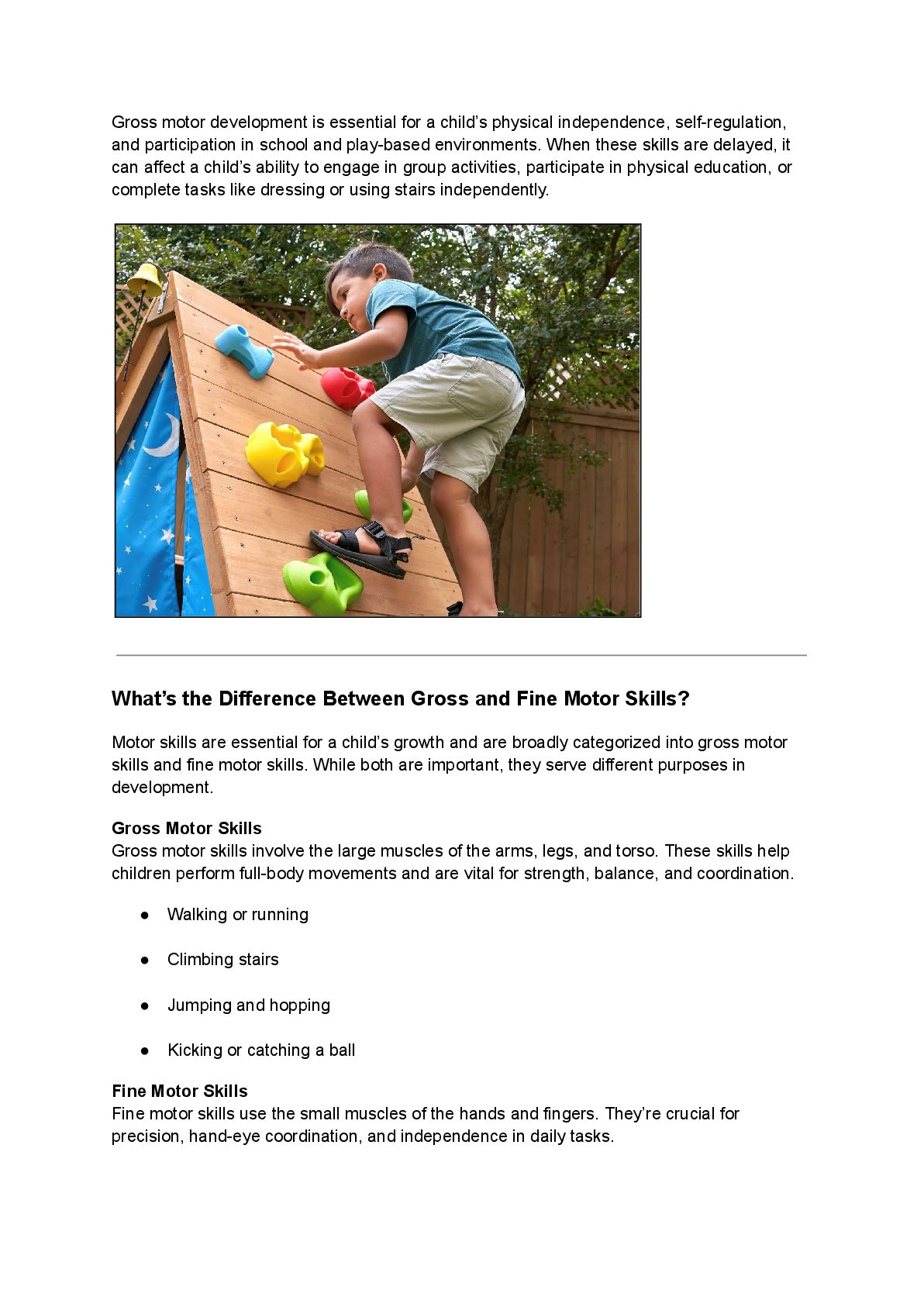
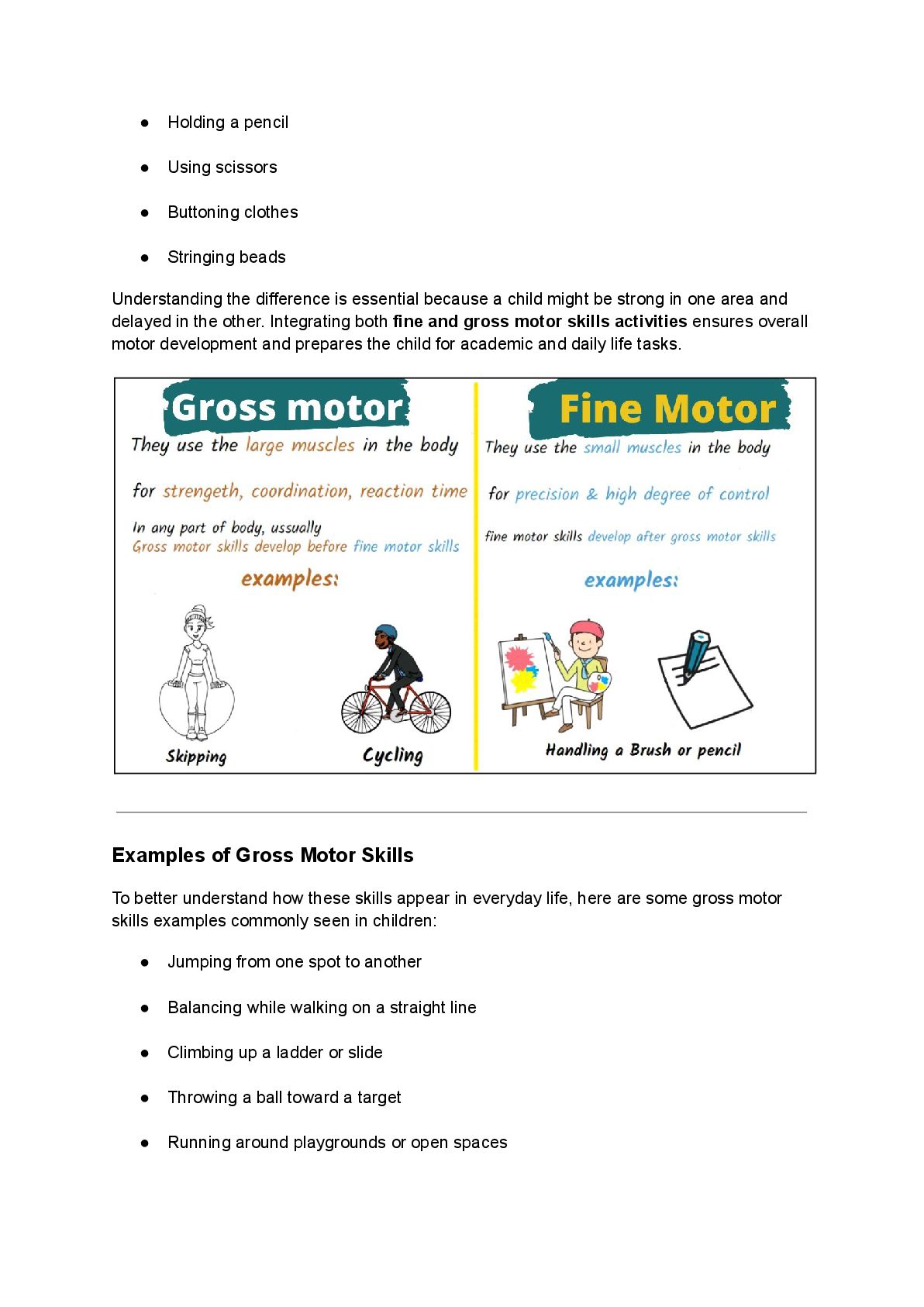
independence, self-regulation, and participation in school and play-based environments. When these skills are delayed, it can affect a child’s ability to engage in group activities, participate in physical education, or complete tasks like dressing or using stairs independently. What’s the Difference Between Gross and Fine Motor Skills? Motor skills are essential for a child’s growth and are broadly categorized into gross motor skills and fine motor skills. While both are important, they serve different purposes in development. Gross Motor Skills Gross motor skills involve the large muscles of the arms, legs, and torso. These skills help children perform full-body movements and are vital for strength, balance, and coordination. • Walking or running • Climbing stairs • Jumping and hopping • Kicking or catching a ball Fine Motor Skills Fine motor skills use the small muscles of the hands and fingers. They’re crucial for precision, hand-eye coordination, and independence in daily tasks.
scissors • Buttoning clothes • Stringing beads Understanding the difference is essential because a child might be strong in one area and delayed in the other. Integrating both fine and gross motor skills activities ensures overall motor development and prepares the child for academic and daily life tasks. Examples of Gross Motor Skills To better understand how these skills appear in everyday life, here are some gross motor skills examples commonly seen in children: • Jumping from one spot to another • Balancing while walking on a straight line • Climbing up a ladder or slide • Throwing a ball toward a target • Running around playgrounds or open spaces
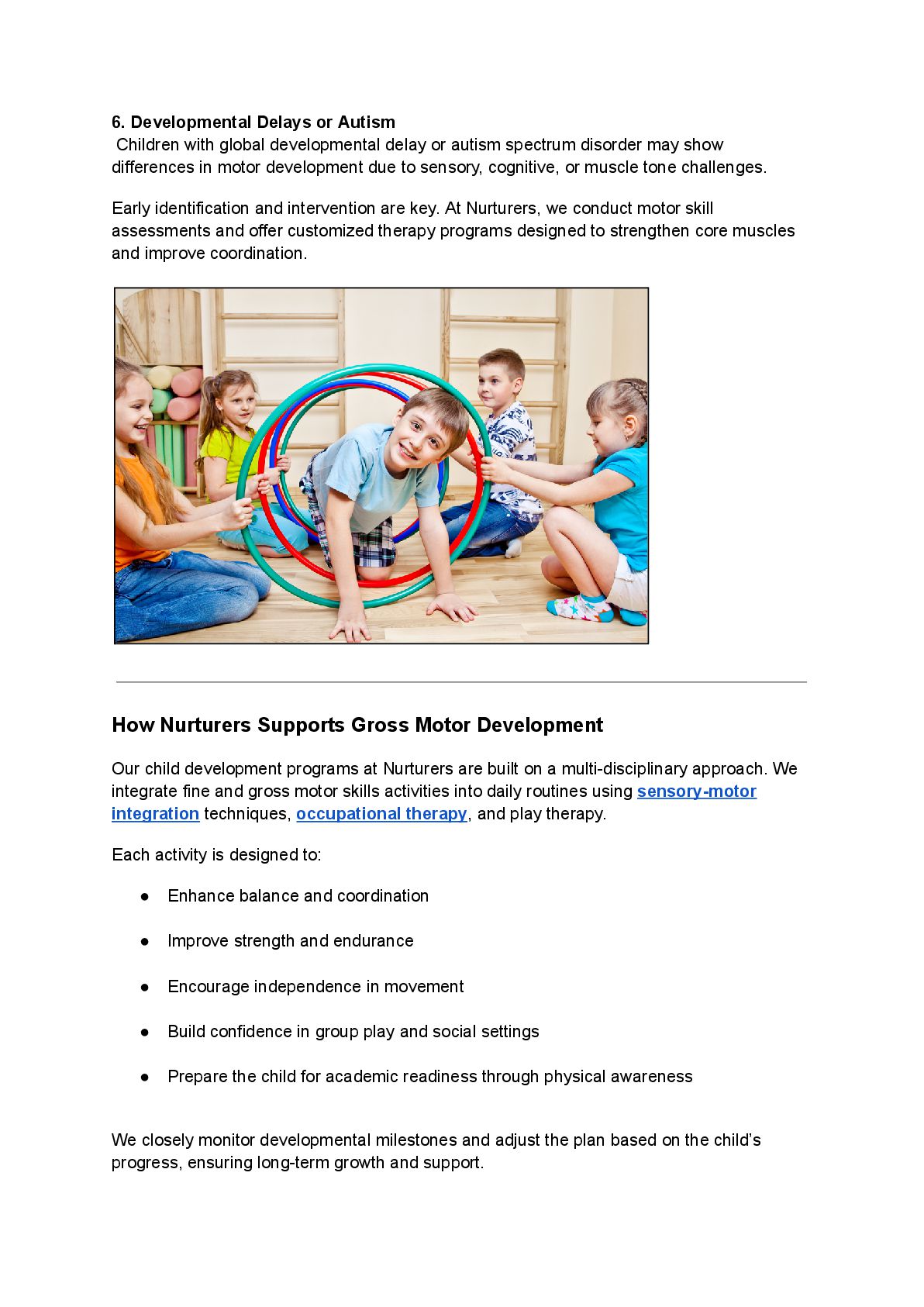
objects while walking • Pushing or pulling toys These skills are not only crucial for movement but also for developing spatial awareness, rhythm, and timing—all of which play roles in cognitive and emotional growth. Gross Motor Skills Activities for Children Children develop best when learning feels like play. That's why it’s important to offer varied and engaging gross motor skills activities that target strength, balance, coordination, and endurance. At the preschool age (3–4 years), children are naturally active and curious. Their physical capabilities are improving, and they begin mastering more complex movements. Some ideal gross motor skills activities for 3–4 year olds include: 1. Obstacle Courses Use pillows, boxes, cones, tunnels, or furniture to create a fun obstacle path. This improves crawling, jumping, coordination, and spatial awareness. 2. Animal Movement Games Ask children to act like animals—hop like a frog, slither like a snake, or walk like a bear. These imaginative exercises build strength and motor planning skills. 3. Balancing Games Use a straight line of tape or a low beam to walk across. Challenge them to balance while holding an object. This helps improve core strength and coordination. 4. Dance and Movement Songs Songs with actions like “Head, Shoulders, Knees and Toes” or “Hokey Pokey” help children synchronize movement with rhythm. 5. Balloon Games Hitting a balloon in the air using hands or paddles is a safe and slow-paced way to practice hand-eye coordination and reflex control. 6. Climbing and Outdoor Play Swings, slides, jungle gyms, and natural structures help develop grip strength, balance, and motor planning in a fun and challenging way.
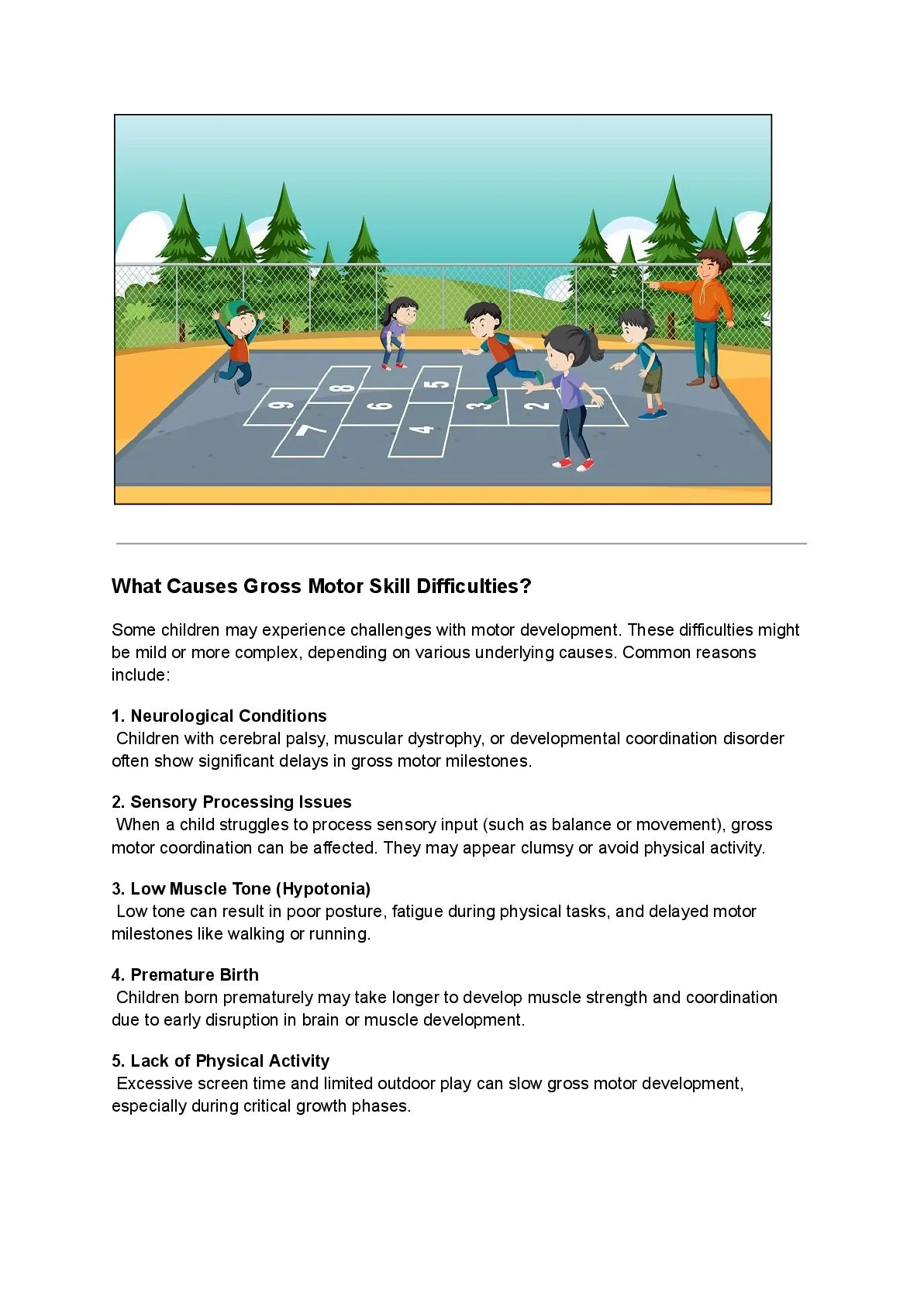
may experience challenges with motor development. These difficulties might be mild or more complex, depending on various underlying causes. Common reasons include: 1. Neurological Conditions Children with cerebral palsy, muscular dystrophy, or developmental coordination disorder often show significant delays in gross motor milestones. 2. Sensory Processing Issues When a child struggles to process sensory input (such as balance or movement), gross motor coordination can be affected. They may appear clumsy or avoid physical activity. 3. Low Muscle Tone (Hypotonia) Low tone can result in poor posture, fatigue during physical tasks, and delayed motor milestones like walking or running. 4. Premature Birth Children born prematurely may take longer to develop muscle strength and coordination due to early disruption in brain or muscle development. 5. Lack of Physical Activity Excessive screen time and limited outdoor play can slow gross motor development, especially during critical growth phases.
developmental delay or autism spectrum disorder may show differences in motor development due to sensory, cognitive, or muscle tone challenges. Early identification and intervention are key. At Nurturers, we conduct motor skill assessments and offer customized therapy programs designed to strengthen core muscles and improve coordination. How Nurturers Supports Gross Motor Development Our child development programs at Nurturers are built on a multi-disciplinary approach. We integrate fine and gross motor skills activities into daily routines using sensory-motor integration techniques, occupational therapy , and play therapy. Each activity is designed to: • Enhance balance and coordination • Improve strength and endurance • Encourage independence in movement • Build confidence in group play and social settings • Prepare the child for academic readiness through physical awareness We closely monitor developmental milestones and adjust the plan based on the child’s progress, ensuring long-term growth and support.
learn by moving. Whether it’s jumping, climbing, dancing, or crawling, every action supports brain development and emotional well-being. Engaging your child in gross motor skills activities, especially in their early years, helps lay a strong foundation for learning and independence. If you notice that your child struggles with balance, coordination, or physical tasks, don’t wait. Early therapy can greatly improve outcomes. Contact Nurturers today to schedule a developmental screening or learn how our personalized therapy programs can help your child reach their full potential.

 Your Podcast. Everywhere. Effortlessly.


 nurturers0
 progmat
 arid2
 shunsuke_takeuchi
 canvasedge
 fullerene_inc
 ggfs
 flux
 mediphone
 maruishi
 nakahara
 kaonavi
 uniam
 michaelherold
 mfonobong
 inesmontani
 varn
 ivargrimstad
 codingconduct
 tomoyanonymous
 lauravandoore
 minecr
 techseoconnect
 sstephenson