Explain what determines aggregate supply Explain what determines aggregate demand Explain macroeconomic equilibrium Explain the effects of changes in aggregate supply and aggregate demand on economic growth, inflation, and business cycles Explain economic growth, inflation, and business cycles by using the AS-AD model
of real GDP? What causes inflation? Why do we have business cycles? How do policy actions by the government and the Federal Reserve affect output and prices?
and services supplied depends on three factors: The quantity of labor (L ) The quantity of capital (K ) The state of technology (T ) The aggregate production function shows how quantity of real GDP supplied, Y, depends on labor, capital, and technology.
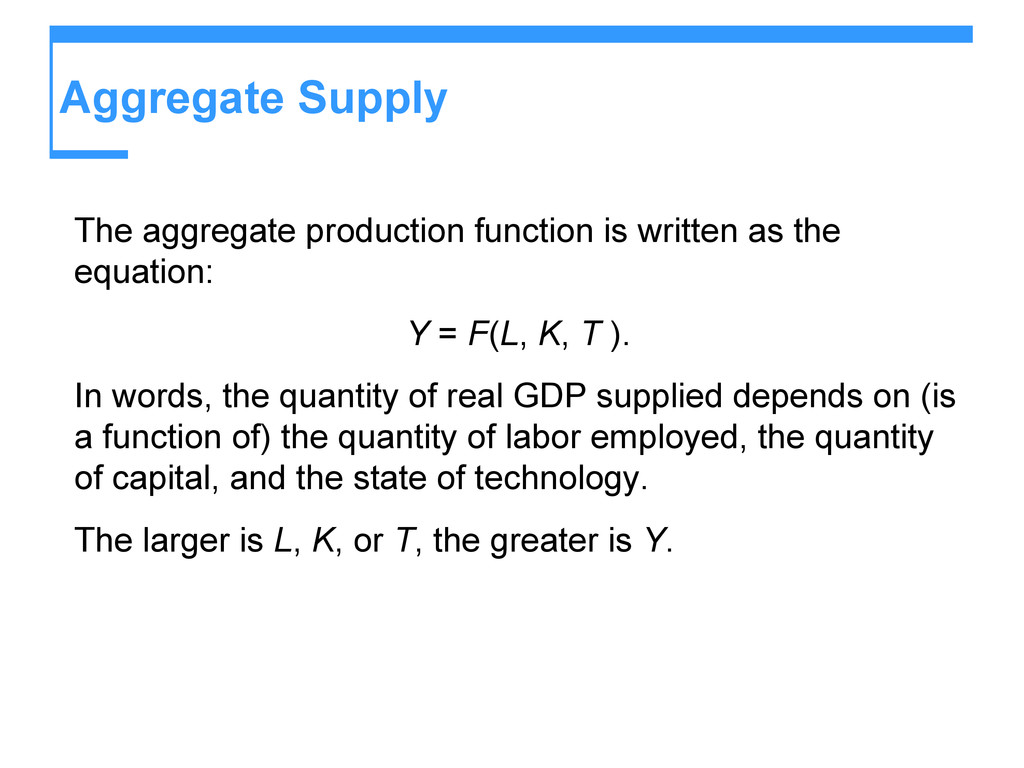
equation: Y = F(L, K, T ). In words, the quantity of real GDP supplied depends on (is a function of) the quantity of labor employed, the quantity of capital, and the state of technology. The larger is L, K, or T, the greater is Y.
and the state of technology are fixed but the quantity of labor can vary. The higher the real wage rate, the smaller is the quantity of labor demanded and the greater is the quantity of labor supplied. The wage rate that makes the quantity of labor demanded equal to the quantity supplied is the equilibrium wage rate and at that wage the level of employment is the natural rate of unemployment.
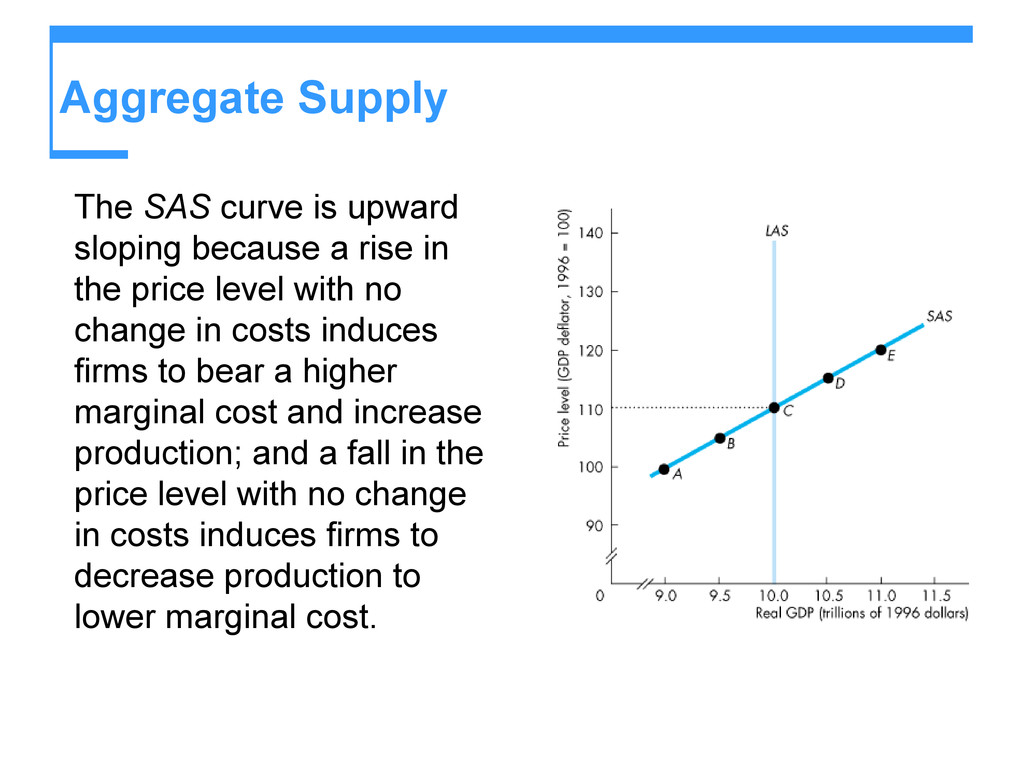
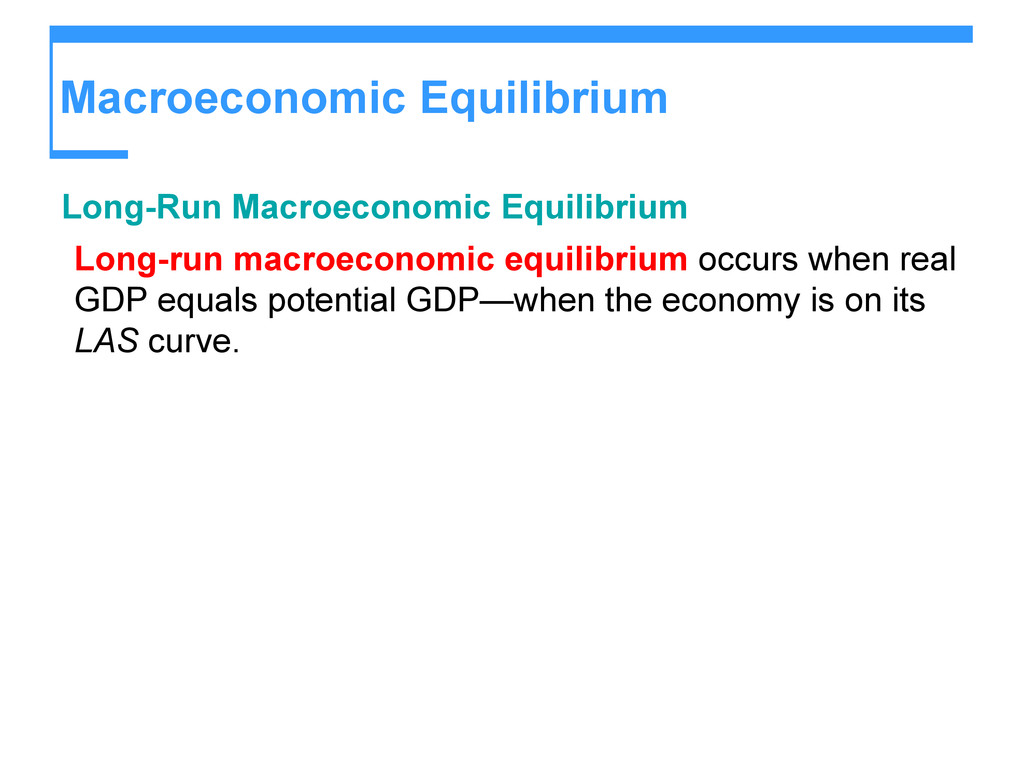
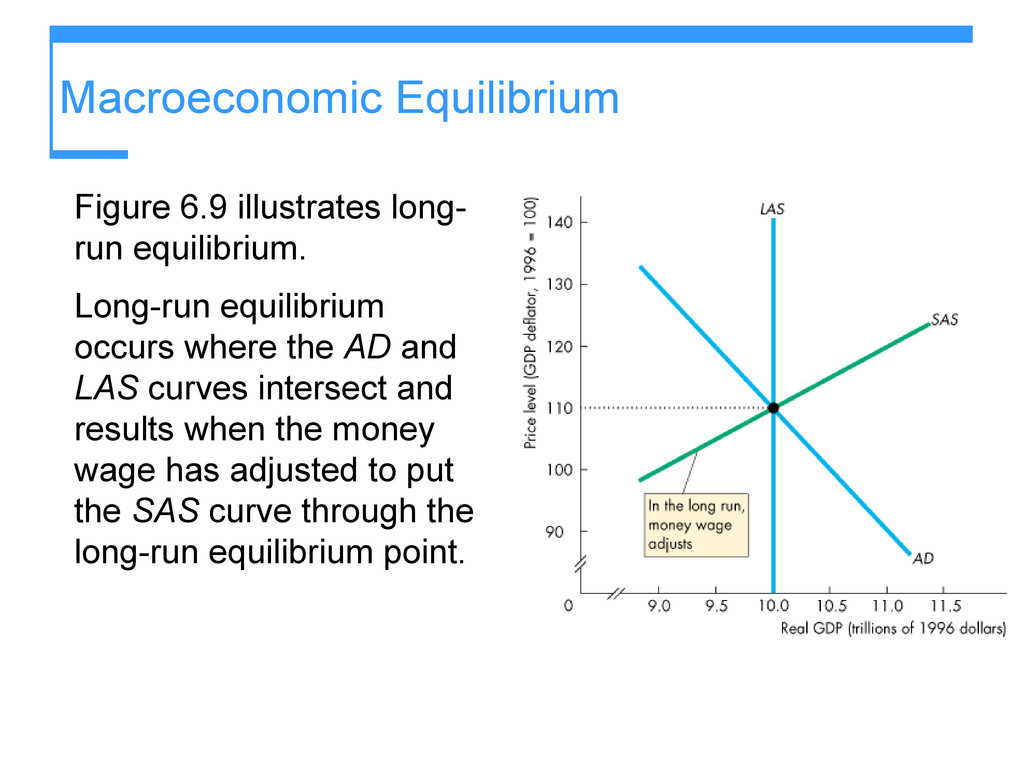
a time frame that is sufficiently long for all adjustments to be made so that real GDP equals potential GDP and there is full employment. The long-run aggregate supply curve (LAS) is the relationship between the quantity of real GDP supplied and the price level when real GDP equals potential GDP.
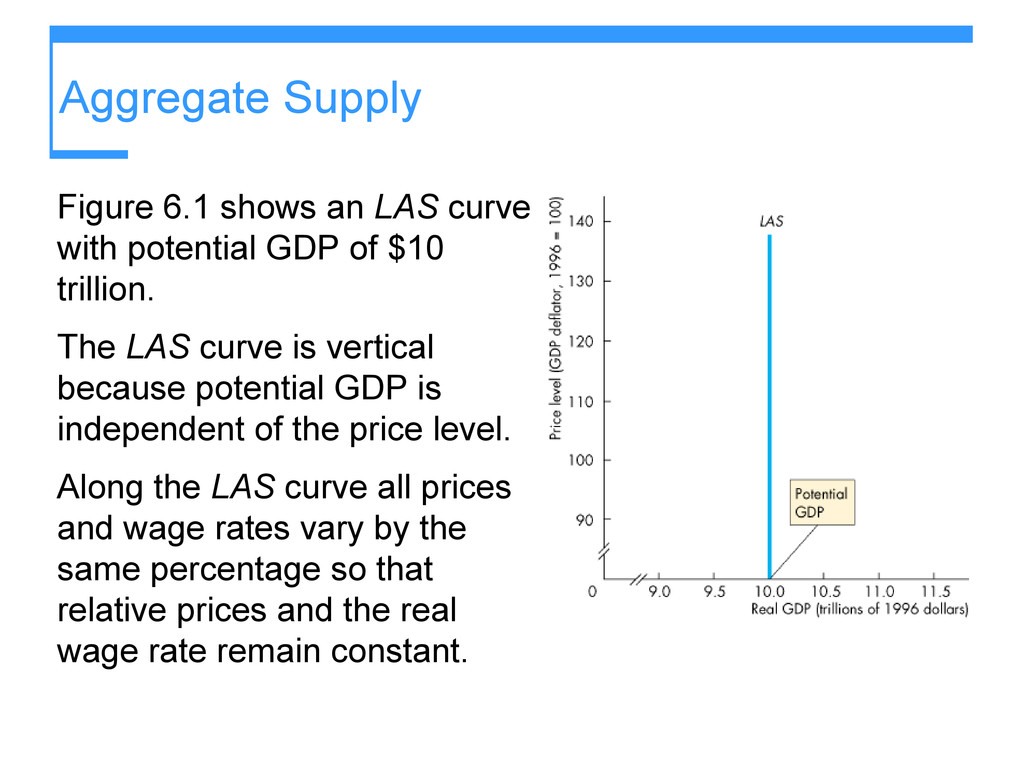
GDP of $10 trillion. The LAS curve is vertical because potential GDP is independent of the price level. Along the LAS curve all prices and wage rates vary by the same percentage so that relative prices and the real wage rate remain constant.
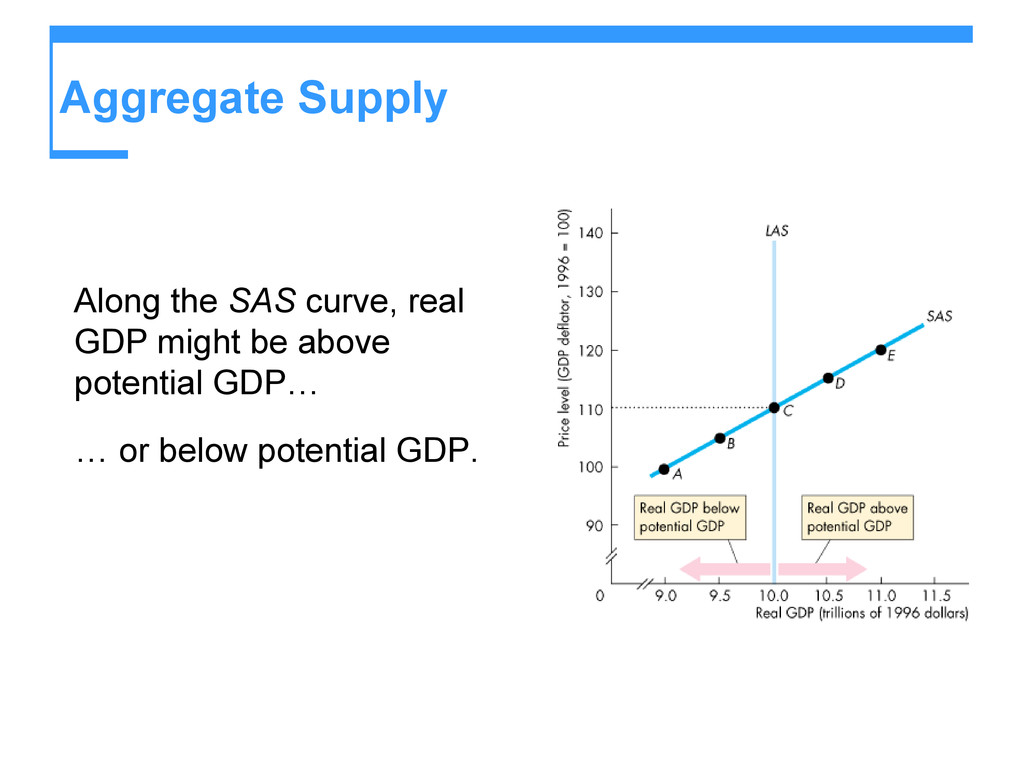
a period during which real GDP has fallen below or risen above potential GDP. At the same time, the unemployment rate has risen above or fallen below the natural unemployment rate. The short-run aggregate supply curve (SAS) is the relationship between the quantity of real GDP supplied and the price level in the short run when the money wage rate, the prices of other resources, and potential GDP remain constant.
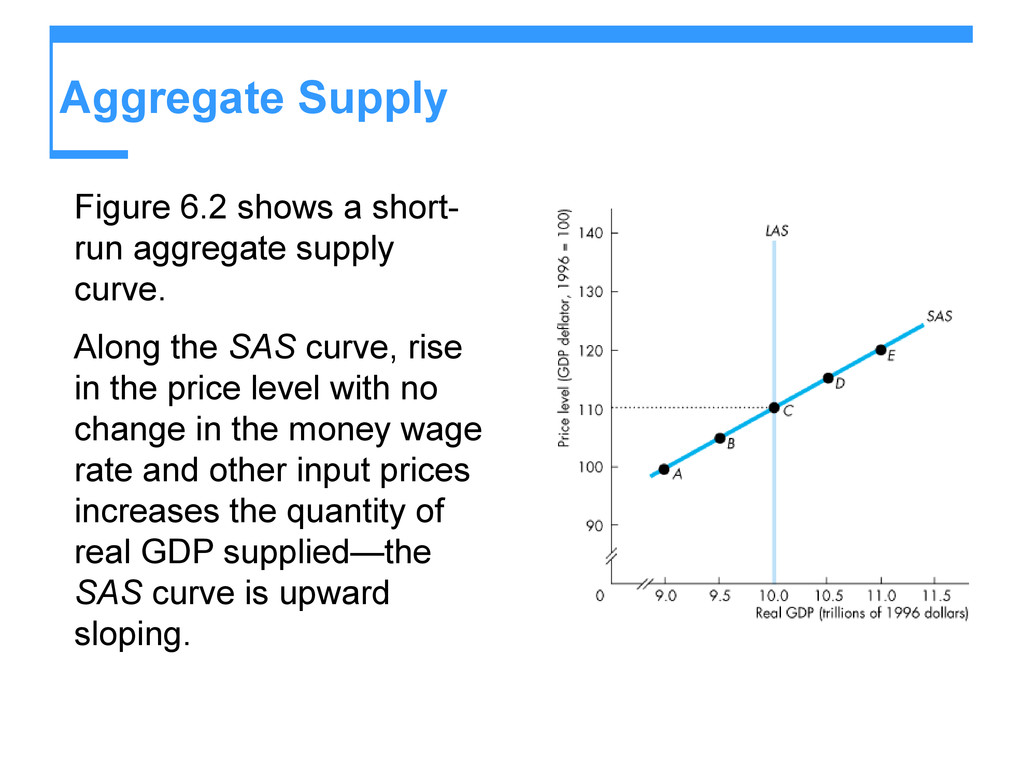
curve. Along the SAS curve, rise in the price level with no change in the money wage rate and other input prices increases the quantity of real GDP supplied—the SAS curve is upward sloping.
rise in the price level with no change in costs induces firms to bear a higher marginal cost and increase production; and a fall in the price level with no change in costs induces firms to decrease production to lower marginal cost.
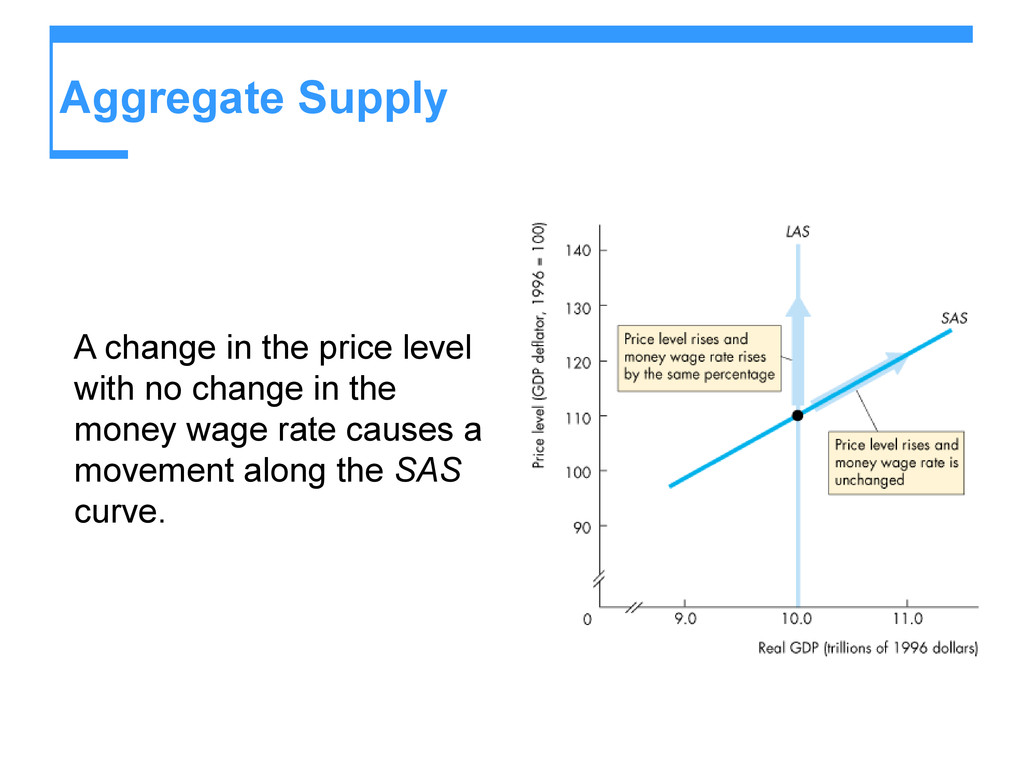
6.3 summarizes what you’ve just learned about the LAS and SAS curves. A change in the price level with an equal percentage change in the money wage rate causes a movement along the LAS curve.
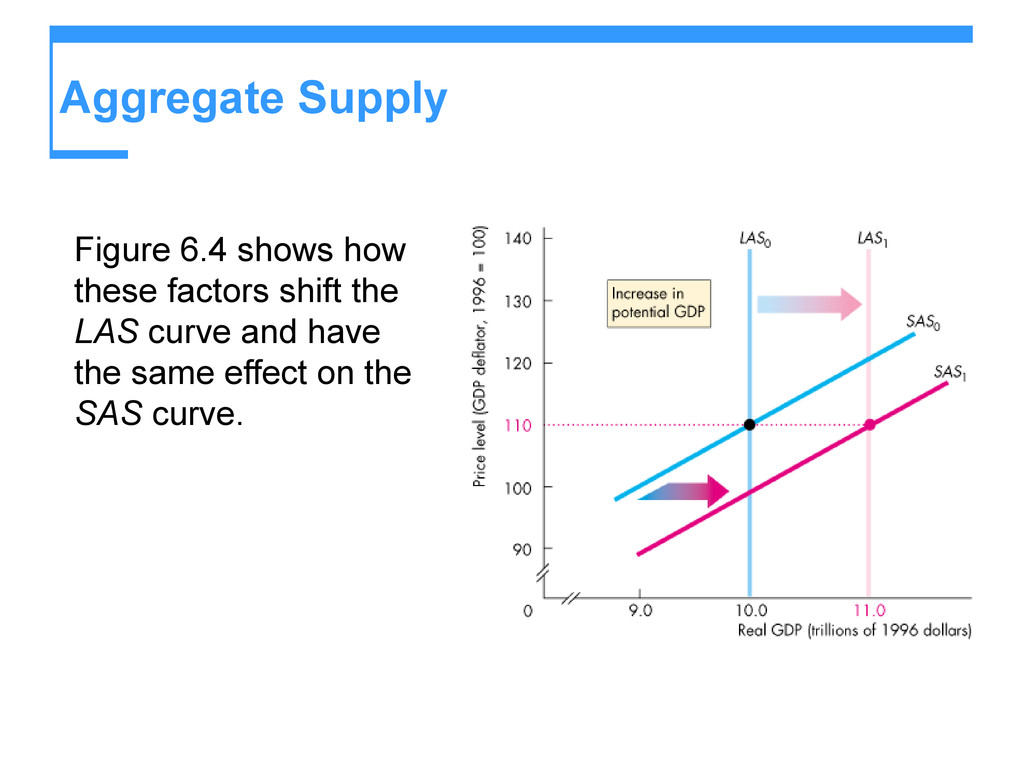
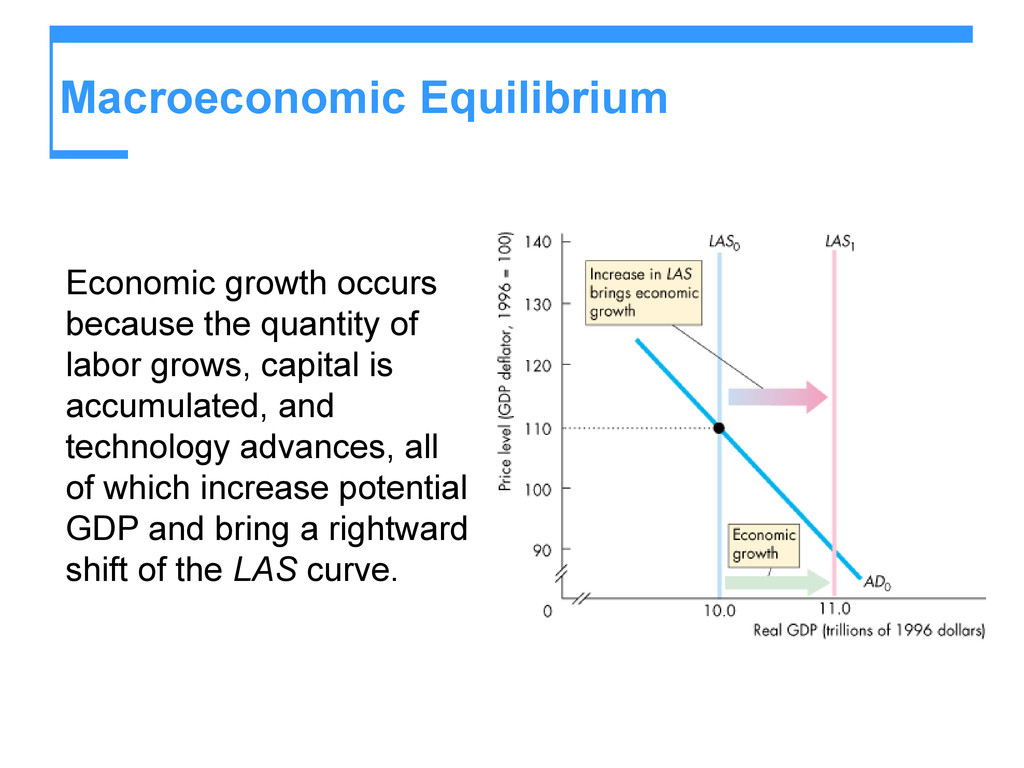
both the LAS and SAS curves shift rightward. Potential GDP changes, for three reasons: Change in the full-employment quantity of labor Change in the quantity of capital (physical or human) Advance in technology
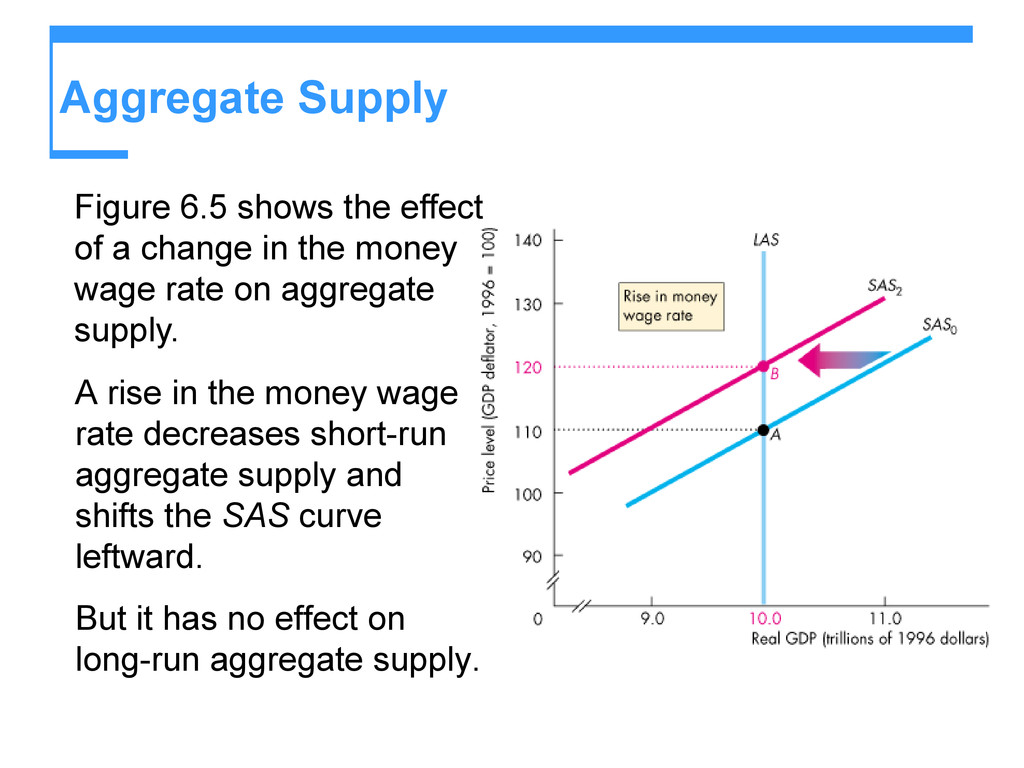
in the money wage rate on aggregate supply. A rise in the money wage rate decreases short-run aggregate supply and shifts the SAS curve leftward. But it has no effect on long-run aggregate supply.
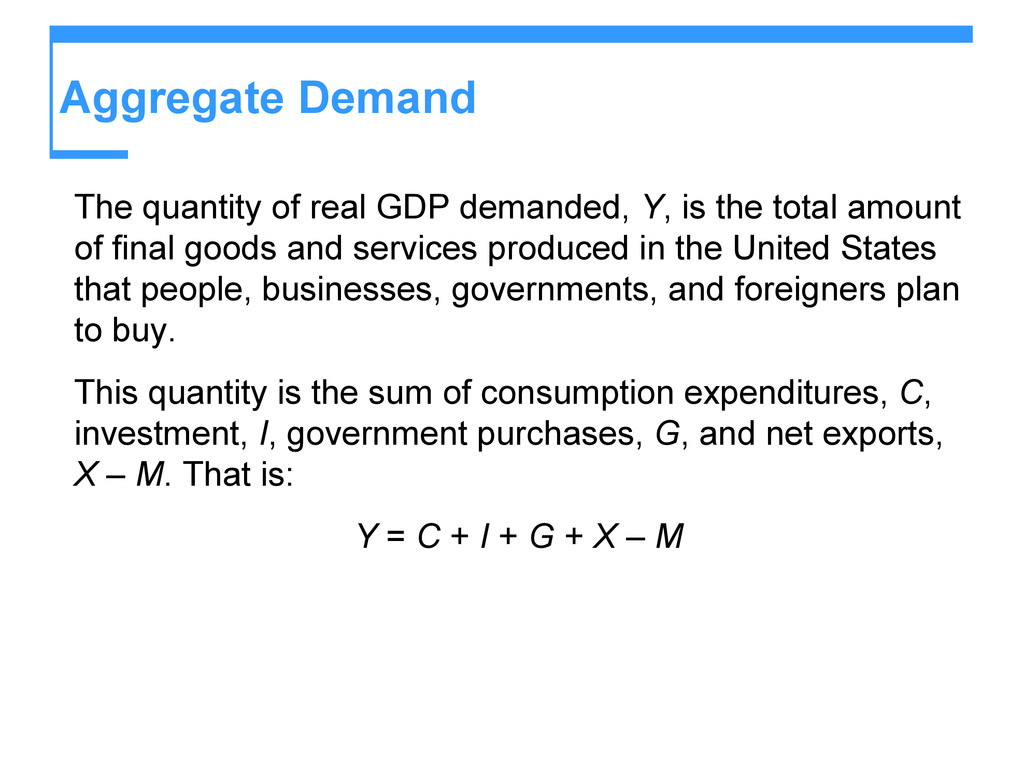
the total amount of final goods and services produced in the United States that people, businesses, governments, and foreigners plan to buy. This quantity is the sum of consumption expenditures, C, investment, I, government purchases, G, and net exports, X – M. That is: Y = C + I + G + X – M
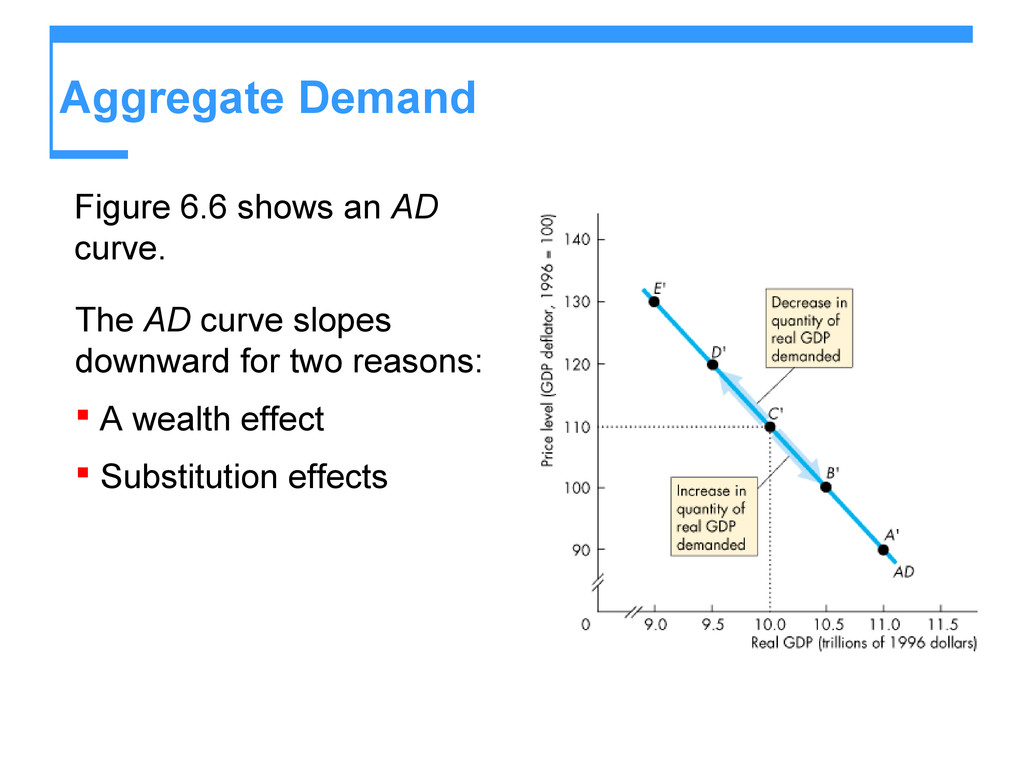
relationship between the quantity of real GDP demanded and the price level. The aggregate demand (AD) curve plots the quantity of real GDP demanded against the price level.
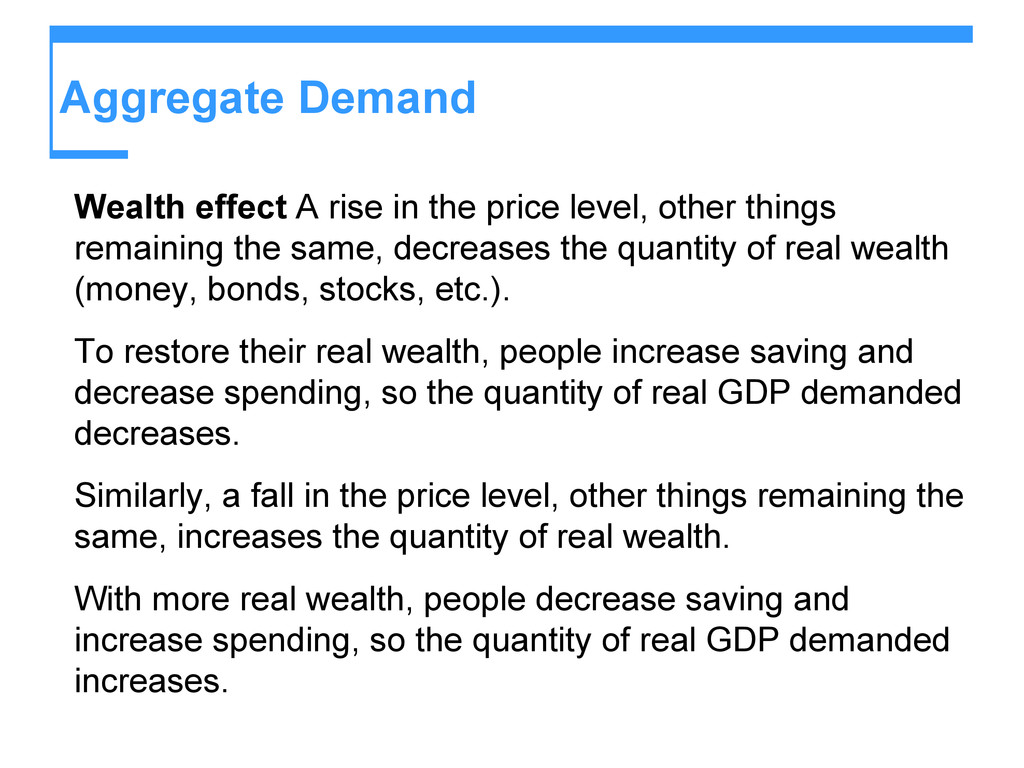
other things remaining the same, decreases the quantity of real wealth (money, bonds, stocks, etc.). To restore their real wealth, people increase saving and decrease spending, so the quantity of real GDP demanded decreases. Similarly, a fall in the price level, other things remaining the same, increases the quantity of real wealth. With more real wealth, people decrease saving and increase spending, so the quantity of real GDP demanded increases.
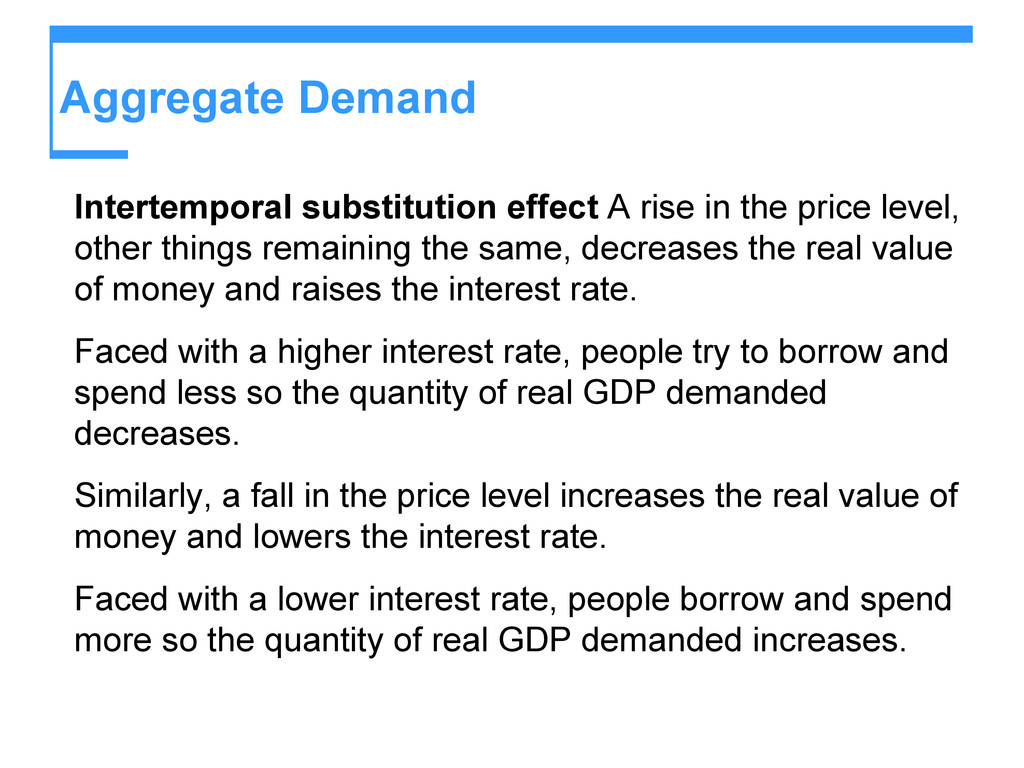
level, other things remaining the same, decreases the real value of money and raises the interest rate. Faced with a higher interest rate, people try to borrow and spend less so the quantity of real GDP demanded decreases. Similarly, a fall in the price level increases the real value of money and lowers the interest rate. Faced with a lower interest rate, people borrow and spend more so the quantity of real GDP demanded increases.
level, other things remaining the same, increases the price of domestic goods relative to foreign goods, so imports increase and exports decrease, which decreases the quantity of real GDP demanded. Similarly, a fall in the price level, other things remaining the same, decreases the price of domestic goods relative to foreign goods, so imports decrease and exports increase, which increases the quantity of real GDP demanded.
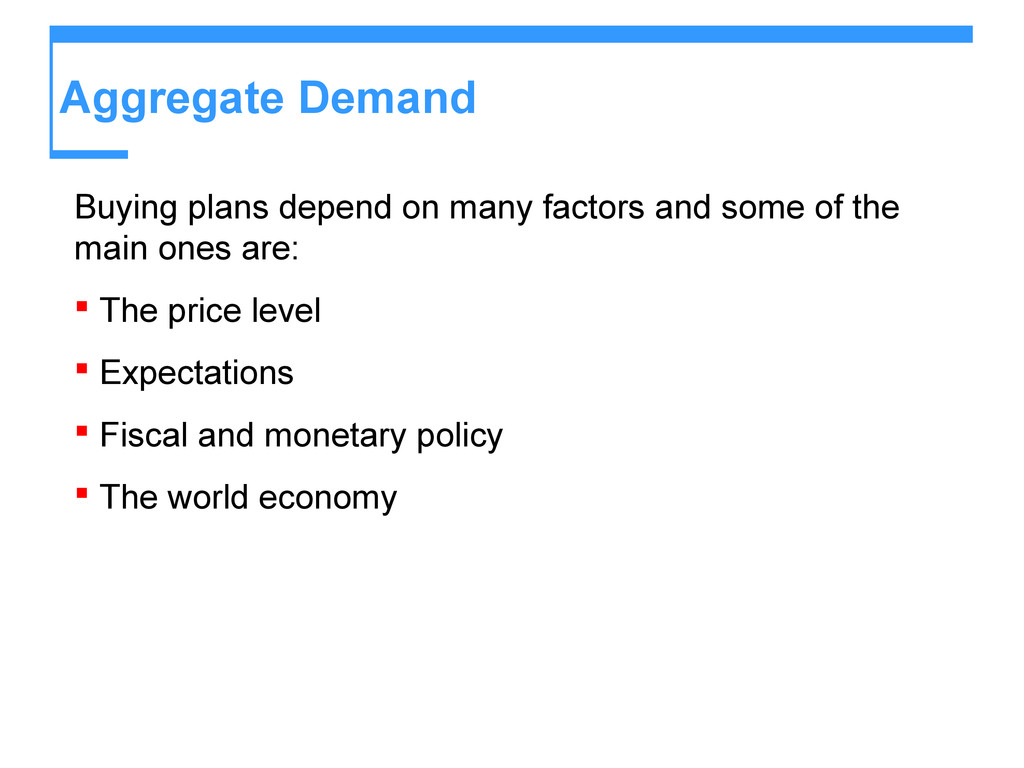
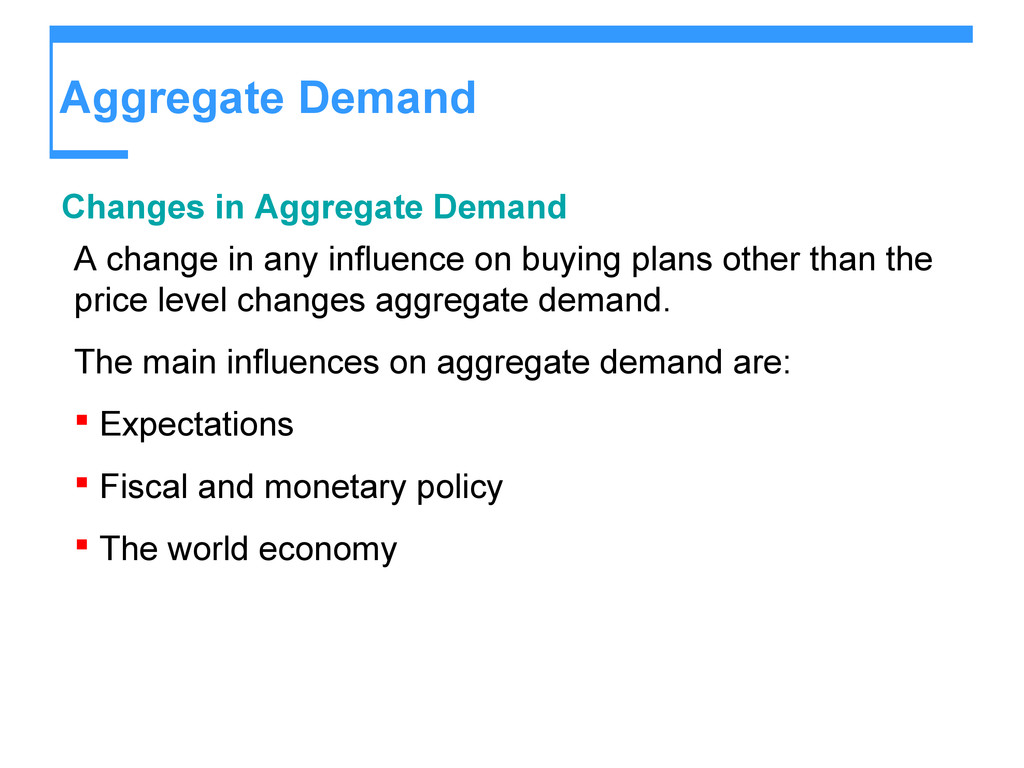
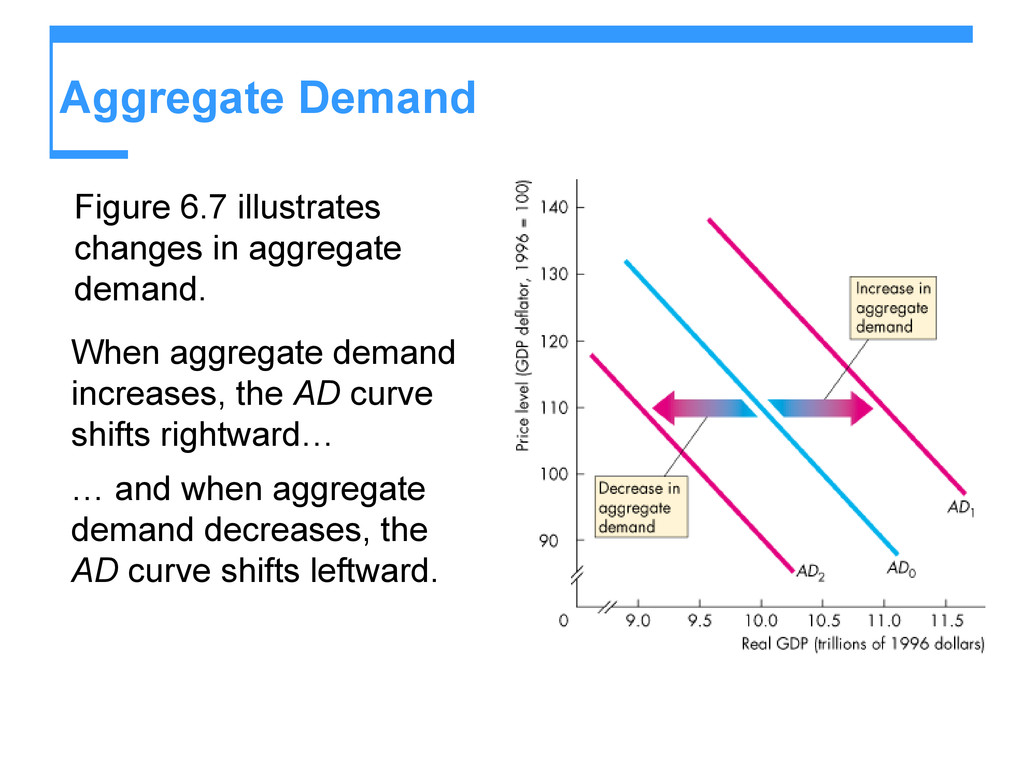
influence on buying plans other than the price level changes aggregate demand. The main influences on aggregate demand are: Expectations Fiscal and monetary policy The world economy
profits change aggregate demand. Increases in expected future income increase people’s consumption today, and increases aggregate demand. A rise in the expected inflation rate makes buying goods cheaper today and increases aggregate demand. An increase in expected future profits boosts firms’ investment, which increases aggregate demand.
economic activity by changing its taxes, spending, deficit, and debt policies. A tax cut or an increase in transfer payments increases households’ disposable income—aggregate income minus taxes plus transfer payments. An increase in disposable income increases consumption expenditure and increases aggregate demand.
one component of aggregate demand, an increase in government purchases increases aggregate demand. Monetary policy is changes in the interest rate and quantity of money. An increase in the quantity of money increases buying power and increases aggregate demand. A cut in the interest rate increases expenditure and increases aggregate demand.
ways: A fall in the foreign exchange rate lowers the price of domestic goods and services relative to foreign goods and services, increases exports, decreases imports, and increases aggregate demand. An increase in foreign income increases the demand for U.S. exports and increases aggregate demand.
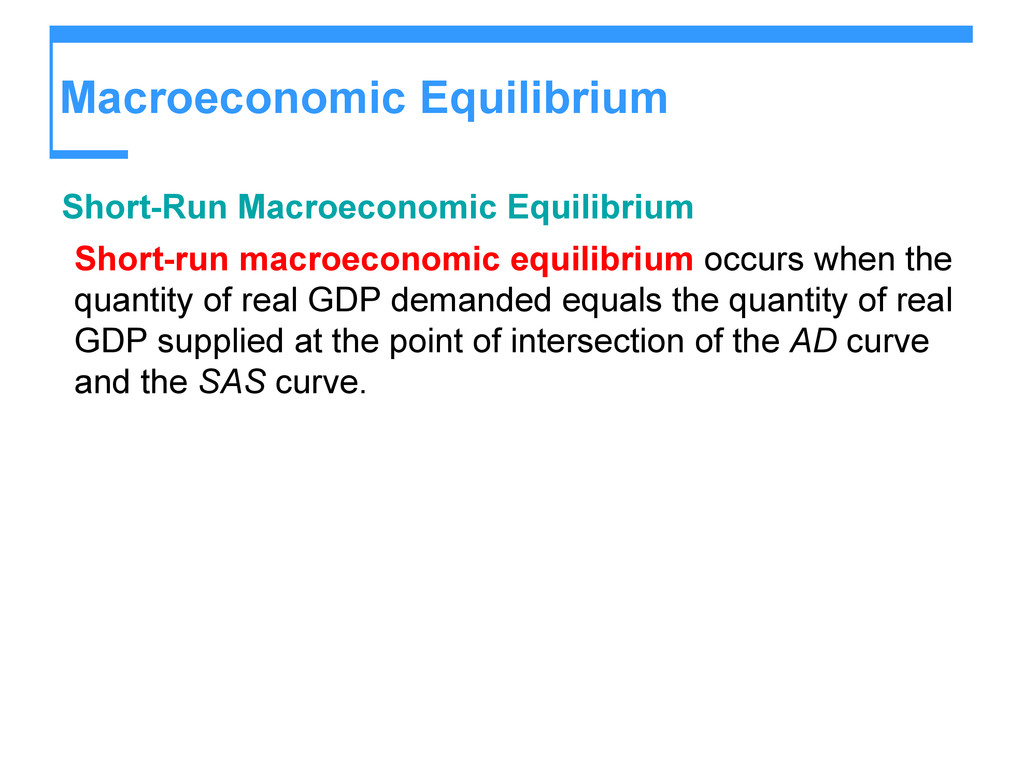
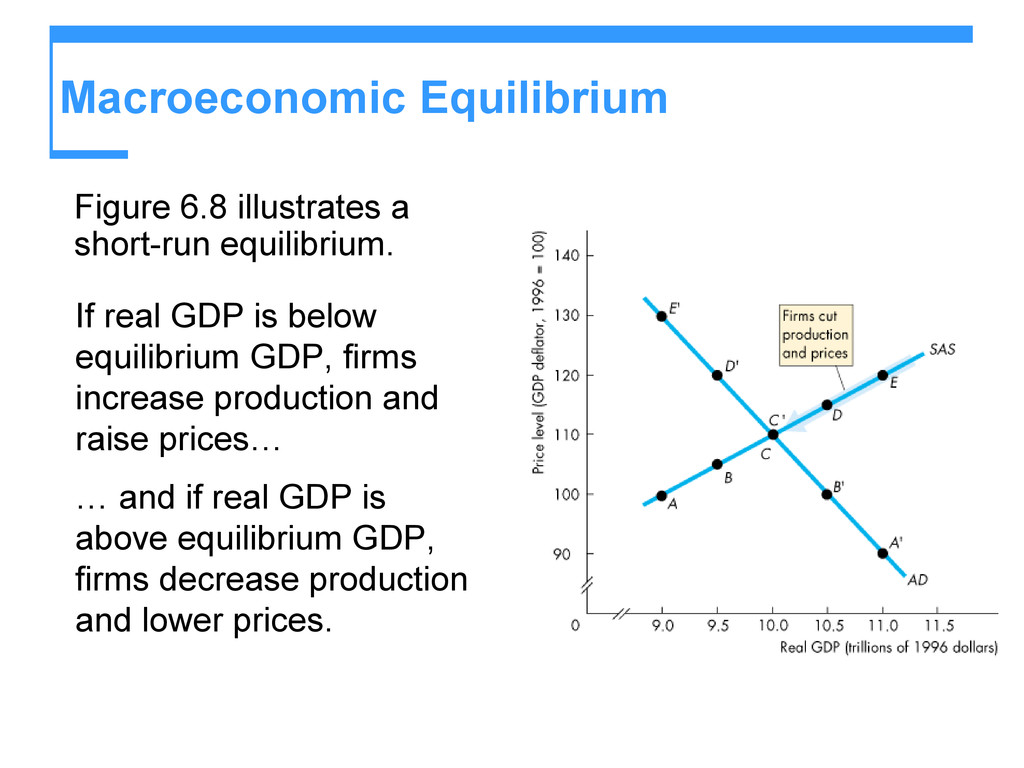
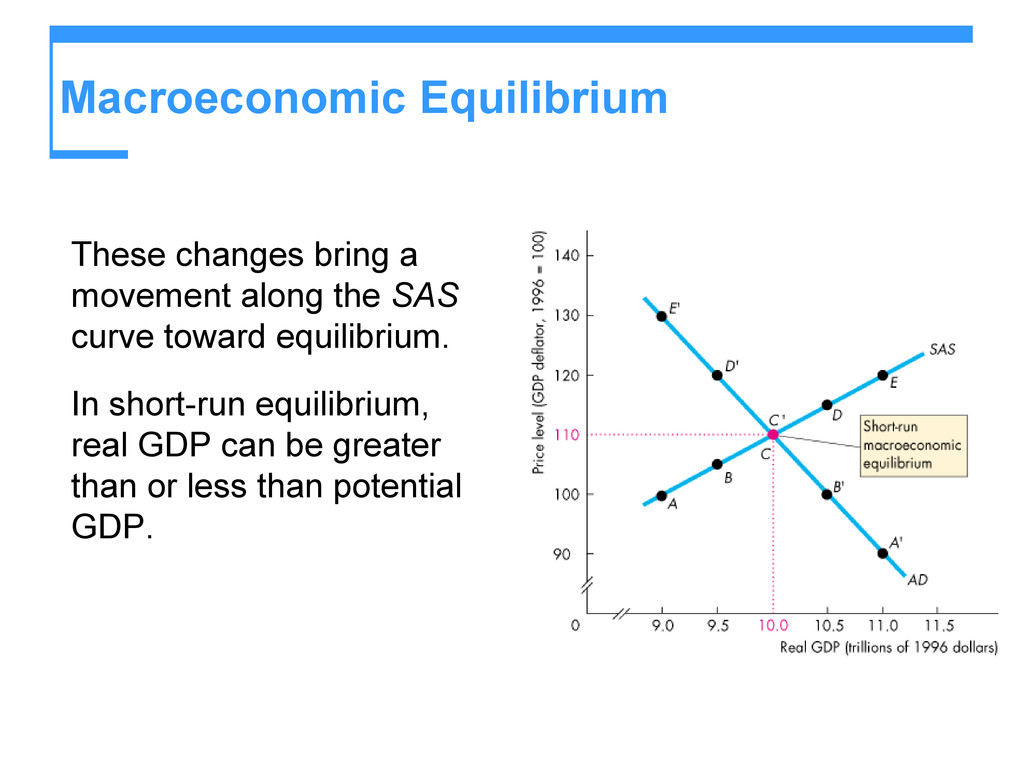
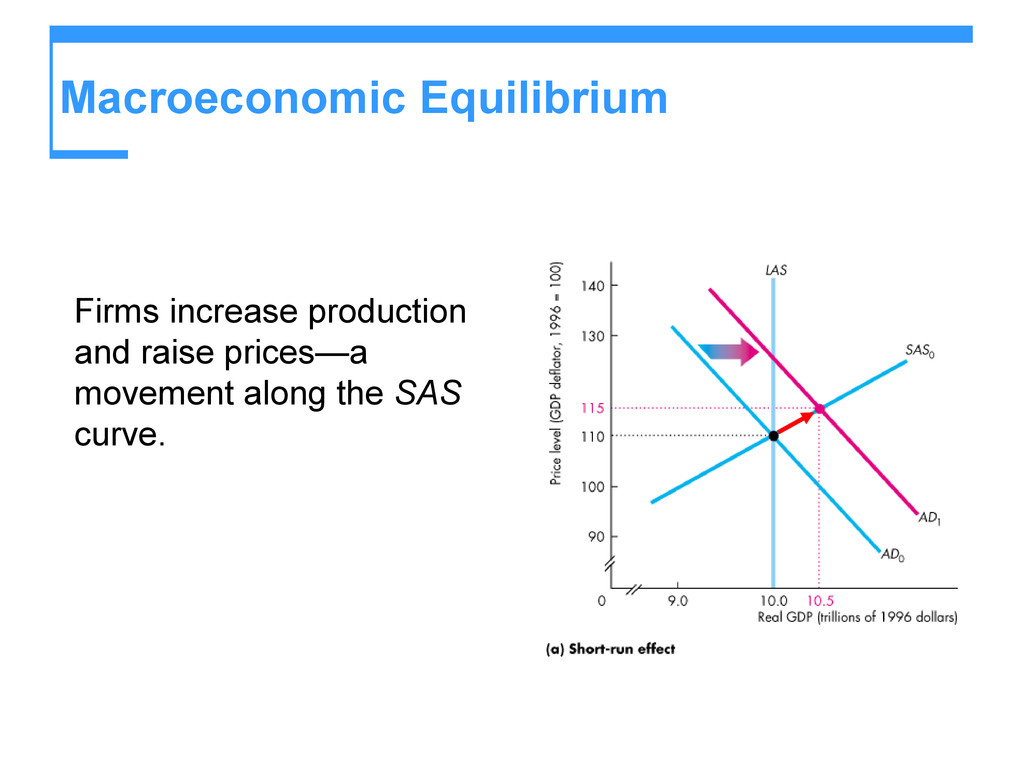
GDP is below equilibrium GDP, firms increase production and raise prices… … and if real GDP is above equilibrium GDP, firms decrease production and lower prices.
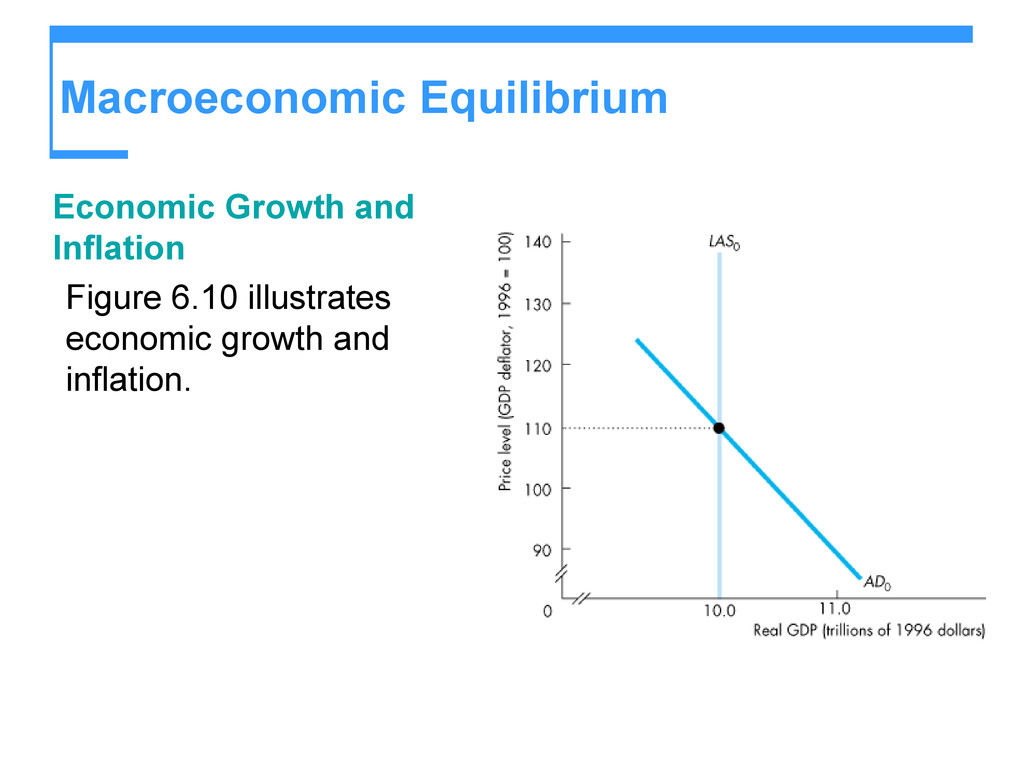
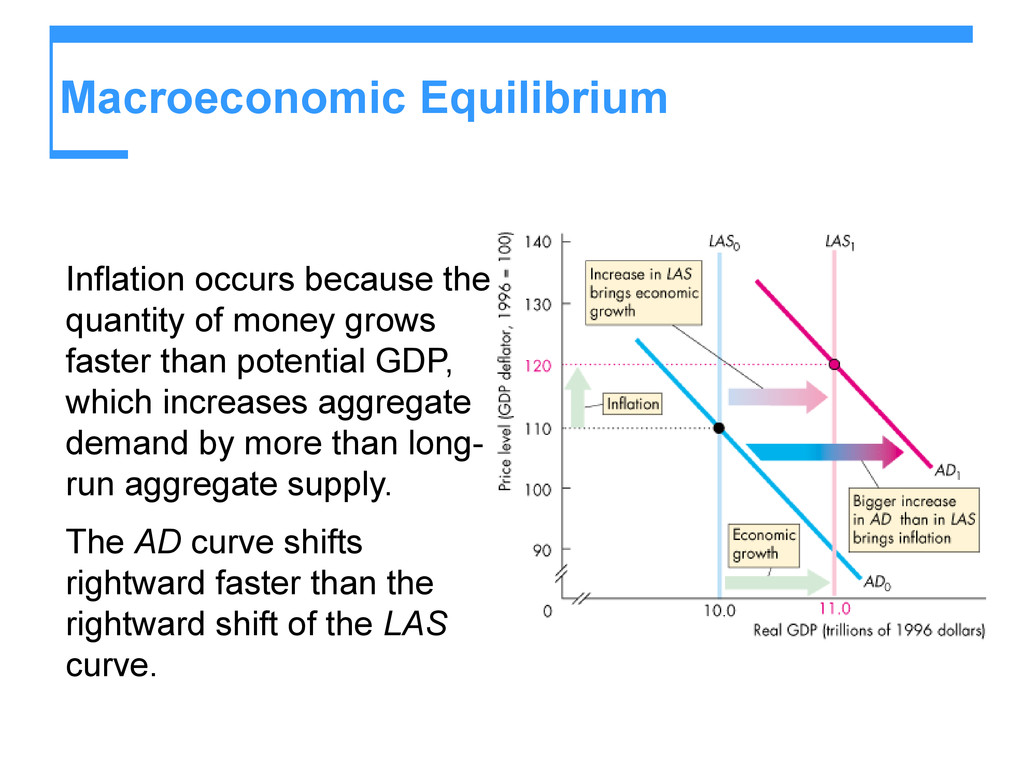
faster than potential GDP, which increases aggregate demand by more than long- run aggregate supply. The AD curve shifts rightward faster than the rightward shift of the LAS curve.
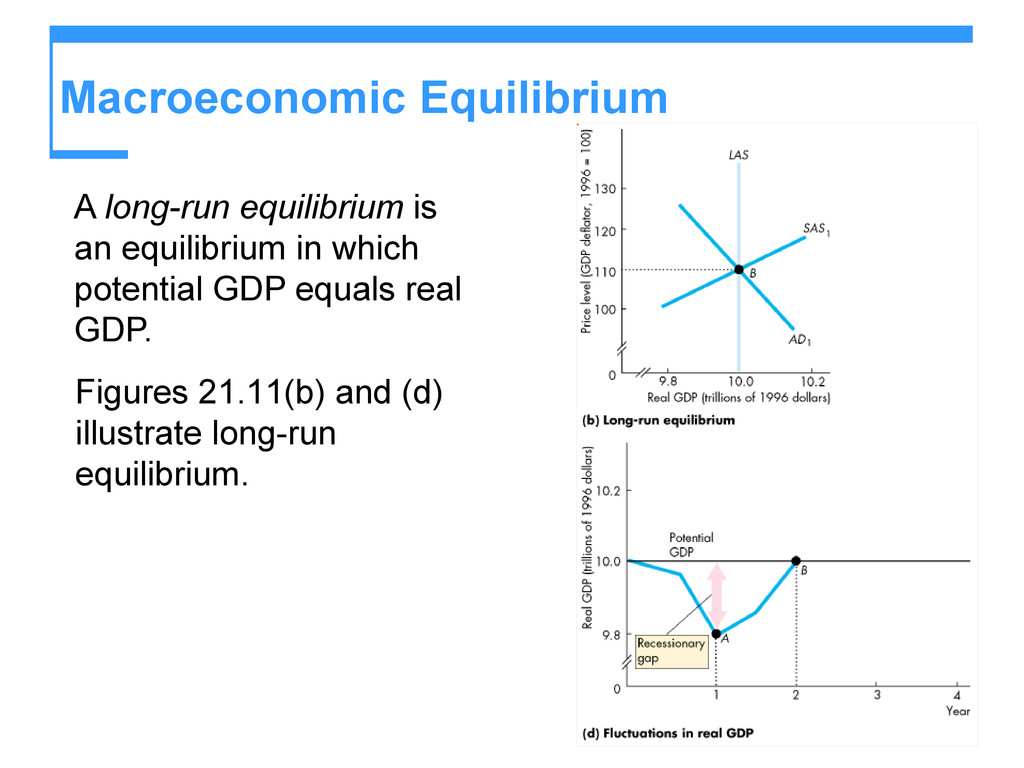
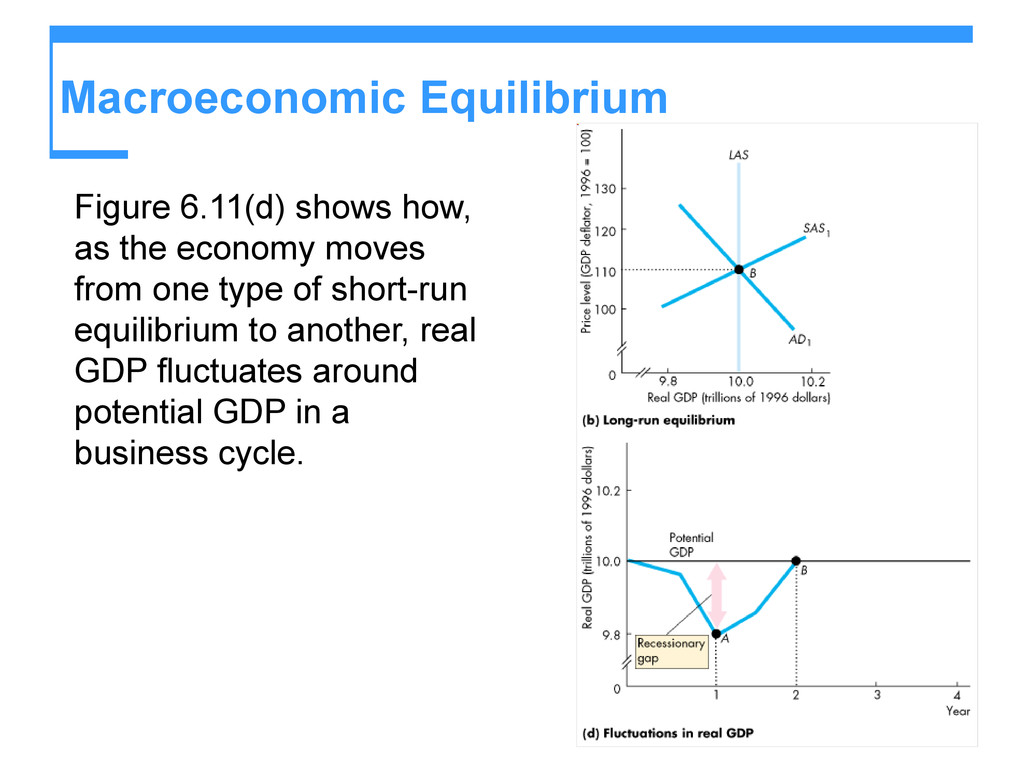
aggregate demand and the short-run aggregate supply fluctuate but the money wage rate does not change rapidly enough to keep real GDP at potential GDP.
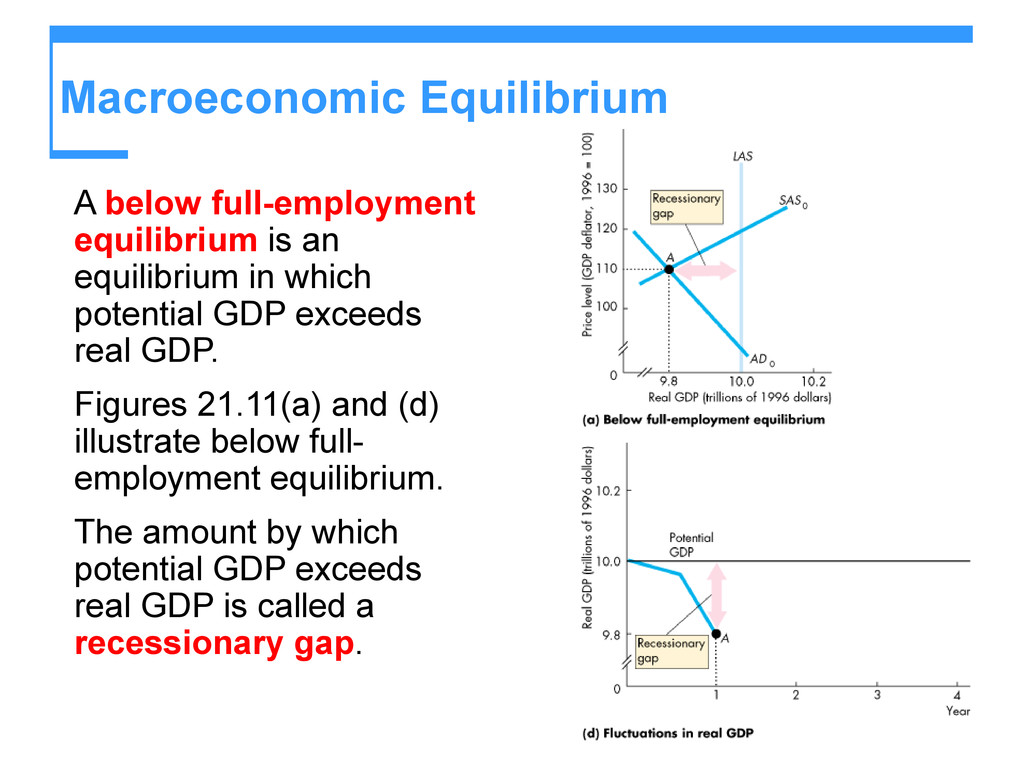
which potential GDP exceeds real GDP. Figures 21.11(a) and (d) illustrate below full- employment equilibrium. The amount by which potential GDP exceeds real GDP is called a recessionary gap.
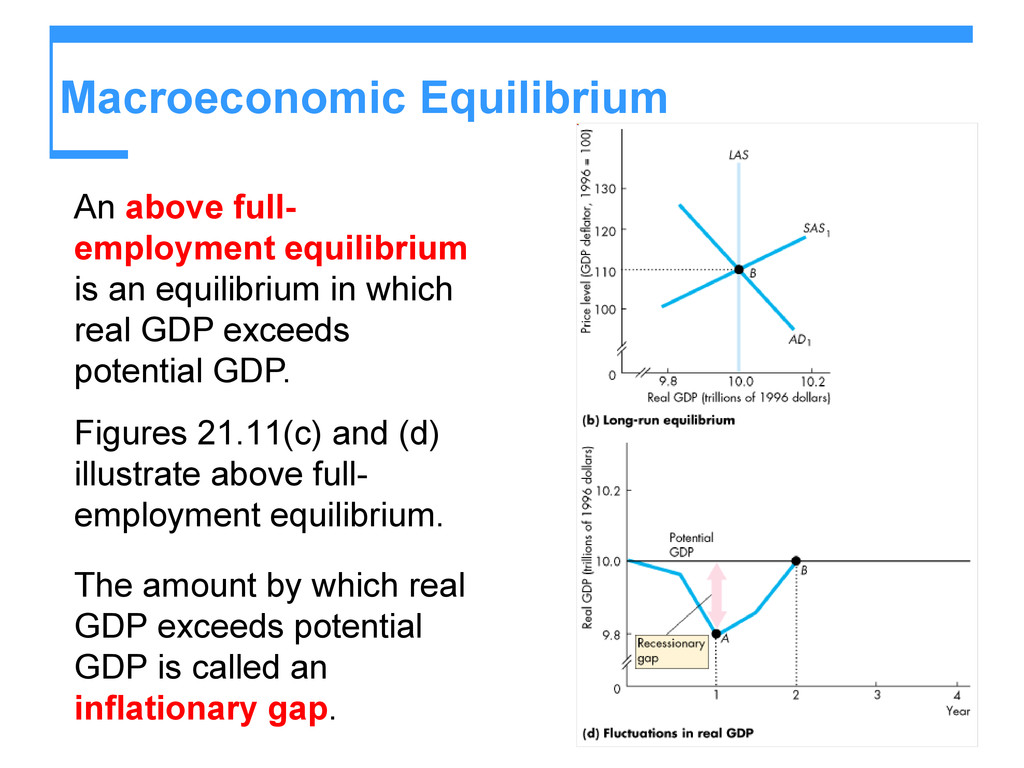
in which real GDP exceeds potential GDP. Figures 21.11(c) and (d) illustrate above full- employment equilibrium. The amount by which real GDP exceeds potential GDP is called an inflationary gap.
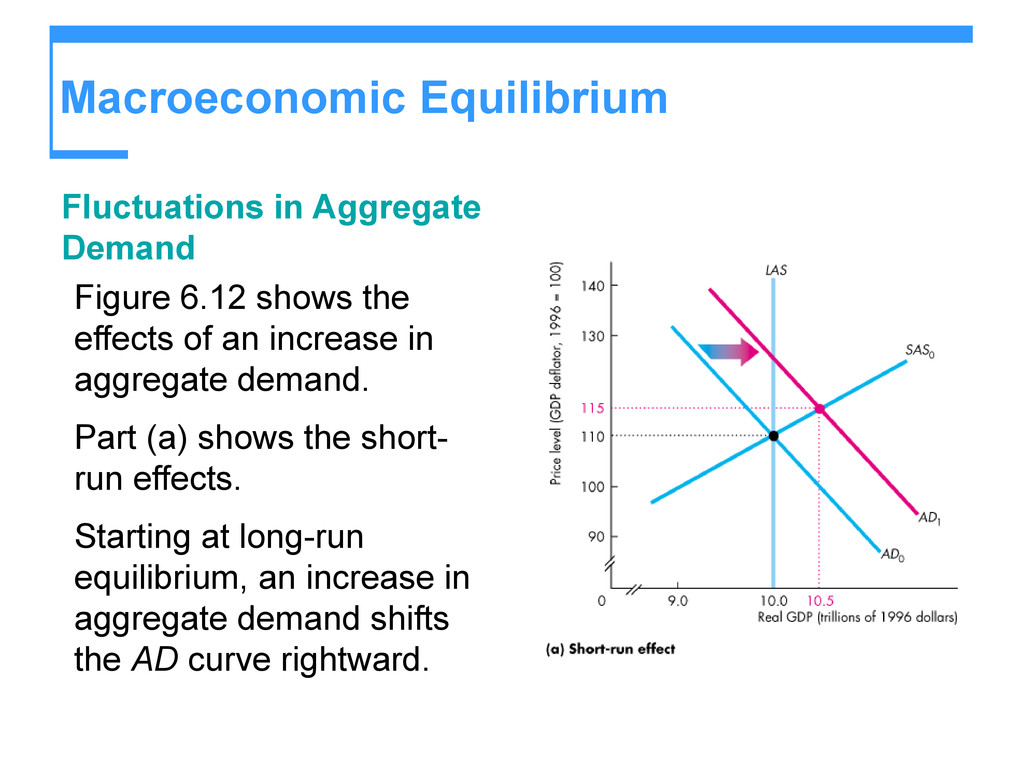
effects of an increase in aggregate demand. Part (a) shows the short- run effects. Starting at long-run equilibrium, an increase in aggregate demand shifts the AD curve rightward.
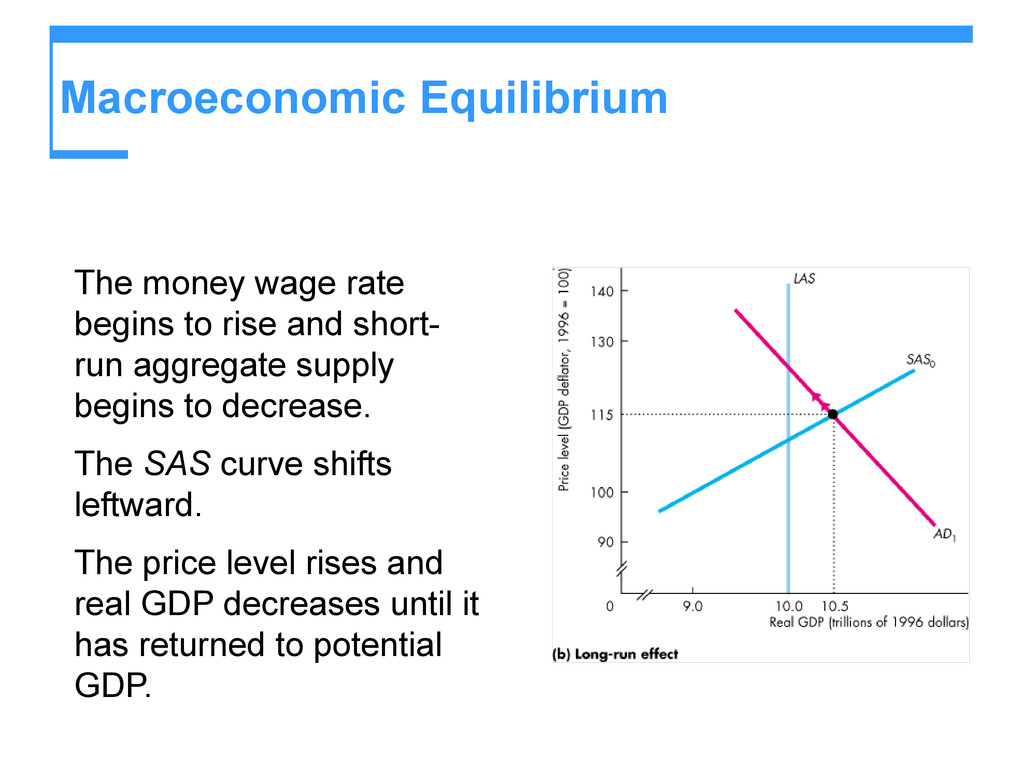
short- run aggregate supply begins to decrease. The SAS curve shifts leftward. The price level rises and real GDP decreases until it has returned to potential GDP.
effects of a decrease in aggregate supply. Starting at long-run equilibrium, a rise in the price of oil decreases short-run aggregate supply and the SAS curve shifts leftward.
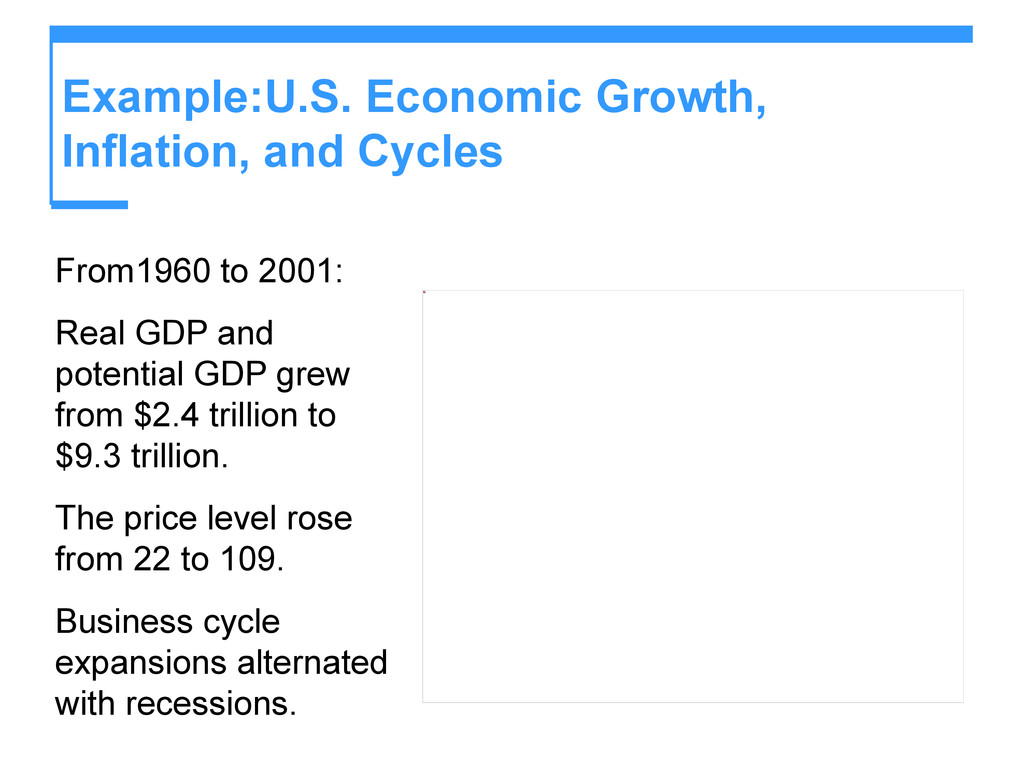
GDP and potential GDP grew from $2.4 trillion to $9.3 trillion. The price level rose from 22 to 109. Business cycle expansions alternated with recessions.
growth was rapid during the 1960s and 1990s and slower during the 1970s and 1980s. Inflation Inflation was the most rapid during the 1970s. Business Cycles Recessions occurred during the mid-1970s, 1982, 1991– 1992, and 2001.


 jnunemaker
 axbom
axbom
 sachag
 inesmontani
 szymonslowik
 bkeepers
 mongodb
 palkan
 bryan
bryan
 honzajavorek
 akademiya2063
 reverentgeek