Upgrade to Pro — share decks privately, control downloads, hide ads and more …

Innovation is Dead! Long Live Innovation!

Innovation is Dead! Long Live Innovation!

It may be unthinkable to reconsider the concept and purpose of innovation and experimentation. In many sectors—including higher ed, corporations, the arts, humanities, and sciences—the creation of the Next New Shiny Thing can have its rewards, both financially and in terms of prestige. Experimental investigations are a key gateway to new knowledge; little learning and insight can happen without such developmental pursuits. At the same time, is there a way to recast innovation so that what is being built is not entirely new or has not been done before but, instead, makes adaptation, reuse, repair, recovery, and maintenance the overriding rationales for any “new” technology? If the needs of future users are at stake, particularly humanities scholars and students as users, then how should we in libraries, presses, archives, and information technology in higher ed re-think innovation, so that what gets built and what has been built—what gets used and what has been used—evolve and endure rather than fade away and expire? How do we make maintenance the Next New Shiny Thing? This presentation will delve into issues of experimentation, innovation, continuity, and maintenance in the context of digital library (DL) infrastructure and technology, writ broadly, for the humanities. It will highlight DL efforts that present opportunities for recalibrating the meaning and ethos of “innovation, “ and it will surface various current initiatives that may be considered models of maintenance.

Avatar for Patricia Hswe

Patricia Hswe

June 04, 2019

Other Decks in Technology

Transcript

  1. Innovation Is Dead! Long Live Innovation! Patricia Hswe | Program

    Officer | Scholarly Communications The Andrew W. Mellon Foundation 4 June 2019 ACM/IEEE Joint Conference on Digital Libraries MELLON THE ANDREW W. FOUNDATION
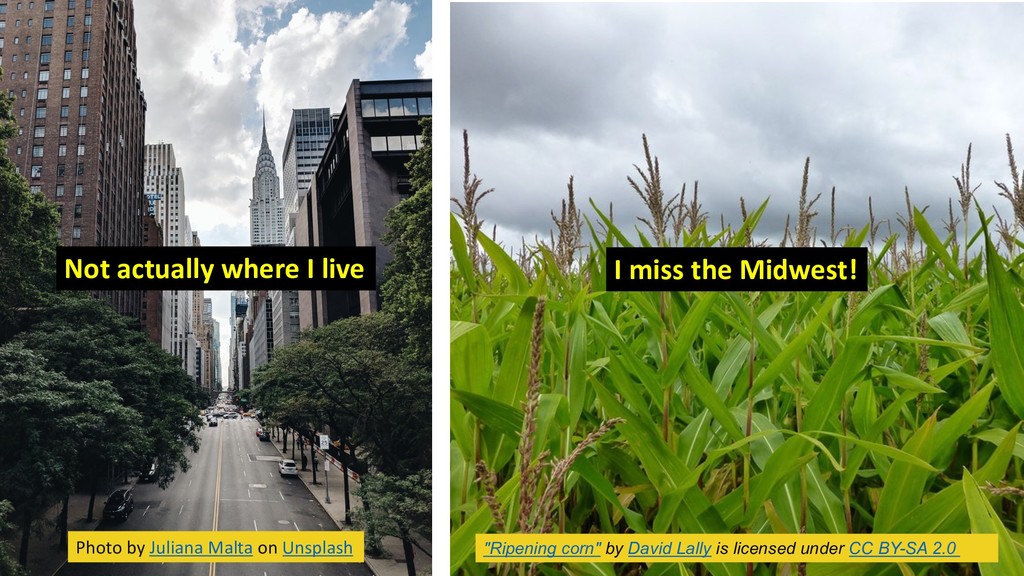
  2. Photo by Juliana Malta on Unsplash "Ripening corn" by David

    Lally is licensed under CC BY-SA 2.0 Not actually where I live I miss the Midwest!
  3. The lineup •Prologue: The Scholarly Communications program •Part I: SC

    innovations in service to the humanities •Part II: Adaptability > Sustainability •Part III: The case for maintenance •Epilogue
  4. But first: Thank you to — •Stephen Downie and JCDL

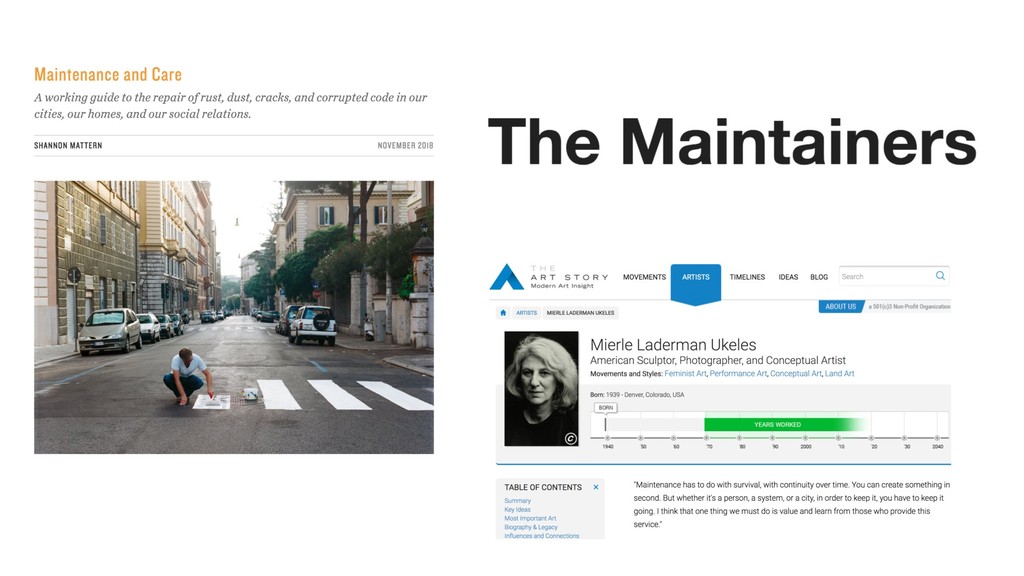
    organizers, hotel staff •themaintainers.org •GSLIS, librarian and technologist colleagues in the field •Foundation colleagues and funder colleagues beyond •Tara McPherson •Don Waters
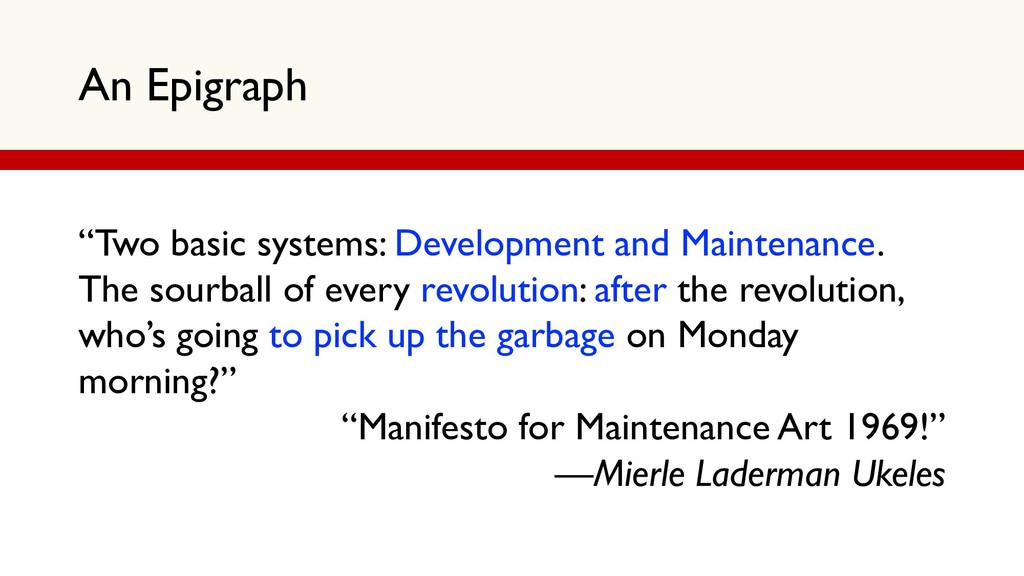
  5. An Epigraph “Two basic systems: Development and Maintenance. The sourball

    of every revolution: after the revolution, who’s going to pick up the garbage on Monday morning?” “Manifesto for Maintenance Art 1969!” —Mierle Laderman Ukeles
  6. An Epigraph “Two basic systems: Development and Maintenance. The sourball

    of every revolution: after the revolution, who’s going to pick up the garbage on Monday morning?” “Manifesto for Maintenance Art 1969!” —Mierle Laderman Ukeles
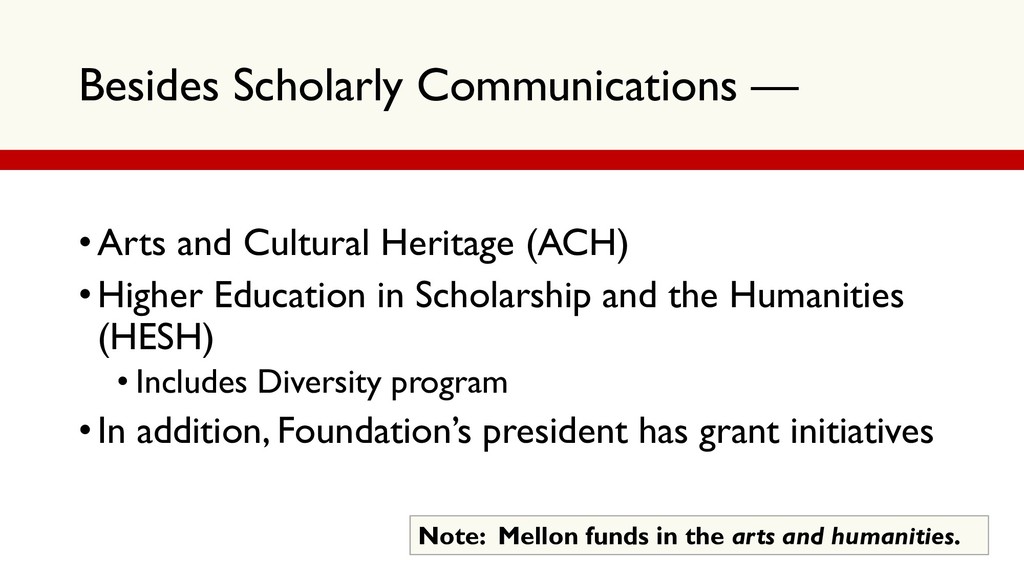
  7. Besides Scholarly Communications — •Arts and Cultural Heritage (ACH) •Higher

    Education in Scholarship and the Humanities (HESH) • Includes Diversity program •In addition, Foundation’s president has grant initiatives Note: Mellon funds in the arts and humanities.
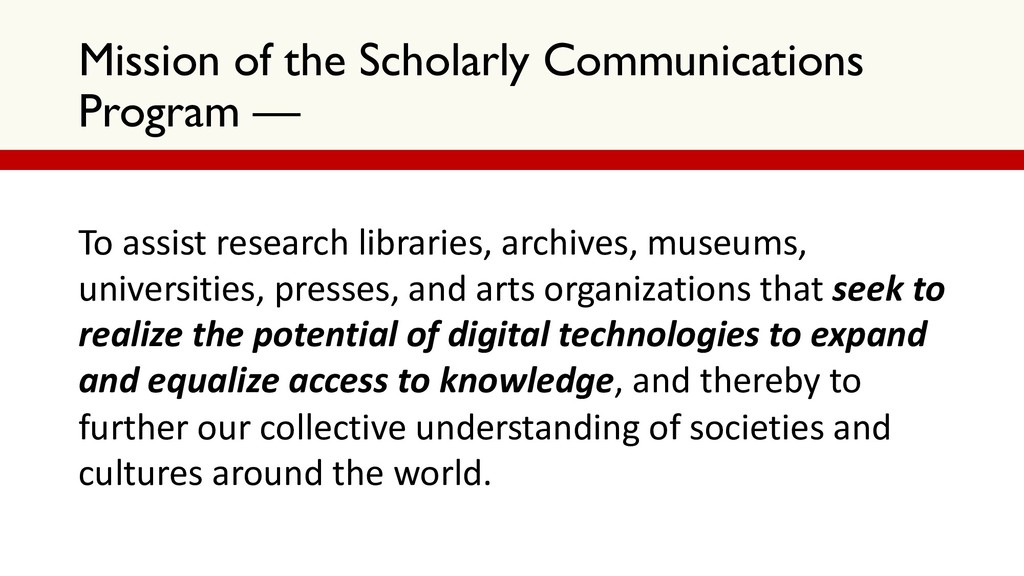
  8. Mission of the Scholarly Communications Program — To assist research

    libraries, archives, museums, universities, presses, and arts organizations that seek to realize the potential of digital technologies to expand and equalize access to knowledge, and thereby to further our collective understanding of societies and cultures around the world.
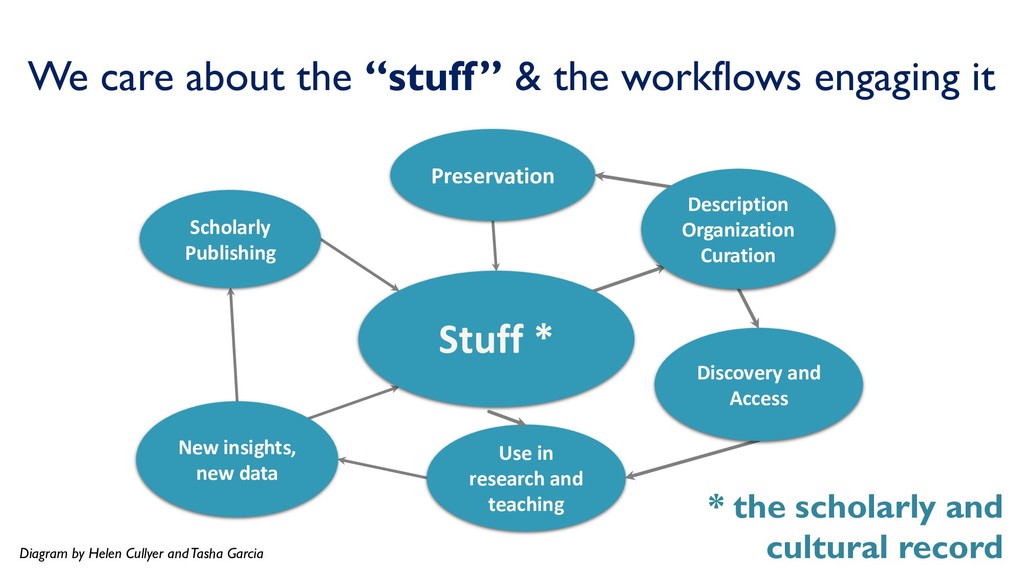
  9. We care about the “stuff” & the workflows engaging it

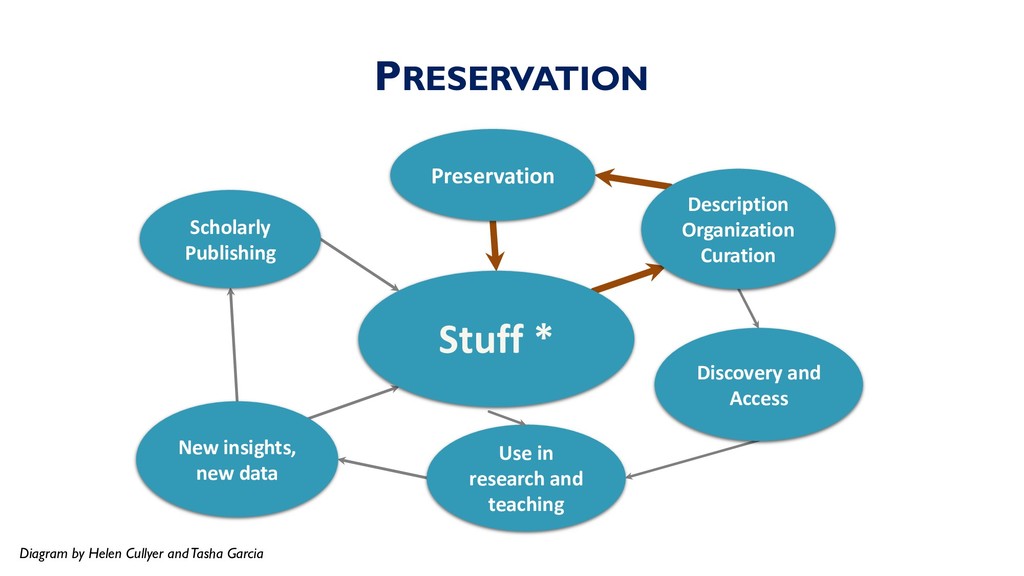
    Stuff * Description Organization Curation Discovery and Access Use in research and teaching New insights, new data Preservation Scholarly Publishing * the scholarly and cultural record Diagram by Helen Cullyer and Tasha Garcia
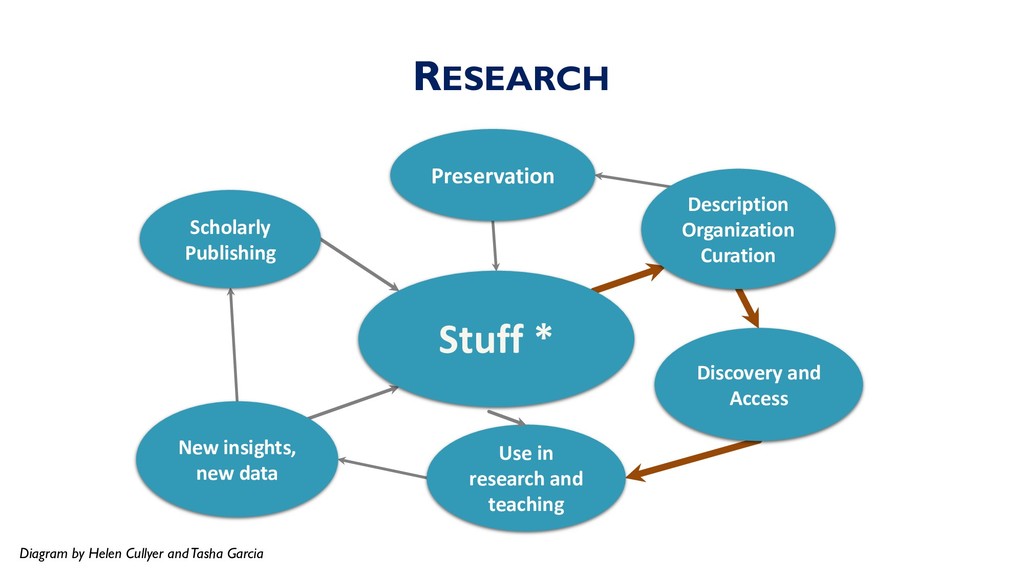
  10. RESEARCH Stuff * Description Organization Curation Discovery and Access Use

    in research and teaching New insights, new data Preservation Scholarly Publishing Diagram by Helen Cullyer and Tasha Garcia
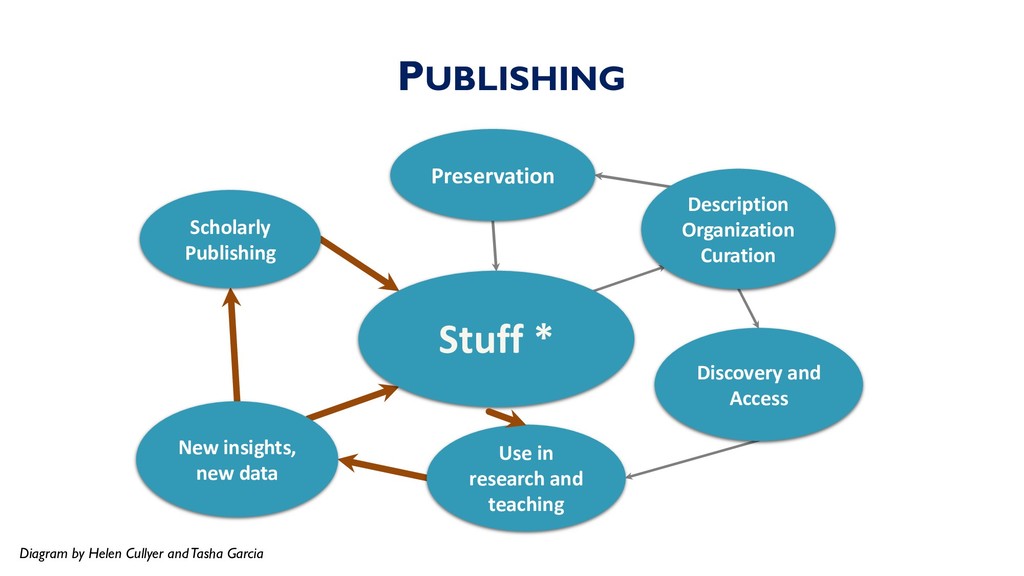
  11. PUBLISHING Stuff * Description Organization Curation Discovery and Access Use

    in research and teaching New insights, new data Preservation Scholarly Publishing Diagram by Helen Cullyer and Tasha Garcia
  12. PRESERVATION Stuff * Description Organization Curation Discovery and Access Use

    in research and teaching New insights, new data Preservation Scholarly Publishing Diagram by Helen Cullyer and Tasha Garcia
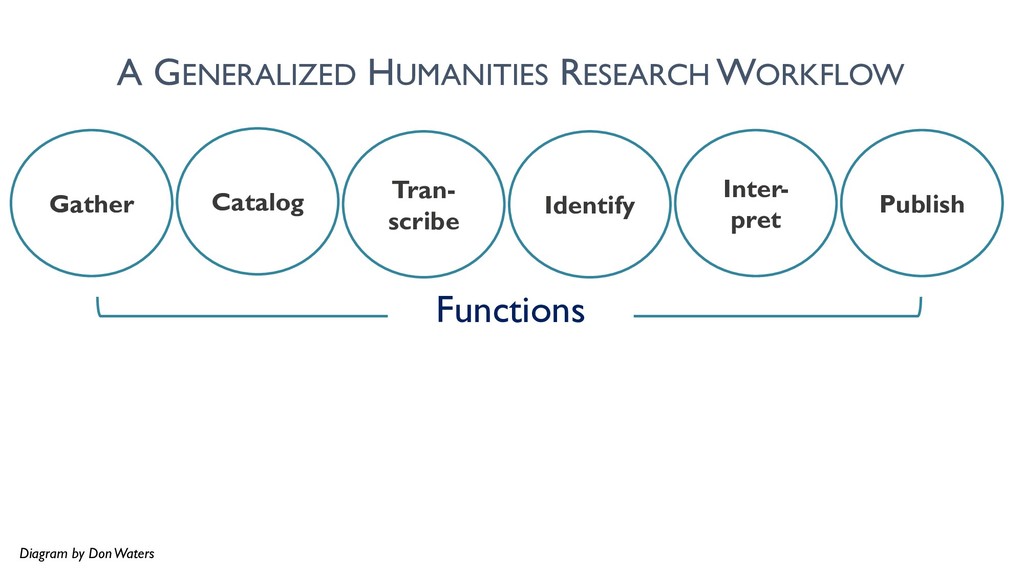
  13. A GENERALIZED HUMANITIES RESEARCH WORKFLOW Gather Catalog Inter- pret Identify

    Tran- scribe Functions Publish Diagram by Don Waters
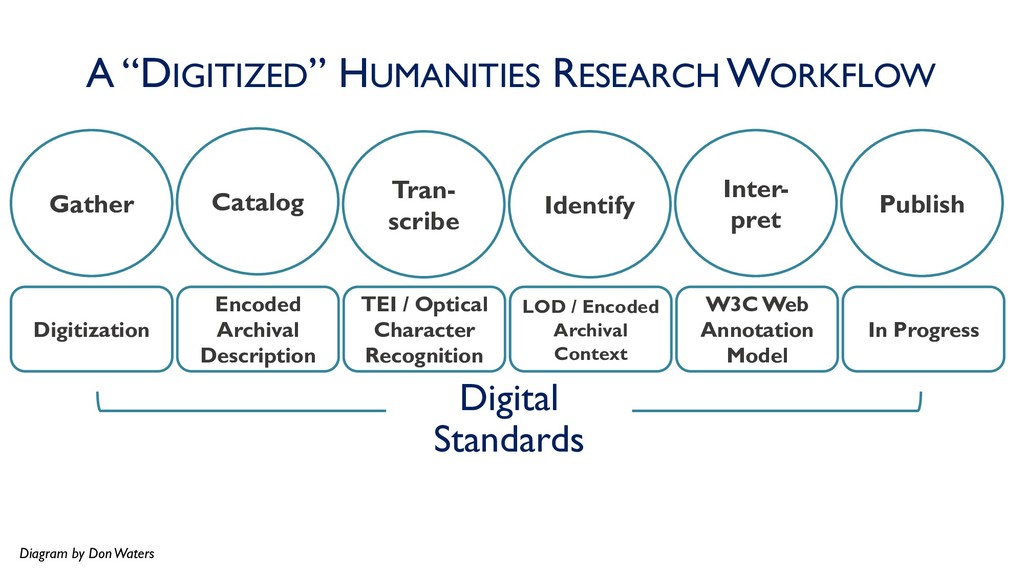
  14. A “DIGITIZED” HUMANITIES RESEARCH WORKFLOW Digitization Encoded Archival Description TEI

    / Optical Character Recognition W3C Web Annotation Model LOD / Encoded Archival Context Digital Standards Gather Catalog Inter- pret Identify Tran- scribe Publish In Progress Diagram by Don Waters
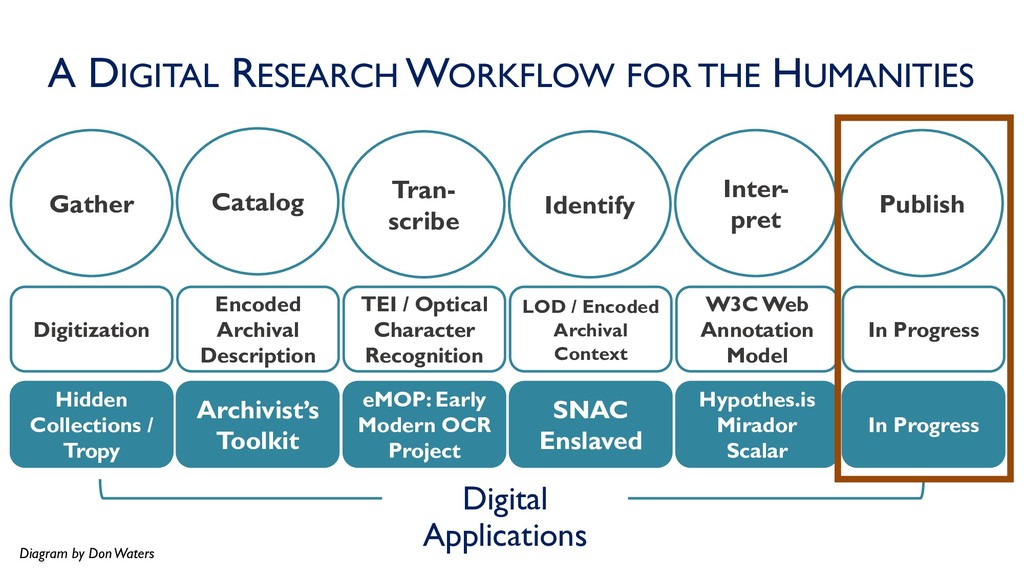
  15. A DIGITAL RESEARCH WORKFLOW FOR THE HUMANITIES Hidden Collections /

    Tropy Archivist’s Toolkit eMOP: Early Modern OCR Project Hypothes.is Mirador Scalar SNAC Enslaved Digital Applications Digitization Encoded Archival Description TEI / Optical Character Recognition W3C Web Annotation Model LOD / Encoded Archival Context Gather Catalog Inter- pret Identify Tran- scribe Publish In Progress In Progress Diagram by Don Waters
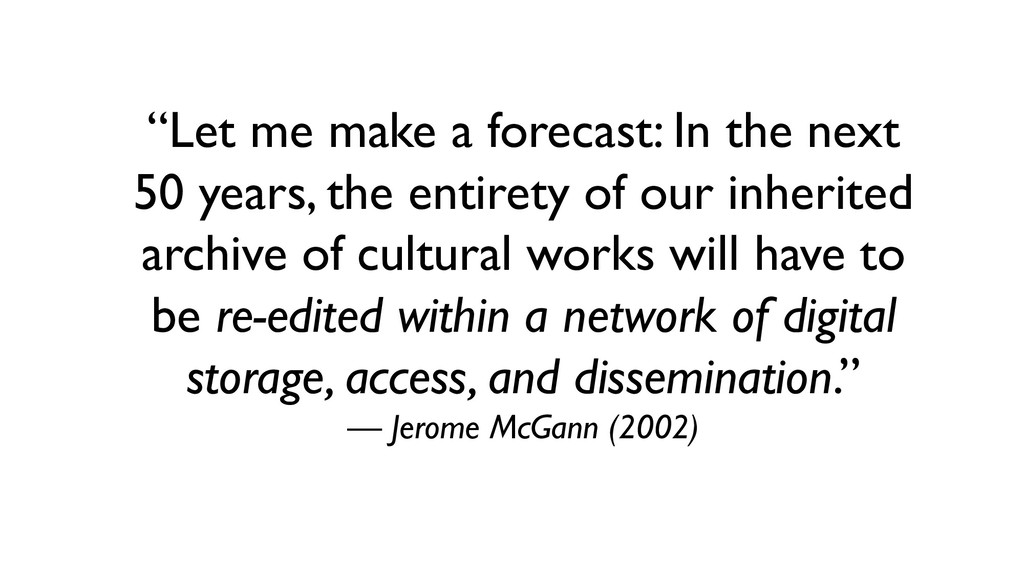
  16. “Let me make a forecast: In the next 50 years,

    the entirety of our inherited archive of cultural works will have to be re-edited within a network of digital storage, access, and dissemination.” — Jerome McGann (2002)
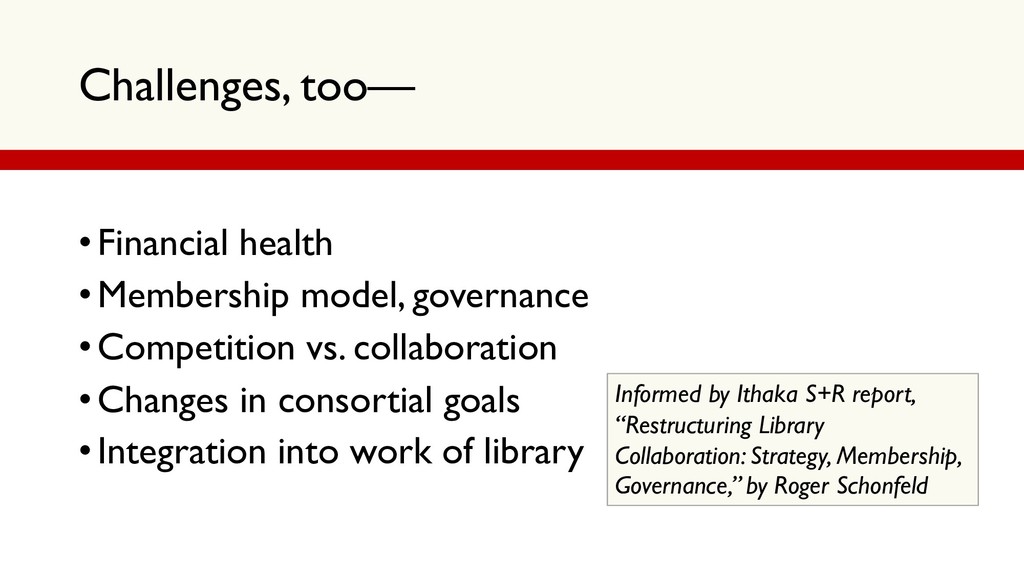
  17. Challenges, too— •Financial health •Membership model, governance •Competition vs. collaboration

    •Changes in consortial goals •Integration into work of library Informed by Ithaka S+R report, “Restructuring Library Collaboration: Strategy, Membership, Governance,” by Roger Schonfeld
  18. An Epigraph “Two basic systems: Development and Maintenance. The sourball

    of every revolution: after the revolution, who’s going to pick up the garbage on Monday morning?” “Manifesto for Maintenance Art 1969!” —Mierle Laderman Ukeles
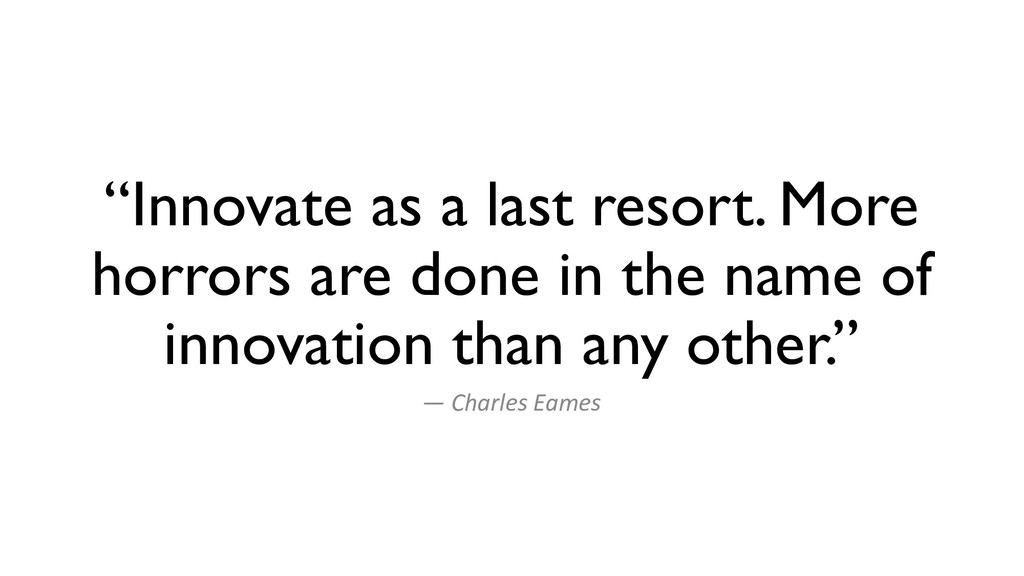
  19. “Innovate as a last resort. More horrors are done in

    the name of innovation than any other.” — Charles Eames
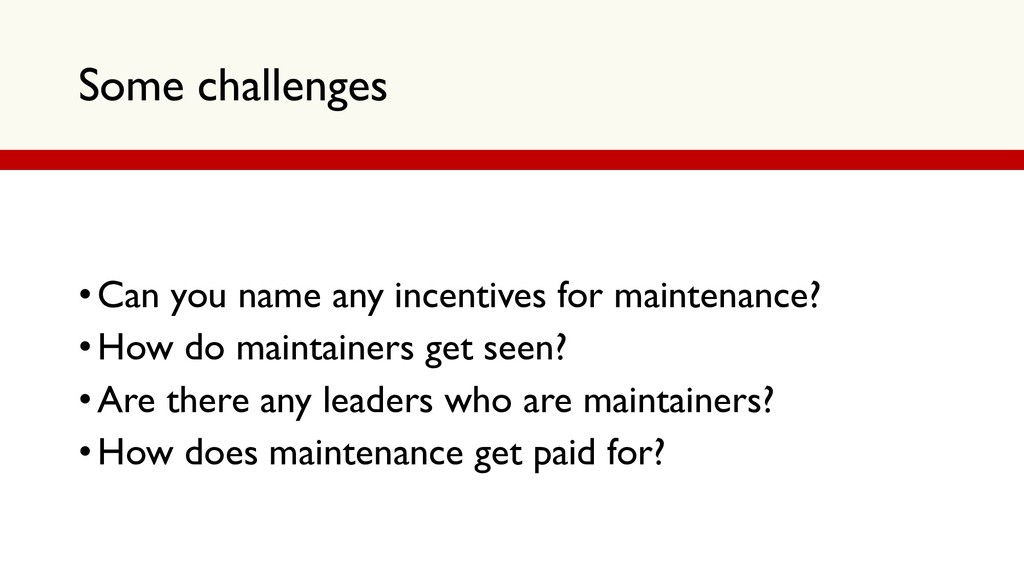
  20. Some challenges •Can you name any incentives for maintenance? •How

    do maintainers get seen? •Are there any leaders who are maintainers? •How does maintenance get paid for?
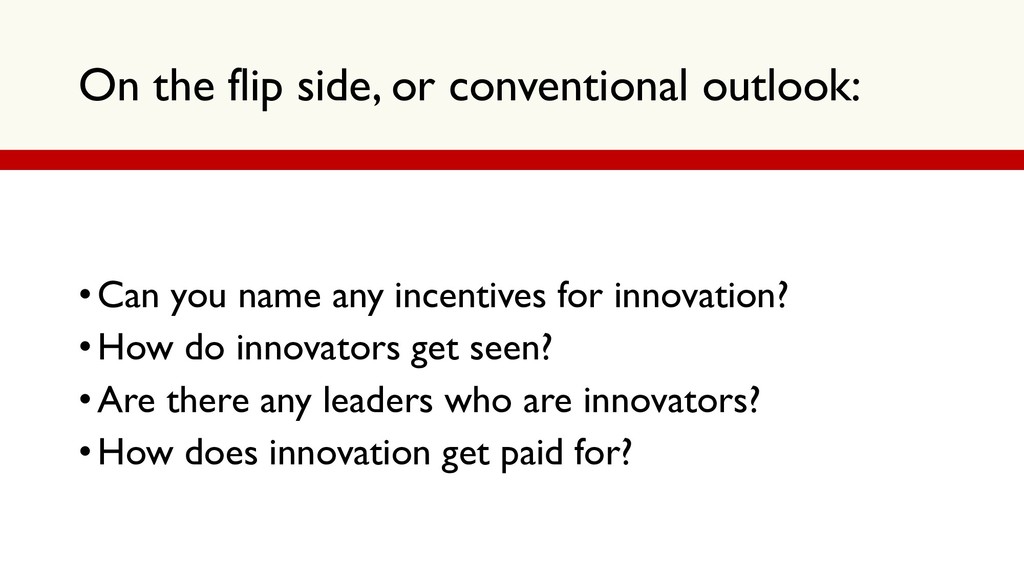
  21. On the flip side, or conventional outlook: •Can you name

    any incentives for innovation? •How do innovators get seen? •Are there any leaders who are innovators? •How does innovation get paid for?
  22. Additional considerations •Gaps in sociocultural understanding •Governance of maintenance •Policymakers

    for maintenance •Who’s teaching maintenance? How should it be taught?
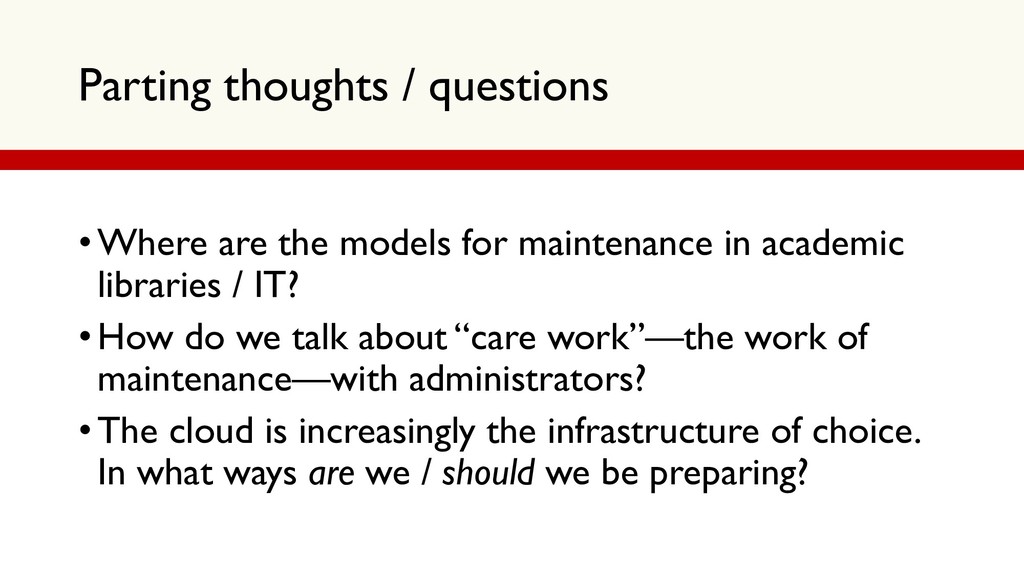
  23. Parting thoughts / questions •Where are the models for maintenance

    in academic libraries / IT? •How do we talk about “care work”—the work of maintenance—with administrators? •The cloud is increasingly the infrastructure of choice. In what ways are we / should we be preparing?