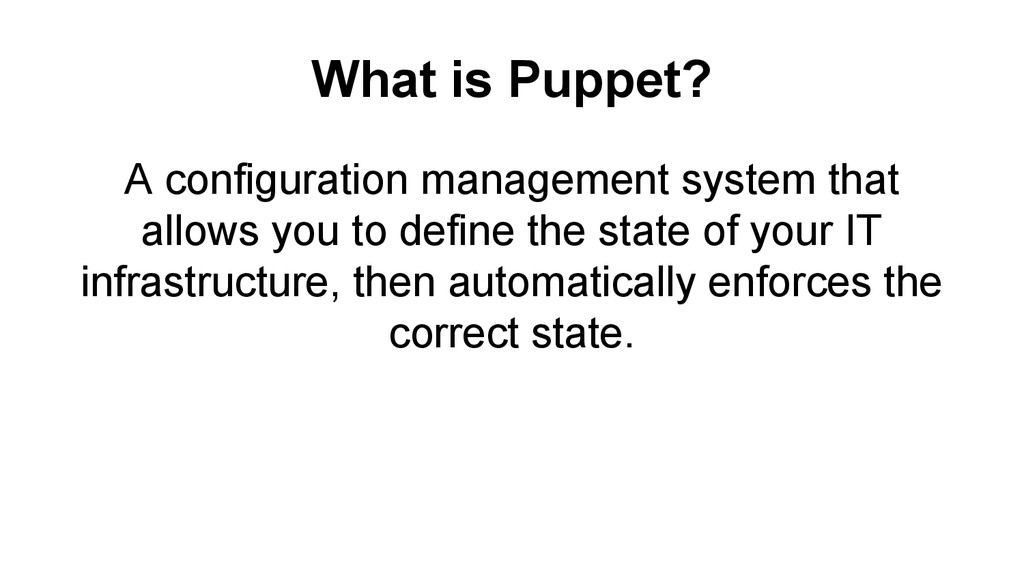
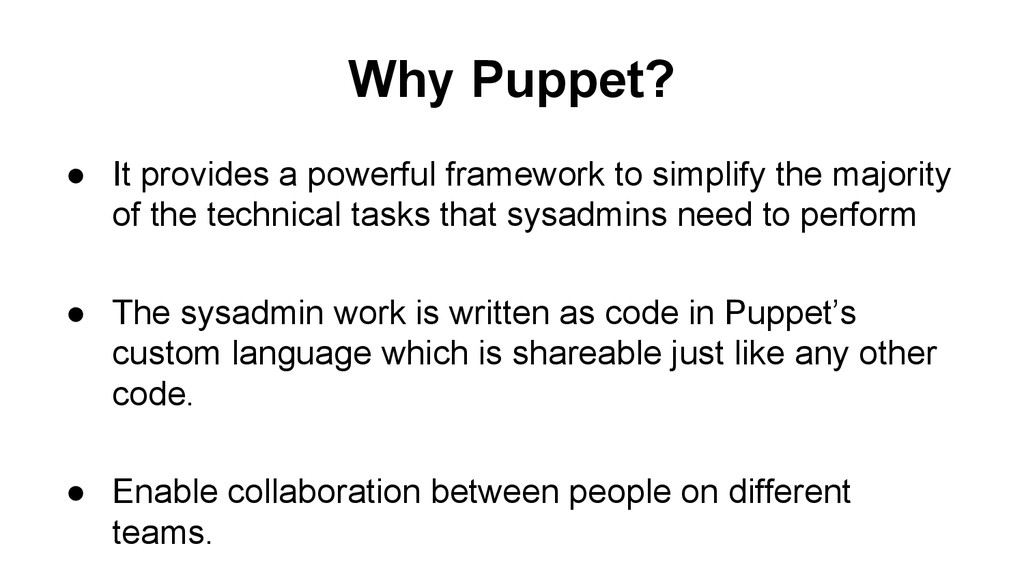
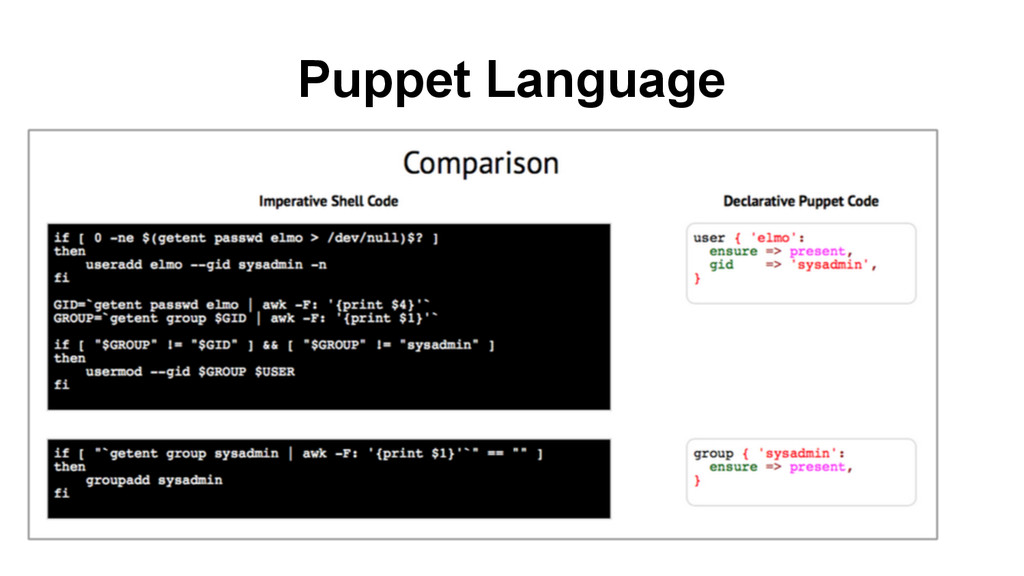
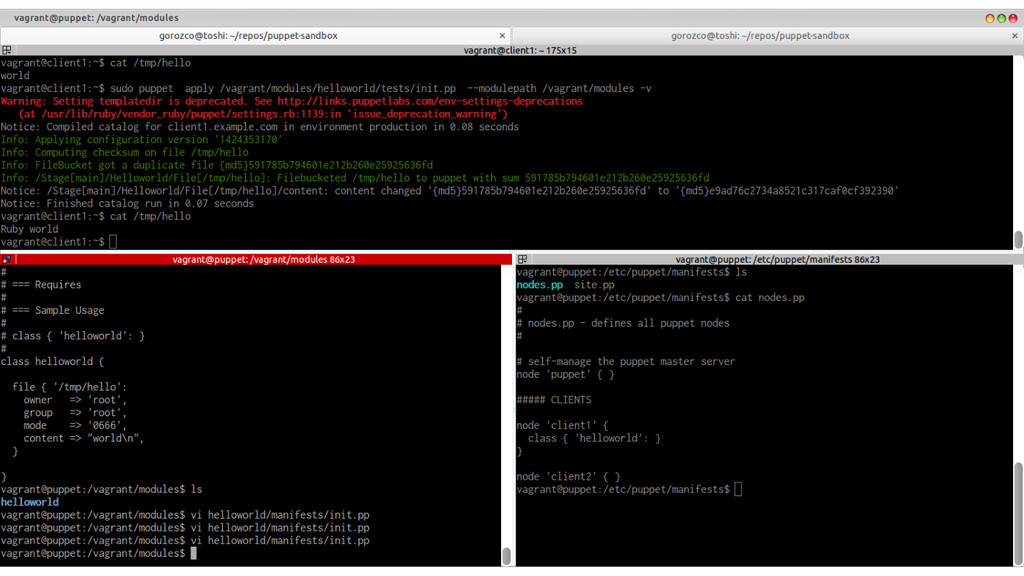
the majority of the technical tasks that sysadmins need to perform • The sysadmin work is written as code in Puppet’s custom language which is shareable just like any other code. • Enable collaboration between people on different teams.
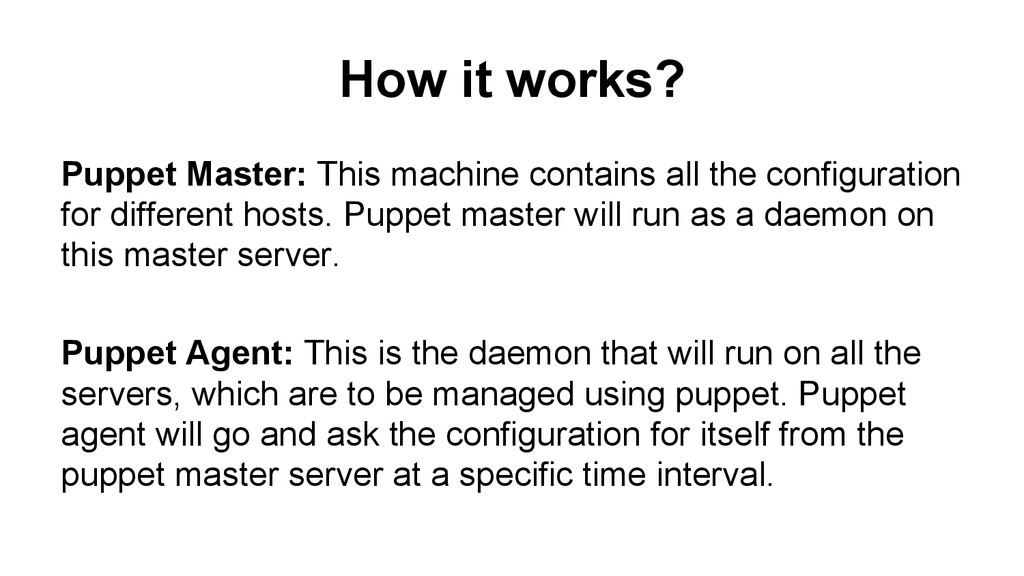
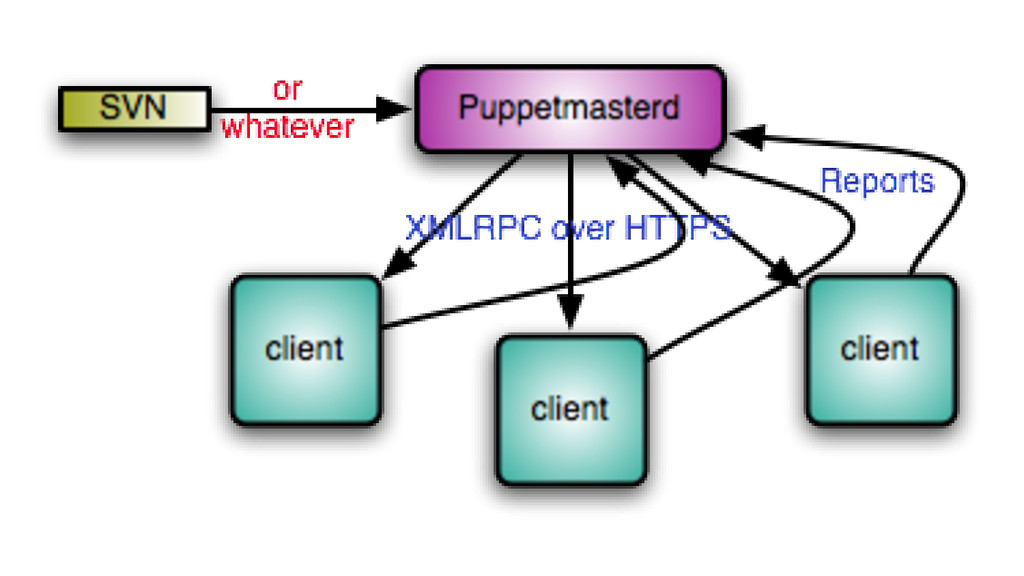
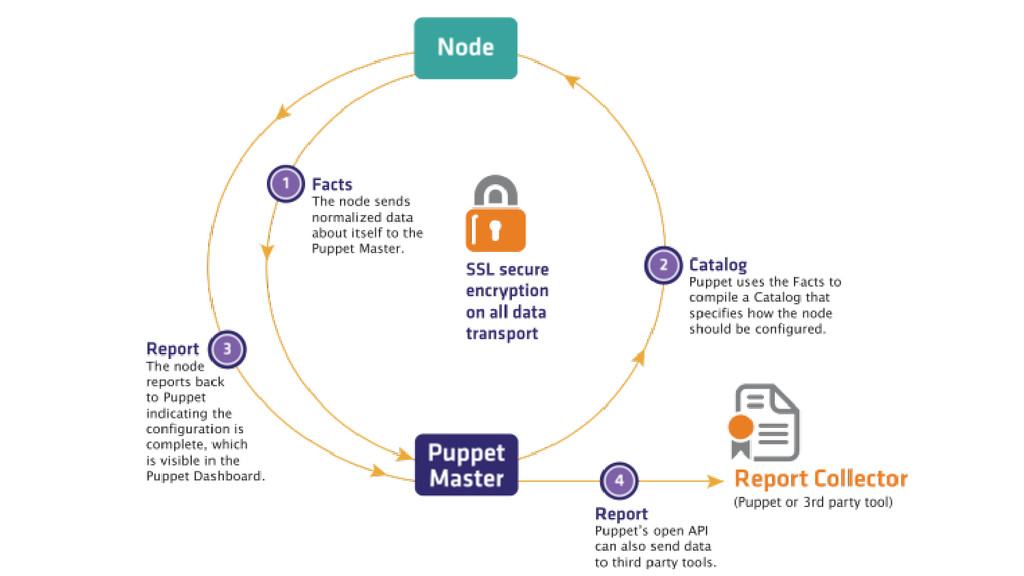
configuration for different hosts. Puppet master will run as a daemon on this master server. Puppet Agent: This is the daemon that will run on all the servers, which are to be managed using puppet. Puppet agent will go and ask the configuration for itself from the puppet master server at a specific time interval.
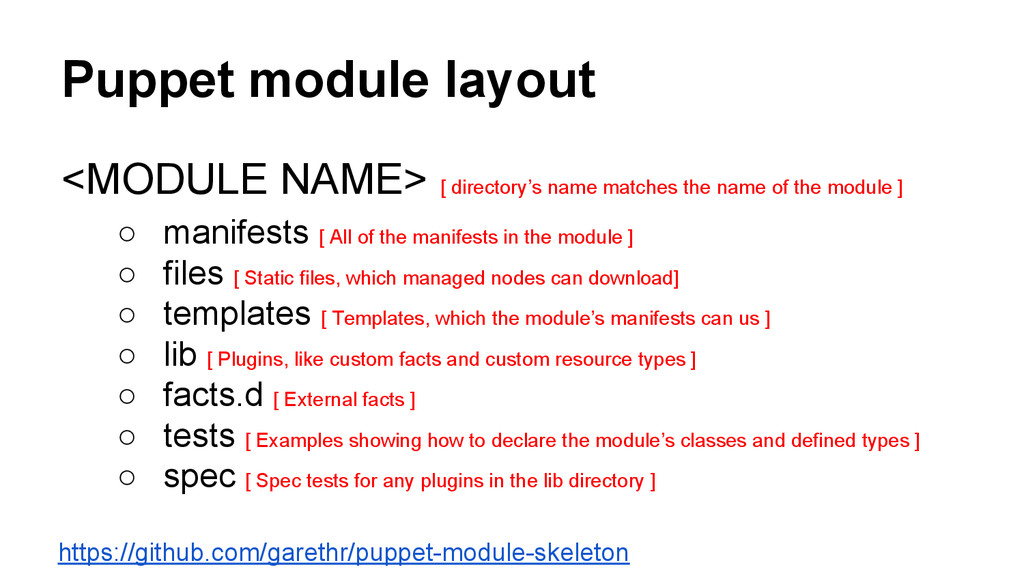
name of the module ] ◦ manifests [ All of the manifests in the module ] ◦ files [ Static files, which managed nodes can download] ◦ templates [ Templates, which the module’s manifests can us ] ◦ lib [ Plugins, like custom facts and custom resource types ] ◦ facts.d [ External facts ] ◦ tests [ Examples showing how to declare the module’s classes and defined types ] ◦ spec [ Spec tests for any plugins in the lib directory ] https://github.com/garethr/puppet-module-skeleton


 4o1sobblue
 ezaki
ezaki
 kakehashi
 takanorip
 persolserverworks
 carta_engineering
 koukihosaka
 pfn
pfn
 codmoninc
 iktakahiro
 kentapapa
 akhino
 skipperchong
 tonyrice
 greggifford
 davidcarrasco
 nikkihalliwell
 3n
3n
 axbom
axbom
 hatefulcrawdad
 erikaheidi
 apolaine
 sferik
 jcasabona