Upgrade to Pro
— share decks privately, control downloads, hide ads and more …
Speaker Deck
Sign up for free
Menu
Search
Features
All features
Private URLs
Password Protection
Custom URLS
Scheduled publishing
Remove Branding
Restrict embedding
Deck Collections
Notes
Features
All features
Private URLs
Password Protection
Custom URLS
Scheduled publishing
Remove Branding
Restrict embedding
Deck Collections
Notes
Explore
Featured decks
Featured speakers
Programming
Technology
Storyboards
Explore
Featured decks
Featured speakers
Programming
Technology
Storyboards
Pricing
Search
Sign in
Sign up for free
All Aboard the Natural Language Processing Train
Search
pwlporto
February 22, 2018
30
0
Share
Embed
Copy iframe code
Copy JS code
Copy link
Start on current slide
All Aboard the Natural Language Processing Train
pwlporto
February 22, 2018
More Decks by pwlporto
See All by pwlporto
PWL #01 :: Hello Porto!
pwlporto
0
17
Harmful GOTO's, Premature Optimizations and Programming Myths are the Root of all Evil
pwlporto
0
47
Featured
See All Featured
A Guide to Academic Writing Using Generative AI - A Workshop
ks91
PRO
1
520
The Myth of the Modular Monolith - Day 2 Keynote - Rails World 2024
eileencodes
28
3.7k
RailsConf & Balkan Ruby 2019: The Past, Present, and Future of Rails at GitHub
eileencodes
141
35k
Stop Working from a Prison Cell
hatefulcrawdad
274
21k
Mind Mapping
helmedeiros
1
400
The Impact of AI in SEO - AI Overviews June 2024 Edition
aleyda
6
1.2k
Lightning Talk: Beautiful Slides for Beginners
inesmontani
PRO
2
730
The AI Revolution Will Not Be Monopolized: How open-source beats economies of scale, even for LLMs
inesmontani
PRO
3
3.8k
Imperfection Machines: The Place of Print at Facebook
scottboms
270
14k
Become a Pro
speakerdeck
PRO
31
6.3k
A designer walks into a library…
pauljervisheath
211
25k
Collaborative Software Design: How to facilitate domain modelling decisions
baasie
1
340
Transcript
All Aboard the Natural Language Processing Train José Marcelino
José Marcelino Data Scientist @Farfetch github.com/josemarcelino linkedin.com/in/josemarcelino1
What’s the deal with Natural Language Processing?
Can you hear me? Yes! I’m here!
Can you hear me? Yes! I’m here!
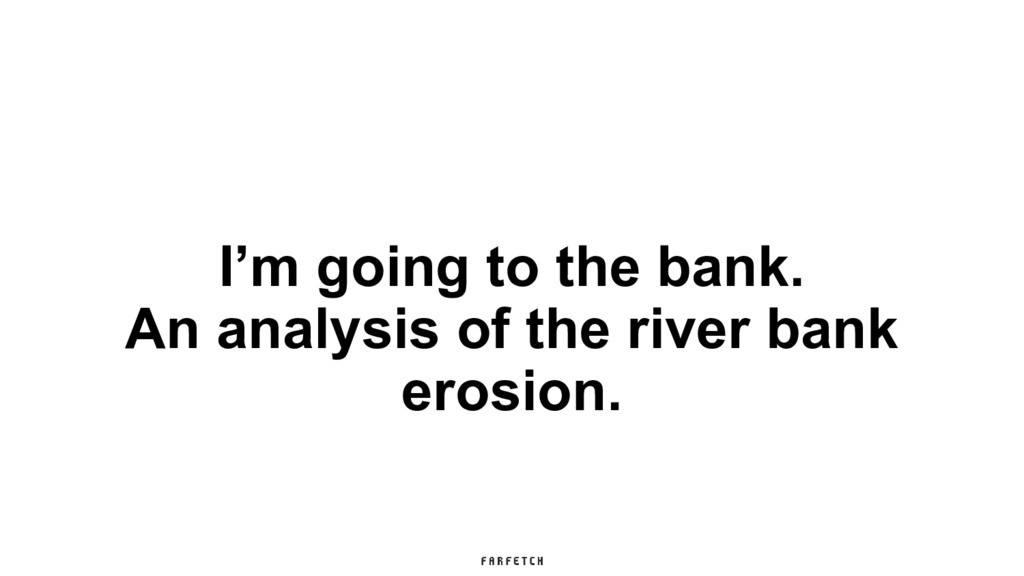
I’m going to the bank. An analysis of the river
bank erosion.
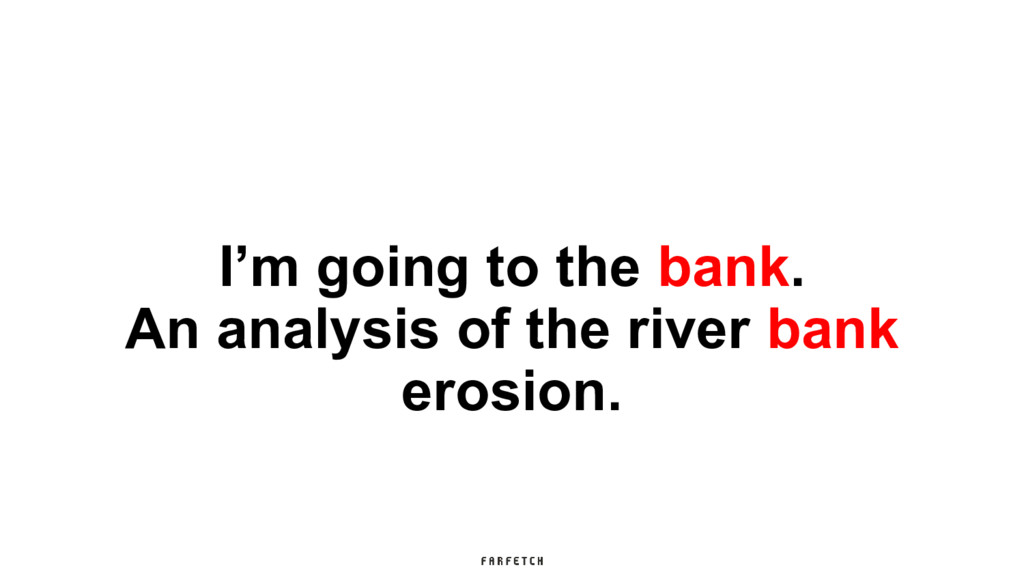
I’m going to the bank. An analysis of the river
bank erosion.
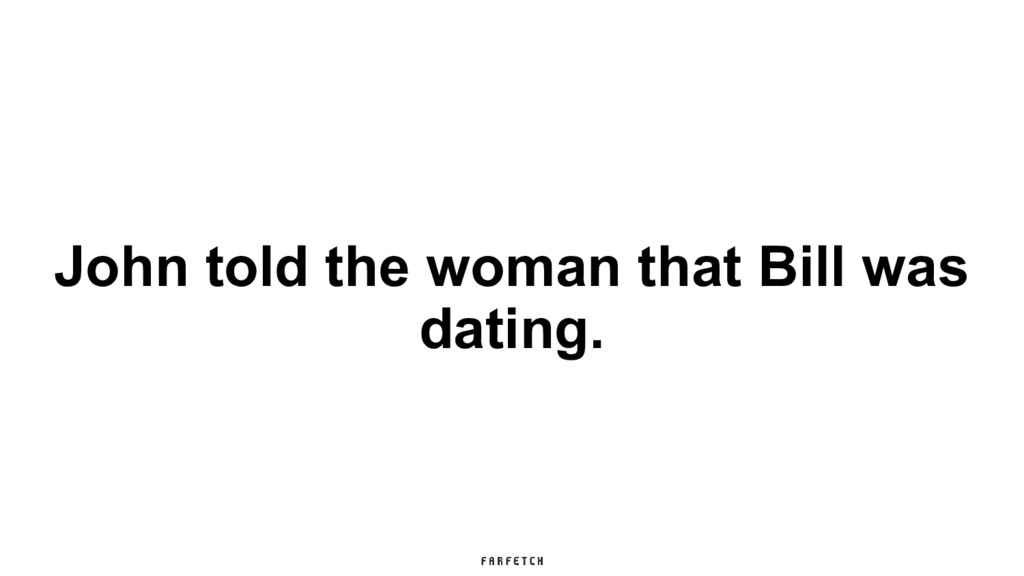
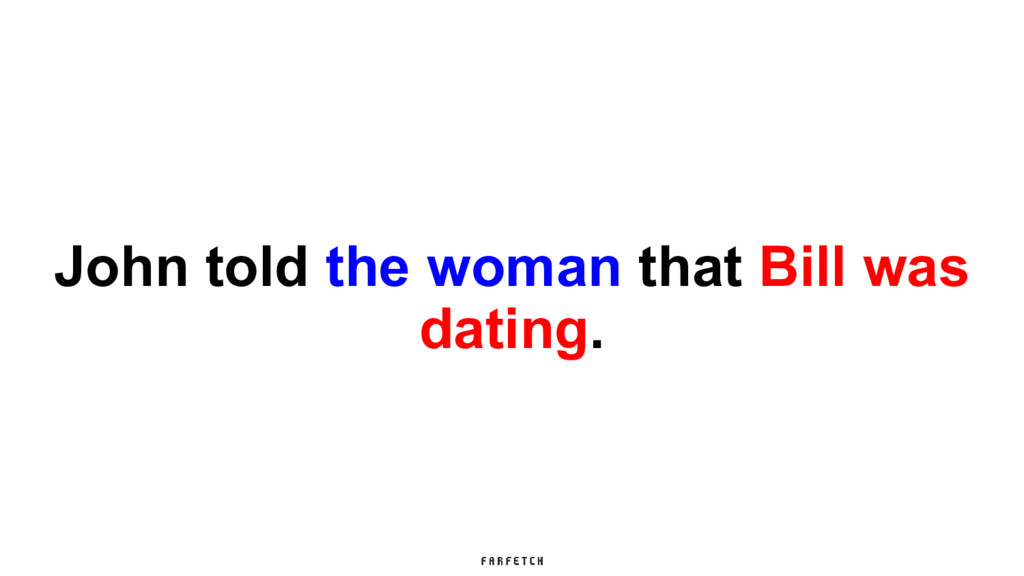
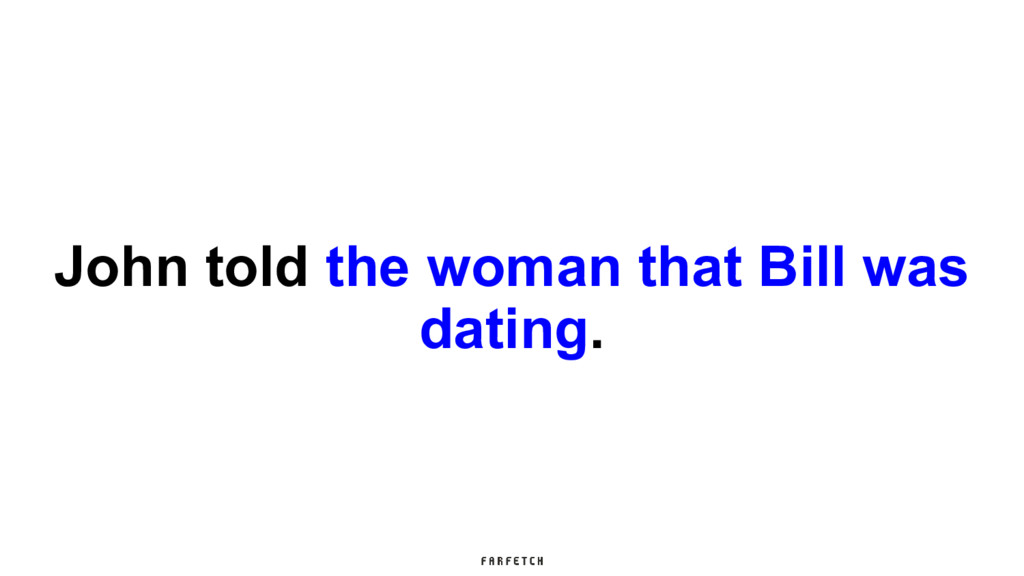
John told the woman that Bill was dating.
John told the woman that Bill was dating.
John told the woman that Bill was dating.
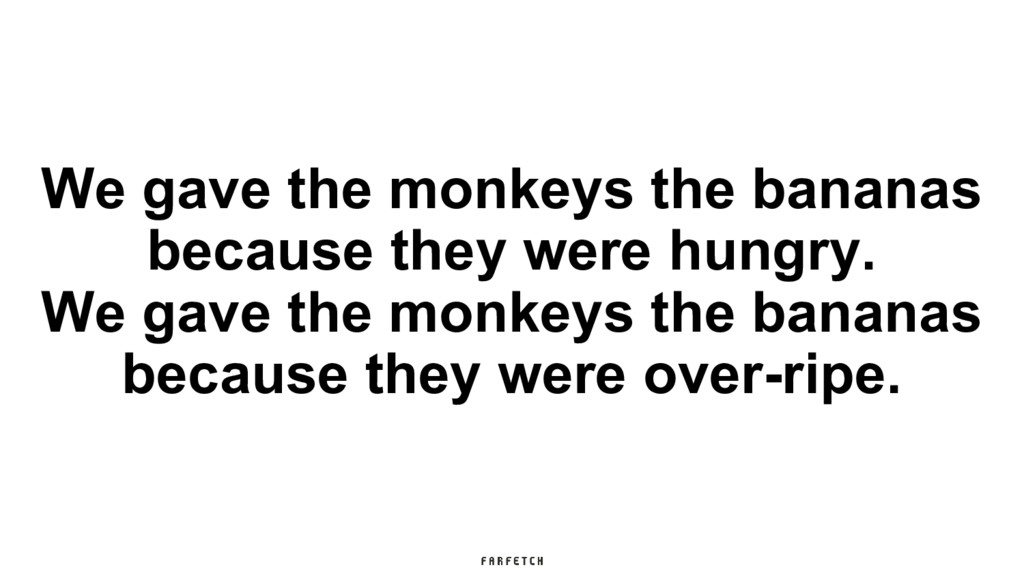
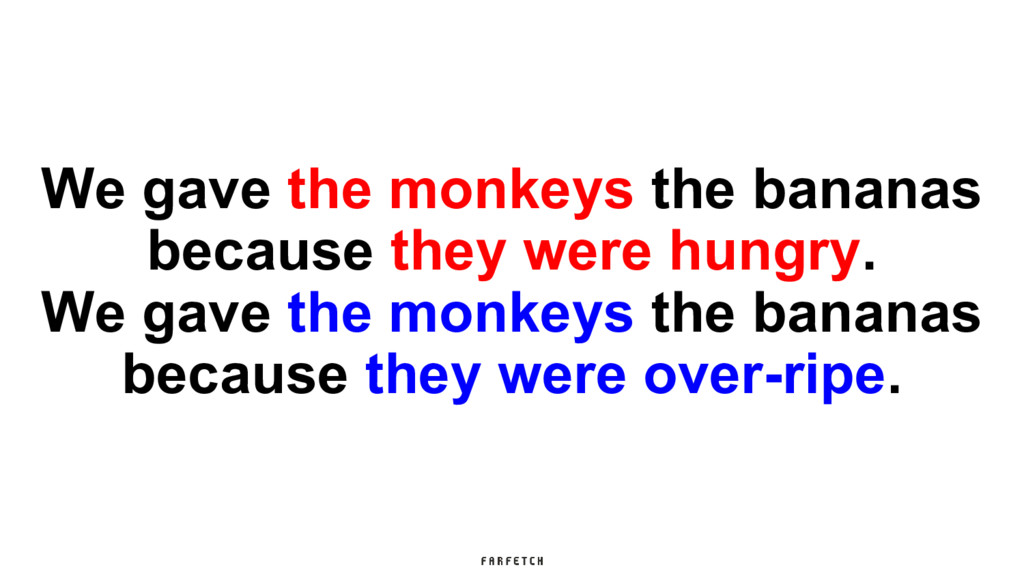
We gave the monkeys the bananas because they were hungry.
We gave the monkeys the bananas because they were over-ripe.
We gave the monkeys the bananas because they were hungry.
We gave the monkeys the bananas because they were over-ripe.
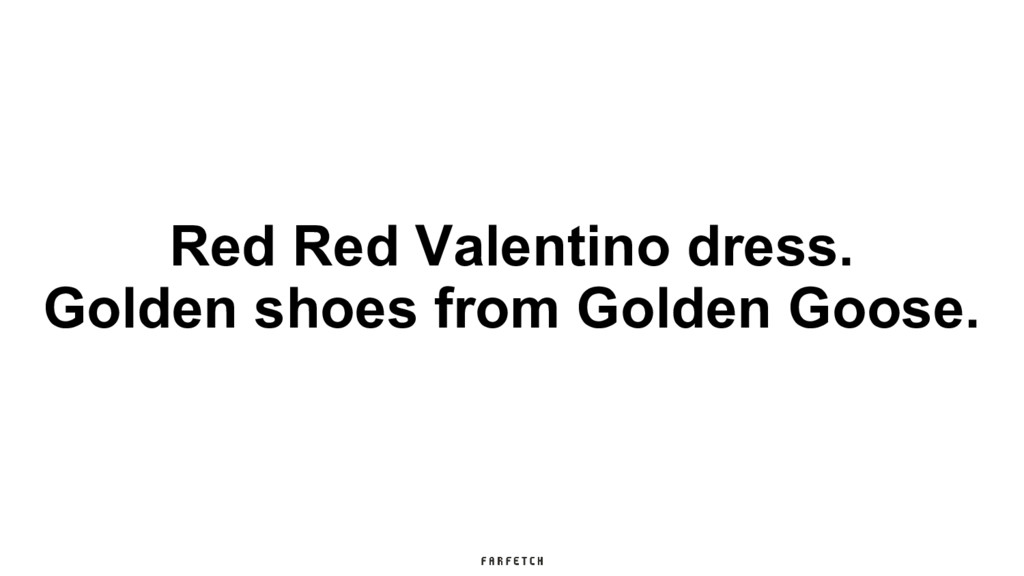
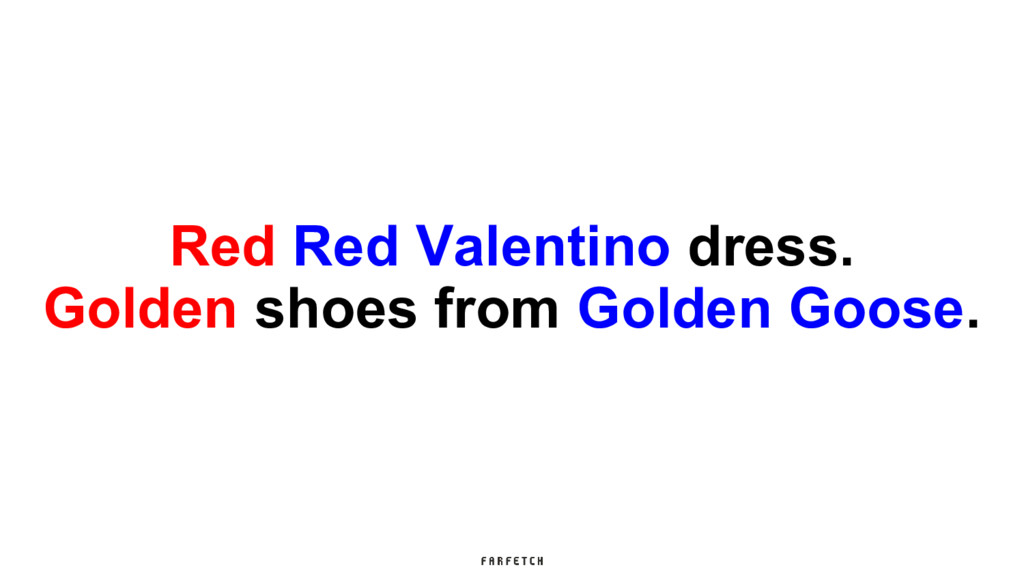
Red Red Valentino dress. Golden shoes from Golden Goose.
Red Red Valentino dress. Golden shoes from Golden Goose.
Au revoir! Goodbye!
Text-Normalization
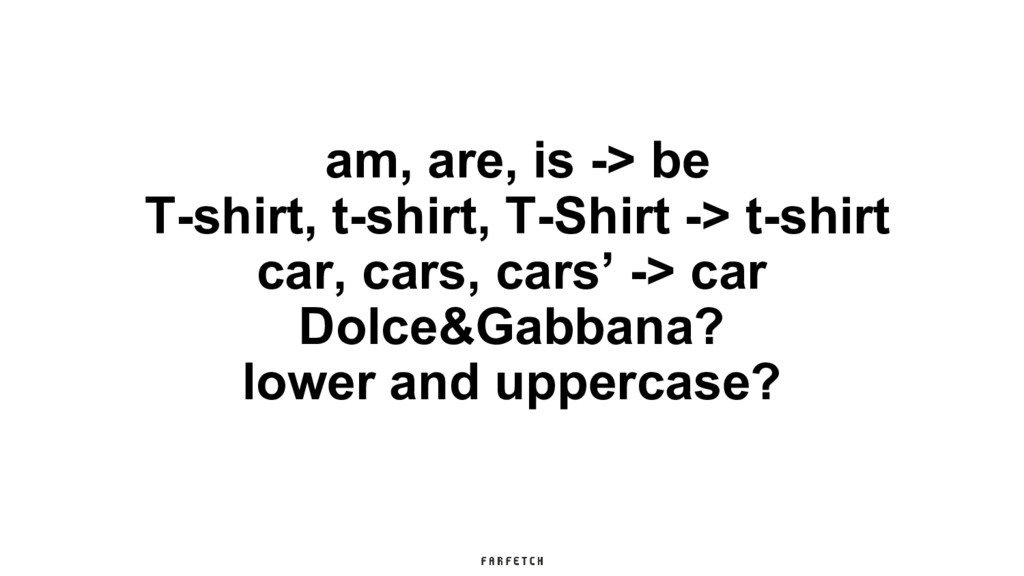
am, are, is -> be T-shirt, t-shirt, T-Shirt -> t-shirt
car, cars, cars’ -> car Dolce&Gabbana? lower and uppercase?
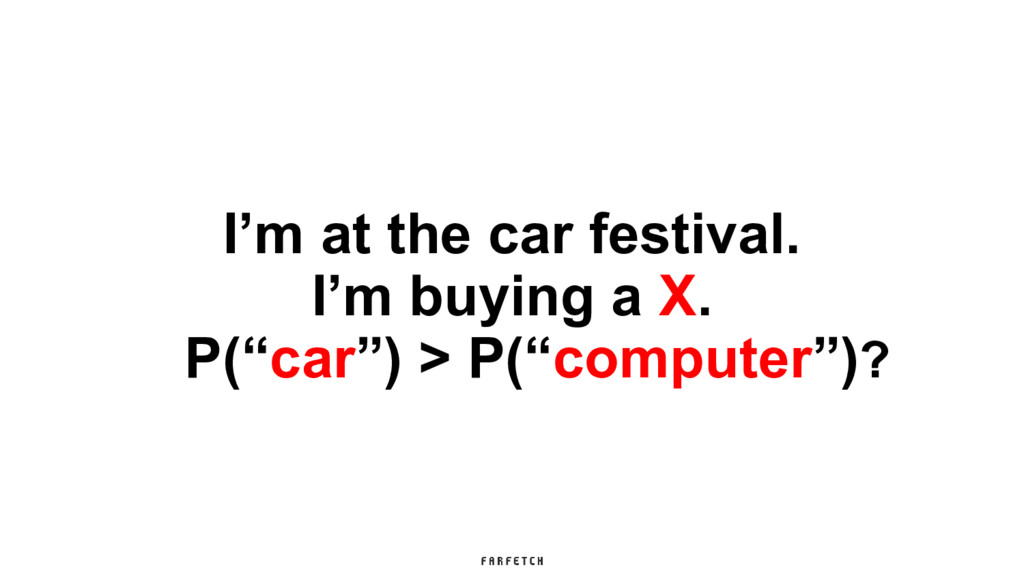
I’m at the car festival. I’m buying a X.
I’m at the car festival. I’m buying a X. car
computer
I’m at the car festival. I’m buying a X. P(“car”)
> P(“computer”)?
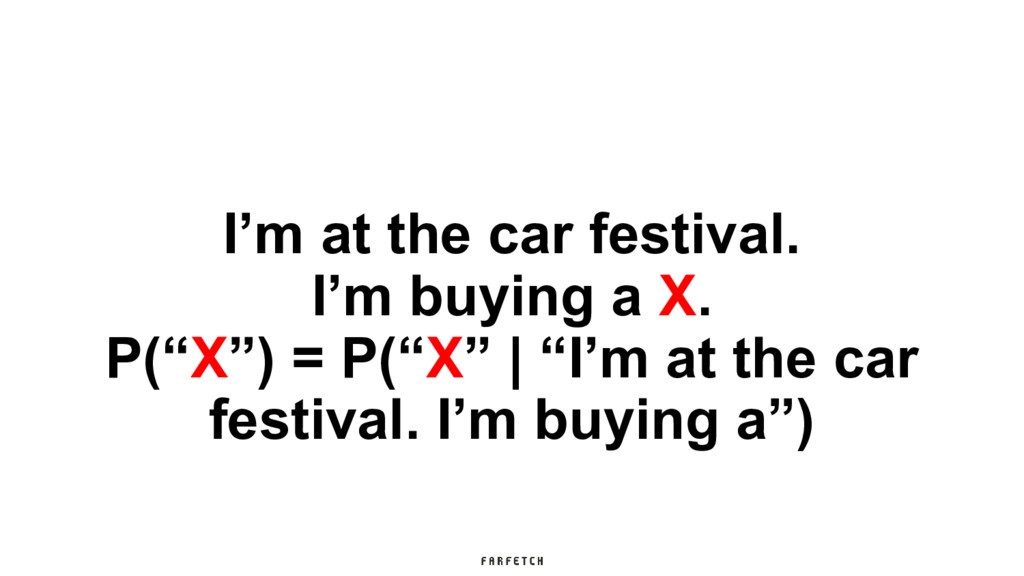
I’m at the car festival. I’m buying a X. P(“X”)
= P(“X” | “I’m at the car festival. I’m buying a”)
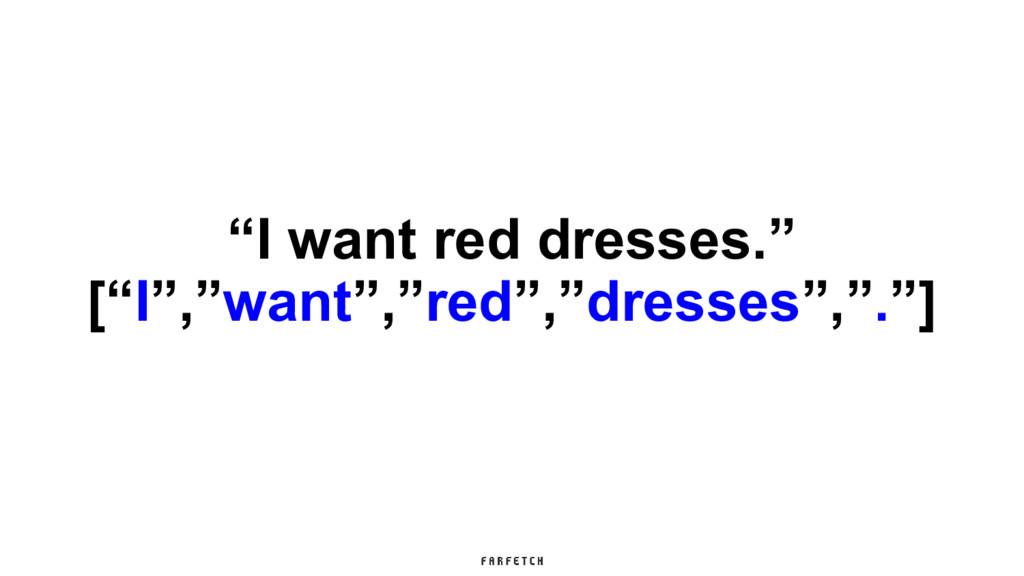
“I want red dresses.”
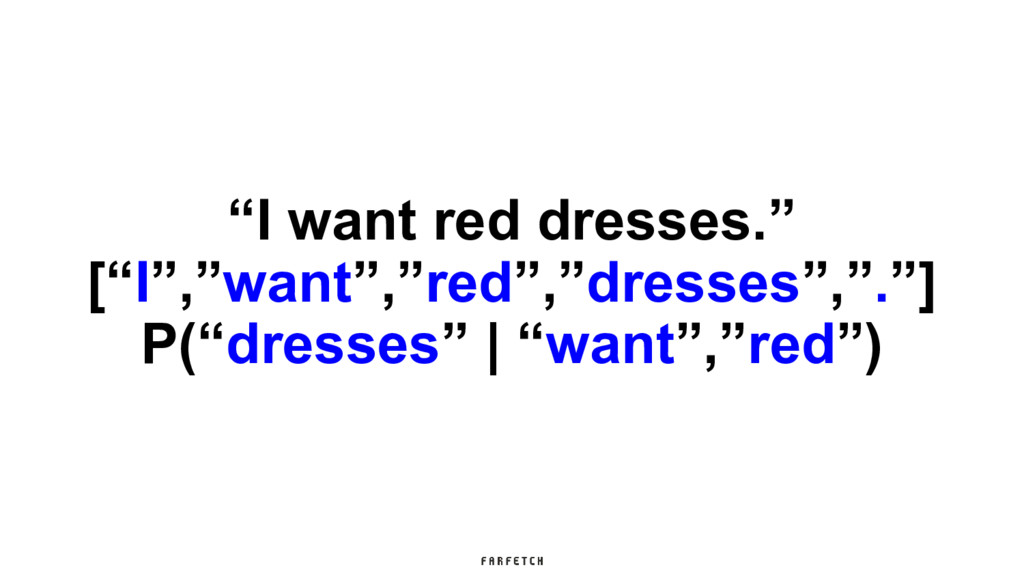
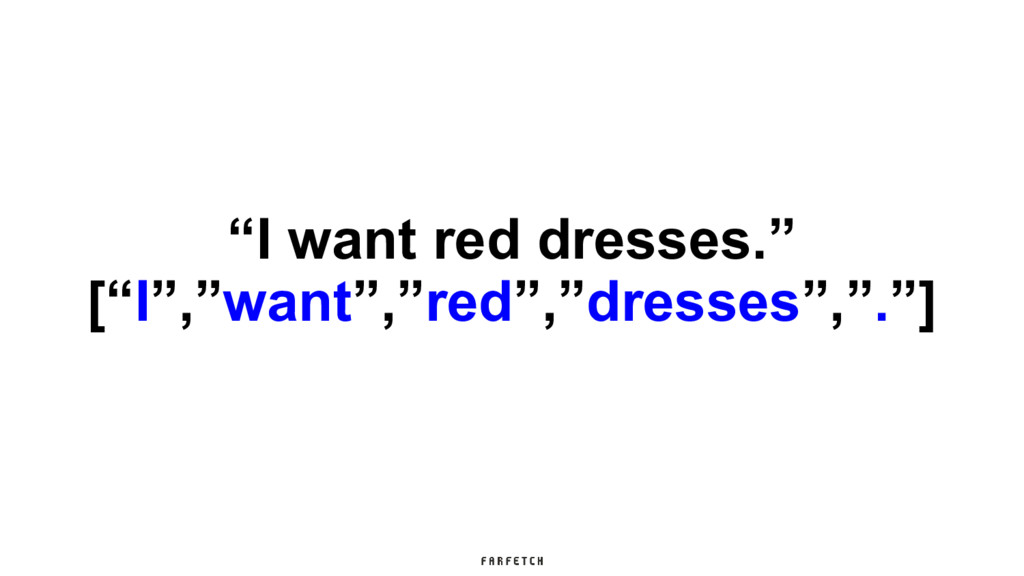
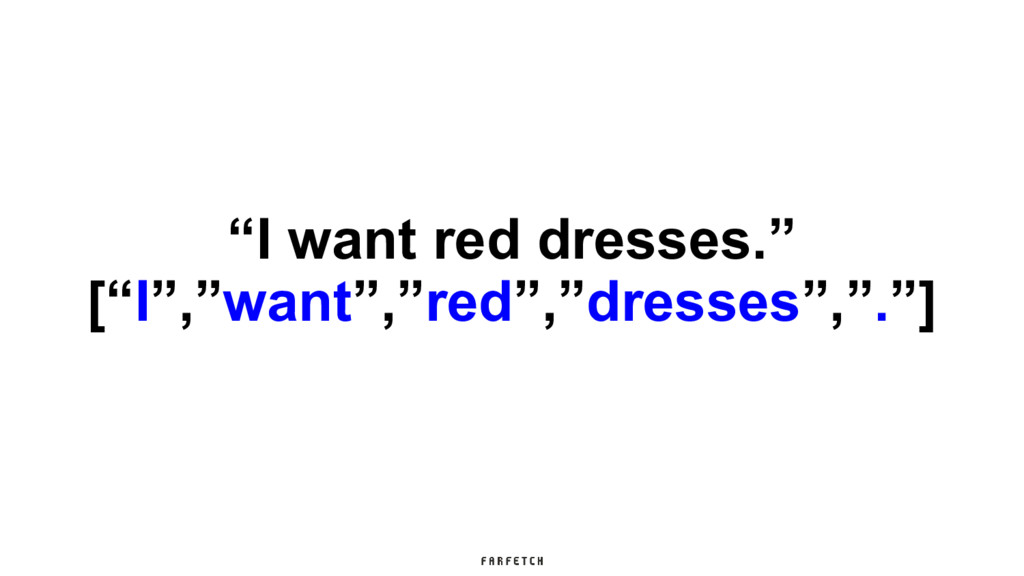
“I want red dresses.” [“I”,”want”,”red”,”dresses”,”.”]
“I want red dresses.” [“I”,”want”,”red”,”dresses”,”.”] P(“dresses” | “want”,”red”)
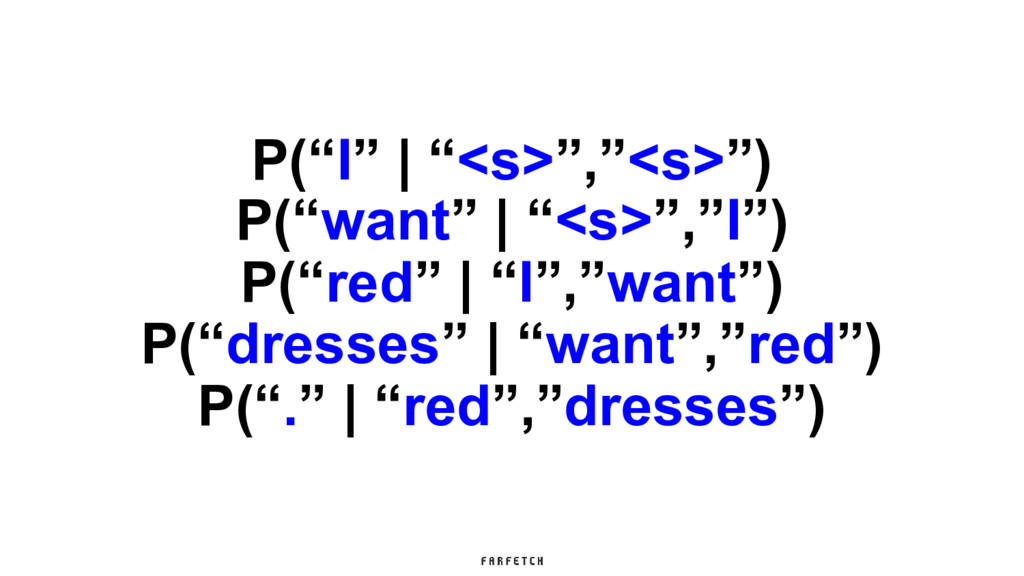
P(“I” | “<s>”,”<s>”) P(“want” | “<s>”,”I”) P(“red” | “I”,”want”) P(“dresses”
| “want”,”red”) P(“.” | “red”,”dresses”)
Language Modeling
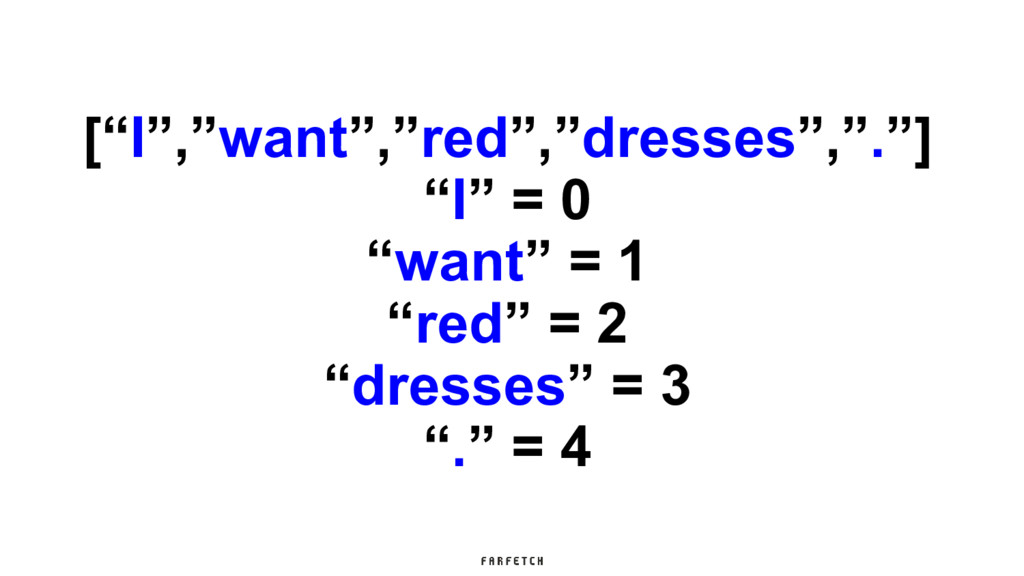
[“I”,”want”,”red”,”dresses”,”.”] “I” = 0 “want” = 1 “red” = 2
“dresses” = 3 “.” = 4
Words that appear in the same contexts share semantic meaning
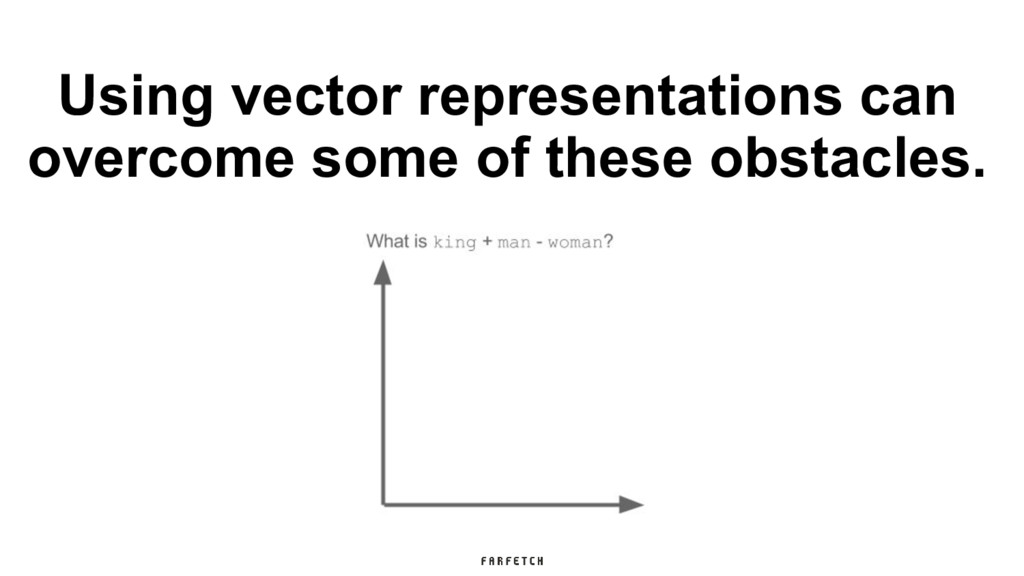
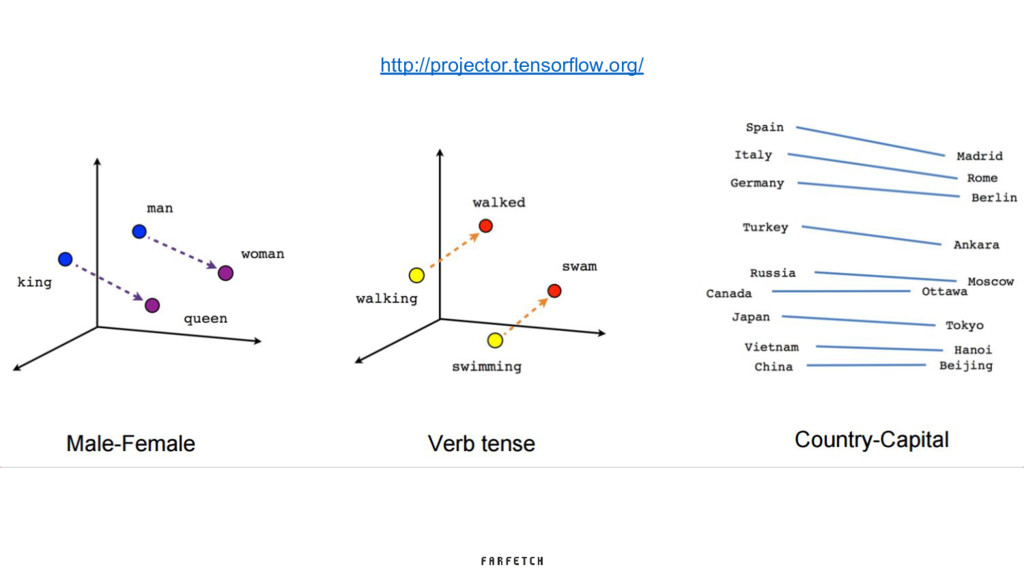
Using vector representations can overcome some of these obstacles.
http://projector.tensorflow.org/
“I want red dresses.” [“I”,”want”,”red”,”dresses”,”.”]
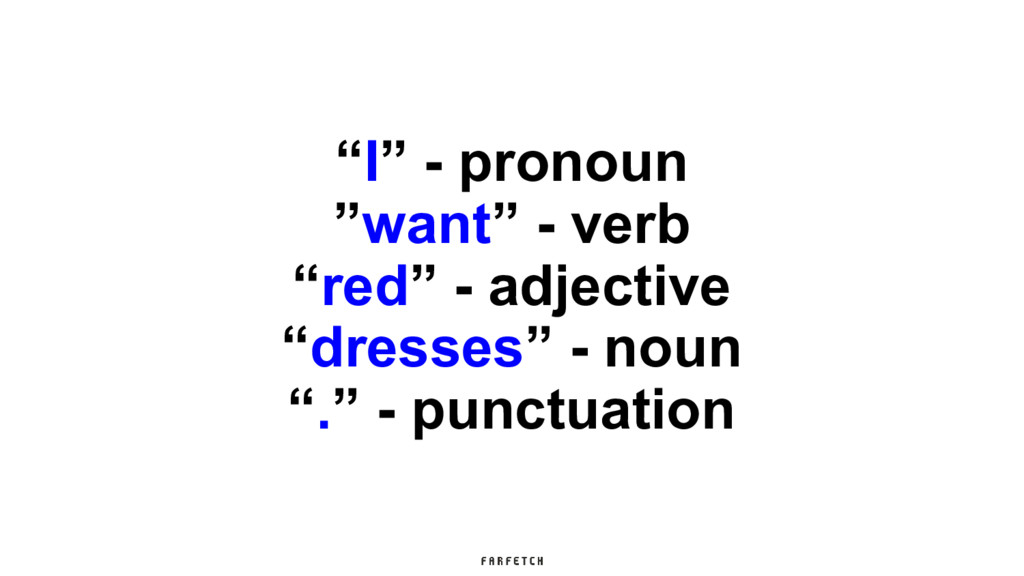
Part-of-Speech Tagging
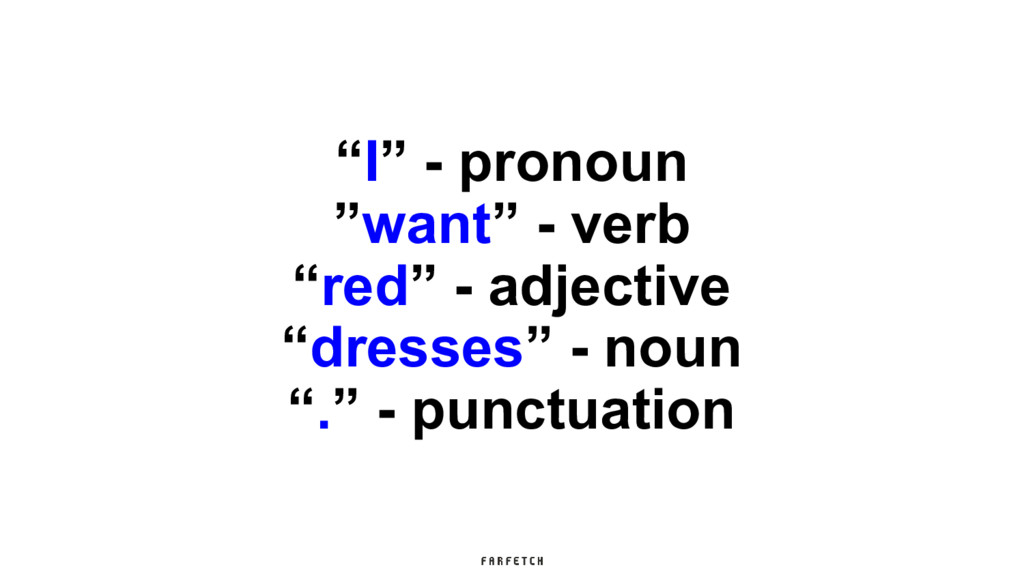
“I” - pronoun ”want” - verb “red” - adjective “dresses”
- noun “.” - punctuation
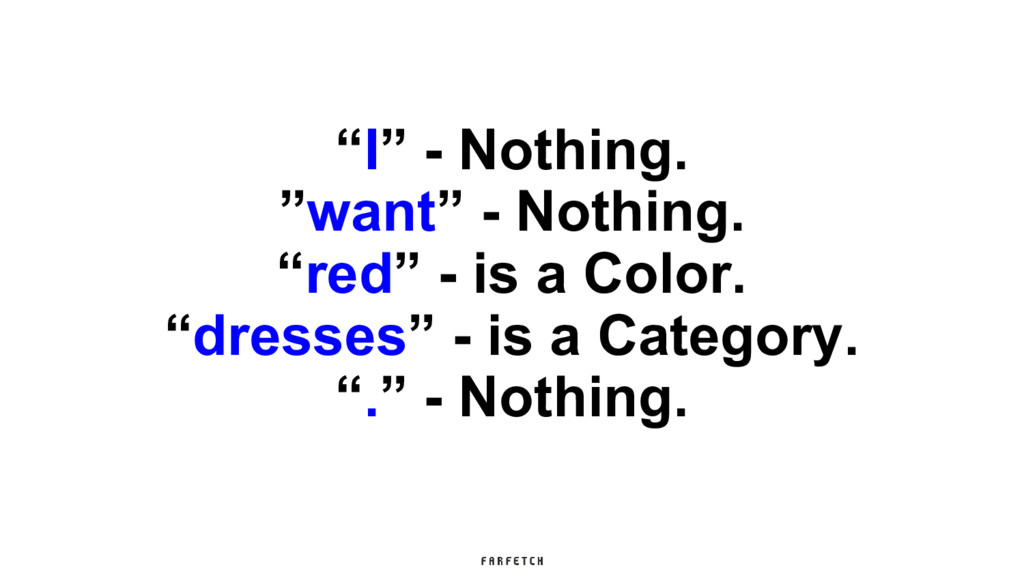
Named Entity Recognition
“I” - Nothing. ”want” - Nothing. “red” - is a
Color. “dresses” - is a Category. “.” - Nothing.
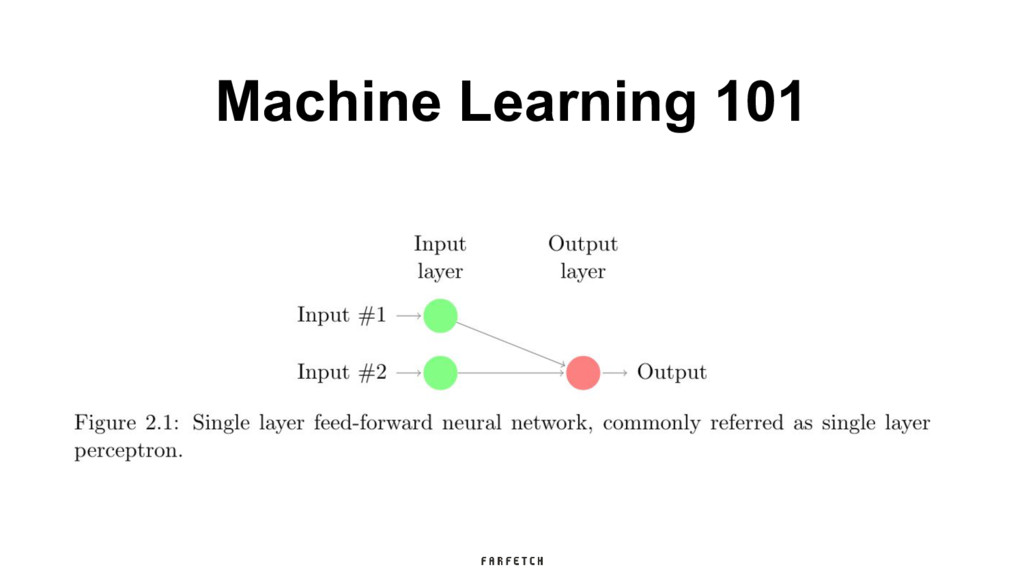
Machine Learning 101
None
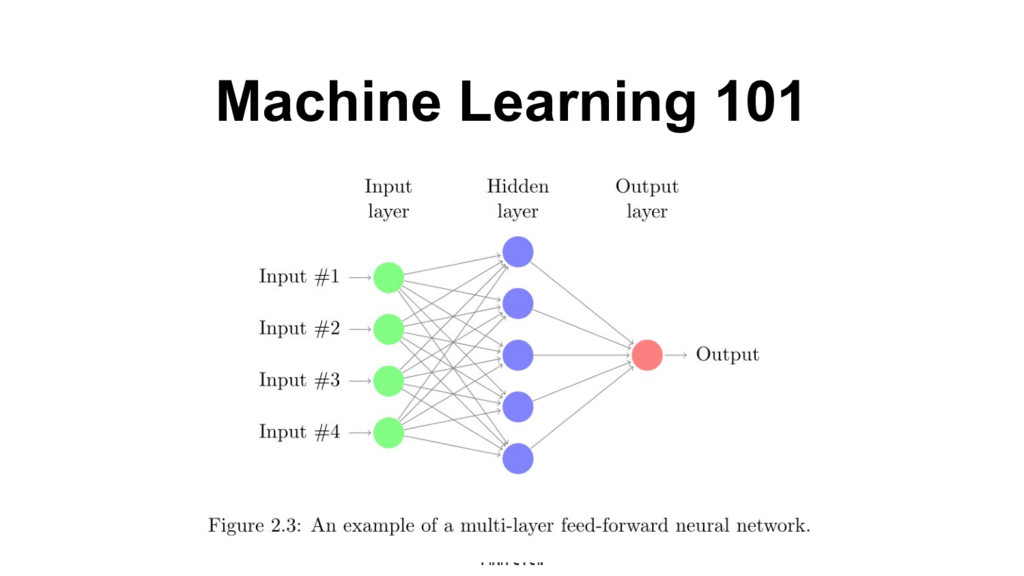
Machine Learning 101
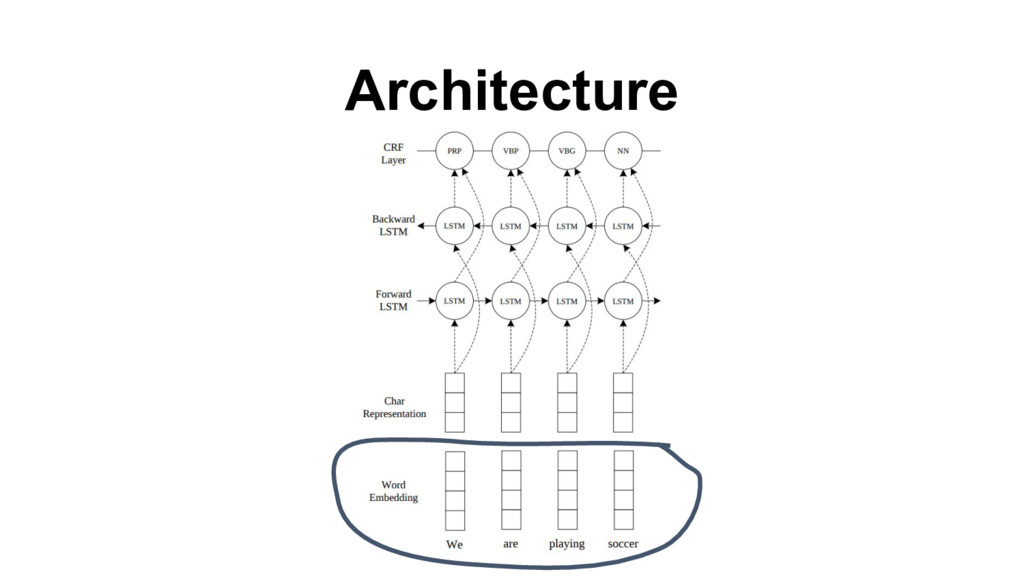
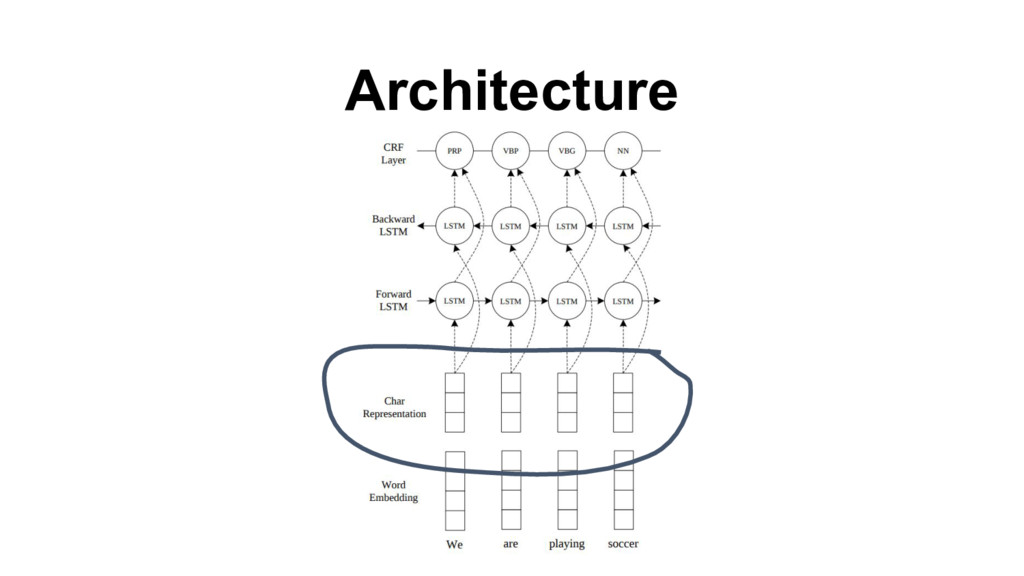
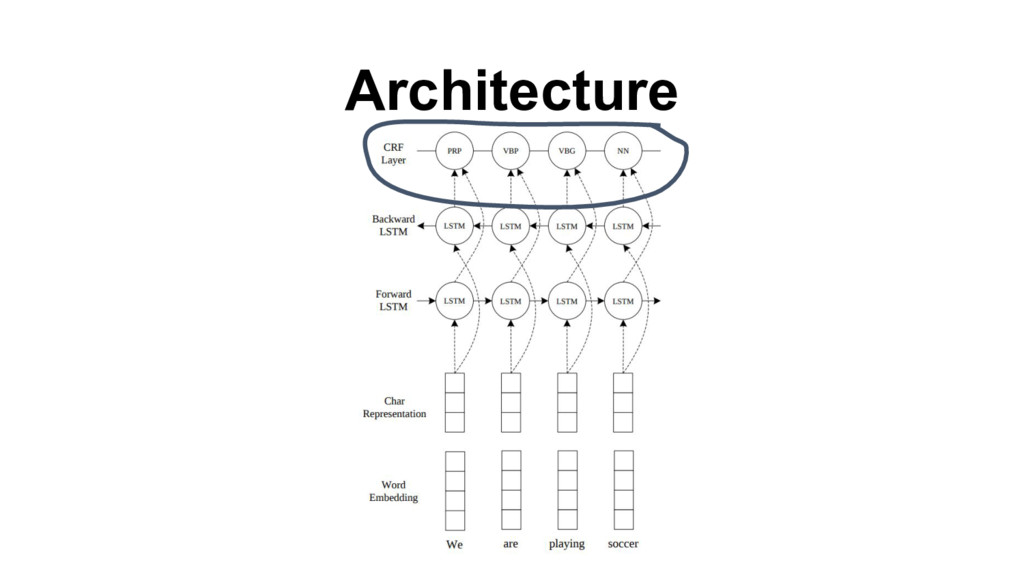
End-to-end Sequence Labeling via Bi-directional LSTM-CNNs-CRF https://arxiv.org/pdf/1603.01354.pdf
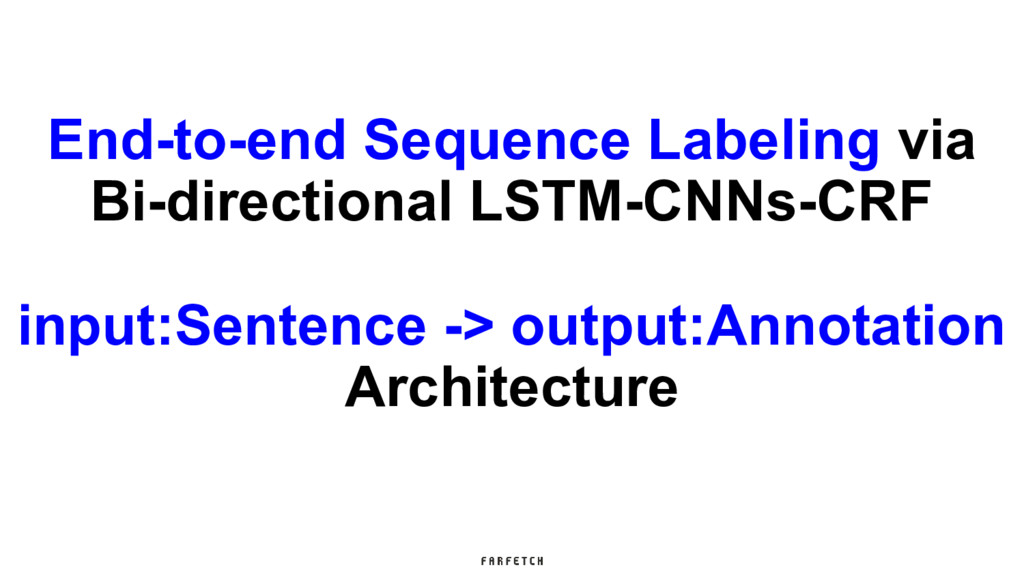
End-to-end Sequence Labeling via Bi-directional LSTM-CNNs-CRF input:Sentence -> output:Annotation Architecture
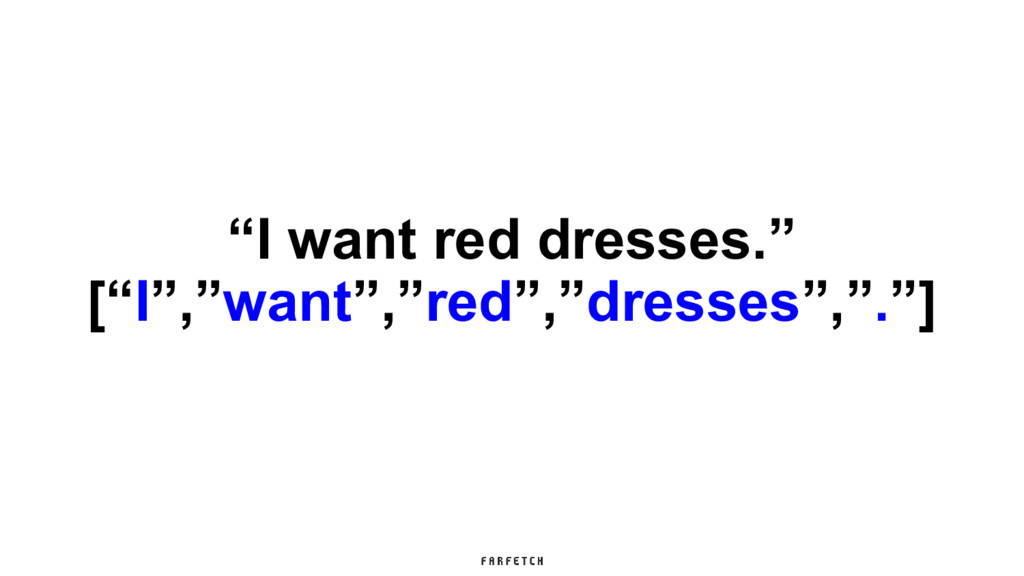
“I want red dresses.” [“I”,”want”,”red”,”dresses”,”.”]
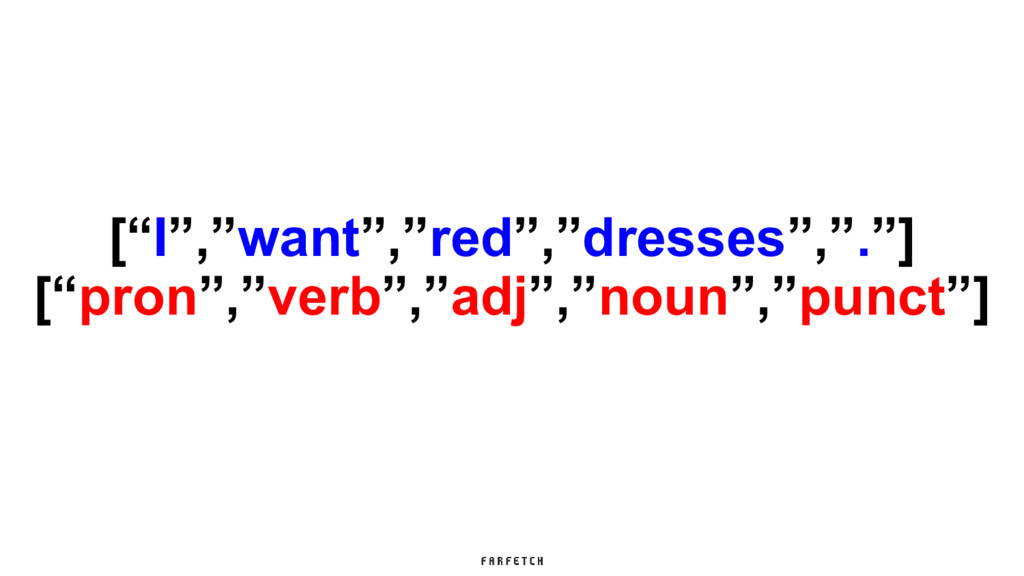
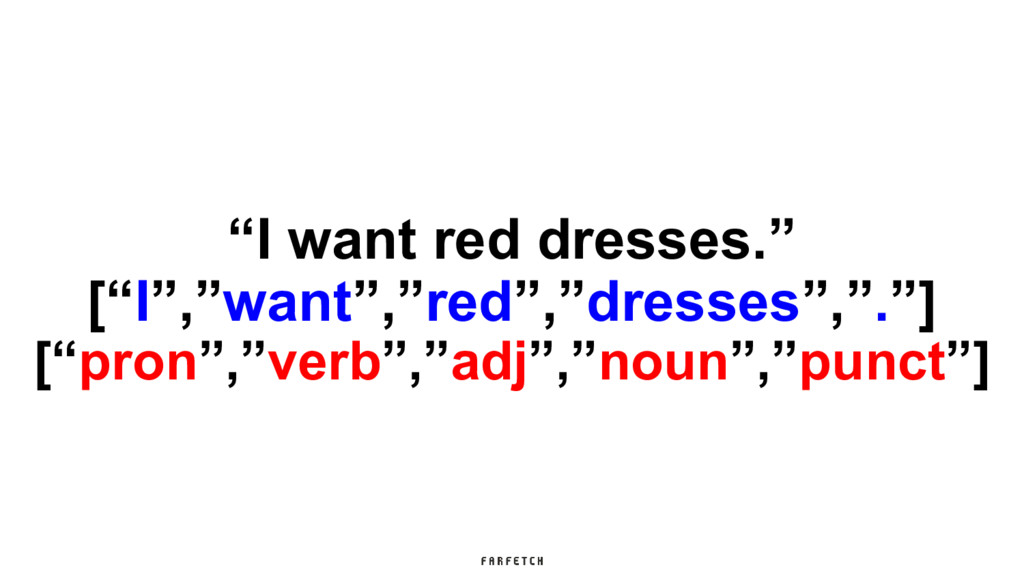
[“I”,”want”,”red”,”dresses”,”.”] [“pron”,”verb”,”adj”,”noun”,”punct”]
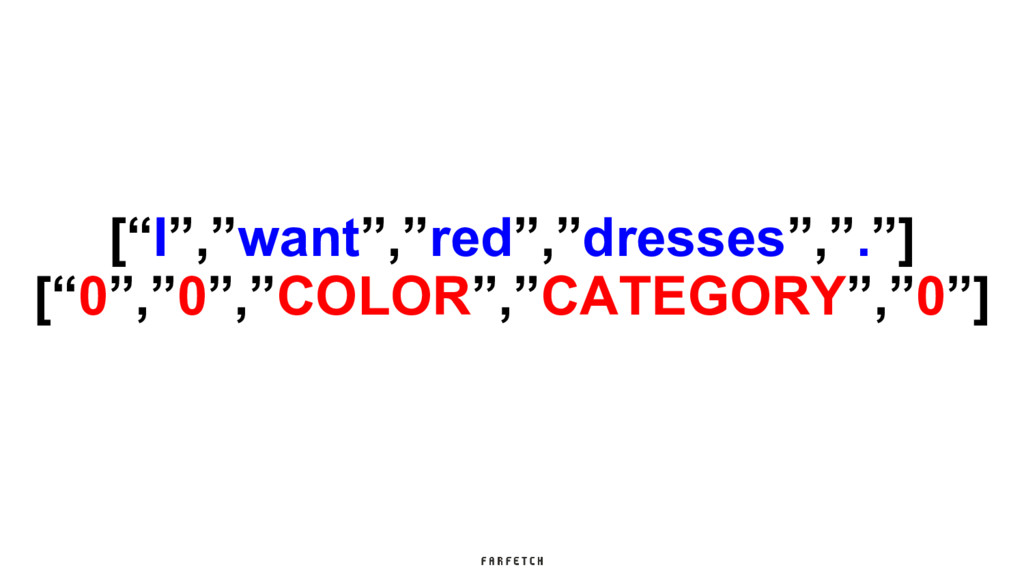
[“I”,”want”,”red”,”dresses”,”.”] [“0”,”0”,”COLOR”,”CATEGORY”,”0”]
Architecture
“I want red dresses.” [“I”,”want”,”red”,”dresses”,”.”]
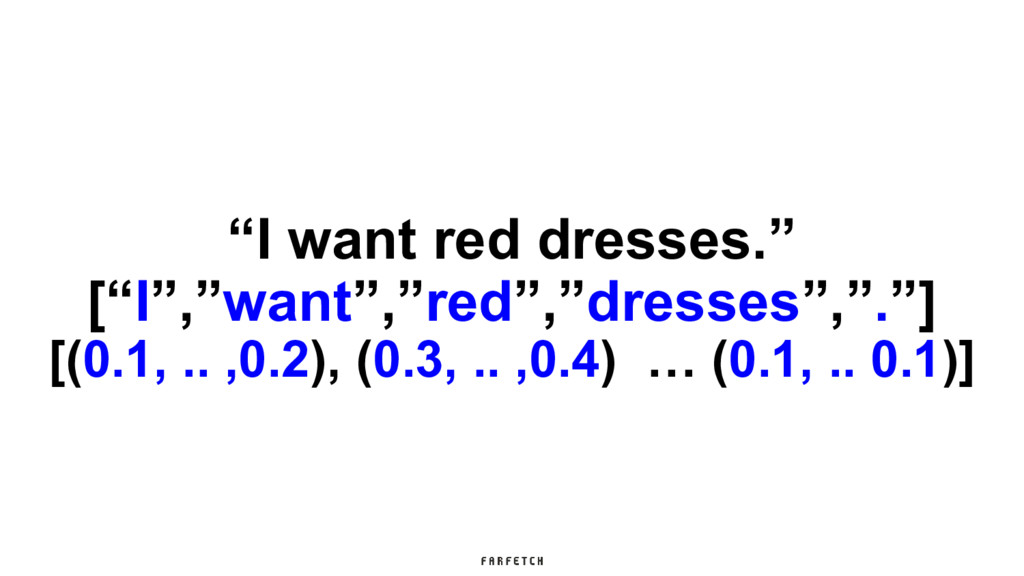
“I want red dresses.” [“I”,”want”,”red”,”dresses”,”.”] [(0.1, .. ,0.2), (0.3, ..
,0.4) … (0.1, .. 0.1)]
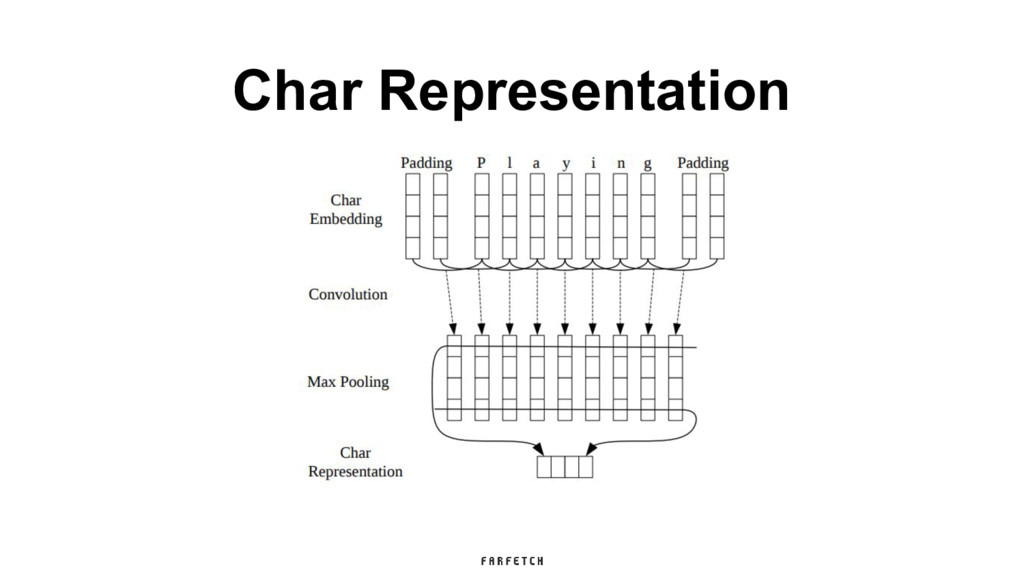
Architecture
Char Representation
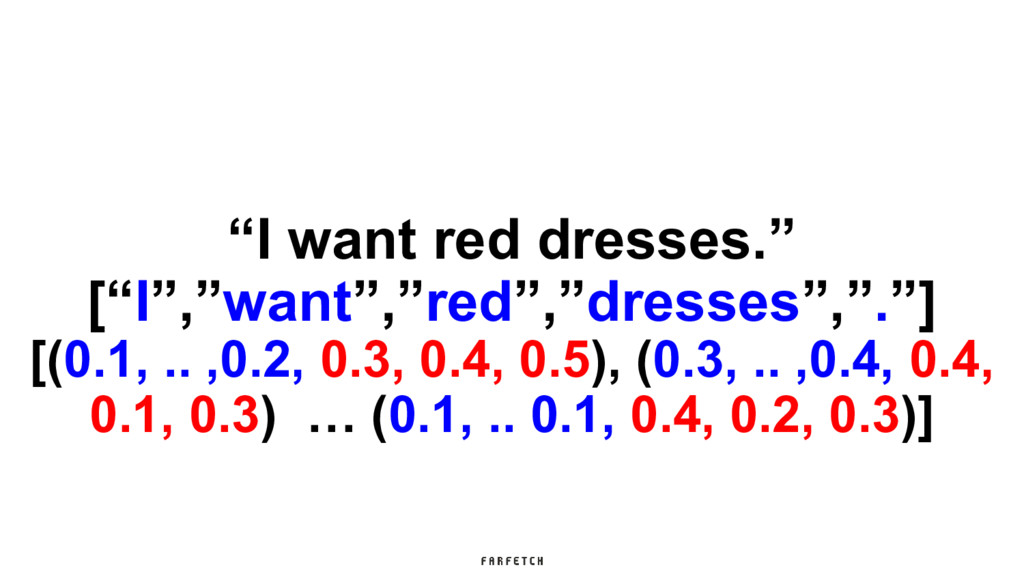
“I want red dresses.” [“I”,”want”,”red”,”dresses”,”.”] [(0.1, .. ,0.2, 0.3, 0.4,
0.5), (0.3, .. ,0.4, 0.4, 0.1, 0.3) … (0.1, .. 0.1, 0.4, 0.2, 0.3)]
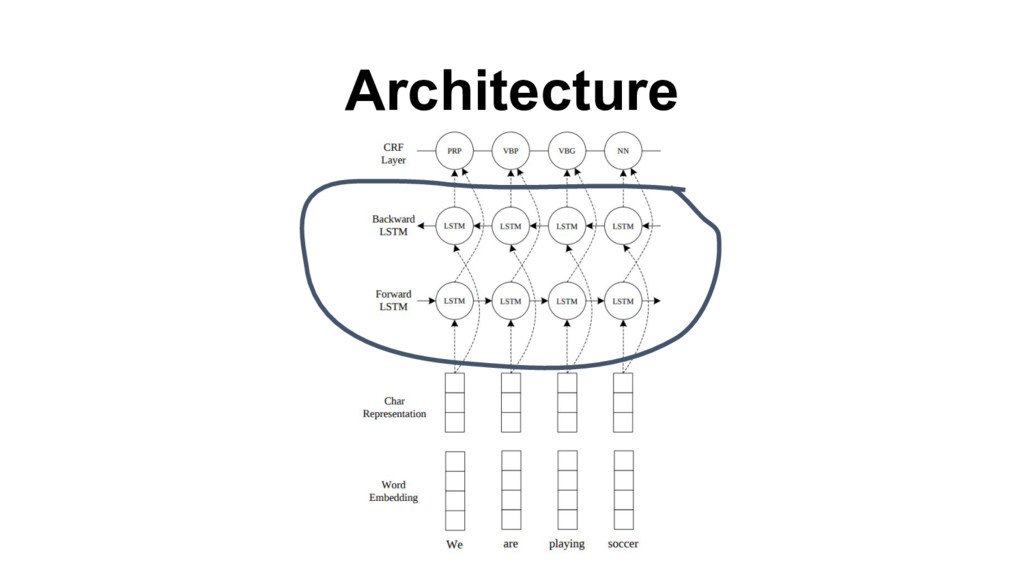
Architecture
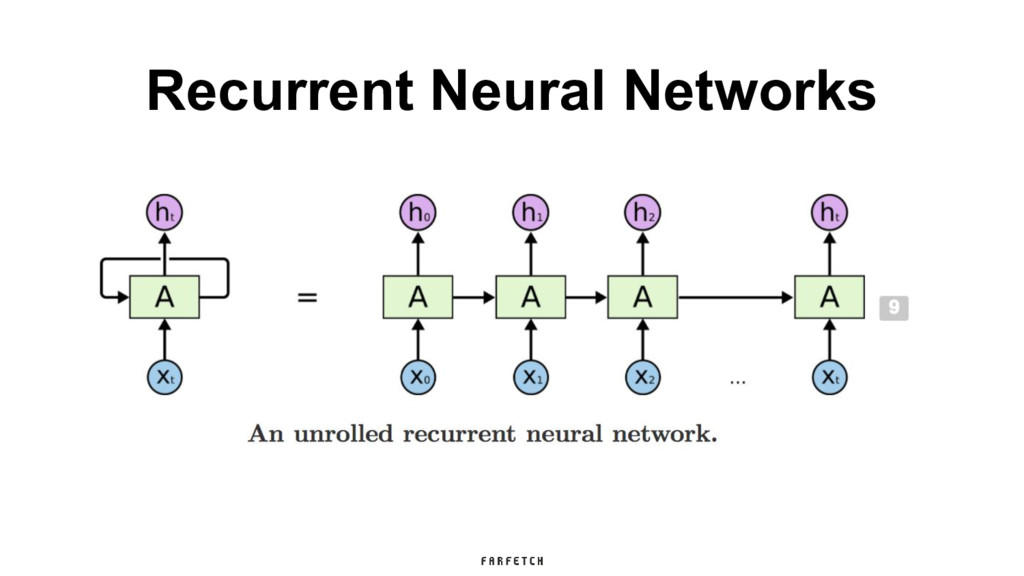
Recurrent Neural Networks
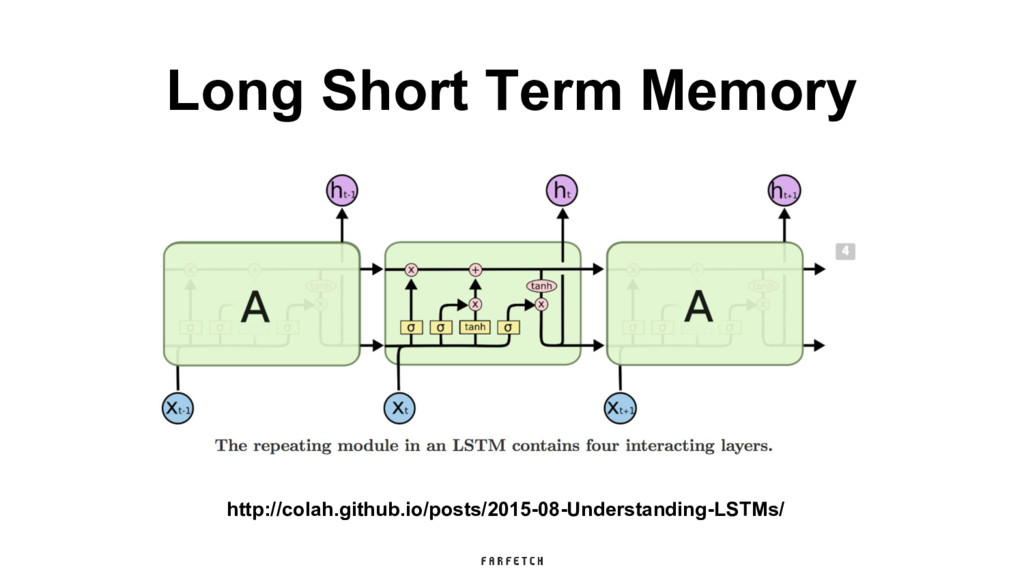
Long Short Term Memory http://colah.github.io/posts/2015-08-Understanding-LSTMs/
Architecture
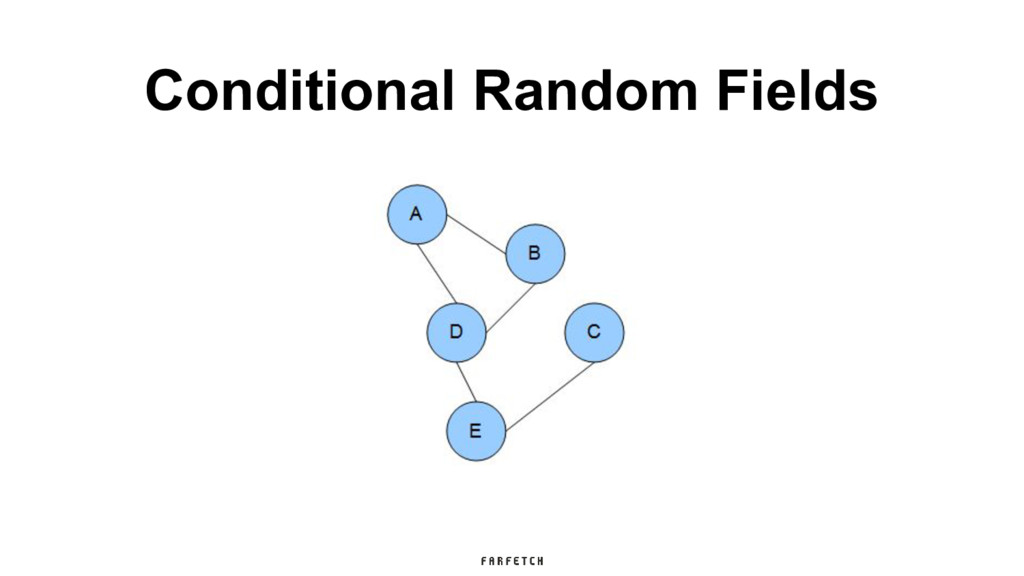
Conditional Random Fields
Annotated Dataset
“I” - pronoun ”want” - verb “red” - adjective “dresses”
- noun “.” - punctuation
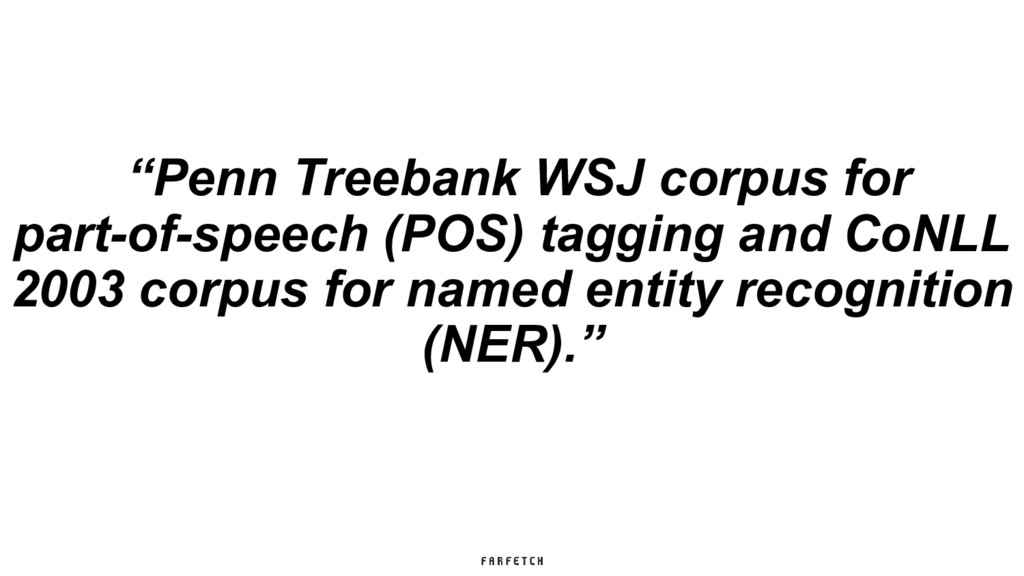
“Penn Treebank WSJ corpus for part-of-speech (POS) tagging and CoNLL
2003 corpus for named entity recognition (NER).”
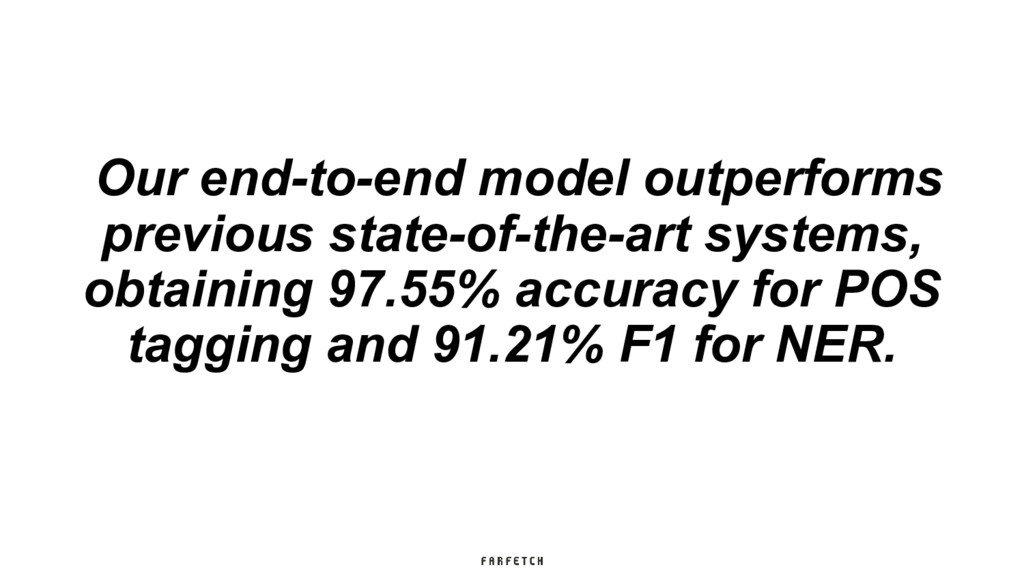
Our end-to-end model outperforms previous state-of-the-art systems, obtaining 97.55% accuracy
for POS tagging and 91.21% F1 for NER.
“I want red dresses.” [“I”,”want”,”red”,”dresses”,”.”] [“pron”,”verb”,”adj”,”noun”,”punct”]


 pwlporto
 ks91
 eileencodes
 hatefulcrawdad
 helmedeiros
 aleyda
 inesmontani
 scottboms
 speakerdeck
 pauljervisheath
 baasie