Upgrade to Pro — share decks privately, control downloads, hide ads and more …

How Tutoring Supports Students Preparing for St...

How Tutoring Supports Students Preparing for Standardized Tests

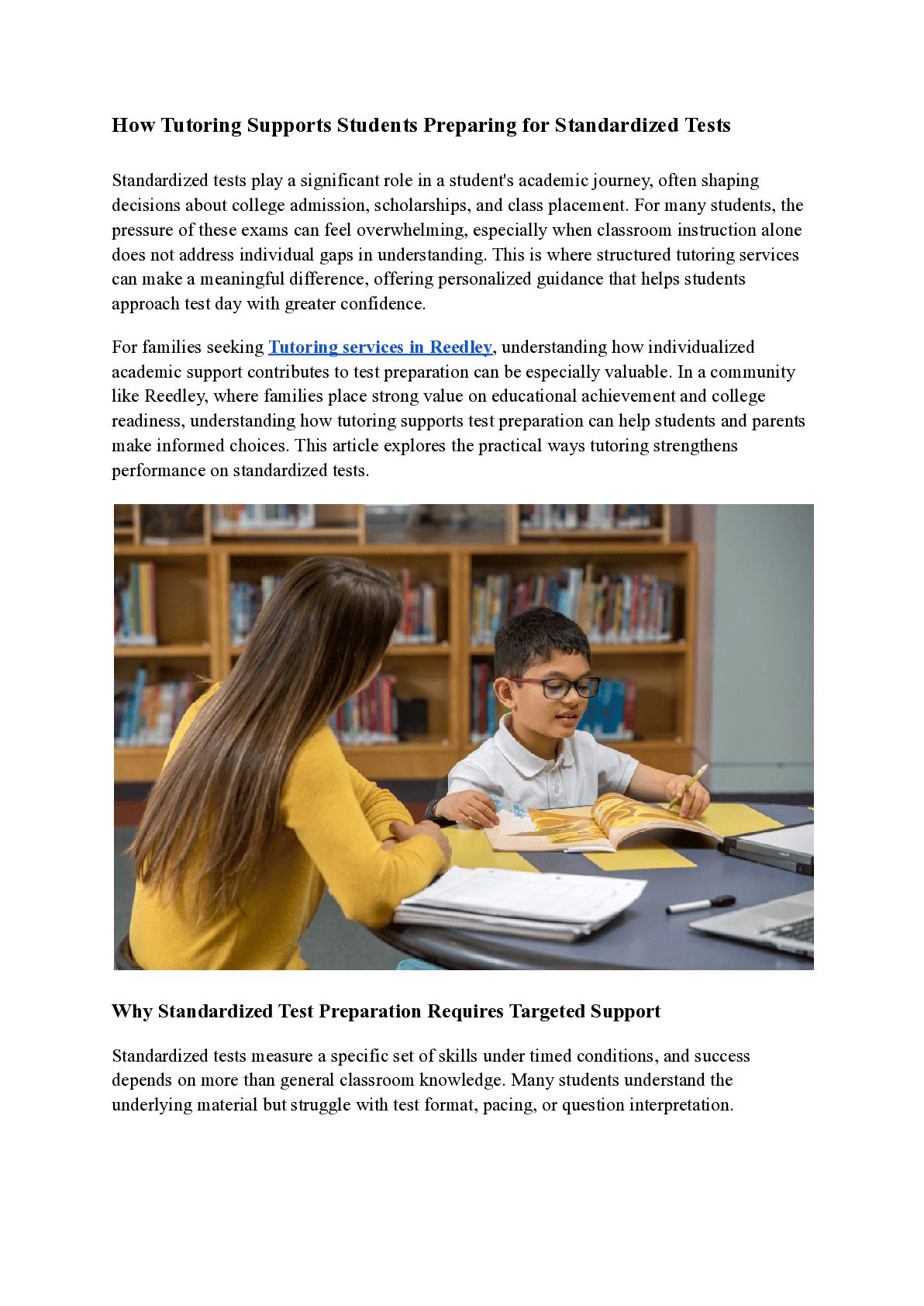
Standardized tests play a significant role in a student's academic journey, often shaping decisions about college admission, scholarships, and class placement. For many students, the pressure of these exams can feel overwhelming, especially when classroom instruction alone does not address individual gaps in understanding. This is where structured tutoring services can make a meaningful difference, offering personalized guidance that helps students approach test day with greater confidence.

Transcript

  1. How Tutoring Supports Students Preparing for Standardized Tests​ ​ Standardized

    tests play a significant role in a student's academic journey, often shaping decisions about college admission, scholarships, and class placement. For many students, the pressure of these exams can feel overwhelming, especially when classroom instruction alone does not address individual gaps in understanding. This is where structured tutoring services can make a meaningful difference, offering personalized guidance that helps students approach test day with greater confidence. For families seeking Tutoring services in Reedley, understanding how individualized academic support contributes to test preparation can be especially valuable. In a community like Reedley, where families place strong value on educational achievement and college readiness, understanding how tutoring supports test preparation can help students and parents make informed choices. This article explores the practical ways tutoring strengthens performance on standardized tests. Why Standardized Test Preparation Requires Targeted Support Standardized tests measure a specific set of skills under timed conditions, and success depends on more than general classroom knowledge. Many students understand the underlying material but struggle with test format, pacing, or question interpretation.
  2. Targeted preparation addresses several challenges that regular coursework may not:

    •​ Test-specific formats: Standardized exams use particular question styles that require practice. •​ Time management: Working efficiently under a clock is a skill of its own. •​ Knowledge gaps: Weak areas can quietly undermine an otherwise strong student. •​ Test anxiety: Unfamiliarity with the exam structure can heighten stress. Structured academic tutoring focuses on these specific obstacles, allowing students to build skills that classroom learning may not fully develop. Did You Know? Many students lose points not because they lack knowledge, but because they run out of time or misread the structure of a question. Personalized Learning Through One-on-One Attention One of the strongest advantages of tutoring is the individual attention it provides. Classrooms must move at a set pace for many students at once, while tutoring adapts to a single learner's needs. Identifying Individual Weaknesses A skilled private tutor typically begins by assessing where a student struggles most. This may involve diagnostic practice tests or a review of past schoolwork. Once weak areas are identified, sessions can focus directly on them rather than spending time on already-mastered material. Adjusting Pace and Approach Some students need slower, detailed explanations, while others benefit from rapid practice and review. Personalized tutoring allows the teaching style to match the learner, which often improves both comprehension and retention. The strong sense of community in Reedley means many families rely on local educational support networks, and personalized instruction fits naturally within that culture of close, attentive learning. Pro Tip: A diagnostic practice test taken early in the preparation process gives both the student and tutor a clear roadmap of what to prioritize. Building Test-Taking Strategies and Confidence Knowing the material is essential, but standardized tests also reward strategy. Effective preparation teaches students how to navigate the exam itself.
  3. Practical Test Strategies Quality educational support often includes coaching on

    techniques such as: •​ Eliminating clearly wrong answer choices •​ Managing time across sections •​ Recognizing common question traps •​ Deciding when to skip and return to difficult items These strategies help students use their knowledge efficiently rather than losing points to avoidable mistakes. Reducing Test Anxiety Familiarity reduces fear. Through repeated practice with a knowledgeable learning coach, students grow comfortable with the exam's structure, timing, and pressure. This familiarity often translates into calmer, more focused performance on the actual test day. Did You Know? Reedley's location in the agricultural heart of the Central Valley means that many local students balance schoolwork with family and seasonal responsibilities, making efficient, well-structured study time especially valuable. Structured Study Plans and Accountability Consistent preparation is more effective than last-minute cramming, yet many students struggle to study regularly on their own. Tutoring introduces structure and accountability. Creating a Realistic Schedule A dependable tutoring program helps students build a study plan that fits their timeline before the test. Breaking preparation into manageable sessions prevents burnout and ensures steady progress. Tracking Progress Over Time Regular sessions allow a tutor to monitor improvement and adjust the plan as needed. A committed subject tutor can identify whether a student is progressing or whether certain topics need renewed focus. Encouraging Independent Habits Beyond direct instruction, tutoring encourages strong study habits, including: •​ Reviewing mistakes rather than ignoring them •​ Practicing consistently instead of cramming •​ Setting realistic goals for each session •​ Tracking improvement across practice tests
  4. The growing emphasis on college readiness throughout Phonics Tutoring in

    Fresno, CA has encouraged more families to seek structured academic guidance, reflecting a broader regional commitment to long-term student success. Supporting Different Types of Standardized Tests Standardized testing is not limited to one exam, and preparation needs vary depending on the test a student faces. College Admission Exams For high school students, college admissions exams include reading, writing, and mathematics. An experienced exam preparation tutor can tailor instruction to the specific format and content emphasis of these tests. State and School-Level Assessments Younger students also encounter standardized assessments that influence placement and academic tracking. Targeted homework help combined with focused review can prepare students for these exams while reinforcing classroom learning. Subject-Specific Tests Some students prepare for tests focused on a single subject area. In these cases, deep, specialized review matters more than broad coverage, and tutoring can concentrate on the relevant material. Frequently Asked Questions 1. How early should students begin test preparation with a tutor? Most students benefit from starting preparation several months before the exam date. Beginning early allows time to identify weak areas, build strategies, and practice consistently without cramming. Enrolling in structured tutoring services well in advance gives both the student and the tutor room to create a realistic study plan, track progress, and make adjustments as the test date approaches, which usually leads to stronger, more confident performance. 2. Can tutoring really improve standardized test scores? Tutoring can meaningfully support score improvement by addressing individual weaknesses, teaching test strategies, and building familiarity with the exam format. While results vary by student and effort, focused and consistent preparation often helps students perform closer to their true potential. The personalized attention tutoring provides allows learners to target specific gaps that group instruction may not fully address.
  5. 3. Is tutoring only useful for struggling students? No. Tutoring

    benefits students at all levels. Struggling students gain support in weak areas, while high-achieving students can refine strategies, sharpen pacing, and aim for top scores. Standardized tests reward both knowledge and technique, so even strong students can improve through targeted practice and expert guidance tailored to their specific goals. 4. How is test-prep tutoring different from regular school instruction? School instruction covers a broad curriculum for many students at once, while test-prep tutoring focuses specifically on exam content, format, and strategy. Tutoring adapts to an individual learner's pace and weaknesses, offering targeted practice and personalized feedback. This focused approach helps students prepare for the unique demands of standardized testing rather than general coursework. 5. How often should a student meet with a tutor before a test? The ideal frequency depends on the student's timeline and needs, but consistent weekly sessions are common. Regular meetings maintain momentum, allow steady progress tracking, and prevent last-minute cramming. As the test date approaches, some students increase the frequency of sessions to reinforce strategies and complete additional practice exams under timed conditions.​ ​ Help your student approach standardized tests with confidence and the skills needed to succeed. Contact us today to learn how personalized tutoring can strengthen subject knowledge, improve test-taking strategies, and support stronger academic outcomes.