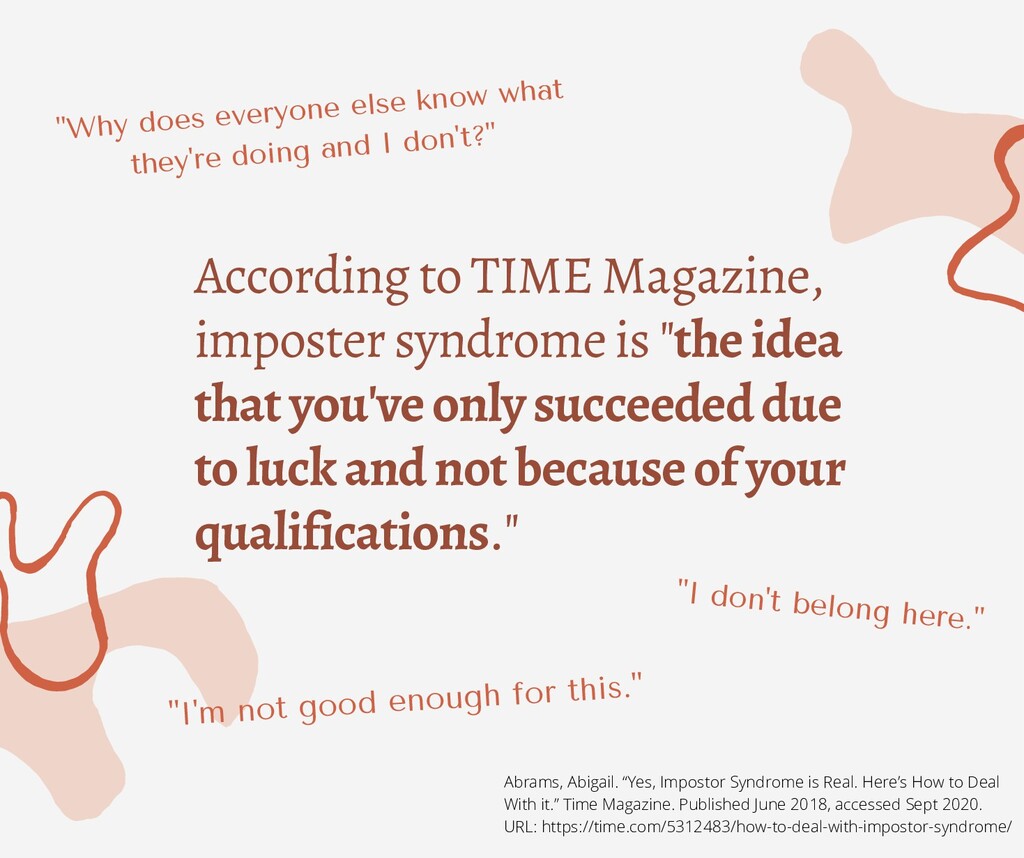
you've only succeeded due to luck and not because of your qualifications." "I'm not good enough for this." "I don't belong here." "Why does everyone else know what they're doing and I don't?" Abrams, Abigail. “Yes, Impostor Syndrome is Real. Here’s How to Deal With it.” Time Magazine. Published June 2018, accessed Sept 2020. URL: https://time.com/5312483/how-to-deal-with-impostor-syndrome/
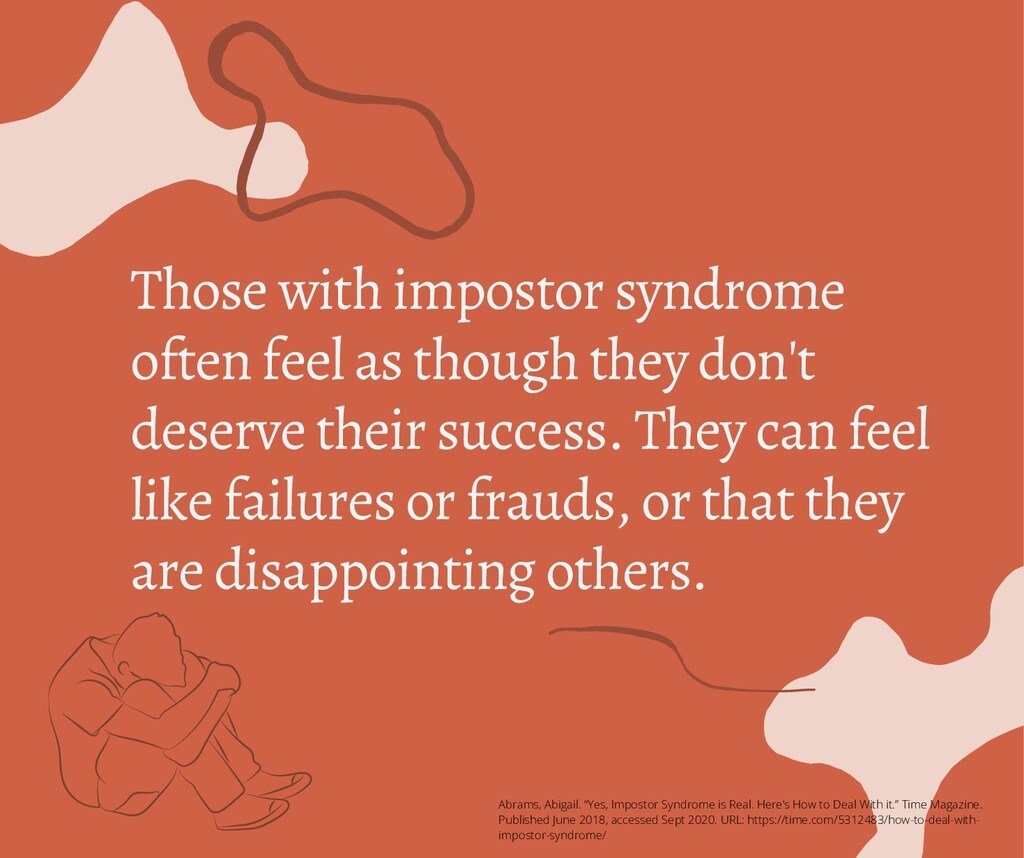
deserve their success. They can feel like failures or frauds, or that they are disappointing others. Abrams, Abigail. “Yes, Impostor Syndrome is Real. Here’s How to Deal With it.” Time Magazine. Published June 2018, accessed Sept 2020. URL: https://time.com/5312483/how-to-deal-with- impostor-syndrome/
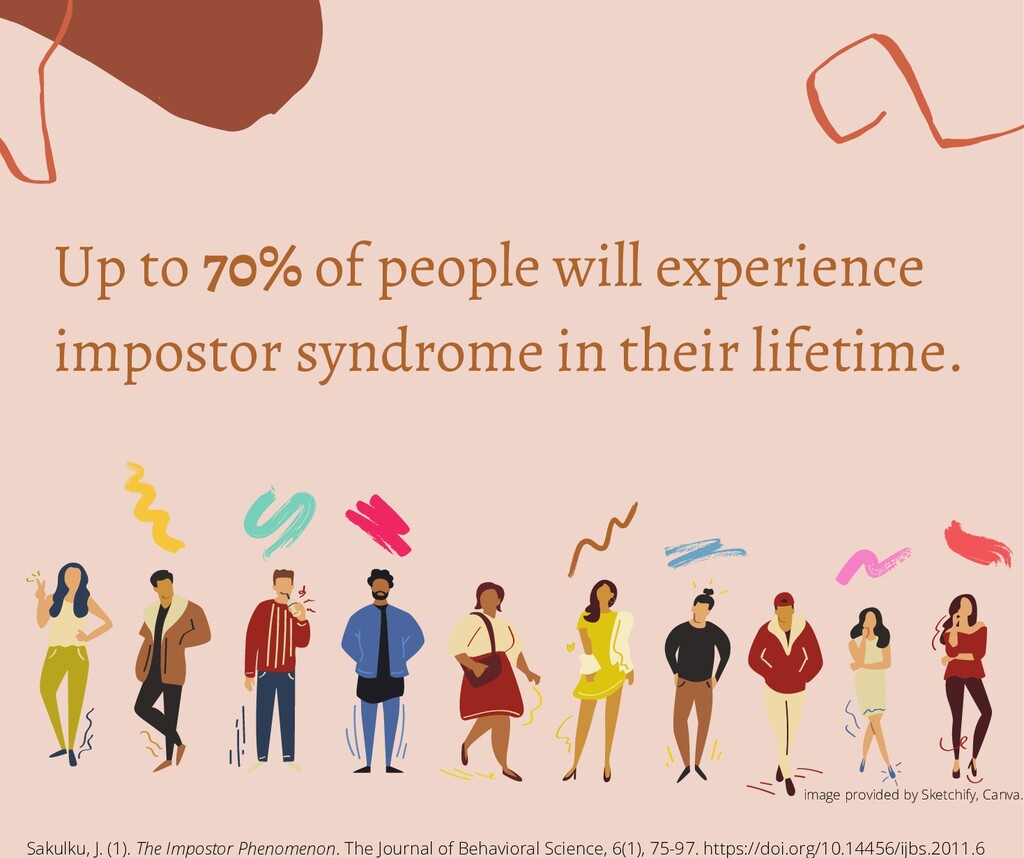
their lifetime. Sakulku, J. (1). The Impostor Phenomenon. The Journal of Behavioral Science, 6(1), 75-97. https://doi.org/10.14456/ijbs.2011.6 image provided by Sketchify, Canva.
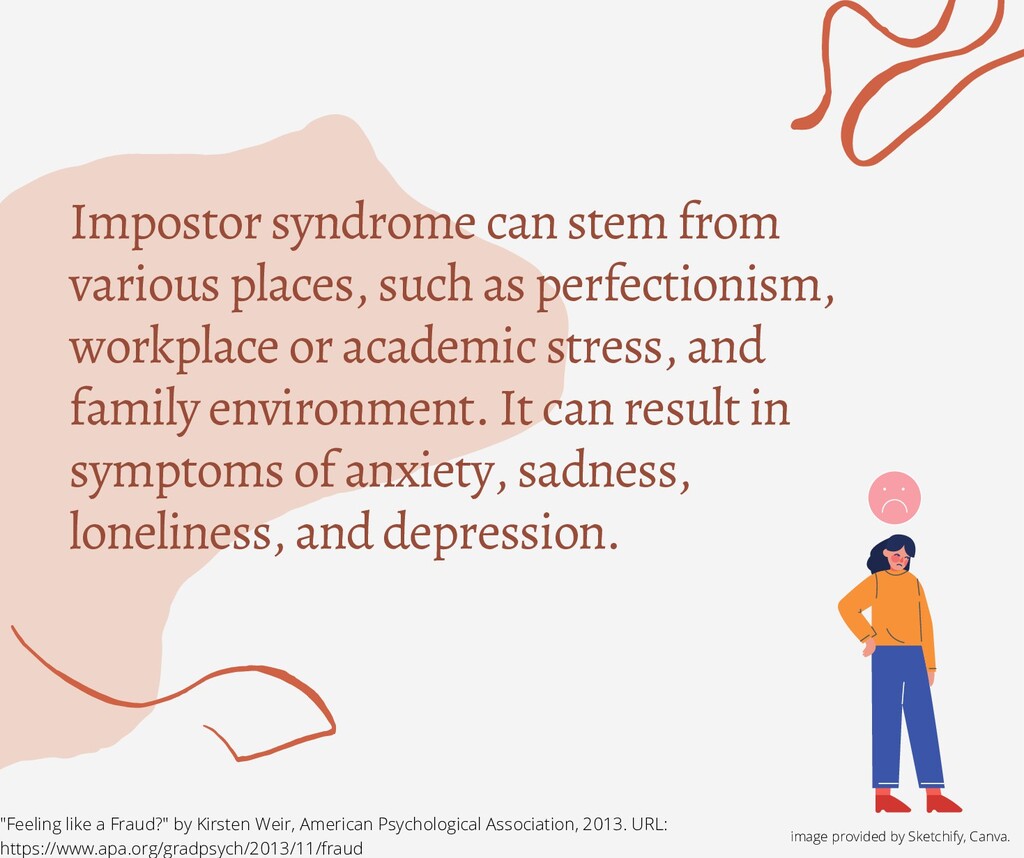
workplace or academic stress, and family environment. It can result in symptoms of anxiety, sadness, loneliness, and depression. "Feeling like a Fraud?" by Kirsten Weir, American Psychological Association, 2013. URL: https://www.apa.org/gradpsych/2013/11/fraud image provided by Sketchify, Canva.
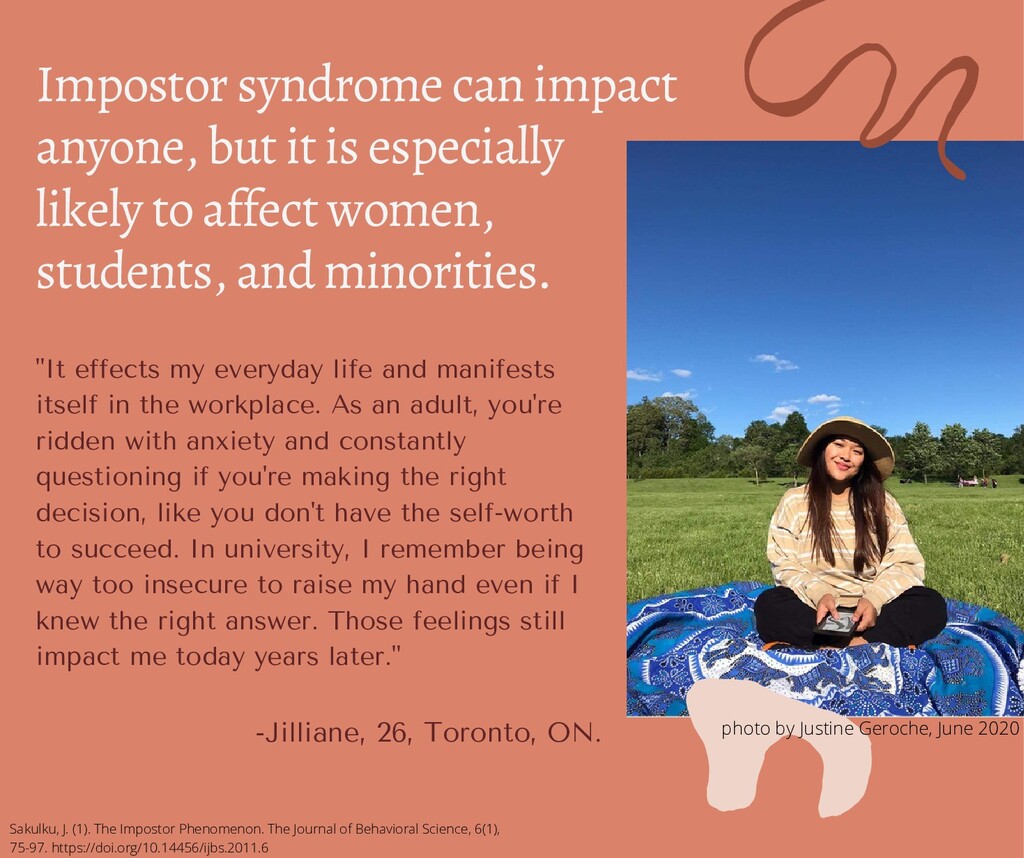
to affect women, students, and minorities. "It effects my everyday life and manifests itself in the workplace. As an adult, you're ridden with anxiety and constantly questioning if you're making the right decision, like you don't have the self-worth to succeed. In university, I remember being way too insecure to raise my hand even if I knew the right answer. Those feelings still impact me today years later." -Jilliane, 26, Toronto, ON. Sakulku, J. (1). The Impostor Phenomenon. The Journal of Behavioral Science, 6(1), 75-97. https://doi.org/10.14456/ijbs.2011.6 photo by Justine Geroche, June 2020
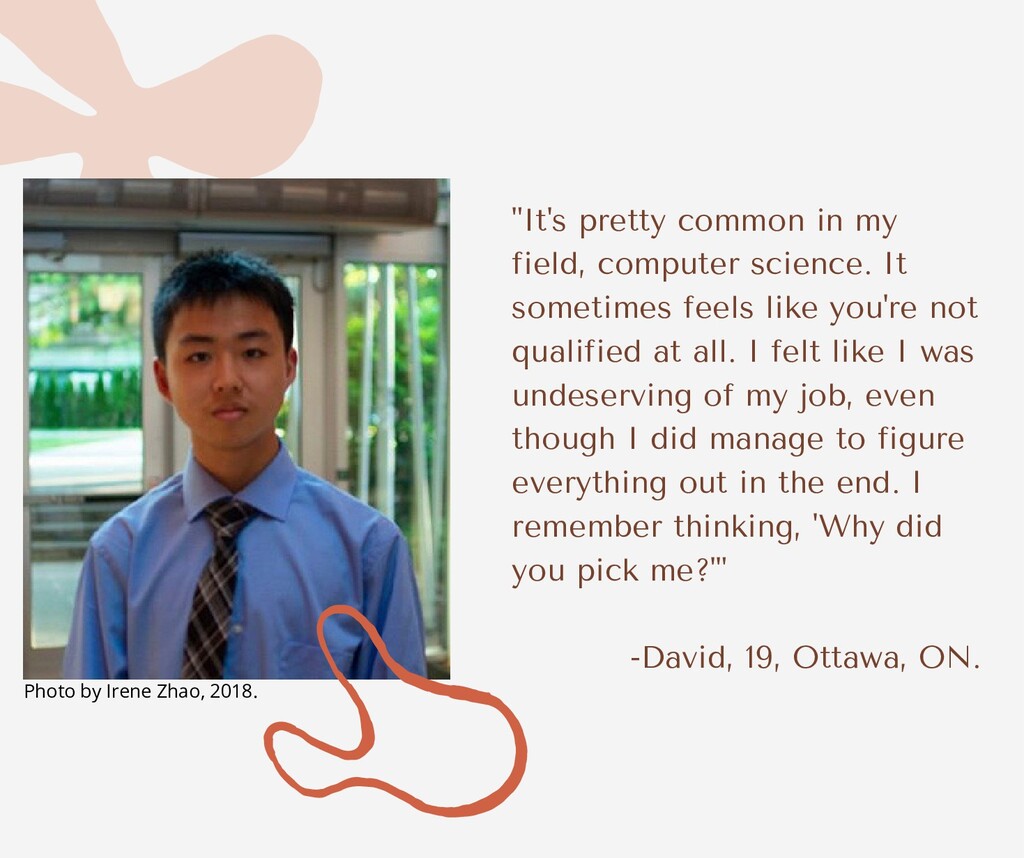
feels like you're not qualified at all. I felt like I was undeserving of my job, even though I did manage to figure everything out in the end. I remember thinking, 'Why did you pick me?'" -David, 19, Ottawa, ON. Photo by Irene Zhao, 2018.
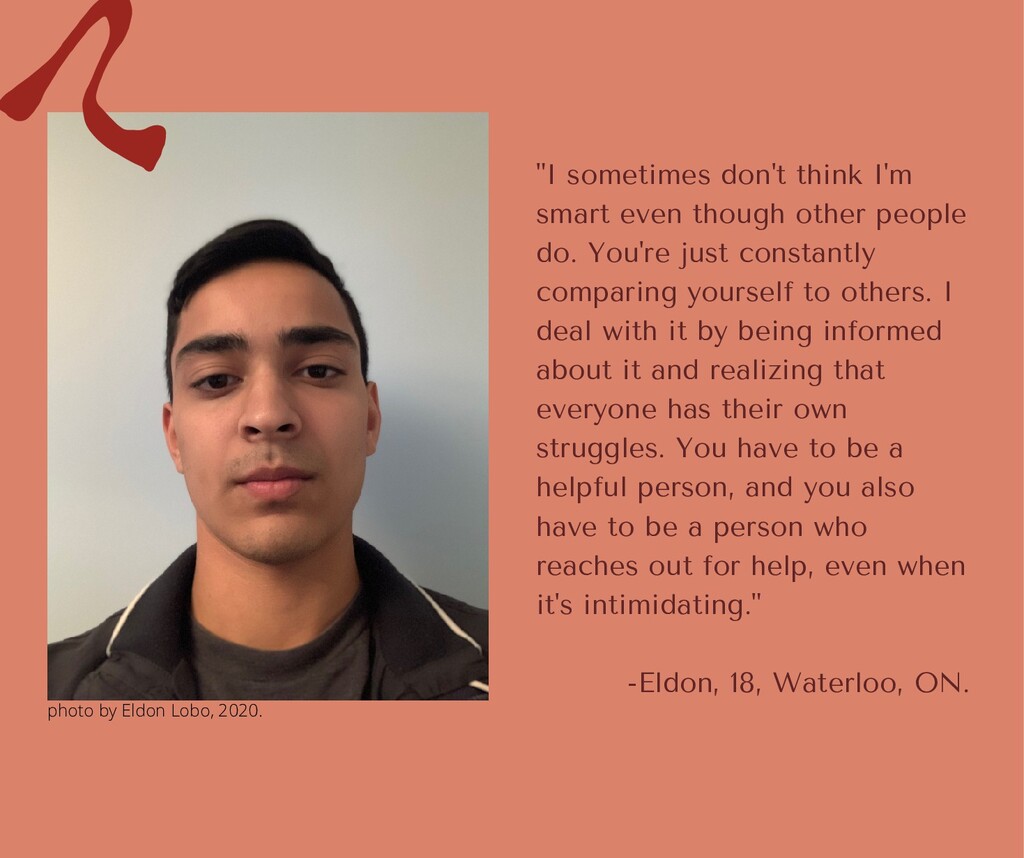
do. You're just constantly comparing yourself to others. I deal with it by being informed about it and realizing that everyone has their own struggles. You have to be a helpful person, and you also have to be a person who reaches out for help, even when it's intimidating." -Eldon, 18, Waterloo, ON. photo by Eldon Lobo, 2020.
It feels like other people must know more than me and that I'll look like a fool if I say something. It makes me think sexist thoughts towards other women, too, like I'm frustrated with them because they know more than me." -Maggie, 19, Calgary, AB. photo by Arianna Fuke, Sept 2020.
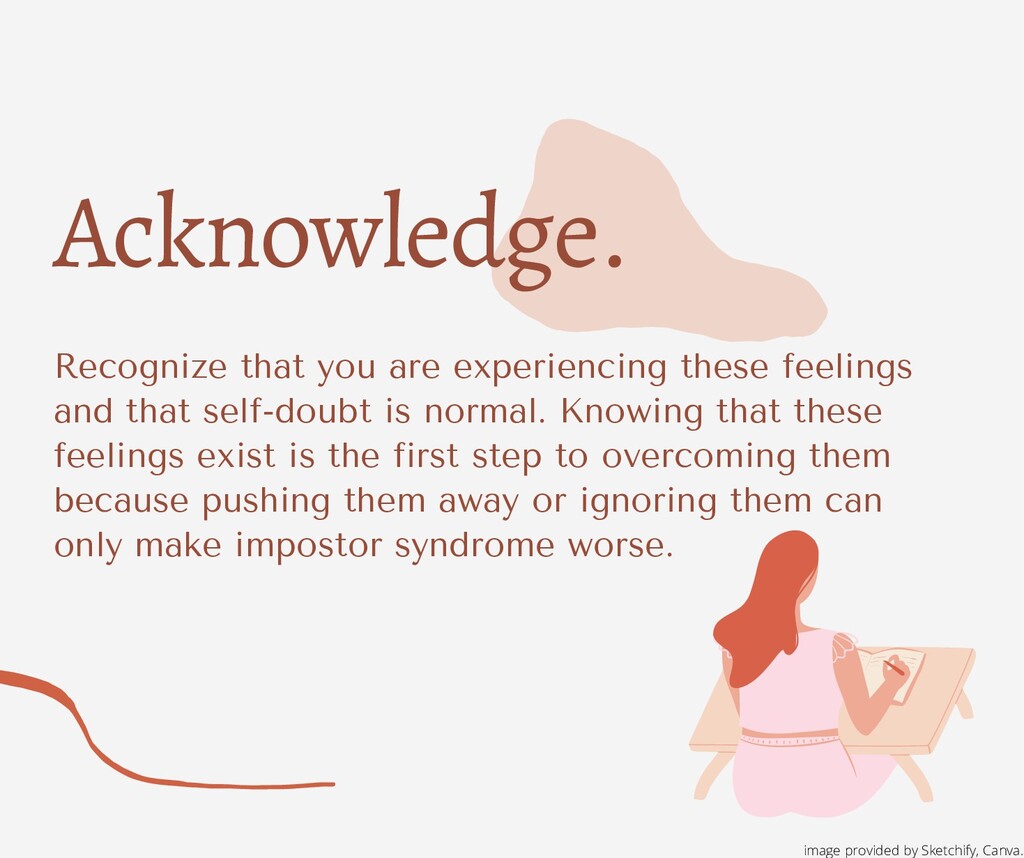
is normal. Knowing that these feelings exist is the first step to overcoming them because pushing them away or ignoring them can only make impostor syndrome worse. Acknowledge. image provided by Sketchify, Canva.
put into achieving them. Recognize the goals you have set for yourself in the past and the steps you took to realize them. Take time to reassure yourself.
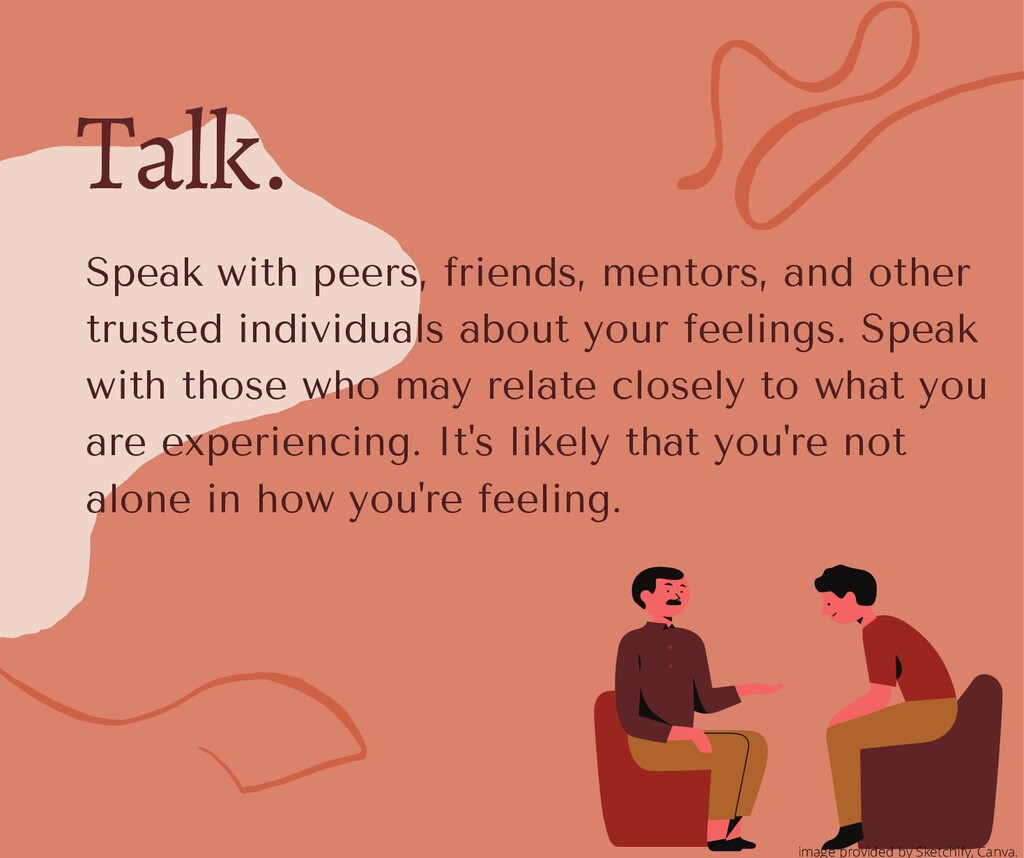
about your feelings. Speak with those who may relate closely to what you are experiencing. It's likely that you're not alone in how you're feeling. image provided by Sketchify, Canva.
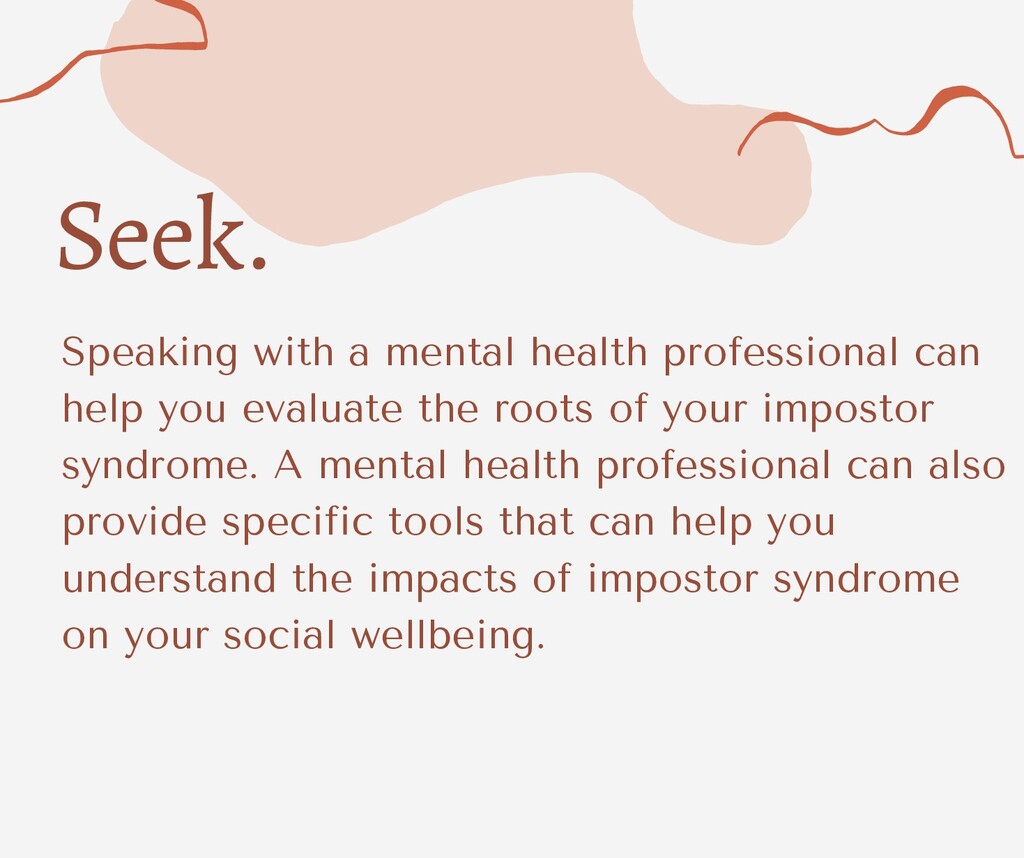
evaluate the roots of your impostor syndrome. A mental health professional can also provide specific tools that can help you understand the impacts of impostor syndrome on your social wellbeing.
or text CONNECT to 686868. Crisis Services Canada https://www.crisisservicescanada.ca/en/looking-for-local- resources-support/ Suicide Prevention Hotline 1-833-456-4566 (24/7) or text 45645 (4 pm to 12 am ET). Hope for Wellness Help Line Call 1-855-242-3310 (toll-free) The Centre for Addiction and Mental Health https://www.camh.ca/en/health-info/guides-and- publications/looking-for-mental-health-services


 brettharned
 addyosmani
 tammyeverts
 csswizardry
 sonatard
 mongodb
 cassininazir
 lynnandtonic
 eileencodes
 jmmastey
 yeseniaperezcruz
 uxyall