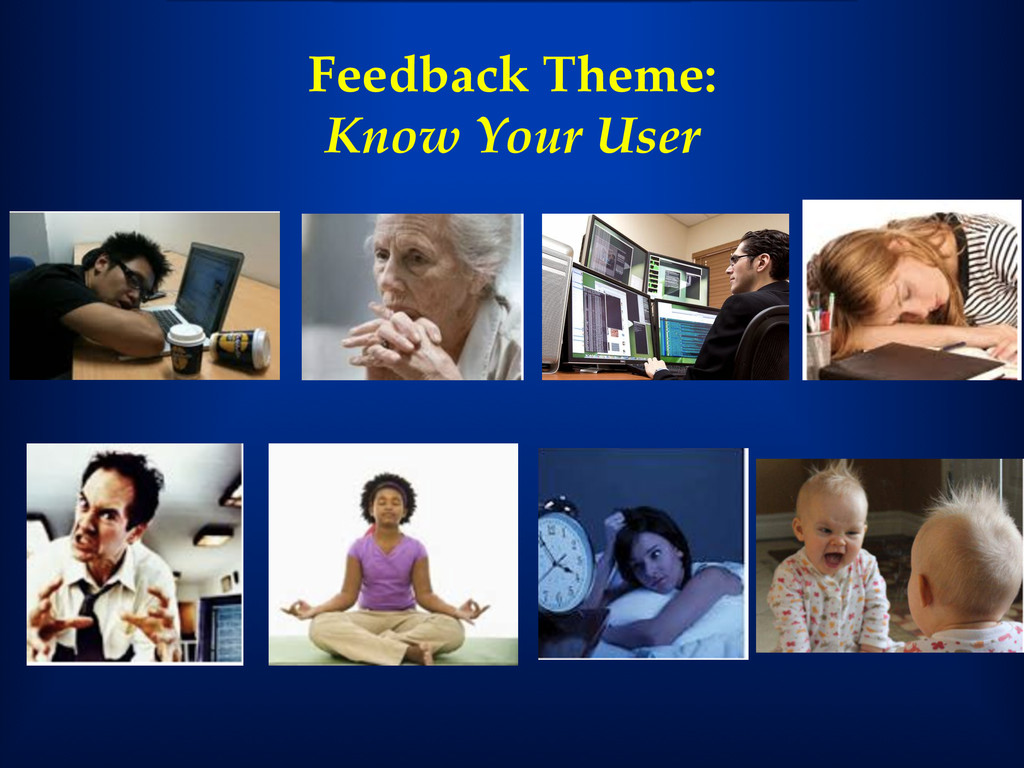
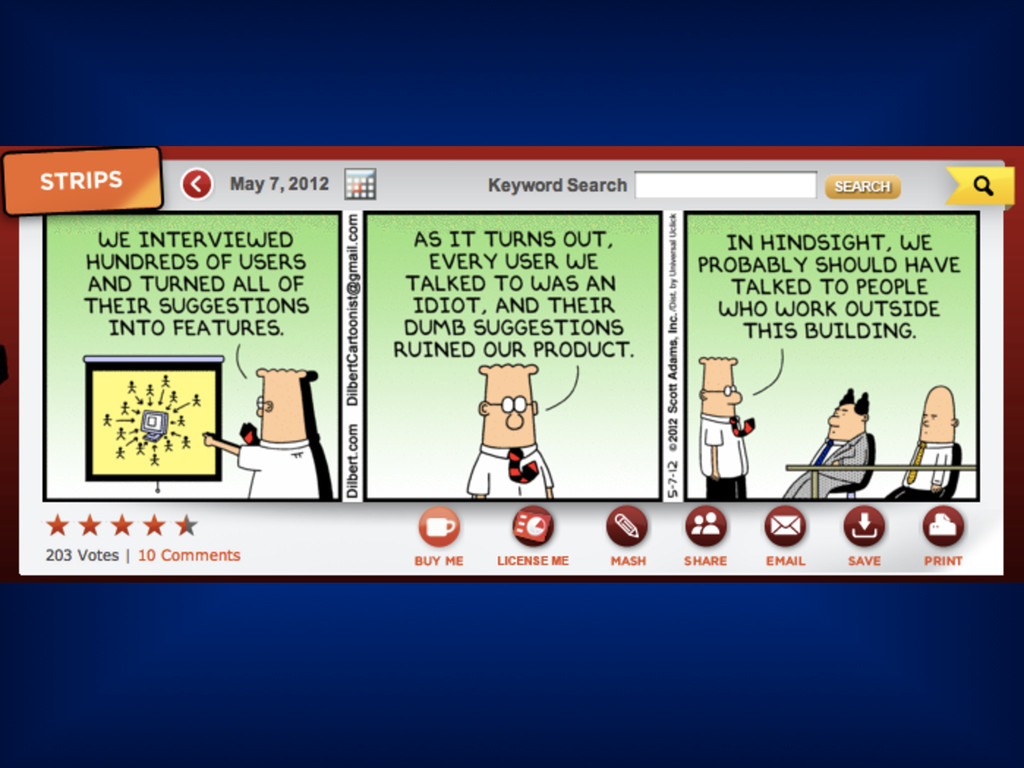
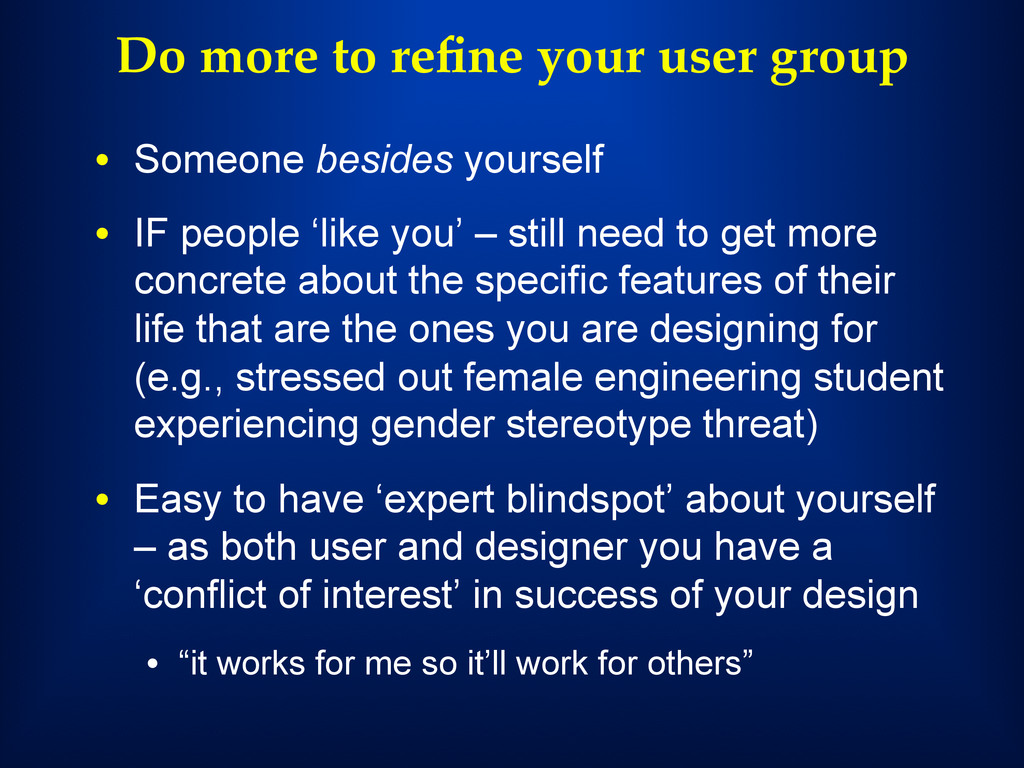
yourself • IF people ‘like you’ – still need to get more concrete about the specific features of their life that are the ones you are designing for (e.g., stressed out female engineering student experiencing gender stereotype threat) • Easy to have ‘expert blindspot’ about yourself – as both user and designer you have a ‘conflict of interest’ in success of your design • “it works for me so it’ll work for others”
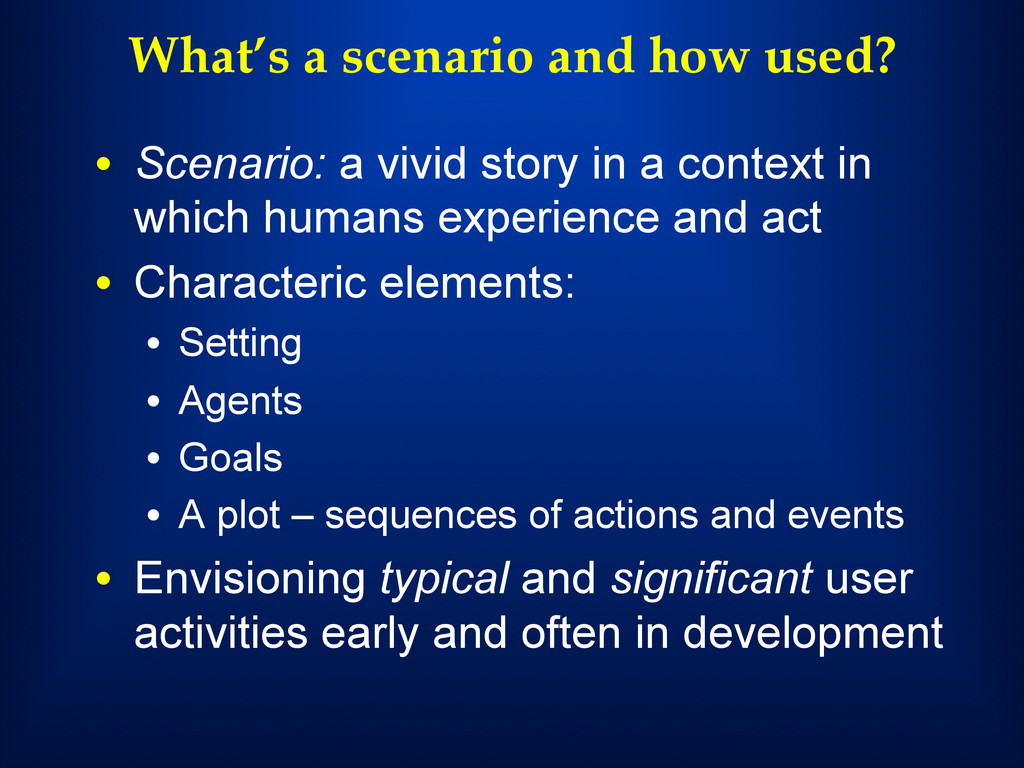
story in a context in which humans experience and act • Characteric elements: • Setting • Agents • Goals • A plot – sequences of actions and events • Envisioning typical and significant user activities early and often in development
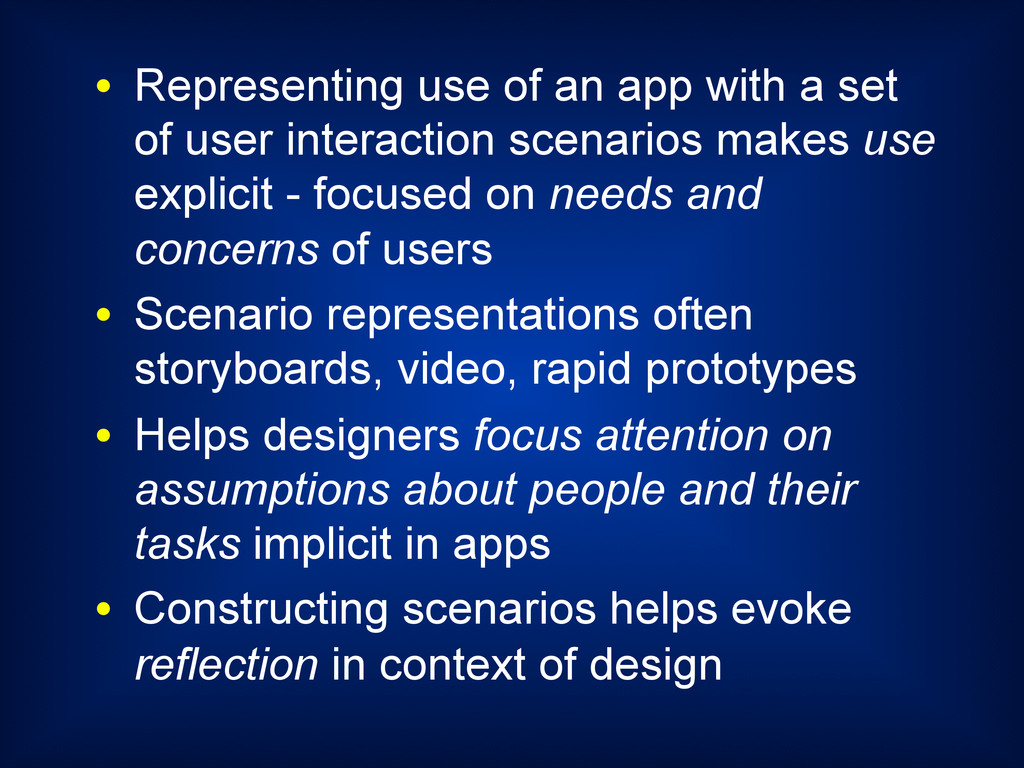
user interaction scenarios makes use explicit - focused on needs and concerns of users • Scenario representations often storyboards, video, rapid prototypes • Helps designers focus attention on assumptions about people and their tasks implicit in apps • Constructing scenarios helps evoke reflection in context of design
& amounts of detailing, help developers manage many consequences entailed by any given design move • Scenarios can be abstracted and categorized, help designers recognize, capture & re-use generalizations • Scenarios promote work-oriented communication among stakeholders – helping make design activities more accessible to diverse expertise that can contribute to design
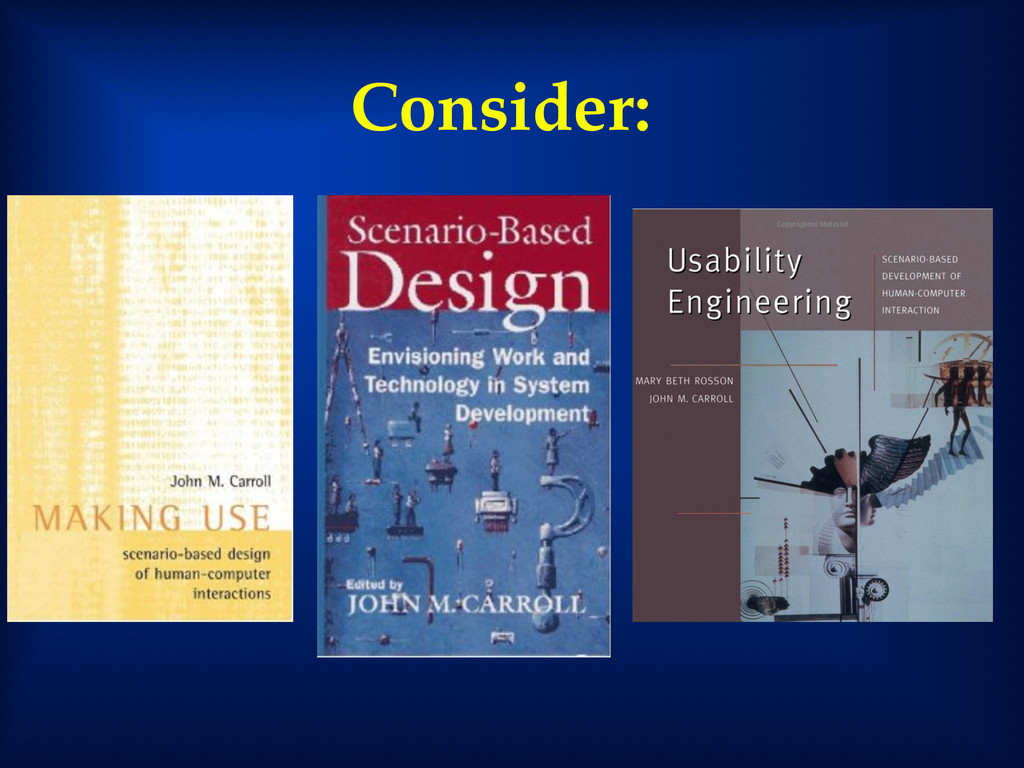
of John Carroll when at IBM and later with Beth Rosson since at VA Tech. • Some bullets here adapted from Carroll’s1999 HICSS paper on “Five Reasons for Scenario Based Design”.

 Your Podcast. Everywhere. Effortlessly.


 jdejongh
 danielanewman
 marktimemedia
 marcduiker
 cargoodrich
 bluesmoon
 wjessup
 trallard
 lara
 rabernat
 inesmontani
 ryanjones