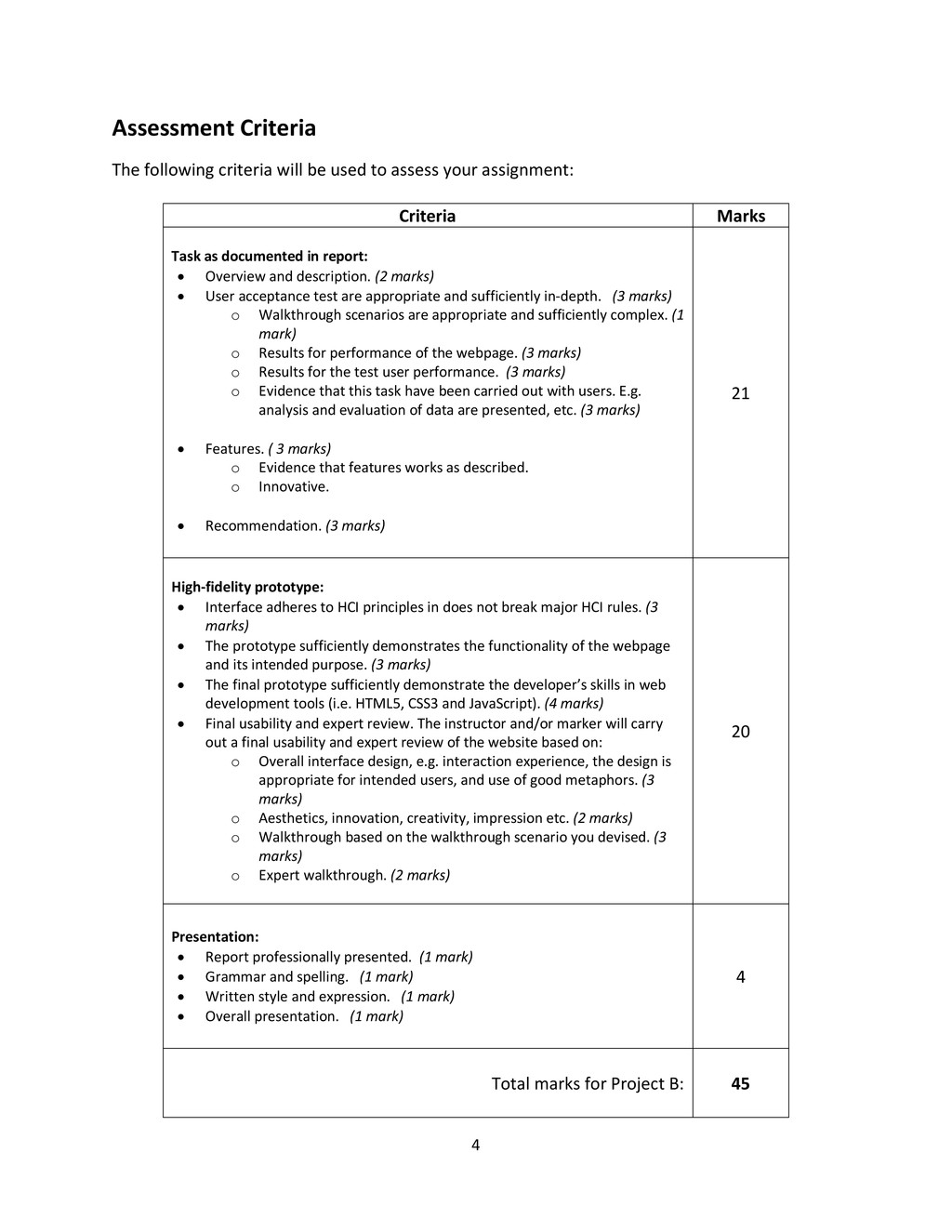
1 – 2012) Total marks: 45 marks Project B: Task The overall task is divided into two project phases (i.e. two separate, but related projects). It is strongly advised that you read the following project description in conjunction with the description for Project A. You are to complete the following task in the order given: • Develop high-fidelity prototype. Based on the user test feedback and recommendations from the previous phase (Project A), develop a high-fidelity prototype (i.e. reasonably complete version) of the Tak3Away self-service ordering system. Use any combination of HTML5, CSS3 and JavaScript feature for this prototype. Remember to indicate which browser (i.e. IE, Firefox, Safari, Chrome, etc.) you are targeting as the main working platform. For the purpose of this project, please exclude mobile devices that runs on fragmented or closed-system technology, such as Android, Apple iOS and Nook. Do not use Rapid Application Prototyping (RAD) tools or any other type of scripting languages or services, eg. Python, Lua, AJAX, Dreamweaver, etc. You are required to demonstrate your knowledge of HTML5, CSS3 and JavaScript independently and without the assistance of automated development and visual design tools. • Carry out user acceptance test. Devise three walkthrough scenarios. The scenarios should be sufficiently complex to test the features and functionality of your website. For example: Scenario #1: Customer initiates session, orders two sandwiches, order two different types of drinks, orders a vegetarian meal, orders pastry, cancels one of the drink, orders another sandwich, re-orders another drink, finalise and check-out. Invite 3 to 4 potential users (e.g. friends, family members, classmates, etc.) to play the role of users. Ask each of the users to perform all the walkthroughs you have devised. Apply appropriate techniques to determine how the website performs under these test conditions. Systematically collect data on the user performance. For example, how long did each of the users take to complete each of the scenarios? Did the users find the interface easy or challenging to use? Does the interface allow users to change their minds? Etc. Refer to your textbook for more detailed and appropriate parameters that suits your requirements.


 rmw
 orderedlist
 hatefulcrawdad
 techseoconnect
 malarkey
 smashingmag
 trallard
 kevinliebholz
 helenjbeal
 codingconduct
 paigeccino