Upgrade to Pro — share decks privately, control downloads, hide ads and more …

Agents gonna agent: Deterministic orchestration...

Agents gonna agent: Deterministic orchestration for systems we can’t predict

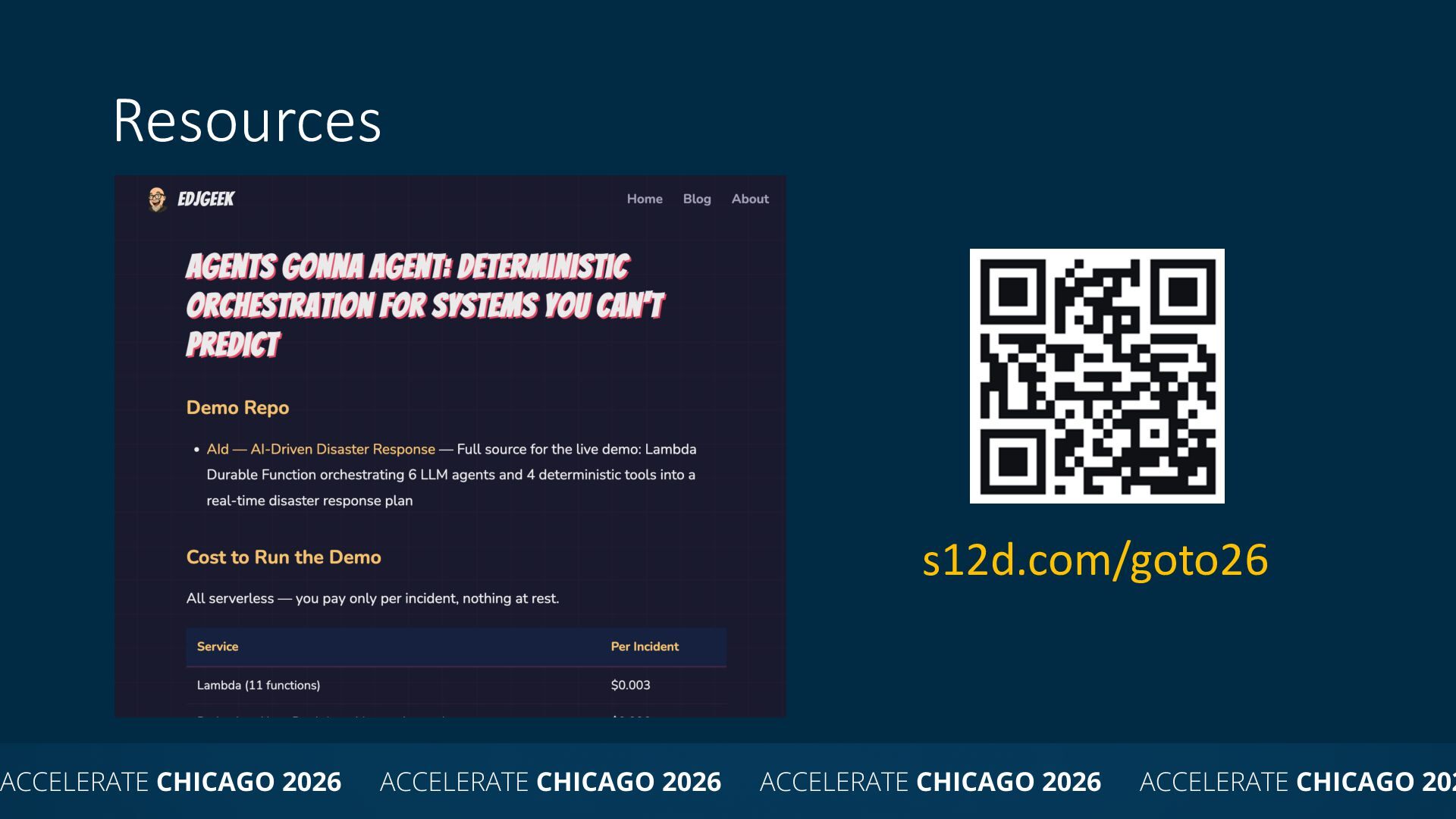
Agents fail in production not because they break — but because correct agents interact in ways nobody planned for. This talk covers deterministic orchestration patterns for multi-agent systems: when to use tools over agents, how to encode implicit contracts explicitly, and how AWS Lambda Durable Functions give you checkpointing, replay, and parallel execution in plain Python. Resources, demo repo, and pricing breakdown: https://edjgeek.com/resources/accelerate-chicago-2026/

Avatar for Eric Johnson

Eric Johnson

June 23, 2026

Other Decks in Technology

Transcript

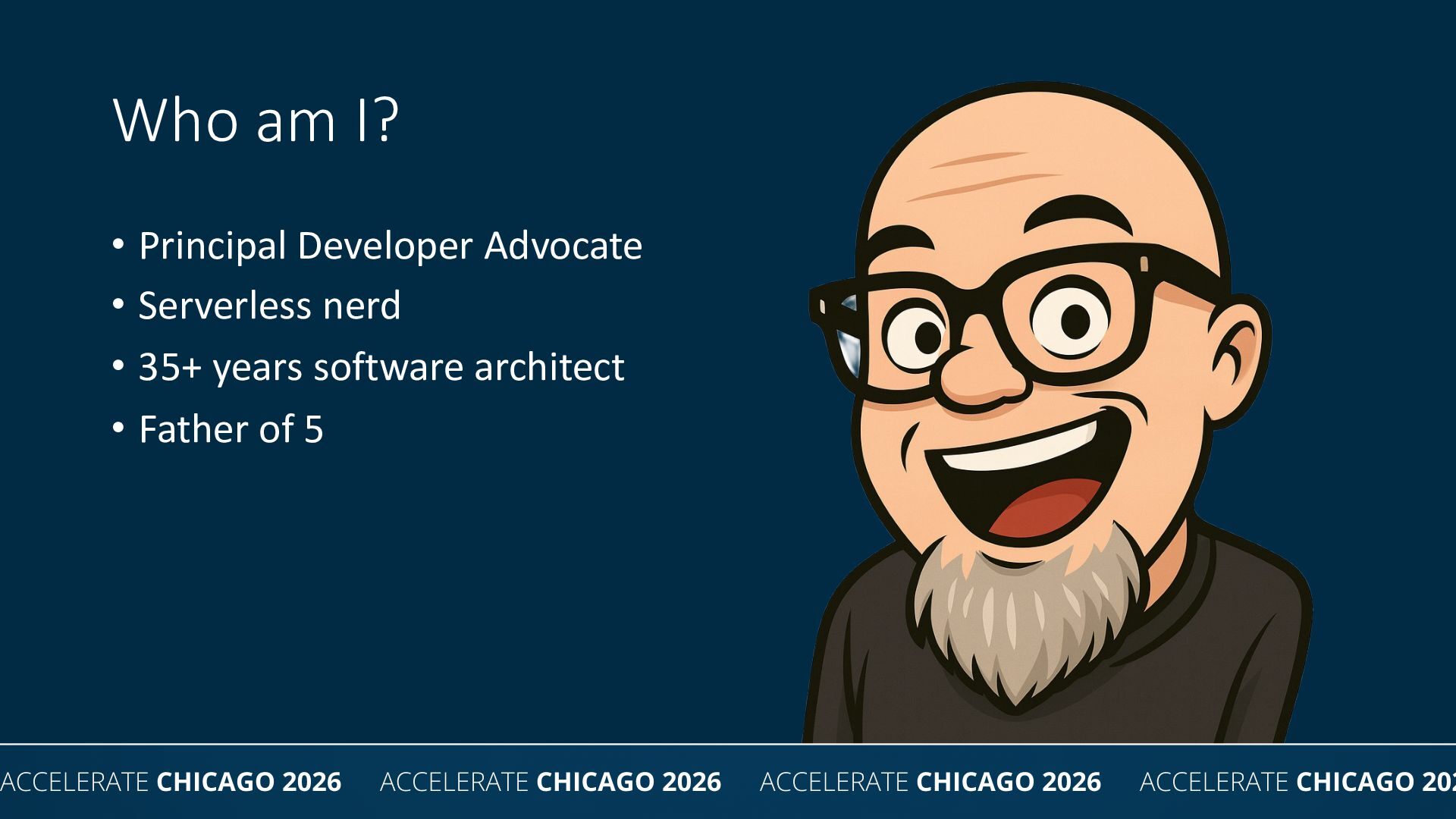
  1. Who am I? • Principal Developer Advocate • Serverless nerd

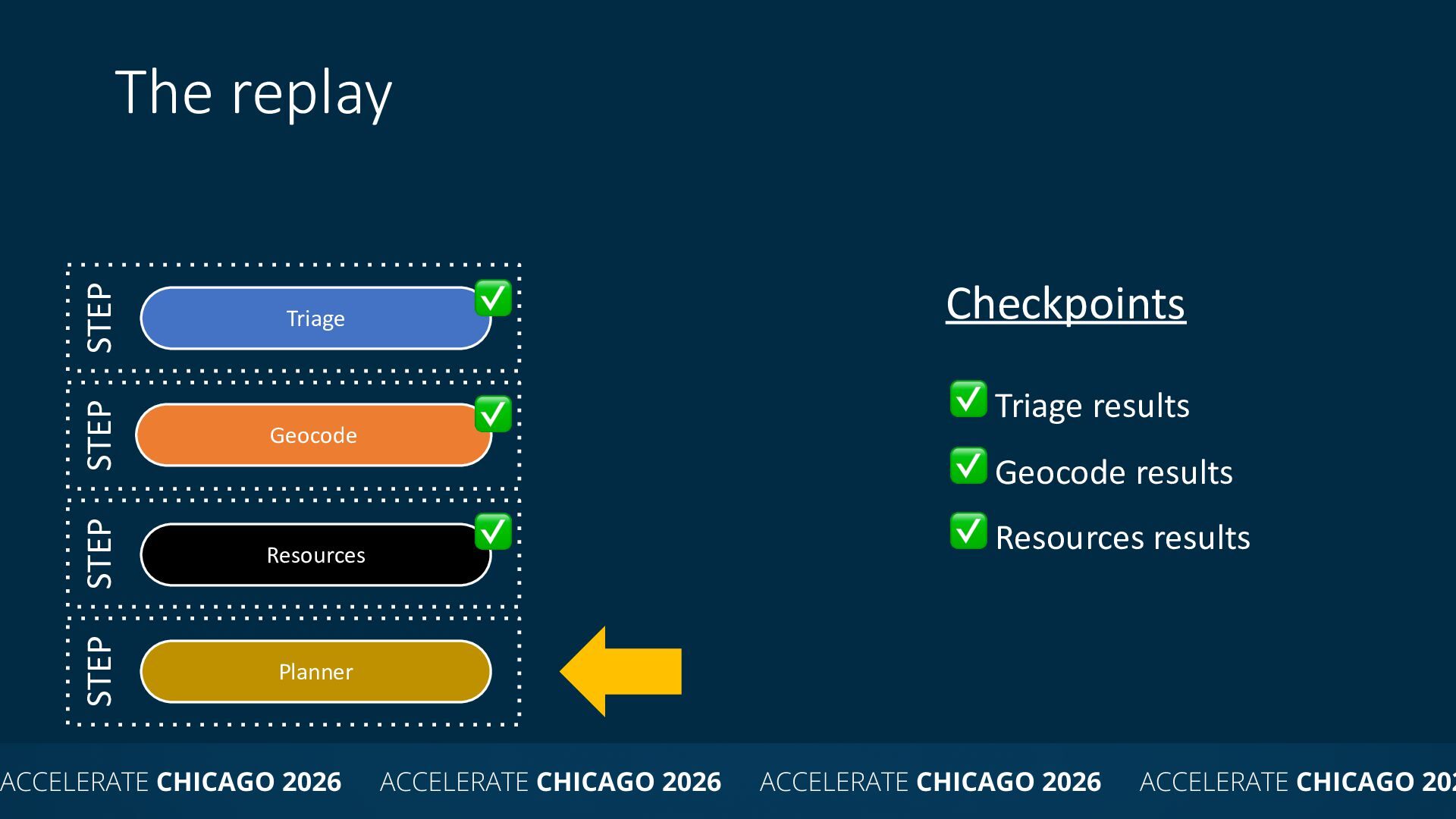
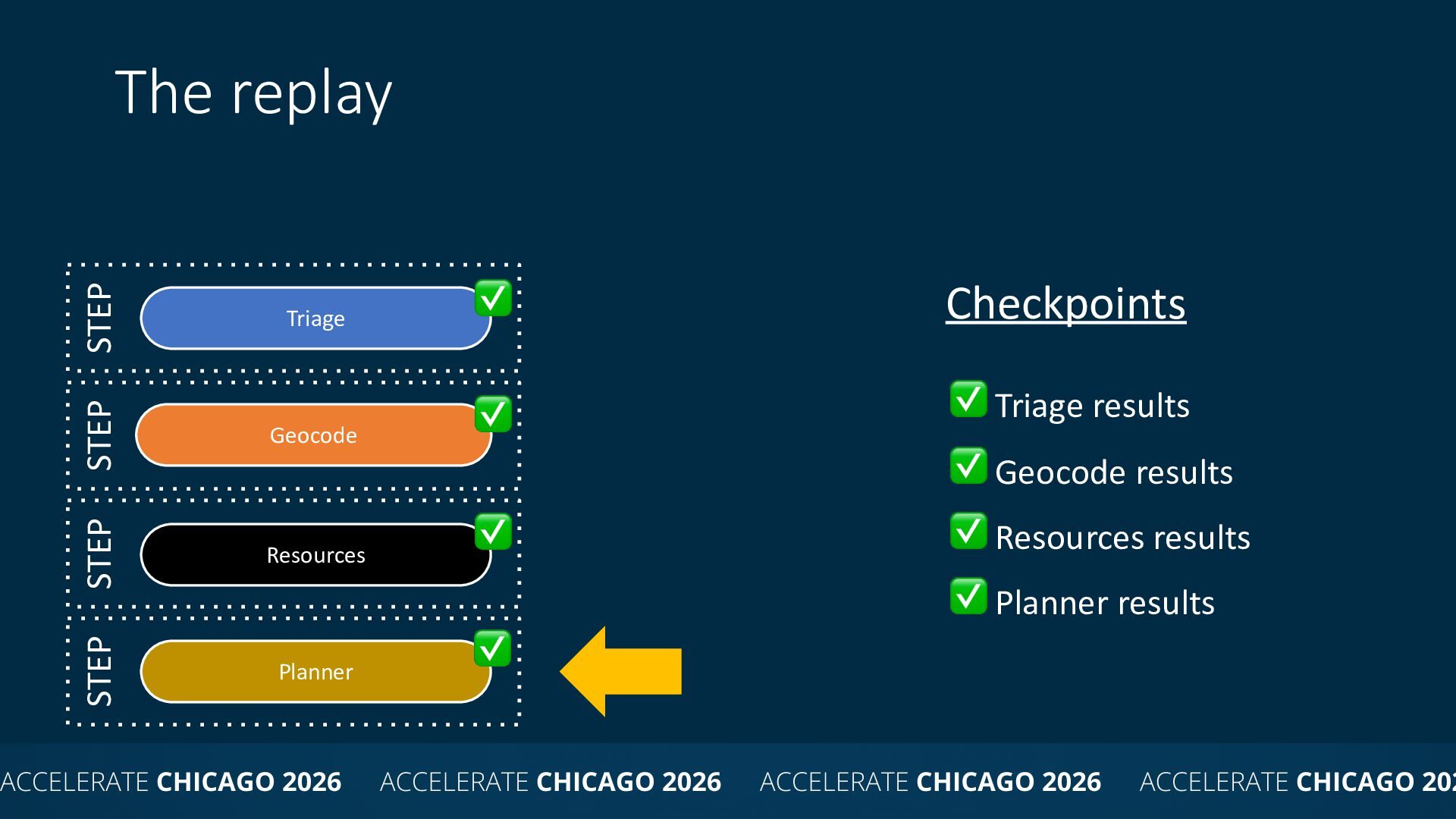
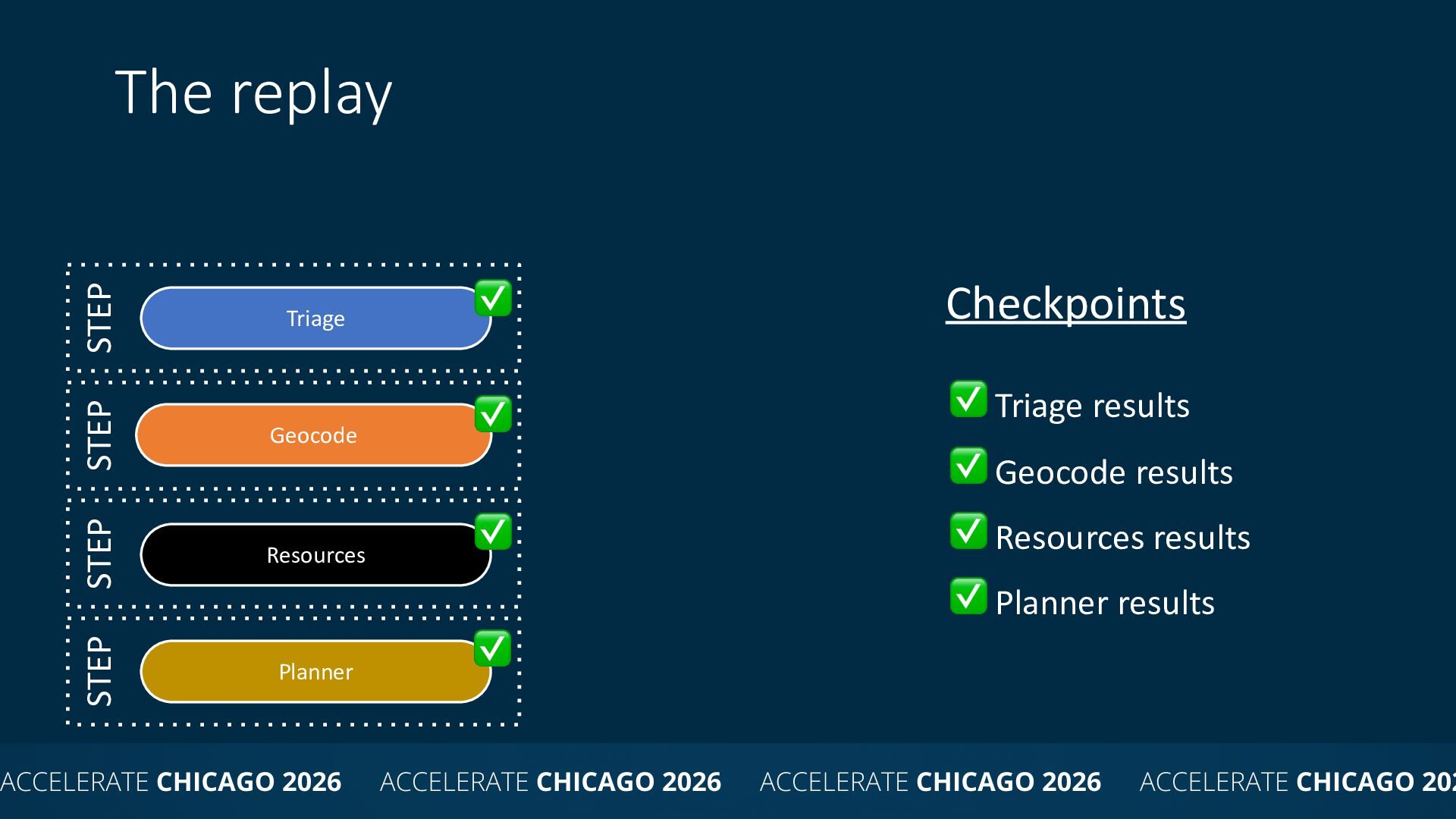
    • 35+ years software architect • Father of 5
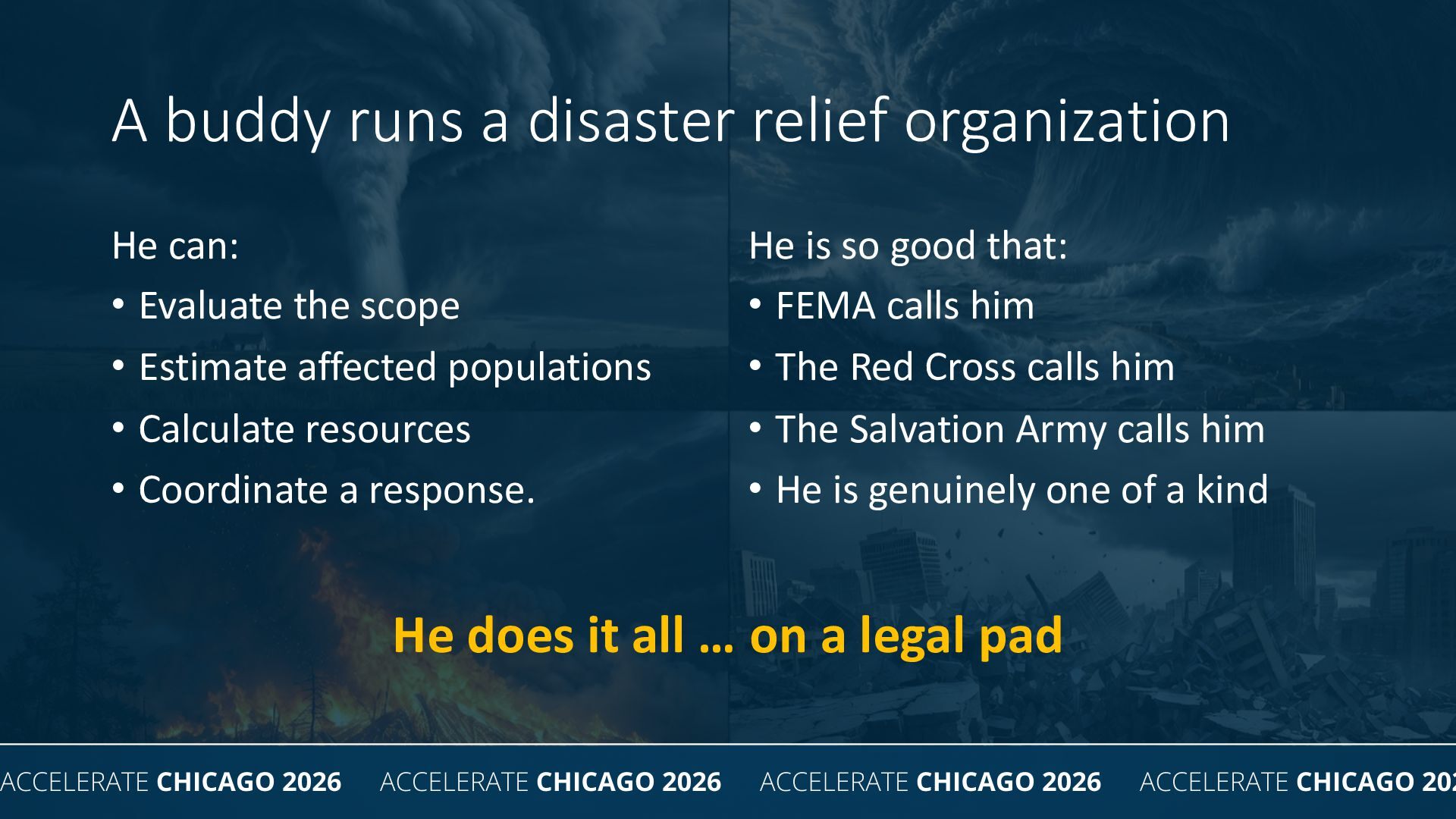
  2. A buddy runs a disaster relief organization He can: •

    Evaluate the scope • Estimate affected populations • Calculate resources • Coordinate a response. He is so good that: • FEMA calls him • The Red Cross calls him • The Salvation Army calls him • He is genuinely one of a kind He does it all … on a legal pad
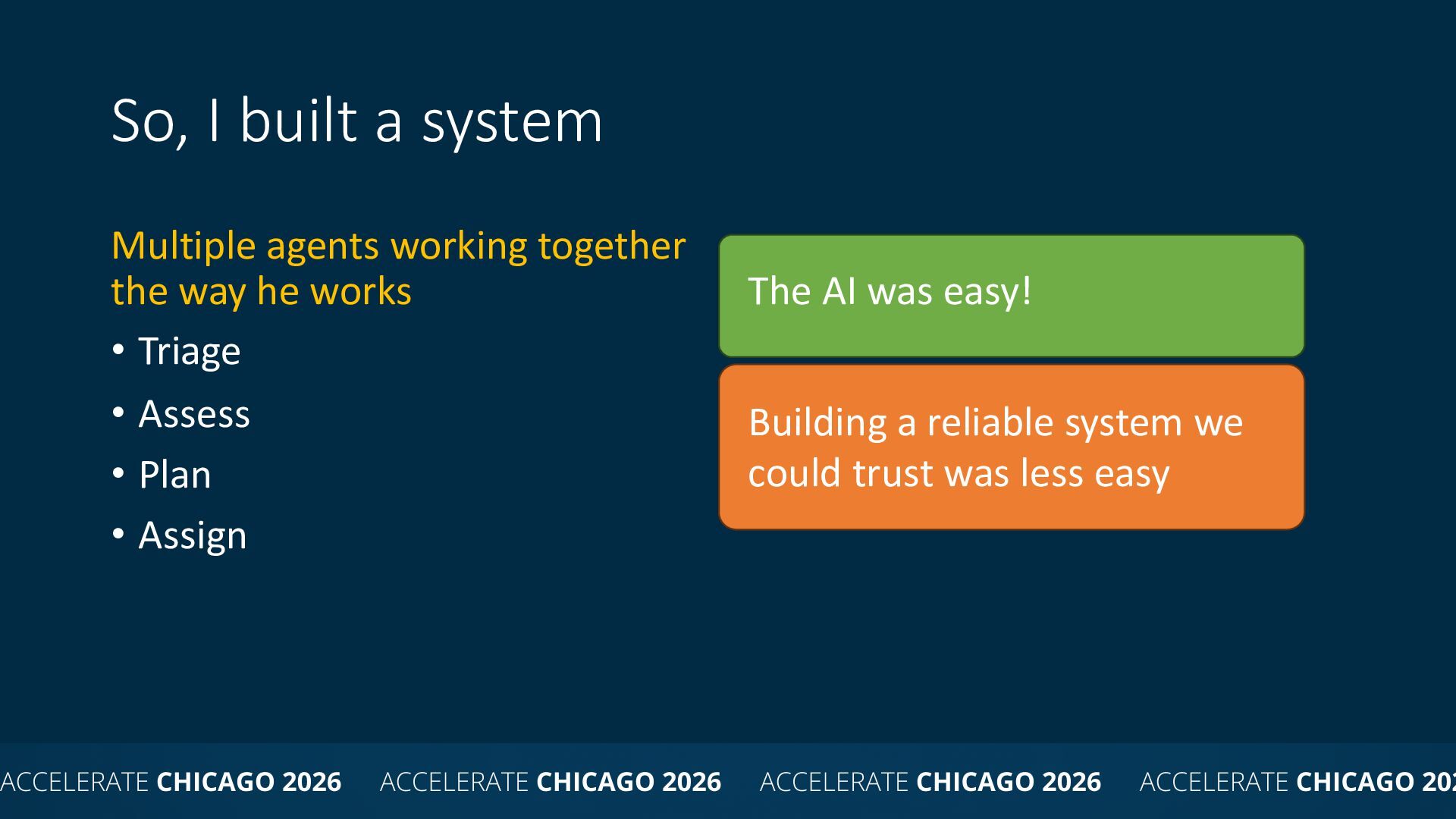
  3. So, I built a system Multiple agents working together the

    way he works • Triage • Assess • Plan • Assign The AI was easy! Building a reliable system we could trust was less easy
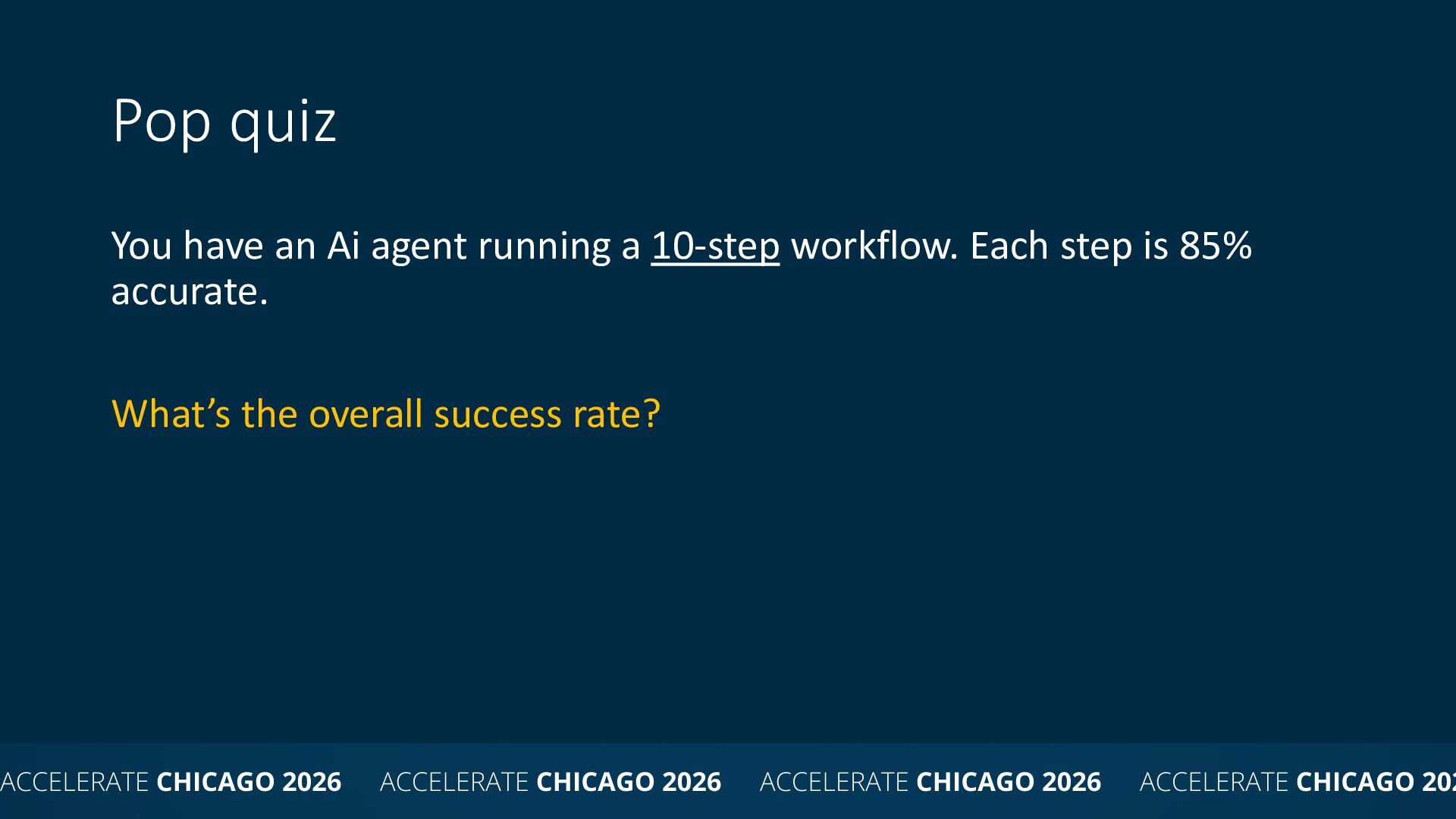
  4. Pop quiz You have an Ai agent running a 10-step

    workflow. Each step is 85% accurate. What’s the overall success rate?
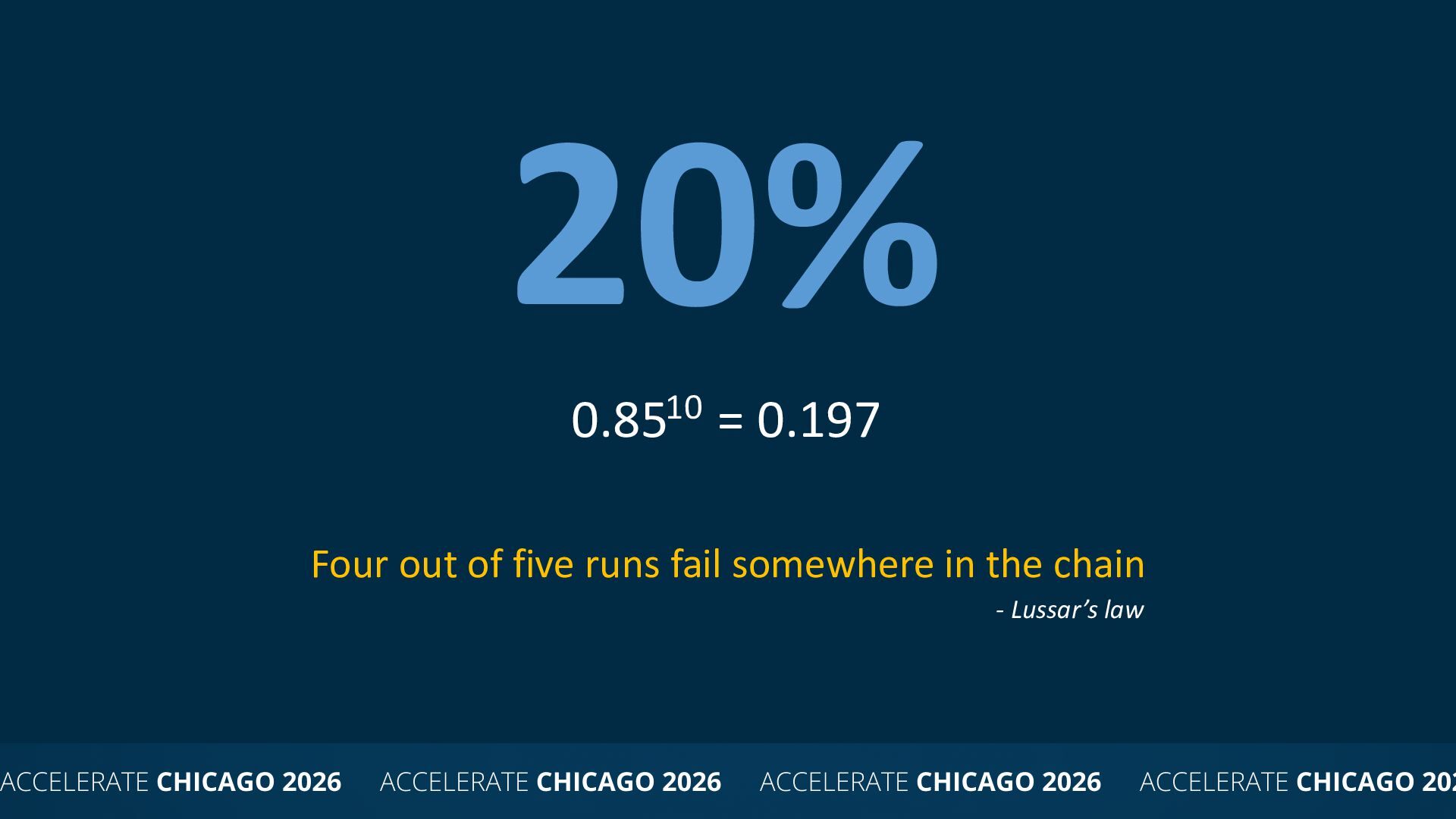
  5. 20% 0.85 = 0.197 10 Four out of five runs

    fail somewhere in the chain - Lussar’s law
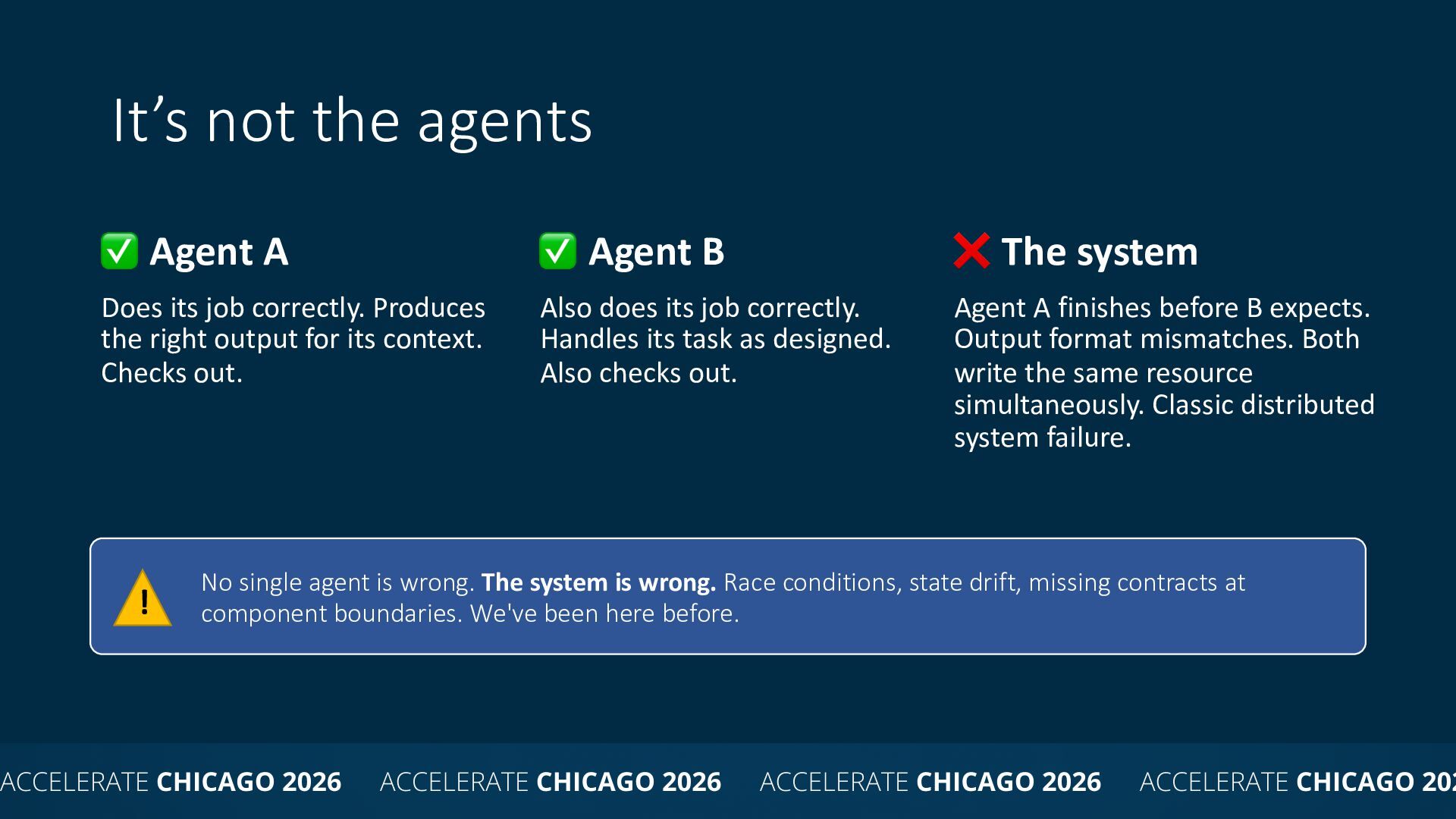
  6. It’s not the agents Agent A Does its job correctly.

    Produces the right output for its context. Checks out. ✅ Agent B Also does its job correctly. Handles its task as designed. Also checks out. ✅ The system Agent A finishes before B expects. Output format mismatches. Both write the same resource simultaneously. Classic distributed system failure. ❌ No single agent is wrong. The system is wrong. Race conditions, state drift, missing contracts at component boundaries. We've been here before. !
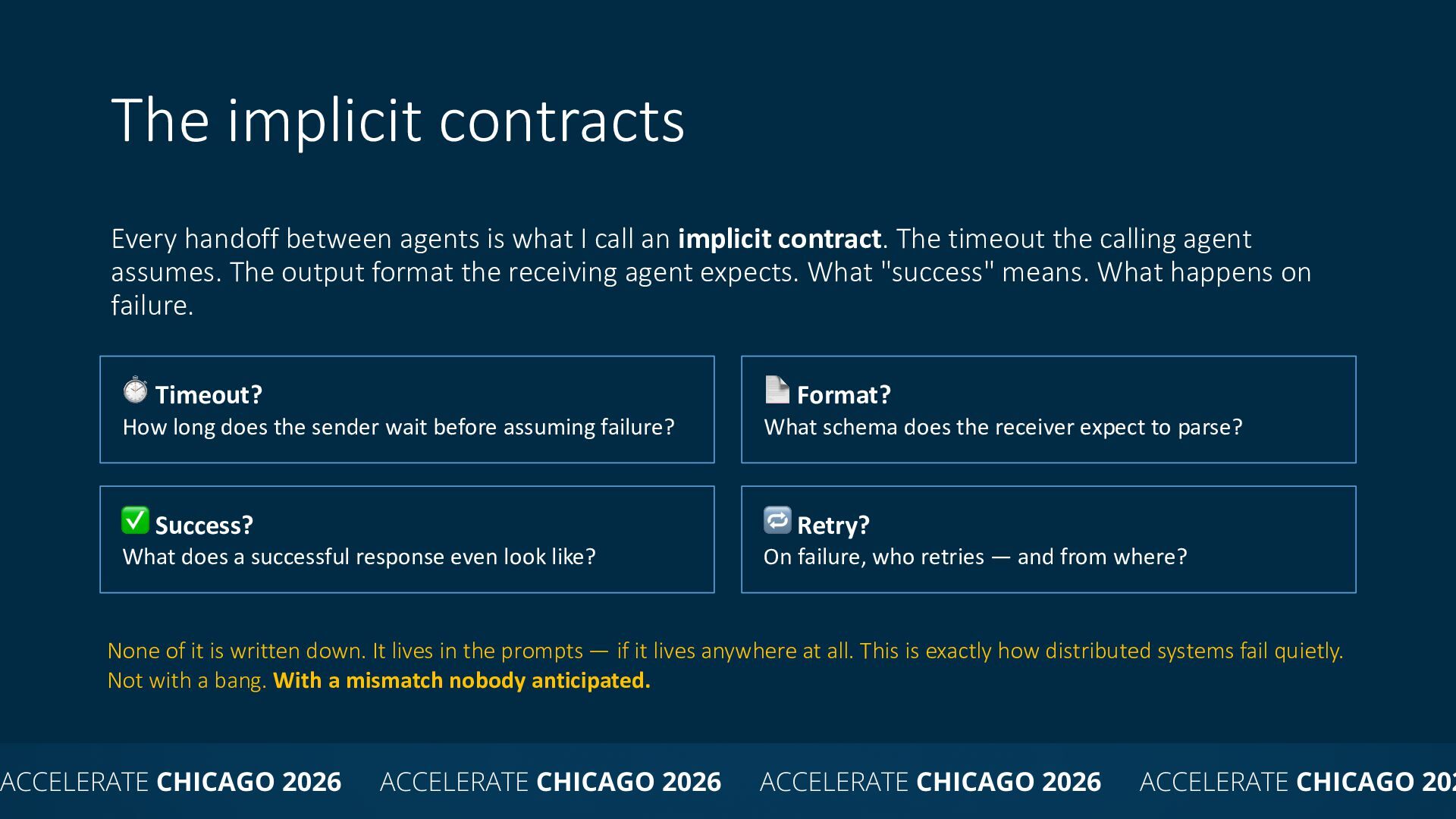
  7. The implicit contracts Every handoff between agents is what I

    call an implicit contract. The timeout the calling agent assumes. The output format the receiving agent expects. What "success" means. What happens on failure. ⏱ Timeout? How long does the sender wait before assuming failure? 📄 Format? What schema does the receiver expect to parse? ✅ Success? What does a successful response even look like? 🔁 Retry? On failure, who retries — and from where? None of it is written down. It lives in the prompts — if it lives anywhere at all. This is exactly how distributed systems fail quietly. Not with a bang. With a mismatch nobody anticipated.
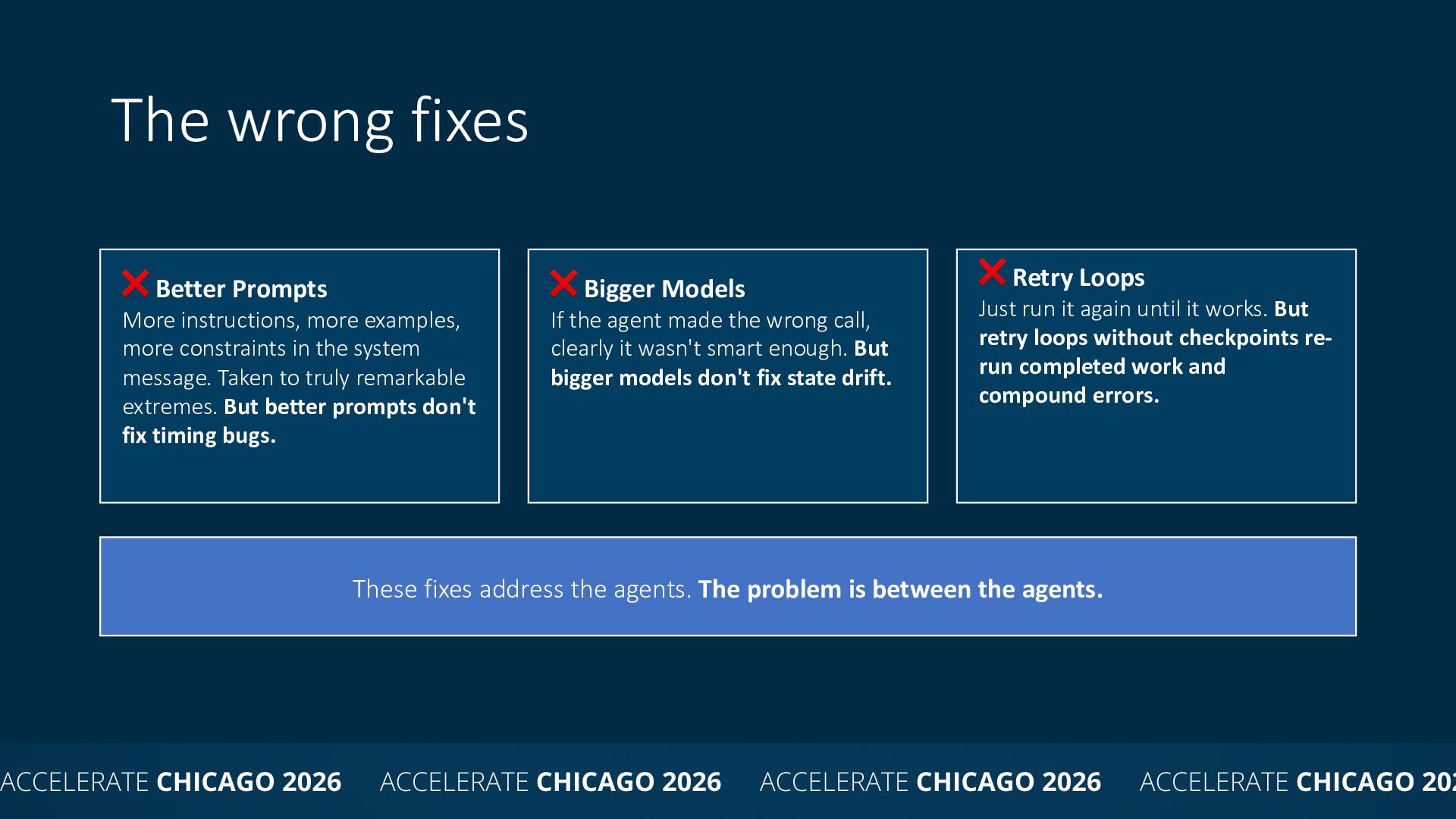
  8. The wrong fixes ❌ Better Prompts More instructions, more examples,

    more constraints in the system message. Taken to truly remarkable extremes. But better prompts don't fix timing bugs. ❌ Bigger Models If the agent made the wrong call, clearly it wasn't smart enough. But bigger models don't fix state drift. ❌ Retry Loops Just run it again until it works. But retry loops without checkpoints re- run completed work and compound errors. These fixes address the agents. The problem is between the agents.
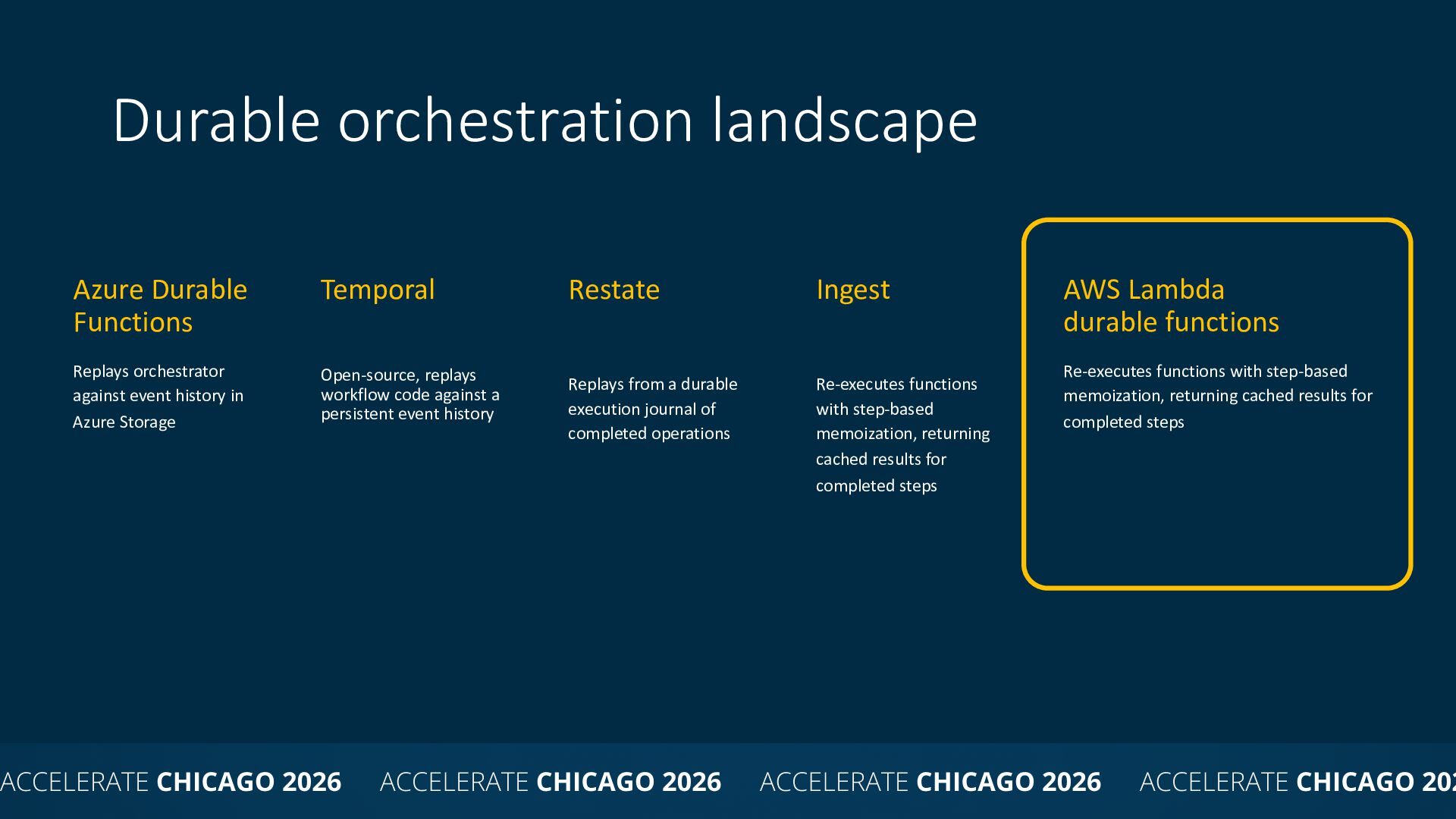
  9. Durable orchestration landscape Azure Durable Functions Replays orchestrator against event

    history in Azure Storage Restate Replays from a durable execution journal of completed operations Temporal Open-source, replays workflow code against a persistent event history Ingest Re-executes functions with step-based memoization, returning cached results for completed steps AWS Lambda durable functions Re-executes functions with step-based memoization, returning cached results for completed steps
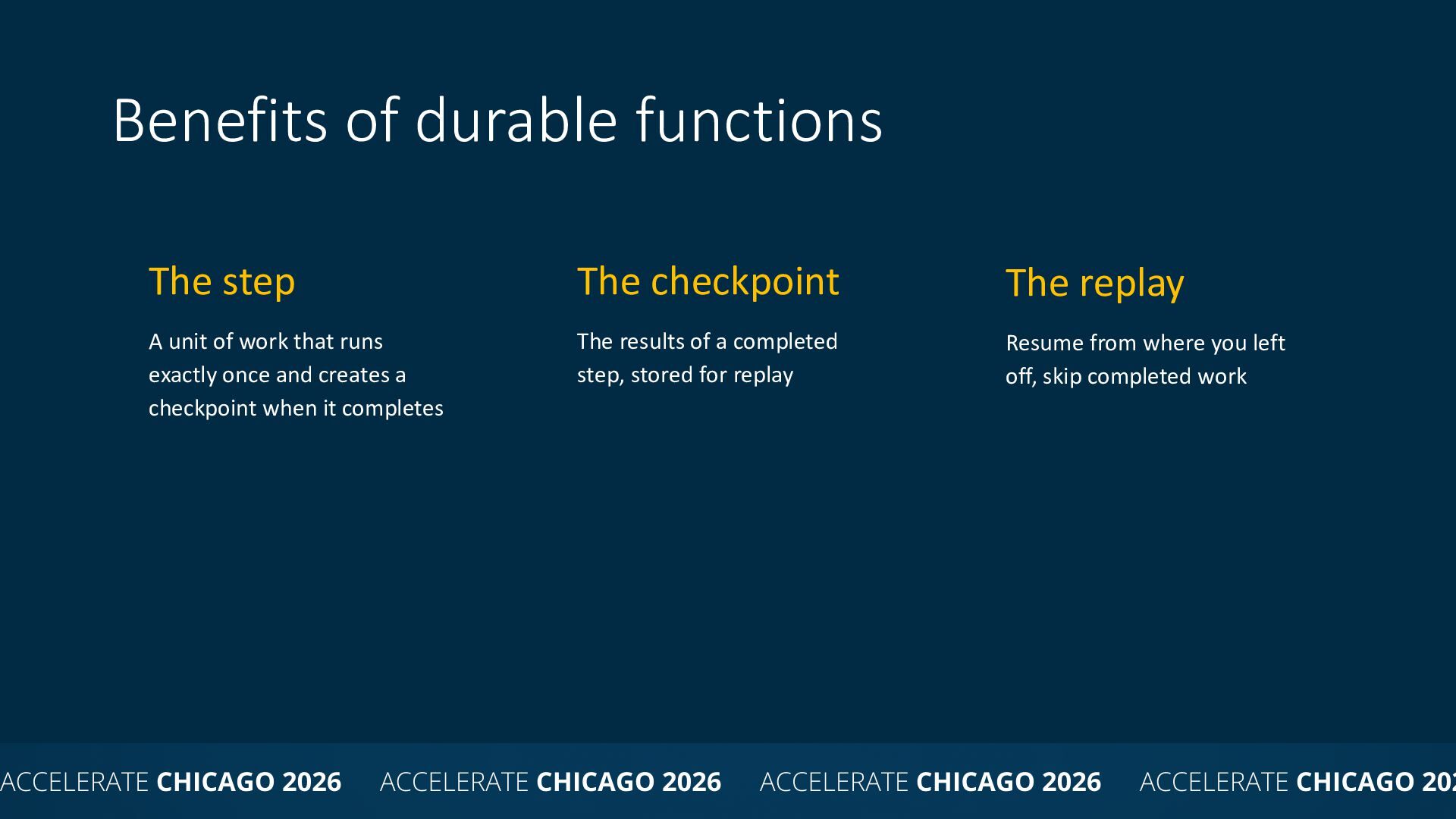
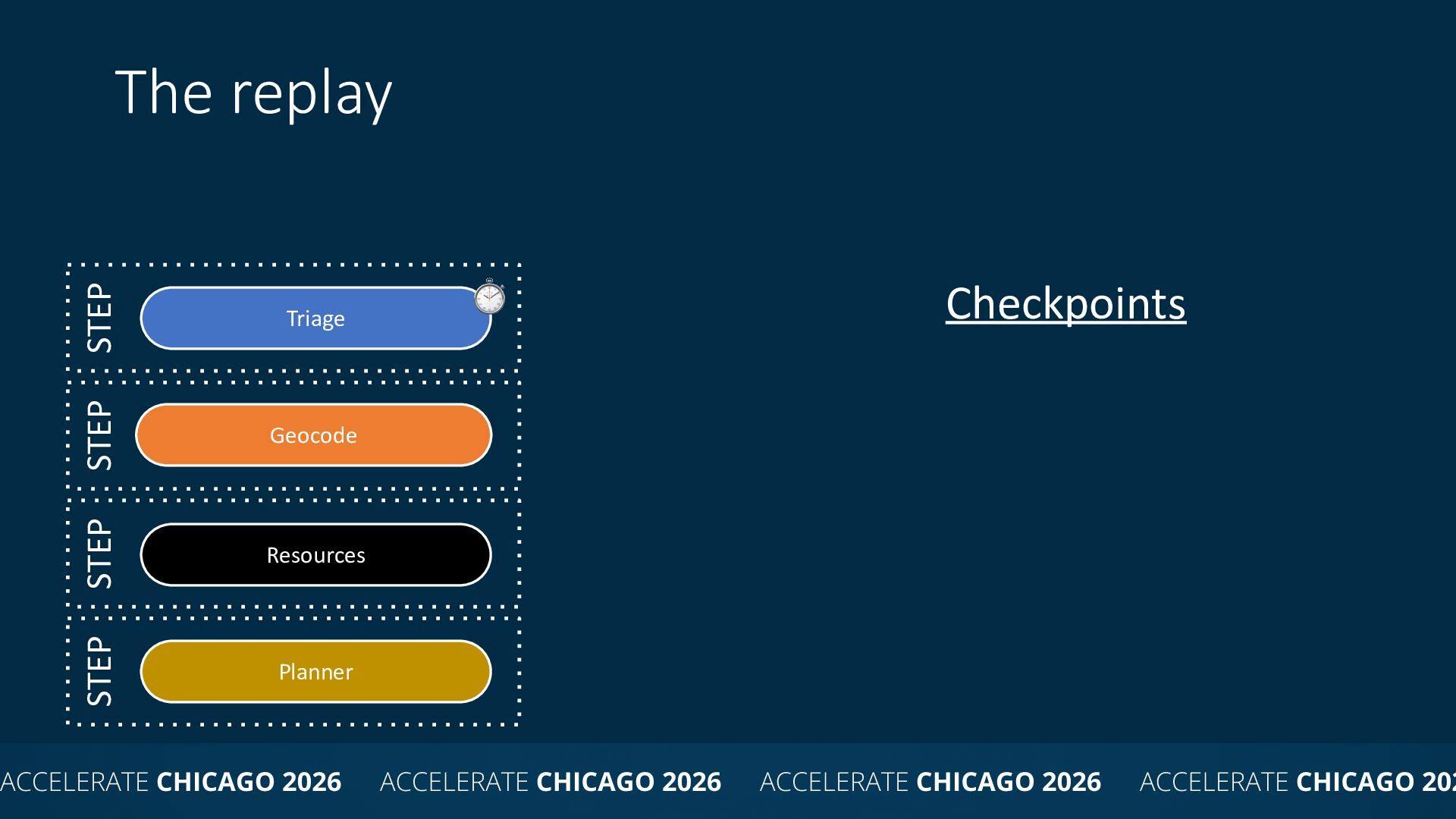
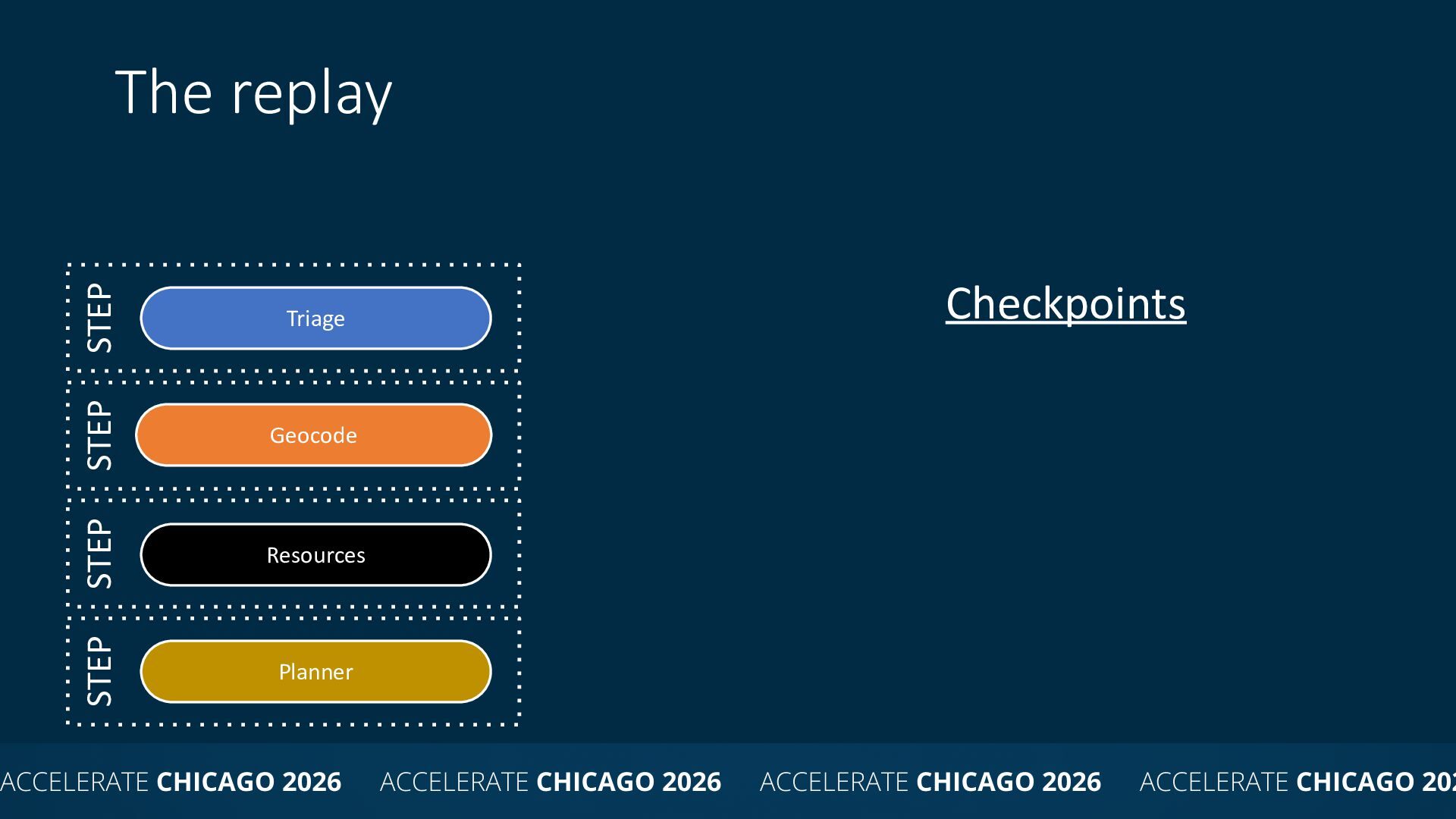
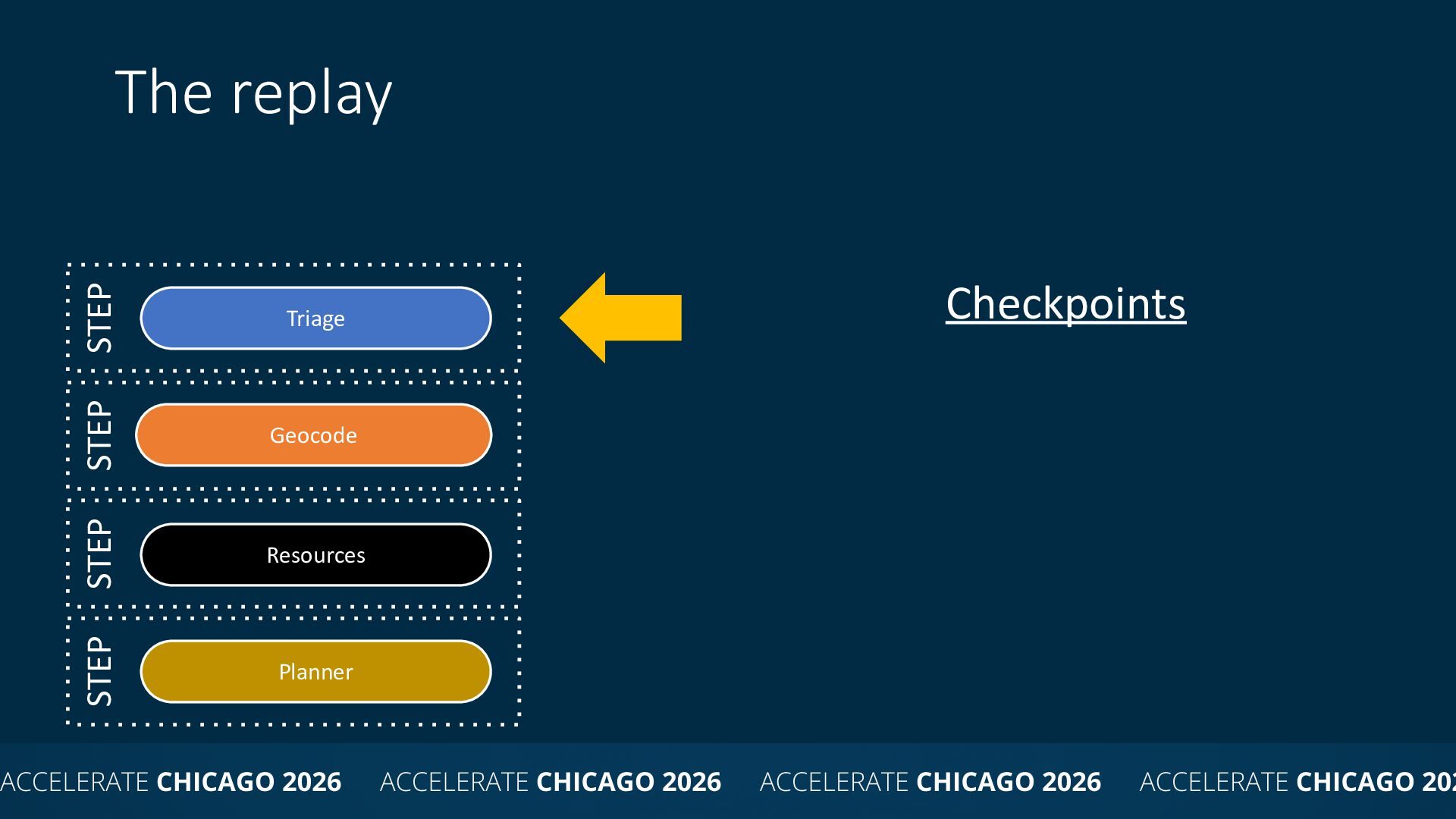
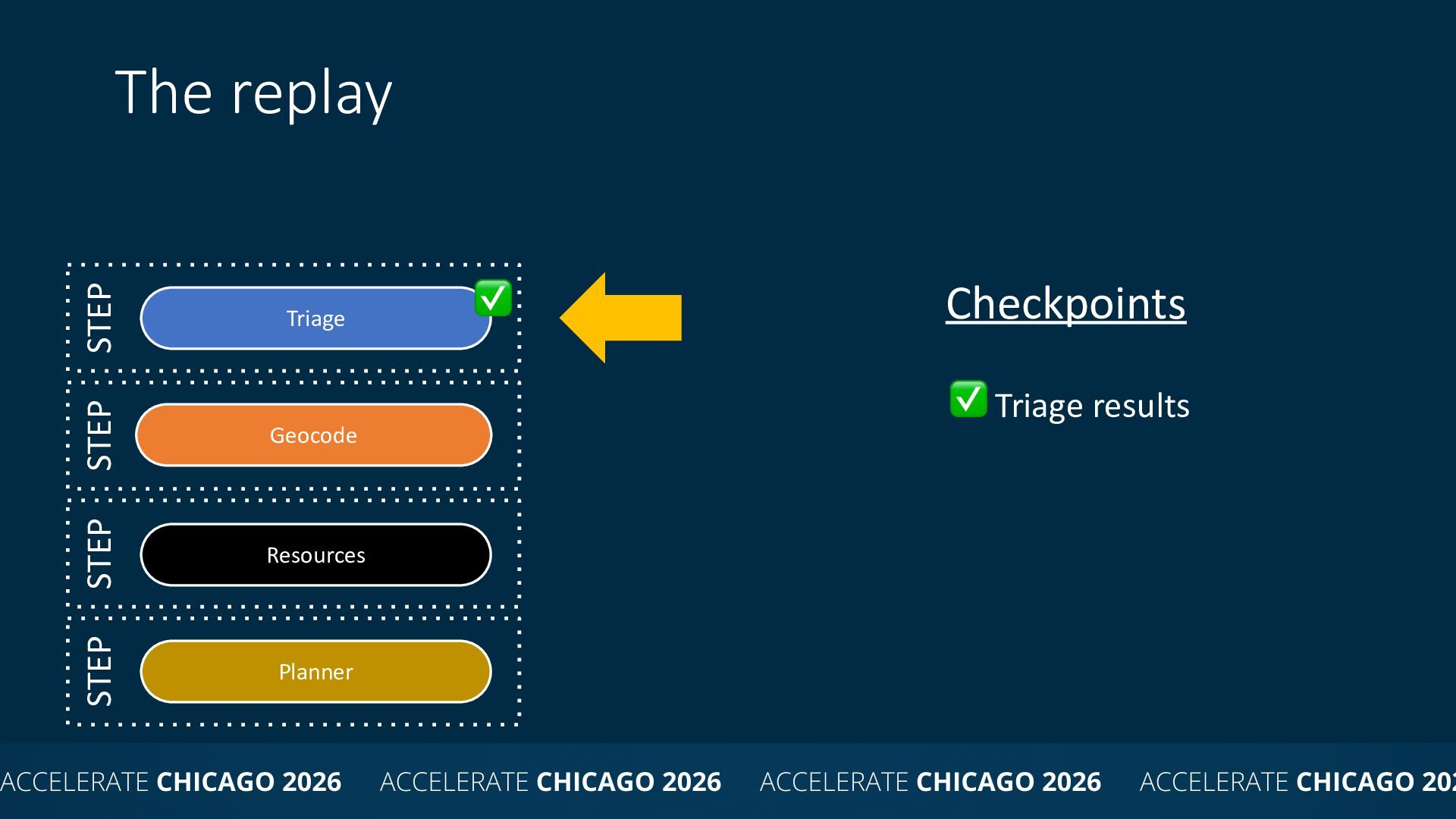
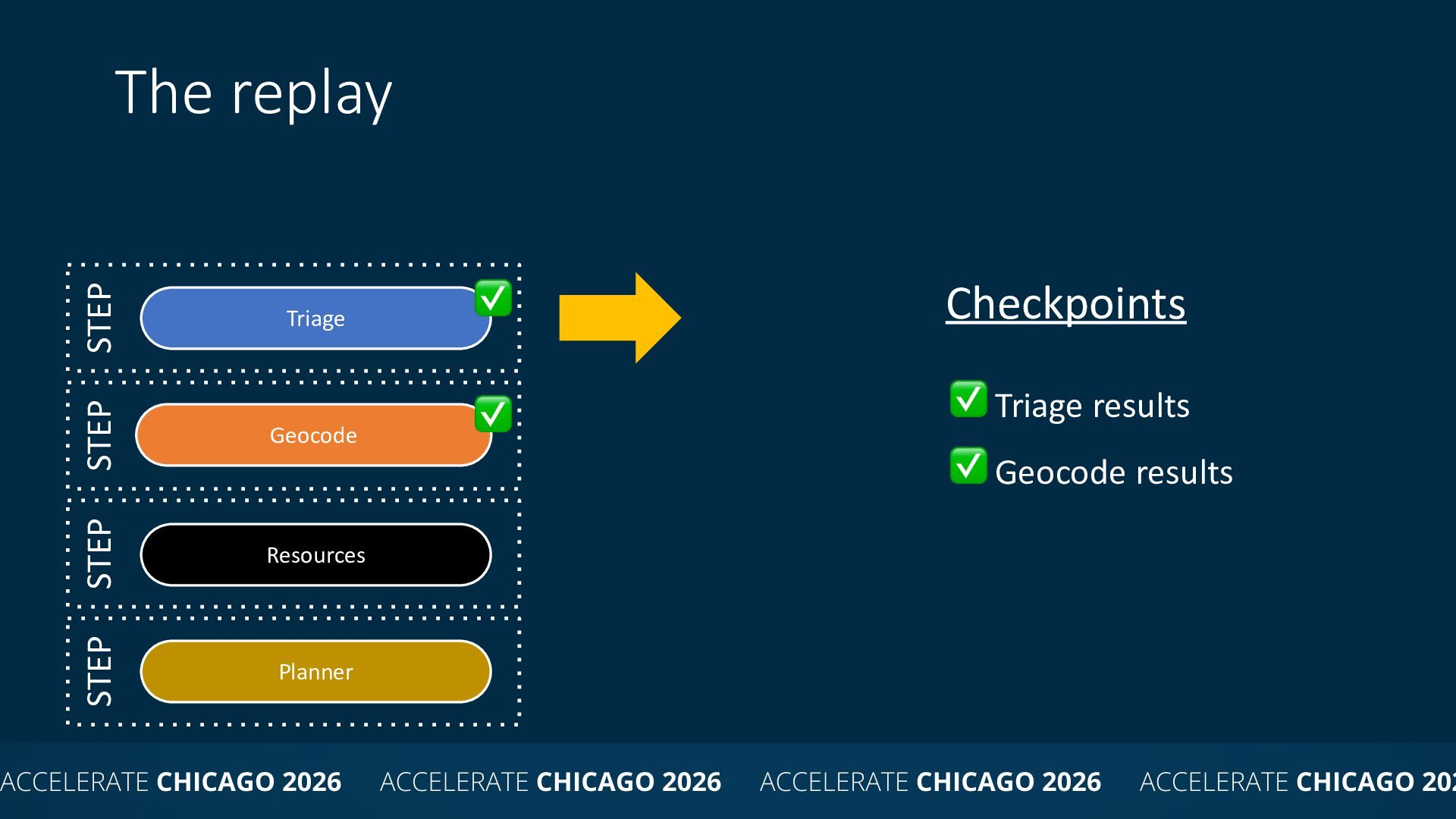
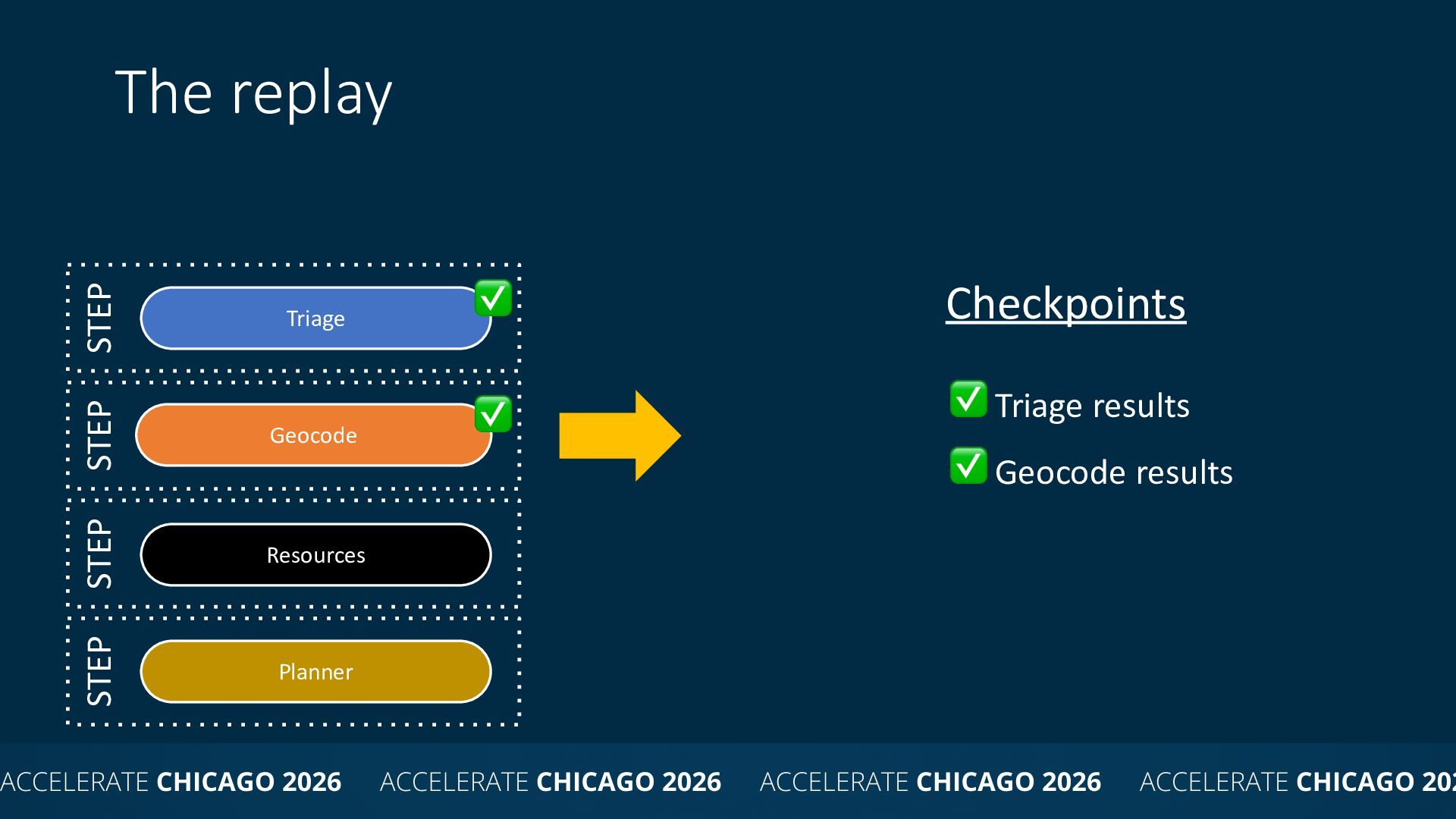
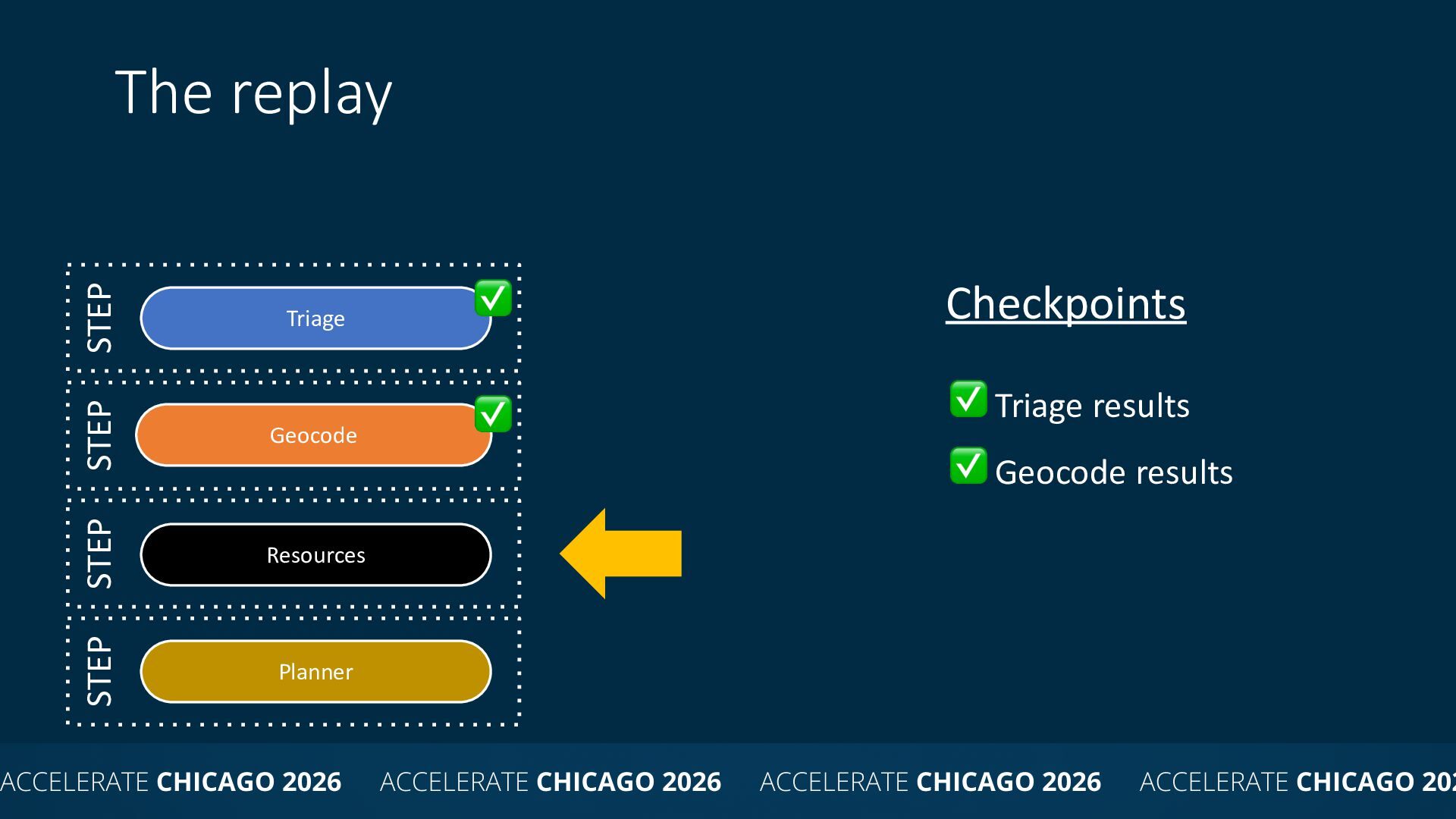
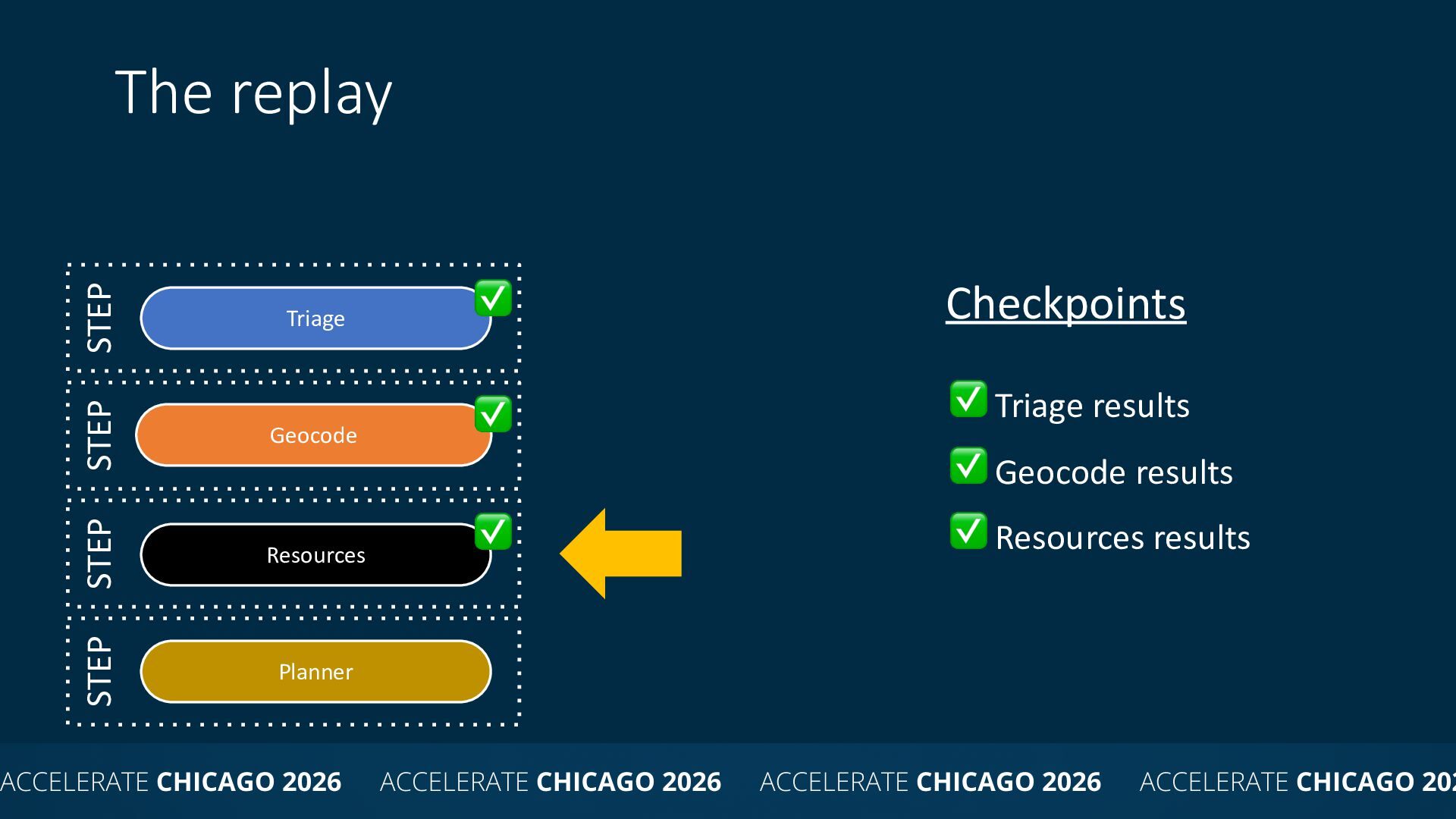
  10. Benefits of durable functions The step A unit of work

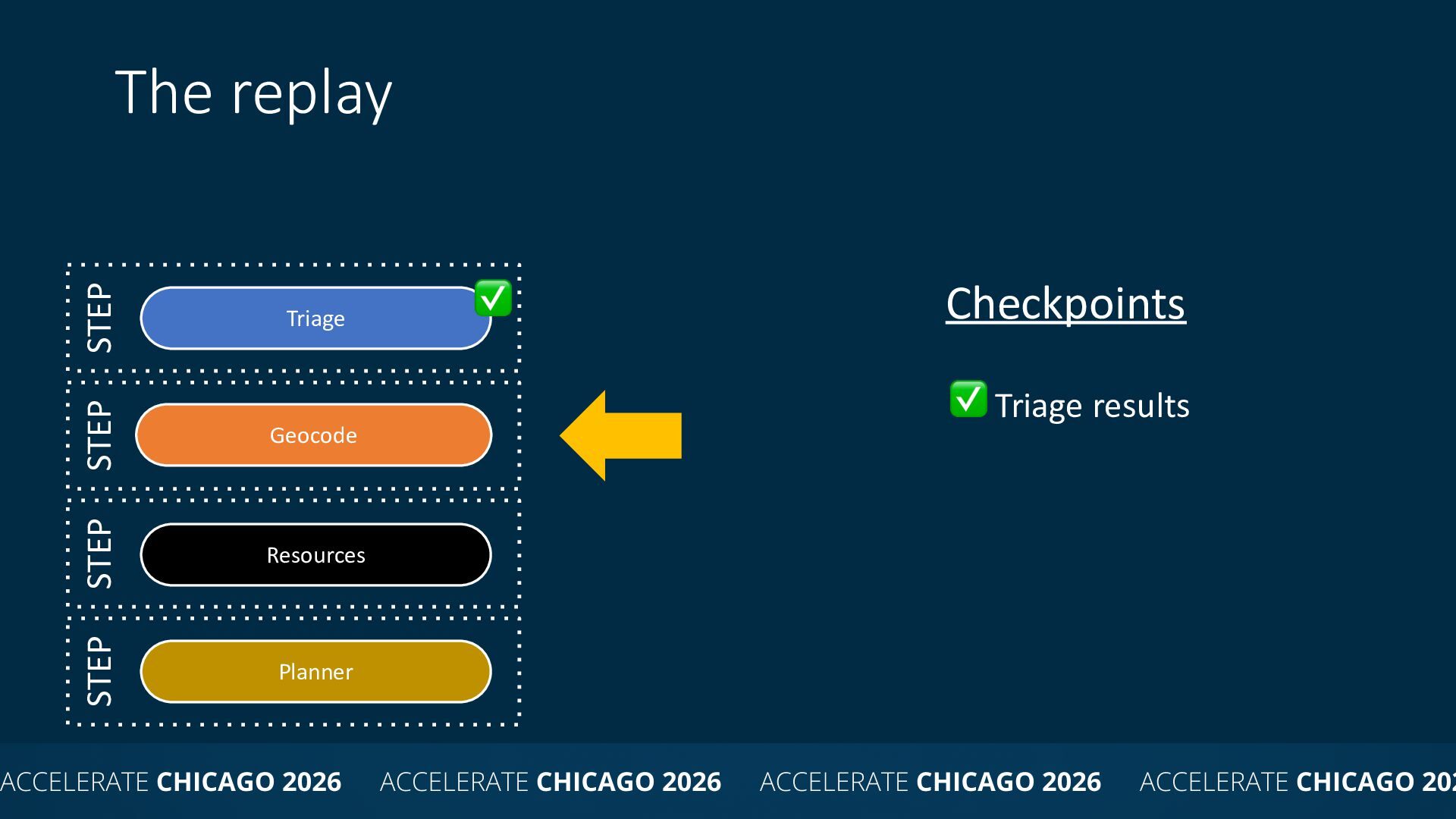
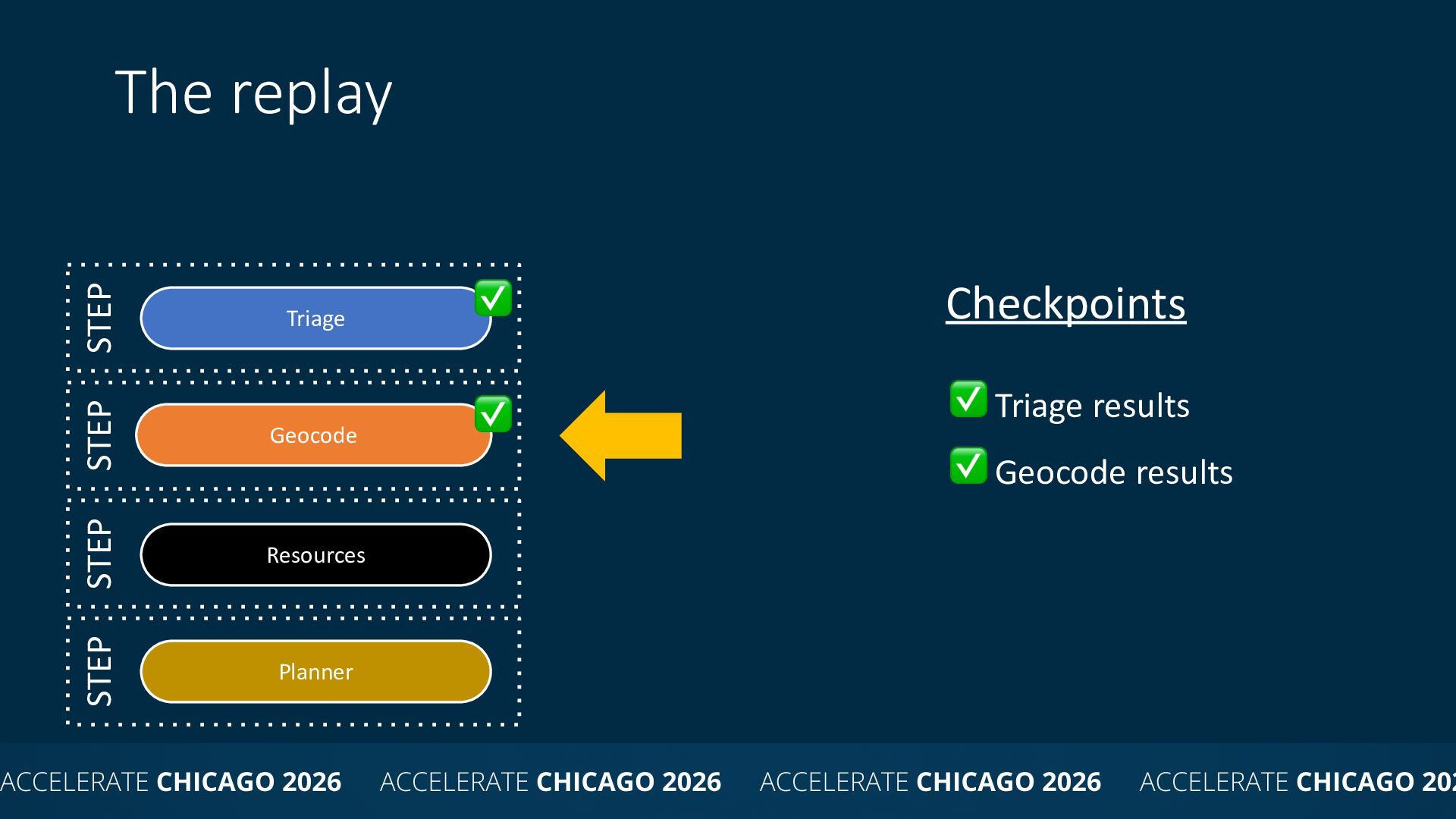
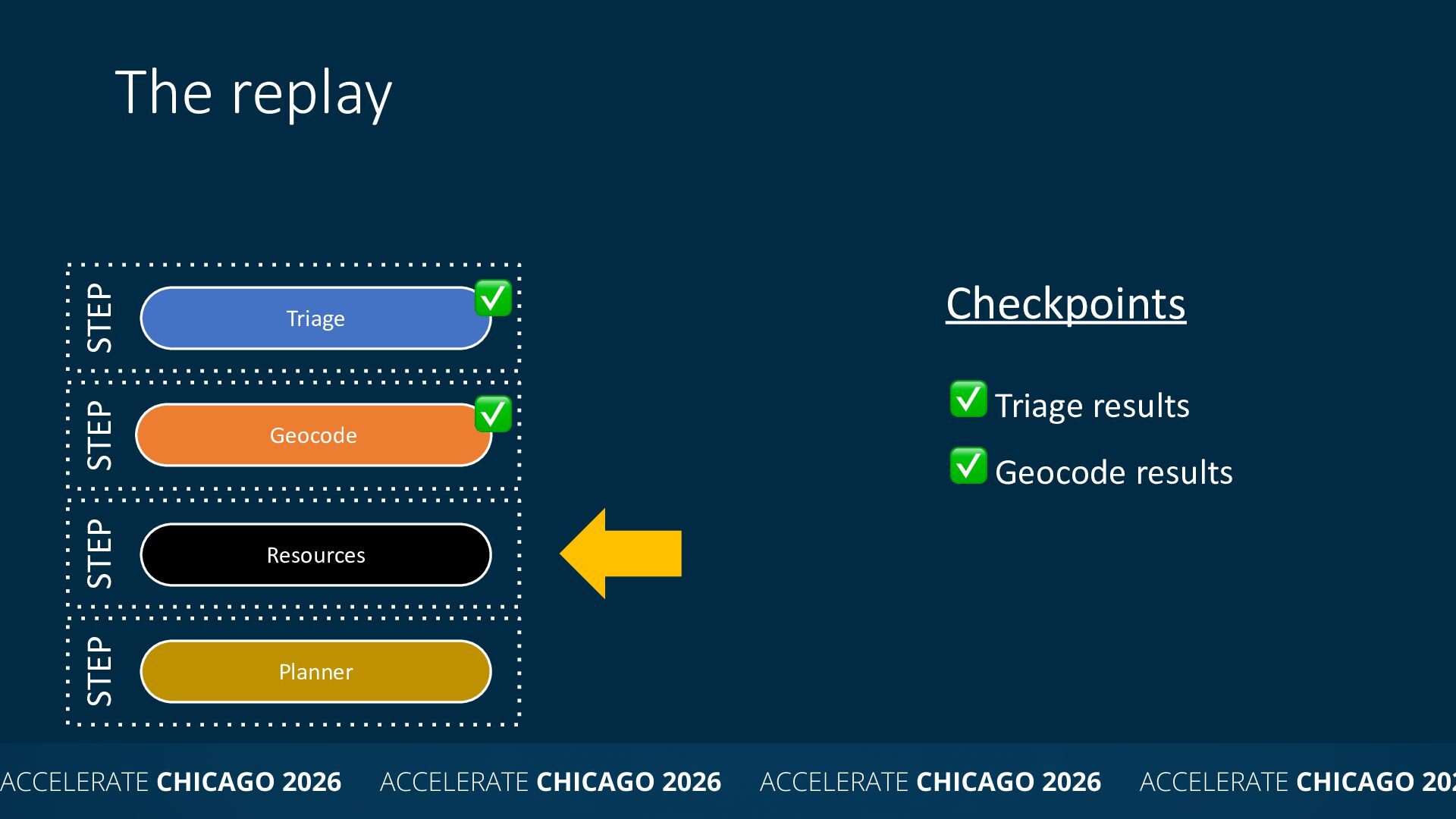
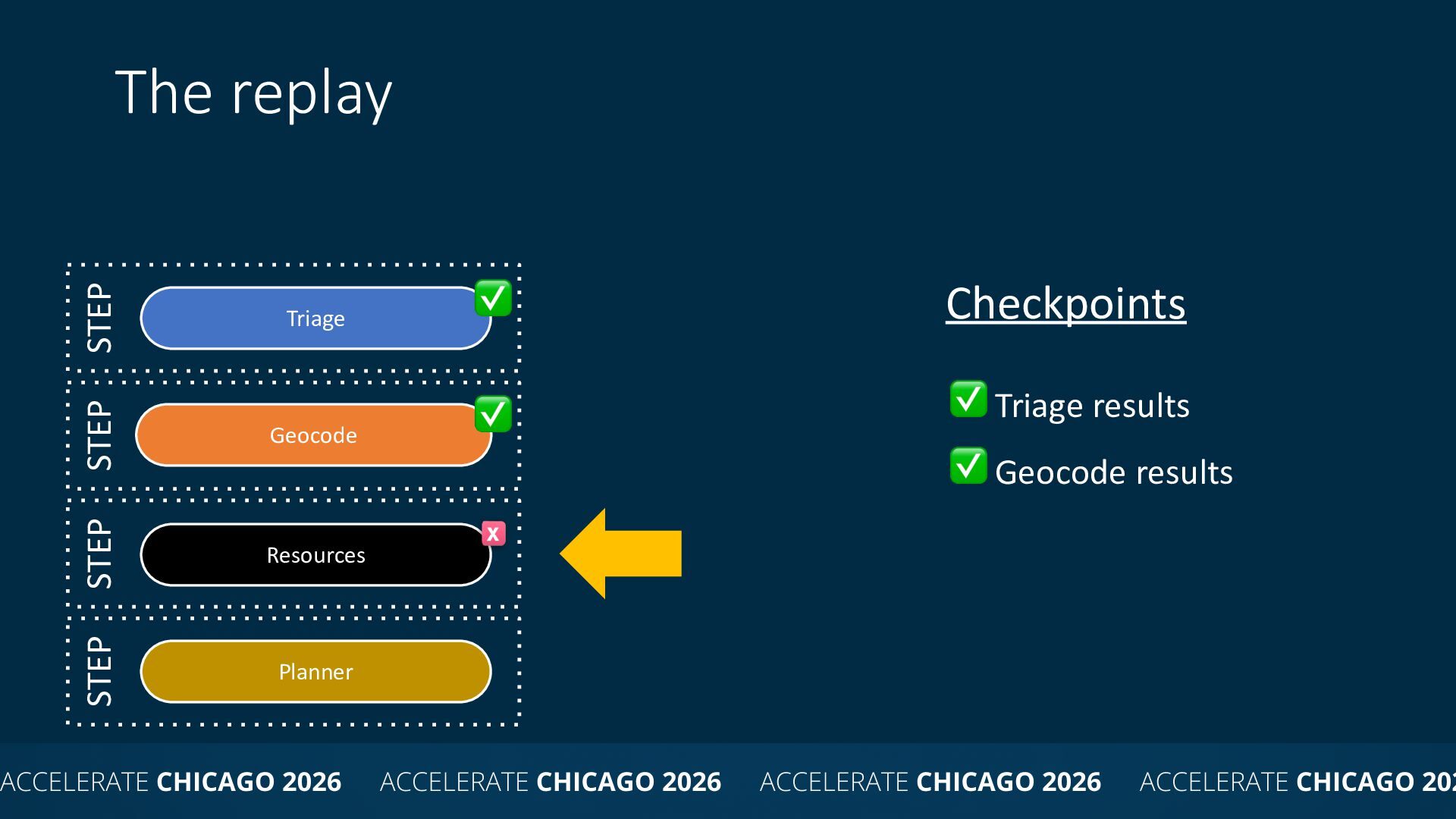
    that runs exactly once and creates a checkpoint when it completes The checkpoint The results of a completed step, stored for replay The replay Resume from where you left off, skip completed work
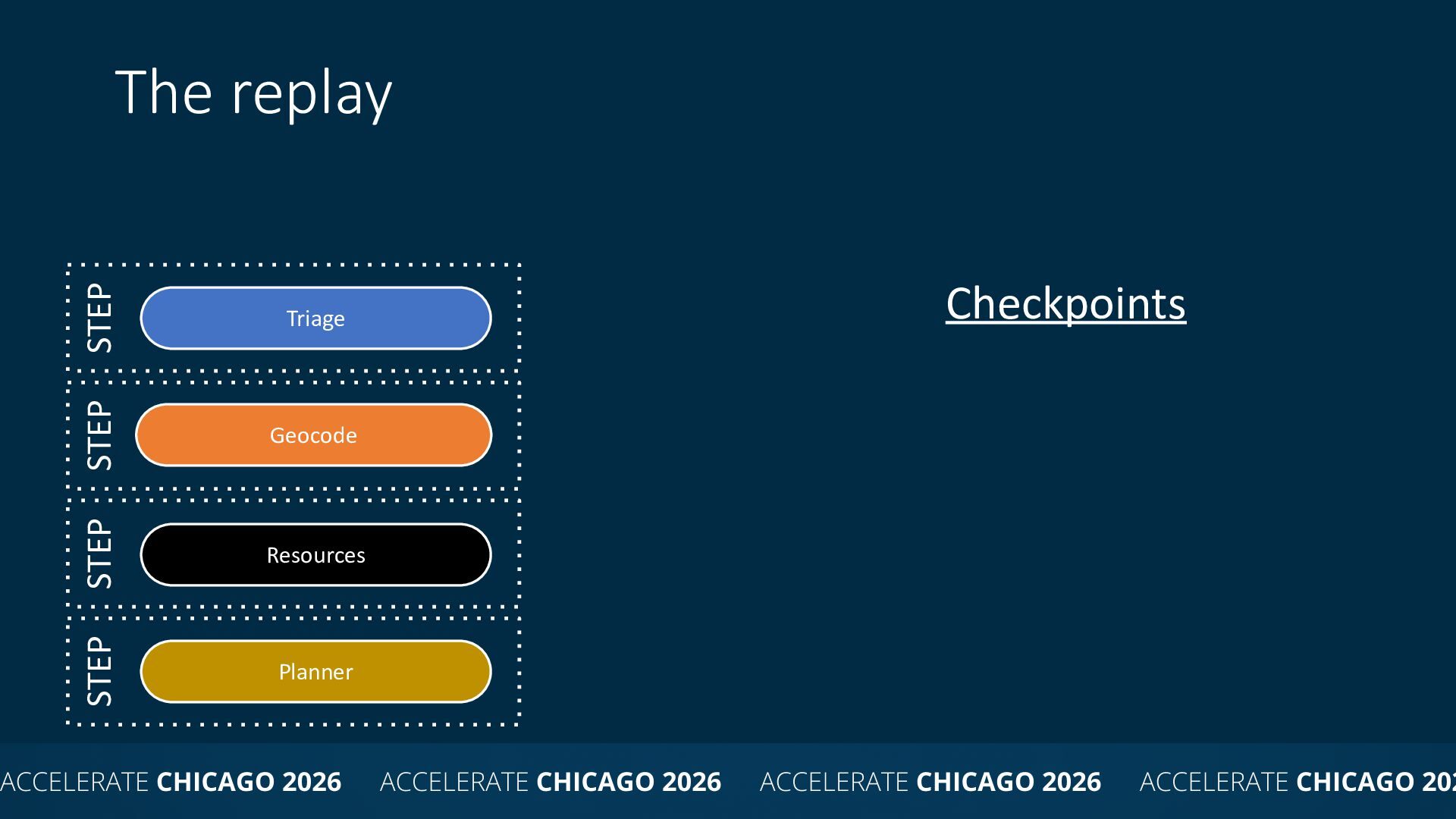
  11. STEP STEP STEP STEP The replay Checkpoints ✅ Triage results

    ✅ Geocode results Geocode Resources Planner Triage ✅ ✅
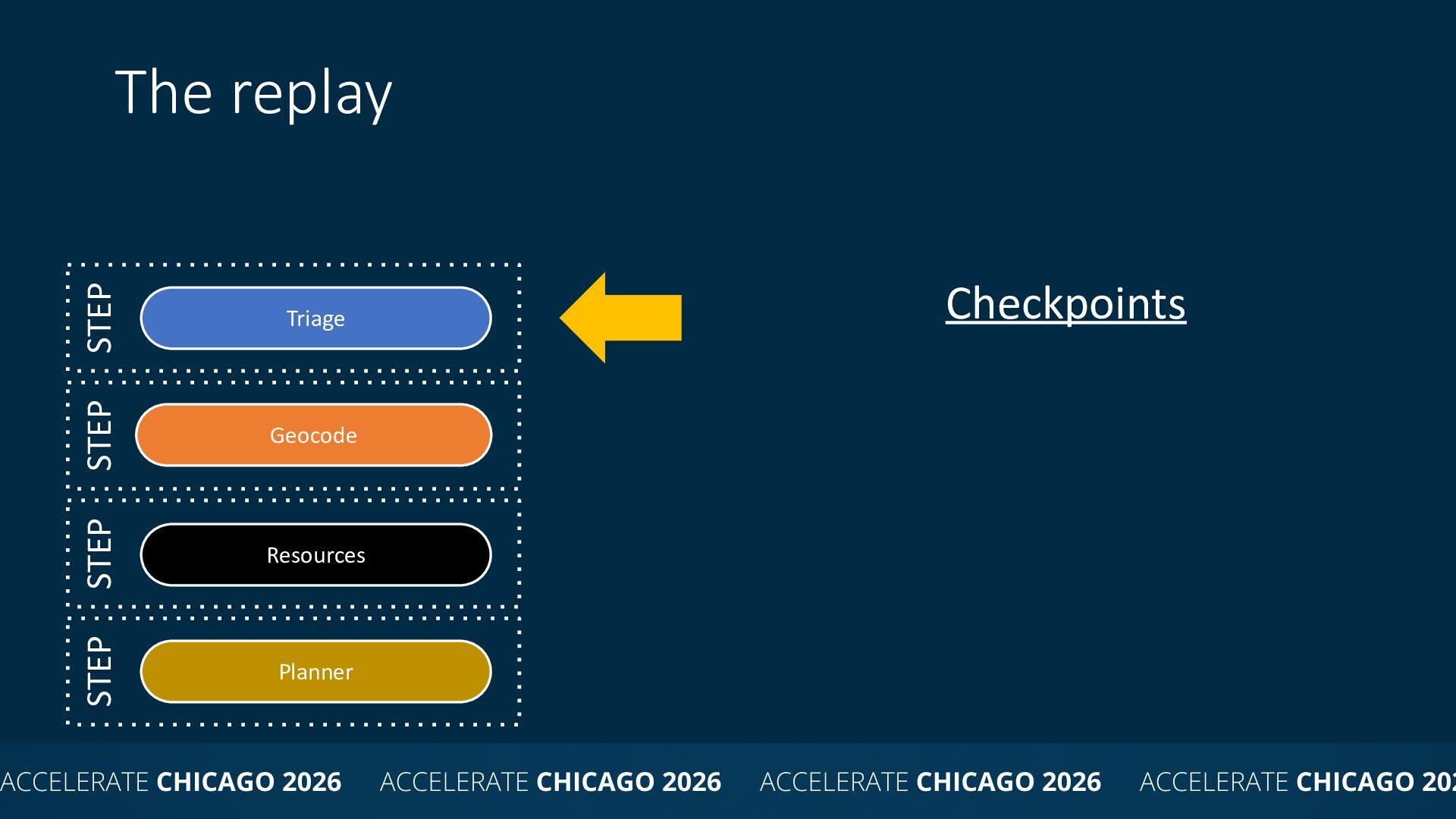
  12. STEP STEP STEP STEP The replay Checkpoints ✅ Triage results

    ✅ Geocode results Geocode Resources Planner Triage ✅ ✅
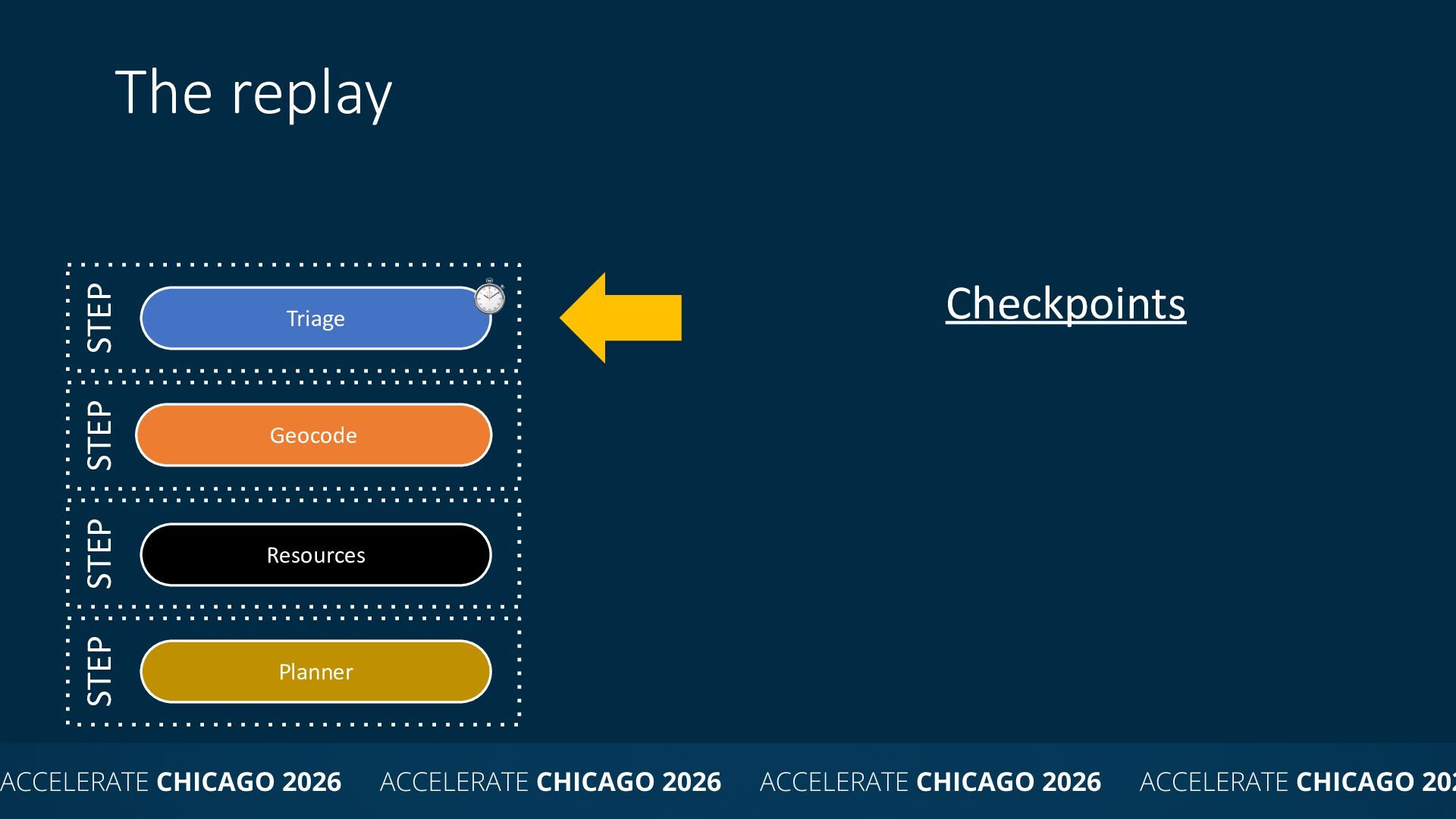
  13. STEP STEP STEP STEP The replay Checkpoints ✅ Triage results

    ✅ Geocode results Geocode Resources Planner Triage ✅ ✅
  14. STEP STEP STEP STEP The replay Checkpoints ✅ Triage results

    ✅ Geocode results Geocode Resources Planner Triage ✅ ✅
  15. STEP STEP STEP STEP The replay Checkpoints ✅ Triage results

    ✅ Geocode results Geocode Resources Planner Triage ✅ ✅
  16. STEP STEP STEP STEP The replay Geocode Resources Planner Triage

    ✅ ✅ Checkpoints ✅ Triage results ✅ Geocode results
  17. STEP STEP STEP STEP The replay Geocode Resources Planner Triage

    ✅ ✅ ✅ Checkpoints ✅ Triage results ✅ Geocode results ✅ Resources results
  18. STEP STEP STEP STEP The replay Geocode Resources Planner Triage

    ✅ ✅ ✅ Checkpoints ✅ Triage results ✅ Geocode results ✅ Resources results
  19. STEP STEP STEP STEP The replay Geocode Resources Planner Triage

    ✅ ✅ ✅ ✅ Checkpoints ✅ Triage results ✅ Geocode results ✅ Resources results ✅ Planner results
  20. STEP STEP STEP STEP The replay Checkpoints ✅ Triage results

    ✅ Geocode results ✅ Resources results ✅ Planner results Geocode Resources Planner Triage ✅ ✅ ✅ ✅
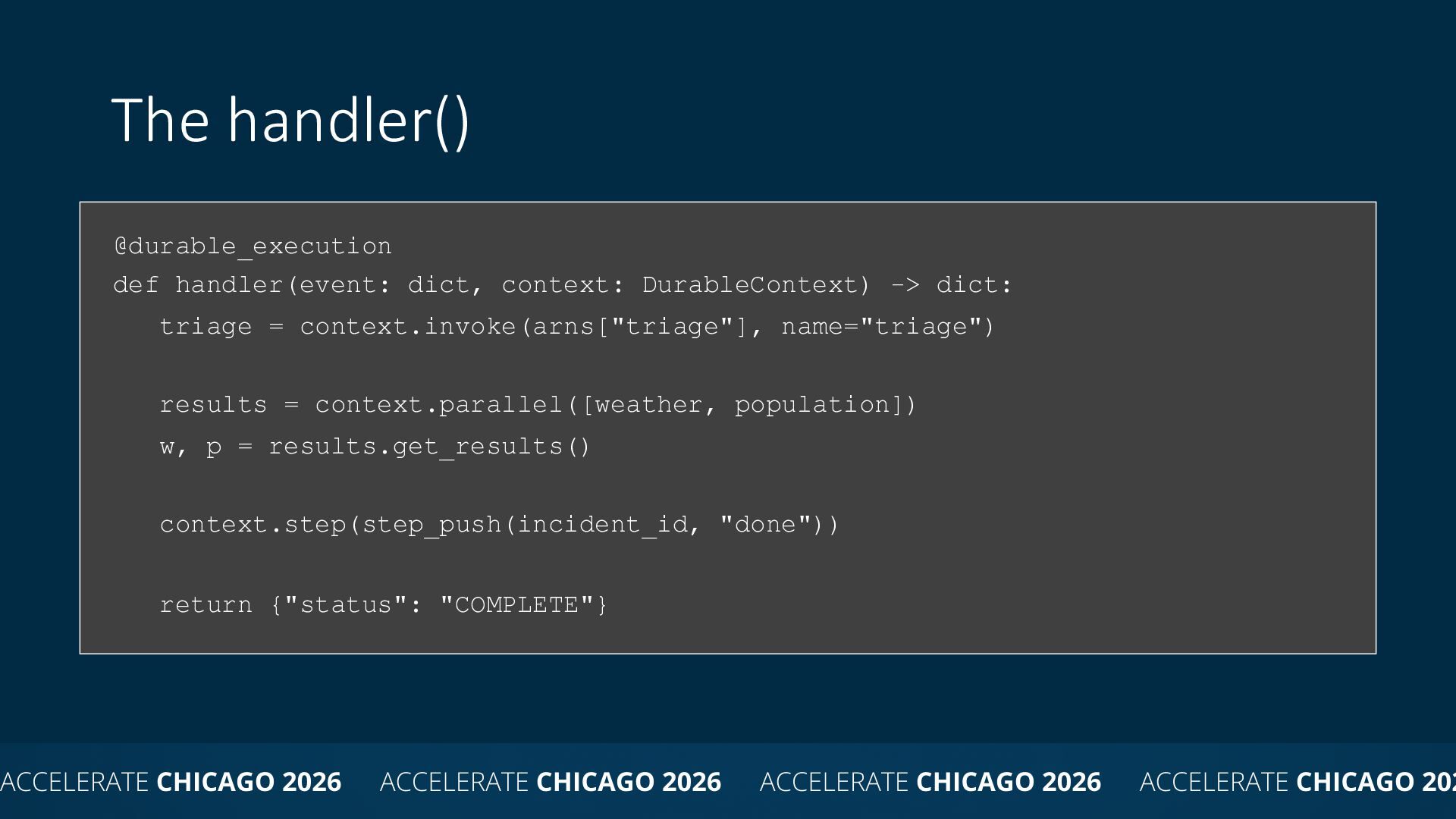
  21. The handler() @durable_execution def handler(event: dict, context: DurableContext) -> dict:

    triage = context.invoke(arns["triage"], name="triage") results = context.parallel([weather, population]) w, p = results.get_results() context.step(step_push(incident_id, "done")) return {"status": "COMPLETE"}
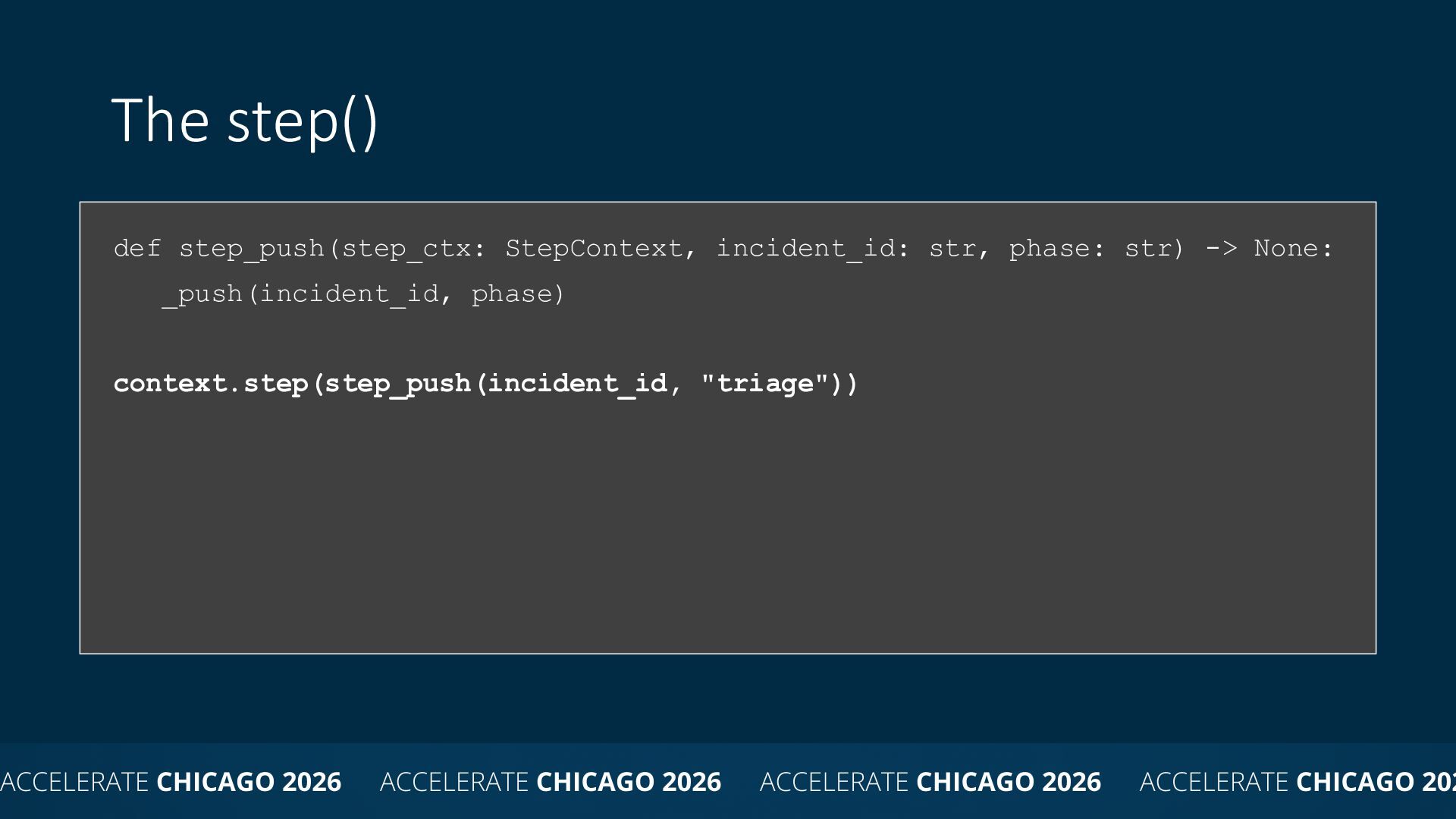
  22. The step() def step_push(step_ctx: StepContext, incident_id: str, phase: str) ->

    None: _push(incident_id, phase) context.step(step_push(incident_id, "triage"))
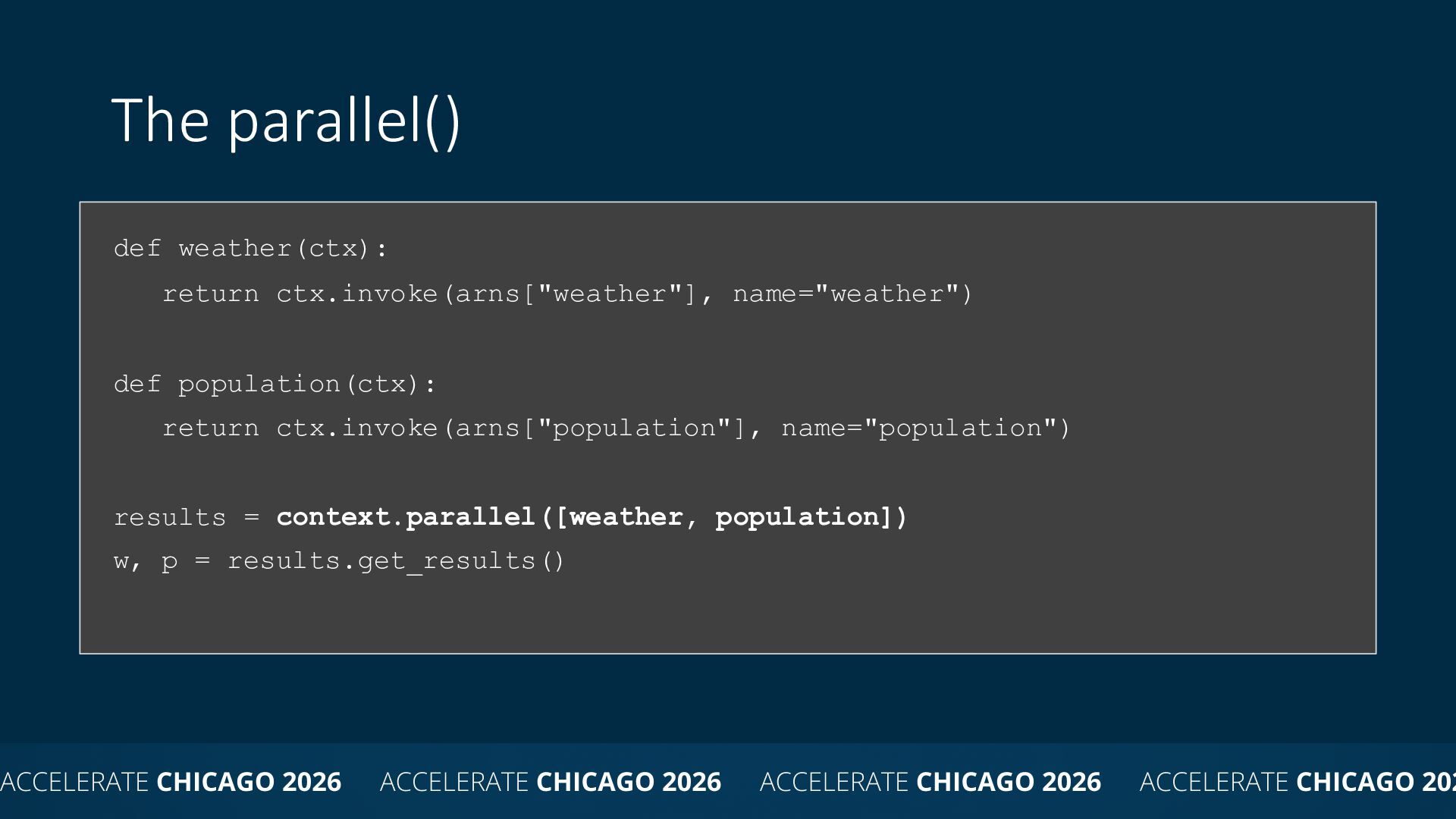
  23. The parallel() def weather(ctx): return ctx.invoke(arns["weather"], name="weather") def population(ctx): return

    ctx.invoke(arns["population"], name="population") results = context.parallel([weather, population]) w, p = results.get_results()
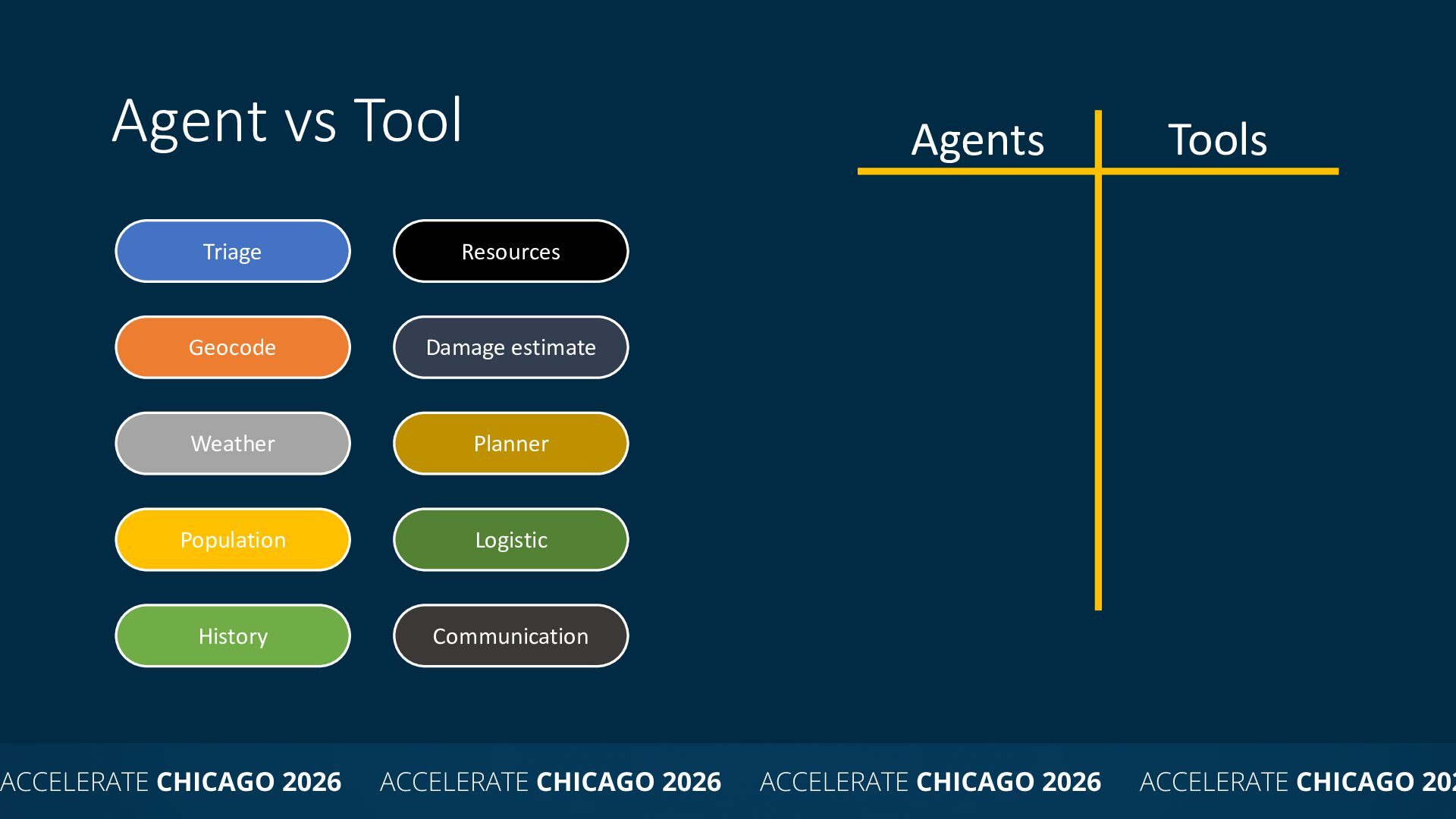
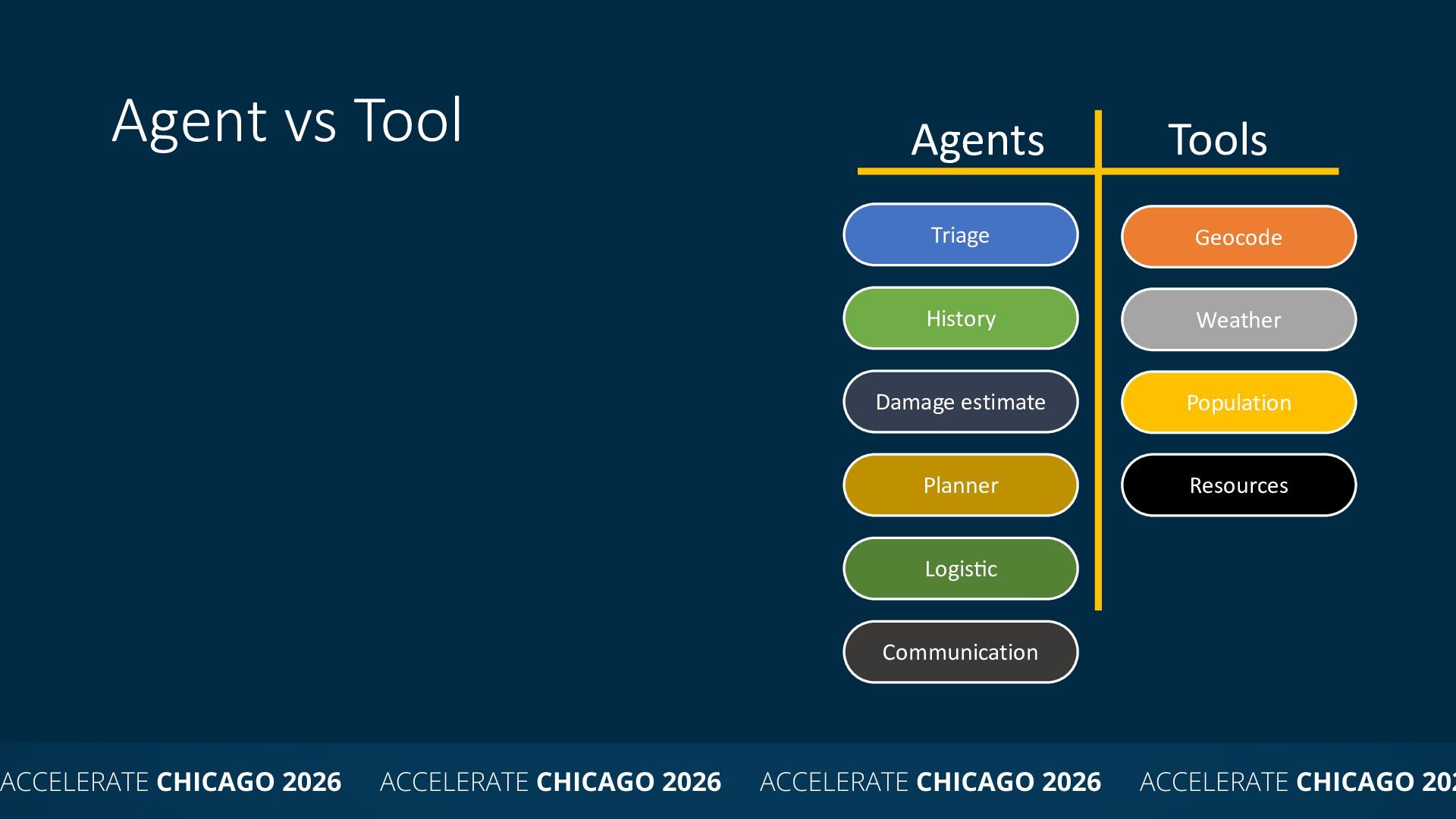
  24. Agent vs Tool Triage Geocode Weather Population History Resources Damage

    estimate Planner Logistic Communication Tools Agents
  25. Agent vs Tool Triage Geocode Weather Population History Resources Damage

    estimate Planner LogisAc Communication Tools Agents
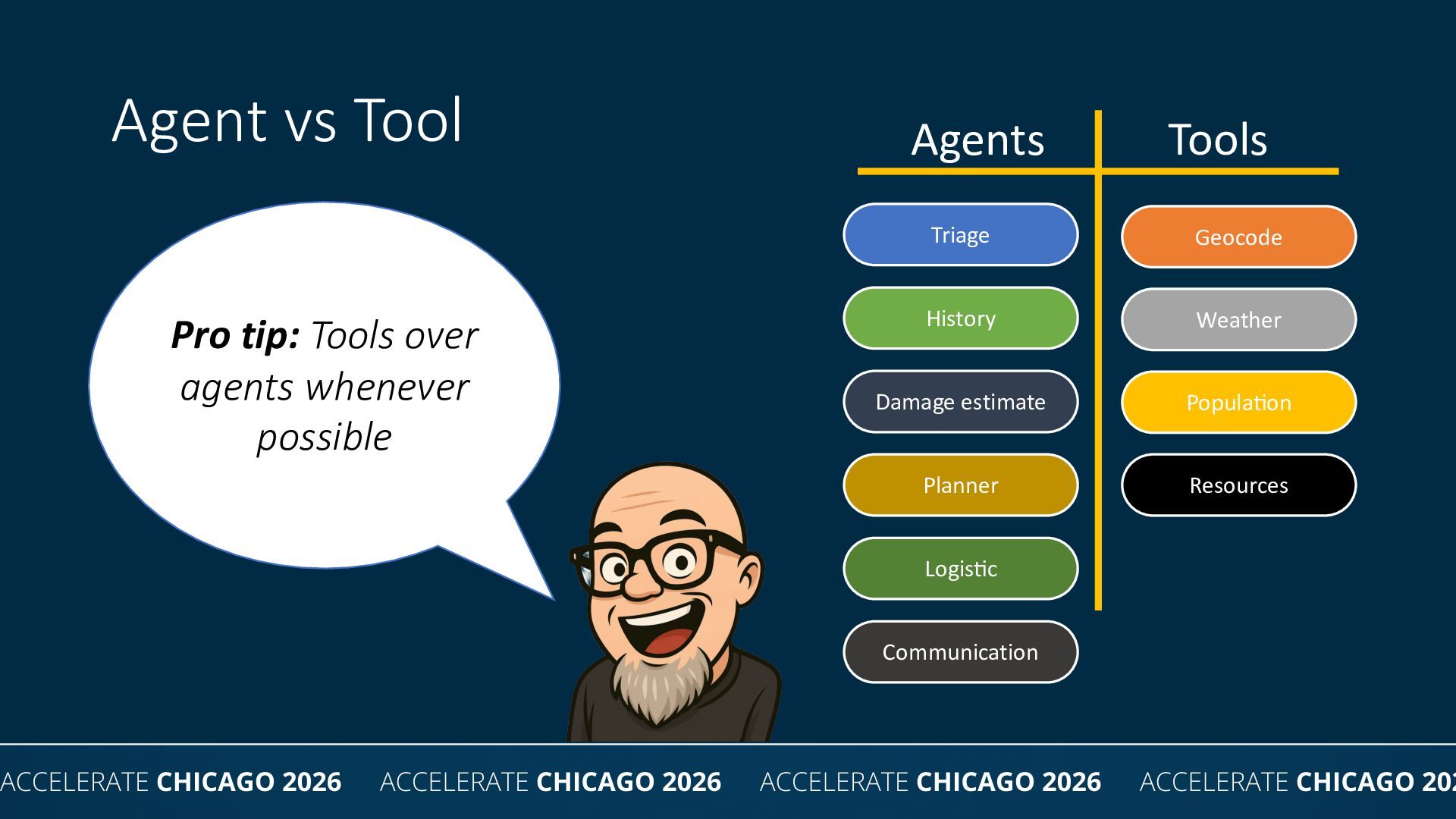
  26. Agent vs Tool Triage Geocode Weather PopulaAon History Resources Damage

    estimate Planner LogisAc Communication Tools Agents Pro tip: Tools over agents whenever possible
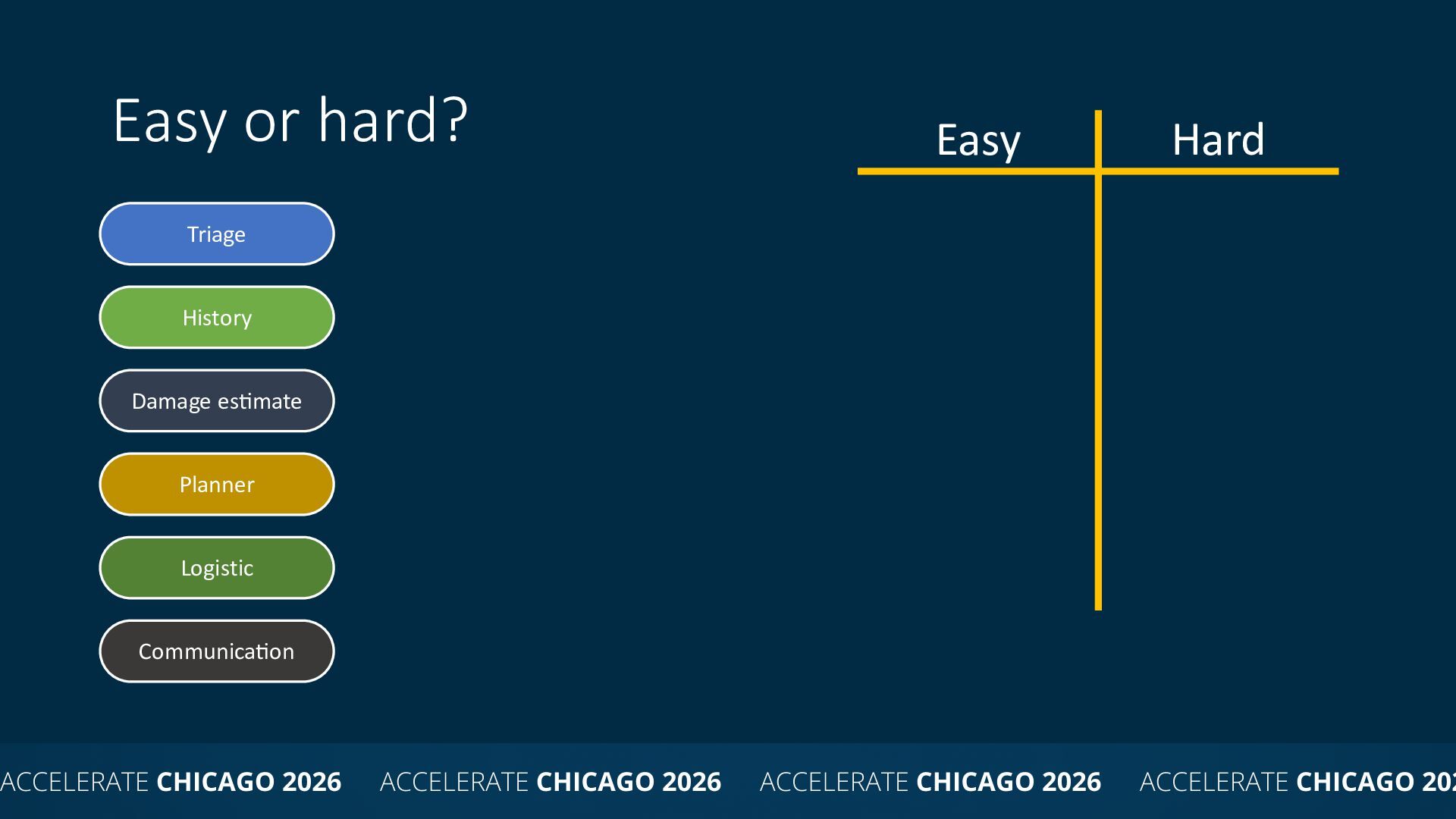
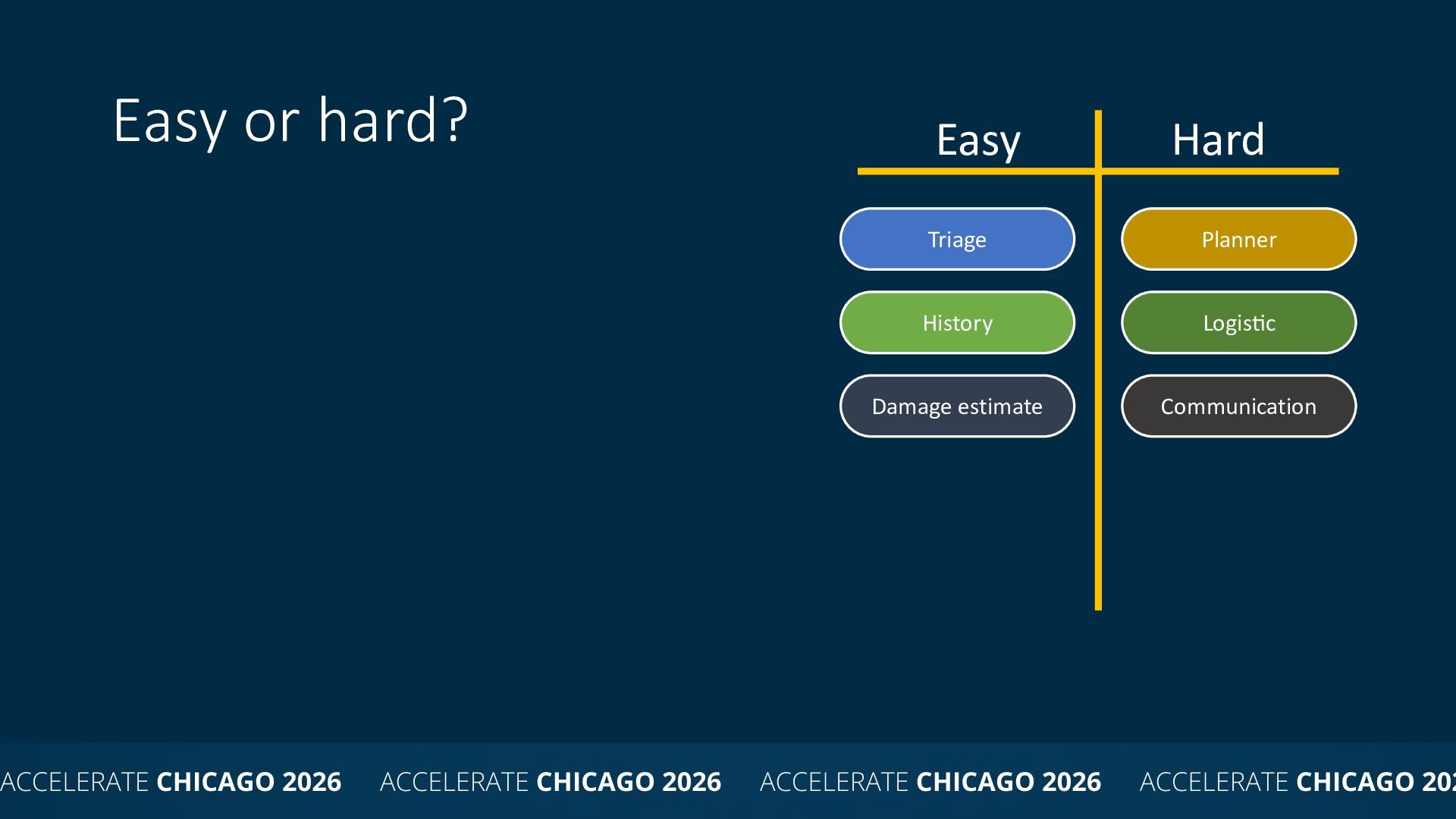
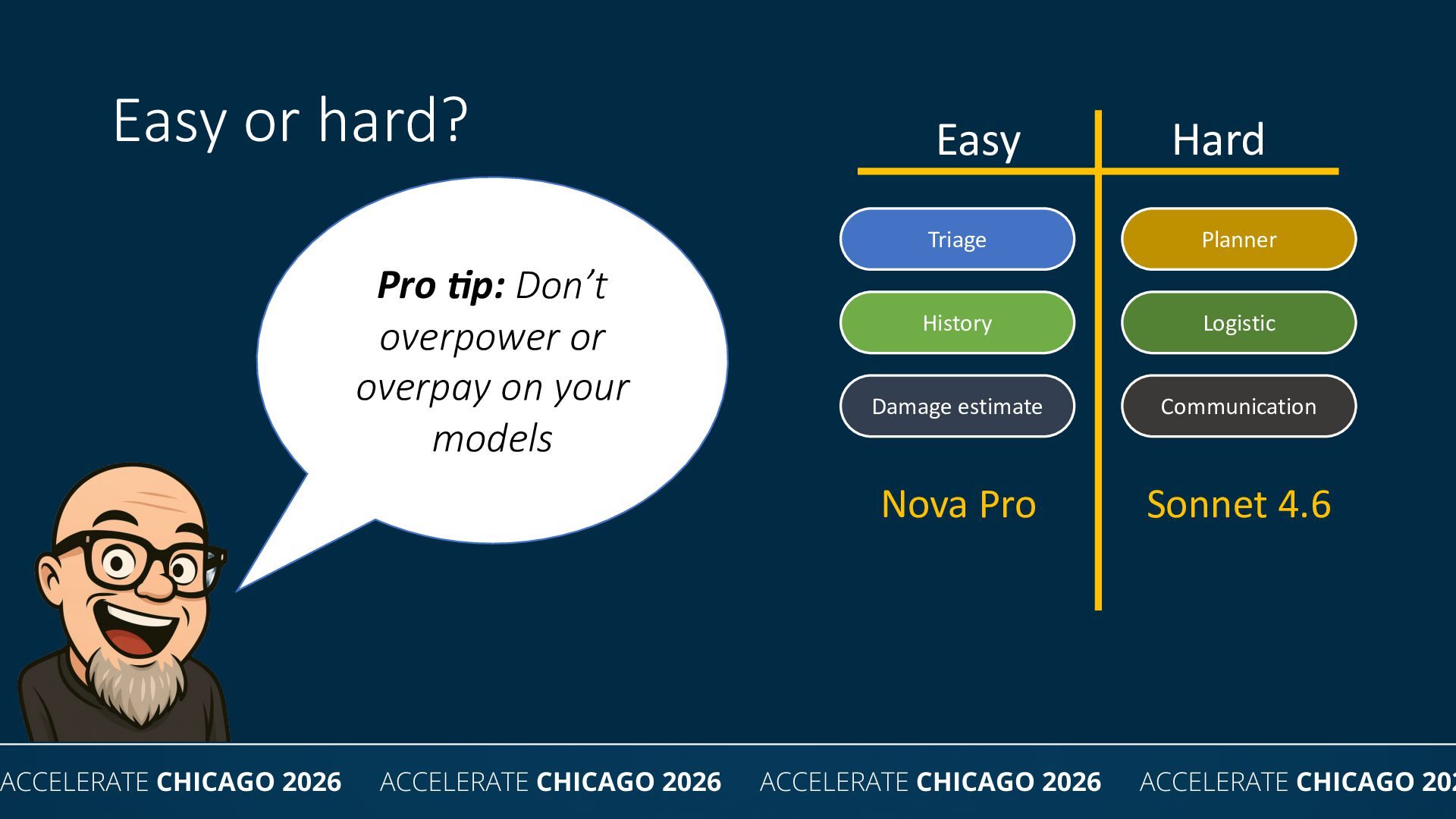
  27. Easy or hard? Triage History Damage estimate Planner Logistic Communication

    Hard Easy Pro )p: Don’t overpower or overpay on your models Nova Pro Sonnet 4.6
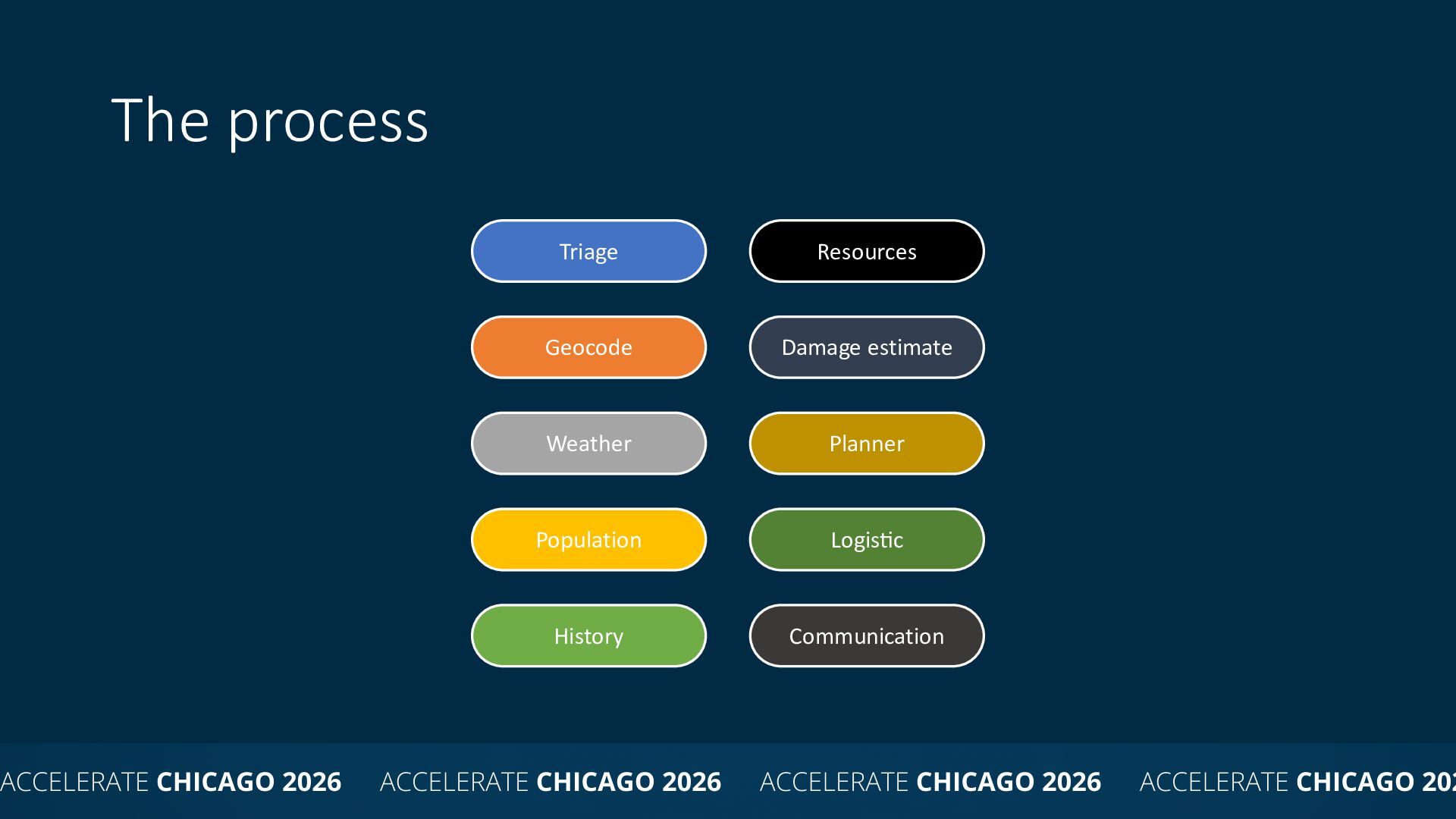
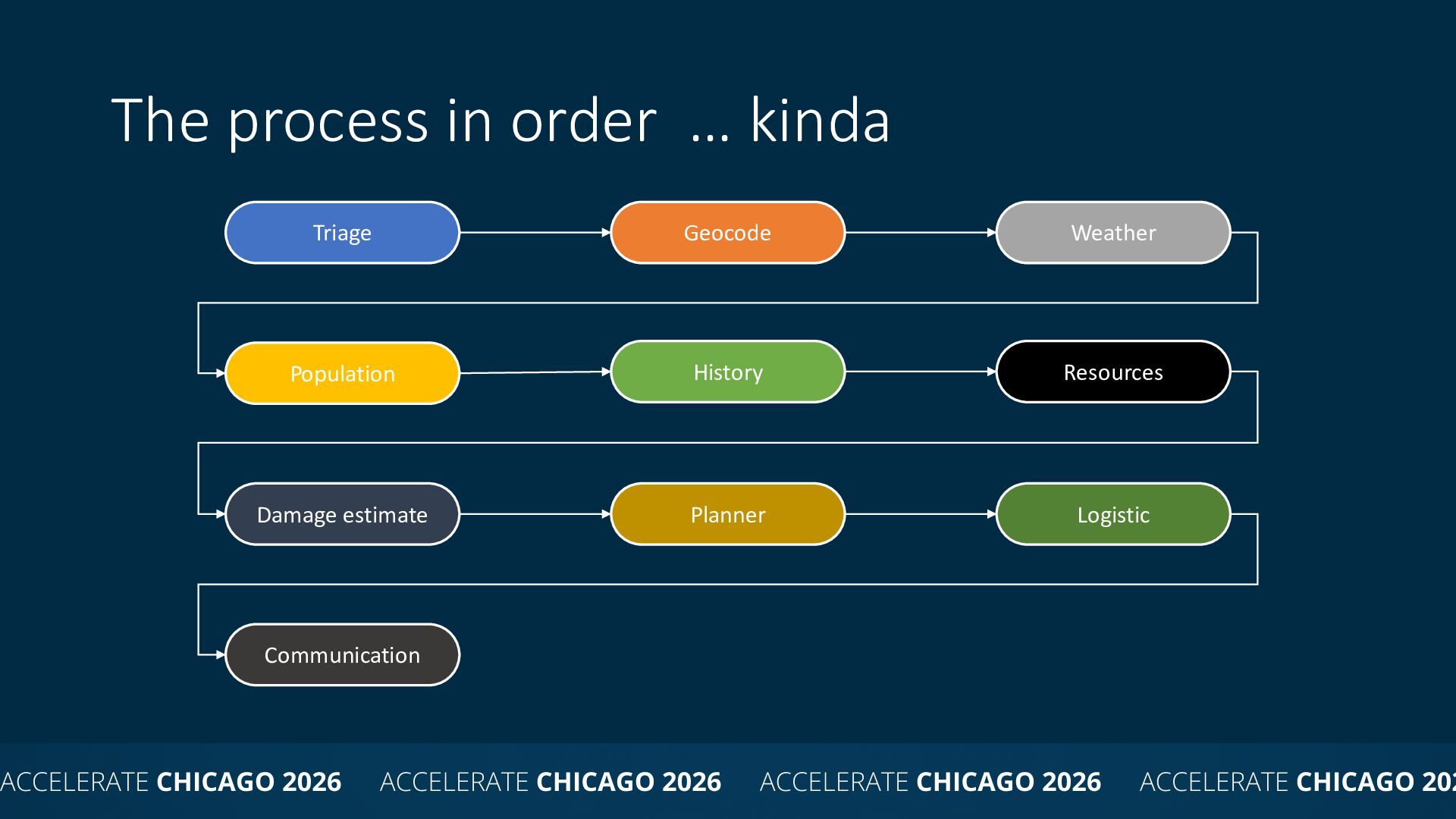
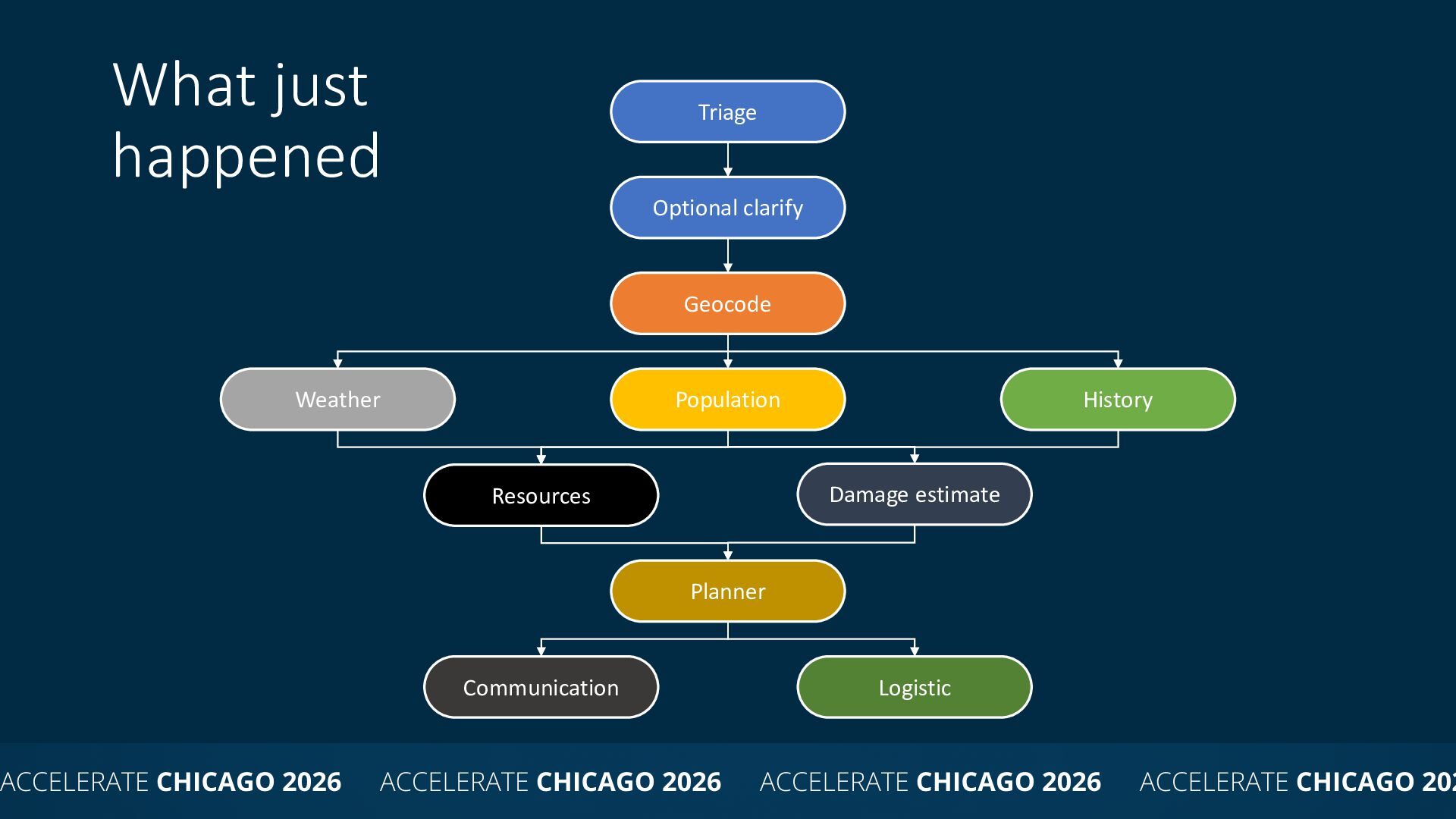
  28. The process in order Triage Geocode Weather Population History Resources

    Damage estimate Planner Logistic Communication … kinda
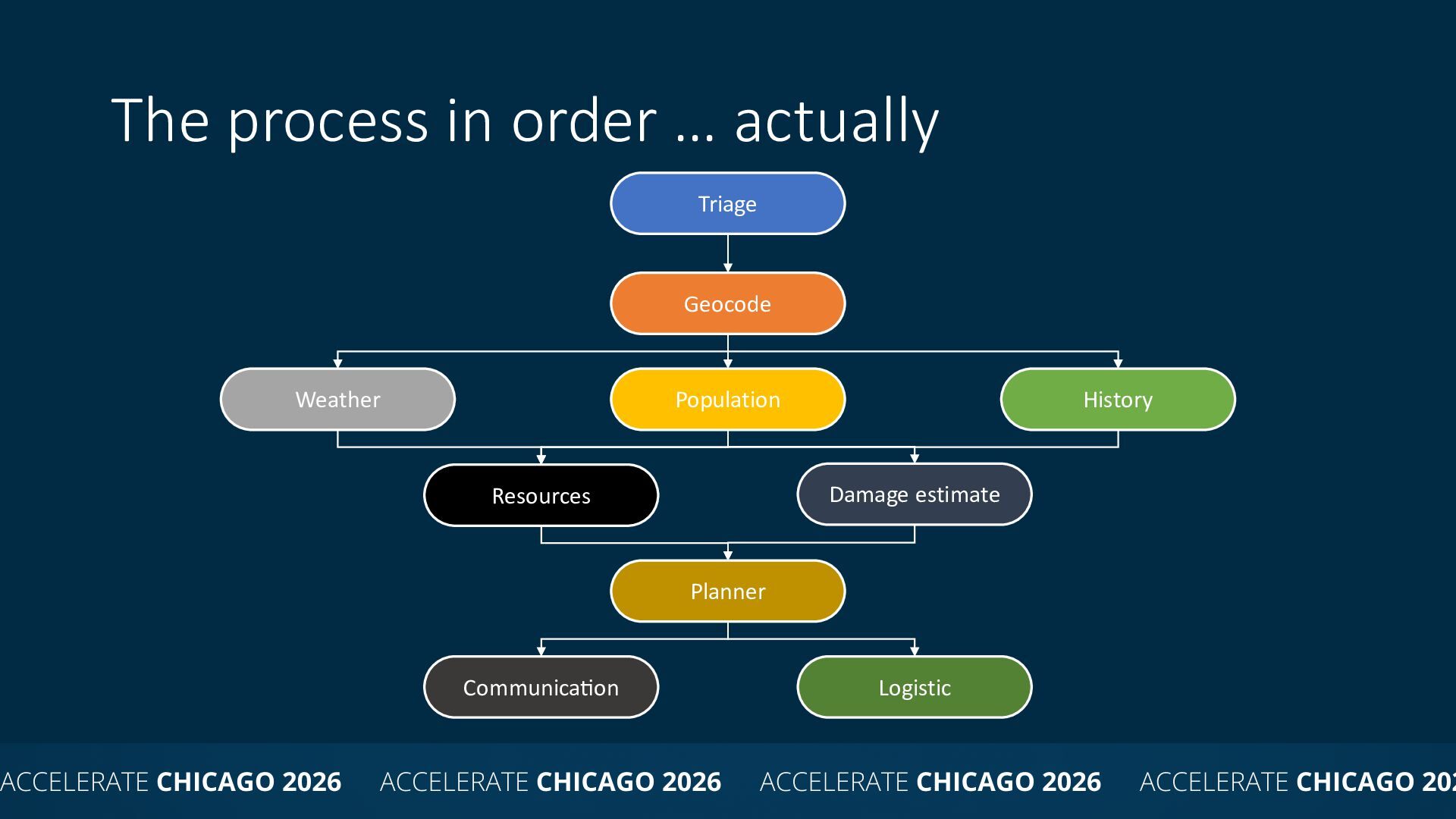
  29. The process in order … actually Geocode Weather Population History

    Resources Damage estimate Planner Logistic CommunicaAon Triage
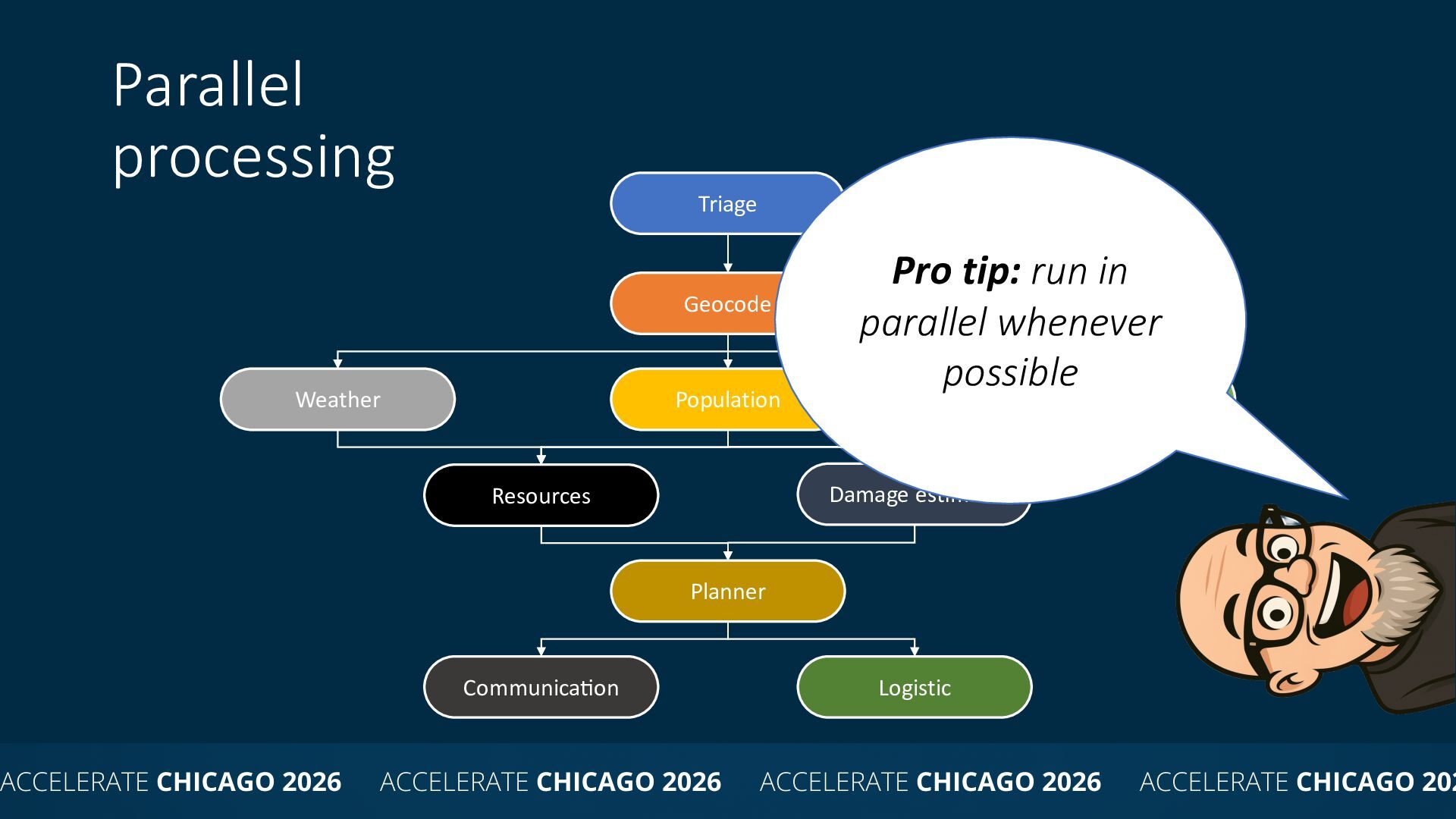
  30. Parallel processing Geocode Weather Population History Resources Damage esAmate Planner
    Logistic CommunicaAon Triage Pro tip: run in parallel whenever possible
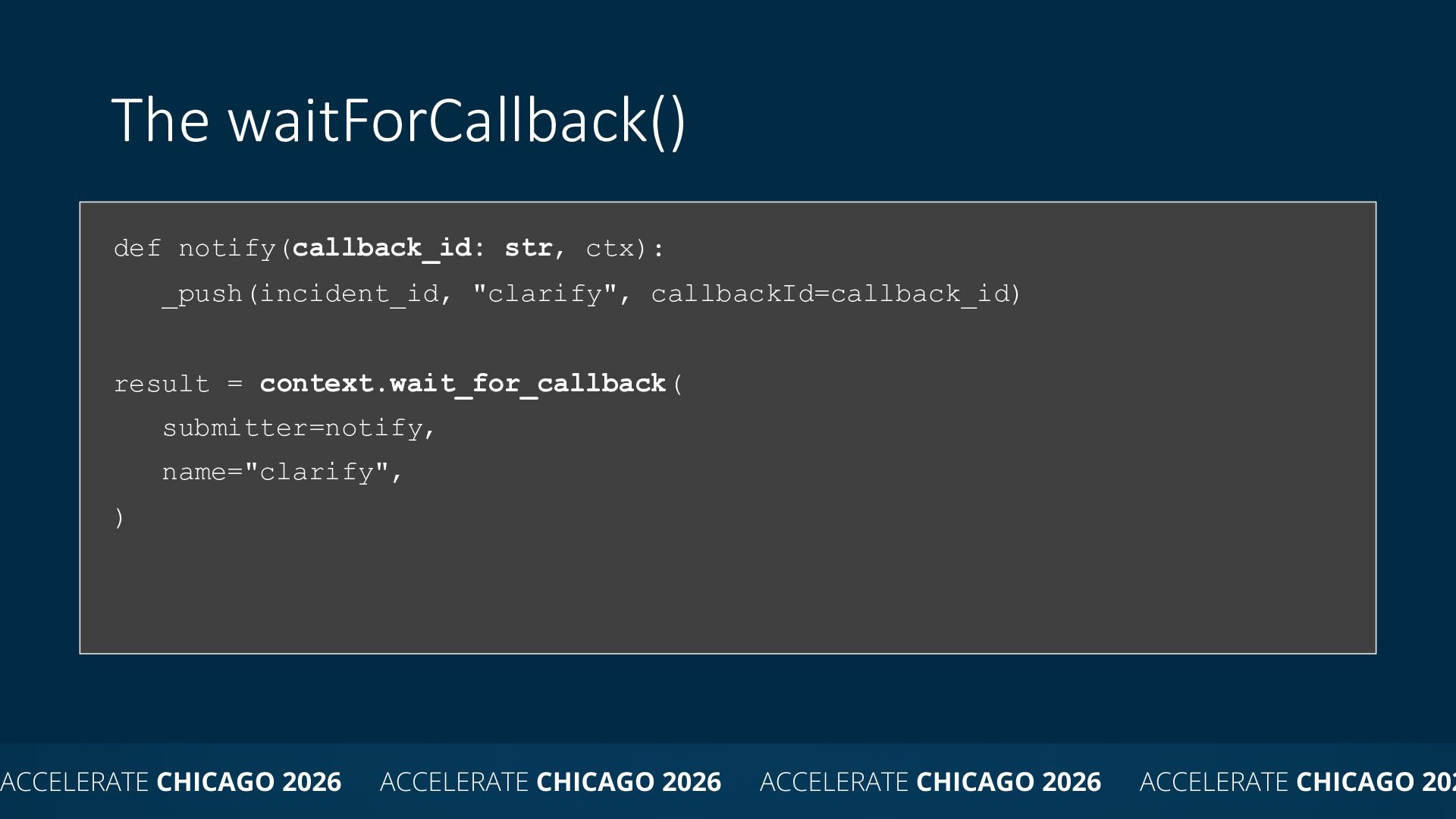
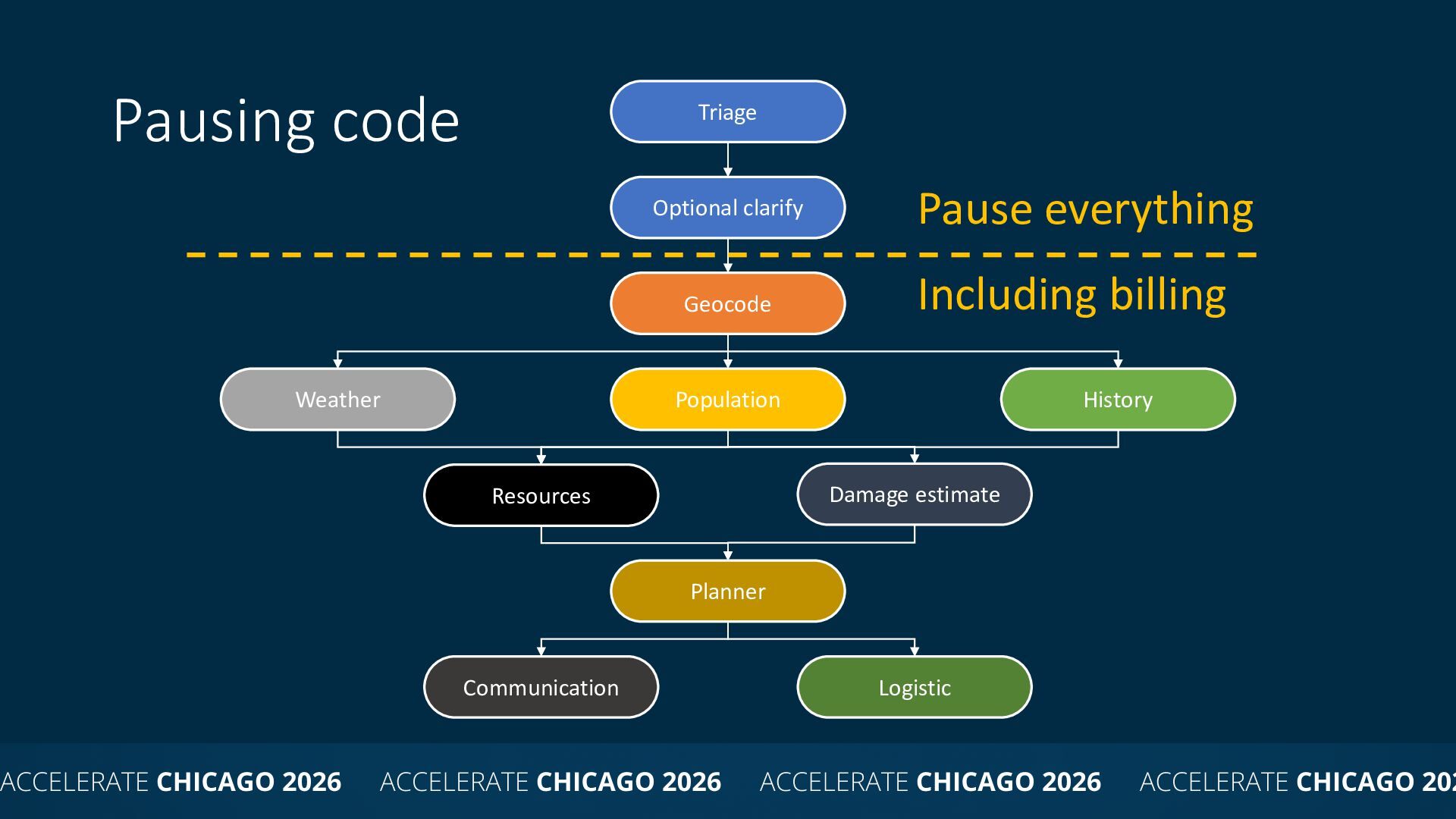
  31. Optional clarify Geocode Weather Population History Resources Damage estimate Planner

    Logistic Communication Triage Pause everything Including billing Pausing code
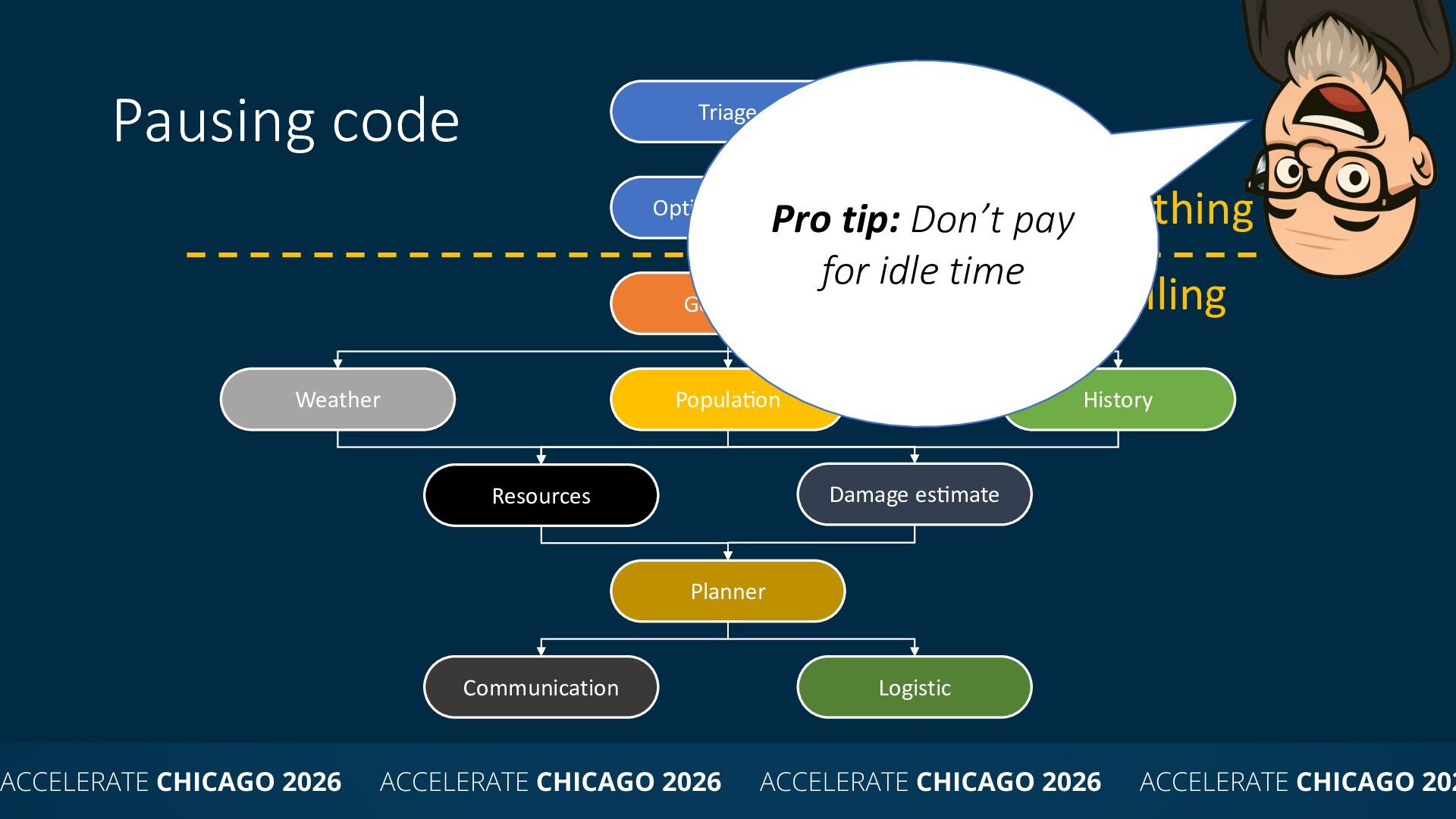
  32. Pausing code Optional clarify Geocode Weather PopulaAon History Resources Damage

    esAmate Planner Logistic Communication Triage Pause everything Including billing Pro tip: Don’t pay for idle time
  33. OpAonal clarify Geocode Weather PopulaAon History Resources Damage estimate Planner

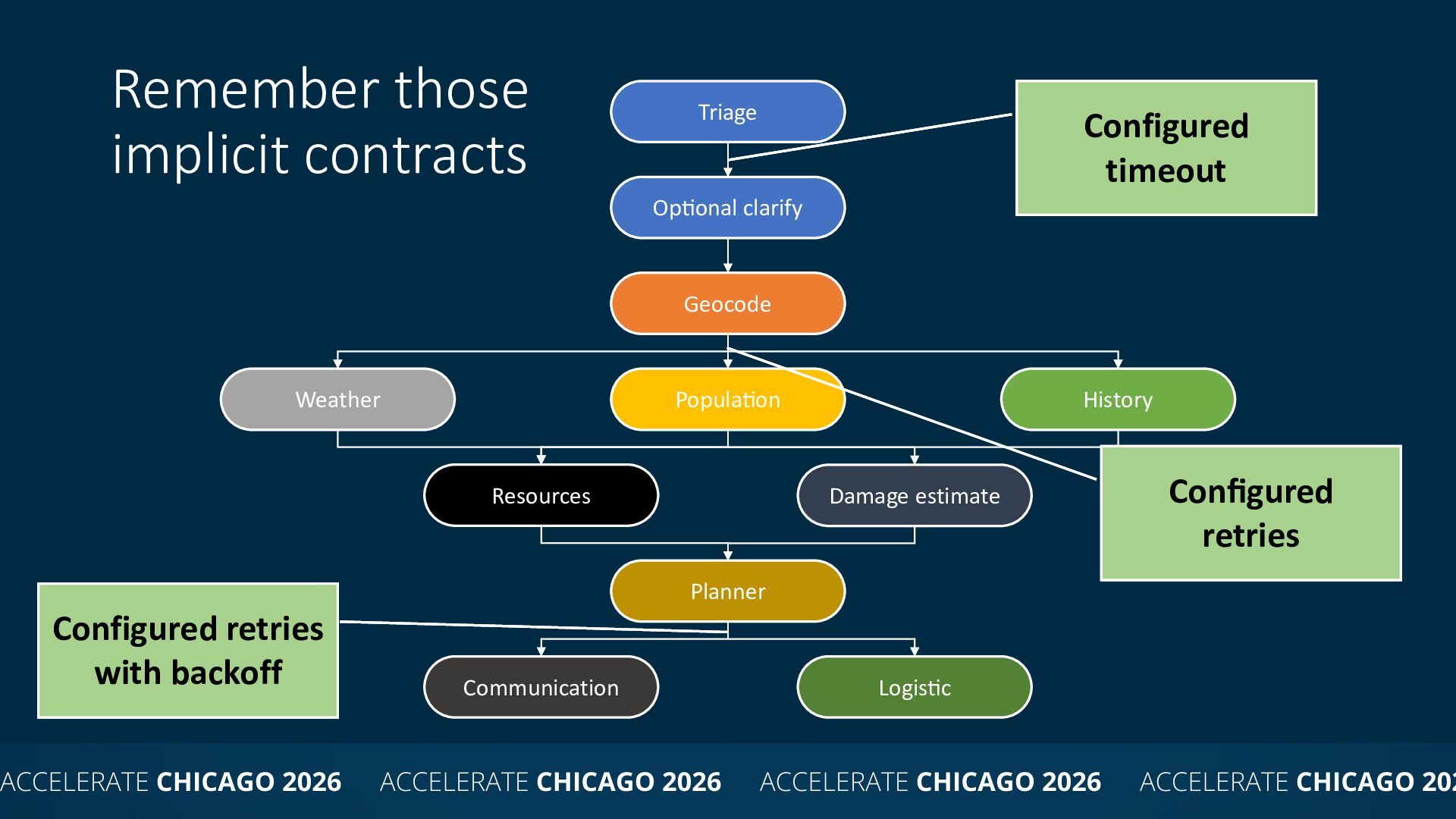
    LogisAc Communication Triage Remember those implicit contracts User fails to respond Geocode service returns an error Planner service model is throttled Configured timeout Configured retries Configured retries with backoff
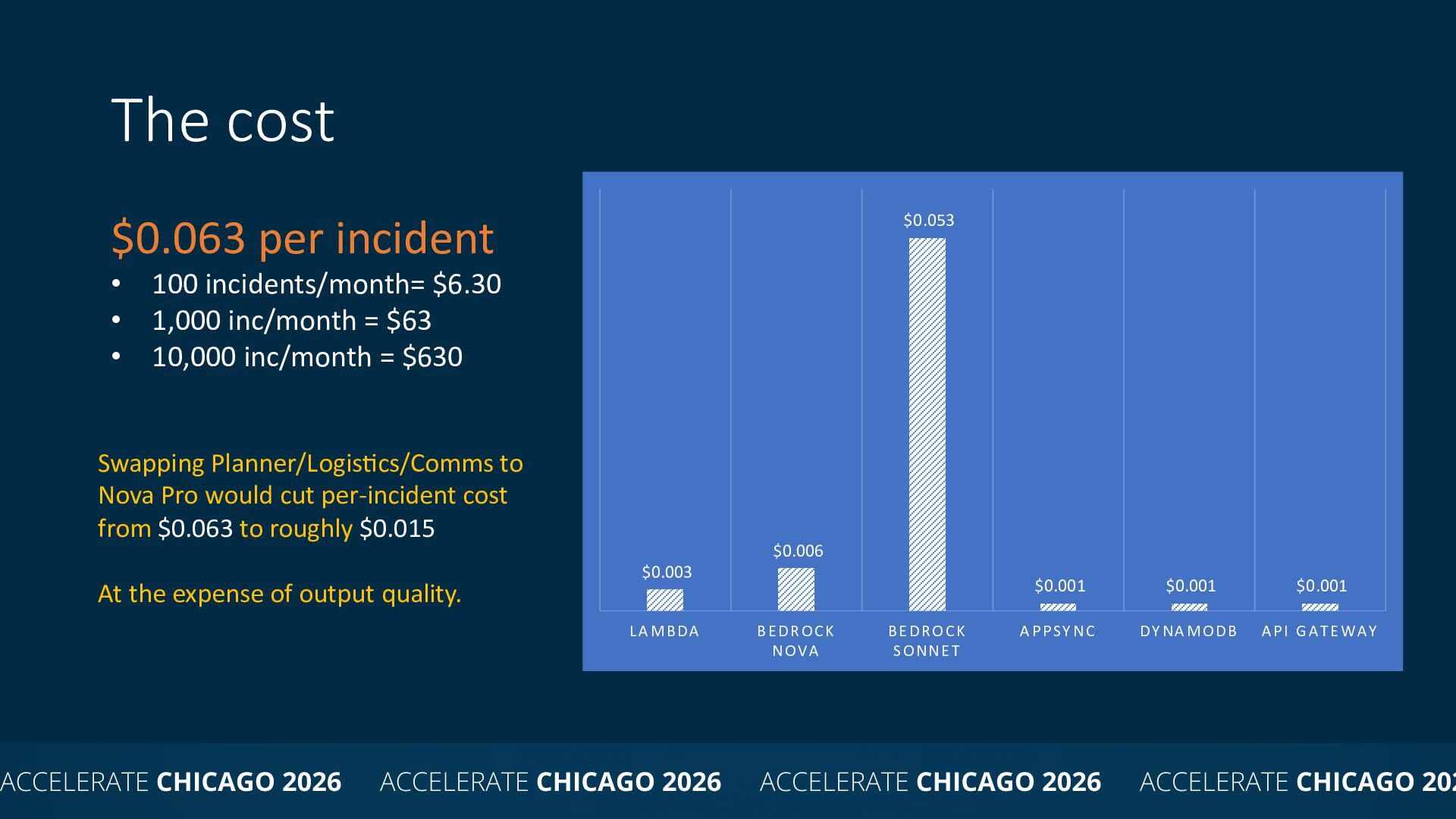
  34. The cost $0.003 $0.006 $0.053 $0.001 $0.001 $0.001 LAMBDA BEDROCK

    NOVA BEDROCK SONNET APPSYNC DYNAMODB API GATEWAY $0.063 per incident • 100 incidents/month= $6.30 • 1,000 inc/month = $63 • 10,000 inc/month = $630 Swapping Planner/Logis;cs/Comms to Nova Pro would cut per-incident cost from $0.063 to roughly $0.015 At the expense of output quality.
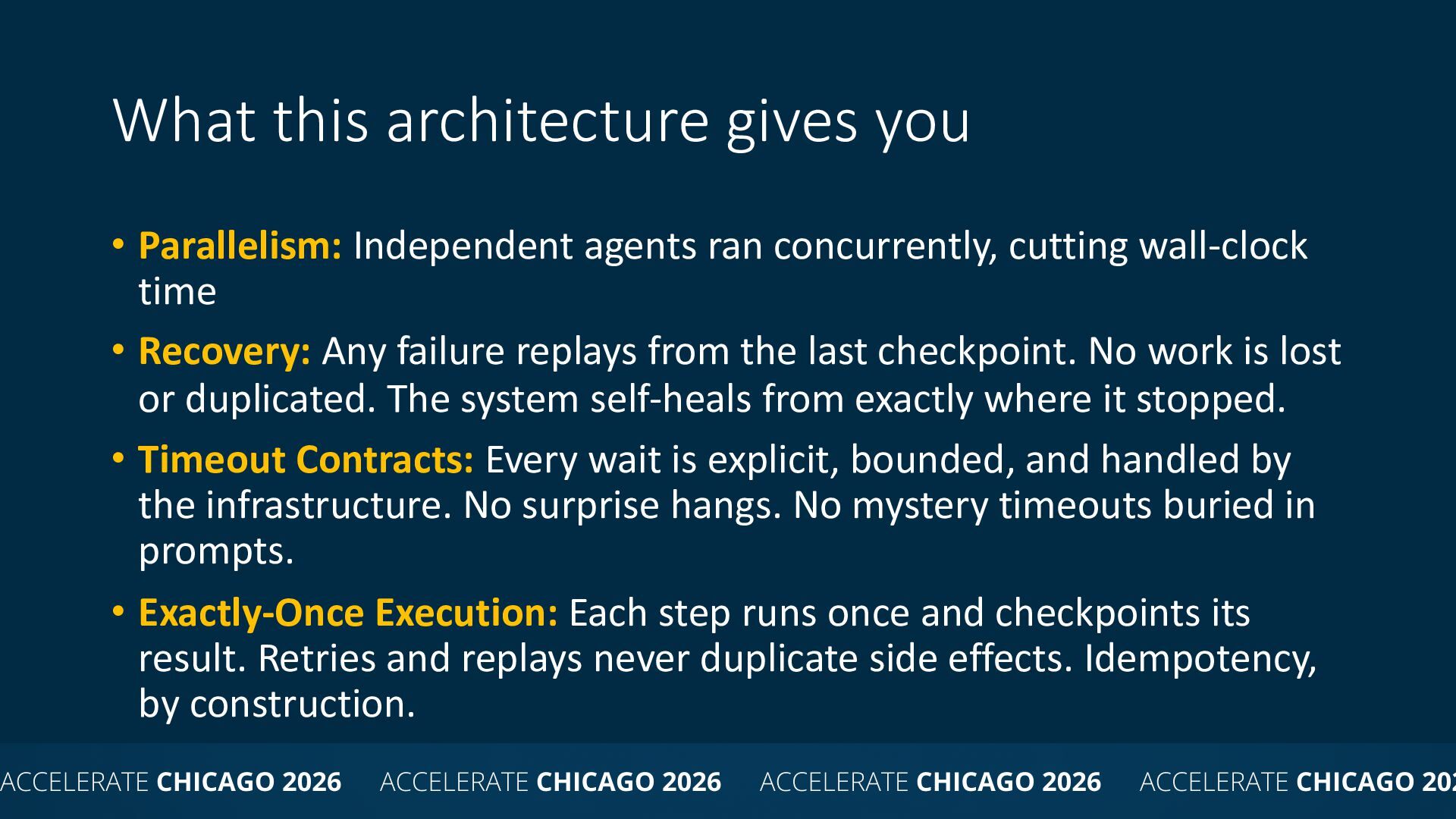
  35. What this architecture gives you • Parallelism: Independent agents ran

    concurrently, cutting wall-clock time • Recovery: Any failure replays from the last checkpoint. No work is lost or duplicated. The system self-heals from exactly where it stopped. • Timeout Contracts: Every wait is explicit, bounded, and handled by the infrastructure. No surprise hangs. No mystery timeouts buried in prompts. • Exactly-Once Execution: Each step runs once and checkpoints its result. Retries and replays never duplicate side effects. Idempotency, by construction.
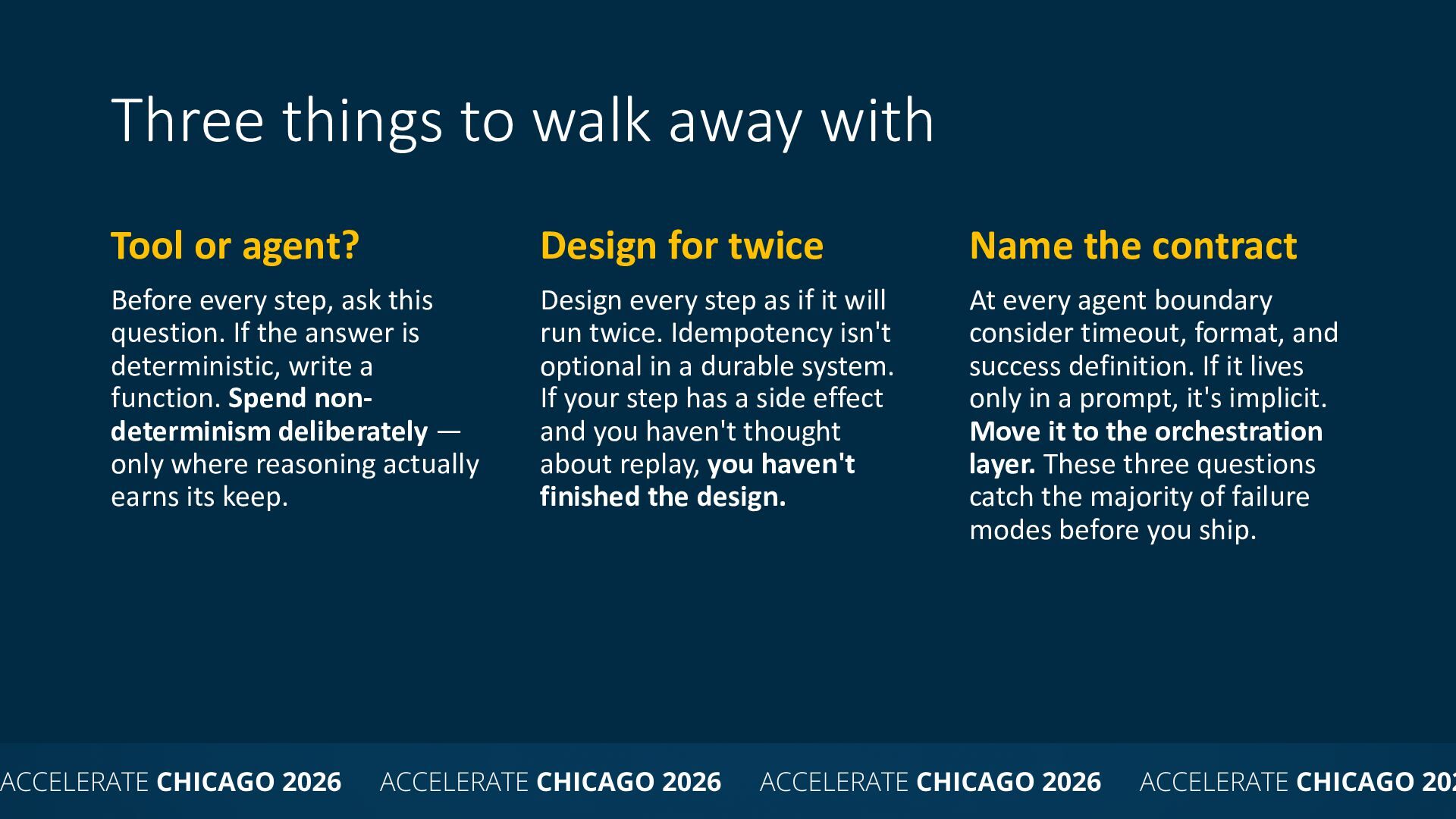
  36. Three things to walk away with Tool or agent? Before

    every step, ask this question. If the answer is deterministic, write a function. Spend non- determinism deliberately — only where reasoning actually earns its keep. Design for twice Design every step as if it will run twice. Idempotency isn't optional in a durable system. If your step has a side effect and you haven't thought about replay, you haven't finished the design. Name the contract At every agent boundary consider timeout, format, and success definition. If it lives only in a prompt, it's implicit. Move it to the orchestration layer. These three questions catch the majority of failure modes before you ship.