Share
Embed
Visualization Go scheduler by gosched-simulator
sivchari
January 18, 2025
Transcript
36 slides
-
Visualization Go scheduler by gosched-simulator 10/24/2024 sivchari CyberAgent The Go
gopher was designed by Renée French. -
Introduction What’s Go scheduler ? Overlay Go codes goverlay generates
overlay codes gosched simulator Summary -
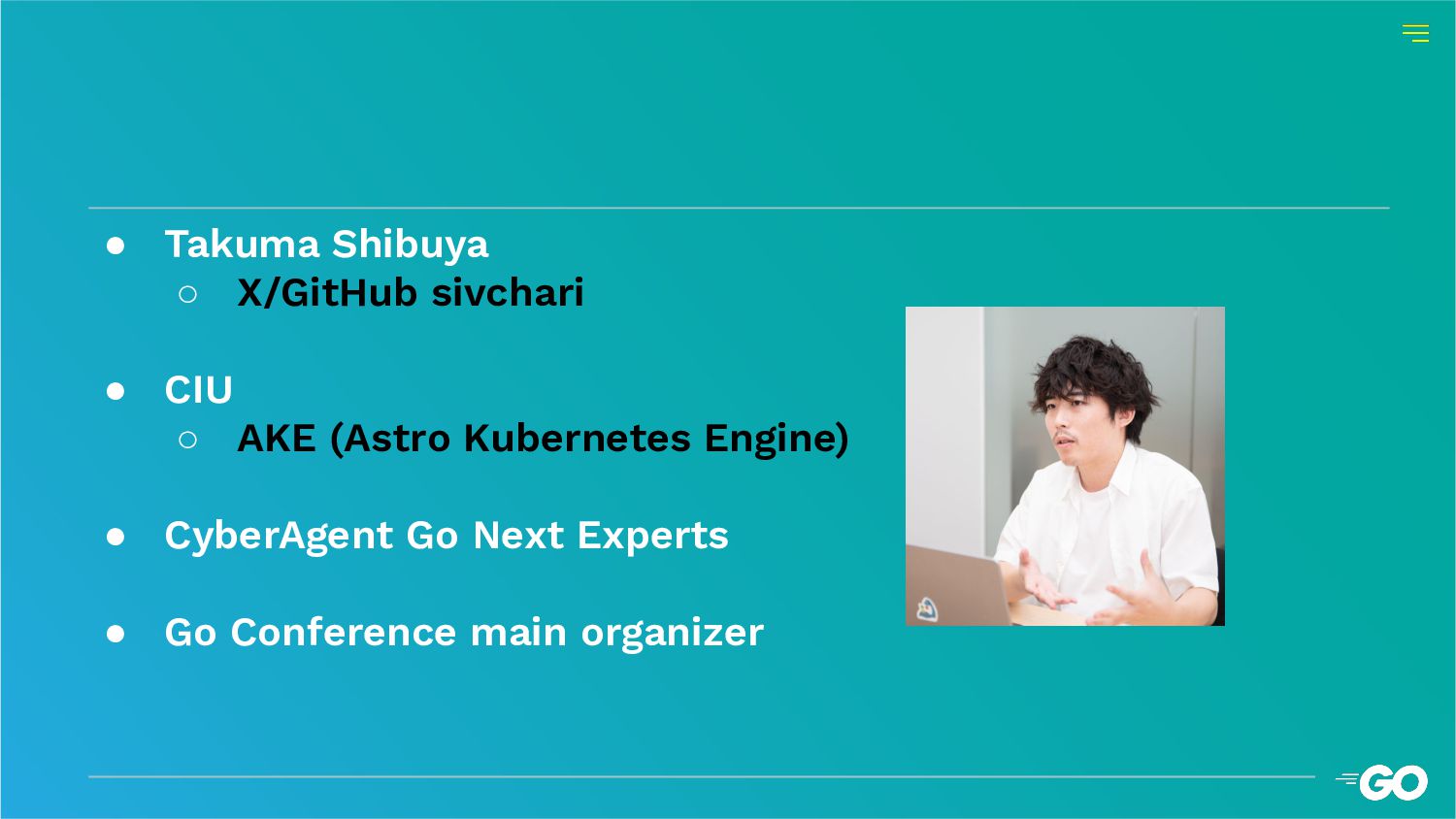
• Takuma Shibuya ◦ X/GitHub sivchari • CIU ◦ AKE
(Astro Kubernetes Engine) • CyberAgent Go Next Experts • Go Conference main organizer -
• It’s lightweight thread called by using `go` idiom •
goroutine is a minimum unit to execute Go func ◦ When the program uses goroutine, the Go runtime pushes it to internal queue, then it will be executed ◦ func main is a main goroutine defined in proc.go What’s Go scheduler -
• goroutine is similar to coroutine ◦ When the goroutine
is blocking by I/O wait etc, the G runtime automatically switches it to new one ◦ range-over-func uses coroutine for iteration process ▪ This feature uses coro. It doesn’t have capability to execute process in parallel. coroutine can only start, switch and exit. What’s Go scheduler -
• Programmer can’t handle to start goroutine and stop it
• We can only handle the synchronization point ◦ sync.WaitGroup sync.Mutex sync.Cond etc What’s Go scheduler -
• Programmer can’t handle to start goroutine and stop it
• We can only handle the synchronization point ◦ sync.WaitGroup sync.Mutex sync.Cond etc What’s Go scheduler -
• Programmer can’t handle to start goroutine and stop it
• We can only handle the synchronization point ◦ sync.WaitGroup sync.Mutex sync.Cond etc What’s Go scheduler -
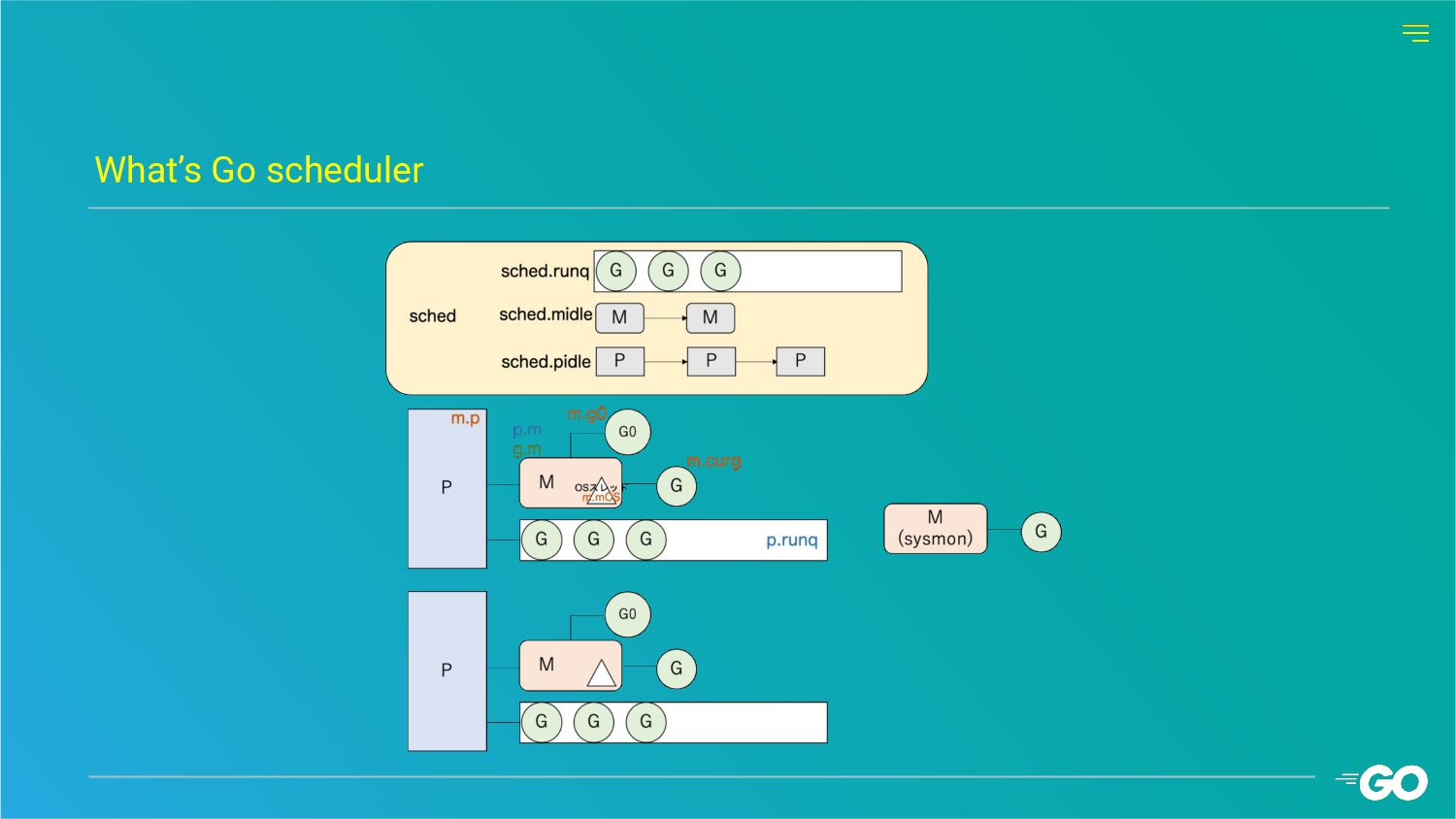
• Go runtime represents goroutine, machine and processor as G,
M, P ◦ G represents goroutine. G has information to execute func ◦ M represents machine. M has information of OS ◦ P represents processor. P has information required to execute Go program What’s Go scheduler -
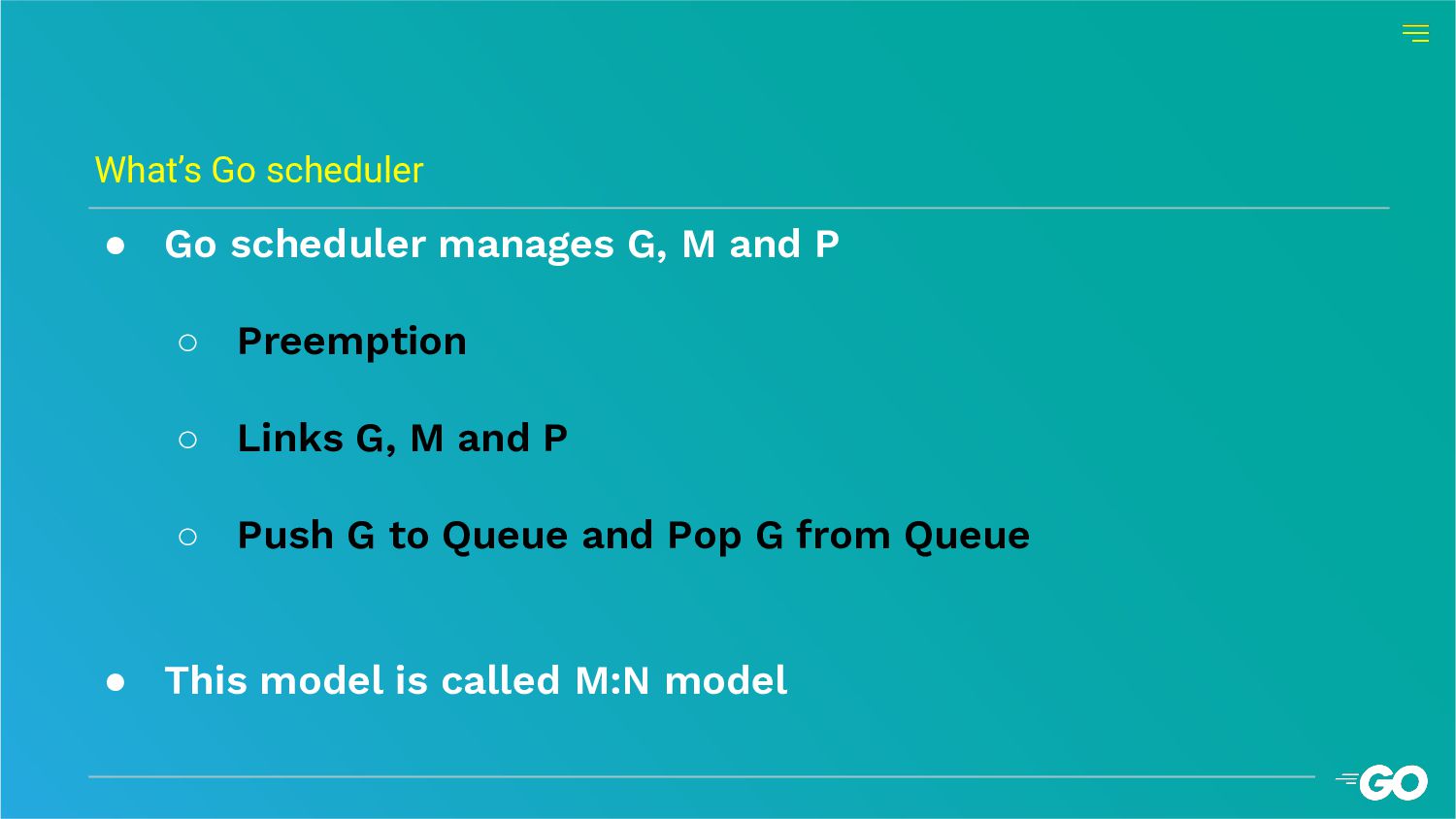
• Go scheduler manages G, M and P ◦ Preemption
◦ Links G, M and P ◦ Push G to Queue and Pop G from Queue • This model is called M:N model What’s Go scheduler -
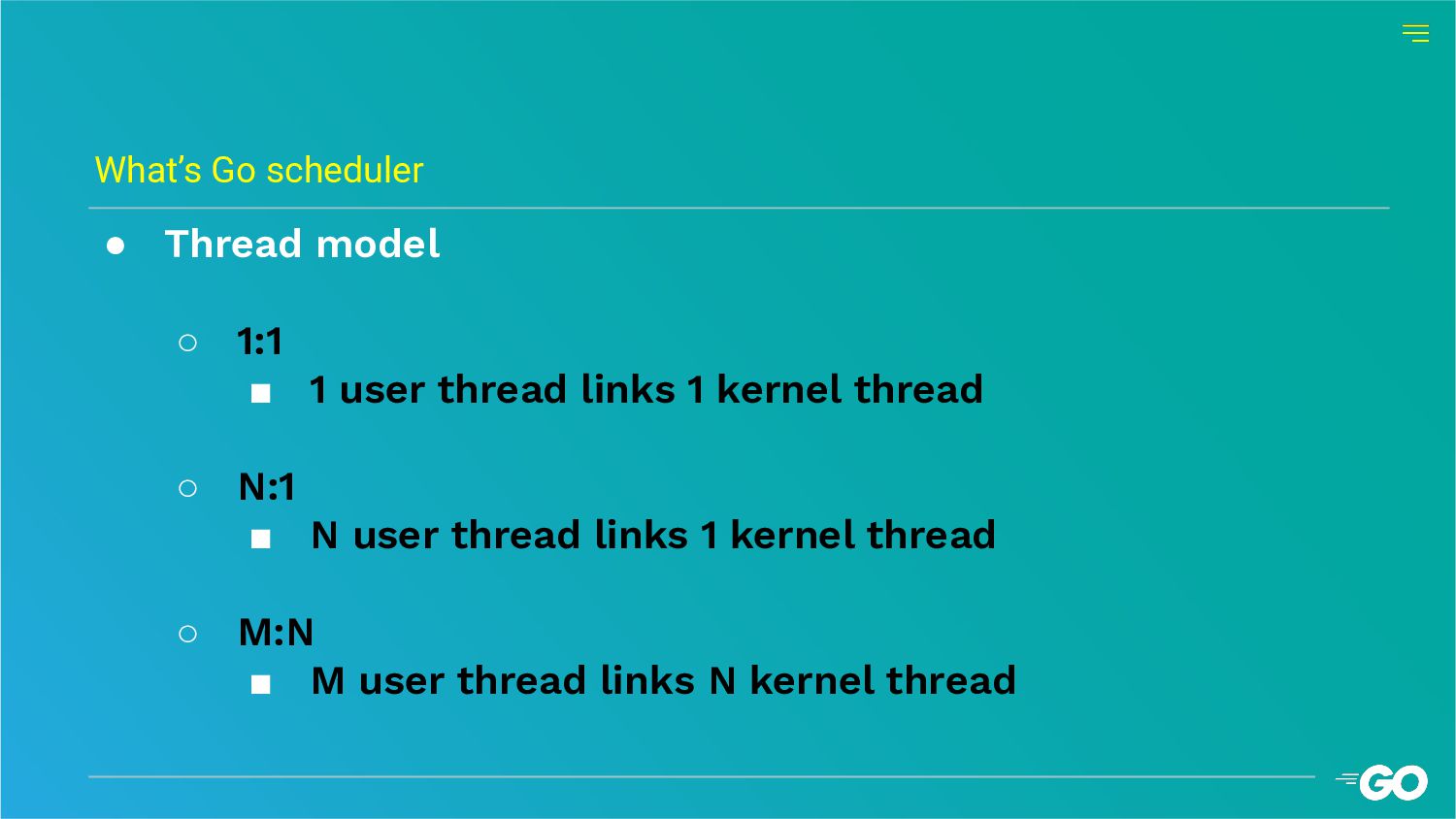
• Thread model ◦ 1:1 ▪ 1 user thread links
1 kernel thread ◦ N:1 ▪ N user thread links 1 kernel thread ◦ M:N ▪ M user thread links N kernel thread What’s Go scheduler -
• Go’s standard library doesn’t export runtime information ◦ Almost
runtime package doesn’t exported ◦ Other packages doesn’t return runtime information Overlay Go codes -
• The way I can get runtime information ◦ Modify
source code and point GOROOT to changed it ◦ Use runtime/trace ◦ Use scheddetail=1 Overlay Go codes -
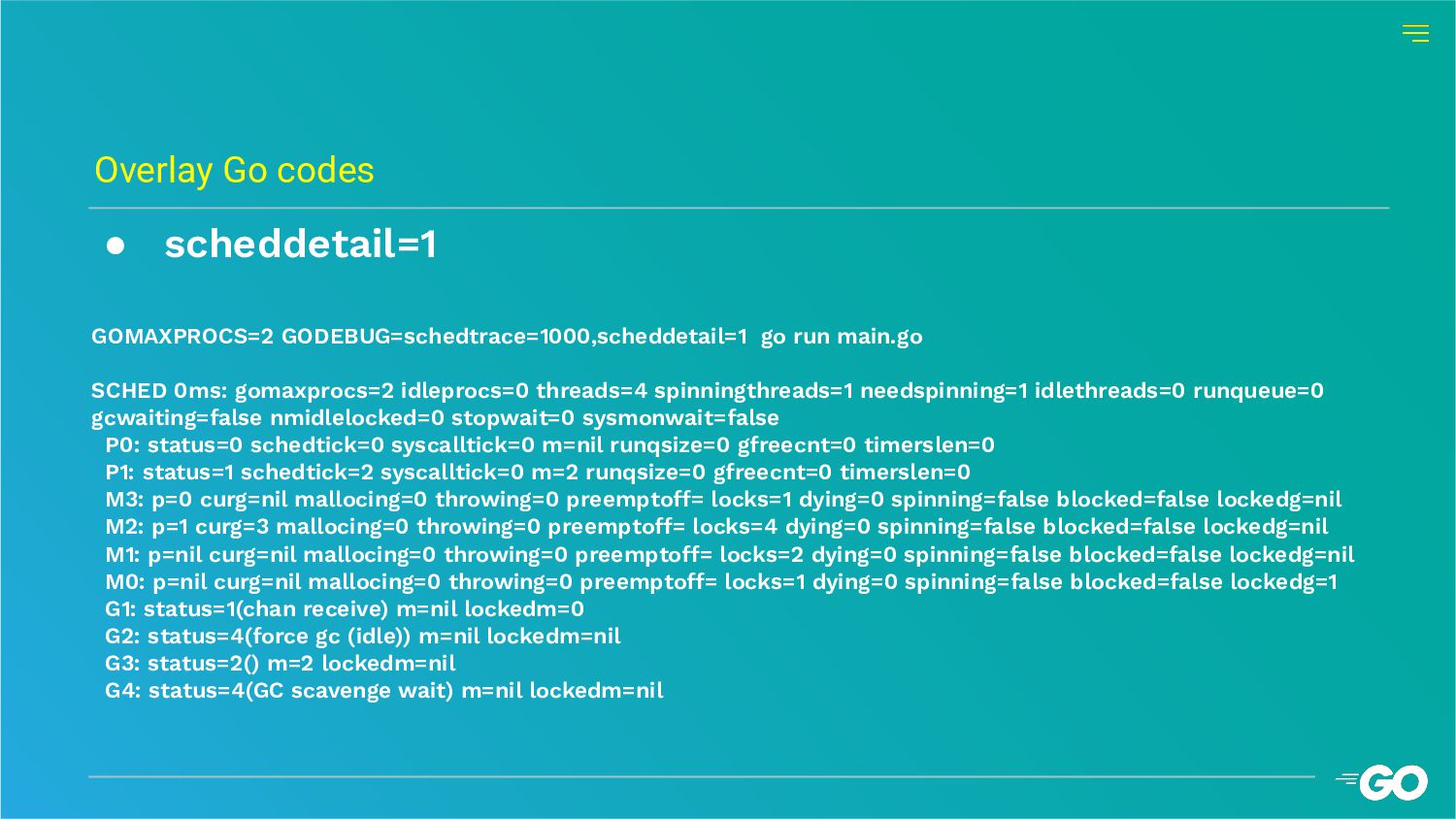
• scheddetail=1 GOMAXPROCS=2 GODEBUG=schedtrace=1000,scheddetail=1 go run main.go SCHED 0ms: gomaxprocs=2
idleprocs=0 threads=4 spinningthreads=1 needspinning=1 idlethreads=0 runqueue=0 gcwaiting=false nmidlelocked=0 stopwait=0 sysmonwait=false P0: status=0 schedtick=0 syscalltick=0 m=nil runqsize=0 gfreecnt=0 timerslen=0 P1: status=1 schedtick=2 syscalltick=0 m=2 runqsize=0 gfreecnt=0 timerslen=0 M3: p=0 curg=nil mallocing=0 throwing=0 preemptoff= locks=1 dying=0 spinning=false blocked=false lockedg=nil M2: p=1 curg=3 mallocing=0 throwing=0 preemptoff= locks=4 dying=0 spinning=false blocked=false lockedg=nil M1: p=nil curg=nil mallocing=0 throwing=0 preemptoff= locks=2 dying=0 spinning=false blocked=false lockedg=nil M0: p=nil curg=nil mallocing=0 throwing=0 preemptoff= locks=1 dying=0 spinning=false blocked=false lockedg=1 G1: status=1(chan receive) m=nil lockedm=0 G2: status=4(force gc (idle)) m=nil lockedm=nil G3: status=2() m=2 lockedm=nil G4: status=4(GC scavenge wait) m=nil lockedm=nil Overlay Go codes -
• schedetail=1 ◦ The definition is in proc.go ◦ Lock
sched, then print the G, M, P information ◦ Biggest tips to implement gosched-simulator ◦ I want all structs, not printing Overlay Go codes -
• How ◦ I don’t want to modify source codes
directly ▪ Difficult ▪ Maintainability ▪ Forward compatibility Overlay Go codes -
• overlay ◦ go help overlay ▪ Replace the source
codes when building it ▪ The setting is managed by JSON file ▪ Go standard feature (little bit of a hack 😅) Overlay Go codes -
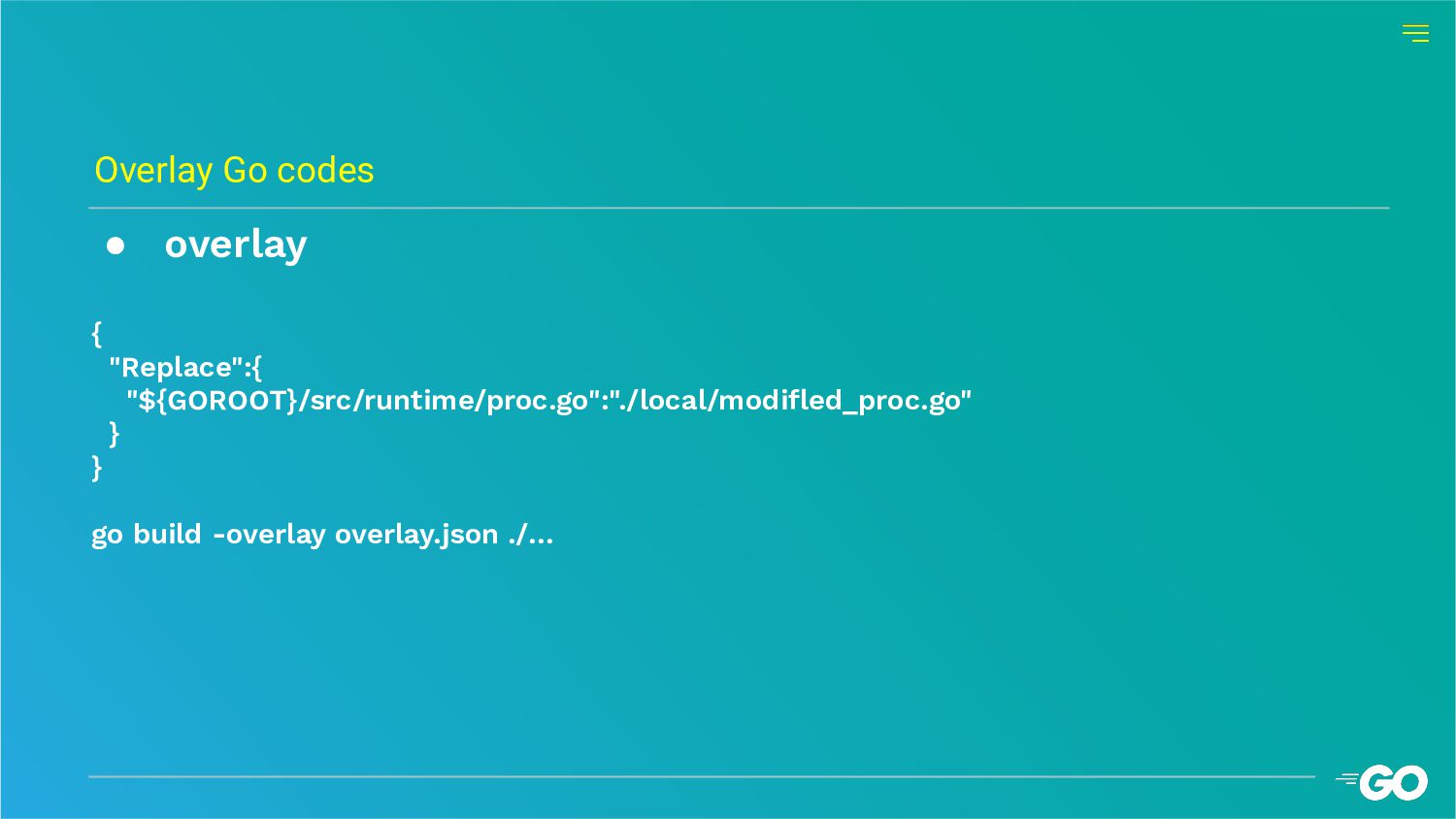
• overlay { "Replace":{ "${GOROOT}/src/runtime/proc.go":"./local/modifled_proc.go" } } go build -overlay
overlay.json ./… Overlay Go codes -
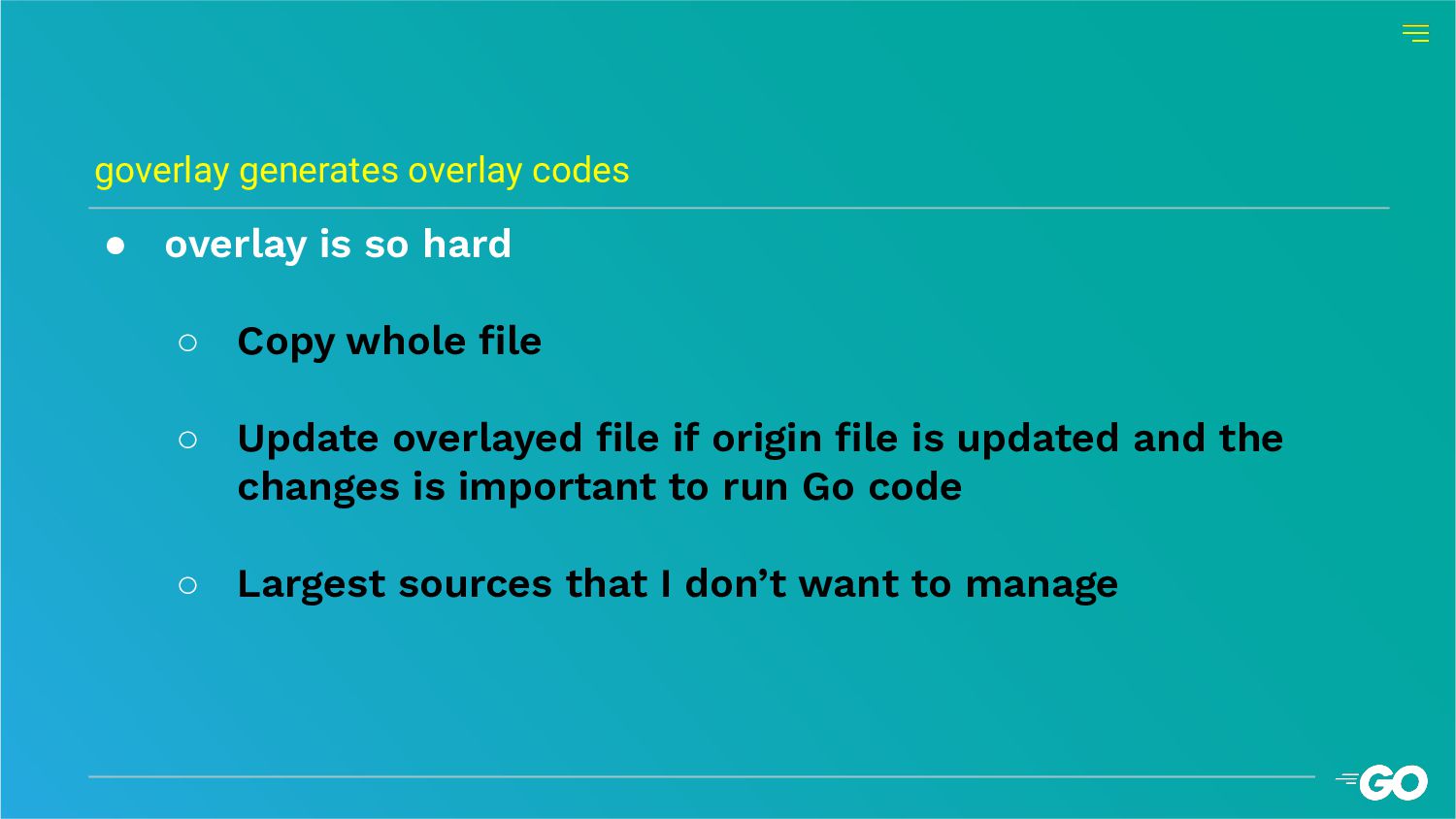
• overlay is so hard ◦ Copy whole file ◦
Update overlayed file if origin file is updated and the changes is important to run Go code ◦ Largest sources that I don’t want to manage goverlay generates overlay codes -
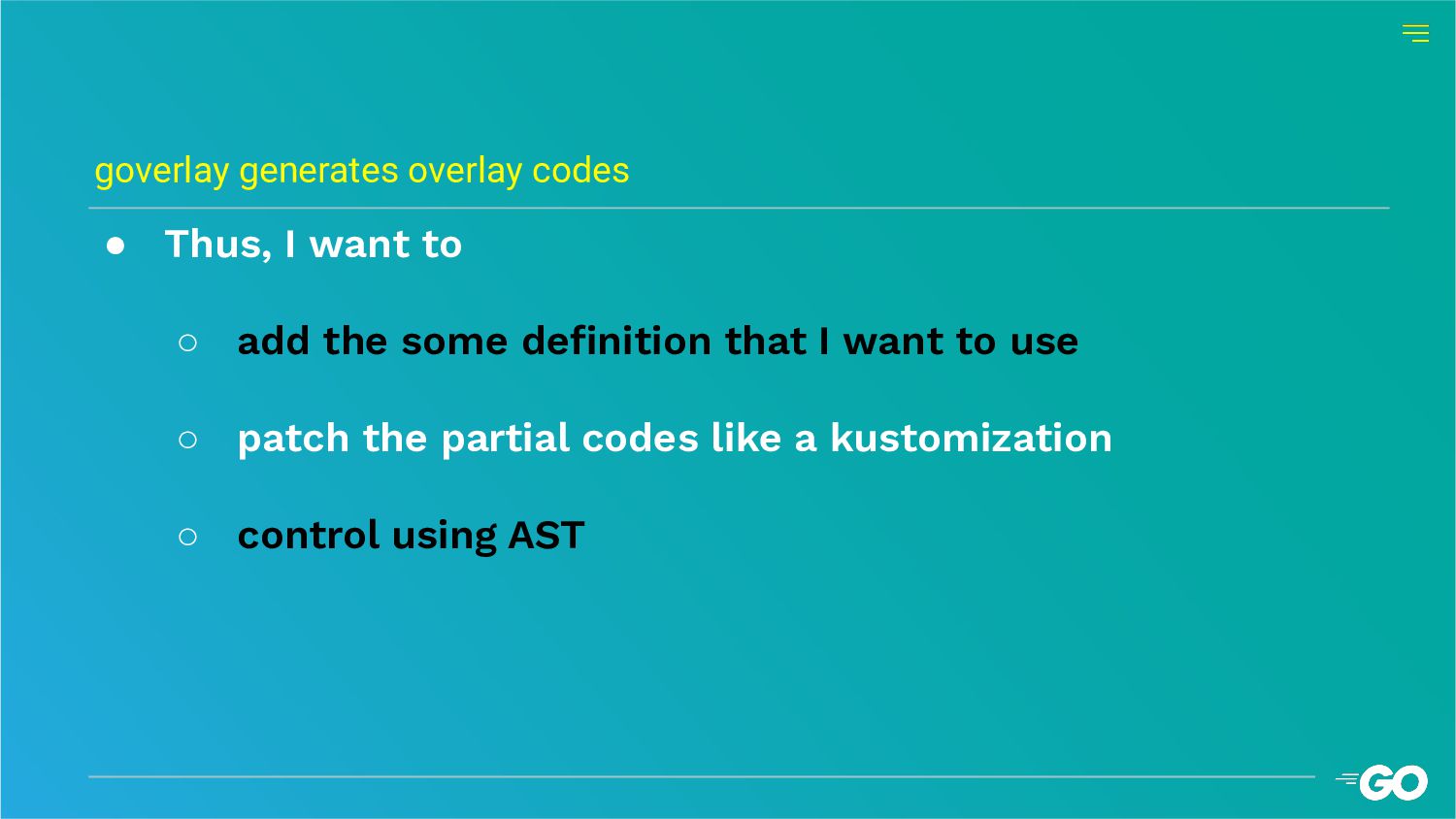
• Thus, I want to ◦ add the some definition
that I want to use ◦ patch the partial codes like a kustomization ◦ control using AST goverlay generates overlay codes -
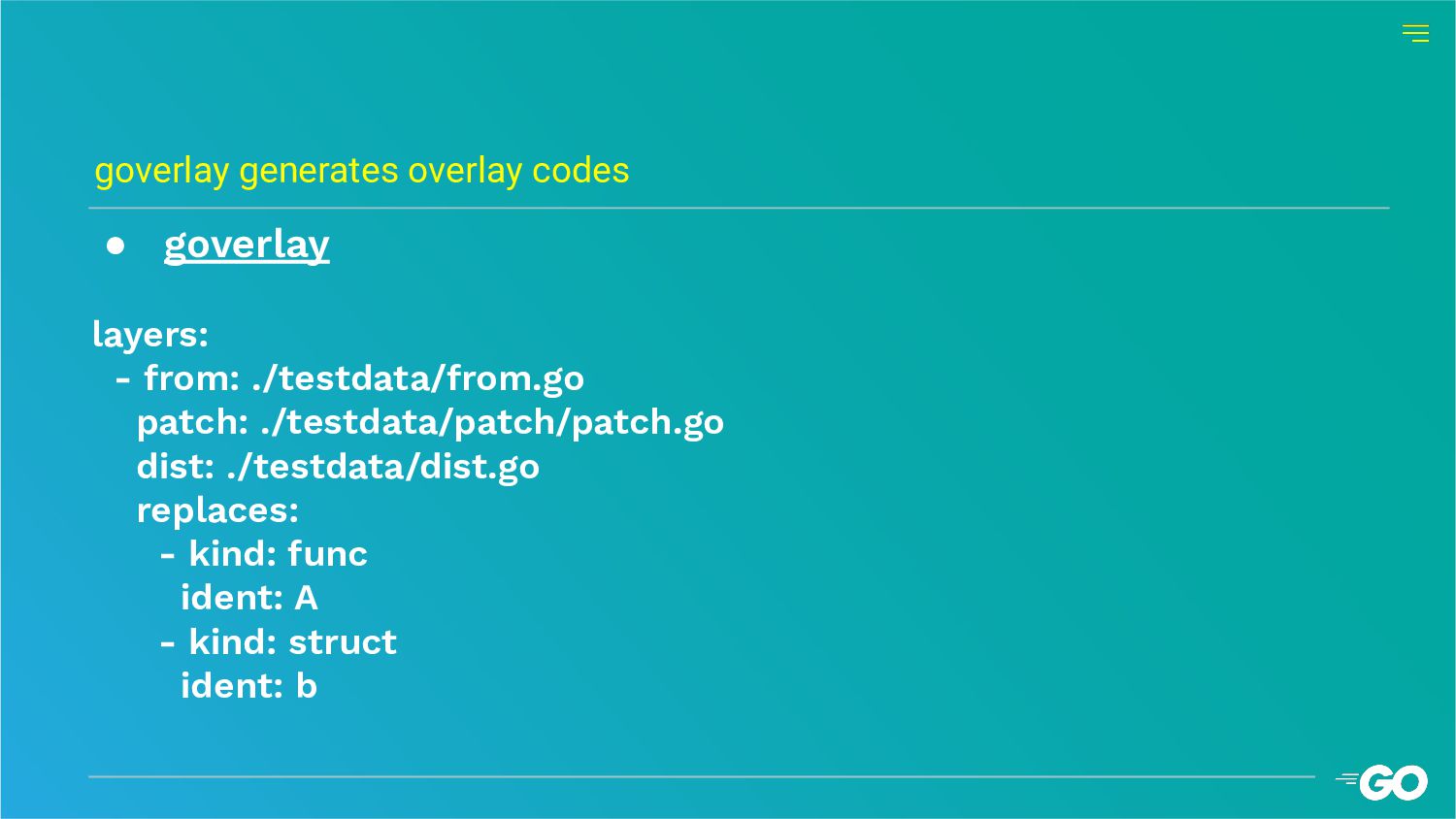
• goverlay layers: - from: ./testdata/from.go patch: ./testdata/patch/patch.go dist: ./testdata/dist.go
replaces: - kind: func ident: A - kind: struct ident: b goverlay generates overlay codes -
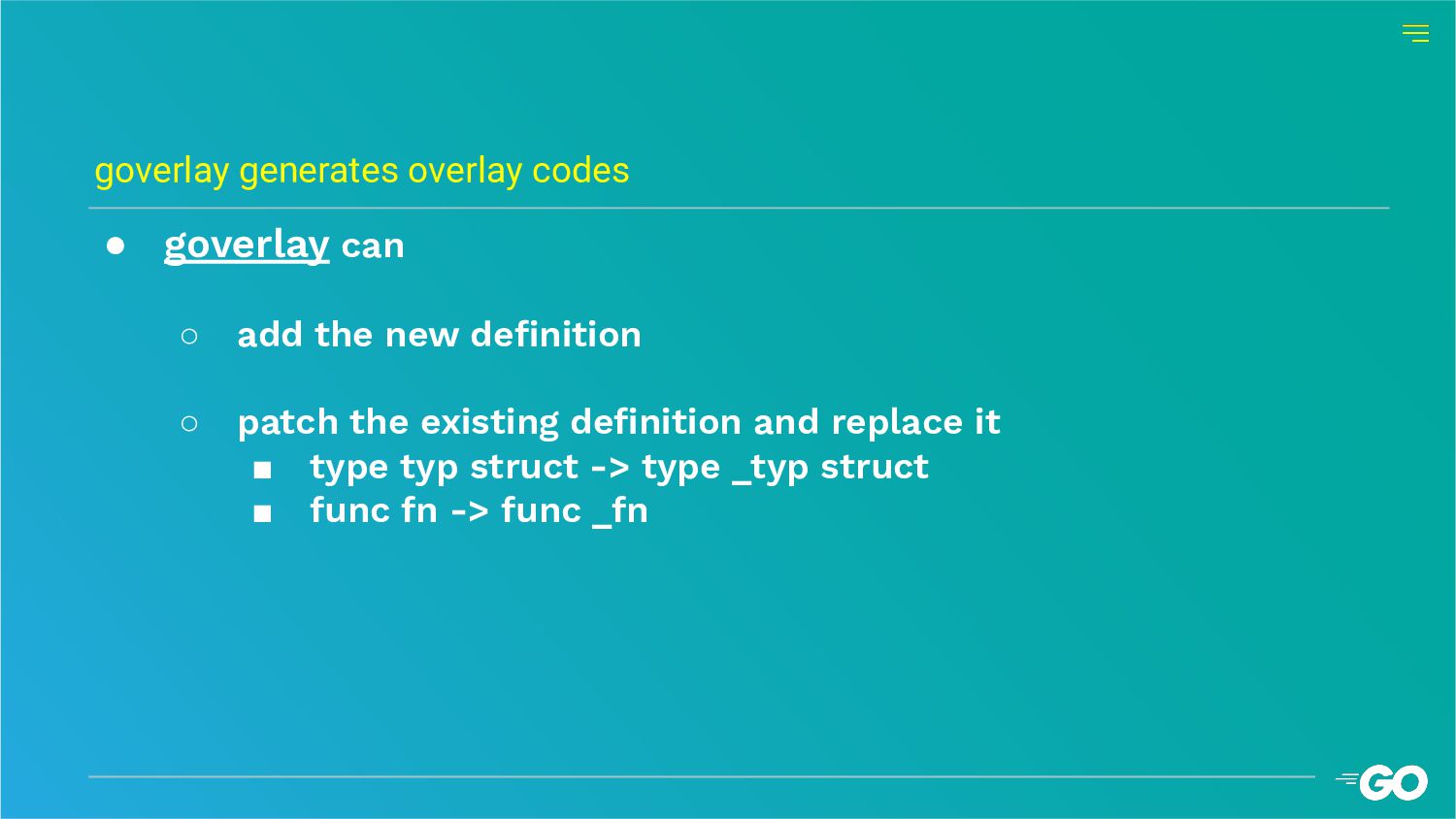
• goverlay can ◦ add the new definition ◦ patch
the existing definition and replace it ▪ type typ struct -> type _typ struct ▪ func fn -> func _fn goverlay generates overlay codes -
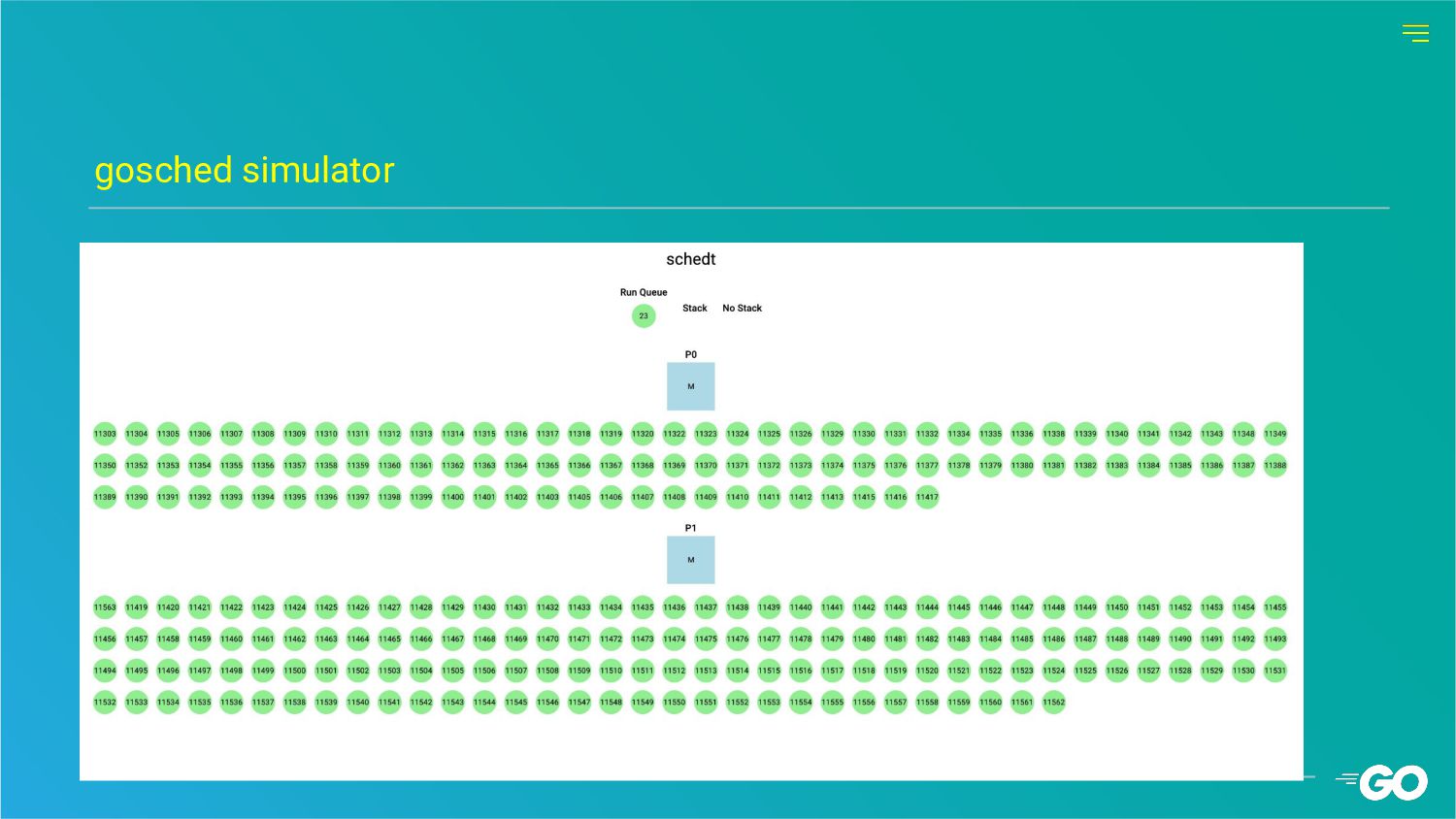
• gosched simulator ◦ Visualize G, M, P and Scheduler
▪ WaitReason, Status etc ◦ Realtime simulation ◦ Handle all G, M, P, Scheduler resources goverlay generates overlay codes -
• Expose type and convert from private type to public
type • Follow the scheddetail implementation • No LSP, so I use acme editor or vanilla Vim ◦ Of course, go tool doesn’t work 🧐 goverlay generates overlay codes -
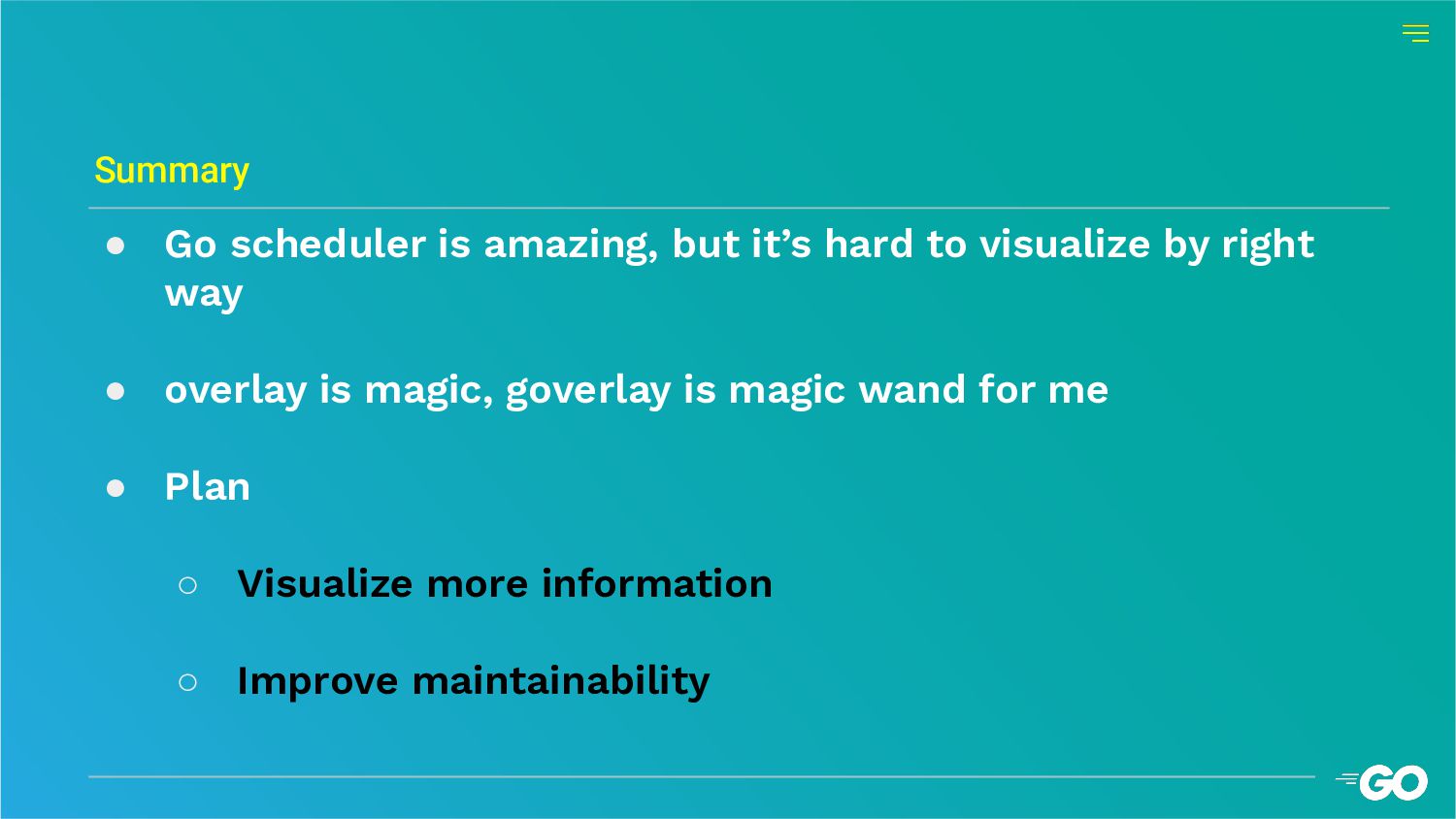
• Go scheduler is amazing, but it’s hard to visualize
by right way • overlay is magic, goverlay is magic wand for me • Plan ◦ Visualize more information ◦ Improve maintainability Summary