social media and brand development. o Those who wish for a stronger media presence for their company. o Those in PR and Marketing. o Anyone who owns their own company.
attain information, but a communicator’s ability to communicate still remains critical to success. So this means that how we communicate is just as important as what we communicate to our audience.
piece of the iceberg that is above water. This area is small and is misleading to what is underneath. o But underwater is a whole different world. That is where the majority of the “social media magic” takes place.
social media audience. o The time when having a social media platform was an optional thing is gone. o Social media is the present and future of communicators. Your mission should be to know your audience and know what they want to see from your social media.
o Once a “PRFail” has gone viral, it is out there for good. o A “PRFail” is most likely to occur when you are reckless. o Being reckless in your actions, your word choice, or even a response to someone on the outside is going to get yourself into trouble. o The simple way to avoid this is to have all employees, no matter their position, aware of your crisis policy.
yet separating fact from fiction has never been harder” (p. 113) o Your audience is going to determine your believability and the hard thing is that there is no way to truly measure how much people believe you.
you, not a machine or device. So add yourself, a human, into the mix. o Social media cannot do it all. It cannot tell you what to communicate. It cannot tell you the boundary between organizational ethics and morality lies. It cannot tell you how to show leadership and character.
need to verify where it came from. It doesn’t matter if someone said it is from a past story the company ran or if an employee of the company took it. Before posting anything, the source needs to be verified.
influencing others not just a skill you are either born with or you are not. You may be naturally talented at influencing people, but it is also a skill that can be learned and very useful.
is just like having a backup plan in real life. o Knowing what to do when things do not go as accordingly is important. o Plan for a social media crisis so when or if it happens, you will be prepared.
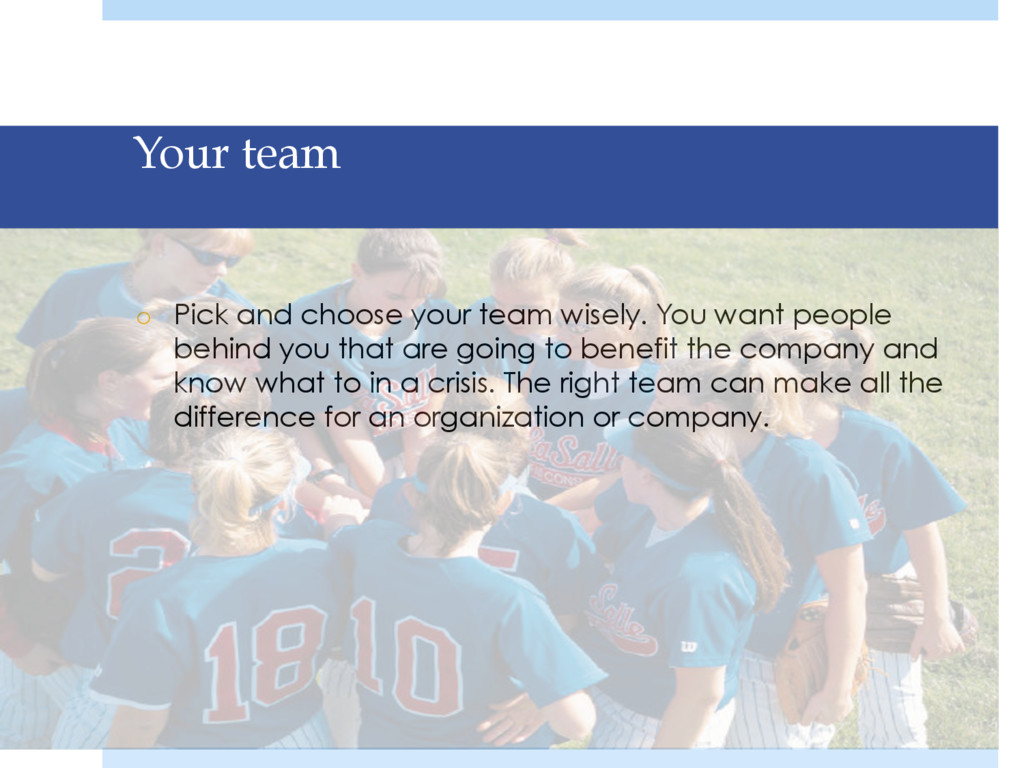
want people behind you that are going to benefit the company and know what to in a crisis. The right team can make all the difference for an organization or company.


 sergeychernyshev
 keithpitt
 paigeccino
 rabernat
 shpigford
 iamctodd
 coloredviolet
 schlessera
 zakiyama
 lara
 lemiorhan
 chriscoyier