Upgrade to Pro — share decks privately, control downloads, hide ads and more …

Security as a top of mind issue for mobile appl...

Security as a top of mind issue for mobile application development

Mobile technologies bring to life new capabilities and opportunities for consumers all around the world. However, the advent of mobile has also resulted in new points of attack for hackers. This presentation it's about how to assess security vulnerabilities in the development process, and how to deliver high-performing applications that provide functionality with security in mind.

Avatar for Ștefan Popa

Ștefan Popa

November 27, 2017

Other Decks in Programming

Transcript

  1. 2 SECURITY AS A TOP OF MIND ISSUE FOR MOBILE

    APPLICATION DEVELOPMENT NOVEMBER 2017
  2. 3 AGENDA ▪ INTRODUCTION ▪ MOST COMMON MOBILE APPS SECURITY

    VULNERABILITIES ▪ TIPS FOR IMPROVING SECURITY IN MOBILE APPS ▪ Q&A
  3. 5

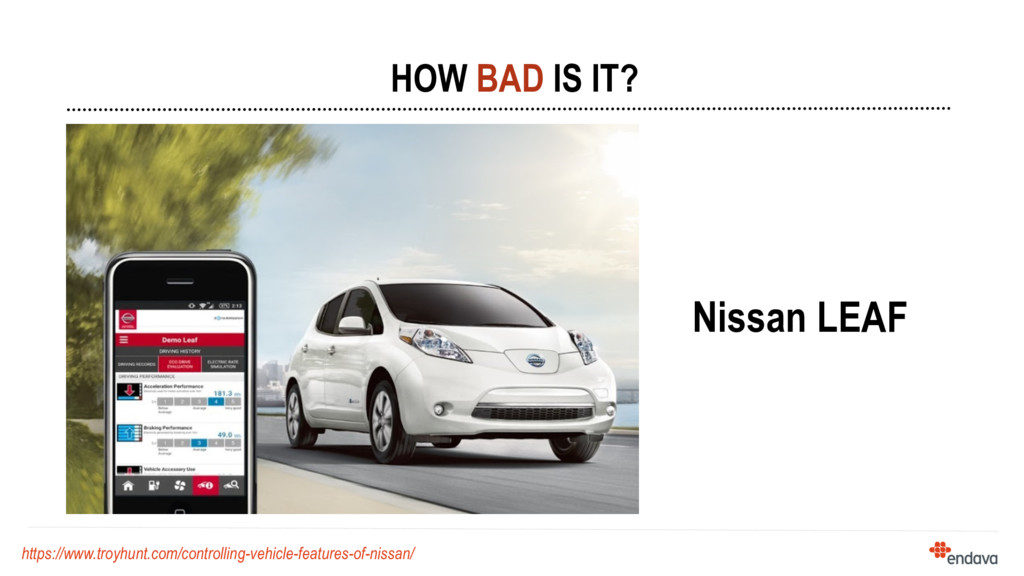
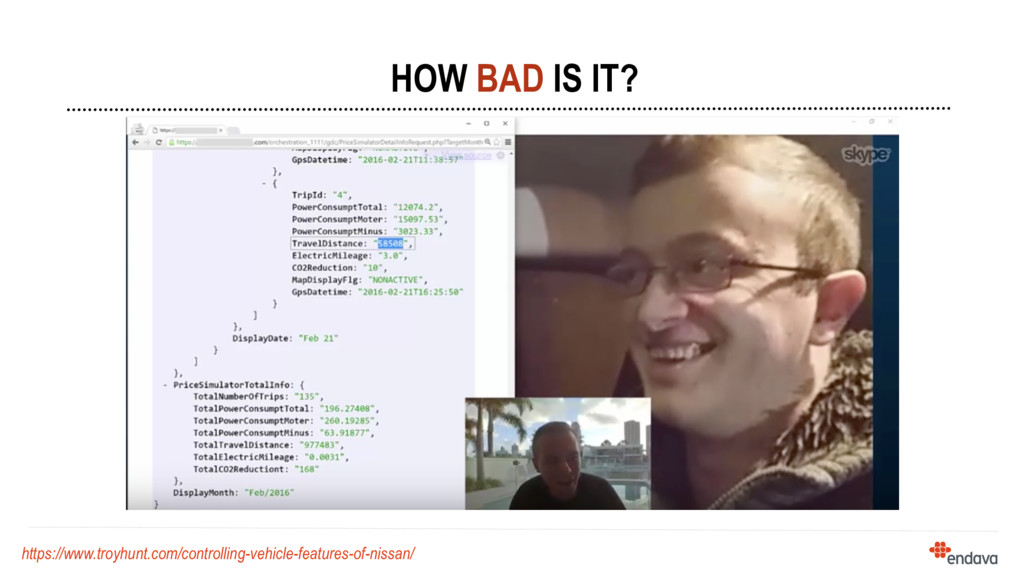
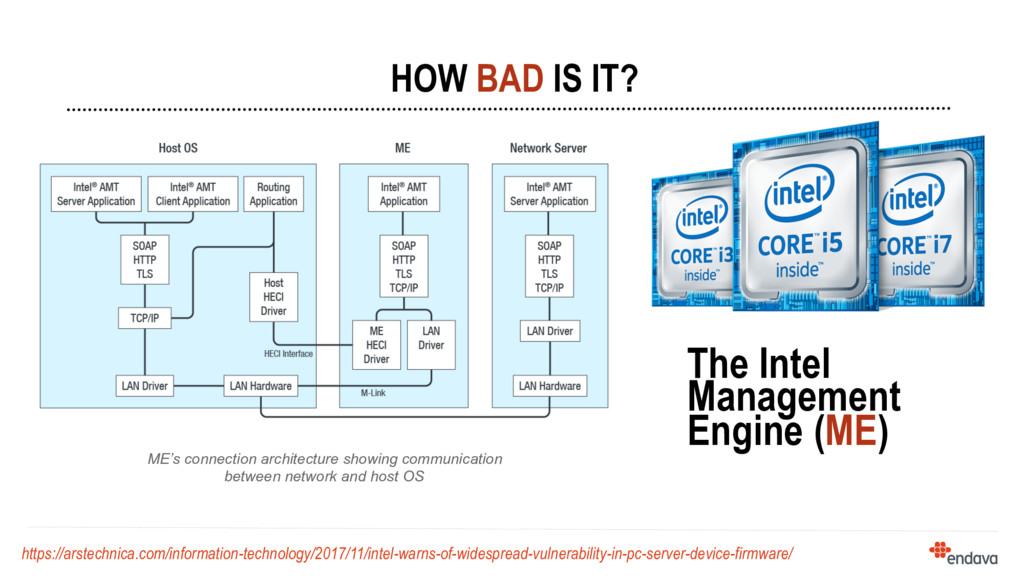
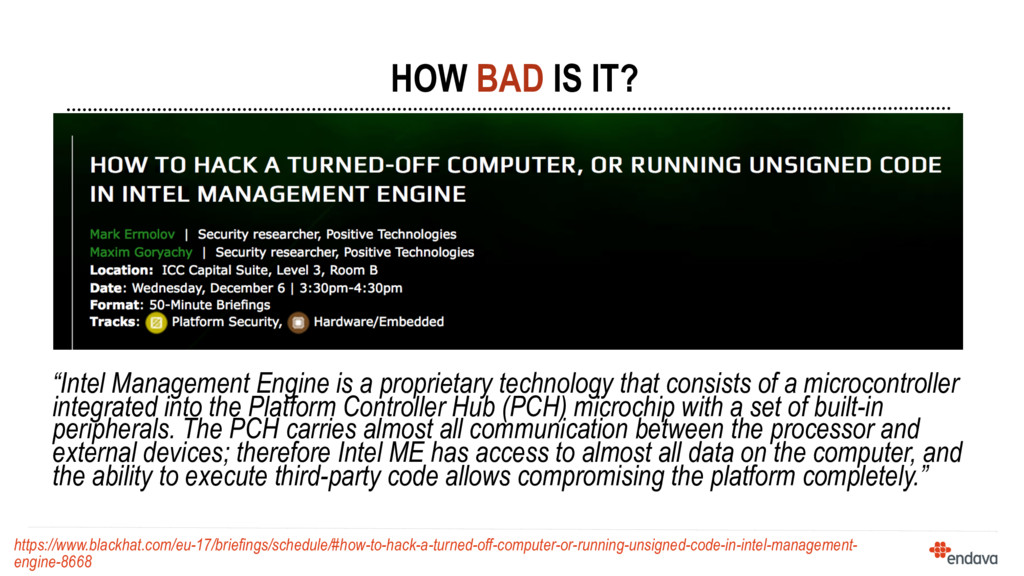
  4. HOW BAD IS IT? https://www.blackhat.com/eu-17/briefings/schedule/#how-to-hack-a-turned-off-computer-or-running-unsigned-code-in-intel-management- engine-8668 “Intel Management Engine is

    a proprietary technology that consists of a microcontroller integrated into the Platform Controller Hub (PCH) microchip with a set of built-in peripherals. The PCH carries almost all communication between the processor and external devices; therefore Intel ME has access to almost all data on the computer, and the ability to execute third-party code allows compromising the platform completely.”
  5. 14 “If builders built houses the way programmers build programs,

    the first woodpecker to come along would destroy civilization.” — Weinberg's Second Law
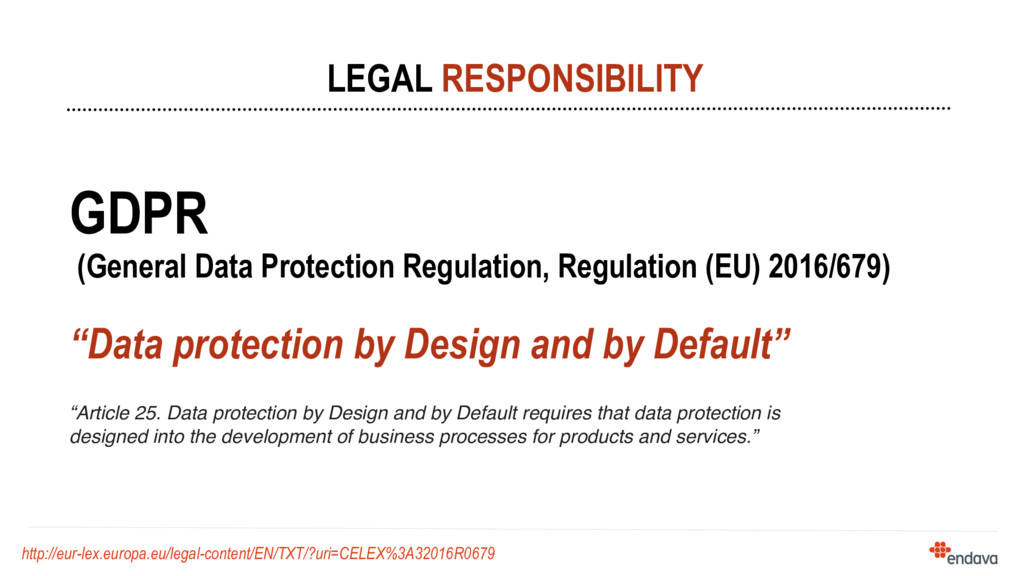
  6. LEGAL RESPONSIBILITY GDPR (General Data Protection Regulation, Regulation (EU) 2016/679)

    “Data protection by Design and by Default” “Article 25. Data protection by Design and by Default requires that data protection is designed into the development of business processes for products and services.” http://eur-lex.europa.eu/legal-content/EN/TXT/?uri=CELEX%3A32016R0679
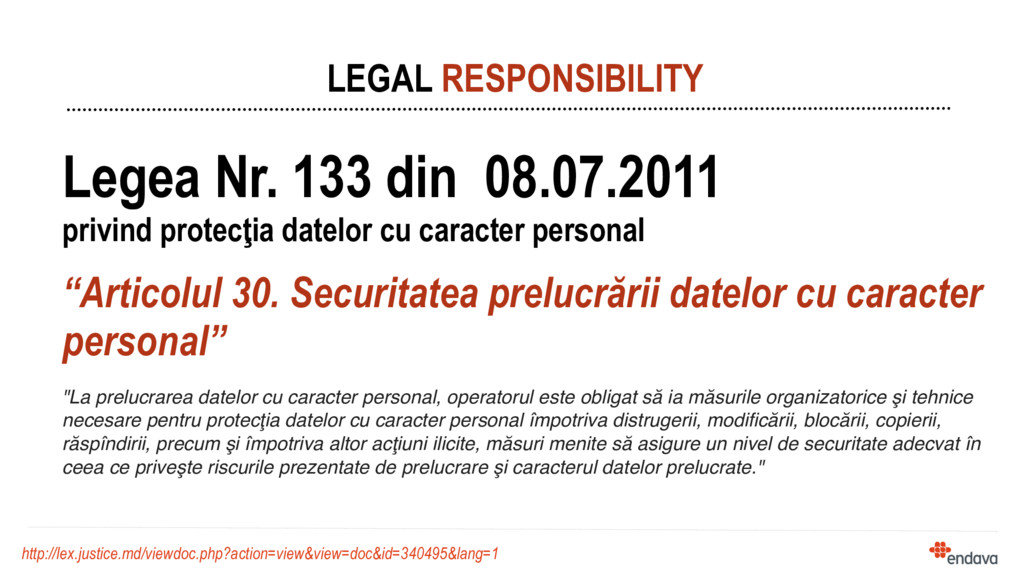
  7. LEGAL RESPONSIBILITY Legea Nr. 133 din 08.07.2011 privind protecţia datelor

    cu caracter personal “Articolul 30. Securitatea prelucrării datelor cu caracter personal” "La prelucrarea datelor cu caracter personal, operatorul este obligat să ia măsurile organizatorice şi tehnice necesare pentru protecţia datelor cu caracter personal împotriva distrugerii, modificării, blocării, copierii, răspîndirii, precum şi împotriva altor acţiuni ilicite, măsuri menite să asigure un nivel de securitate adecvat în ceea ce priveşte riscurile prezentate de prelucrare şi caracterul datelor prelucrate." http://lex.justice.md/viewdoc.php?action=view&view=doc&id=340495&lang=1
  8. 25 THE LESSONS OF NATURE #3 WE LIVE IN A

    CONSTANTLY CHANGING WORLD, WE NEED TO REACT FAST AND ADAPT TO CHANGE
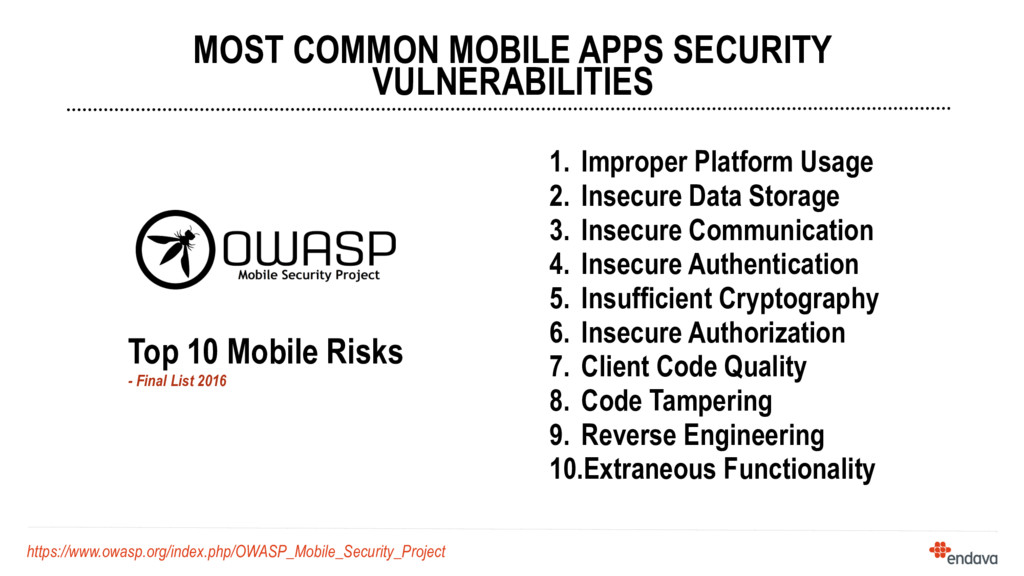
  9. 35 MOST COMMON MOBILE APPS SECURITY VULNERABILITIES 1. Improper Platform

    Usage 2. Insecure Data Storage 3. Insecure Communication 4. Insecure Authentication 5. Insufficient Cryptography 6. Insecure Authorization 7. Client Code Quality 8. Code Tampering 9. Reverse Engineering 10.Extraneous Functionality Top 10 Mobile Risks - Final List 2016 https://www.owasp.org/index.php/OWASP_Mobile_Security_Project
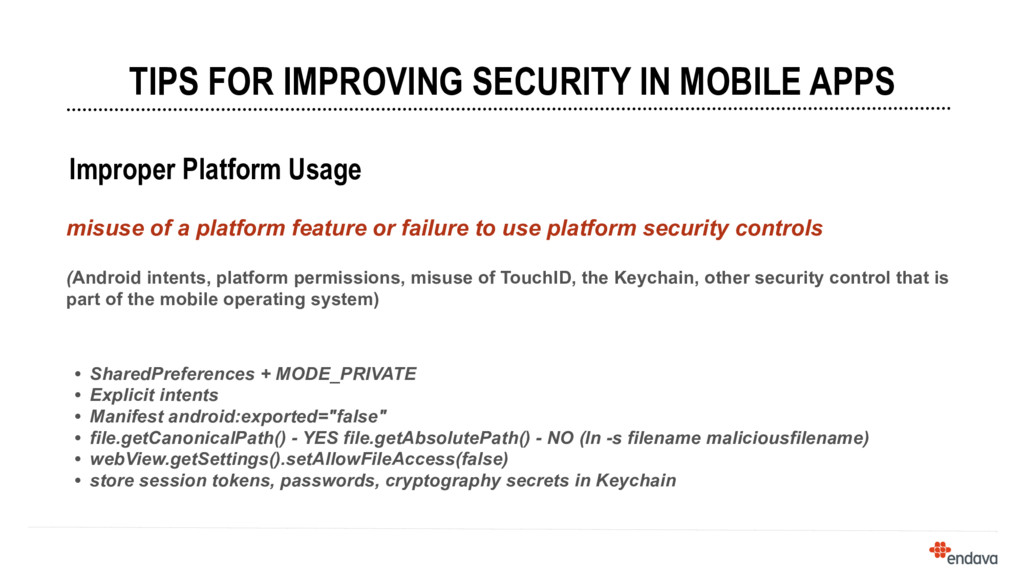
  10. 36 TIPS FOR IMPROVING SECURITY IN MOBILE APPS Improper Platform

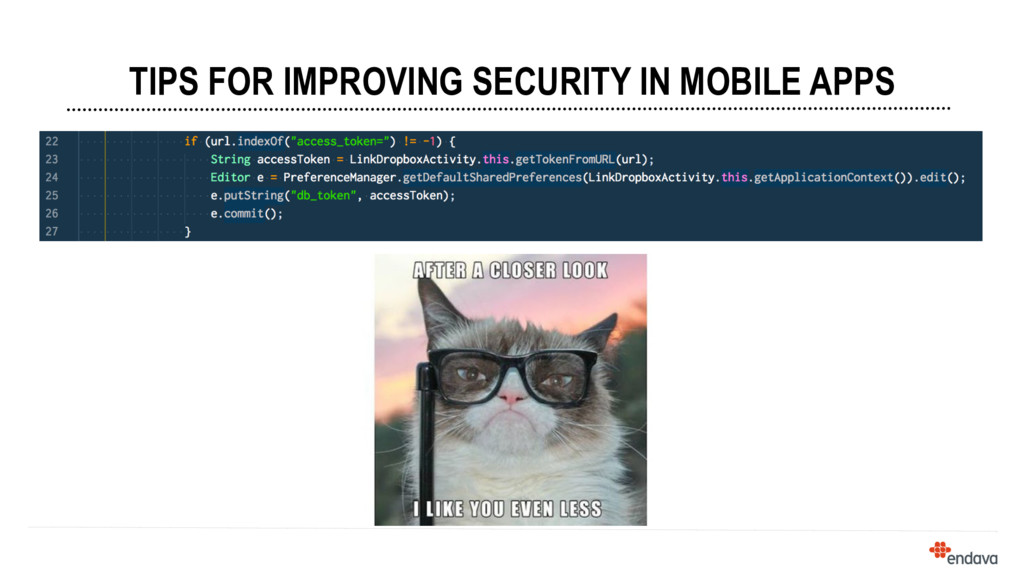
    Usage misuse of a platform feature or failure to use platform security controls (Android intents, platform permissions, misuse of TouchID, the Keychain, other security control that is part of the mobile operating system) • SharedPreferences + MODE_PRIVATE • Explicit intents • Manifest android:exported="false" • file.getCanonicalPath() - YES file.getAbsolutePath() - NO (ln -s filename maliciousfilename) • webView.getSettings().setAllowFileAccess(false) • store session tokens, passwords, cryptography secrets in Keychain
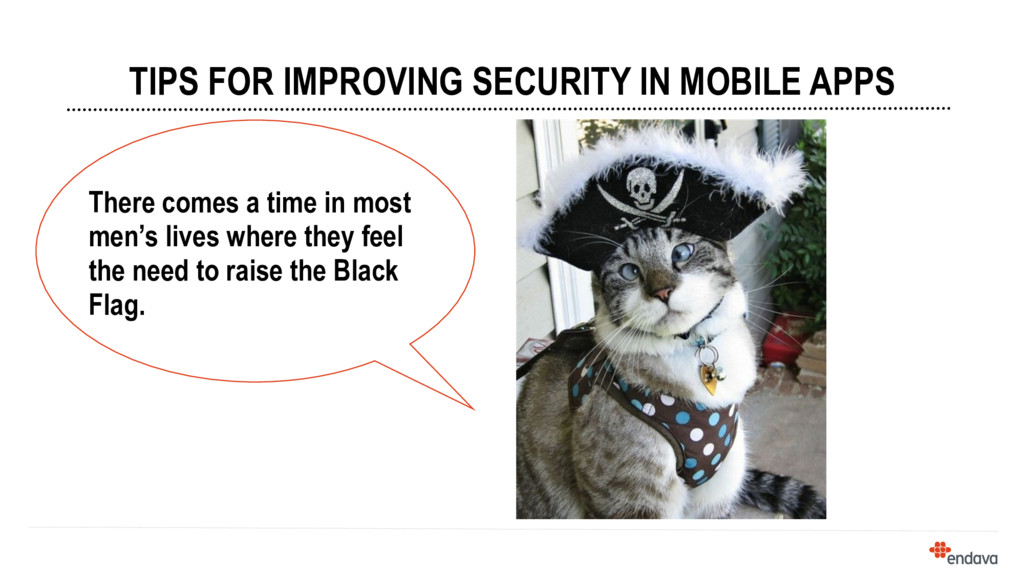
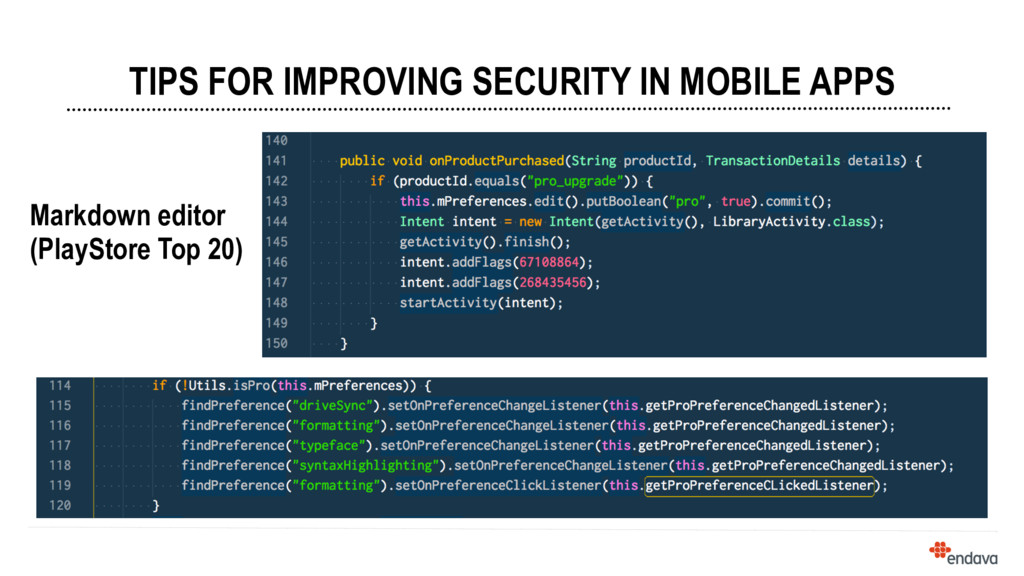
  11. 37 TIPS FOR IMPROVING SECURITY IN MOBILE APPS There comes

    a time in most men’s lives where they feel the need to raise the Black Flag.
  12. 40 TIPS FOR IMPROVING SECURITY IN MOBILE APPS Insecure Data

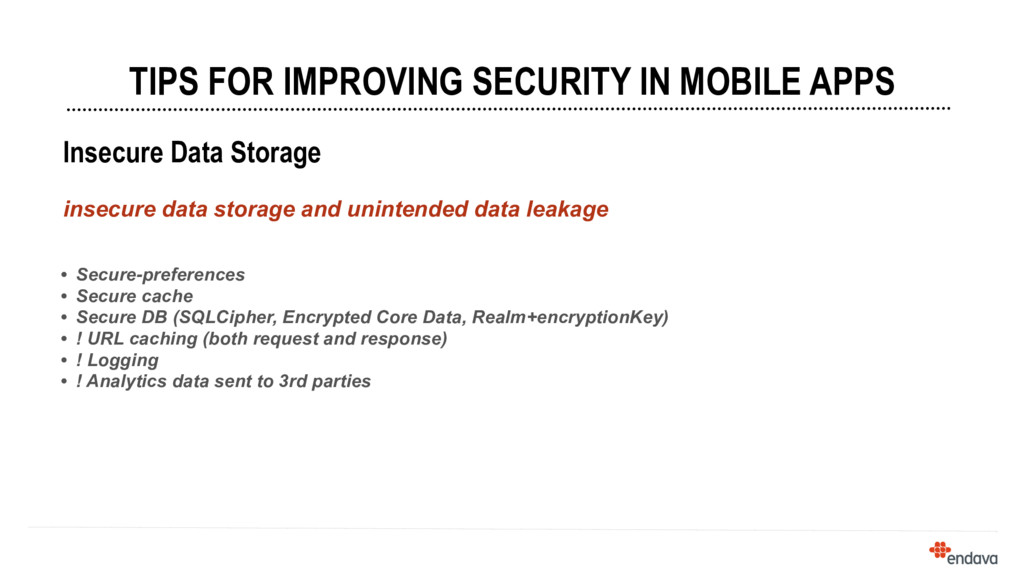
    Storage insecure data storage and unintended data leakage • Secure-preferences • Secure cache • Secure DB (SQLCipher, Encrypted Core Data, Realm+encryptionKey) • ! URL caching (both request and response) • ! Logging • ! Analytics data sent to 3rd parties
  13. 41 TIPS FOR IMPROVING SECURITY IN MOBILE APPS Insecure Communication

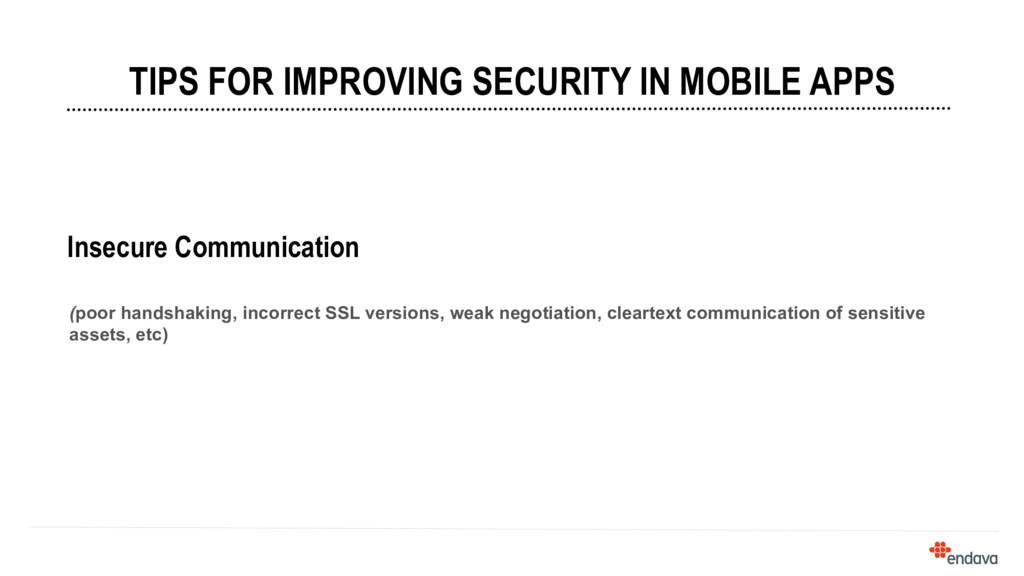
    (poor handshaking, incorrect SSL versions, weak negotiation, cleartext communication of sensitive assets, etc)
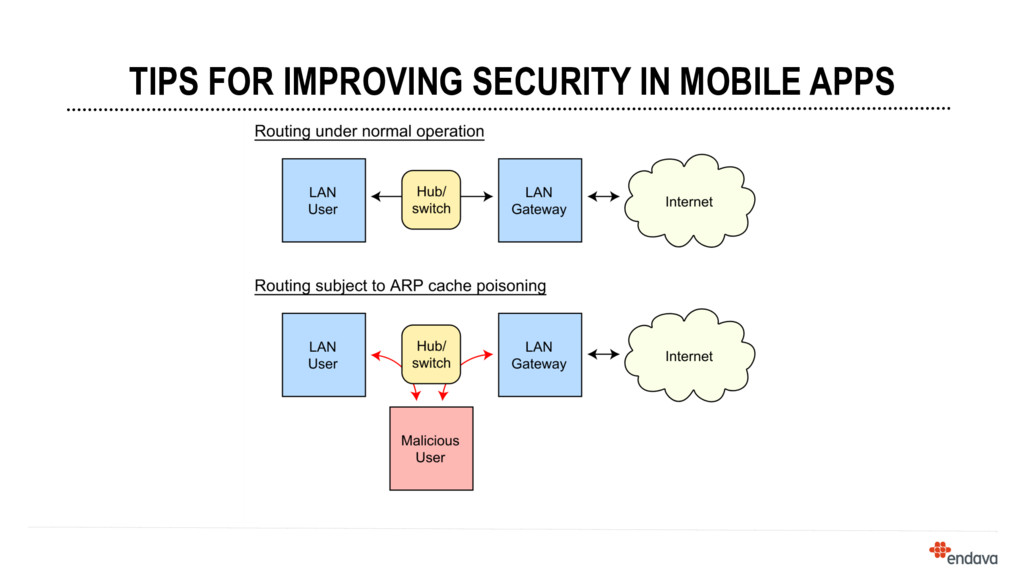
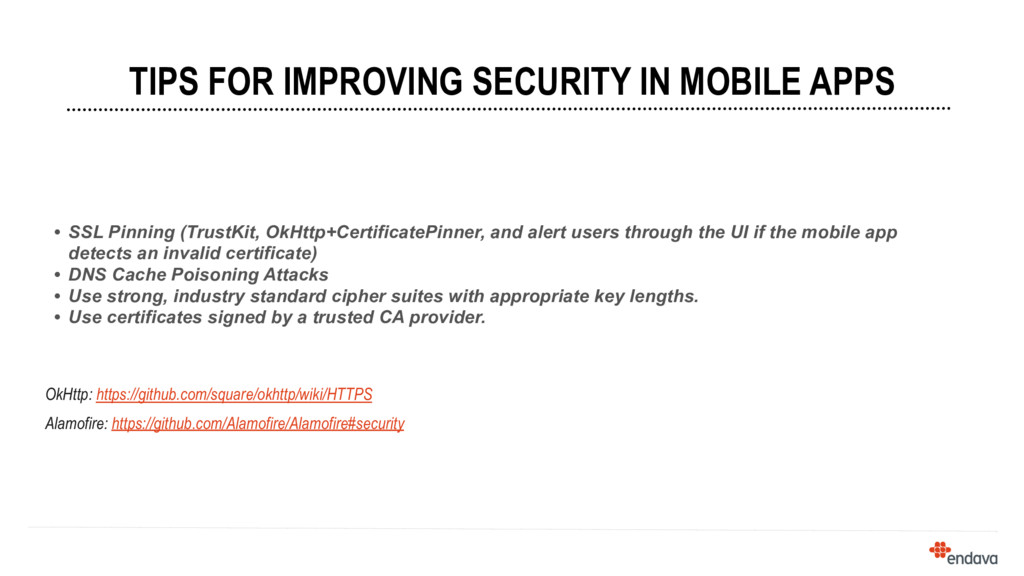
  14. 44 TIPS FOR IMPROVING SECURITY IN MOBILE APPS • SSL

    Pinning (TrustKit, OkHttp+CertificatePinner, and alert users through the UI if the mobile app detects an invalid certificate) • DNS Cache Poisoning Attacks • Use strong, industry standard cipher suites with appropriate key lengths. • Use certificates signed by a trusted CA provider. OkHttp: https://github.com/square/okhttp/wiki/HTTPS Alamofire: https://github.com/Alamofire/Alamofire#security
  15. 45 TIPS FOR IMPROVING SECURITY IN MOBILE APPS Insecure Authentication

    authenticating the end user or bad session management • Failing to identify the user at all when that should be required • Failure to maintain the user's identity when it is required • Weaknesses in session management
  16. 46 TIPS FOR IMPROVING SECURITY IN MOBILE APPS • If

    client-side storage of data is required, the data will need to be encrypted using an encryption key that is securely derived from the user’s login credentials. • Persistent authentication (Remember Me) functionality implemented within mobile applications should never store a user’s password on the device. • Mobile applications should utilize a device-specific authentication token that can be revoked within the mobile application by the user. • Authenticating a user locally can lead to client-side bypass vulnerabilities.
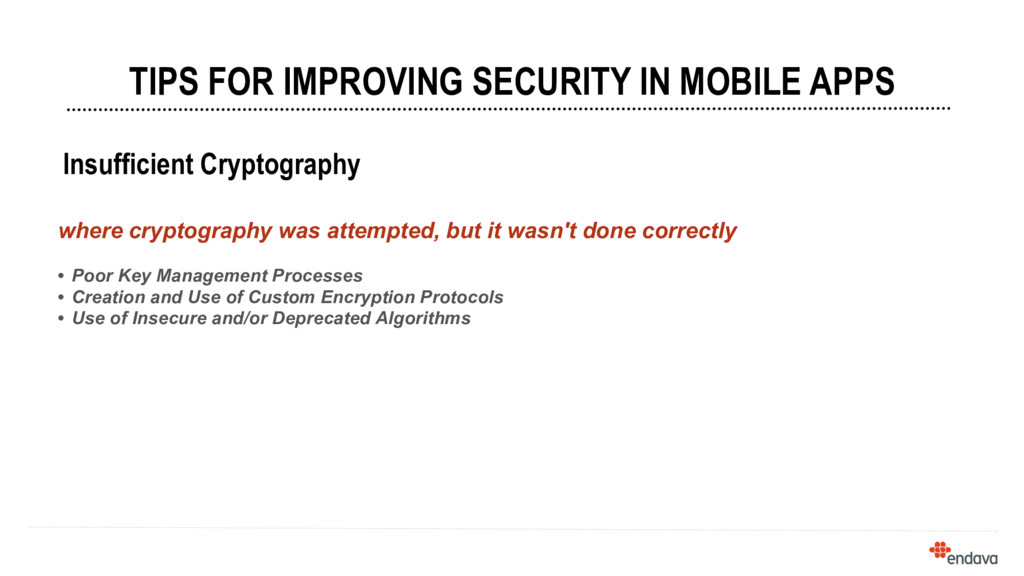
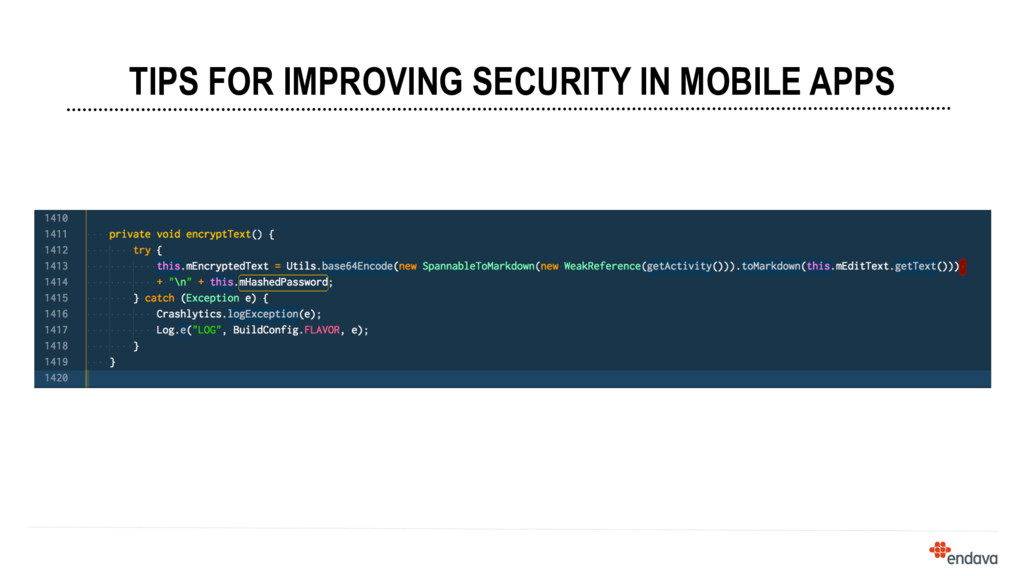
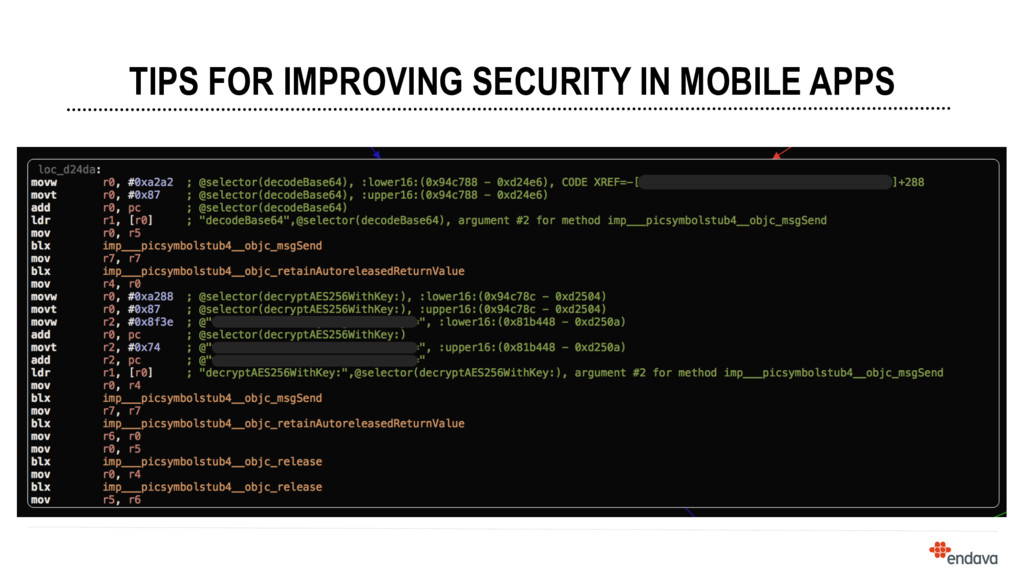
  17. TIPS FOR IMPROVING SECURITY IN MOBILE APPS Insufficient Cryptography where

    cryptography was attempted, but it wasn't done correctly • Poor Key Management Processes • Creation and Use of Custom Encryption Protocols • Use of Insecure and/or Deprecated Algorithms
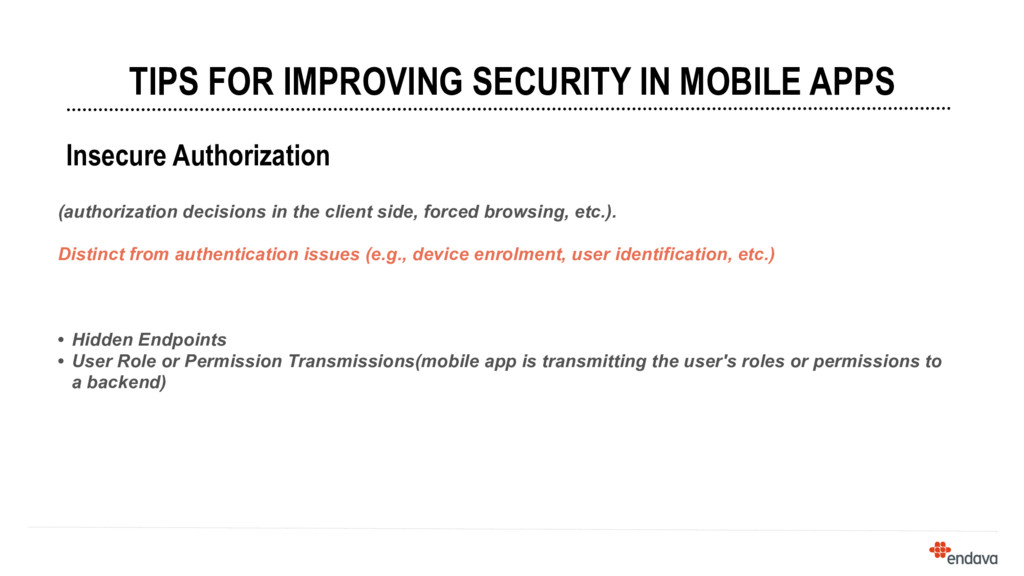
  18. TIPS FOR IMPROVING SECURITY IN MOBILE APPS Insecure Authorization (authorization

    decisions in the client side, forced browsing, etc.). Distinct from authentication issues (e.g., device enrolment, user identification, etc.) • Hidden Endpoints • User Role or Permission Transmissions(mobile app is transmitting the user's roles or permissions to a backend)
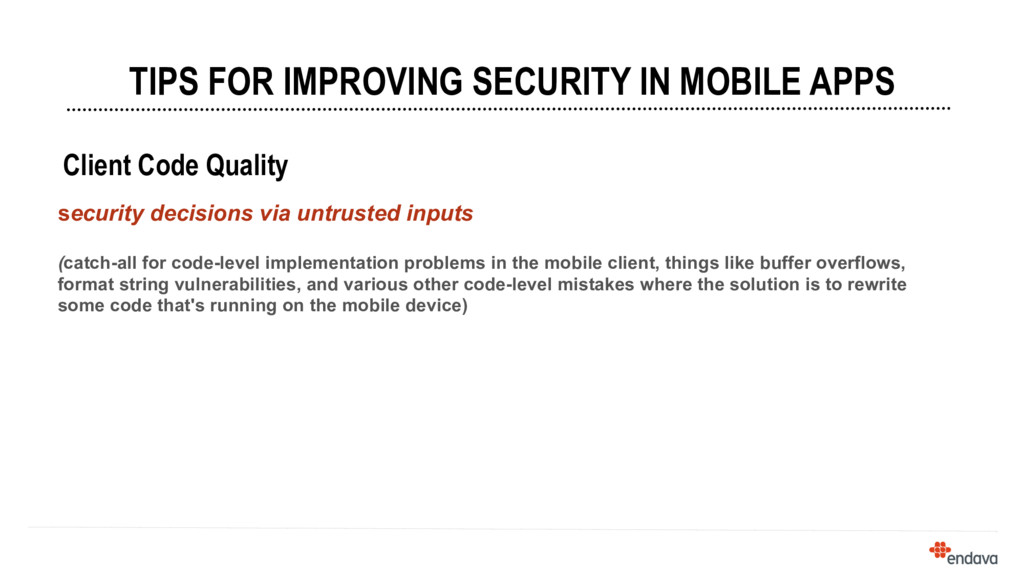
  19. 52 TIPS FOR IMPROVING SECURITY IN MOBILE APPS Client Code

    Quality security decisions via untrusted inputs (catch-all for code-level implementation problems in the mobile client, things like buffer overflows, format string vulnerabilities, and various other code-level mistakes where the solution is to rewrite some code that's running on the mobile device)
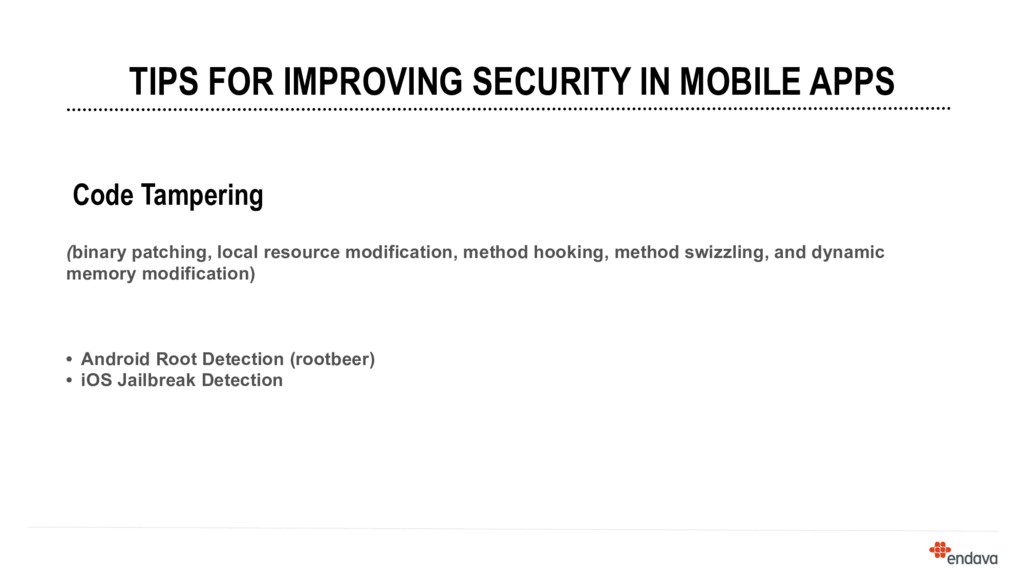
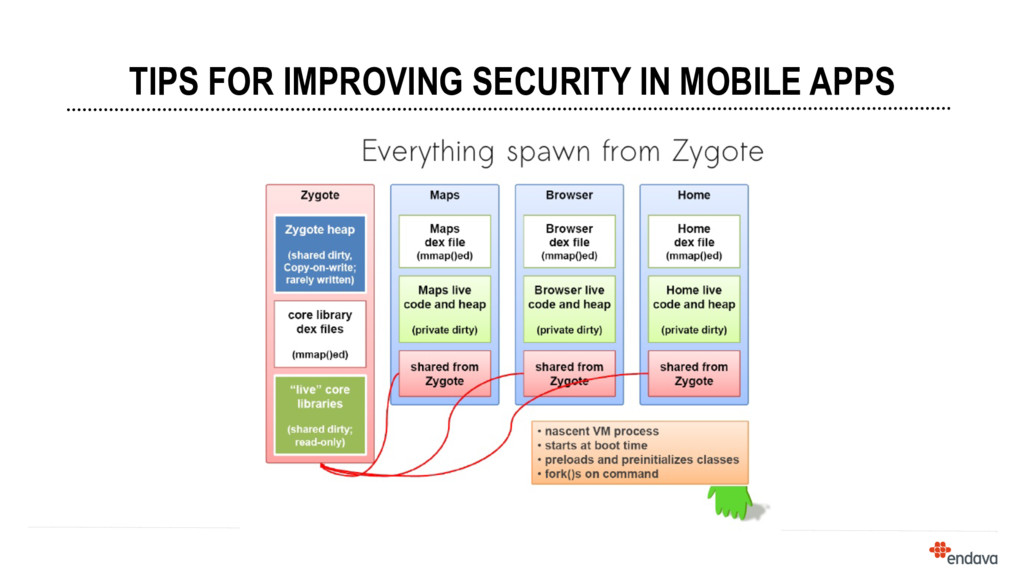
  20. 53 TIPS FOR IMPROVING SECURITY IN MOBILE APPS Code Tampering

    (binary patching, local resource modification, method hooking, method swizzling, and dynamic memory modification) • Android Root Detection (rootbeer) • iOS Jailbreak Detection
  21. 56 TIPS FOR IMPROVING SECURITY IN MOBILE APPS Reverse Engineering

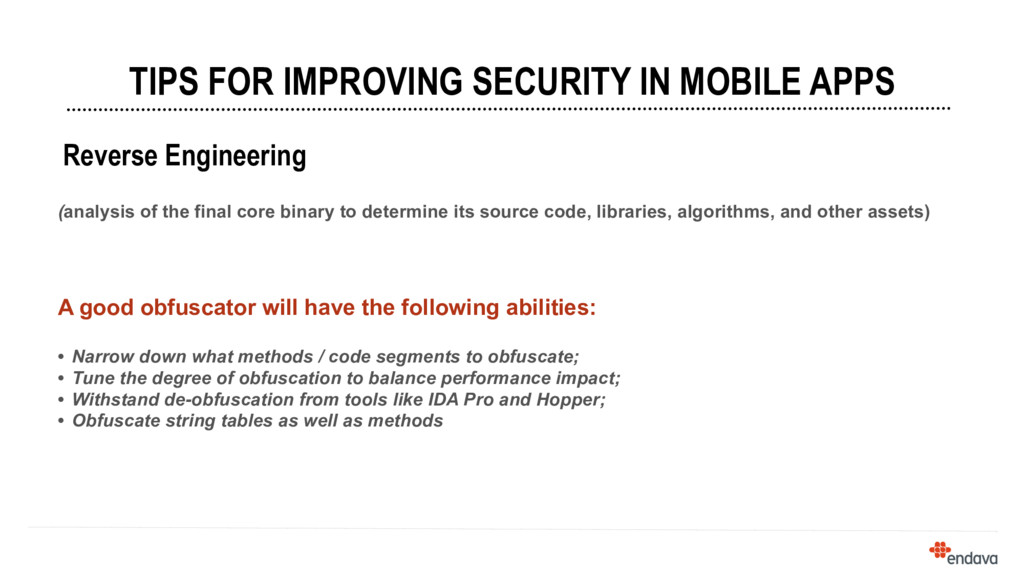
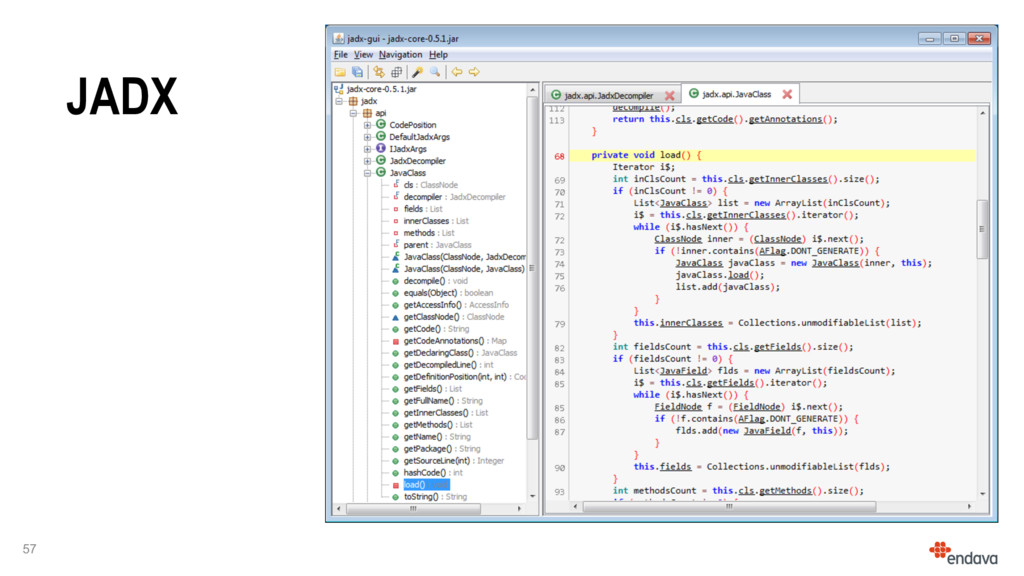
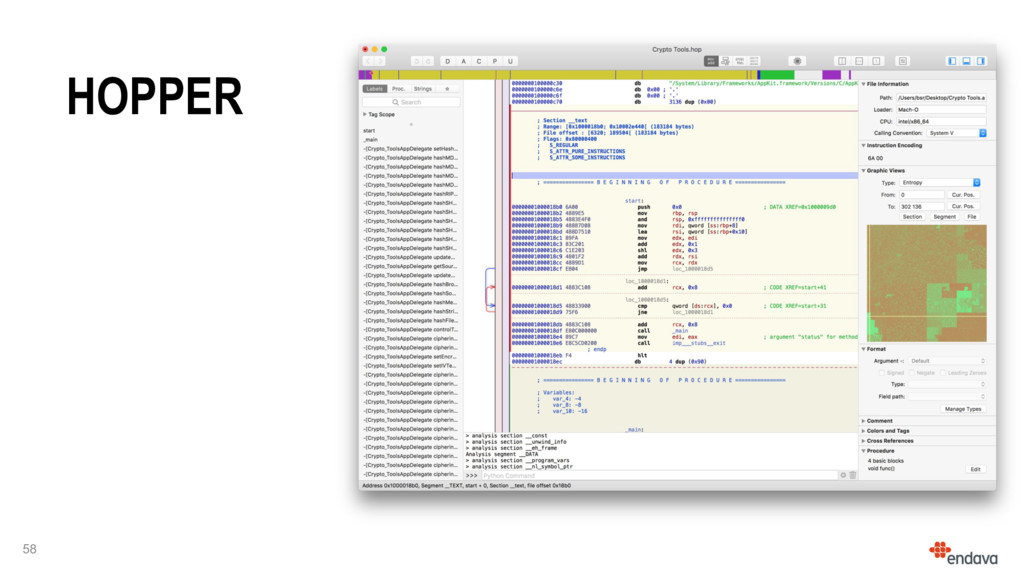
    (analysis of the final core binary to determine its source code, libraries, algorithms, and other assets) A good obfuscator will have the following abilities: • Narrow down what methods / code segments to obfuscate; • Tune the degree of obfuscation to balance performance impact; • Withstand de-obfuscation from tools like IDA Pro and Hopper; • Obfuscate string tables as well as methods
  22. 59 TIPS FOR IMPROVING SECURITY IN MOBILE APPS Extraneous Functionality

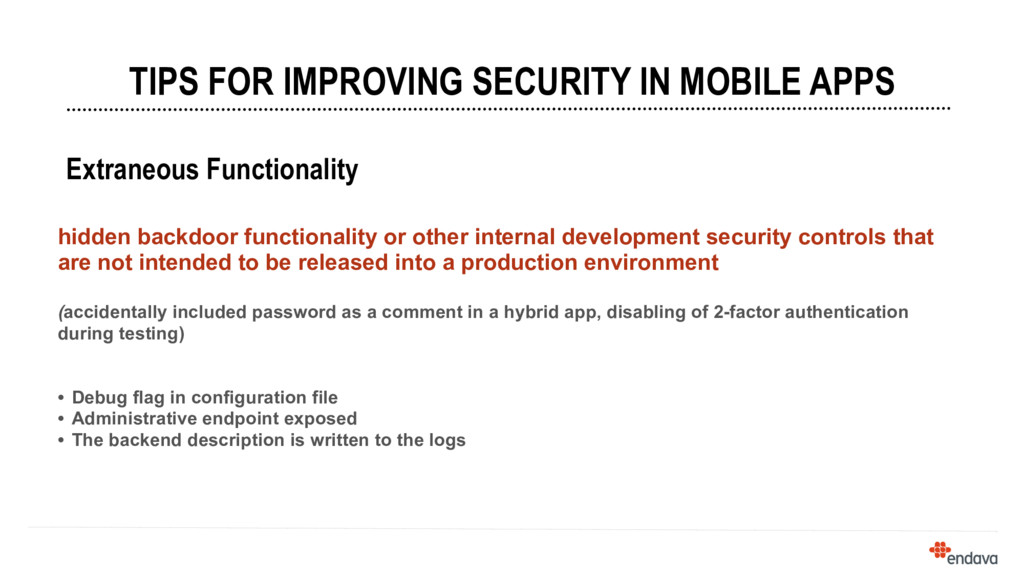
    hidden backdoor functionality or other internal development security controls that are not intended to be released into a production environment (accidentally included password as a comment in a hybrid app, disabling of 2-factor authentication during testing) • Debug flag in configuration file • Administrative endpoint exposed • The backend description is written to the logs