Sensor Systems to Prevent Overdoses: Findings from the US Northeast Joseph “Greg” Rosen, PhD, MSPH Assistant Professor of Medicine and Epidemiology (Research) Harm Reduction International Conference (HR25) Emerging Drug Risks and Harm Reduction Innovations April 29, 2025
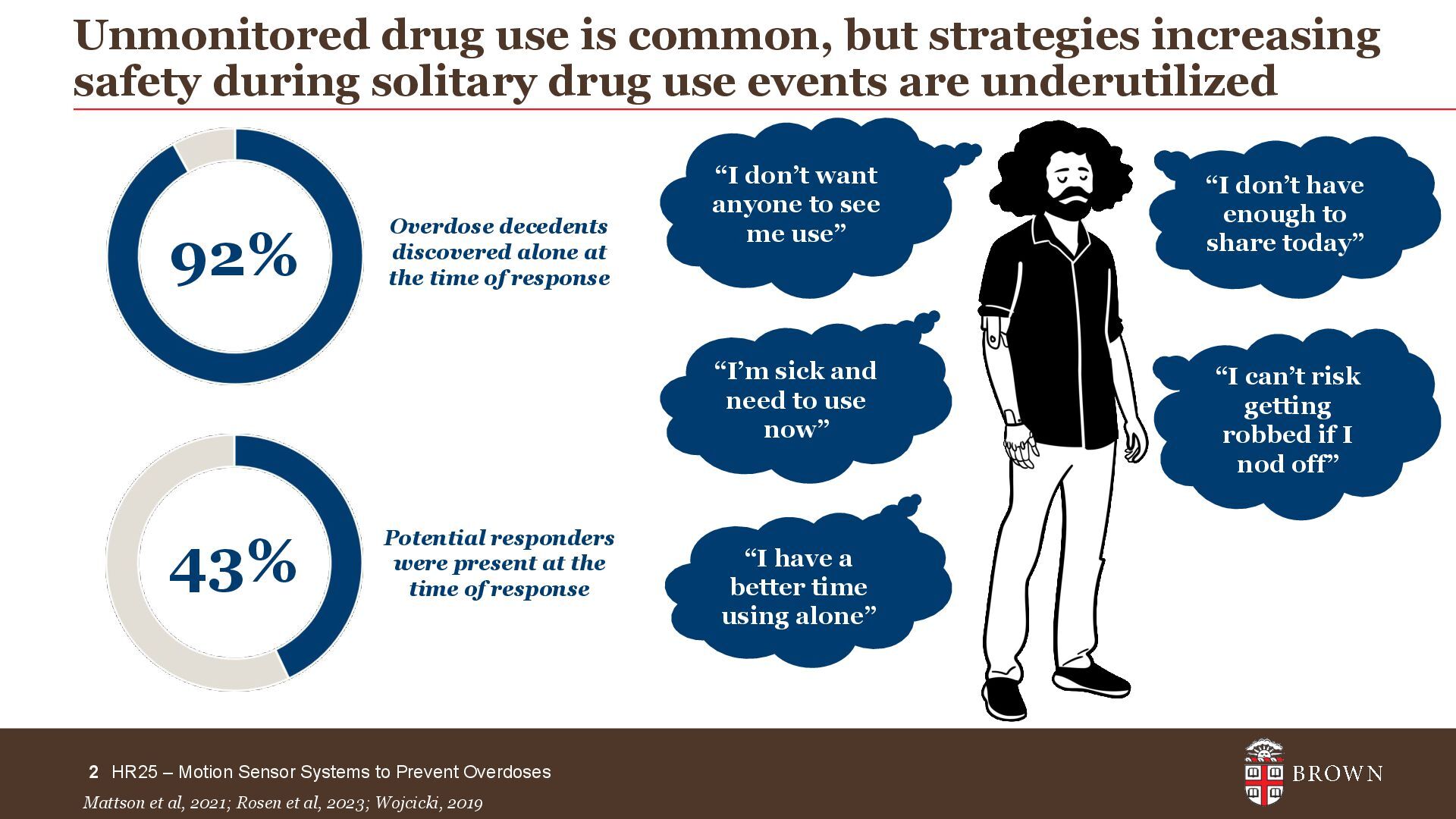
drug use is common, but strategies increasing safety during solitary drug use events are underutilized 92% Overdose decedents discovered alone at the time of response 43% Potential responders were present at the time of response “I don’t have enough to share today” “I don’t want anyone to see me use” “I’m sick and need to use now” “I can’t risk getting robbed if I nod off” “I have a better time using alone” Mattson et al, 2021; Rosen et al, 2023; Wojcicki, 2019
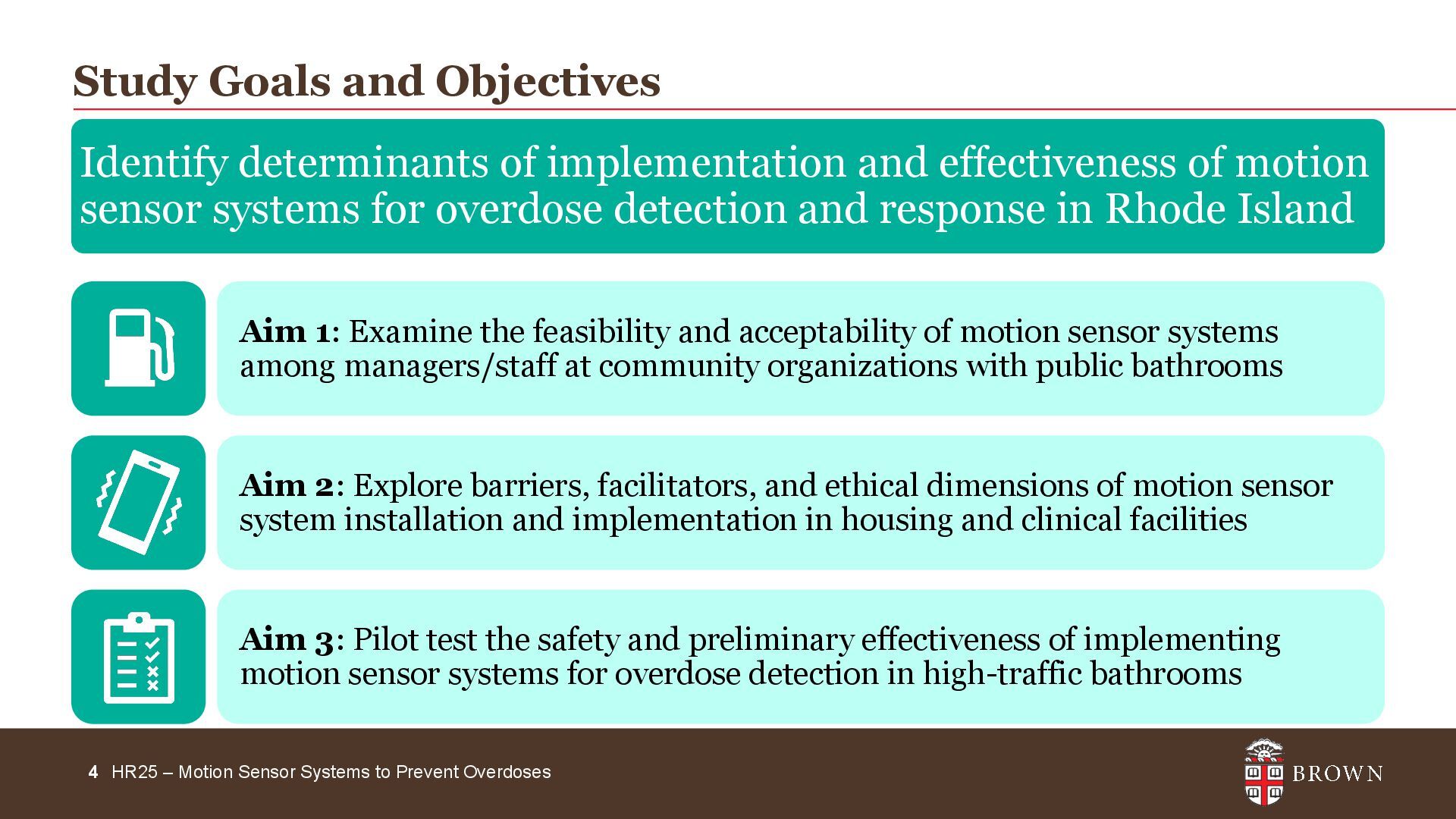
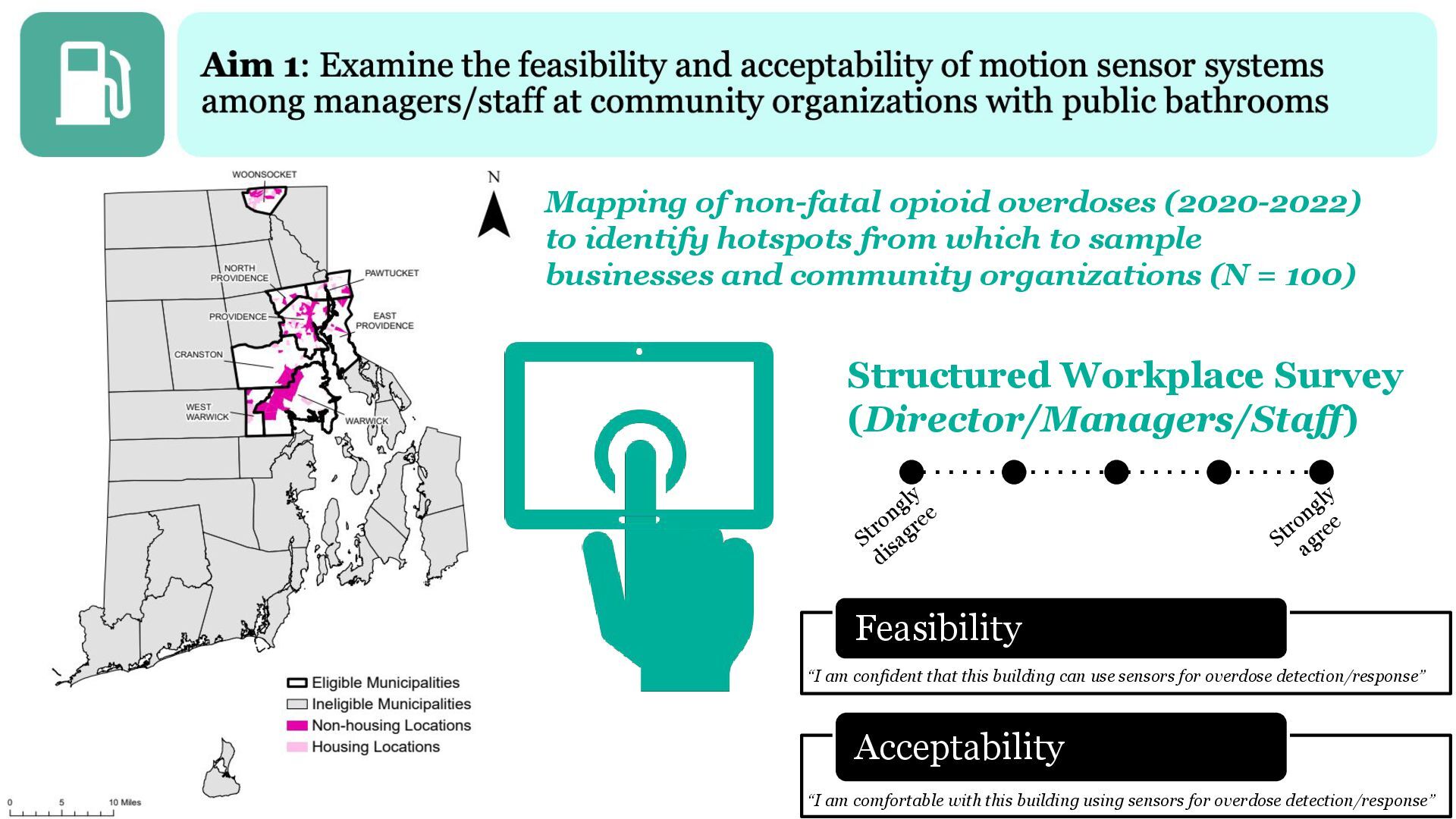
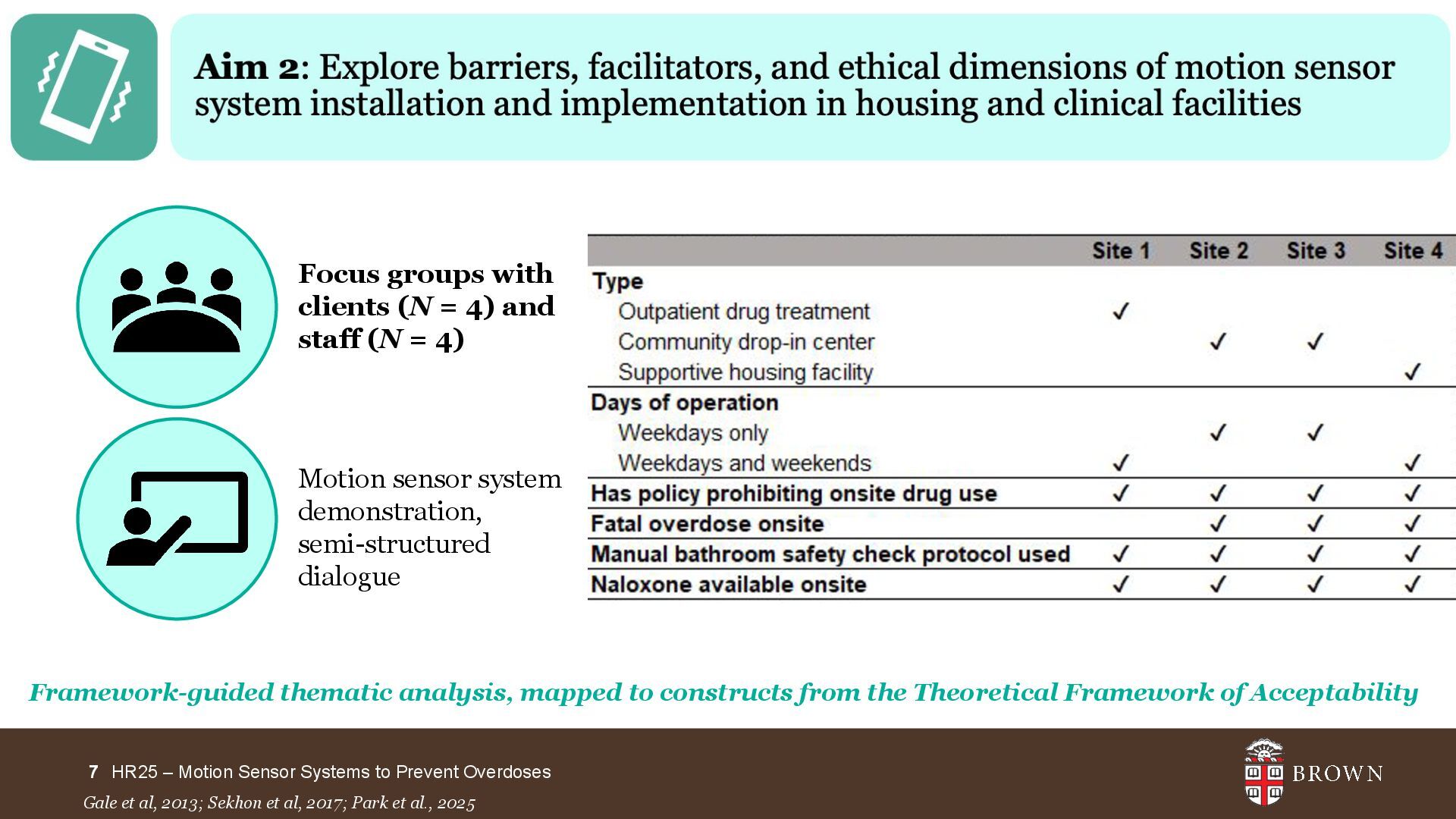
Goals and Objectives Identify determinants of implementation and effectiveness of motion sensor systems for overdose detection and response in Rhode Island Aim 1: Examine the feasibility and acceptability of motion sensor systems among managers/staff at community organizations with public bathrooms Aim 2: Explore barriers, facilitators, and ethical dimensions of motion sensor system installation and implementation in housing and clinical facilities Aim 3: Pilot test the safety and preliminary effectiveness of implementing motion sensor systems for overdose detection in high-traffic bathrooms
of non-fatal opioid overdoses (2020-2022) to identify hotspots from which to sample businesses and community organizations (N = 100) Structured Workplace Survey (Director/Managers/Staff) Strongly disagree Strongly agree Feasibility Acceptability “I am confident that this building can use sensors for overdose detection/response” “I am comfortable with this building using sensors for overdose detection/response”
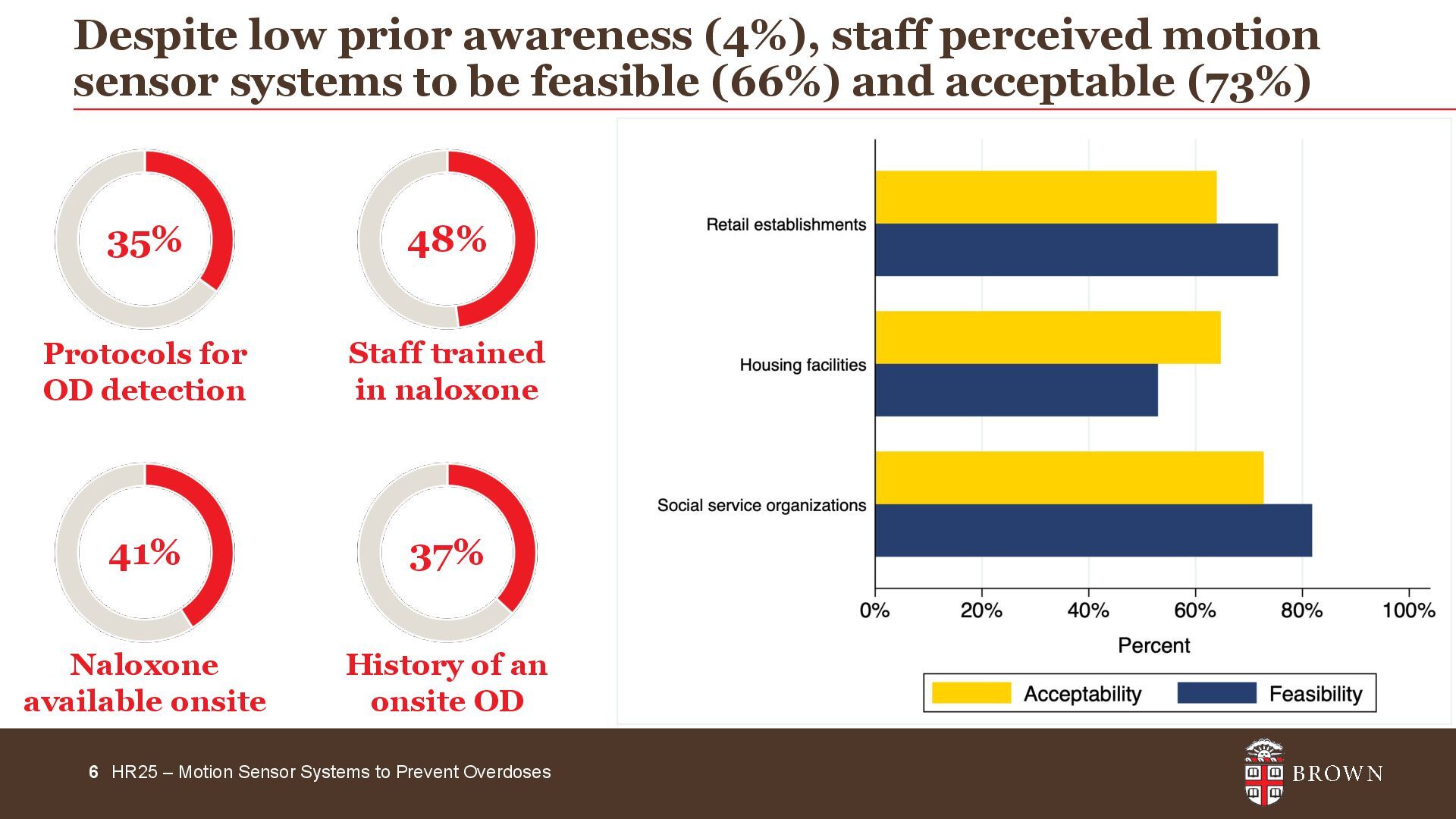
low prior awareness (4%), staff perceived motion sensor systems to be feasible (66%) and acceptable (73%) 35% 48% 41% 37% Protocols for OD detection Staff trained in naloxone Naloxone available onsite History of an onsite OD
groups with clients (N = 4) and staff (N = 4) Motion sensor system demonstration, semi-structured dialogue Framework-guided thematic analysis, mapped to constructs from the Theoretical Framework of Acceptability Gale et al, 2013; Sekhon et al, 2017; Park et al., 2025
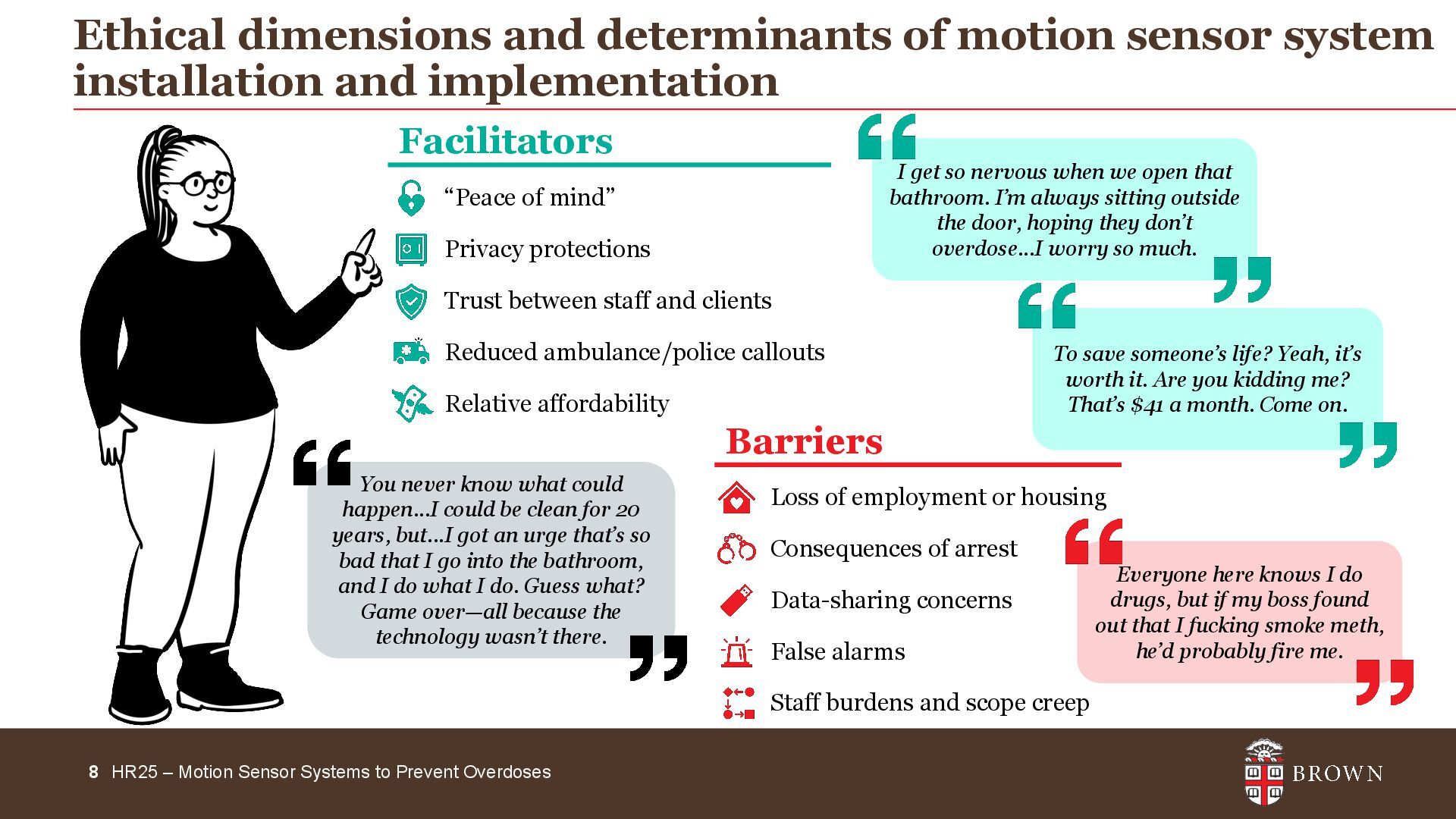
dimensions and determinants of motion sensor system installation and implementation Facilitators Barriers You never know what could happen...I could be clean for 20 years, but...I got an urge that’s so bad that I go into the bathroom, and I do what I do. Guess what? Game over—all because the technology wasn’t there. “Peace of mind” Privacy protections Trust between staff and clients Reduced ambulance/police callouts Relative affordability I get so nervous when we open that bathroom. I’m always sitting outside the door, hoping they don’t overdose...I worry so much. To save someone’s life? Yeah, it’s worth it. Are you kidding me? That’s $41 a month. Come on. Loss of employment or housing Consequences of arrest Data-sharing concerns False alarms Staff burdens and scope creep Everyone here knows I do drugs, but if my boss found out that I fucking smoke meth, he’d probably fire me.
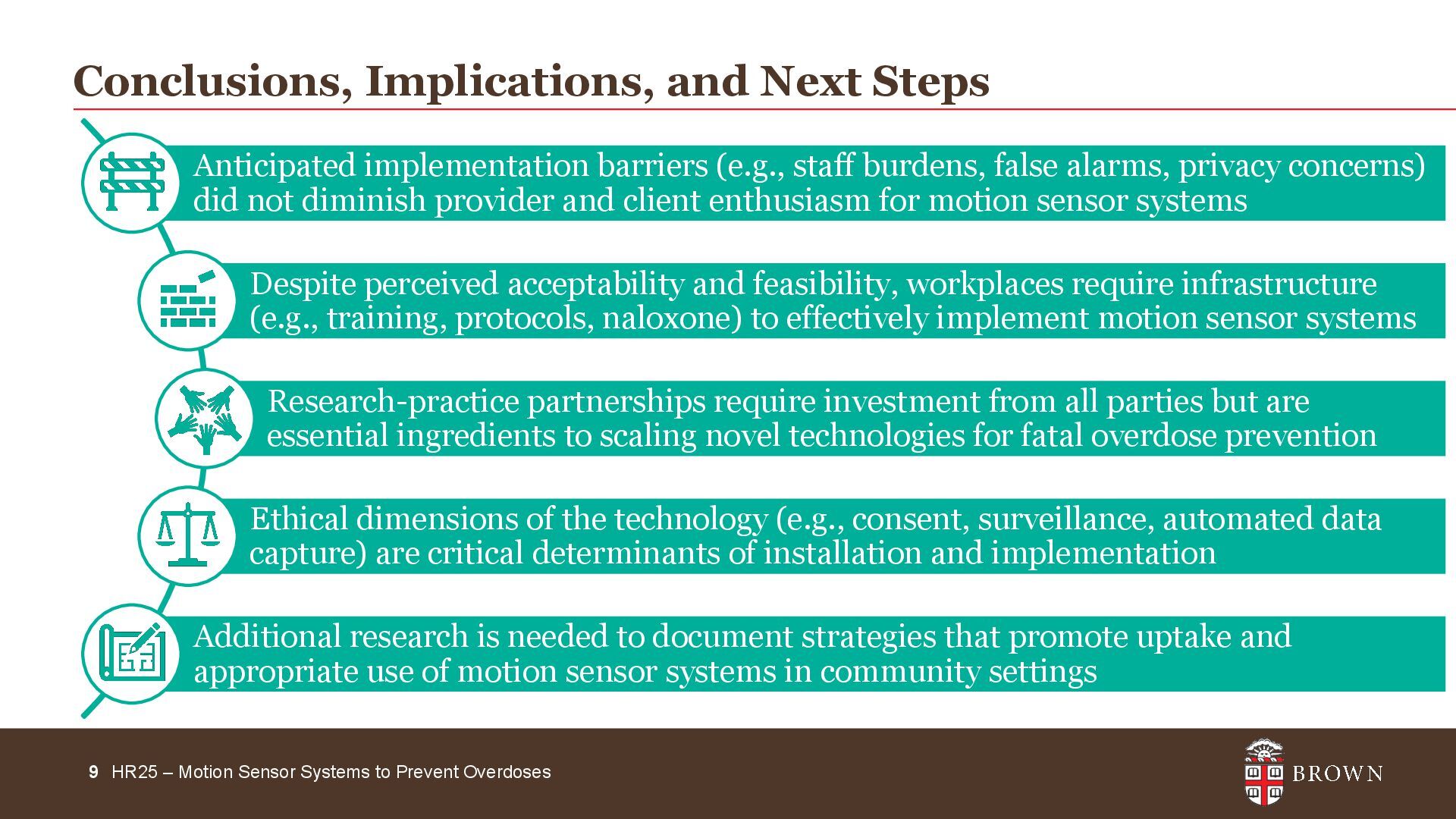
Implications, and Next Steps Anticipated implementation barriers (e.g., staff burdens, false alarms, privacy concerns) did not diminish provider and client enthusiasm for motion sensor systems Despite perceived acceptability and feasibility, workplaces require infrastructure (e.g., training, protocols, naloxone) to effectively implement motion sensor systems Research-practice partnerships require investment from all parties but are essential ingredients to scaling novel technologies for fatal overdose prevention Ethical dimensions of the technology (e.g., consent, surveillance, automated data capture) are critical determinants of installation and implementation Additional research is needed to document strategies that promote uptake and appropriate use of motion sensor systems in community settings
and Funding Rhode Island Hospital / Brown University • Ju Nyeong Park • Susan E. Ramsey • Josiah D. Rich • Traci C. Green • Brandon D.L. Marshall • Maxwell S. Krieger • Rehan Aslam • Erin Thompson • Jessica Tardif • Ryan Koch • Christina Vasquez • Gabrielle Riendeau RIDOH • Benjamin D. Hallowell • Melissa Basta • Kristen St. John • Heidi Weidele Brave Technology Co-op • Oona Krieg • Gordon Casey • Johnny Liu Community Care Alliance • Christa Tomas-Sowers • Michelle Taylor • Timothy DeLisle • Focus group discussants • Survey participants • Community partners • Community advisory board Funding Robert E. Leet and Clara Guthrie Patterson Trust Center of Biomedical Research Excellence on Opioids and Overdose (P20GM125507) RI EOHHS • Cathy Schultz • Tamara Burman PONI • Michelle McKenzie • Haley McKee
Information Assistant Professor (Research) Department of Medicine The Warren Alpert Medical School Brown University [email protected] Greg Rosen, PhD, MSPH Principal Investigator Assistant Professor (Research) Department of Medicine The Warren Alpert Medical School Brown University [email protected] Ju Nyeong Park, PhD, MHS Project Coordinator Division of General Internal Medicine Rhode Island Hospital Brown University Health [email protected] Rehan Aslam, MPH 1125 N Main Street Suite 215 Providence, RI 02906 harmreductionlab.com Hablamos español


 summershiiiii9
 popppiees
 aleyda
 3n
 notwaldorf
 marktimemedia
 katarinadahlin
 nikkihalliwell
 vanstee
 axbom
 baasie
 tammyeverts